
Sousse
From Tunis it’s easy to get to Sousse, another popular city in the country. Minibuses run here regularly and will cheerfully carry anyone willing in a packed, shaking fuselage in just a couple of hours in 30-degree heat.
Well, let’s take a look. This is the coastline of Sousse, lined with numerous hotels.

The Tunisians themselves don’t swim much. The sea is nothing new to them, and women aren’t allowed to swim without a hijab anyway.

The beach is a beach. There’s even more trash in Bali, and near the hotels it’s probably all clean.

Right behind the beach there’s a special white wall that everyone pisses on — the stench carries for about fifty meters around.

Directly behind the wall, the city itself begins.

A typical Sousse street a hundred meters from the beach:

Men often walk the streets carrying mountains of garbage bags. Looks like garbage trucks haven’t been invented in Tunisia yet.

There are cute little boats on the waterfront.

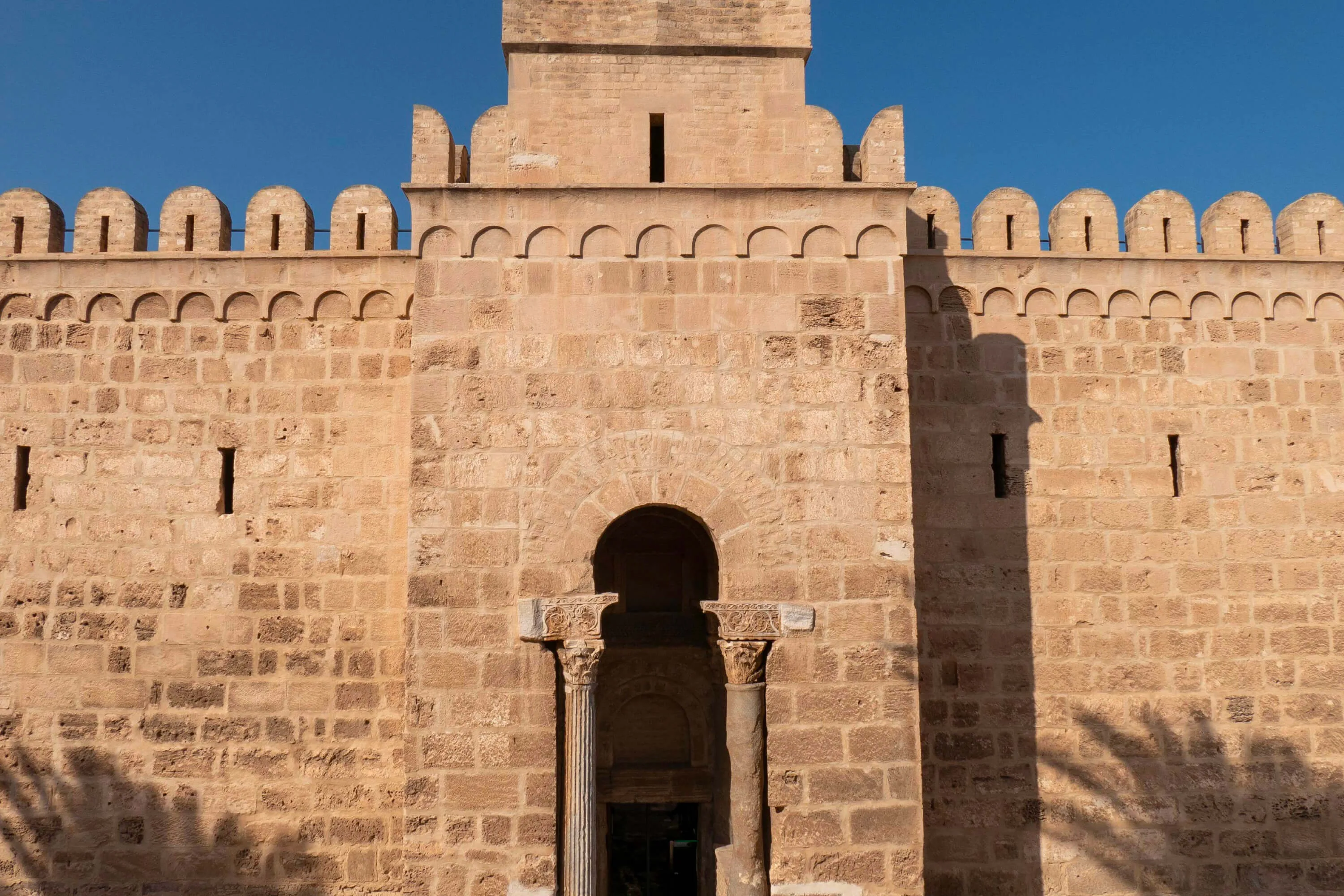
Sousse is known for its old town, or medina. It’s on the UNESCO list. The medina is very old: the Arabs began building it in 780. A hundred years later it was surrounded by a fortress wall that is still well preserved. True, it’s heavily plastered with traders and shopkeepers. It gives shade, after all.

Like the rest of Tunisia, the medina is thoroughly trashed. Piles of garbage lie right on the historical heritage.

The gates are defaced with graffiti and flyers.

Street trade goes on right inside the fortress. In the background you can see a wall of the medina’s very first building.

The fort is built of sandstone. It’s reminiscent of nearby Malta.

Actually, there are a couple of beautiful spots inside the medina.


Although the fortress itself is sandy yellow, many houses in the medina are painted white and blue.

Just like the medina of Tunis, the one in Sousse is full of mangy cats eating scraps.

In short, it’s all like that. One moment you come across some beauty with palm trees, flowers, and blue-and-white houses:

The next, a collective-farm market with Chinese rags on the stalls.

So on the one hand, the medina in Sousse is ten times better than the one in Tunis. But on the other hand, that’s only because it’s hard to find a medina worse than the one in Tunis.

Sometimes Sousse resembles the blue city of Chefchaouen in Morocco.

Here it becomes clear that Chefchaouen wasn’t painted blue as a symbol of something by fleeing Jews. Blue simply turned out to be a popular color in Arab Africa against the pale sandstone: there are dozens of such blue towns scattered across the continent.

A cool Arab barbershop.

The minaret of an old mosque with loudspeakers.

A charming blue door.

There are people painted on the walls. A remarkable thing for the Islamic world! But then, Tunisia is a fairly secular country.

The signature Tunisian detail is columns built into the walls.


Through a gap between the houses you can see the sea.

The medina is entirely pedestrian. The only vehicles here are bicycles.

The old town is built on a slope, so the medina is full of steps, sometimes running across the whole street.

Kids and teenagers hang around the streets.


Clothes hang out of the windows.

Electric wires sag between the houses.

Well, overall it’s okay. Worth seeing once.