
Iceland
Iceland is one of those countries you go to for the nature, while the capital, Reykjavik… well, you can drop by and see it in passing. There are so many cool and stunning places on the island that you can safely book a whole stack of tours. You could easily drive around for a couple of weeks nonstop.
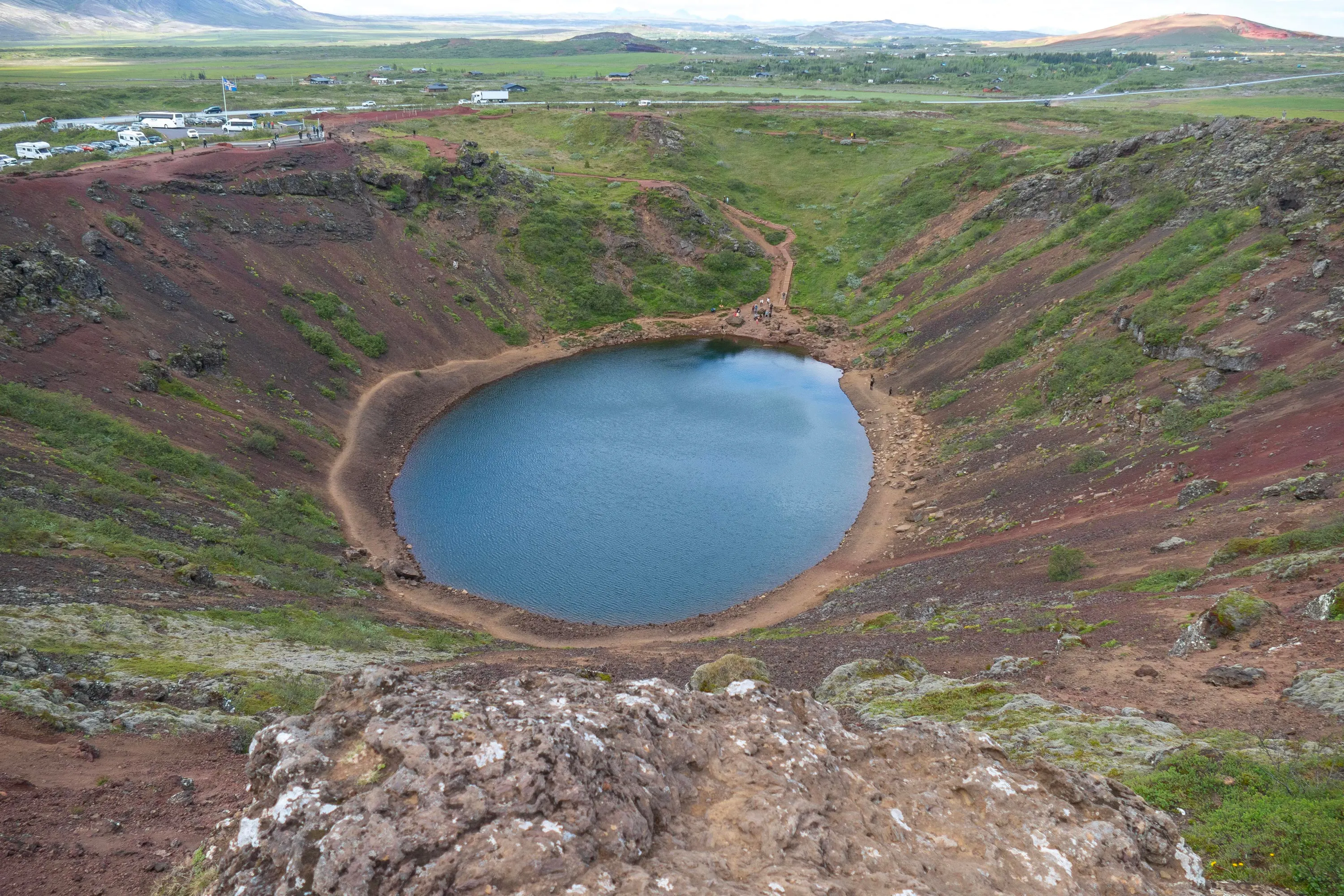
Actually, even a nameless landscape somewhere on the way to the main destination looks like you’ve landed on another planet.
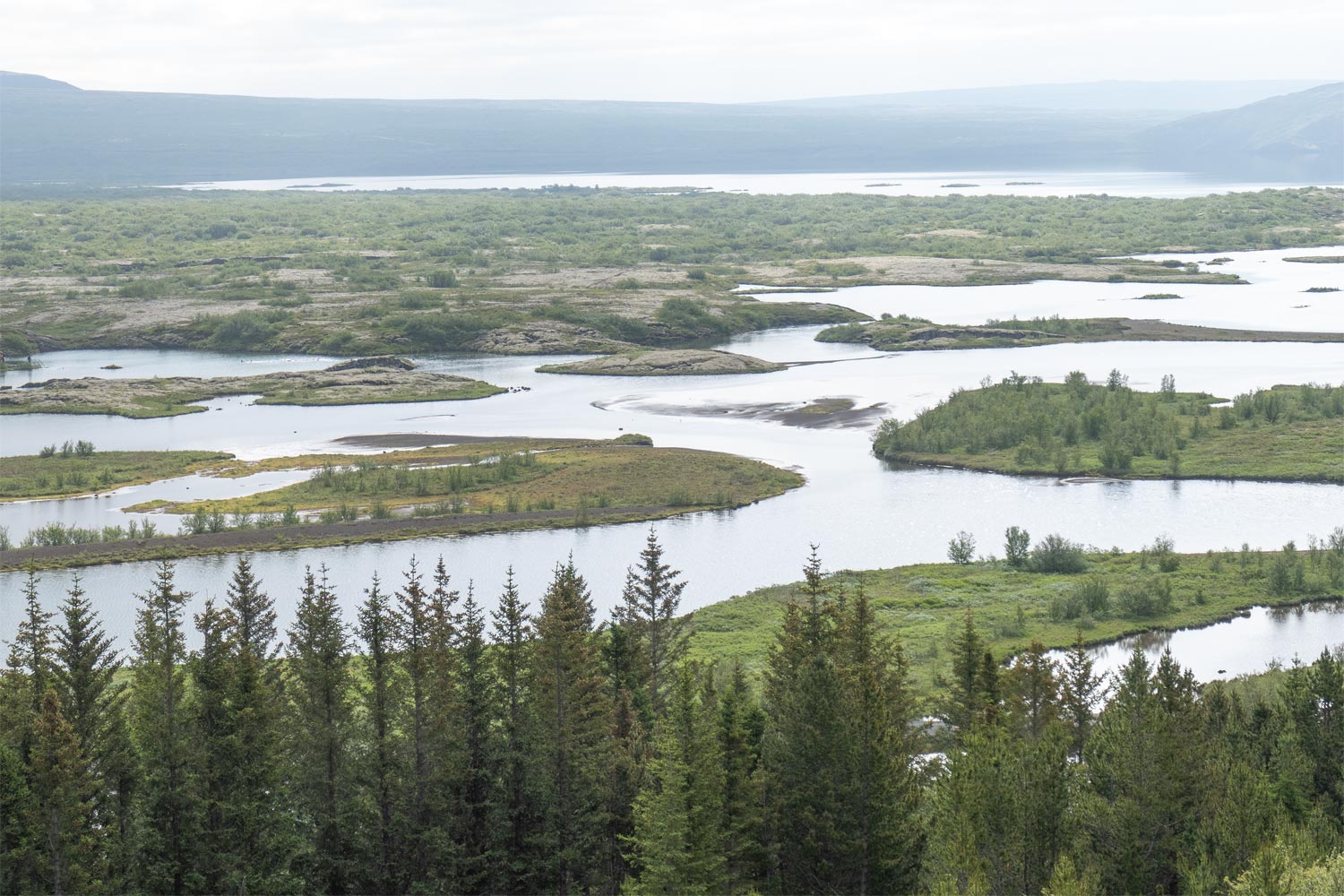
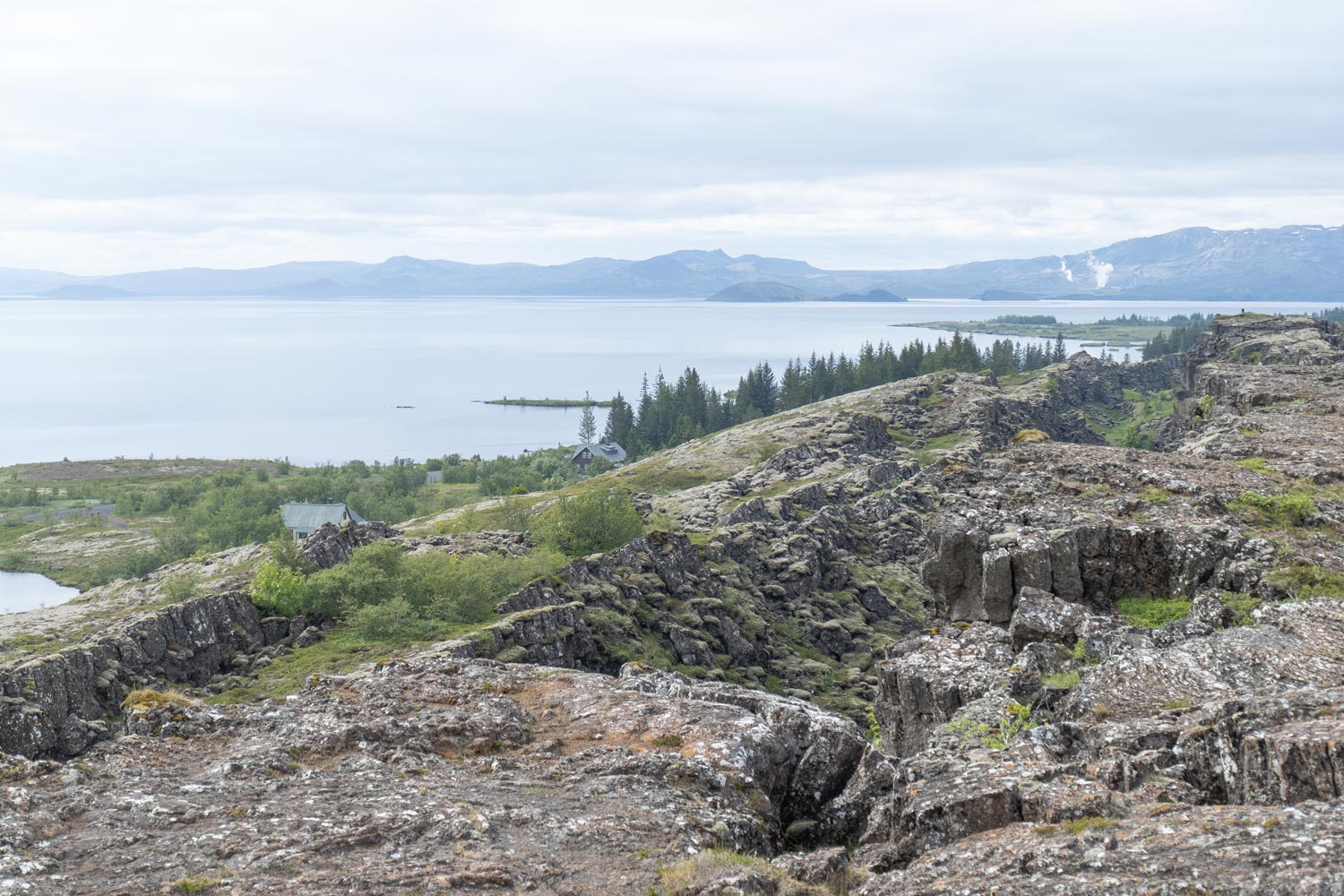
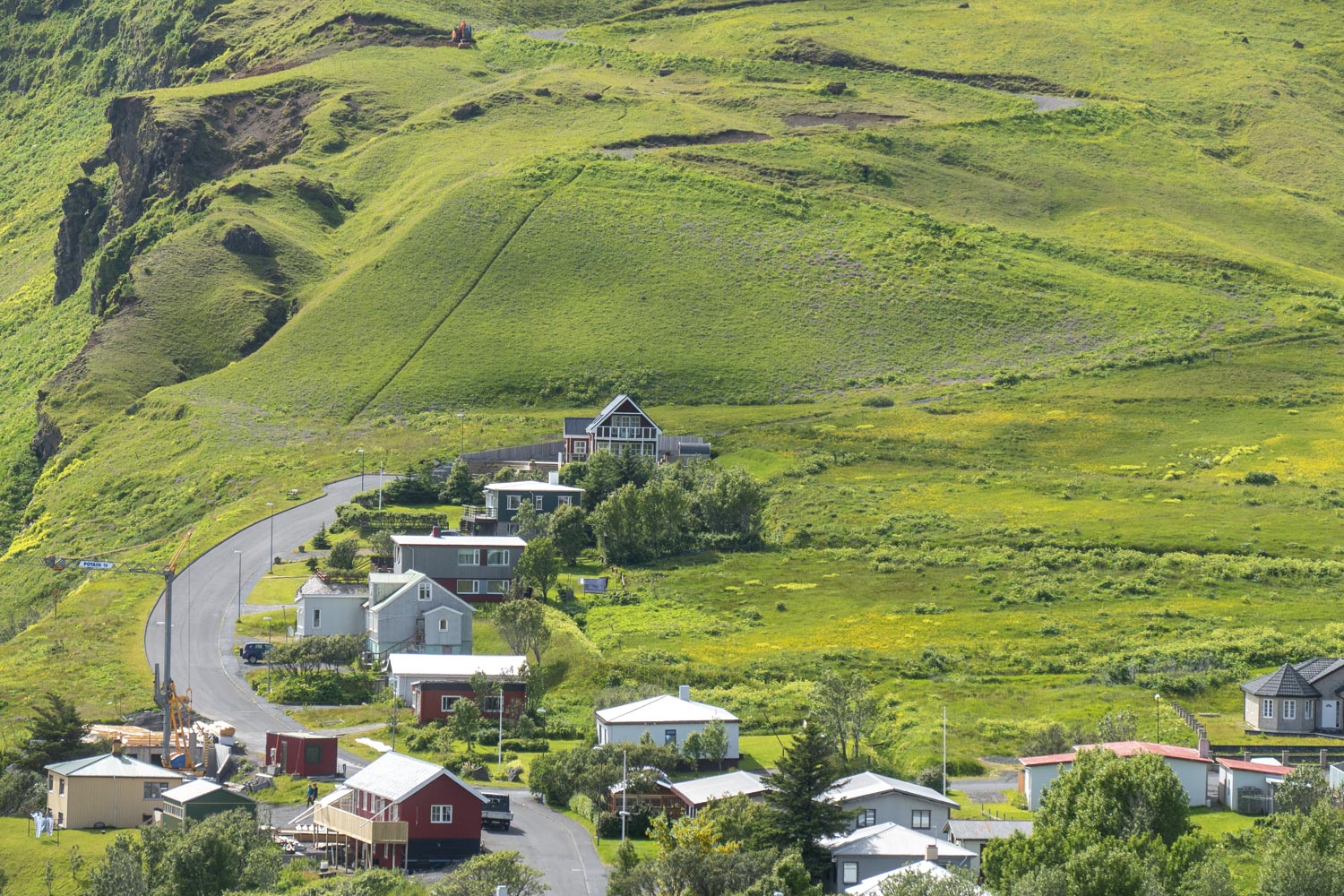
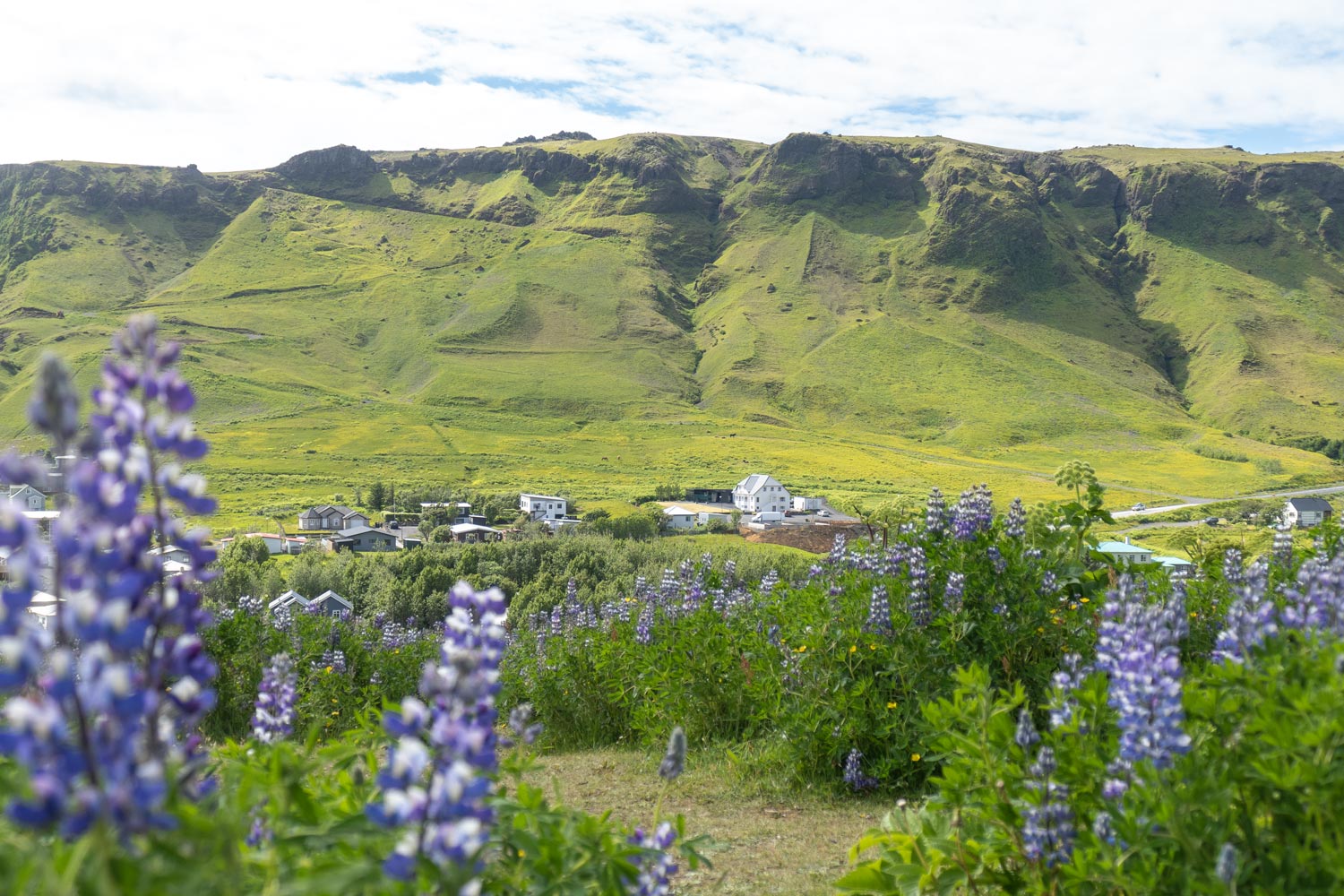
And yet, amid all this beauty, houses just stand there and people live in them.
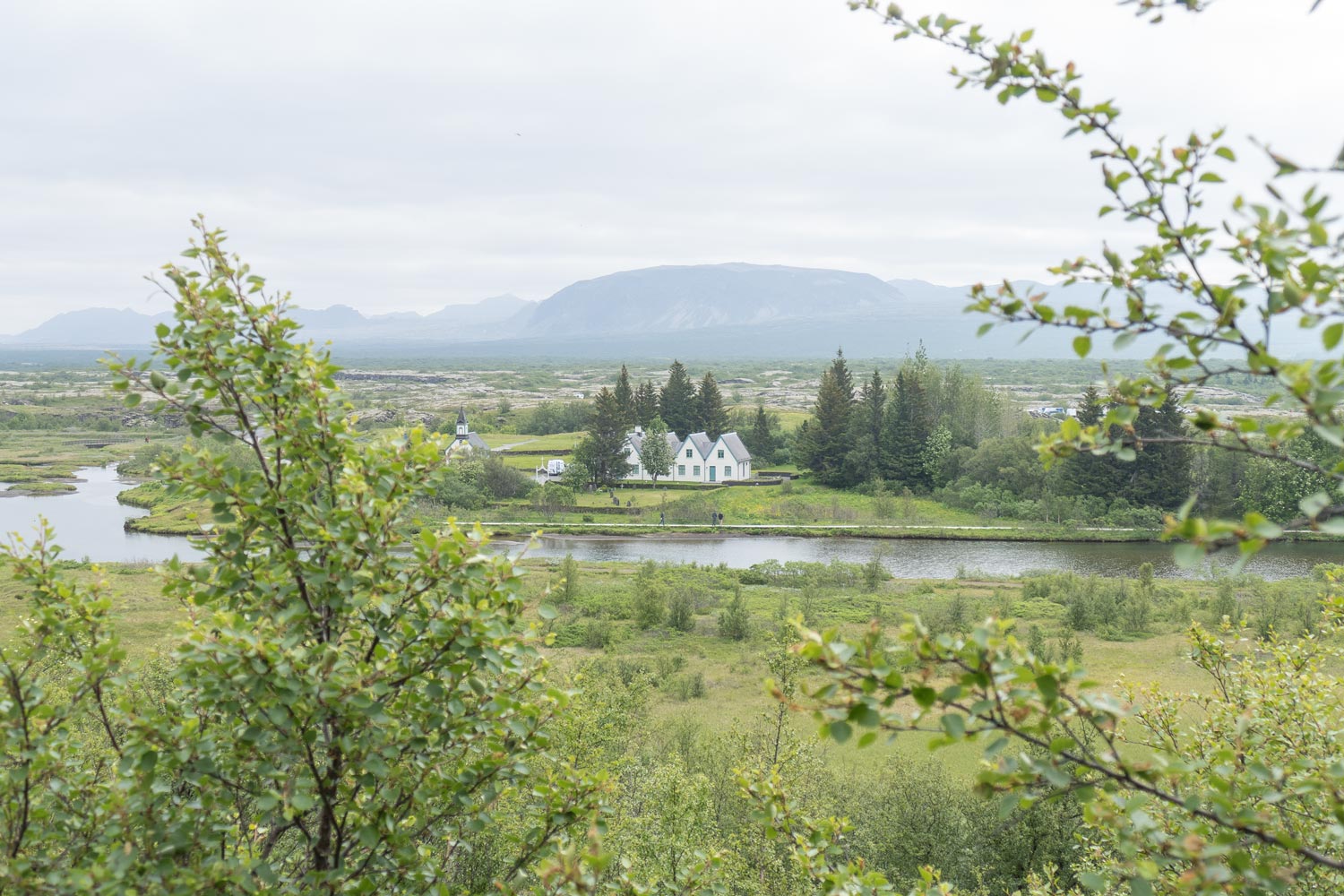
The colors Icelandic nature produces are such that even Turner couldn’t have matched them.
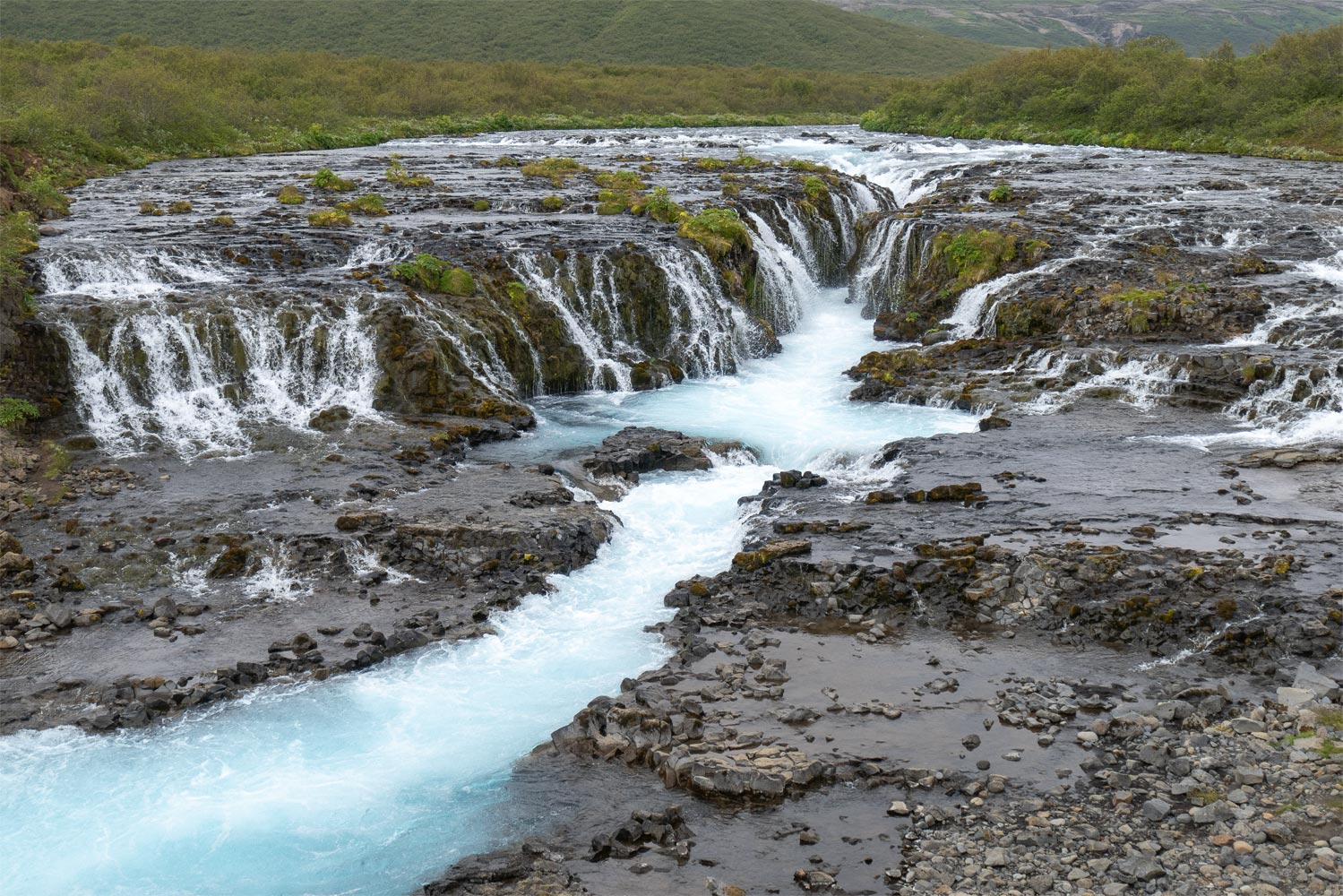
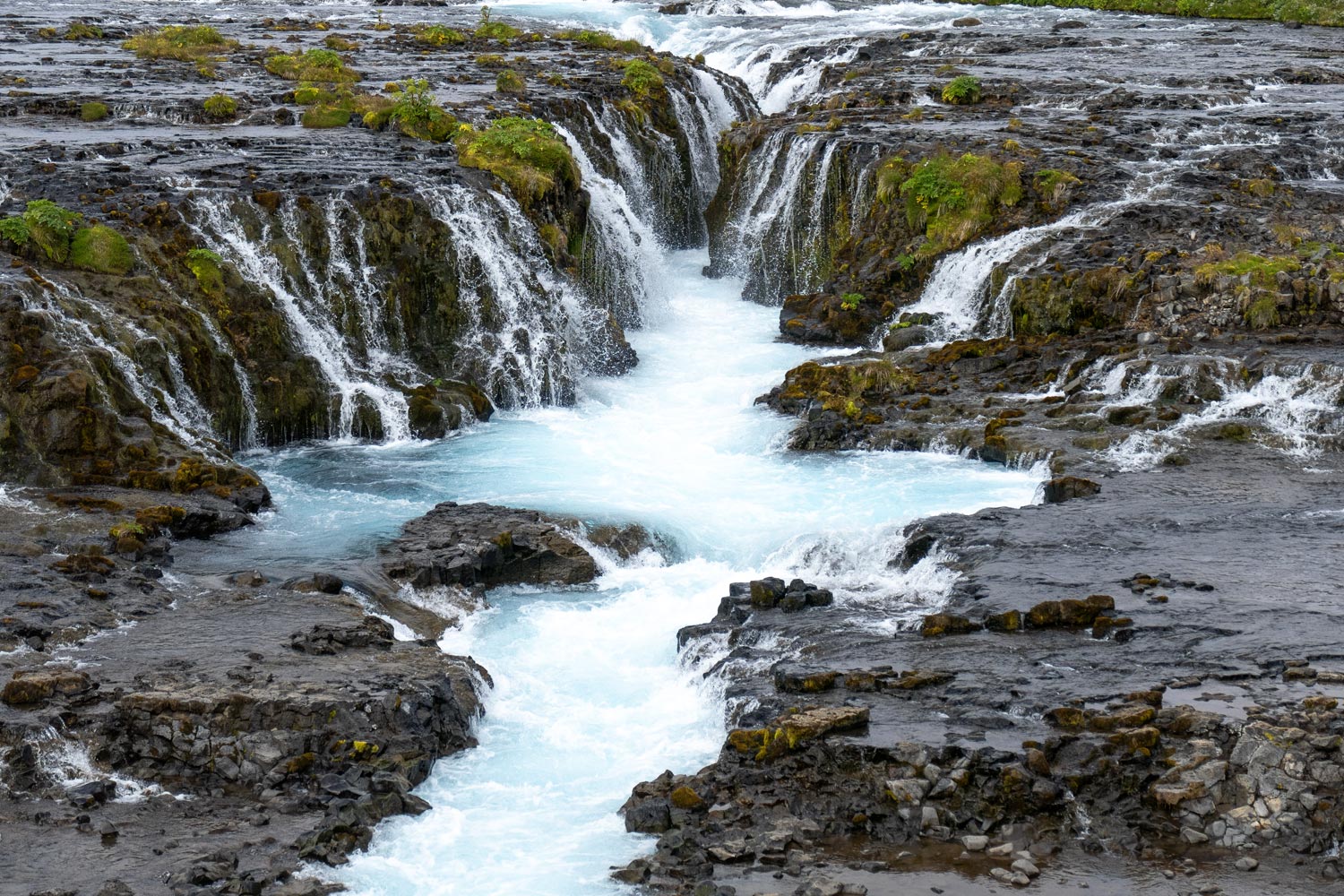
Look, it seems like just a river. The riverbed is black, and the water is such an azure color, as if it had been scooped out of a swimming pool along with its tiled bottom.
It’s usually believed that people come to Iceland mainly to see a volcanic eruption. Actually, it’s all very complicated: during an eruption, you should stay as far away from the volcano as possible. The rest of the time, a volcano gives off steam at most, but there’s no point climbing to the crater of a real volcano for steam: steam pours out of cracks in the rock all over the island anyway.
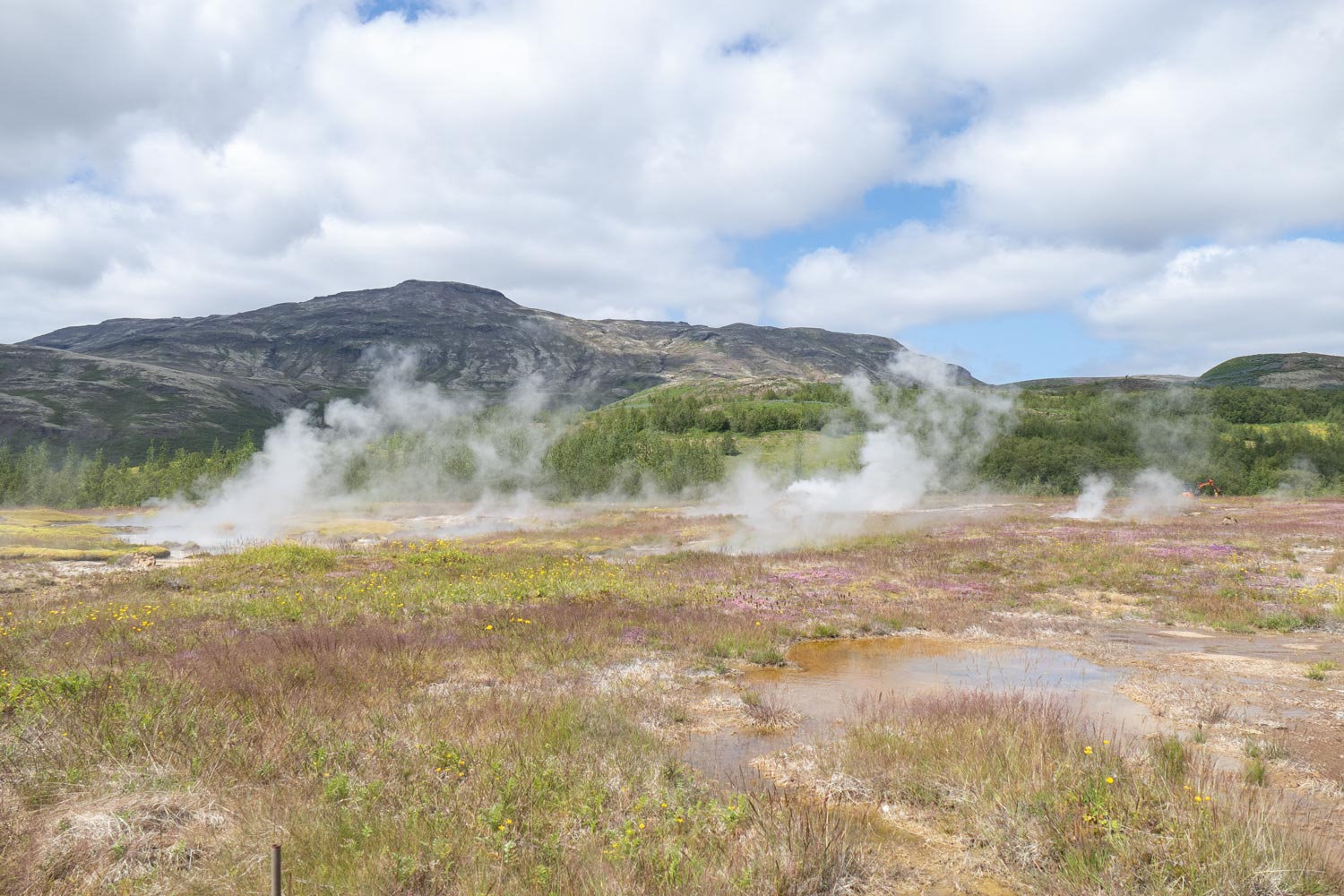
These cracks are called fumaroles, and there are so many of them in Iceland that you literally come across them at every step. You can just drive down the road and see columns of steam — those are fumaroles.
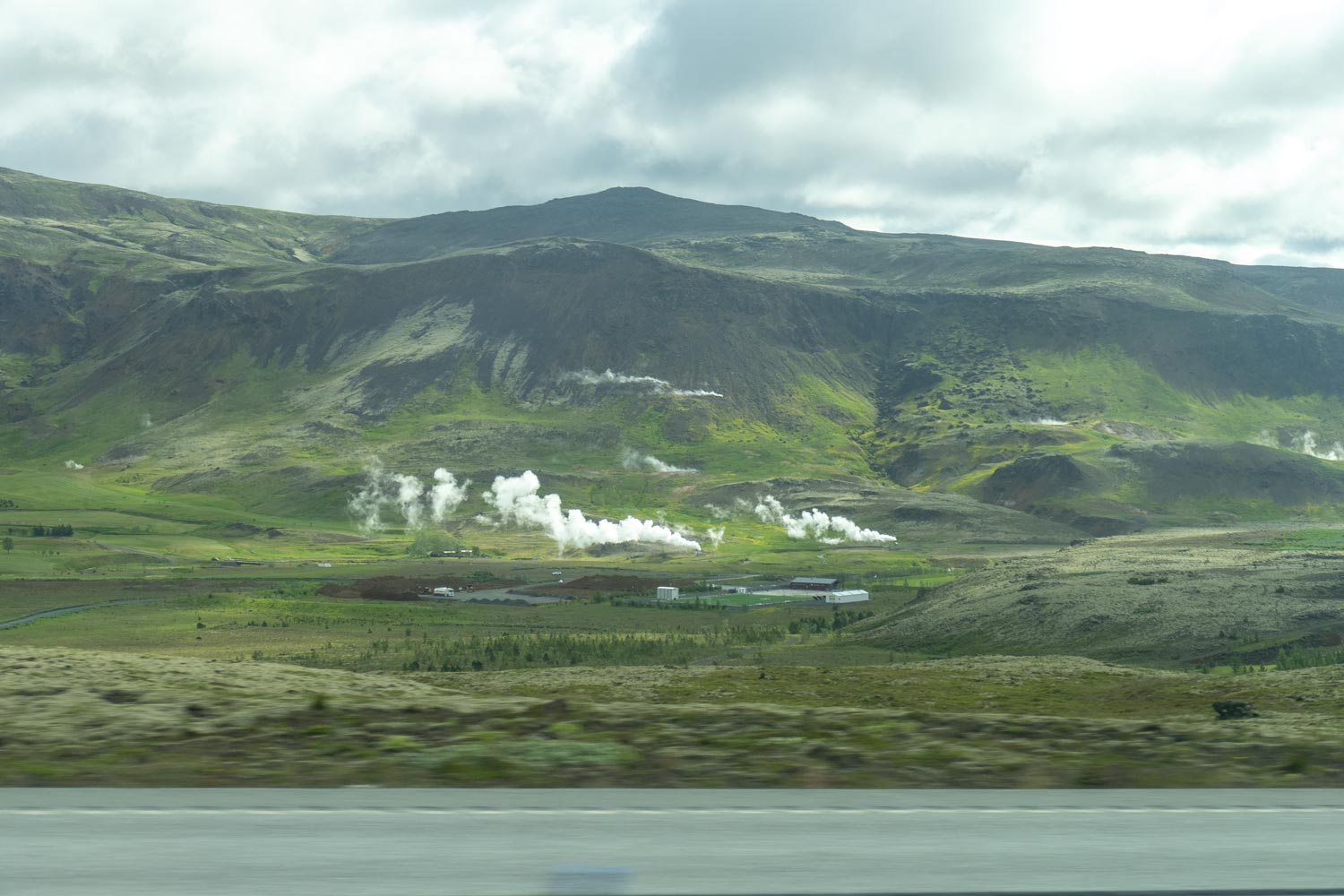
There are especially many fumaroles near geysers and at the foot of volcanoes.
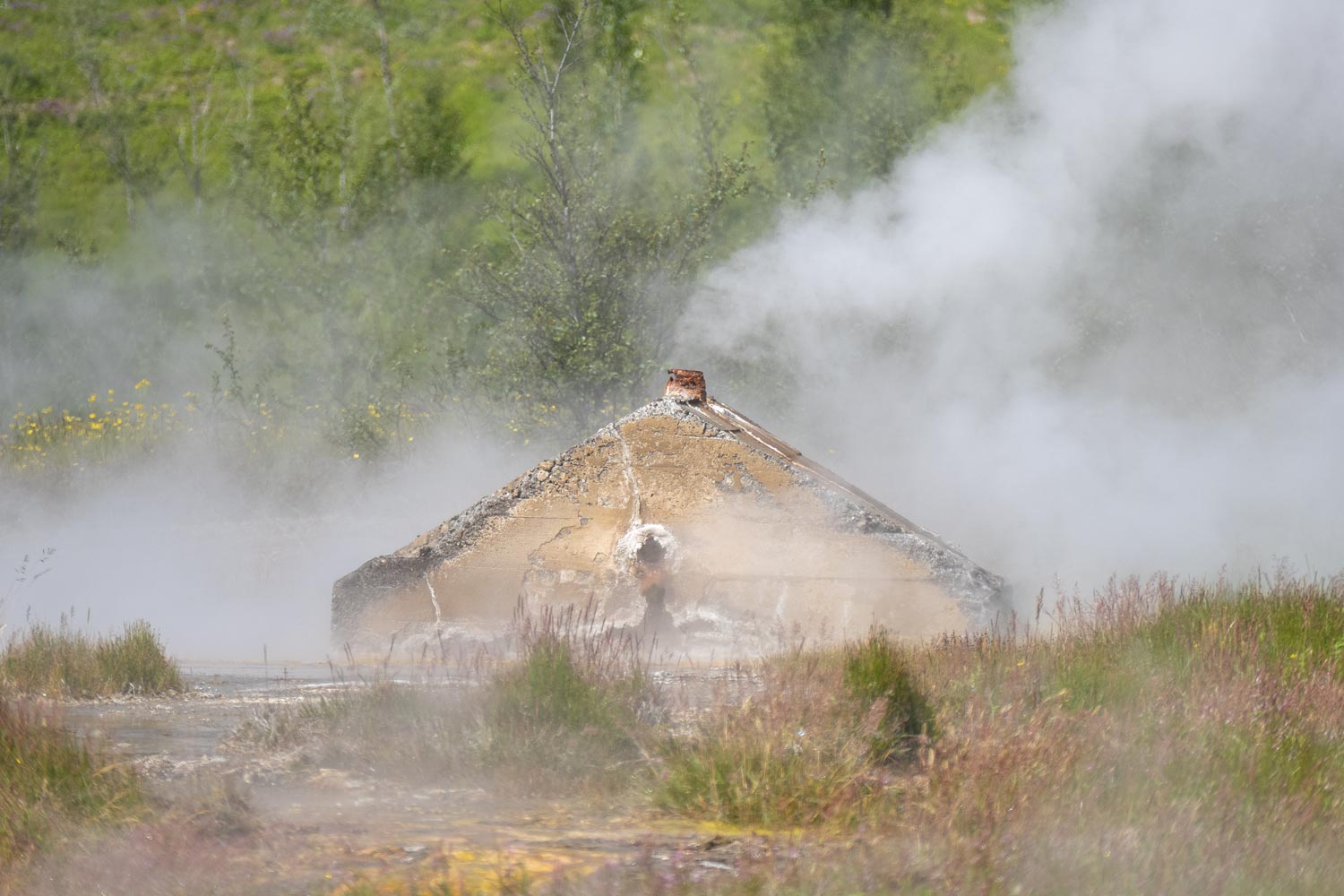
Sometimes fumaroles are covered with caps. Apparently, to control the pressure.
So, tourists most often come to Iceland not for volcanoes but for geysers. Only Yellowstone Park has more geysers than Iceland, but it’s hard to get to even from within the US — few New Yorkers want to fly to Wyoming and then drive God knows where. It’s much easier to fly to Iceland.
Especially since the name “Geysir” is a proper name, just like Xerox. Originally, it was the name of one particular geothermal fountain in Iceland, and only later did people start using it for all other hot fountains.
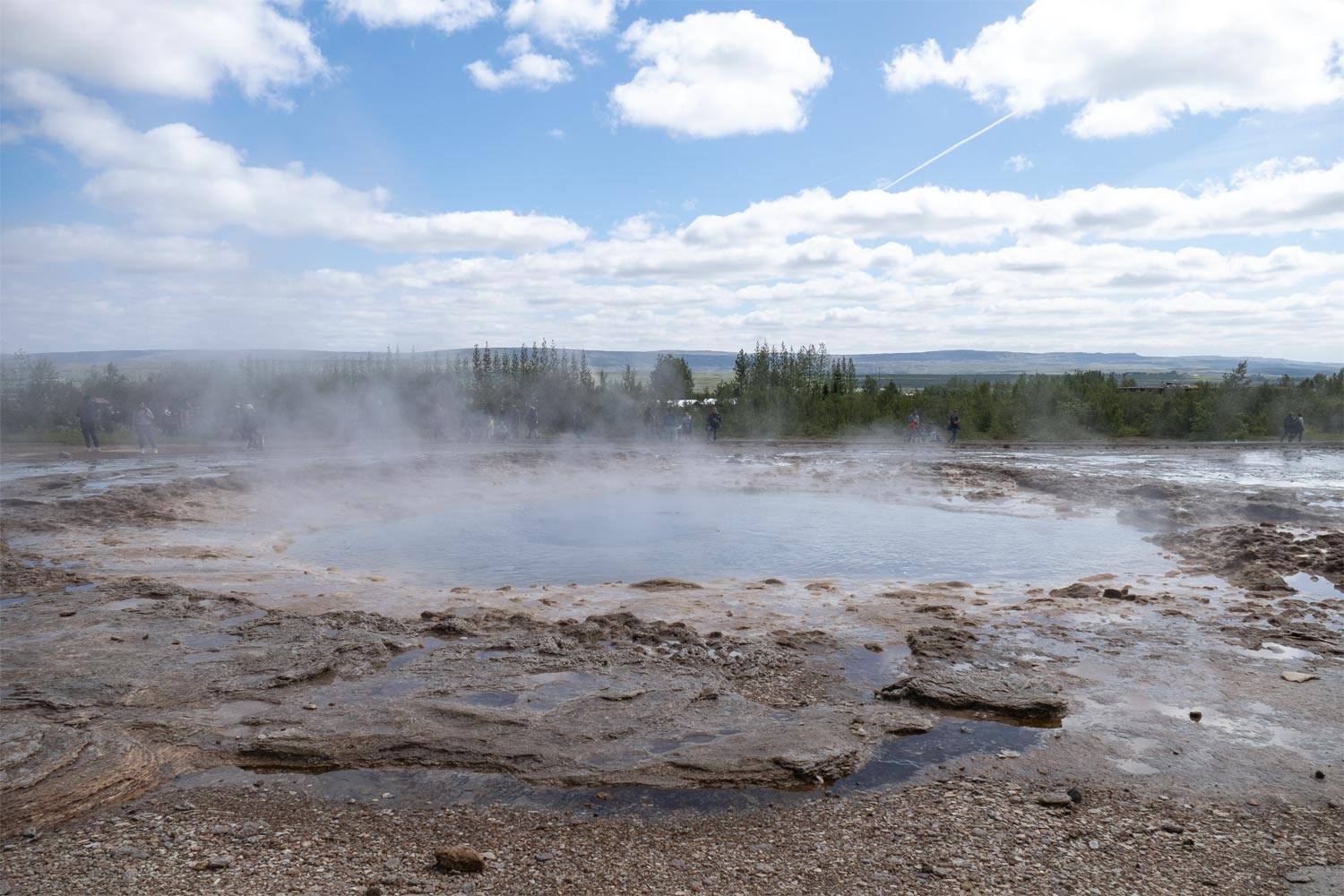
The original Geysir is almost dead today and erupts so rarely that it makes the newspapers. But right next to it is the Strokkur geyser, which erupts every three minutes.
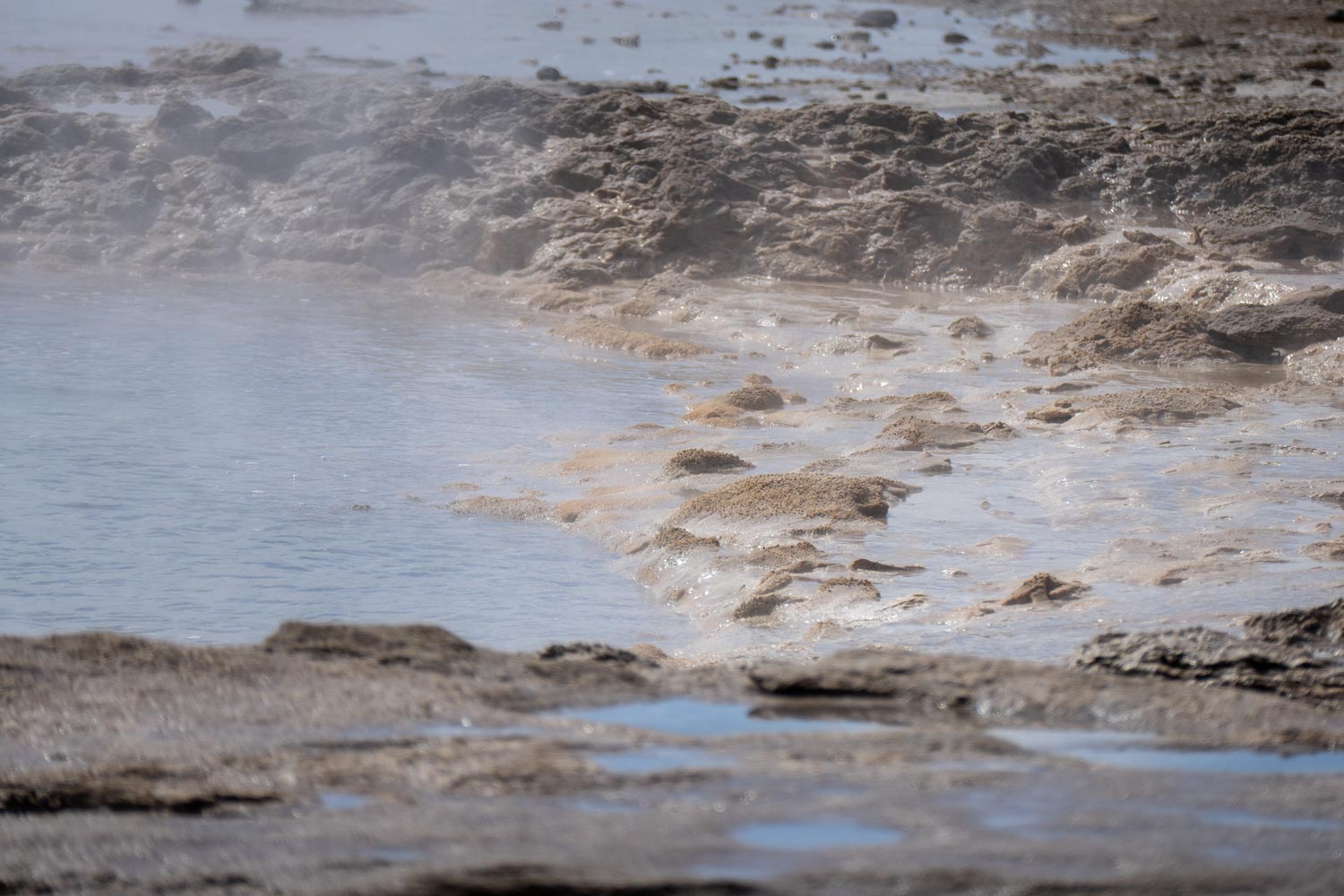
Obviously, the water in a geyser is boiling hot. Its temperature reaches 90 degrees Celsius. Besides, hydrogen sulfide and other underground junk are dissolved in it, so you’d better not drink it.
Waterfalls come second after geysers. There are many times more waterfalls in Iceland than geysers. Even the big waterfalls number in the hundreds, and the small ones in the thousands. It’s because of the glaciers: they melt, the water flows. And so you get waterfalls.
One of the biggest waterfalls is Gullfoss.
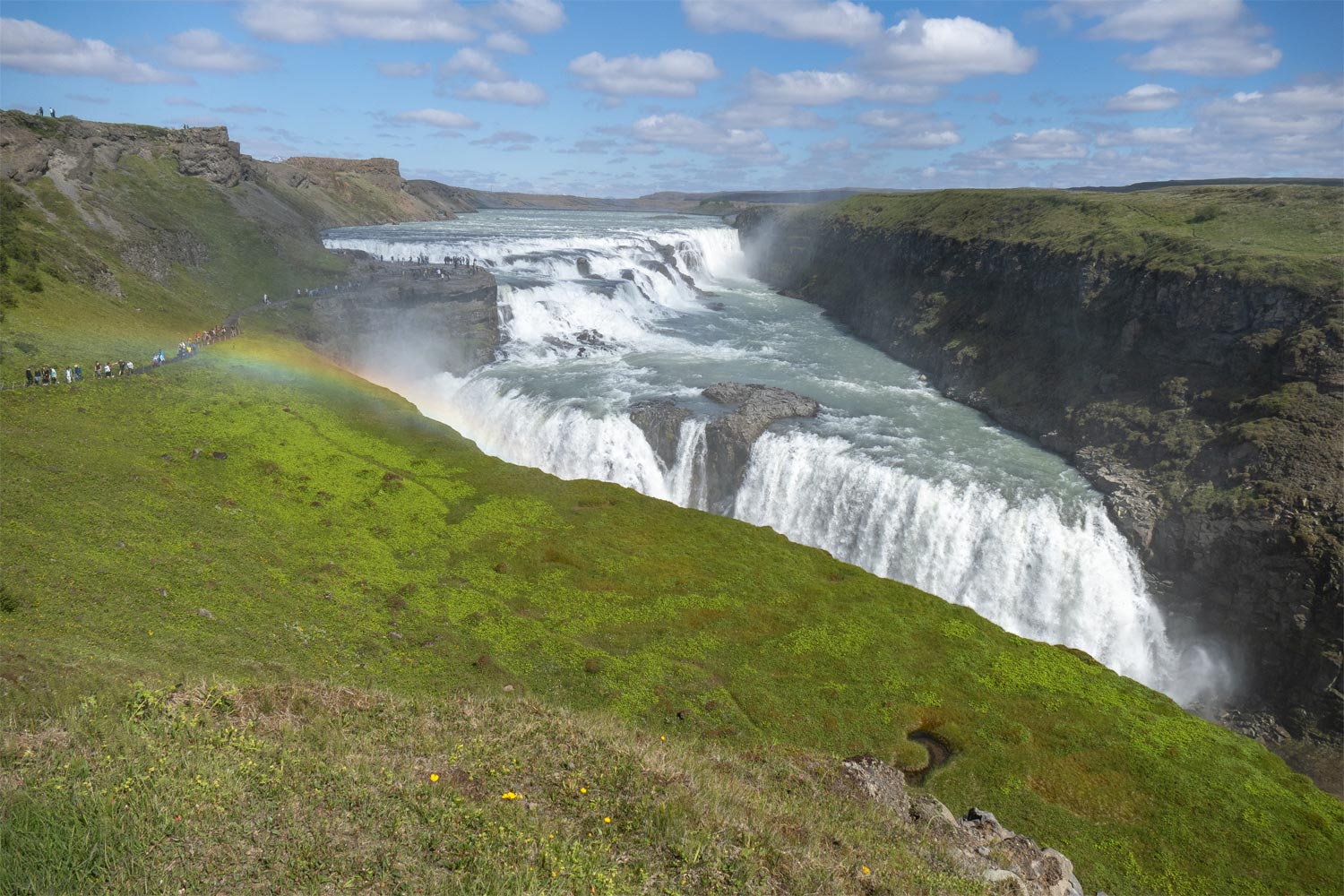
You can’t get close to it without getting wet. Billions of tiny droplets, like shards of exploded glass, fly from Gullfoss in all directions and settle on the tourists.
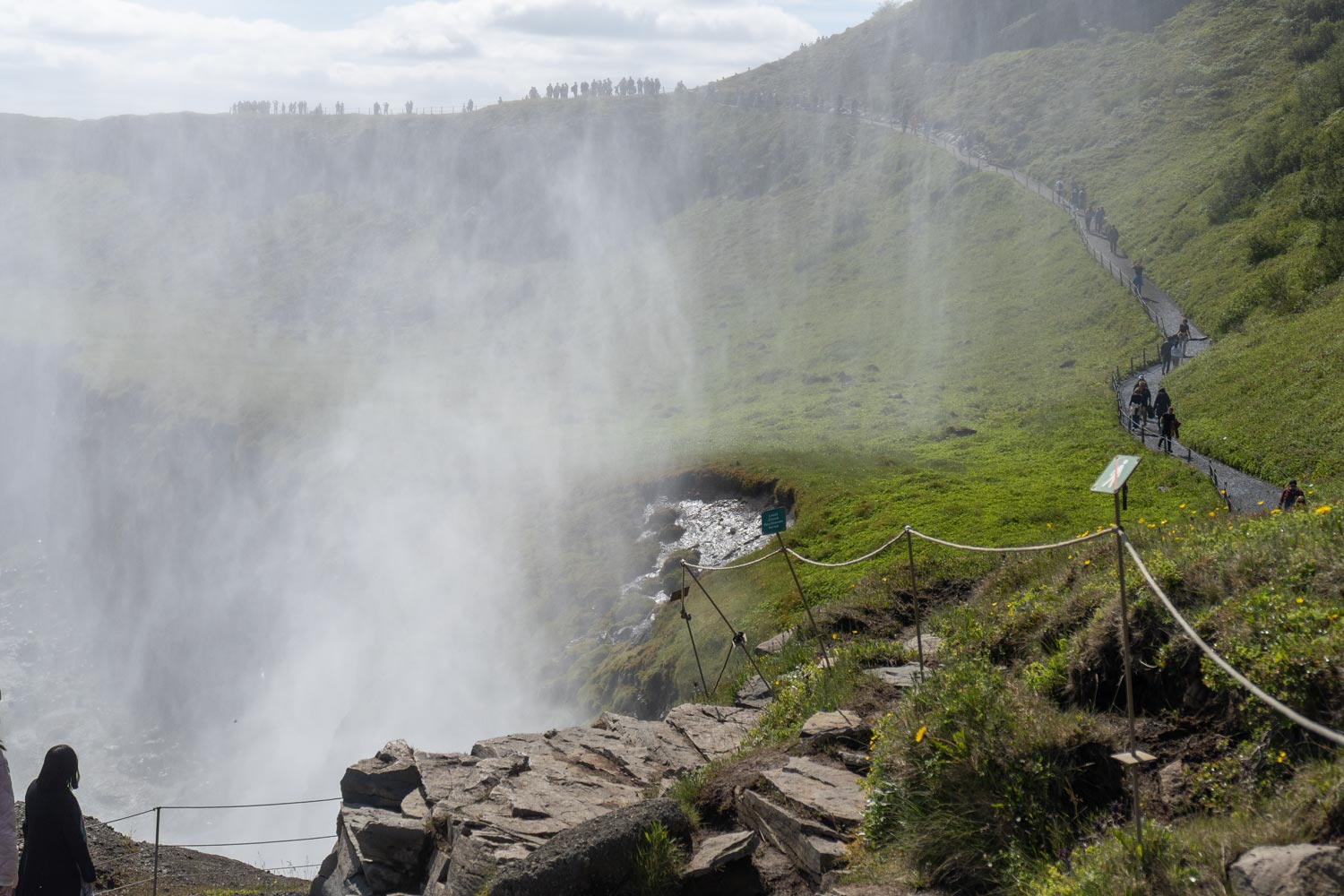
A crazy torrent of water, but it’s no match for Niagara Falls.
Another big waterfall is Skógafoss. This one is a classic: it falls down from a height, kicking up spray.
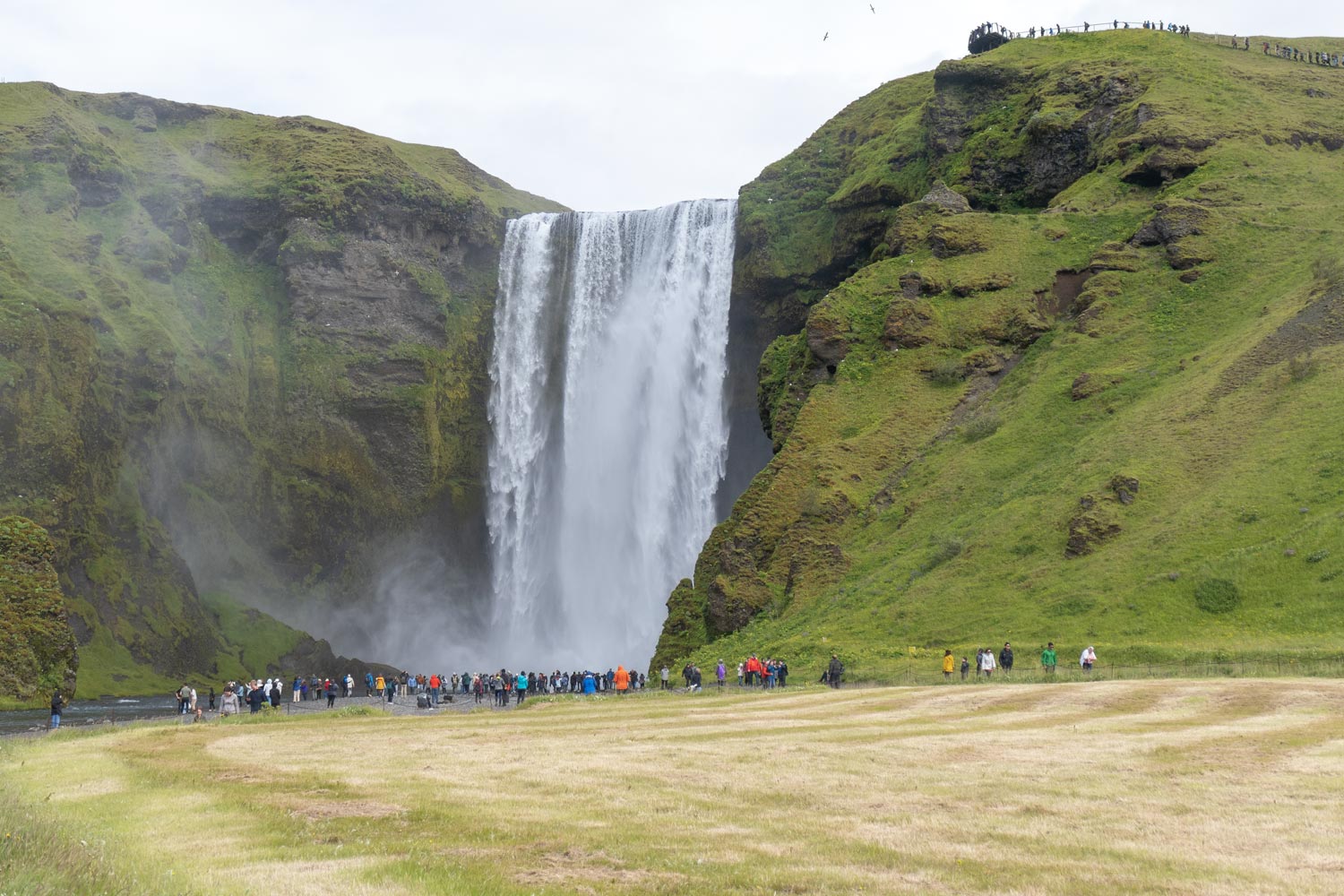
You can only get close to it in a raincoat; otherwise, you’ll get soaked to the skin.
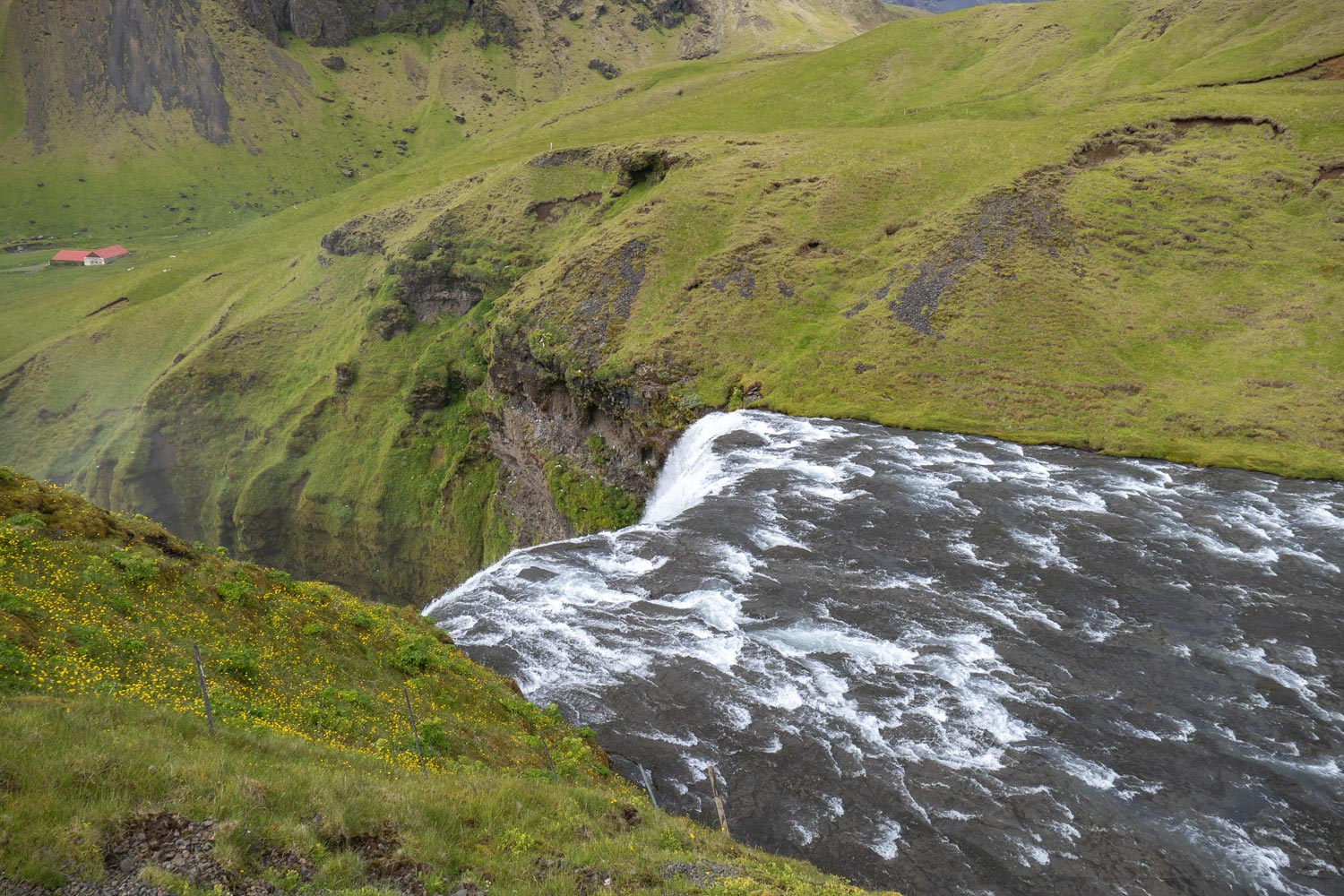
A staircase leads to the top of the waterfall and up to an observation deck.
After the waterfalls and geysers, people in Iceland usually go to see the basalt columns. The stone pillars are usually found by the seashore. They form when lava solidifies.
The hexagonal shape is the result of physics and geometry at work. It turns out that a hexagon is the most efficient shape for distributing stress across the surface of lava as it cools.
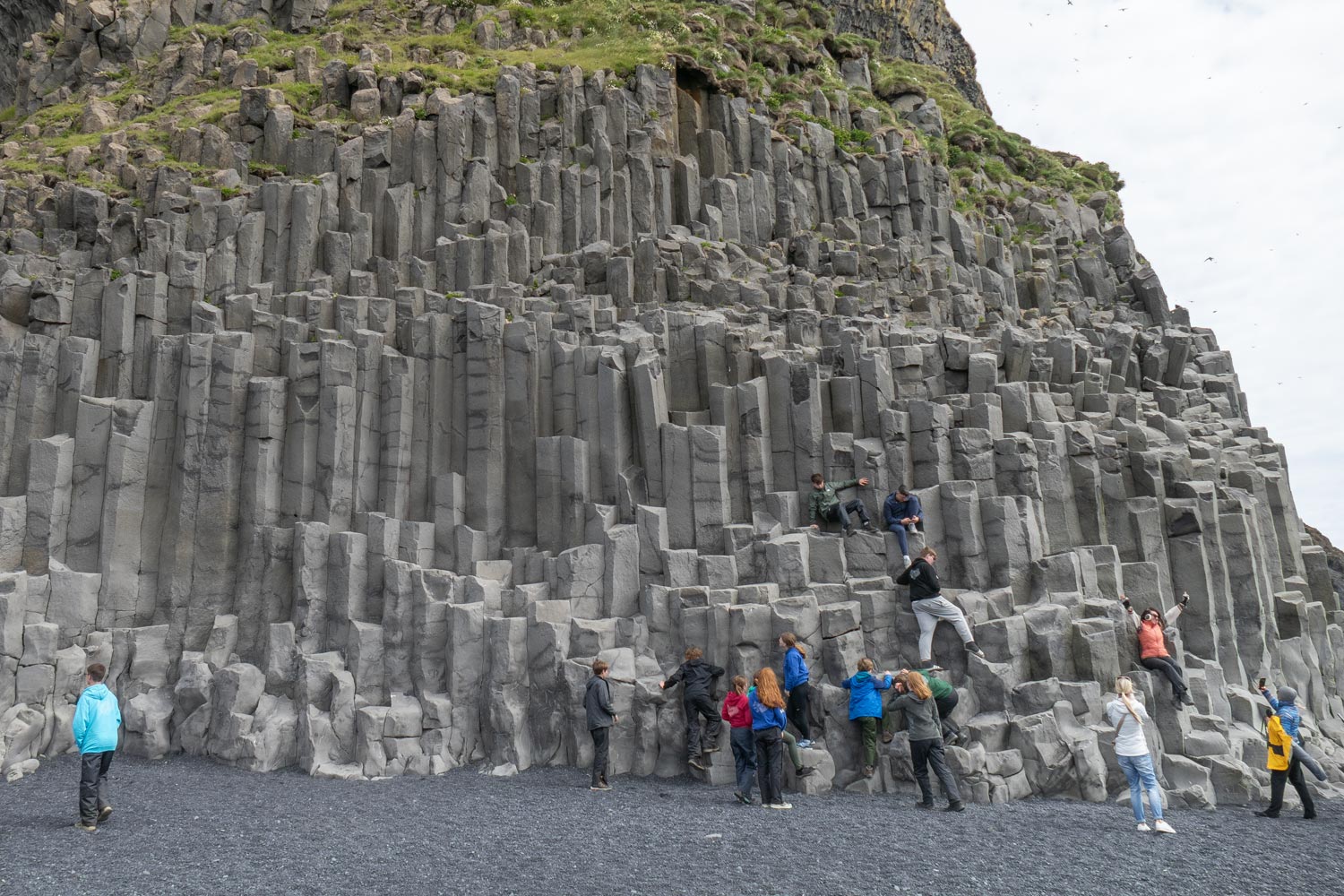
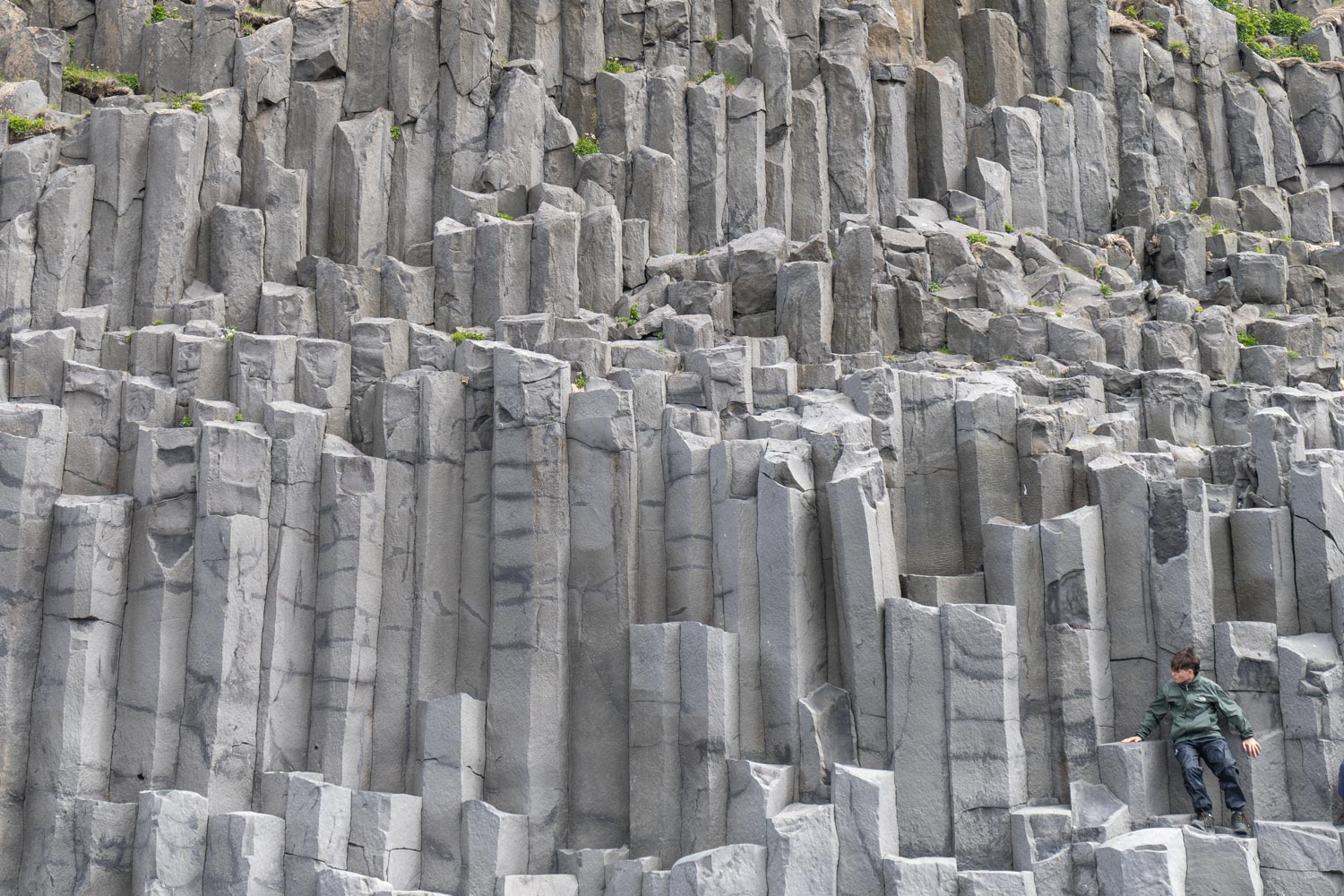
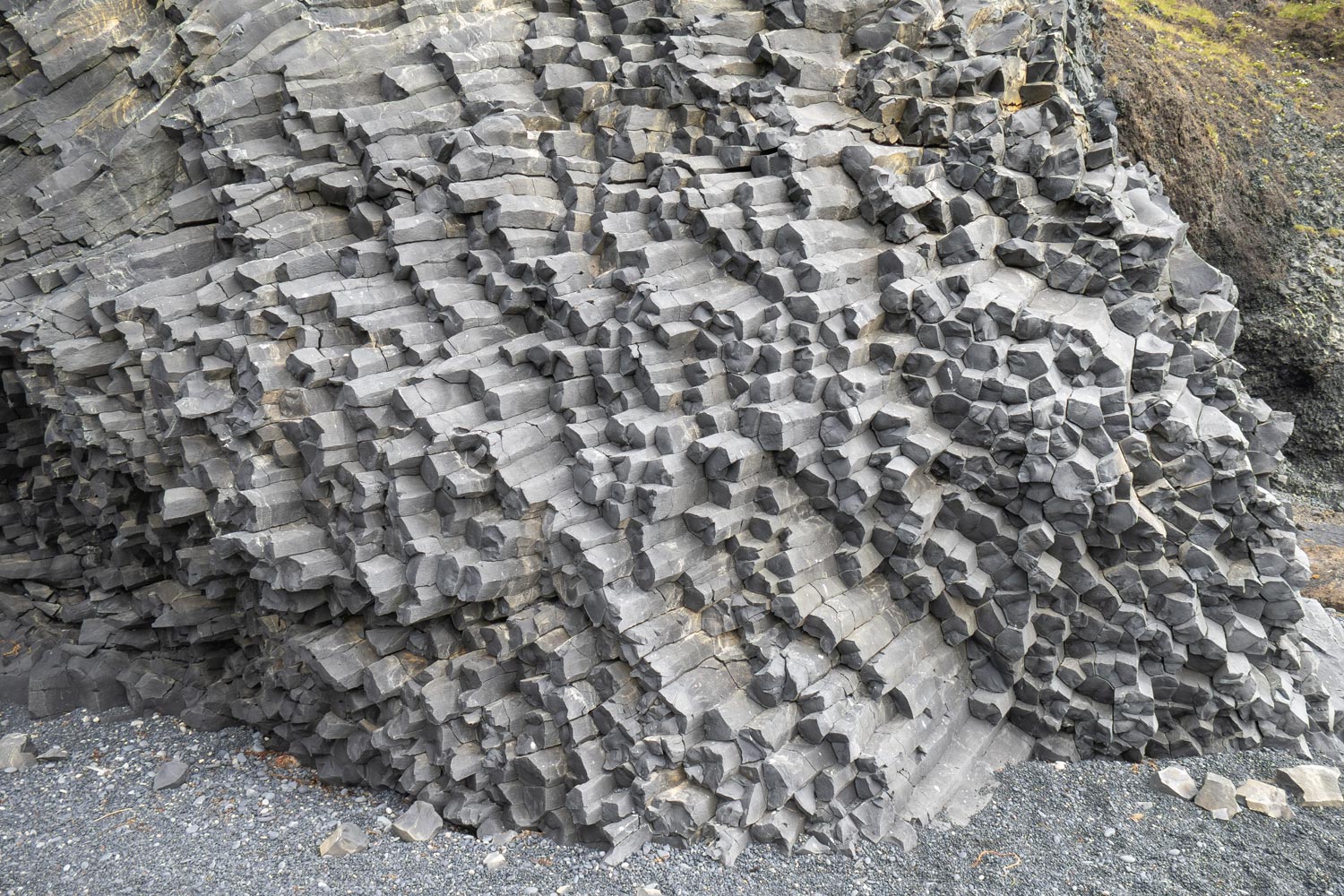
However, much more often lava solidifies any old way. Apparently, some other conditions are needed to get hexagons.
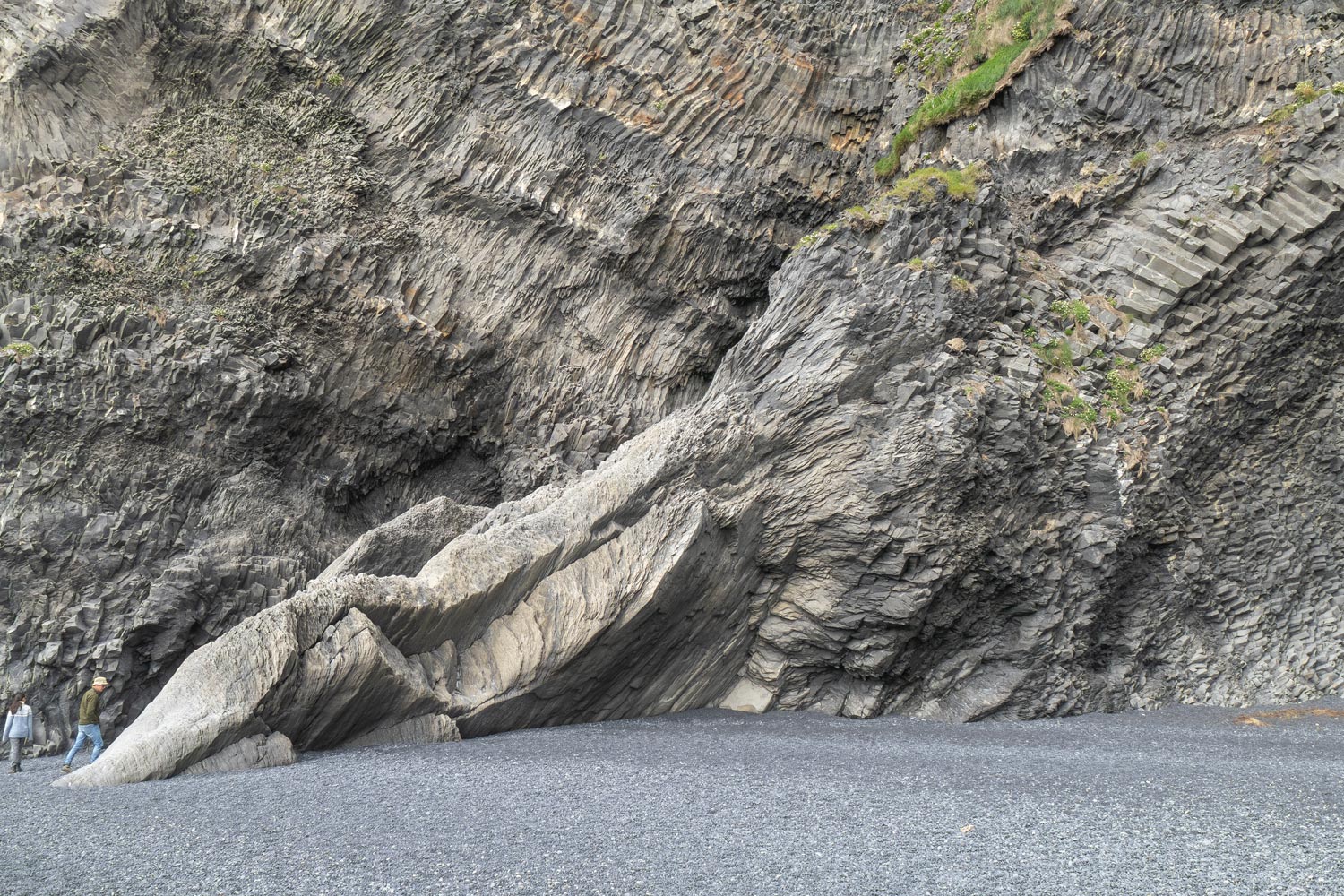
Not far from the basalt columns is the famous black beach. The sand on this beach is basalt too.
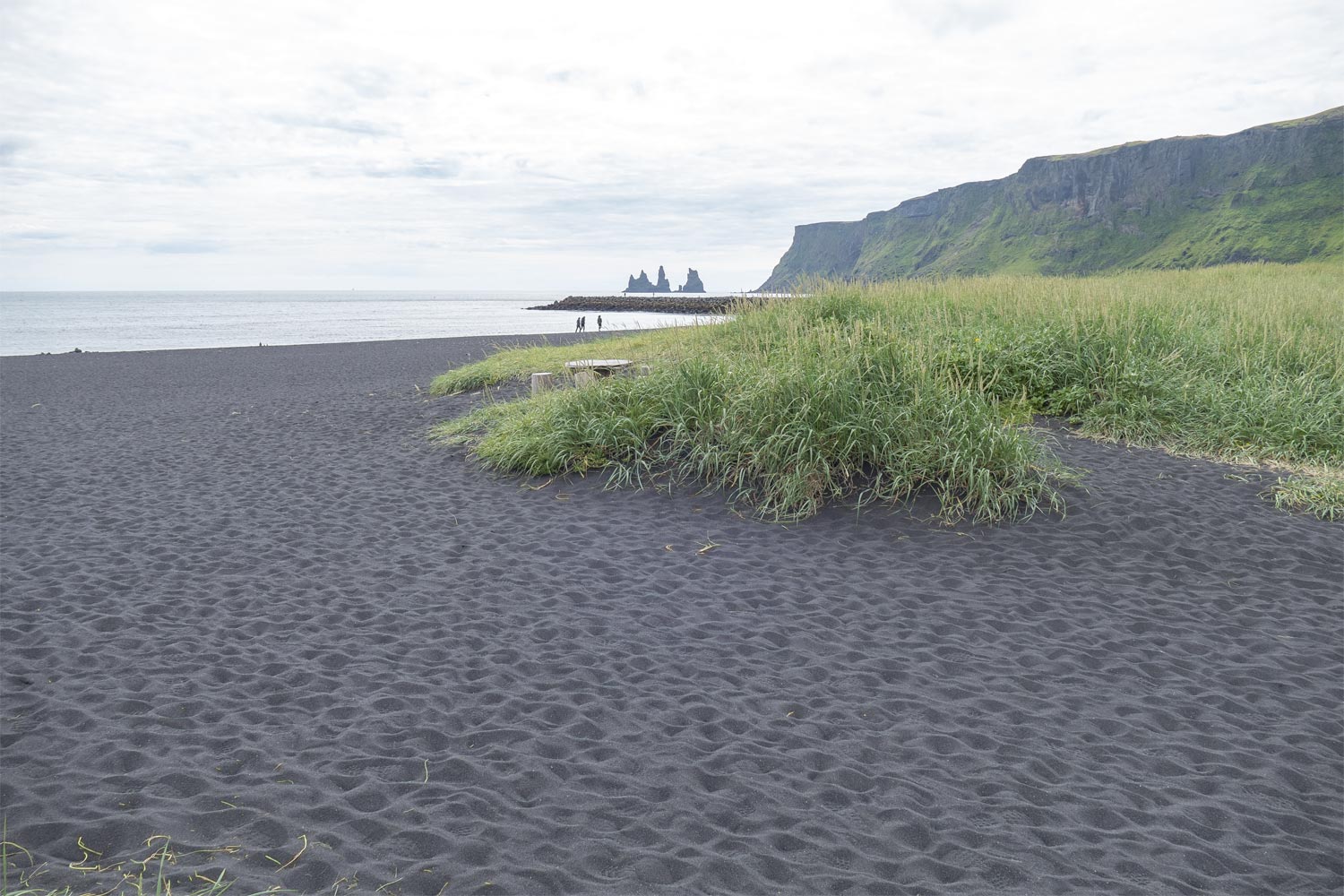
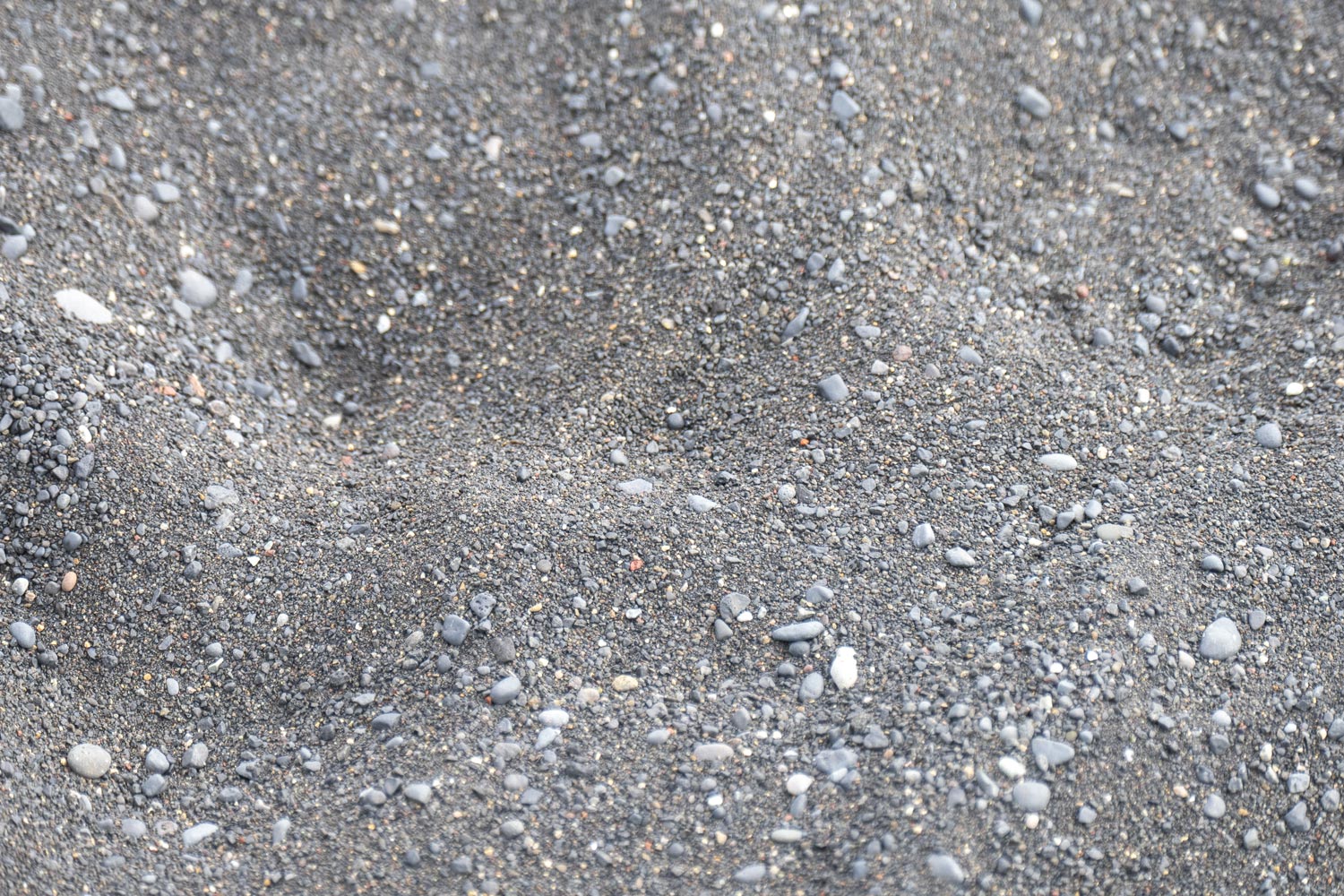
It’s that same solidified lava, gradually crushed and ground by wind and waves until it turns into sand.
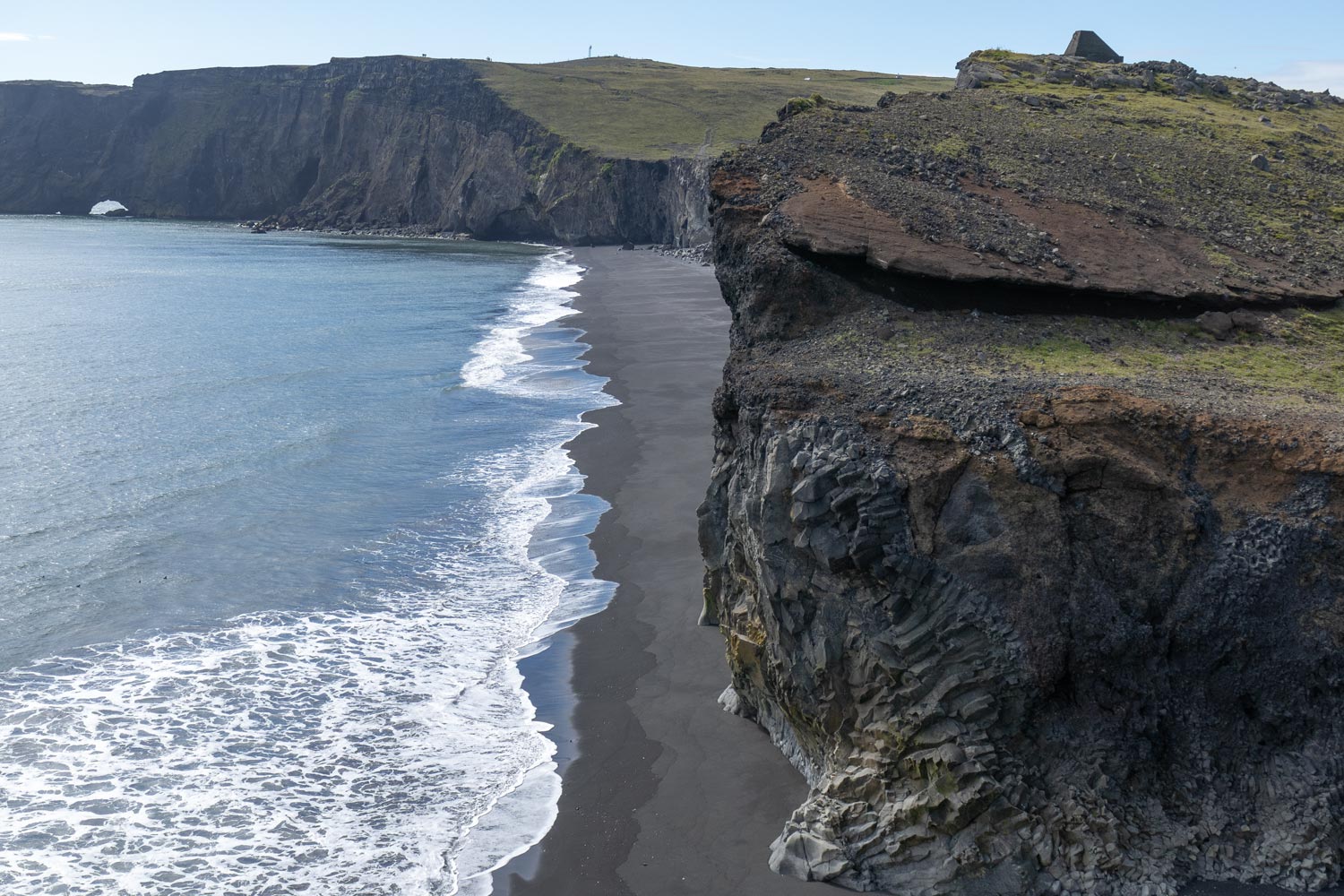
Black beaches aren’t unique to Iceland. You can find them in Hawaii, on the Spanish island of Tenerife, and even on Russia’s Kamchatka.
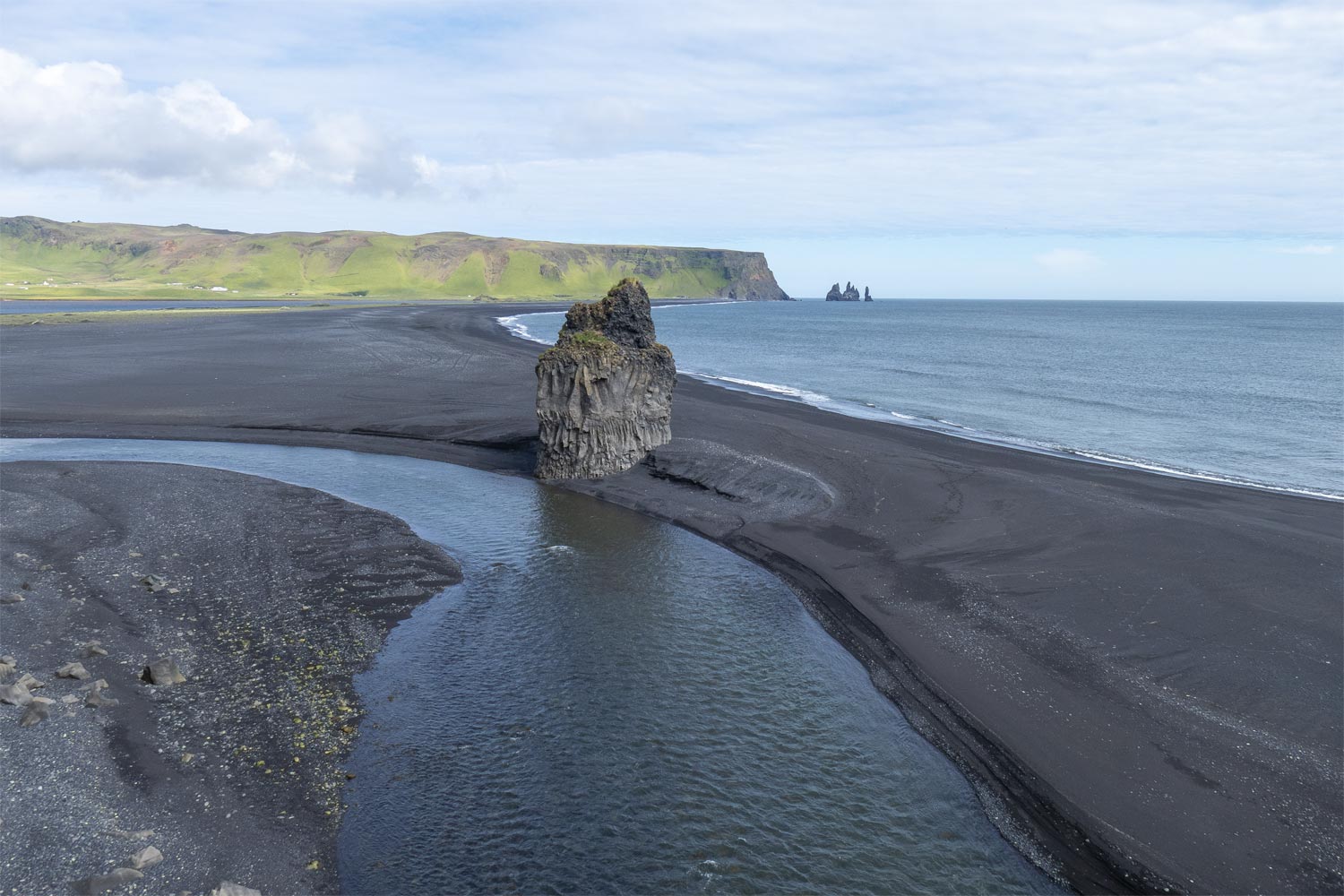
In fact, all volcanic places on the planet are made of basalt. Iceland is one solid piece of basalt. Sand in some places, mountains in others.
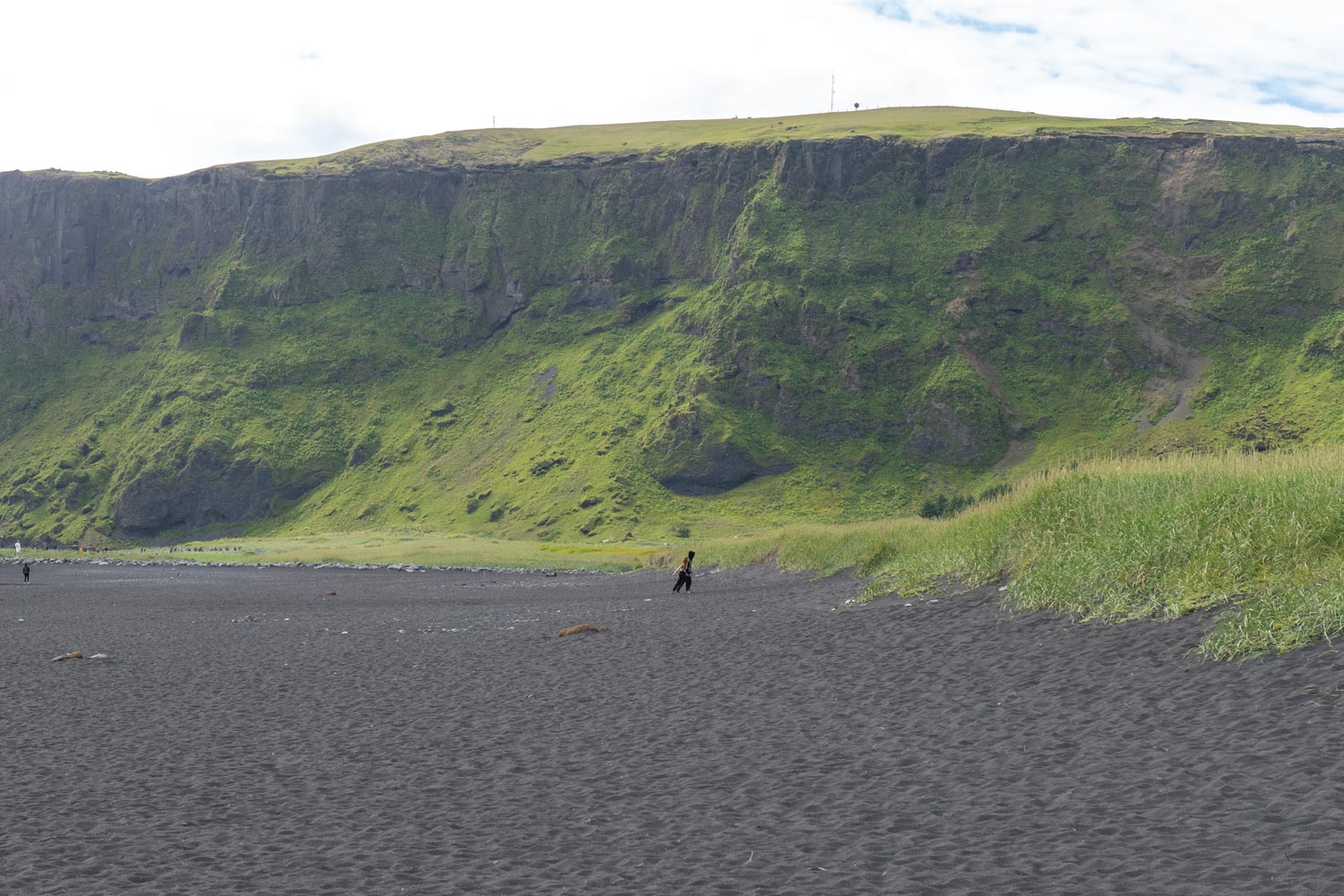
Of course, basalt doesn’t go to waste. It’s used to make paving stones and sidewalk tiles, gravel, fiber for rebar, stove linings, and even sculptures. I wouldn’t be surprised if people in Icelandic towns even shine their shoes with basalt instead of polish.
And for dessert, we have a glacier.
Getting to a glacier isn’t that easy, especially since glaciers are melting faster and faster. Glaciers used to reach many roads in Iceland, but now you have to drive deep inland to get to them. Every year, a glacier retreats by 50–100 meters, and over the past hundred years, Iceland has lost 20% of its ice.
The easiest glacier to reach is Sólheimajökull. A bus tour takes you almost to the edge of the glacier, and then you just walk for half an hour along a basalt path.
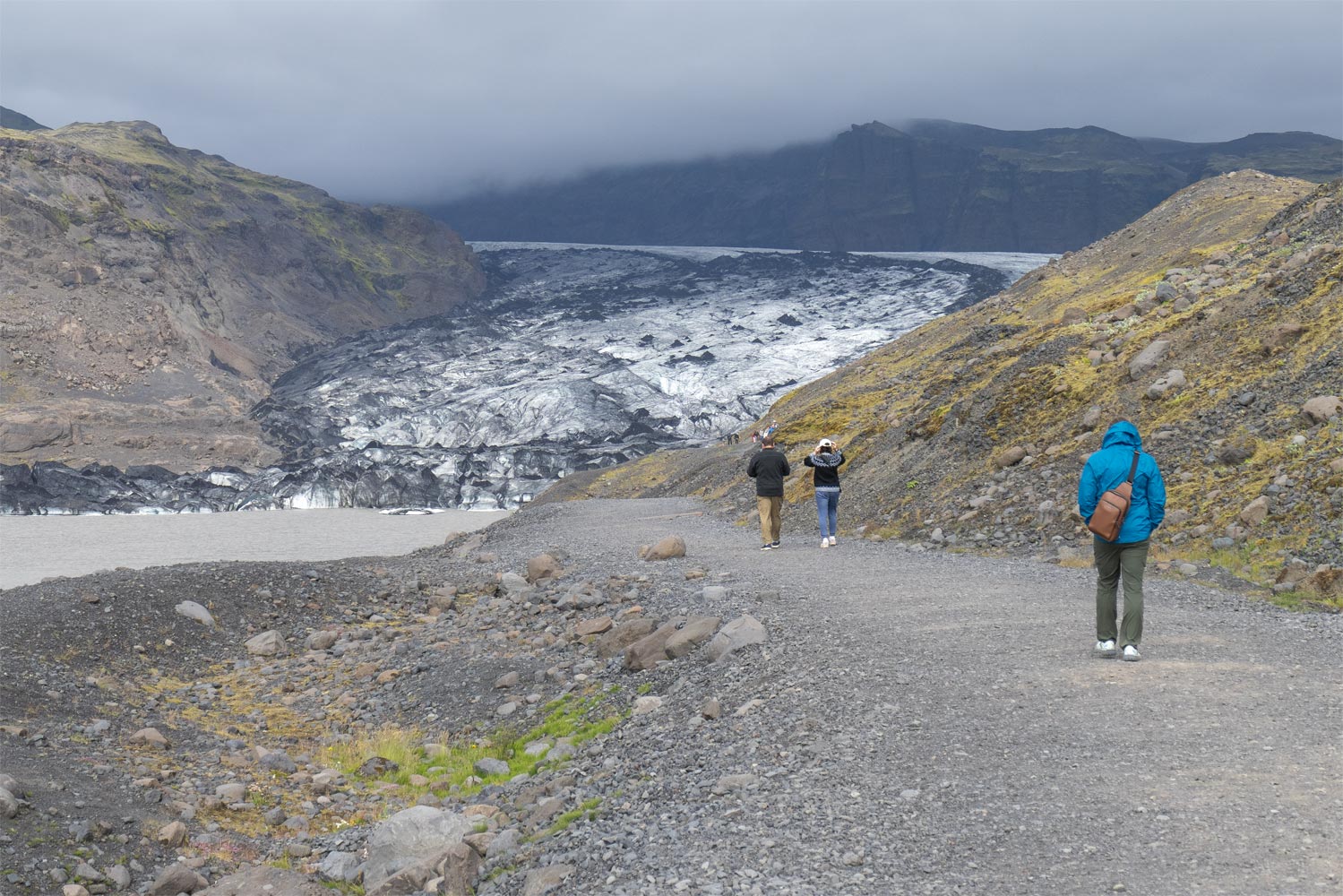
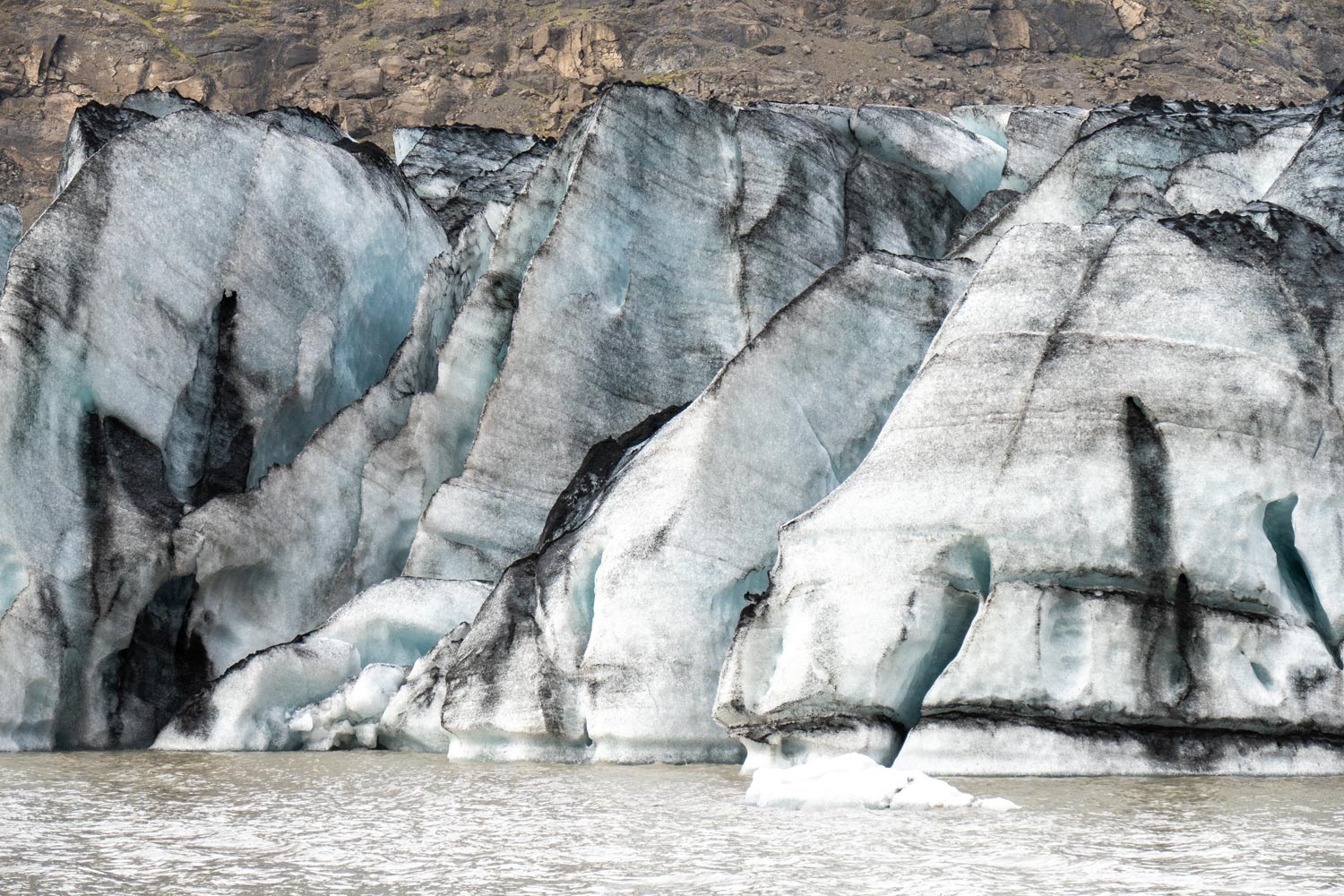
I bet the reader expected to see a neat, azure-white chunk of ice glistening in the sun. No such luck! To get to clean ice, you have to go deep. That takes gear and at least one full day. The edge of the glacier is all smeared with the notorious basalt, so it looks like a pile of dirty snow by the side of the road.
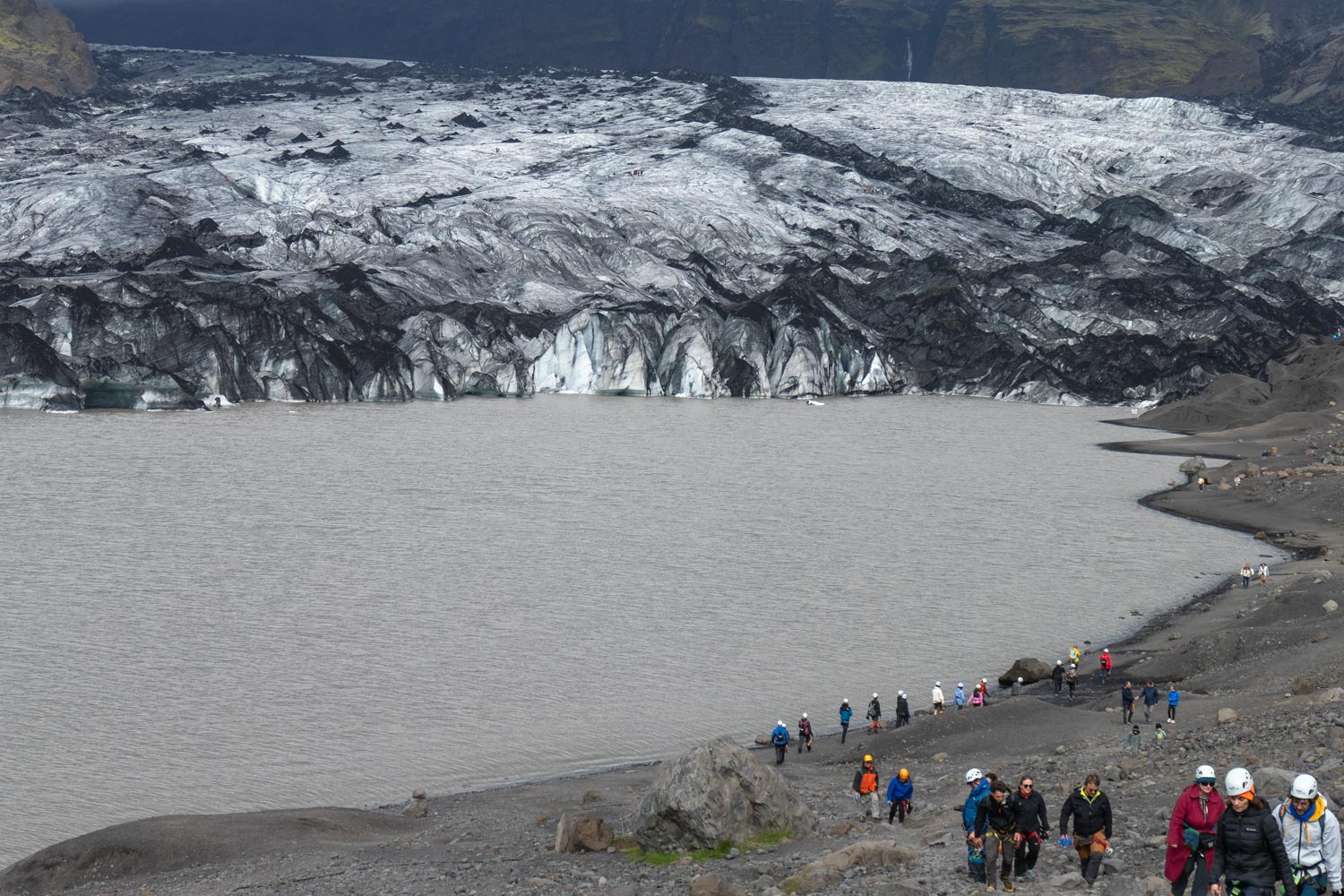
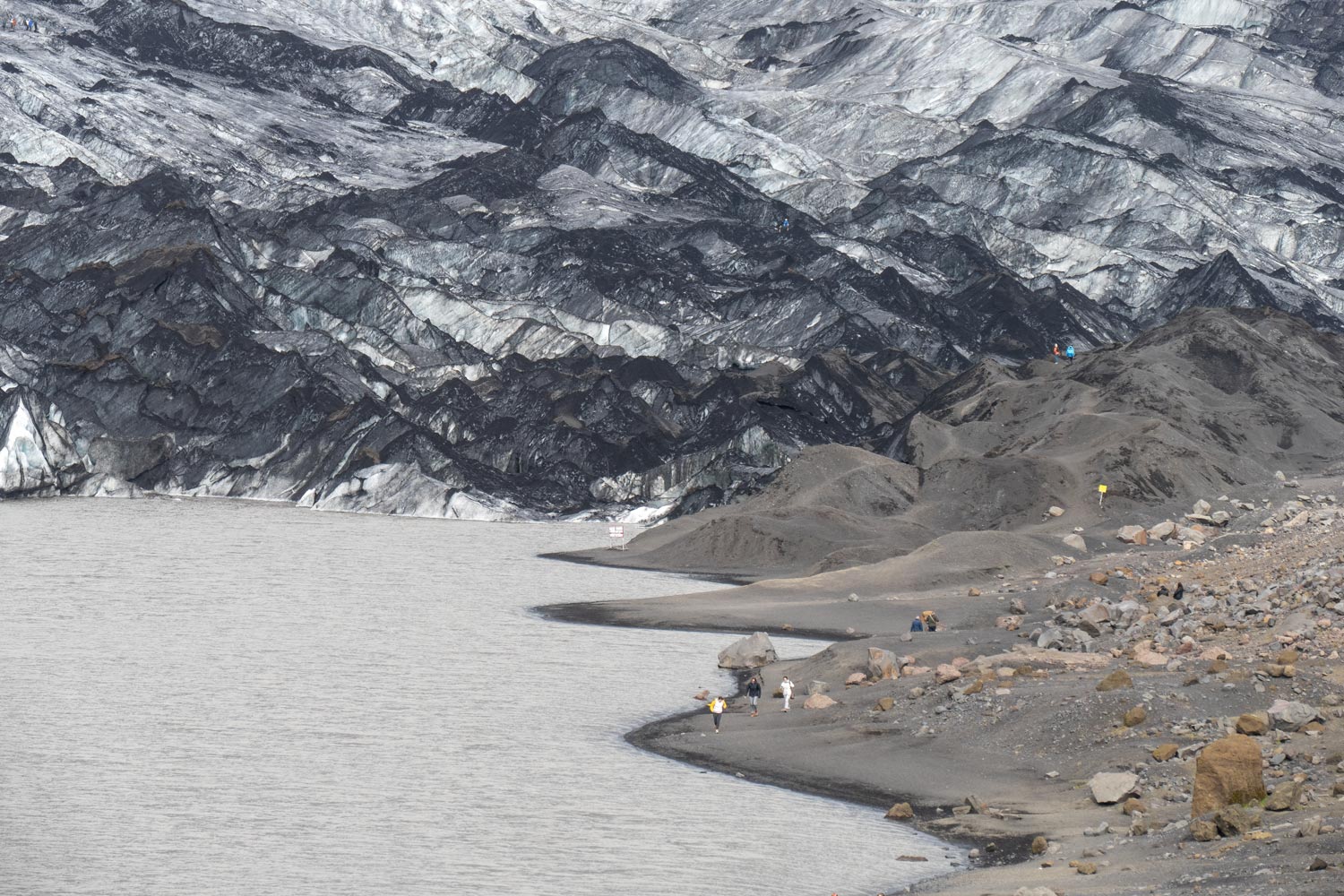
There’s a group of tourists on the glacier who decided to make it to the clean ice. They’ll be washing basalt out of their clothes for a long time after their trip.
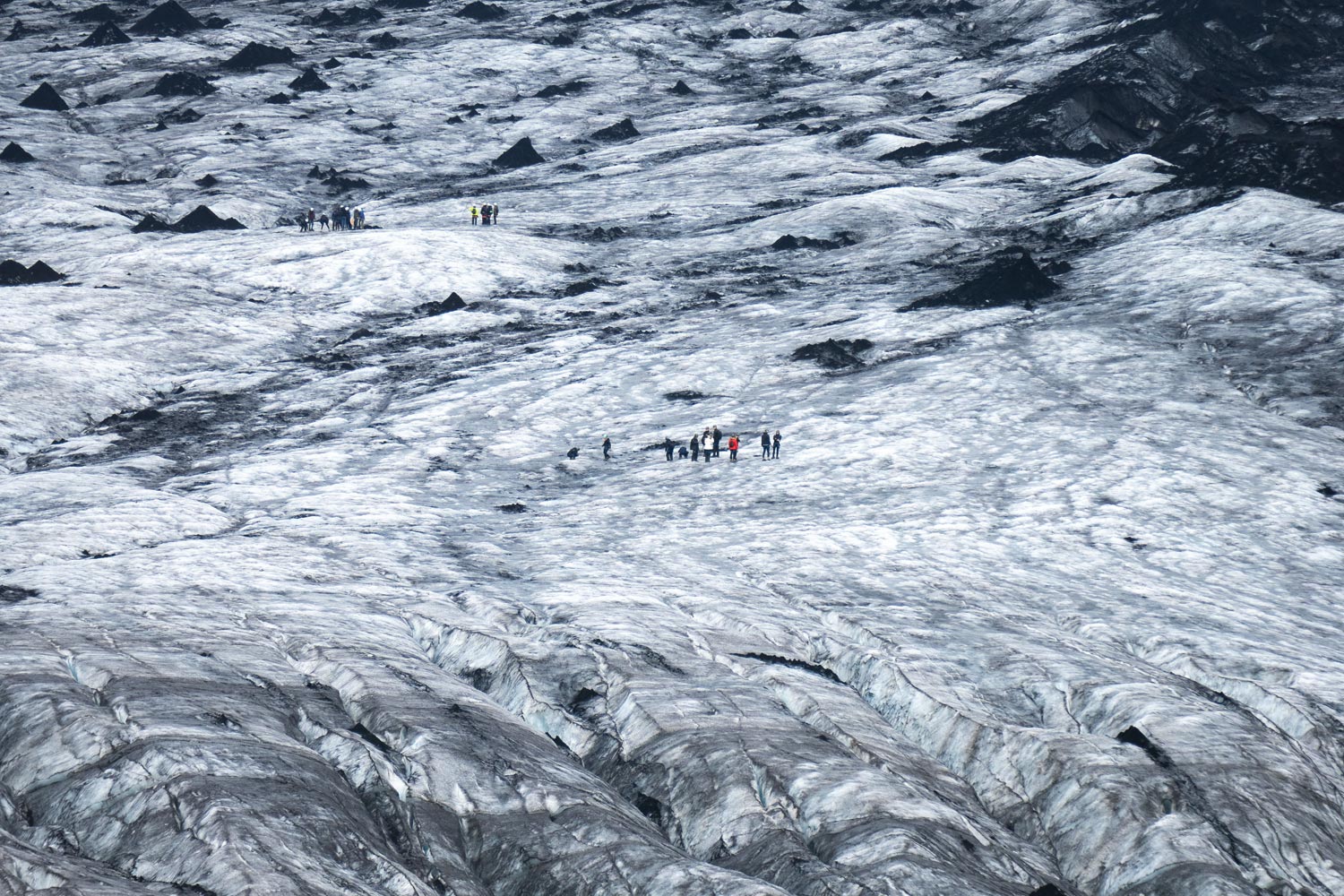
As for us, we’ll stop at the very edge of this giant. At least this time.