A clear, frosty night. An extraordinary brightness and wholeness of everything visible. Earth, air, moon, and stars are locked together, riveted by the frost.
After an eight-hour flight, the weary Boeing lands at John F. Kennedy Airport. The glossy splash screen on the seatback monitors gives way to a blurry video feed from the nose camera. Through the interference of the pouring wet snow, the hazy figure of a person can be seen, who, armed with a gleaming baton, is guiding the plane along the proper path. The large lights of the terminal hang between the airplane’s wings like yellow mica lanterns. The entire runway is speckled with small lights, like daisies in a summer meadow.
They stopped short, bumping into an invisible limit. Daddy’s back, you bitches, flashed through someone’s mind.
Andrew Marcus. New York. Part one. Downtown
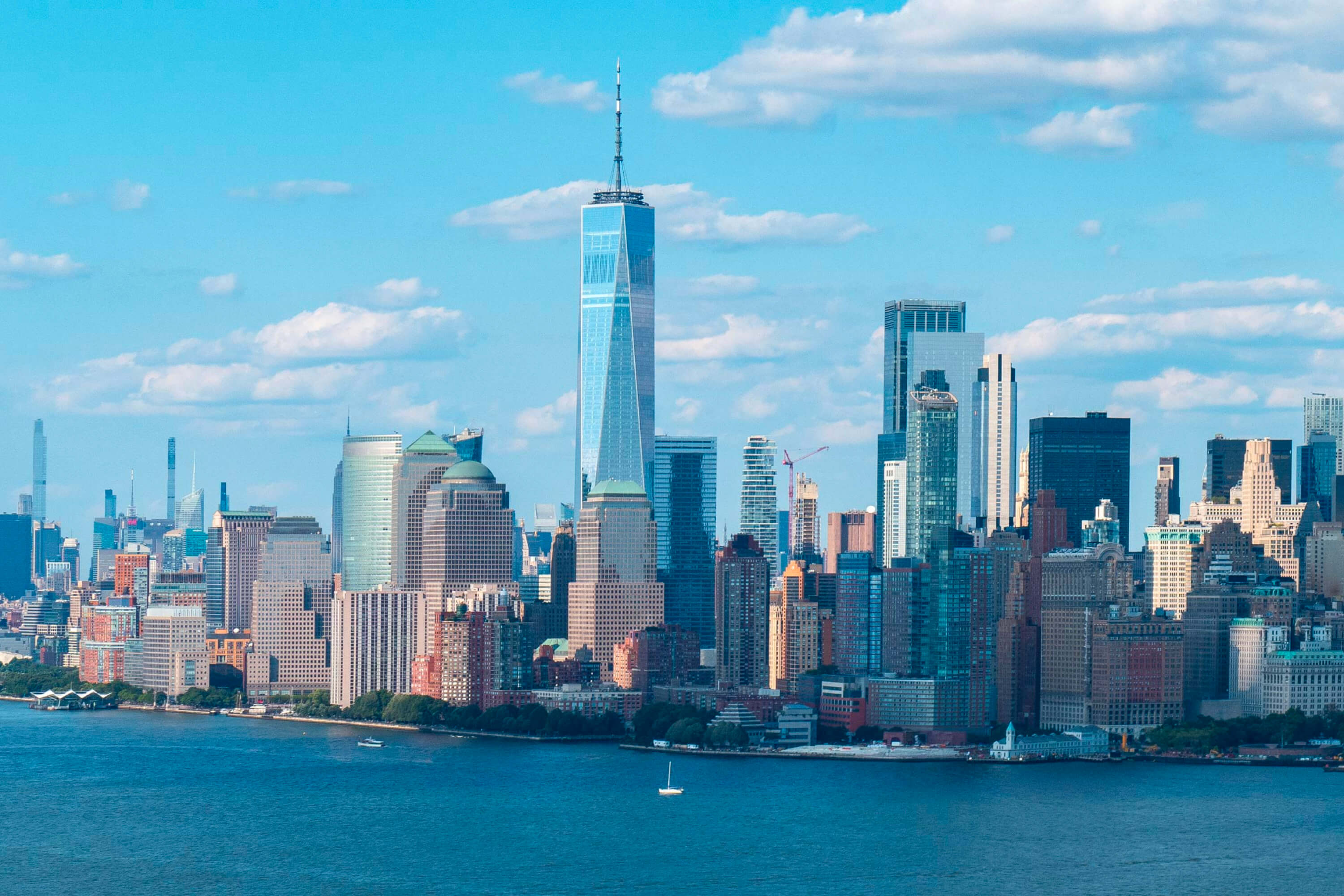
The author arrived in New York in February 2023 and couldn't leave. Just look — how can you not fall in love with this city?
Sorry, wrong shot. Here:
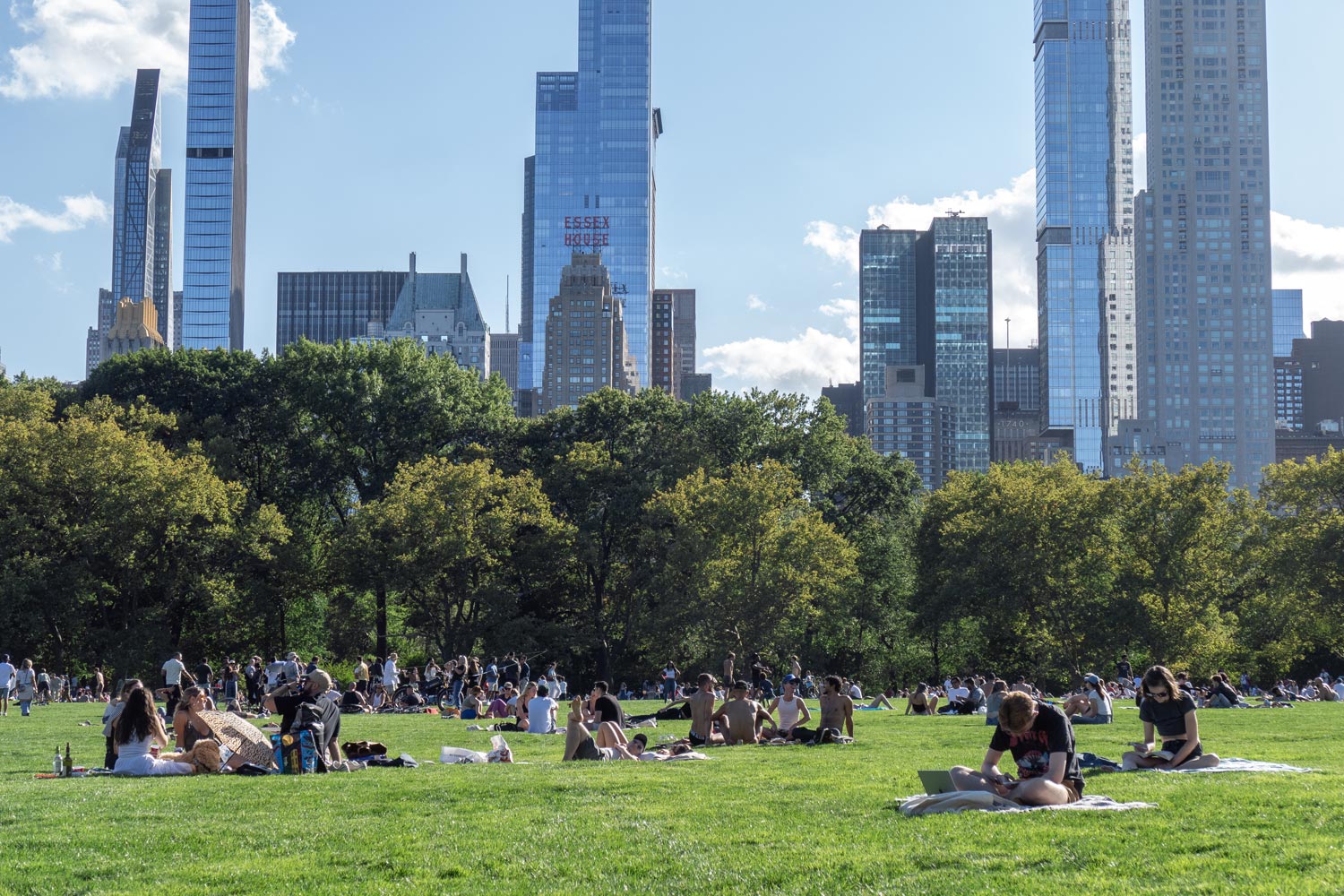
America is a young country. When it comes to history, it can’t compete with such boomers of the planet as Italy. However, this doesn’t mean at all that the USA has no history.
New York is a vivid example of historic America. The city was founded in 1626 — the year the island of Manhattan was bought from the Indianst. Not for beads though, but for various goods: beads, fabrics, mirrors, and iron axes. And wasn’t exactly bought, since the Indians didn’t even have a word for “buy.” And nor were it the English, but the Dutch. They were the ones who named the town New Amsterdam, and it was only forty years later that it was renamed New York, when the English finally made it to America and drove the Dutch out of Manhattan.
So after all New York is not such a young city. Today it is a full 400 years old. Of course, it’s not Rome and not even Moscow. Still, St. Petersburg is a whole 80 years younger than New York, which doesn’t stop it from being one of Russia’s historical gems.
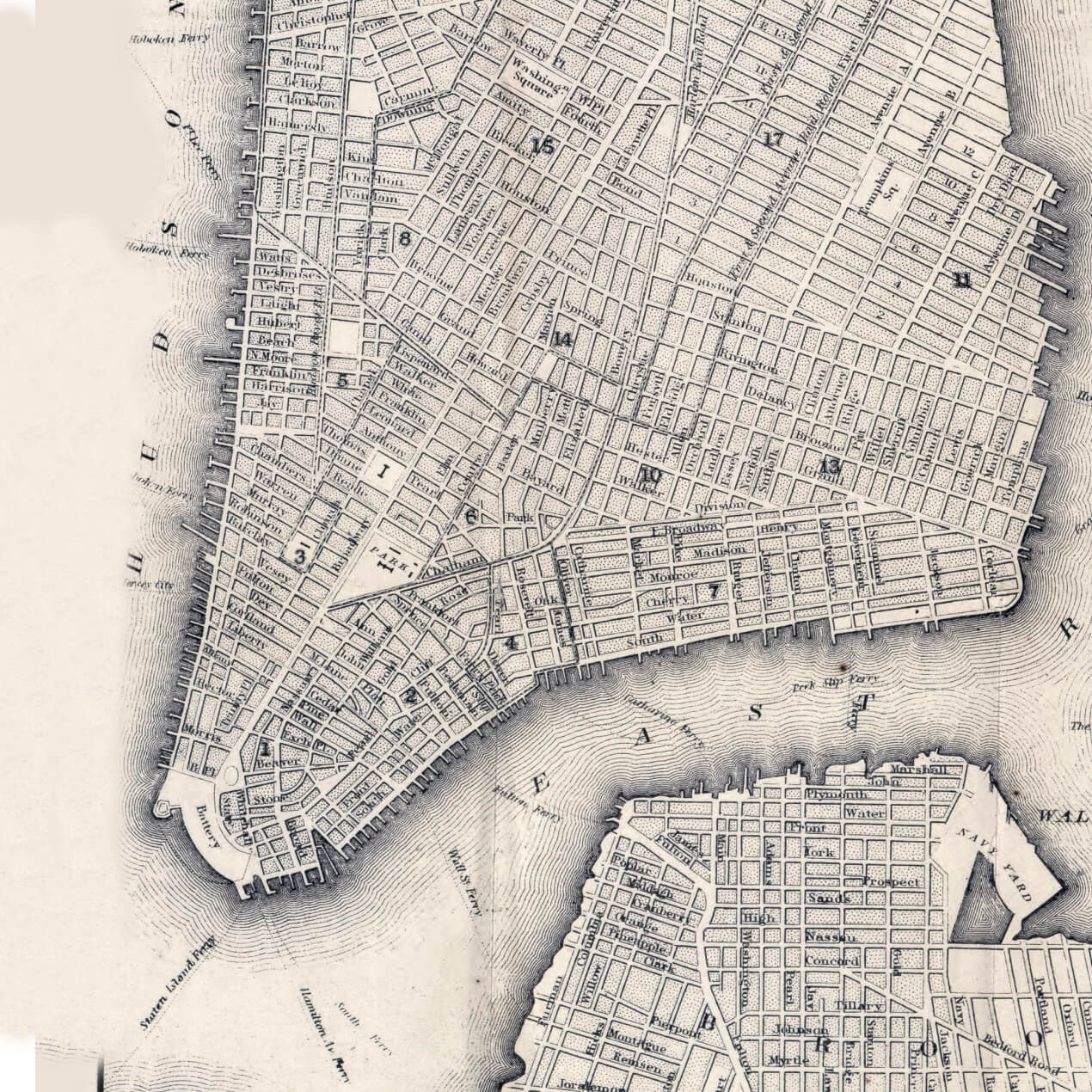
Downtown
In many languages of the world, the American word “downtown” is often translated as “city center.” This is wrong.
The word “downtown” should be translated literally as “lower town.” There is no such thing as a “center” in New York, and there never has been. What the city does have, and has always had, are the lower, middle, and upper parts of town. The term “downtown” originally referred to the southern part of Manhattan simply because it is lies down on the map. By the same logic, its northern part is called “uptown”, and the middle part is called “midtown.”
After appearing in New York, the word “downtown” remained local slang there for almost a hundred years. It spread beyond New York only in the 20th century, when the New York downtown was built up with skyscrapers. Now business districts in all cities over the world are called downtowns.
As for New York, these days its downtown isn’t all that downtownish anymore. Looks more like a park.
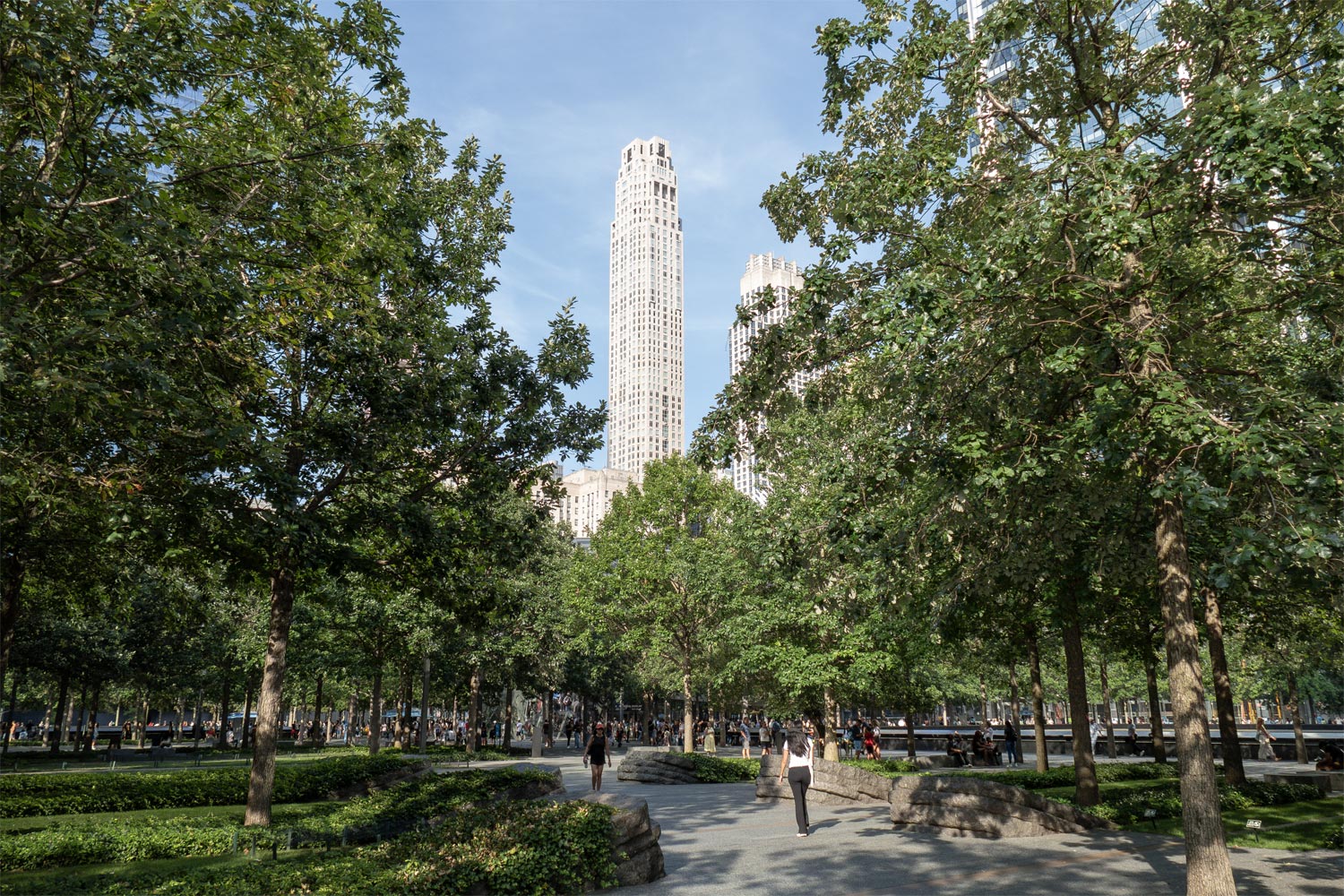
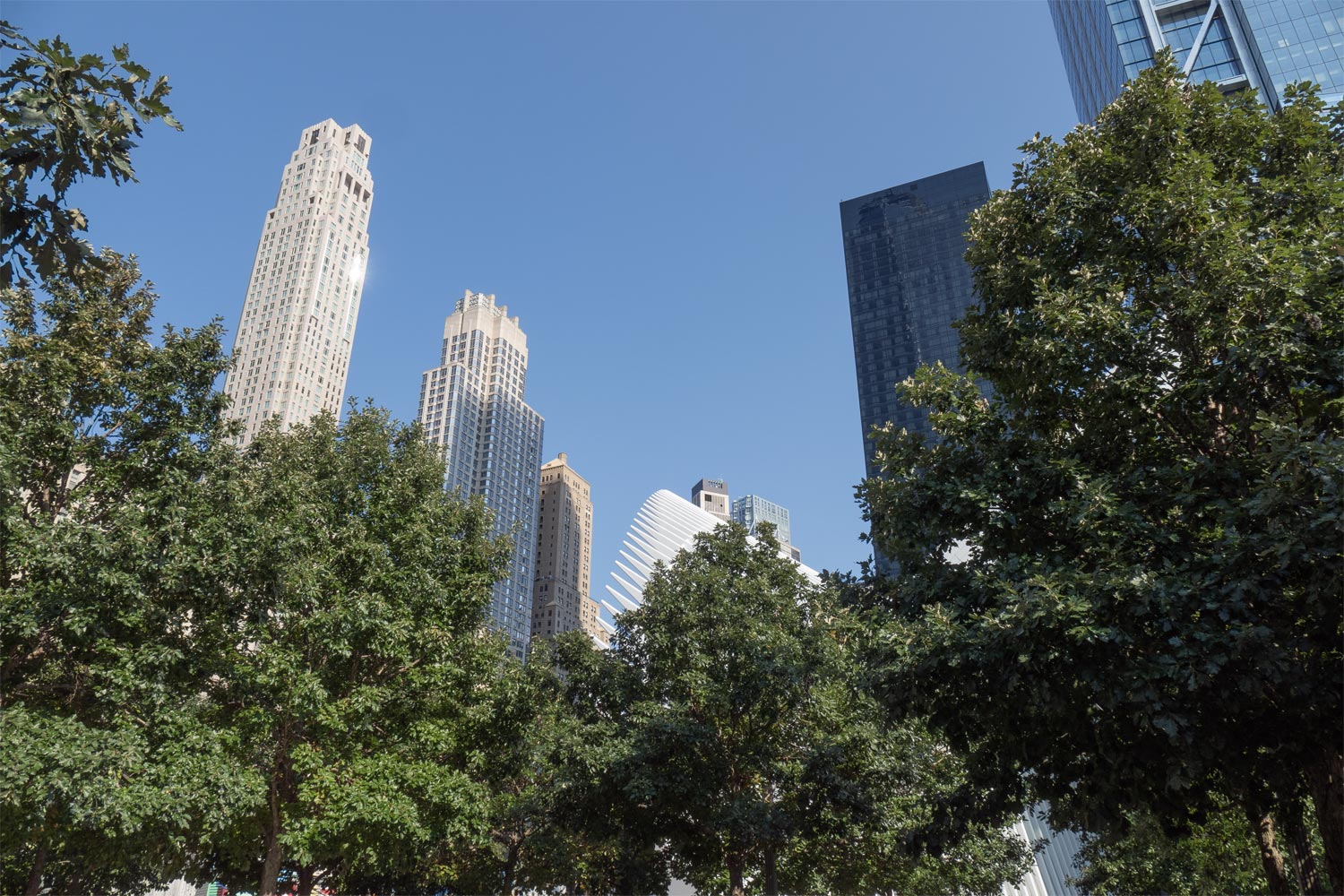
The World Trade Center looms above the dozens of skyscrapers crowding the downtown. It is the tallest skyscraper in New York and in all of America. Its height is 1,776 feet — the year of U.S. independence.
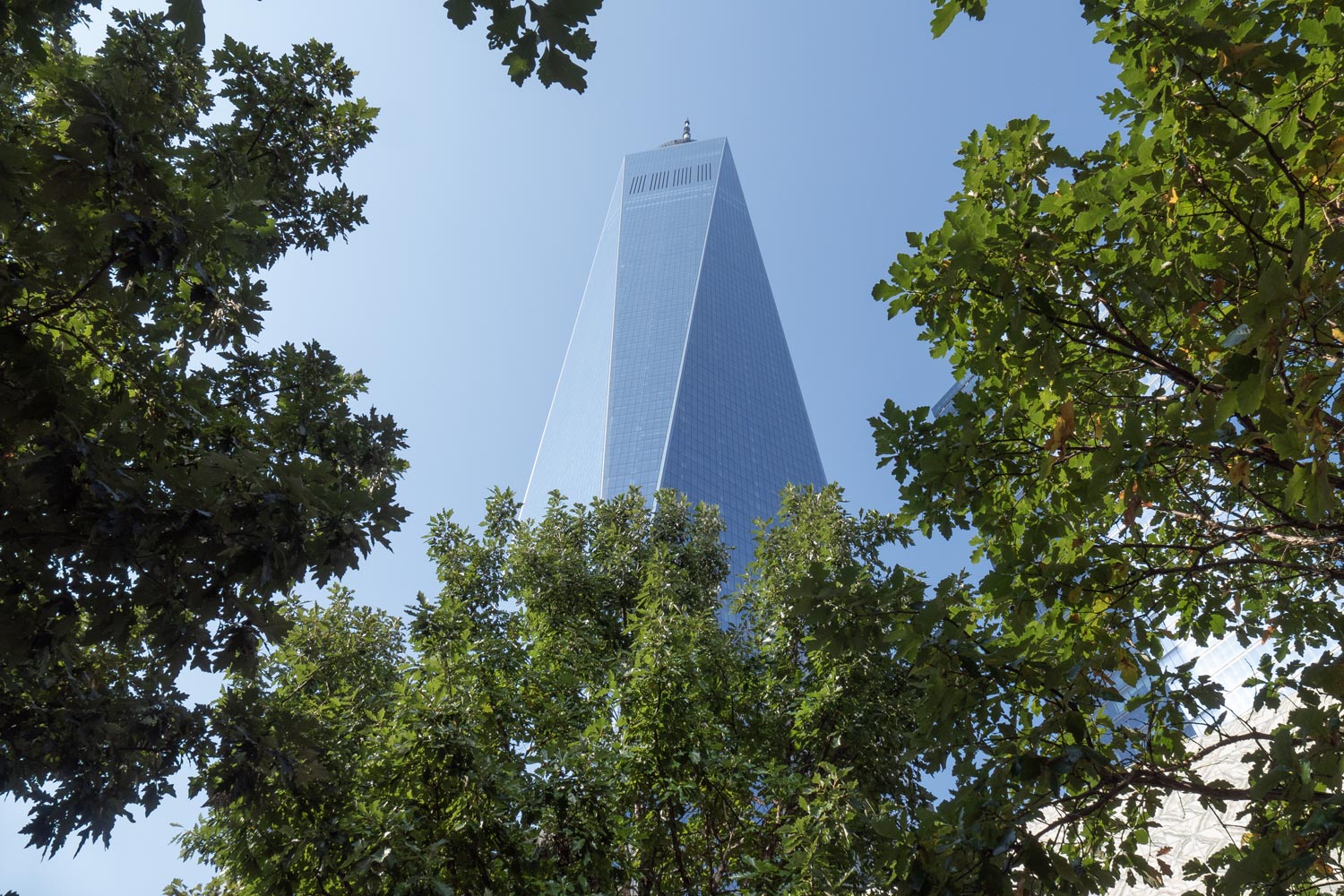
Until recently, this skyscraper in New York didn’t exist. Nor did the park. In their place stood two identical towers, which were also called the World Trade Center, or the Twin Towers.
Most likely the reader knows what happened to them: they were destroyed by terrorists who crashed two passenger planes into them. That day became the greatest tragedy for America and especially for New York.
Today’s park is laid out exactly where the twin towers once stood. It’s always crowded here: behind the rows of trees you can literally see throngs of people.
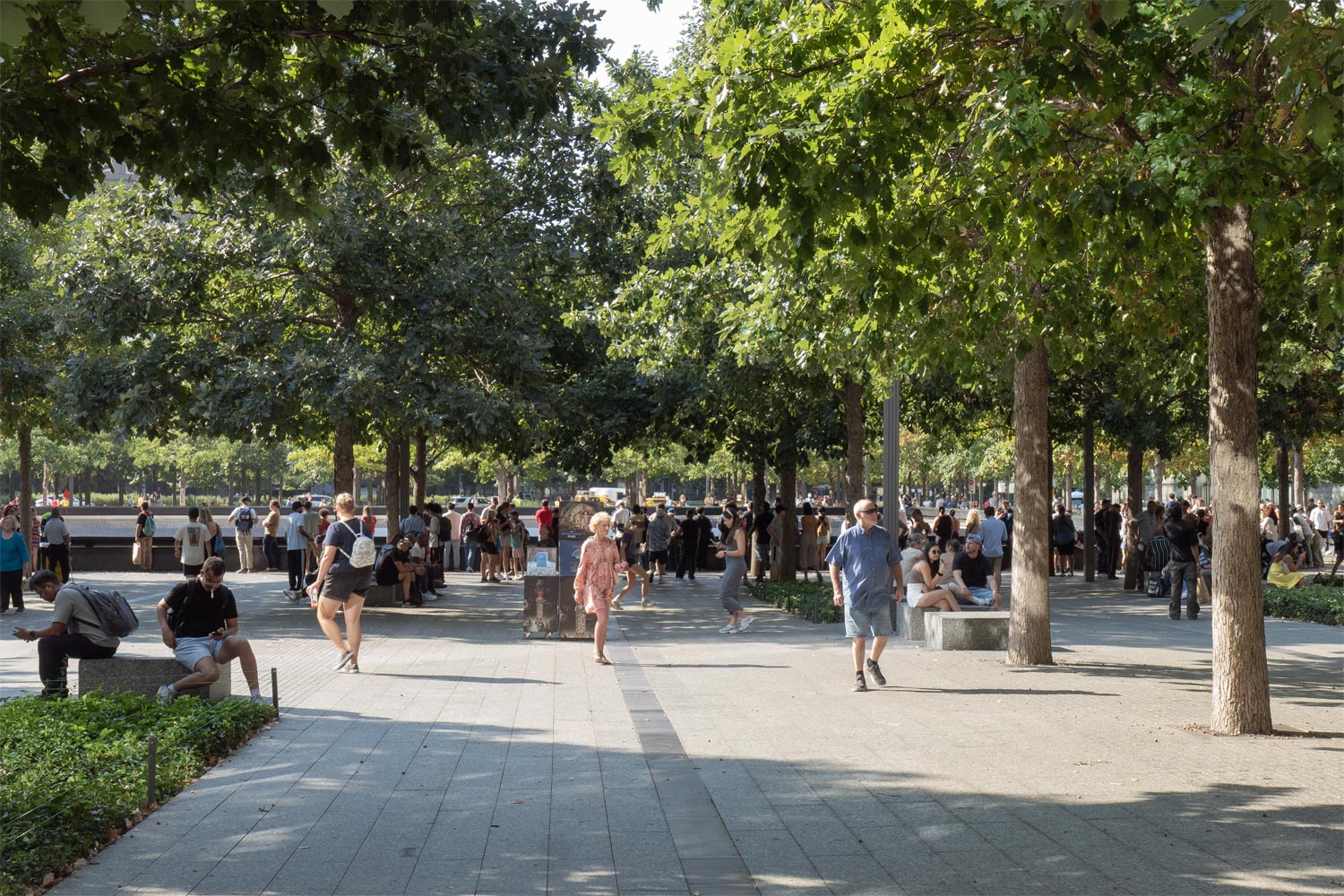
All these people are crowding around a monument hidden in the middle of a green park. This monument is quite unusual. It doesn’t tower above the tops of the surrounding trees, nor does it look down on its viewer from on high. You can’t even see it from afar, as is often the case with similar monuments. To be honest, you can’t really see it even up close.
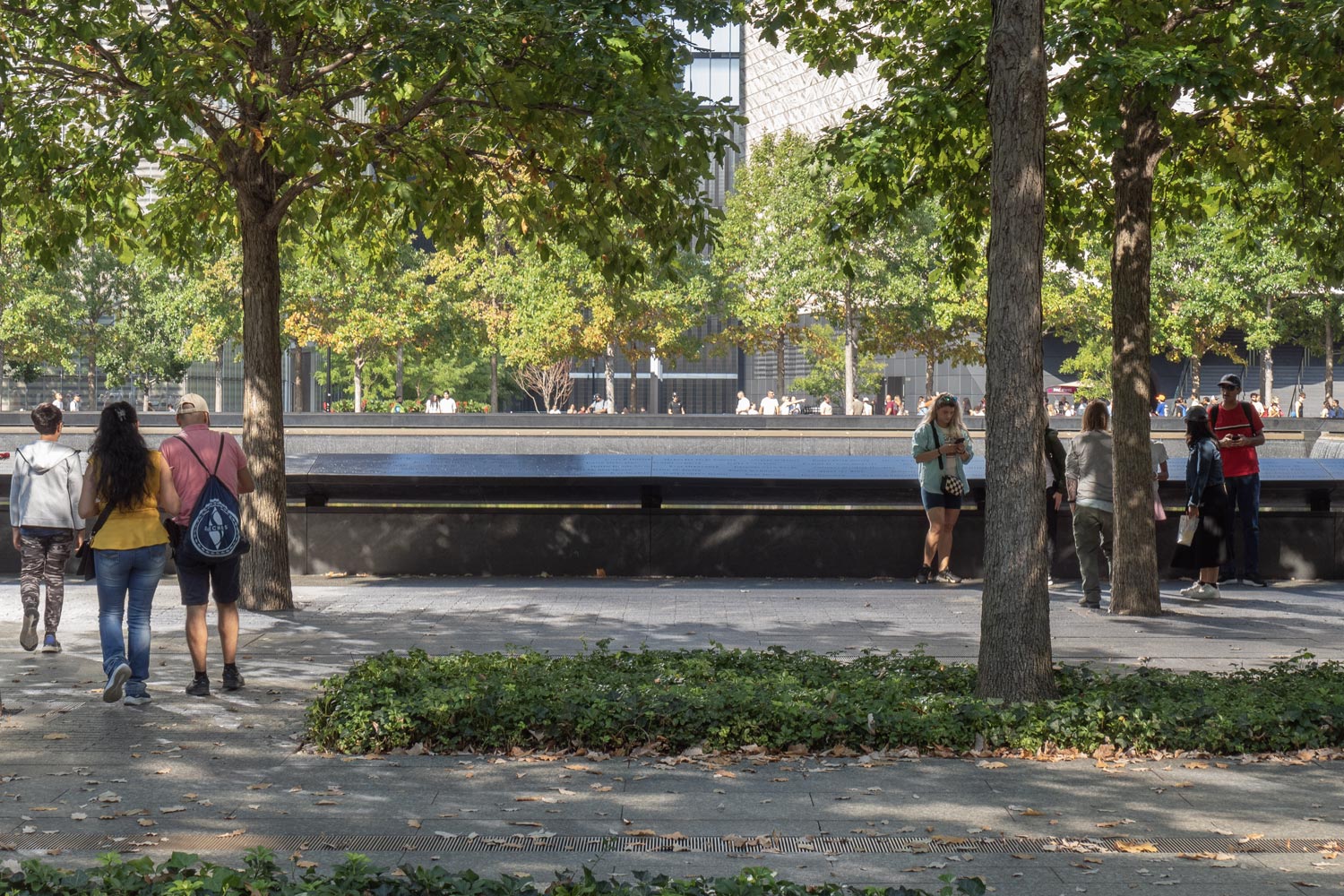
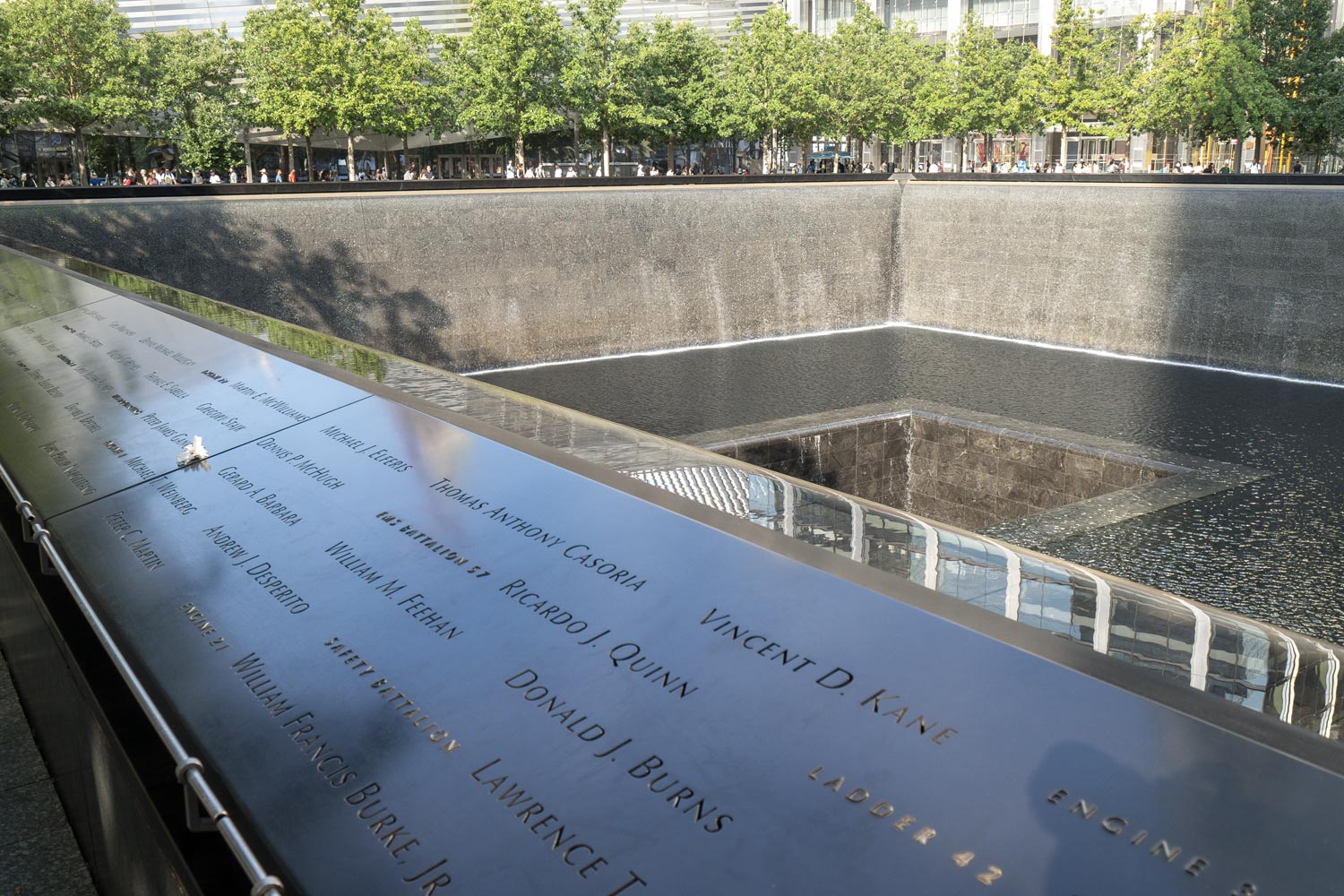
This monument can only be seen right up close, at the very fence. There, it turns out you couldn’t see it because it’s built downward. In the heart of New York, amid the green trees, lie two vast abysses. They are built exactly where the two towers once stood — the same length and the same width. Only downward.
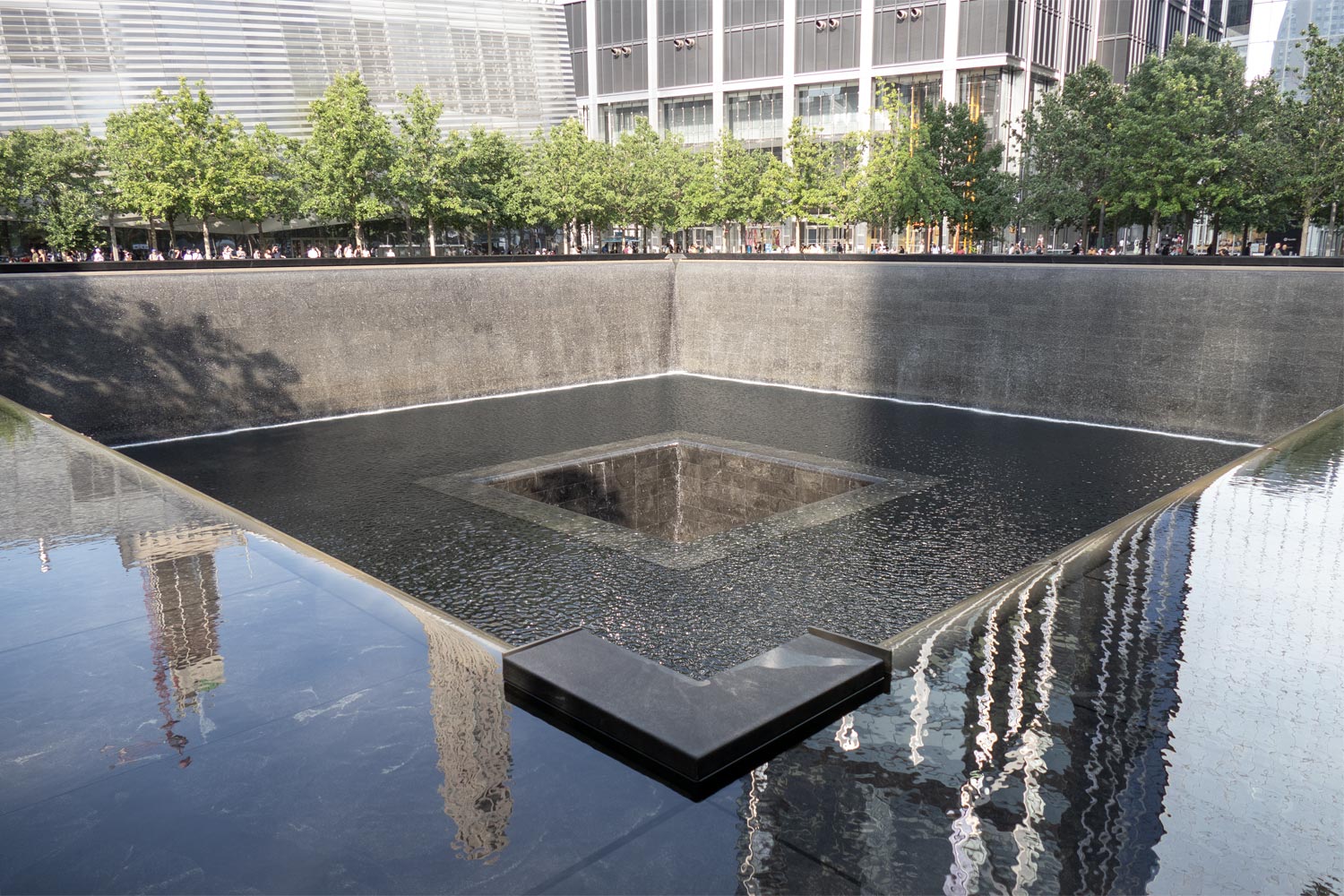
Abysses are flooded by endless streams of water. The waterfall does not stop for a single second: it pours around the clock, every day, 365 days a year.
Each abyss is encrusted with a bronze parapet, along the length of which run carved inscriptions. These are the names of everyone who died that day — 2,977 people. Some of them jumped from the heights to avoid burning in the fire, some did not jump and burned, and some were simply crushed by the debris of the skyscrapers. All of them are recorded on the bronze frame.
Opposite the park stands a strange structure, resembling the skeleton of a dead whale. Its whitening bones peek out from among the trees, scraping against and pressing into the surrounding skyscrapers.
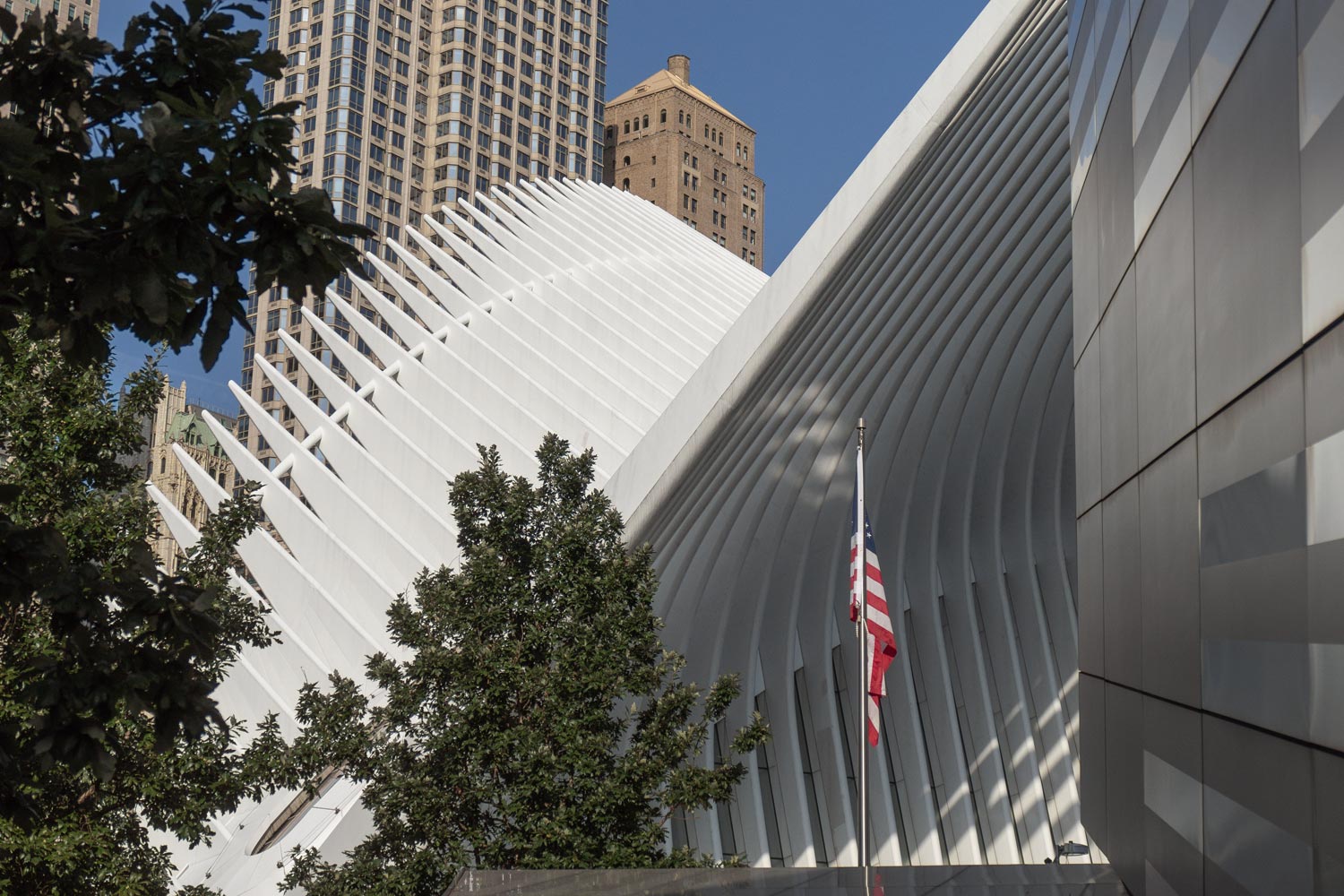
This is the Oculus. According to the architect’s idea, it represents a white dove — a symbol of peace and hope. However, it doesn’t look much like a bird. It’s more reminiscent of the remains of Moby Dick, the ribs of Leviathan, or the quills of a porcupine.
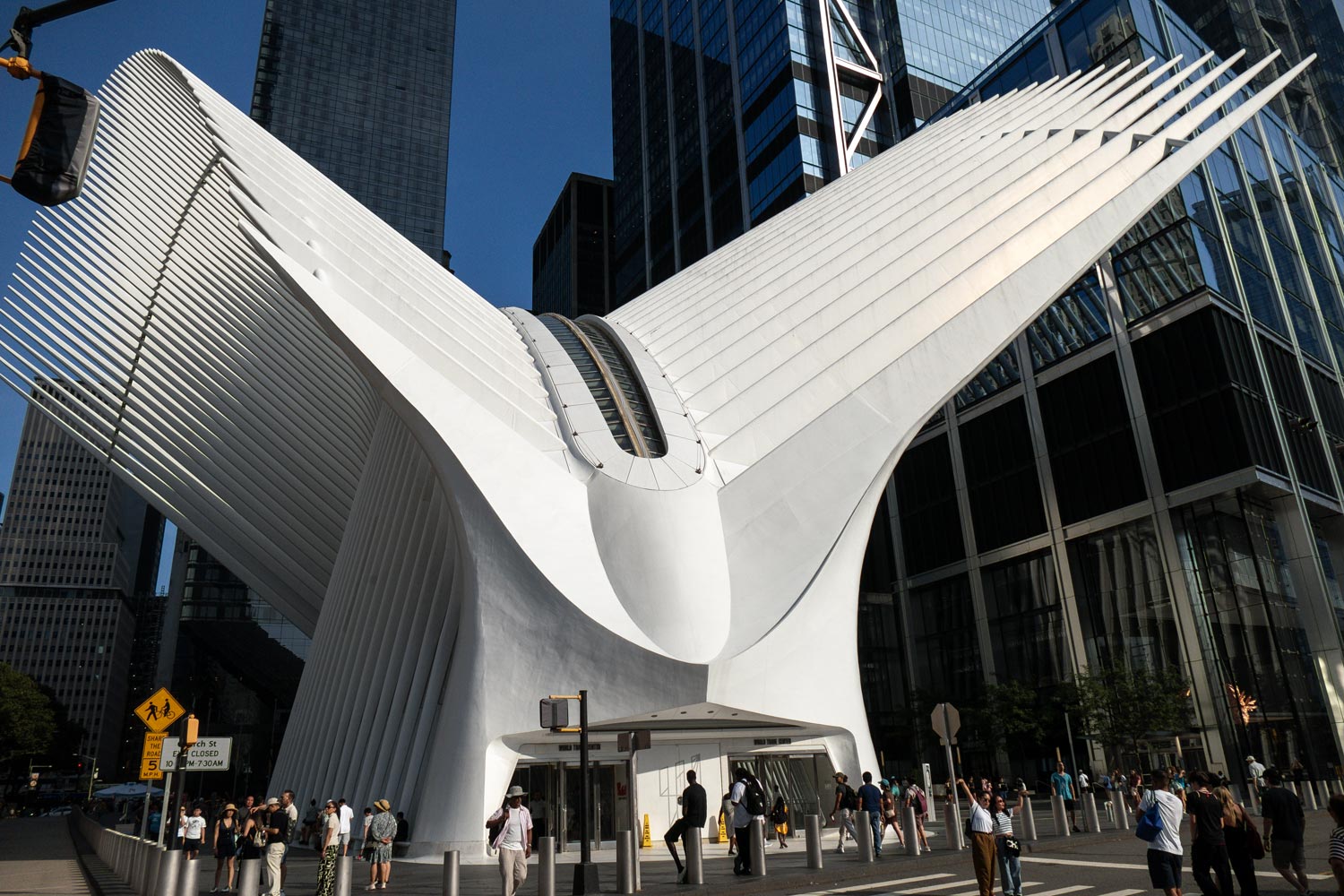
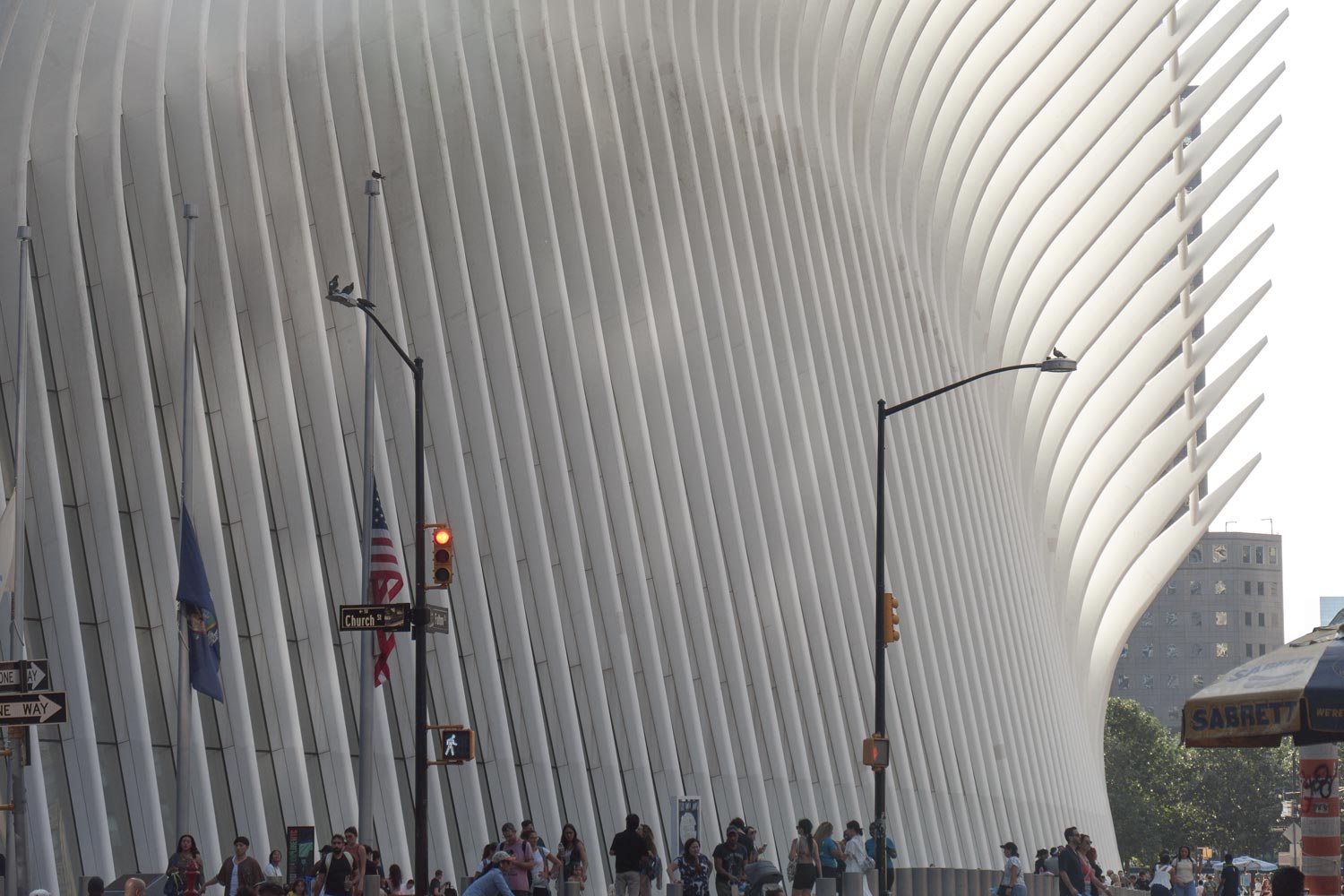
The Oculus is asymmetrical and positioned so awkwardly that it’s impossible to find an angle that reveals all of its beauty. It looks more or less decent only if you use one of its wings to cover the neighboring skyscrapers.
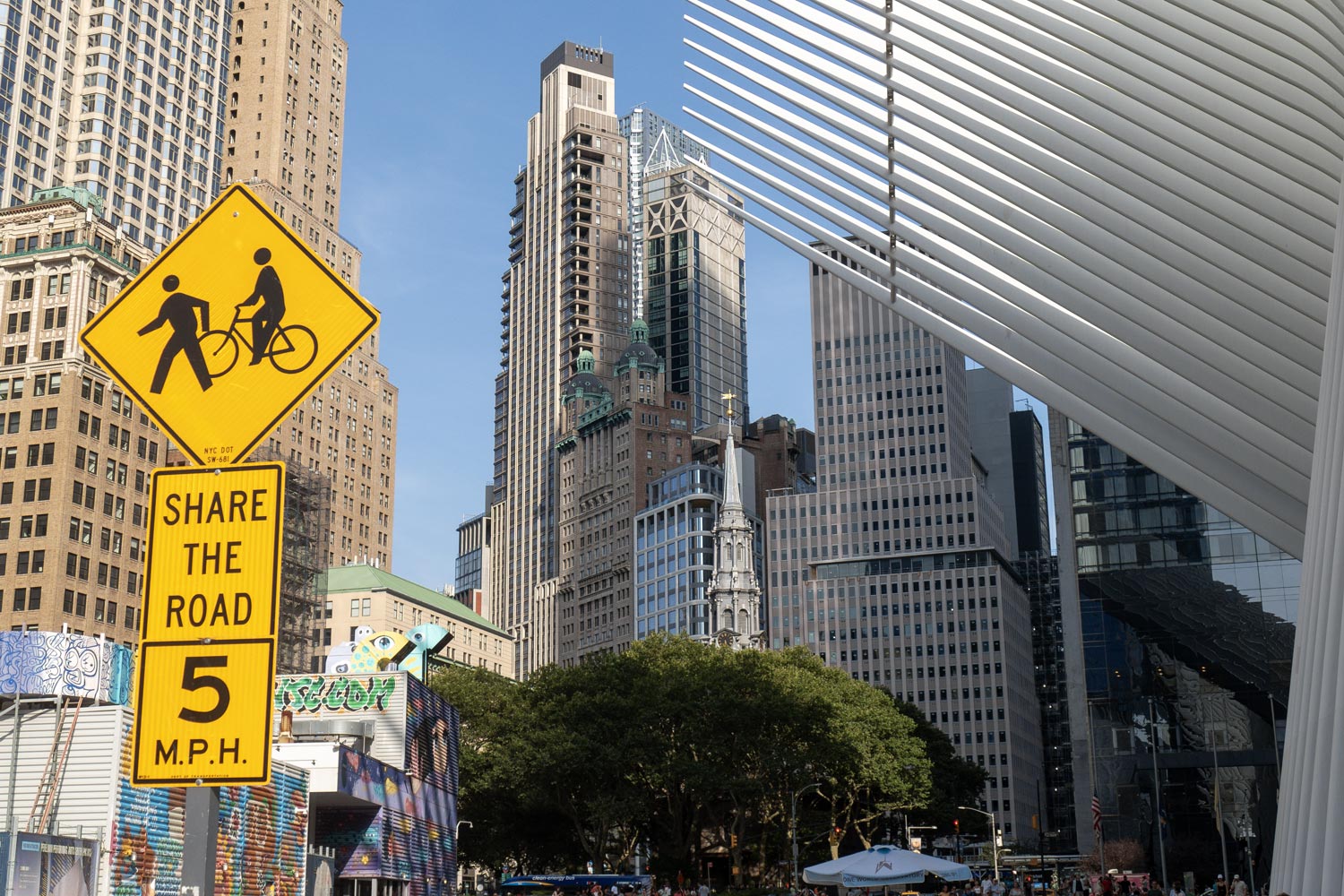
Photographers swarm the plaza around the Oculus all day long, hunting for the perfect shot of contemporary architecture.
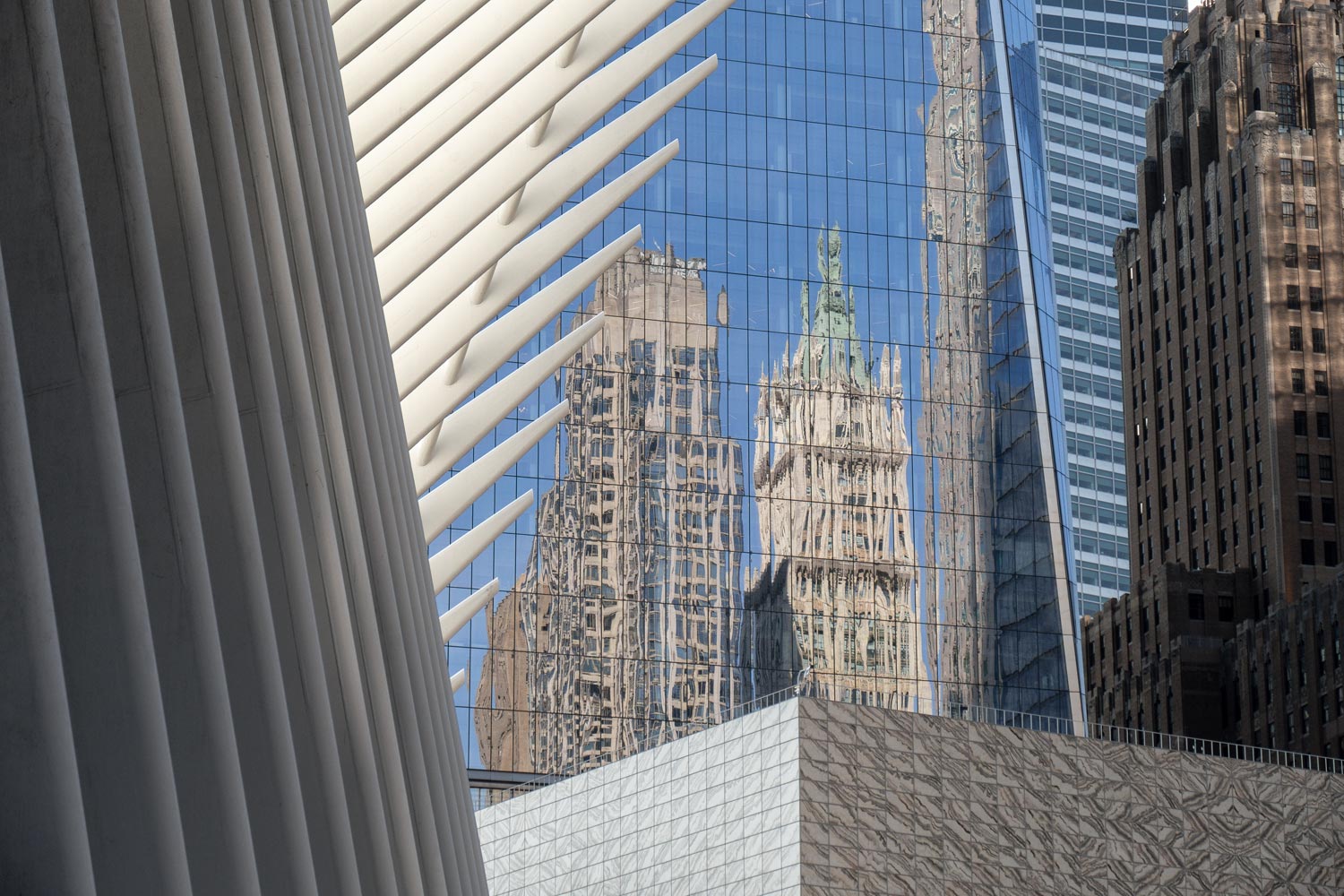
Beneath the Oculus’s very skeleton lies a huge shopping mall with an Apple Store and upscale boutiques. From here you can also access the subway and even catch a train to New Jersey.
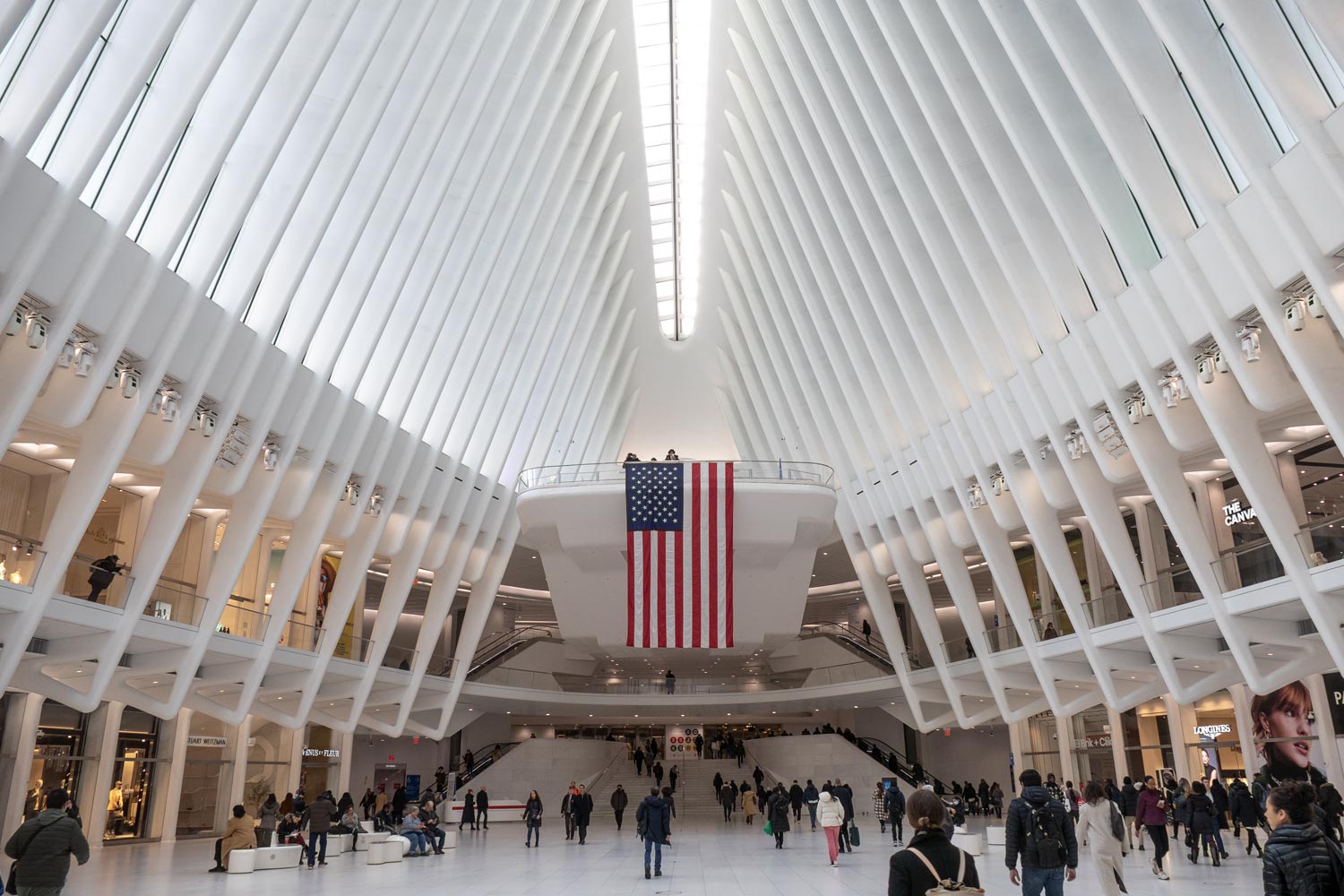
Perhaps this is the most pompous subway entrance in all of America.
Battery Park
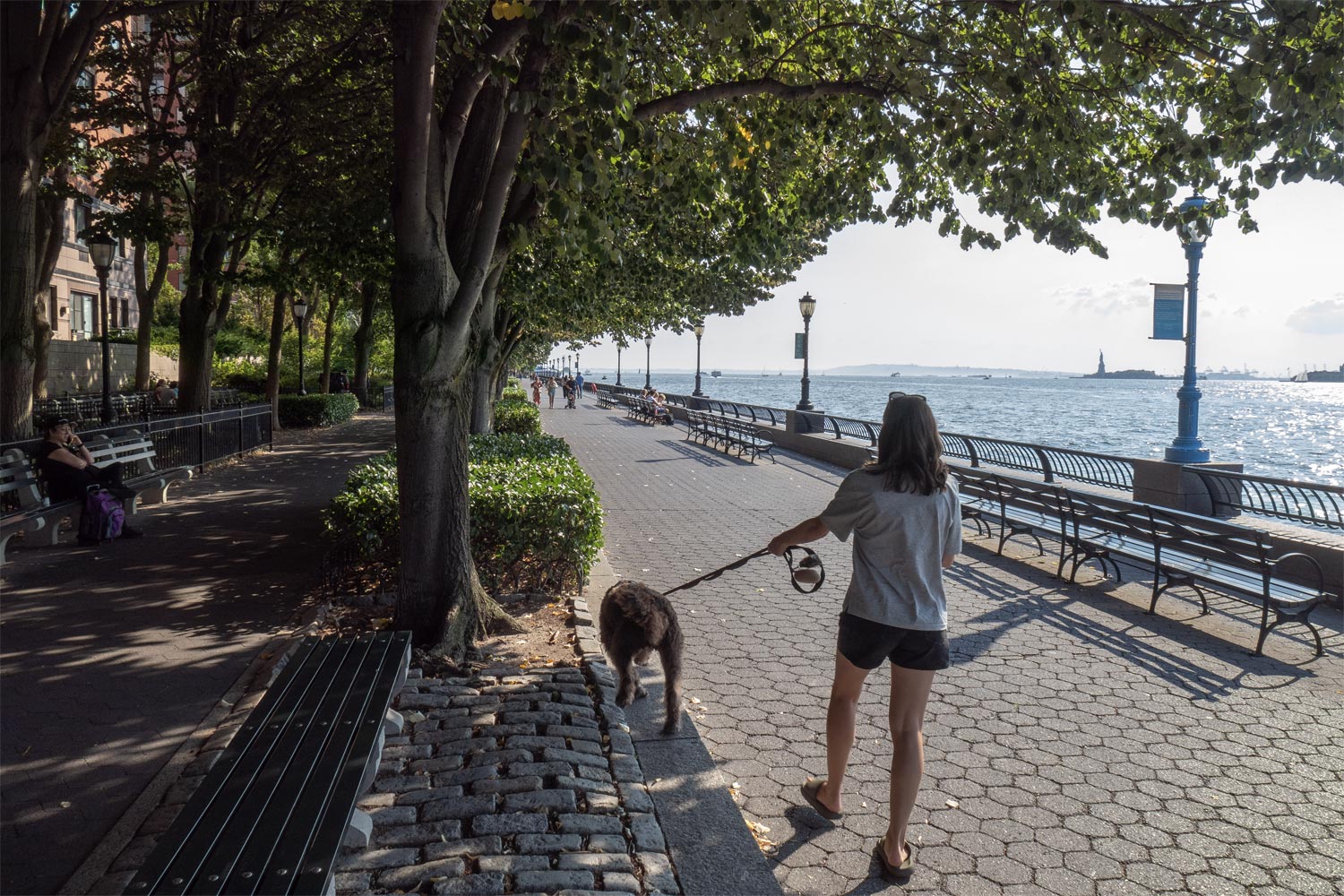
On the other side of the Oculus and the twin abysses lie the quietest streets in New York, gently screened off from the bustle of downtown and opening onto the Hudson River. This area is called Battery Park. No, even Battery Park City! And it really does feel like a separate town.
The entrance to the city-park is guarded — unexpectedly — by a piece of the Berlin Wall, dragged over to the US as a Cold War memento. New York is full of gems like this. It’s the signature style of this crazy city.
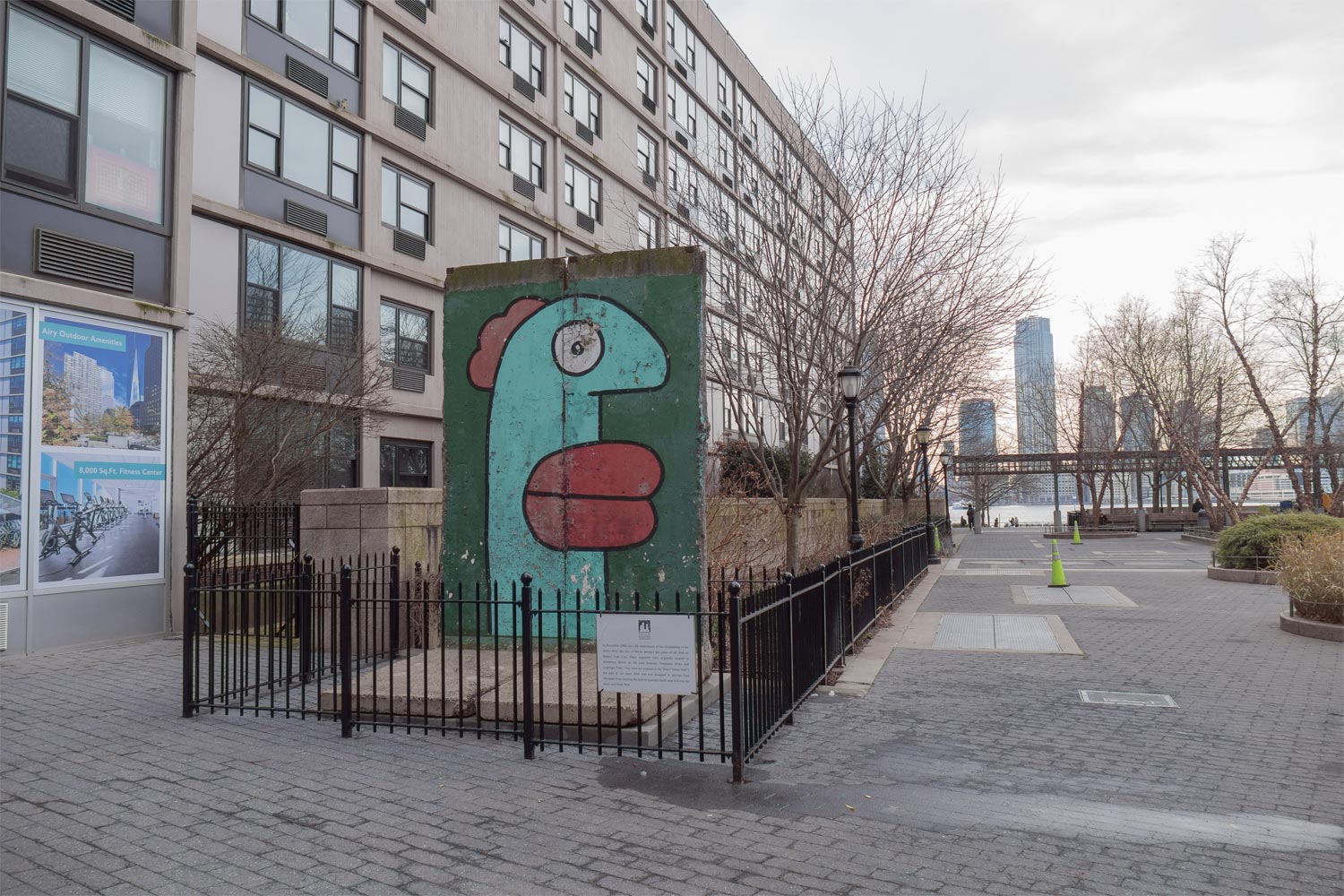
The embankment itself is like an otherworldly realm, a looking-glass world. It’s hard to wrap your head around the fact that the center of New York is just five minutes from here. In reality, New York is not at all a techno-dystopia, but a fairly green city.
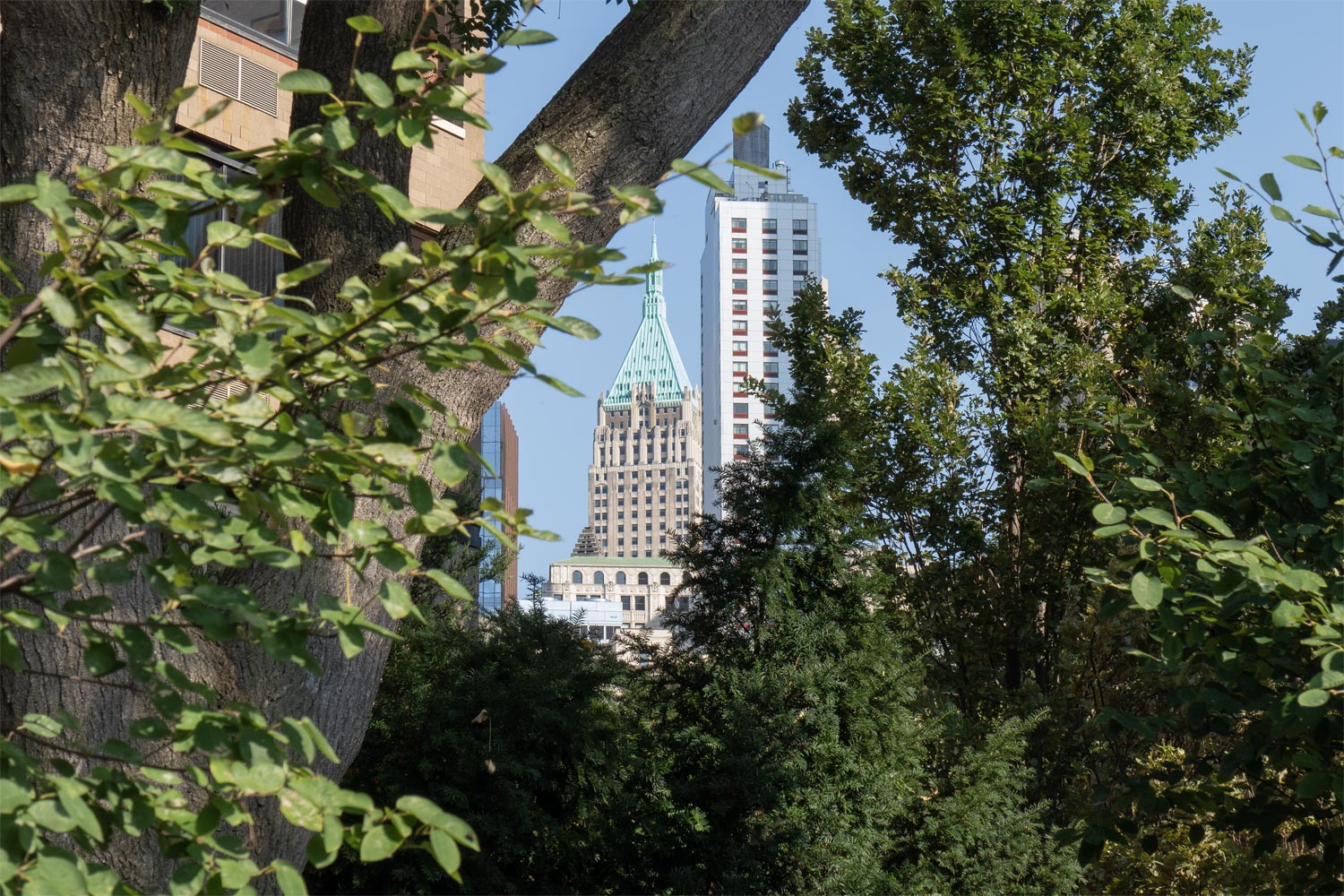
The skyscrapers of downtown can be seen from the embankment through the thickets.
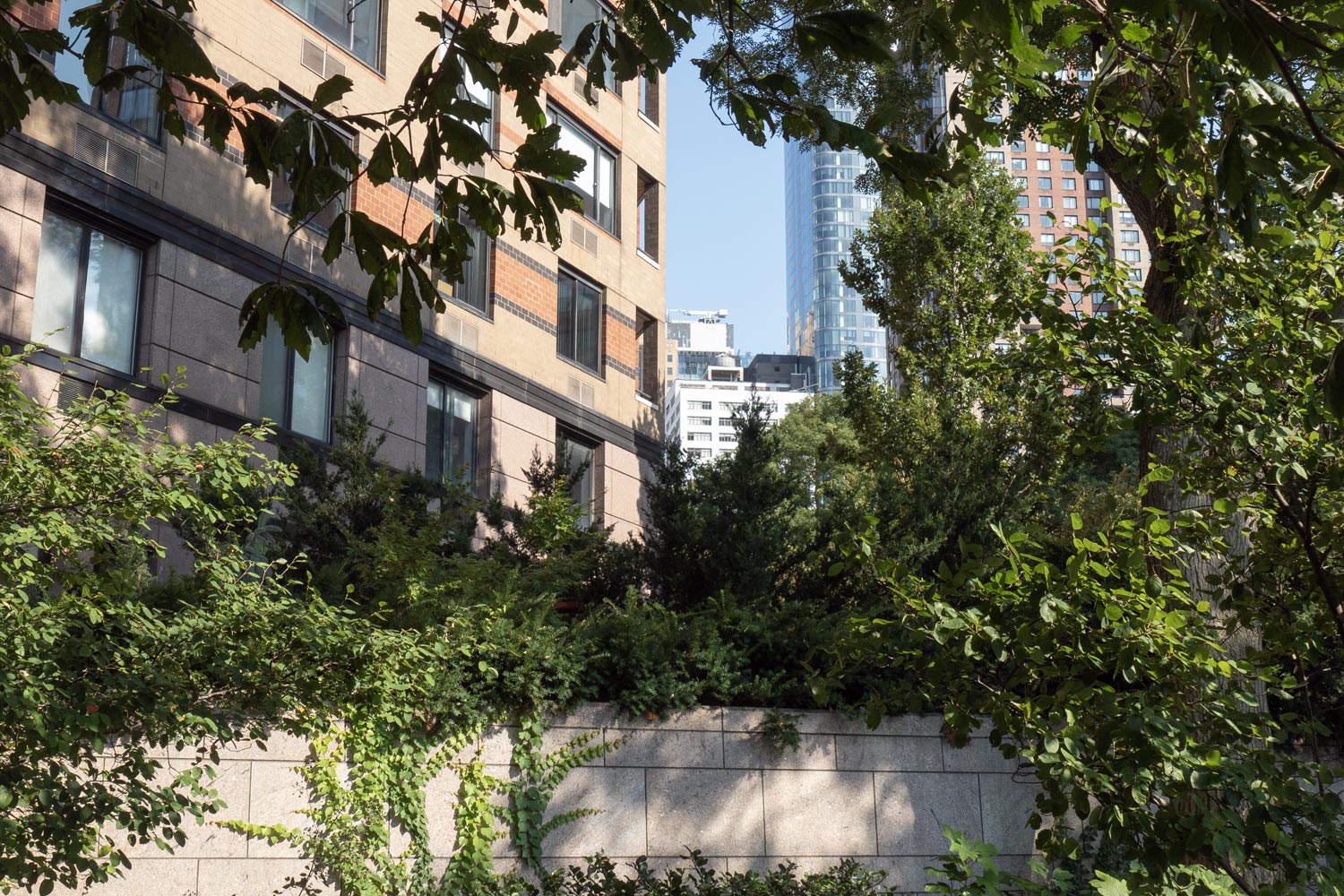
Apartments in Battery Park City start at half a million dollars for 50 square meters. Of course, only wealthy people live here, but even this isn’t the most expensive housing in New York.
Keep walking along the waterfront, and you’ll reach the Battery Park itself — the very tip of Manhattan. By the way, it is called that because artillery batteries once stood by the river.
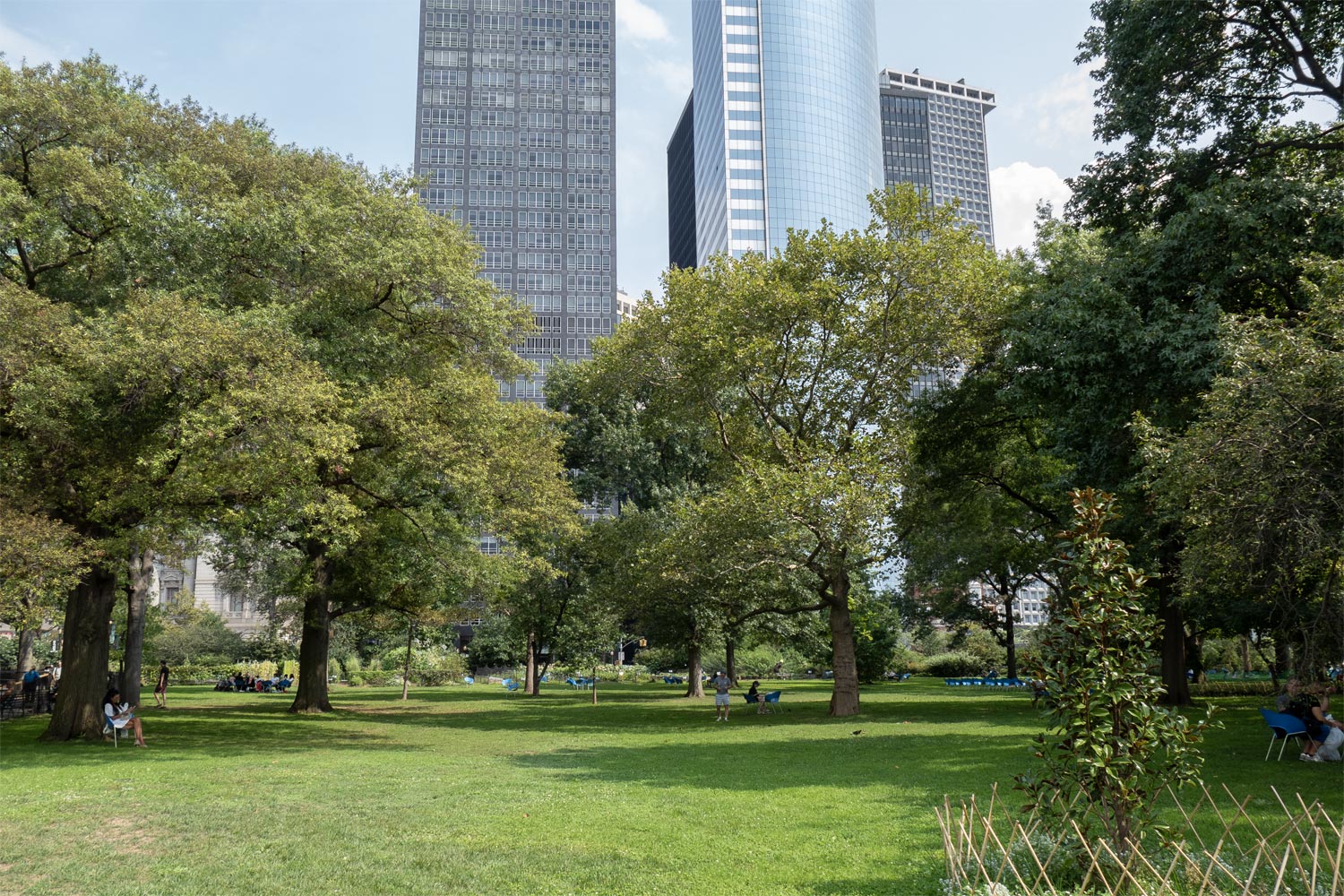
Battery Park is the starting point for cruises to the Statue of Liberty. Smart tourists, however, don’t buy a ticket — they take the free ferry to Staten Island, which goes right past the statue.
The ferry is even provided with a coast guard. They like to put on “Barbie Girl” and dance to the beat while keeping one hand on the machine gun.
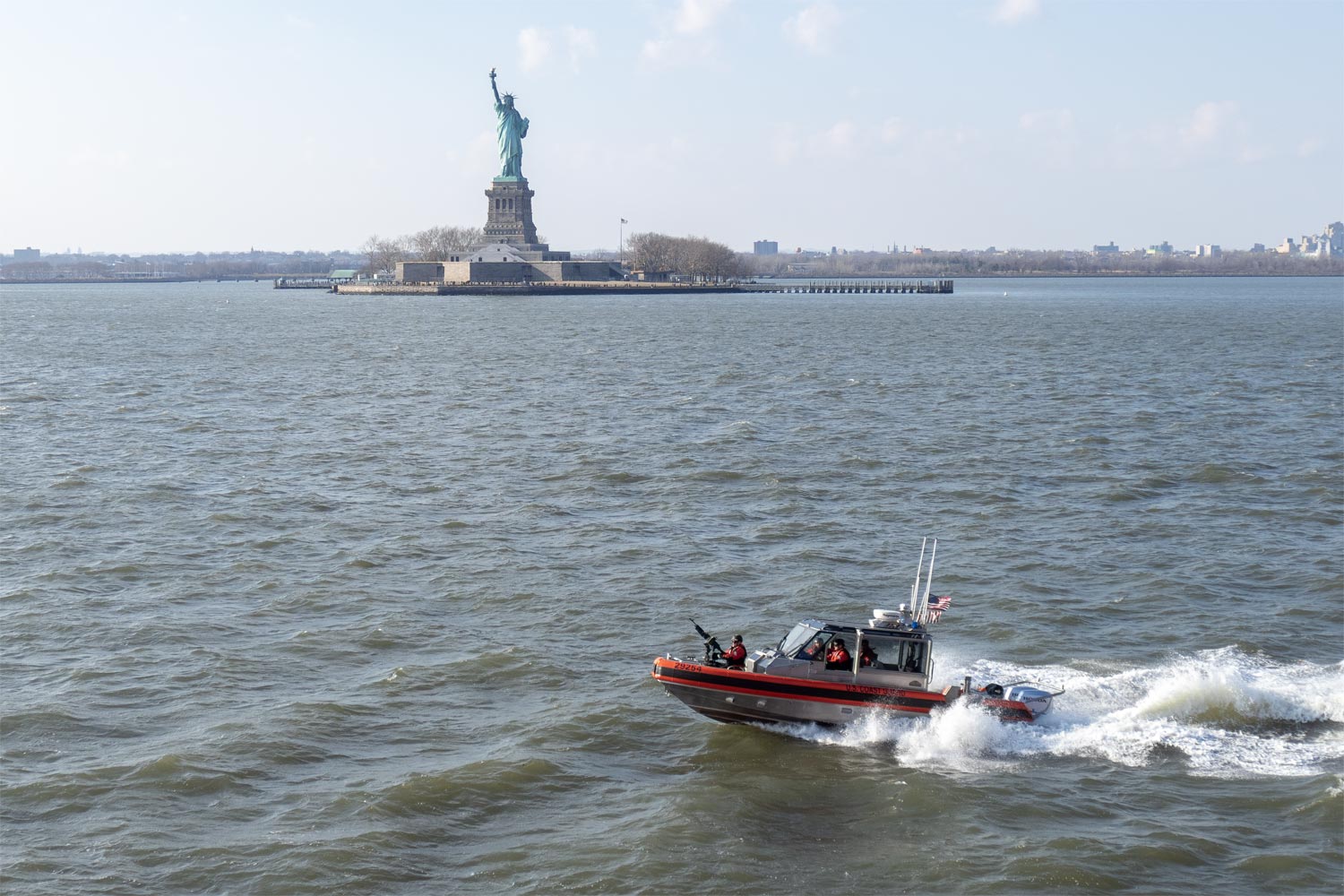
Wall Street
The southern tip of Manhattan is the only part of New York where the non‑linear street grid has been preserved. The rest of the city, like all of America in general, is built strictly by the ruler.
Here, nestled among the skyscrapers, secretly lies a piece of the old city. Stone Street was paved with cobblestones back in 1658, when New York was called New Amsterdam and belonged to the Dutch. The buildings themselves, of course, were constructed later.
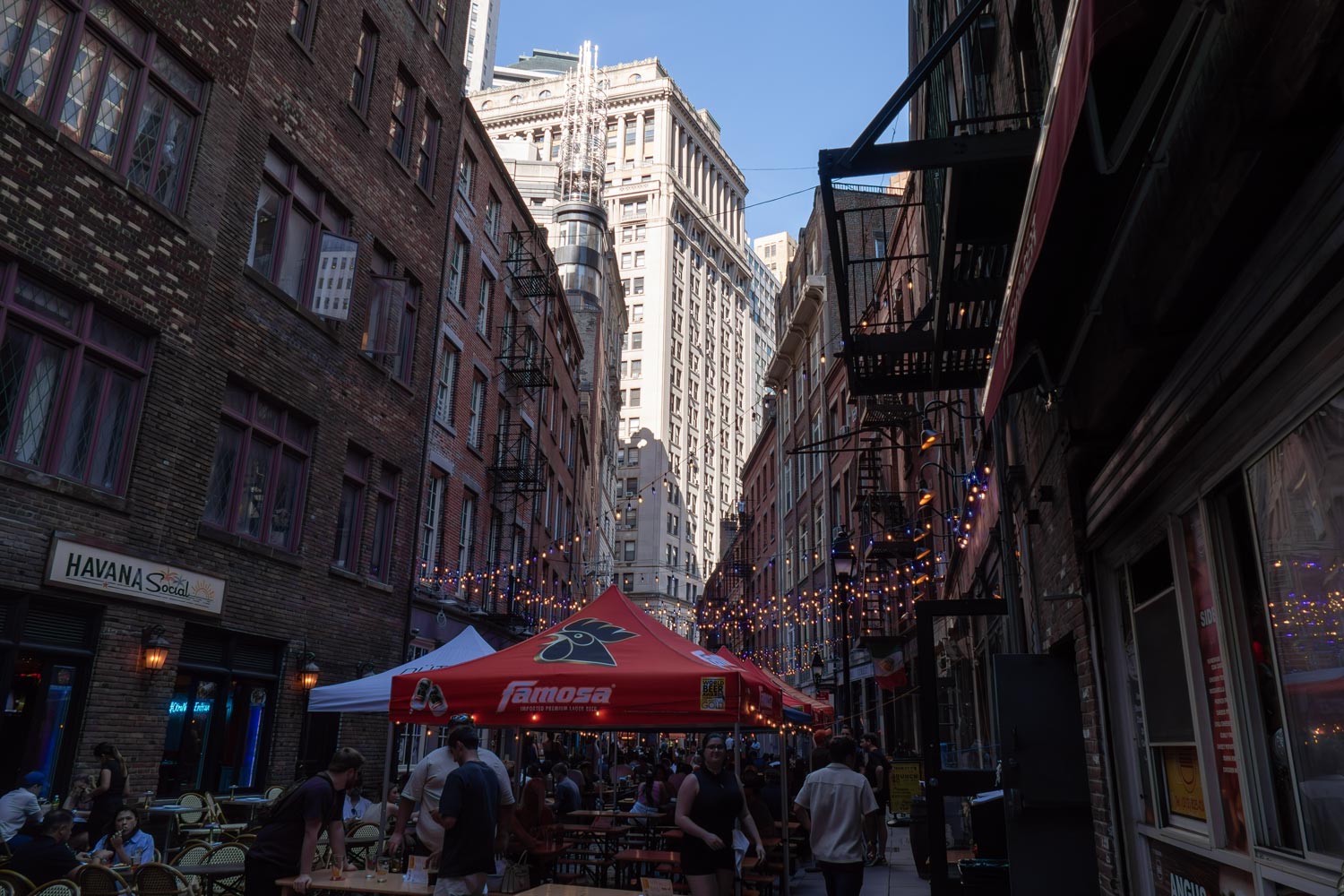
Beer festivals are held on this street all the time. It’s nothing like the United States. It’s like a little piece of medieval Bavaria, squeezed in on all sides by skyscrapers so tightly that almost no sunlight reaches it.
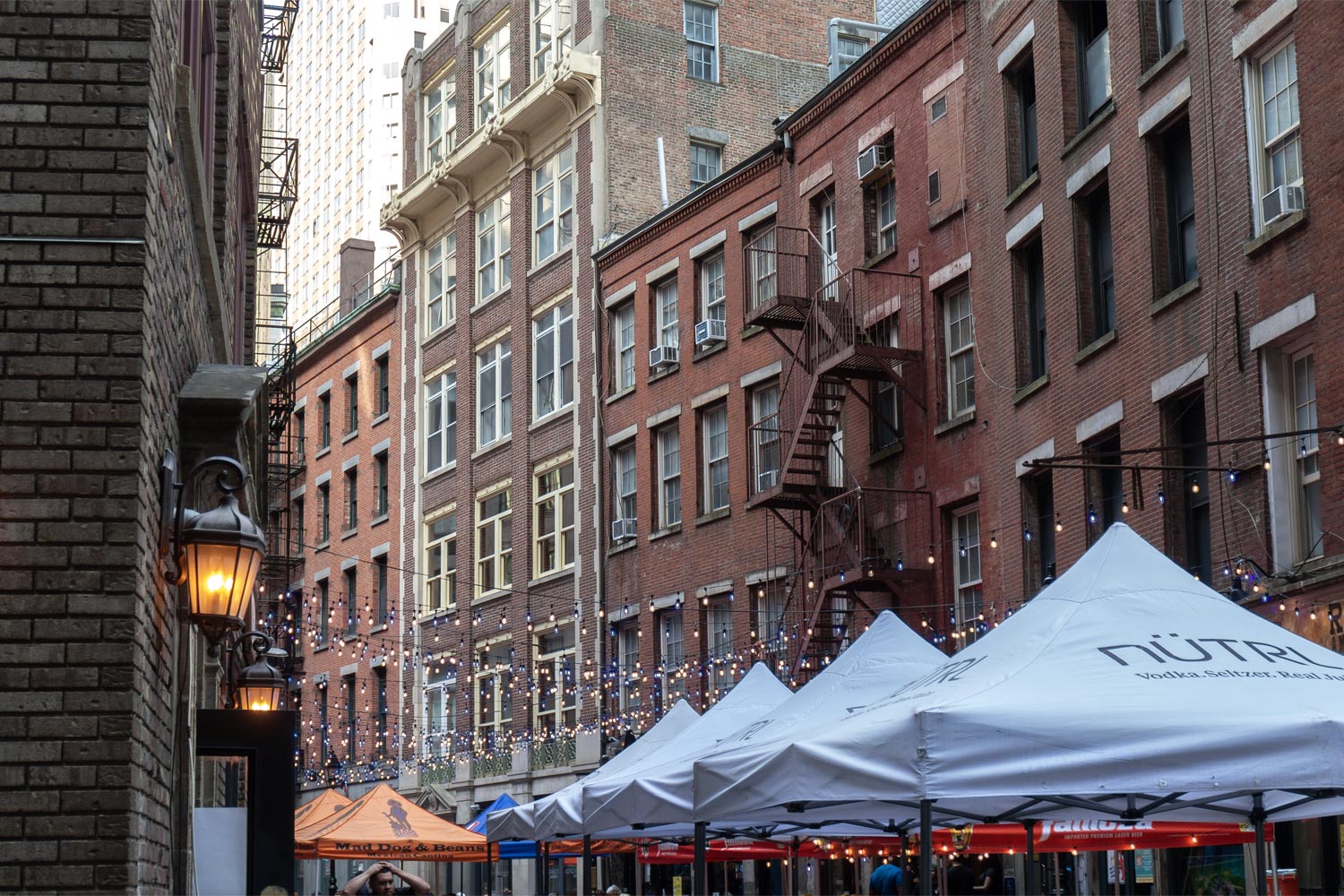
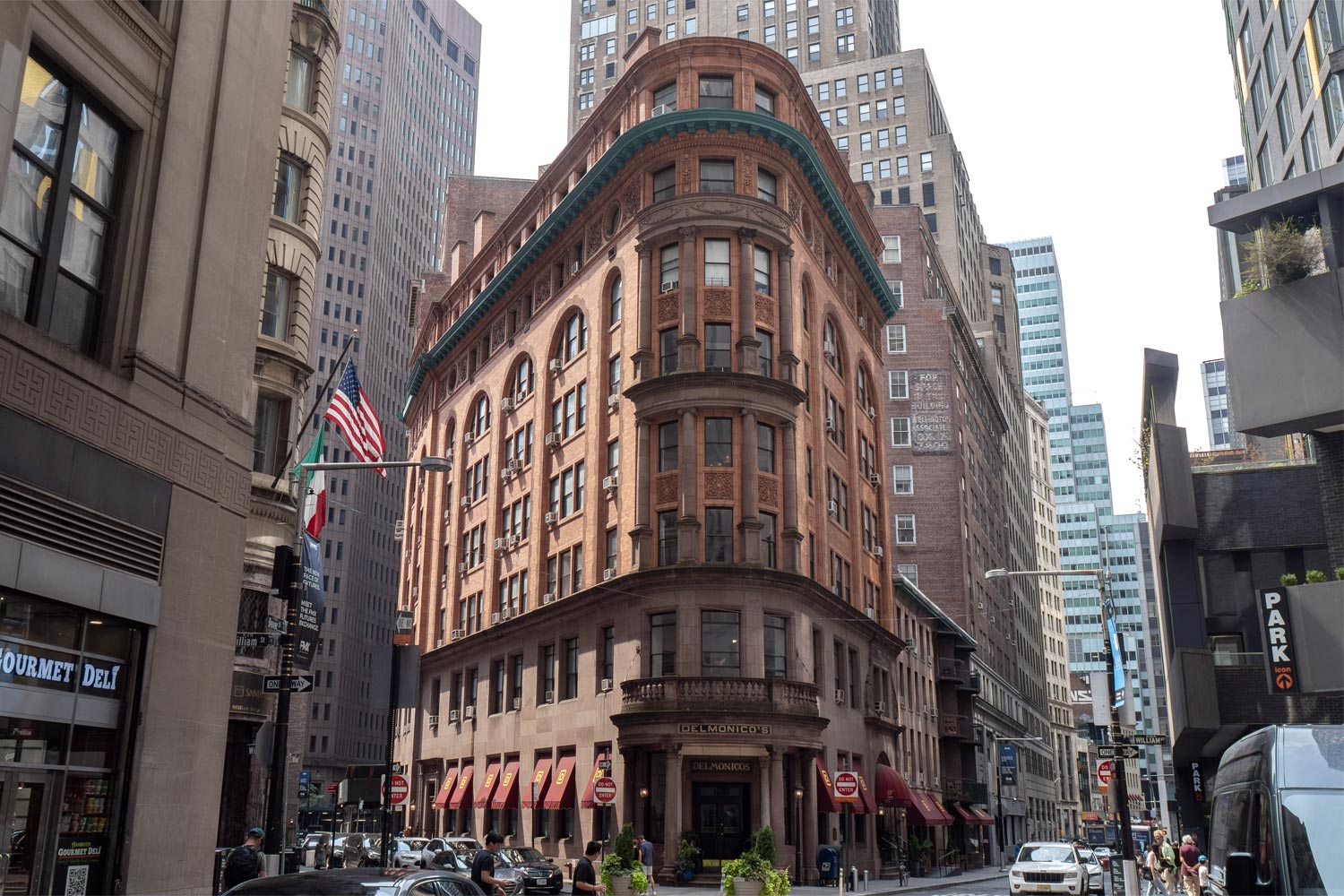
Across the street from the Stone Building, a completely different era begins. Here stand a couple of wedge-shaped buildings like the ones you often see in movies about New York. One of them is Delmonico’s. This is the site of the first fine-dining restaurant, opened in New York in 1837.
Just a few steps away from him — yet another era again. Fourteen statues look down from the top of a skyscraper. They are financial giants. Half of the faces are depicted smiling, the other half are made sullen, symbolizing the rises and falls of the stock market.
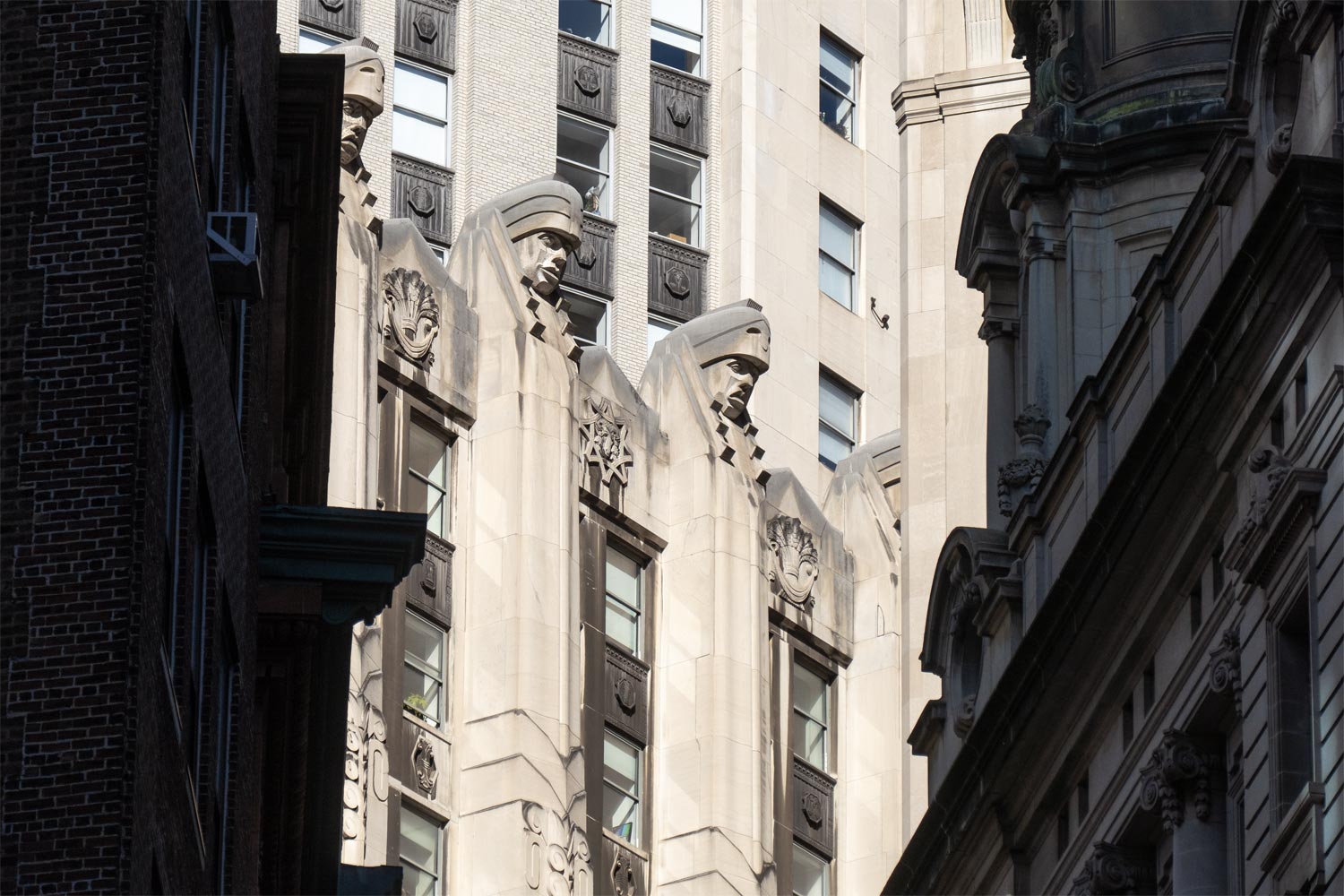
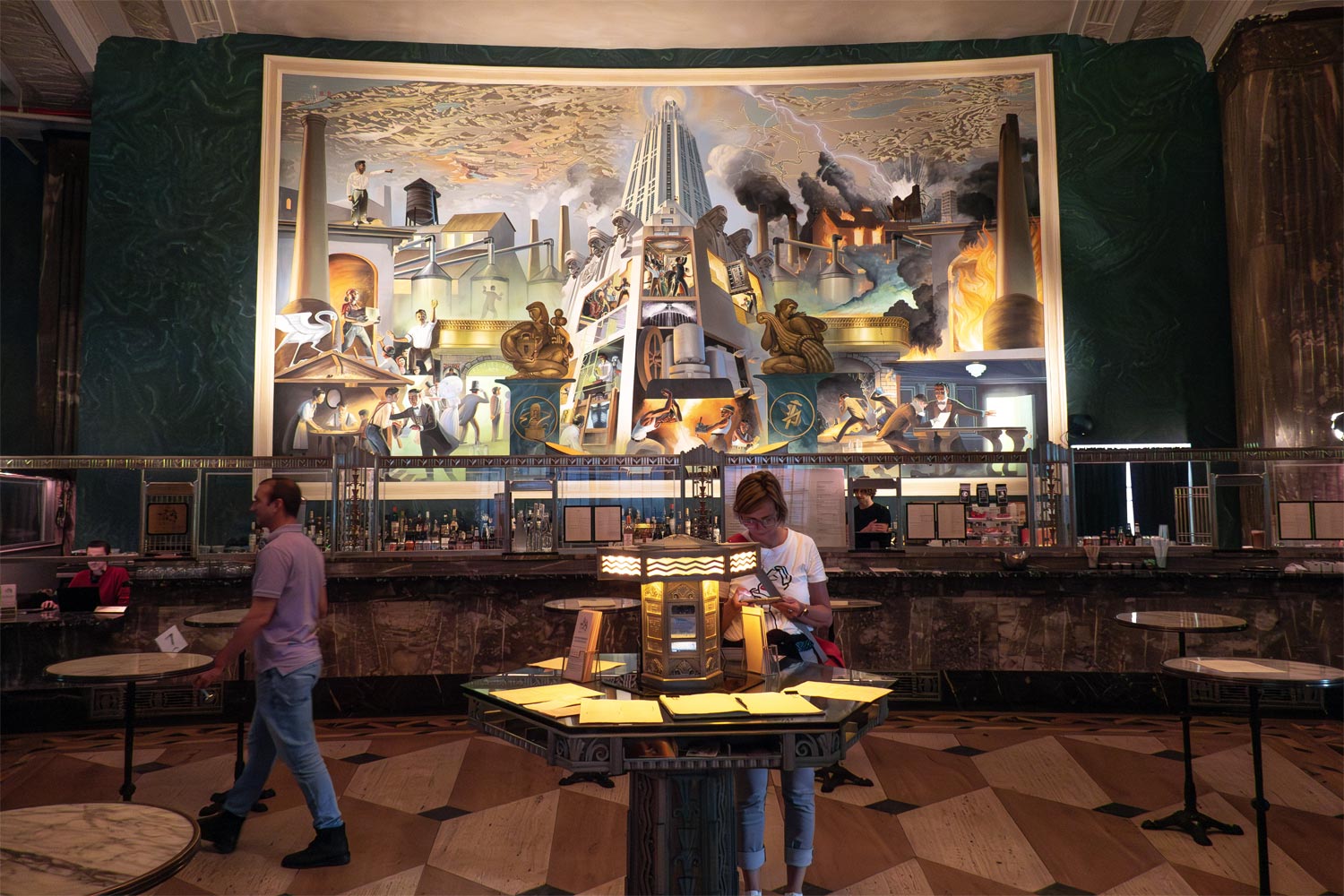
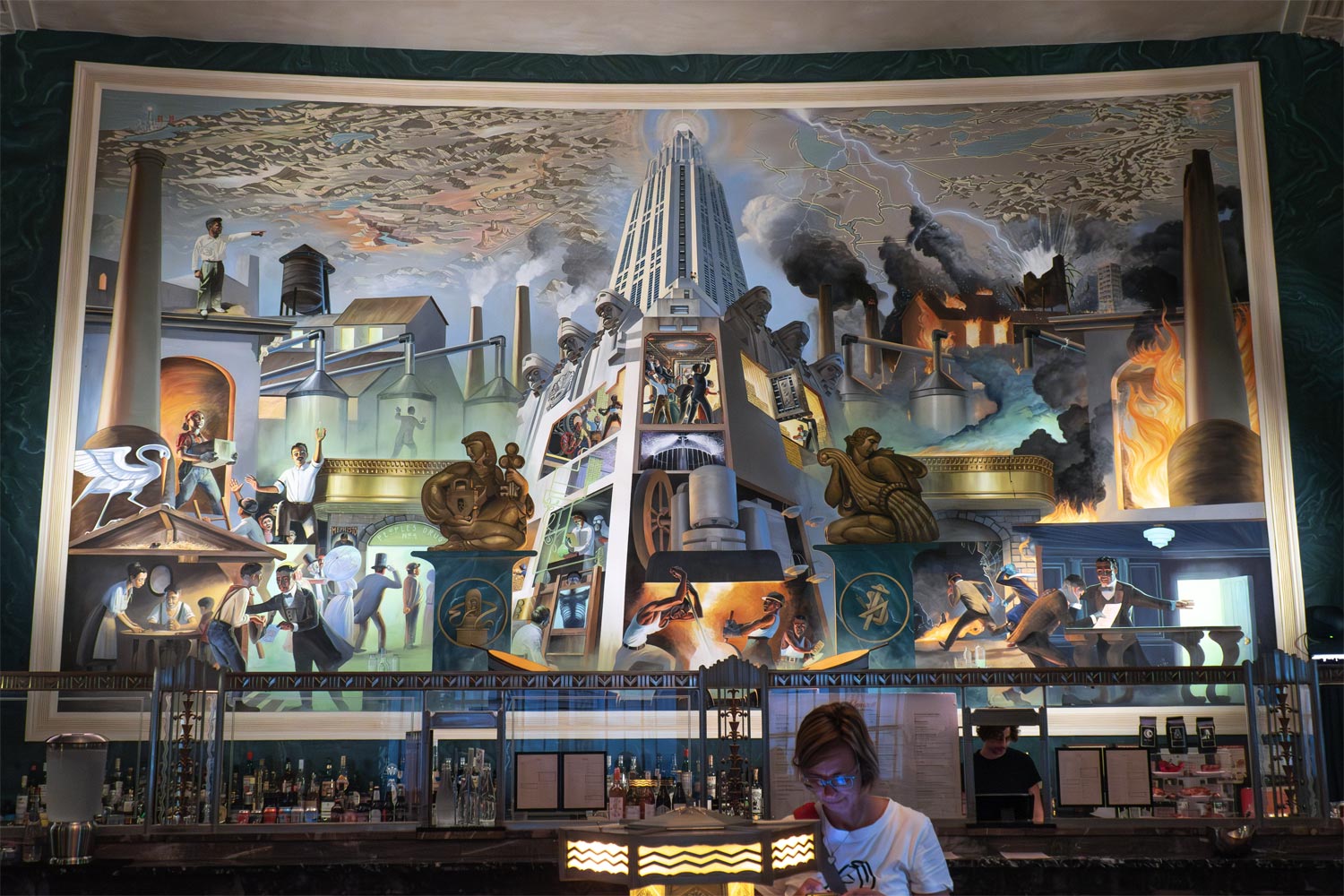
The skyscraper at 20 Exchange Place was built at the height of the Great Depression. In the 1930s, it housed a credit trust for farmers. Now there is a coffee hall here. The wall of the café is decorated with a huge mural depicting workers constructing this very skyscraper. There used to be a different painting, but this new stylization conveys the spirit of the Roosevelt era even better than the original.
Fifty meters from the coffee hall, Wall Street begins. People used to say that all the world’s finance is concentrated on this street. Today that sounds like a cliché, because finance hasn’t been concentrated anywhere for a long time; it’s scattered all over the world.
Wall Street is a very short street and, to look at it, is no different from any other street in the downtown area.
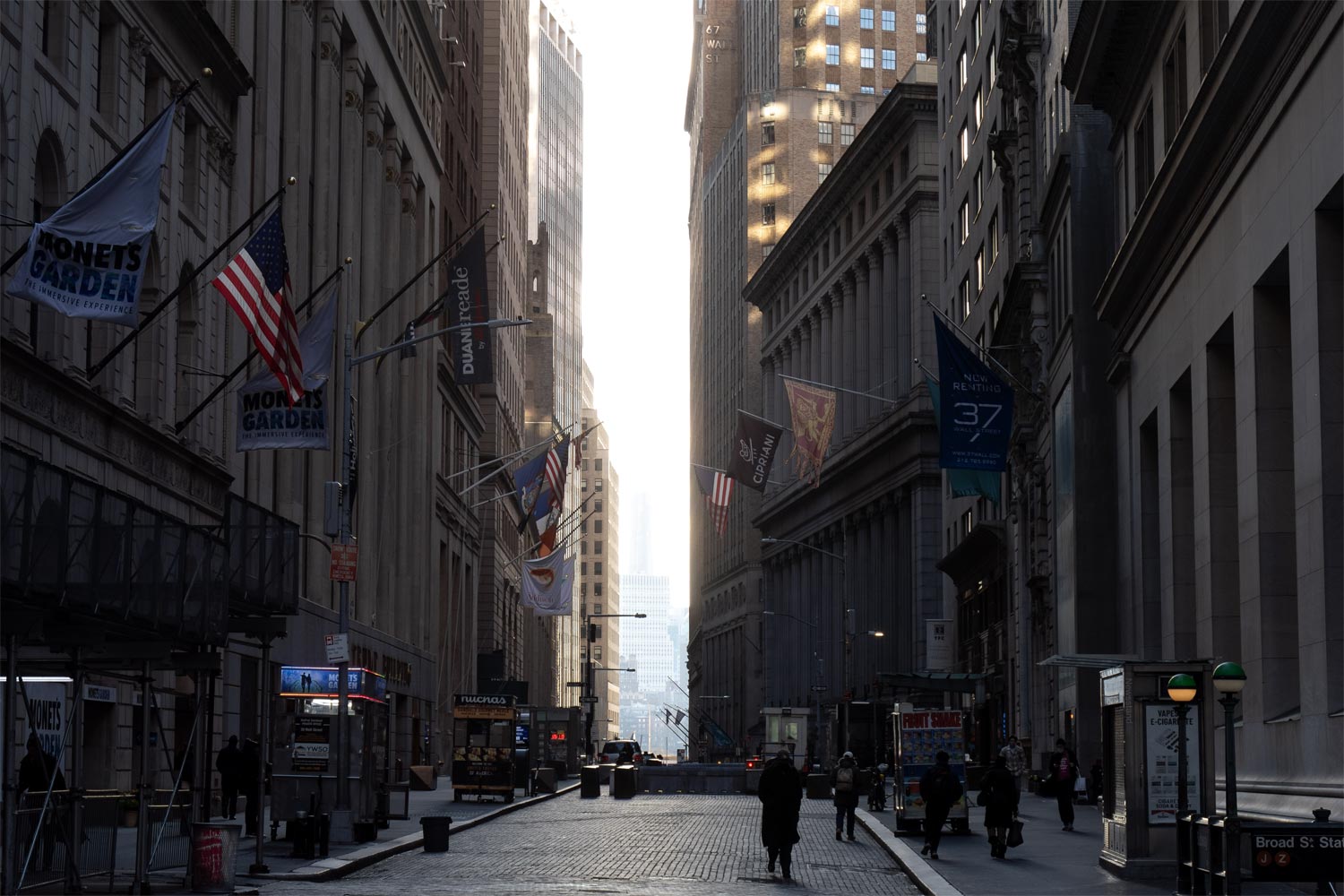
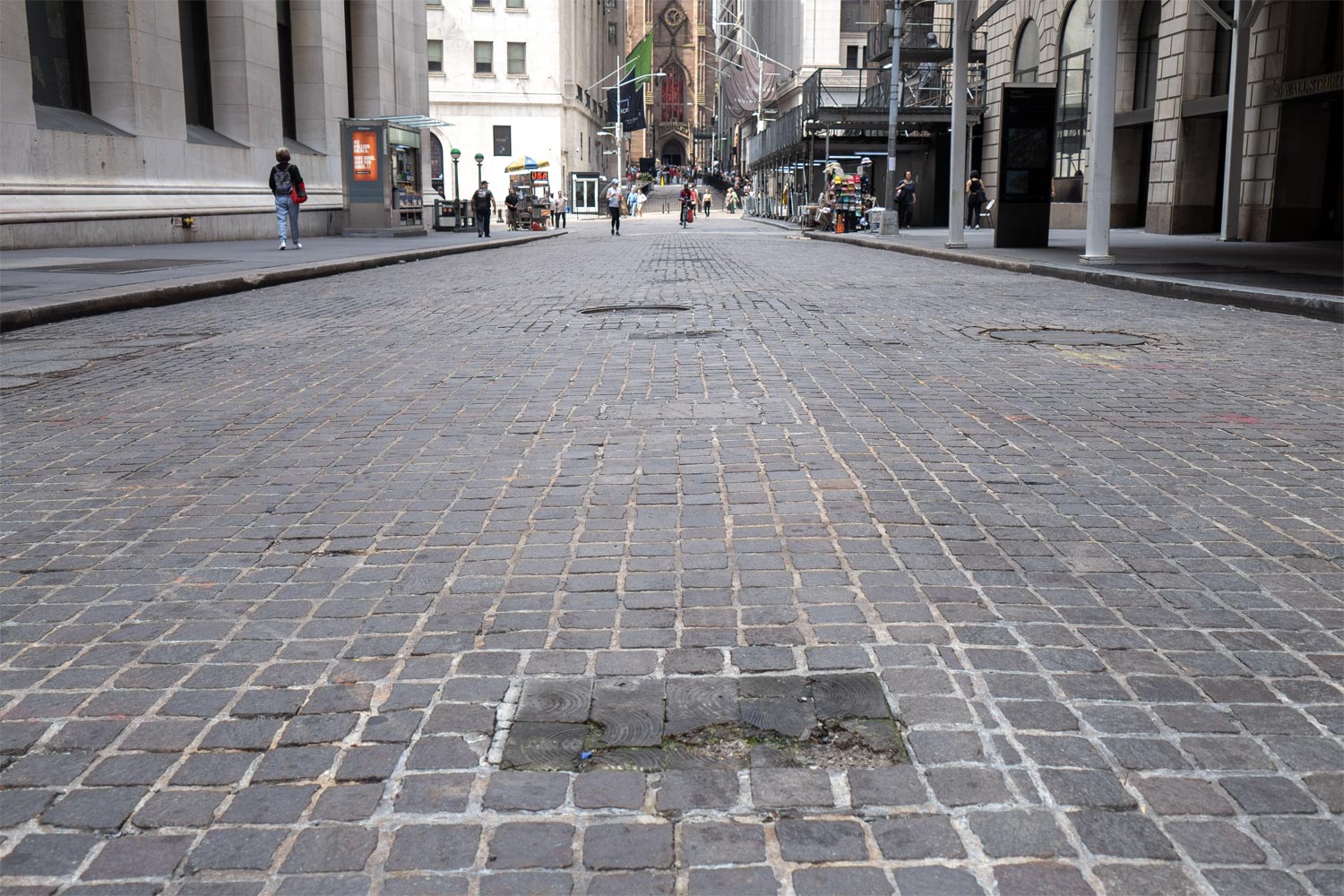
The street is called Wall Street because there used to be a wooden wall running along it to protect the Dutch fort from Indian raids. The stubs of the wall have been preserved and can still be seen poking through the paving.
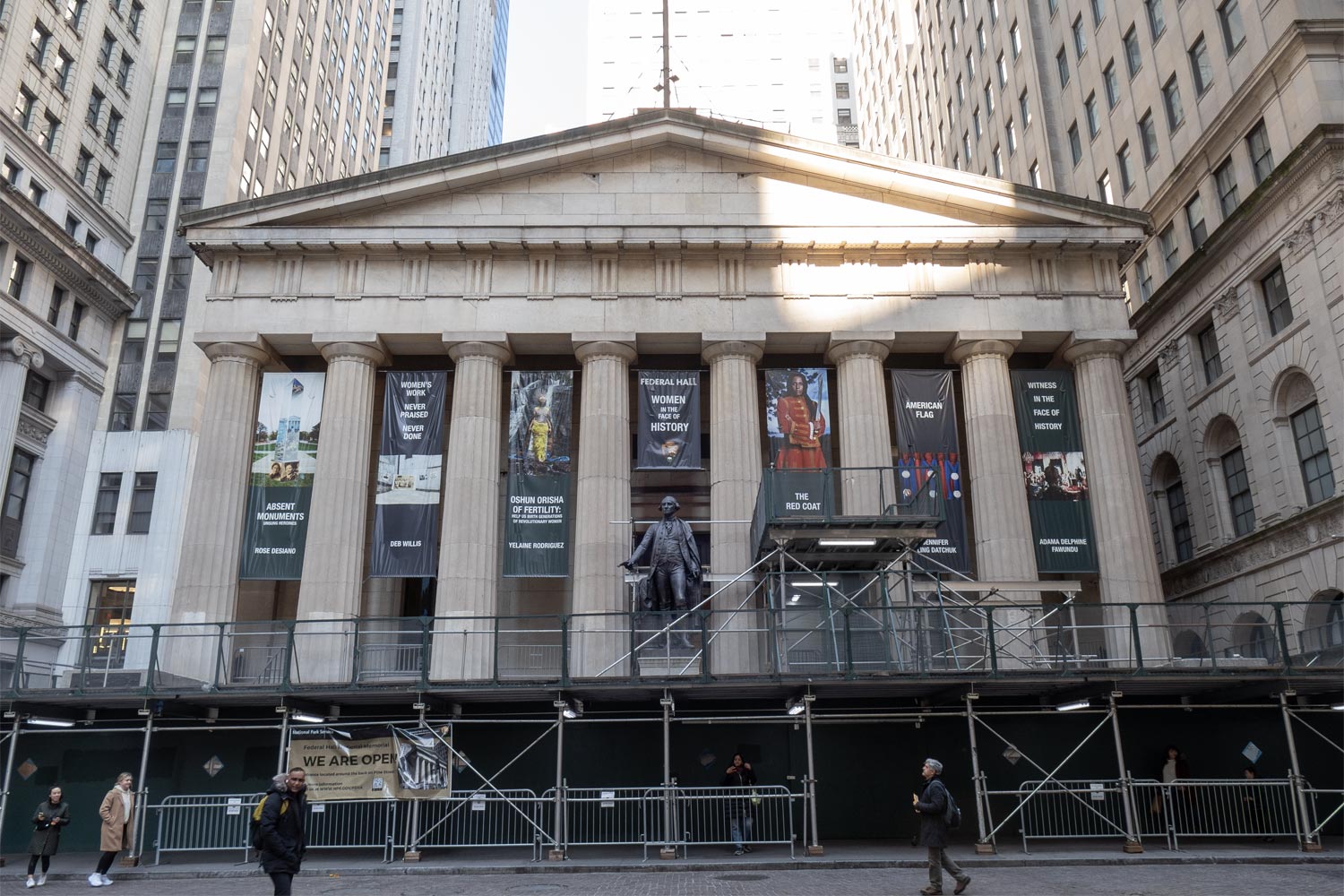
At the other end of the street stands Federal Hall, always shrouded in scaffolding. It was here that the first president, George Washington, took the oath of office. Later, this building housed the Treasury.
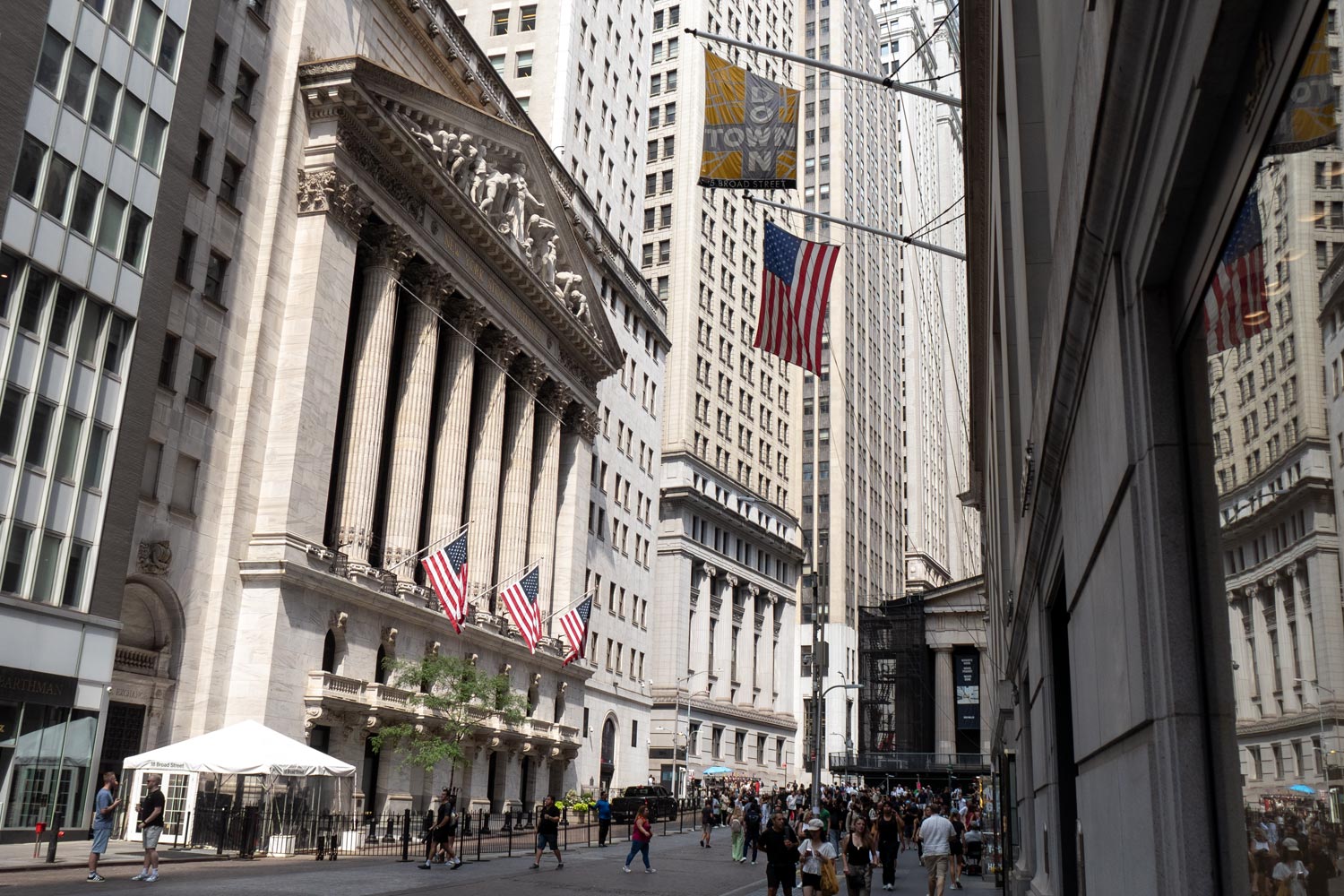
And only at the very end of Wall Street, to the left of the square, you finally find the long‑awaited New York Stock Exchange — the very reason crowds of tourists come to this street. The tiny building in the Greek style nestles modestly between the oppressive skyscrapers.
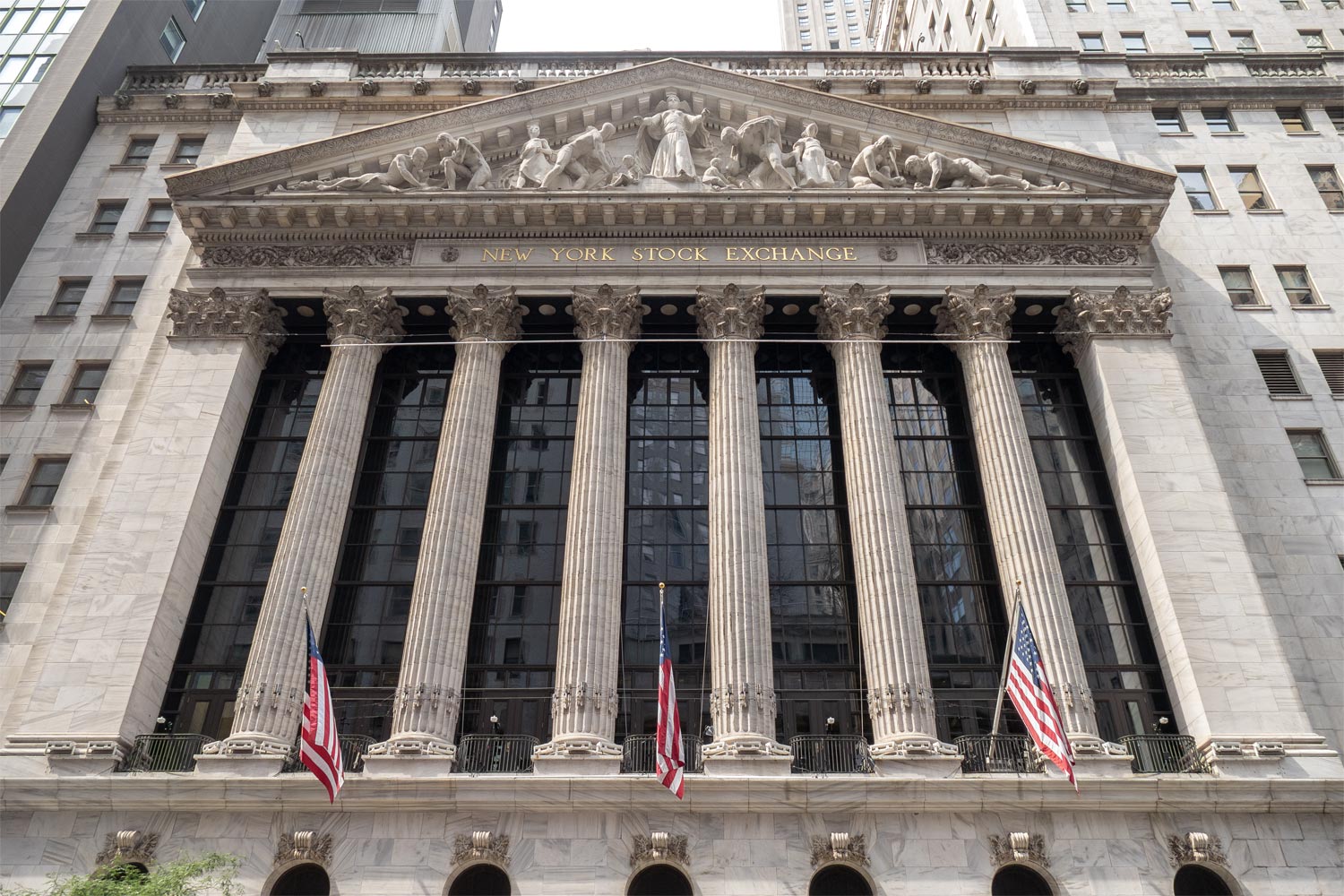
In the past, the exchange really was full of life: deals were made and traders freaked out like in the movies. Now all trading is electronic, and the traders on the exchange only serve very large clients. The hall inside the exchange has been cleared out and filled with large trading screens streaming quotes. Dozens of TV cameras film them, broadcasting the “face of capitalism” to the whole world.
From the news, it seems like Wall Street is the financial navel of the planet, an enormous street with dozens of exchanges. In reality, a lone stock exchange, the former Treasury building, and a couple of banks huddle together on a tiny patch just off the street itself.
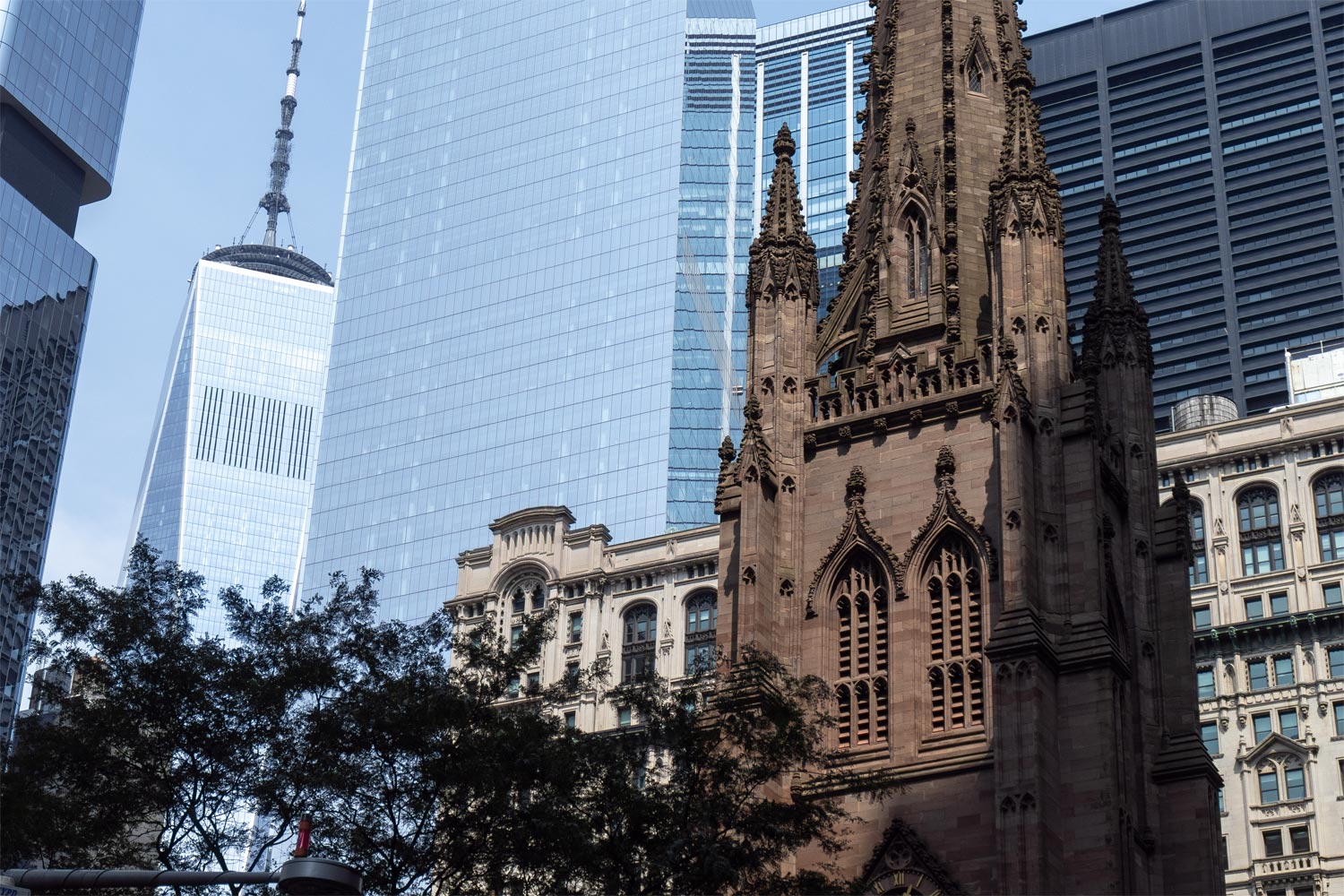
The end of Wall Street runs into Trinity Church. This Gothic cathedral, built back in 1846, is now squeezed between skyscrapers like a slice of sausage in a sandwich.
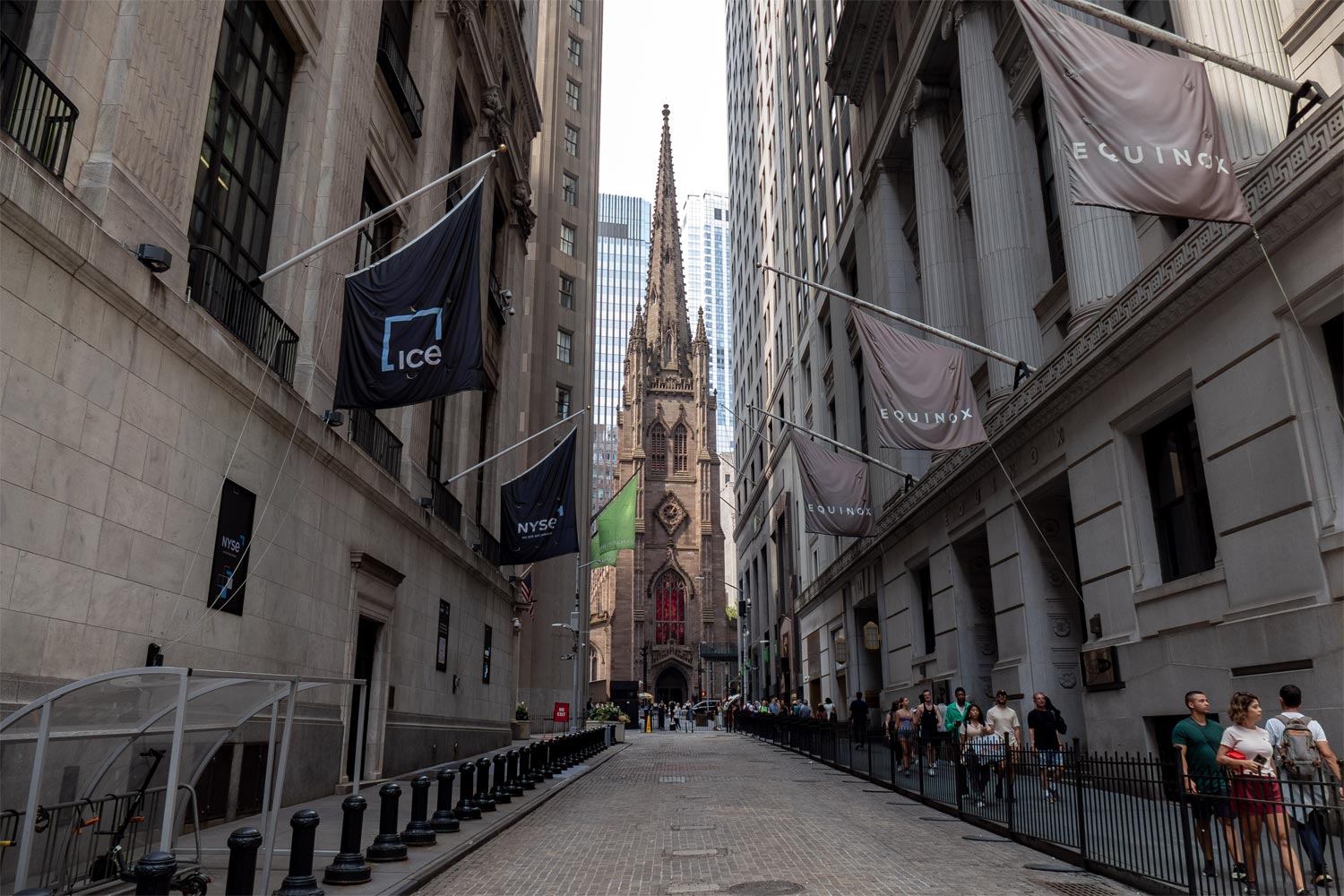
Trinity Church is one of New York’s most iconic buildings. It’s virtually impossible to fit it into a single shot because of the surrounding structures, so tourists compete to photograph it best.
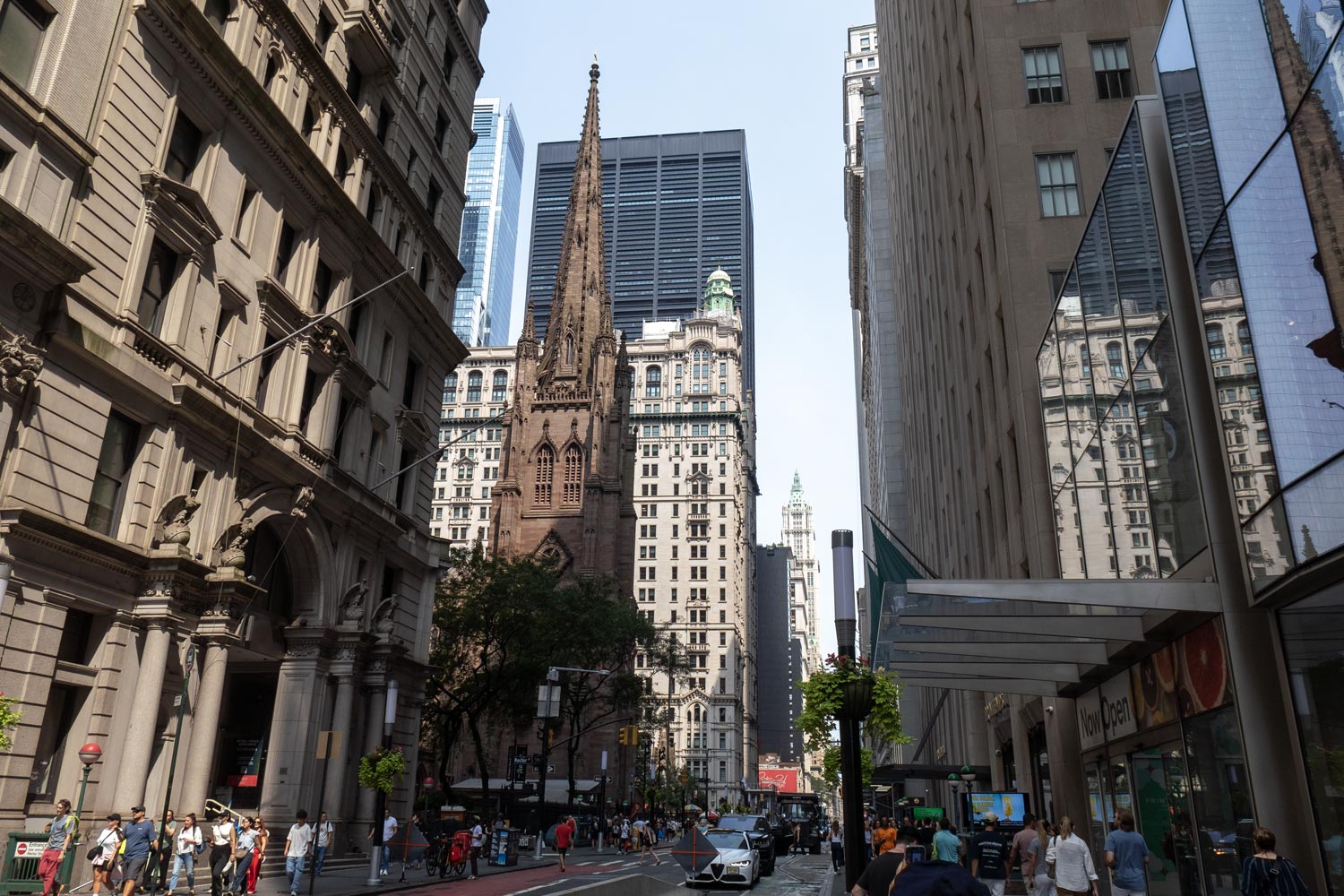
These Gothic spires look best against the backdrop of glass skyscrapers. A shot recognizable even without a caption: this is New York.
Helicopter
At the other end, Wall Street opens onto a helipad.
A helicopter flight over New York costs about $250 for 15 minutes. That’s not very expensive even for a tourist, and for an American it’s pocket change—money you can earn in New York in a couple of days at a lousy job.
From the helicopter you can see how small downtown really is. It’s squeezed entirely onto the very edge of the island. At the latitude of Wall Street, you can walk from one shore to the other in twenty minutes.
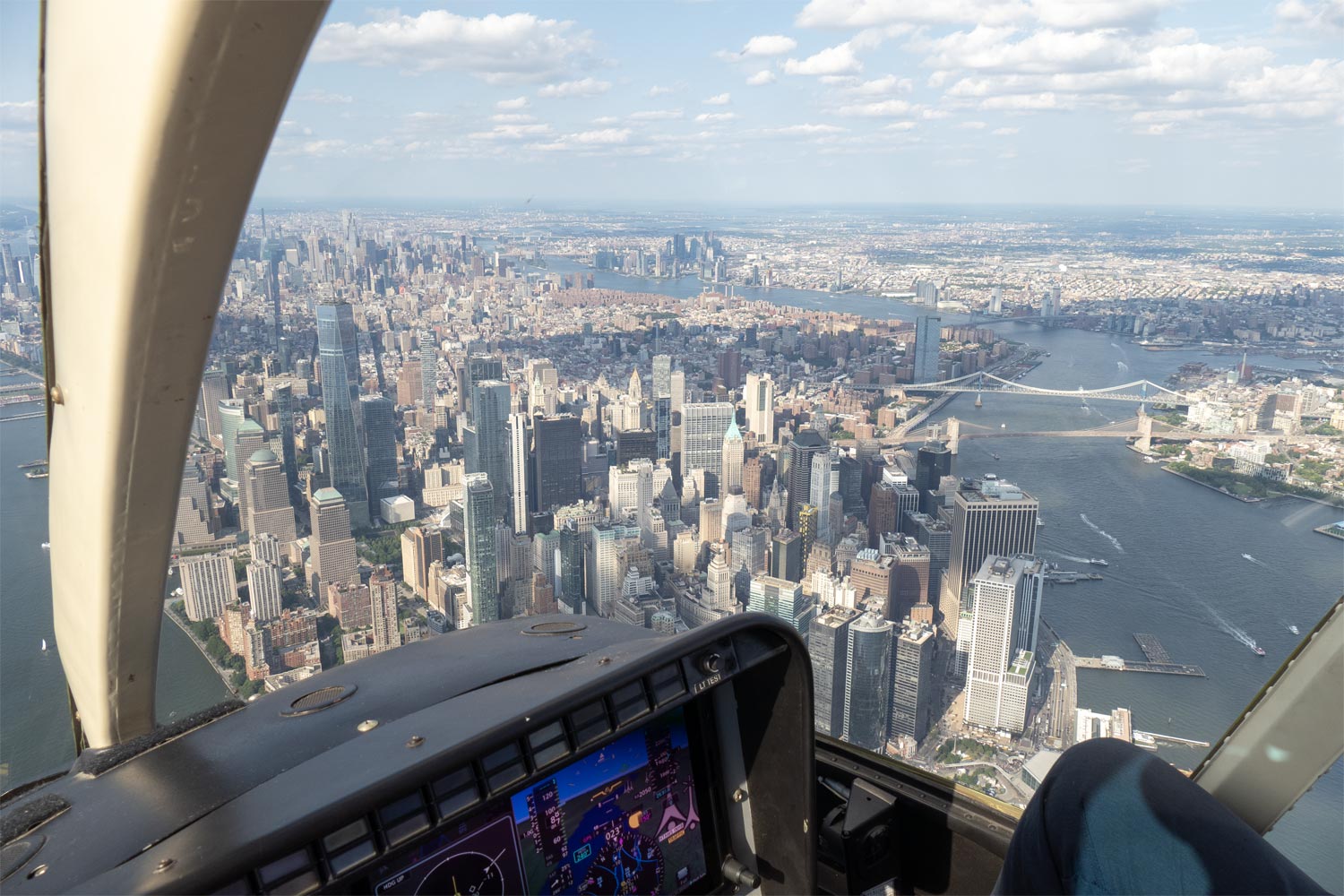
From a helicopter, the skyscrapers look toyish, like primitive capacitors sticking out of an old TV circuit board. The World Trade Center is the main component of the whole circuit, resembling a glass high-voltage rectifier tube.
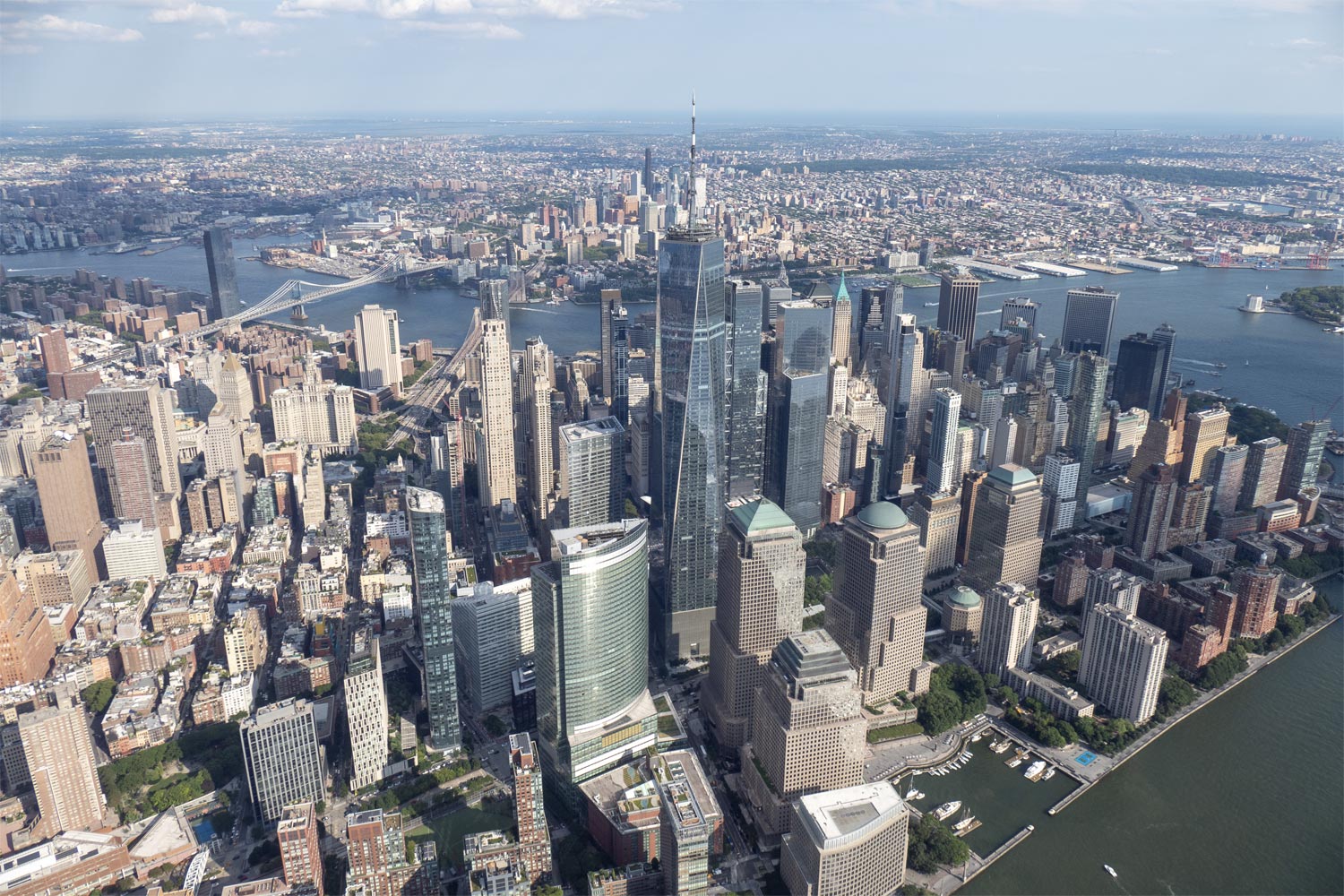
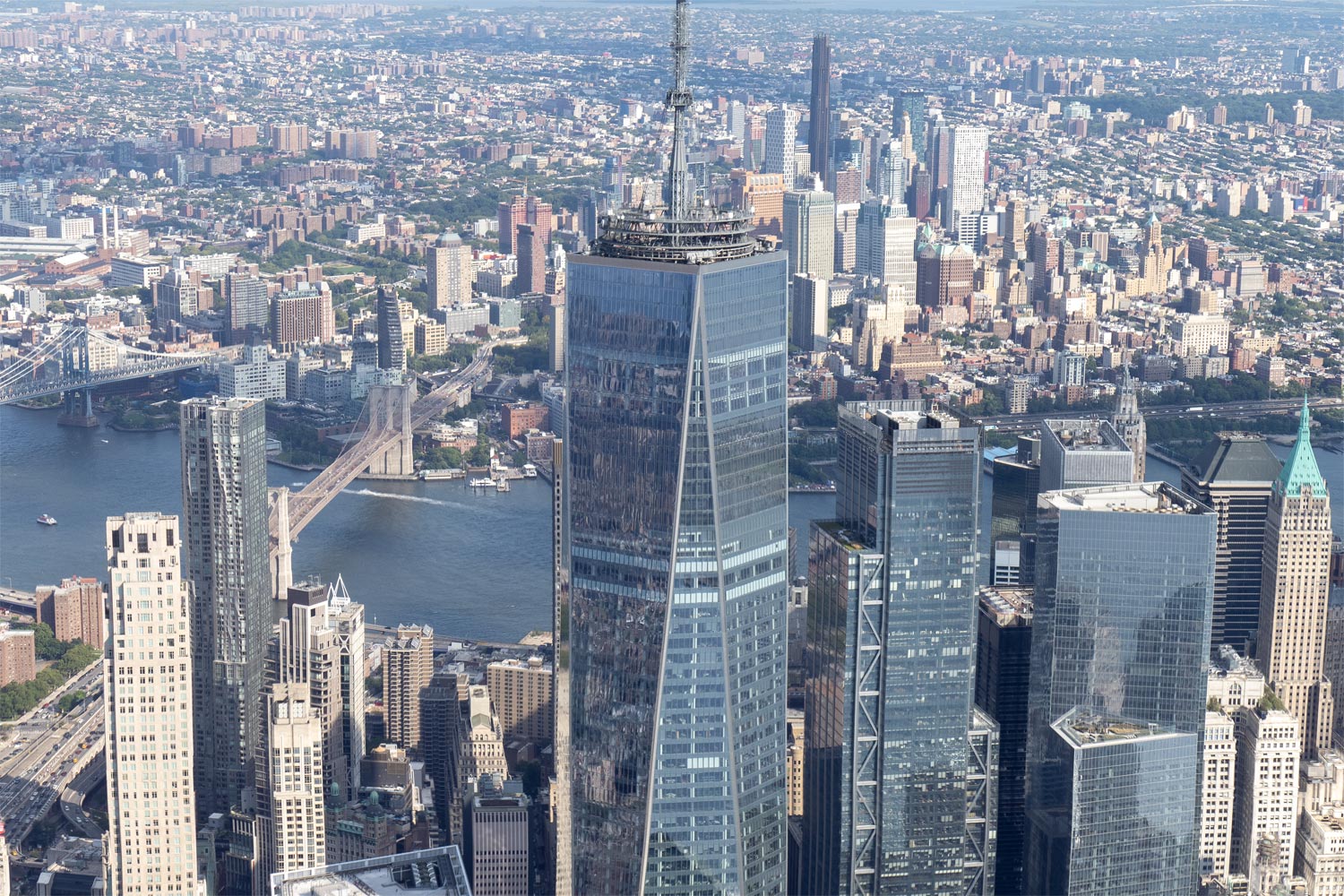
Behind it lies the Brooklyn Bridge. It is huge in itself, but against the backdrop of the skyscraper it looks tiny.
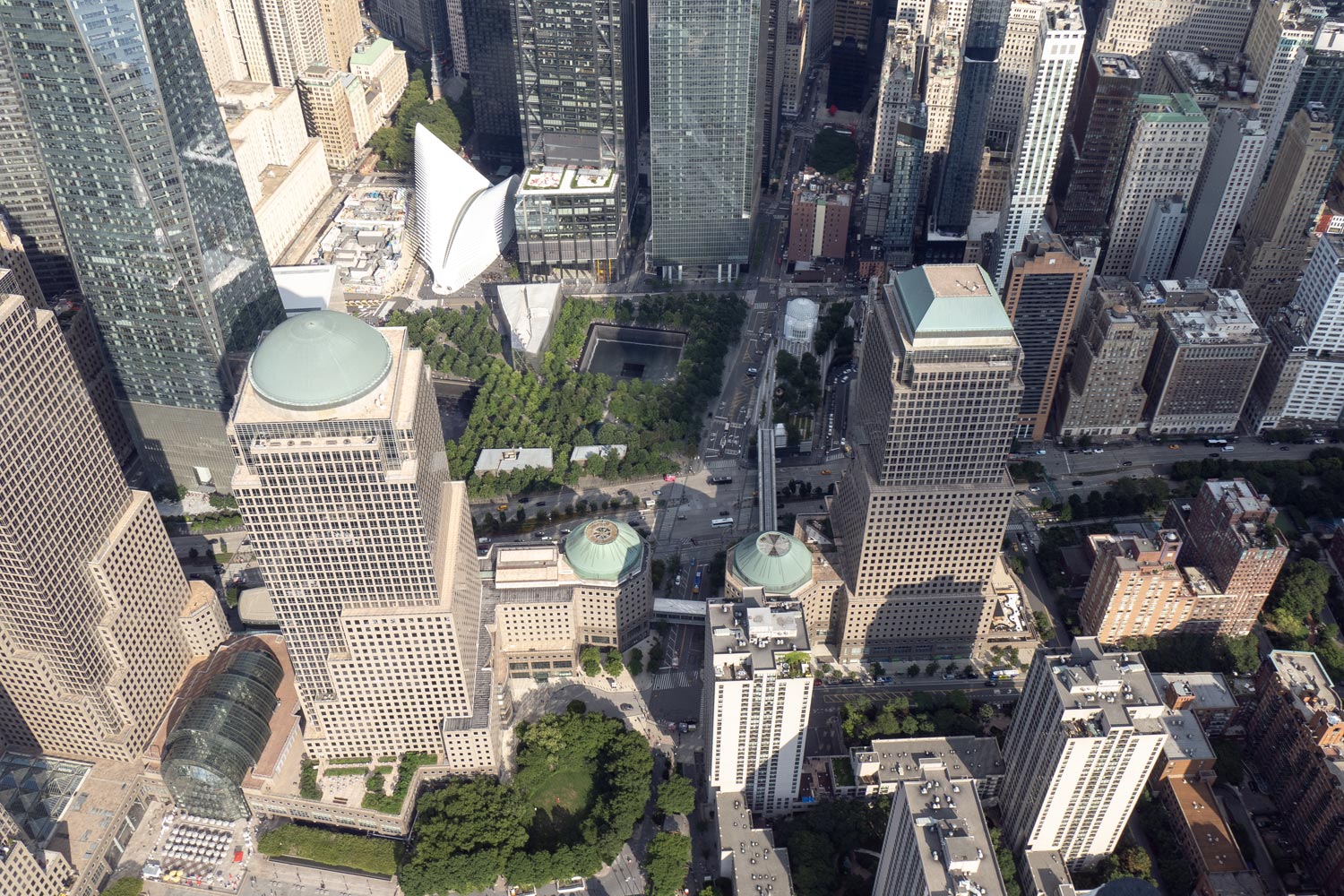
From this height, you can clearly see the twin abysses left by the destroyed towers. As for the Oculus, it still doesn’t look like a bird — even from a heli.
All the skyscrapers in New York are like they were picked to match: glass, gray, or brown. Unlike Dubai, looks magnificent.
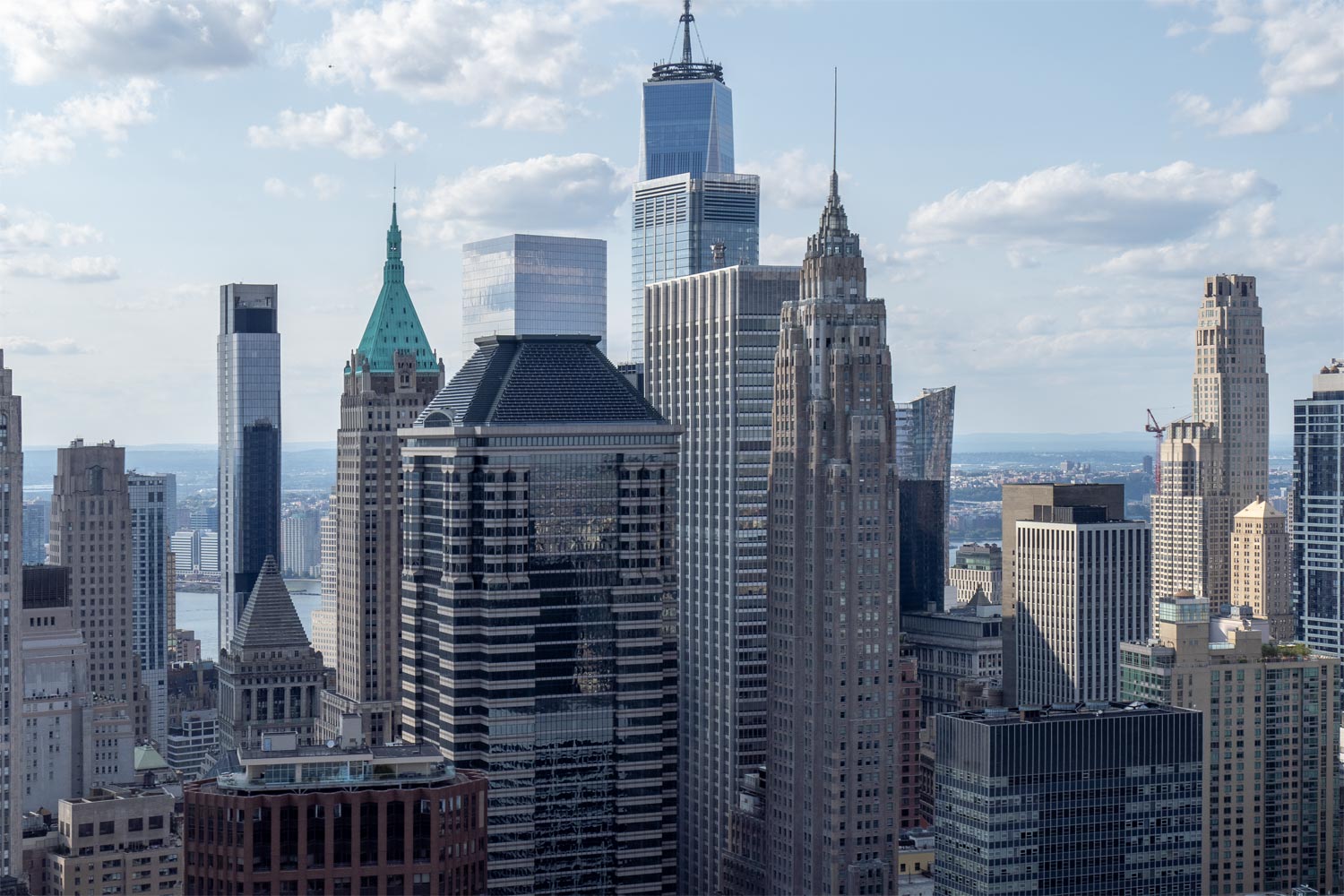
In the financial district some scumbag stuck an ugly black-and-yellow building right in the middle of the historic architecture. Russian mass-architecture has made it to New York. I hope the new mayor paints over this eyesore.
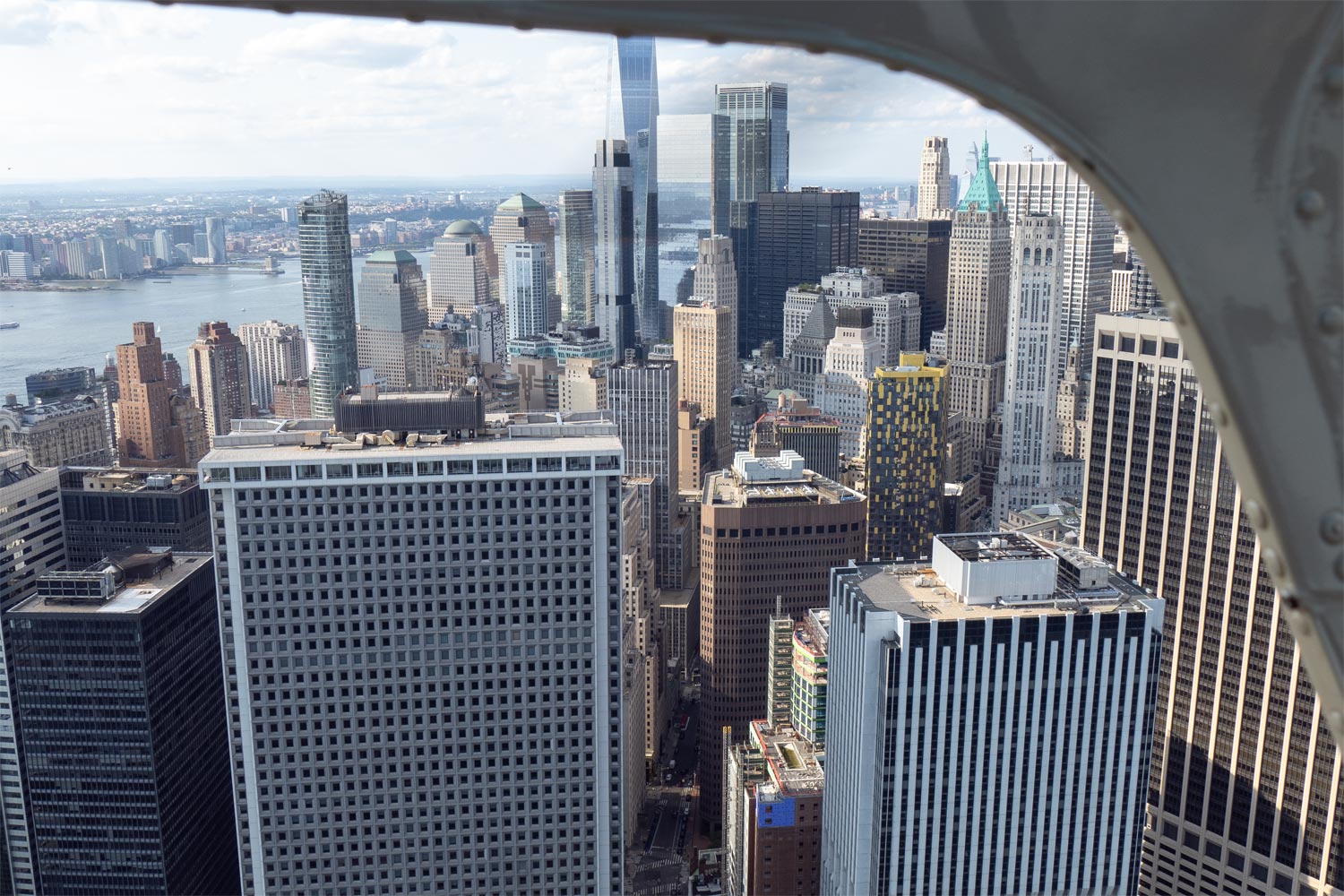
The helicopter is flying so fast that one part of the frame is recorded later than another, making the skyscrapers ripple like waves, as if in The Matrix.
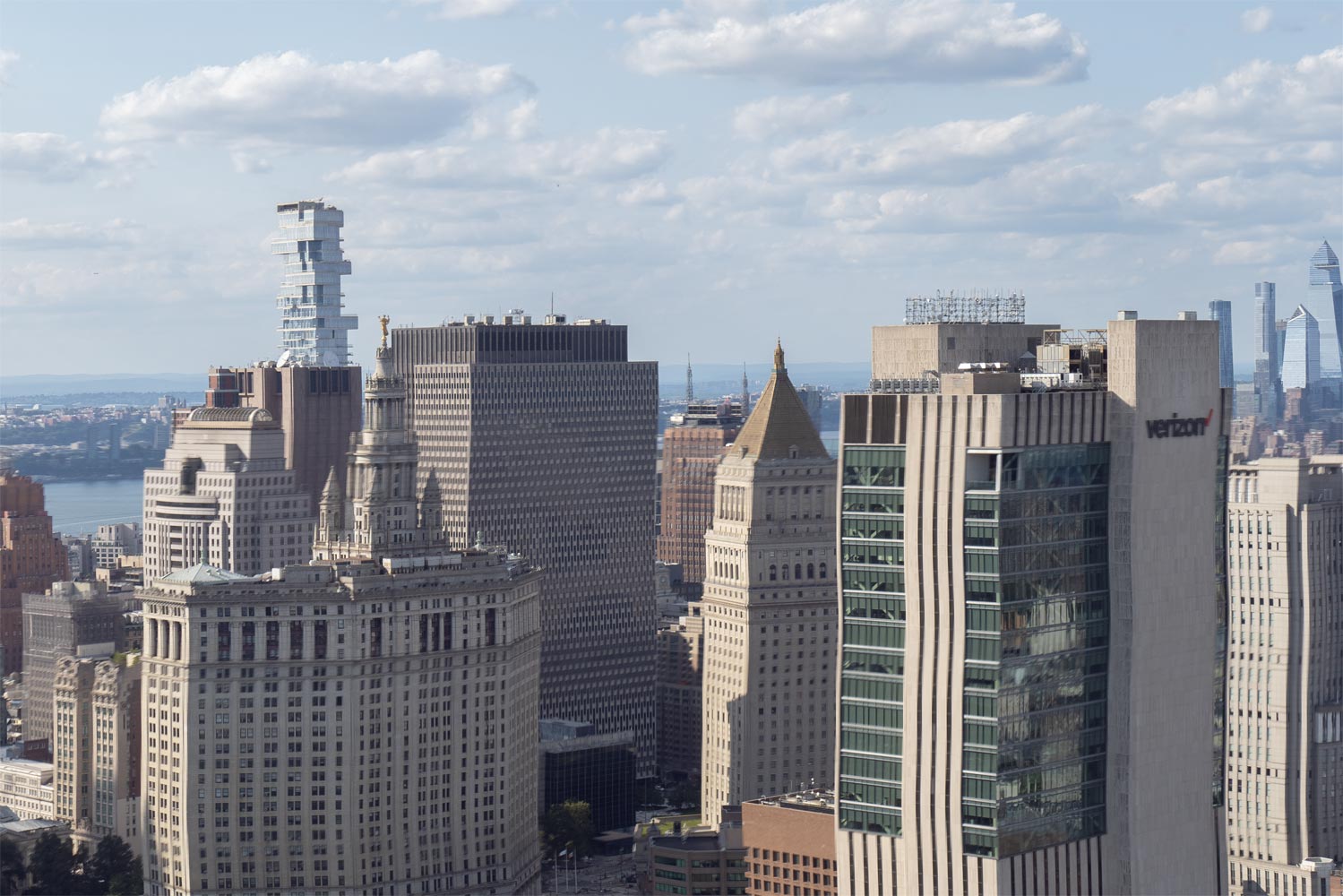
The Brooklyn Bridge turns out to be enormous when you see it up close. When it was built, they had to lead a caravan of elephants across it — otherwise people couldn’t believe it wouldn’t collapse under them.
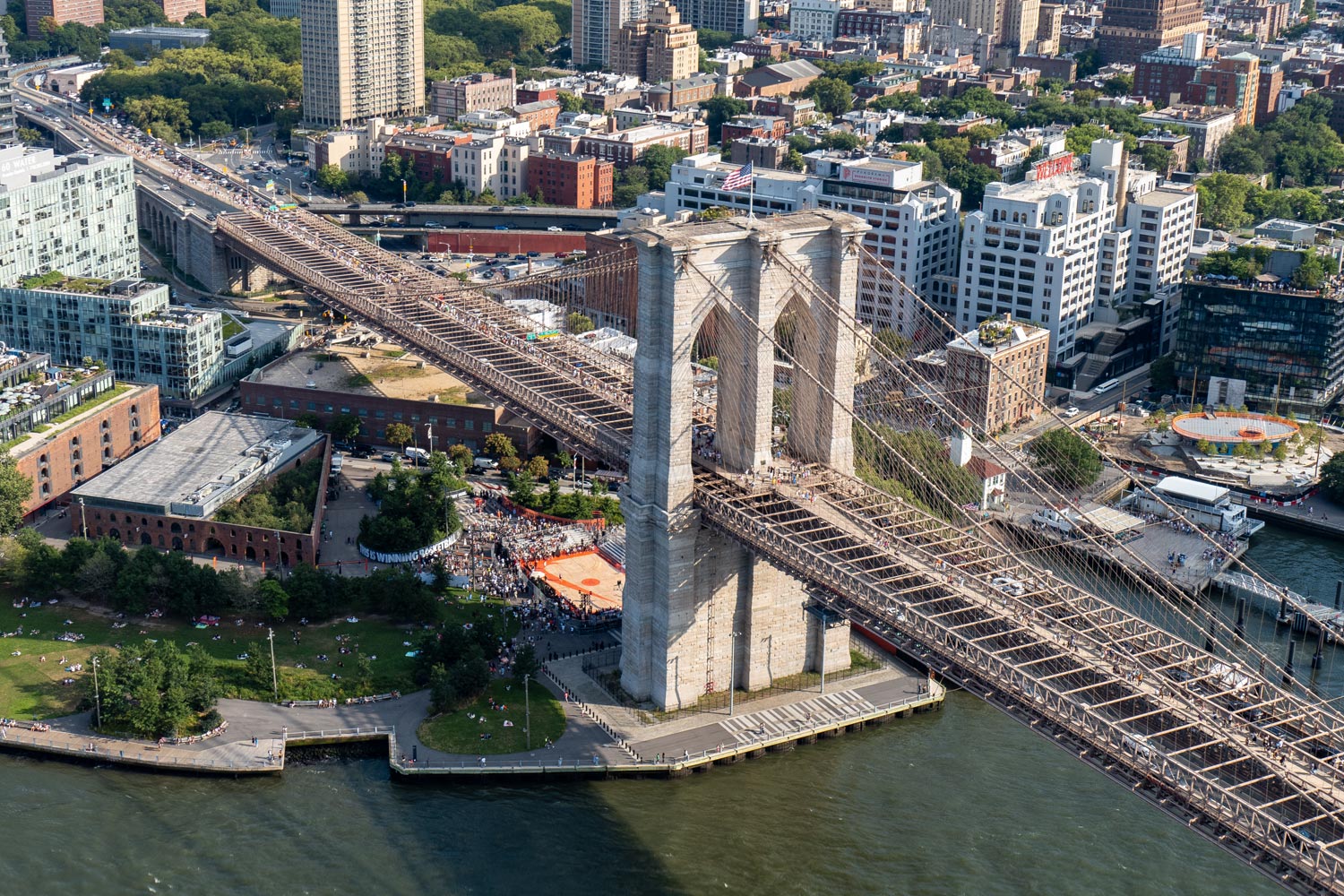
Beyond the bridge begins Brooklyn — one of New York’s five boroughs. On the Manhattan side, the bridge plunges into a mass of grimy brown high-rises — these are public housing projects that were once built for low-income residents.
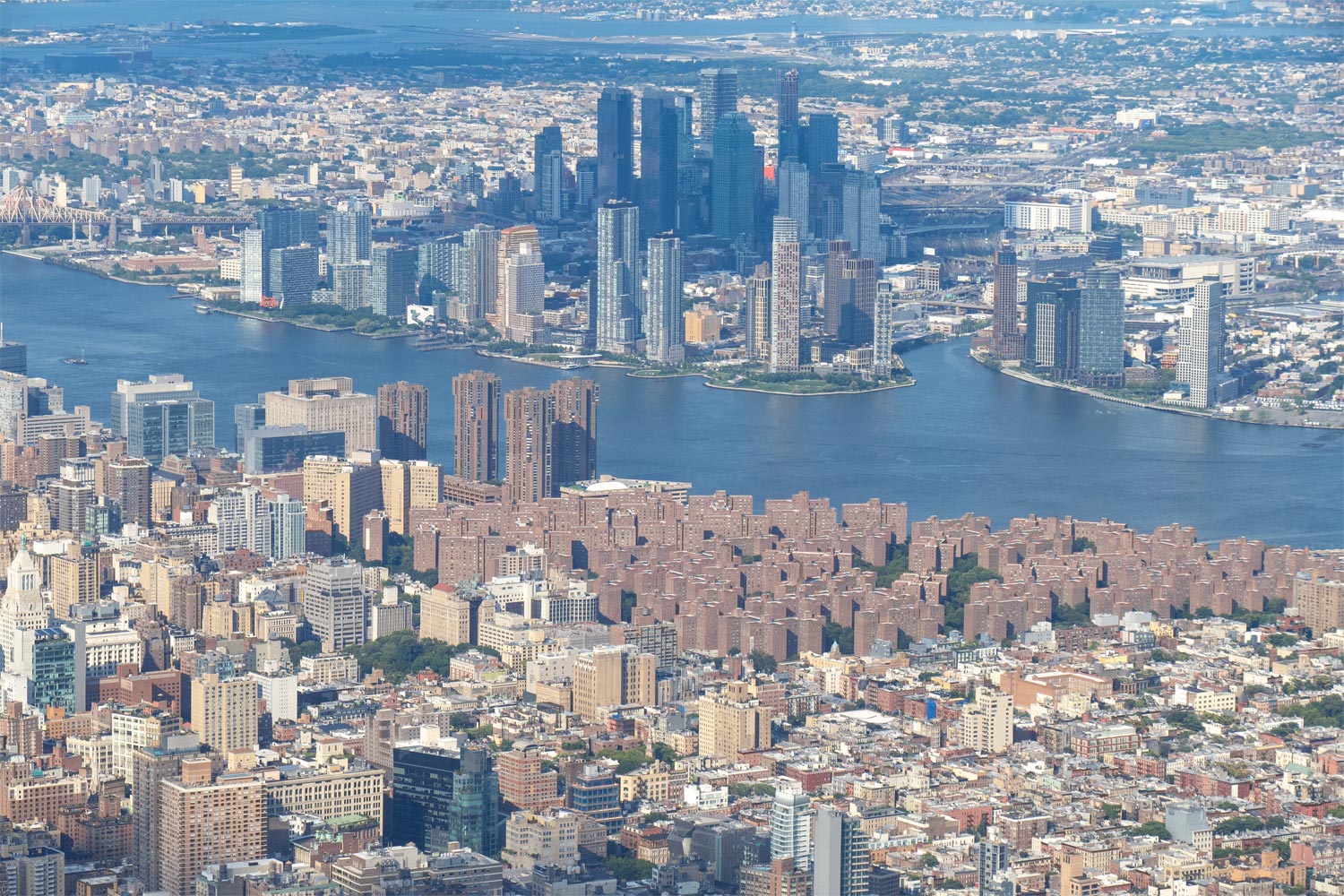
After flying over Manhattan, the helicopter stirs to the right and heads away from the city toward the Statue of Liberty.
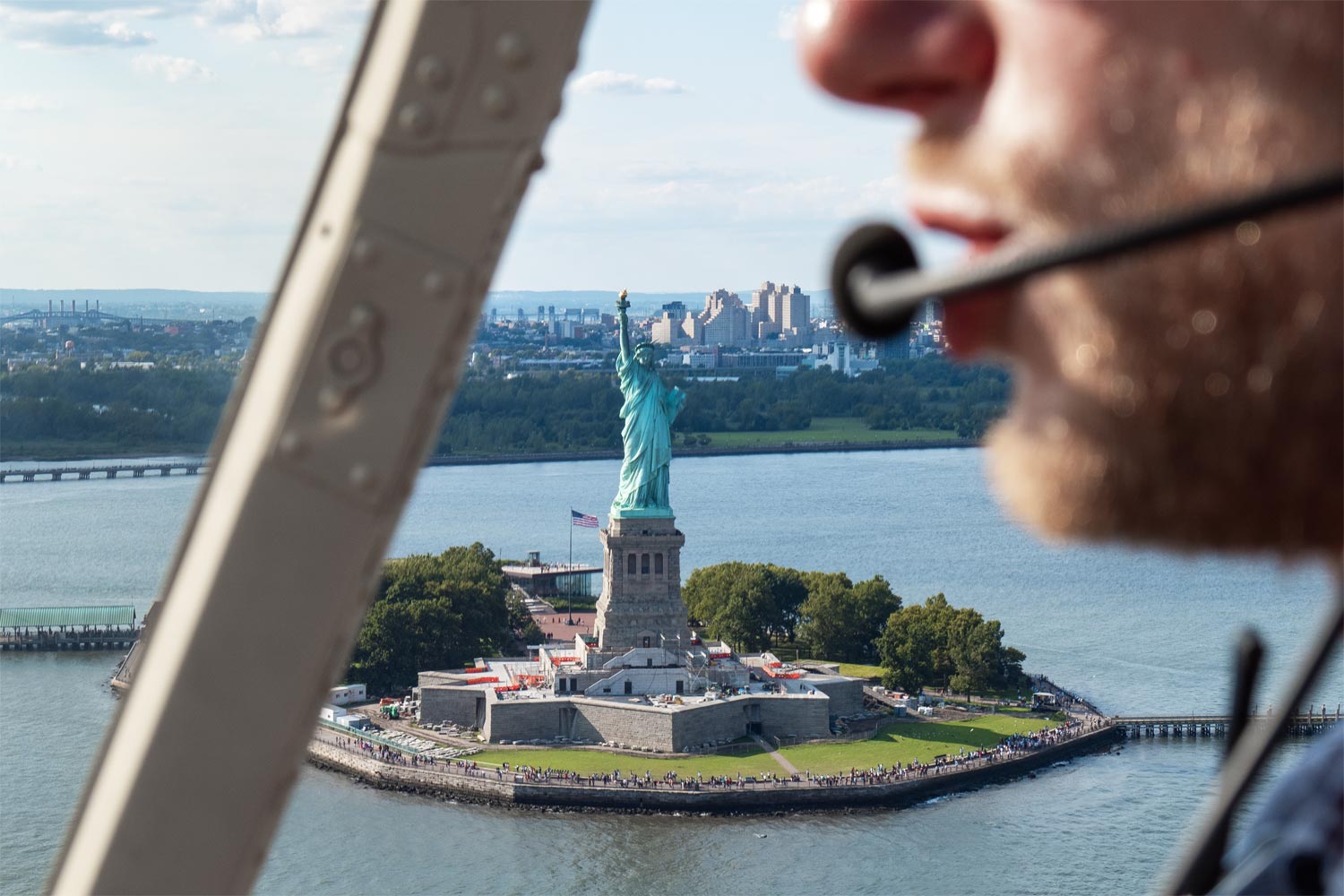
Circling around it, the pilot gives you a moment to take in a fantastic view of New York. And once again, you can see just how tiny downtown is.
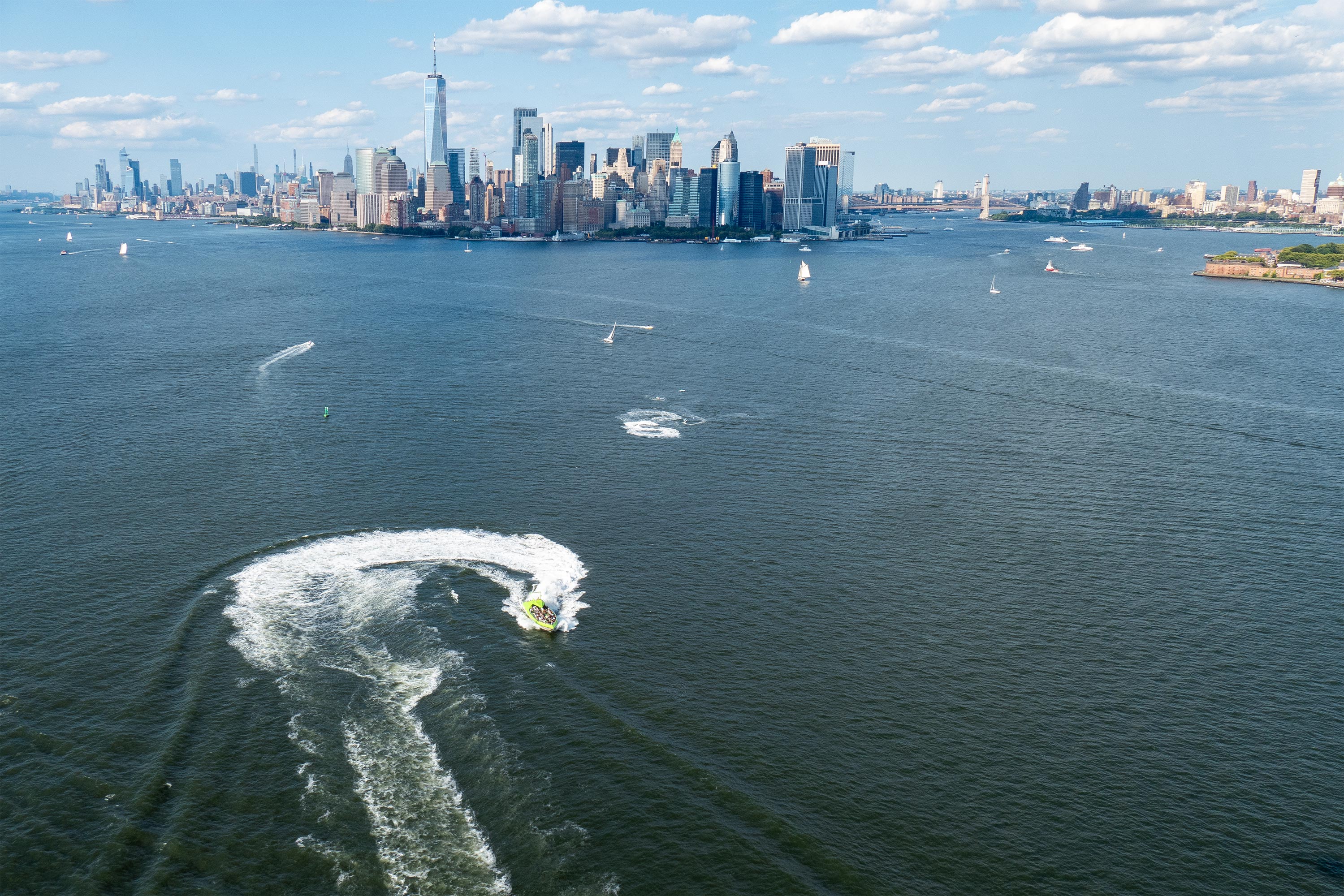
But although downtown is tiny, New York itself is enormous. A giant of endless proportions is hiding behind the toy-like towers that serve merely as New York’s facade.
Behind this facade, behind its showcase skyscrapers, begins a dense mass of development stretching far beyond the horizon. Only somewhere at the very end, on its far edge, another cluster of high-rises can be seen. In between yawns a sharp drop in height.
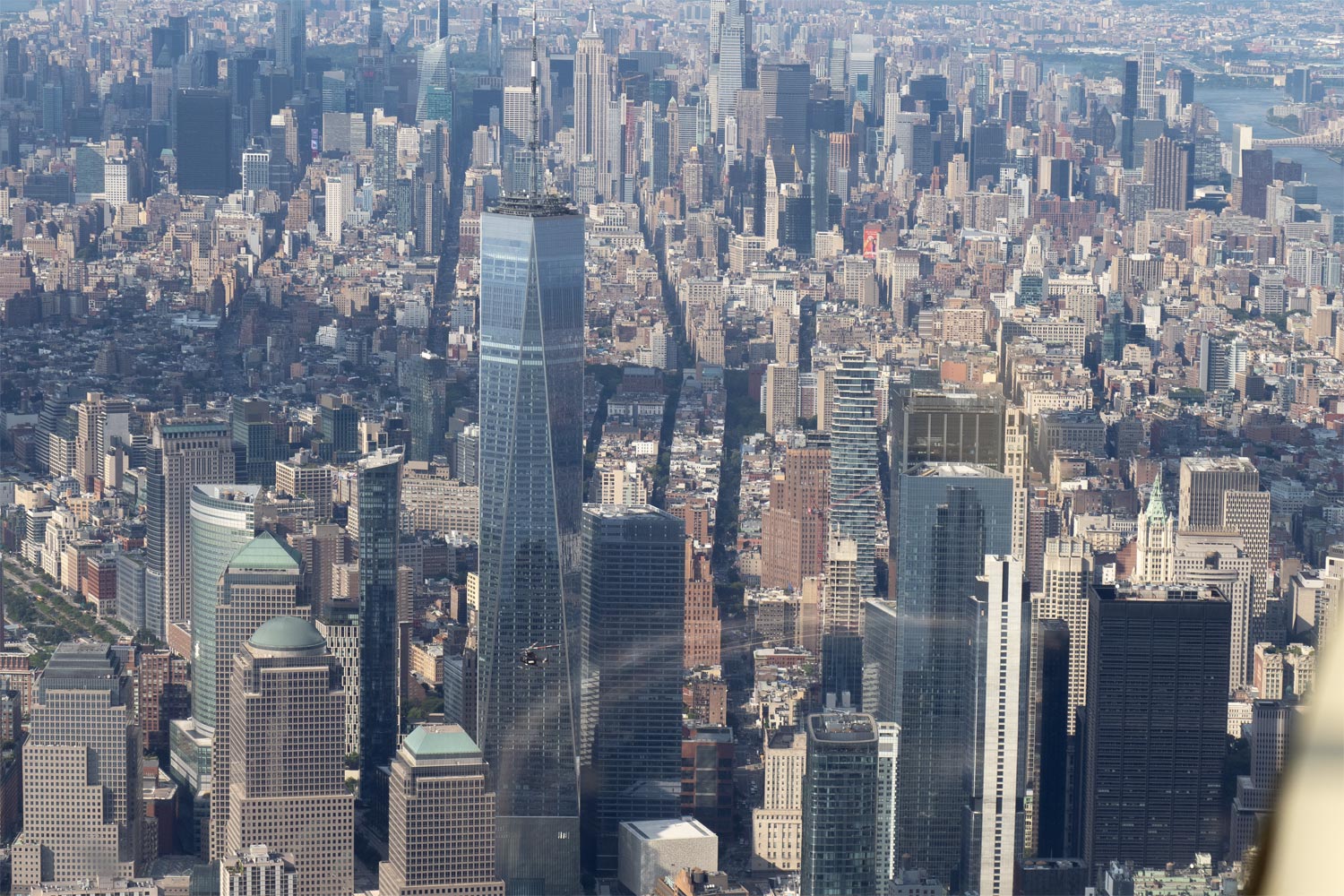
There begins the midtown, which includes both a decrepit Chinatown and the upscale districts of Soho.
Civic Center
Right past New York’s financial district lies a small neighborhood, a sort of interlude between the skyscrapers of downtown and the low-rise sprawl of the mid-city.
This little area is called the Civic Center. It’s packed with government buildings like City Hall and various courts.
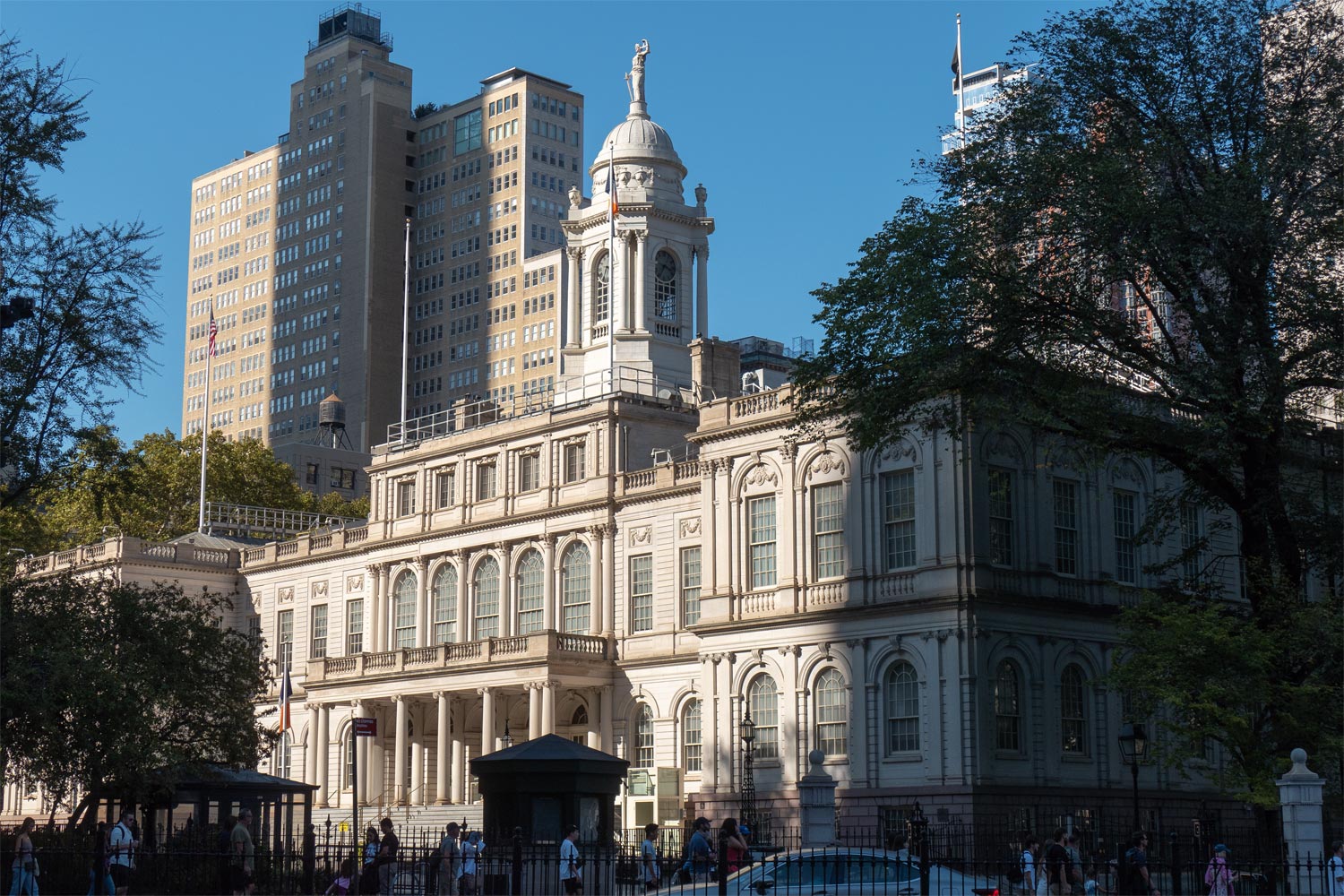
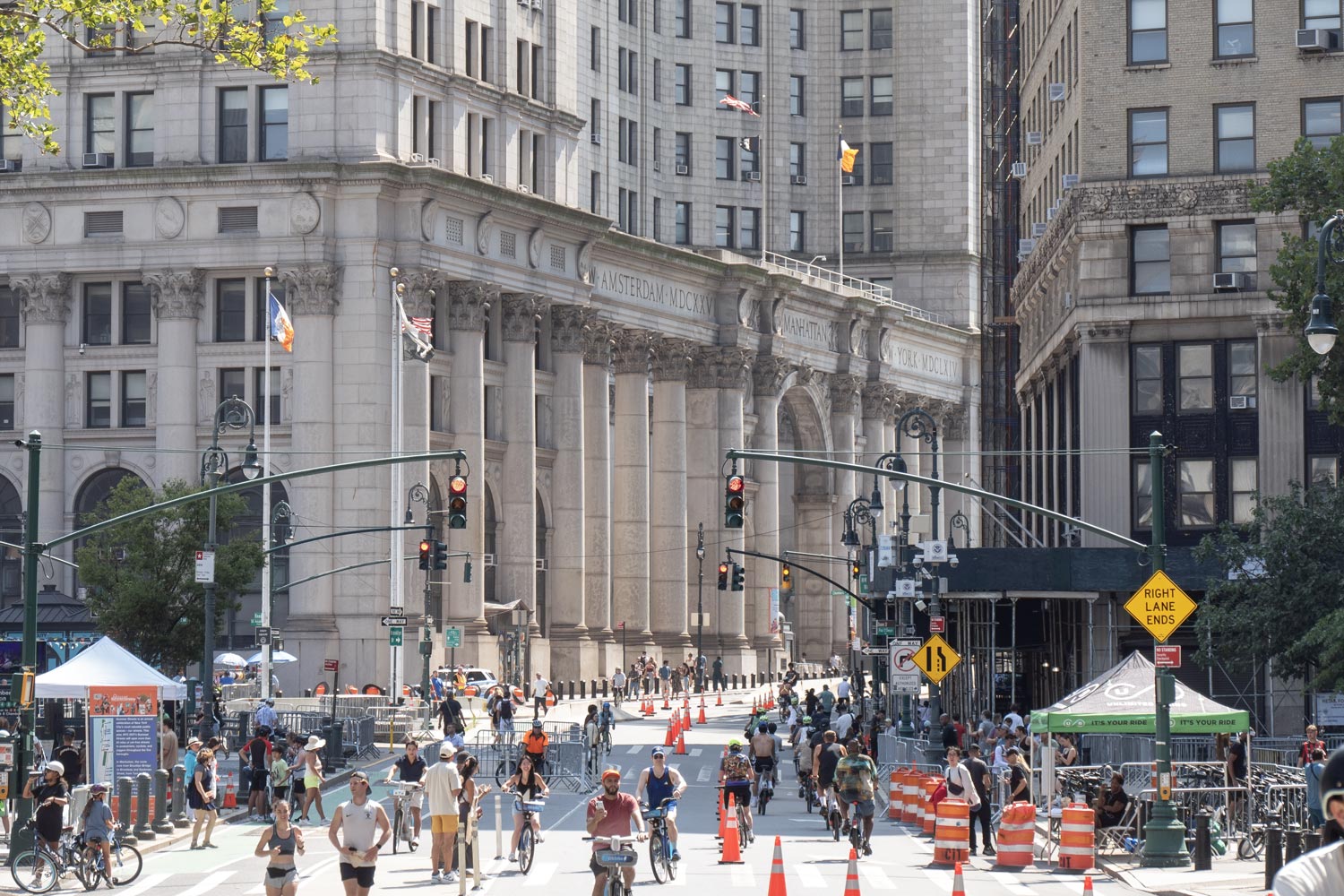
The most recognizable building is the Manhattan Municipal Building. This grand forty-story skyscraper was built back in 1914.
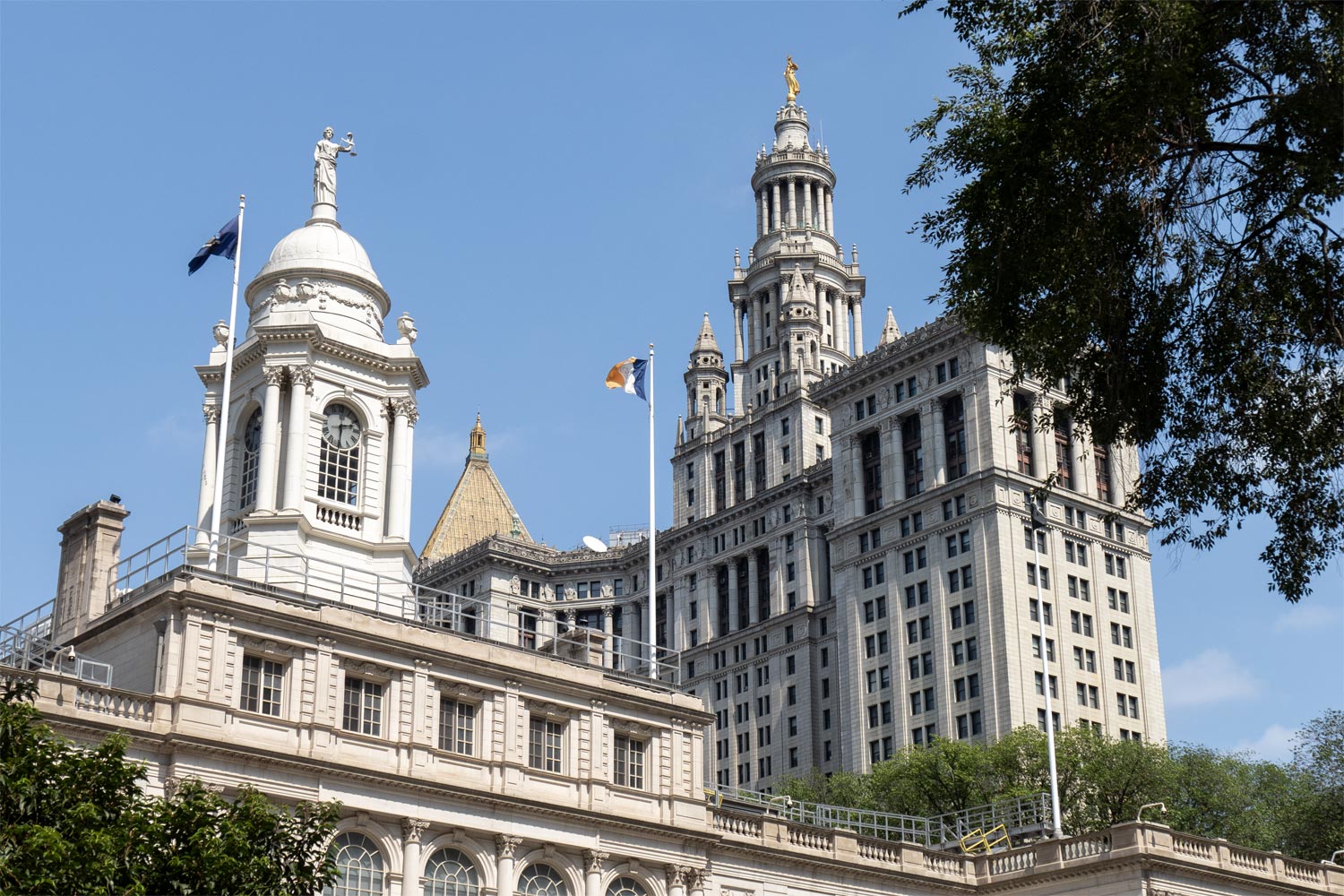
It was this very building that Stalin’s skyscrapers in Moscow were copied from, as well as many structures in Chicago and other American cities.
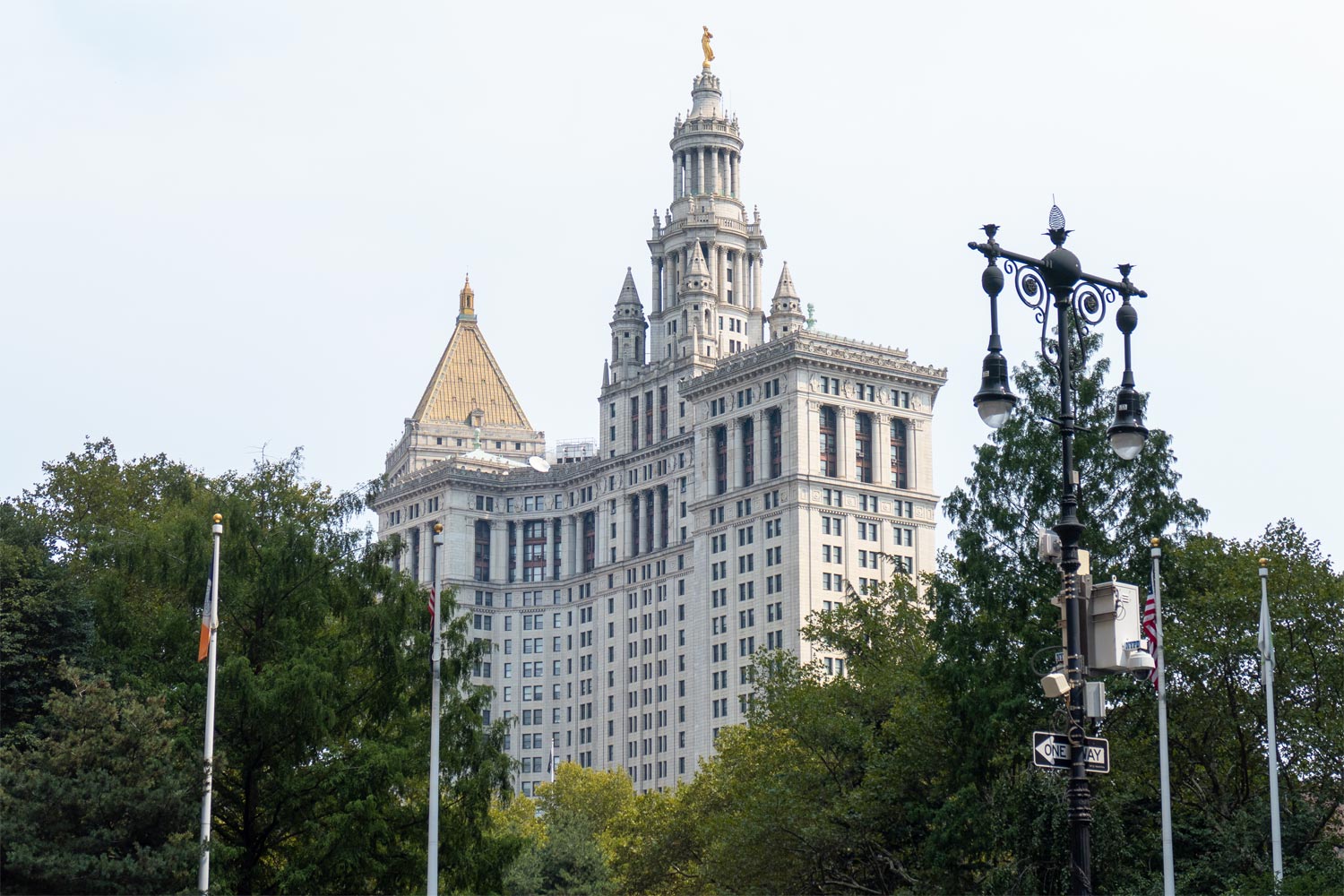
From the right angle, the city hall looks insanely similar to the Moscow’s Foreign Ministry building: the same bloated, pompous imperial hulk, crushing passersby with its grandiosity.
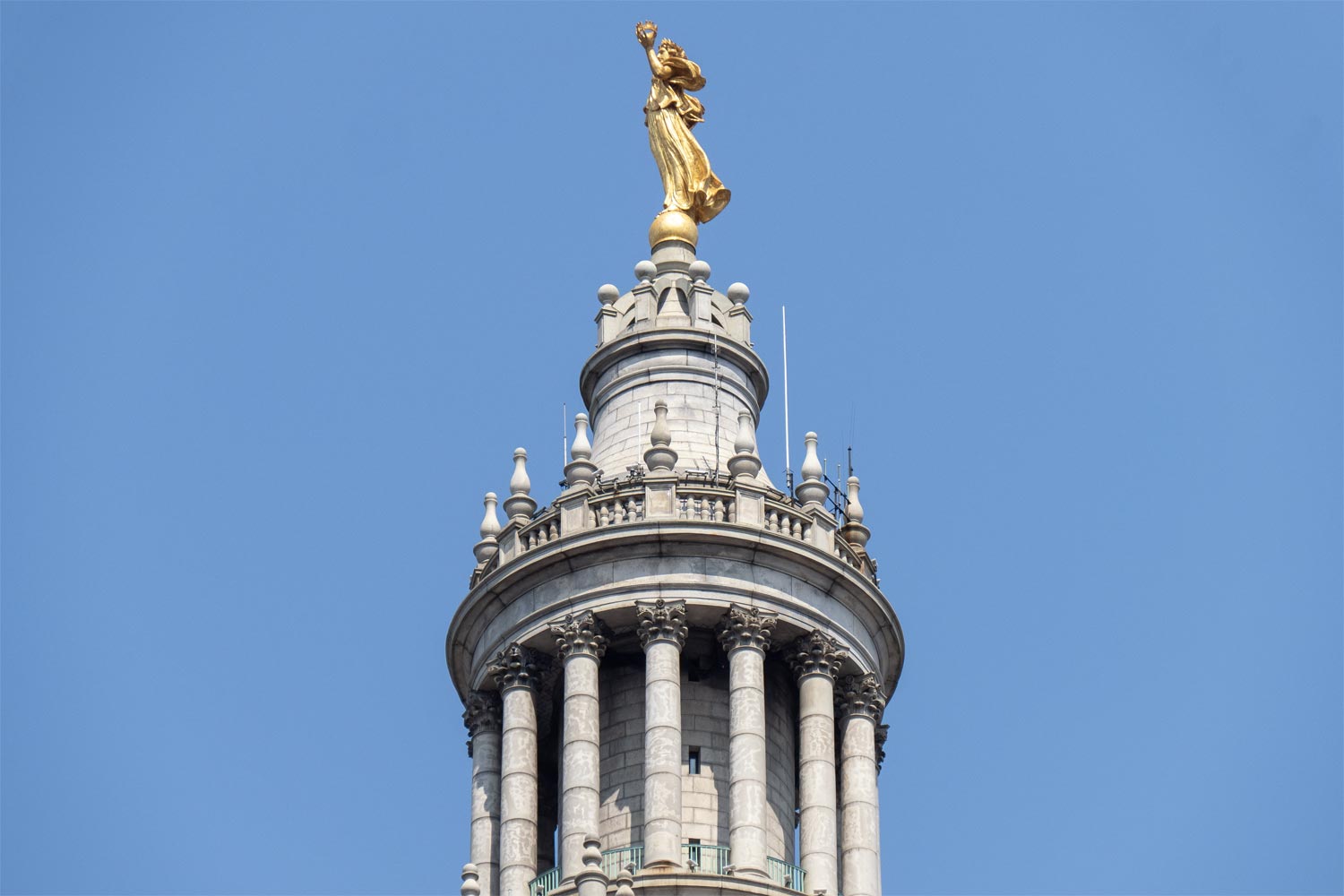
On top of the building stands a gilded statue — the symbol of the glory of New York and its residents. Stalin put up similar statues, just without the gold, on the buildings along Tverskaya Street in Moscow. Later they were removed as part of the “fight against excesses.” Fortunately, excesses only exist under socialism, so in New York the statue is still there.
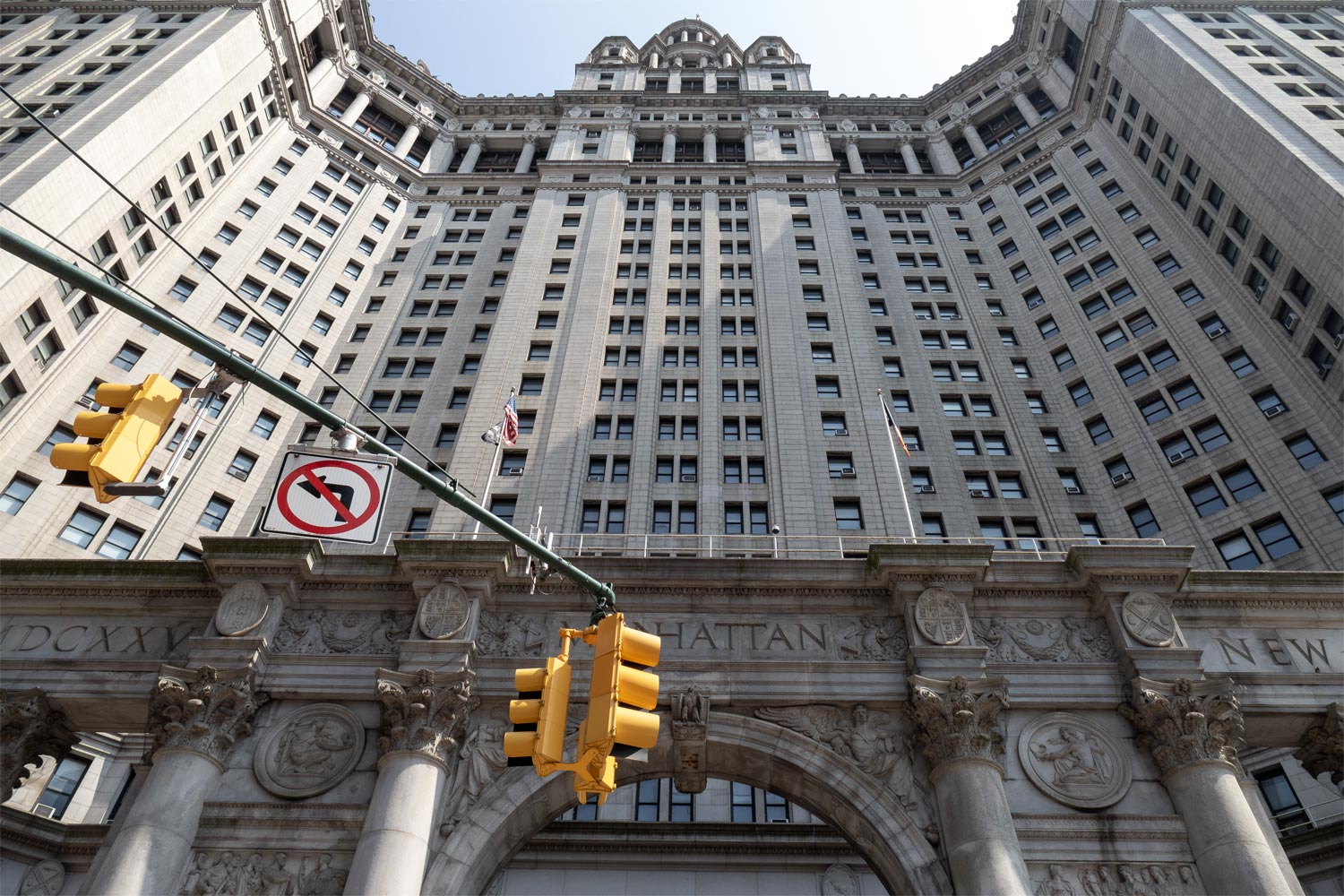
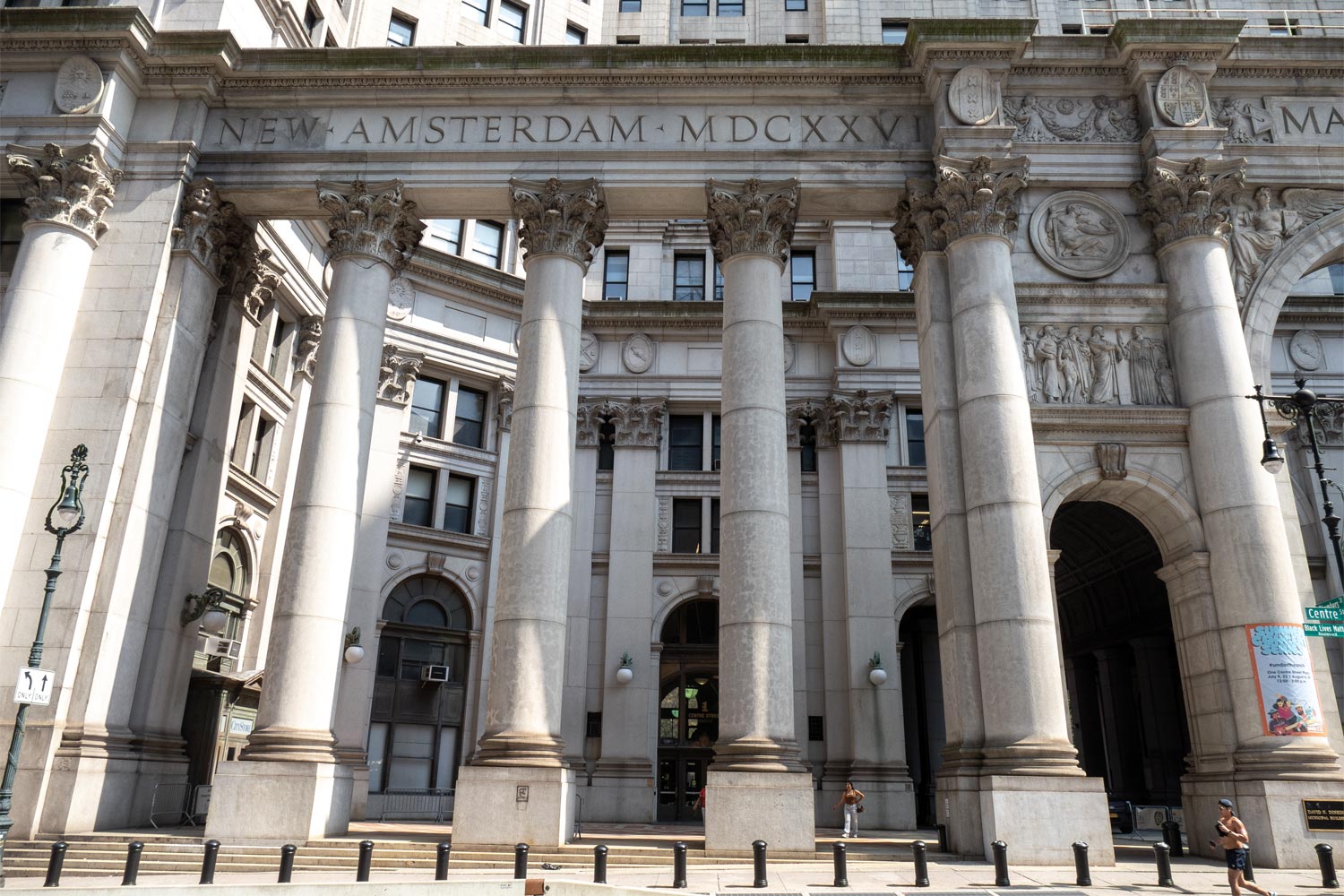
The base of the building is a gigantic colonnade in the style of Ancient Rome. Carved into the cornice is the city’s old name: New Amsterdam. Behind the colonnade is the entrance to the subway.
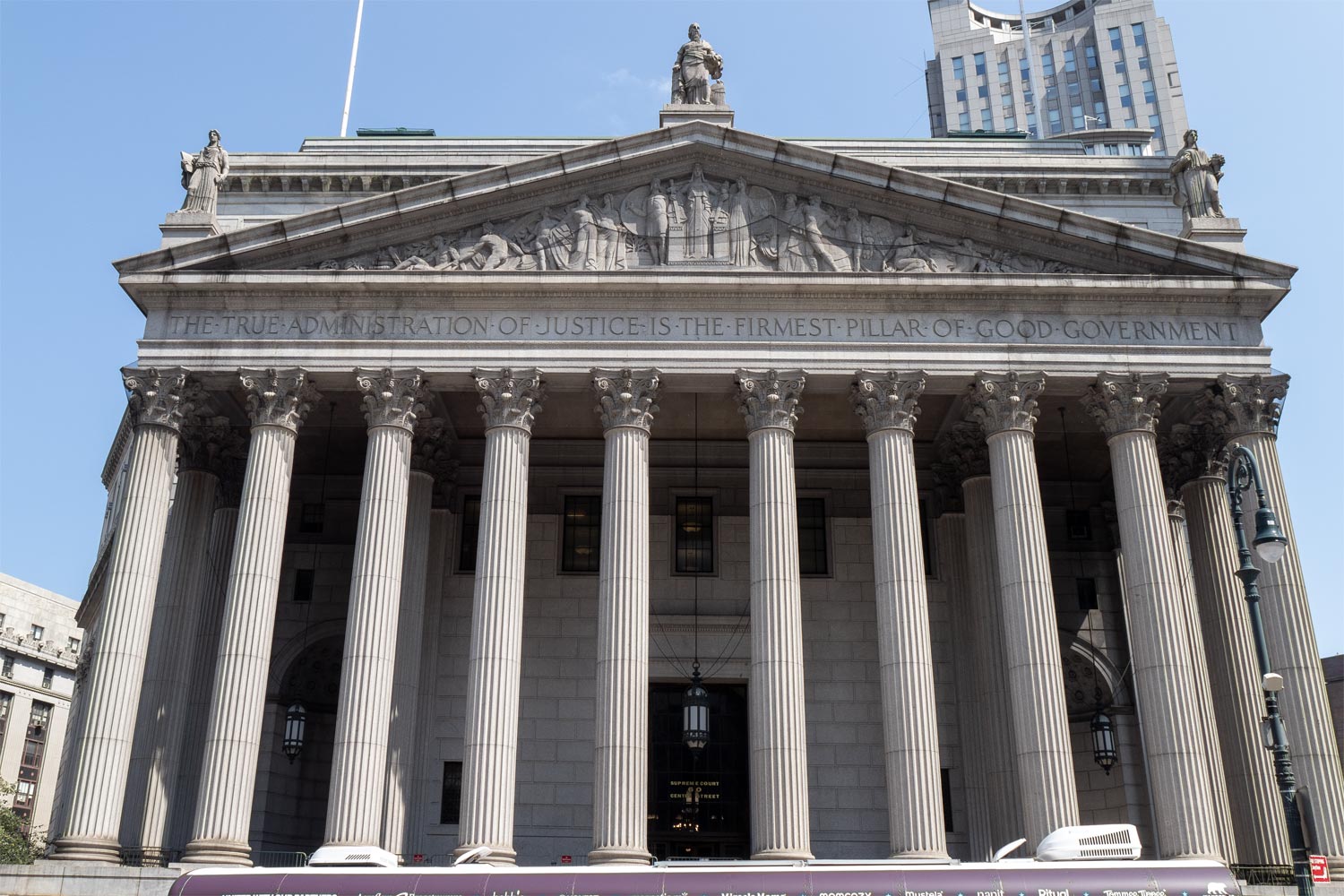
Hardly has the district begun when it already comes to an end — with the neoclassical criminal court building.
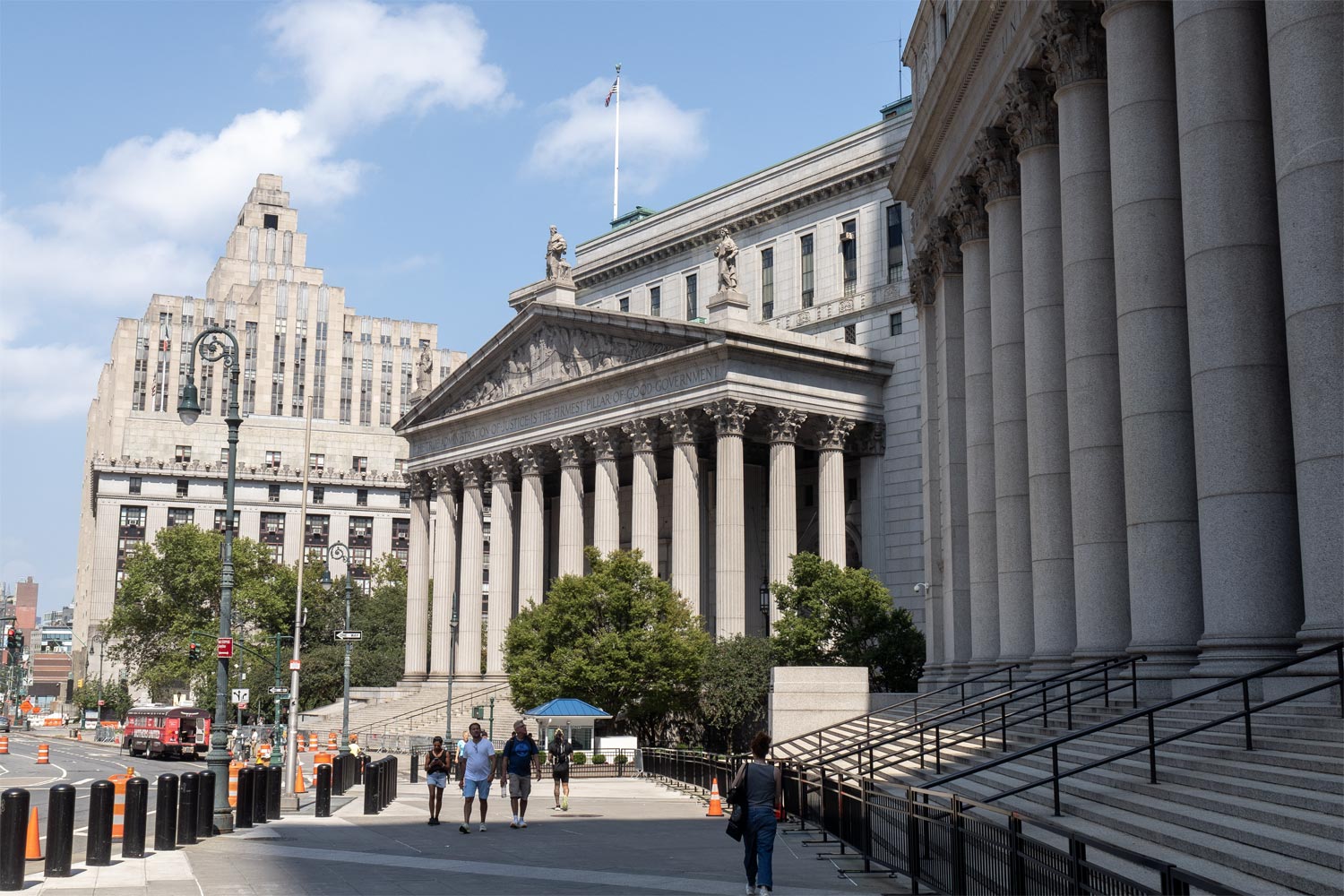
This house often pops up in movies. For example, a mafia don was gunned down on its steps in The Godfather.
Chinatown
The Civic Center comes with a compact Chinatown.
Chinatowns are a leftover from a racist past. Long time ago, Chinese people in the U.S. lived only in Chinatowns. Because of the influx of Asian immigrants, starting in the late 19th century they were banned from entering the U.S., and those who were already there stopped being granted citizenship. Asians could only work the dirtiest jobs: servants, janitors, gardeners, laundry workers, miners, farmhands, shopkeepers, and so on.
The horrible anti-Chinese law passed in 1882 actually survived all the way until 1943. A typical poster from those years was an ad for laundry detergent, showing Uncle Sam kicking a caricatured Chinese man. The caption read: “We have no use for them since we got this wonderful washer.”
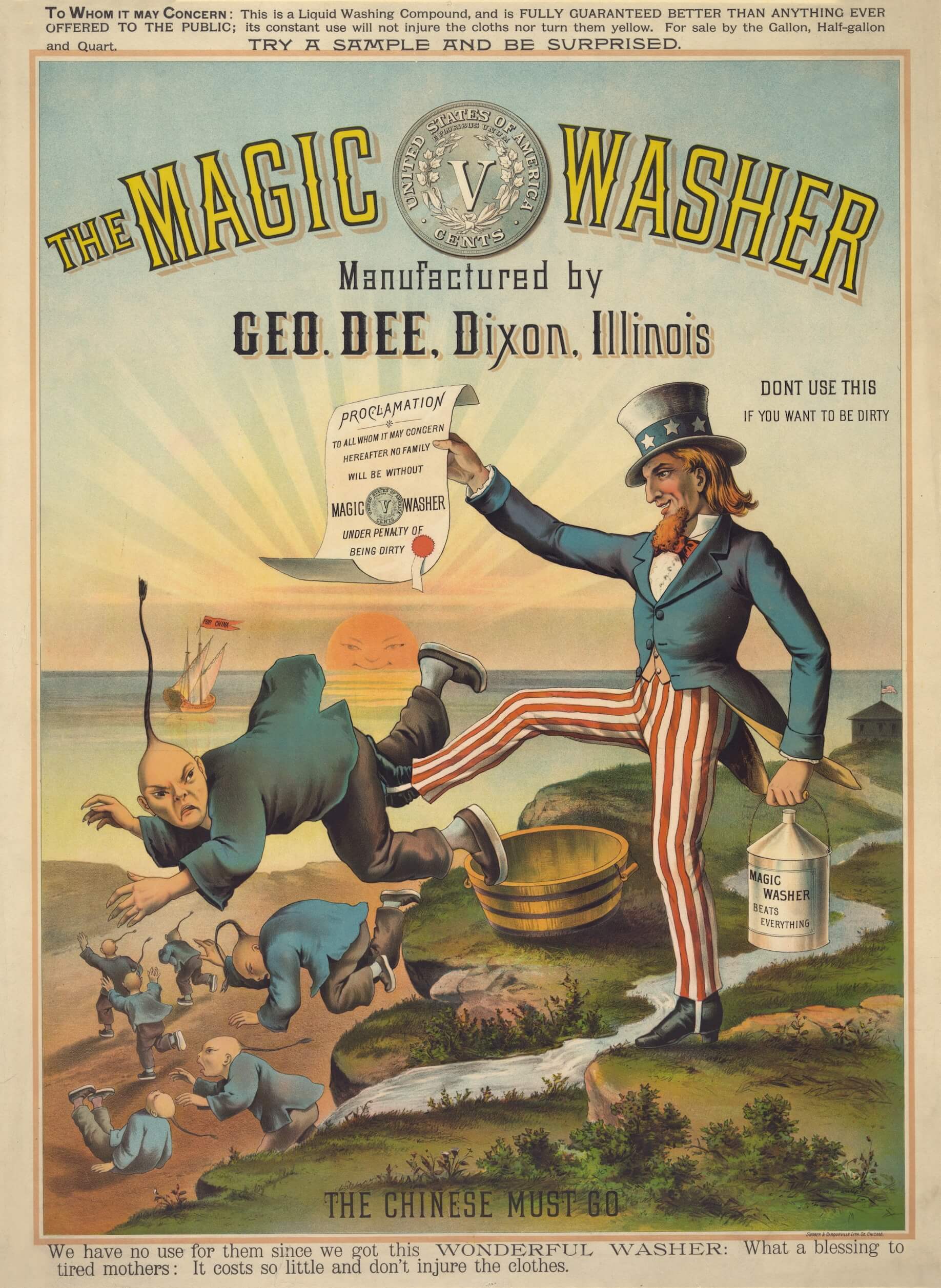
Although the law didn’t forbid the Chinese from settling wherever they wanted, people saw them as walking disease carriers, so they could only live in isolated Chinatowns. Fortunately, racism in the U.S. has been eradicated, and today Chinese people earn much more than white people and live wherever they please. Chinatowns still exist in the cities, but now they’re just colorful ethnic neighborhoods.
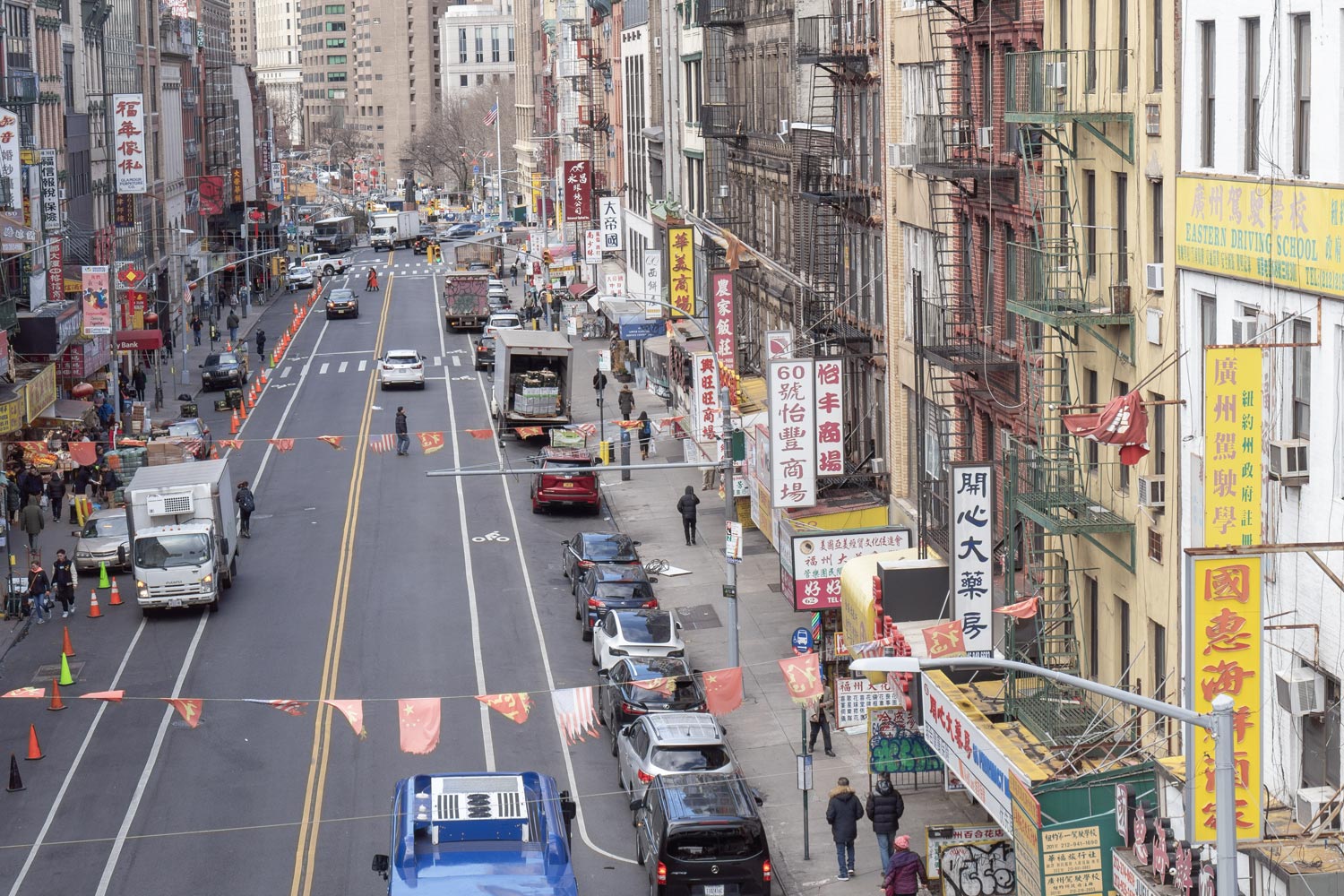
Chinese signs plaster the neighborhood.
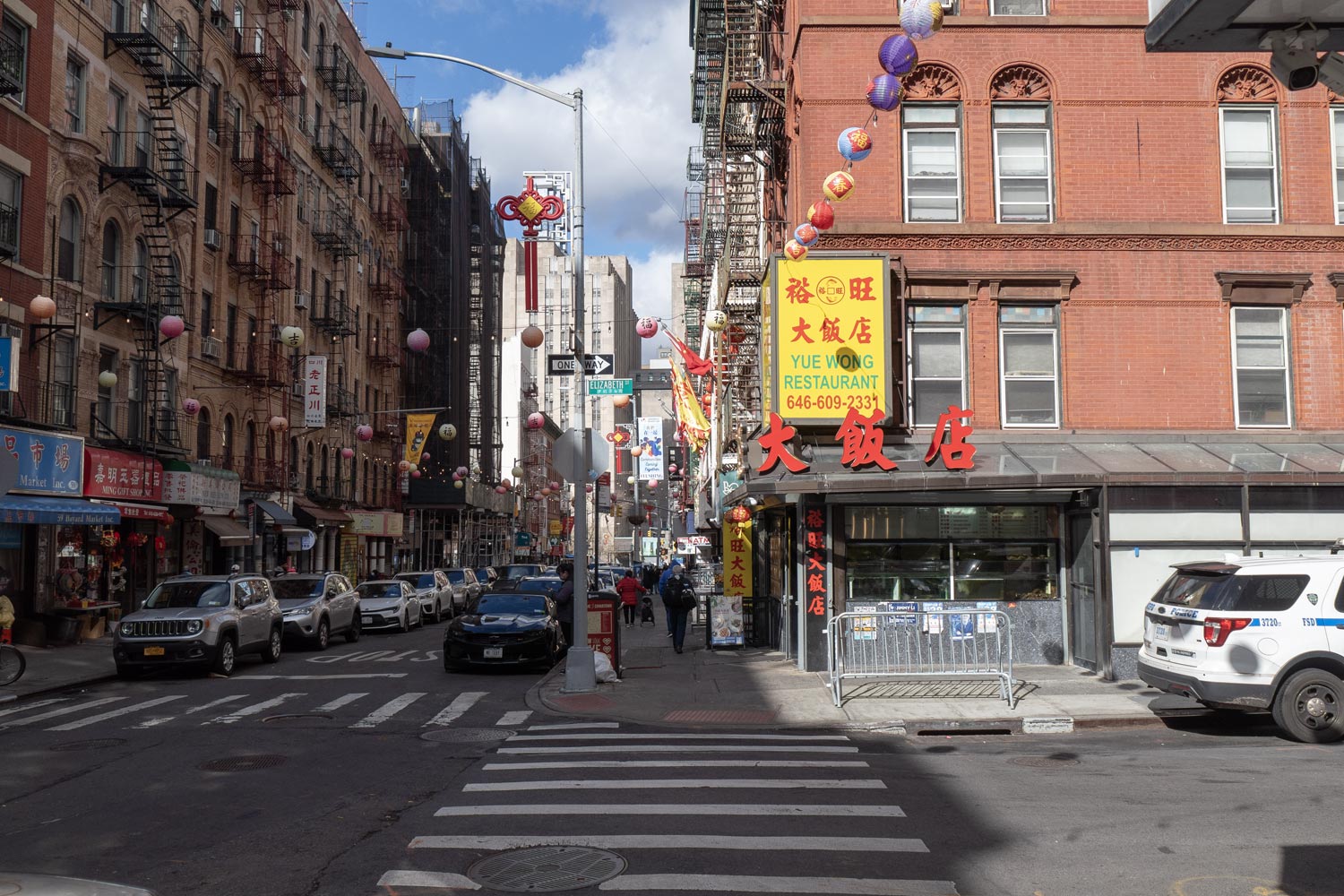
Chinese people are walking down the streets.
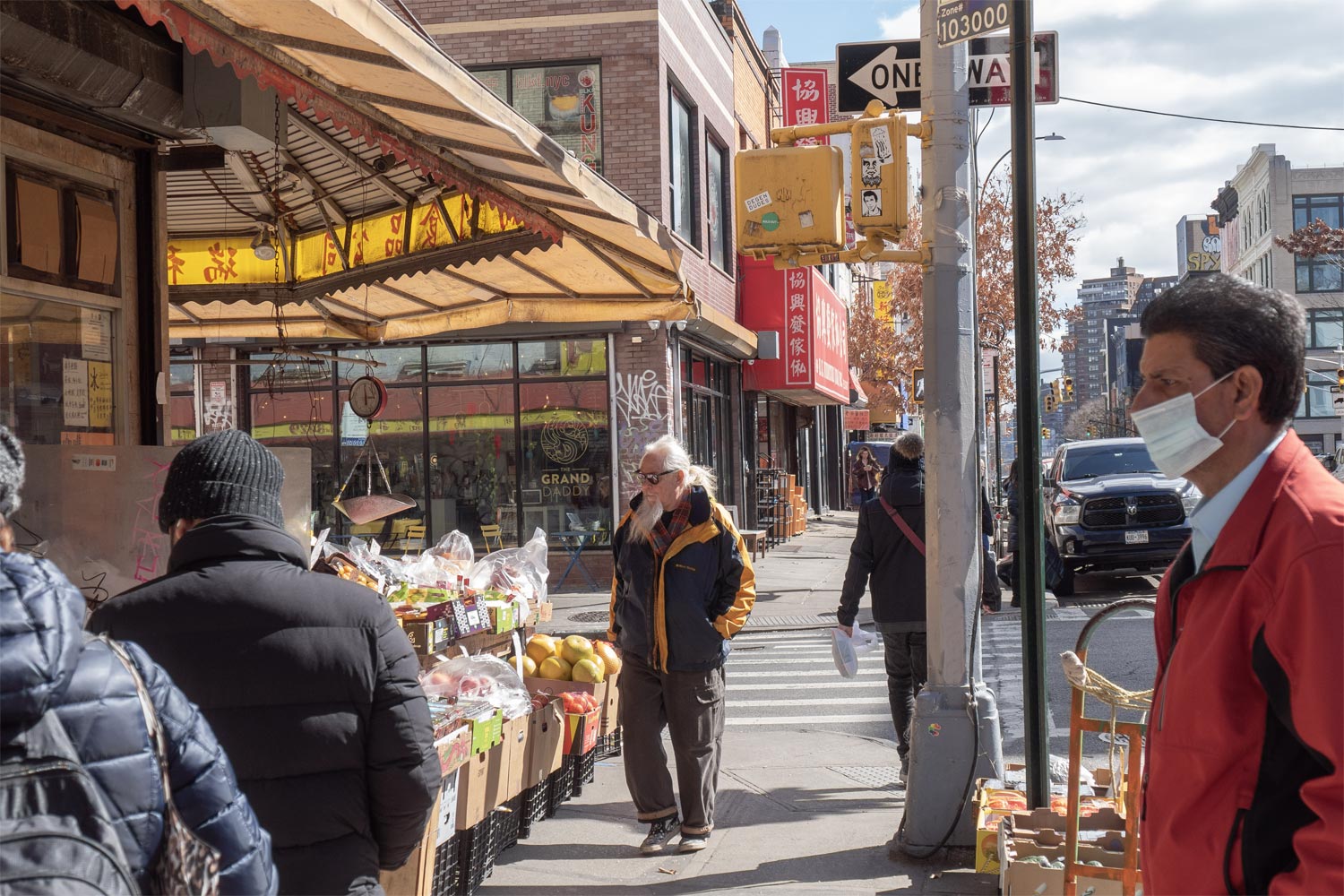
Chinese supermarkets sell Chinese goods straight from China itself.
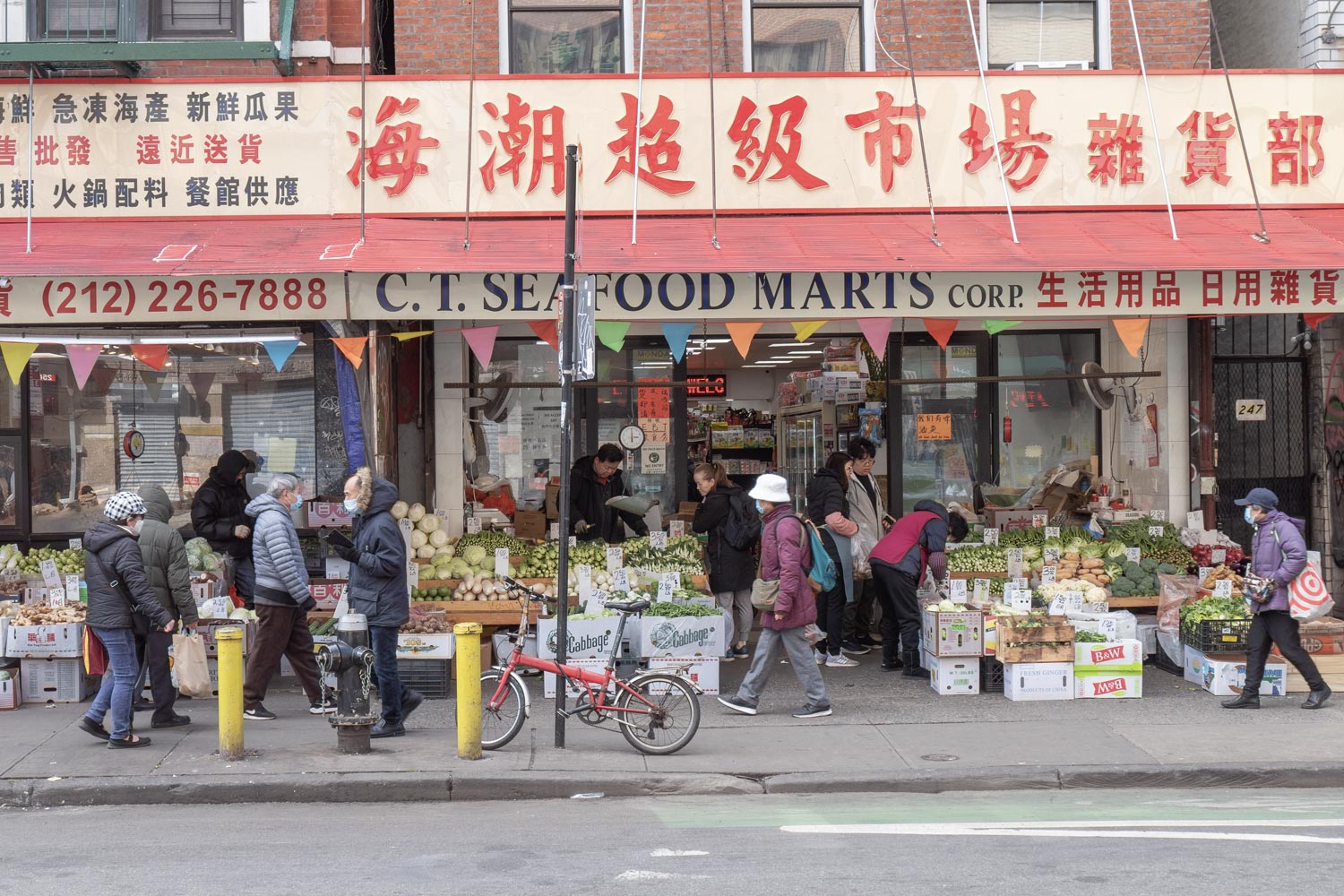
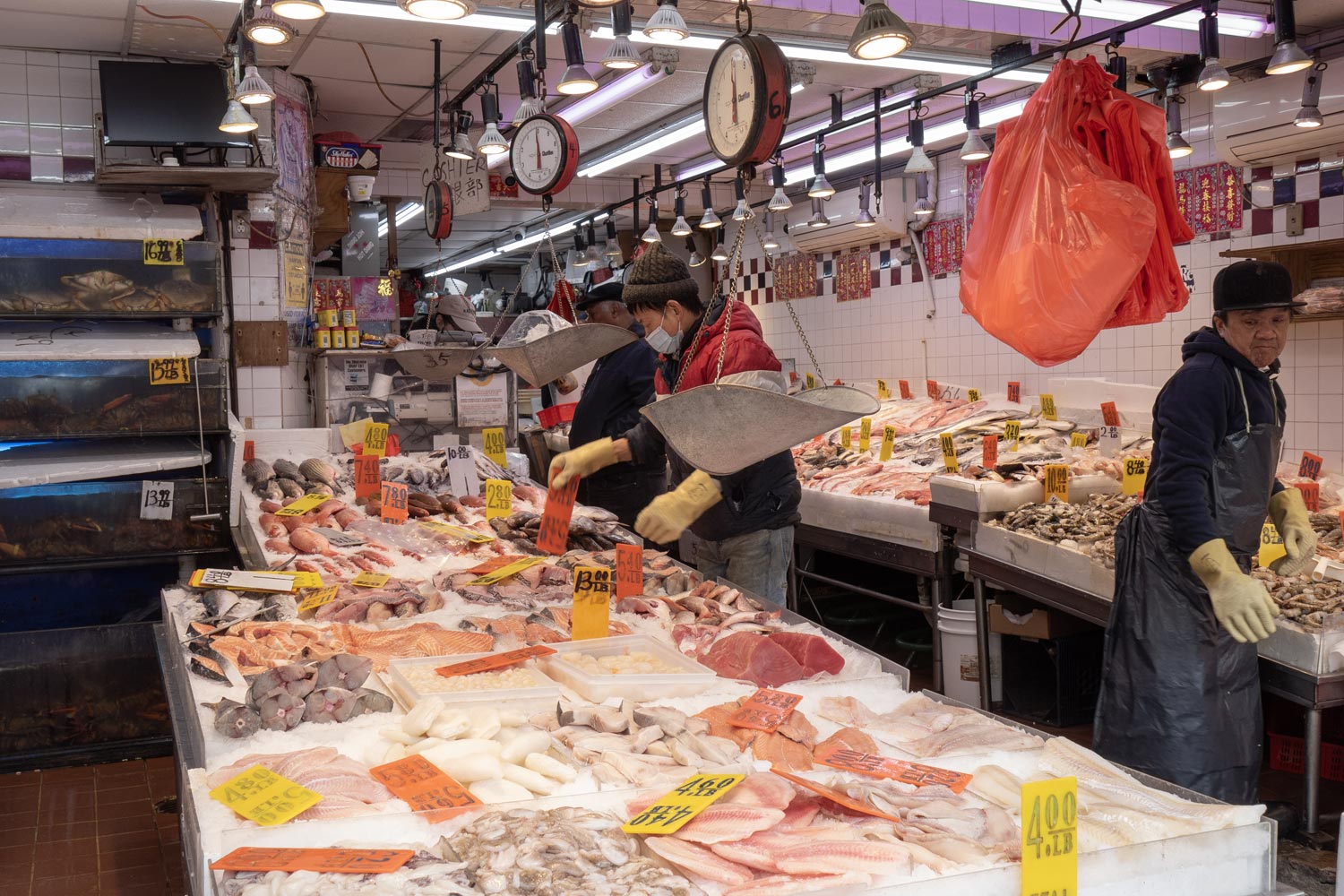
The shops selling domestic Chinese seafood are particularly interesting. You wouldn’t believe the stuff they sell there! In one of them — a JMart supermarket — the author found live turtles for soup, live frogs and moray eels, as well as skinned crocodile legs.

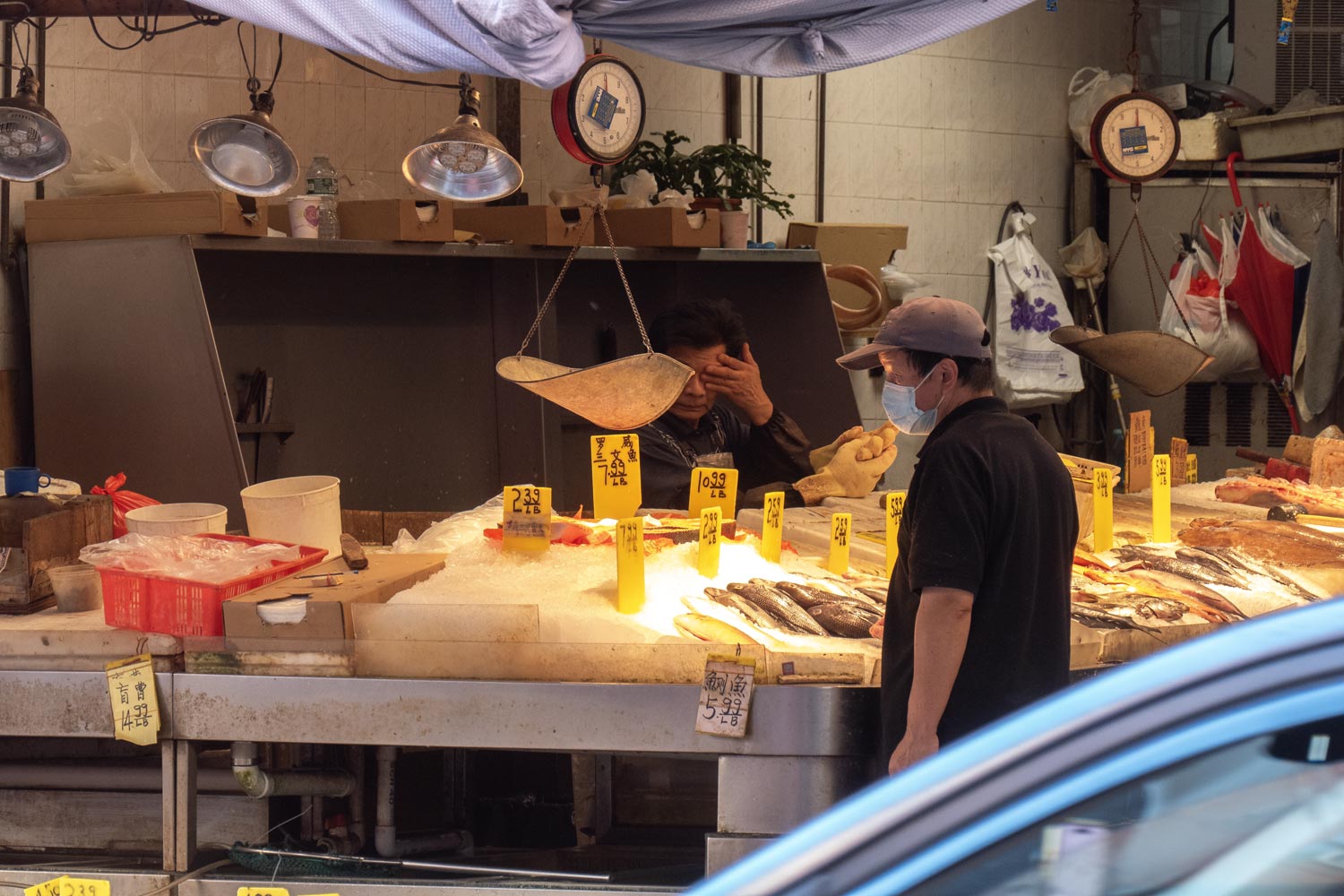
Anyway, even the Chinese themselves rarely eat this stuff. Mostly they sell shrimp and fish here — fresh and much cheaper than in American chain stores.
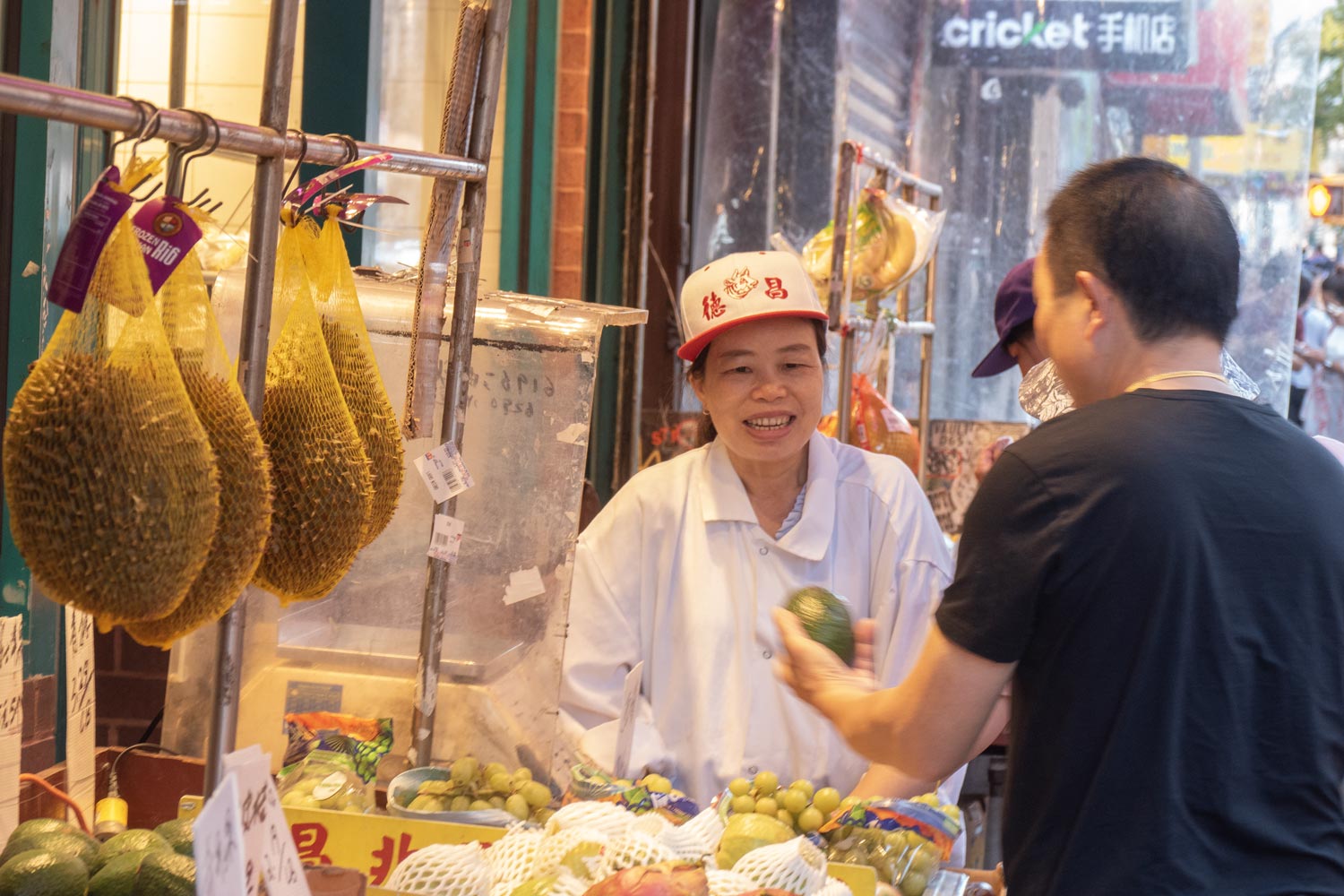
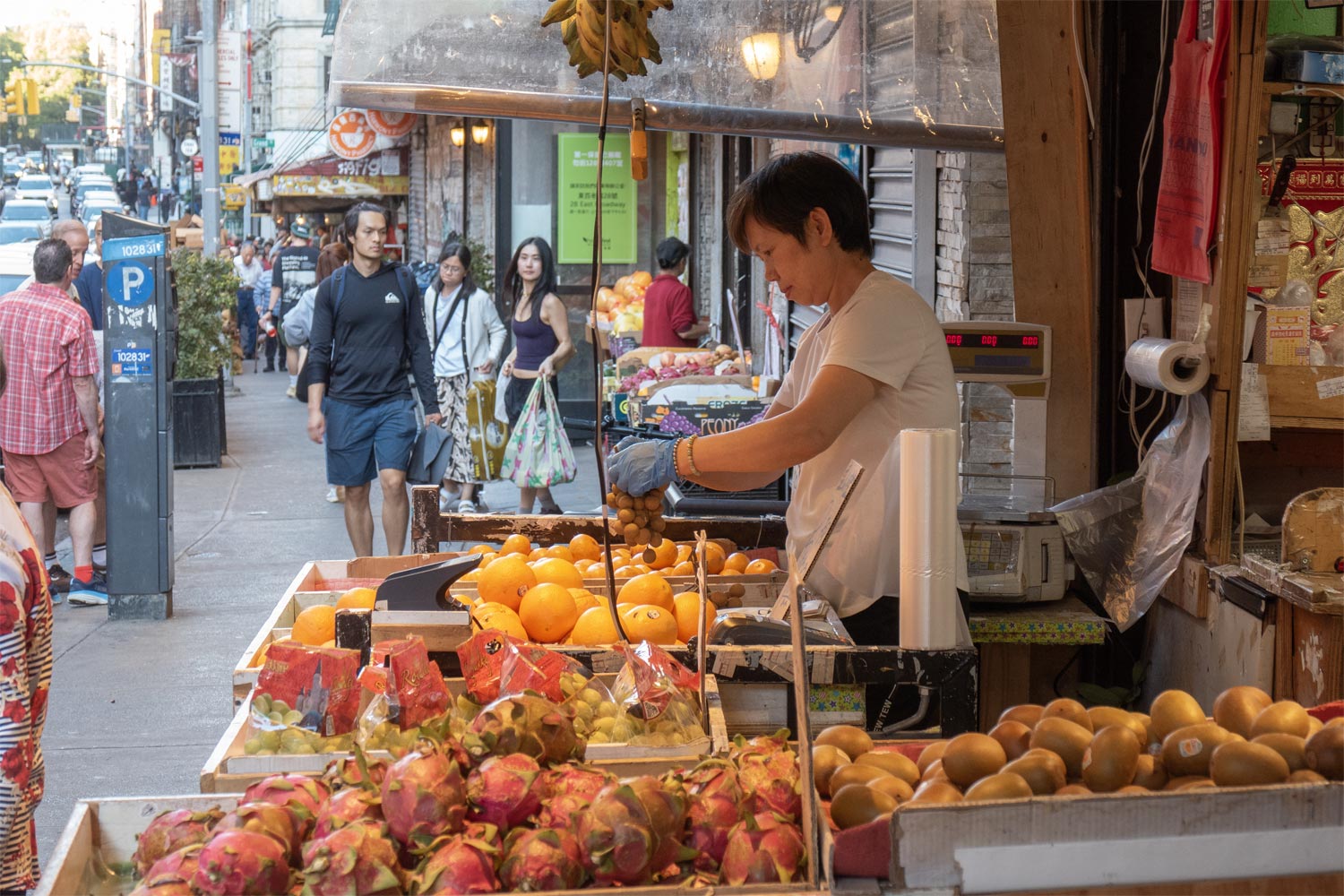
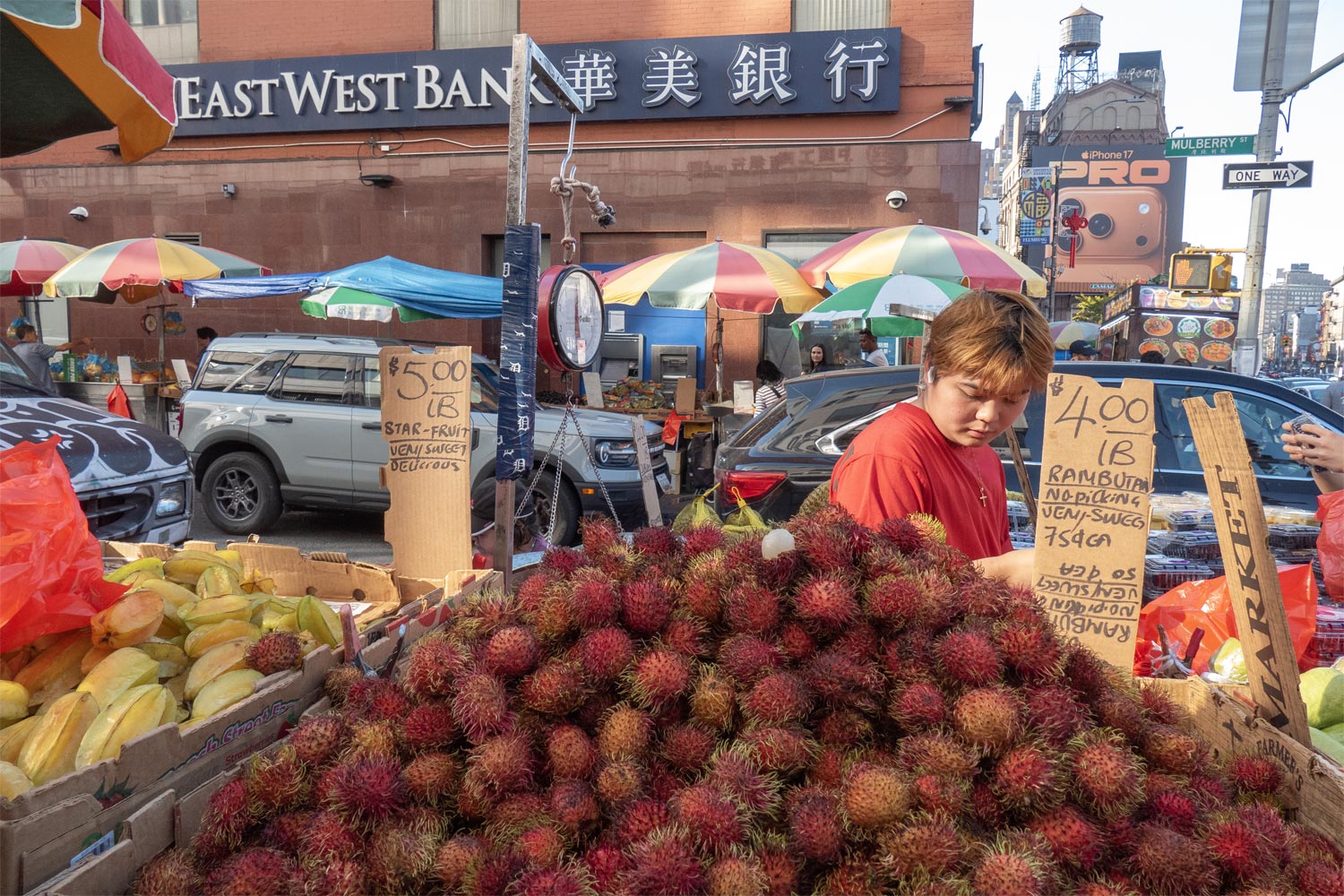
On the streets of Chinatown, the trade in exotic fruits is in full swing. Here you can find lychee with its warty skin, blazing red dragon fruit, spiky jackfruit, hairy rambutan, and even the reeking durian, which every Asian airline has banned from carry-on luggage.
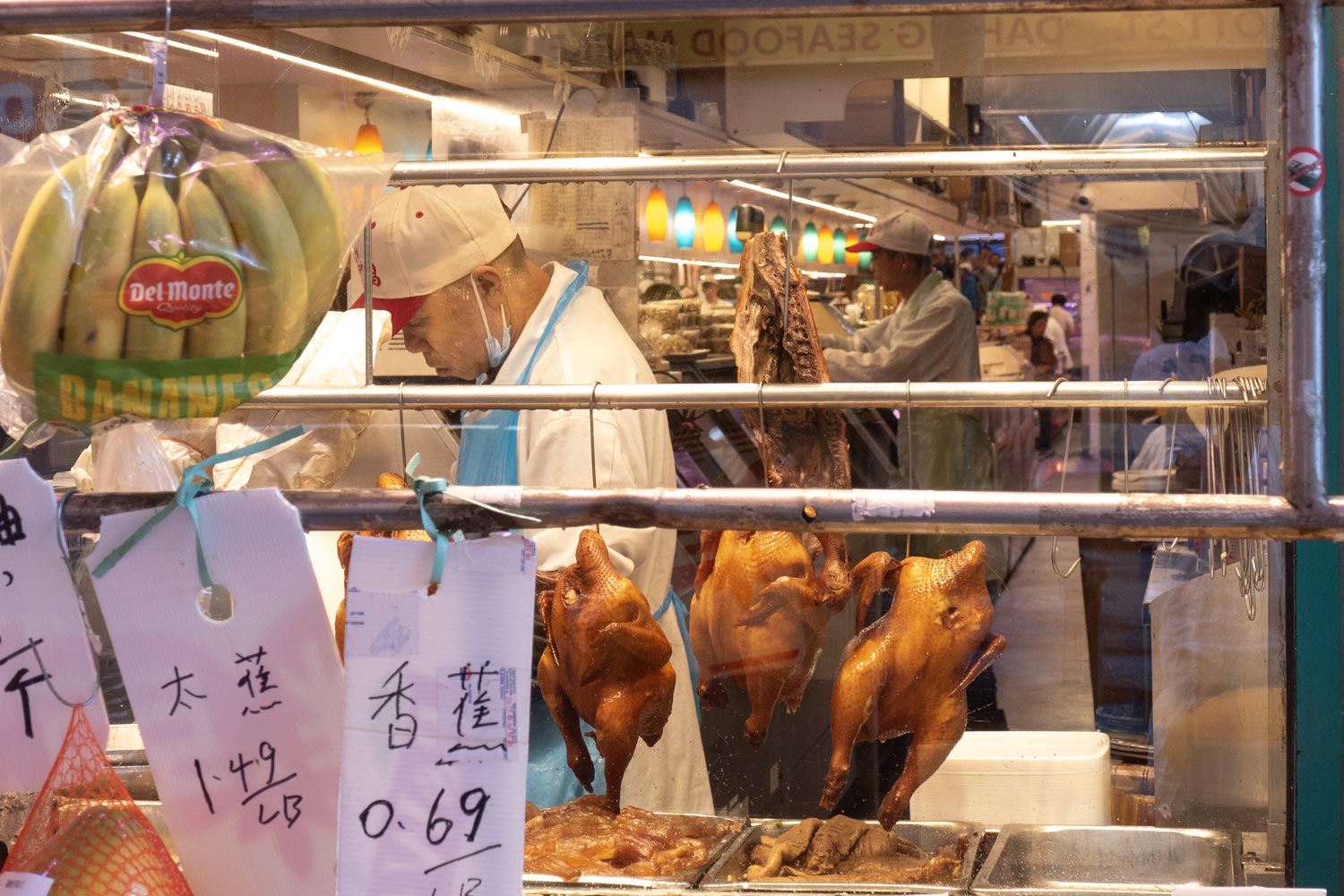
Here and there in the shop windows, shiny bird carcasses dangle from hooks. Not every bird is a chicken, you know. The yellow ones are chicken simmered in broth with turmeric, while the dark red ones are Cantonese roast duck.
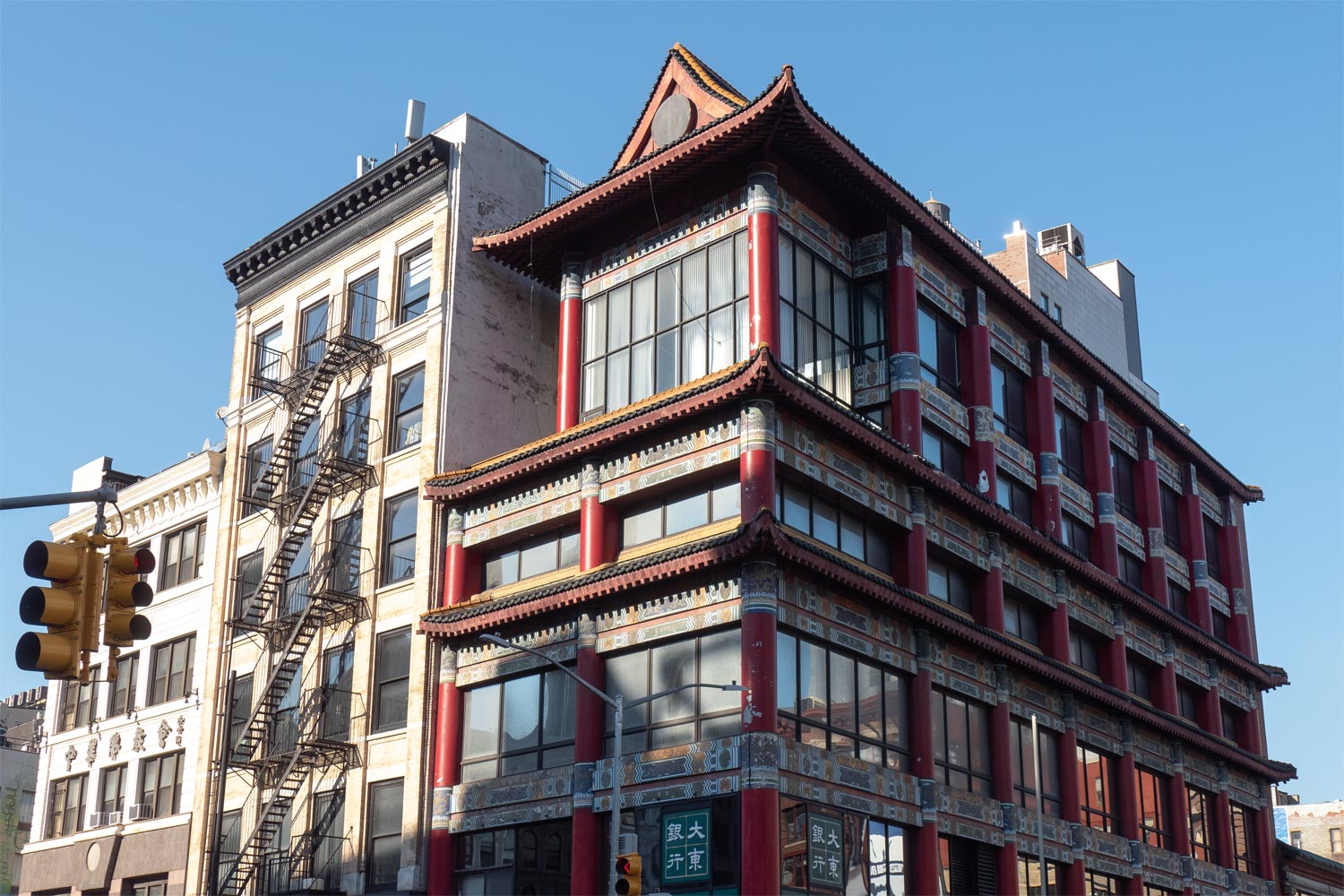
There’s nothing special in terms of architecture in Chinatown. In the whole neighborhood, I spotted just one genuinely Chinese building — with red columns, a multi-tiered roof with upturned eaves, and traditional ornamentation.
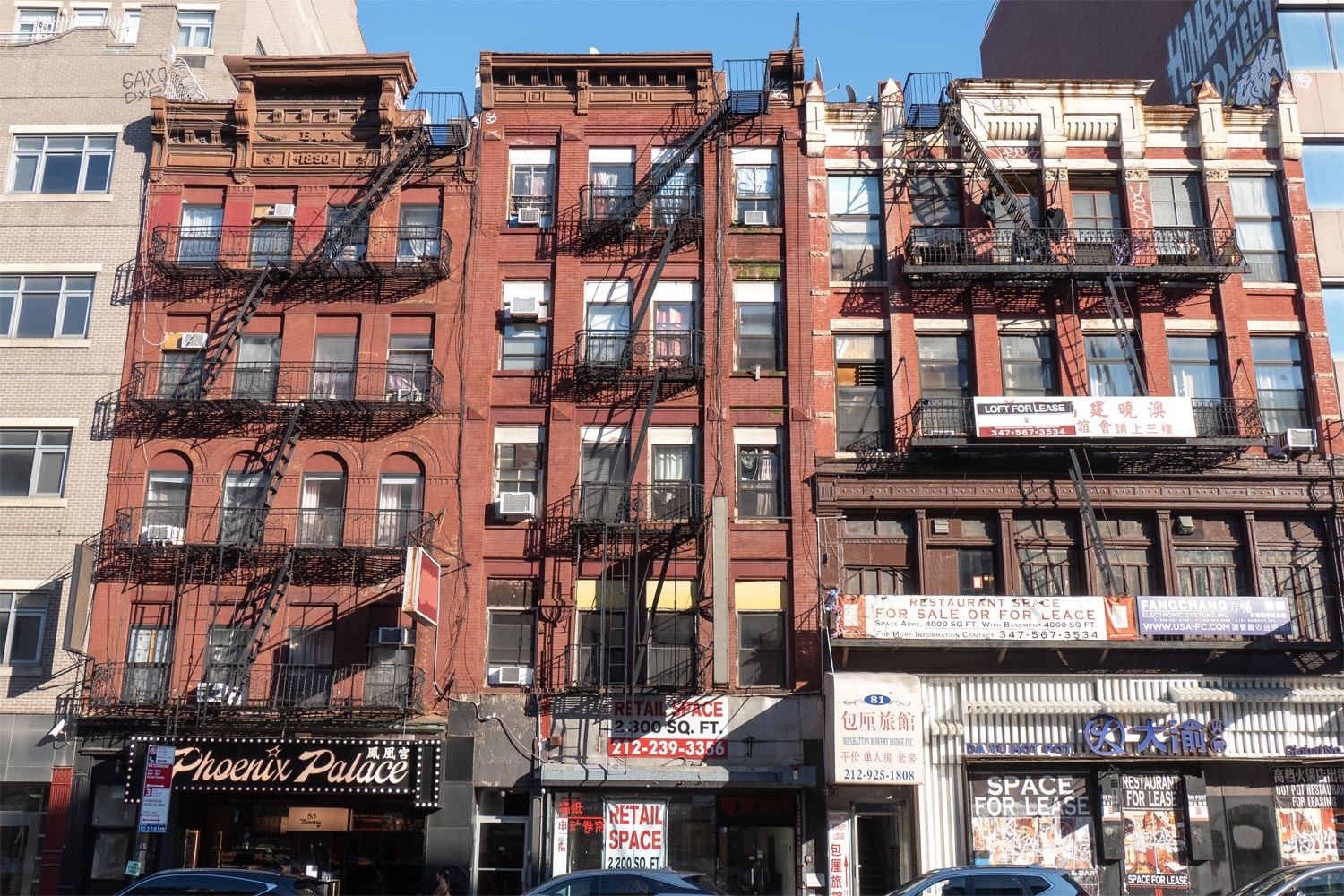
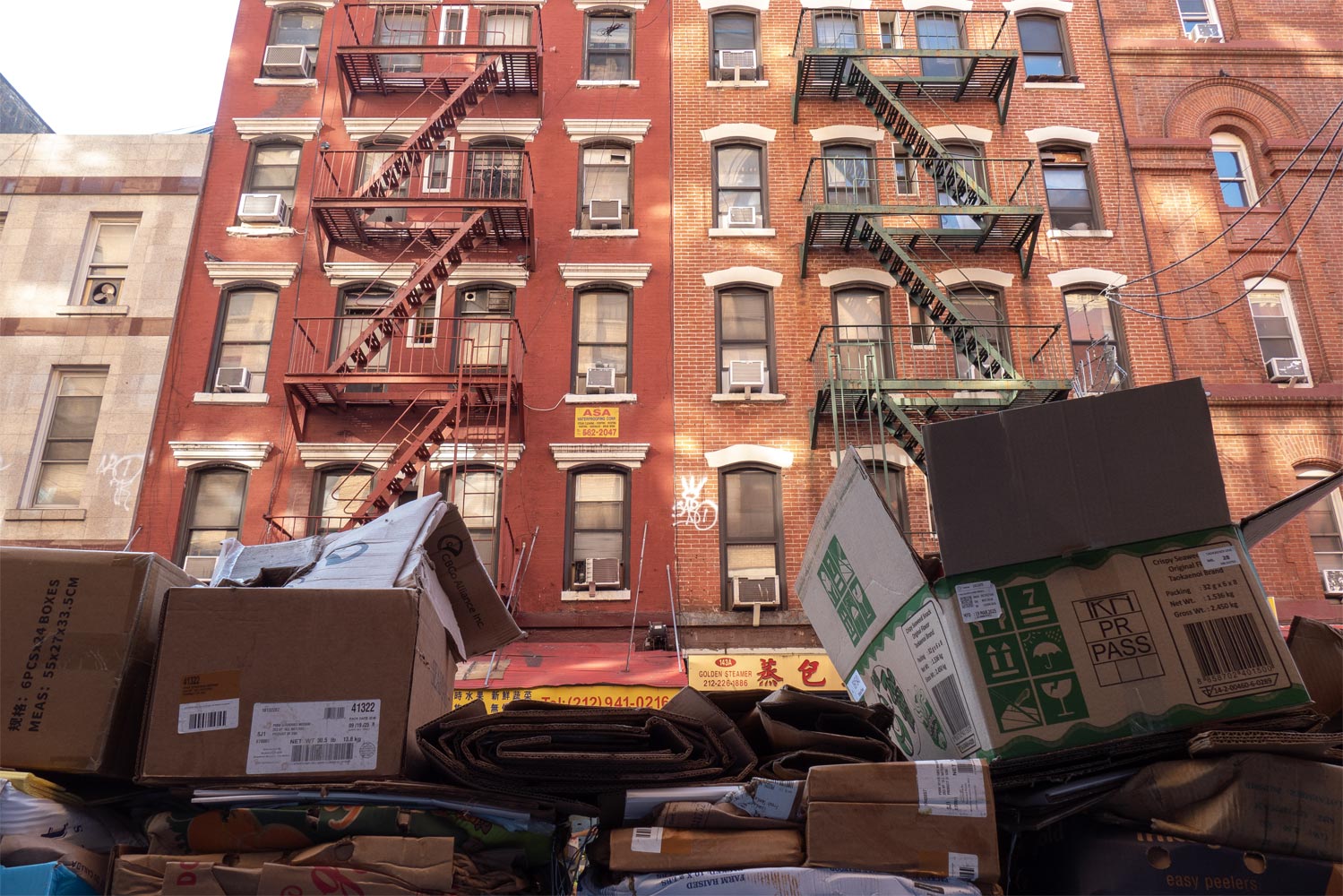
Yet in Chinatown there’s no shortage of fire escapes slapped onto the facades of red-brick buildings. In reality, that’s not some special Chinatown style at all, just a regular American thing: they started putting up the fire escapes after several major fires in New York.
Canal Street
In a remote corner of Chinatown, there’s a subway station called Canal Street. It’s one of New York’s seediest spots, a place where something is always going on.
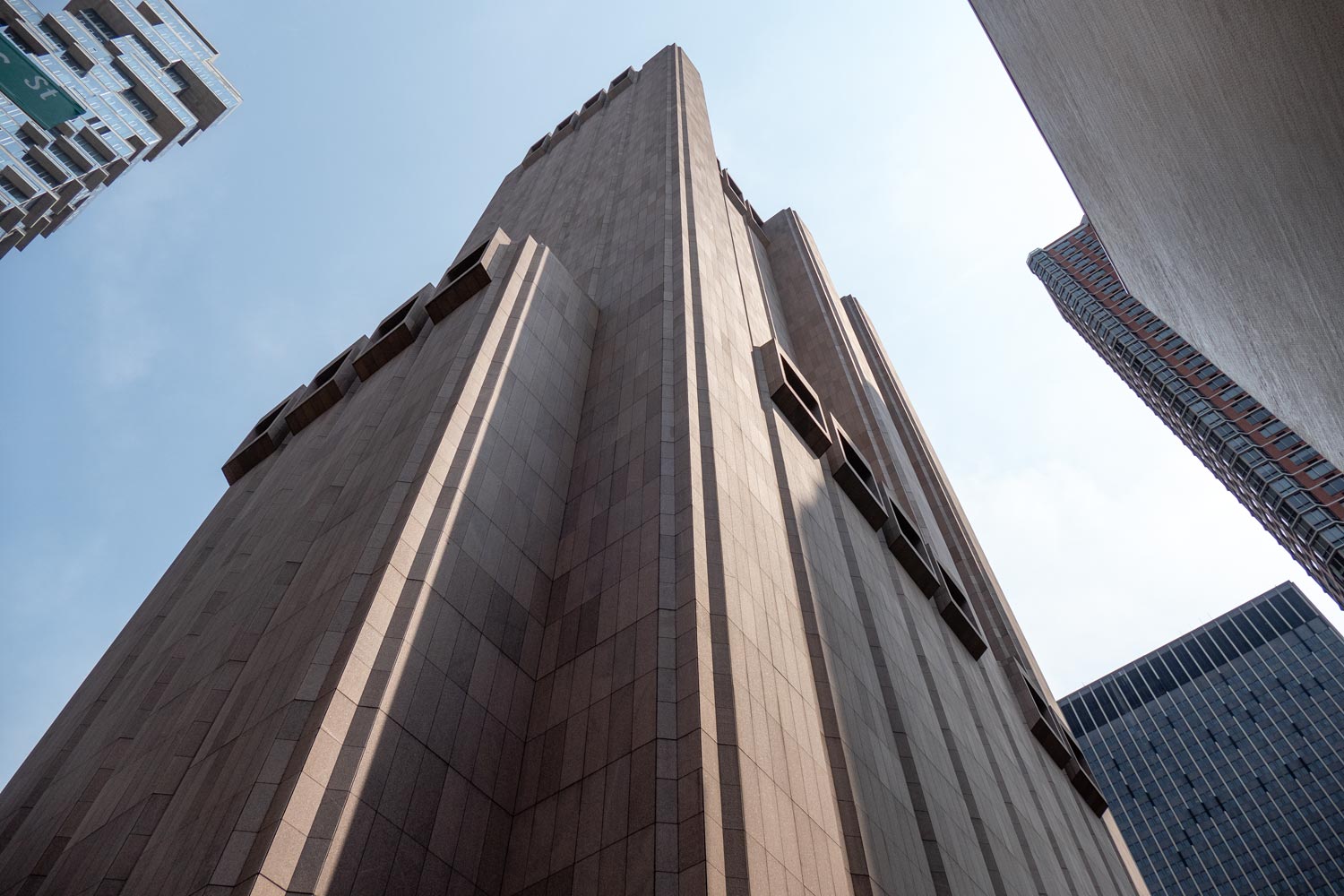
The oppressive atmosphere of Canal Street hits you even before you get there. Looming over the rooftops of Chinatown is the scariest skyscraper in all of New York. It doesn’t have a single window. Just pure concrete.
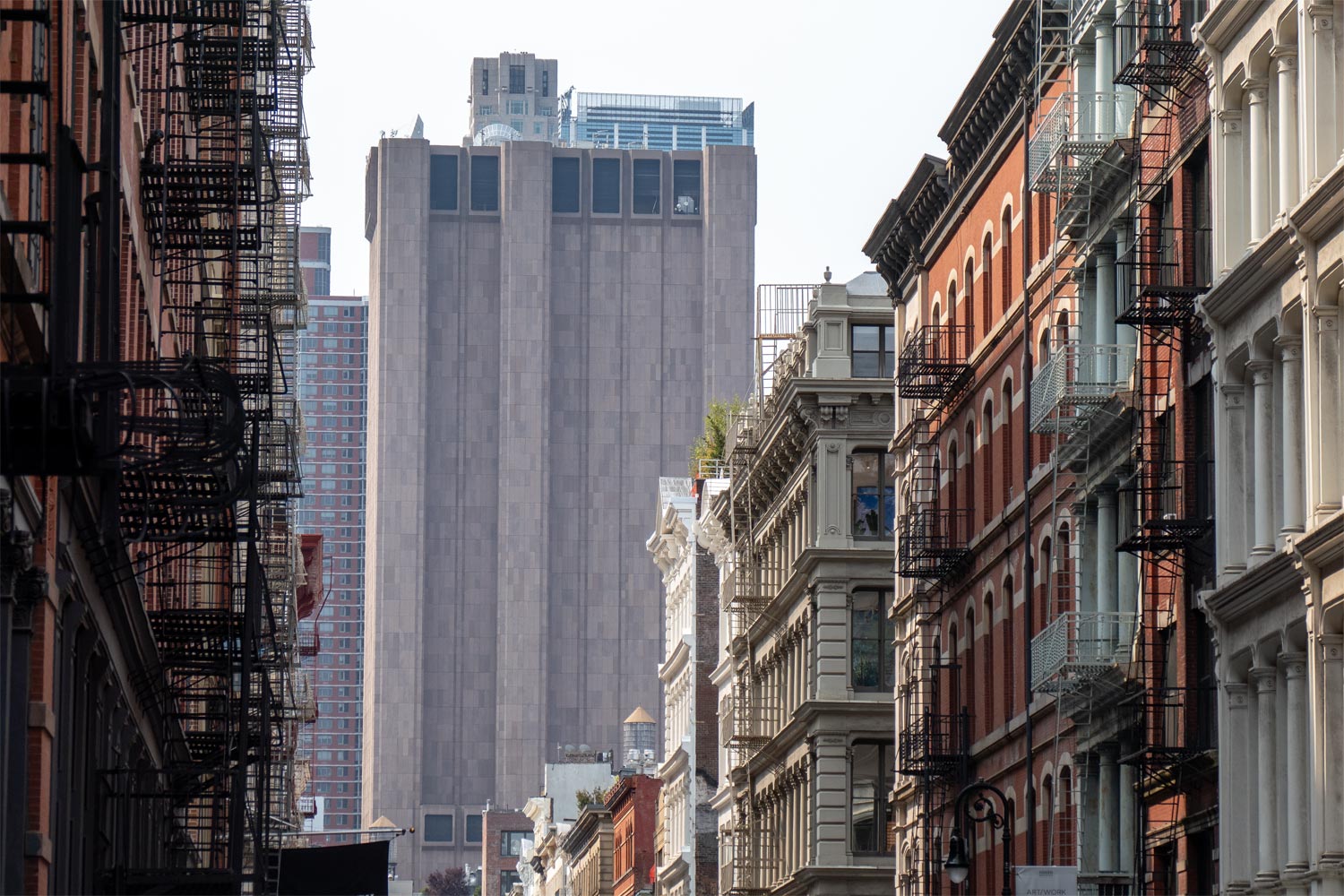
This is an AT&T telephone company building that was constructed to withstand a nuclear strike. Because of its grim appearance, the windowless skyscraper has spawned all kinds of urban legends. Some people believe it houses a global surveillance device, while others say it’s where secret documents are stored.
In reality, this building is stuffed with telephone cables, switches, servers, and all sorts of other communication systems. In other words, it’s a giant telephone exchange combined with an internet provider. So yeah, it doesn’t need windows.
Culturally speaking, Canal Street is nothing to write about, except maybe for the utterly depressing museum of Banksy — a famous street artist who paints edgy, socially charged graffiti.
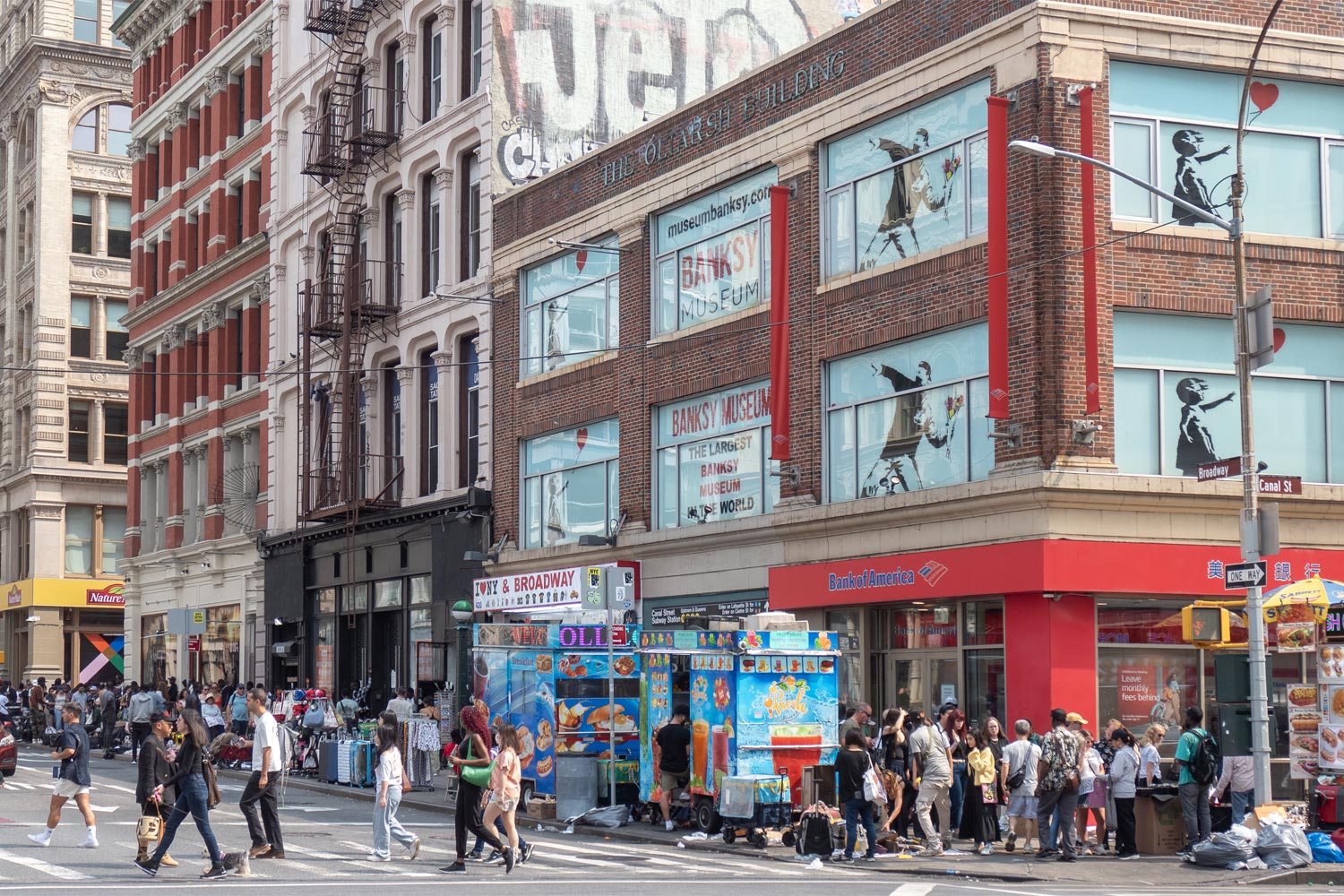
But in terms of subculture, the street is actually pretty interesting.
The atmosphere on Canal Street had always been tense. A long time ago, a Chinese Triad gang used to run wild here. Today there’s nothing left of it (all the Chinese went to work in IT), but the graffiti-covered buildings and general chaos still make it feel like crime rules the place.
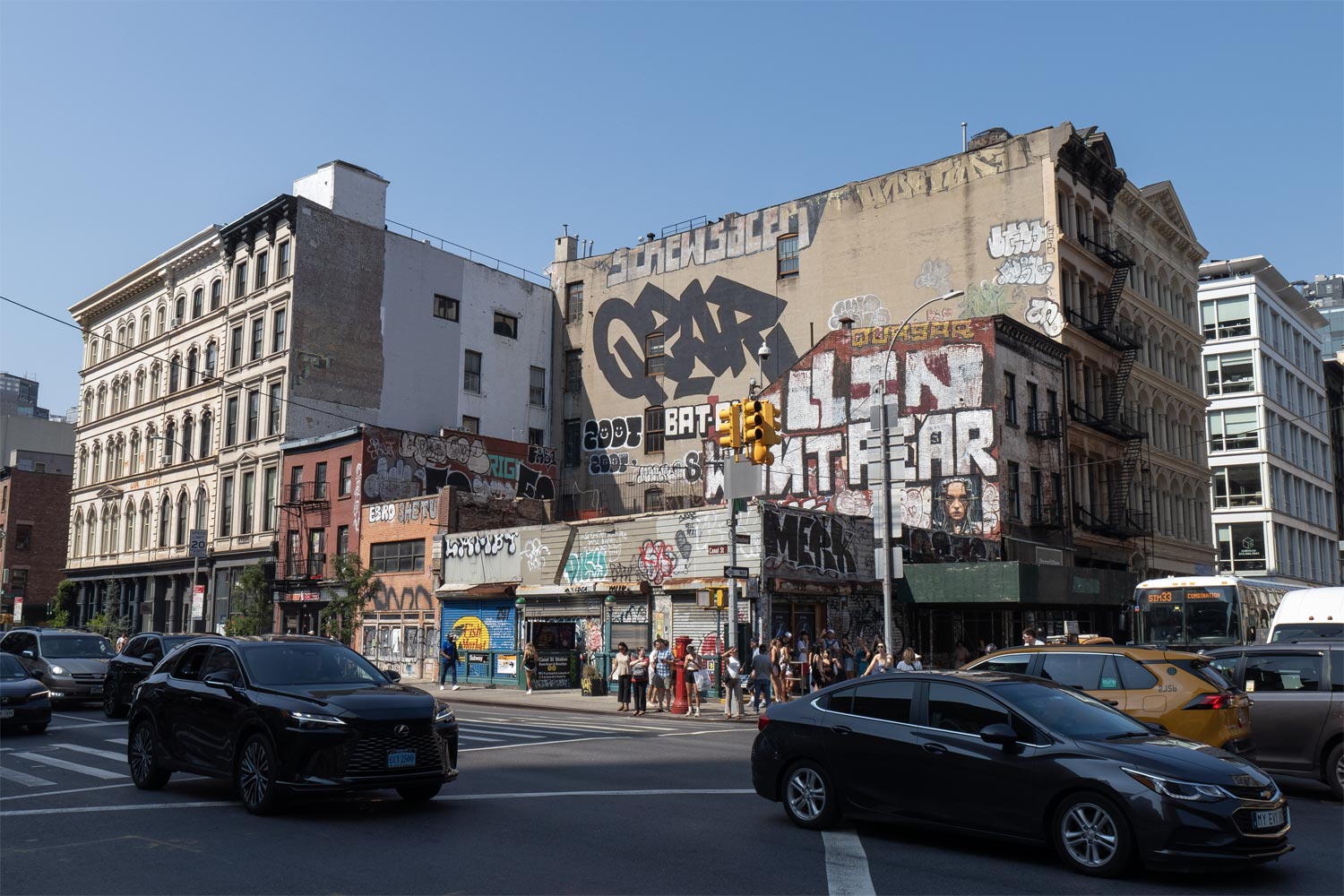
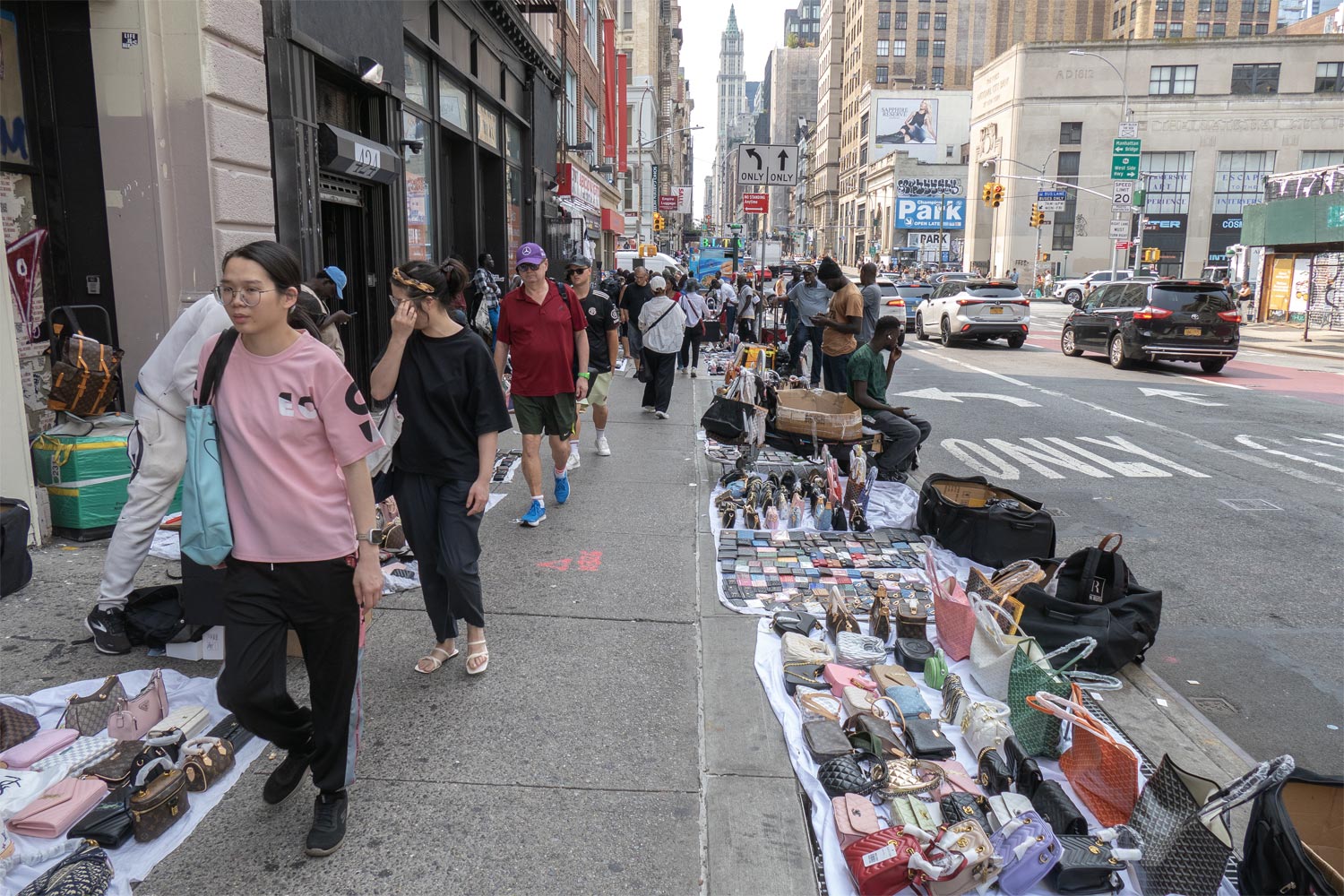
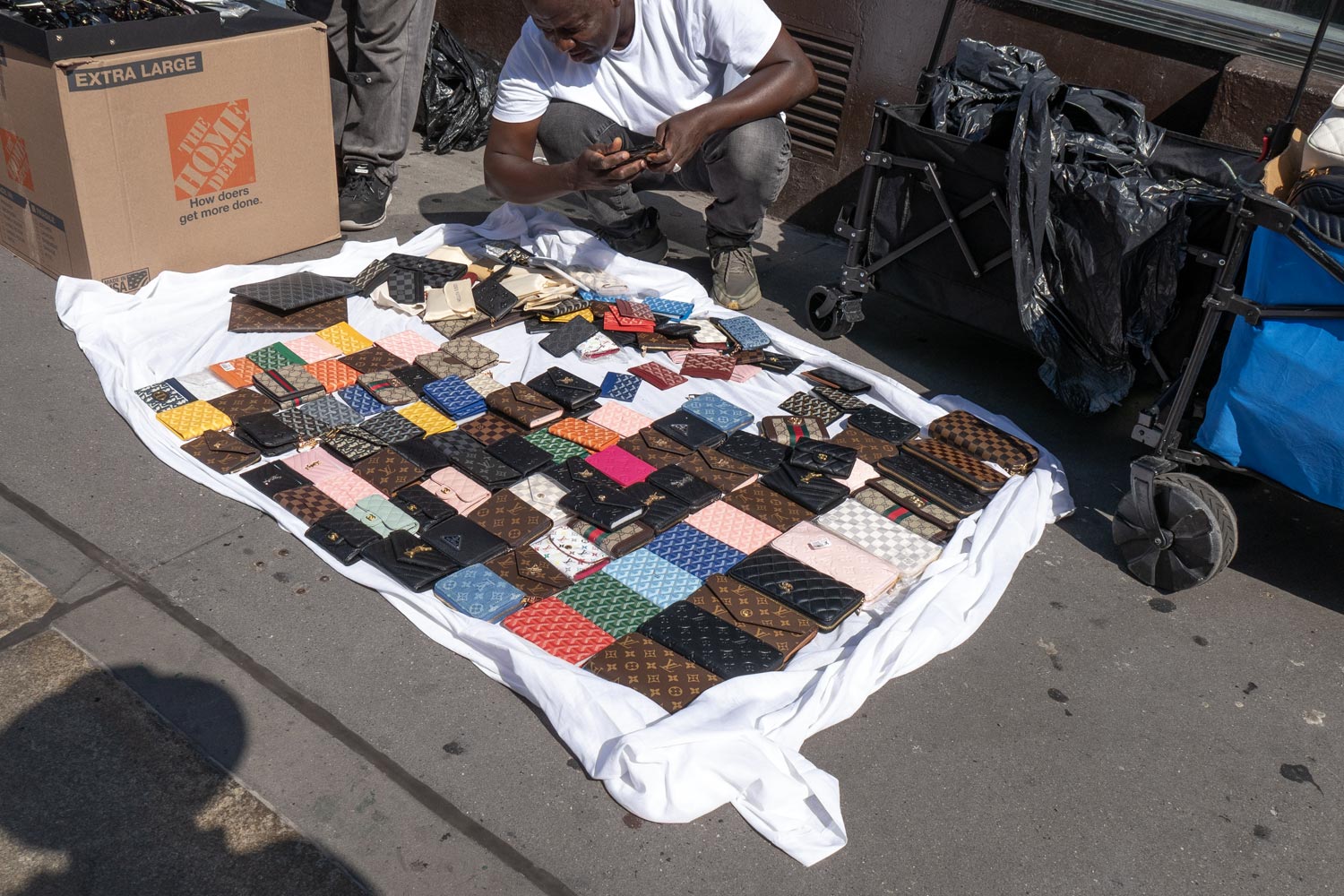
Today, crime on Canal Street isn’t all that criminal. The scene these days is all about selling fake junk. From early morning, crowds of vendors stream toward the subway station, spreading out their sheets along the sidewalks and laying out counterfeit goods.
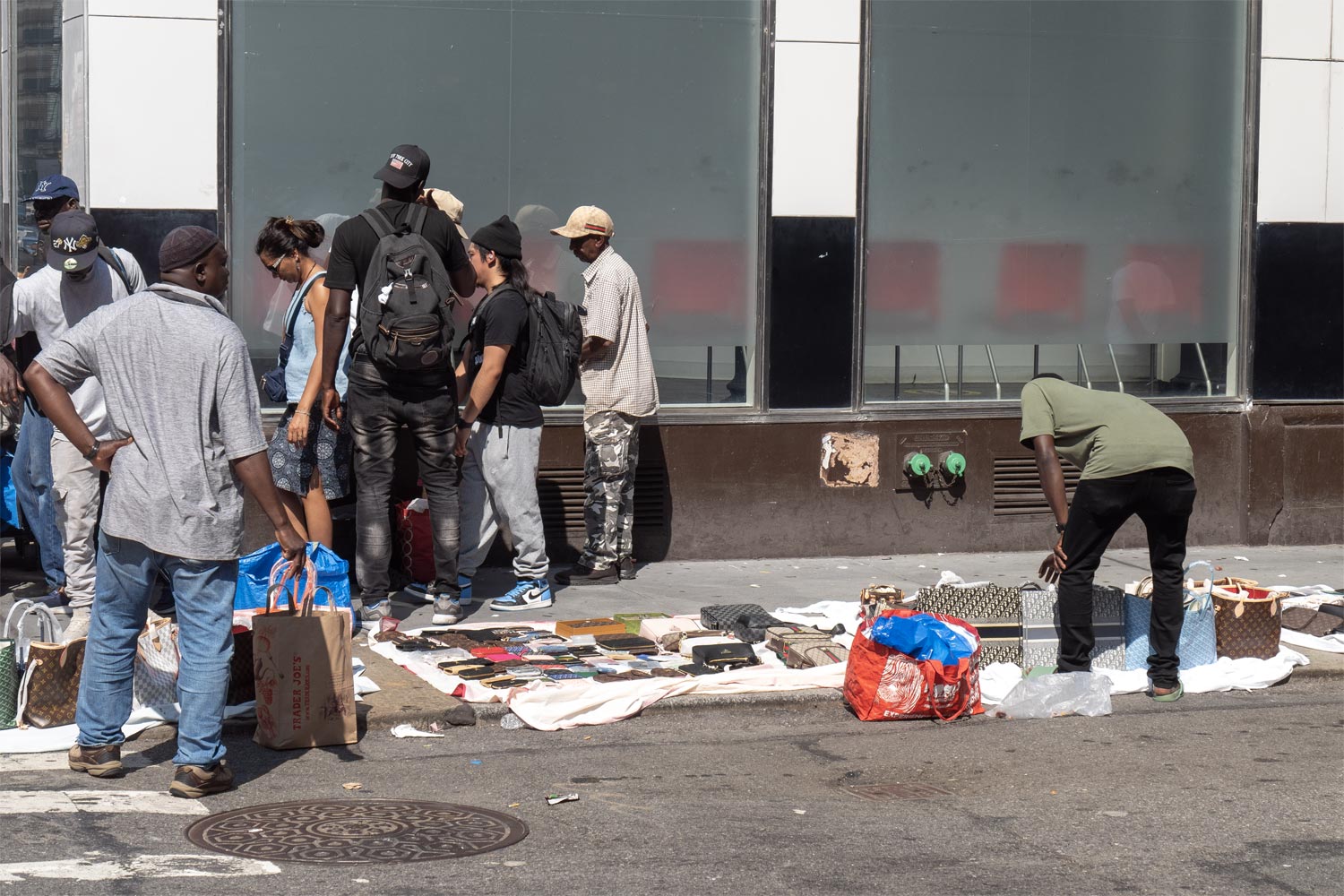
Most of the dealers aren’t Harlem locals at all, but immigrants from the poorest countries, like Jamaica and Haiti. A lot of them don’t even speak English.
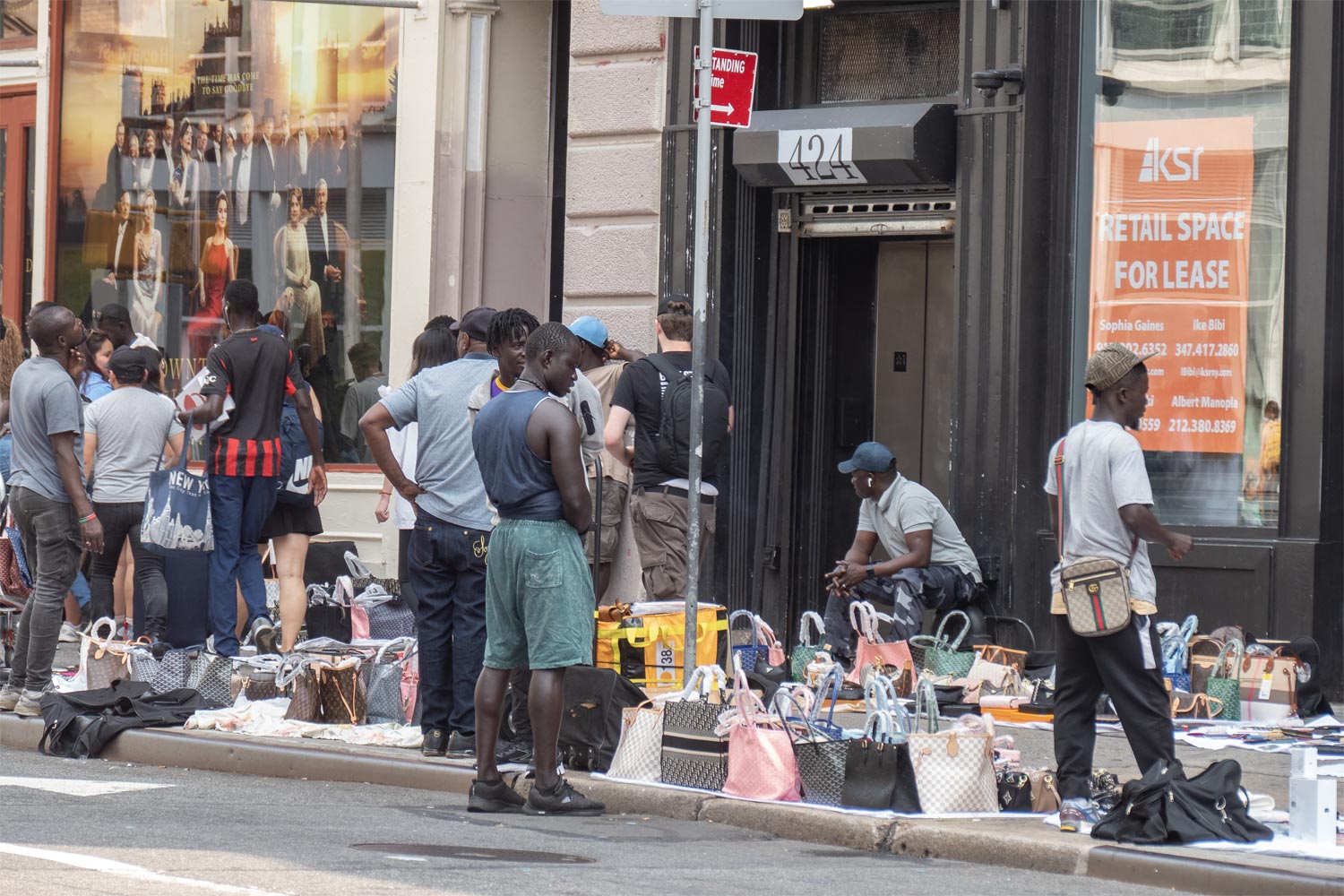
They mostly sell copies of wallets and bags of expensive brands: Louis Vuitton, Dolce & Gabbana, Yves Saint Laurent, and so on.
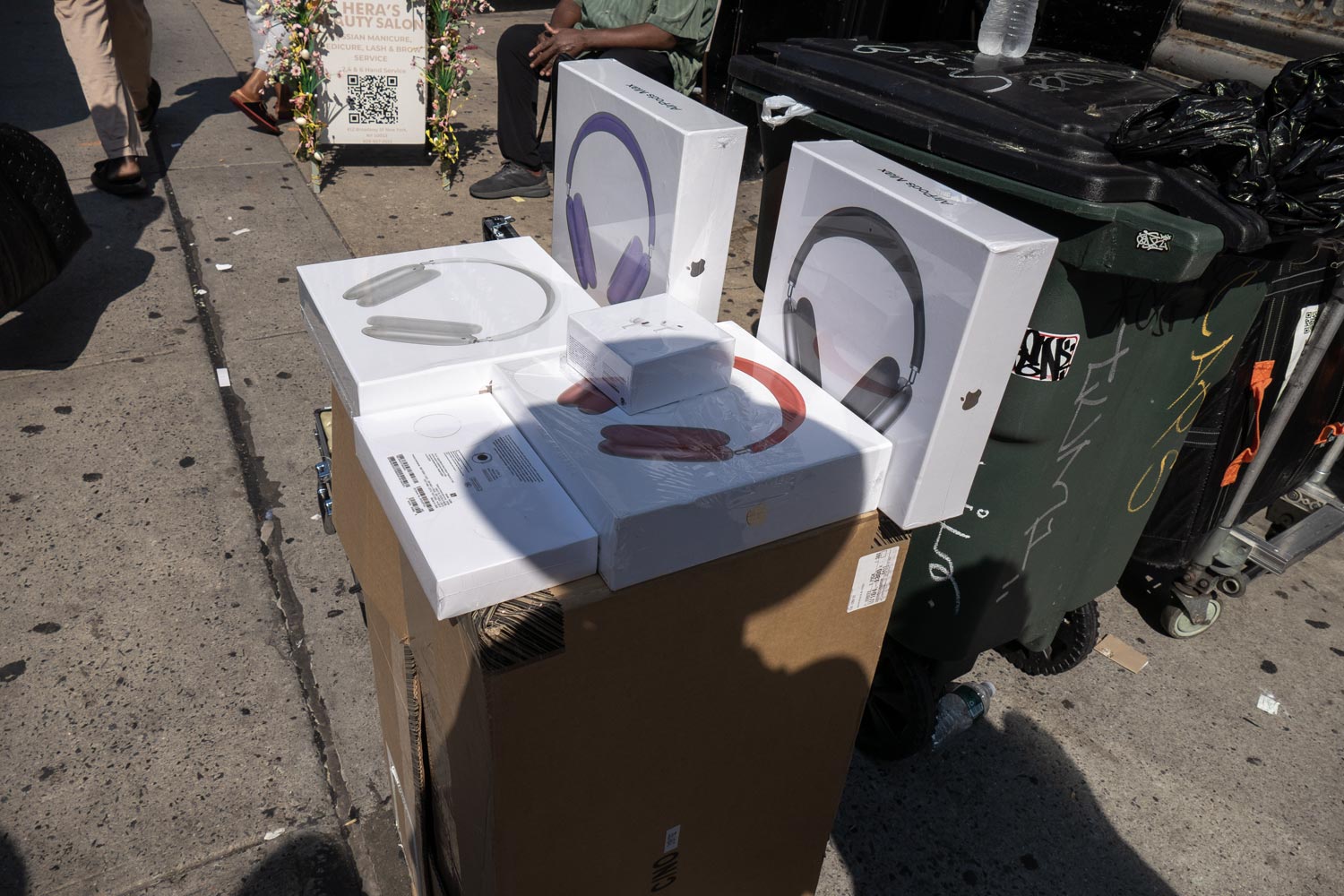
Besides bags and wallets, Canal Street has a wide selection of knockoff headphones. The vendors hustle them, passing off as expensive originals from Apple. At first I thought this stuff was just stolen. Then I came across an investigation that made it clear: they’re just fakes.
All this counterfeit junk is bought by residents of nearby Manhattan neighborhoods and tourists. Lots of New Yorkers come here specifically to shop, but even more people end up in this dump by accident. The thing is, Canal Street is part of Broadway. So people just wander onto it when they’re heading to the subway from trendy boutiques or strolling around after a musical.
For the same reason, Canal Street is always packed to the brim. Even Times Square can’t compete with the crowds here. On weekends, it can be purely impossible to walk down the sidewalk!
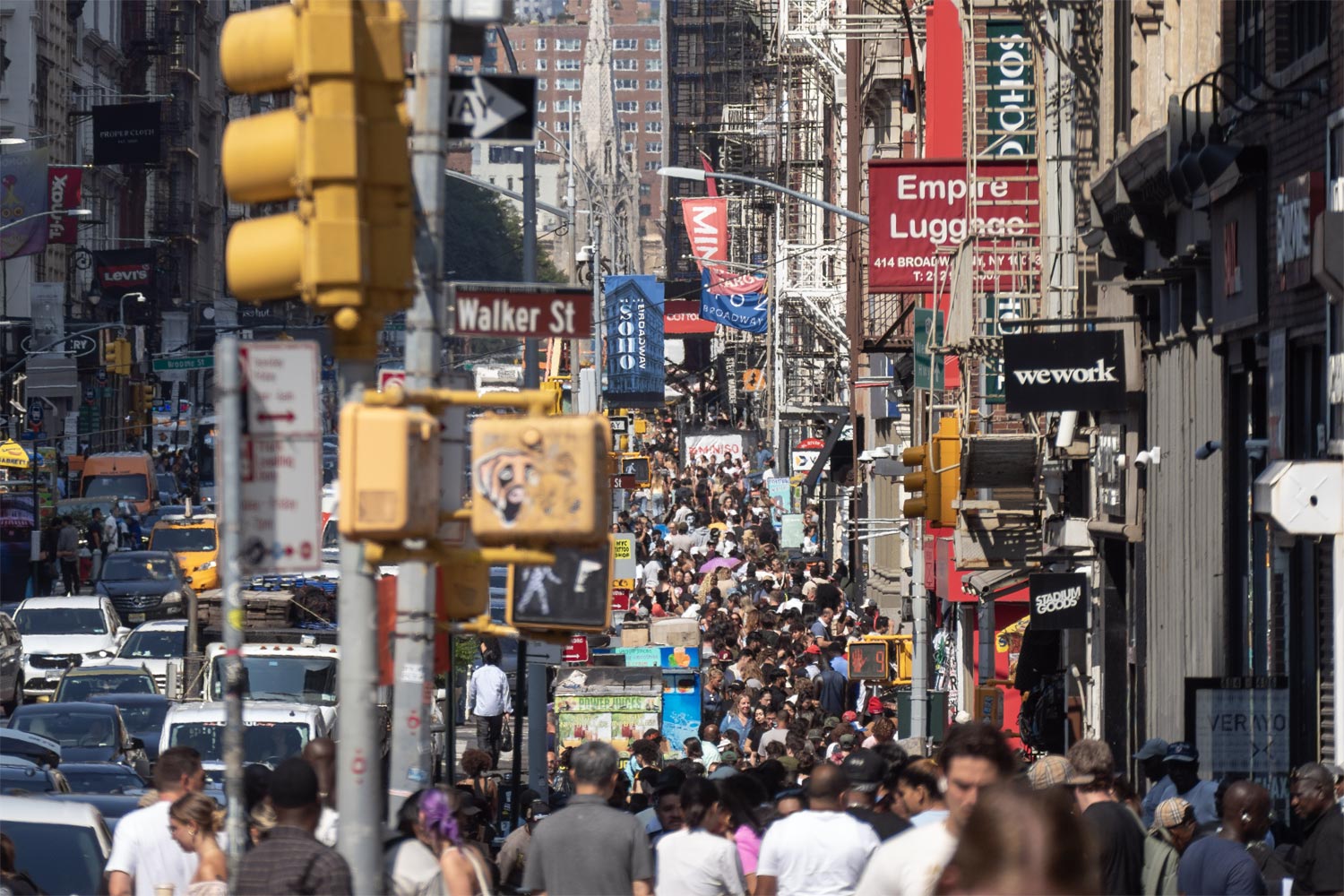
Is this not how the reader imagined Broadway?
Soho
Of course, not all of Broadway looks like Canal Street. Pretty soon after that, you hit the real, classic New York. In the gap between two dense rows of buildings, you can already see the spire of the Chrysler. Which means we’re getting close to midtown.
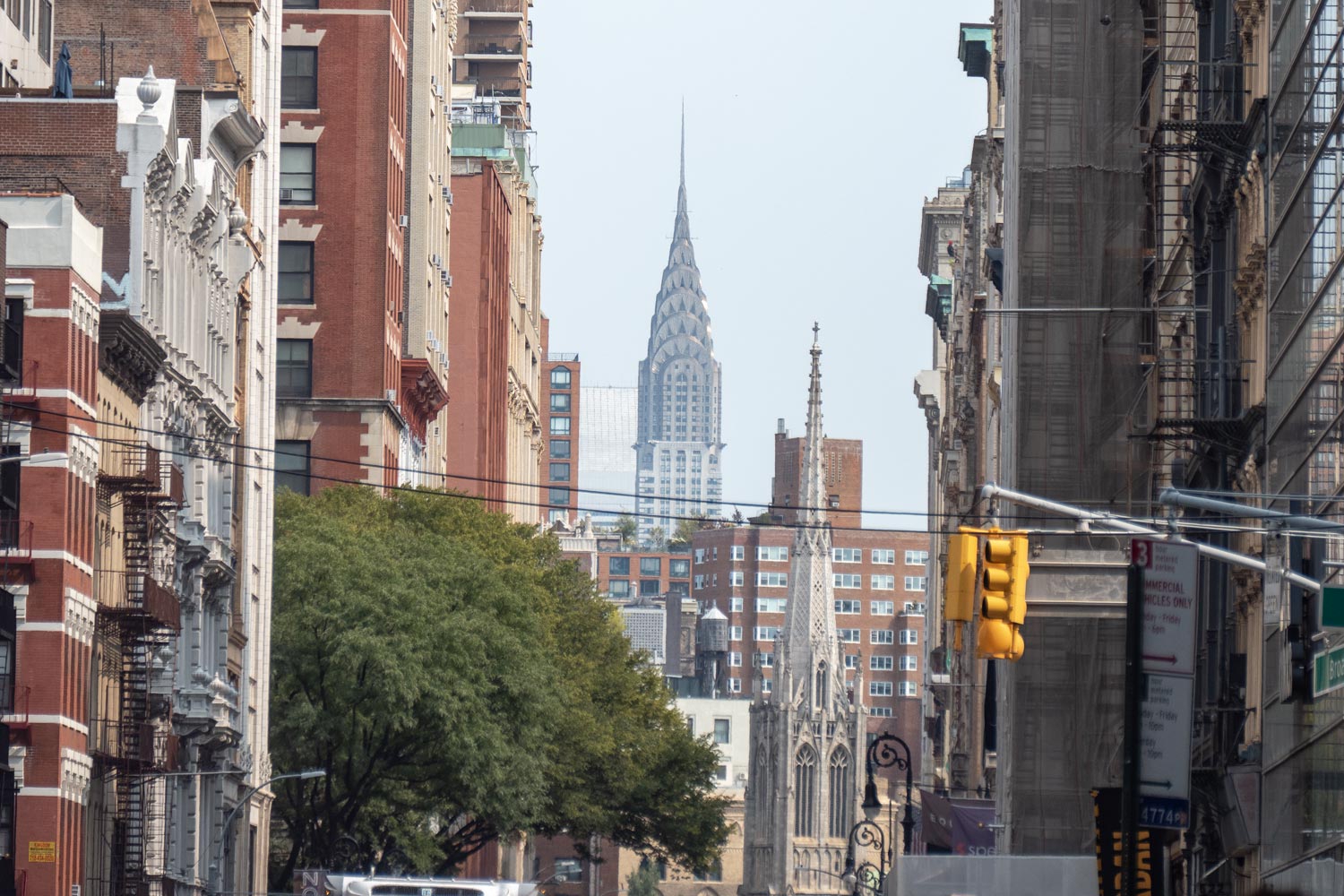
Little by little, the bedsheets covered in fake handbags are disappearing from the sidewalks, and street vending is being replaced by shopping in trendy boutiques.
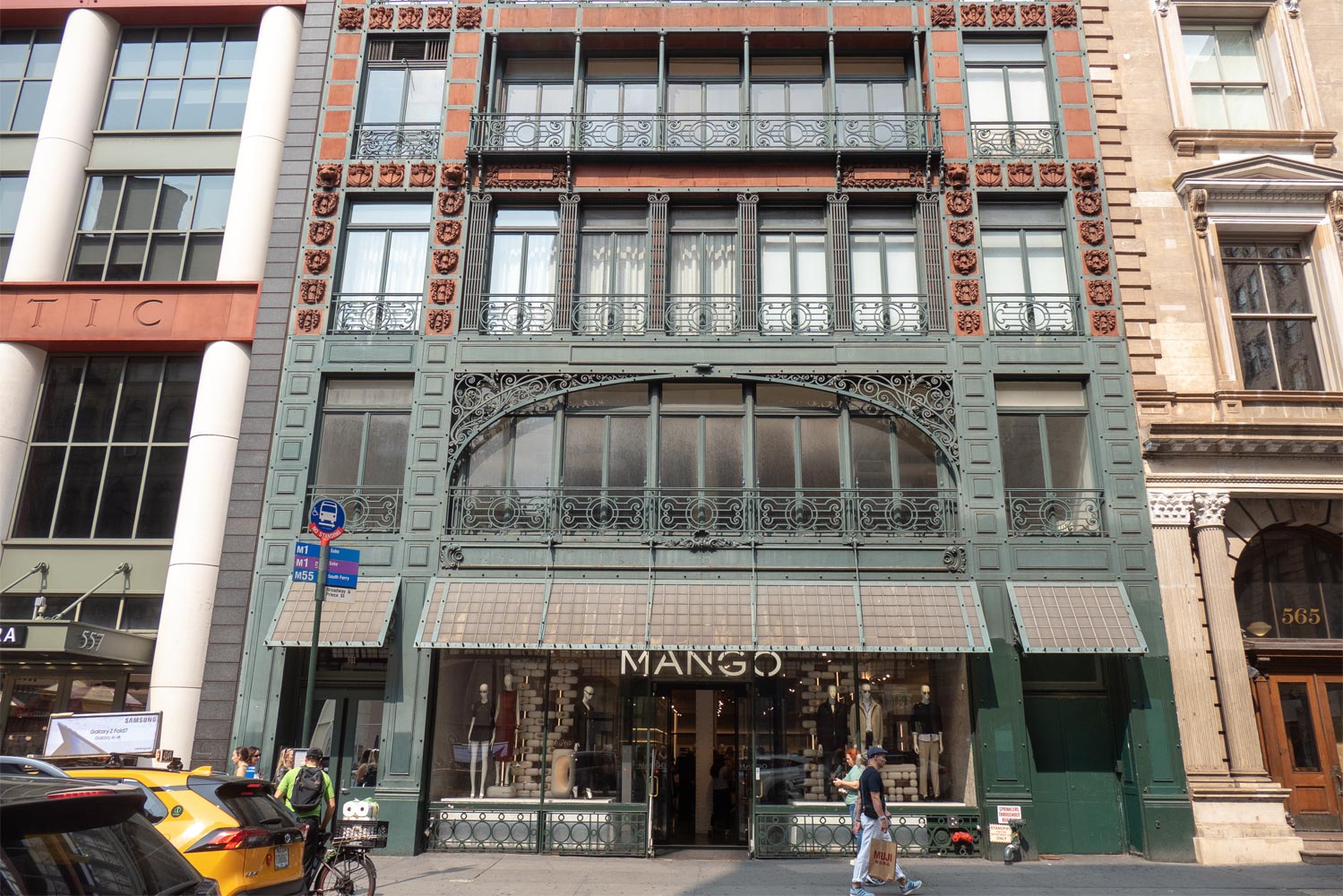
The ridiculous faux-Chinese stylizations are left behind, giving way to luxurious facades in the Neo-Renaissance style.
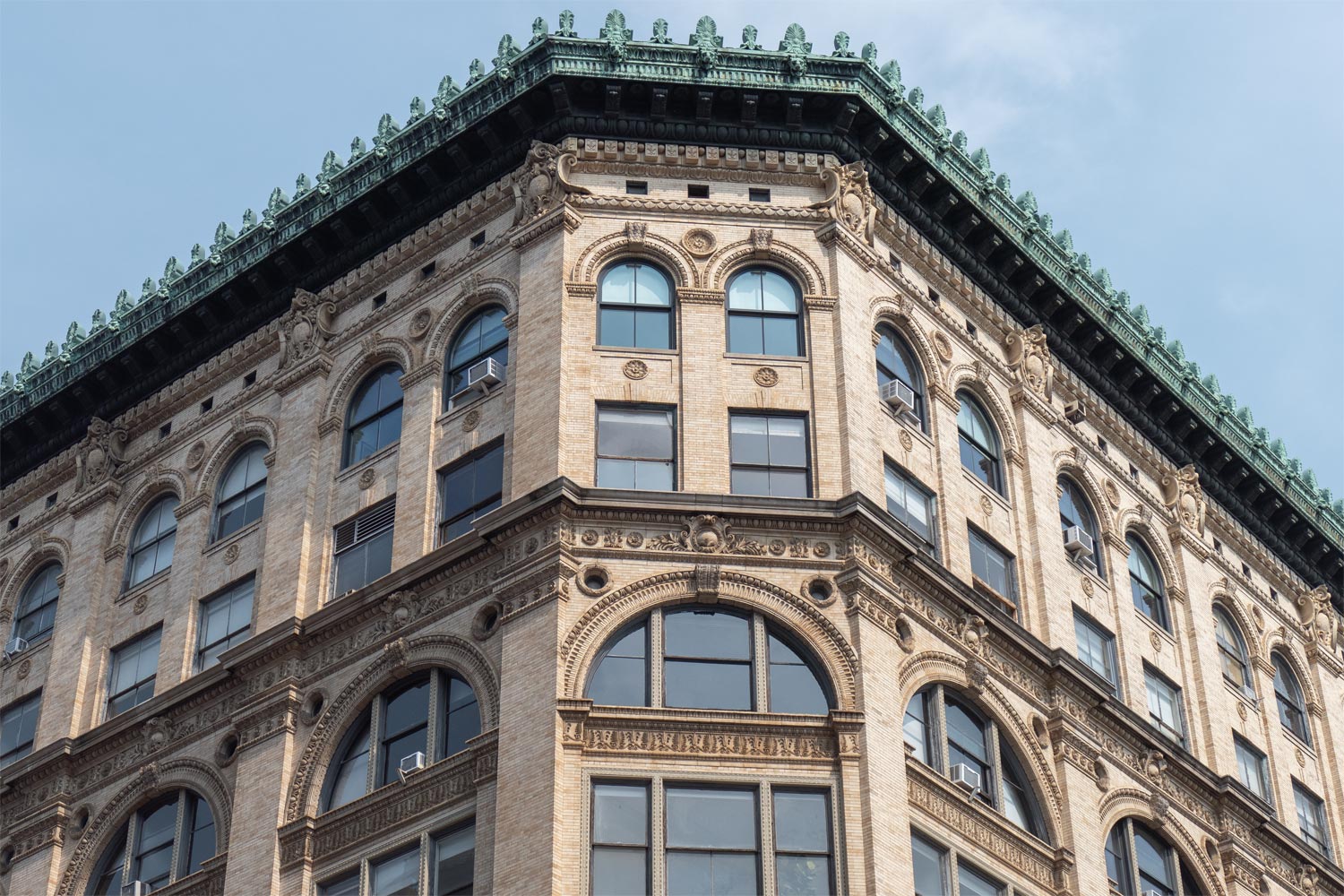
Unique buildings line Broadway. Their facades, complete with all the patterns, cladding, and columns, are made from the purest... cast iron.
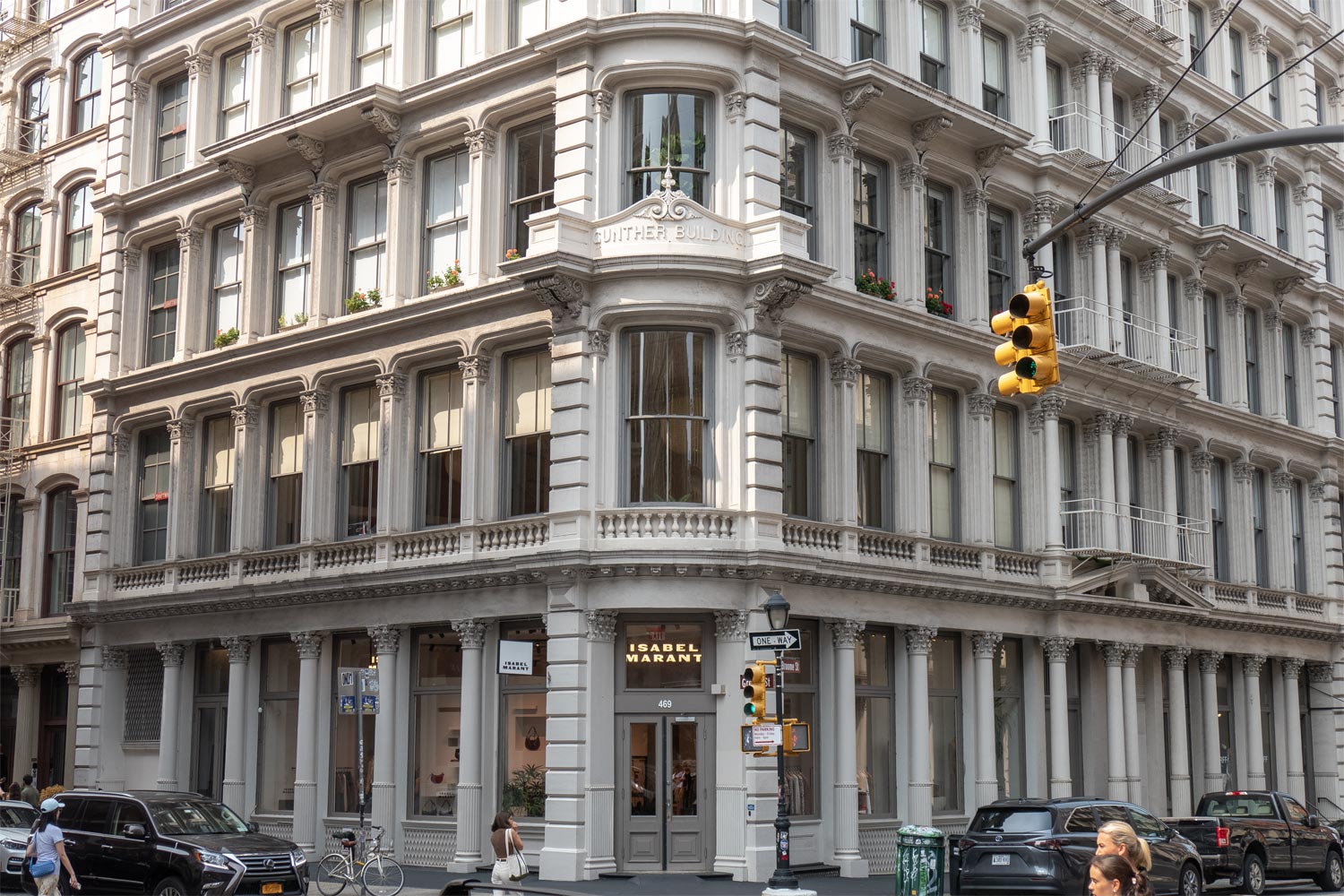
In the mid-19th century, architects figured out that it wasn’t at all necessary to spend months carving intricate patterns in stone. It was much cheaper and faster to make them from a low-melting metal like cast iron. You didn’t even have to carve each pattern separately but could just cast a whole batch of reliefs and slap them onto every building in sight.
And so the center of New York began to sprout lush facades en masse, which are indistinguishable from stone even up close. All the columns and all the ornamentation on this building are cast iron:
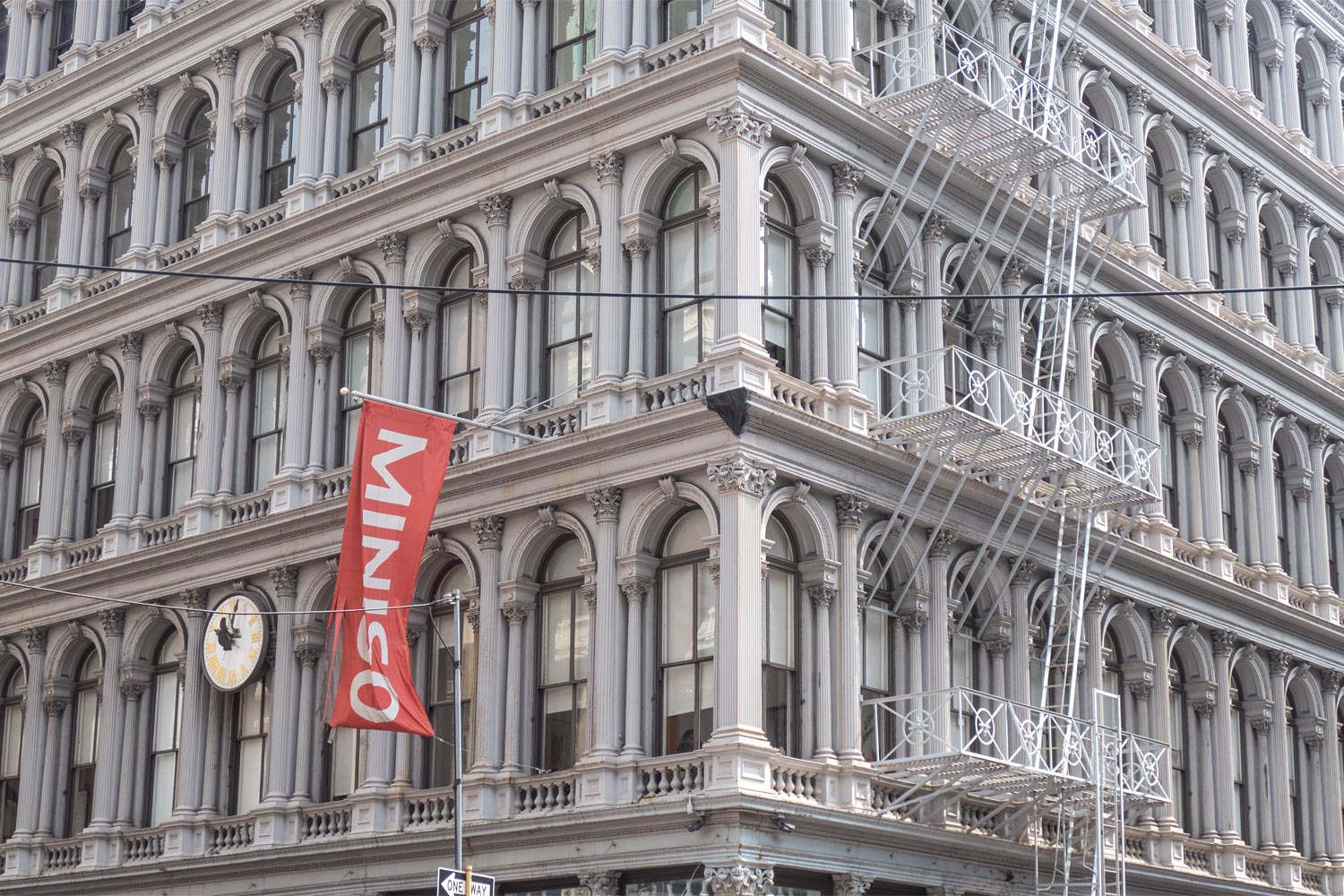
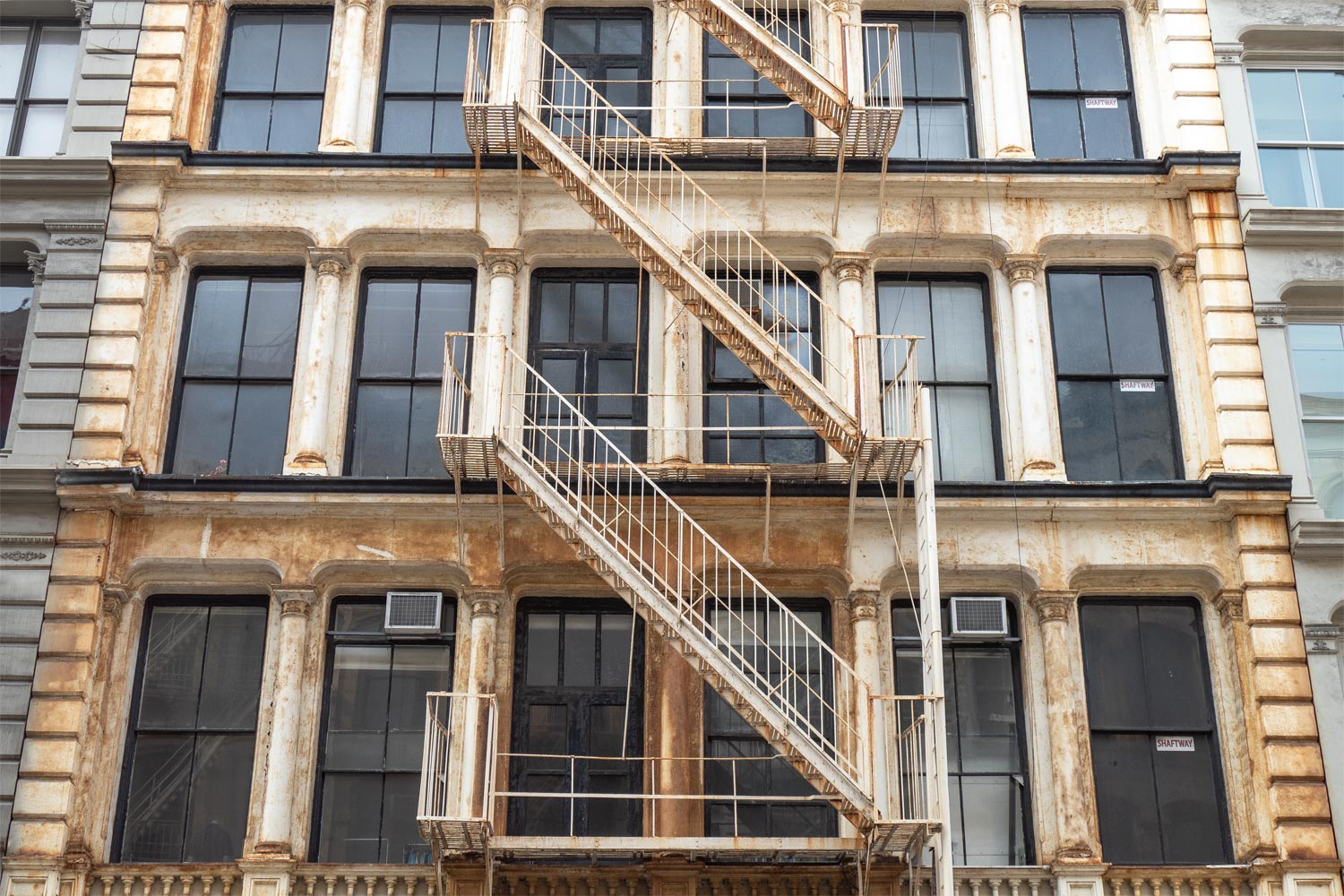
You can walk up to any column on Broadway and tap it with your finger — almost certainly you won’t hear a dull stone thud but a hollow metallic ring. Cast iron on facades gives itself away in one way: it rusts. If you don’t repaint the facade in time, it rusts yellow, like the column on the right in this photo:
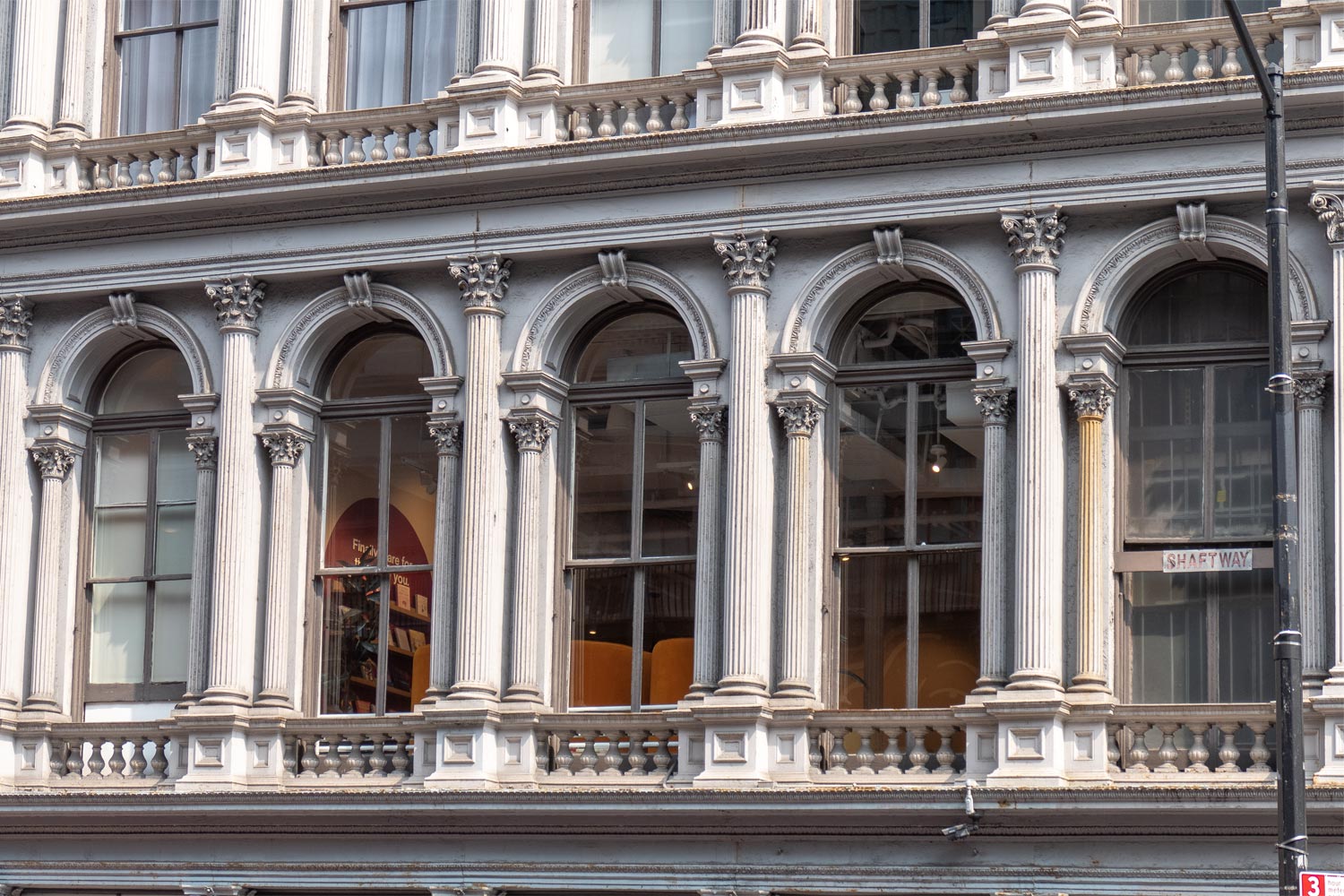
If you really let the building go, it’ll get covered in disgusting yellow-orange streaks. Real New York!
Not all Broadway facades are cast iron. Many are built of brick or stone. You’ll find facades here to suit any taste.
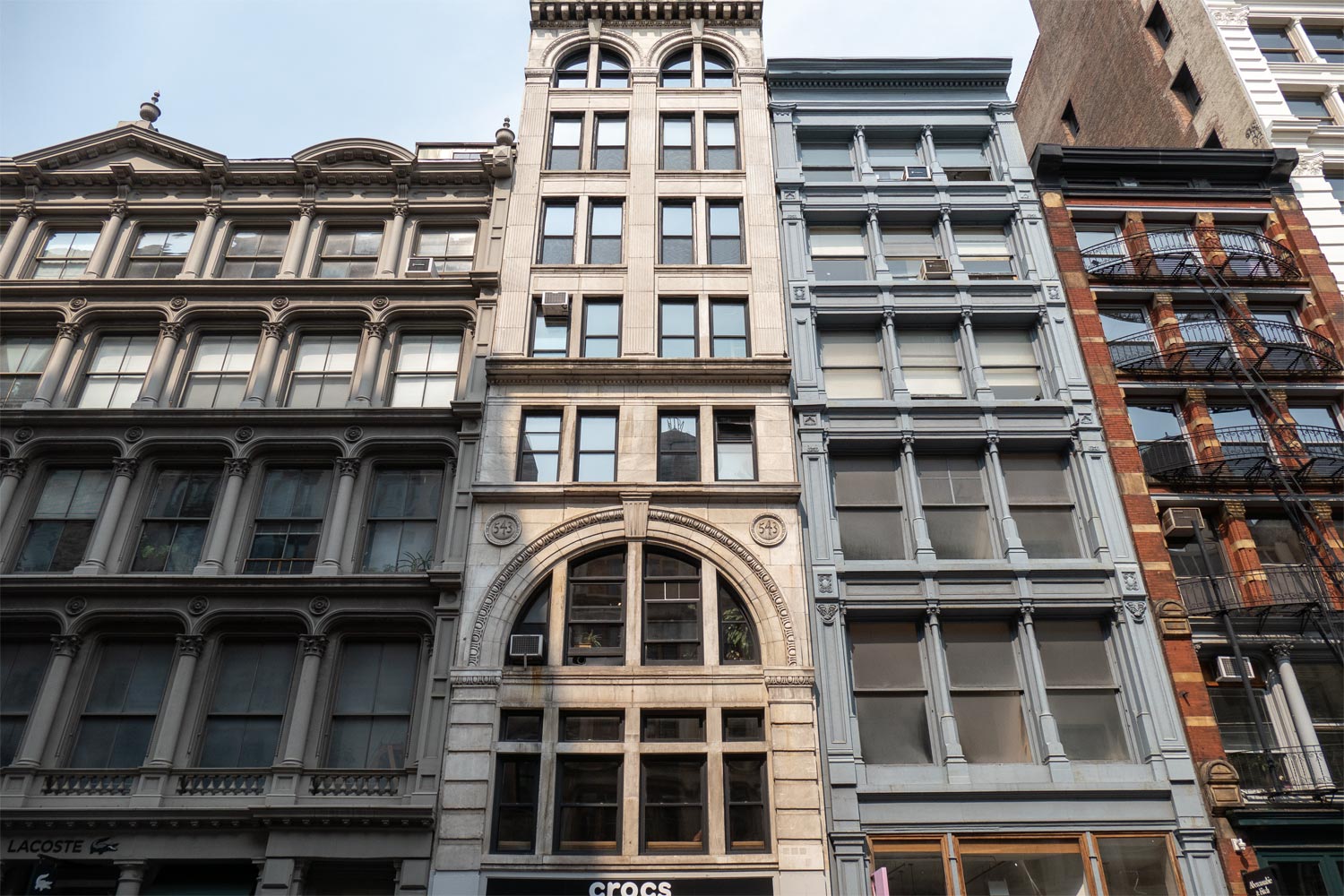
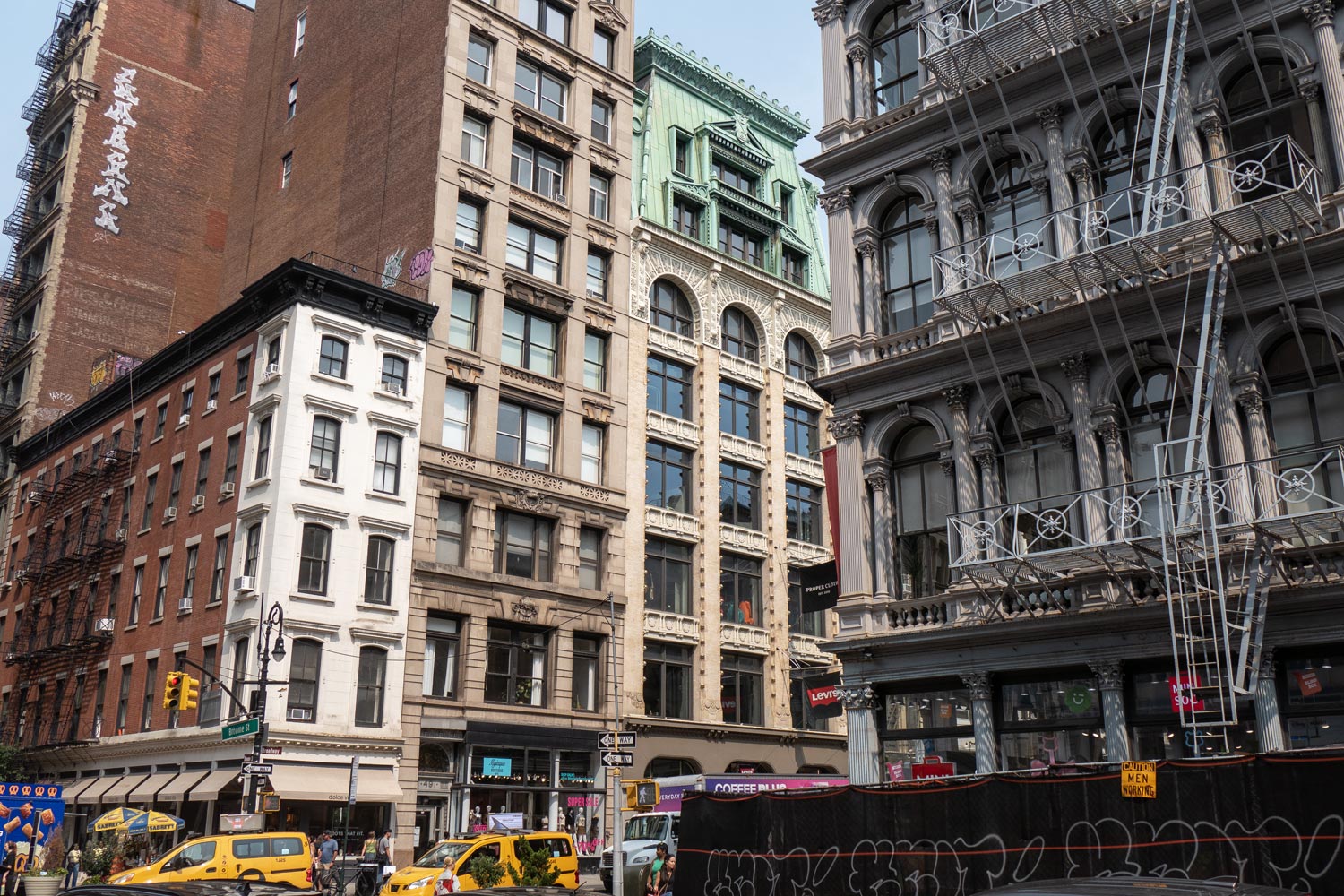
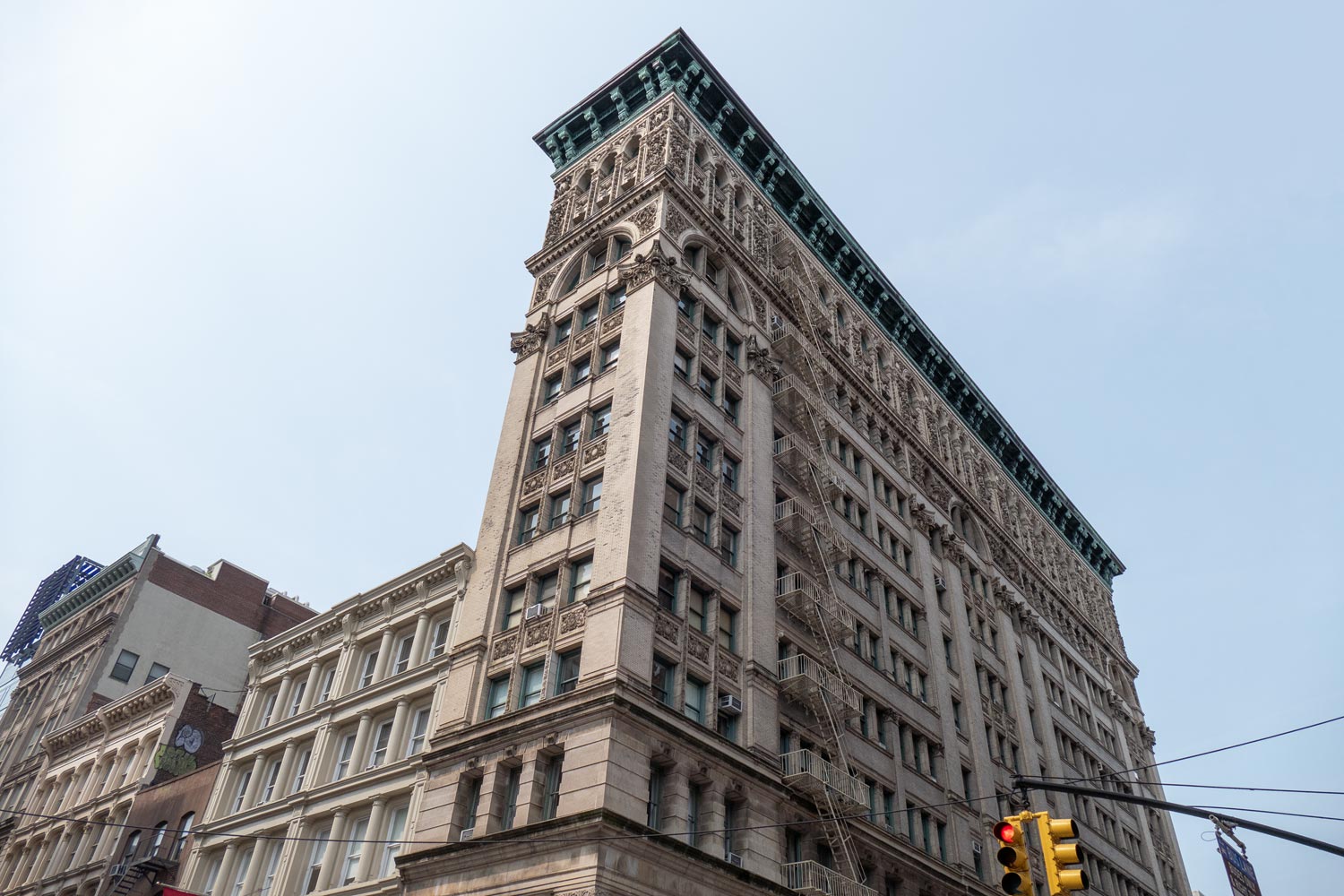
Funny how many buildings are only finished on the street side. Behind them you can see dark brick and some haphazardly hacked-out windows. Yet another country of beautiful facades!
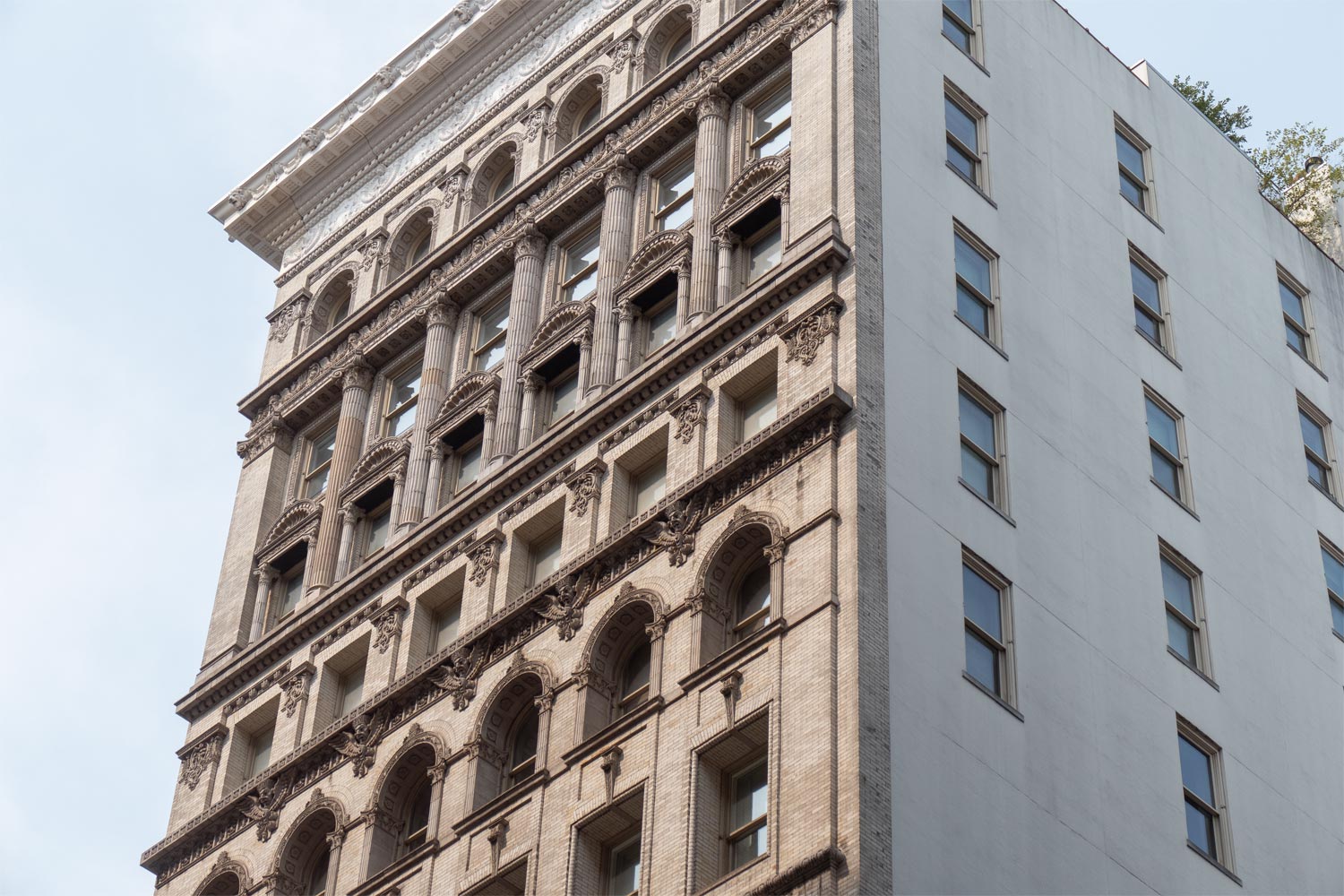
The main breeding ground for cast-iron buildings is the stretch of Broadway that runs past a neighborhood called Soho. That name, as usual, Americans stole from the Europeans: originally, Soho is a trendy district in London.
London’s Soho really does come from “soho!” — a hunting cry that meant something like “let’s go!” New York’s Soho, on the other hand, is an abbreviation of “South of Houston Street.”
Once upon a time, Soho was a shabby arts district where street artists and other lunatics snapped up apartments for next to nothing. Then the neighborhood got a makeover, the artists moved somewhere cheaper, and Soho filled up with financiers, businesspeople, fashion designers, creatives, and celebrities.
Today, Soho is one of the nicest neighborhoods in New York.
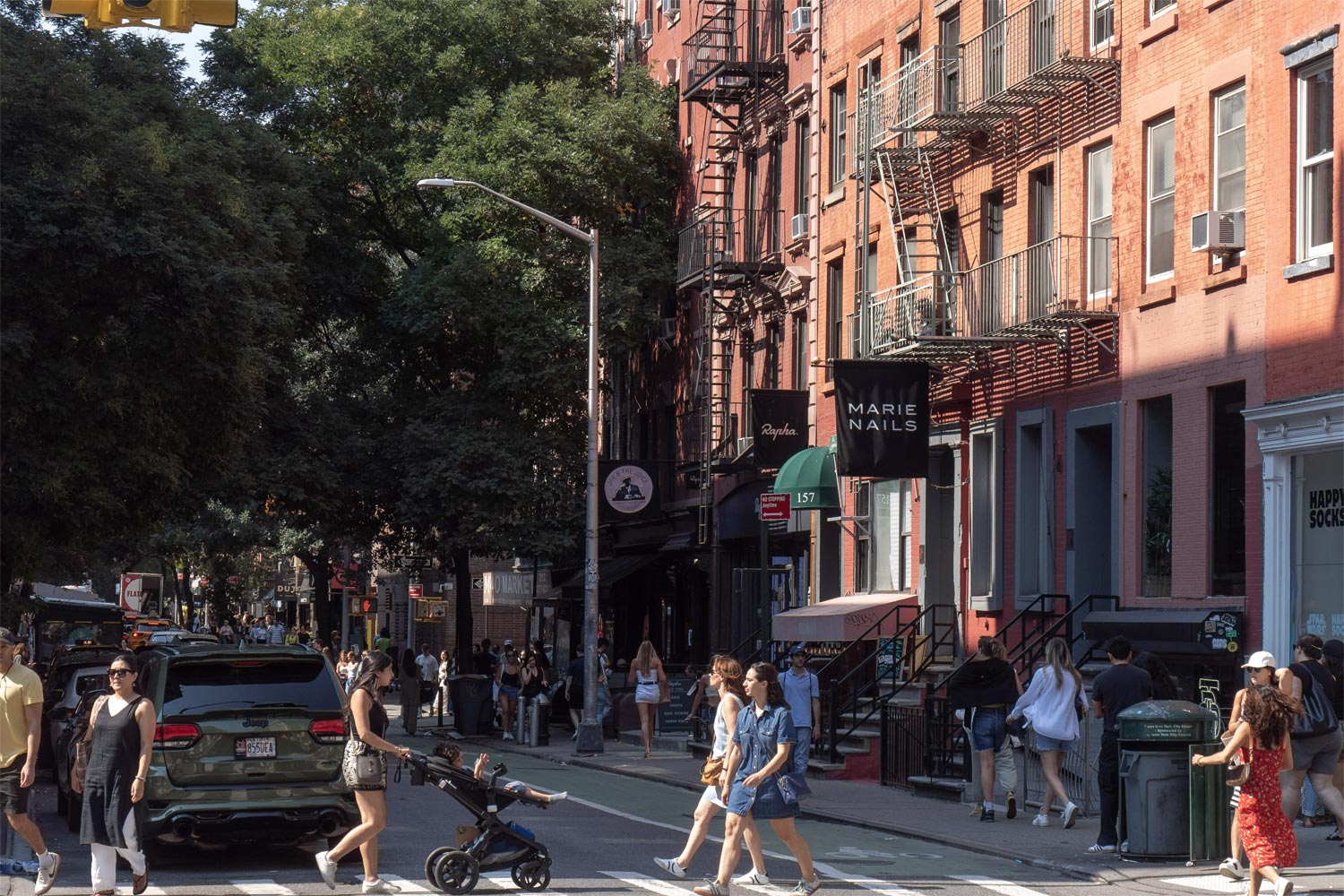
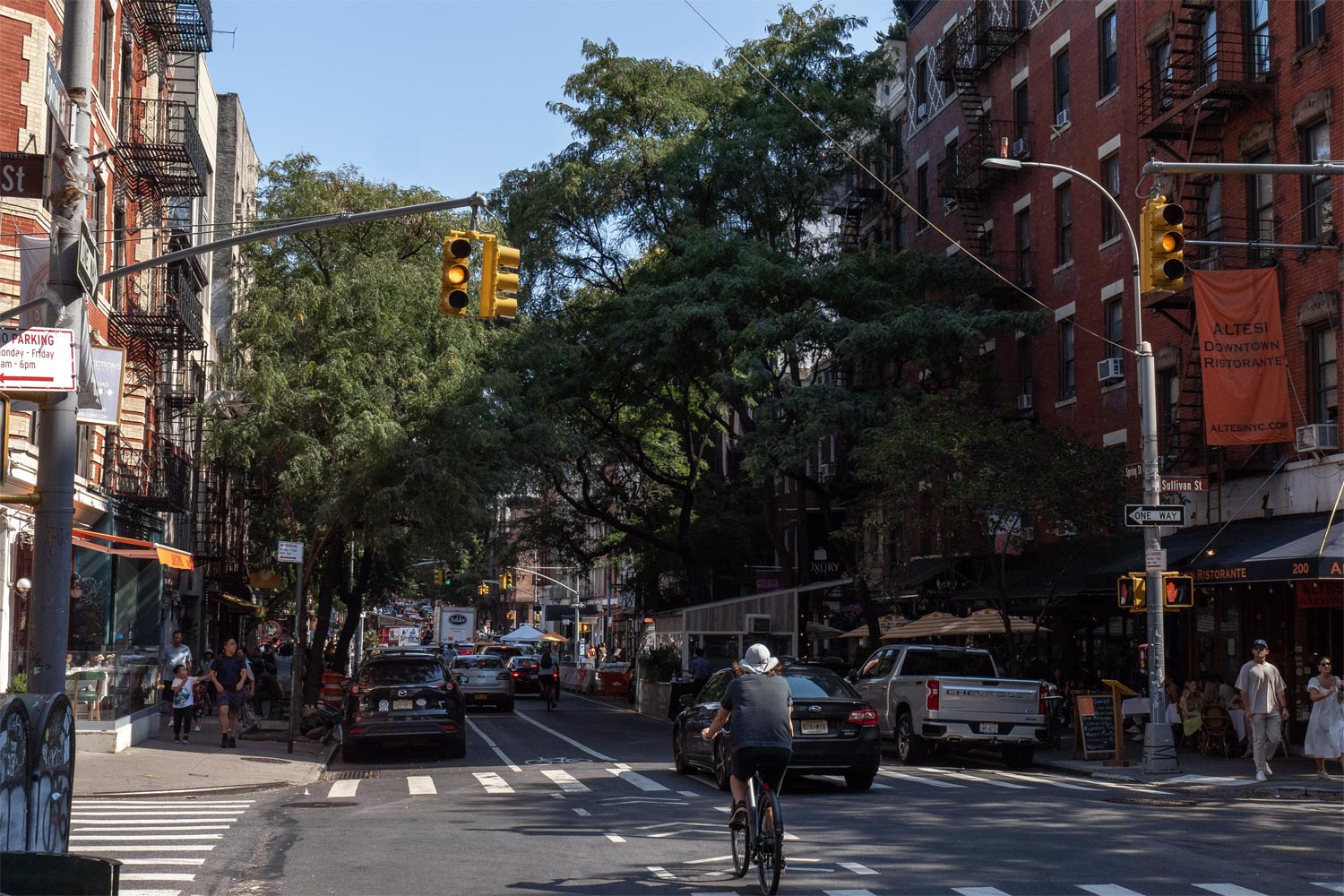
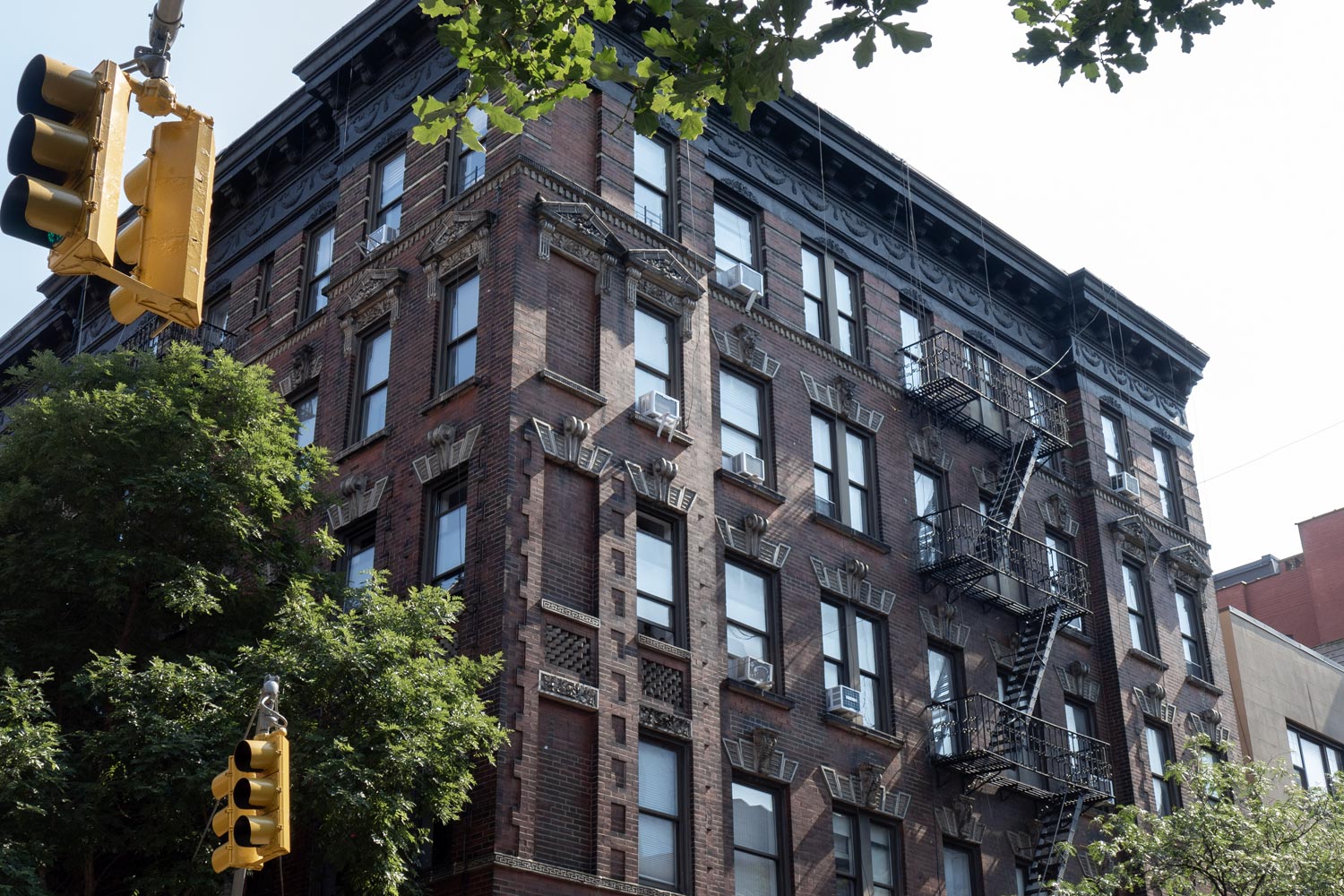
Most of the buildings in Soho are old brick houses, built around the turn of the 20th century specifically to be rented out to immigrants. Originally, these houses had cramped little apartments, but to sell them to the bohemians they were turned into huge designer lofts.
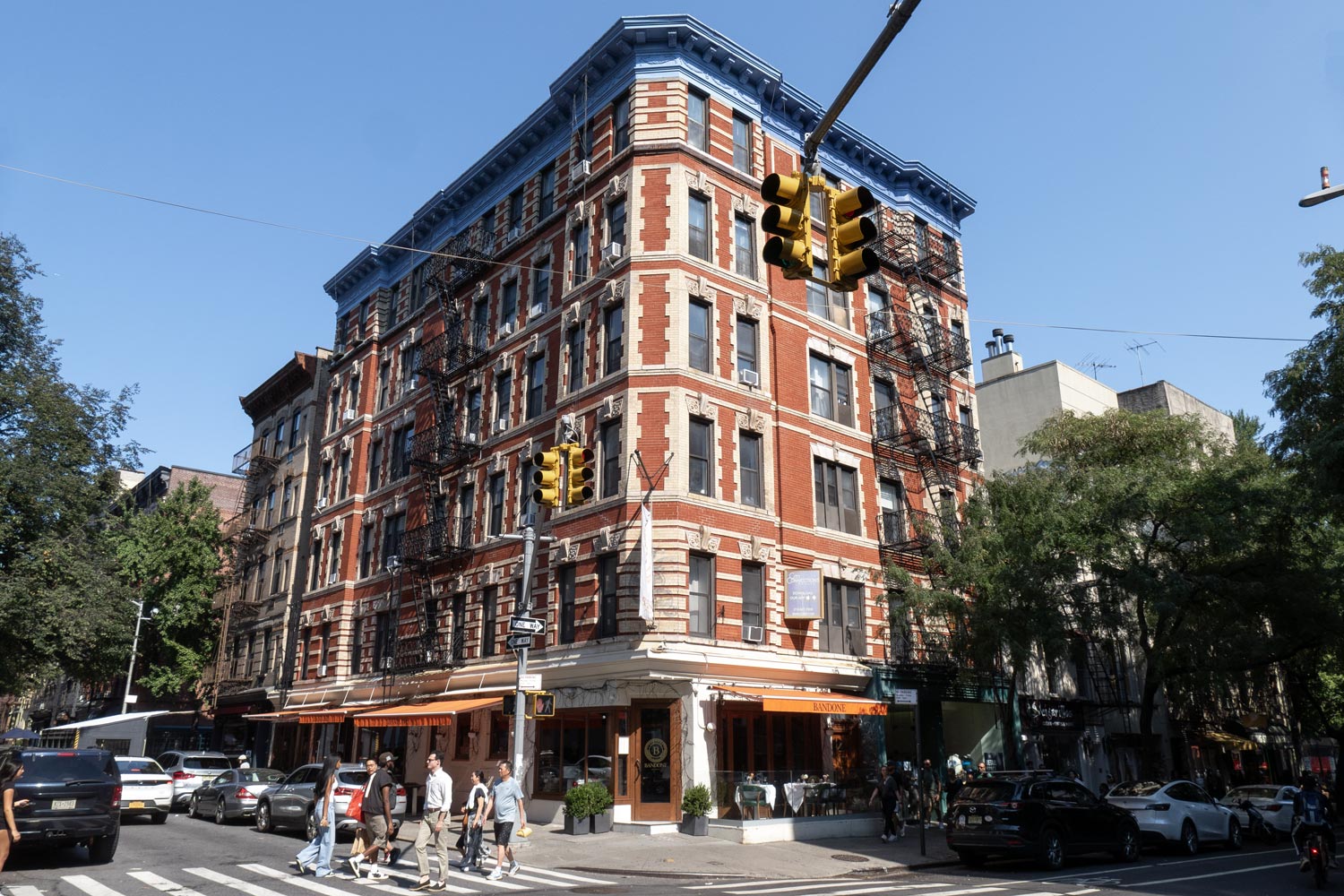
One apartment can take up an entire floor, and its area can easily be 300 square meters. An apartment like that costs around three million dollars. Funny thing is, buildings like that don’t have and can’t have an elevator in the stairwell, and the windows have the same plug-in AC units sticking out of them as in the ghetto.
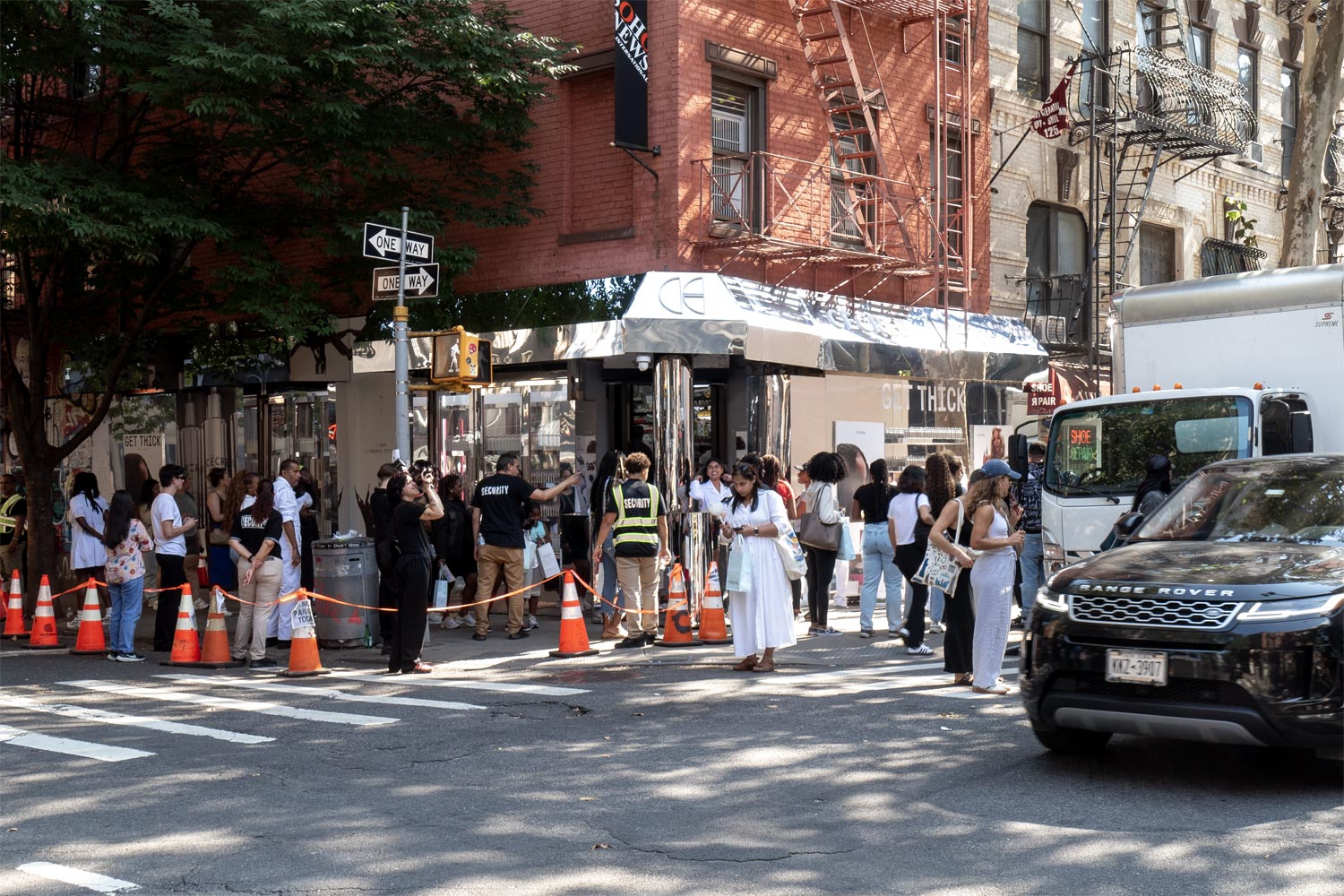
The streets of Soho are packed to the brim. Life never quiets down under the windows. Trendy boutiques are drawing lines for the new collection.
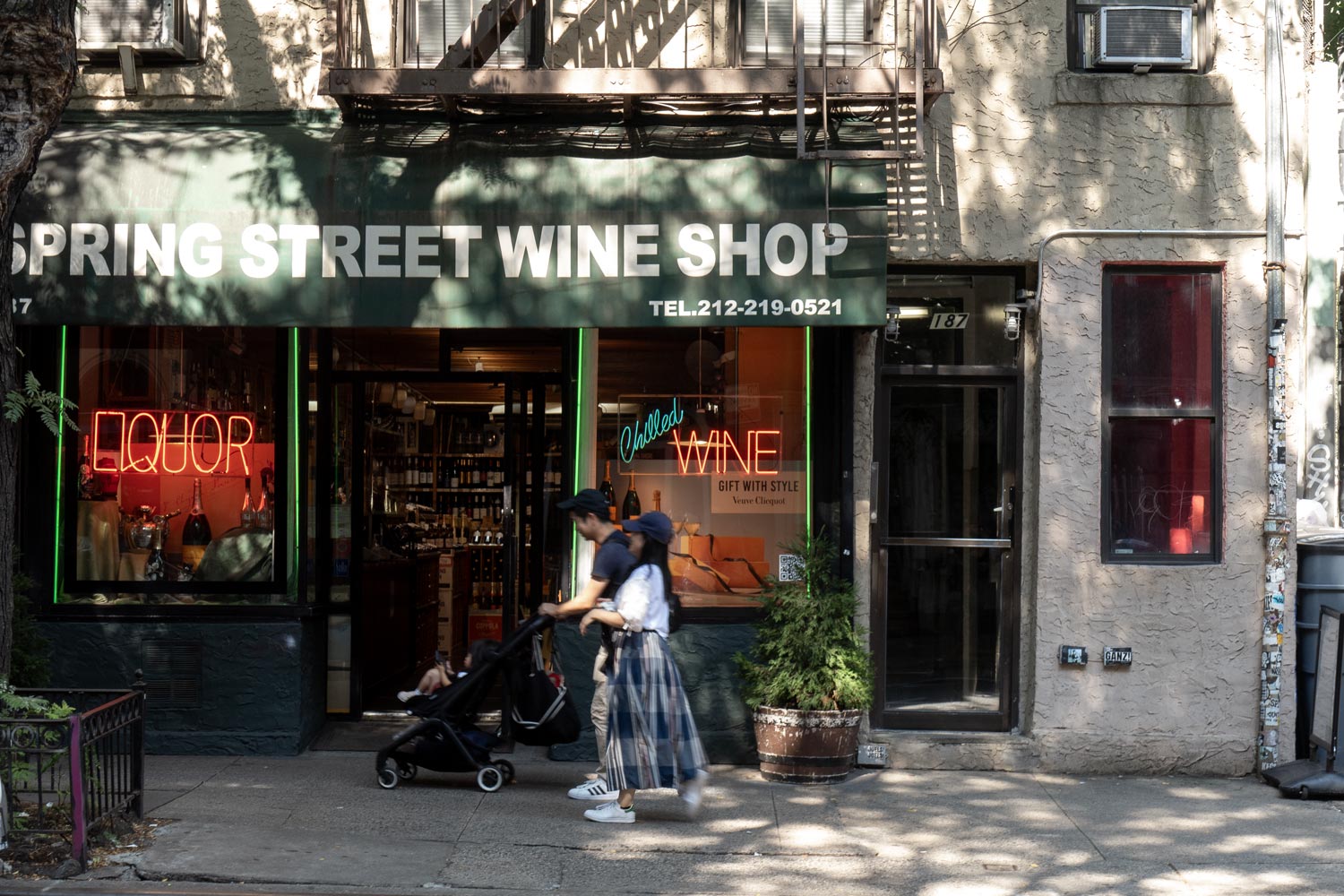
On the ground floors of the design lofts, booze boutiques are blooming and sparkling under a sweet little sign: liqueurs.
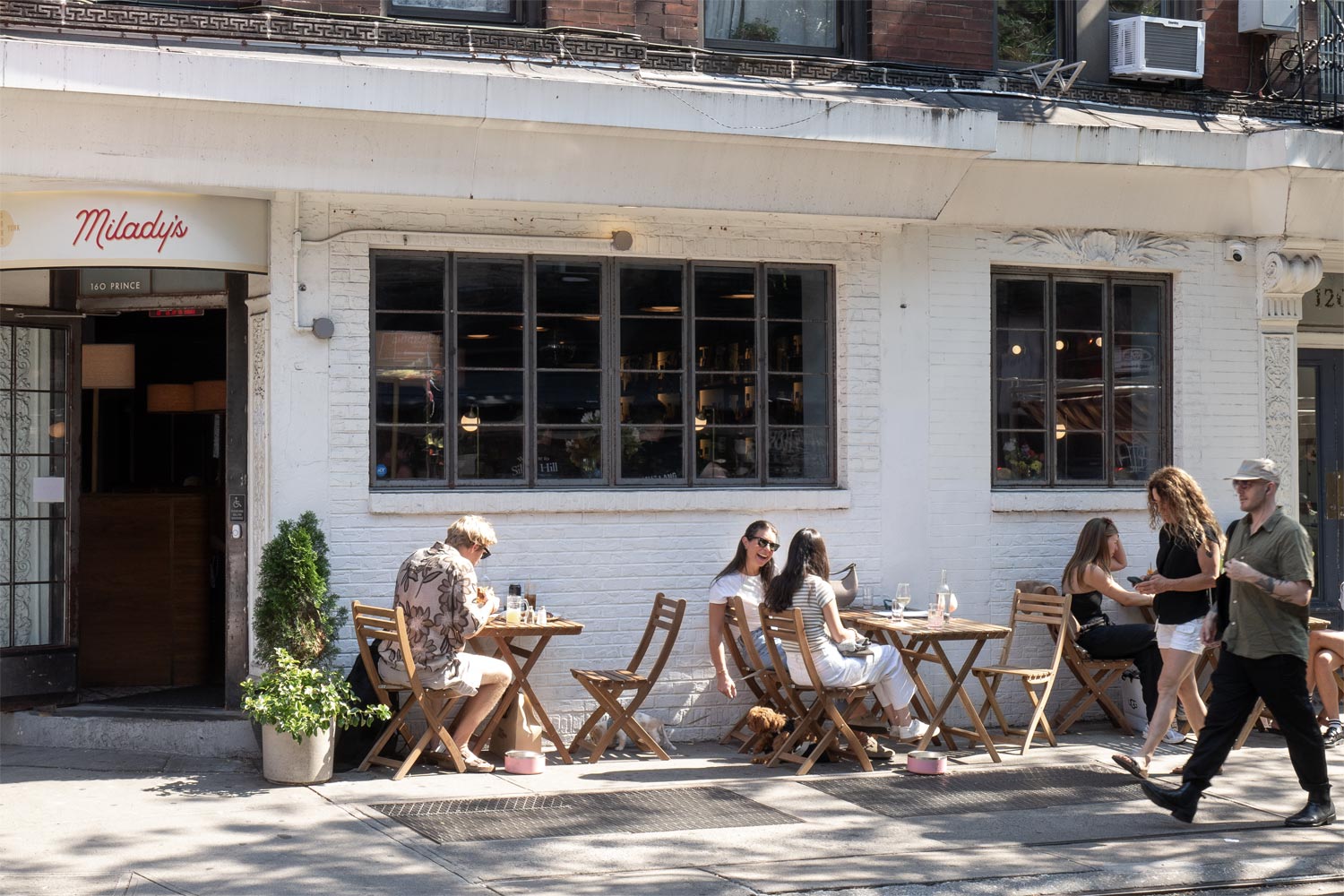
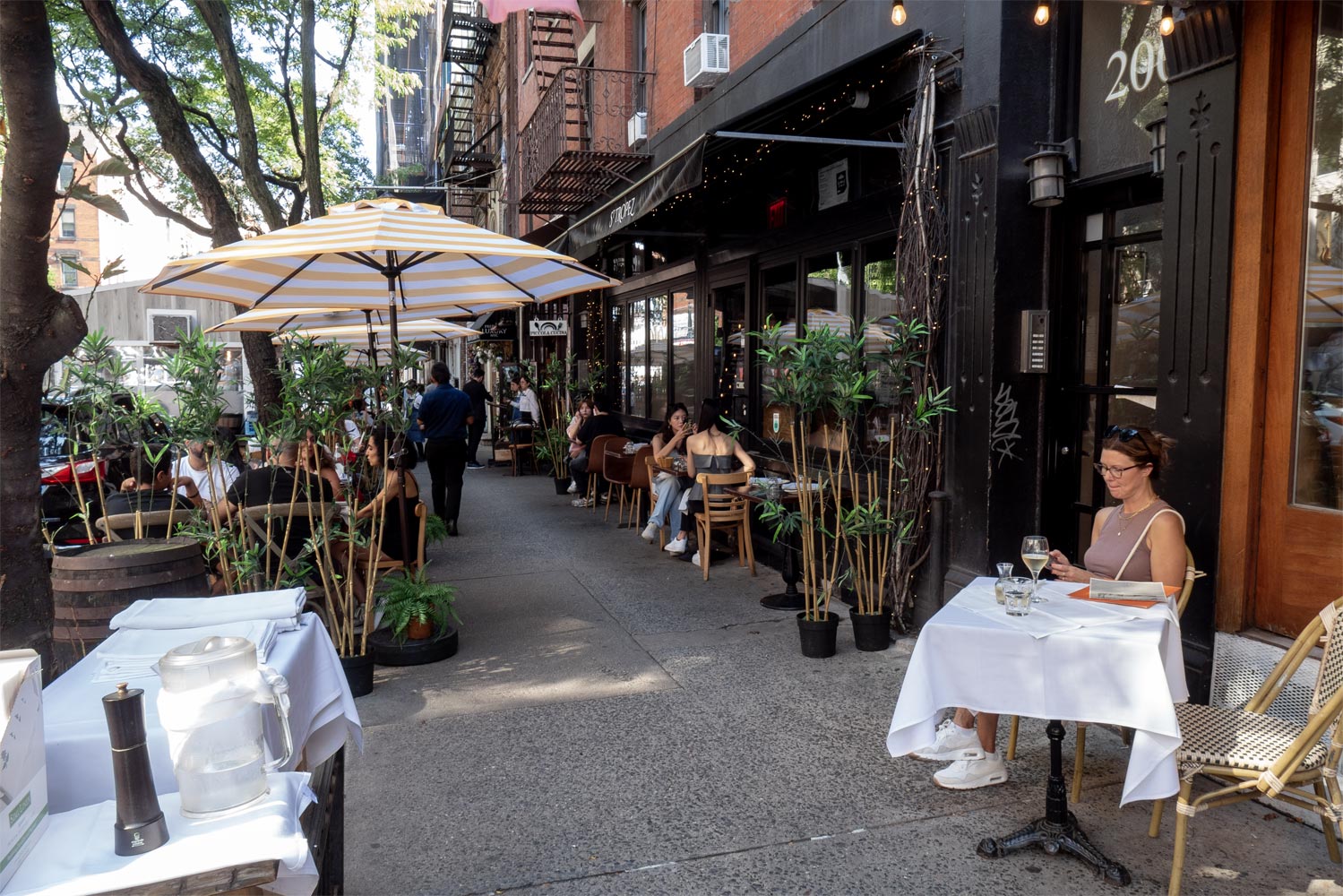
Damn, they even put tables out on the sidewalk here! You don’t see that too often in America.
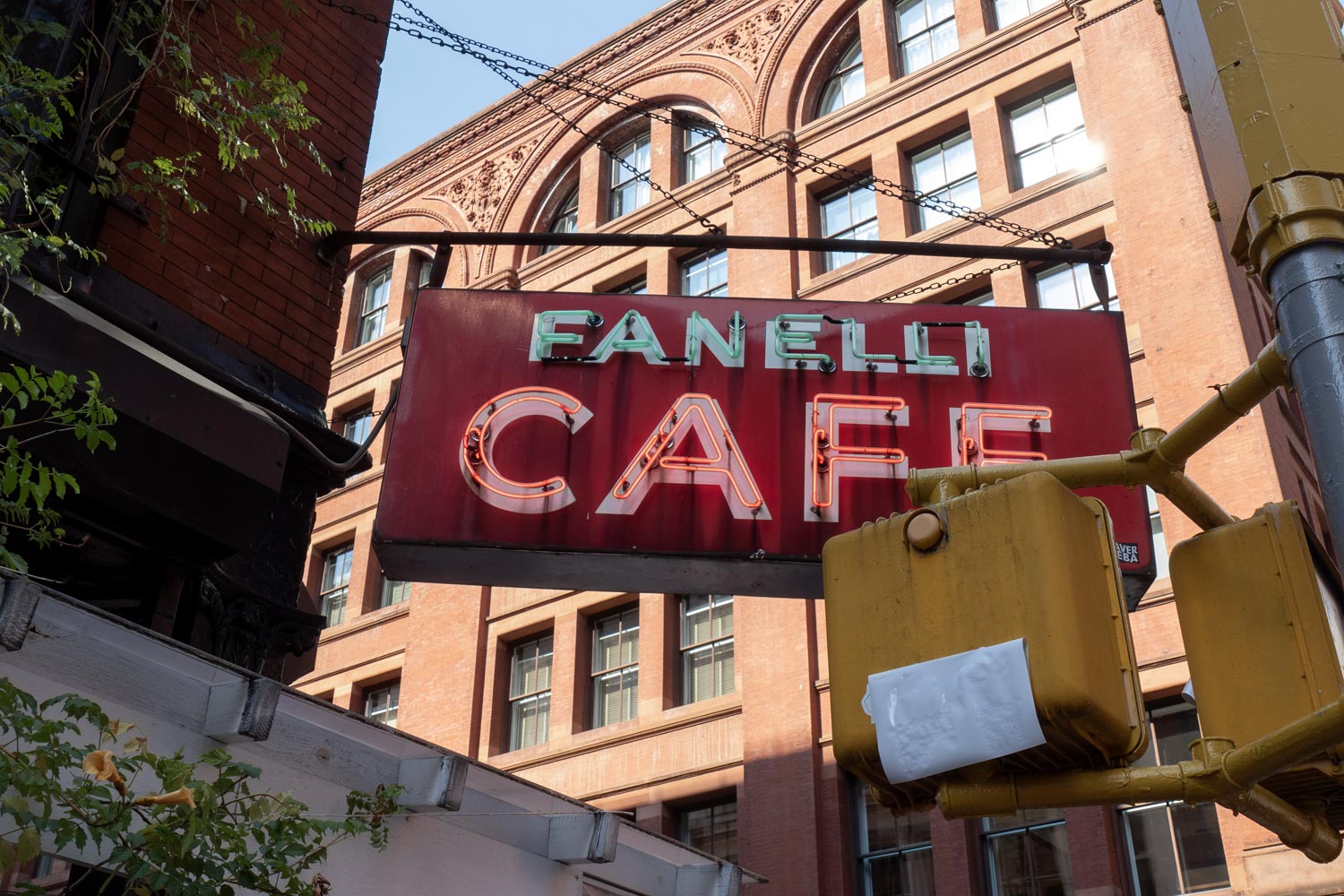
Even the names and signs set the tone in Soho. What a luxurious sign: Fanelli Cafe. Italian cuisine in New York! How could one resist?
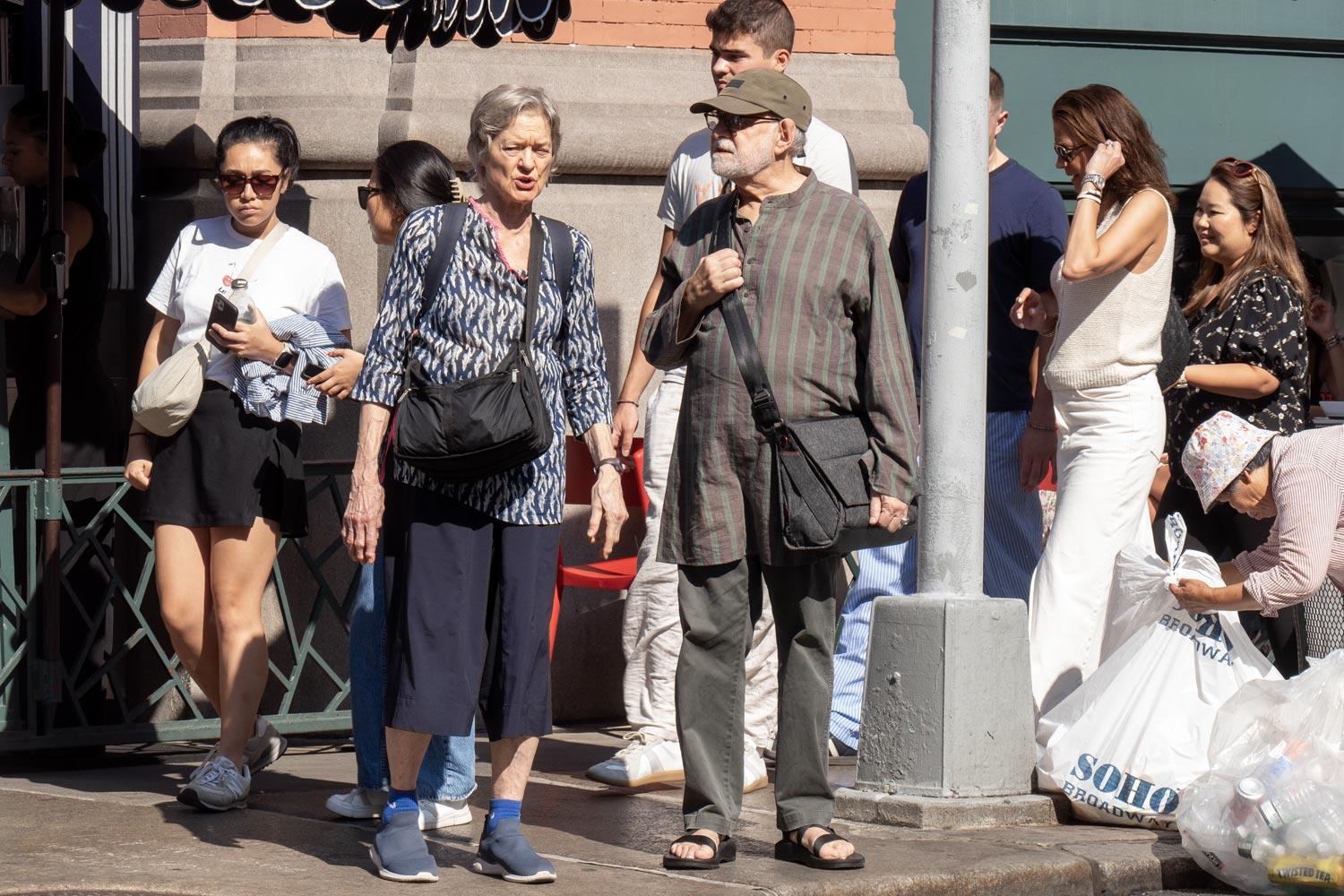
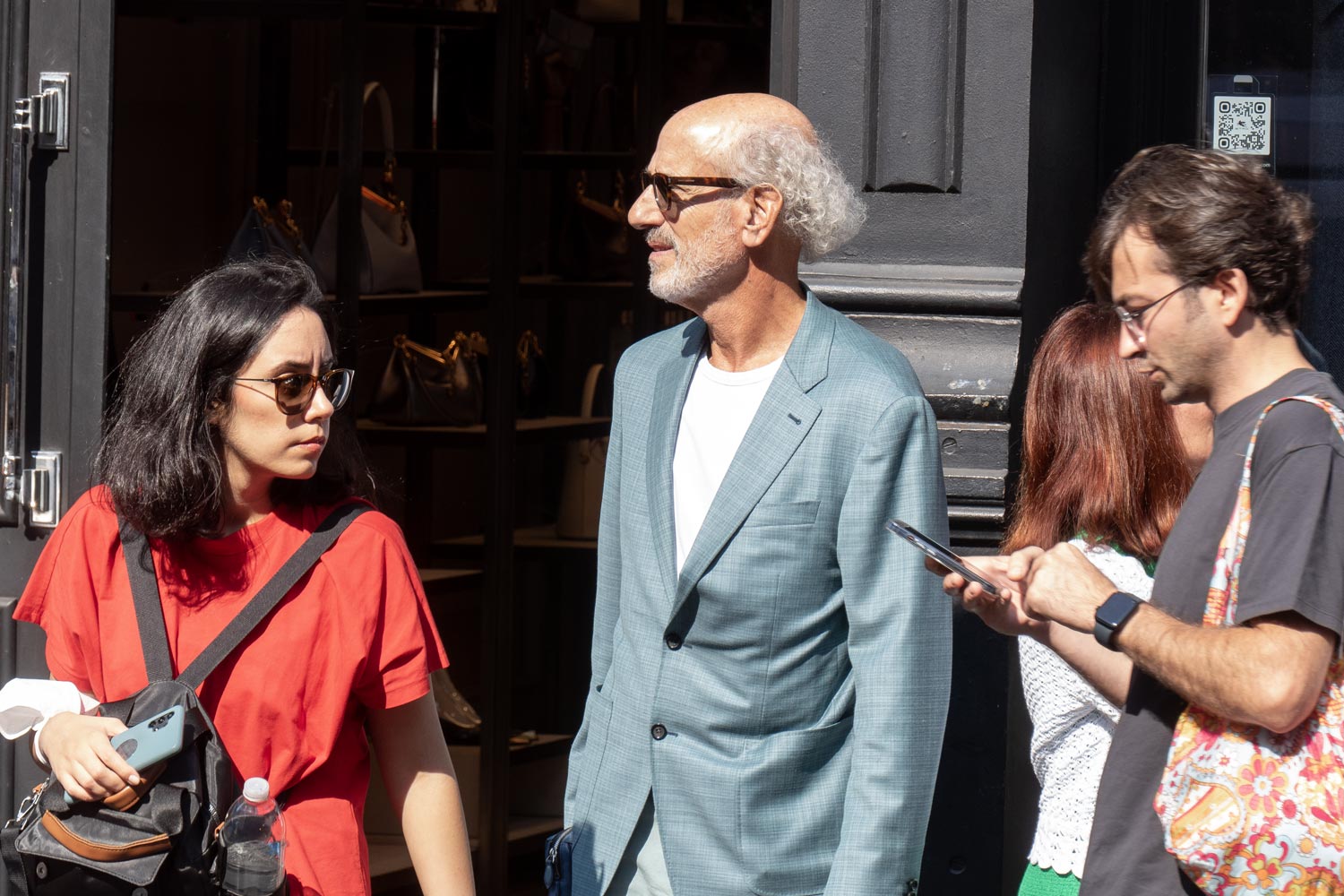
People in Soho are the very definition of what they call “New York style.” Unlike Milan or Paris, style in New York is always a personal story, not someone else’s rulebook.
New York never lives up to expectations. Fashion standards aren’t this city’s thing. It dresses how it wants and in whatever it wants. Every person here breaks the rules in their own way, and breaking the rules is the main rule of New York.
Flip-flops and a cap with a Pakistani shirt? No problem.
Expensive, fancy jeans with a cheap red turtleneck? Sure, why not.
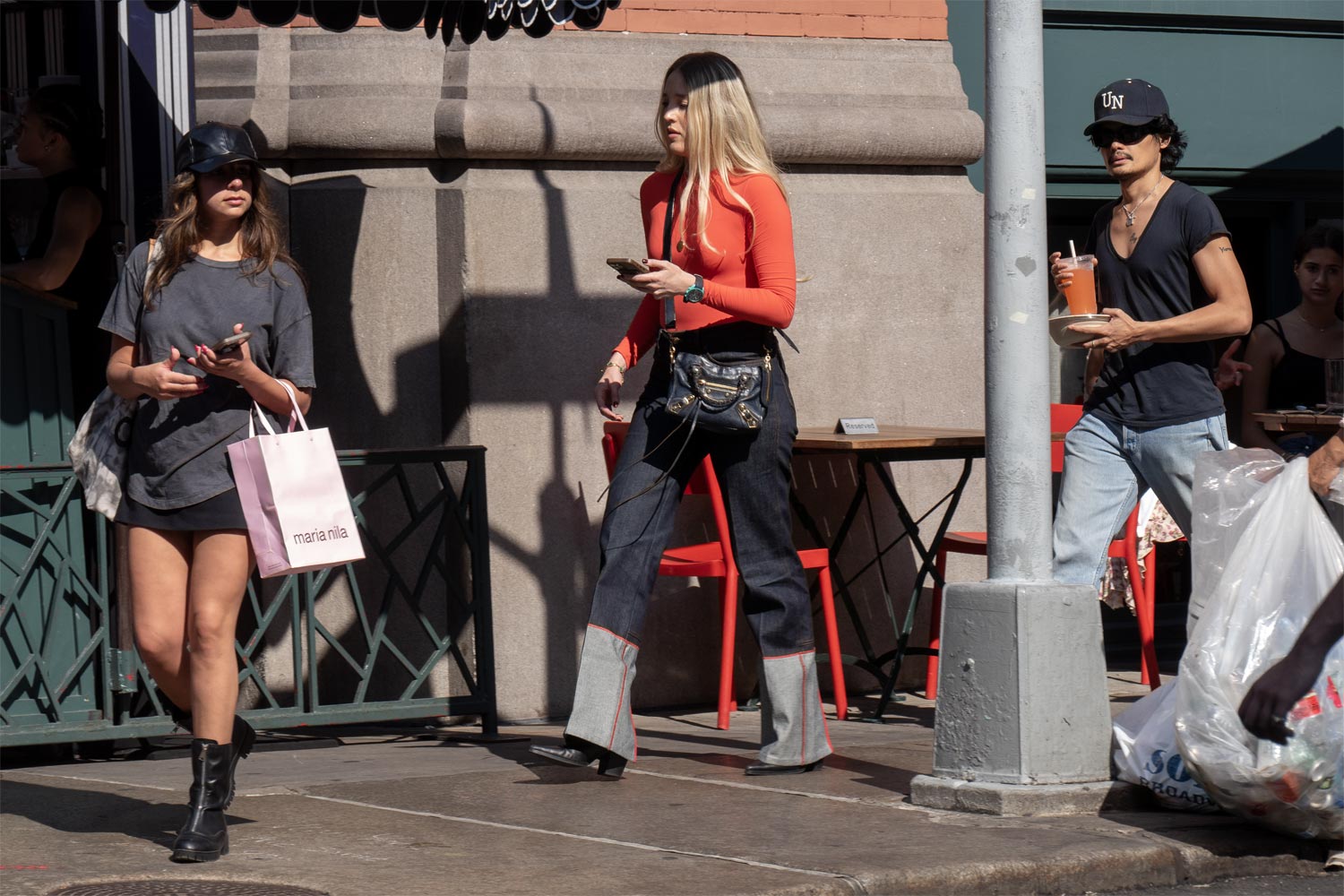
Clothing in New York doesn’t know age. In this city, people can be dressed just as stylishly at twenty as they are at sixty.
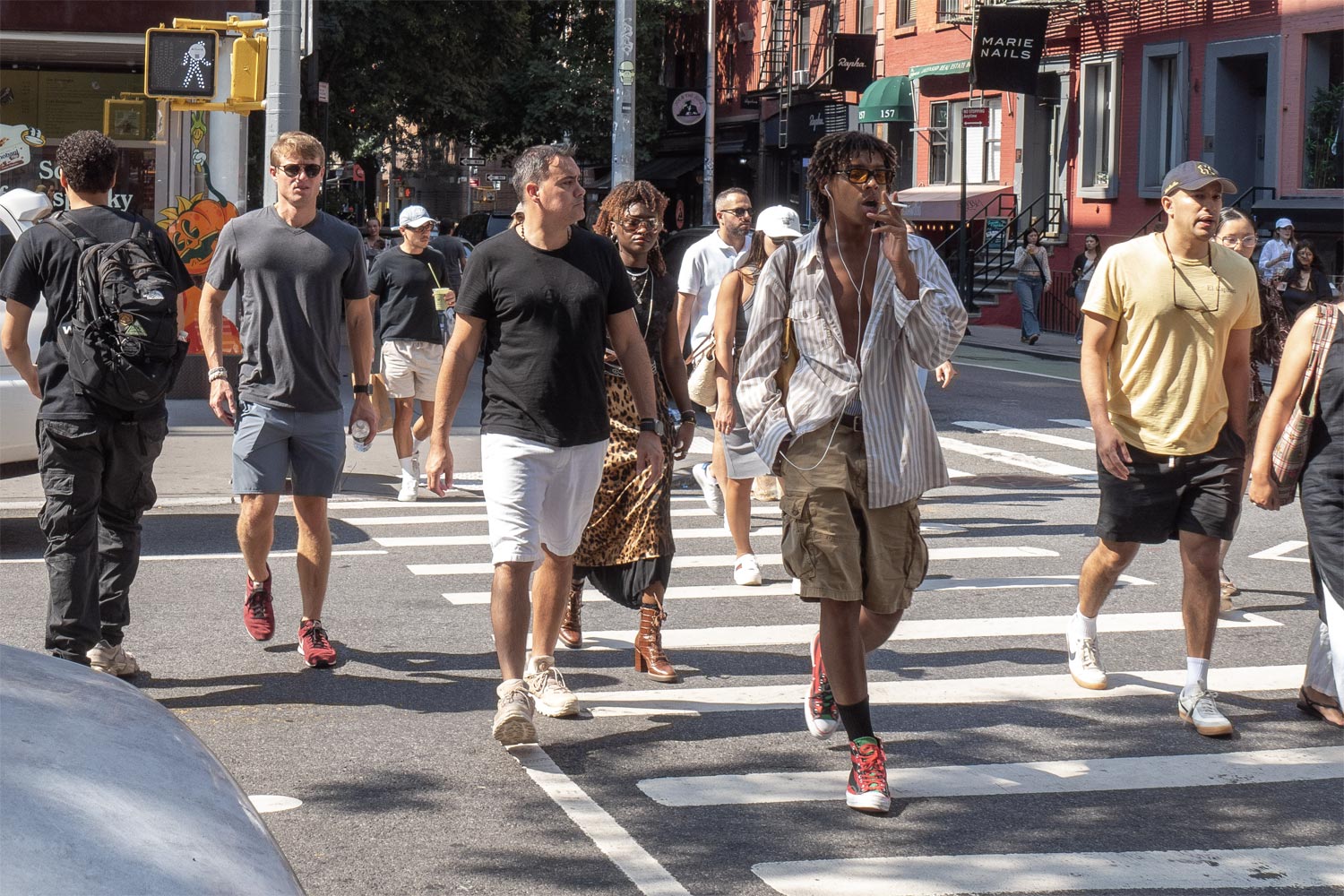
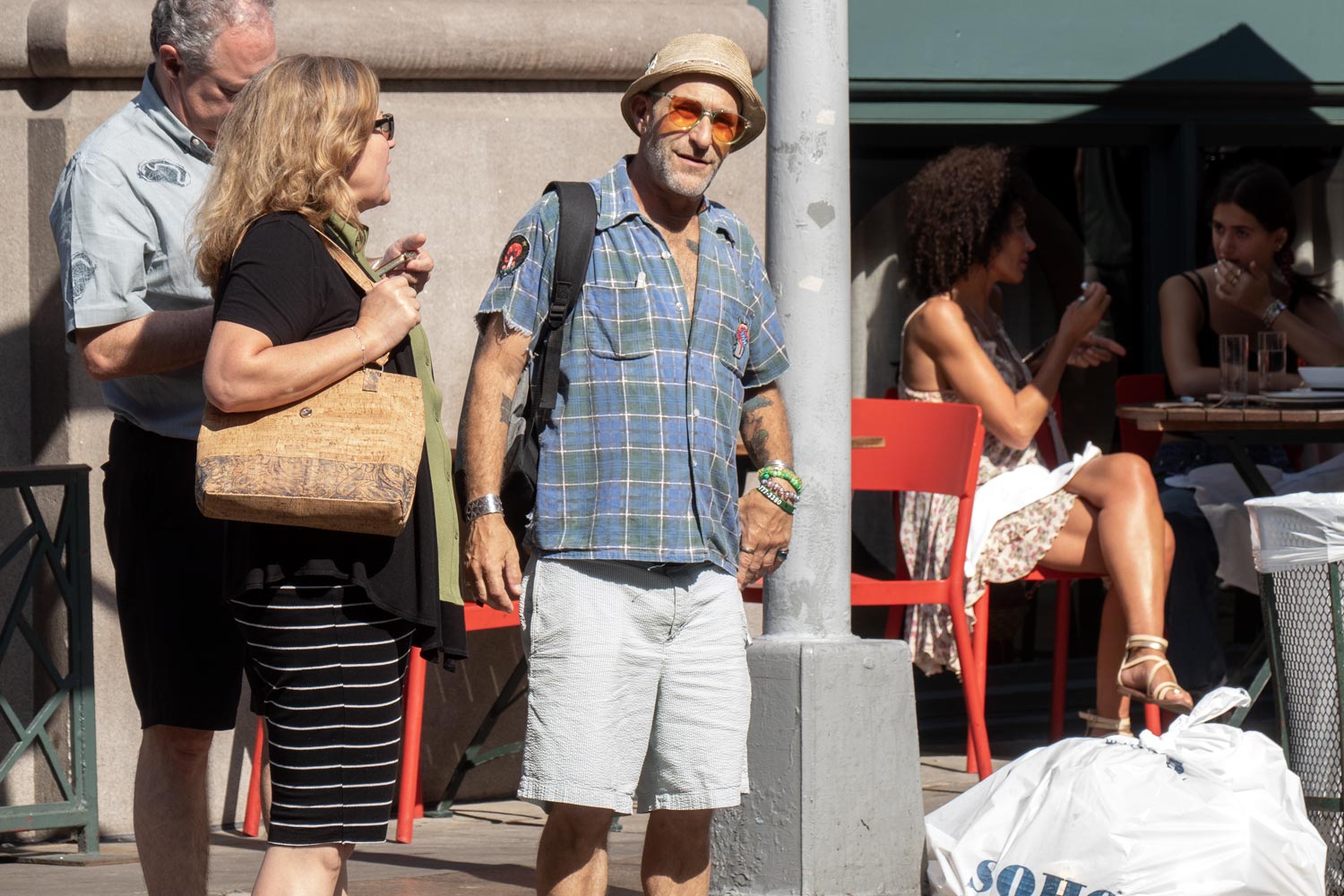
And if someone’s into a classic style — that’s fine too! The main thing is to add one unusual detail: dark sunglasses, an awkward bracelet, or an old wristwatch. Or just throw a trendy blazer over a ten‑buck T-shirt.
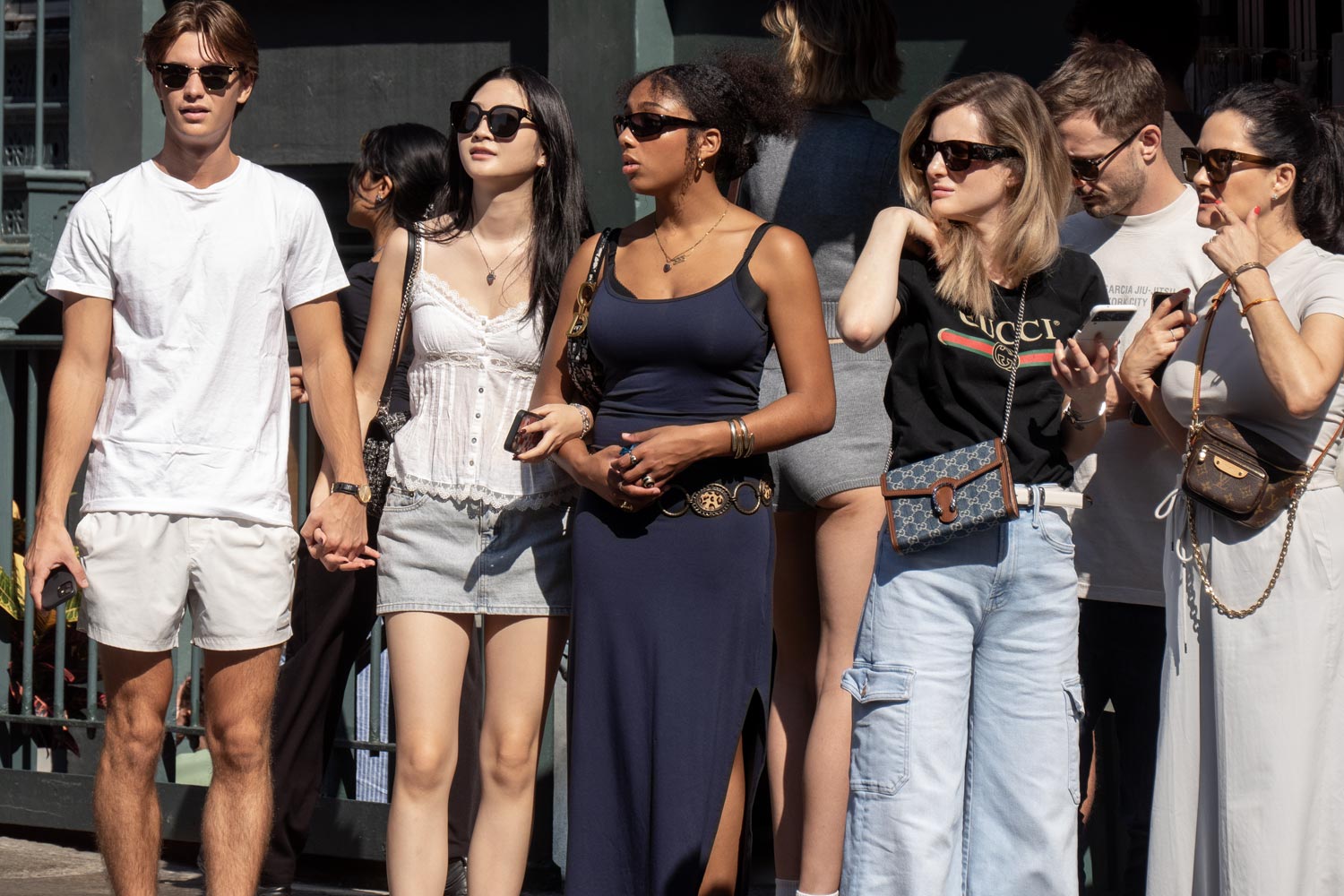
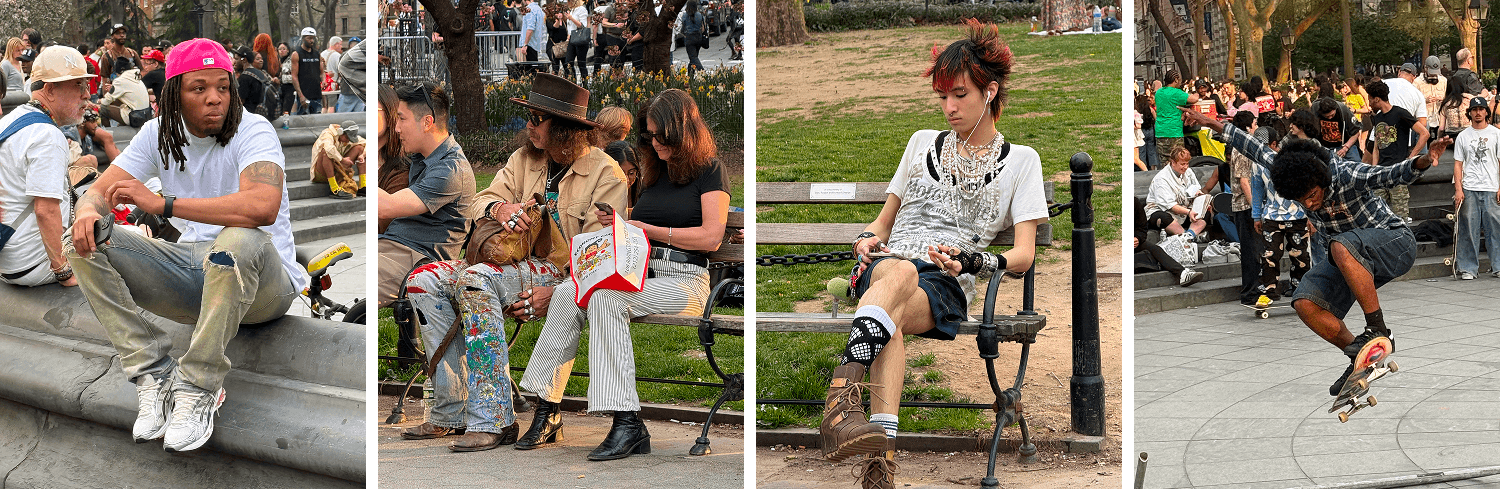
Even more colorful characters can be found in Washington Square Park, just a five-minute walk from Soho. NYU is right next door, so the park is a favorite meeting spot for students, as well as the entire progressive youth crowd in the form of skaters, musicians, singers, poets, chess players, photographers, artists, rappers, stand-up comics, debaters, and other slackers representatives of the creative class.
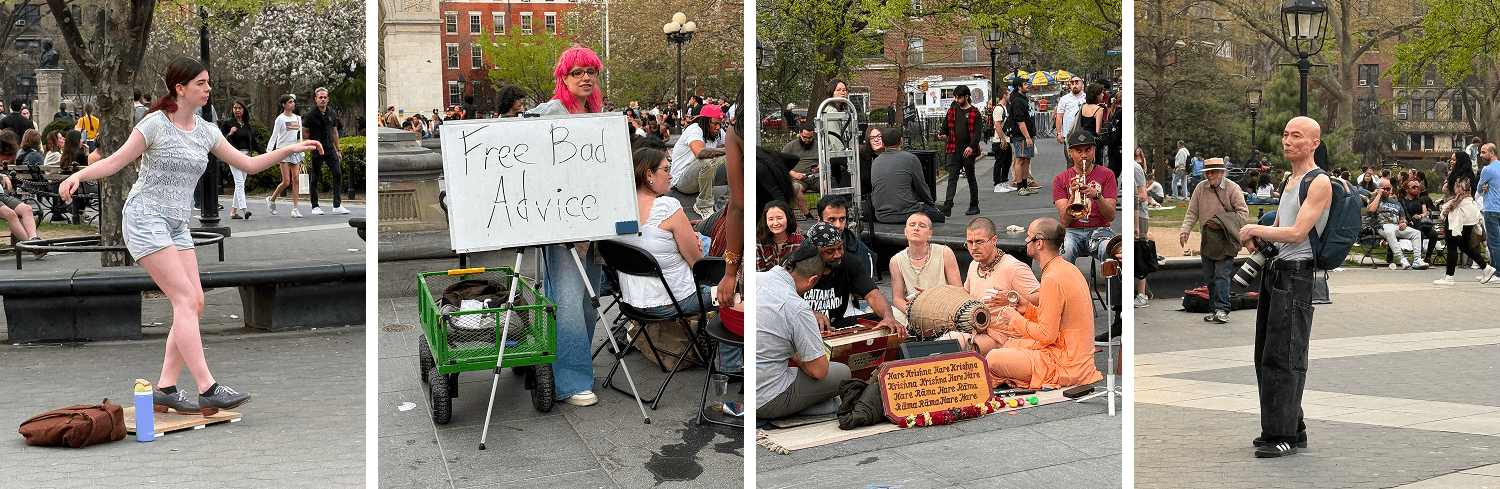
What kinds of characters don’t you run into here! And what aren’t people doing. Some are tap dancing, some are handing out free bad advice, some are chanting Krishna mantras, some are making up poems on the fly, and some are filming all of this.
Finally, on the same latitude as Soho, just on the other side of Broadway, lies the Lower East Side. There’s not much to look at there, except for two particularly interesting spots. The first is Katz’s Delicatessen, a diner opened by Jewish immigrants back in 1888.
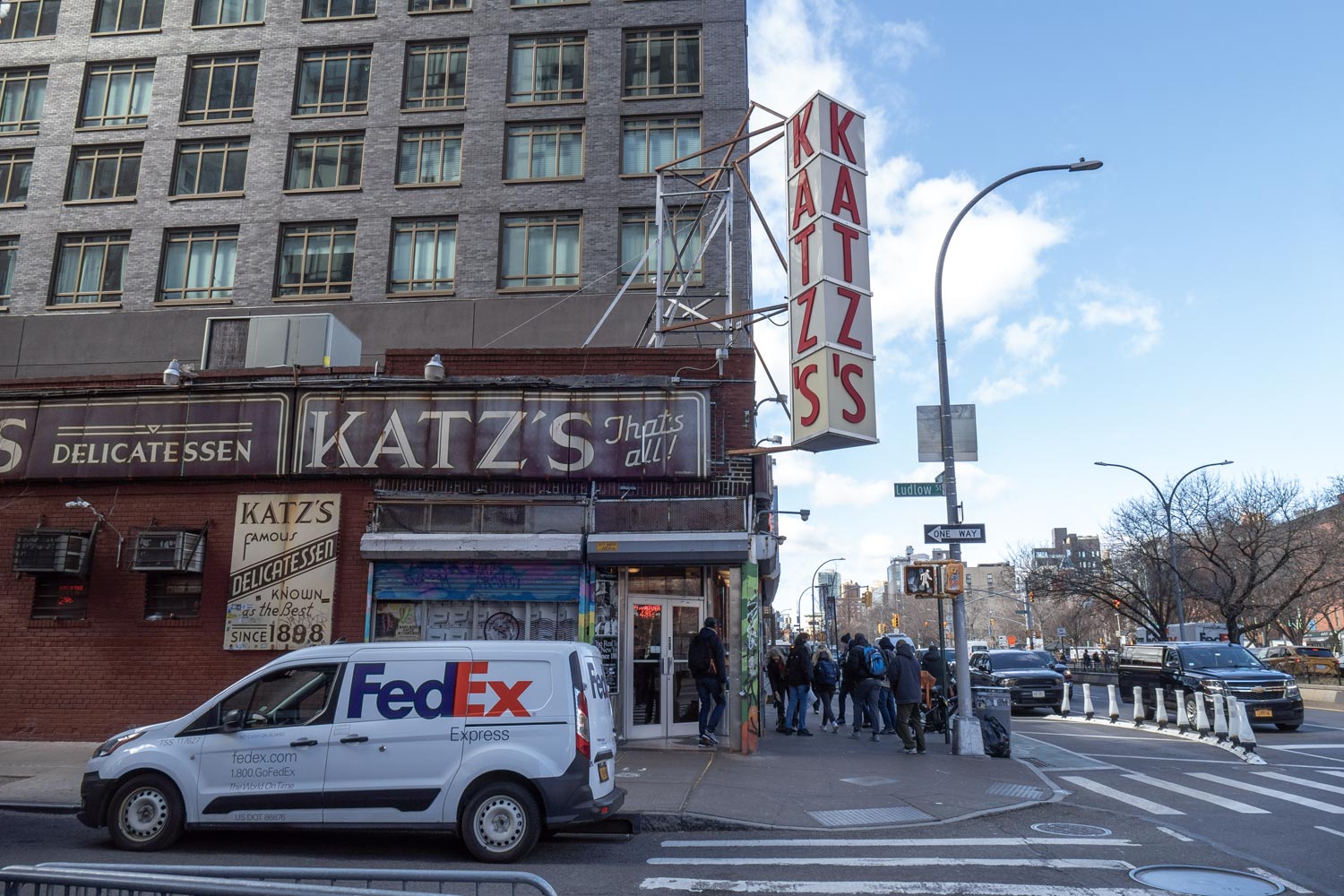
Katz is a true New York legend. Every weekend, lines stretch out in front of his deli. Everyone comes here to try the signature dish — a pastrami sandwich — and to admire the interior that hasn’t changed since the mid-20th century.
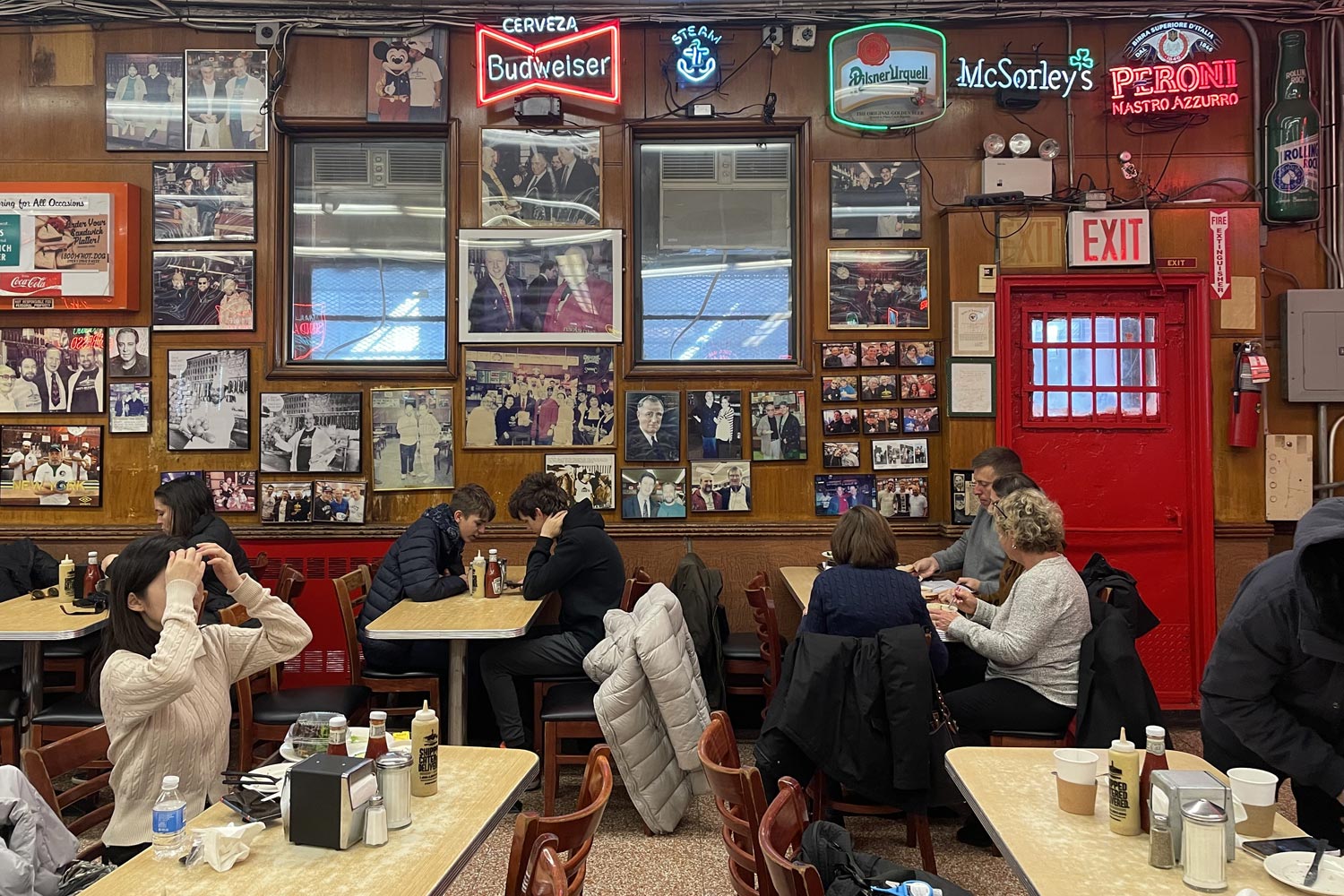
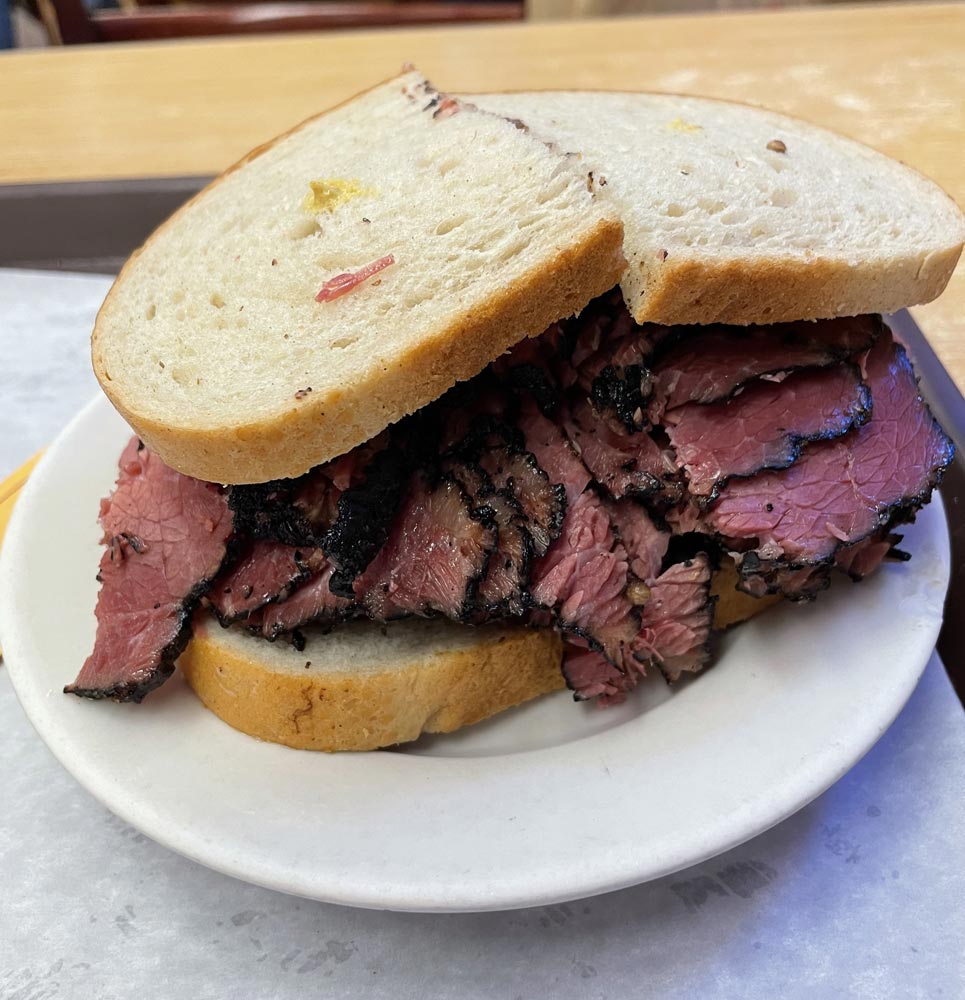
The Katz sandwich is a very peculiar dish. It looks like a bad sandwich that someone re-stacked the sausages in. In reality, it’s a parody of late 19th-century poor Jewish cuisine. A parody!
They pile on a whole mountain of pastrami — so much that it barely stays between the slices of bread and the sandwich falls apart. Honestly, the bread is just there for laughs. The whole secret is in the pastrami. It’s insanely good — top‑notch, juicy beef that’s marinated in spices for several days.
And... there’s a lot of it! So much that finishing a whole sandwich by yourself is almost impossible. You should see the look of regret on the faces of stuffed-to-the-gills customers as they toss the leftover bits of the most delicious pastrami into the trash. That’s exactly the point. It’s classic New York humor.
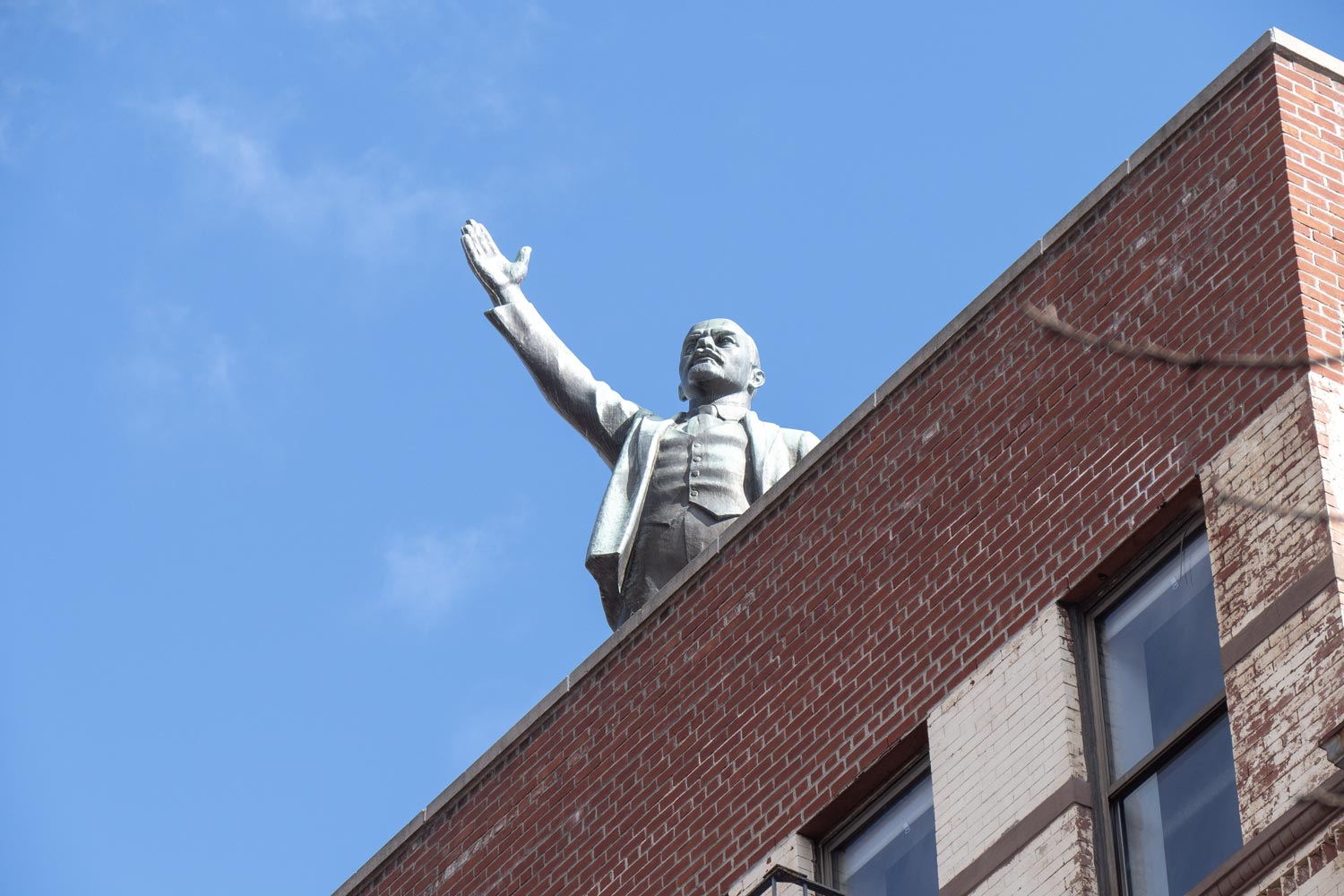
Well, the second remarkable spot in the Lower East Side is the Lenin monument. On the roof of an apartment building. A hundred meters from Katz’s, with its sandwiches that are impossible to eat. Local humor, too.