
The series of stories about America is available as a book:
Paperback: Amazon
Ebook: Amazon, Apple Books, Google Books
America. Part Two. Today
Film set — The upside-down Country — Digitalization — Immigrants — Illegals — Guns — Blacks
Film set
Sometimes, as you’re walking around America, you’re suddenly hit by a wave of a strange feeling. It can wash over you at any moment — even when nothing special seems to be happening around you. All it takes is a glance at some house, a street, or a café sign, and a peculiar sensation flares up: a cocktail of alienation from reality and sharp déjà vu.
The author has been living in the US for more than three years now and still can’t shake off these flashes. By scientific means, I’ve managed to establish that the mysterious waves come more often in summer than in winter, and more often when I see ordinary scenes rather than in any special places. I’ve also found that similar waves haunt many immigrants and even tourists.
After a while, the author understood what those waves were. In America, you often come across a landscape so stereotypical that it doesn’t seem real, but staged. When you find yourself inside such a landscape, it feels as if you’ve ended up on a film set. Everything in it is too polished, as if it’s been arranged especially for the viewer, frozen in amber.
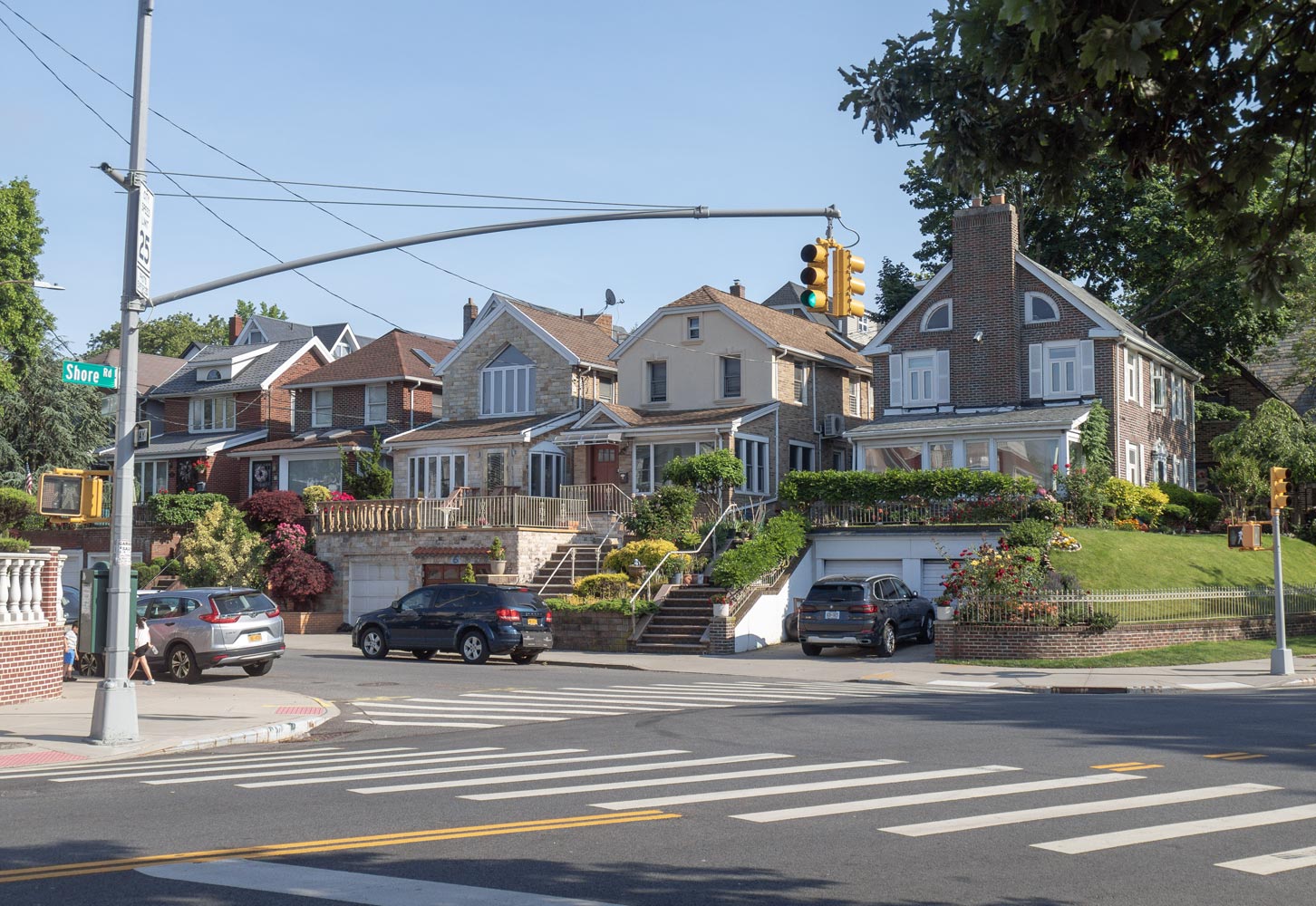
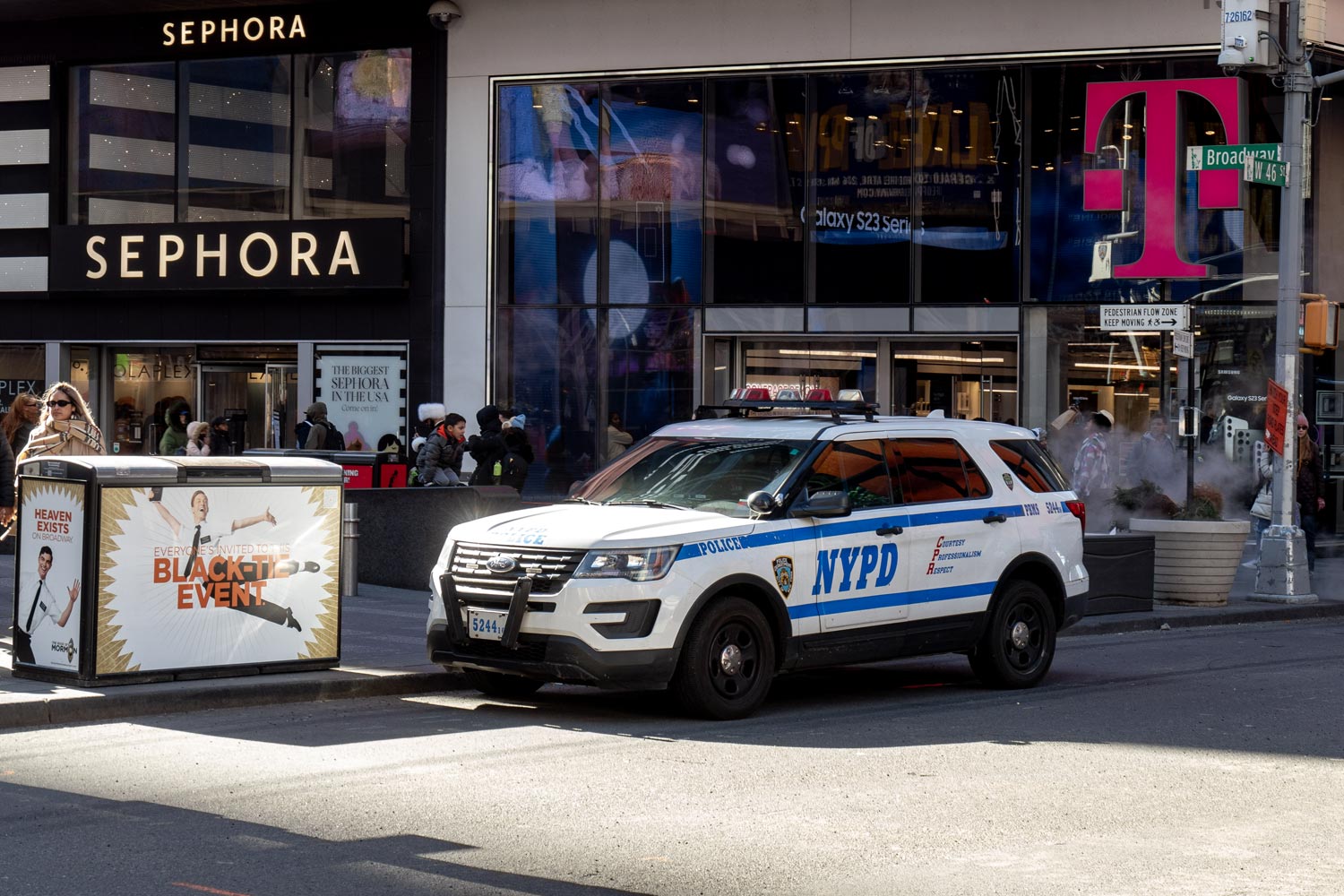
The effect is heightened by a recognizable American detail that comes into view. It could be a well-known brand, a nicely tilted yellow road sign, or, say, a police car with large NYPD letters running along the entire side.
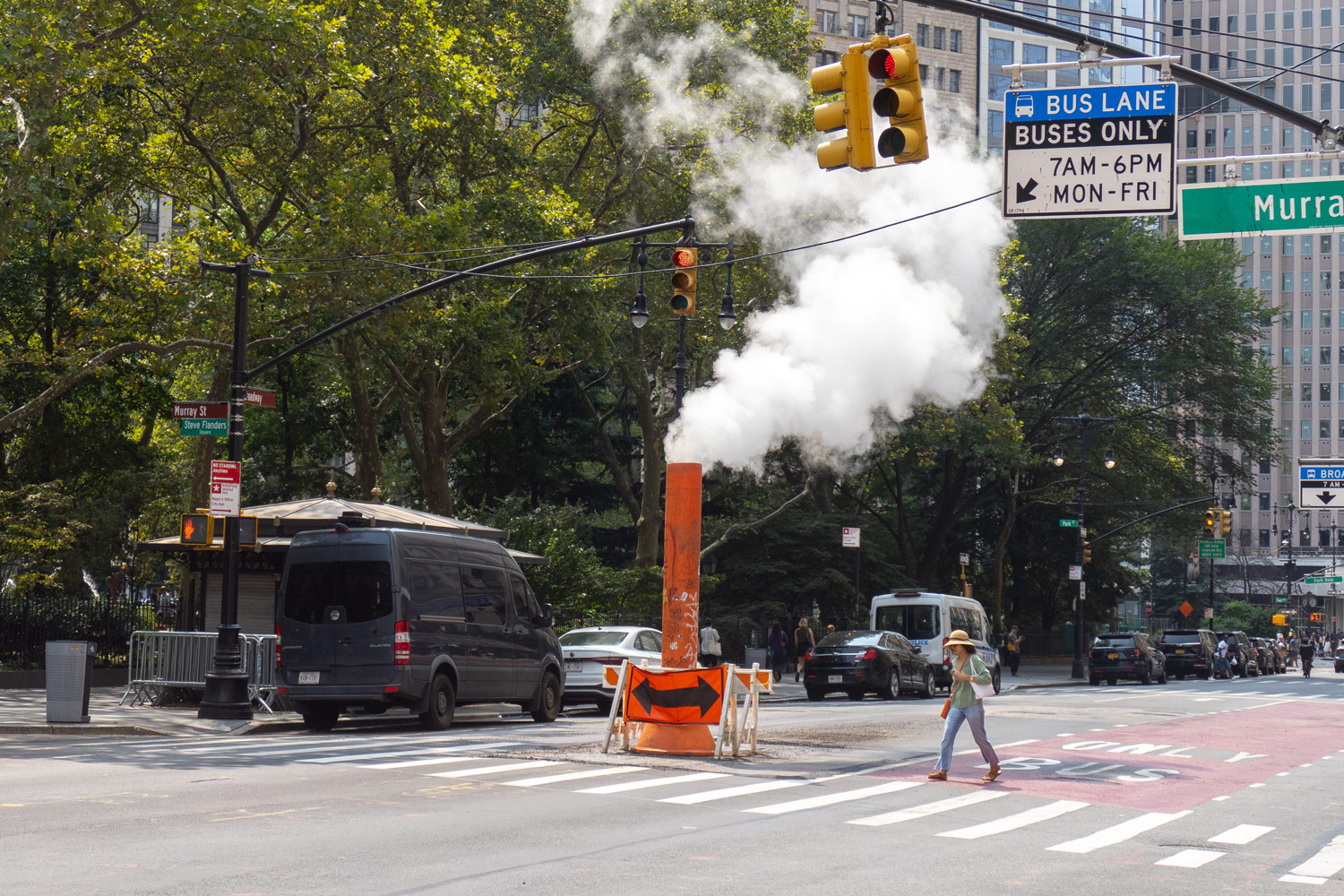
The plumes of steam billowing from New York’s underground into the thick of city life look the most staged. After living in New York for two years and seeing this steam dozens of times, I still refuse to believe it isn’t being pumped out on purpose through some cleverly hidden network of hoses.
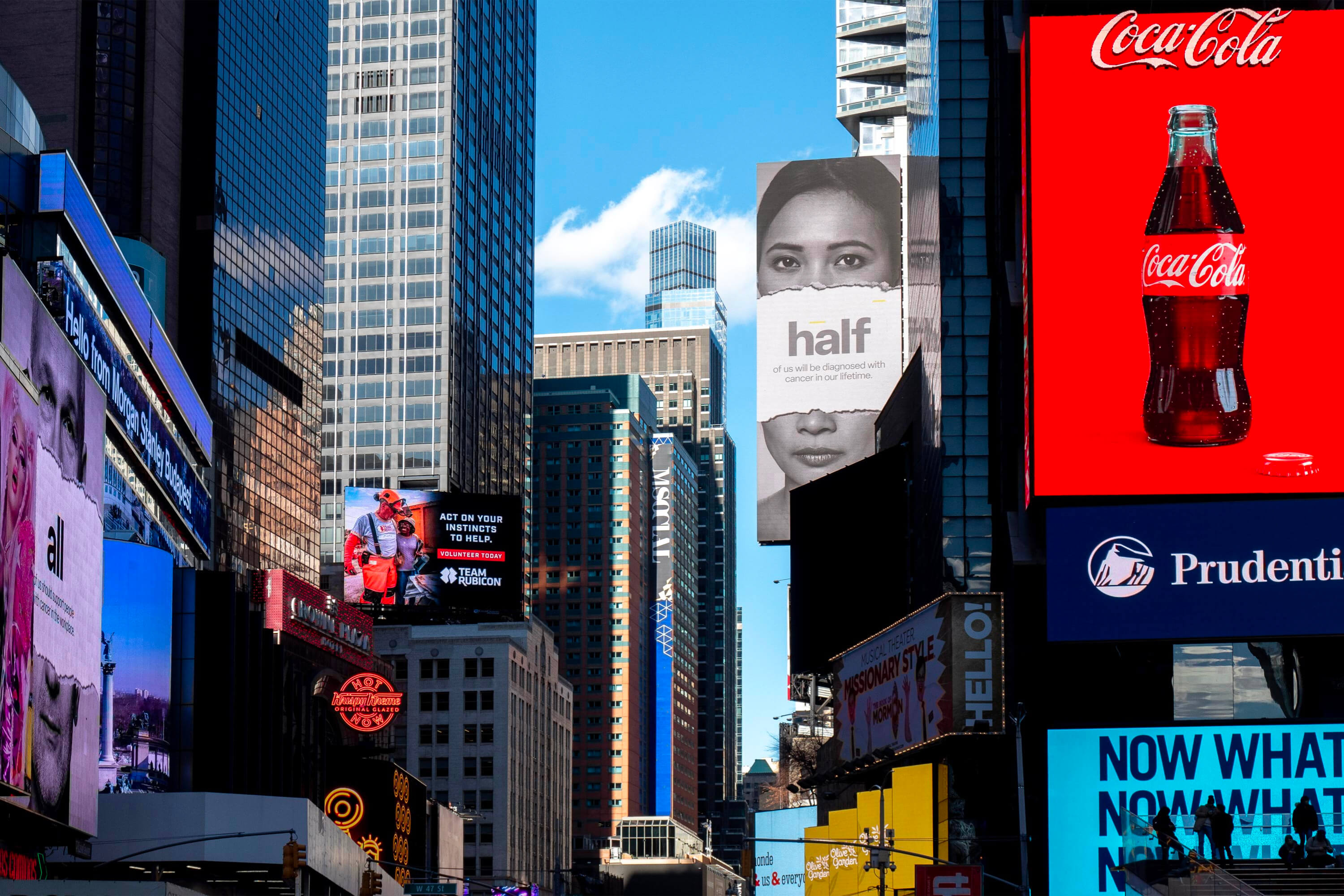
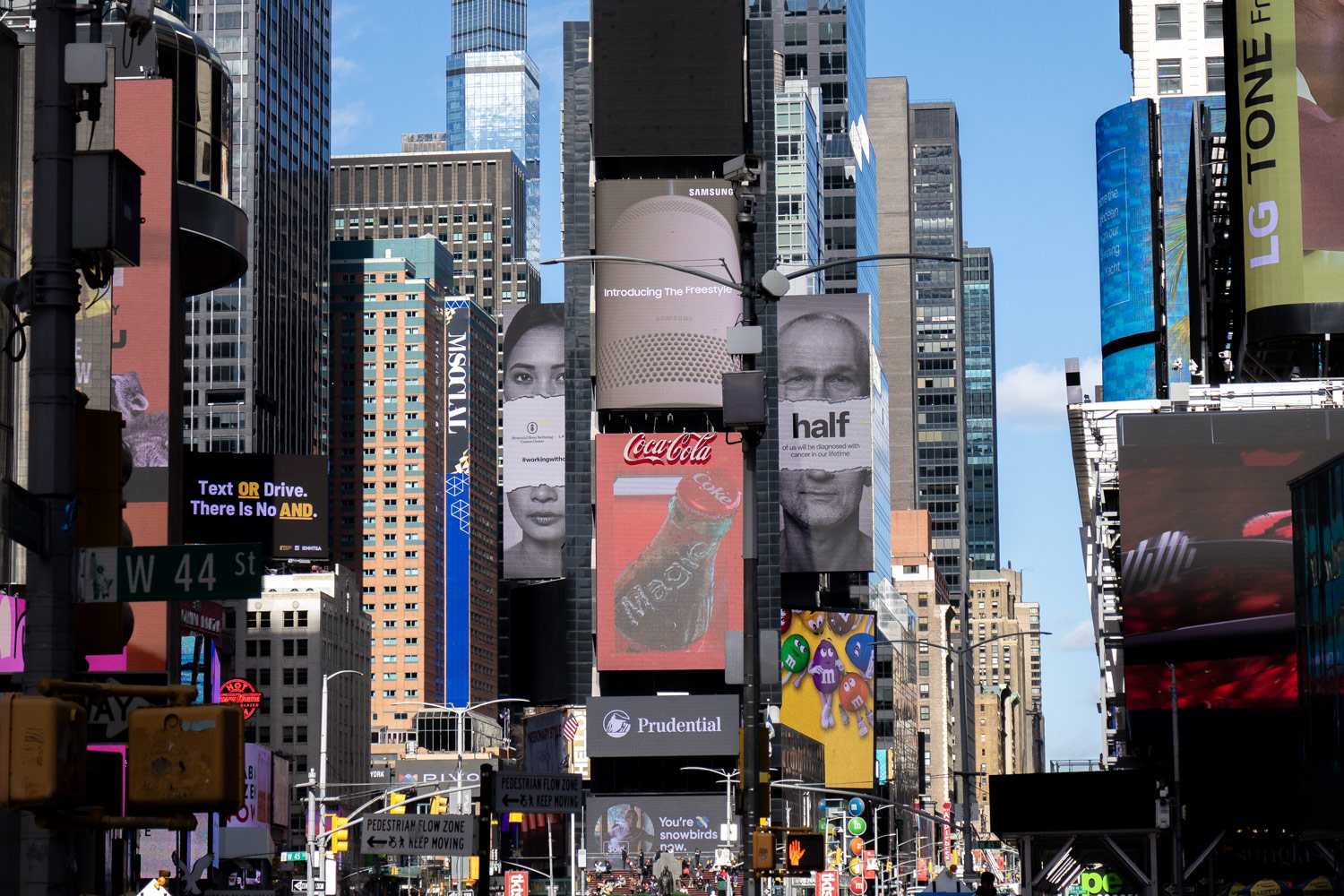
Times Square feels like a film set too. Only this time they’re shooting not a steampunk movie, but a cyberpunk one. Something about a future where cities are buried under glowing ads, and citizens are filmed nonstop... did I say “future”?
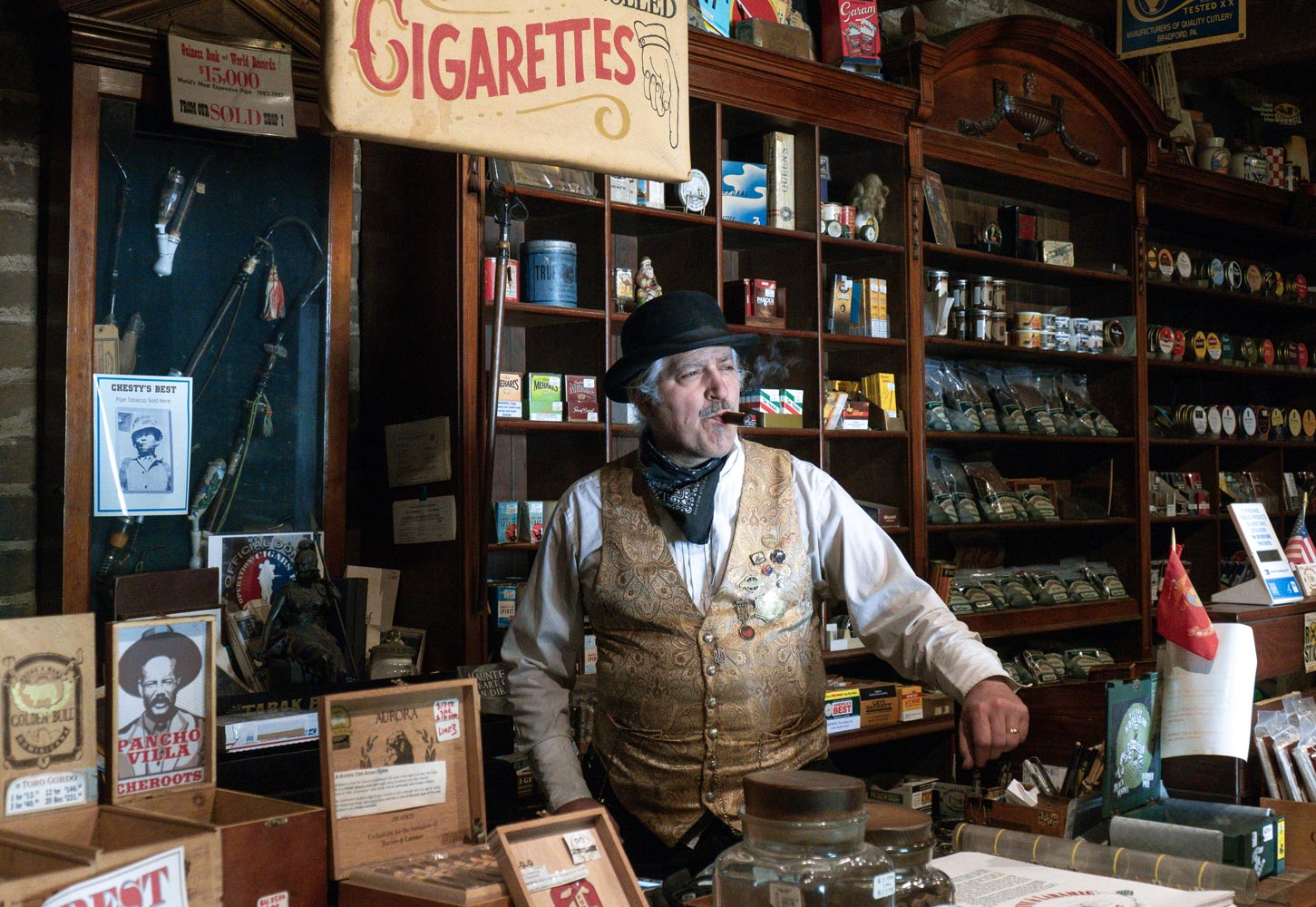
There’s also room on this film set for movies about the past. Although American cities have been badly affected by the invasion of skyscrapers, there are still a few little corners where the Wild West atmosphere persists.
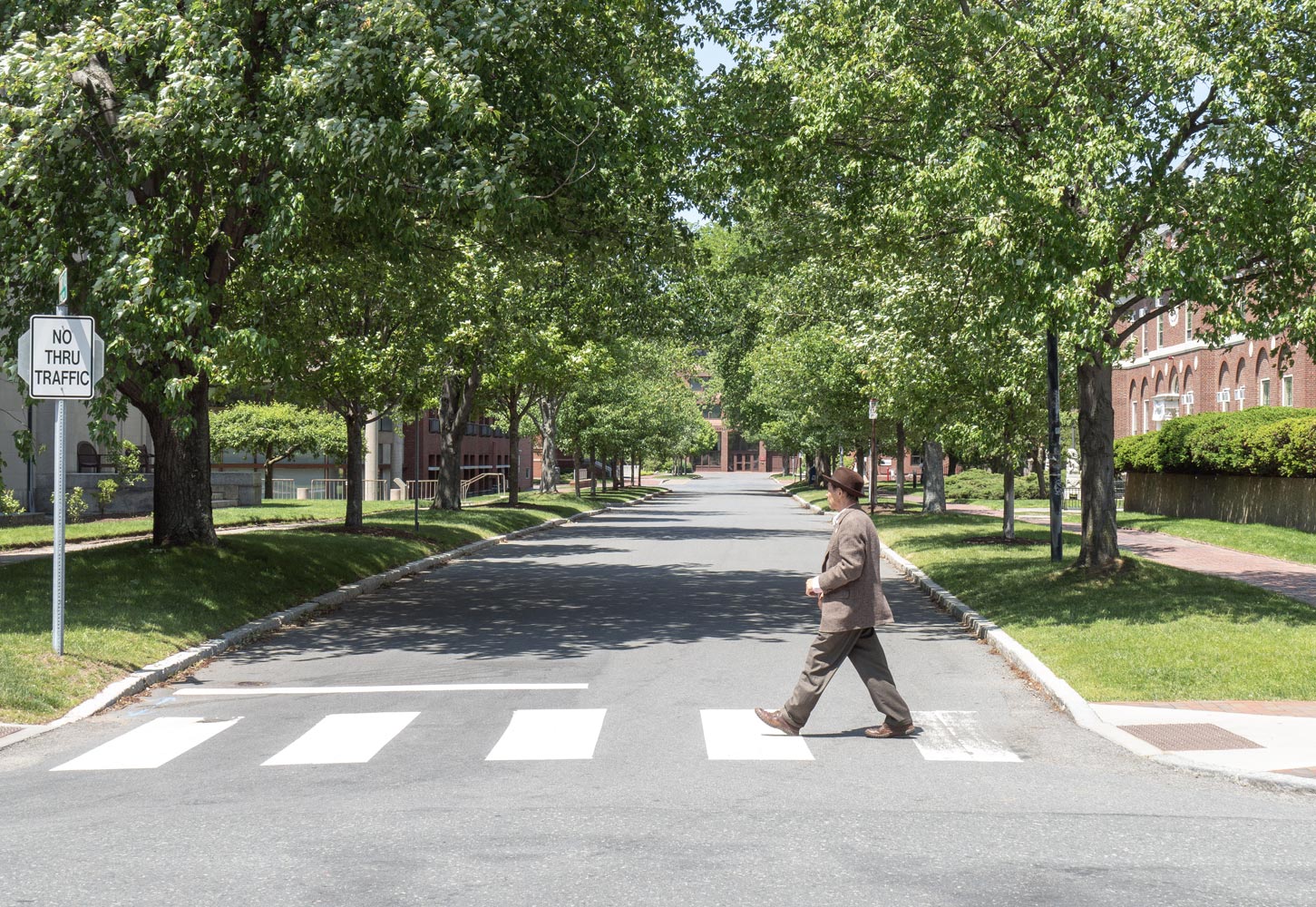
A random gentleman passing by in Boston looks either like a fifth Beatle who got separated from the group, or like John Nash from the film A Beautiful Mind.
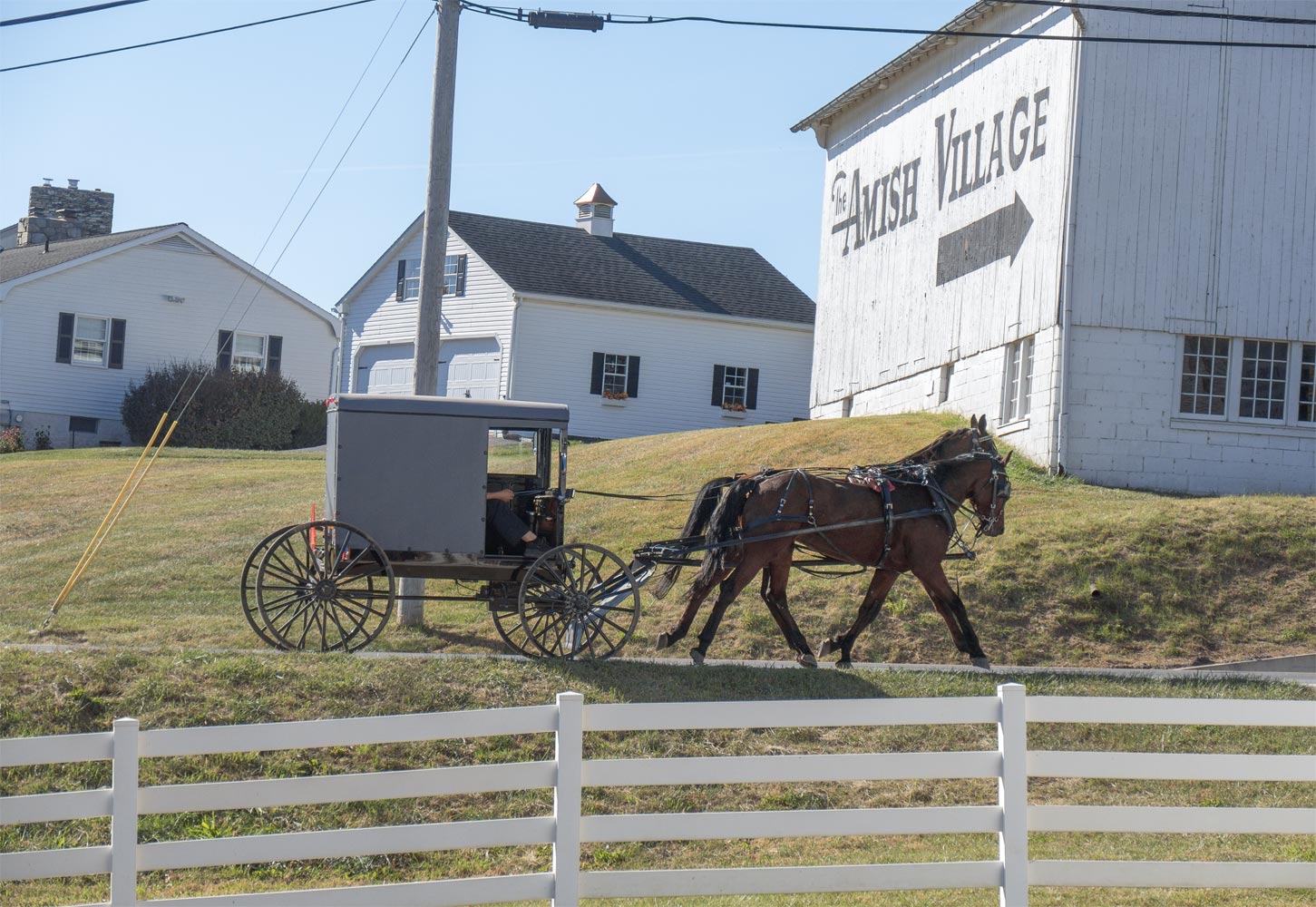
An Amish wagon passing along the road transports you back to the era of Nikola Tesla, best depicted in the film The Prestige.
The reader has probably already guessed where waves of déjà vu come from. Most modern movies are made in America. We simply grew up on American films, and their scenes are etched into our memory. We’re just used to thinking that such scenes require sets, and so when a movie-like object suddenly appears in the street, it triggers that feeling of unreality.
Meanwhile, the sets for many American films are provided by America itself. Damn, the entire country is a film set. You can come across a notice asking people not to interfere with filming while walking around Brooklyn.
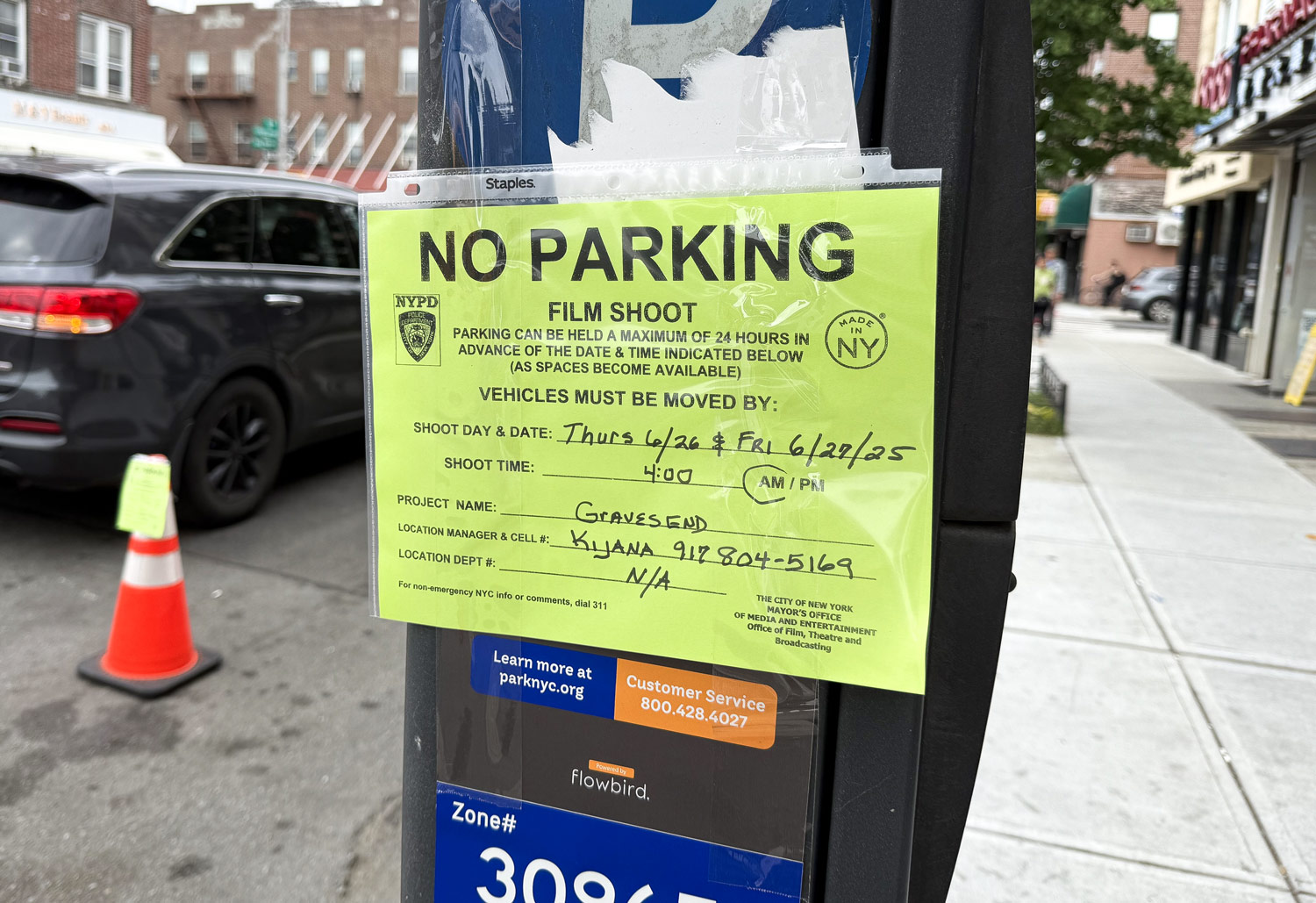
In cities like New York, finding a filming location is as easy as can be. There’s the bridge from Once Upon a Time in America, the staircase from Joker, the fancy hotels from Home Alone, and plenty more from all sorts of movies.
However, all these places are well-known and iconic. A wave, though, can hit you even from a passing ice cream truck. I’m not so sure I’ve ever seen it in a movie. Still, this truck — and especially the music playing from it — is so out of this world that it’s hard to believe it really exists.
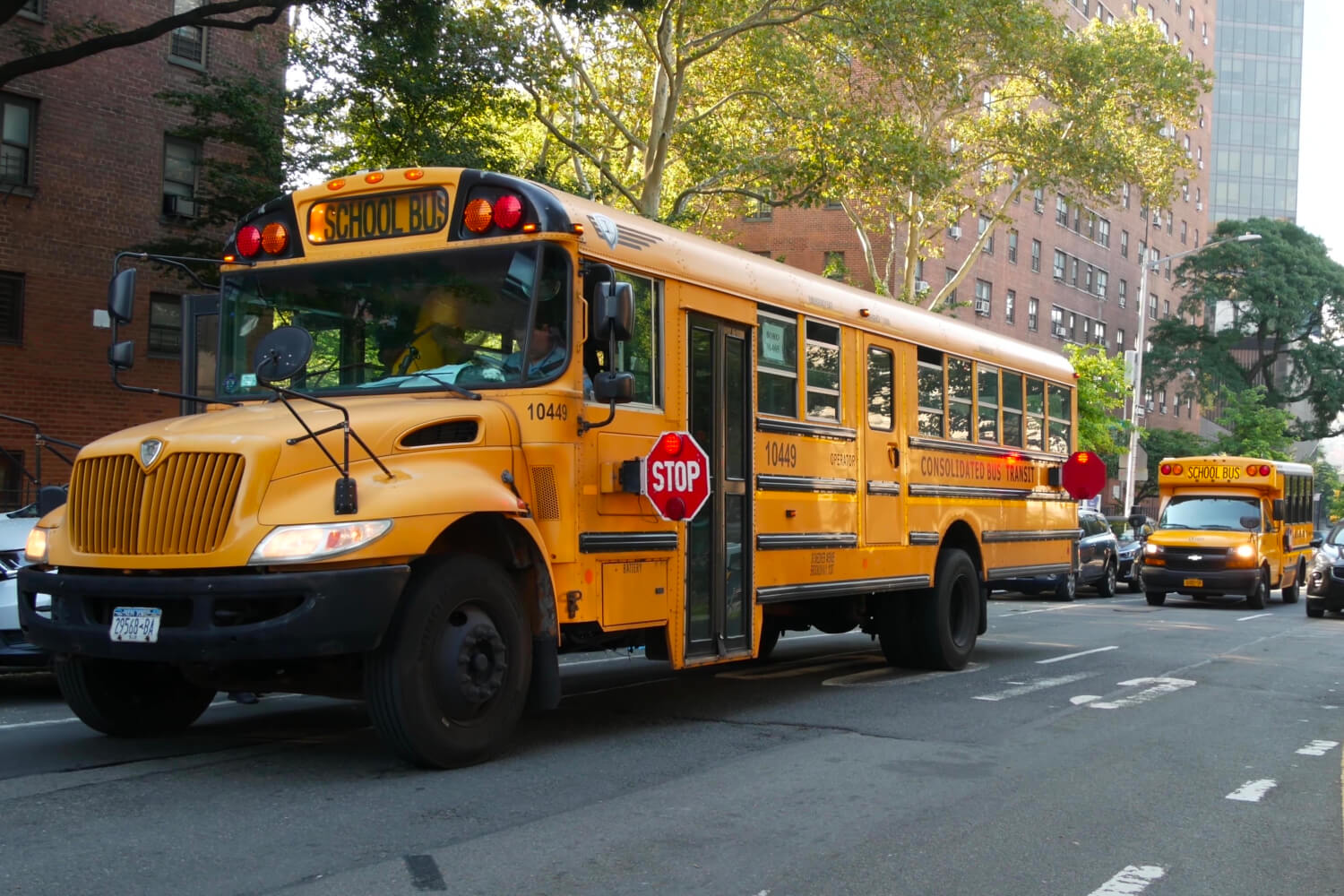
A yellow school bus is a simpler example. It often flashes by in movies and also seems as if it’s been brought in specially for filming from some vintage car showroom. In reality, these are the only buses children actually use to get to school. By the way, school minibuses have also started to appear recently. One of them is shown in the photo.
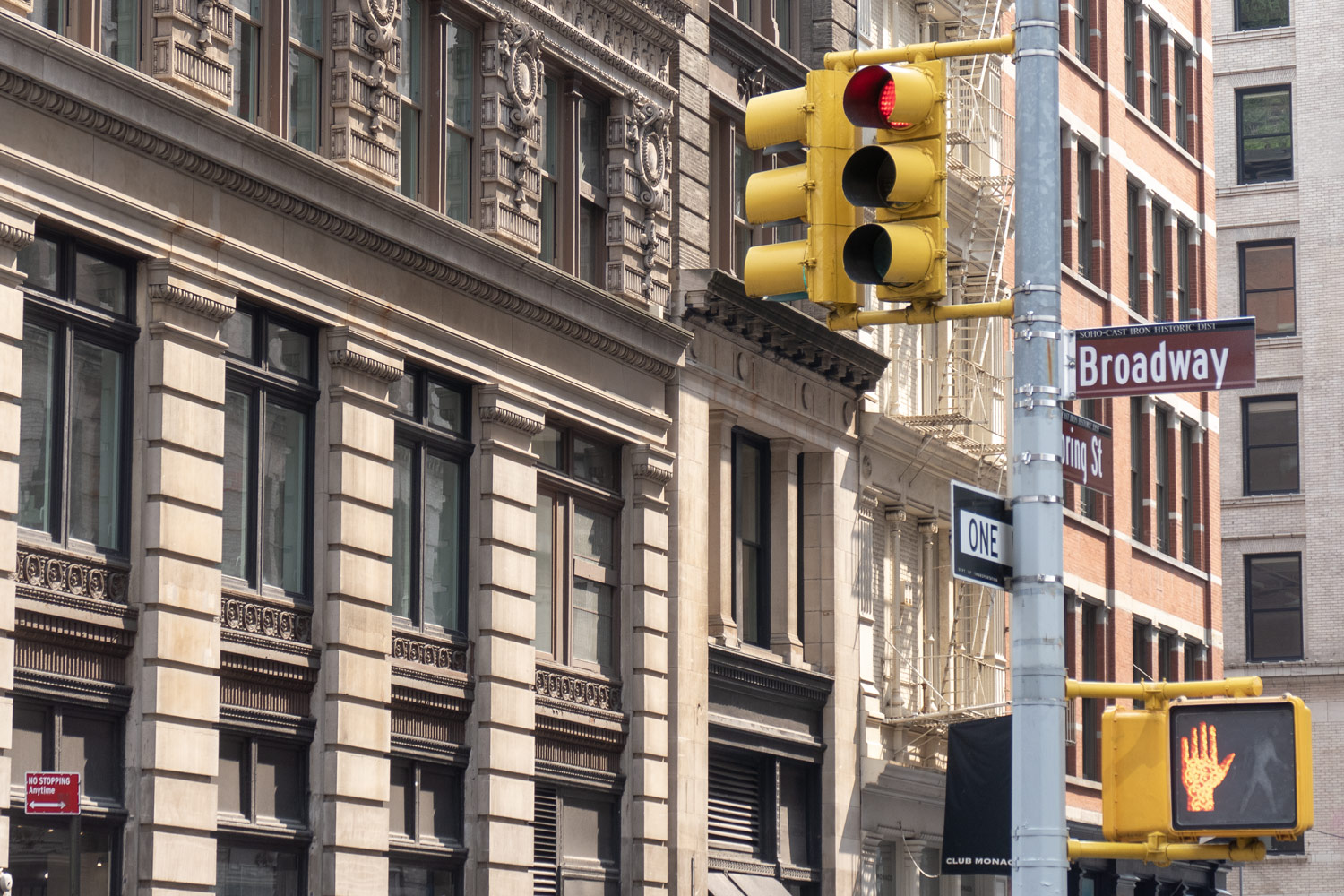
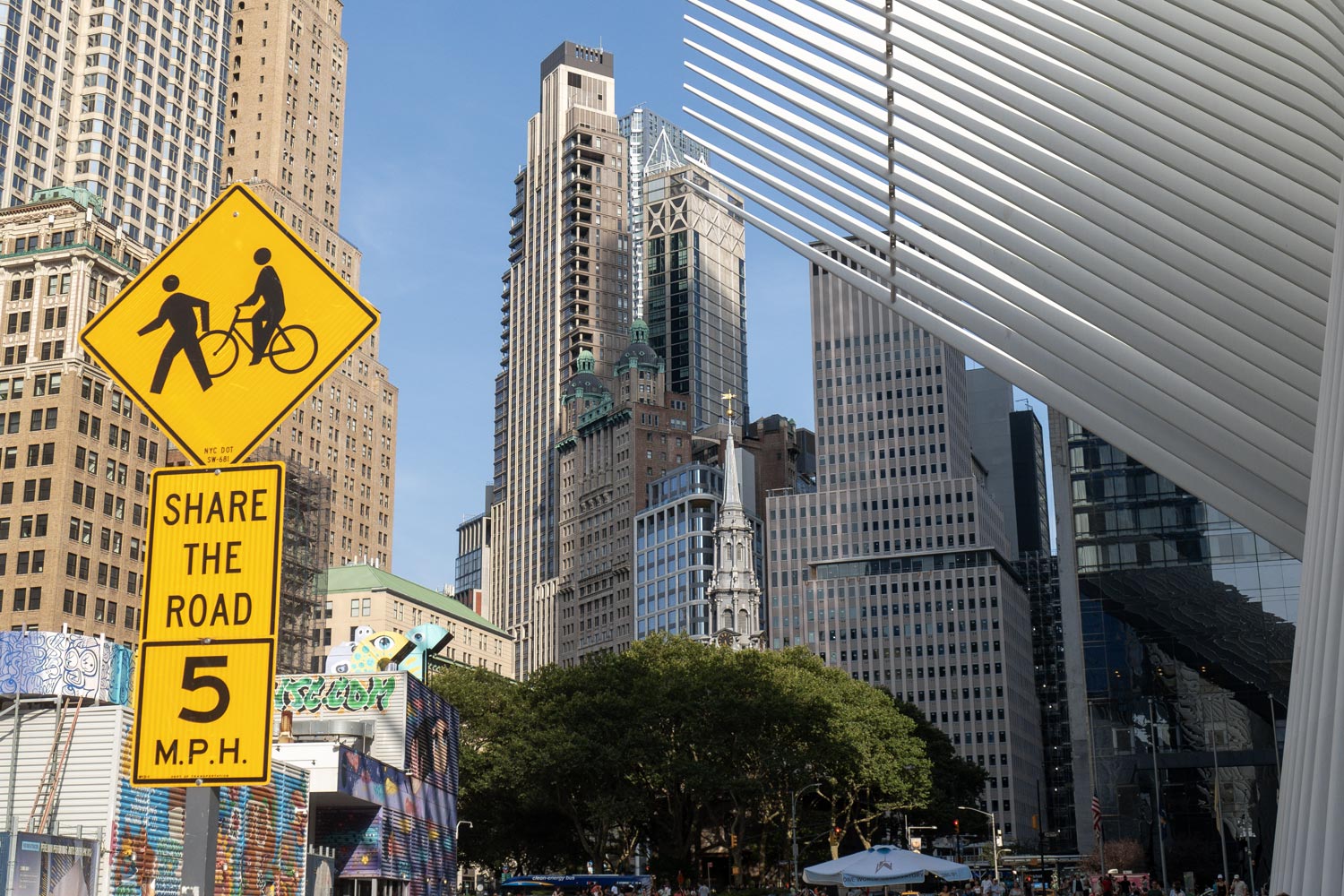
There are also very small details. American roads have their own signature color. Traffic lights, signs, the double solid line — all of this is painted in a bright yellow color, and not just any yellow, but Federal Yellow Pantone 116C, strictly specified in the standards.
Finally, the main American detail is the Stars and Stripes flag. And it, too, brings a wave of déjà vu! Especially when the flags are lined up in neat rows along some classic street. Yes, people in America really love their flag.
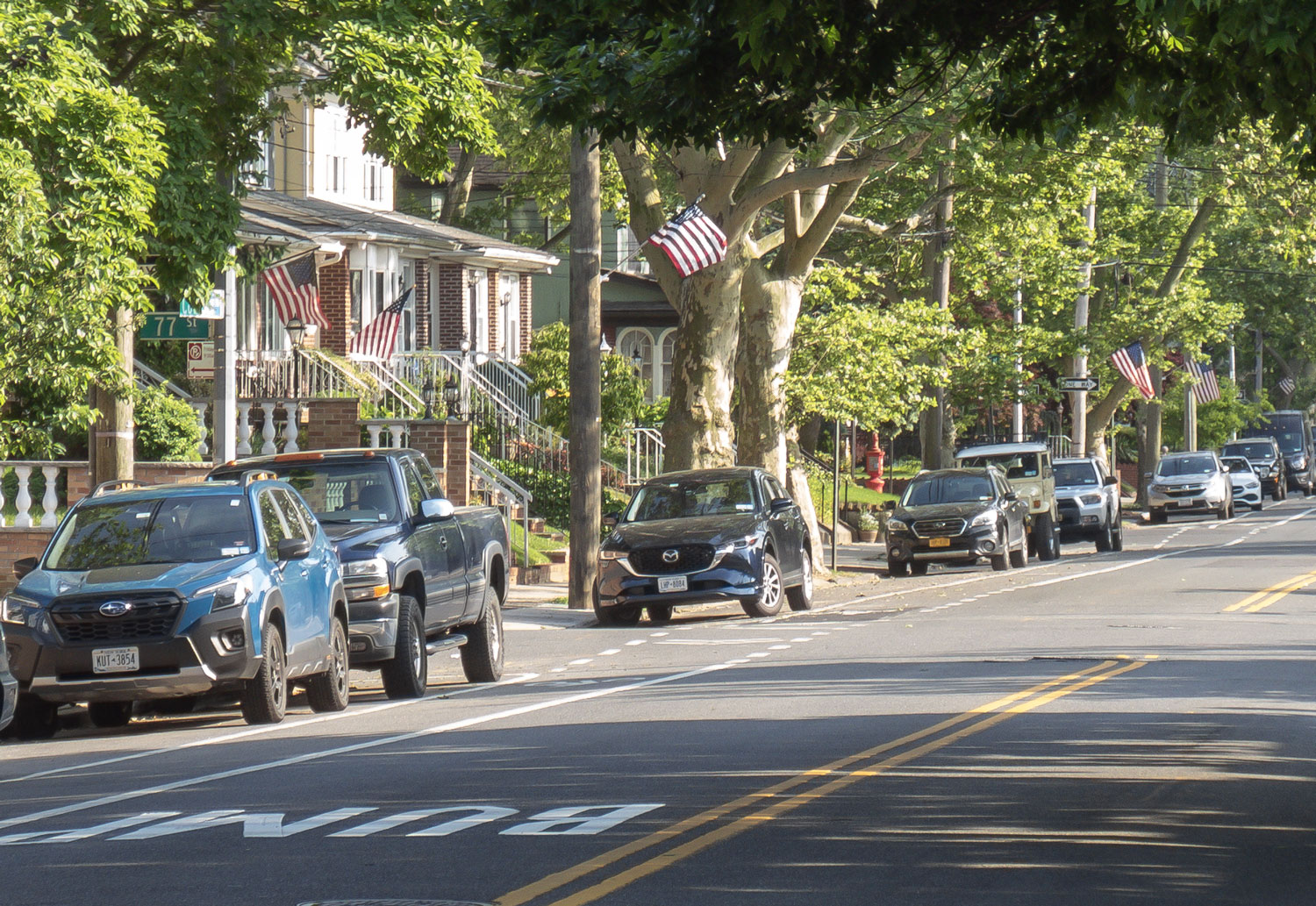
Really love.
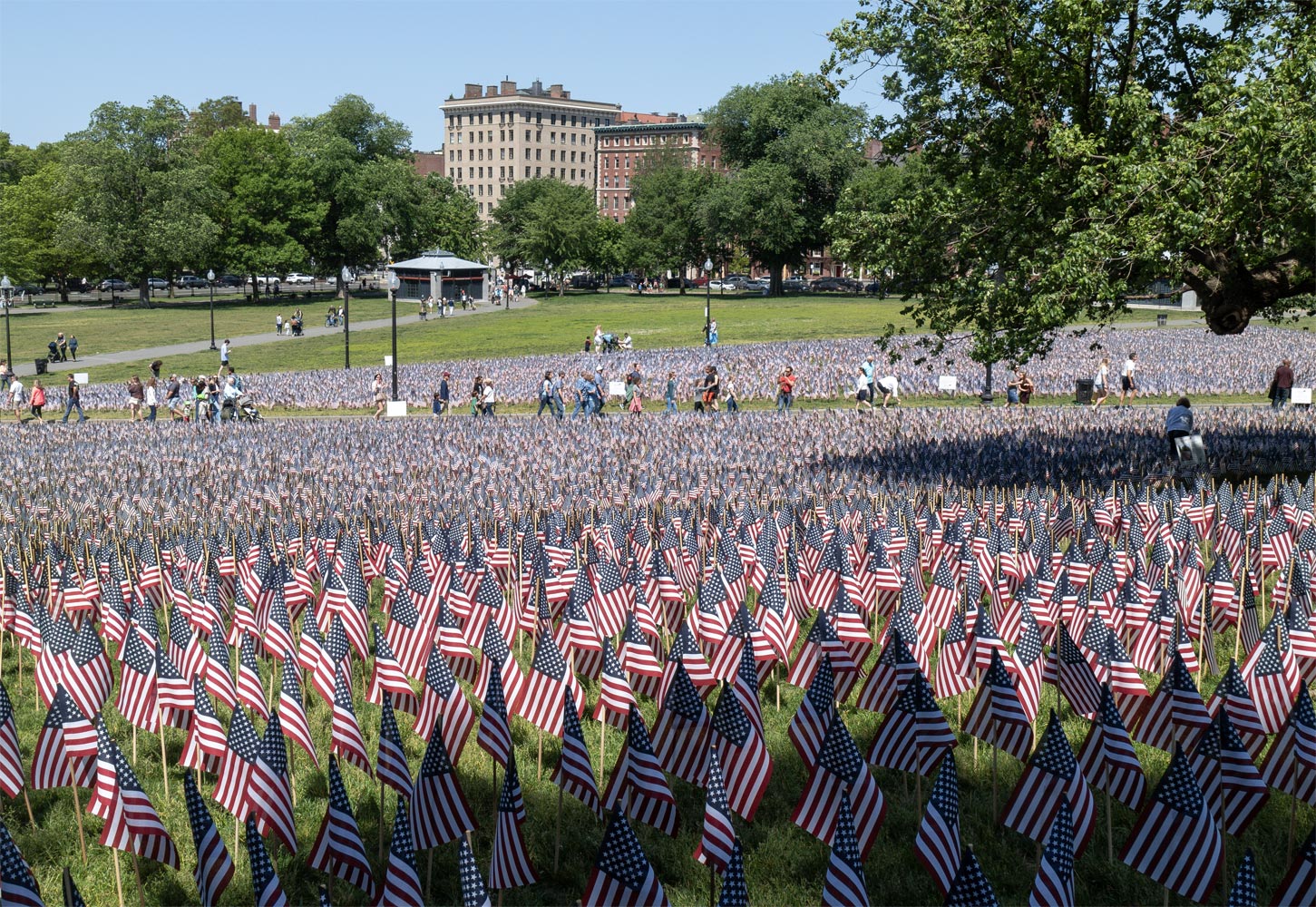
The upside-down country
On December 11, 1998, NASA launched the Mars Climate Orbiter spacecraft to study dust and water vapor in the Mars’s atmosphere. After successfully reaching the Red Planet following a nine‑month flight, the spacecraft was supposed to slow down and enter an elliptical orbit, and then gradually circularize it. However, five minutes after the start of the braking maneuver, the spacecraft passed behind Mars and never reestablished contact.
Data analysis showed that the spacecraft passed at an altitude of 57 kilometers instead of the planned 110. During the investigation, engineers discovered that the twofold deviation was caused by a ridiculous error. The spacecraft used the metric system, while the guidance program on Earth measured force... in pounds.
Welcome to the United States, where water freezes at 32 degrees, milk is sold by the gallon, and speed is measured in football fields per square cheeseburger.

America is one of only three countries in the world that do not use the metric system of measurement. The other two are Liberia and Myanmar. And there is no reasonable explanation for this. Just one crashed Mars probe cost 327 million dollars, and by some estimates, factories spend billions of dollars every year manufacturing duplicate parts for the two different systems of units.
There are plenty of quirks like this in America. I’d rather not repeat the usual clichés about “stupid Americans” putting the month before the day and thinking 16:00 is “military time.” Far more interesting is that in American airports, the departure board is sorted not by time, but alphabetically. The first time, I thought I’d come to the wrong airport. The second time, I never wanted to see a “normal” schedule again.
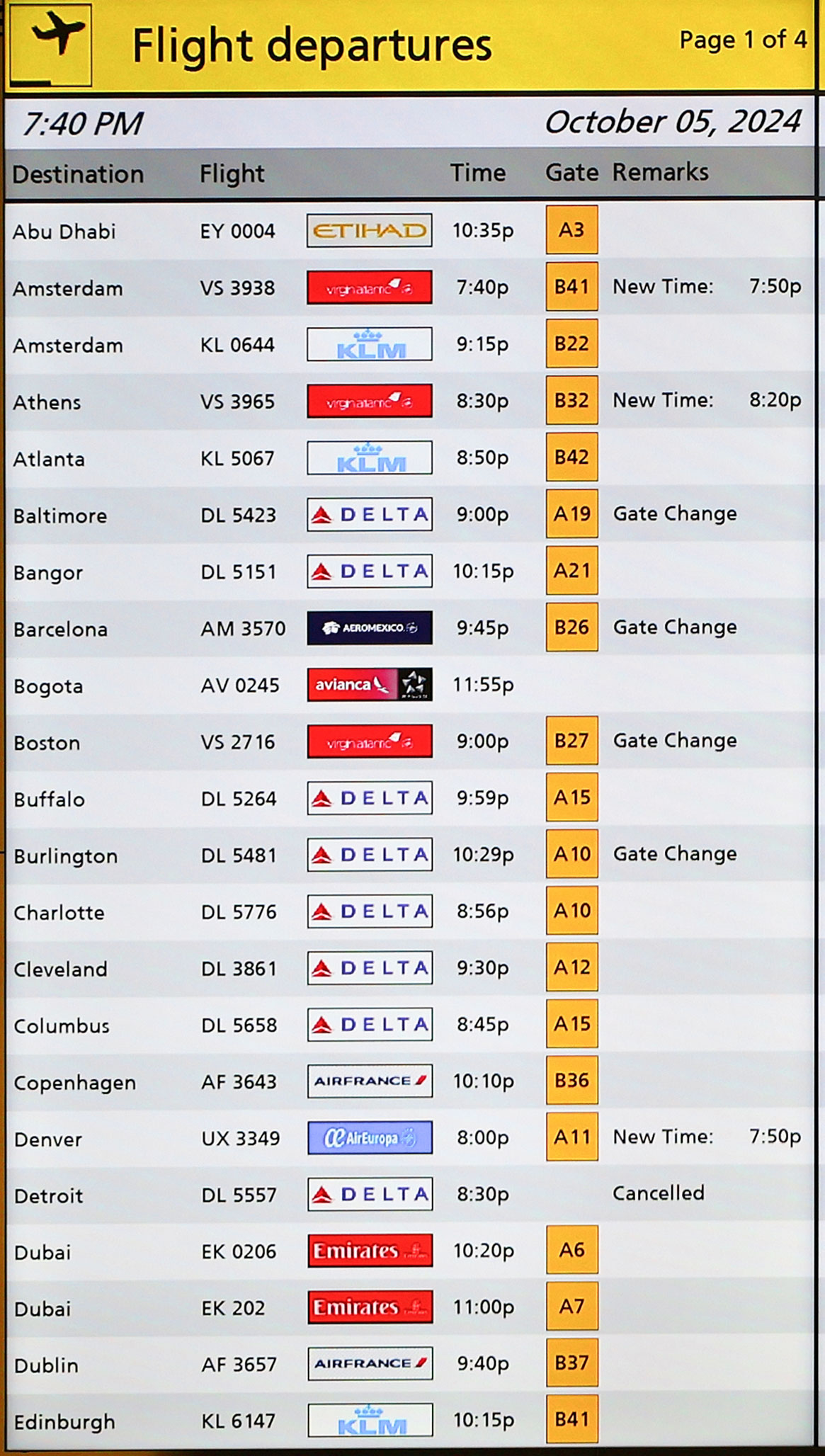
Actually, most of these quirks are found not only in the U.S. but throughout the Western Hemisphere. For example, yellow road signs are used in both Mexico and Argentina, but you never see them in Europe or Asia. Likewise, all of Latin America uses flat-prong outlets and wall-mounted showers.
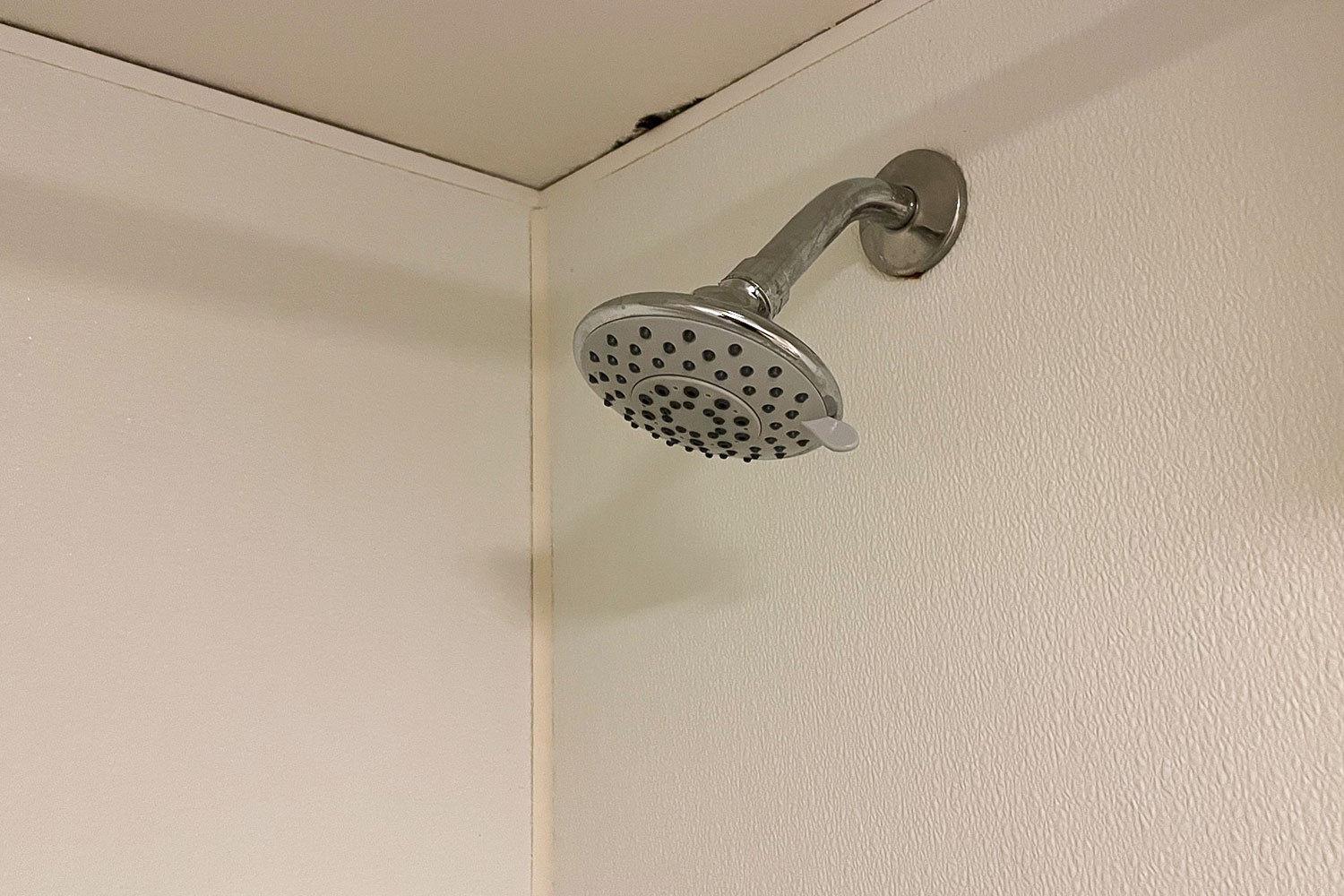
Wall-mounted shower. If there were a contest for idiotic American things, the wall-mounted shower would take second place. And not because it’s too idiotic, but because first place would go to a bathtub without legs.
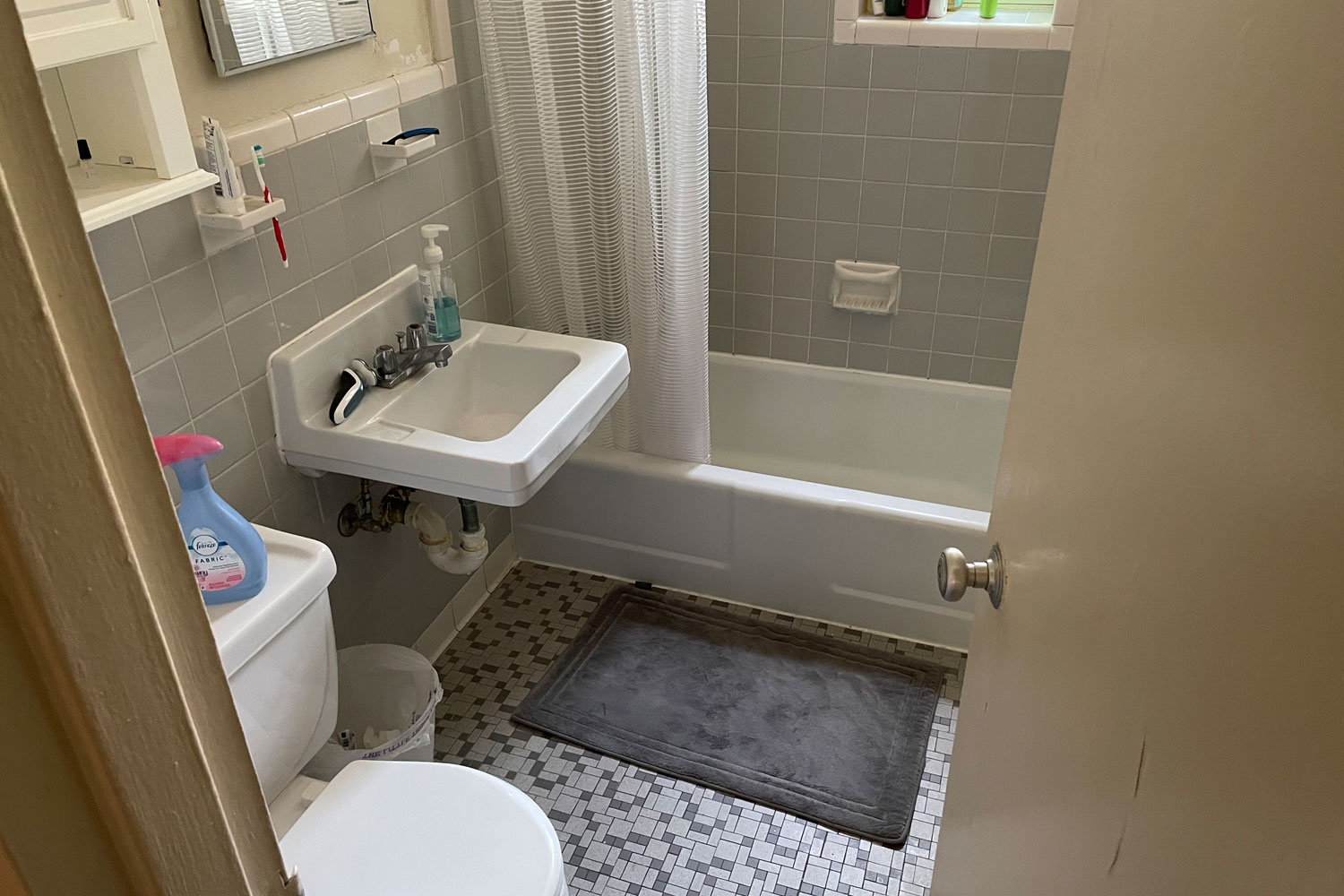
Curiously, during the Great Depression, bathtubs in America were normal, with luxurious bronze feet. Then came World War II, when the bathtubs had their legs blown off after which there was a housing boom for veterans in the US, and to save money, bathtubs started being made as cheaply as possible. That’s how these cringey tubs and showers appeared. Actually, the shower isn’t a problem at all: you can just unscrew it and attach a hose for ten bucks. But you can’t just replace a legless tub like that, and lying in it at floor level is really not appealing.
The American toilet hasn’t gone far from the bathtub either. It basically works inside out. Instead of flushing the results down a stream of water, American engineers came up with the idea of sucking the water out from below using a siphon. That’s why a toilet in America is constantly filled with water, and when you flush it makes terrifying gurgling, slurping sounds — something between sucking raw scrambled eggs into your mouth and plugging a flash drive into Windows.
When an American comes to Europe, they spend a long time trying to figure out why there’s no familiar lake in the toilet bowl. But the funniest thing is their first encounter with a European window. The thing is, in America, windows open vertically. This archaic feature came from Britain, where such windows were made before the invention of pivot hinges.
On the one hand, such windows save space. On the other hand, they can’t even be fully opened. Besides, as cartoons suggest, such a window can suddenly fall and slice your neck like a guillotine.
An American’s first encounter with a European window is a tragicomedy to rival that Chinese person on an escalator. The first discovery: the window has a handle. In the US, windows don’t have handles at all. The American can still cope with the handle itself, but the three positions of this handle are beyond their understanding. They turn the handle sideways — the window doesn’t open. Up — still nothing. Well then, let’s pull! And then the window comes crashing down, and the poor guy, panicking, tries to hold it up.
Nah, America is a different planet. Here, they make front doors without peepholes, and mailboxes are put up on a spindly little post. Packages are left right by the front door, even if the house opens directly onto the street. And not because nobody steals. That’s just how it’s done here.
America has’t invented proper air conditioners either. Most Americans haven’t even heard of split systems, which are used all over the world. Private houses are usually equipped with a cooling system controlled by a thermostat on the wall. And in apartment buildings, they use an archaic window unit: in winter, it’s kept in a closet, and when the warm weather comes, it’s stuck into the window and clamped in place with the upper sash.
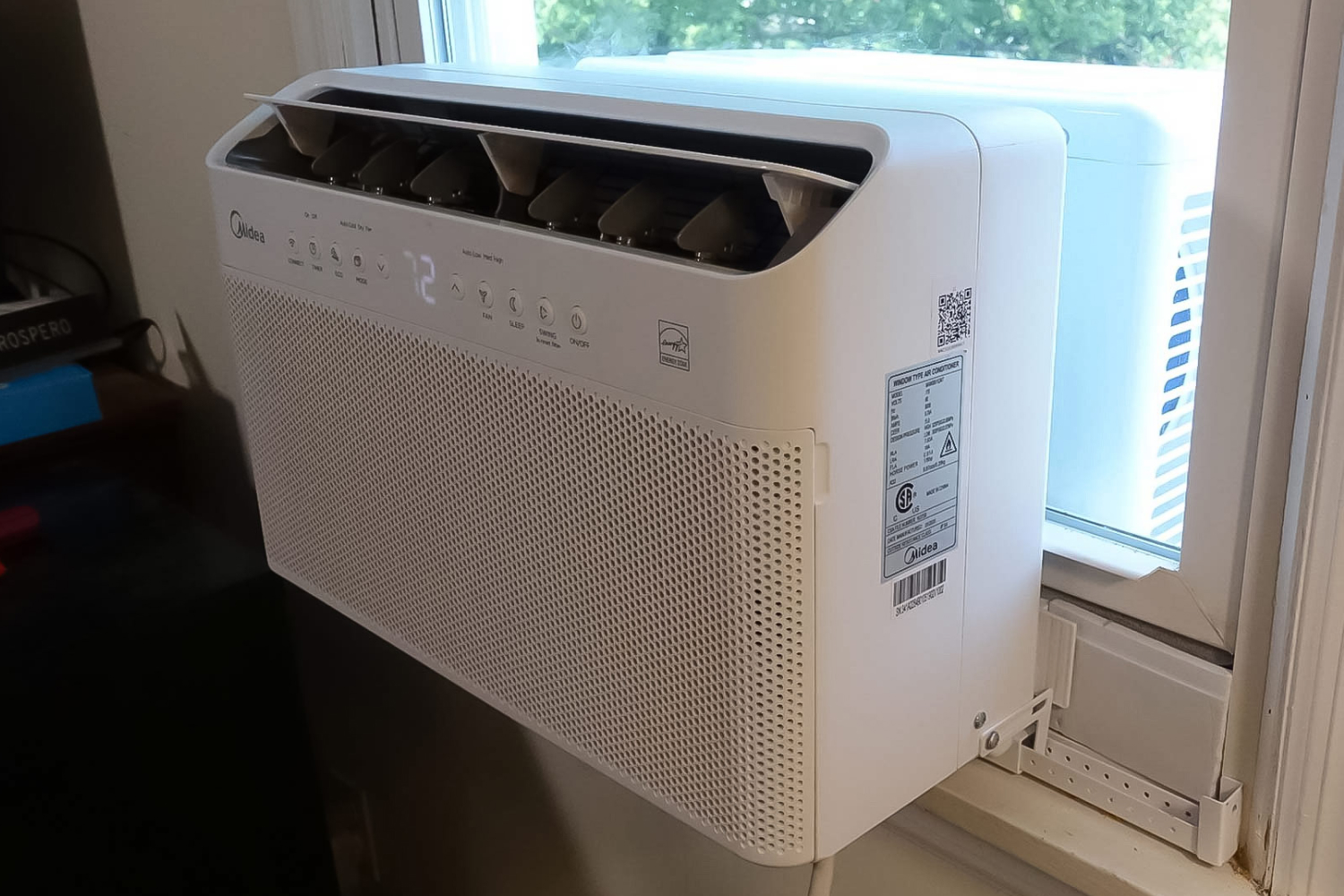
Every spring, New York buildings sprout air conditioners the way trees sprout leaves. Every fall, the air conditioners, like the leaves, disappear from the buildings.
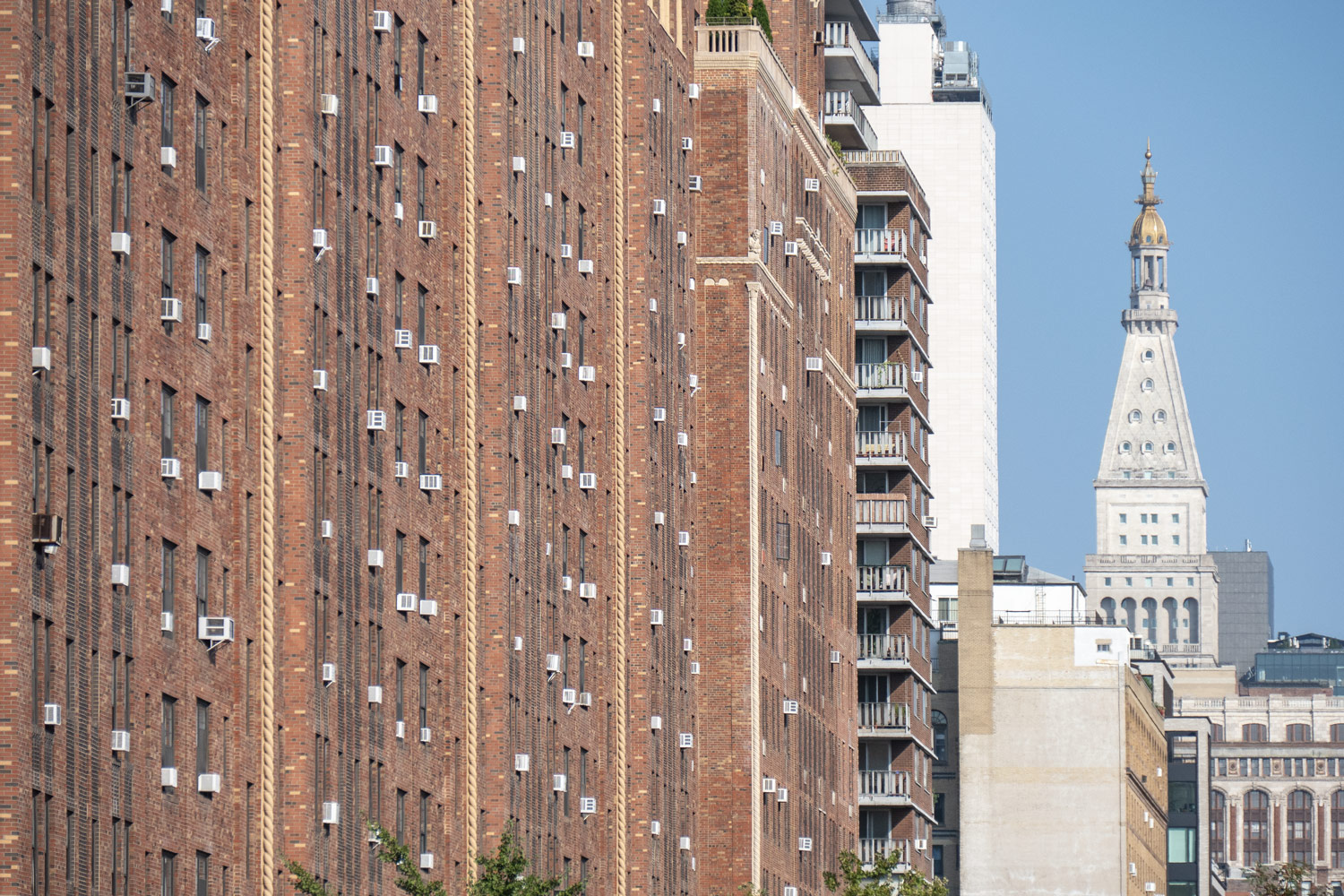
American quirks aren’t always good or bad. Some are annoying — for example, bathtubs without legs. Others, like tall vertical windows, are just a standard option. And then there are those that are simply endearing.
The cutest detail is the signal cord on the bus. All over the world, you press a STOP button to request a stop, but in American buses, there’s a cord running along the length of the cabin. To request a stop, you have to pull this cord. It used to ring a real bell, but now a sign lights up above the door instead. Pulling the cords is a whole ritual. The author has fallen so in love with them that I never press the button anymore.
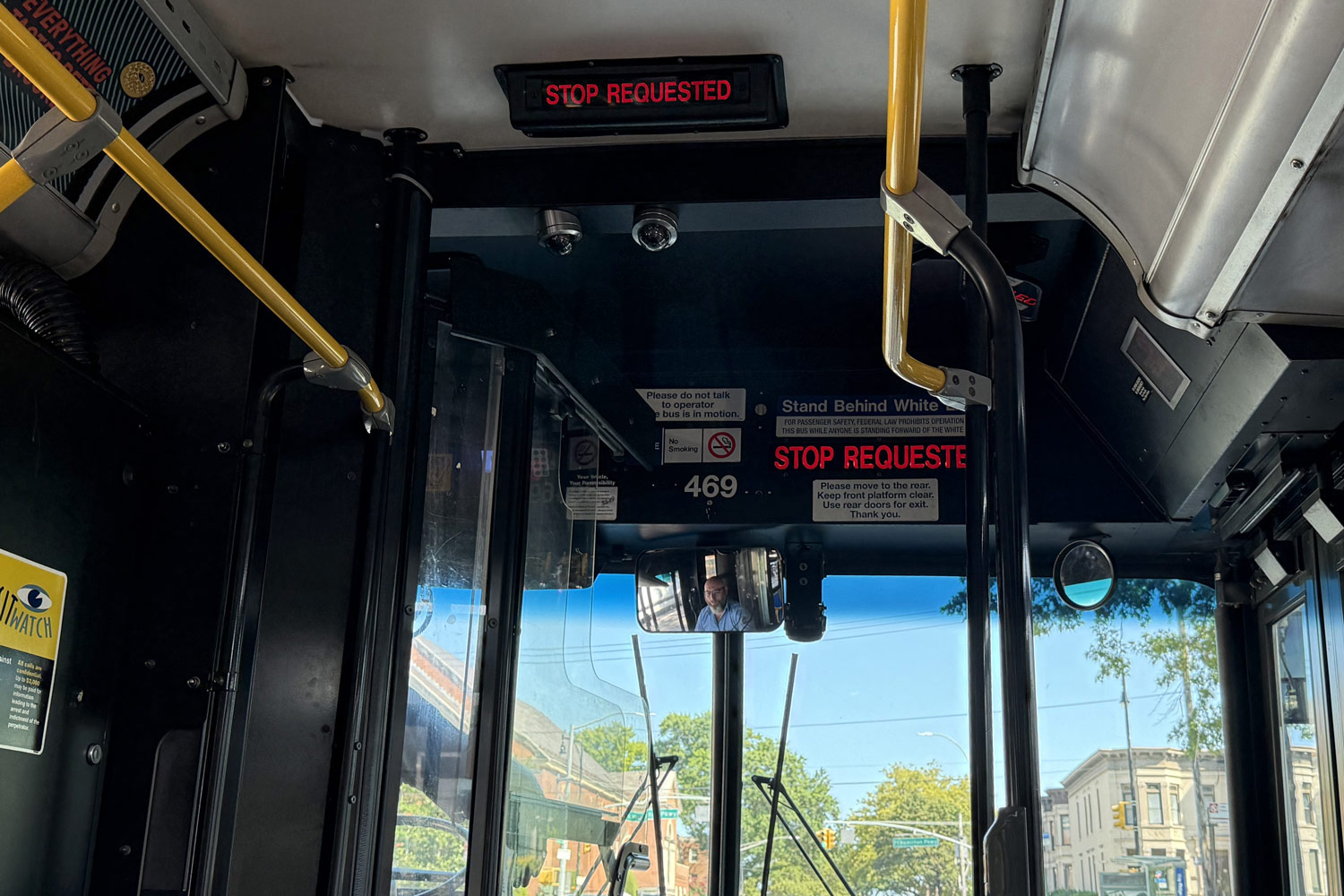
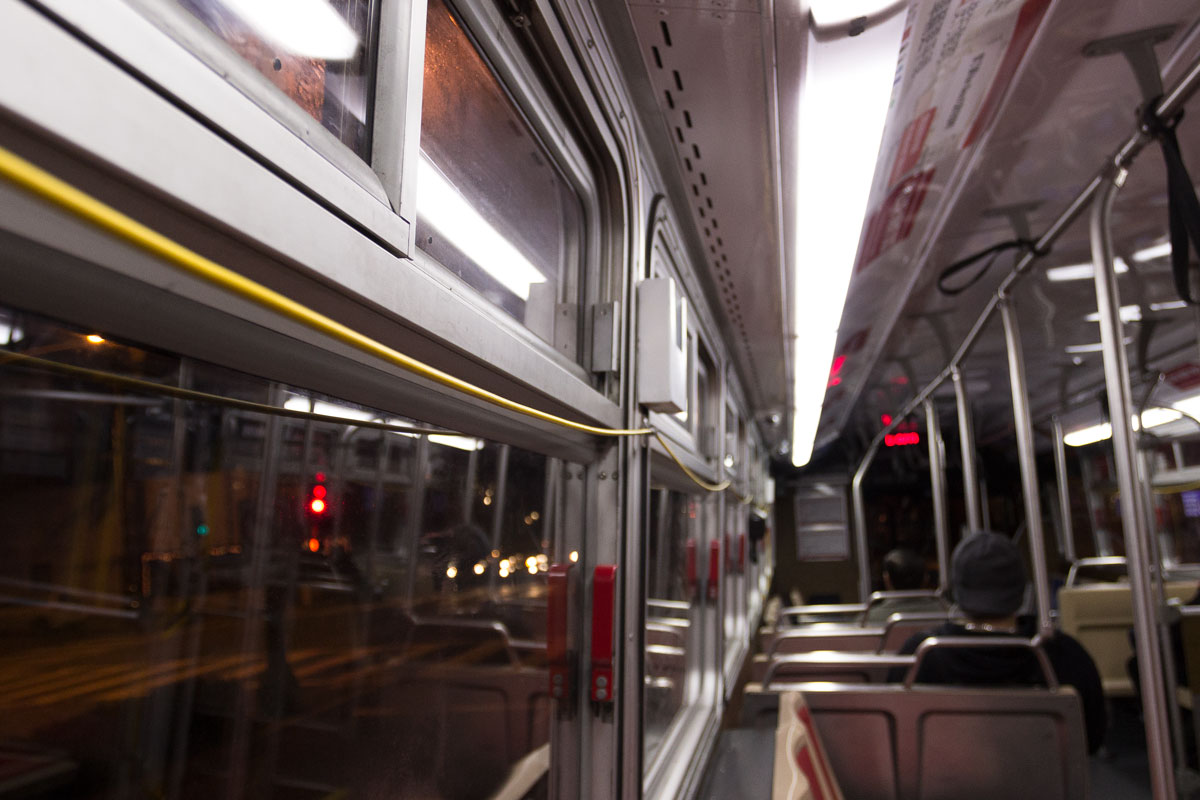
It’s scary to imagine that one day, yet another well-meaning president will decide to replace these magical cords with soulless touch buttons. Truly I tell you, that will be the beginning of America’s end.
Digitalization
The bus cord is an excellent example of how digitalization is going in America. A country that has been supplying the world with advanced technologies for a century and a half is in no hurry to implement them at home.
Back in 2013, the author went to Chernobyl, the very one where the accident happened. In the town’s only store, a card terminal calmly stood, which, to my surprise, accepted contactless payments.
Three years later, I found myself in California, the most high-tech state in America. Along the road from San Francisco to Yosemite National Park, there were plenty of gas stations and mini-marts. In one of them, there was a terminal with an Apple Pay sticker, and the author tapped his phone to it without a second thought. The terminal gave a short beep and, crackling, spat out a paper receipt.
“Wow! Freaking magic, man!” the shopkeeper goggled.
On those same buses, you can pay the fare only with a bank card in New York and Chicago. Already in Miami, Houston, and Washington — by no means the worst cities in the US — you have to install an app with an eye‑searing interface. You can use it only after registering, which requires your first and last name, phone number, address, and date of birth. Only then can you buy a ticket.

Bus fare in the United States can only be paid through inconvenient apps
A bus ticket is a QR code that changes every 10 seconds to prevent forgery. In theory, you’re supposed to hold this code up to a scanner at the entrance, but the author hasn’t seen such a scanner on any bus. Either they decided not to install them for fear of creating lines, or they were simply stolen while the budget was being siphoned off — I don’t know.
In the end, passengers just show the driver a phone with a QR code. That’s American-style digitalization for you. All that’s left is to make the drivers beep in response. For now, they simply don’t care whether they’re being shown real code or fake code. Once in Miami, the author spent a whole week riding around using an old code photo. For scientific purposes, of course.
You could chalk the backward state of public transport up to the mass adoption of cars. But surely, when it comes to banks, everything in America should be perfect, right? Well, the banks themselves work fine. But their banking apps look like it’s the early 2000s.
The author has tried five banks. The only one with a decent design was Chase. The rest, including TD Bank, which advertises how convenient it is, are a fall from grace in terms of design. The Bank of America and Wells Fargo apps could give any Russian a heart attack. They aren’t really apps at all, but web pages squeezed into a phone screen.

U.S. banking apps look as if they came straight from the 2000s.
If private companies look like this, then what can we say about the state?
Once, the author was getting a driver’s license. In America, licenses are issued by the DMV, the equivalent of a motor vehicle authority in most countries. This agency works quite well: the lines are short, and the offices are spacious. After you submit your documents, the license is sent by mail. However, my card didn’t arrive either within the required two weeks or even after a month. Customer support insisted they had sent the card, but it was lost in the mail. The post office claimed the opposite.
Two months later, the author filled out a new form and started waiting again, but, as before, the license vanished somewhere in the mail. The card didn’t show up the third time either — even after I made the sender personally verify that the address on the envelope was correct.
After digging through a ton of websites, I finally found the answer in the DMV software technical documentation. Turns out their program doesn’t accept addresses longer than 20 characters. Mine had 22 characters — and that’s with “Parkway” shortened to “Pkwy.”
I managed to get rid of one more letter from “Pkwy,” turning it into the barely recognizable “Pkw.” After that, there were no letters left that could be safely removed, so the space in the street name had to go under the knife. Having squeezed the address into 20 characters, the author showed up at the New York DMV for the fourth time and handed the clerk a slip of paper, asking her to copy the address letter by letter.


To fit the address into 20 characters, you have to mangle it
And — oh, miracle! I got my license in a week!
Still, the design of banking apps can be freshened up, and the DMV’s work can be straightened out. But what America apparently will never see is a single app like Russia’s Gosuslugi — literally, Govservice — where all government services are in one place — from getting a passport to making a doctor’s appointment.
This time, the American mantra “if it ain’t broke, don’t fix it” has nothing to do with it. The thing is, the U.S. is made up of countless services, bureaus, agencies, and organizations that aren’t connected to each other in any way. Even the same agency in different states has its own separate database. For example, the DMV in California isn’t connected to the DMV in New York. The states act like separate countries and share only the most important information, such as criminal records. So when an American moves to another state, they have to get a new driver’s license. Skipping the test, of course.
At the same time, there are no other documents in the U.S. besides a driver’s license. If an American suddenly doesn’t know how to drive, the DMV gives them exactly the same card, just with a different heading. Overall, in America, there’s no internal passport; there isn’t even a single ID card for the whole country. A central document registry doesn’t exist either. There is no single national identity document at all — what there is are 50 types of driver’s licenses with the same legal force, one for each state.
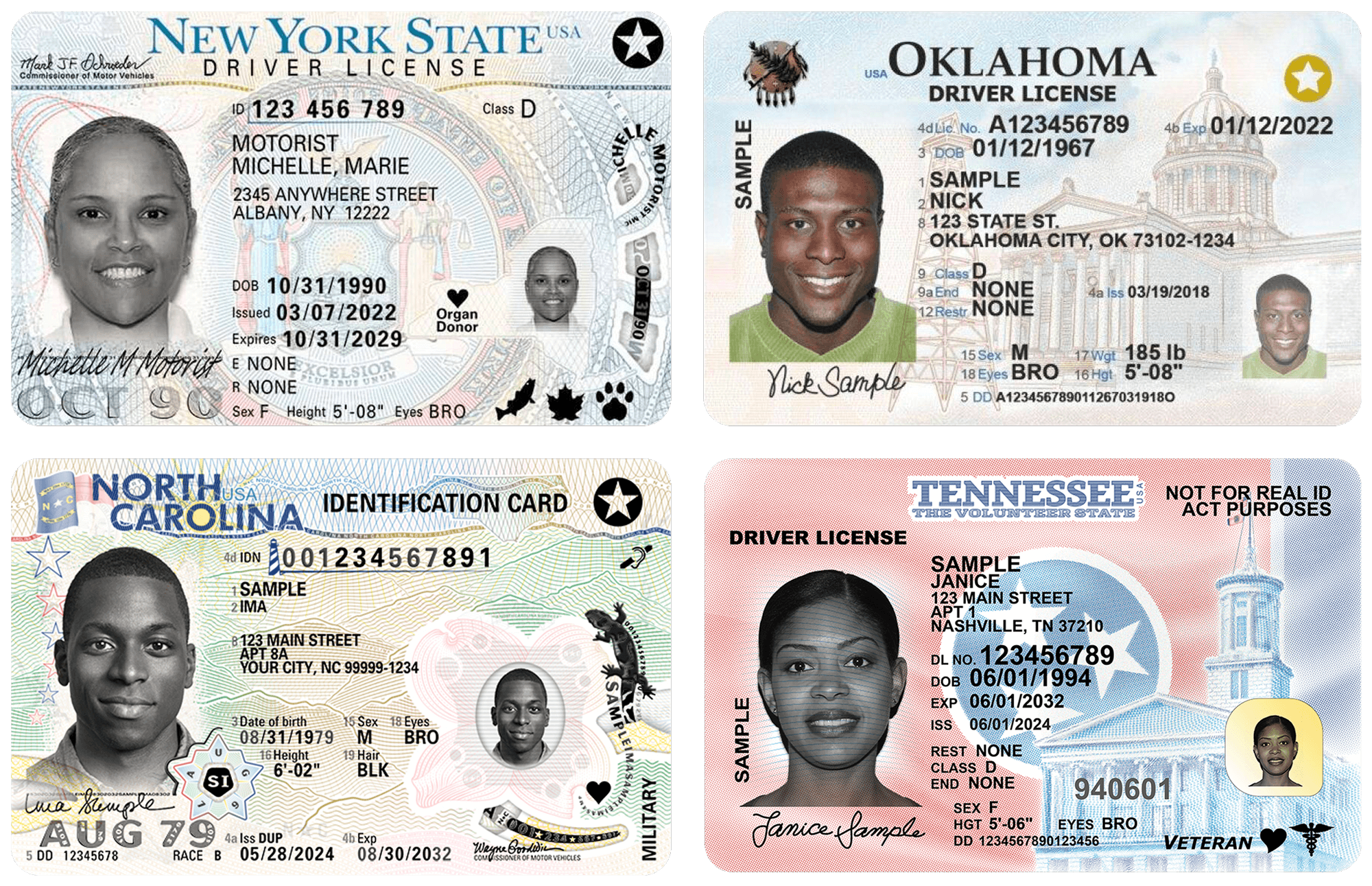
Driver’s licenses vary by state. If an American can’t drive, the card is labeled “Identification Card” rather than “Driver License.” The U.S. has no single national ID
Is it even worth talking about the different agencies?
The tax authorities don’t know anything about criminal records or fines. The immigration service has no idea whether an immigrant pays taxes or where they work. The police? They’re not even allowed to ask whether someone is in the country legally. But the best part is this: in the U.S., there’s no single agency above all the others that collects information about a person into a single unified database. And since there’s no such agency, a Gosuslugi-style system in America is fundamentally impossible.
Progressive Americans have heard about apps in Russia and China that conveniently bundle all services in one place. They envy this kind of command center, but know little about its flip side. The author, who fled Russia, is ready to tell them.

Russia’s Gosuslugi is a convenient app with hundreds of services, all built on top of a massive data-collection system
In Russia, government agencies are all interconnected. The tax service can find out about all a person’s fines, and the border service knows about their debts. Above all these agencies stands the FSB — the Federal Security Service, where data on all Russians flows in. Next to this Cerberus, the American FBI is just a mangy dog on a leash. The Russian feds not only know about all a person’s taxes, debts, fines, and places of work, but can also look into their bank accounts and, if they feel like it, block them — either with a friendly court ruling or even without any court at all.
Based on this network, a convenient app was created that lovingly gathers all the state’s services, making them available at the touch of a button. The only downside was a mere trifle: turning Russia into... not exactly a prison, but a digital panopticon.
The author suffered from this system in a perfectly idiotic way. One day, my neighbor filed a complaint about a dripping air conditioner that kept her awake. In court, she lied, and instead of the 30,000 rubles she demanded, the judge fined me 2,000 rubles, or 25 dollars. Because the amount was laughably small, the bailiff didn’t bother to collect it, and then I left the country and forgot about the fine.
Two years later, already holding a green card, I accidentally discovered that I was banned from leaving Russia and from obtaining a passport at any consulate worldwide. This became possible thanks to the system on which Gosuslugi is built. The court sent information about the fine to the FSB, which then passed it on to the border service. And so, over a trivial household dispute, the state stripped me of my right to travel — without even telling me.
Right now, almost 10 million Russians are banned from leaving the country because of their debts. That’s the flip side of all those “convenient services” that are so popular in dictatorships like Russia and China. A central database pairs perfectly with facial recognition cameras that track a person’s every move. Orwell’s dystopia has long since become reality in Russia.
Operation of the facial-recognition system in Novosibirsk. In this small Siberian city, there are 4,000 cameras — in parks, the metro, and even apartment intercoms. The video shows how the computer displays all the places a person has been
Liberals in the United States dream of a strong and caring state that serves the public good. Those kinds of conversations died out in Russia twenty years ago. Liberals in Russia today dream of breaking the state up into disconnected agencies and tying its hands and feet.
The Leviathan we raised turned out to be so bloodthirsty that we had to flee the “caring state” to Europe and America, and we now unironically call the Russian system a “digital Gulag.”
Yes, America is just terrible at digitalization. And there’s nothing even remotely like Russia’s Gosuslugi. Hopefully, there never will be.
Migrants
America is a country of immigrants. Lately, you kind of want to take that sign down and hang up a new one: “No immigrants allowed.”
Sometimes it seems to me that this country is set up according to the plot of the movie and book “Catch-22”: to get into America, you have to do everything in your power not to want to get here. The moment you want it, you’ll never get in. Some people beat their heads against the wall trying to find a normal way to move, and others just win a green card in a lottery. What kind of nonsense is that anyway — a green card lottery?
Hollywood has hyped America to the skies. Even today, when people say “the States just aren’t what they used to be,” so many immigrants are coming that the system can barely cope. The wait to cross the border from Mexico takes several months, and asylum applications are processed for years.
At the same time, people often have no idea what kind of crazy adventure they’re getting themselves into. And even though very few people leave the U.S. of their own free will, immigrants go through it all: hope, fear, anxiety, the torment of uncertainty, depression, disappointment, and finally, acceptance.
Most immigrants come to the U.S. through family: wives, husbands, kids, parents, and even brothers and sisters — America is happy to take in the whole clan, though the wait is long. The old rule still works: anyone born on U.S. soil becomes a citizen. Families actively take advantage of this by coming here to give birth. As a result, almost 70% of immigrants come through relatives. It’s the most common, easiest, and most boring route.
By a wide margin, the second method is political asylum, which 15% of migrants seek. Ah, what a word: ə-sai-lum! The tip of the tongue taking a trip of three steps down the palate to tap, at three, on the teeth.
But who exactly are all these people seeking refuge from? Murderers, thieves, bandits? Or maybe from war? Strangely enough, no. These reasons don’t even qualify you for asylum. All these people are running from dictators who have seized their countries. Yes, since the English fled to a new continent to escape the tyranny of the British king, the world hasn’t changed all that much.
The tragedy is that for many people, asylum becomes their last chance to get into the U.S. Hardly any work visas are issued, and there are so many applications that the visas are literally raffled off in a lottery. A student visa is limited to the length of the program and doesn’t give you the right to work. Family-based immigration requires, well, a family; while talent visas and other such exotic options are available to a tiny handful of people.
So what’s a regular working stiff who wants to live in America supposed to do? All that’s left is to take a desperate step and apply for asylum. Almost always, the people who apply for asylum are the very ones who could have perfectly decent jobs in the U.S. in the first place. We’re talking programmers, managers, doctors, and business owners.
The modern world is turned inside out. Countries like Russia and China persecute people for freedom of thought. But who actually has this freedom? Usually, it’s educated and honest people who can’t stay silent in the face of injustice. Russia, while tirelessly shouting about its need for specialists, forgets to clarify that it only needs obedient specialists. The disobedient ones, it is ready to sweep out with a broom, mockingly calling after them: “If you don’t like it, leave.” Well, they do leave.
However, America isn’t ready to accept them as a workforce. Today, this country is stuck between two extremes. It either takes in shining stars or refugees. For an ordinary worker, the door to America is bolted shut, even if they’re an excellent professional.
These ordinary workers make up the bulk of the refugees. They enter the United States in two ways. A person with a good passport and money gets a visa and flies to the U.S. as a tourist, strolls around for a week, and then hires a lawyer. But if they don’t have that much money and their visa gets denied, there’s only one option left. Mexico.

International law allows people to request asylum either inside a country or at its border and permits an illegal border crossing if the person immediately surrenders to the authorities afterward.
This is the right the refugees use. Their plan is to come to Mexico and then make it to a border city. Usually, they pick Tijuana, on the border with California, the most liberal state in America. There, the refugee has to leave Mexico through a checkpoint, walk a few dozen feet through the neutral zone, approach the U.S. checkpoint, and say to the officer the scariest words of their life:
“I’m afraid to go back to my country and ask for asylum.”
The author would love to crack a joke and call this the immigrant’s Shahada, but somehow the words just won’t come out — because after saying it, a person gets thrown in jail. A special one, for immigrants. It’s often dressed up with the trendy word “detention,” but — come on, dear reader! — don’t fall for that sweet Newspeak. Jail is jail.
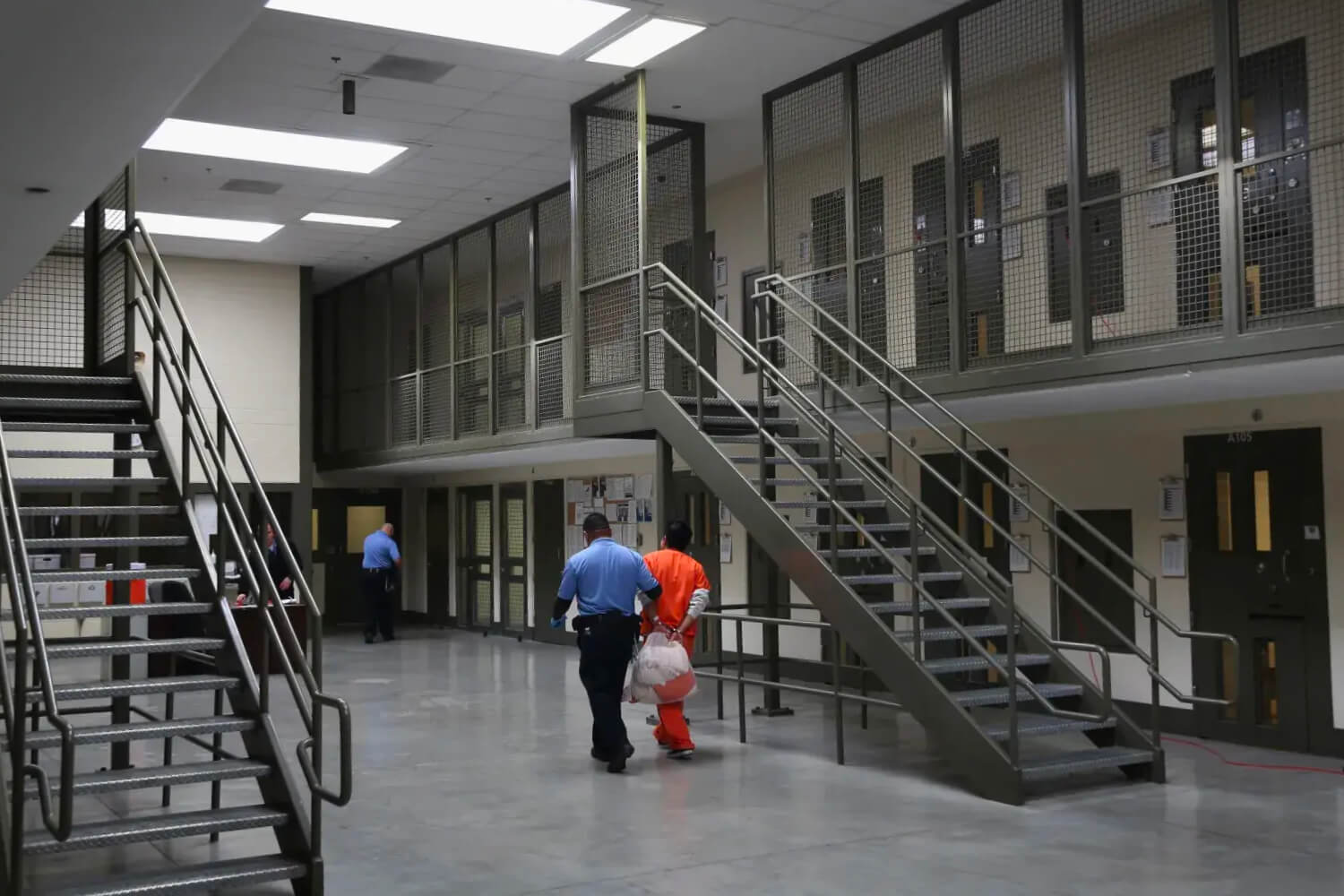
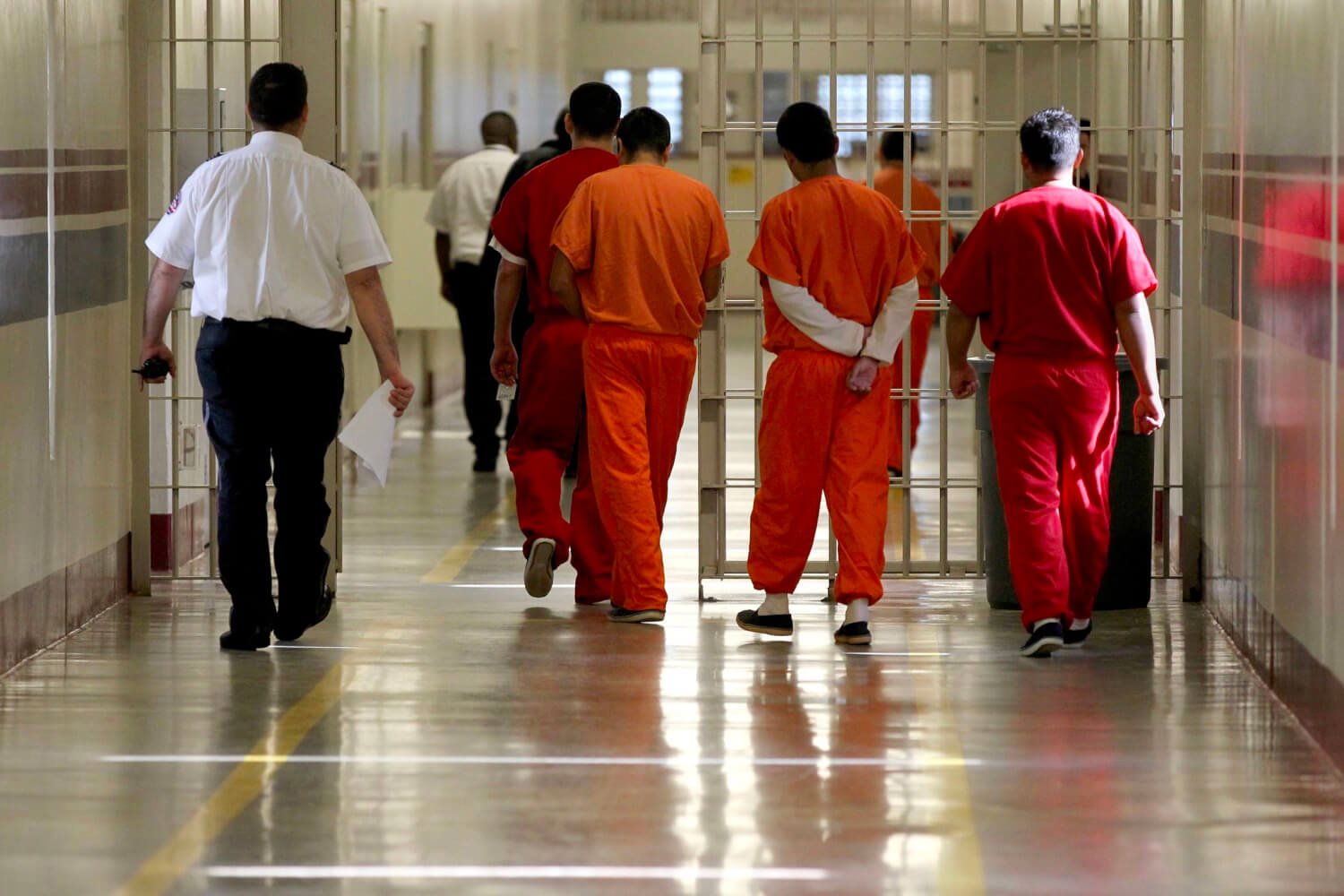
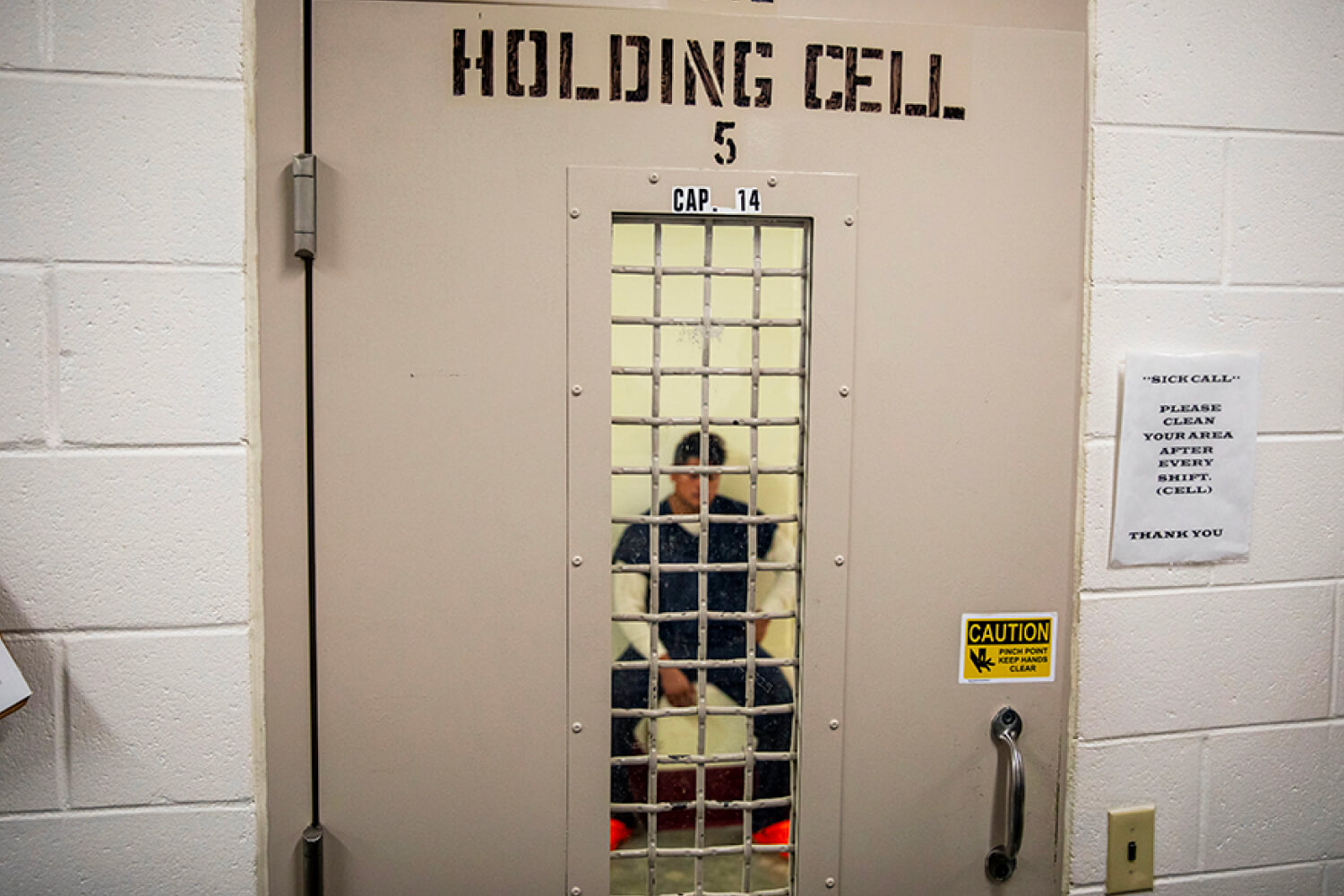
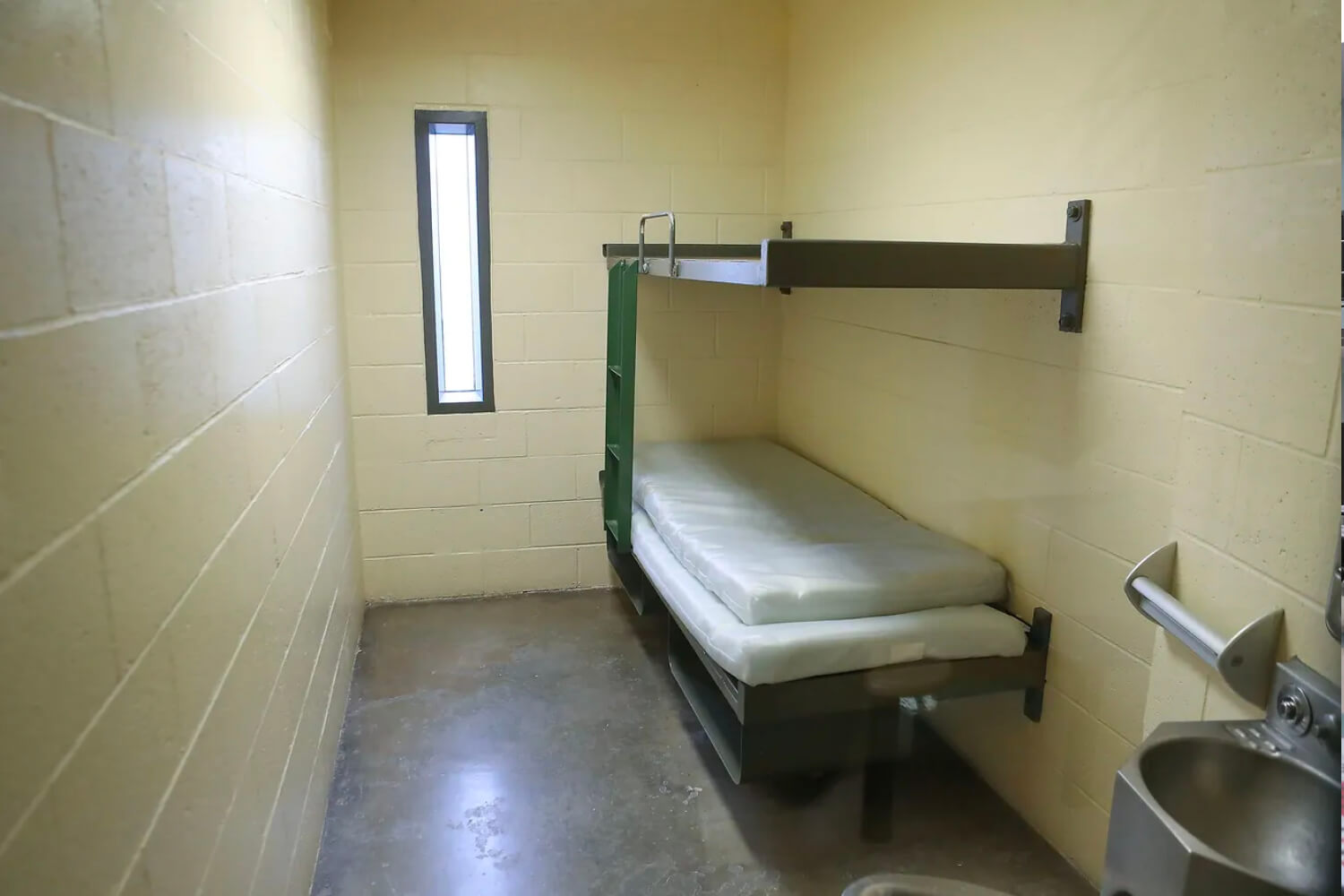
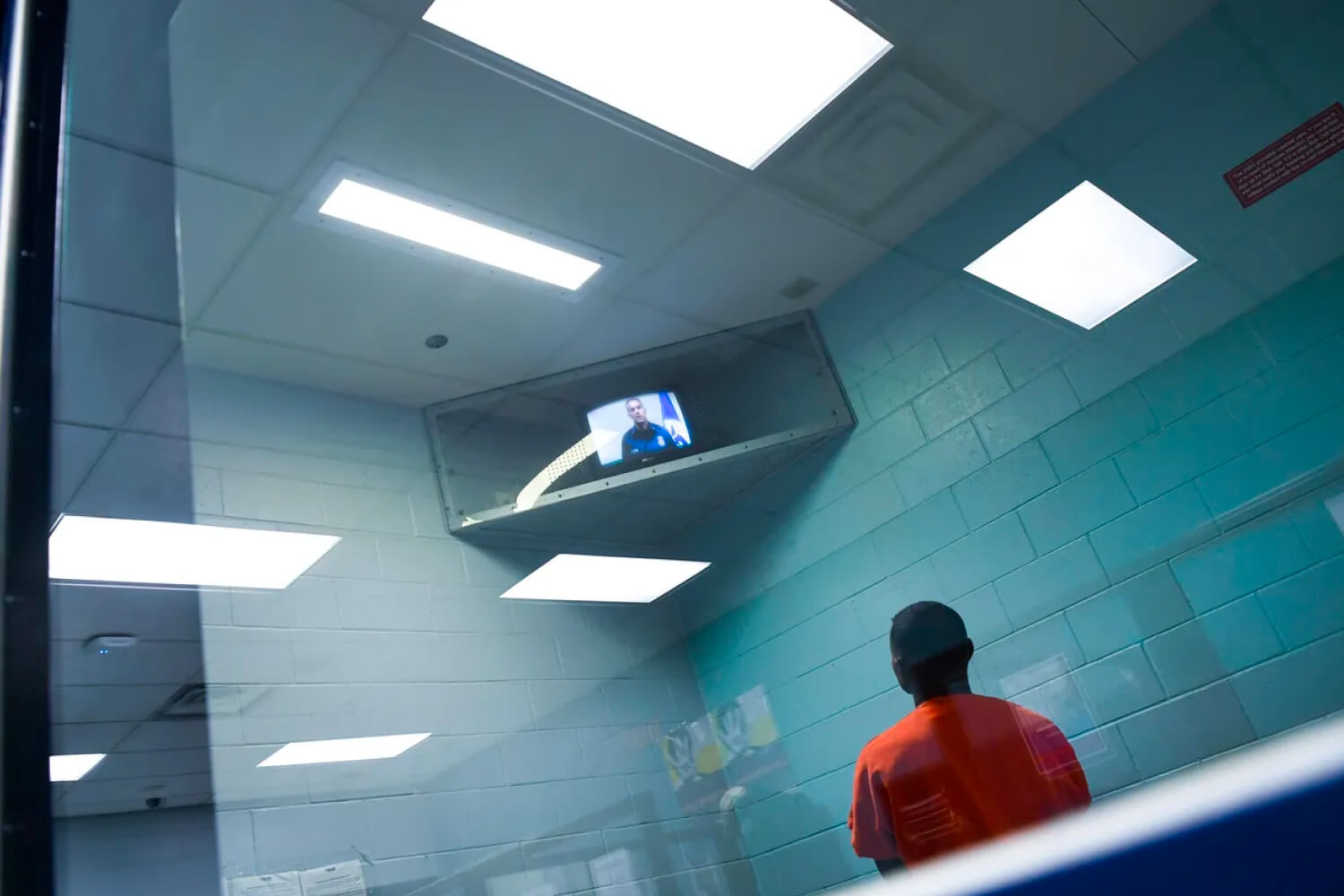
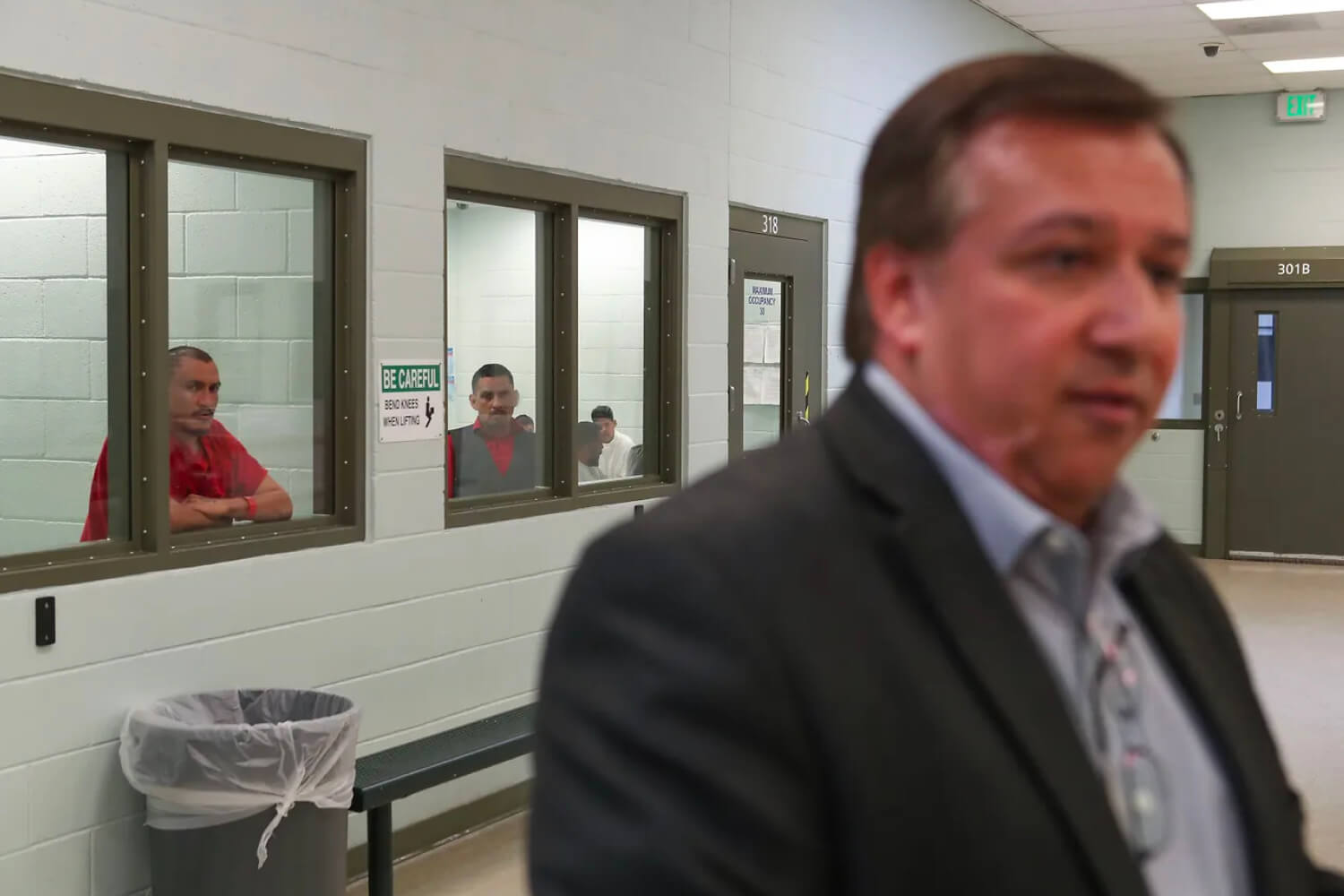
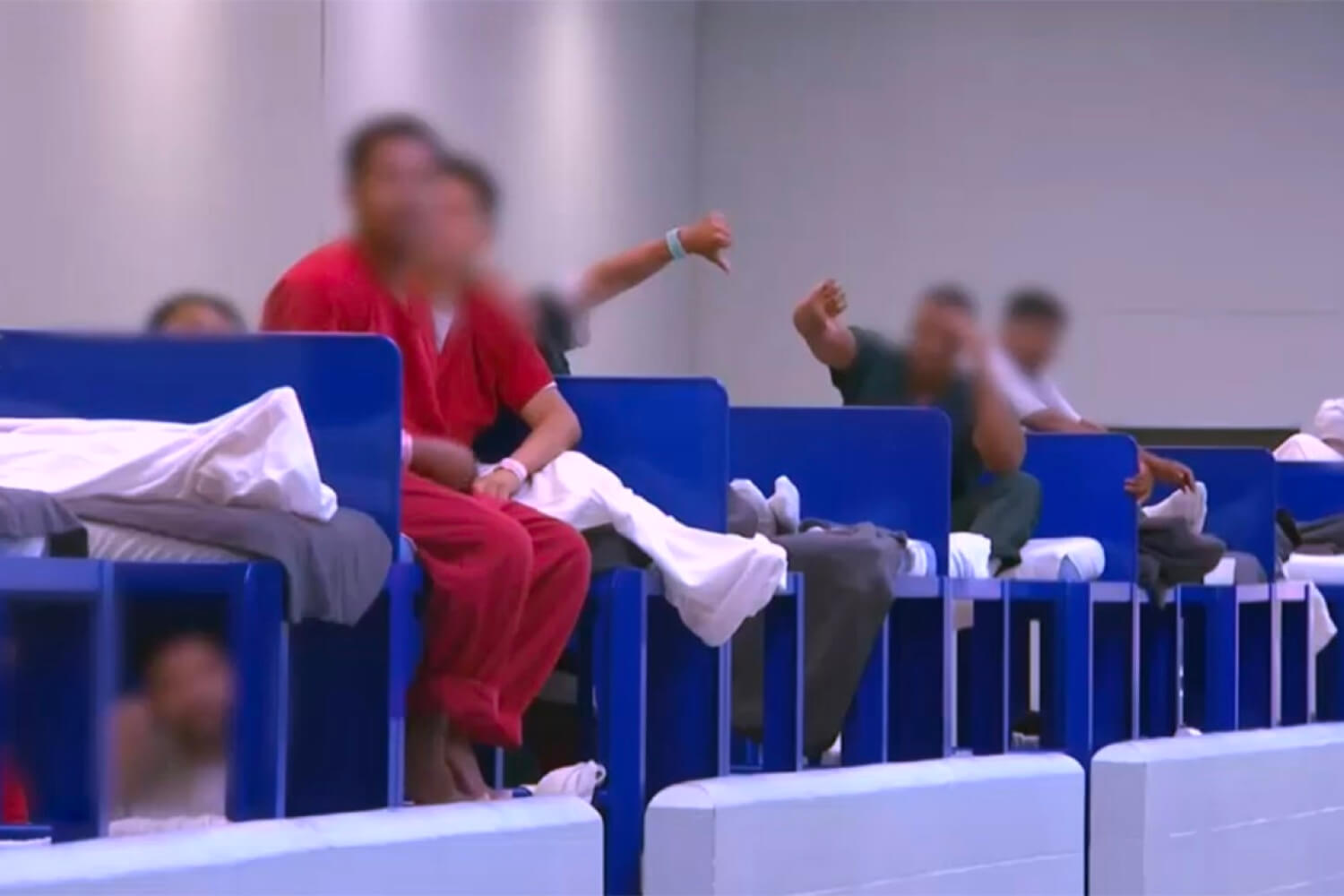

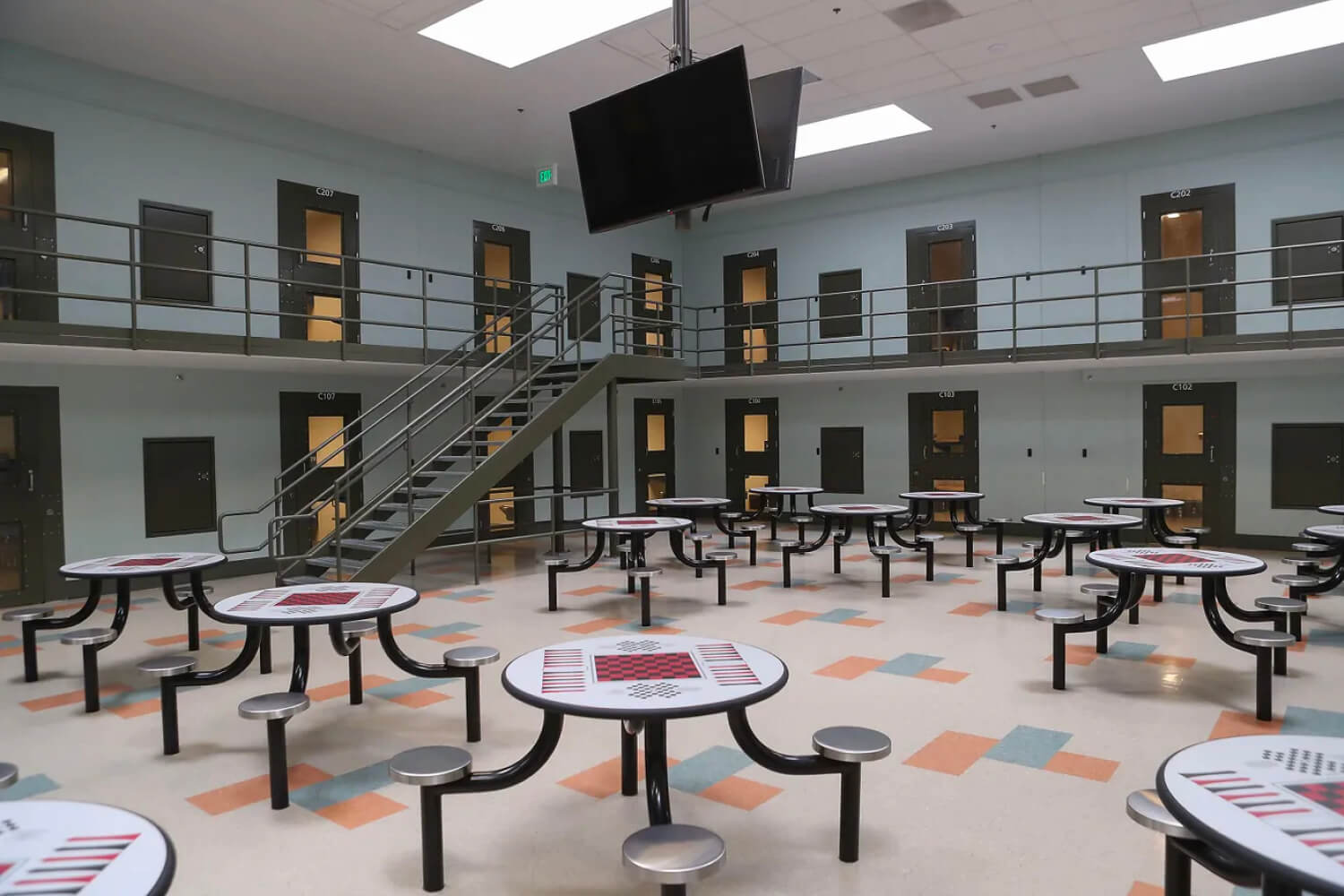
People in detention centers differ from prisoners only in that they haven’t actually committed any crimes. Their everyday life, though, is no different from regular prison life. They wear orange jumpsuits, sleep on bunk beds with thin mattresses, and wash in communal showers.
The only exception is made for women with small children. They’re let go almost right away. Everyone else goes through a tough interrogation called a “credible fear interview.” That’s where officers decide whether the person really can’t go back home or just made everything up to get into the U.S. If the refugee fails to prove their fear, they’re deported within a couple of days. If they do prove it, they stay locked up while their documents are reviewed. Usually, an immigrant does about two months, but if there’s any suspicion of ties to the police, the government, or the military, they’re kept much longer.
What does a person feel like, and what do they look like, after doing time in detention?
Once, the author was talking to a couple who were looking for a place to live. They were both just over thirty, but their haggard faces screamed forty-five. The guy was dressed all in black. He had on a thick, puffy nylon jacket, worn-out jeans dusted with grime, and sneakers that had definitely seen some things. His hair was cut short, a sharp nose stuck out of an equally sharp face, and his eyes were dull but focused. The girl’s forehead was crowned with a chewed-up fringe that made it obvious she couldn’t afford a hairdresser. Overall, she looked like your typical small-town Russian chick who sits on a bench with a cigarette in her teeth and a beer in her hand, casually rocking a baby stroller.
Both of them spoke very politely, but the politeness left a strange aftertaste. The guy spoke in bursts, in short phrases, and his turns of speech sounded now like Turgenev’s prose, now like a call center script. From a couple of keywords, I decided that I was most likely dealing with a former Russian cop.
“Have you been in New York long?” I asked the guy.
“We just got here. Hasn’t even been a month yet.”
“And how did you get to America? You won the lottery?”
“Of course not. We’re asylum seekers.”
“Wow. Through Mexico or on a tourist visa?”
“Through Mexico. Tijuana. Horrible place. After that, we also had to spend some time in detention.”
“For long?”
“Don’t even ask. They let her out in two months, since she’s a woman” — he nodded at his girlfriend — “but I had to spend a whole year in there.”
“A year?! You can go insane from that!”
“You can... The first month was in California, where the conditions are actually decent. But then, without any warning, they just up and transferred me to Louisiana. That’s where the conditions are different. Everything’s overcrowded. It’s hot, you’re sweating all the time. The showers are god knows what. I cursed everything.”
“Louisiana... the poorest state. I’ve been there, in New Orleans. It’s one of the most dangerous cities.”
“Exactly. And, mind you, it wasn’t Trump who sent me there. This was back in 2024, under Mr. Biden. So much for democracy. I regretted a hundred times that I ever came. To hell with America.”
“So what’s it like there, in detention? What conditions? There must be criminals in there too...”
“A very specific public. There were a lot of guys from the former Soviet Union. They don’t behave like human beings. I won’t say exactly who. Let’s just say pretty much all of them. They provoke you, humiliate you, and show off. And you can’t respond with force — you’ll get kicked out. I had to put up with it. Honestly, I almost snapped.”
The couple didn’t stick around. Realizing they were unlikely to get the apartment they’d just viewed, the freshly minted immigrants headed for the exit. That’s when I suddenly remembered I hadn’t even asked their names.
“It’s time for us to go. All the best. Drop me a line if anything comes up.”
“Well, alright. Good luck to you. By the way, what’s your name?”
“Oh, right, of course. Allow me to introduce myself: Vladimir.”
“Nice to meet you. I’m Andrew.”
“All the best to you...” Vladimir had almost stepped through the open door, but suddenly stopped and turned back thoughtfully. “By the way... Vladimir Vladimirovich... That’s how it goes. Well, see you.”
A year in prison for trying to get asylum... That’s rare, but even two months in detention will cost you two years of therapy. Plus, before that, a person spends months living in Tijuana, Mexico, waiting for their turn to cross the border.
Previously, the line was completely chaotic. They let in as many people as the jails could hold: about 2–3 thousand a day. The lists were kept in notebooks, and the wait could last anywhere from a couple of weeks to several months.
Then President Biden decided to restore order and launched the CBP One mobile app for booking a border crossing. Instead of order, all he managed to create was chaos. People took the news as an open invitation to move to America, and the little detail about capping it at a thousand applications a day somehow slipped by. As a result, such a flood of migrants rushed to the border that the line stretched out for nine months.
Trump tore the app to shreds. But once he became president, he didn’t shut it down. Instead, he got the idea to rename it CBP Home and turn it into an app for scheduling deportations, which instantly sent the Democrats into a catatonic fit.

Trump turned an immigration app into a deportation app
A political immigrant goes through the fire of the border and the water of prison. But ahead still lie the brass trumpets. That’s the immigration court. It’s the one that decides whether a person will get a new life in America.
Of all three trials, waiting for court is the most exhausting torture, because it’s invisible. A human being can’t stand uncertainty, and an immigrant lives in it for years: the verdict might come in a month, or it might take several years. All this time, they’re building a new life while keeping in mind that it can collapse in a single day because of the decision of a tired judge.
At first, an immigrant is “living out of a suitcase,” then the grip loosens: the kids start school, they get a dog, they make friends. But every step is a struggle. Save or spend? Buy a house or wait? Have kids or not? One wrong court decision can wipe out an entire chapter of life. And as for what the right decision is, the judges themselves have no idea.
In the same court, different judges can hand down completely opposite decisions. One judge denies 9 out of 10 cases, while another approves almost every asylum application. Decisions depend on the weather and on whether the judge has eaten. One study shows that a five-degree Celsius increase in temperature reduces approval rates by 6.5%. Another says that by noon, the approval rate drops to zero, and after lunch, it returns to normal.
Lawyers call this chaos “refugee roulette.”
The American immigration court is a real lottery, but adventurers from all over the world only hear what they want to hear. Many believe that asylum is handed out to anyone who asks, that while they wait, they’ll be put up in a hotel with free meals, and then conveniently placed in a job. They’re all victims of Hollywood, which has spent decades painting America as heaven on earth and the ultimate land of opportunities.
In reality, no one who says nonsense like, “I’m afraid they’ll come for me,” will ever get asylum.
A political immigrant has to not just say, but prove with documents that they’re part of an oppressed group and that it’s dangerous for them to even say their views out loud. Arbitrary court rulings, protest crackdowns, war, and other dictator pastimes — the American court couldn’t care less. Screenshots of anti-war posts, photos from rallies — all that will only impress Manhattan teenagers. Judges know: if you don’t look for trouble, they don’t just kick your door out in Russia, and becoming a “foreign agent” is harder than becoming a People’s Artist.
So it turns out the immigrant has fear, but no proof of that fear. And you can’t go to Mexico armed with fear alone: you need documents too. So our political immigrant goes all out, doing whatever it takes to scrape together at least some papers that might somehow confirm his fears.
But it turns out collecting the documents isn’t that simple. Terror in Russia isn’t mass; it’s performative, and the siloviki don’t just come up to any random person. So if siloviki won’t come to an activist, then the activist has to come to siloviki! How you do that depends on your imagination. Some people join a minor political party just to get a membership card. Some pretend to be Jehovah’s Witnesses and ask friends to take a couple of photos of them handing out religious pamphlets in a doorway. Some just crank out dozens of political posts a day, repost provocative content, and then file complaints against themselves.
But the lazy cops might still not show up, even after all those magic spells. Then our immigrant will finally be forced to take a desperate step — either picket outside the State Duma or just buy a paper saying he was beaten up. That’s it. The documents are ready; time to fly to Tijuana.
Obviously, nobody knows how many political refugees have gone this route. Just by eyeballing it, it seems like 9 out of 10 people have either made up or embellished their persecution story. That doesn’t mean their fear was invented: everyone’s afraid, and they can come for anyone. But no country can take in everyone who’s afraid of something.
Courts turn a blind eye to fake documents and, even in Biden’s last year, approved a record 85% of applications from Russians. Worldwide, only about a third got approved. Still, even a third of a chance is hope all the same.
Illegals
If the deception is exposed, the immigrant will be labeled a violator and deported, but they still won’t become an illegal immigrant. To become an illegal, you have to do something far more heinous, namely: climb over the fence on the Mexican border and stay in the U.S. without permission.
Republicans often call “illegals” even those who entered on a visa and then stayed after it expired. The law calls them overstayers, and they make up almost half of all illegal immigrants. And while these overstayers did break the law, at least they went through a consular check and came here on a visa like civilized people, not like barbarians. We’re not going to talk about them.
An illegal in the purest sense is a whole different story. Usually, it’s a refugee from Guatemala, Honduras, Haiti, or some other extremely poor, high-crime country. Most likely, he didn’t even finish school and has been working construction, on a farm, or just straight-up selling drugs since he was ten. Tired of poverty and seduced by a pretty picture, one day, he sells everything he owns and makes his way to Mexico.
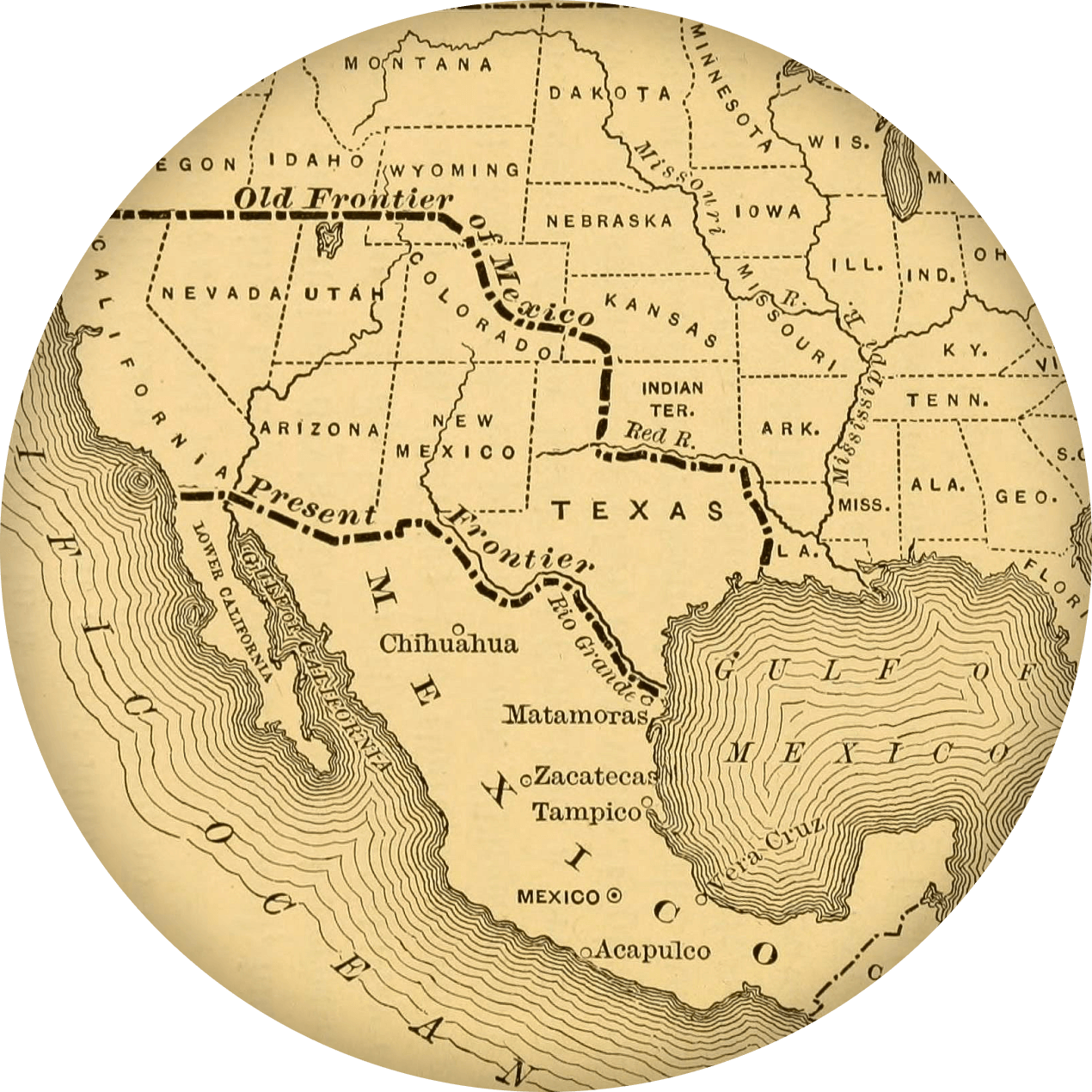
What’s next? The reader has, of course, heard about Trump’s wall on the Mexican border. In reality, Trump only built about 130 kilometers of wall and focused mainly on reinforcing what was already there. The main builder was actually Bush, who put up almost 900 kilometers.
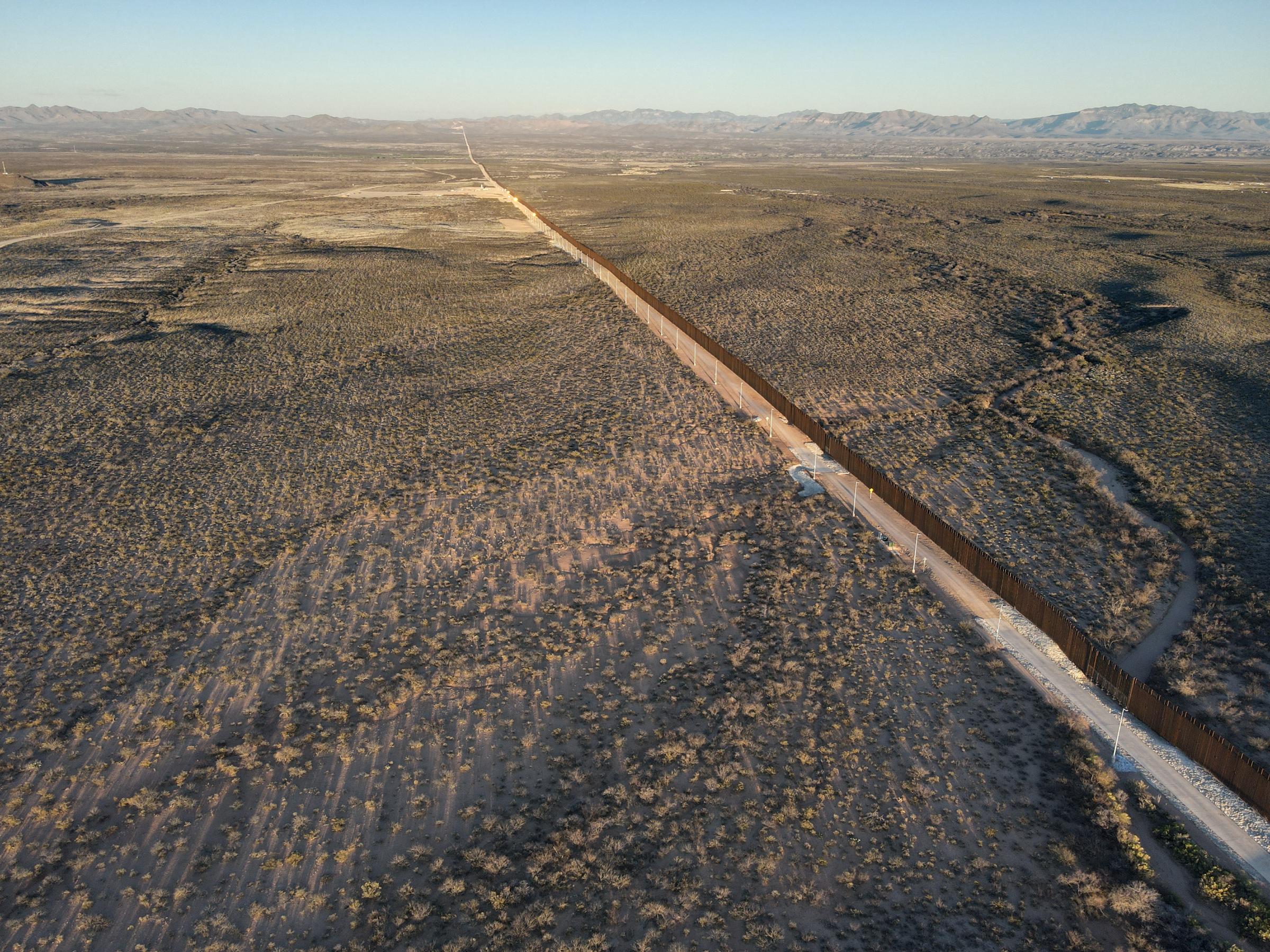
Anyway, the wall already ends in Tijuana... How come? Just like that. Just ends, that’s it.
Anyone who doesn’t feel like waiting in line can just walk around the fence. There’s one little catch: they’ll be instantly grabbed by a patrol, and then our hero will have the thrilling opportunity to try explaining the UN convention to an American court.
Obviously, a real illegal immigrant won’t be satisfied with that approach. That’s why a real illegal doesn’t just climb over some random fence, but finds an experienced guide who leads him on a long detour deep into the desert — where the patrols don’t reach. And it’s this guide that the illegal hands over all the money from the sale of everything he owns. The going rate for this service is about $7,000. Naturally, the money goes toward developing the drug cartel.
The journey through the desert takes several days. Not everyone makes it to the border alive. Some drop dead from heat and dehydration, some get attacked by wild animals, and some get bitten by a venomous snake. The guide who works for the cartel isn’t exactly invested in the group’s survival either and might just rob everyone and dump them in the middle of the desert. There’s another route — across the Rio Grande River. Let’s be honest, not Amazon, but still with crocodiles.
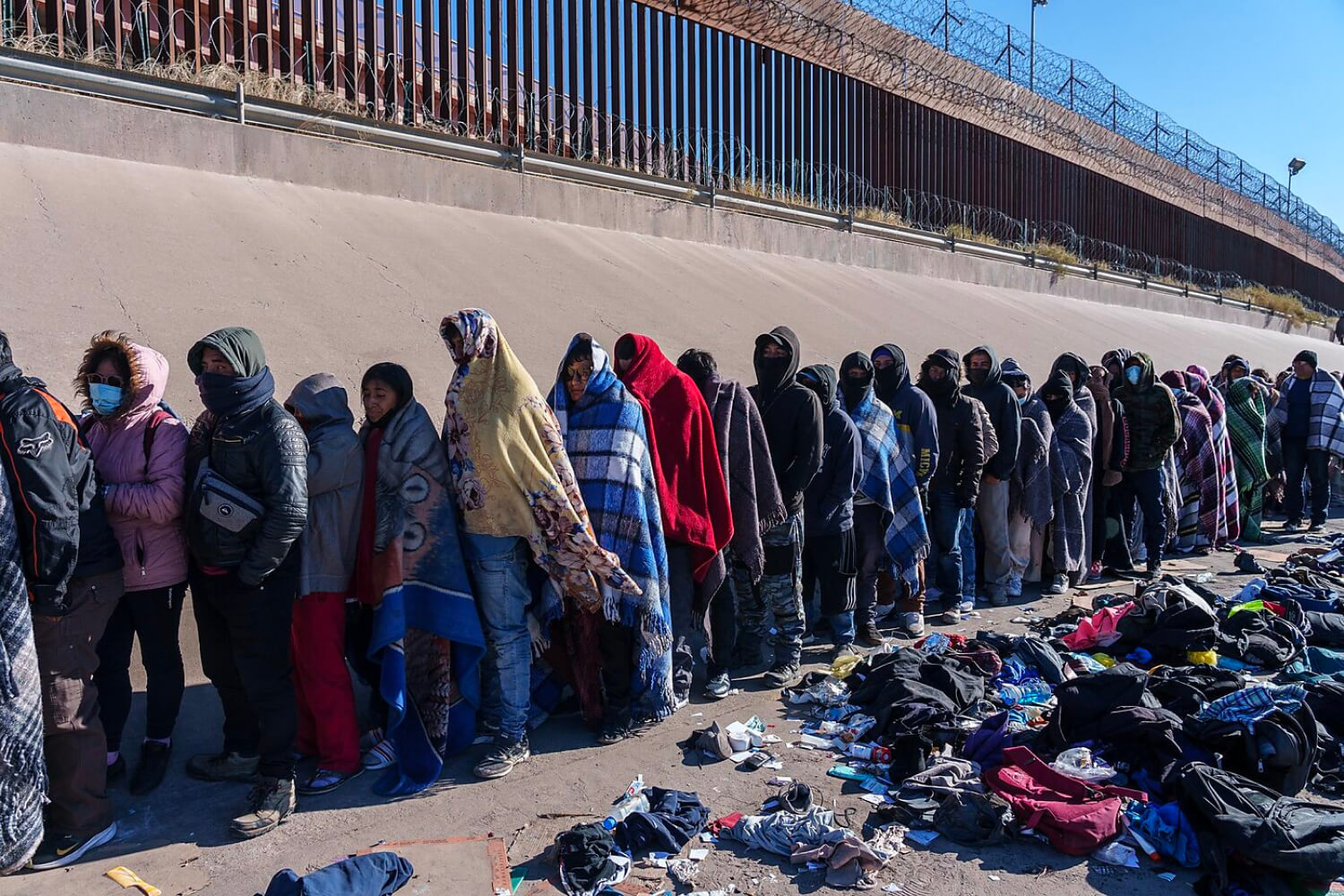
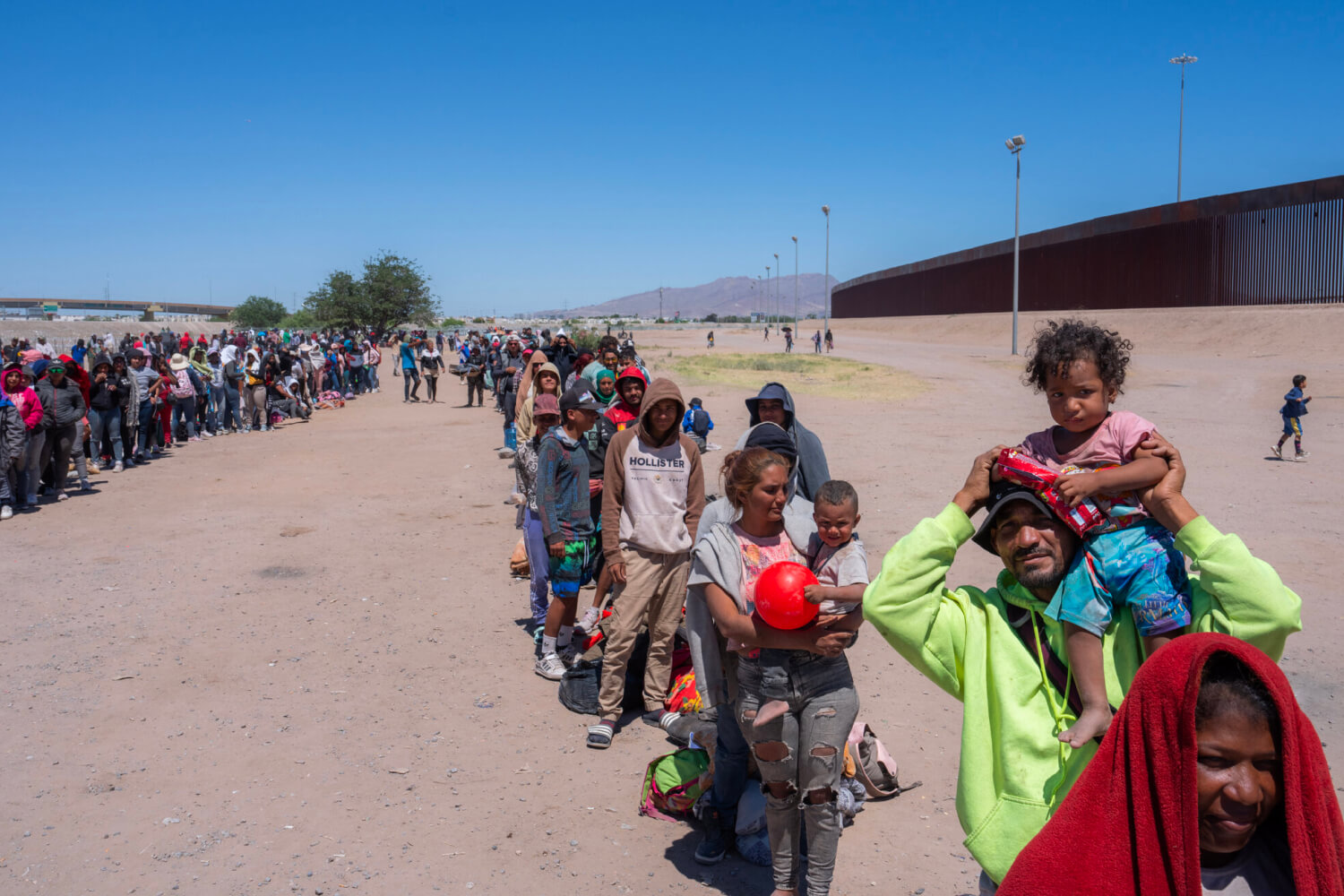

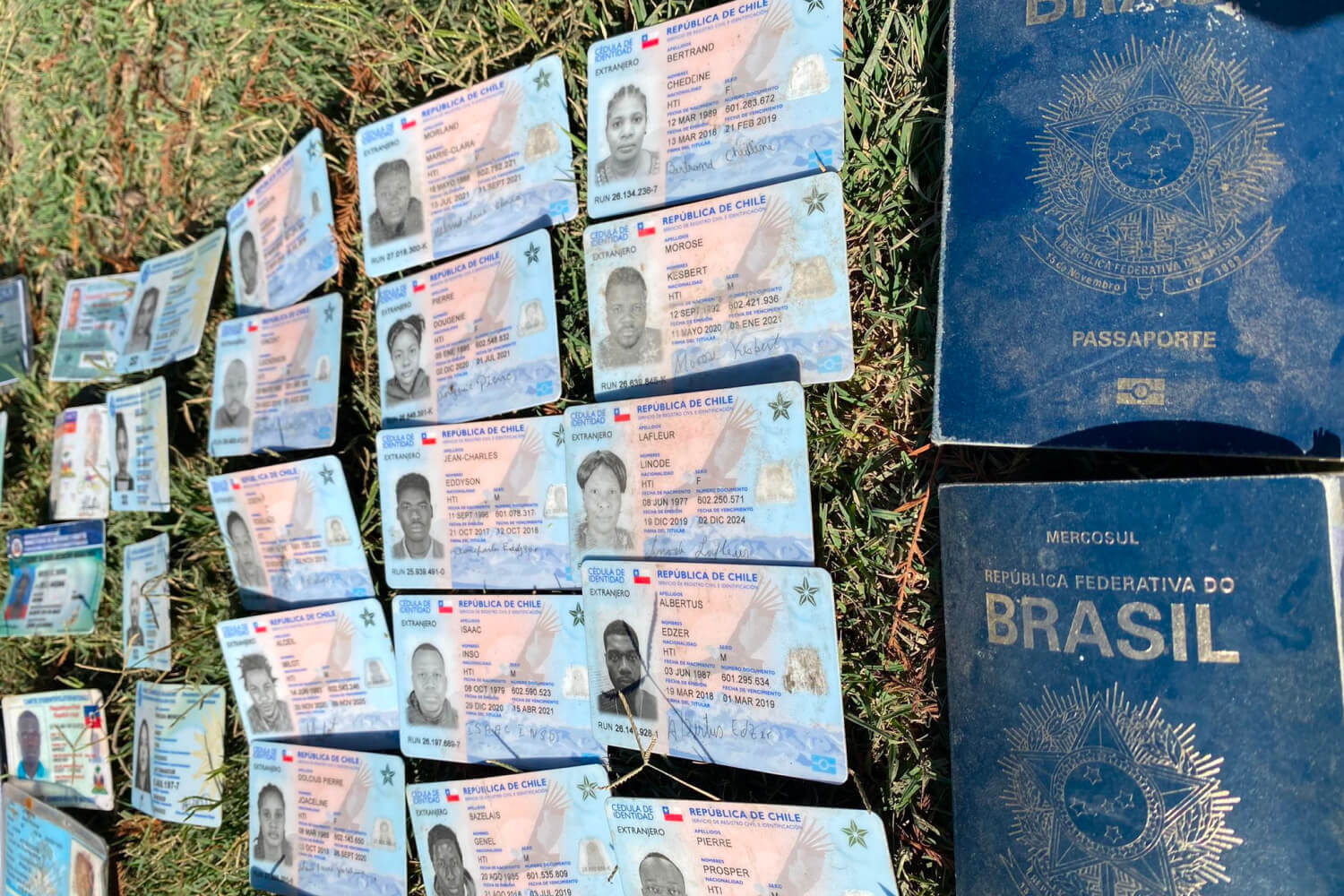
Almost all illegals cross the border without documents. Some have them taken away by their guides so they can be blackmailed later, but most just burn, tear up, or toss their passports to make deportation harder.
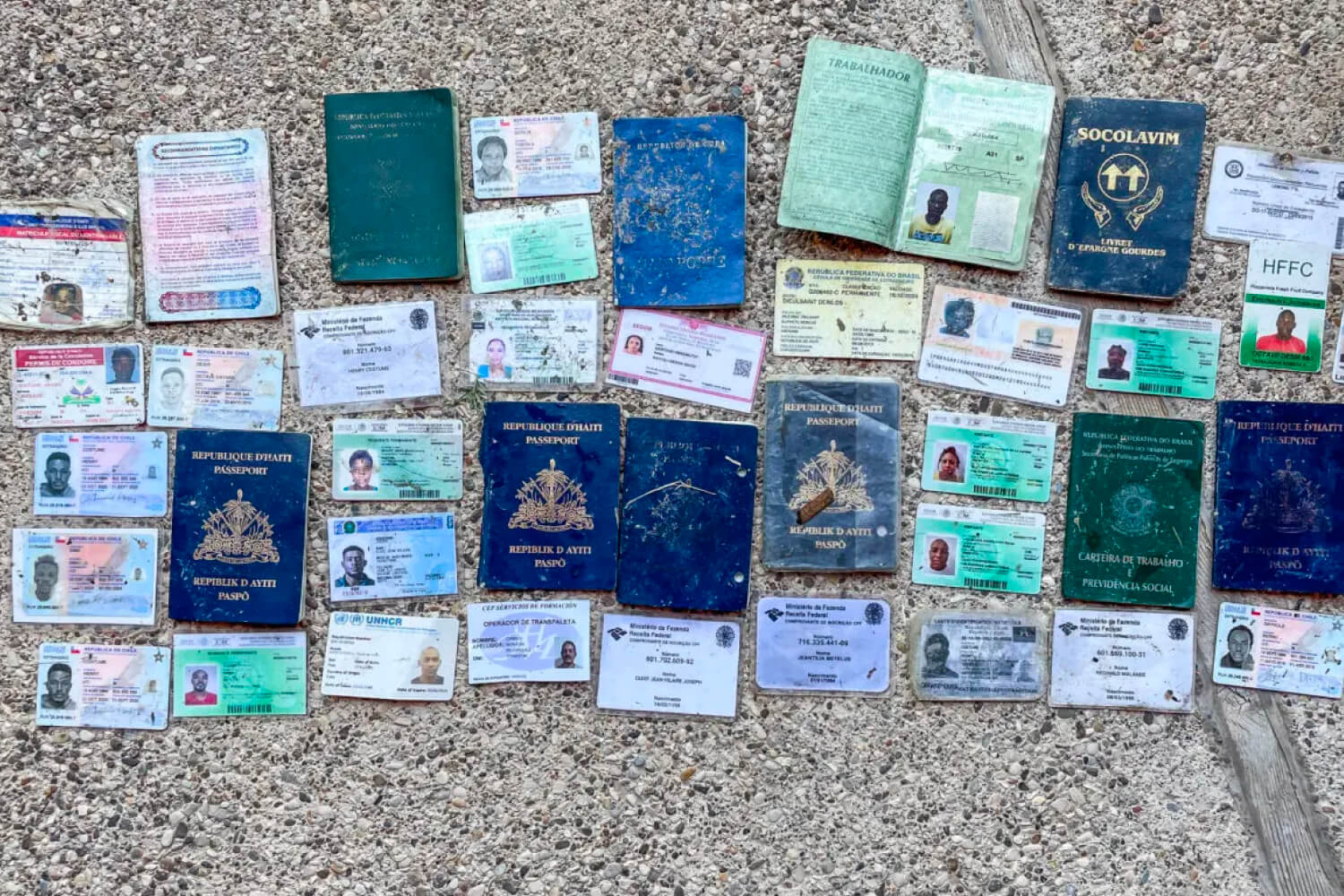
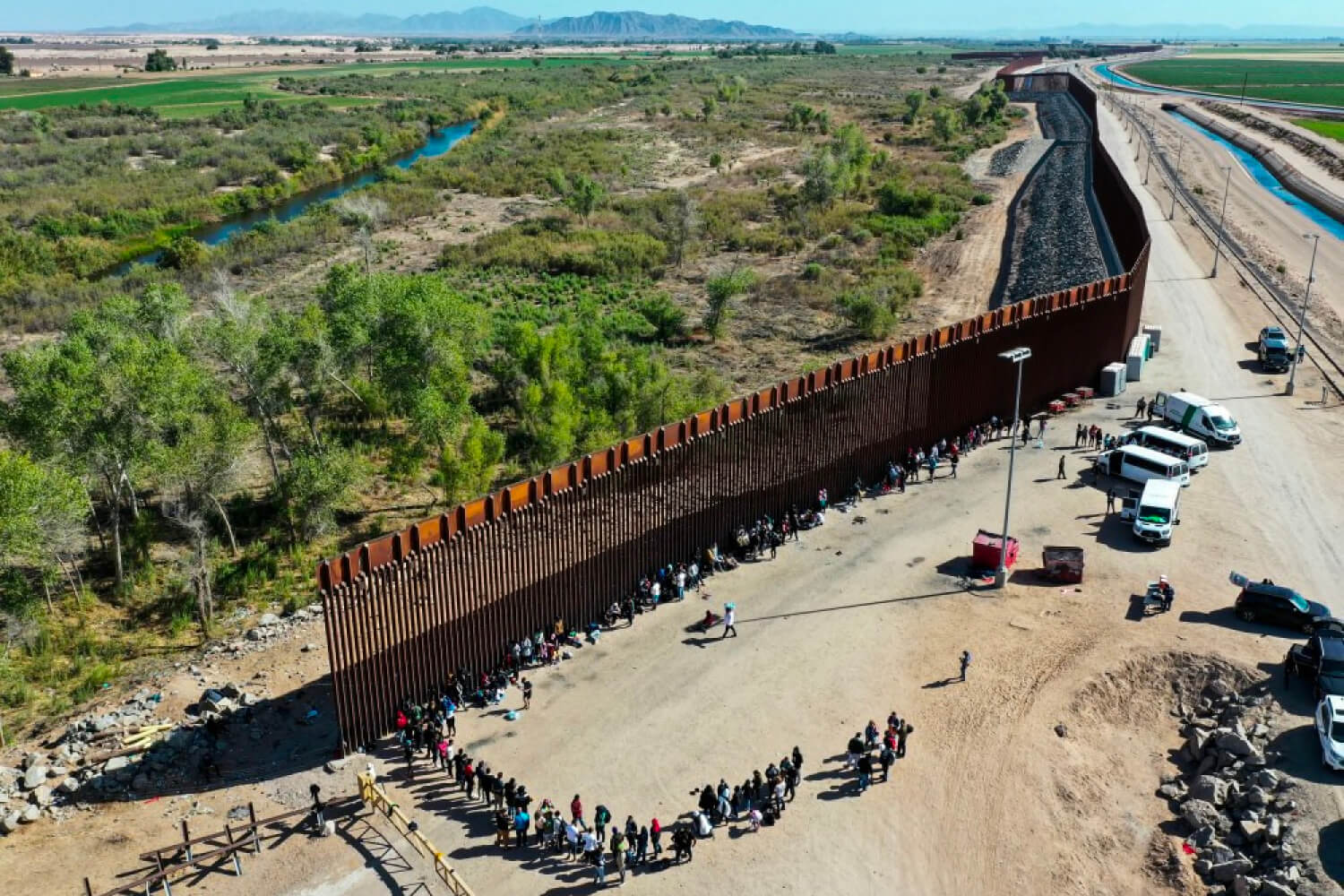
Neither a sixteen-foot wall, nor barbed wire, nor a river full of crocodiles stops illegal immigrants. In 2022 and 2023 alone, more than two million people were caught at the border. The authorities are barely coping with the influx. There are videos where ordinary people step up to defend the border themselves. In one of them, a veteran is shown throwing a rock at an illegal climbing over the fence, yelling, “Go back!”
Americans have a good attitude toward political migrants and feel sympathy for people who’ve overstayed their visas. Their tolerance for illegal immigrants is pretty weak. The only ones who defend them are the far left — the socialists. Usually, these are students from big cities and wealthy families who study at elite universities and are into the ideas of Marx and Lenin. Some of them even suggest abolishing visas altogether and letting anyone who wants to come into the country, supporting them at the expense of the rich.
Socialists like to bring up Native Americans, who never gave permission for the colonization of America. They hint that the whole country was originally built by illegal immigrants and then ask: So why do we need visas now?
In reality, America wasn’t built by immigrants but by colonizers who came to a territory with no state. Immigrants, on the other hand, come to a society that’s already been built and make use of its institutions: protection of rights, law enforcement, and the social system. All of that was created through the taxes and labor of generations. Entry into such a society is a privilege, not a right. And the society itself has only held together because it carried out careful selection.
Democrats say that illegals commit fewer crimes than U.S. citizens themselves. The statistics really do say that, but, as Mark Twain put it, there are three kinds of lies: lies, damned lies, and statistics.
Let’s say there are 100 people living in a country, and 10% of them are criminals. Now another 100 people arrive, 8% of whom are criminals. Voilà! Now, only 9% of the people in the country are criminals. Socialists conclude: illegal immigration reduces crime.

Maybe Harvard students fall for that kind of math. But any redneck from a Texas ranch will count it this way: there used to be 10 crimes in the country, and now there are 18. And he’ll be absolutely right. Considering that illegals don’t bring along new cops in the same proportion, what we actually get is a rise in crime, not a decrease.
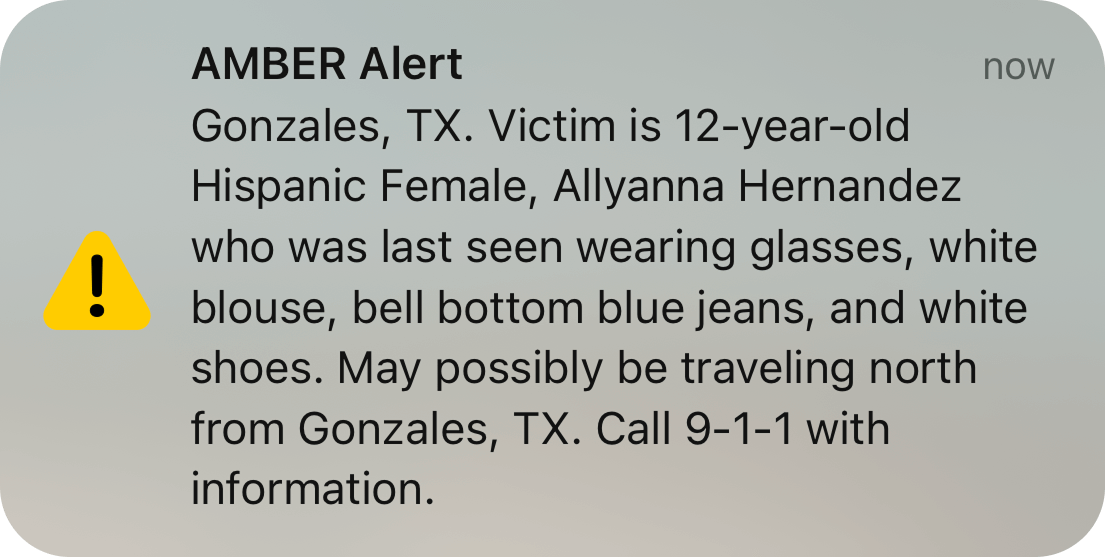
Democratic states are detached from reality. They don’t see what’s happening in borderland Texas. The author has lived in this state for only two weeks. During this time, I’ve already received two alerts about missing children. The police send them out through a built-in mechanism on the phone, and the phone howls like a siren. It startled me so much I almost dropped face-first onto the ground, my hands behind my back. A message popped up on the screen:
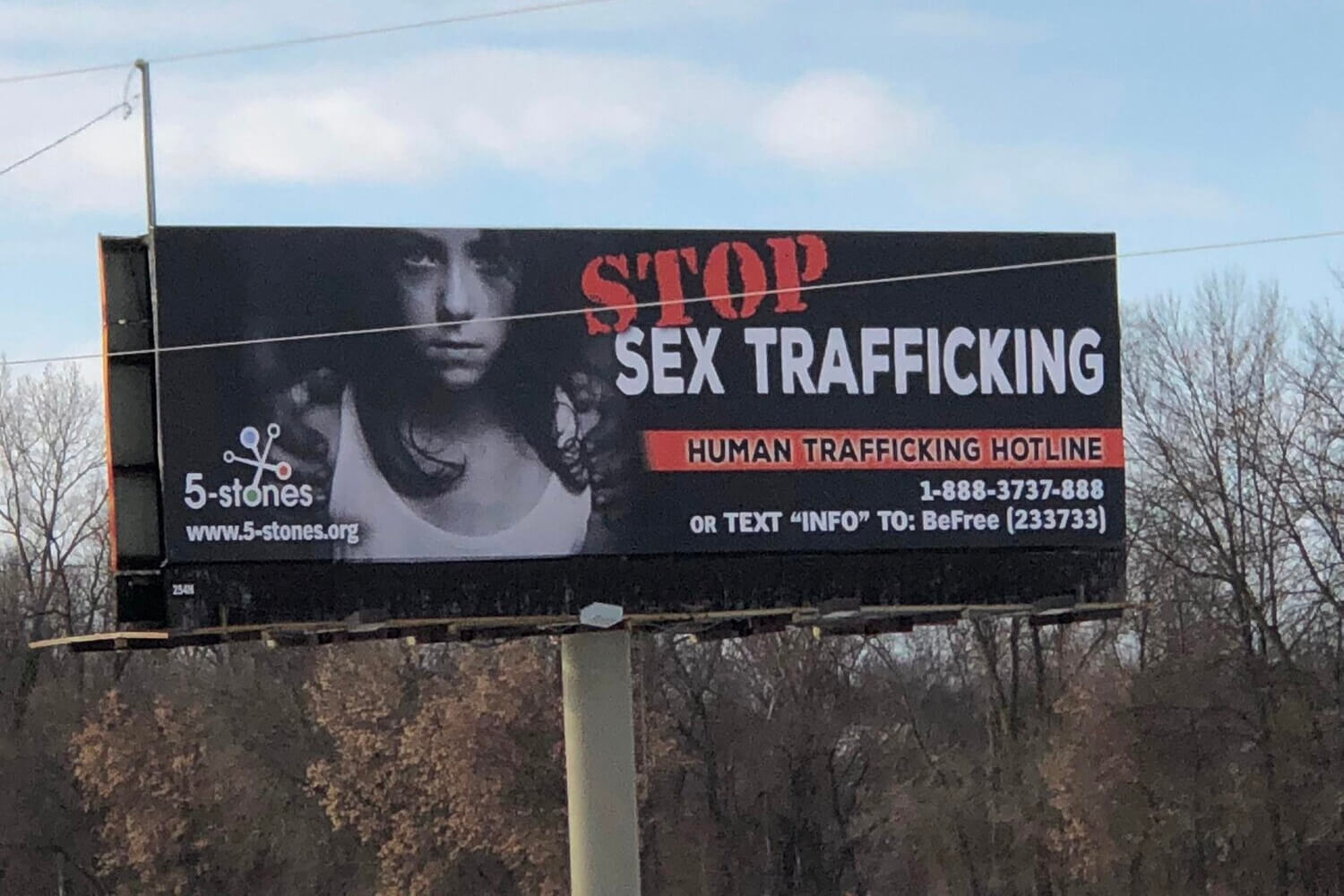
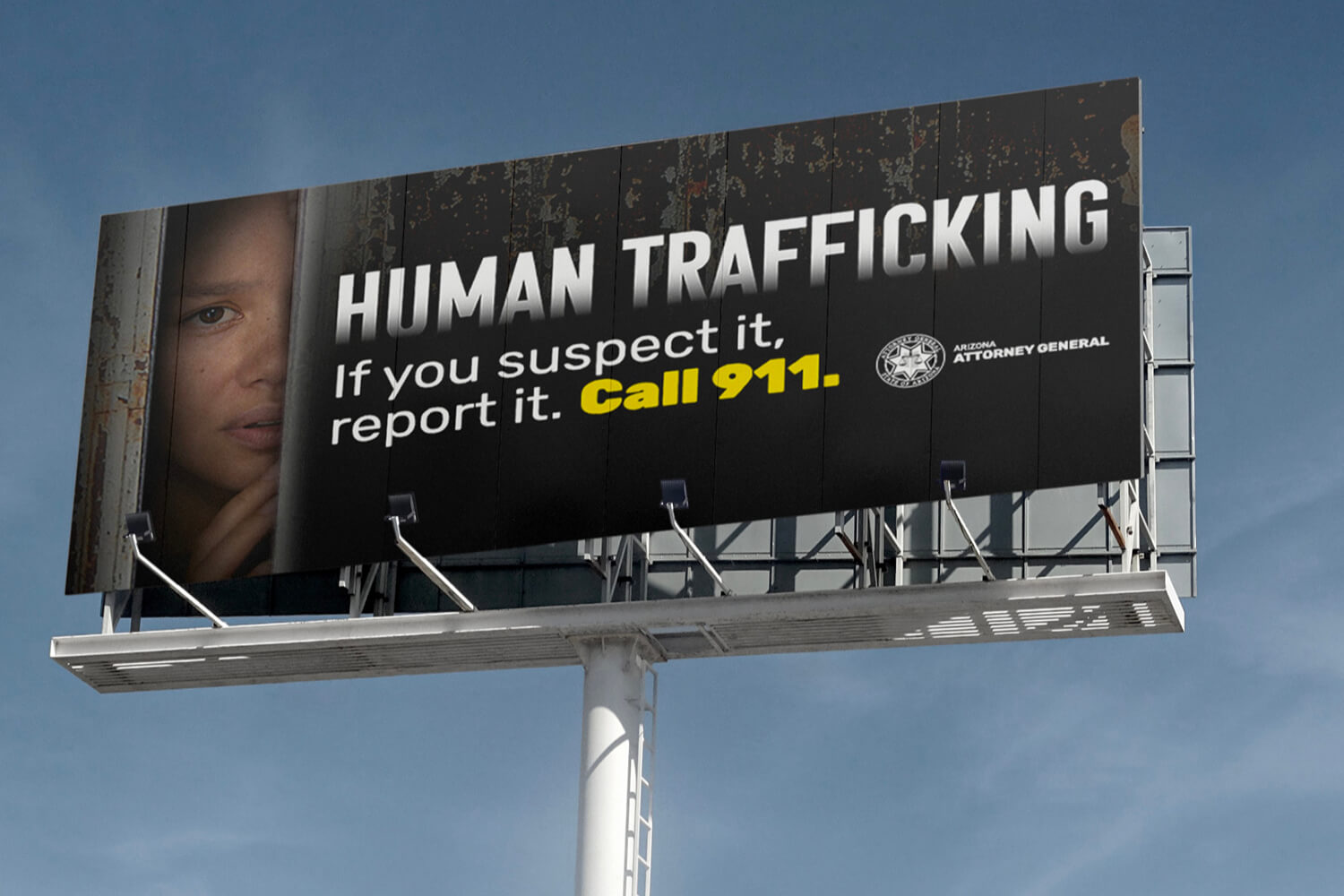
A week later, the author was riding a bus from San Antonio to Houston. My attention was caught by a strange roadside billboard that said something about human trafficking. I didn’t think much of it, but half an hour later, there was another one, this time about sex trafficking. Then there was a third, and a fourth, and another dozen or so similar billboards, all showing people with blindfolds over their eyes or tape over their mouths.
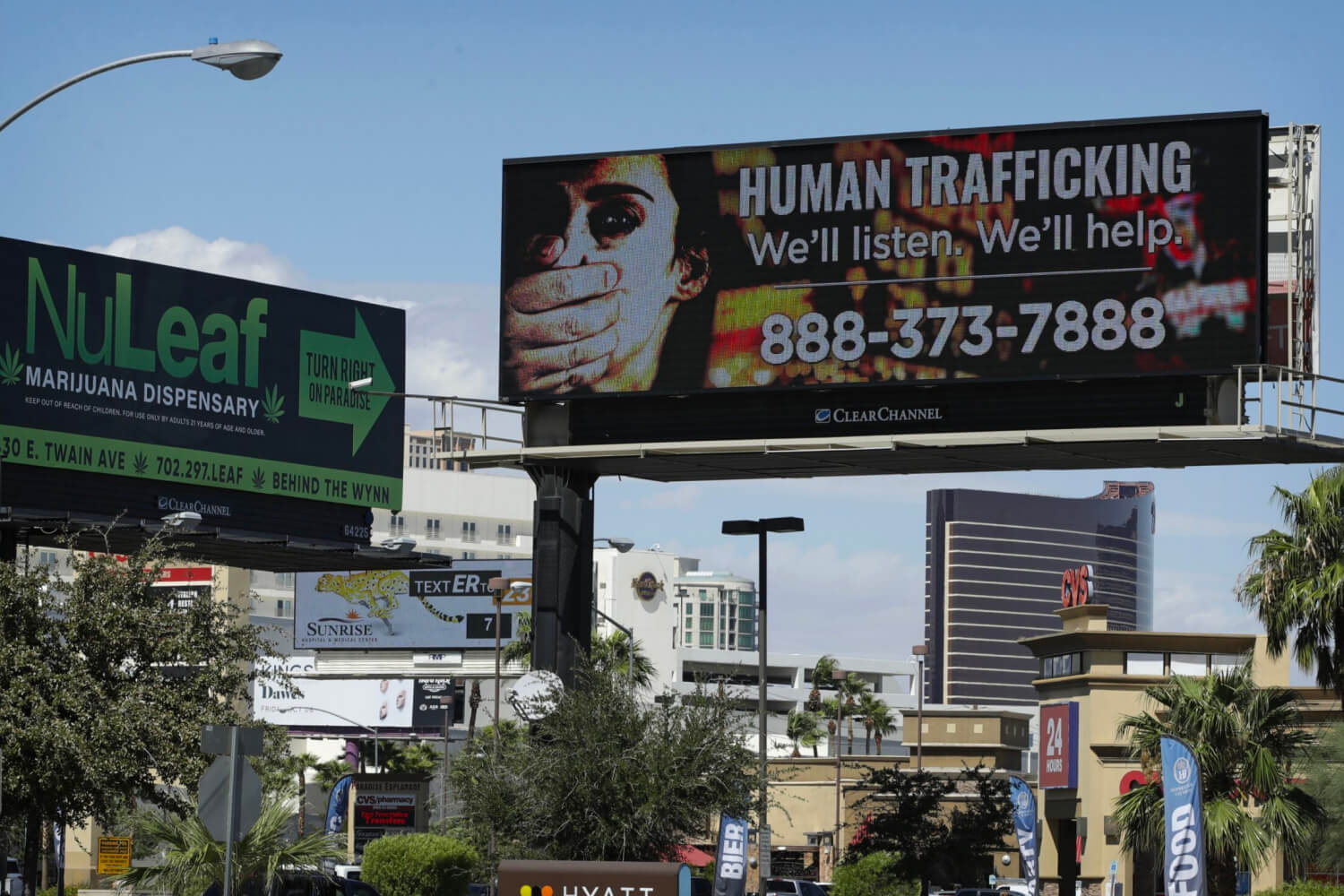
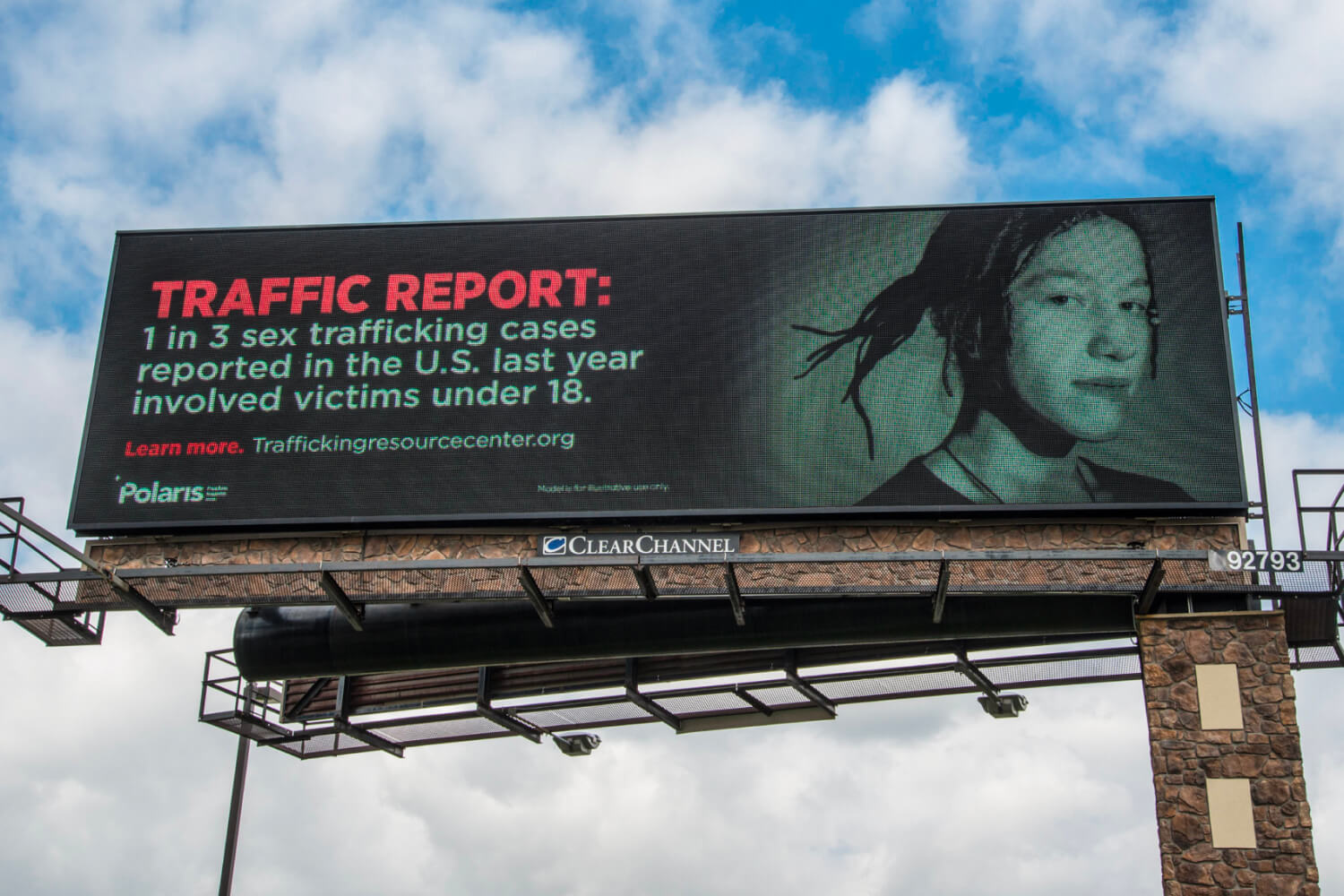
Then I remembered something a Republican woman told me two weeks ago in Los Angeles. I had asked her what Trump supporters think about illegal immigrants.
“People are just running from poverty and crime. I get it, and you know America has always taken in refugees. Now there are just too many of them; they’re literally coming by the millions. We’re afraid our social system just won’t hold up.”
“Do they actually pose any danger, or do they just want to work?”
“Most of them just want to work. The real danger is the Mexican cartel and the coyotes. Oh, God. One time, Trump said the word ‘coyotes,’ and the liberals completely lost it! They thought he was calling Mexicans animals and branded him a racist. Damn, they don’t even know who coyotes are!”
“So who are the coyotes?”
“That’s the slang term for guides who lead illegals through the desert. You can’t make it to the fence on your own — you’ll either get killed, eaten by animals, or just get lost and die of thirst. So they pay the coyotes. And who do you think they work for?”
“The cartel?”
“Of course! Andrew, you know there’s a huge flow of drug trafficking into America right now, right? Okay, that you know. But have you heard about slavery?”
“I’ve heard about the drugs, and I’ve seen what Philadelphia has turned into. But what slavery are you talking about?”
“What do you mean, what kind? All kinds. Regular slavery and sex slavery.”
“Wait, wait, what are you even talking about now? Sex slavery? Where, in the countries these illegals are running from?”
“No! Here, in America!”
“...there’s slavery in America?”
“See? You haven’t even heard about it, because nobody talks about it! And that’s all because it goes against the narrative. So I’m telling you. Coyotes don’t just move people. They also sell kids into sex slavery. They steal them from their parents, and the parents themselves can be killed. They bring them to the fence, then hand them over to the receiving side or just toss them over the fence and send the coordinates.”
“That just can’t be real! So where do these kids live after that, and why doesn’t anyone rescue them from this slavery?”
“They’re kept in basements in Texas and New Mexico. Used to shoot pornography or sold to pedophiles. I don’t know, it makes me sick to even talk about it. Go read up on it yourself.”
And I did read. It turned out that in the United States, tens of thousands of people fall victim to human trafficking. Every year.
Of course, the estimates are very imprecise. According to the most reliable source, in 2024, some 21,865 people were victimized. More than 80% of them were subjected to sexual slavery, and half of those in sexual slavery were under 18. Most are kept in private homes and in underground brothels disguised as spas. Over the past 17 years, nearly 220,000 victims have been identified. Almost 15% were in California, with Texas in second place at 11%. And these are only the cases we know about.
Against the backdrop of sexual slavery, drug trafficking seems like an innocent pastime. Mexican cartels have done quite well here, too. Every year, hundreds of tons of drugs cross the border into America. In addition to the ever-popular marijuana, Mr. Yayo (cocaine) and Mr. Brownstone (heroin), there’s a huge demand in the U.S. for methamphetamine, known to everyone from the series Breaking Bad, as well as fentanyl — an unbelievable brew of Chinese chemicals that imitates an opioid high.
Although most of this poison comes through checkpoints in random vegetable trucks, the cartels aren’t exactly picky about other delivery methods. They get drugs into America so creatively, the Wright brothers would be jealous. We’re talking couriers, tossing it over the fence, drones, underground tunnels, and even damn catapults.

A catapult used to fling drugs across the border
Thanks to the tireless efforts of the cartels, the United States has been going through a national catastrophe for 15 years now. Unlike the harmless hippies who used to lick LSD blotters to “expand their consciousness,” modern America is hooked on a monstrous, brain-dead poison. Some cities, like Philadelphia, are literally flooded with drugs. The author walked down Kensington Avenue, basically stepping over people lying unconscious on the ground.
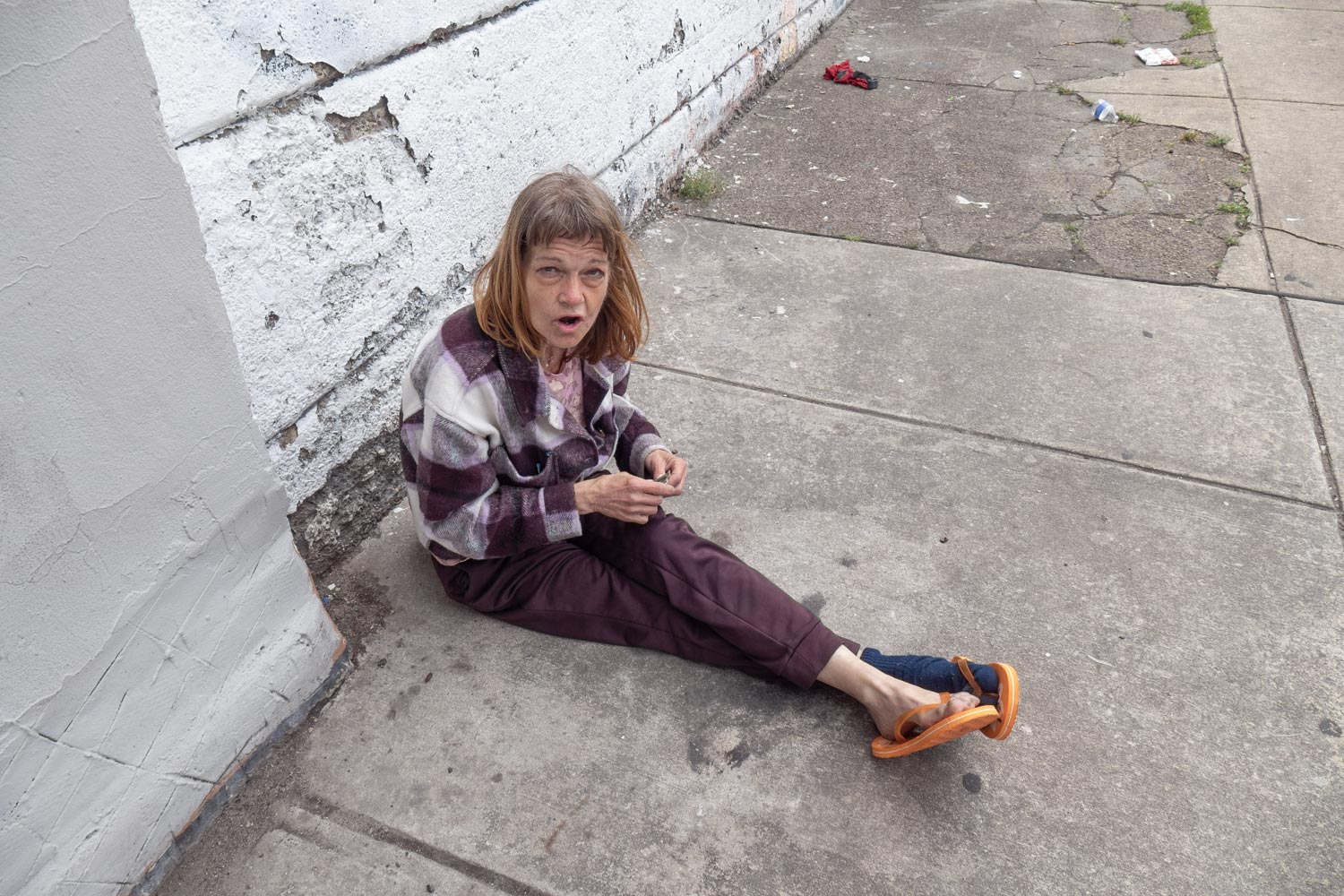
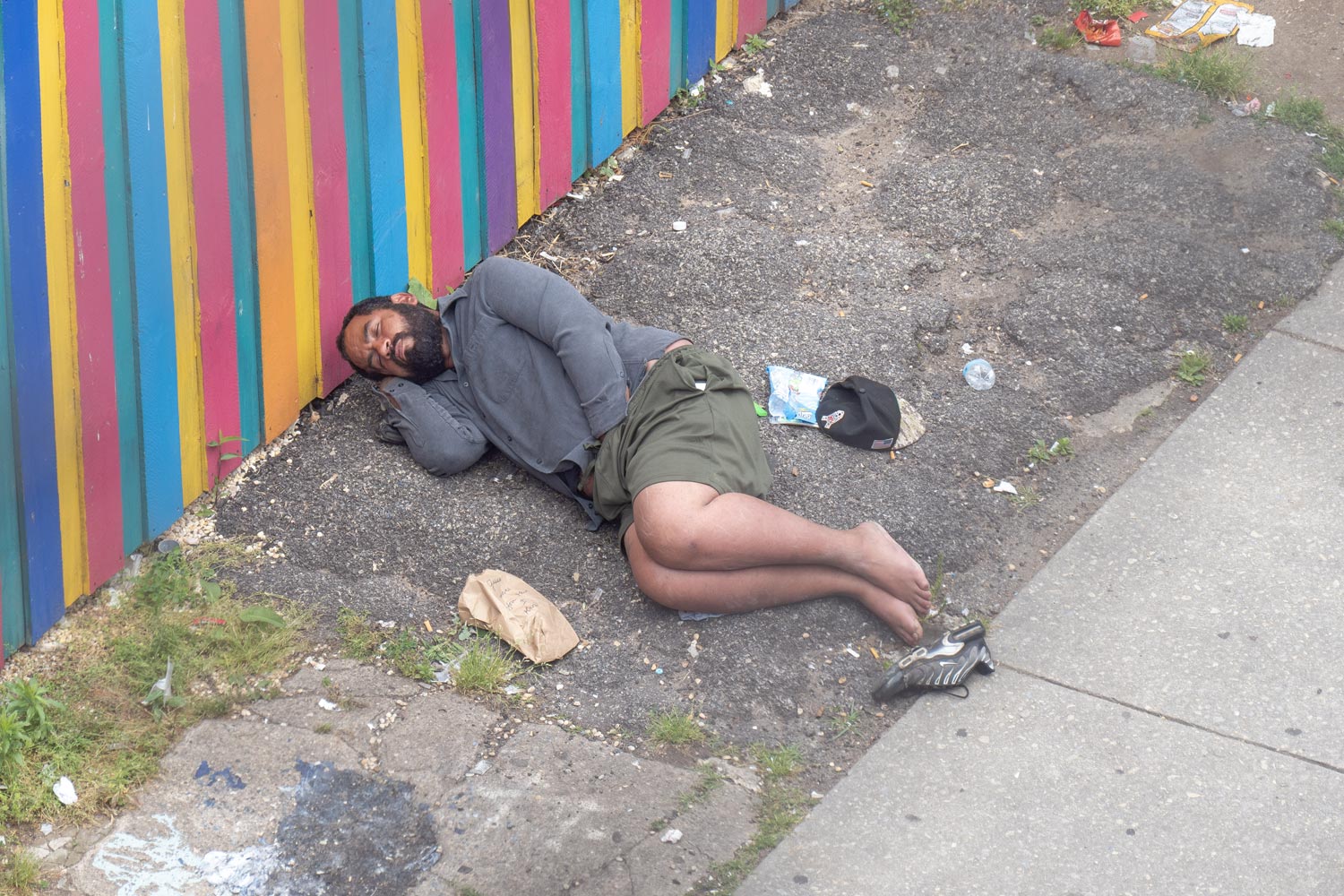
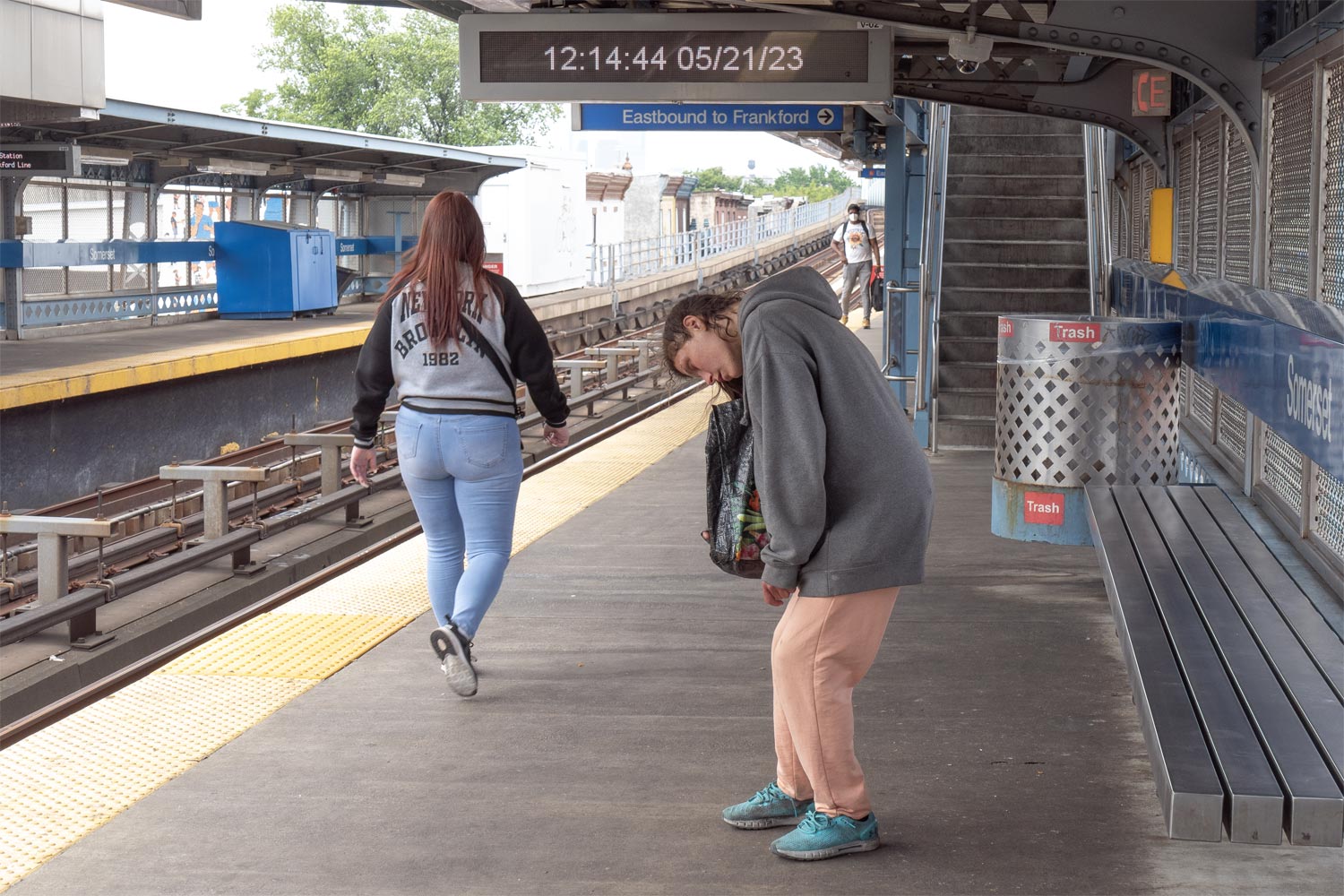
For drug trafficking, robbery, prostitution, human trafficking, and other charming misdeeds, it’s rarely lone illegal immigrants who are responsible. That’s the work of gangs. The most famous of them is called MS-13, which stands for Mara Salvatrucha, or, translated, “the brigade of Salvadoran nomadic ants.” This international gang, which has 10,000 members in the U.S. alone, is known for its incredible brutality.
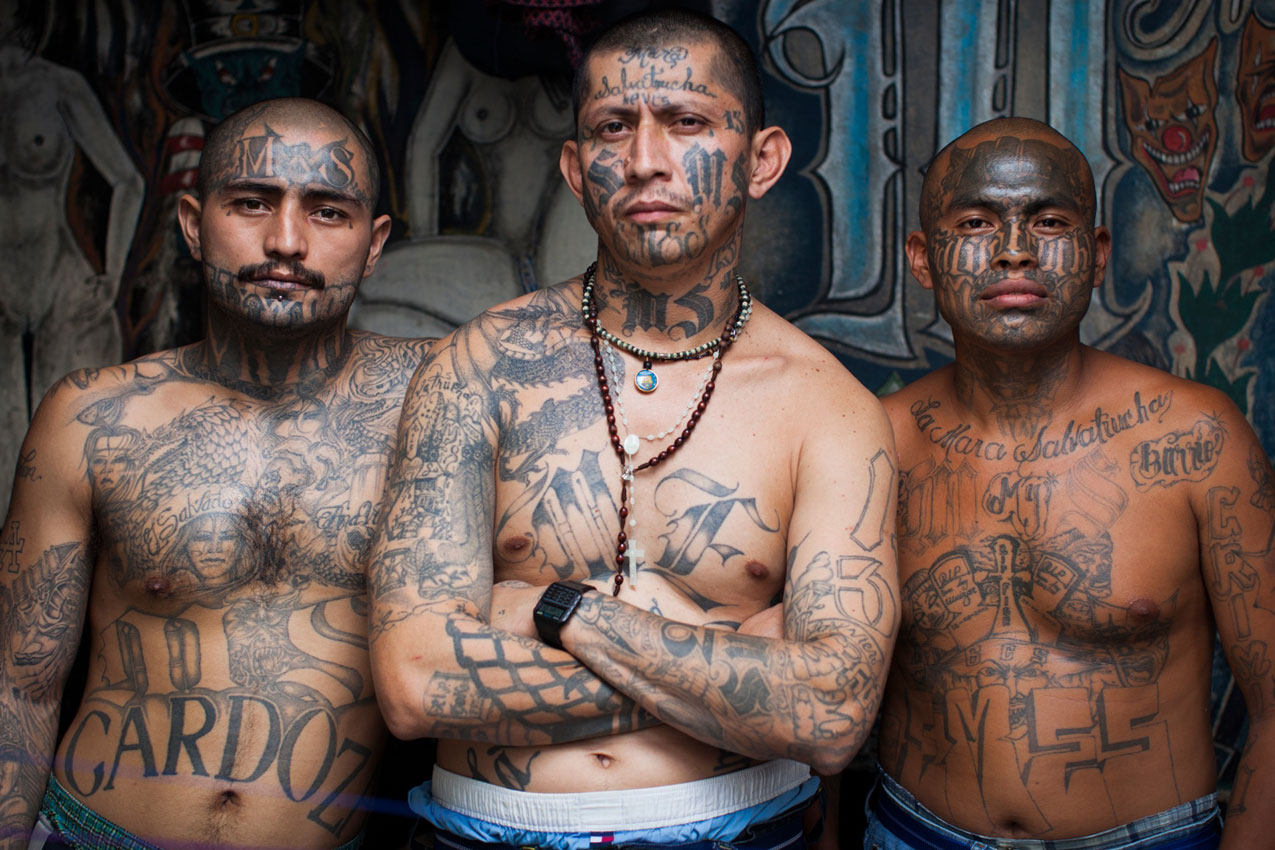
It’s rivaled by the Barrio 18 gang. Its name comes from 18th Street in Los Angeles. This gang is also made up of latinos, operates in several countries, and has more than 30,000 members.
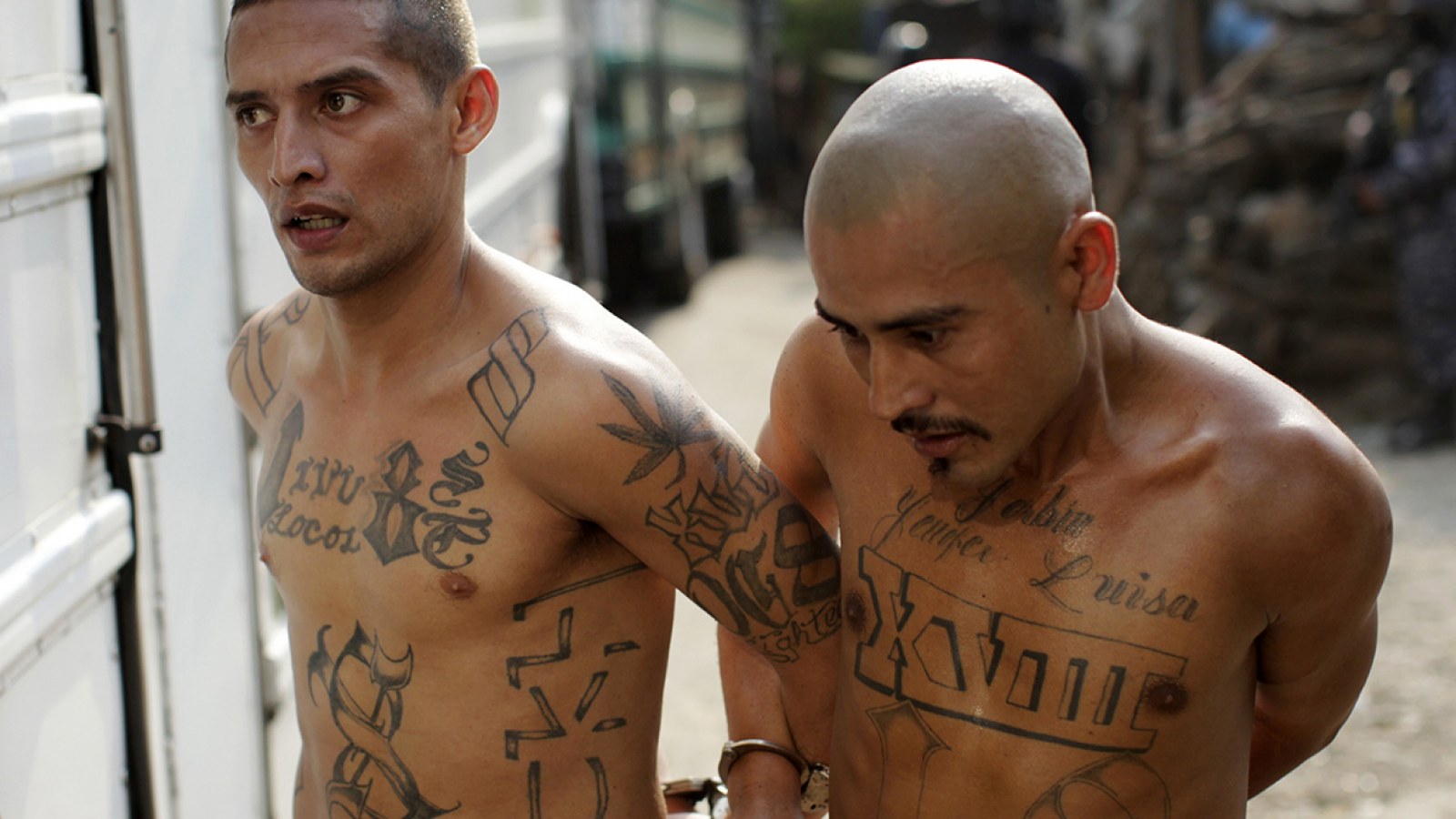
Next to these cartels, even the Crips and Bloods — the two oldest black gangs from L.A.’s legendary South Central — seem insignificant.
If black gangsta just quietly and peacefully shoot each other, then latino cholos practically revel in violence. For example, MS-13’s signature move is chopping off limbs with a machete. Barrio 18, on the other hand, rarely goes for the head, but they really love carving tattoos off people’s bodies with a pocketknife for anyone who wants to leave the gang. And that’s not even getting into recruiting schoolkids, dismembering random witnesses, human and arms trafficking, theft, robbery, and all the other everyday hobbies of some expats from Latin American countries.

Both gangs are made up of illegal immigrants who fled for perfectly objective reasons. For example, MS-13 was formed by illegals from El Salvador who were escaping the civil war of the 1980s. Then for many years they stayed “dormant,” didn’t band together, and didn’t do anything noticeable. Everything changed in the early 2000s, when the illegals started to “wake up” and become the most brutal gang in America.
The U.S. authorities were also asleep, having let millions of illegal immigrants into the country. They only woke up under Obama, who launched large-scale deportations. Every year of his first term, he deported 400,000 people, and in total, he expelled 3 million undocumented immigrants from the country — earning himself the nickname “Deporter-in-Chief.”
By the end of 2025, Trump didn’t even come close to the scale of deportations carried out by Barack Obama. In his first term, Trump managed to kick out only a million illegals. In the first year of his second term, Donald sent 290,000 people back home, just 7% more than Biden did in his last year. Of course, Trump can still beat Obama’s record in his remaining years, but he’ll have to move thrice as fast to do it. At the same time, the higher share of deportations without criminal record under Trump hardly means much: this ratio has historically moved in a sinusoidal pattern.
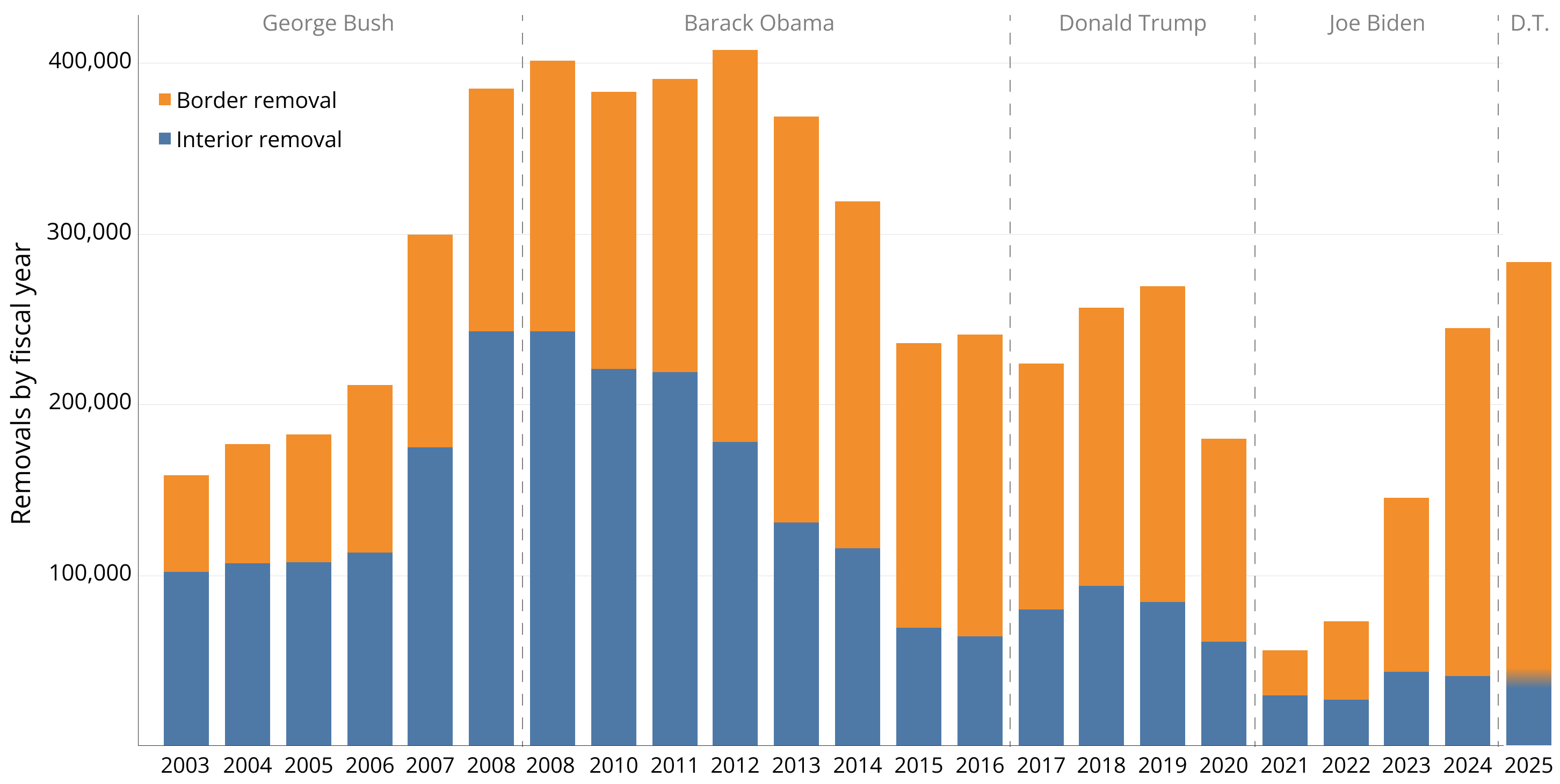
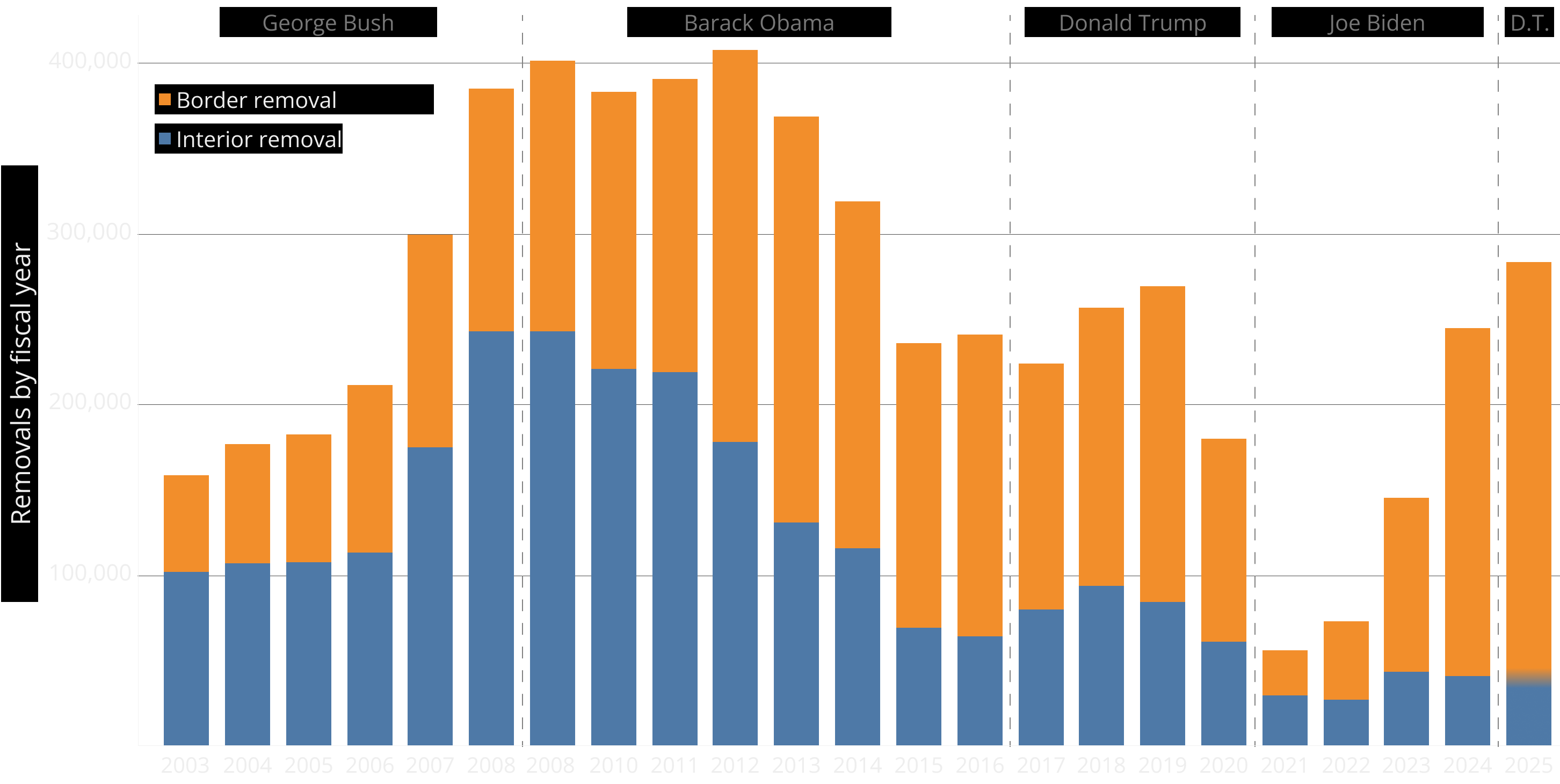
U.S. Deportations in the 21st Century
The difference with Obama is that he carried out deportations quietly, without any fuss. Trump, on the other hand, puts them on display, turning them into a political show. Well, that’s just him.
The pilot episode of the series “Deport This” aired in March 2025.
According to the movie’s plot, boats full of illegal migrants from Venezuela are sailing to Florida through the Caribbean Sea. The main character, Major Donald, gives the order to intercept. His plans are ruined by the villainous Democrats, who remind him of the pirates’ code international law. So Donald digs up an old scroll from 1798: the “Invasion Act,” and sends the illegals to Guantánamo — a prison for terrorists. However, instead of torture chambers, it turns out there’s a secret migration center there, set up back in Obama’s day. The unlucky pirates get marinated there for a couple of months and are then shipped off on a direct flight to El Salvador — 177 people or so.
After premieres like these, it’s no wonder so many Democrats call Trump a fascist. However, even under Obama, there were stories bordering on the surreal. One U.S. citizen was held in an immigration detention center for 2 years after being mistaken for an illegal. Another was deported to Mexico, where he wandered for 4 months.
Immigrant detentions are carried out by an agency with an intimidating name: ICE. This acronym indeed sends a chill down the spine of any immigrant. Unlike the police, who are not allowed to check documents without reasonable suspicion of a crime, ICE’s powers are far broader. Not only is ICE a federal agency that does not answer to state laws; U.S. law also grants it the authority to detain and deport illegal immigrants without a court order.
Perhaps ICE is the most hard-line branch of the U.S. executive. It was created in 2003, shortly after the September 11 attacks, and operates without much ceremony. The law does not even require agents to wear uniforms, which is why some of them appear in military gear or just in hoodies. Many ICE agents also wear face masks, explaining that relatives of the detained threaten their families. In short, running into a group of such folks on the street is a guaranteed post-traumatic disorder — not to mention that, viewed from outside, their actions may resemble a gang kidnapping.
Rümeysa Öztürk was detained after her student visa was revoked, a decision U.S. authorities linked to her political activism in support of Palestine
This may sound surprising, but ICE mostly arrests people based on lists. The raid videos flooding the internet are a forced tactic used primarily in so-called Sanctuary cities. States and cities in the U.S. are autonomous enough that they are not required to cooperate with federal authorities. Many cities — and the state of California as a whole — refuse to share migrant data, effectively forcing ICE to conduct raids and large-scale checks.
When Obama was in office, sanctuary cities were rare: federal authorities could easily obtain lists of all illegals and deport them on a large scale and without much noise. Under Trump, however, this turned into a war. Democrats compare ICE to the German Gestapo, while far-left activists call for physical resistance. While the comparison is somewhat interesting, so far the main outcome of this resistance has been hundreds of harsh arrests — and two fatal incidents.
Social systems are always imperfect. Courts regularly issue unjust rulings. Thousands of innocent people are sitting behind bars in prisons. In the end, we’ve got 51 million immigrants living in America, including 13 million undocumented. With a system that’s 99.998% accurate, a thousand people would still end up being unjustly deported. That level of accuracy is completely unattainable, but more than enough for a massive media scandal.
Guns
As long as there are armed gangs in America, there can be no talk of banning guns. Otherwise, everything will go exactly by the book: the gangsters won’t give up their weapons, and decent Americans will be left defenseless.
Overall, the freedom to bear arms was conceived not so much for protection from criminals as for protection from the government. The Second Amendment to the Constitution doesn’t just allow people to own a handgun. It talks about a militia that is necessary for the security of liberty. The Federalist adds that the militia should consist of a million armed citizens to balance out a federal army of 30,000.
Today, socialists love to repeat that the Founding Fathers lived in the 18th century and, when they talked about arms, they meant muskets. By that logic, one could say that when they talked about freedom of speech, they meant handwritten letters. No, they were talking specifically about the kind of weapons that can stop an army. And only the phrase “to keep and bear” hints that tanks, after all, don’t make the list.
In reality, guns in the U.S. aren’t as simple as people think. In most states, you can easily buy and carry an assault-style semi-automatic rifle, a hunting rifle, a carbine, a pistol, a revolver, a shotgun, a crossbow, and a good old 18th-century musket. Sure, before the sale, the store runs a background check with the FBI, but you can always buy something used, person-to-person. But the heavier toys, like a grenade launcher, you can’t buy even in Texas.
Still, it’s unlikely that the grenadelauncherization of America will do much to help in the fight against the state. There are already more than enough scandals involving weapons, not just because of freedom, but also because of bans. While in Texas you can stroll around with a shotgun, in New York and California, you can’t even buy a basic handgun. To get one, you have to fill out a form, give fingerprints, sit through an interview, collect character references from your neighbors, pay a $500 fee, and then wait about a year for them to review your application. And guess what? You’re not even allowed to take the gun out of your home!
In fact, in New York, they only recently allowed people to buy pepper spray. Just a year ago, it was sold only in pharmacies with a special license and had to be registered with the police. Do I really need to explain that California and New York are blatantly violating the Constitution?
The reader will object: but New York and California are the richest and safest states. Yes, but that has nothing to do with guns. New York State introduced strict licensing back in 1913. Over the next hundred years, the city went through both safe periods and a monstrous crime wave in the 1990s. If bans actually worked, the murder rate wouldn’t be bouncing from 5 to 30 and back again.
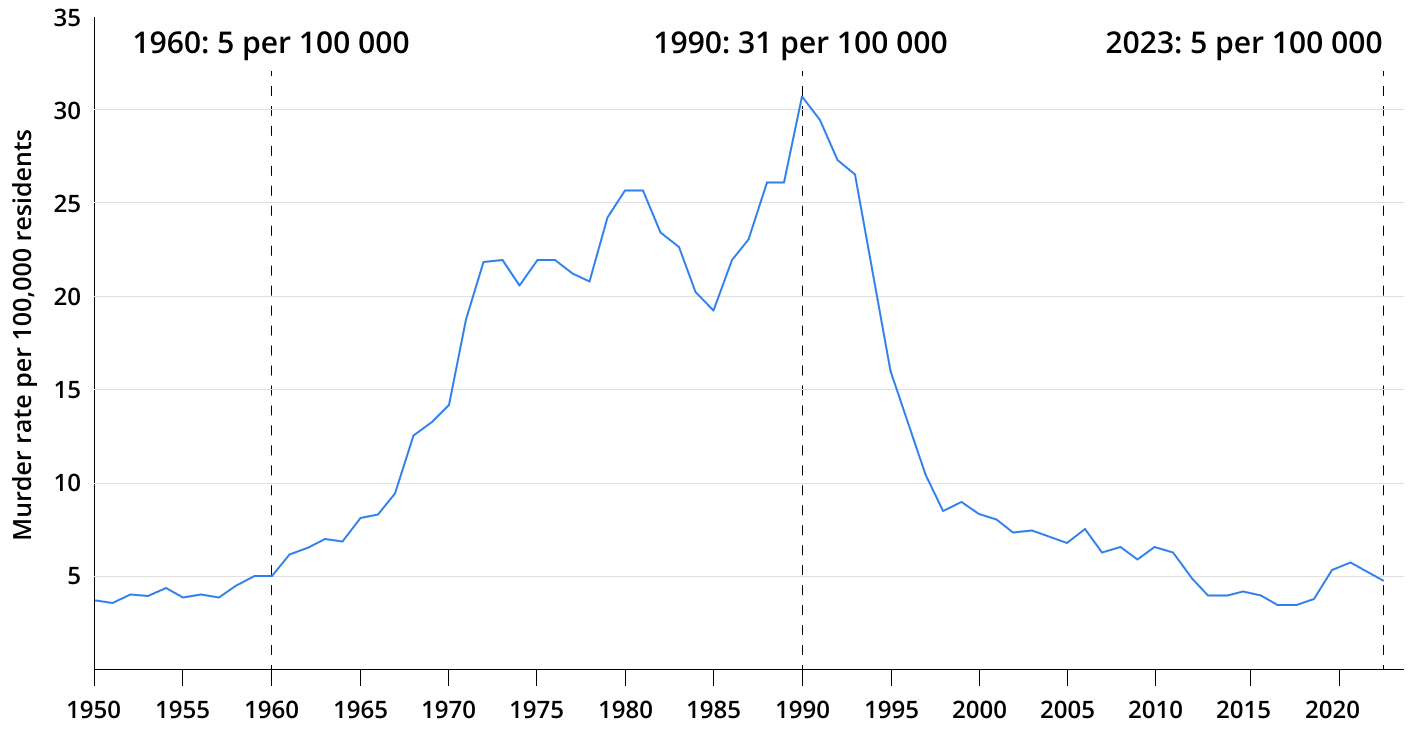
The gun ban in New York didn’t keep the city from leading the nation in murders in the 1990s
In fact, America had its own wild nineties. Crime was skyrocketing all over the country. Back in the 1980s, civil wars broke out in Central American countries, so the U.S. got hit with a wave of illegal immigrants, and the cartels flooded America with crack and heroin, the demand for which was boosted by the economic crisis. By the early 2000s, the crisis had blown over, the police force had been beefed up, and hard drugs had gone out of fashion — probably right around the time Kurt Cobain, the lead singer of Nirvana, blew his brains out with a shotgun.
By the way, Cobain also made it into the gun death statistics, since those include not only homicides but suicides as well. Moreover, suicides account for almost 60% of all gun deaths. And here lies the first reason why there’s so much shooting in America.
The reader may have seen how the number of murders depends on the level of gun ownership in each state. The chart shows a nice, clean linear relationship, which is why this picture is so popular in propaganda. But if you subtract suicides, the correlation becomes barely better than noise, and most states drop below 5 murders per 100,000 people.
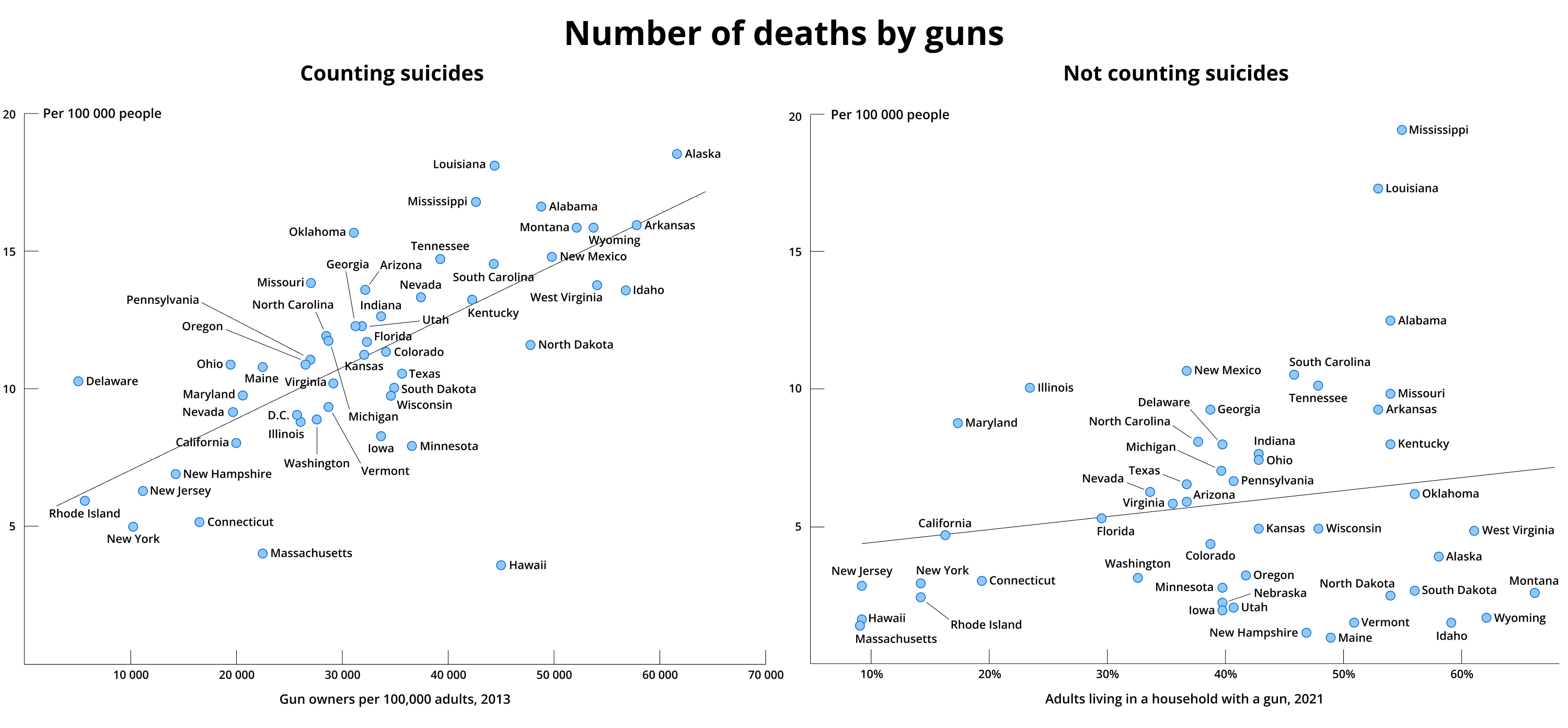
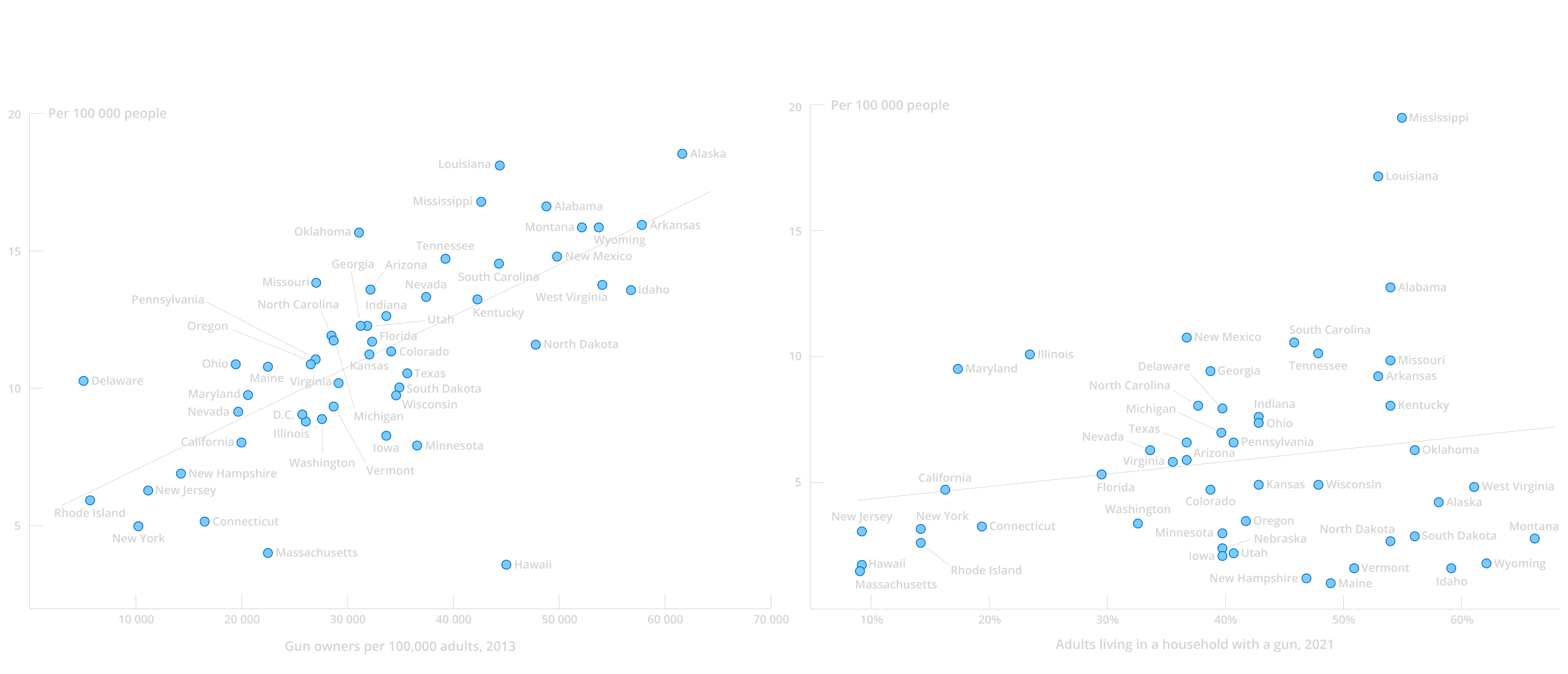
Still, that’s a lot for a developed country. Rarely did any European city ever reach that level, even counting all murders, not just gun-related ones. The most dangerous place was Eastern Europe after the collapse of the USSR. When the homicide rate in Lithuania, Latvia, and Estonia climbed above 10 per 100,000 people, it was considered a national disaster — yet today, dozens of cities in the U.S. are at that level.
Even in Russia today, it’s hard to find places that dangerous. Only in Chukotka and Tuva does the murder rate stay above 25. After the collapse of the USSR, Moscow had the same level, and in many regions it exceeded 50 murders per 100,000 people. That time is now called the “wild nineties” in Russia, and Putin built his political career on people’s fear of going back to that era.
So, in recent years, even in the U.S. capital, Washington, D.C., there was a spike up to 40 murders per 100,000 people; in Detroit, the rate reached 50, in St. Louis 70, and in New Orleans 72. And levels like that are nothing unusual for America. The country has basically been living in the “wild nineties” for half a century now.
What does that kind of murder rate look like in practice? Does it mean you shouldn’t even drive past these cities? Well, the author walked around New Orleans with a big camera. The city looks depressing.
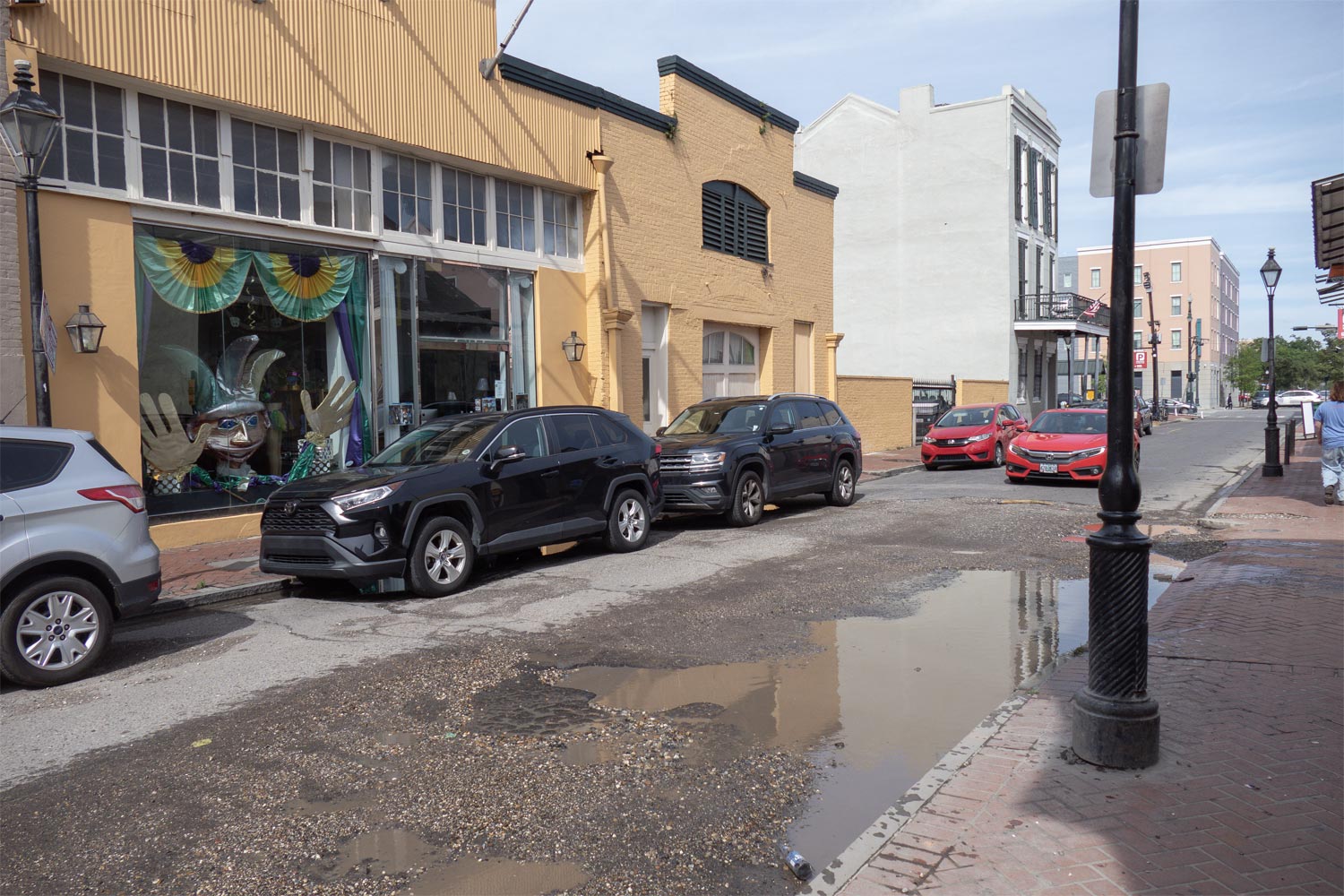
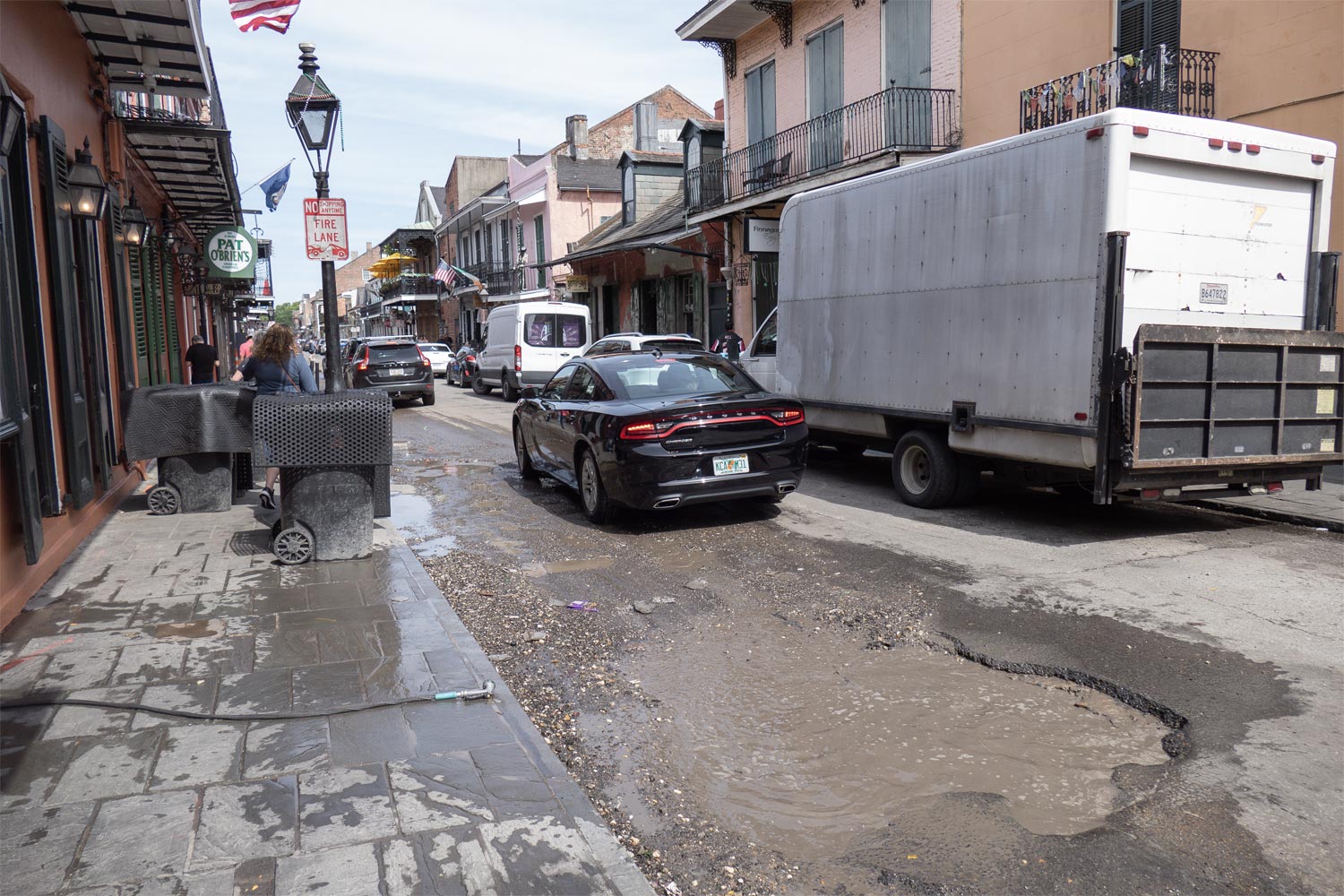
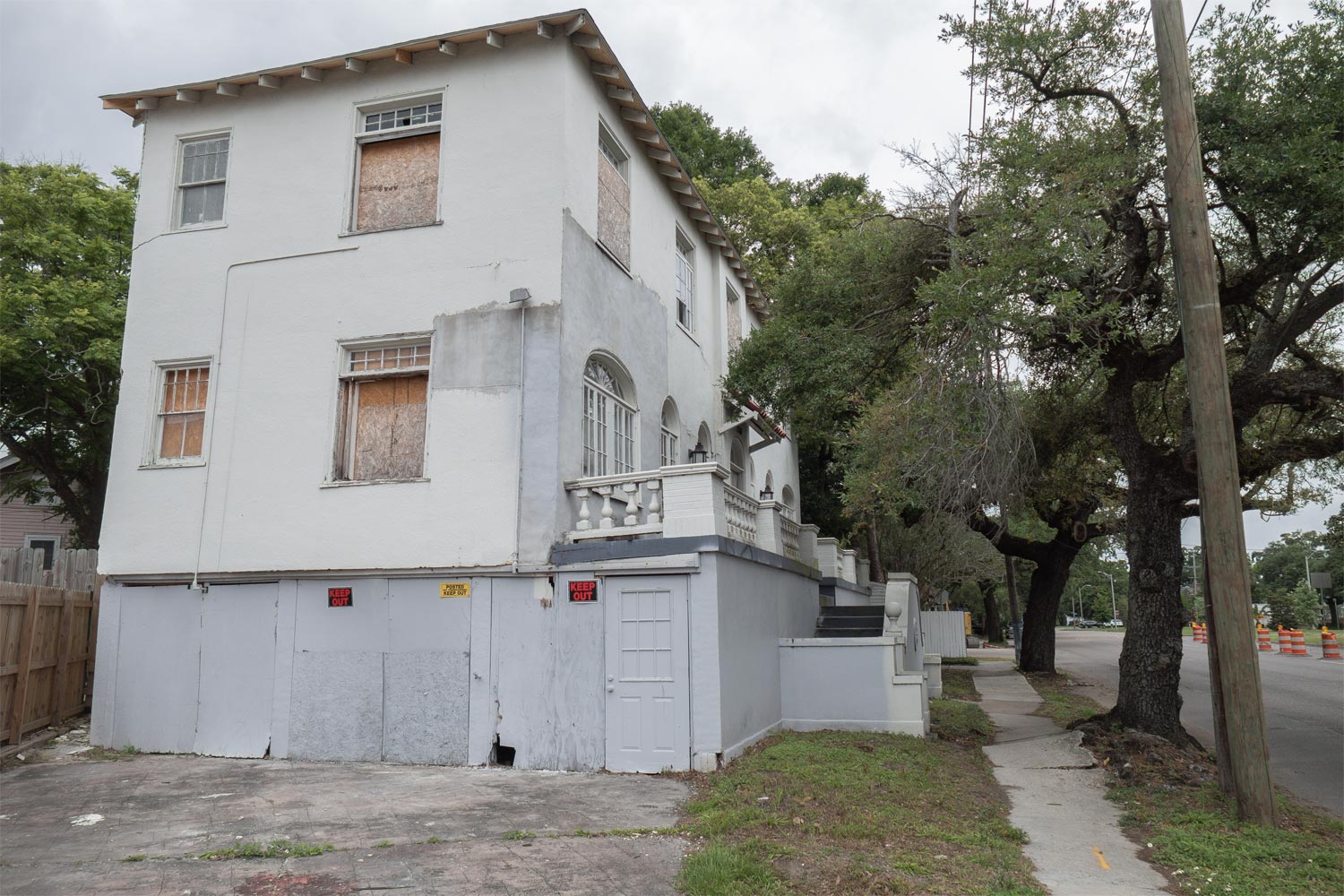
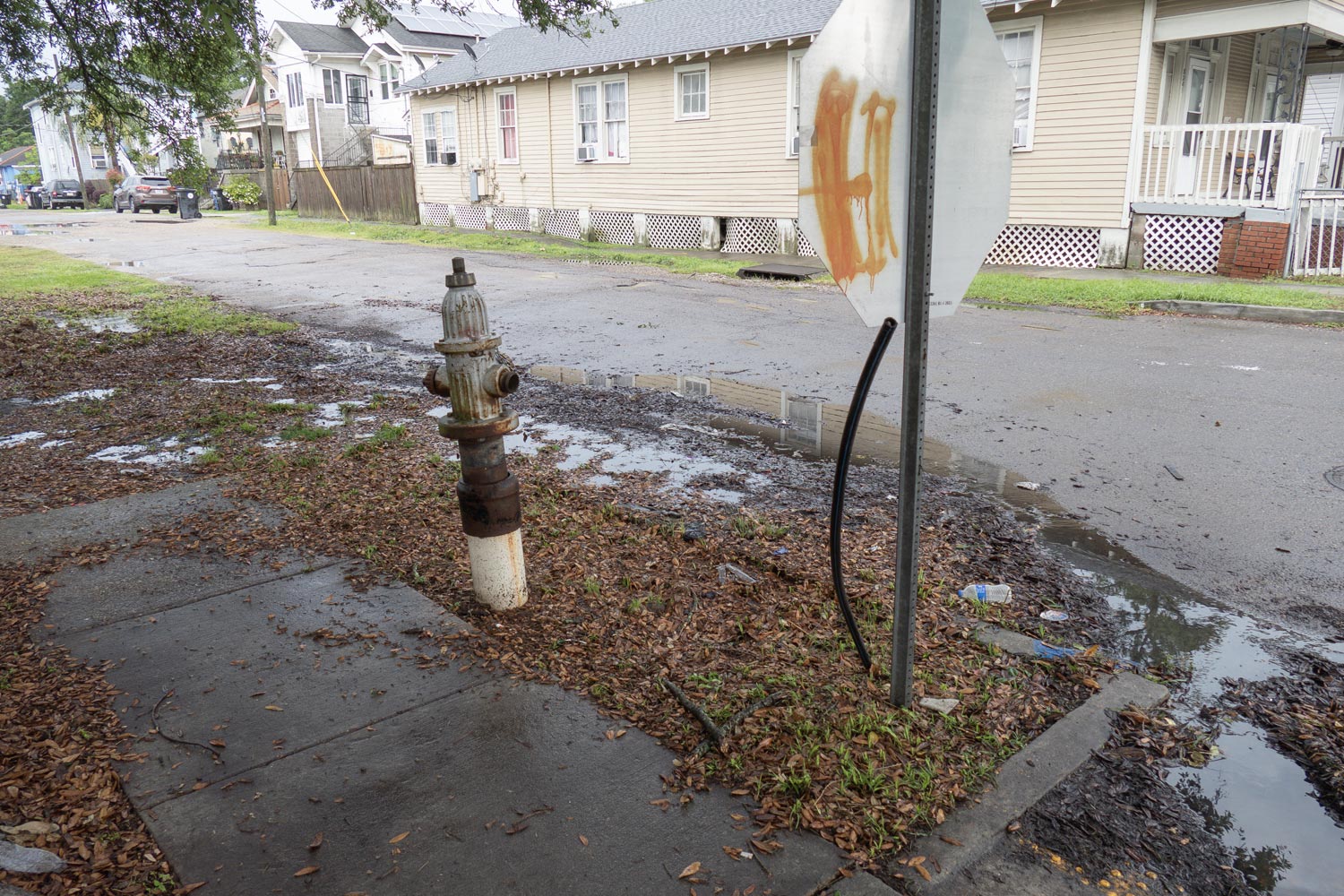
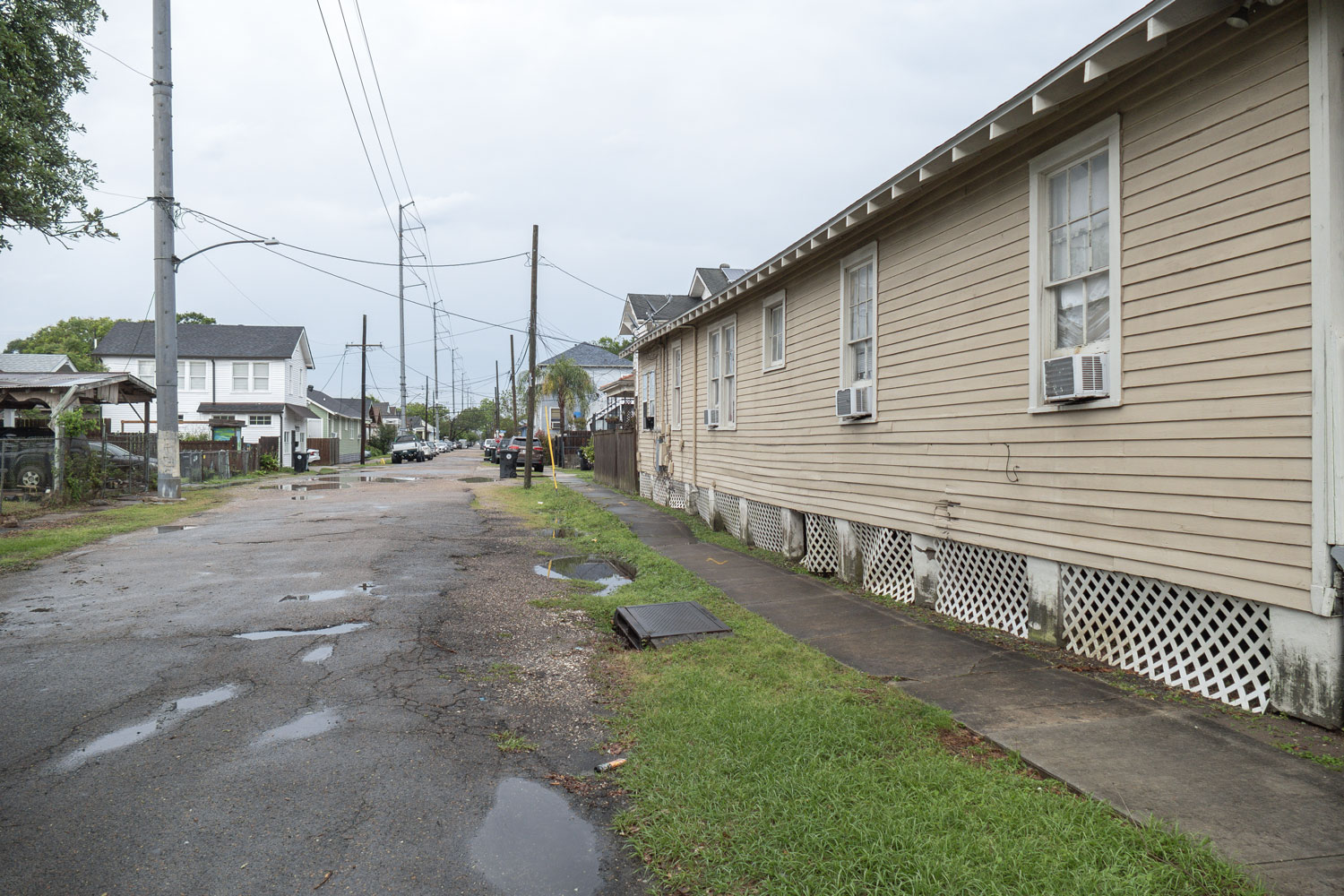
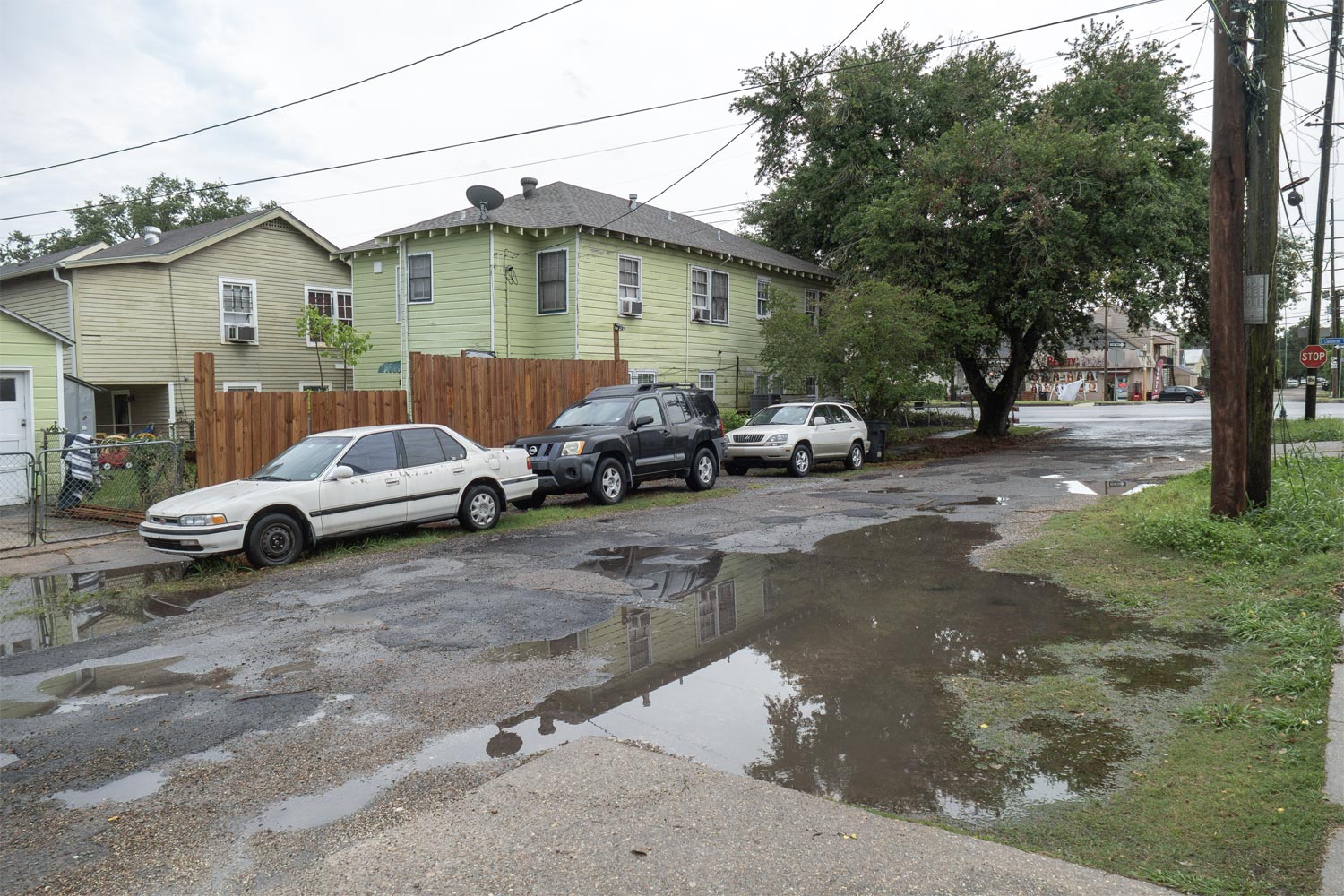
So why did I survive, then? Obviously, crime isn’t spread in a nice, even layer over all of New Orleans. Every city has its dangerous and its safe neighborhoods. Tourist spots are well guarded, and locals just instinctively know where you can walk around and where you absolutely shouldn’t.
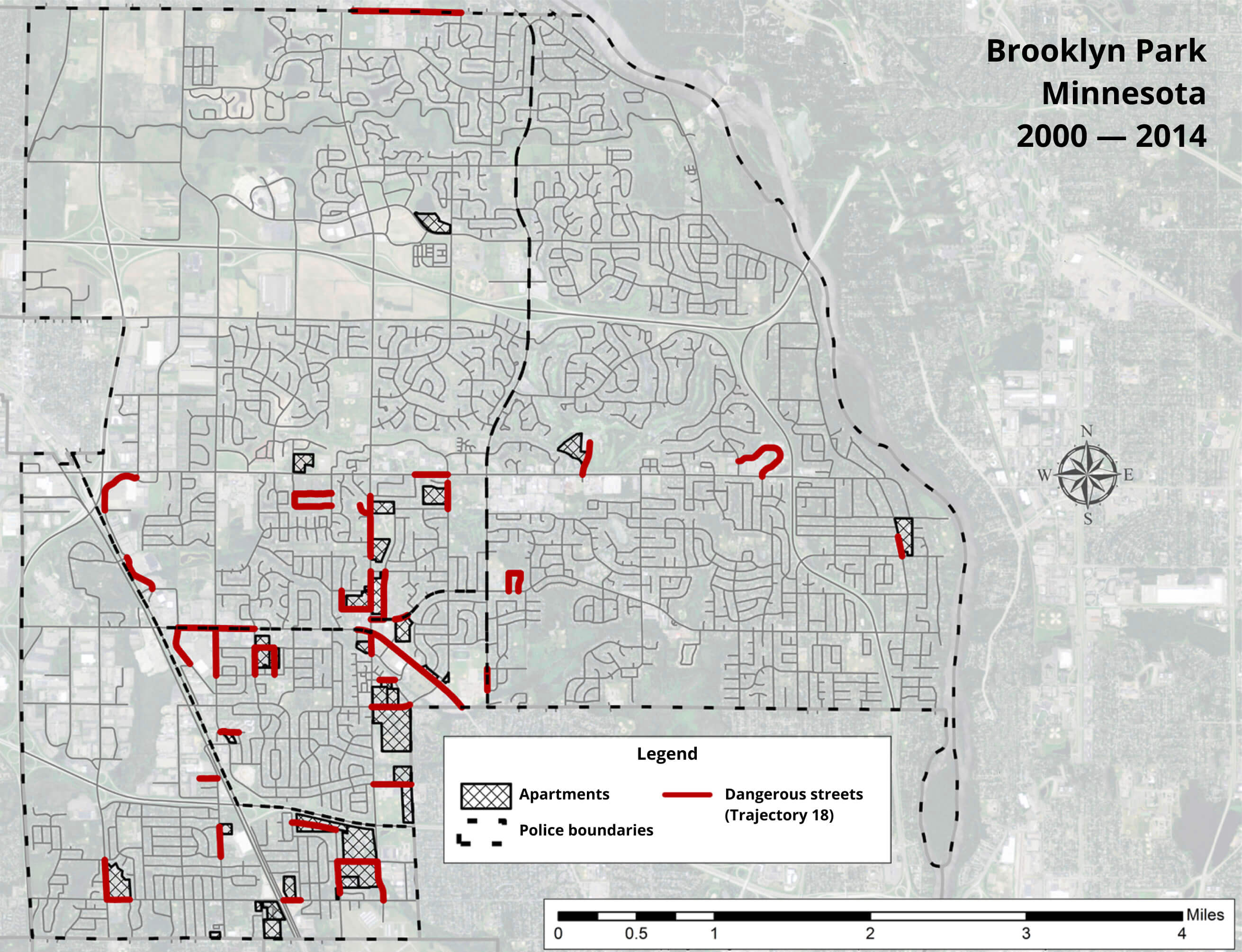
But intuition is one thing, and evidence is another. Only recently did criminologists formulate the law of crime concentration. It confirmed what ordinary people — and especially cops — have known forever: 5% of the streets in any city account for half the crimes. On the map, they show up as a few thin red lines. Those are exactly the places you really shouldn’t go!
The author headed down one of those streets, only in Baltimore, where the murder rate that year hit 50. The Hopkins–Middle East neighborhood is considered one of the most dangerous in the city. Reports of killings often come from its intersections. The area really turned out to be nothing special. Many houses were boarded up, trash was visible through gaps in the fences, and weeds were pushing up through the concrete sidewalks.
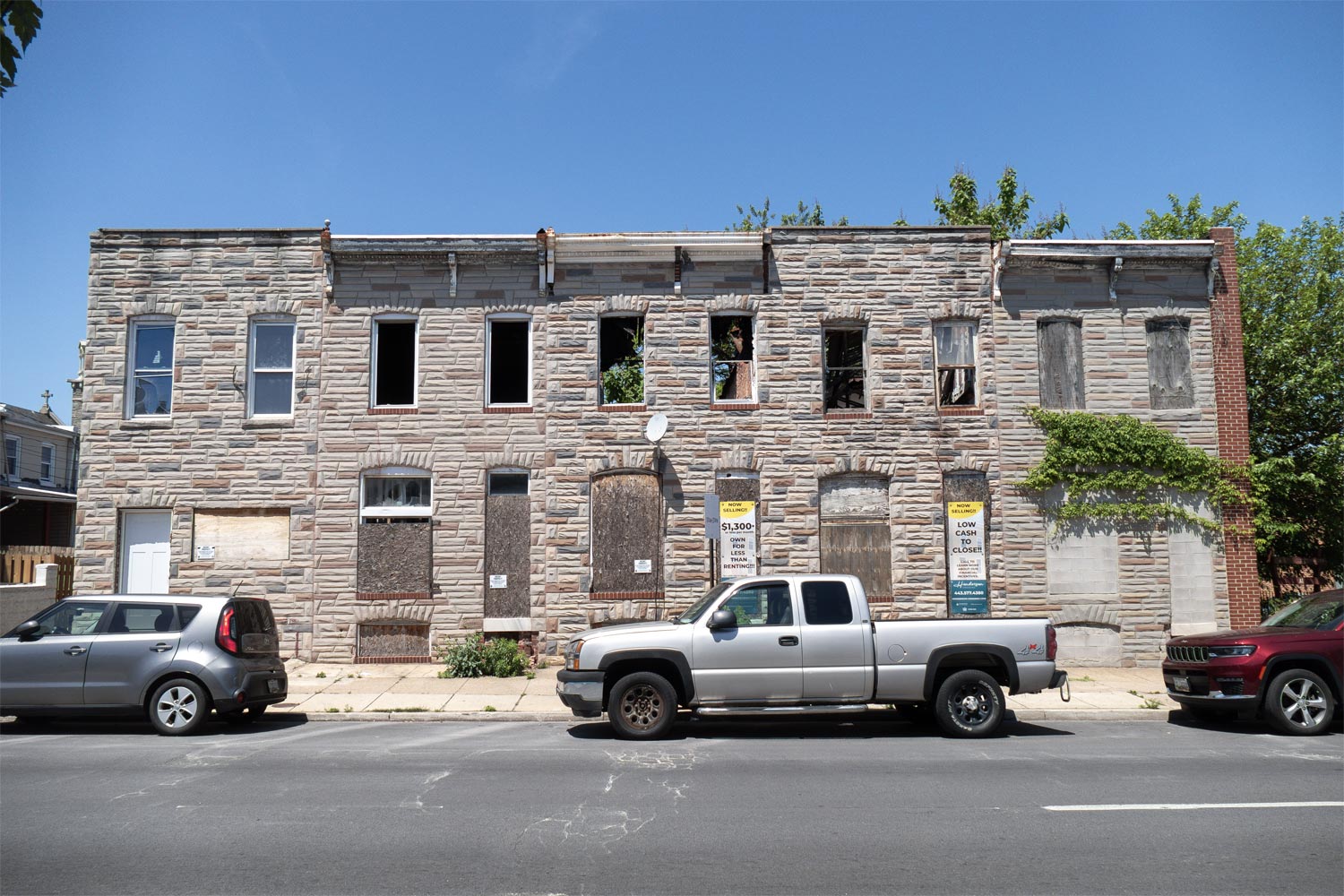
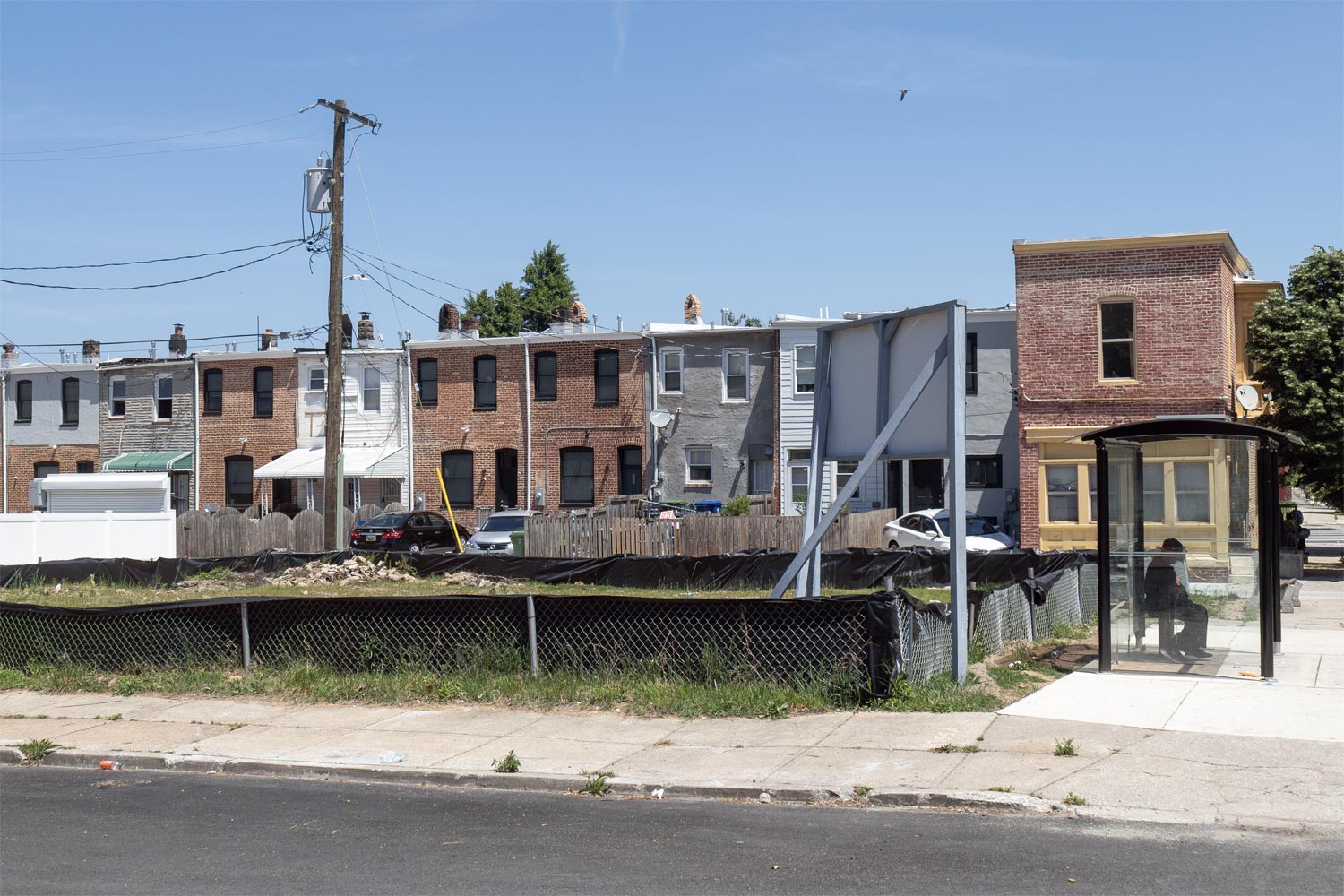
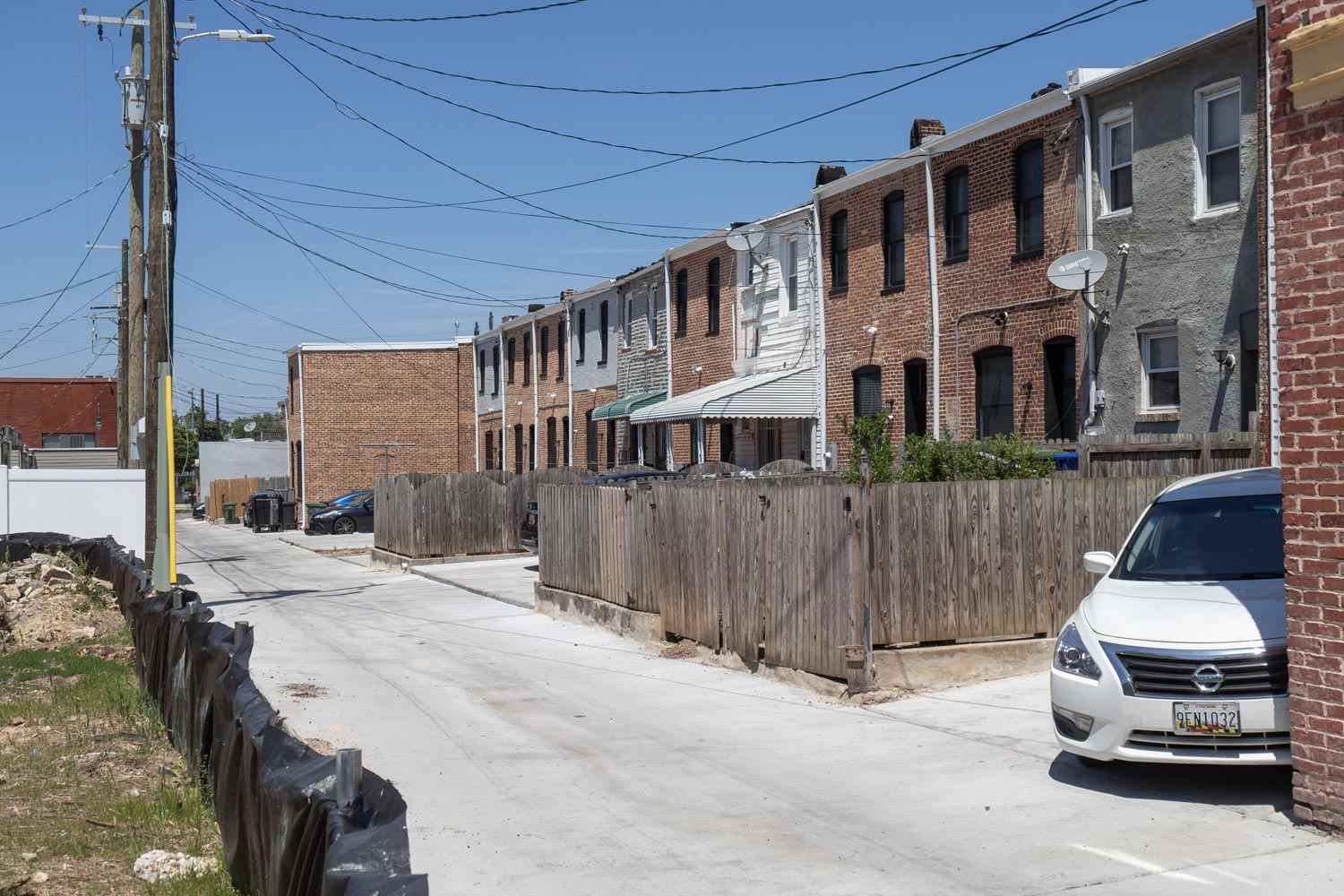
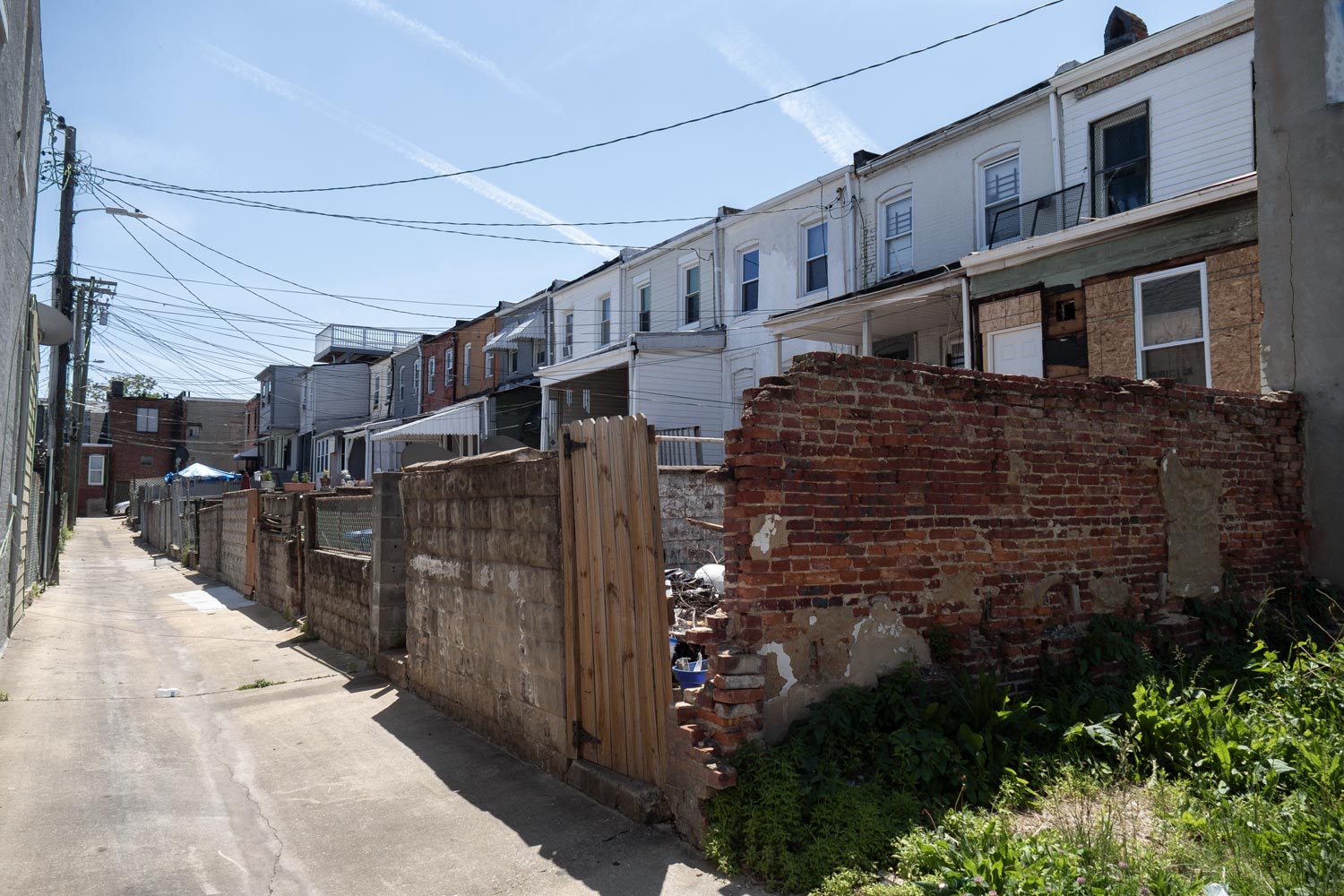
The spot where the murders most often happened turned out to be a big vacant lot overgrown with clover. Next to it stood an abandoned factory building, and not far off, you could see a filthy railroad bridge. Not a bad place to hang out here at night, smoke crack, and lie in wait for a victim.
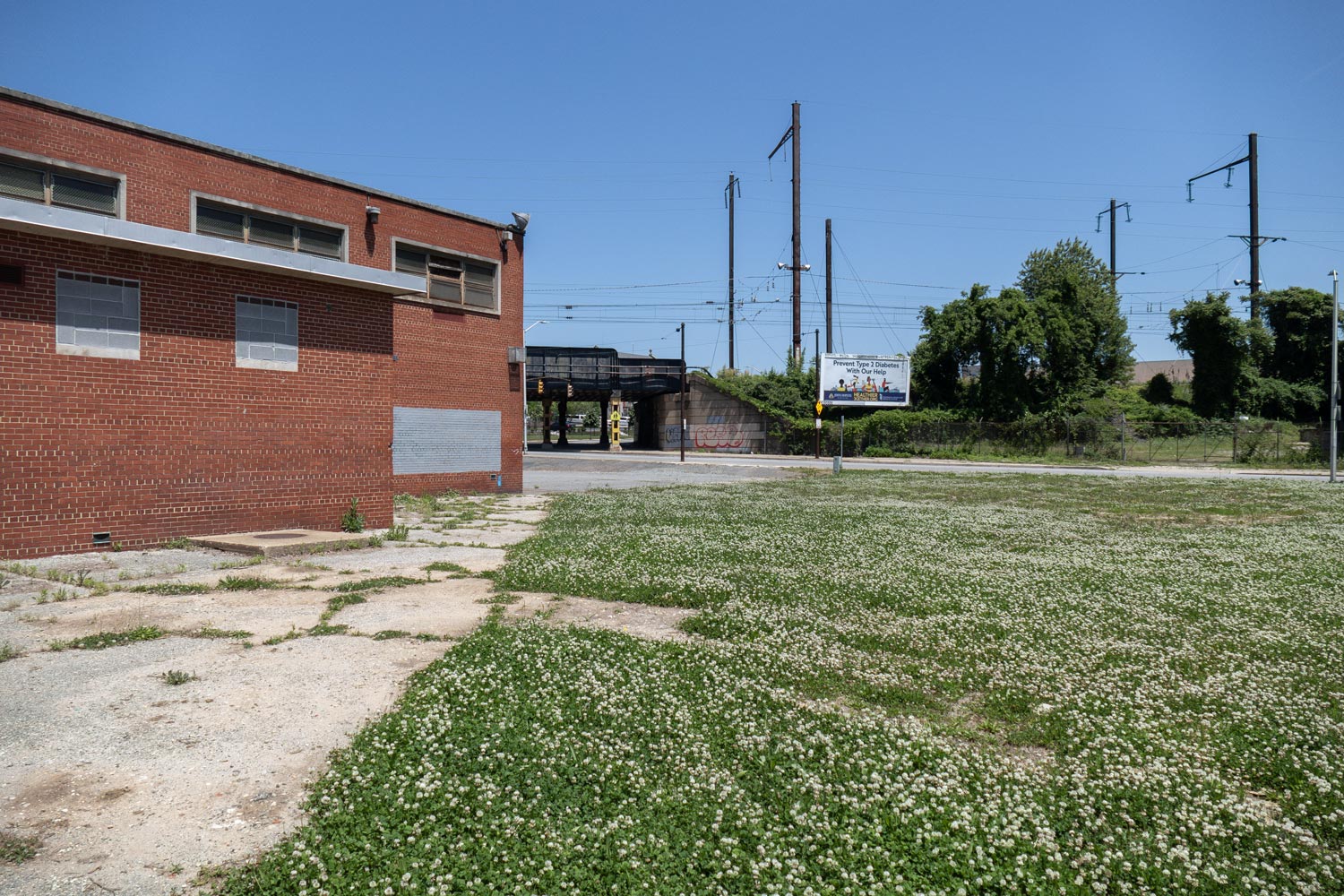
The most interesting thing was found under the bridge. A bicycle was leaning against the wall with a sign: “Cyclist killed here.”

This is more or less what the most dangerous places in America look like. Nothing special: just regular streets, only poor. There are places in the world that look way more run-down and terrifying. An inexperienced eye, especially that of someone from Russia, won’t immediately realize they’re looking at a crime-ridden neighborhood.
Who lives in places like this? There are two answers to that question. The first is obvious: people at the bottom of the social ladder — urban poor and the unemployed, with plenty of outcasts, drug addicts, and criminals among them. The second answer is much less comfortable, though it hasn’t been a secret for long. Most of these neighborhoods are black. Alas! If you overlay a map of Black America on a crime map, you’ll see they almost perfectly match .
The murder rate among whites is much lower, even in dangerous cities. For example, in Philadelphia, where there’s been a drug epidemic going on for years, it has never gone above 2.5 per 100,000 people. That’s not so far from Europe, where that level occasionally pops up in some place like Brussels.
In reality, in the white regions of the U.S., it’s rare to have more than 3 murders per 100,000 people. That’s the level in Idaho, Montana, Wyoming, Vermont — and in all these states, the black population is under 2%. The safest state in America is New Hampshire, where the murder rate is just 1.85. But the best part: in all these states, guns are completely legal!
Well, the reason for the high crime rate in the U.S. is clear. It’s not the guns themselves, but the armed gangs, which mostly consist of latinos and blacks. Now we just have to figure out why exactly black people commit 7 times more murders. Could it really be about race? We’re about to find out.
Blacks
In American English, the word “negro” is a harsh slur. In Russian, it’s almost the opposite: the everyday word “black” often carries a much stronger note of contempt, because it’s practically a synonym for “dirty.” That’s why even educated Russians living in America will often say “negro” when speaking their mother tongue. As for regular Russians back home, they have little sense of what American racism actually is: black slavery is one horror Russia never experienced.
In fact, it wasn’t always like that in America either. Originally, the offensive word was “nigger,” while “negro” was a neutral way to refer to a black person up until the 1970s. Today, though, any form of that word sounds like an insult. However, contrary to popular myth, there isn’t a single law in the U.S. that forbids using the word toward a black person. They say Quentin Tarantino used it 244 times in his movies.
So why are Americans so terrified of this word that they coyly call it “the n-word”? To my readers from Russia, I explain that they could walk up to a Chechen and say: “Hey, churka.” In Russia, the first time you pull a stunt like that, you get a fine; for a repeat offense, you get up to 5 years in prison. Similar penalties for inciting hatred exist in all European countries and in most countries of the world. Only in the U.S. is freedom of speech truly absolute.
That doesn’t mean, of course, that an American can get away with calling black people “niggers,” Chinese people “chinks,” Indians “dotheads,” and Arabs “towelheads.” He’ll be kicked out of his job instantly, and on Facebook — good lord! — be banned. So people only use those words among themselves or when they’re swearing at someone. And that’s a good thing.
However, there’s a downside to all this self-censorship. Afraid of coming off as racist, the average American prefers not to discuss any questions related to human origins at all. And while they can just barely stomach a phrase like “Chinese have the highest IQ,” they absolutely lose it at “blacks commit more crimes than whites” — they gasp, clutch their heads, wave their arms, and cross themselves in the shape of a hammer and sickle. Yeah, young socialists take statements like that especially hard; they seriously believe that this is exactly what racism looks like. But there are about as few real racists in America today as there were real communists in the USSR.
Racism isn’t just some swear word; it’s a belief in the superiority of one race over another. And this superiority isn’t about being better at running banks, sprinting, or writing depressing novels — talents different peoples might have. It has to be a belief in the superiority of one kind of human dignity over another.
If someone looks at IQ test results by country and says that the Chinese are smarter than Haitians, that doesn’t make him a racist. Even if he suddenly decides to explain this difference with genetics, that still doesn’t make him a racist — though he’ll fully earn the title of dimwit. He becomes a racist only when he claims that a Haitian has less human worth than a Chinese. That’s what racism is!
Fortunately, you’d be hard-pressed to find any real racists these days. Sure, you’ll run into the occasional video where yet another blogger reveals the “big secret” about IQ differences between countries, but very few of them try to explain that gap with genetics. And the ones who do never go so far as to suggest that anyone should be oppressed or labeled a “lower race” because of it.
People like that aren’t racists. They just don’t have a technical education. If they’d studied statistics, they’d know you can only compare averages between samples when the variance within each sample is small enough. In the case of IQ, the sample variance is so huge that comparing average scores between nations is about as meaningful as dividing by zero.
Version for humanities majors. Let’s say Gryffindor students range in height from 150 to 220 cm, and Slytherin students from 140 to 220 cm. Then the average height of a Gryffindor student will be 185 cm, and that of a Slytherin student will be 180 cm. Can we say that, on average, Gryffindors are taller than Slytherins? You can say it, sure, it’s a free country — it’s just that their height spread is so huge that it’s basically meaningless.
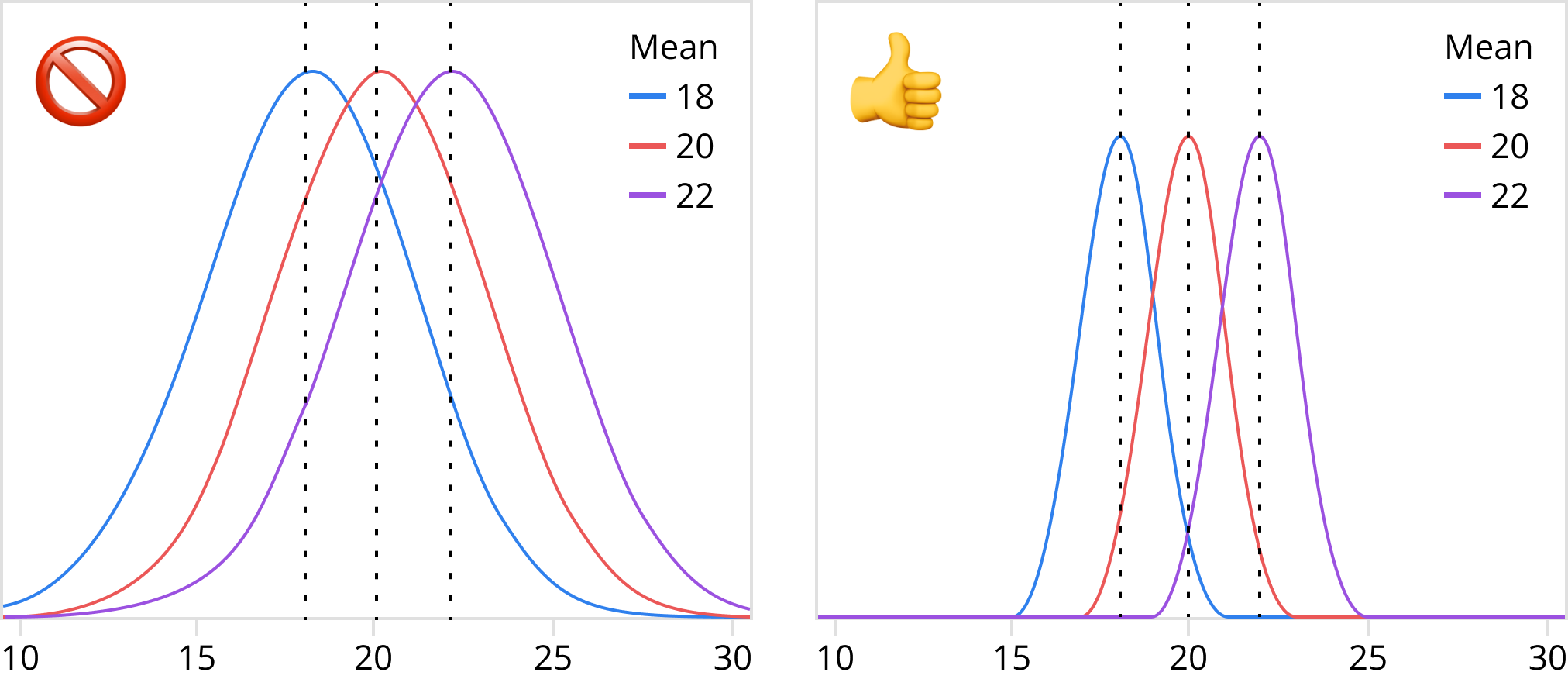

The concept of an average is meaningless when the variance within a group exceeds the variance between groups. This is true of all IQ tests
In reality, things are even worse with IQ tests. The problem is that the test produces an asymmetric distribution, meaning it behaves differently for low and high values. Below an IQ of 95, people really do get dramatically dumber, but above 105, there’s no difference in salary, wealth, or job complexity. Asymmetric distributions are not exactly something they teach in liberal arts colleges. So bloggers look at the left half of the graph, draw a trend line through the low-score area, and then mindlessly extend that line into the high-score area, even though there’s nothing there but noise.


The correlation between income and IQ becomes noise at scores above 90
The author doesn’t even want to talk about how crudely the obtained scores are forced into a Gaussian distribution during recalculation. IQ tests in America weren’t abolished to “go easy on underperforming black students,” but because they have been demonstrably shown to be mathematically worthless and are useless not only for comparing nations, but even for assessing individual intelligence.
From a biological point of view, everything is much simpler. Skin, nose, eyes, hair — these are external organs, and the differences in them are adaptations to the external environment. But the brain is an internal organ. Internal organs don’t differ between peoples! The author has yet to meet an idiot who would claim that a black and a Chinese have differently structured livers or spleens. Yet the exact same kind of nonsense about the brain gets spread around even more eagerly than horoscopes.
Now that we’ve established there’s no connection between race and intelligence, let’s get to the point. The Black community in America today is at the bottom of a social pit. Black people commit a huge number of crimes, are often poorly educated, aggressive, use drugs, and abandon their families. Only a small percentage of the community acknowledges the problem. Any criticism is taken as racism, and white people are blamed for all of these problems. Many are even proud of their situation.
These aren’t my words. Thomas Sowell writes about all this — the author of books, an outstanding black economist and sociologist.

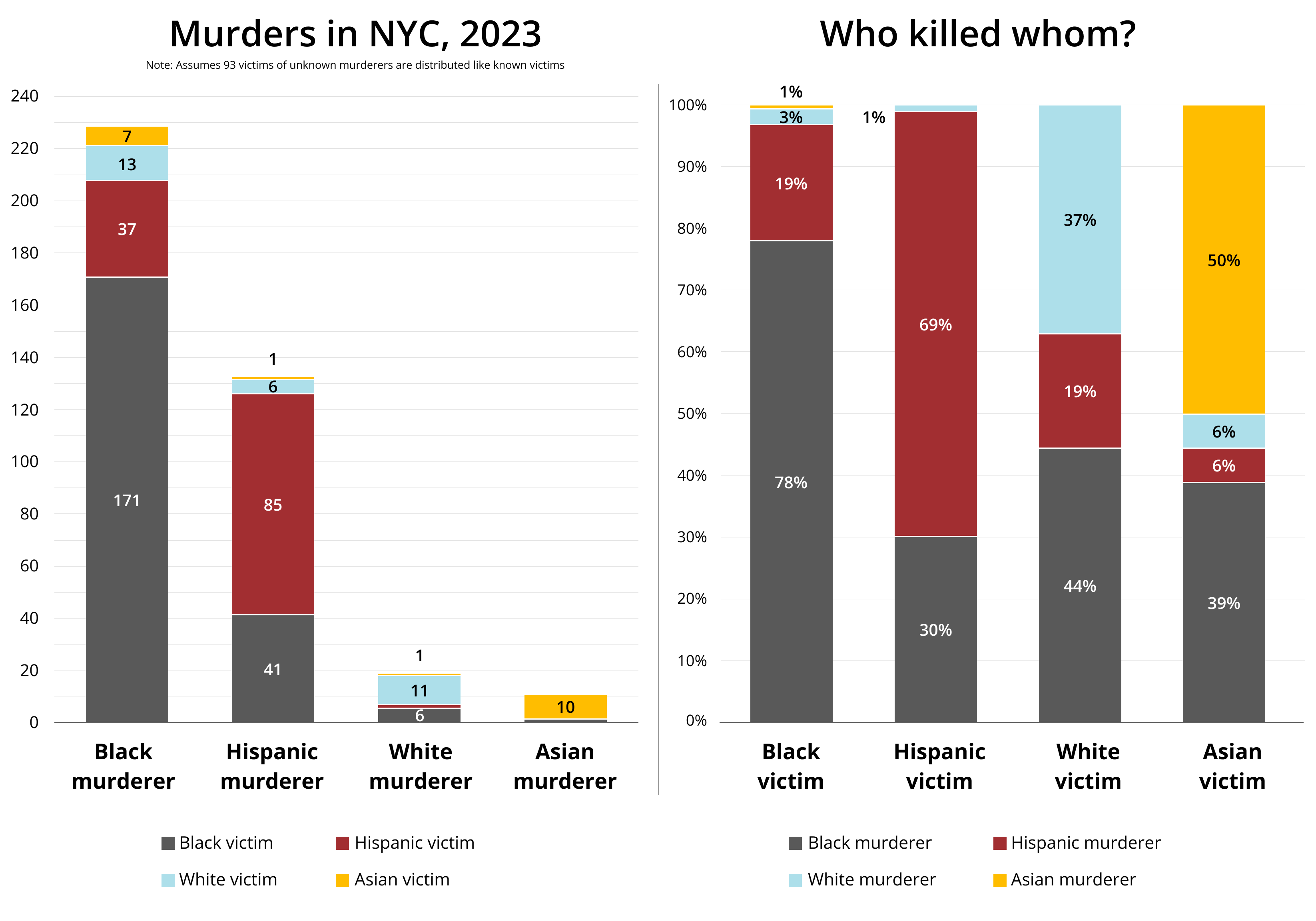
Blacks commit more than half of all crimes in the U.S. For example, in 2023 in New York, they accounted for 58% of murders. At the same time, black people make up just over 13% of the U.S. population. If you adjust for proportions, it turns out that blacks committed 12 times more murders than whites.
Is there a catch here? What if blacks are defending themselves from attacking whites and then end up in prison for self-defense? Nope. Most crimes committed by black people are against other black people. That same year, 78% of black victims were killed by black offenders. Latinos come in a very distant second: only 19% of black victims were killed by them, and whites account for a grand total of just 3%.
But it wasn’t always like that. The phenomenon is that the degradation of the Black community began in the late 1960s, right when segregation in America finally collapsed. Black people, who had previously gone to separate schools and used separate bathrooms in the Southern states, finally got equal rights. It was a grand victory for the Black movement that had been fighting for those rights for two centuries.
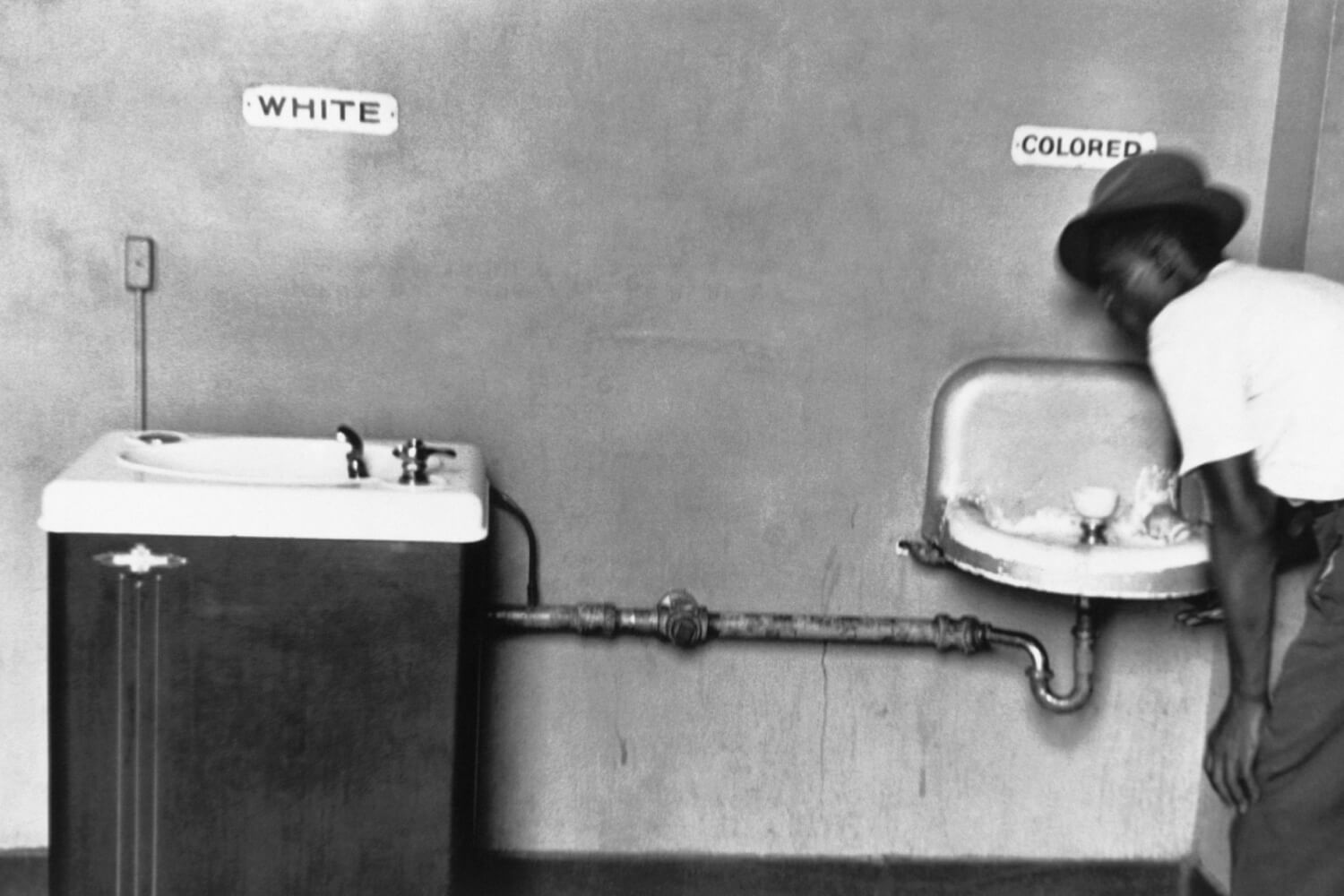
Before the 1964 reforms, there were even separate drinking fountains for black people
You’d think that after defeating racism, the Black community would have flourished, caught up with, and even surpassed its oppressors. But the exact opposite happened. It went sliding downhill.
If before desegregation only 20% of black children were born to unmarried mothers, by the 1990s that number had climbed to 70%, where it still sits today. If in the 1960s about 7% of blacks were unemployed, then in the 1980s, 20% of them were out of work, every fifth person. If before equality the murder rate was 20 people per hundred thousand, then after it was abolished, it doubled to 40 murders.
The catastrophe of the Black community is often explained by poverty. But poverty levels in America have been declining this whole time for all races. If before the end of segregation, about 55% of black people lived in poverty, then soon after it was abolished, the poverty rate dropped to 30%, and today it does not exceed 20%.
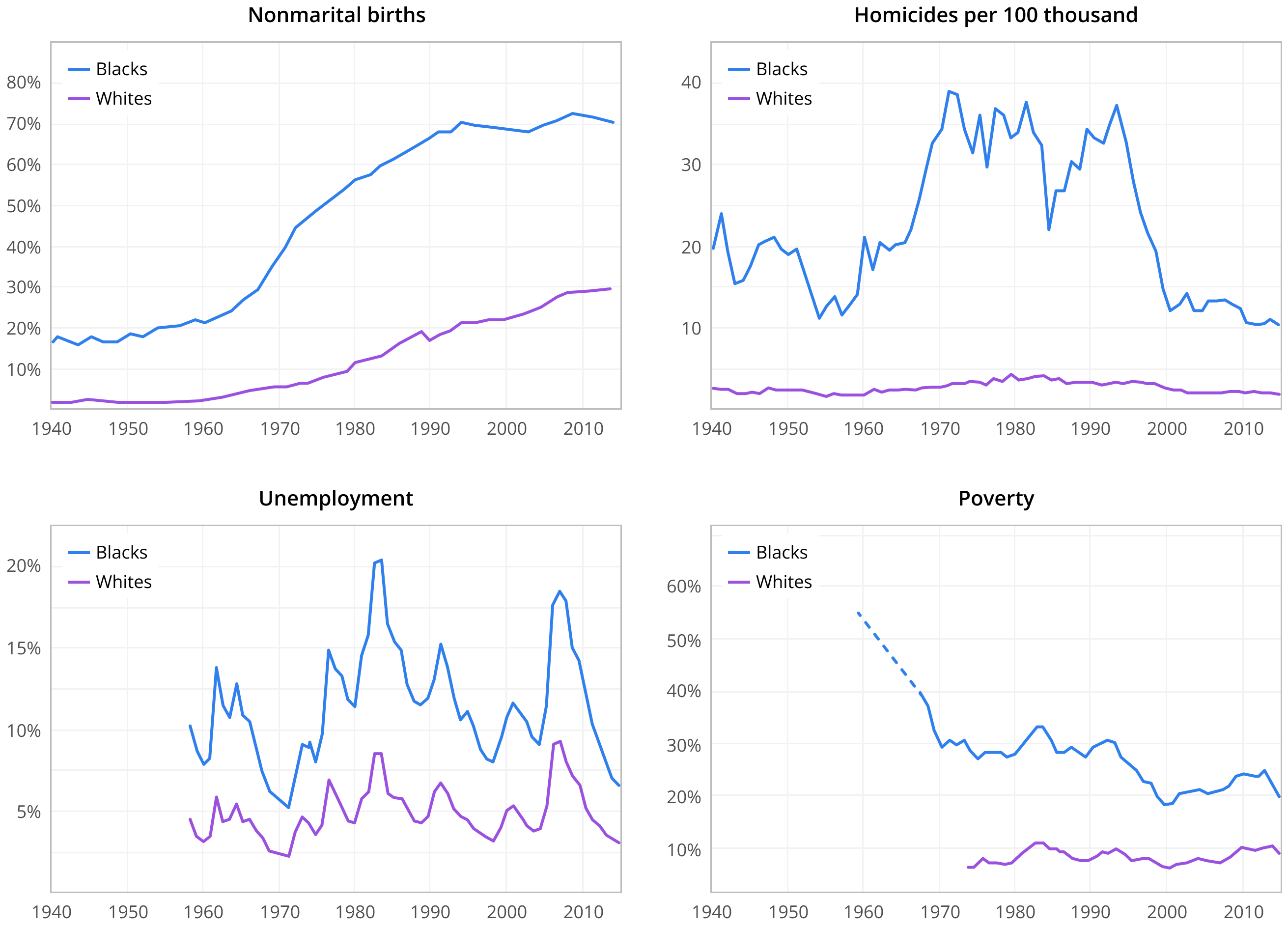
The author has been to the poorest countries, from Ethiopia to Cambodia. I can tell you that poverty is far from the main cause of crime.
People in Kibera — the largest slum in Africa — live on two dollars a day and drink water from the sewers. Their homes are made of rusty metal sheets and don’t always have electricity. It’s a terrible place, but a white tourist with a camera is unlikely to get robbed here. People in the slums are busy working: they’re fixing things, painting, building, or selling. They’re actually more likely to be glad to see visitors.
America is a whole different story. Here, even a poor black guy has his own house or apartment with a big TV, an air conditioner, and a game console. If he’s unemployed, the government gives him benefits. At the same time, Compton — the Los Angeles ghetto — is much more dangerous than the African slums: I had to hide my camera in a bag after every shot.
No, unemployment and poverty among American blacks aren’t the cause of the problem, but the consequence. The real reasons are much more interesting: the decay of black culture, bloated welfare, and the victim mentality that’s been instilled in blacks.

The slums of Africa are safer than American ghettos, because people there are busy working
After getting equal rights, black people only partially integrated into American society. Many of them, on the contrary, started defining themselves in opposition to white people. They could have taken the best expressions of their culture — jazz, home cooking with the sweet name “soul food,” poetry, oratory, and the art of barbering — developed them and blended them with White American culture. Instead, a significant part of the Black community went another way, trying as much as possible to amplify and emphasize their differences from whites.
Instead of jazz, the foundation of Black culture became rap. Based on poetry, classic rap soon degenerated into gangsta rap, glorifying murder and drug use. Smoking weed, hyped up in the movies, became the iconic image of a “real nigga.” Just like in Russia in the ’90s, you weren’t really Russian if you didn’t drink vodka, in America, a black wasn’t “one of the guys” if he didn’t have a lit joint hanging from his lips. Later, hard drugs came into play — crack and heroin — and Black culture merged with street and criminal culture.
At the same time, the U.S. government started handing out generous benefits to low‑income black families. Single mothers got especially large benefits; Democrats provided them with the full social package: housing, food, and insurance. Getting off welfare was impossible. Marriage or getting a job meant the end of all payments for a woman. As a result, anyone who went to work lost more than they gained.
The crowning disaster was the cult of victimhood. Socialists convinced the Black community that the source of its problems wasn’t its own mistakes and parasitic lifestyle, but external forces: the legacy of slavery, discrimination, and the ideology of “white supremacy.”
After the repeal of the racial laws, a group of sociologists from the Frankfurt School, who were developing Karl Marx’s and Friedrich Engels’s ideas of class struggle, proposed critical race theory. Though, to be fair, the word “critical” here is better replaced with “exposing.”
It all started with the idea of deconstructing text. It was proposed by the French philosopher Jacques Derrida. He claimed that no text can be understood literally, and that any text contains a hidden meaning that must be sought between the lines. Instead of becoming a basis for diagnosing schizophrenia, Derrida’s idea became the foundation of a “scientific” theory.
So, critical race theory claims that even though the text of the laws doesn’t contain any obvious signs of racism, racism is still secretly built into them. And if we read the laws between the lines, we’ll definitely spot the racism hidden in them and thus expose it!
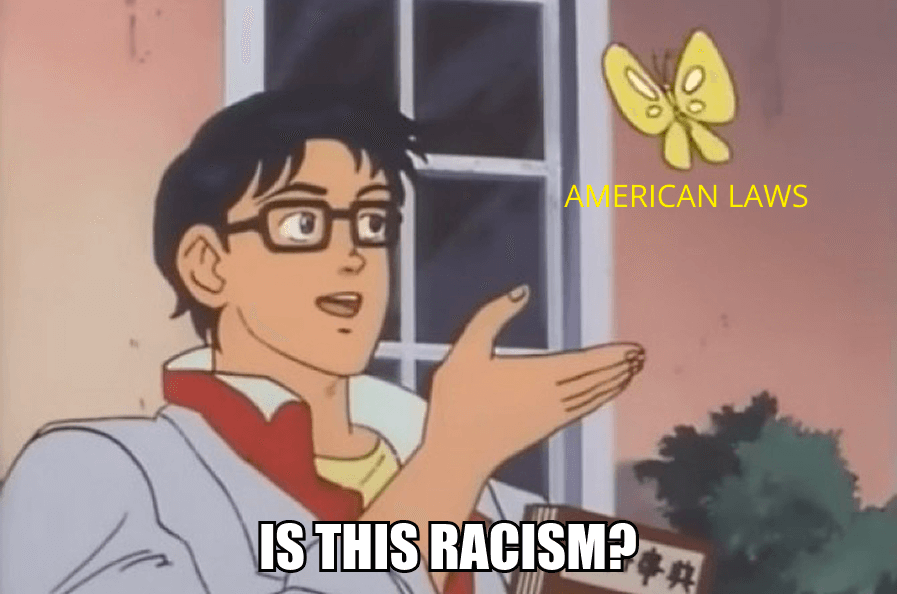
Yes, dear friends. It’s not just old man Trump who loves conspiracy theories!
The craziest consequence of this theory was the idea that racism only works “top-down.” American socialists claim that racism can come only from the ruling group. And since in the U.S. most lawmakers are white, only white people can be racists. Black people, on the other hand, simply cannot be racists, because they’re not in power.
“Then what about Africa? Is racism against white people possible there?”
“Of course not! I mean, globally, white people still have more power!”
Armed with this theory, American socialists also discovered a cure for society’s leprosy of “systemic racism.”
“First of all,” they declared, “we need to ensure the same set of people of all skin colors in every job.” Well, okay, not necessarily exactly the same. After all, black people are only 13% of the population. But since they were oppressed for so long, we can throw in a couple extra dozen percent. And no, we don’t need to recruit white people into basketball, because they’re already the ruling class of the planet .
Next, as the socialists really started getting into it, they decided all monuments to white oppressors like Columbus and Washington had to go. But no, the Capitol, which was built by slaves, must absolutely not be torn down, because it’s an outstanding monument of Black architecture. On the other hand, renaming Columbus Avenue to George Floyd Avenue — now that’s a good idea.
And of course, — the socialists held back the hand reaching upward, — we need to set up safe spaces for black people. You know, something like a separate room at the university or in a park. It’ll have a cozy interior with soft couches, a library of Black literature, a bathroom and a shower, and the entrance will be for black people only.
“Wait, doesn’t this kind of remind you of...”
“Racism? How dare you? Only white people can be racist.”
All this would be very funny if it were just a bad dream. But this insane theory isn’t only used by the Democratic Party. It’s taught at Harvard. In fact, it was basically invented at Harvard Law School, from where it metastasized throughout all the humanities departments in America.
One of the most shocking articles published in Harvard Magazine in 2002 was titled: “Abolish the White Race.” Its author, Noel Ignatiev, a descendant of Russian émigrés, was a member of the Communist Party USA. He used to say that white identity is a tool of the bourgeoisie to divide the working class.
Ignatiev clarified that he didn’t want to exterminate white people themselves, just white identity. Solid excuse. I wonder how many pieces this scumbag would’ve been torn if Harvard had published an article titled “Abolish the Black Race.”
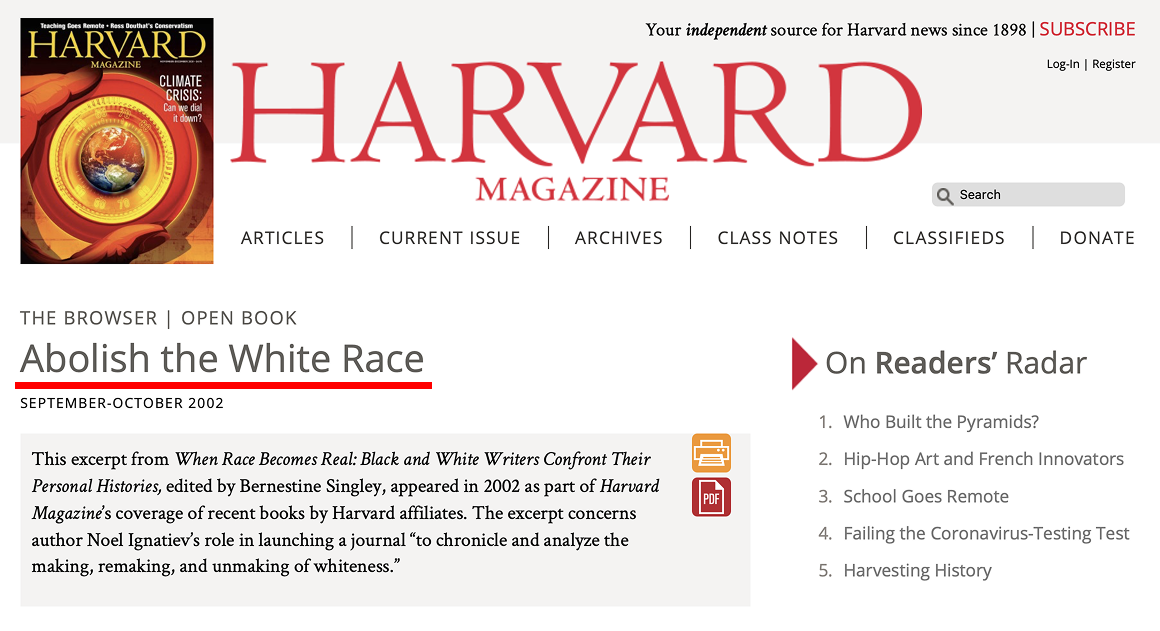
Harvard: Abolish the White Race
Of course, criticizing Harvard itself is no easy task. However, in the 19th century, the same Harvard happily taught the theory of the ether — a special, invisible medium through which light supposedly travels. And even though Michelson’s experiment disproved it in 1887, they continued teaching the theory for another 20 years, until Einstein came along. That was physics, a hard science.
Fortunately, critical race theory is quickly losing popularity, and not at Harvard, but in American society. It’s a perfect example of how an ordinary cab driver can understand more about sociology than a professor at an elite university. Nassim Taleb coined the term intellectual yet idiot — it describes a scholar so blinded by abstract theory that he fails to notice how it contradicts reality.
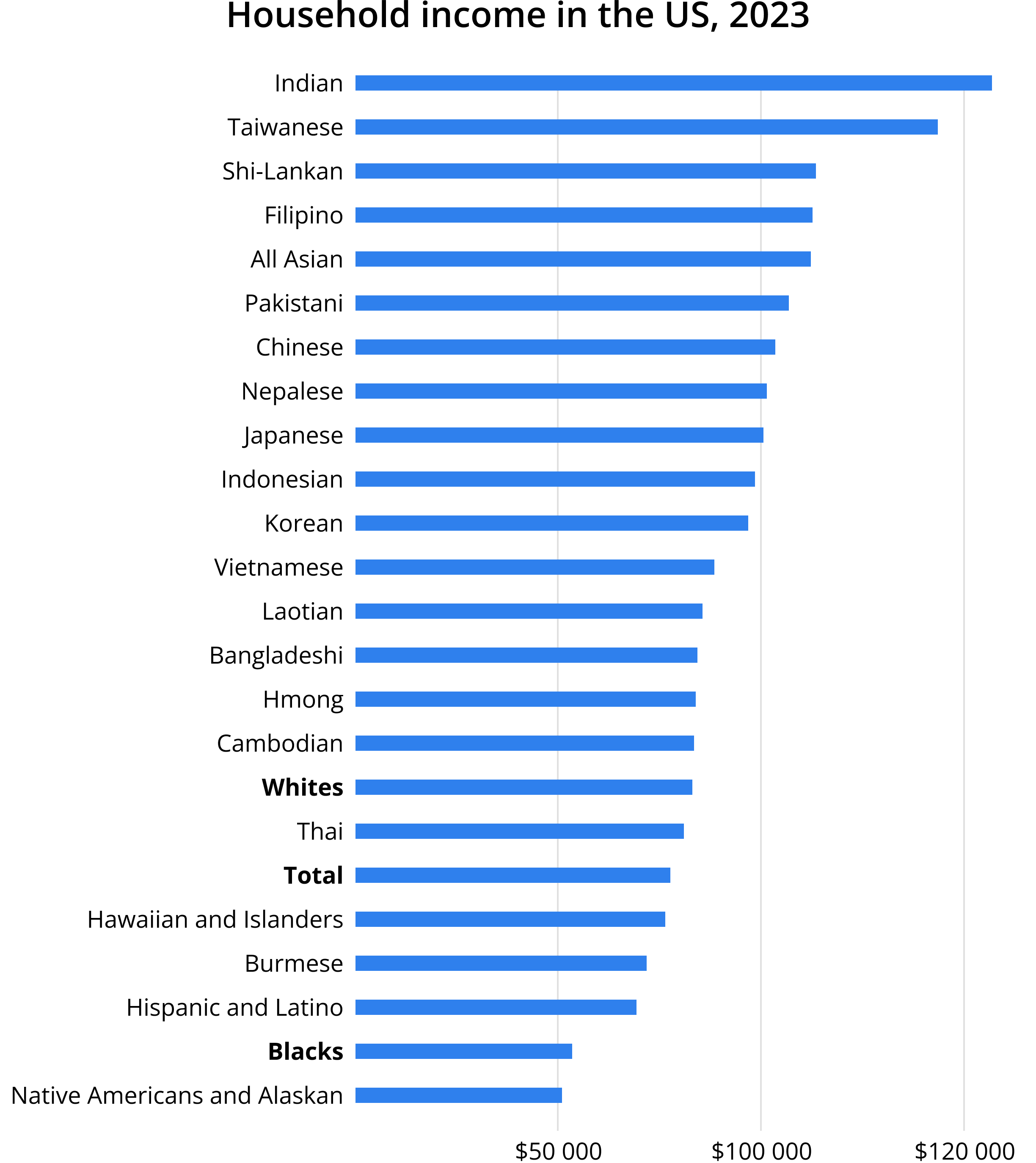
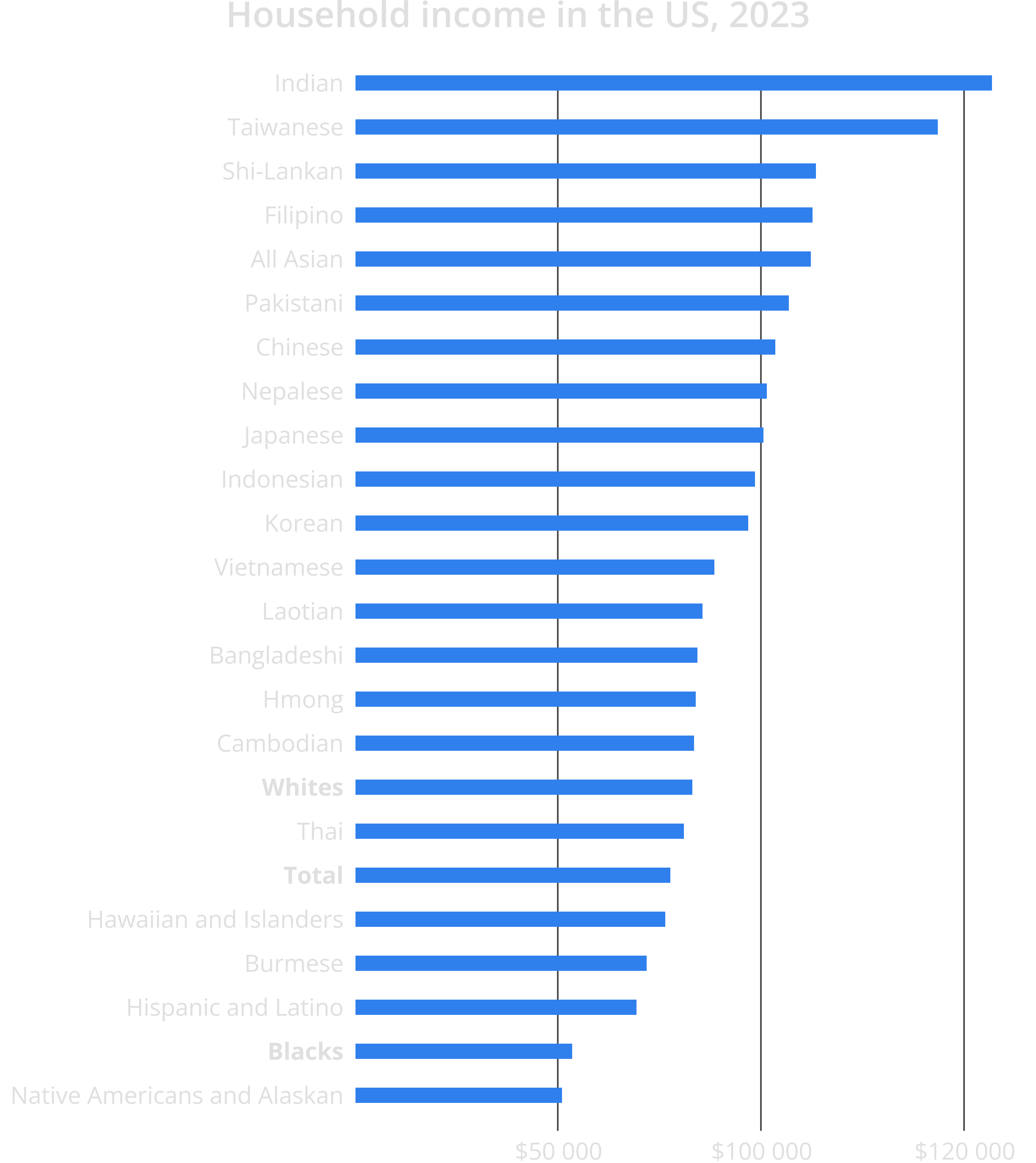
And here’s the reality. The highest salaries in the U.S. are earned by Indians. Then come Taiwanese, Sri Lankans, Filipinos, Pakistanis, Chinese, Nepalis, then another dozen varieties of Asians... and only after that do you get to white people, including white Americans themselves!
⁂
Education in America suffers from the same disease that brought down the Soviet Union. While churning out brilliant engineers, physicists, and mathematicians, the USSR completely botched the humanities. Economics, politics, sociology, and even psychology in the Union were all studied through the prism of Marxism-Leninism. Marx’s doctrine was all-powerful — right up until it left the country with nothing but a broken trough.
Today, Harvard remains the best university in the world when it comes to the hard sciences. However, in the social sciences, Harvard is increasingly turning to Marxism. Young Americans, tired of capitalism’s failures, are increasingly becoming socialists. Their impulses are fueled by tenured professors, who serve as flawless authorities in their eyes. But neither the students nor the professors have lived in Russia, let alone in the USSR, and they have no remote idea what kind of cannibal they’re trying to wake up.
The ideological poison they brewed up gave rise to the phenomenon of “white guilt.” Young socialists in America were instilled with a sense of collective guilt toward black people, and the especially sensitive ones ended up with a full-on neurosis. There are videos of them dropping to their knees in front of black guys and kissing their shoes — symbolically trying to atone for past crimes they themselves never committed.
Fortunately, the whole white guilt complex is also gradually becoming a thing of the past. It reached its peak after the 2020 riots. In the middle of the pandemic, a police officer, while making an arrest, choked a black guy named George Floyd with his knee. Although Mr. Floyd was under the influence of drugs, that didn’t absolve the officer of responsibility. The cause of death was precisely suffocation, and the perpetrator received a harsh punishment for it.
The rest of the story, the reader probably already knows. In America, the BLM — Black Lives Matter — protests began. Around 20 million people took to the streets in the U.S., which was an absolute record for the country. Naturally, a wave like that couldn’t come without looters. But even if there had been 100,000 of them, that’s only 0.5% of the protesters. A tiny number for humanity, but a huge one for an electronics store.
The BLM rioters caused monstrous damage. The guys somehow managed to loot, rob, burn, and smash only insured property worth 2 billion dollars. The rioters set police stations on fire, flipped and burned cars, looted offices and stores, smashed windows, and carried off TVs. The streets of many cities turned into war zones. In Seattle, they even managed to seize one neighborhood and declare it an independent territory. All this took place to the joyful hooting of the crowd and under the slogan of the fight for equality.
The incredible twist is that almost half of the protesters were... white. The rioters turned out not to be any black gangsta, but those very same young socialists, many of whom studied at prestigious universities and were obsessed with “social justice” ideas. Black people made up only 17% of the protesters, and another 22% were latino.
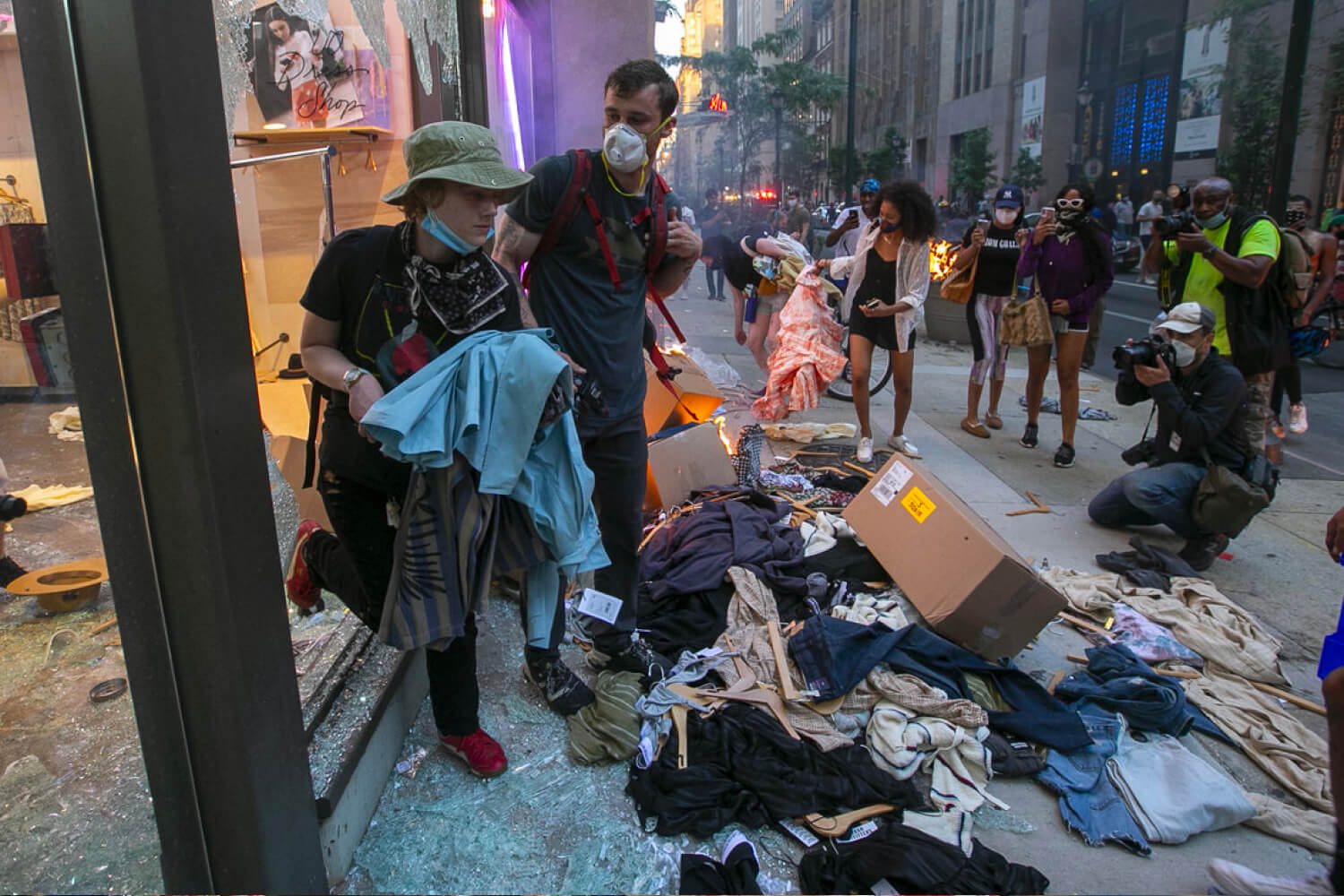
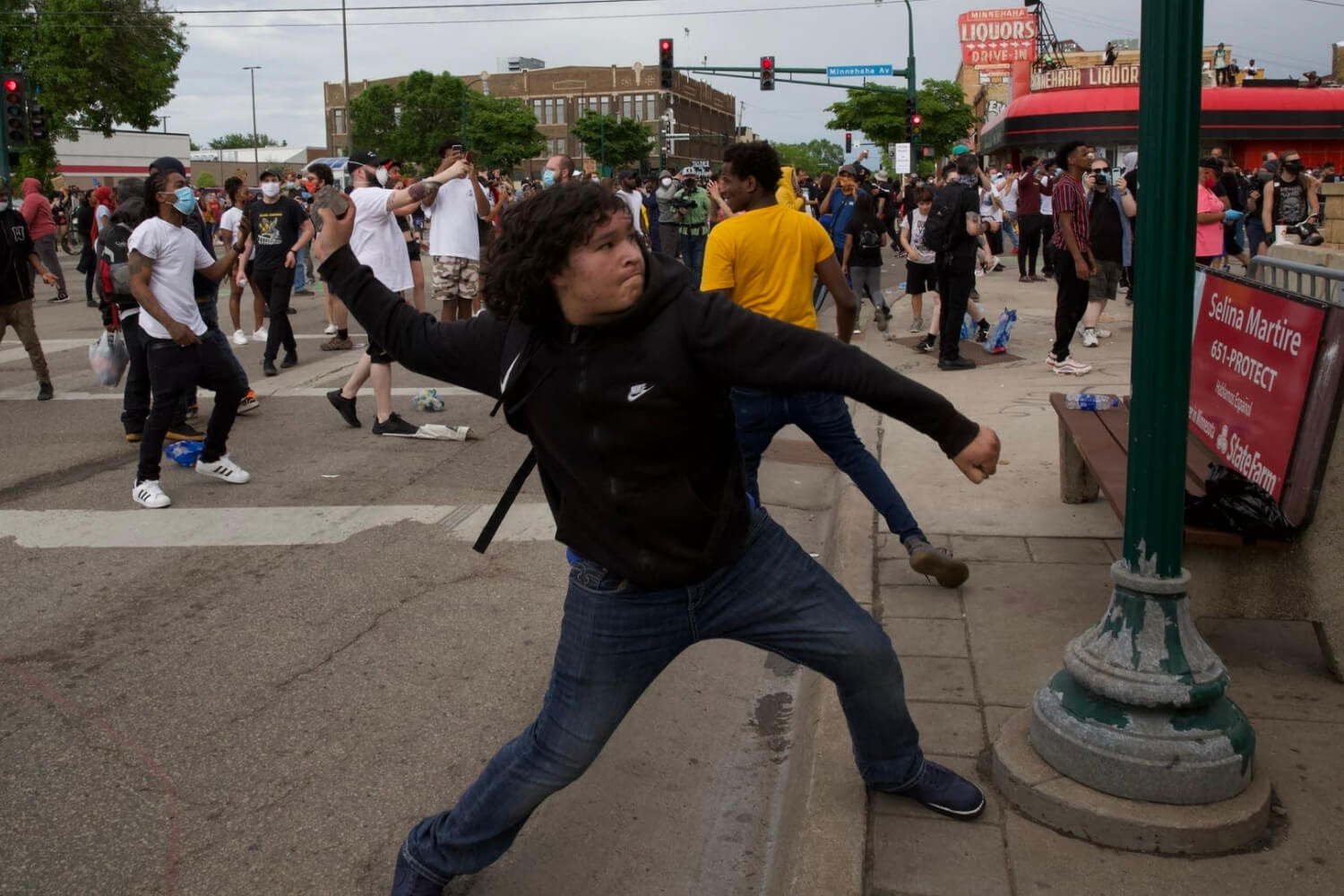
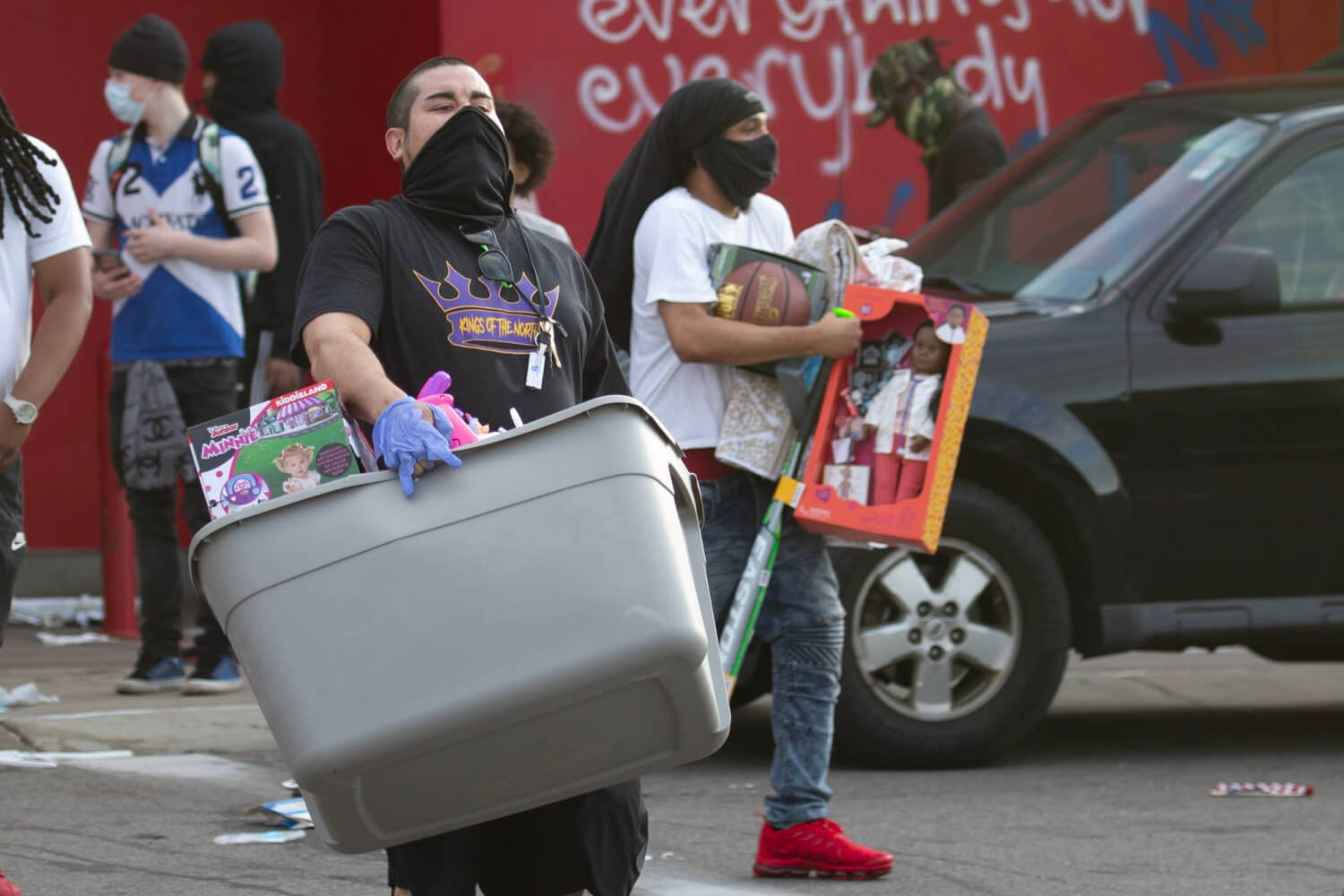
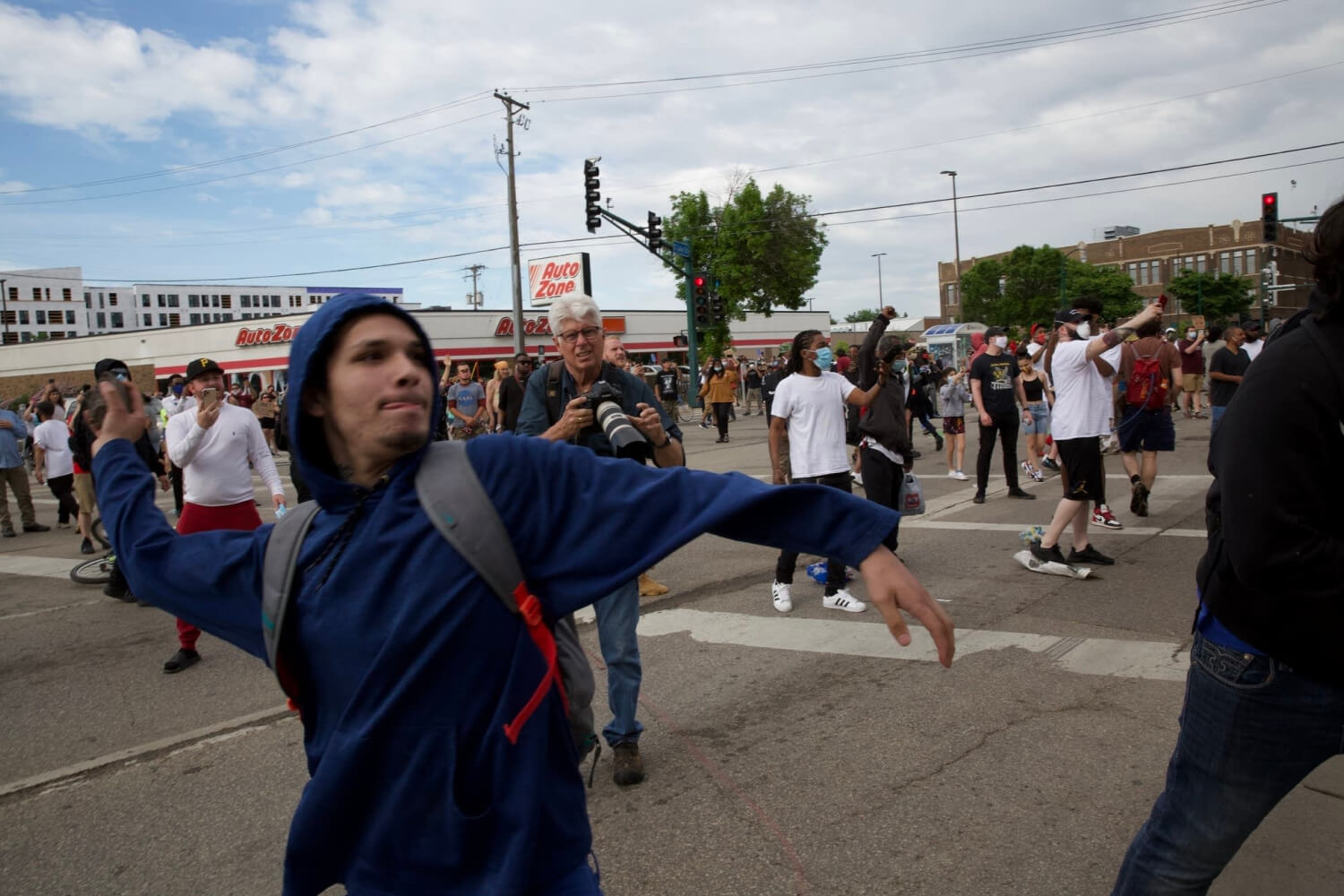
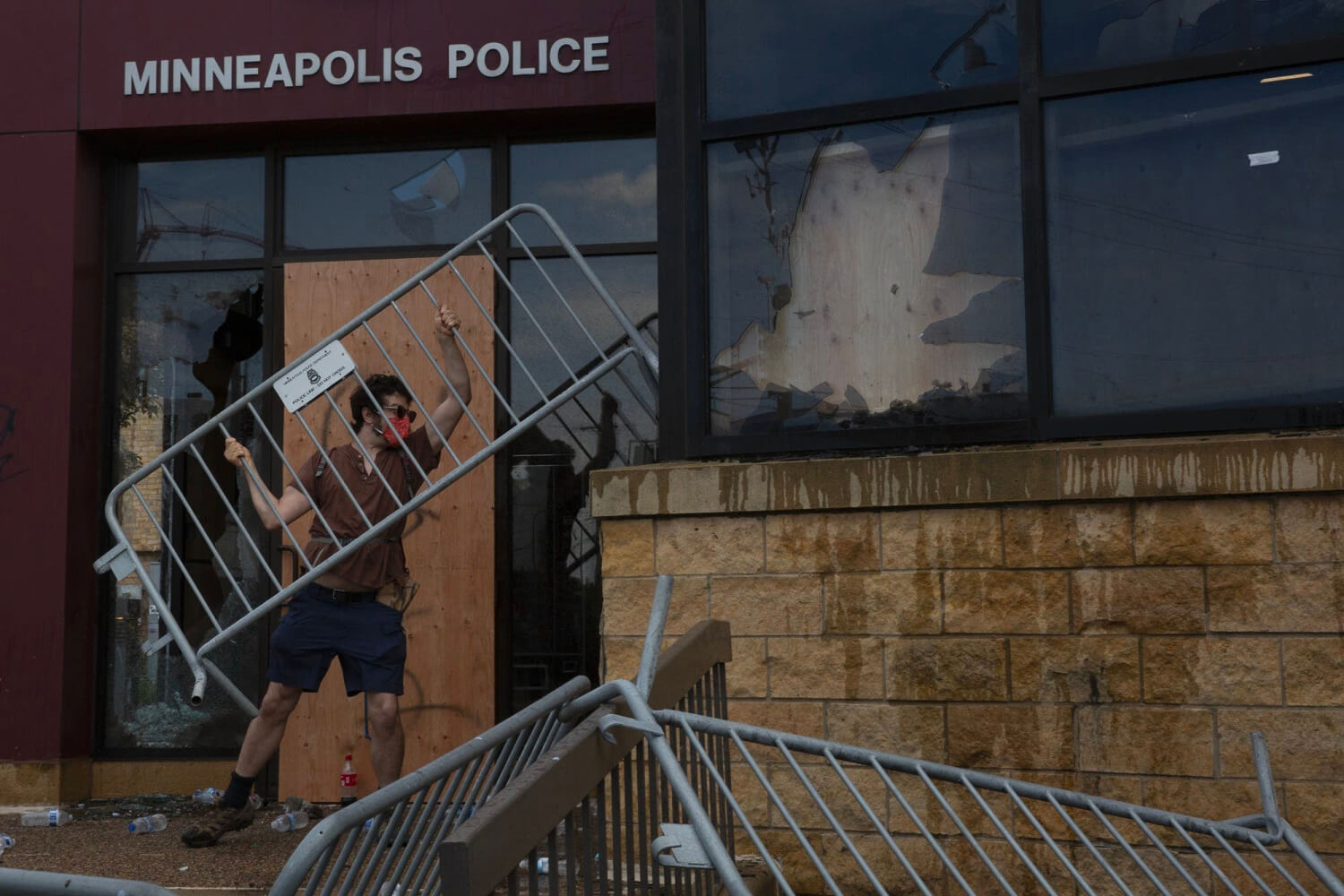

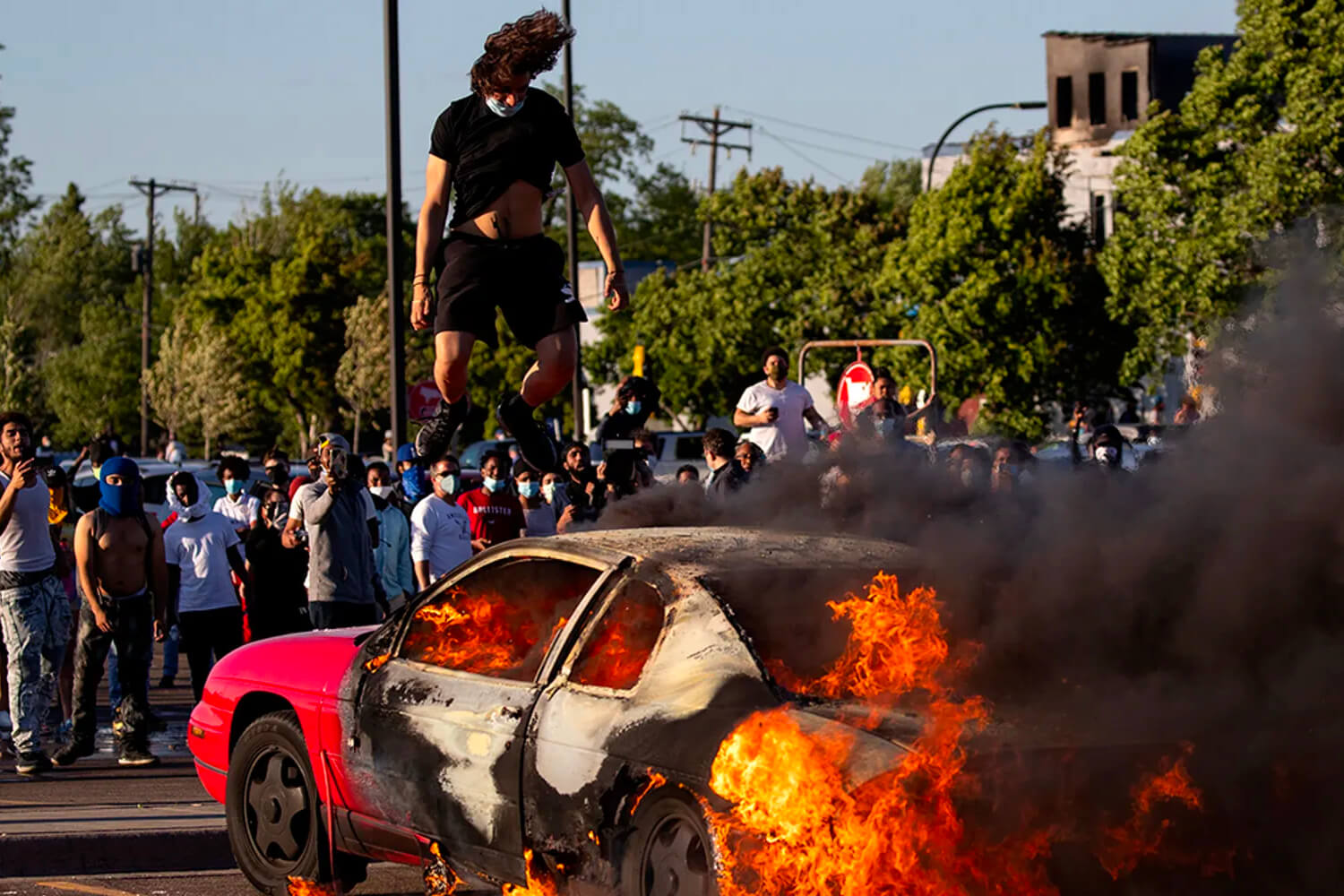
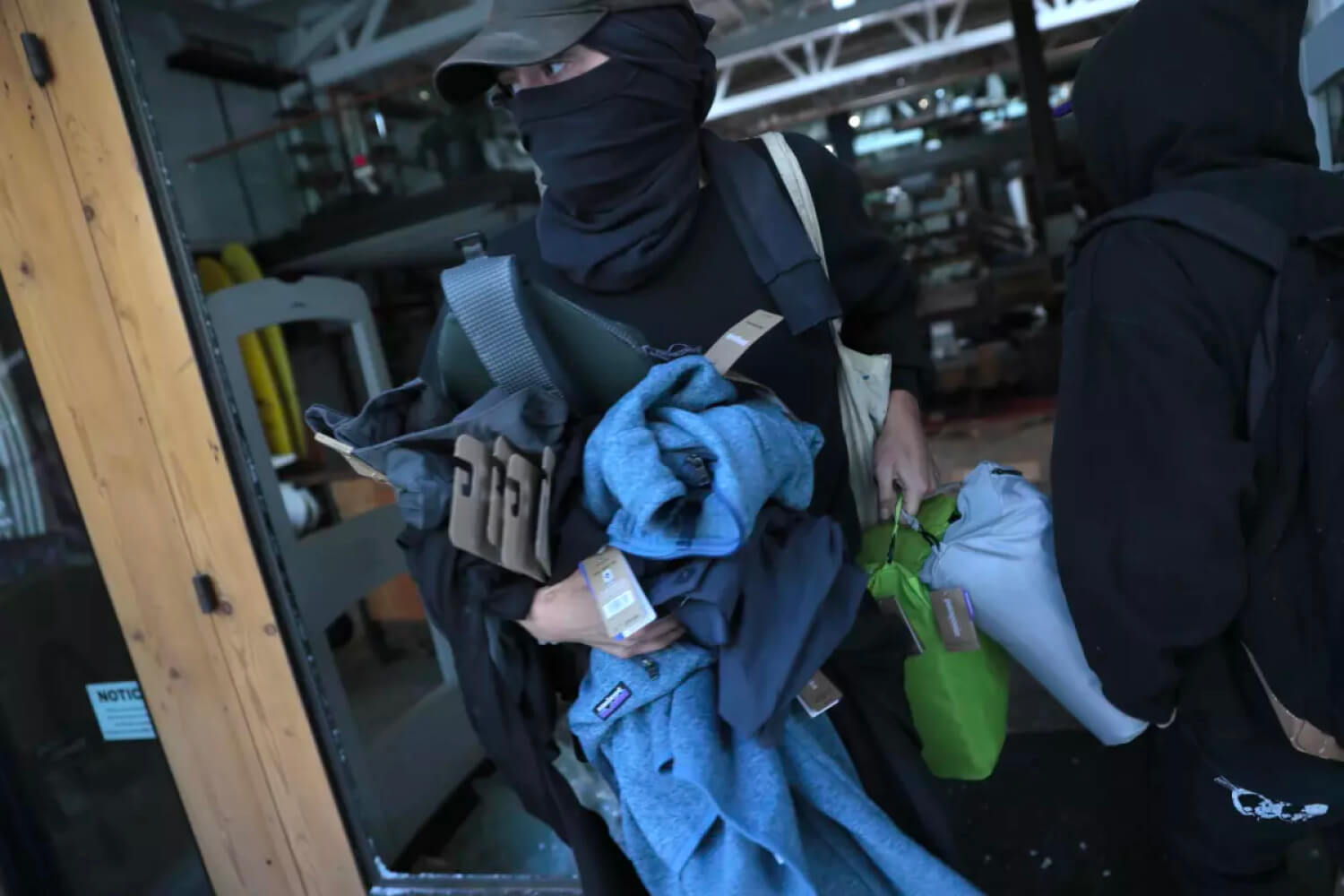
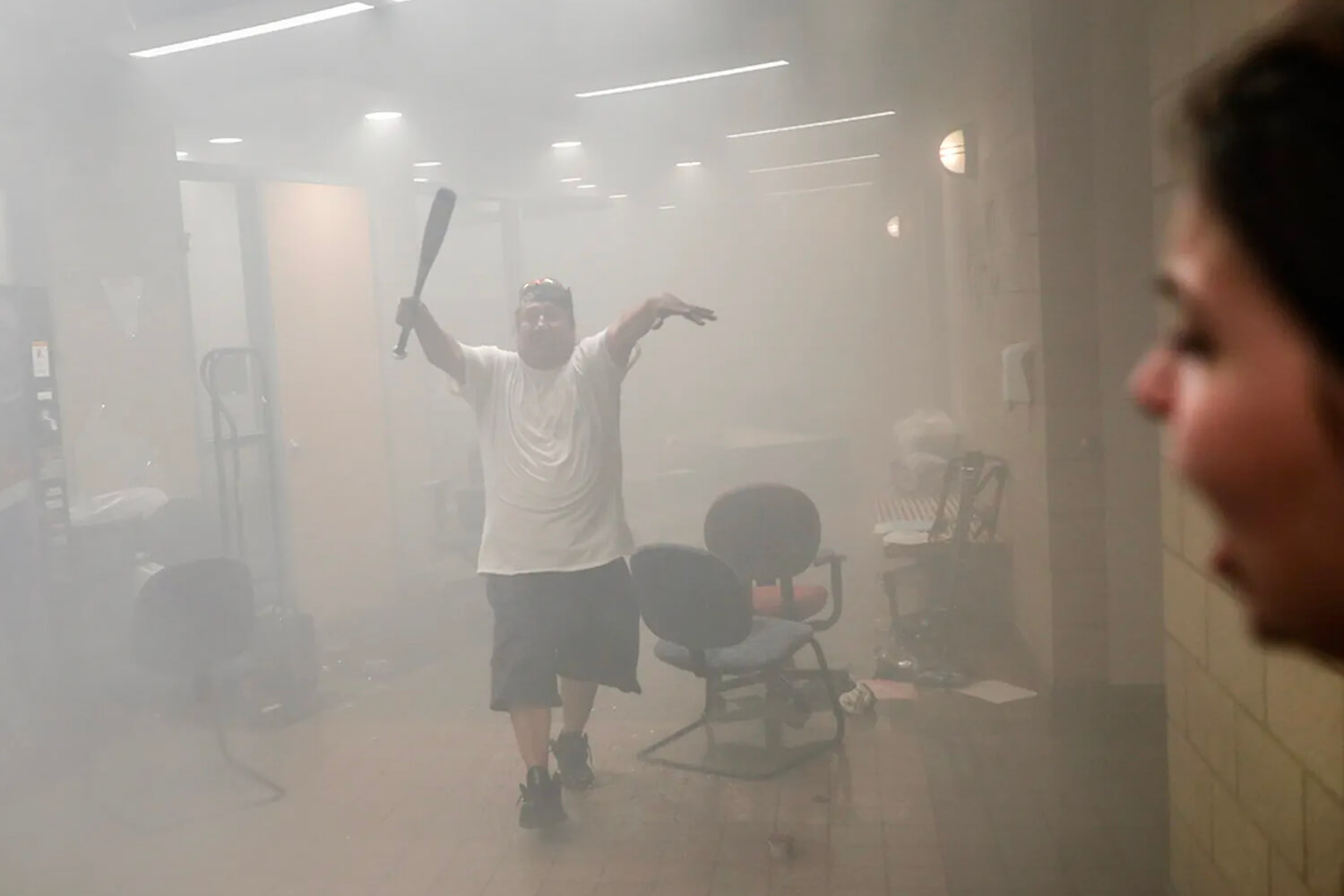
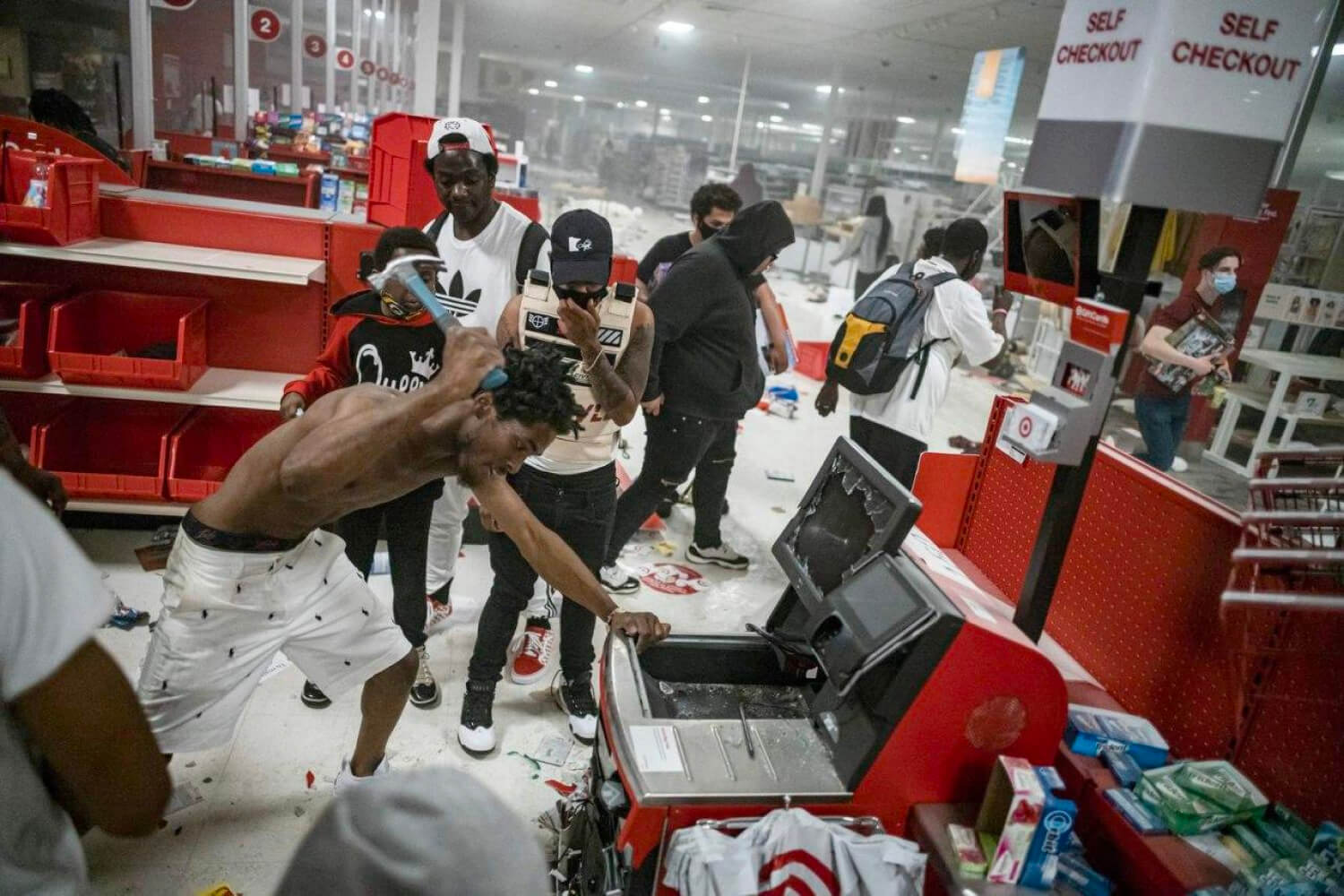
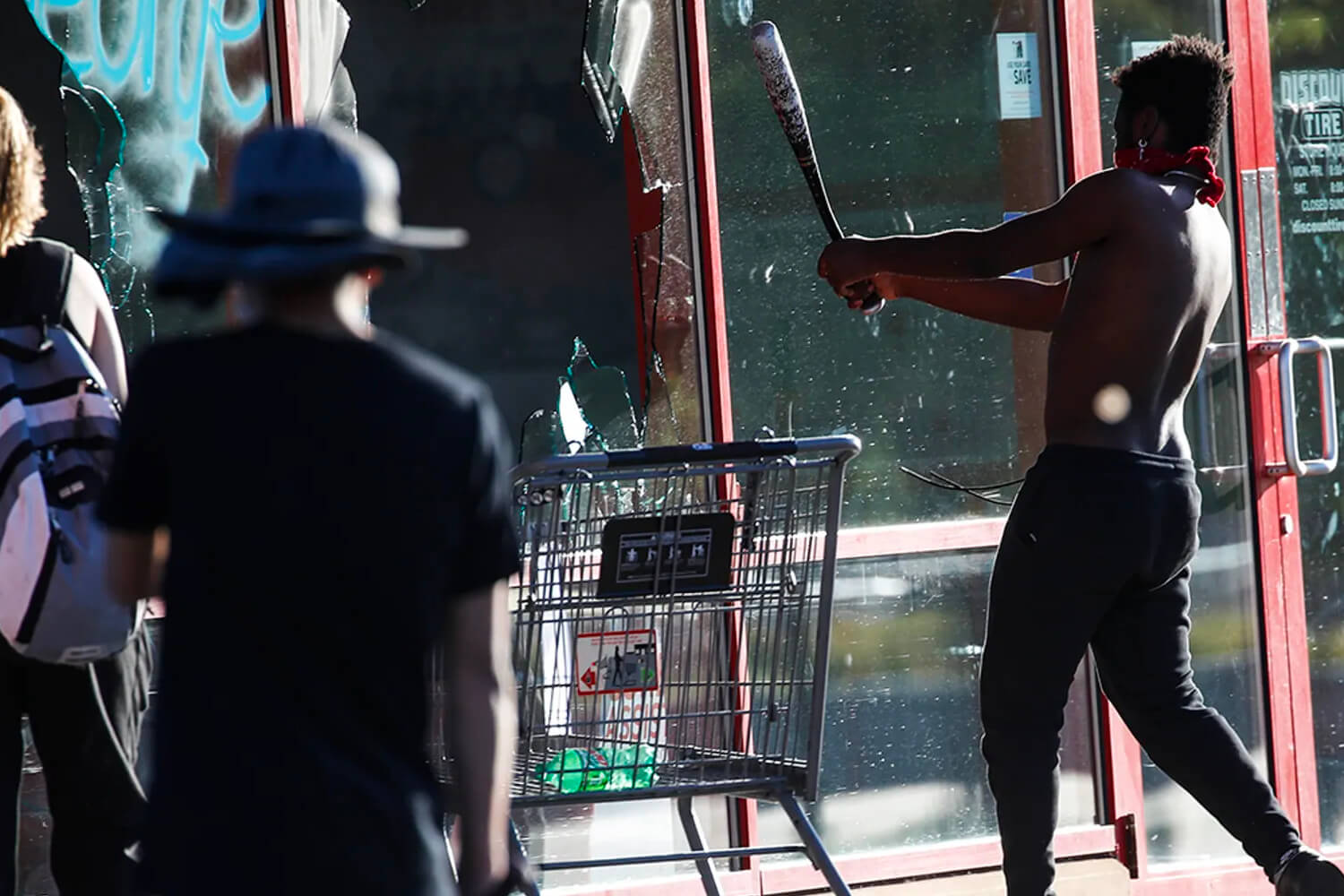
Naturally, after that kind of performance, the movement’s popularity tanked pretty fast. Republicans went so far as to call it a terrorist organization, which is, of course, just an ideological label. You could probably call BLM a hooligan movement, but even that really only applies to some of its participants.
In the end, American history has seen far worse. For example, the Black movement “Nation of Islam” called all white people devils and urged armed struggle against the oppressors. It all ended with its leader, Malcolm X, making a pilgrimage to Mecca, where he saw people of all races praying to god together. When he came back home, he renounced racist ideas — so his comrades put 21 bullets in him.
Today, there’s not much left of the “Nation of Islam”. Nothing will be left of BLM either. For every tree that doesn’t bear good fruit is cut down and thrown into the fire.