

The series of stories about America is available as a book:
Paperback: Amazon
Ebook: Amazon, Apple Books, Google Books
America. Part Three. Tomorrow
American Dream — Home in Texas — Medicine — The Melting Pot — Sluggish Depression — Poor and Rich — America’s Great Divide — Trump
American Dream
For a child who was born and raised in Eastern Europe, American cities always seemed distant and unbelievable, almost like something out of a fairy tale. No wonder, really: the countries of the former Eastern Bloc were mostly built up with identical concrete apartment buildings that looked pretty drab even in summer, and in winter inspired genuine despair.
Of course, in Russia, Kazakhstan, Ukraine, and other former Soviet countries, there have always been villages, rural settlements, and pockets of private housing right in the middle of cities. However, the houses there were always run-down, untidy, and even rotting; paved roads were a rarity, toilets were traditionally built outside, and the plots themselves were surrounded by unattractive fences.
All of that paled in comparison with the life Hollywood showed. Any Soviet child, rewatching Back to the Future for the hundredth time, dreamed of living there — in a spacious two-story house with a white porch, standing on an endless straight street lined on both sides with lush elms and stretching so far into the distance that its end became indistinguishable behind clusters of yellow traffic lights hanging overhead.
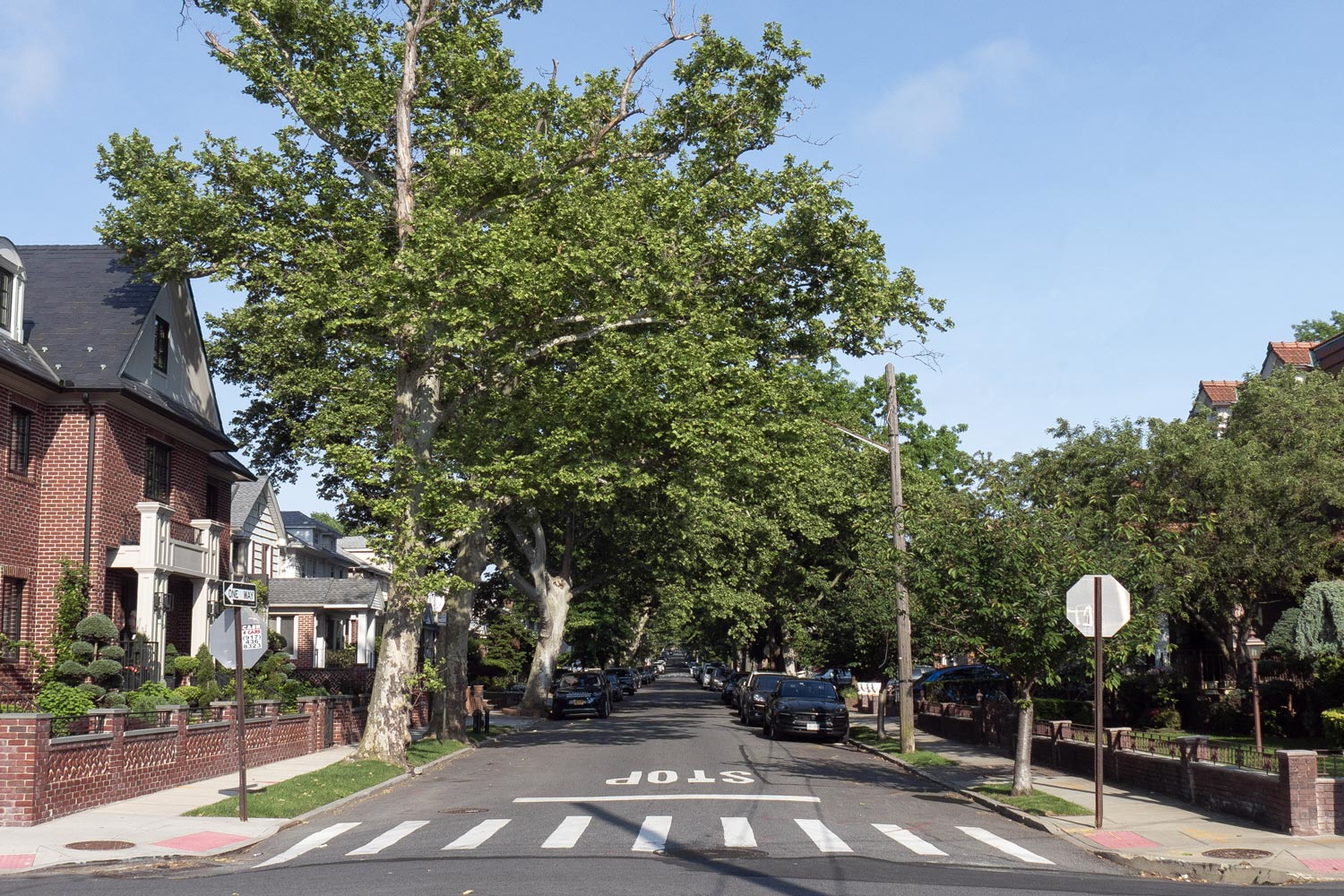
And had to live here — in a standard apartment with a rug on the wall, in a standard stairwell with the inescapable smell of the trash chute and damp, in a standard building of the standard series П-44.
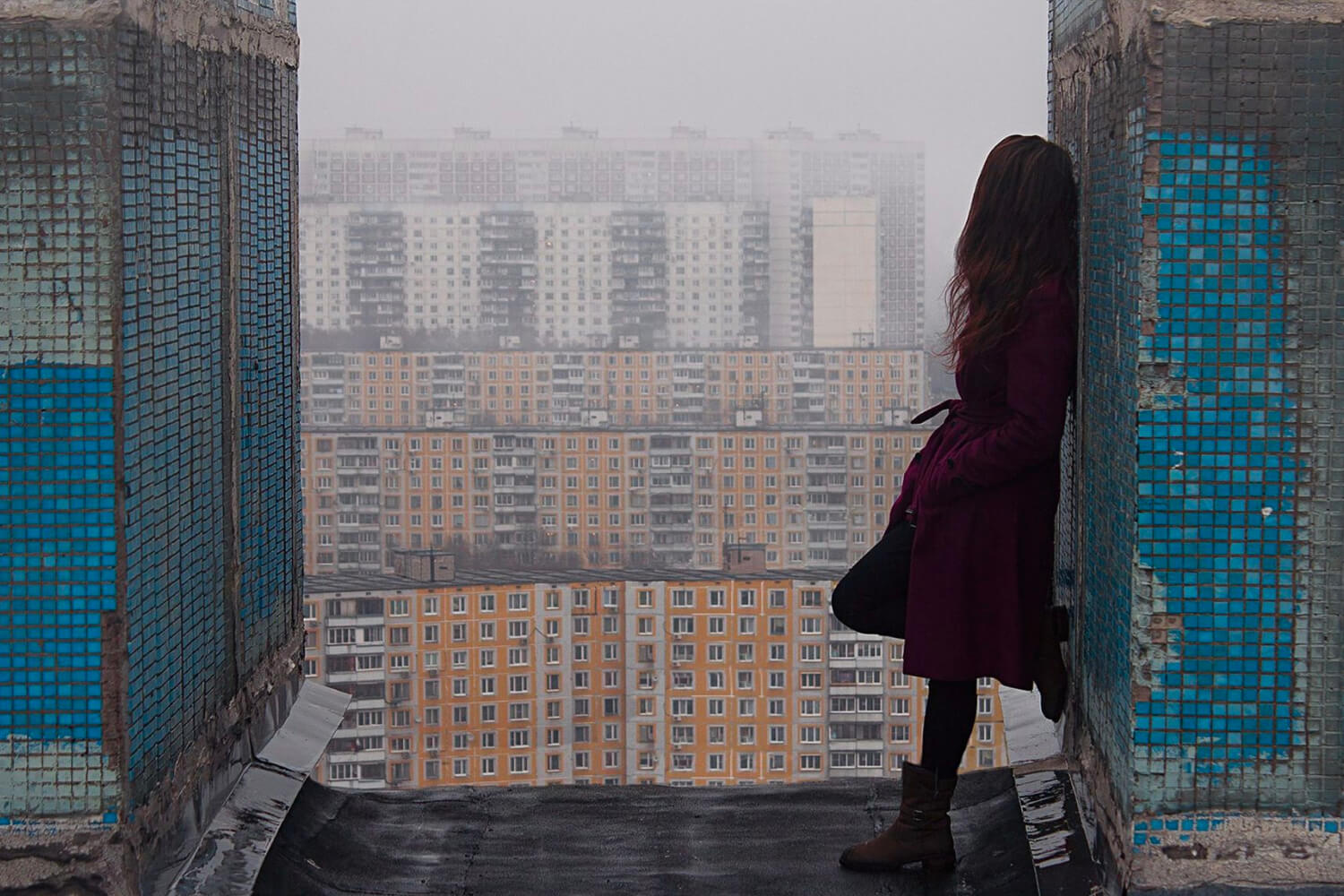
The construction of housing in the Soviet Union was overseen by the state bureau Gosstroy — literally, Govbuild. The engineers at Gosstroy did not simply build cities the way commercial companies do today; they also defined construction standards. These standards were an attempt to strike a balance between housing costs and human needs, to quickly cover the entire country with affordable yet decent housing.
Back in the 1950s, Gosstroy developed a highly original plan for building cities with socialist housing. Taking as a basis the ideas of the French architect Le Corbusier, who proposed constructing buildings in the middle of a park, Soviet urban planners invented the microdistrict development model.
They proposed building cities according to a molecular model: individual houses (electrons) were grouped into residential clusters (atoms), which in turn were combined into neighborhoods (molecules). Here’s how the plan was made. First, on a drafting paper, the future school was drawn. Then a compass needle was stuck into the center of the school, and a circle with a radius of 600 meters was drawn around it. Next, the same operation was carried out with the kindergarten and the public park, around which circles with radii of 300 and 400 meters were drawn. A series of such constructions defined the microdistrict’s boundaries.
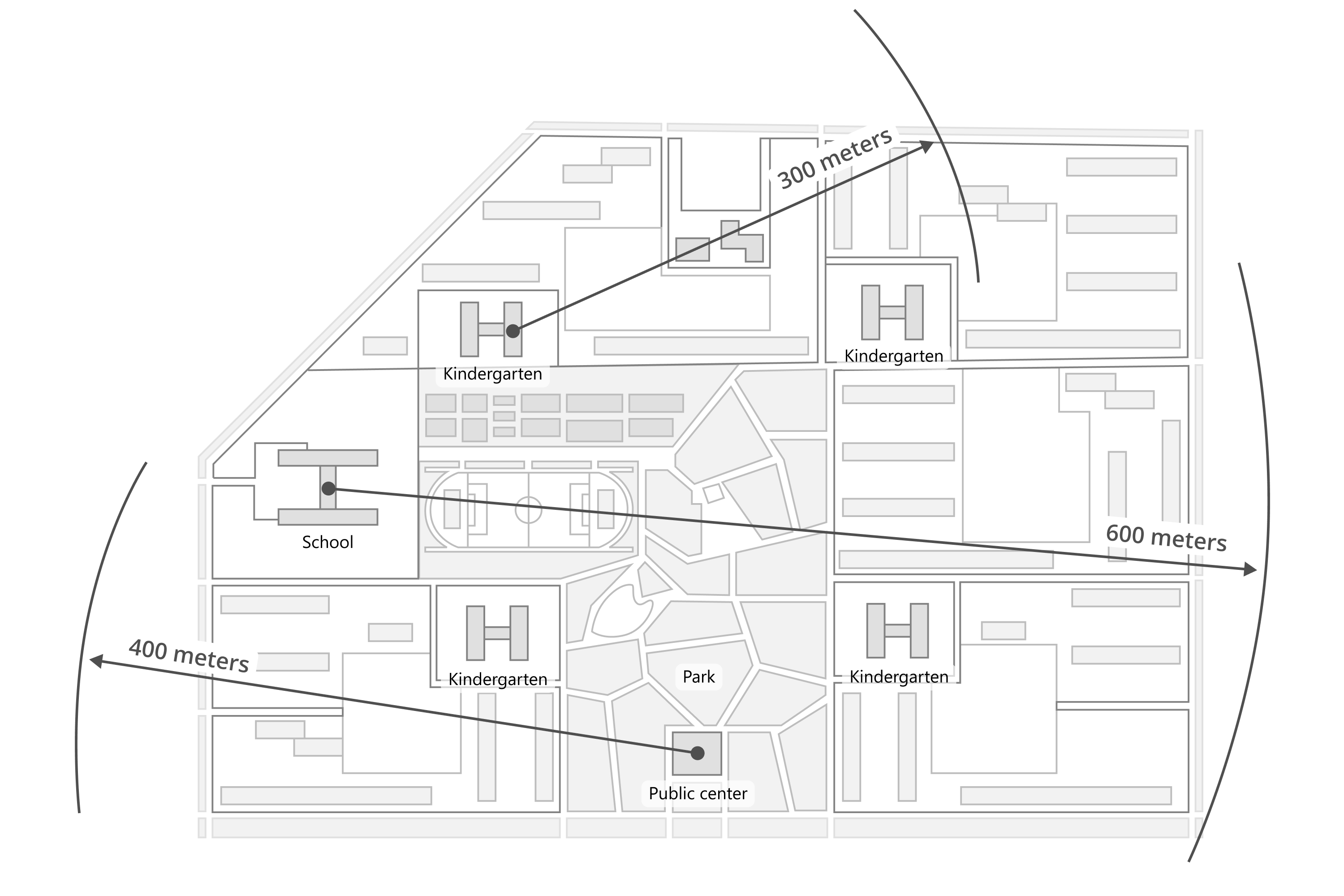
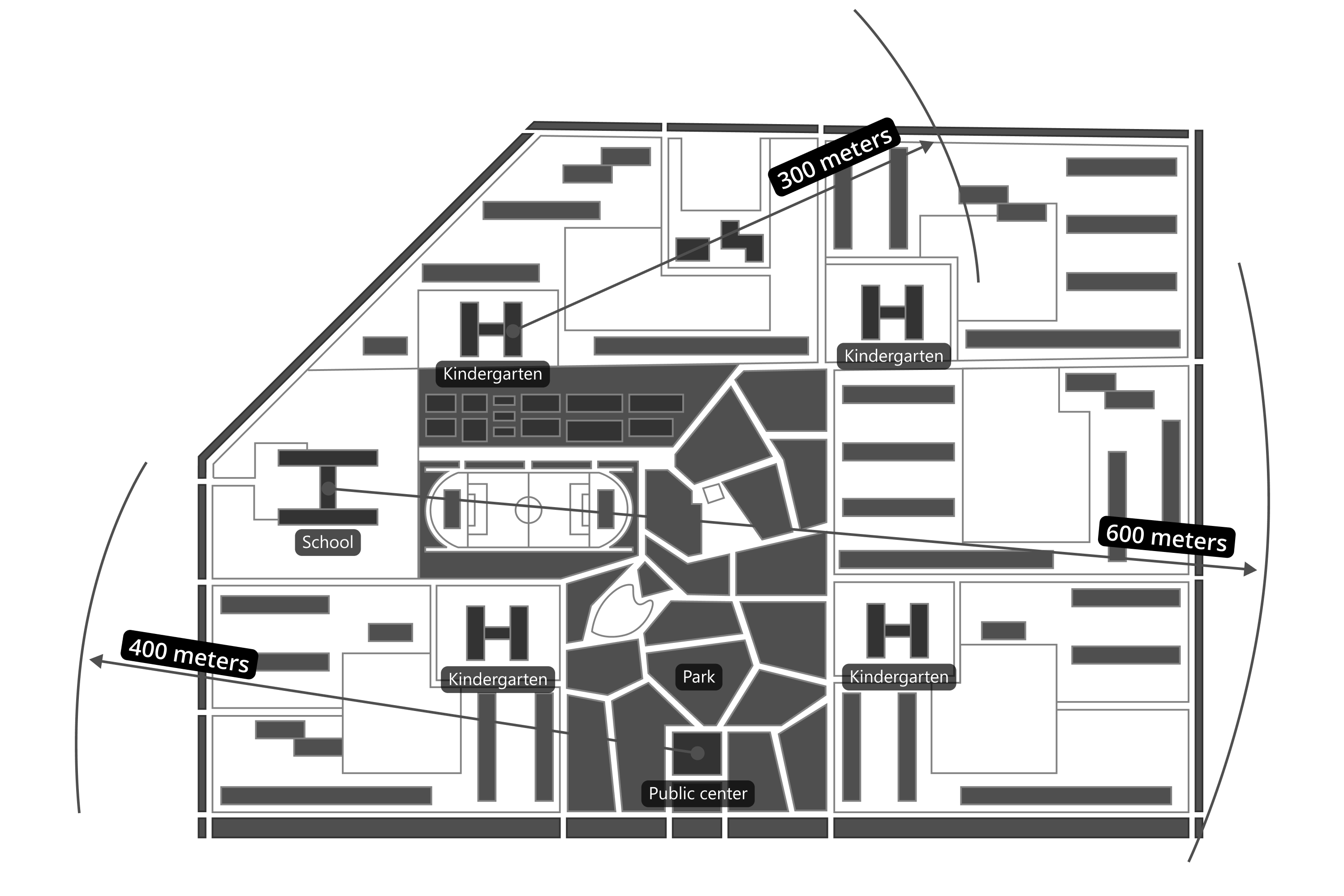
Soviet urban development was far from thoughtless: all the shops, schools, parks, pharmacies, bus stops, and kindergartens ended up within walking distance. The problem was that the very idea of dense communal living turned out to be a failure. People were settled in tall apartment blocks that, with each new government, became ever taller and ever more crowded. The culmination of this story was the near-uniform development of the entire country with identical buildings up to 40 stories high and with a dozen entrances. This already happened in modern Russia, where such buildings are now sarcastically called humanhills.
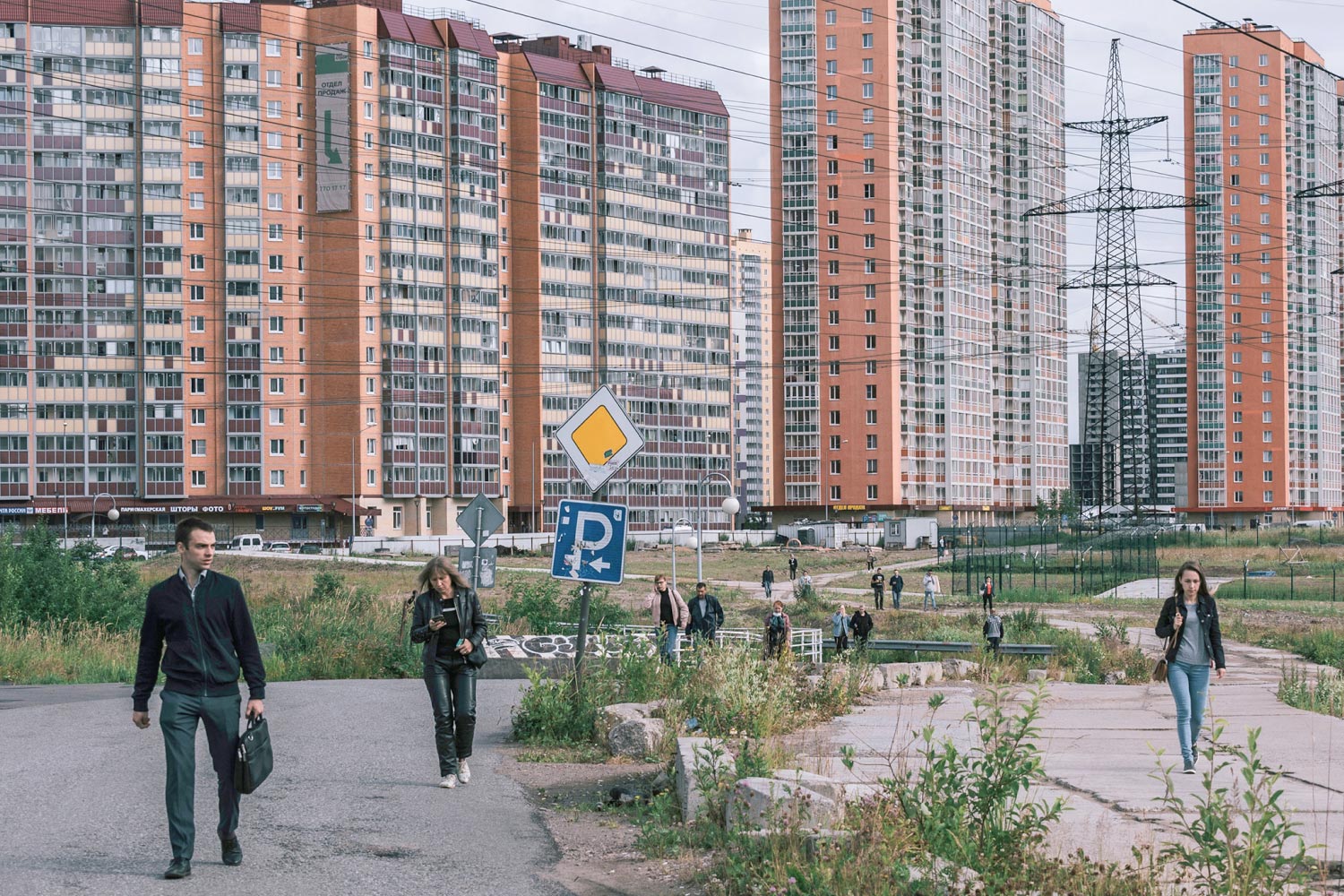
American cities are organized quite differently. Skyscrapers stand only in the business center of a large city — the downtown. Beyond that, America is usually built up with two-story or one-story houses. Naturally, there has never been anything like a Govbuild in the USA — houses have always been built by private companies — and if you ask an ordinary American, “What do you think of Le Corbusier?” they’ll most probably answer, “Not bad, I ate it in France.”
The American otherworld revealed itself to the Soviet people only on the eve of the USSR’s collapse. American films entered the country, freedom of speech emerged, and market reforms began. Looking at America, many people started to wonder: what would Russia look like if we had never had the Gosstroy, and houses had always been built by private companies? Of course, it would look like the American dream! The entire continent would be covered not with gray concrete, but with marvelous private homes!
Alas, the answer many Russians gave themselves turned out not just to be wrong; it was wrong twice. American housing not only has nothing to do with a dream. It has also never been a product of a free market. Although America was indeed built by private companies, the state directly intervened in the market. And the result of this intervention was not picturesque villages, but enormous megacities and suburbs stretched to the limit, which today are literally collapsing under their own weight.
The American Dream, as the classics understand it, was born right after the Second World War. When millions of American servicemen began returning from the front and the army as a whole, the government began generously handing out subsidies for education and housing. Naturally, paying for housing in city centers would have been far too expensive, and the cities weren’t limitless. So the subsidies were given for building houses in the suburbs, where vacant land was being handed out for next to nothing.
During the period when subsidies were in effect, more than 4 million families received subsidized housing. When every war veteran in Europe had a home of their own, new wars began — first in Korea, then in Vietnam. At that point, another 9 million families received housing. Later, subsidies began to be granted simply for military service, and by then new wars had come along: in Iraq, Serbia, and Afghanistan. In this way, 29 million American families obtained their own homes at bargain prices, and a house of one’s own, a car, and a happy family came to be known as “the American Dream.”
In this utopia, everything would be perfect if not for one circumstance.
The development of suburbs led to an explosive increase in the area of cities. While European cities grew not outward but inward — with an increase in the number of details and a complication of street layouts — American cities were simply bursting in all directions with a monotonous rectangular grid. The city centers, by contrast, began to decline as Americans moved en masse to the suburbs. Maintaining these increasingly empty centers became unprofitable, so they either sprouted business districts or simply became deserted.
It turned into yet another American paradox. While cities around the world were growing and developing, in the US, cities were living in the past and shrinking back into wastelands.
Brainerd, Minnesota. West Front Street in 1894 and 2025
Decline came not only to small towns. Megacities like Chicago, although they did not turn into wastelands, threw an entire layer of history onto the trash heap. Magnificent neoclassical and Art Deco buildings were ruthlessly demolished by bulldozers, and in their place rose glass-and-concrete skyscrapers that have now become the foundation of the American style.
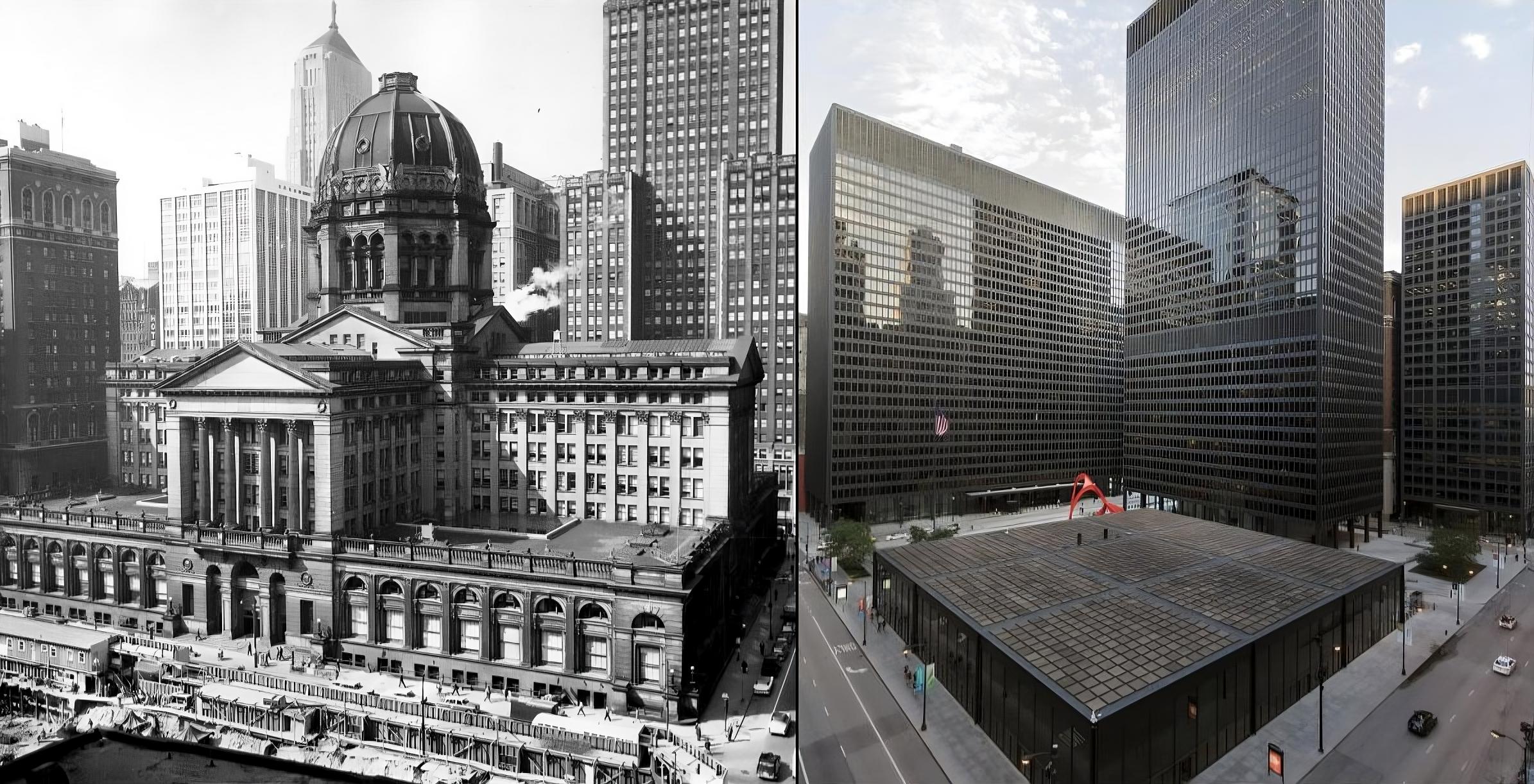
Chicago’s historic architecture was torn down and replaced with skyscrapers
In the suburbs themselves, things turned out even worse. Each new wave of construction subsidies wrapped the cities in yet another ring of identical houses, set ever farther from the center. As a result, today’s American cities have turned into the same kind of humanhills — only horizontal.
Meanwhile, all the businesses stayed put downtown. So, to let people reach the right skyscraper for work, they had to build entire networks of roads and interchanges on a scale the world had previously seen only in dystopian movies.
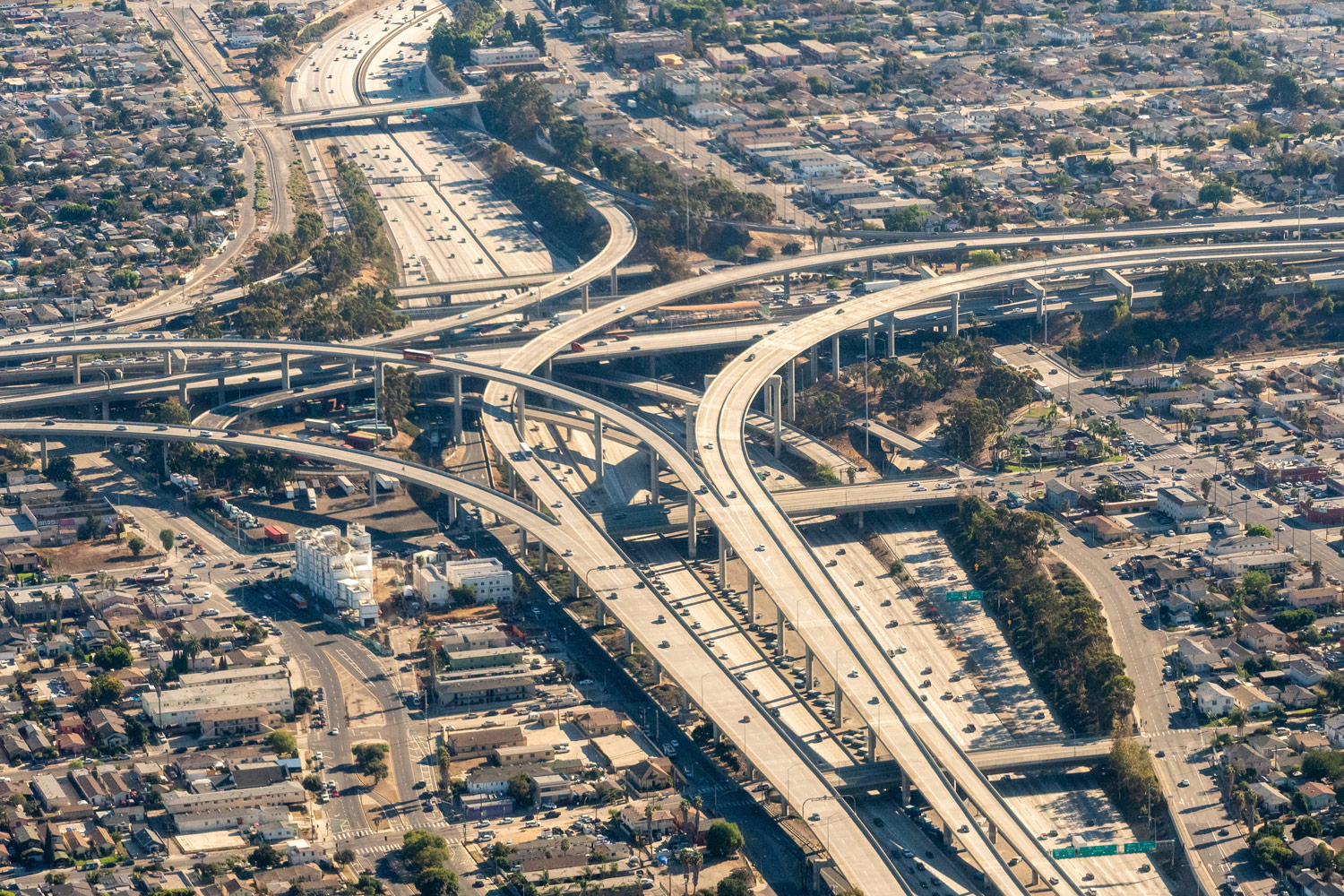
But even this urban nightmare turned out to be only the tip of the iceberg.
The main problem turned out to be supplying the new districts. As the reader knows, a city is maintained by the taxes collected from its residents. Therefore, under normal circumstances, the settlement of new citizens replenishes the city budget. But taxes grow linearly. If the city keeps expanding, however, the complexity of maintaining infrastructure — power grids, water supply, and sewage — grows much faster, exponentially. It turns out that each new resident not only increases the city’s expenses, but also lives at the expense of the taxes paid by the previous ones... and that is nothing other than a financial pyramid!
And this is not a figure of speech. American cities literally operate on the principle of a financial pyramid.
It was precisely the sprawl of infrastructure that led to the bankruptcy of cities like Detroit, Stockton, San Bernardino, and Chester. And that’s only the official list. Dozens of cities are hiding their default: Cleveland, Baltimore, Camden, Gary, Jackson, Bridgeport, Reading, Flint. Many large cities are in very poor financial condition: Chicago, New Orleans, Philadelphia, Portland, and New York. All of them are still alive only thanks to the money the federal government pours into them as if into a bottomless pit.
Many American cities are doomed to catastrophe. Supporting them is as pointless as propping up a financial pyramid. Sooner or later, they will have to declare bankruptcy, and the earlier that happens, the sooner market forces will correct the imbalance that the government has been creating for 80 years straight.
America faces another problem as well. The departure of successful Americans to the suburbs has left downtown to its fate. Mostly the poor, the unemployed, and simply idlers who couldn’t manage to earn enough for their own home remained living in the city center.
As always, black people got hit especially hard. Although by law the subsidies were supposed to go to all U.S. citizens, in practice, banks simply refused to issue mortgages to black veterans who had served honorably in the army and taken part in the war. And if a black person somehow did manage to get a loan, they would be refused when they tried to buy land. The same story played out with education: although the law promised it to everyone regardless of skin color, universities — especially in the South — were in no hurry to admit black students. As a result, even honest, hard‑working, and educated blacks were left without housing and without education.
Today, any American knows: with the exception of the ghettos, the most dangerous and dirty place in America is the city center. Downtown is always filled with bums, drug addicts, and the unemployed, often black. But capitalism is not to blame for this at all; the blame lies with insane social programs.
Home in Texas
As for the suburbs, even in the most luxurious, wealthy, and clean American village, it’s simply impossible to live. Streets laid out straight as if by a ruler; perfectly trimmed, evergreen lawns; neat houses that look like they came off a movie set... boring to death.
And the problem isn’t that you get tired of perfection. The problem is that it’s a half-hour drive to the nearest decent cafe. The problem is that you can’t walk beyond the settlement, because beyond it lies nothing but wasteland and roads. The problem is that a column of protesters shouting “Freedom for Krakozhia” will never pass under your windows, you’ll never spot a concert poster on a lamppost, and the smell of over-roasted chestnuts will never drift out from around the corner.
The reader has surely heard about the epidemic of depression in the United States. And he has surely heard that depression is a disease of big cities, where skyscrapers block out the sunlight, and the sirens of ambulances and police cars make it impossible to sleep at night.
Oh no, dear reader! Depression reigns supreme in the American heartland, in villages and suburbs. It does not bloom and multiply among skyscrapers, but lives together with Americans in their luxurious, brand‑new houses; depression sleeps with them on Texas King memory‑foam mattresses and accompanies them to work on the back seat of a brand‑new Ford F‑150.
The author spent several months living in the southern states. For me, an outstanding example of a depressing life was Houston, a large city in Texas that houses the Mission Control Center for space flights. A new street called Star Sky Way was polished to a grotesque perfection, and along it stood a neat row of brand‑new houses.
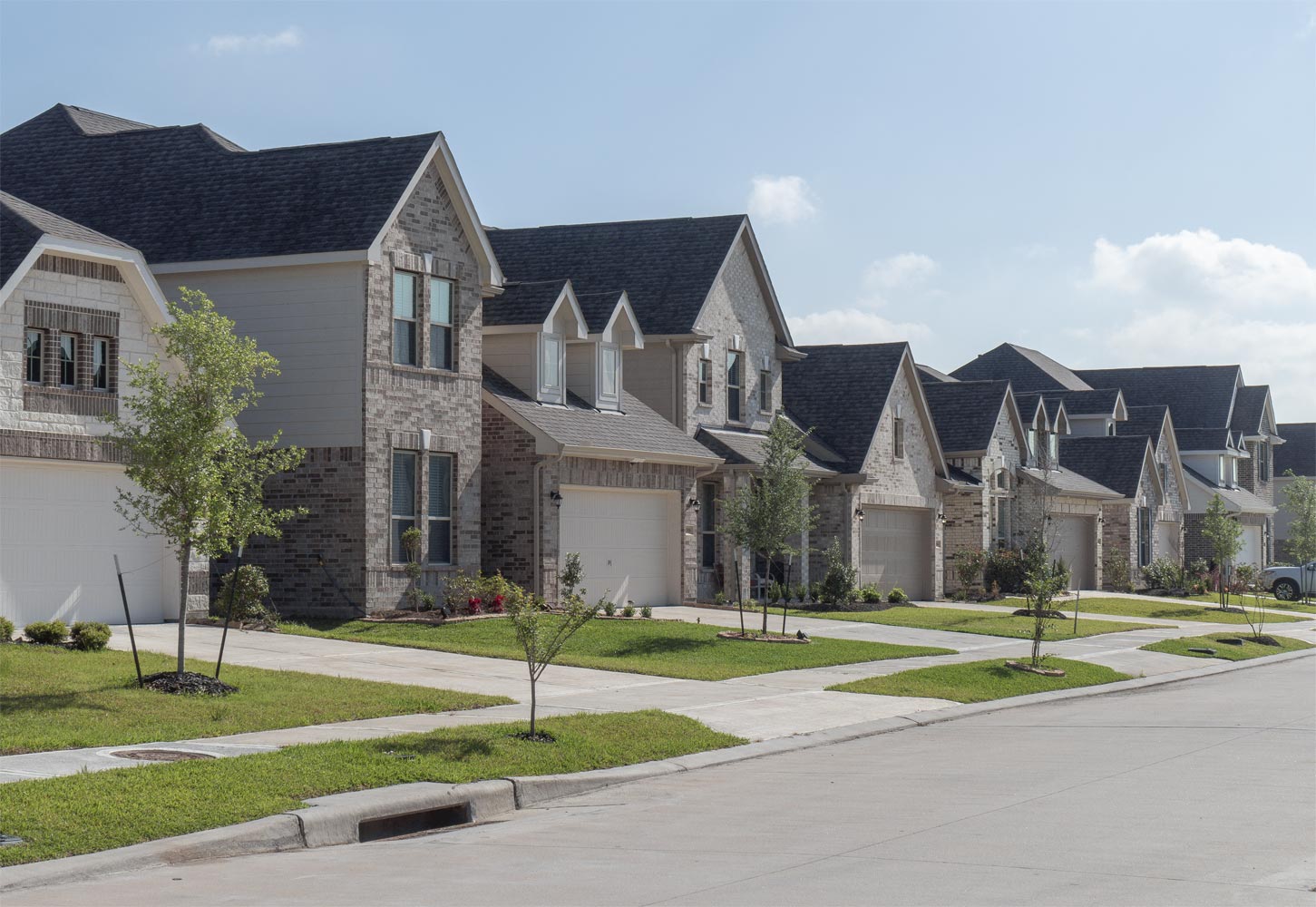
An American lived in one of these houses. Let’s say his name was John. He lived alone, with no family or pets, and worked remotely, apparently as a circuit design engineer for a large company. John decided to rent out one of the rooms in his house on Airbnb — perhaps in order to pay off his mortgage more quickly.
The author turned out to be his first guest. I stumbled into his place, soaked to the bone from the rain, since I’d had the bright idea to take the bus from downtown Houston. When John met me — wet, with an old backpack on my shoulders and speaking with a rough accent — he looked, judging by his face, about ready to call 911. Noticing this, I decided not to wait for his question.
“Oh, sir, I beg your pardon. Allow me to explain my appearance. The thing is, I’m a traveler and have already been to seventy‑five countries. I travel with just a small backpack and use public transport. So I got soaked walking from the bus stop to your house.”
“Got it... Wait, there’s a bus that comes here?”
“Yes, sir. You have good public transport in America, whatever people may say. Not Europe, of course. But believe me, in the rest of the world it’s even worse.”
“Amazing, I live here and didn’t even know there were buses around. But you could at least have called a taxi, why get soaked?..”
“Well, sir... I’m from Russia.”
The house in Texas turned out to be the best one of the whole trip across America. It was new and bright, with an incredibly large living room and kitchen, equipped with the latest appliances. I had never lived in a place like that before.
The hallway lights turned on automatically whenever someone walked through. In the evening, the lights in the living room switched off by themselves, and in the morning they switched back on. At night, the temperature in the house dropped, so it was more comfortable to sleep under a blanket, and by morning, it slowly climbed back to normal.
Behind one of the doors in the living room was a direct exit into the garage, so you could drive to work in the rain without even needing an umbrella. The big TV in the living room was voice-controlled through an Amazon smart speaker. In the same way, you could ask the house to turn on the ceiling fan, dim the lights, or even show who was standing at the front door. And finally, a little pull-cord hanging from the hallway ceiling lowered a hidden ladder that led up to the attic, which, however, was entirely taken up by the air-duct system.

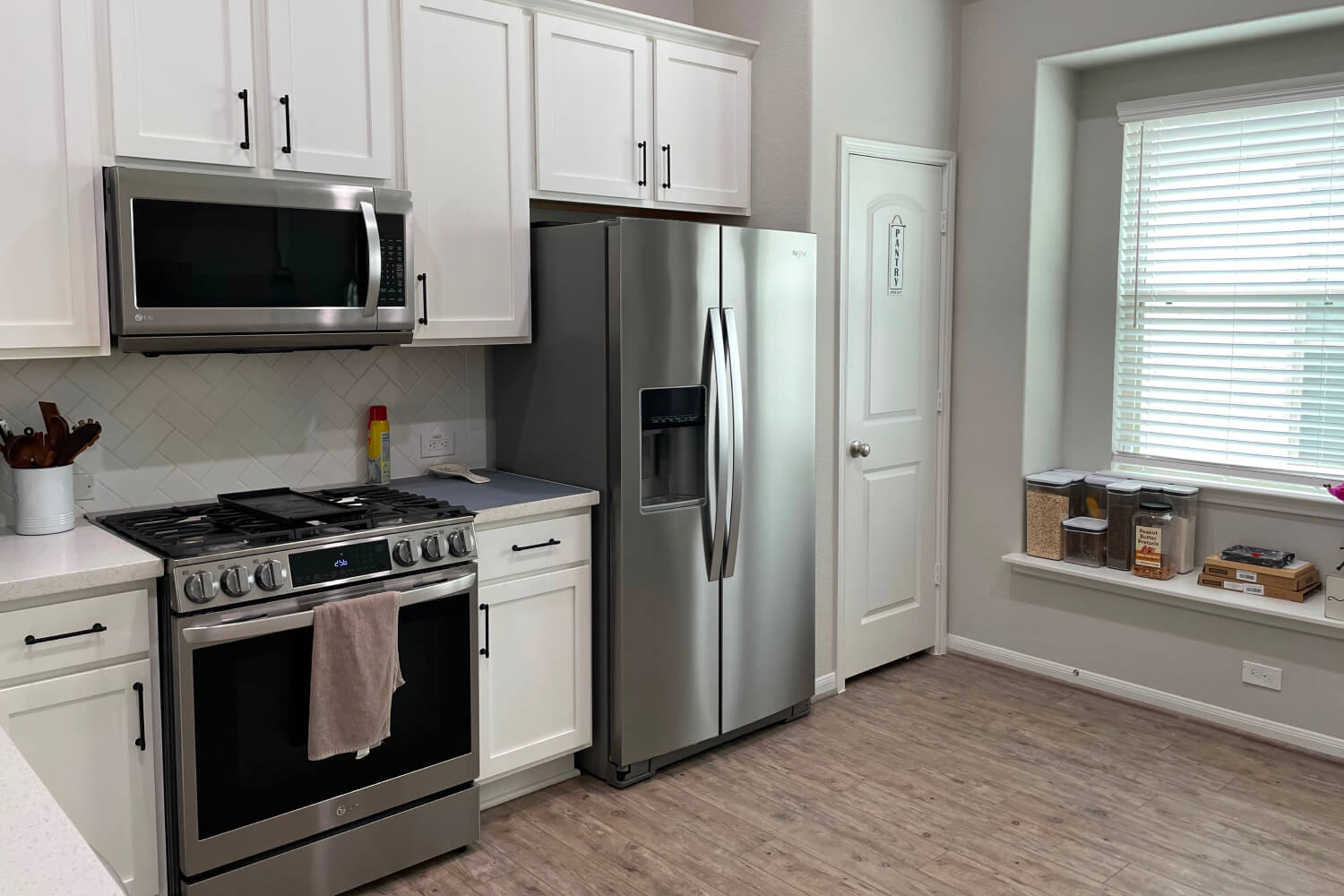
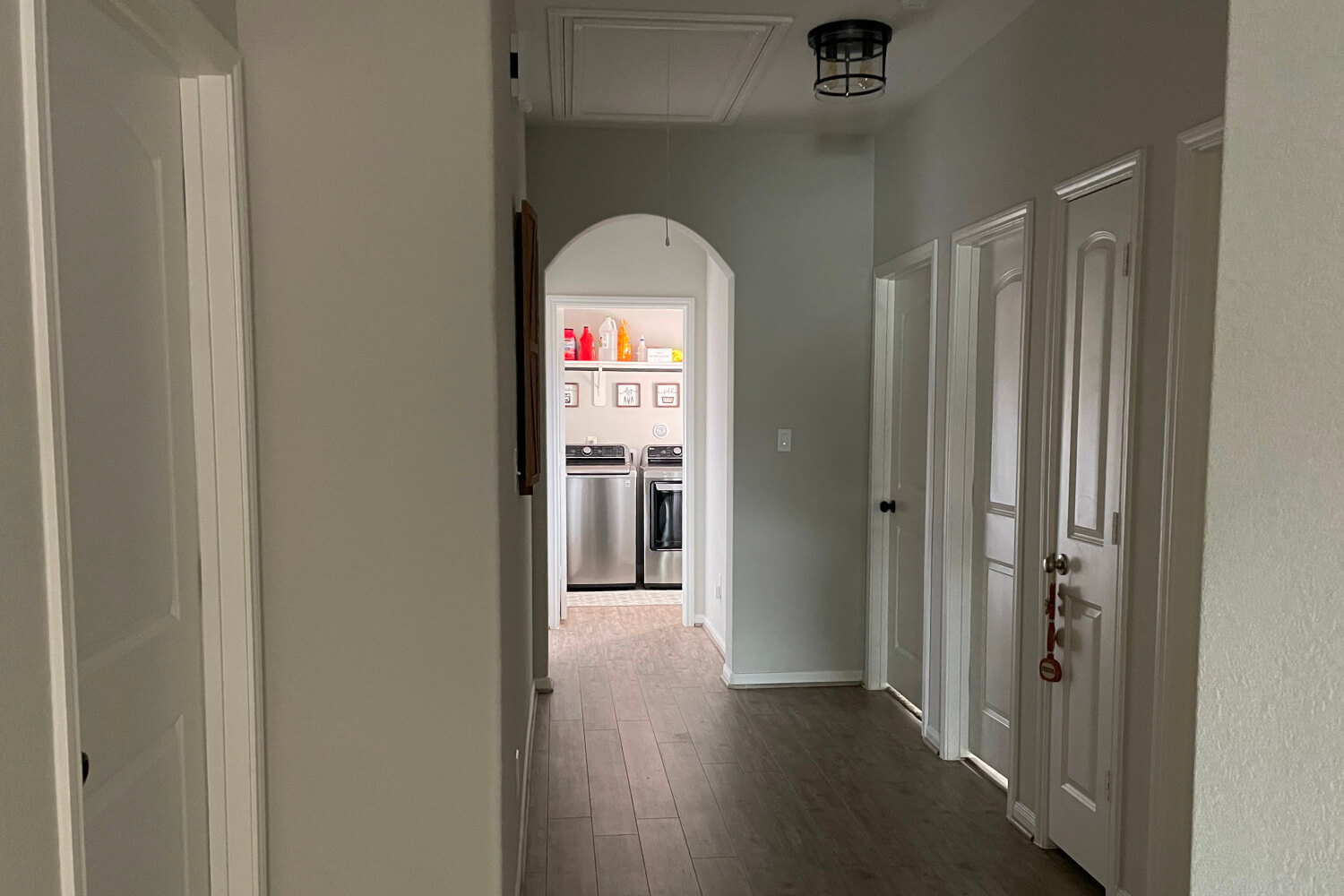

“John, everything you’ve got here in Texas is just insanely huge!”
“Exactly. This isn’t New York with its tiny apartments. In Texas, we like to live big. I used to live in a big city, but it wasn’t the same. In this house, I feel super comfortable.”
“It’s just it’s so far from the city, and nothing much around. In the city, you walk outside, and everything’s right there, and there’s always something going on.”
“Yeah, that’s the upside of cities. But just look at the downsides: traffic jams, homeless people, noise, and crazy rent. And if I need to go into the city, well, I’ve got a car.”
“Don’t you ever get bored out here?”
“Sometimes I do, but then I just hop in the truck and drive over to my friends’. We order pizza and watch football. That’s it.”
The next day, before heading to Houston, I decided to take a walk around the neighborhood. It turned out that the American’s house was one of hundreds of exactly the same beautiful, brand‑new houses lined up along the street.

Closer to the edge of the neighborhood, I came across an overgrown pond, and the landscape suddenly looked just like rural Russia.

The houses around the pond, as well as right at the edge of the village, turned out to be surrounded by a solid wooden fence. And although the neatly trimmed lawns together with the smooth sidewalk indicated that I was still in the United States, there was something in the air that felt inexplicably Russian.
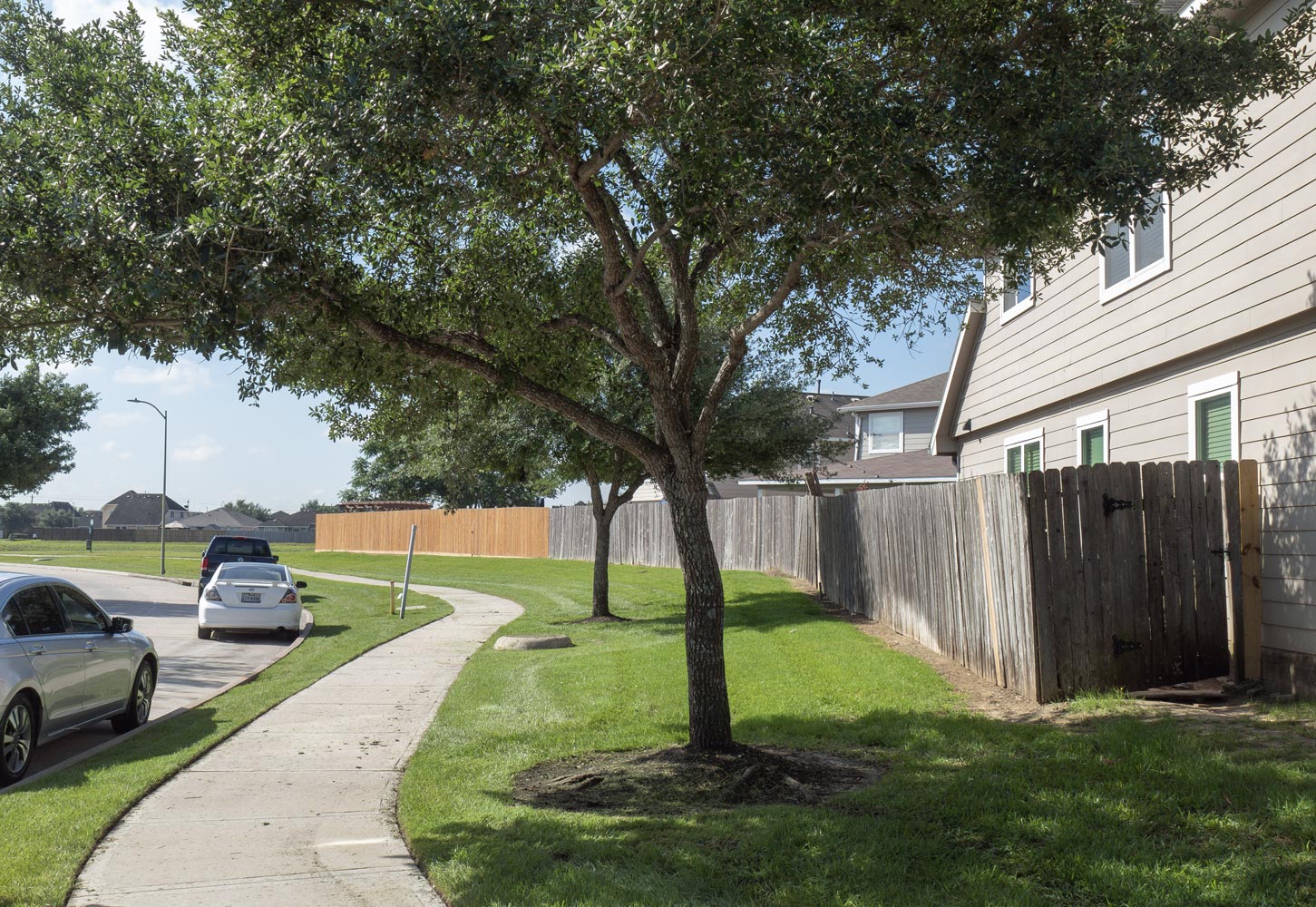
The exit from the settlement was crowned by large automatic gates, beyond which stood the very same bus stop where the author had pulled in yesterday. That’s exactly where the polished sidewalk ended. Beyond that, running along the highway, lay a narrow, purely technical pedestrian strip leading to nowhere.
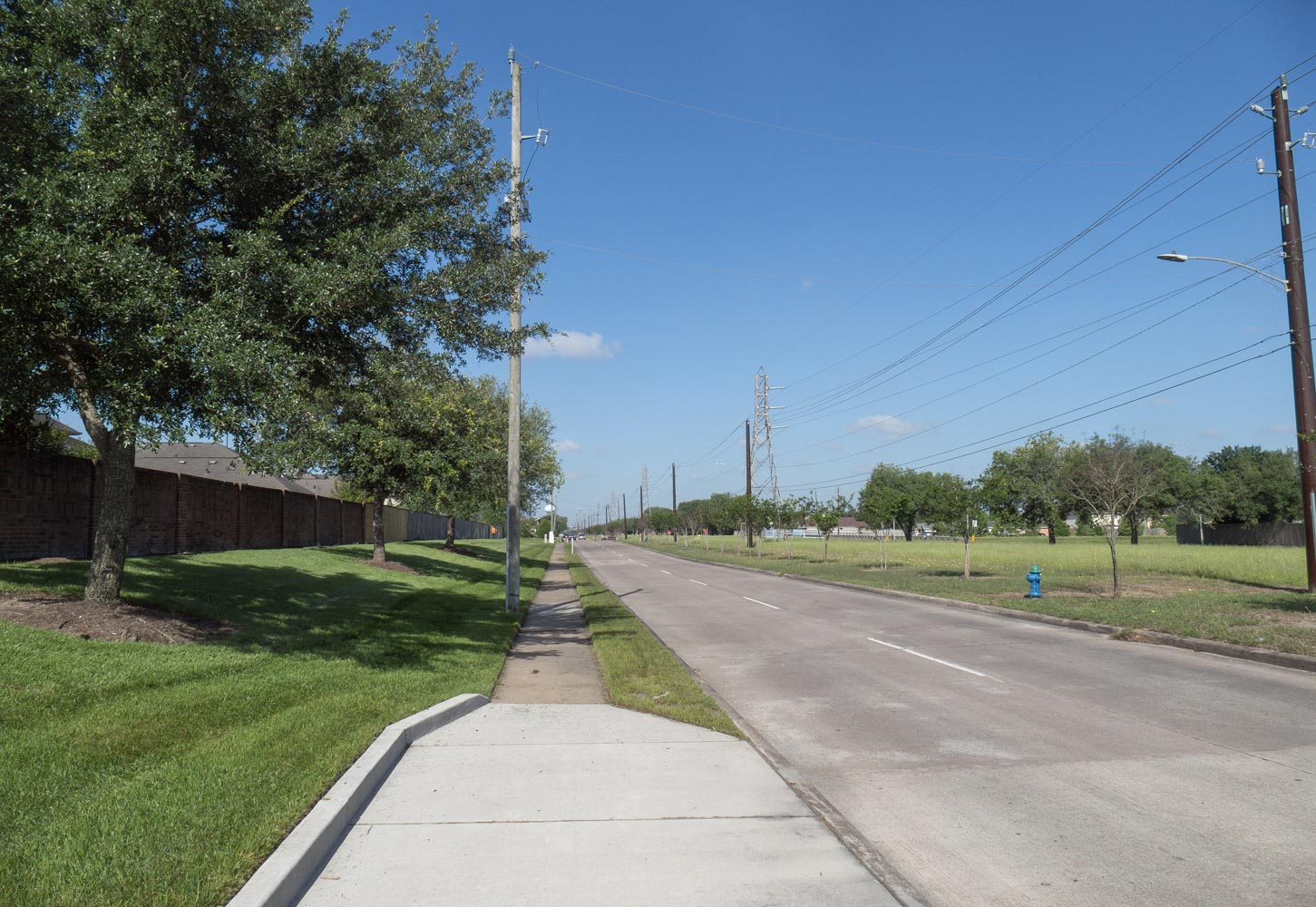
Looking at the map, I found several restaurants in the area with incredible names like “Take the Wheel” and “Mad Max BBQ,” where no sane person would ever go for dinner. There were also a couple of food markets of dubious quality. Other than that, the place was surrounded by the standard American set of entertainments: a church, a school, a daycare, a soccer field, and a pickleball center — an idiotic mix of tennis and ping-pong for retirees.
You could still walk to the small stores, but the nearest Walmart, the most famous American supermarket, turned out to be either a two-hour walk, a twenty-dollar taxi ride, or forty minutes by bus. Getting to downtown Houston by bus took even more — an hour and a half.
Within just a week, living in the Texas house became unbearable. The American himself worked from his home office from morning till evening, and at night drove off to see his friends. The author, bored out of his mind, explored the house and discovered a door leading to the backyard. It turned out to be just as far from the American Dream as the American Dream itself. It was a small, empty, and fully fenced-off nook, cluttered with patio furniture and a barbecue grill. The heat — the unbelievable, suffocating Texas summer heat — made it impossible to stay there. But even without the heat, the place just felt uncomfortable.

Looking even more closely, I discovered that the windows didn’t face a cozy little garden at all. Carefully hidden behind the blinds, there was... the wall of the neighboring building. Exactly the same.
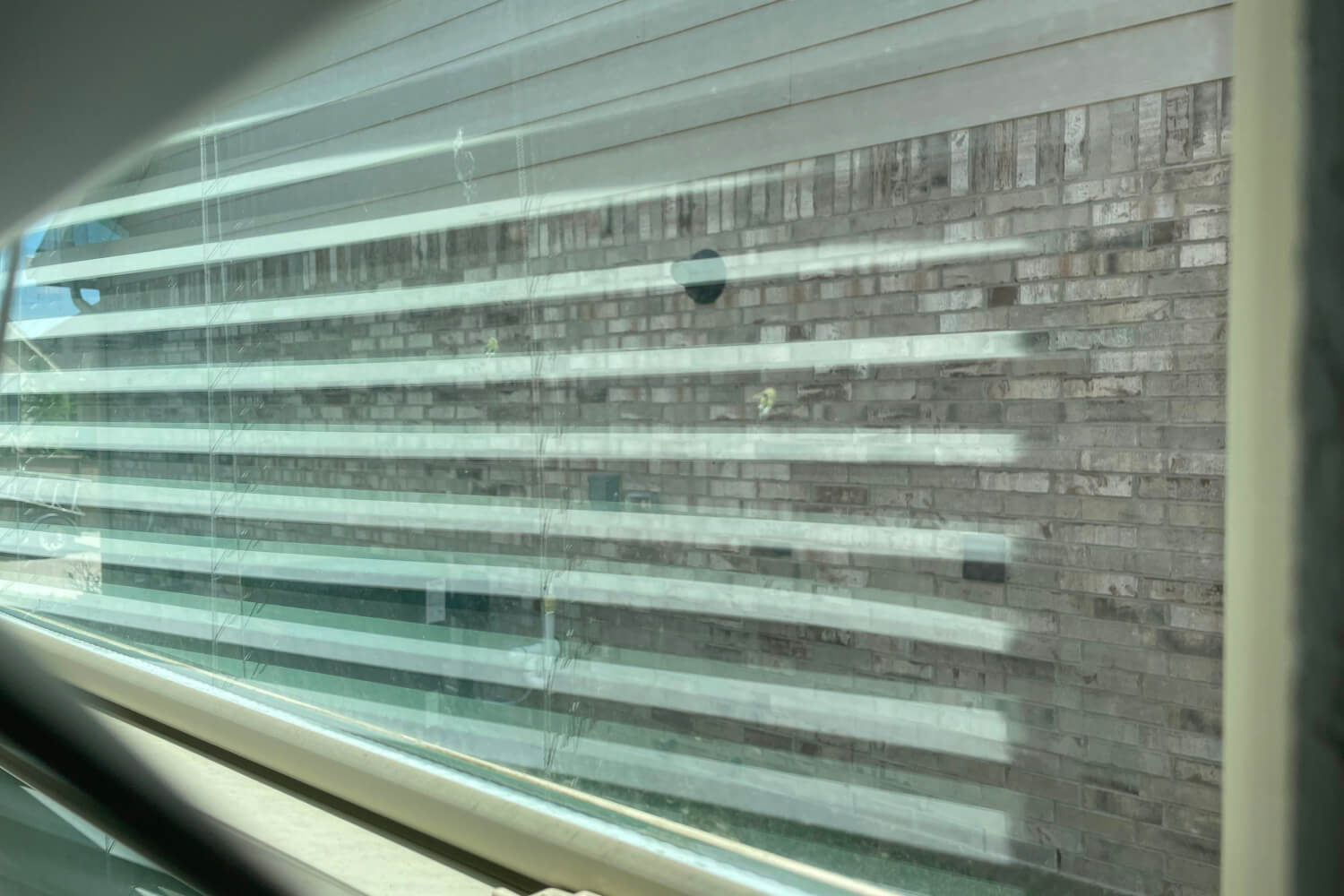
John’s house wasn’t the first place in Texas where the author had lived. A week earlier, I’d stayed in a suburb of San Antonio — a pretty nice little town with a gorgeous riverwalk right in downtown. That time, I got the classic one-story America. Same twenty-minute drive from a major city, but a completely different picture!

The house was built in 1980. What can I say — practically an old-timer! Naturally, the inside couldn’t possibly feel as bright and spacious. The ceiling hung low like a heavy sky, and the windows let in light only reluctantly, leaving the rooms in a rather dim gloom.

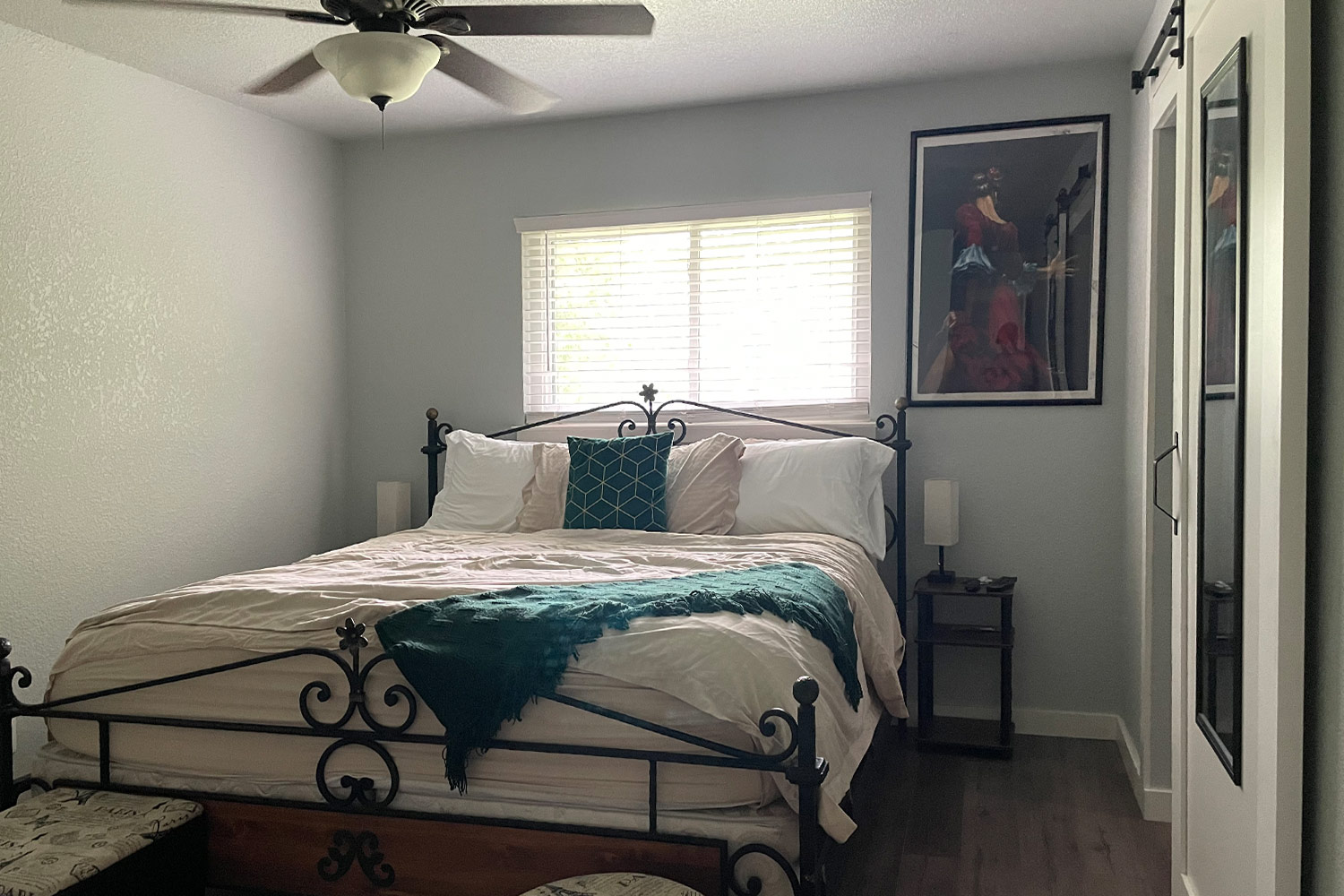
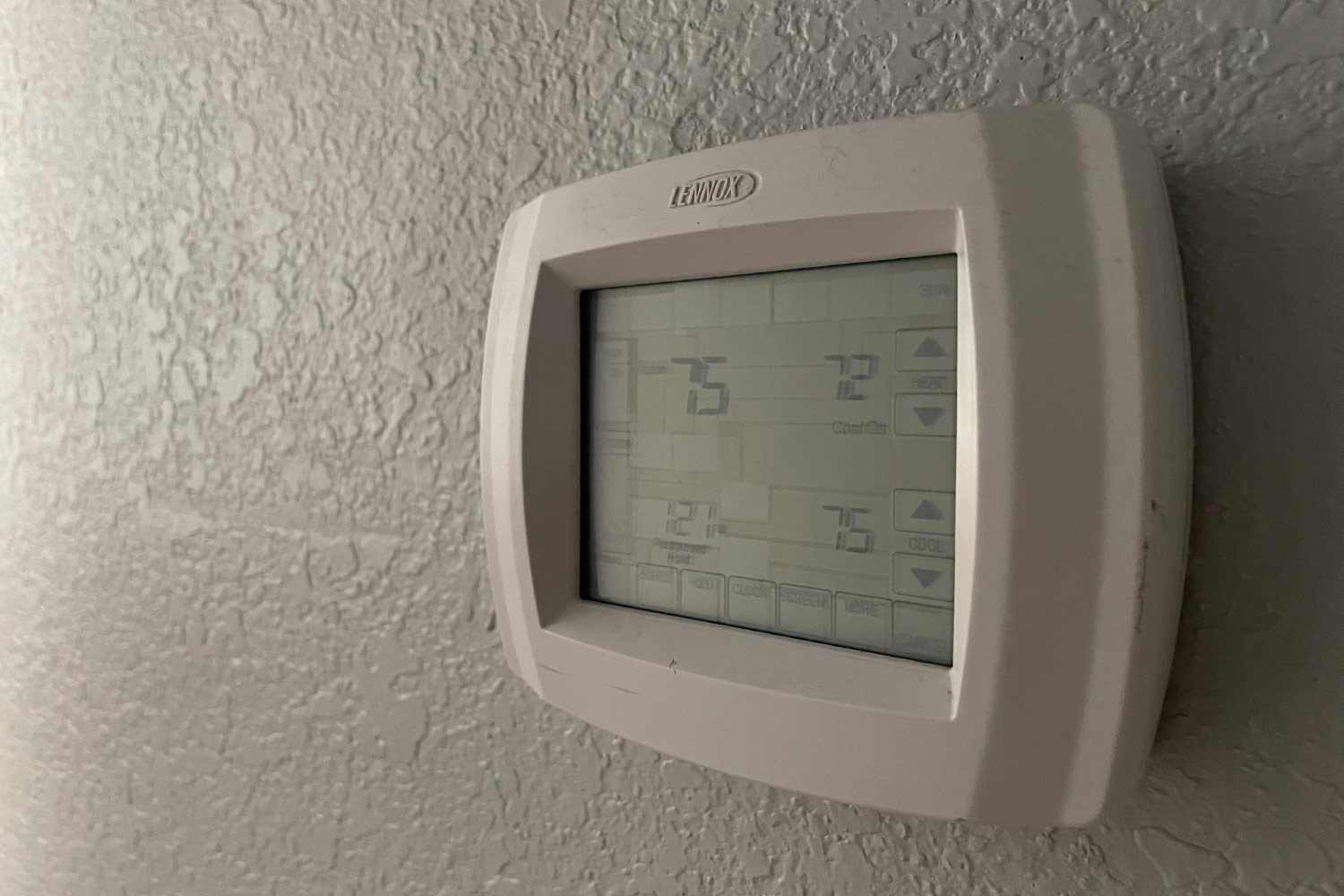
Still, even in this well-aged house, there was a wall-mounted control panel that managed the temperature and the lights. Mechanical thermostats first appeared in American homes back in the 1930s, so you can’t impress even a resident of the most remote backwater in the U.S. with a “smart home.”
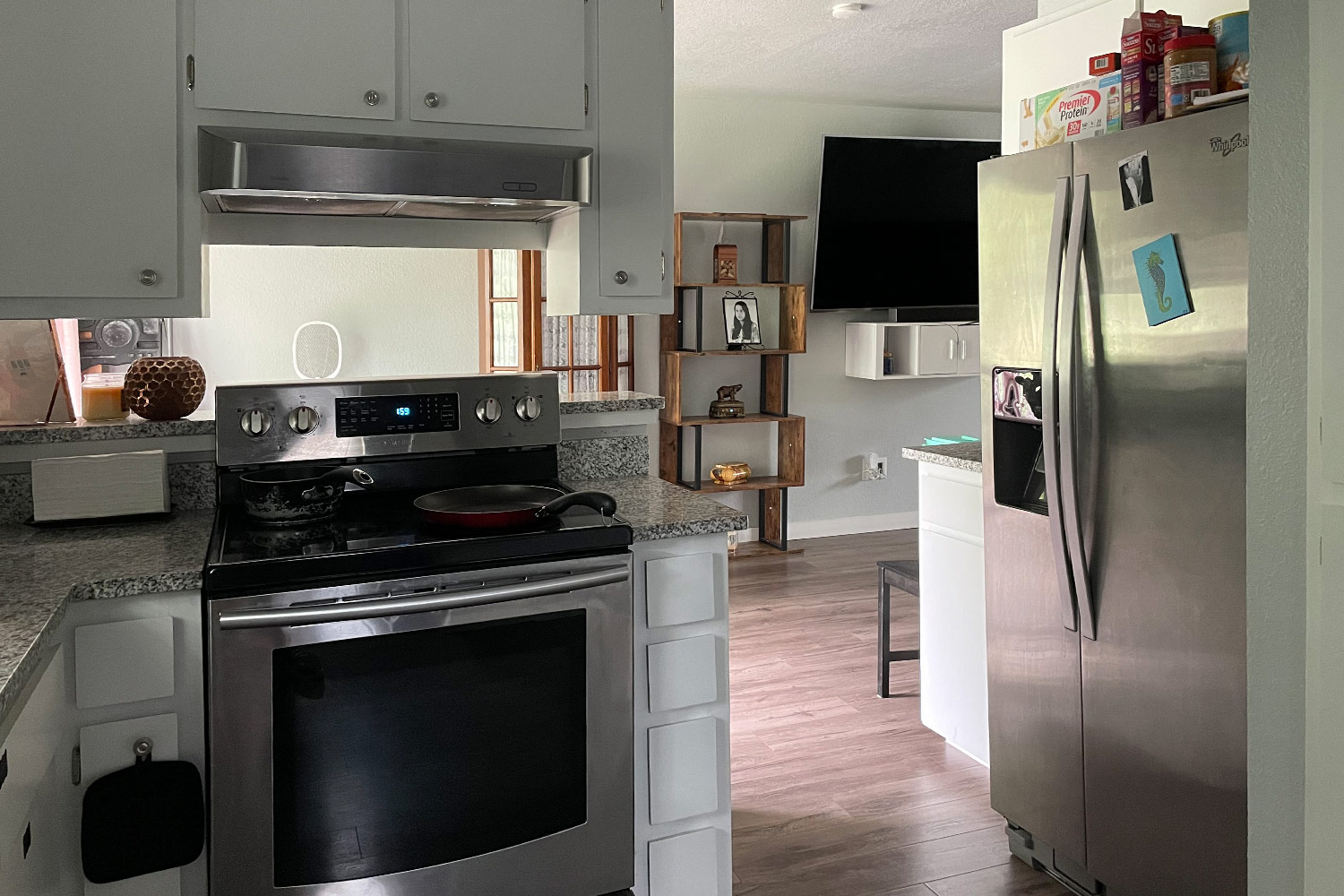
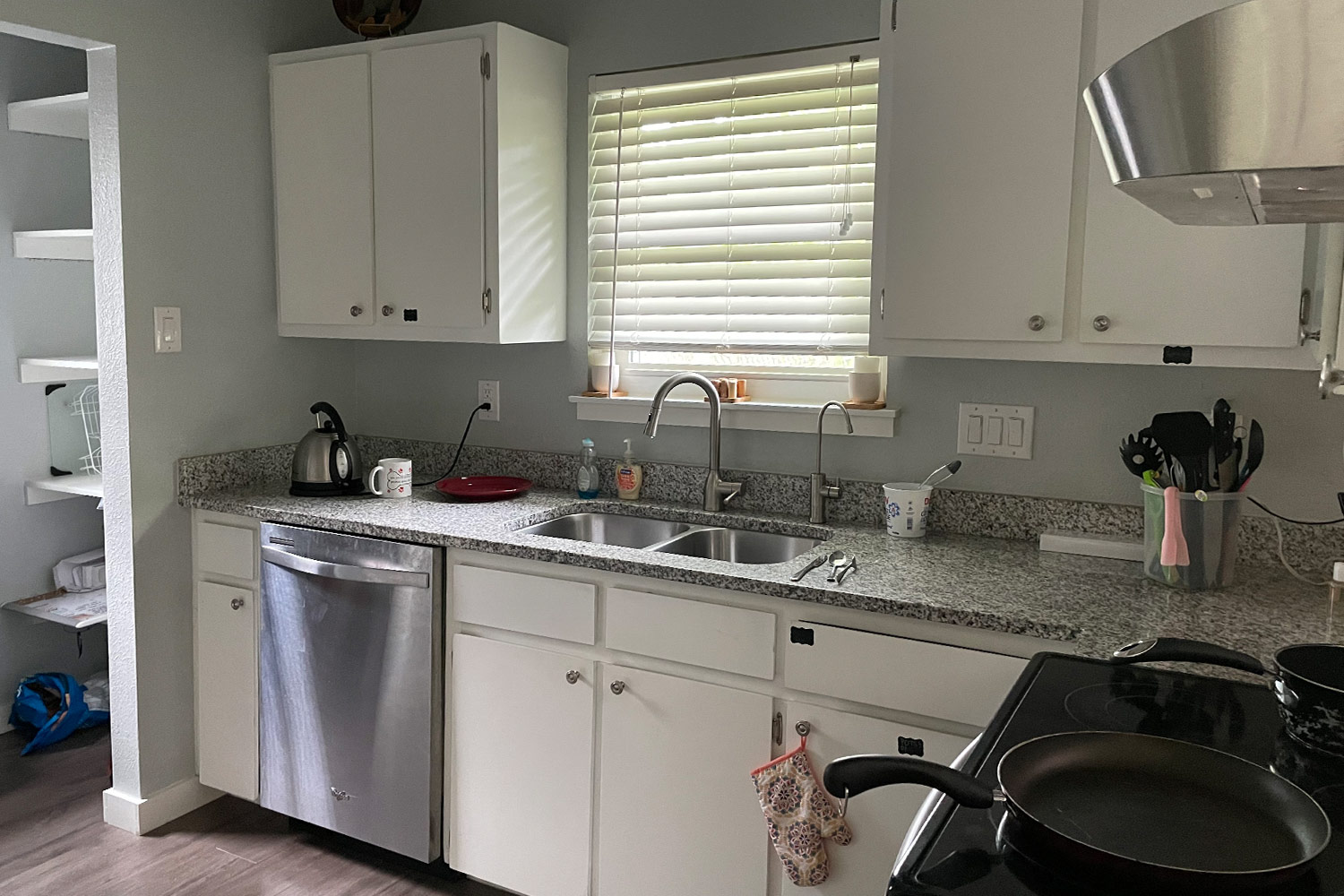
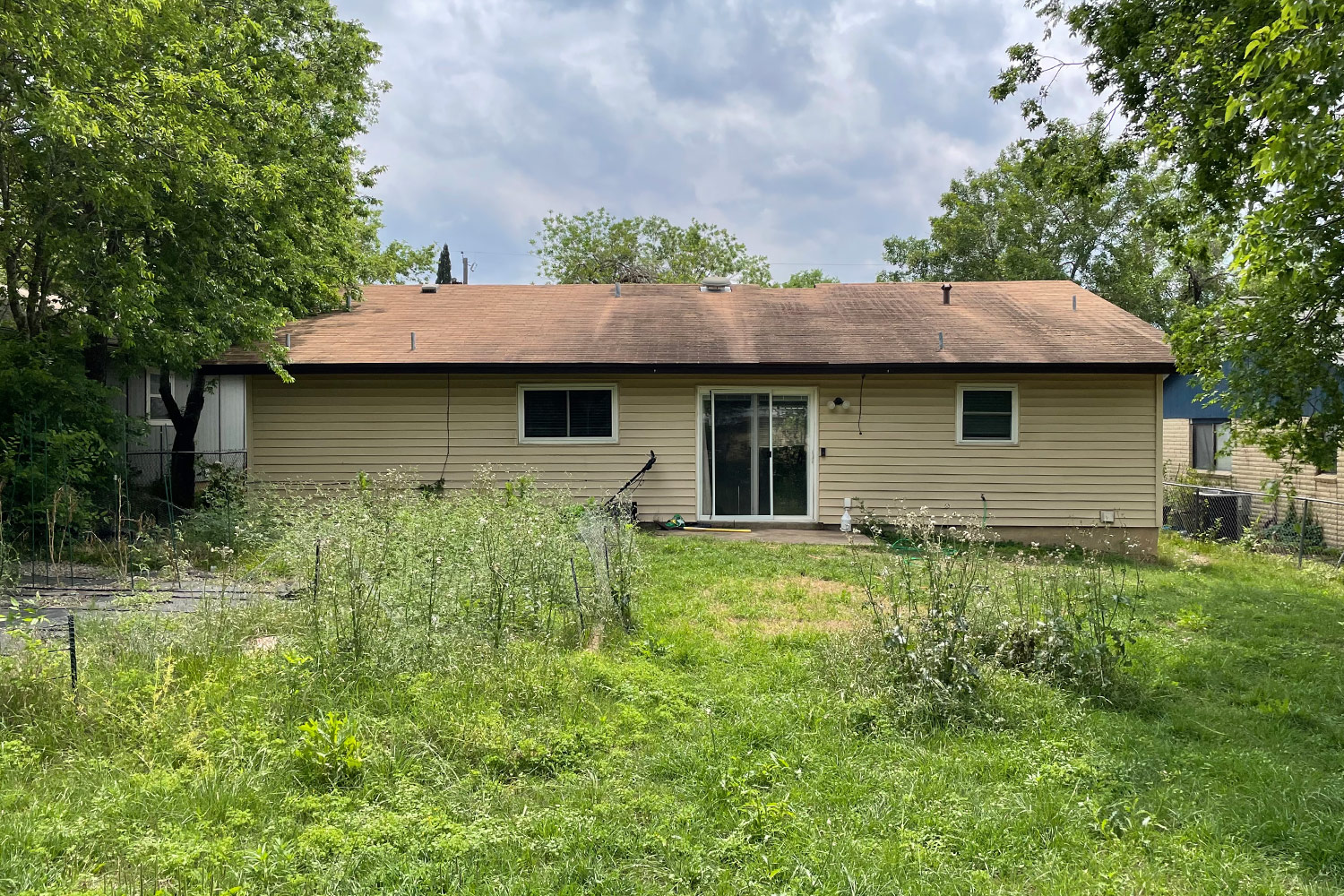
Alas, the backyard at this house also turned out to be a lifeless, overgrown wasteland. Texas is one of the hottest states, so it’s hard to find anything in a backyard besides sun-scorched grass.


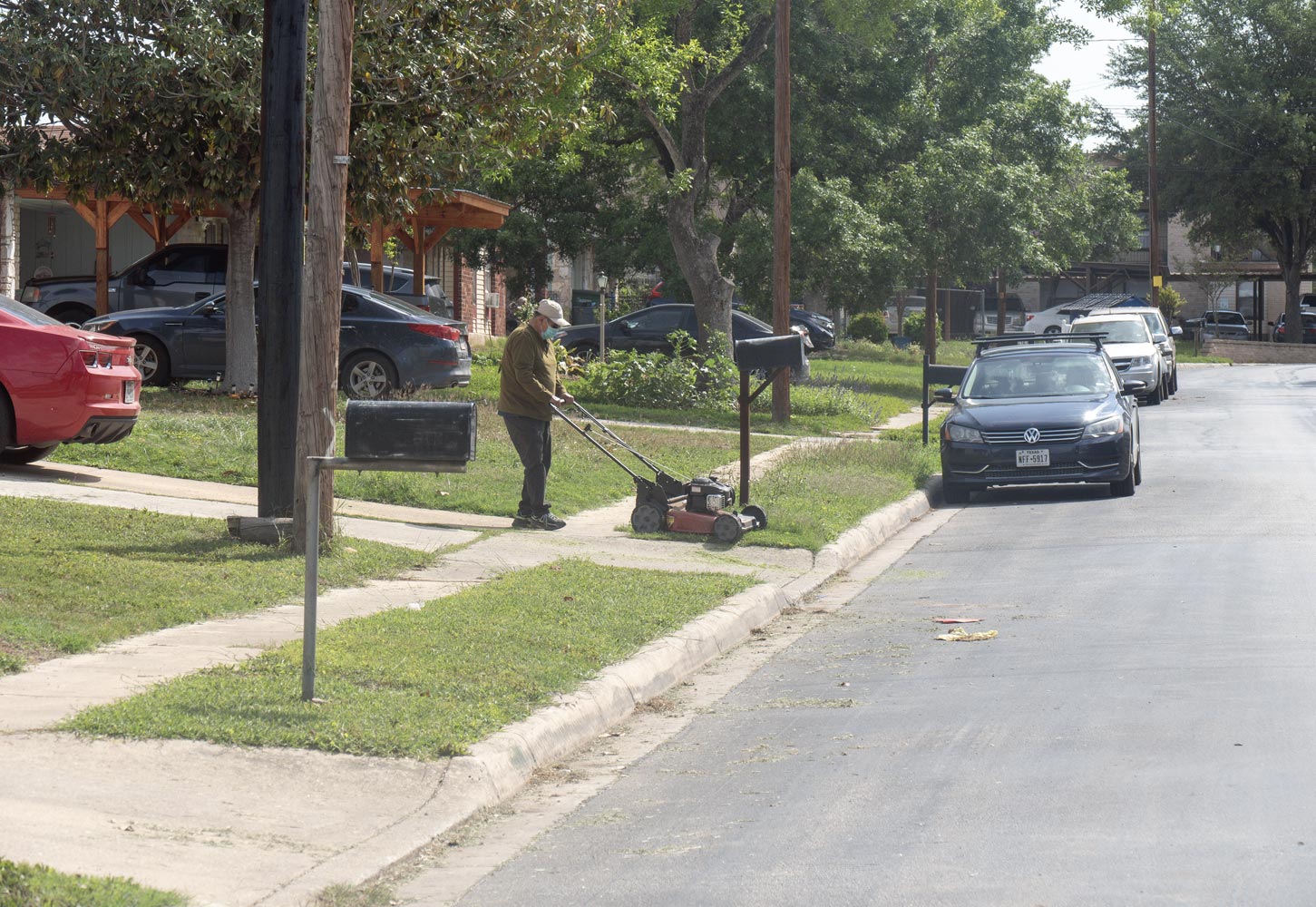
The surrounding houses were nowhere near as cool as those in Houston, but at least they were different. The street was just as scruffy, but it actually showed signs of life. The mailman was delivering letters, the ice cream guy was cruising past the houses in his musical truck, and the residents were tidying up their lawns. Just like in proper small-town America, passersby greeted the unknown newcomer with a fleeting smile and the standard question: “Hi, how are you?”
On one side of the street ran a concrete sidewalk, another typical American feature. Every now and then, it would stop for no apparent reason, then start up again.
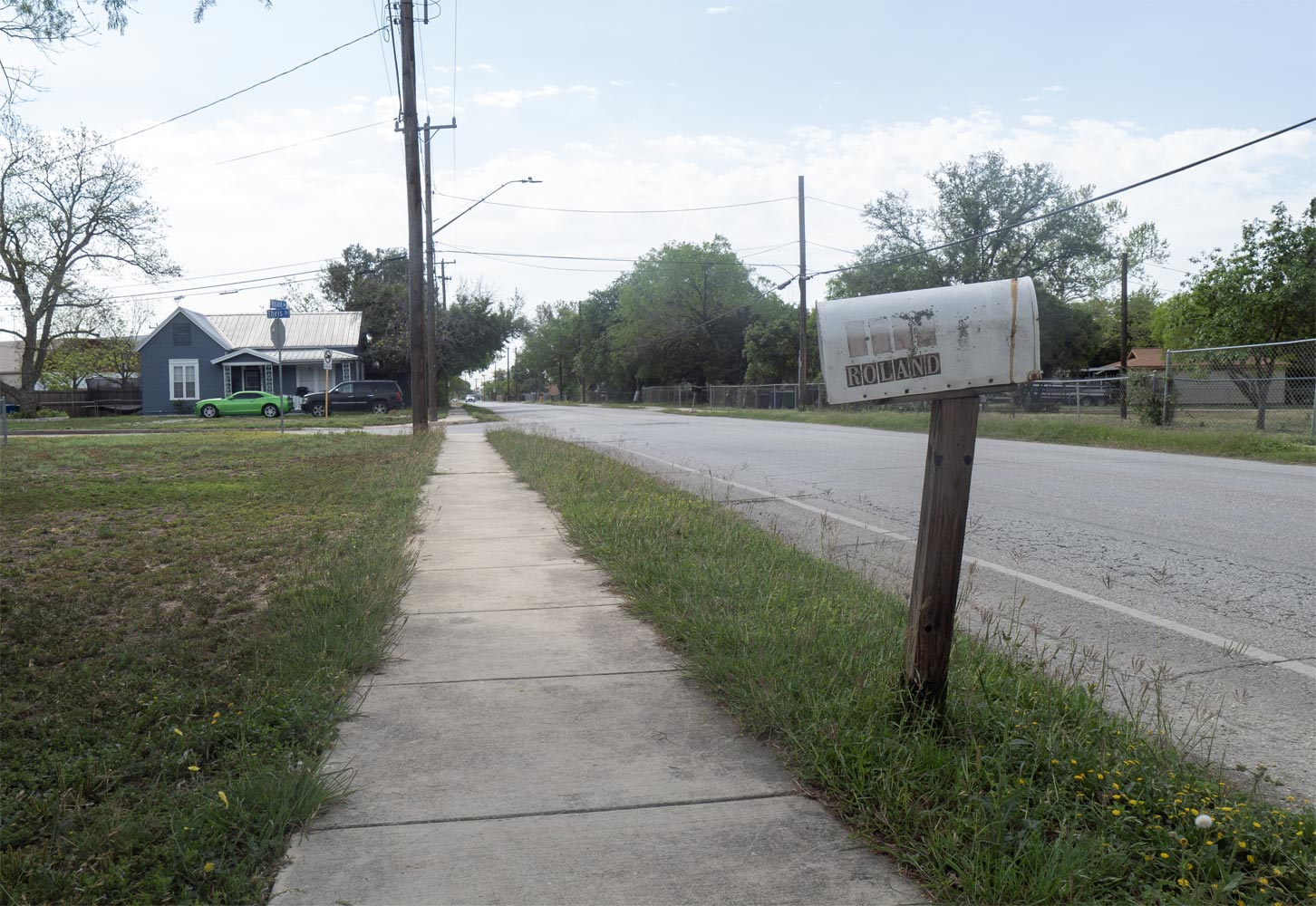
Unwinding like a meander from hidden nooks toward the edge of the settlement, the sidewalk eventually led to a bus stop, from which you could either get to downtown San Antonio or ride to the nearest Walmart. The scenery around the stop once again brought Russia to mind and made it pretty clear that only poor folks and retirees ever used it.
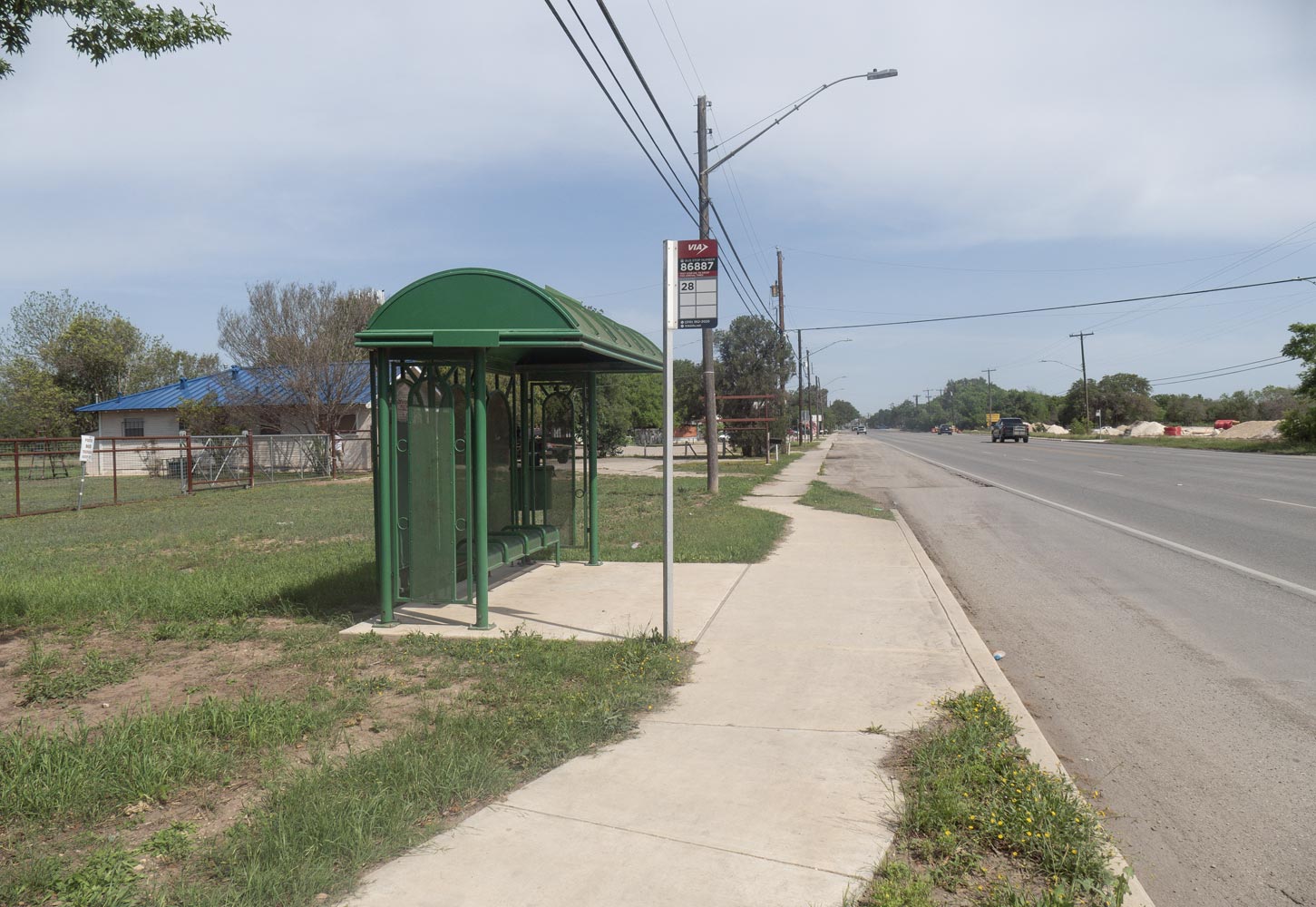
The author got on a bus, took a random route, and got off the moment he saw something unusual out the window. What caught his eye was a crooked Presbyterian church that looked more like an electrical utility box in Balashikha.

The church was surrounded by one-story houses that were anything but cozy this time — ramshackle to the point of rivaling some Siberian village.
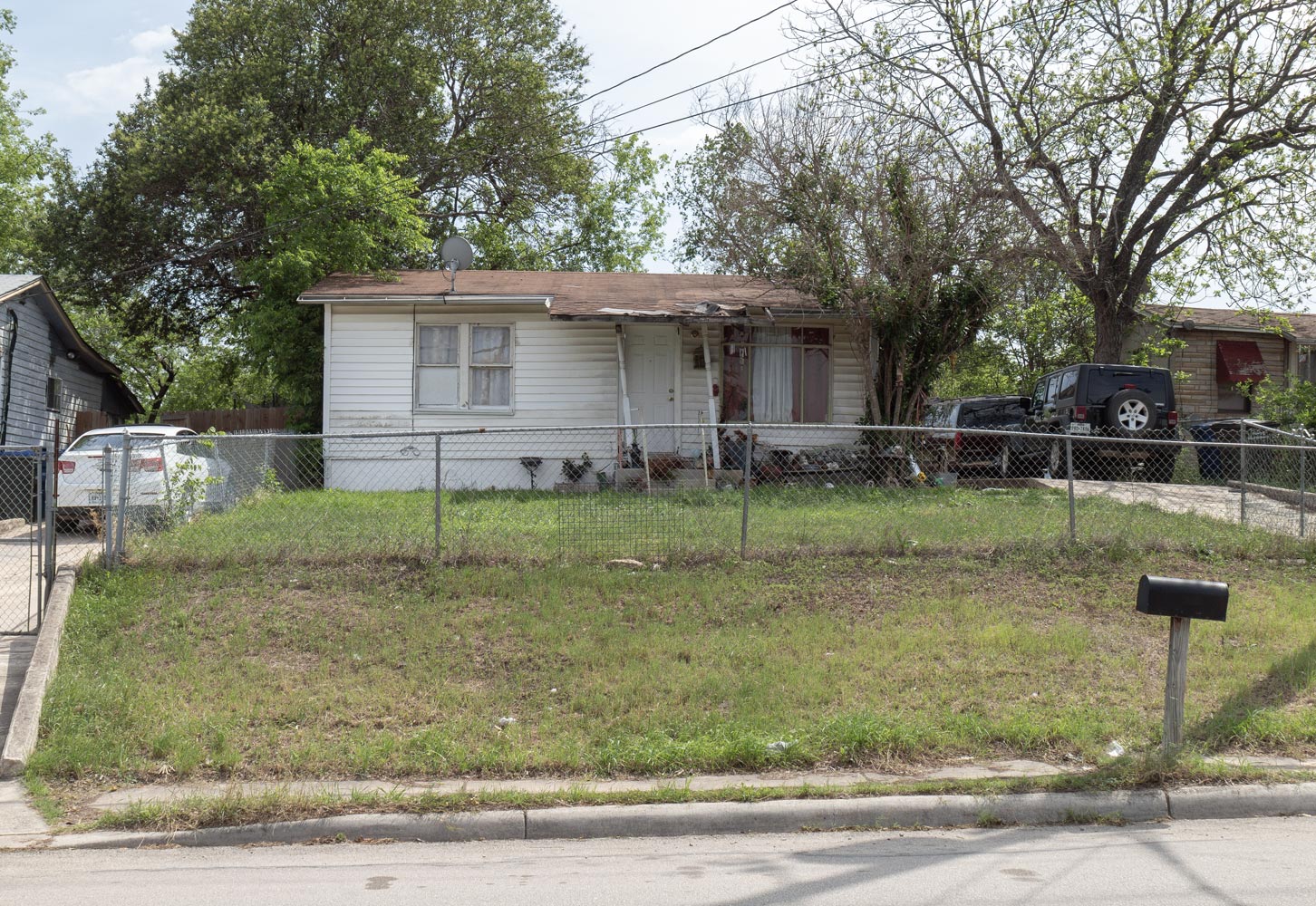
The manicured lawns were long gone. Instead of the curly elms along the streets, there were thickets of maple and the chewed-off stumps of some other trees.
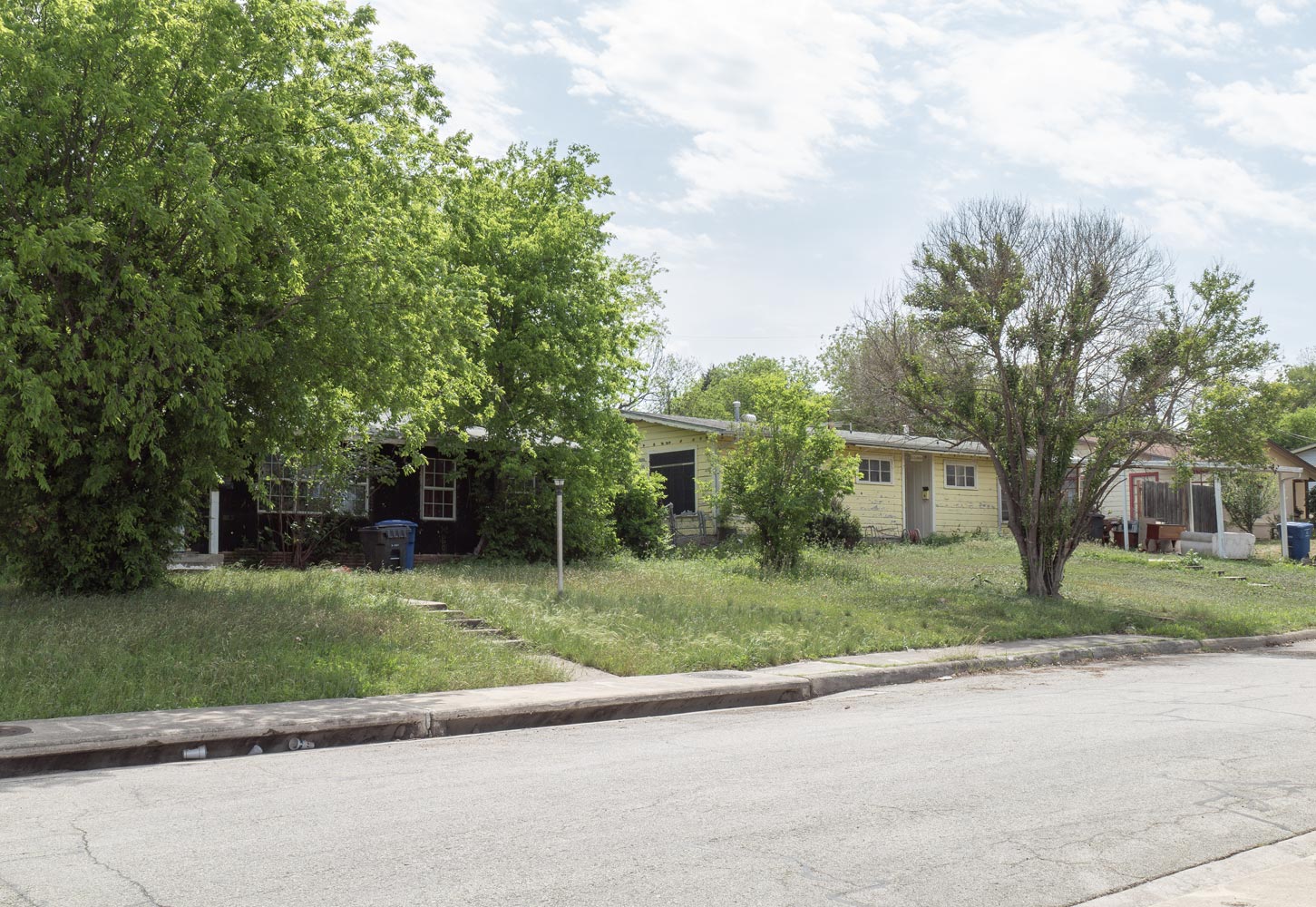
Although all the roads were paved, the view was anything but uplifting: a cracked road stretching off to god knows where, crooked houses, and wooden poles from Roosevelt’s time leaning off to the side.
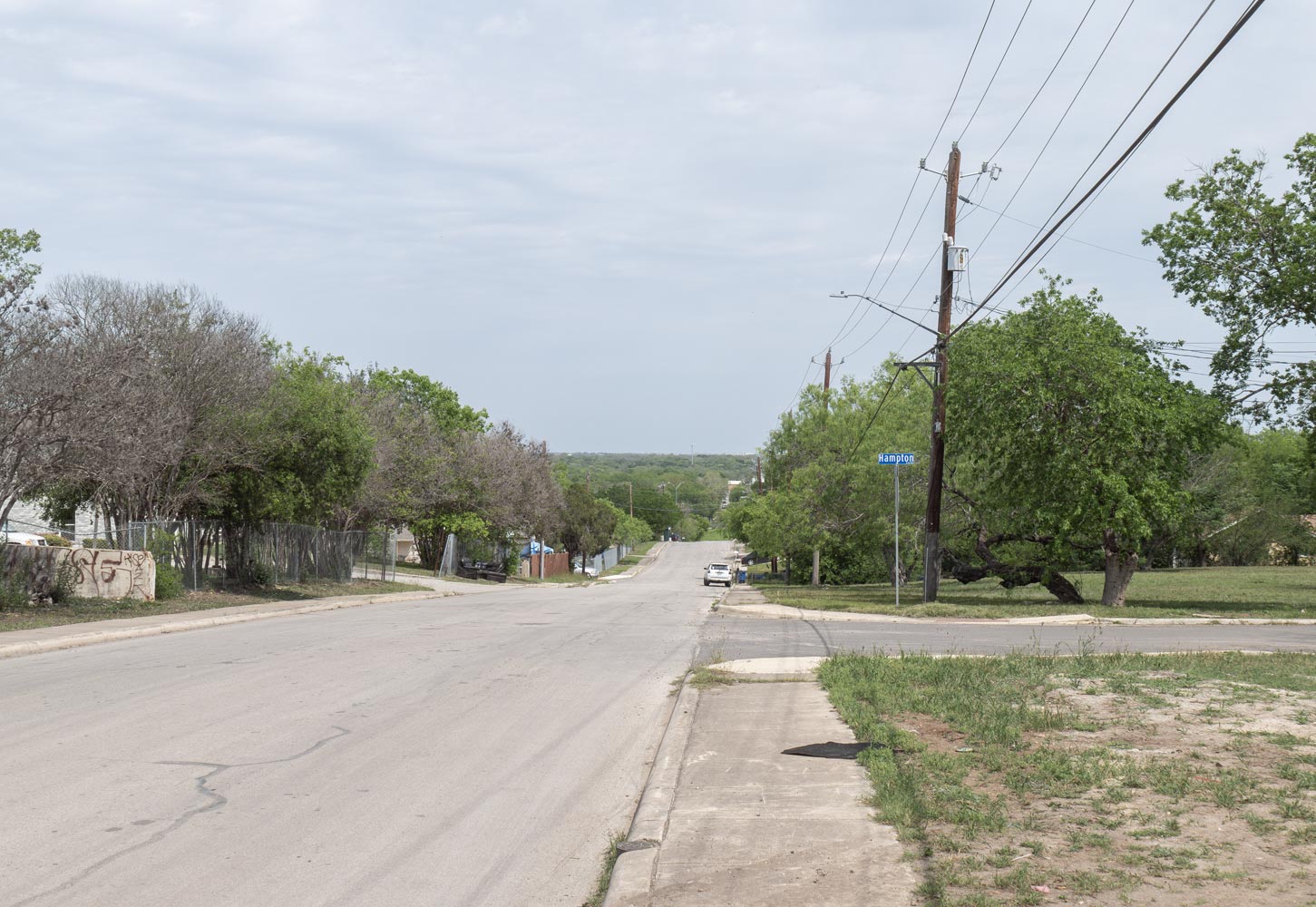
Finally, between the two parts of the settlement, I found a railroad with a power line running alongside it. A lonely rusty track shot straight off far beyond the horizon, and along the rails there was trash, torn clothing, and wooden boards from which someone had vainly tried to knock together a shack.
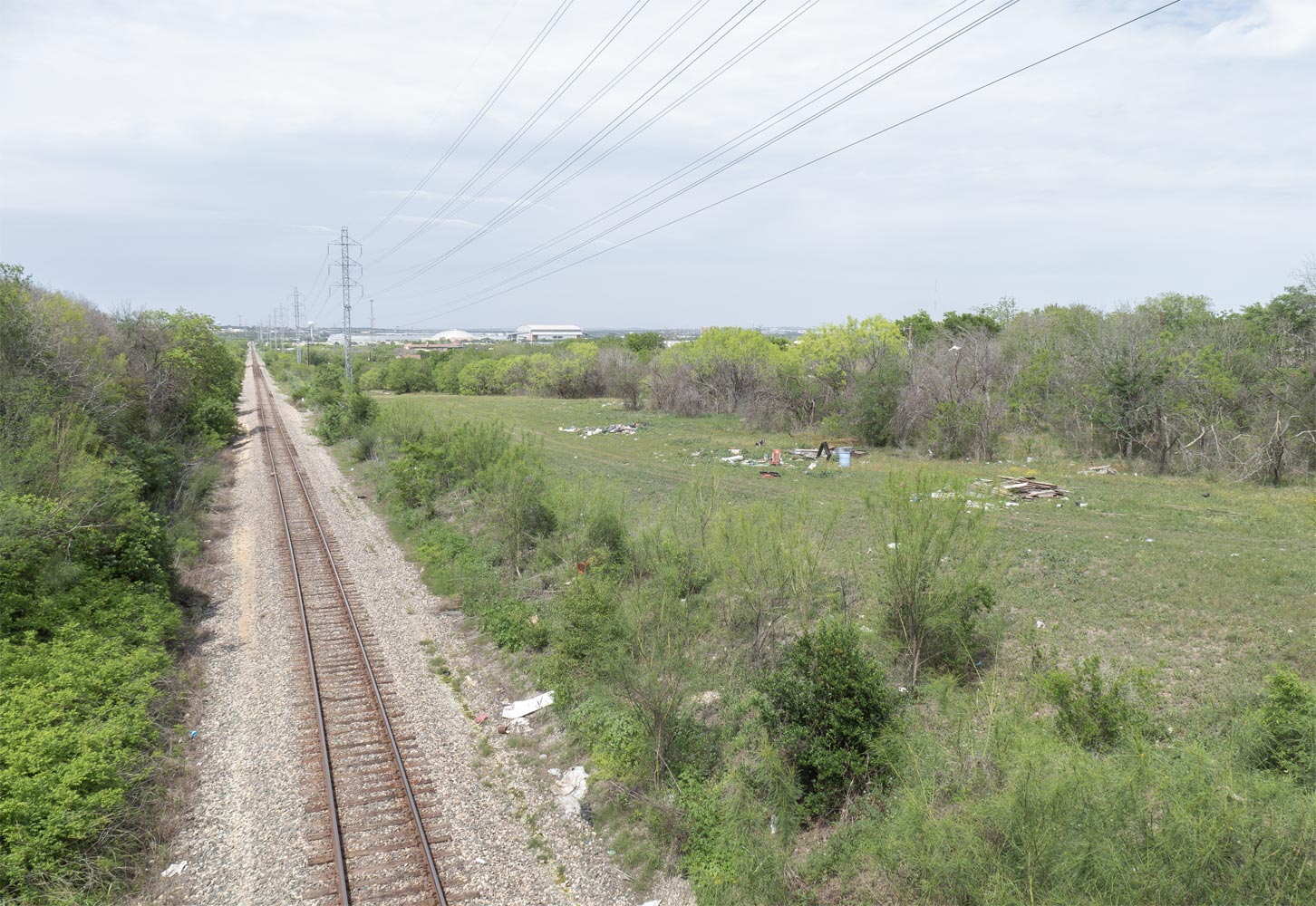
The Texas House answered every question I had about the large number of mental disorders in the U.S.
An American, whether he lives in an old one-story house or a brand-new Texas palace, is a hostage of the American Dream. He’s isolated from society, shut in on that little patch of land in front of his house, stewing in his own juices and cooking up a nice case of depression. Of course, that’s not the only reason, but it’s definitely the most striking one.
Medicine
If owning your own home, a car, and a happy family is called the American Dream, then healthcare ought to be called the American Tragedy.
And here we are again with this American paradox. On the one hand, the U.S. has the most advanced medicine in the world. They use surgical robots, transplant organs, treat cancer, and implant chips. At the same time, clinics slap on astronomical bills for popping a pimple, nurses are googling drug names, and a dentist’s office in Brooklyn looks as if they just finished filming “Saw 20” in there.
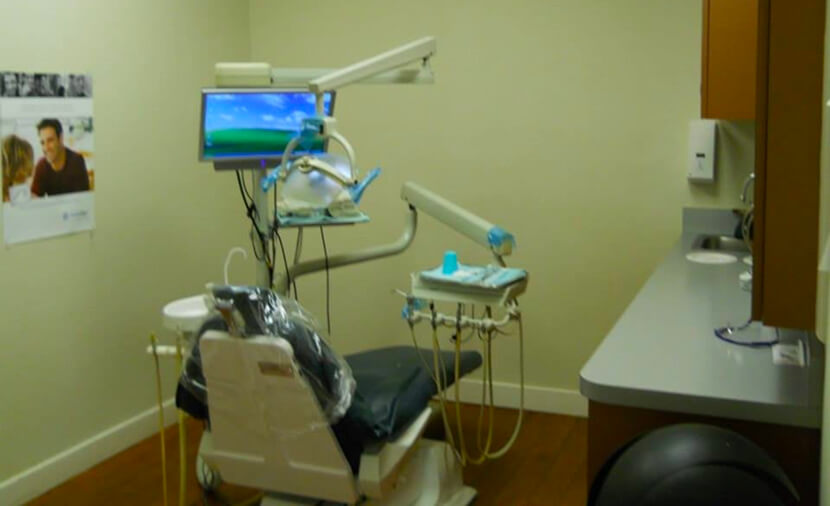
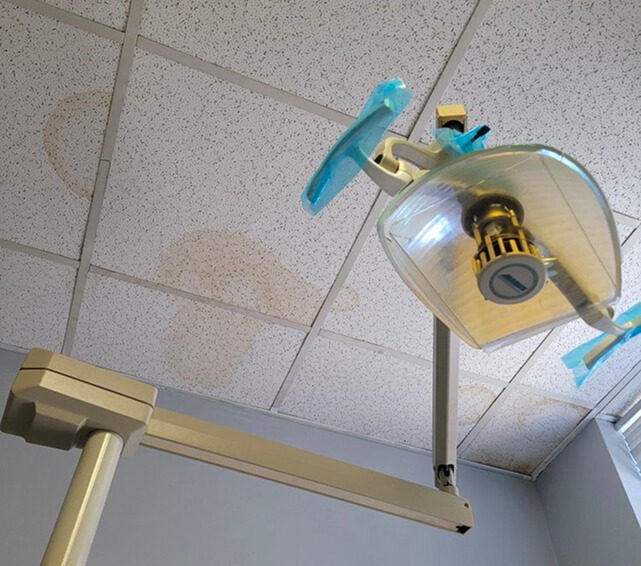
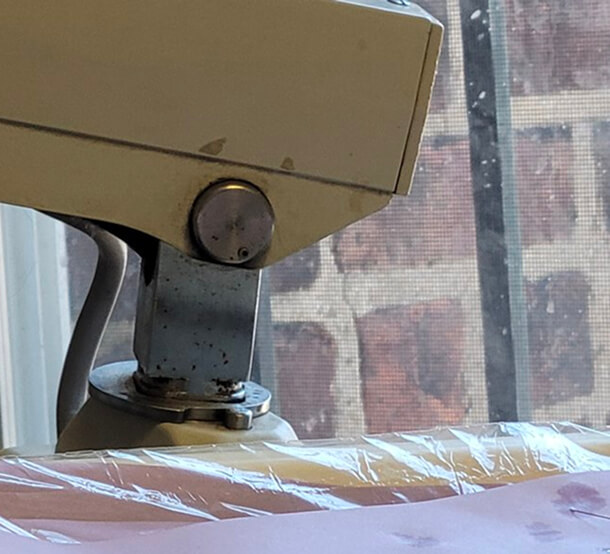
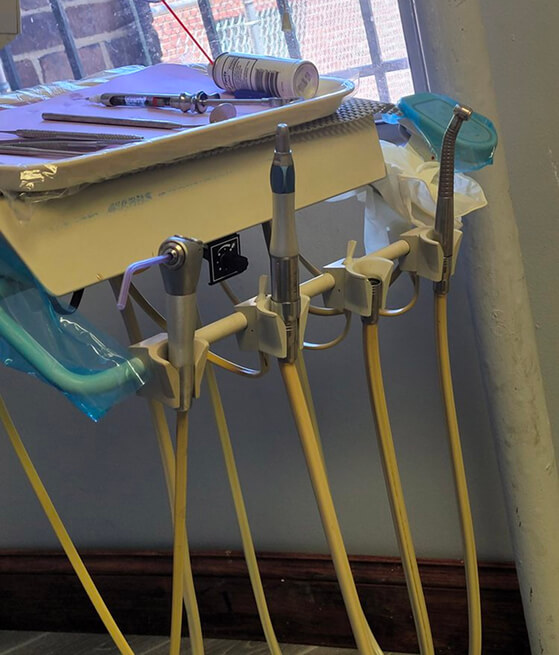
“Because it’s private!” the reader will immediately point out.
“About as ‘private’ as housing,” the author shoots back.
In reality, healthcare in the U.S. is not only not private but also, in many ways free. And that’s exactly where all the horrors come from. It should be made private and price regulation abolished... But let’s take it step by step.
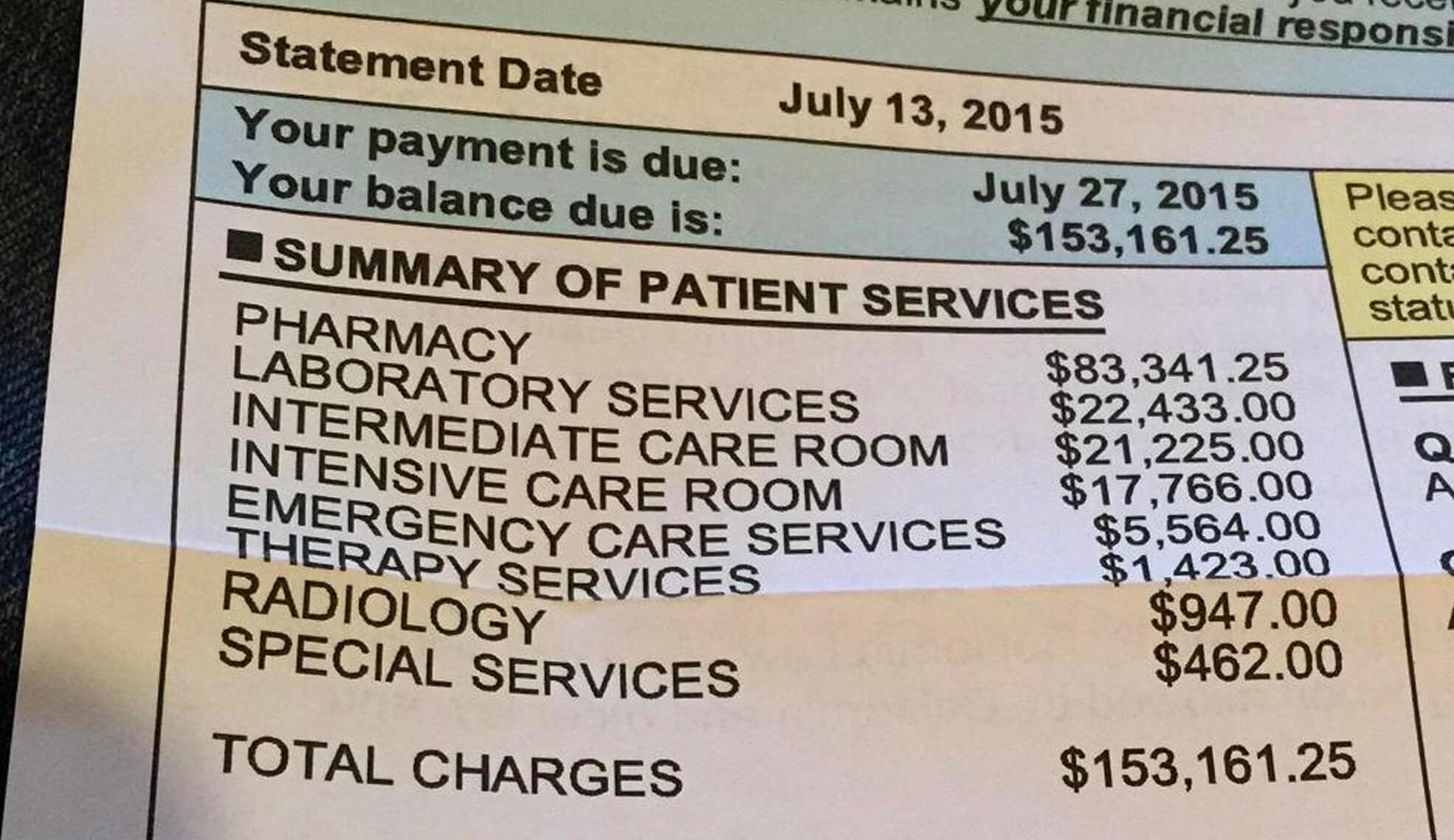
The gigantic medical bills result from the lack of private healthcare in the U.S.
Free healthcare was invented in the Soviet Union. Before the Russians, the Germans had made huge progress, but their system introduced by Bismarck in 1883 was still insurance-based, not free. The outstanding physician Nikolai Semashko was the first to create a direct, state-run, completely free medical system with no insurance at all, turning treatment from a service into a human right.
Meanwhile, nothing in this world is actually free. Behind any service, there’s labor that has to be paid for — the only question is how, and by whom. The USSR took it upon itself to provide free healthcare, education, and housing to two hundred million people. To cover costs on that scale, all private businesses had to be handed over to the state, and its profits were then siphoned into the budget, from which those “free” services were paid for.
The upside of this system was universal access to healthcare and the complete absence of billionaires. The downside was the gradual economic erosion. Directors’ salaries barely depended on how well they did their jobs, so they just kept their seats warm, and investing in new developments became extremely difficult and risky, since any failure could easily be taken for theft.
The USSR collapsed and was replaced by capitalist Russia. Business was privatized, and now the budget could only collect taxes, not all the profits. To save the bleeding‑dry budget, Russia introduced a health insurance tax, and to preserve the illusion that healthcare was still free, they decided not to show this tax in payroll calculations. This trick, which falls under the category of fiscal illusions, leads people to believe that their healthcare is paid for by their employer.
European healthcare works about the same way. The tax rate varies. While in Russia they pay 5.1%, in Germany it’s almost 15%, in France 13%, and in Italy 9%. This means that with a $2000 salary, a Russian pays $102 for insurance, a German $300, a French person $260, and an Italian $180 per month.
There’s private healthcare in Europe too. It’s especially popular in Russia, where there are always lines in the free clinics, and the small regional hospitals look downright terrifying. The main problem with this “dual” healthcare system is that even if someone only goes to a private doctor, they still have to pay a tax out of every paycheck. So they’re basically paying for an imposed service. Normally, that would be something you could take to court — just not when it’s the state doing it.
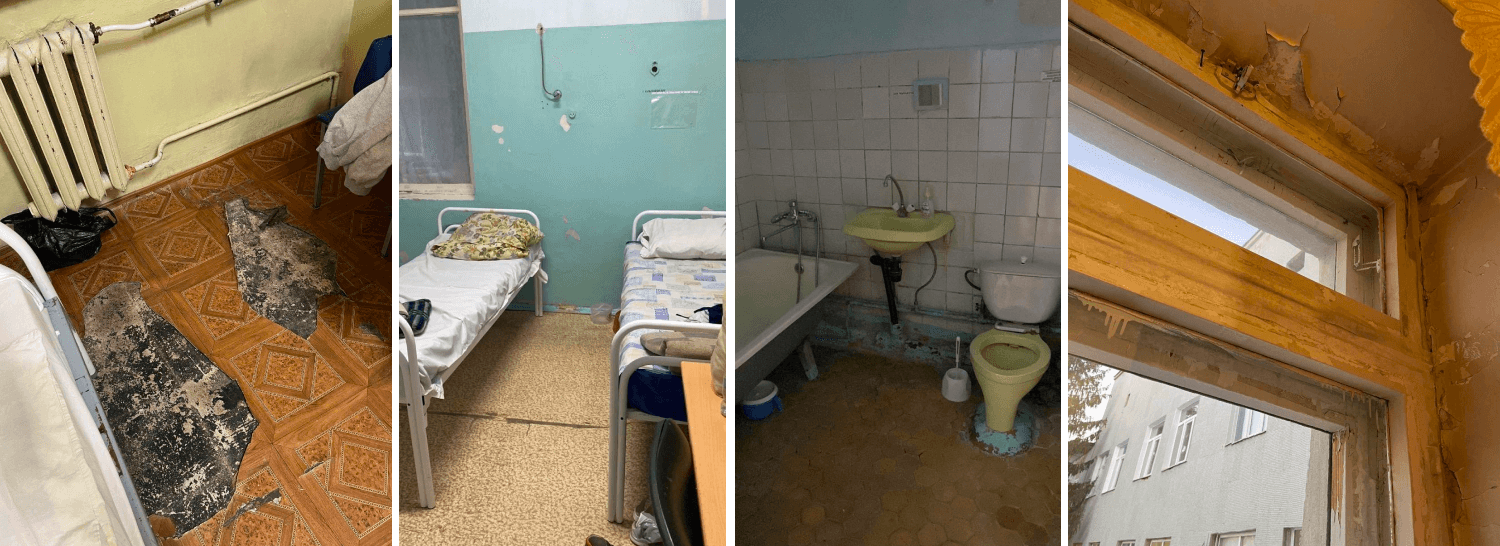
Regional hospitals in Russia can be in terrible condition
The tempting idea of free healthcare was bound to find its way into the heads of American socialists. It was first proposed back in the 1920s, but it didn’t reach the halls of power until 1965. The Democratic Party was then pushing for a European-style welfare state and suggested starting with healthcare reform. The Republicans sharply criticized the reform and warned that it would lead to a wild surge in prices.
After Kennedy’s assassination, all the power in America was in the hands of the Democrats, so the universal healthcare project was passed without much trouble. It consisted of two programs: Medicare and Medicaid. The first one set super-low prices for medical treatment for seniors over 65, and the second introduced free healthcare for low-income people. To pay for these programs, they introduced a 2.9% payroll tax. They’re still in operation today, in 2025.
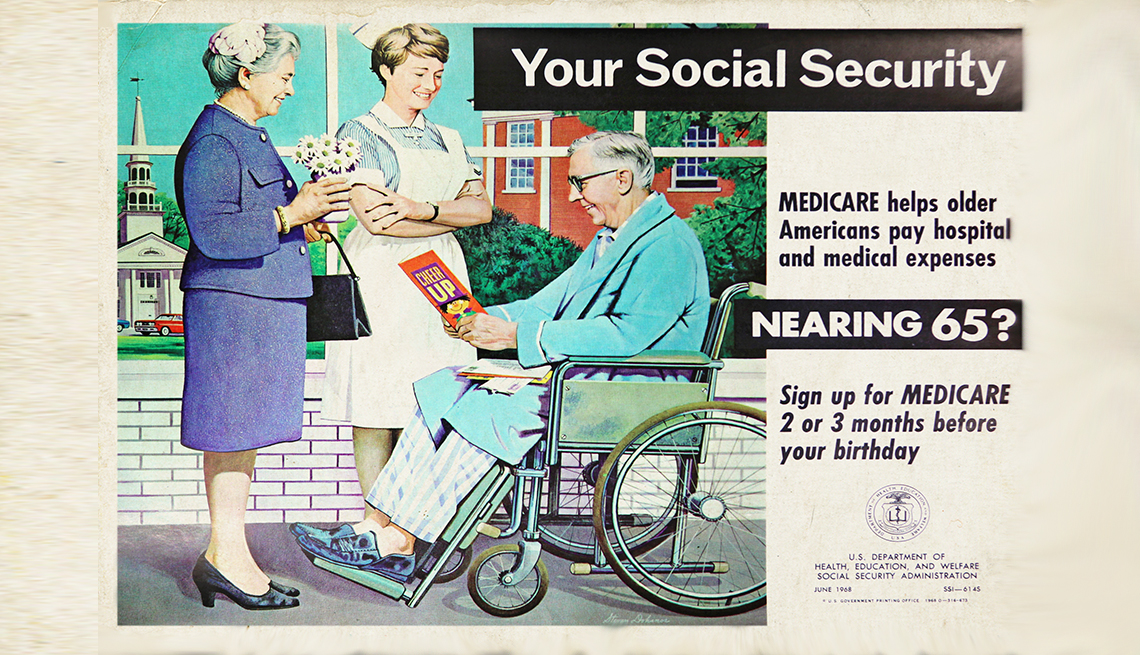
The law that was passed was a huge success. Millions of Americans gained access to socialized medicine. The hospitals remained private: a person would come in, get treated for free or for a modest fee, and then the hospital would be reimbursed by the government. The law defined the reimbursement amount as reasonable. In practice, it was calculated as the lowest of the following: the average price in the area, the doctor’s usual price, or the actual cost of the service.
The prices were set too low from the very beginning, but the Ministry of Health assured hospitals they’d make it all back once millions of new clients came rushing in for treatment. And they did rush in. In the first year, 19 million Americans who had basically never gone to the doctor before signed up for the program. Hospitals were hit with such a flood of patients that they ran out of beds and doctors.
For the first few years, the system coped, but then it started to break down. Demand for medical care shot up many times over, but prices, of course, stayed the same! To stay afloat, hospitals tried to get around the government’s artificially low rates. They started jacking up the “reasonable cost” any way they could: adding unnecessary procedures, inflating production costs, padding reports, and so on. Large hospitals still somehow managed to maneuver, but small rural clinics began shutting down en masse.
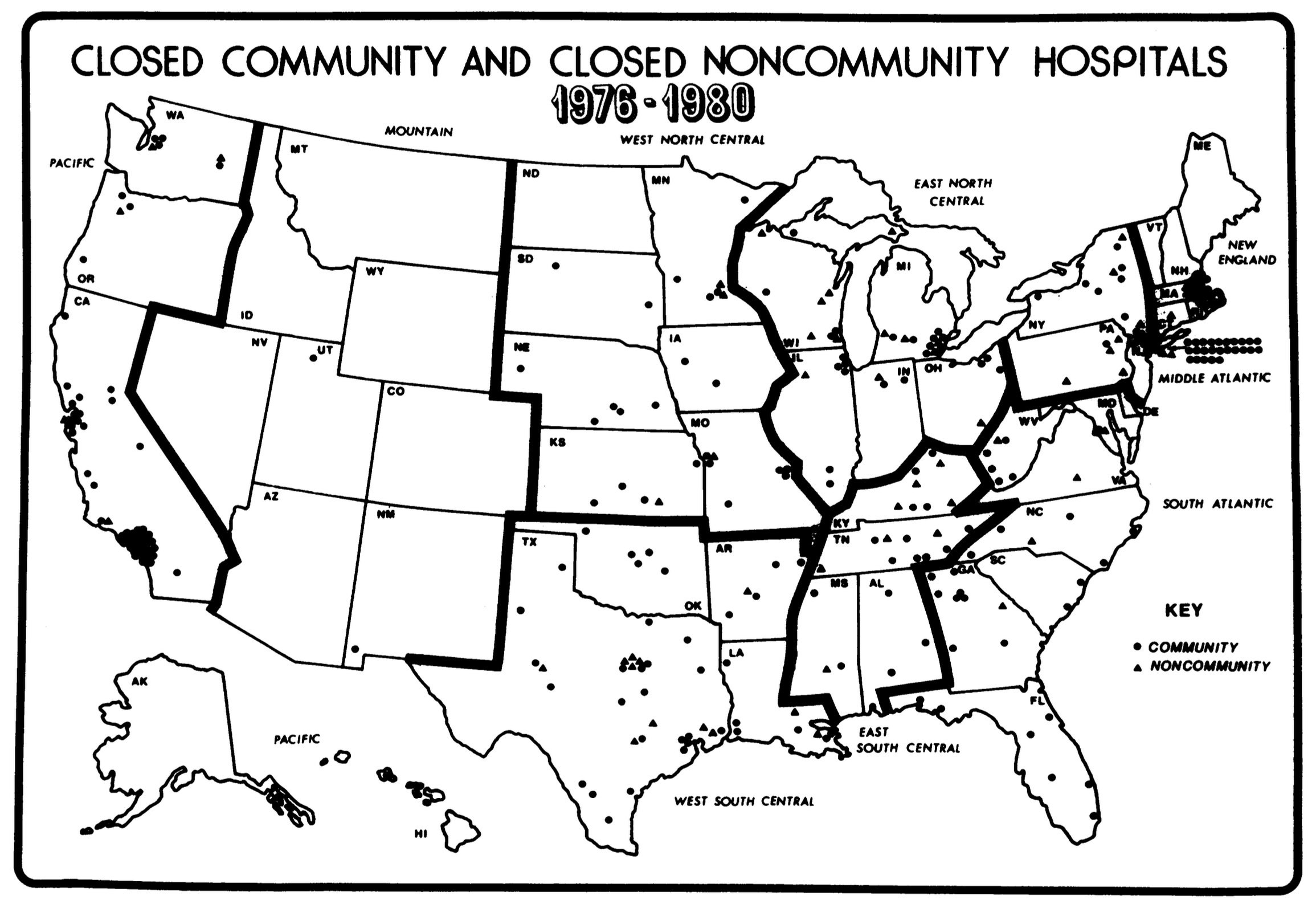
The introduction of state-run healthcare led to the mass closure of hospitals
The Ministry of Health was frantically looking for ways to plug the hole in the ship. They introduced spending controls, reimbursement quotas, and strict reporting. None of it helped much. Hospitals were shutting down, and Medicare was just devouring the budget: from 1970 to 1985, expenses shot up from $7 to $72 billion.
Finally, the Ministry of Health went to extremes, drawing up a price list for every medical service. It contained thousands of entries. Every procedure, surgery, exam, and test was on that list. Only, instead of actual prices, there were work-hours, which were then multiplied by a regional coefficient and converted to dollars. From that moment on, healthcare in the U.S. switched to a stripped-down version of a planned economy. Prices for medical services stopped being market-based and became government-set.

The work-hour table used to calculate the cost of medical services in the U.S.
And to stop hospitals from piling on unnecessary procedures, the government began reimbursing expenses not item by item but as a single flat rate per diagnosis, with a specific bundle of services. Take, for example, chronic bowel backup. Before the reform, Medicare set only the prices of lab tests and a packet of laxatives, while everything else was paid to the hospital at “reasonable cost.” Now, however, there was a single fixed price for the entire treatment: the tests, the laxatives, a week of bed occupancy, the cost of cleaning the bathroom, a gallon of peach jelly, and a gift set of enemas.
The brilliant plan was dreamed up by Republican Reagan, who, back in the 1960s, was busy criticizing the whole idea of socialized medicine. Despite their disagreements, both parties work together just fine. If the Democrats built a coffin for healthcare, the Republicans nailed the lid shut.
Yes, hospitals could no longer extract inflated reimbursements from Medicare. But they had survived precisely by inflating them, because all those work-hour calculations produced completely inadequate prices. The government forced hospitals to operate at an underpriced rate and prevented them from refusing patients. After Reagan’s reform, hospitals began closing by the hundreds each year; many others were on the verge of bankruptcy.
However, even in this draconian system, a loophole was found. The thing is, Medicare, just as before, applied only to seniors over 65. And the law said nothing about the young and healthy! Hospitals had to treat retirees at a loss, but for everyone else, they were free to set any prices they wanted.
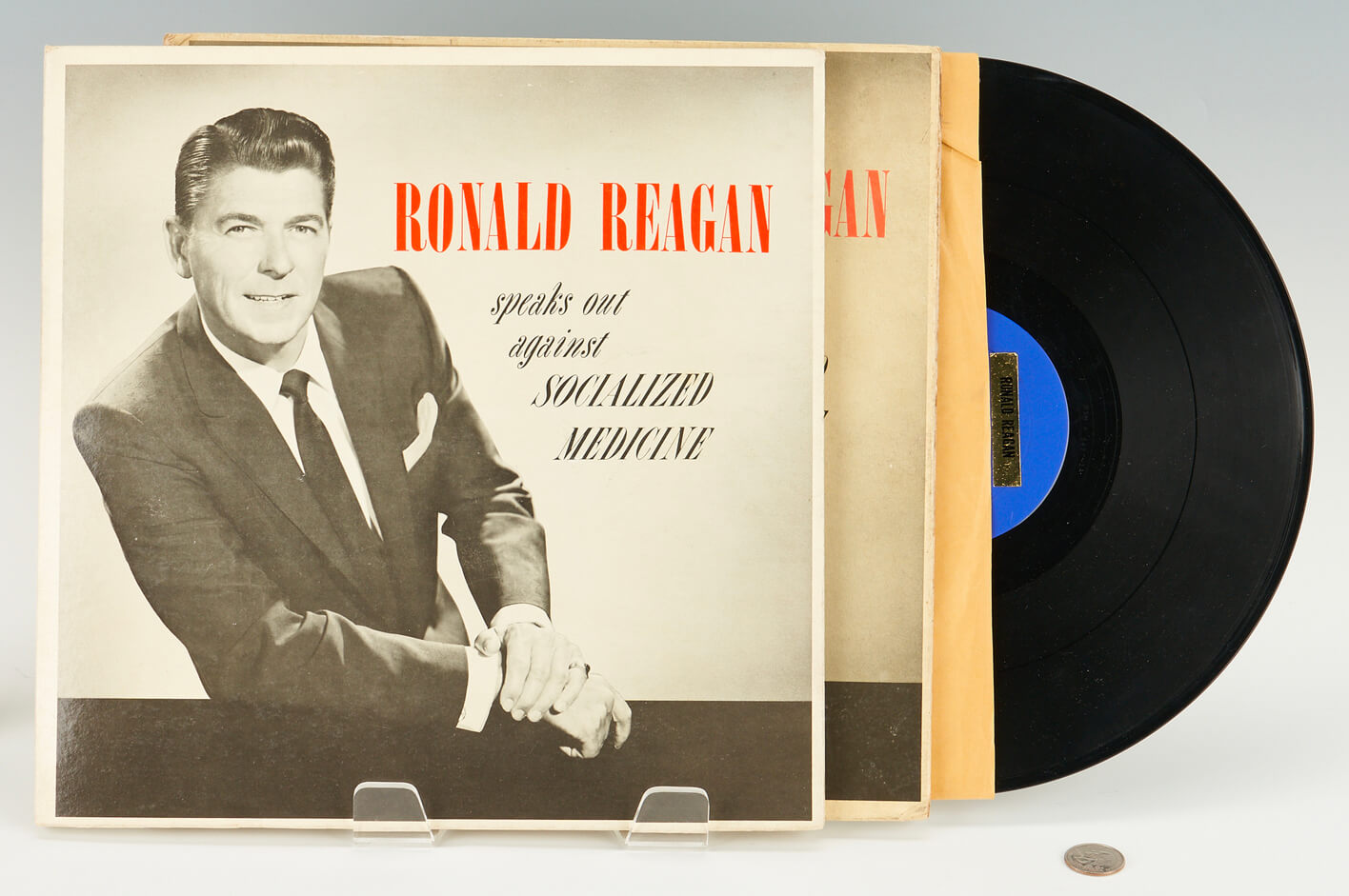
A record of Reagan’s speech against free healthcare
American healthcare was saved from collapse by an astonishingly brazen workaround — the kind of scheme worthy of a chapter in an economics textbook.
Suppose treating a senior costs $1,000, of which the government reimburses only $900, and the remaining $100 become the hospital’s loss. Then, if a hospital treats 100 seniors, the total loss will be $10,000. Now, suppose treating a young person costs $100, and the hospital treats 20 young patients in total. Then the revenue from them will be only $2,000, which is nowhere near enough to cover the losses from treating the elderly.
So how do you cover the remaining loss — and even turn a profit? Very simple. You just spread this amount across all the young patients by billing them not $100, but, say, $1,000. They’re the ones who end up covering the losses from treating the seniors!
That’s where those insane bills for tens of thousands of dollars come from. If healthcare in America were truly private, it would never have such distortions. Those crazy bills weren’t created by capitalism at all, but precisely by social reforms and government interference in the economy.
But how on earth do Americans survive with such expensive healthcare? Do they really pay tens of thousands of dollars to treat a common cold? Of course not. Those prices are a fiction. Nobody pays them. And it’s not about insurance.
Gradually, the medical business realized that jacking up bills could not only cover losses, but also turn a nice profit. Hospitals decided, “What’s the difference? We’re already sending out fake bills. Why not make them even faker?” And they literally started making up prices for services the way they liked it. Moreover, different patients get completely different prices! Of course, that’s illegal on paper, but in practice, the cost of treatment is determined by:
- – Type of insurance. Premium plan? More expensive!
- – Medical history. Get sick often? More expensive!
- – Employer. Work in tech? More expensive!
- – Address. From Manhattan? More expensive!
- – Language and accent. Immigrant? More expensive!
- – Appearance. Wearing a suit? More expensive!
- – Companion. Came with a lawyer?.. Cheaper!
“But this is some kind of bazaar!!!” exclaims the reader.
“We did warn you,” reply the economists.
But, as I already said, these bills are a fiction. Under U.S. law, medical debt is not a criminal debt. You don’t go to jail for not paying it. And the hospital won’t go to court, because any judge, when they see a $100,000 bill for popping a pimple, will at best make the patient pay ten bucks, while the hospital could end up in serious trouble.
Medicine in the US is basically an Arab bazaar scaled up to an entire country. Just like a Turkish shopkeeper, the hospital pulls a price out of thin air — about 10 times higher than normal — in the hope that some sucker will actually pay it. Any reader who’s ever been to an Arab bazaar knows exactly what to say to get a discount. The author has counted three options:
- Oh my God, where am I supposed to get that kind of money? — will give 50% off.
- Are you out of your mind, you greedy capitalists?! — will give 75% off.
- I don’t care, I’m unemployed — will ask you to tip the cashier some $50.
The numbers are, of course, arbitrary, but I stand by the meaning.
Actually, it’s even simpler. All the problems with healthcare are solved by getting a good job. Any large company pays for employees’ insurance, and all that haggling straight out of an Arab bazaar is handled by the insurance company. The person themselves pays the remaining couple of dozen dollars. No good job? Then you’ll have to wait your turn at a low-income clinic, where treatment is free. In the northern states, there are plenty of them; in the southern ones, fewer, but overall, only 8% of the population in the country lives without insurance.
The quality of healthcare is measured by life expectancy. And on any chart, America is way out in front on healthcare spending, but when it comes to life expectancy, it lags behind all other developed countries.


The chart looks terrifying, but that’s just the lines and a cleverly chosen scale. If you look at the actual numbers, people in Europe live to 82, and in the US, just under 79. A 3-year difference isn’t that big. For example, in Russia, people only live to 70 — now that’s a real difference.
But what’s dragging America down isn’t bad healthcare; it’s the countryside. There’s nothing in Europe quite like the American backcountry, where it’s just ranches for dozens of miles in every direction. In major U.S. cities, people live on average just as long as in Europe. New York or Austin, with their 82.6 years, beat Berlin by a full year of life, and in some cities, people live up to 84 years.
It seems like rural hospitals were hit the hardest after socialized medicine was rolled out, right?
Despite these failures, American socialists have been calling for completely free European-style healthcare for decades. The first to respond to their call was Barack Obama, who passed a law with the cute name “Obamacare.” Stripping away all the fluff, the law simply required every American to buy some kind of health insurance, even the cheapest one, and if you refused, you faced a fine of up to $700 or 2.5% of your annual income. The poor, as usual, got subsidies.
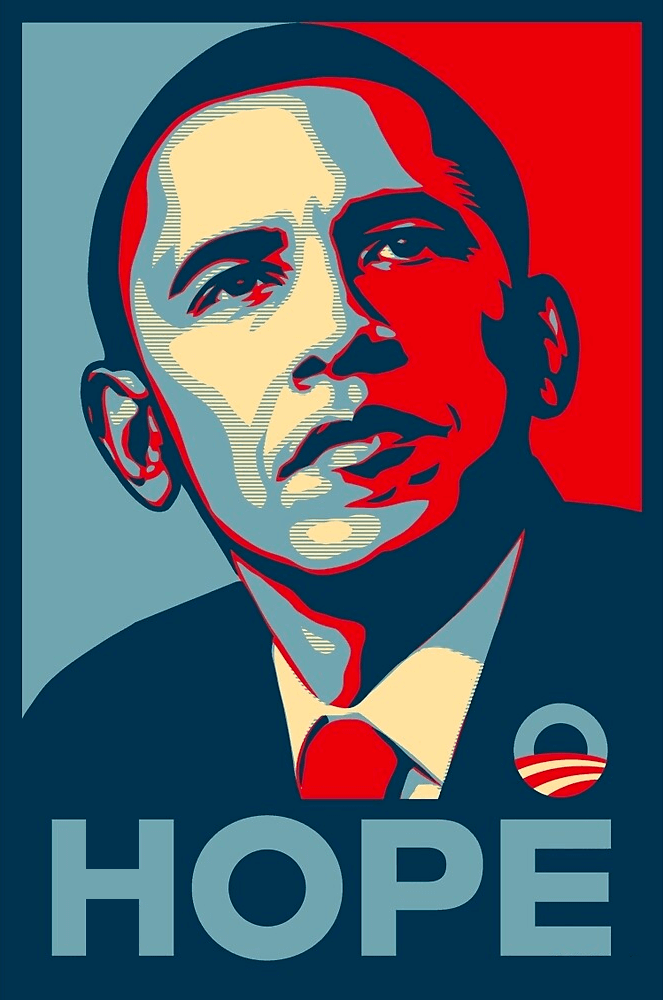
What could possibly go wrong with Obama’s plan? Literally everything. Obamacare went into effect in 2014. Millions of Americans rushed to buy insurance and, in full accordance with the economics textbook, medical costs shot through the roof. Before Obama, the average insurance plan cost $250 a month; afterward, it was around $500. At that price, far from everyone could afford it — and on top of that, there was a penalty waiting for them!
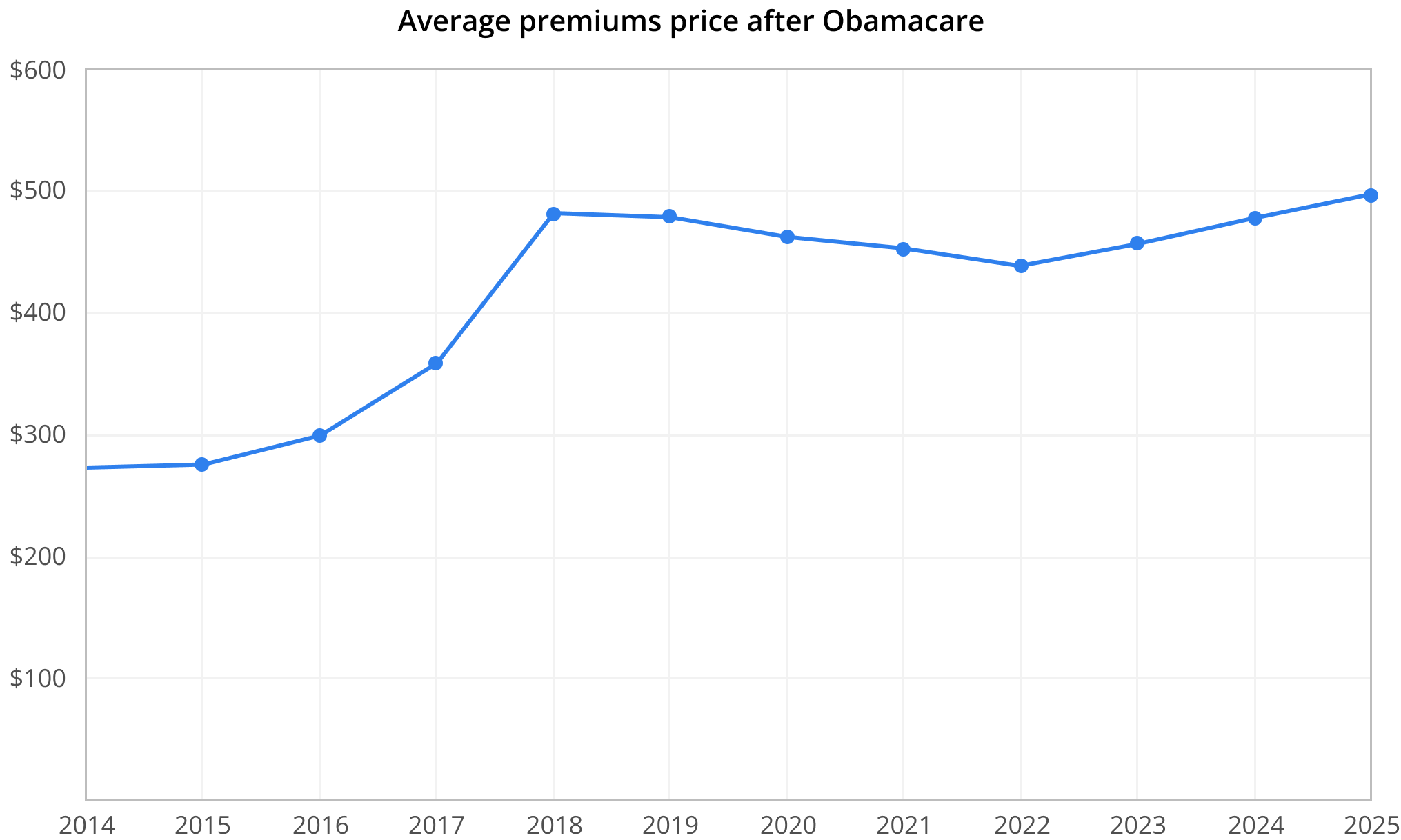
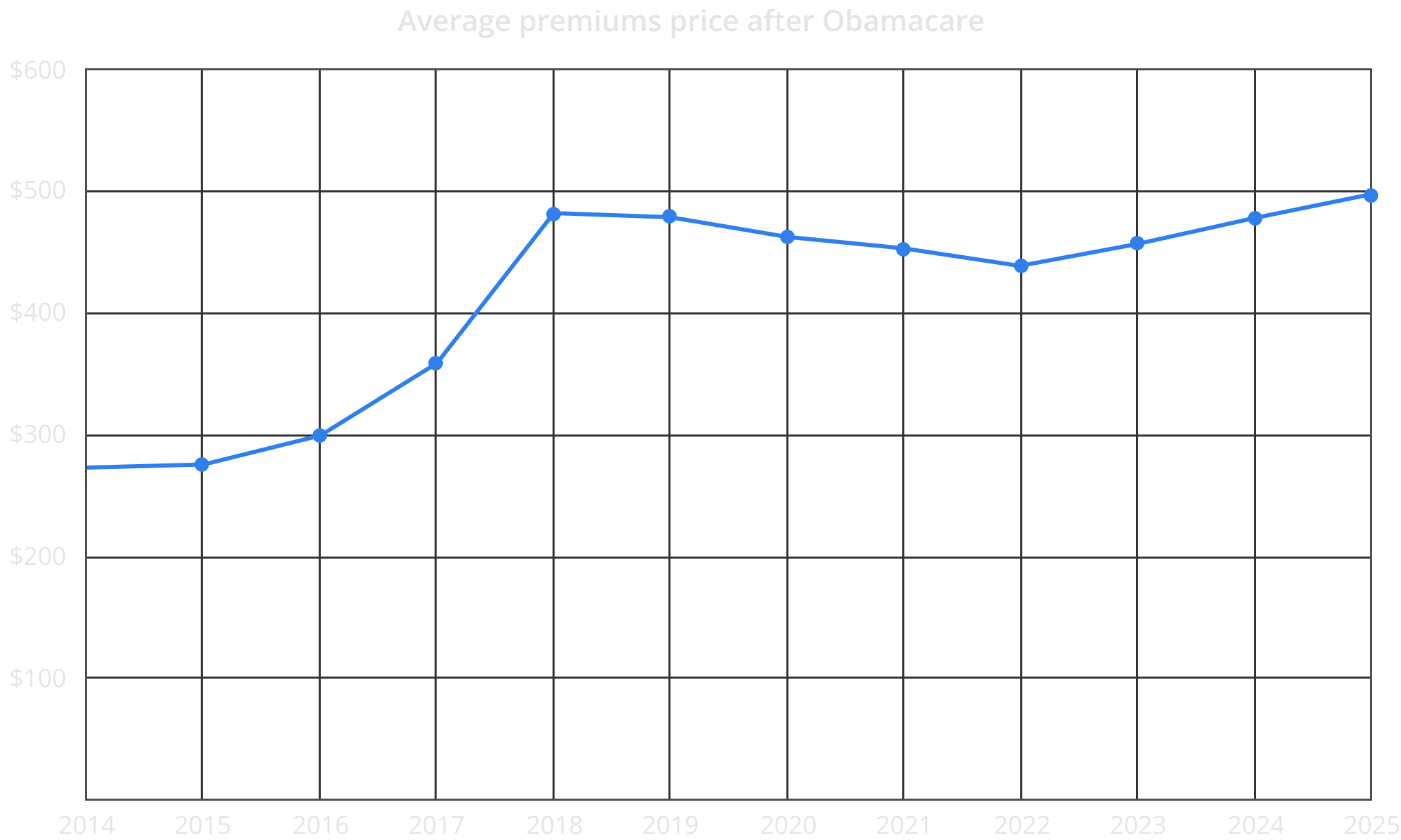
Obama’s half-baked program didn’t last long. By 2018, the Republican Trump had become president. With a one-vote margin, Congress decided not to repeal Obamacare, but to make it optional. After that, insurance prices went down and then returned to their usual rate of growth.
The reader is probably starting to wonder: so how does healthcare work in Europe or Canada then? Answer: It doesn’t.
Germany takes 14.6% as a health insurance tax. On top of that comes a generous 2.5% insurance company fee and a “penalty” of up to 4.2% for not having children. Total: 21.3%. With an average salary of €4,500, that means a German pays €945, or about $1,100, every month for insurance. In the U.S., that kind of money buys you a gold-level plan from Anthem — one of the best on the market.
Maybe Germans get much higher-quality services for that kind of money than Americans do? Alas, no. Universal insurance has brought Germany’s medical system to a standstill. Germans wait for a doctor’s appointment for months. To see a cardiologist in 2025, you have to wait 82 days. For an eye exam, the wait time is 56 days. Even patients with extended private insurance have to wait about a month in line.

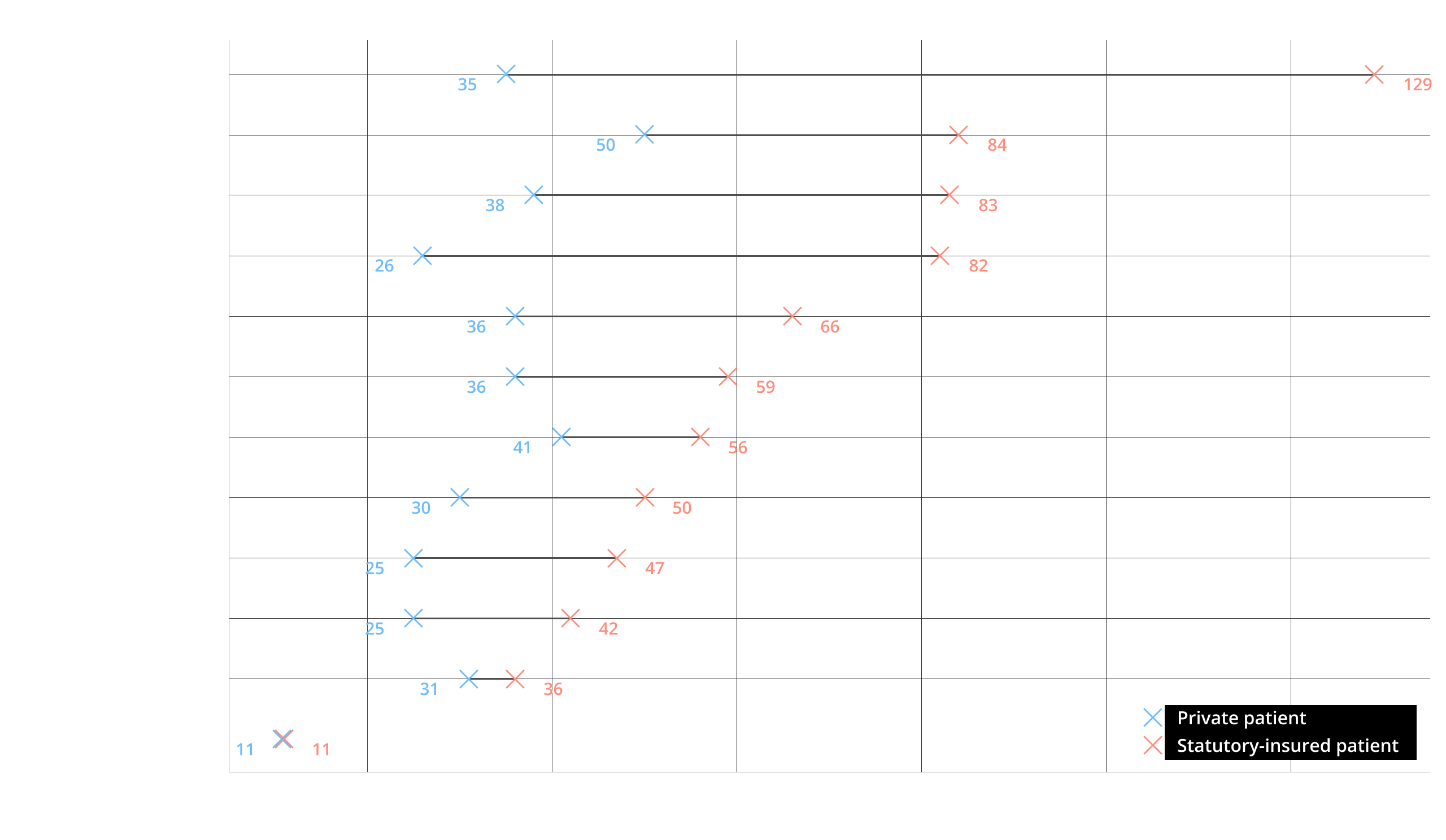
Waiting times to see a doctor in Germany, 2025
There are lines in other countries, too. Every year, they just keep getting longer, since the government keeps rolling out new “free” services. If in 1993 the wait to see a doctor in Canada was 10 weeks, then in 2024 Canadians wait 30 weeks — almost 8 months! Unfortunately, you can’t see these lines in photos because, in our age, everything has gone electronic.
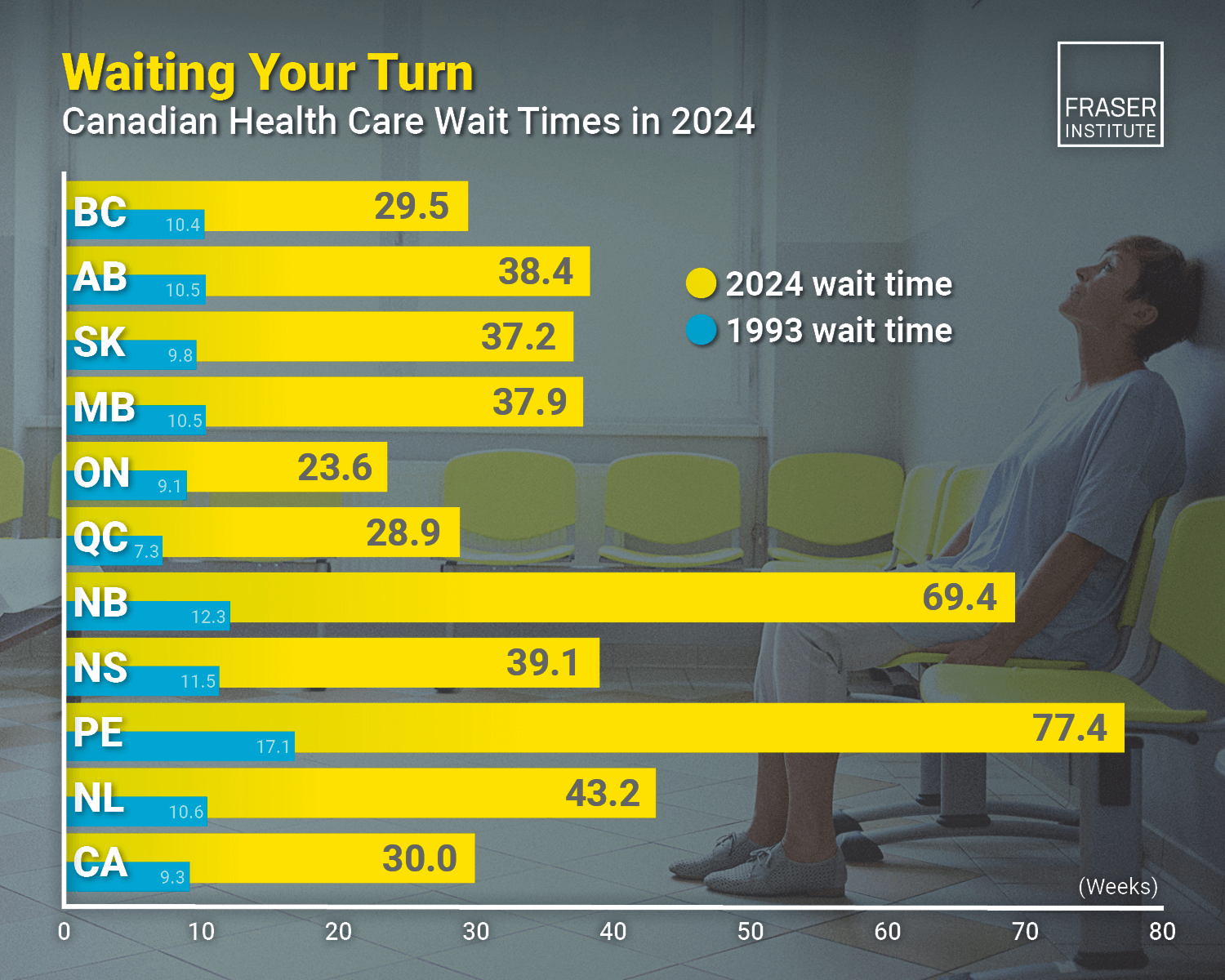
Waiting times to see a doctor in Canada, 2024
Any country that tries to cheat the laws of the free market is headed for the same fate. Modern economists like Piketty, Krugman, Guriev, and Stiglitz pass off long-obsolete ideas as some kind of new approach to economics. The only thing that sets them apart from their 20th-century colleagues is that they use models and big data.
However, the economy is a chaotic system. It fits into models about as well as wind currents in the atmosphere. Perhaps before tackling the economy, Mr. Piketty should try his hand as a weather forecaster and attempt to control the weather — or at least predict it for more than two weeks.
If America keeps heading down the path of universal free healthcare, its medical system is in for an even bigger collapse than in Europe. On the other hand, repealing Medicare will cause yet another split in society, one that’s hardly going to be smoothed over by scrapping a tiny 2.9% tax. So what’s to be done?
Fortunately, in the U.S., there’s plenty of room to maneuver.
Today, strict quotas are in effect in 35 states. Not only is the number of hospitals limited, but also the number of beds, machines, ambulances, and even operating tables. The quotas were introduced back in the 1970s so that “extra hospitals” wouldn’t suck the budget dry. Because of these quotas, in America, you can’t just go and open a new hospital. You can’t even expand an old one.
To open a hospital, you need to get a “Certificate of Need.” It’s issued by each state’s Department of Health. There’s a board of bureaucrats that you have to convince that there aren’t enough hospitals in a given county and that a new one is absolutely essential. Naturally, the board includes the directors of the hospitals that are already operating, so convincing them is impossible.
That’s why private clinics are so popular in America. Usually they’re opened in a standard single-family house or on the first floor of an apartment building, with a movie-style sign hung out front: “Dr. Brown.” There can’t be any hospital beds, operating rooms, or ambulances in places like that, so no certificate is required to open one. What you do need is a medical degree and a state license.
Getting a medical degree in America is insanely hard. Education costs $350,000, and competition can reach 12 applicants per spot. And it’s not about education being paid. Back in 1908, there were 155 medical schools in the U.S., which fully covered the demand for doctors. Then, a reform introduced strict accreditation rules that, by 1930, left only 76 schools in the entire country. Today, there are about 160 medical schools in America — about as many as there were more than a hundred years ago — but the population has tripled.
The shortage of doctors could easily be addressed by migrants from Europe, Russia, and China, who train excellent specialists. However, all these specialists have to study all over again for 3–7 years in America and retake the exams! Even if a doctor has worked for 20 years in neighboring Canada, they can’t just come to the U.S., have their degree recognized, and start working!
American healthcare is anything but private. It’s socialized medicine with tiny specks of market thrown in. Without broad market reforms, it’ll keep looking like an Arab bazaar. Accreditation standards for medical schools need to be loosened, caps on opening new hospitals lifted, and foreign doctors’ diplomas recognized as equivalent to American ones.
The Melting Pot
Despite all the tricks the U.S. pulls on immigrants and tourists, the way people are treated inside the country is exceptional.
First of all, in America, nobody looks at your passport. You’d think: what could be simpler? Alas, these days that’s a real rarity. The author’s origin is Russia, and in the year my country started the war with Ukraine, I traveled through 30 countries before I reached America. In each country, people reacted differently to my passport. In some parts of Europe, it drew a barely noticeable smirk, while in the Middle East and Africa, on the contrary, it inspired excitement and respect.
Anyway, it wasn’t all that important what kind of reaction my passport provoked; what mattered was that it provoked one. Only in America was there no reaction at all. None. Neither bad nor good. Zero!
It wasn’t just about hotels. Eventually, it came down to my first account at an American bank. I was all excited, having heard so much about the discrimination reigning in European banks. Even today, three years after the war began, they still refuse to open accounts for Russians who legally live and work in an EU country.
Although America hadn’t sunk to that level of disgrace, I was prepared, if not for an outright refusal, then at least for some questions. So I came to the bank, put my passport on the table, and froze, waiting. What kind of reaction would the bank employee have? Would he curl the right corner of his mouth, wrinkle his nose, or rapidly blink? But there was no reaction at all. He just scooped up my passport and scanned it without even looking at it — as if it were a German or a French passport. The account was opened in 10 minutes using only my passport and the lease agreement.
Later, I found out that Americans can’t open accounts in Europe either. I personally tried several banks and brokers, and they all shut me down: “We don’t open accounts for U.S. citizens.” Meanwhile, banks in Mexico, Australia, Thailand, the UAE, Singapore, and dozens of other countries are happily doing business with Americans on a massive scale. Turns out Europe passed a data protection law that’s incompatible with U.S. tax law. Now, Americans are suing European banks to force them to open accounts.

European banks do not open accounts for Americans because the GDPR and the FATCA system are incompatible
One more observation: in America, it’s as if they have no idea what “nationality” is. Or, more precisely, the word itself, of course, exists in English. It just happens to mean something completely different from what it means in the rest of the world.
In all the former USSR countries, including Russia and Ukraine, the question “What’s your nationality?” is considered perfectly appropriate, even everyday small talk. The word “nationality” in this context — in both Russian and Ukrainian — means nothing more than ethnic background.
Here’s how it works. Let’s say there’s a person who was born and raised in Moscow, went to a Moscow school, is well integrated into Russian society, and speaks perfect Russian. His parents have also spent half their lives in Moscow and know Russian just as well. However, there’s a catch: his family moved to Moscow from Buryatia — a small republic in southern Russia — half a century ago. That’s why the young man’s face shows distinct Buryat features: narrow, slanted eyes, a smaller nose, slightly chubby cheeks, and so on.
Now, let’s suppose someone asks this person, “What’s your nationality?” If he answers, “I’m Russian,” most Russians simply won’t get it. Modern Muscovites will probably just leave it at that — liberal elite and all. But many people from the regions will respond, even a bit defiantly, “Russian? You? You’re a Kazakh!”
Aleksei Balabanov’s film Dead Man’s Bluff
Among all the former USSR countries, people especially love to talk about nationality in Azerbaijan. The author never tires of telling the story of what happened at the international airport in Baku. At passport control, I was stunned by the following exchange:
“Your nationality?”
“My what?”
“What’s your nationality?”
“Uhh... Russian...”
“Pure?”
“Pure. Russian. Yeah.”
“Welcome to Azerbaijan.”
“Welco... I mean, thank you!”
They ask these questions here politely and with a smile, almost innocently. The thing is, Azerbaijan has a long-standing conflict with neighboring Armenia. The two peoples hate each other. With her question about my “purity,” the passport officer was clarifying whether anyone in my family had come from Armenia. Apparently, my last name reminded her of an Armenian one. My Russian passport didn’t interest her at all, because in the former USSR, a passport determines your citizenship, while customs officials specifically check your ethnic origin.
In Eastern European countries, this kind of thing is rare, but they haven’t really gone that far from the Soviet tradition. In countries like Latvia, Lithuania, Estonia, the Czech Republic, Poland, Slovakia, Slovenia, Serbia, and dozens of others, there are words like národnosť and tautība, which mean ethnic origin. Latvians, Czechs, Poles, and Serbs can just as easily ask someone for their “nationality” and be surprised by a “wrong” answer.
Only in the most developed European countries, such as France and Germany, are the words nationalité and Nationalität used only in official documents and mean citizenship exclusively — that is, the country that issued the passport, and nothing more. It would never occur to a Frenchman or a German to ask someone about their nationality in a racial sense, let alone argue about it.
Alas, even in Western Europe, that’s more like politeness. Sure, no one here is going to question or argue about your nationality, but they’re not going to see an immigrant as a real Frenchman or German either. Someone who moved to France or Germany as an adult has almost no chance of becoming French or German in the full sense of the word.
But America isn’t like that. It’s not as if anyone who steps off a plane instantly becomes an American... But it’s pretty close.
The word “nationality” in English, just like in German or French, means citizenship and nothing more. If an American were to decide to ask someone about their ethnic background — let’s say under the influence of some heavy drugs — they’d use the word “ethnicity.” In practice, it’s only used on forms for collecting statistics, and in everyday speech, you’ll hear it from, at best, academics and country bumpkins.
So, to become an American — a real one, no asterisks, no footnotes — you just need to speak English fluently and at least generally share American values. That’s it. A passport? Who needs it? Half the country doesn’t even have one. What really matters is understanding temperature in Fahrenheit and knowing how many inches are in a foot. That’s why people say Americans don’t really exist, and it’s not a nationality. And they’re absolutely right! It’s just that Russians and French people don’t exist either. Ethnic groups and races don’t exist in a purely biological sense, and the word “nation” is basically a 19th-century invention.
So yes: America is not a nation, which is actually a very good thing. It’s more like a hobby club where last names, accents, skin colors, and family recipes all mix and fuse into a new identity. That’s why America is called a melting pot. Once you land in that pot, there’s no getting out. Only in this country can you be born into an Ethiopian family, grow up in an Italian neighborhood, go to a Jewish school, and still be American!

The Principal Sortes of Americans.
Many countries have tried to copy the American experiment. The USSR forged the “Soviet man,” or Homo Sovieticus, who could be Russian, Georgian, Tatar — take your pick. Yugoslavia tried to melt Serbs, Croats, and Albanians into one big “Yugoslav.” China is still, in vain, spinning its single “Chinese nation” out of endless Tibetans, Uyghurs, Zhuangs, and another 53 peoples who don’t even speak the same language.
All these attempts are doomed to fail. It’s one thing when a nation is created by the settlers and migrants themselves. It’s a completely different story when you try to forcibly melt down peoples whose identities have been forming for centuries.
As for the American melting pot, these days, people increasingly say it’s stopped working. The thing is, in the past, immigrants would fully blend in, becoming Americans and saying goodbye to their old identity. Today, that’s no longer the done thing. If before a Russian, a Mexican, or an Ethiopian became an American instead of their old self, now they become an American in addition to it. Sometimes it’s written just like that: Russian American, African American, DPRK American, and so on.
Besides, if long ago people of all backgrounds used to spread out evenly across America and sort of dissolve into it, today more and more ethnic neighborhoods are popping up in major U.S. cities. No, it’s not like there were none before. The famous Chinatowns arose because Chinese people weren’t allowed to buy housing anywhere else. Now it’s become a lifestyle choice.

A typical Saturday in Brooklyn
For these two reasons, the American melting pot is now often called a “salad bowl.” But the pot hasn’t broken. It’s just started working differently. If immigrants used to say, “we’re all the same,” today they say, “we’re all different, but together we’re Americans.”
It’s the spirit of the times, not a malfunction. A boiler built from 18th-century blueprints can’t run for two centuries straight without replacing any parts. And still, even in ethnic neighborhoods, the way of life is more American than Jewish or Chinese, and in schools, universities, and at work, all nationalities get mixed together without distinction.
A generation will pass, and the children of the new immigrants will scatter from the ethnic neighborhoods across Greater America just like their parents once left for America itself. That’s how it was, that’s how it is, and that’s how it will always be.
Sluggish depression
Imagine that after the 1929 crash, the U.S. government didn’t panic, but instead suddenly printed a colossal amount of money. What would the Great Depression have looked like then — and would it have happened at all? History doesn’t do “what if,” and under normal circumstances, we’d never know the answer to that question. But America is a country of abnormal circumstances.
The story of the crisis we’re living through today began in the early 2000s. And it began the same way as the story of dozens of other crises, including the Great Depression.
After the stock market crash that went down in history as the “dot-com crash,” and the September 11, 2001, terrorist attacks, the Federal Reserve lowered interest rates to give a good kick to a shaken and frightened economy. Two years earlier, the government had also repealed the 1933 banking law that prohibited banks from investing customers’ money in anything other than safe government securities. That law was considered outdated and harmful to the economy, and now banks could put money wherever they wanted, including into stocks and businesses.
The result didn’t take long. America was slowly coming back to its senses: stocks went back to rising, and banks started handing out loans like candy. But real estate was feeling the best of all.
All through the 2000s, the housing market was growing like crazy. Interest rates were low, and pretty much any American could get a mortgage. Special “affordable” programs were created for the unemployed and low-income, so a person could get a house with no down payment and not even start paying interest for a few years. They didn’t always ask for proof of income, either. And where exactly is an unemployed person supposed to get that, right? So banks often approved mortgages on the honor system: the borrower just wrote down their income on the application, and almost nobody bothered to check it.
The most popular of all was the so‑called “subprime mortgage.” Oh, that thing sold like hotcakes! No wonder, since its name was cooked up by marketers as a polite way to describe a mortgage for people with credit scores so low that ten years earlier they wouldn’t even have been let through the bank’s front door. Crap mortgages, to put it simply.
Who exactly took out these crap mortgages? A whole cross-section of society: red-plaid hillbillies from sawmills in Arkansas, rosy-cheeked pig farmers from Kentucky, whiskey-soaked cowboys from Texas ranches, truckers’ abandoned wives from Nebraska, moss-covered raccoon hunters from Idaho, and descendants of Russian reindeer herders from Alaska. Hmm, someone’s missing... nah, never mind.
Of course, upper management understood perfectly well that handing out mortgages like that could bankrupt the bank. So the young financiers came up with a scheme. The bank would issue a thousand junk mortgages, mix in a couple of good ones for respectability, slap a label on it saying “Best Homes in America Fund,” and sell it on the exchange to investors. In turn, the rating agencies would give these junk funds the highest AAA credit rating, because housing prices were going crazy and could supposedly cover any losses.
Everything was just peachy. Everybody won. The rednecks and the blacks got housing. The banks got money from selling the funds. The investors who bought the funds got interest from the mortgage payments. The credit agencies... well, they couldn’t have cared less about any of it.
So where exactly was the flaw in this brilliant scheme? The flaw was that absolutely every single character in this tragicomedy — from the country bumpkin to the financial analyst at Bank of America — was utterly convinced that housing prices always go up. As in, no one in the whole vast United States could even begin to imagine that houses might actually go down in price as fast as a dive bomber!
Then something utterly unprecedented and unheard-of happened (sarcasm). The Federal Reserve decided that the economy had already recovered and that it was time to raise rates. They hiked it, and pretty fast: if in 2004 it was 1%, by 2006 it was over 5%.
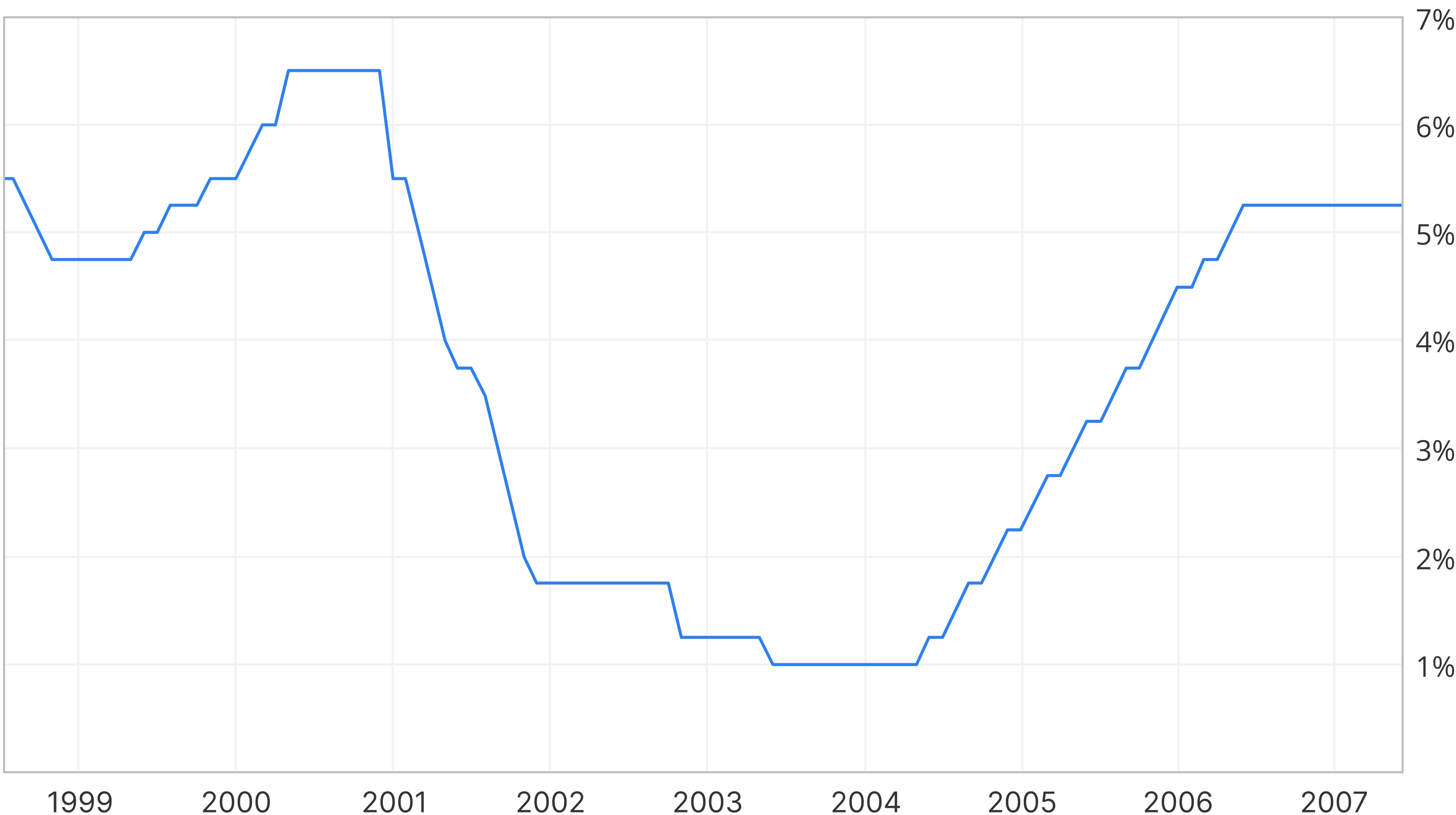
Fed funds rate before the 2008 crisis
That very same year, housing prices, which “always go up and never go down,” suddenly stopped rising. The price chart wheezed and lumbered its way to the peak of its growth, sat there for a couple of months, and then went tumbling down like a roller coaster.
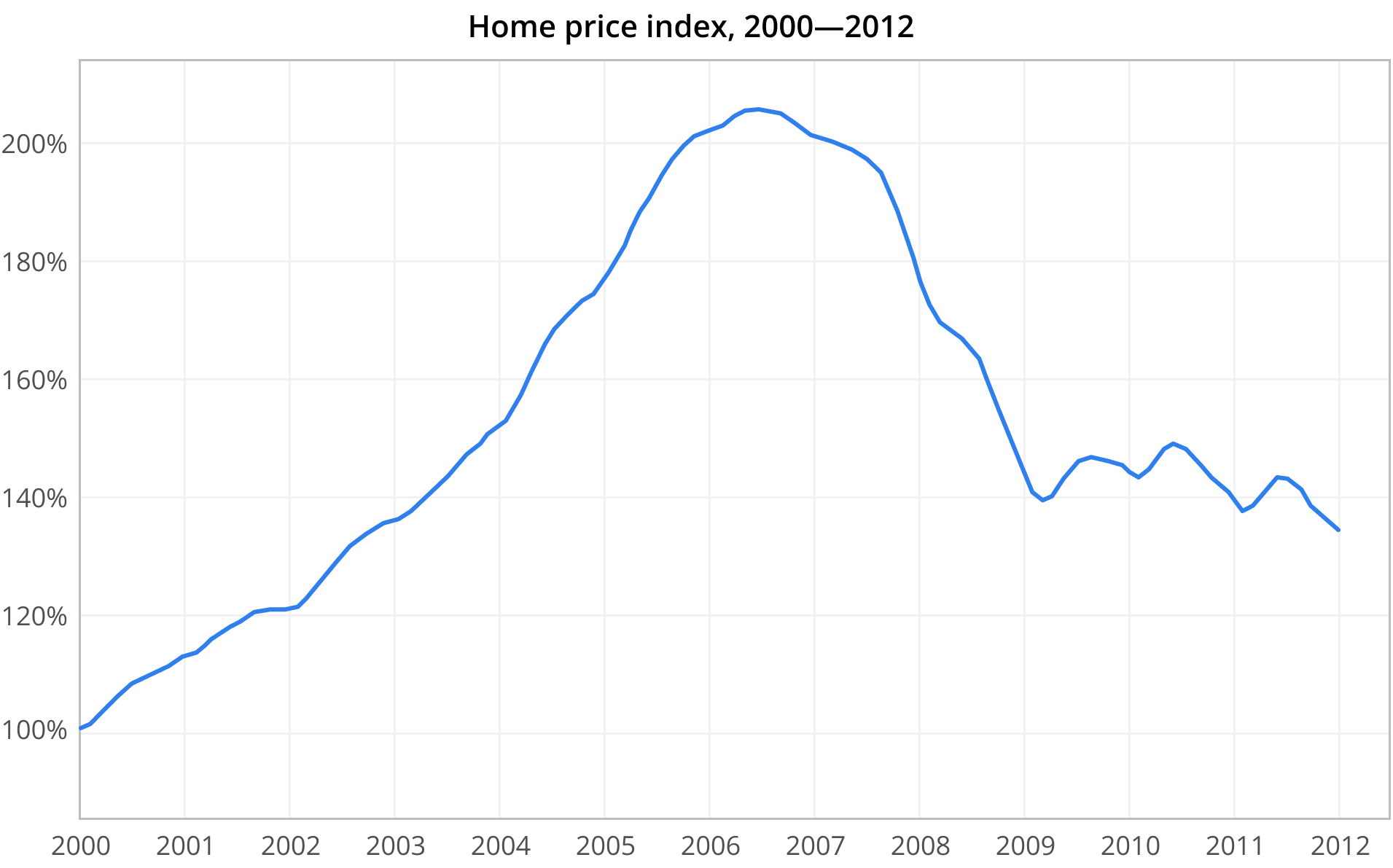
Suddenly, it turned out that nobody in all of America had counted on this, and the whole setup depended on the idea that even if some white hick from Idaho or a black guy from South Central couldn’t pay the mortgage, you could always sell the house — and for an even higher price at that.
Everything was going fine until 2007, when suddenly, at the beginning of spring, one of the banks that issued mortgages went bankrupt. Banks in America go under from time to time, so the news didn’t attract much attention. However, soon after the first, a second bank went bankrupt, then a third, and a fourth. In just one year, more than a hundred banks and various mortgage companies went bust, but even that didn’t make much of an impression on investors. After all, housing prices can only go up, right? Most people were just waiting for the market to pull itself together and start climbing again. Especially since the rating on those junk funds was still the highest possible — AAA.
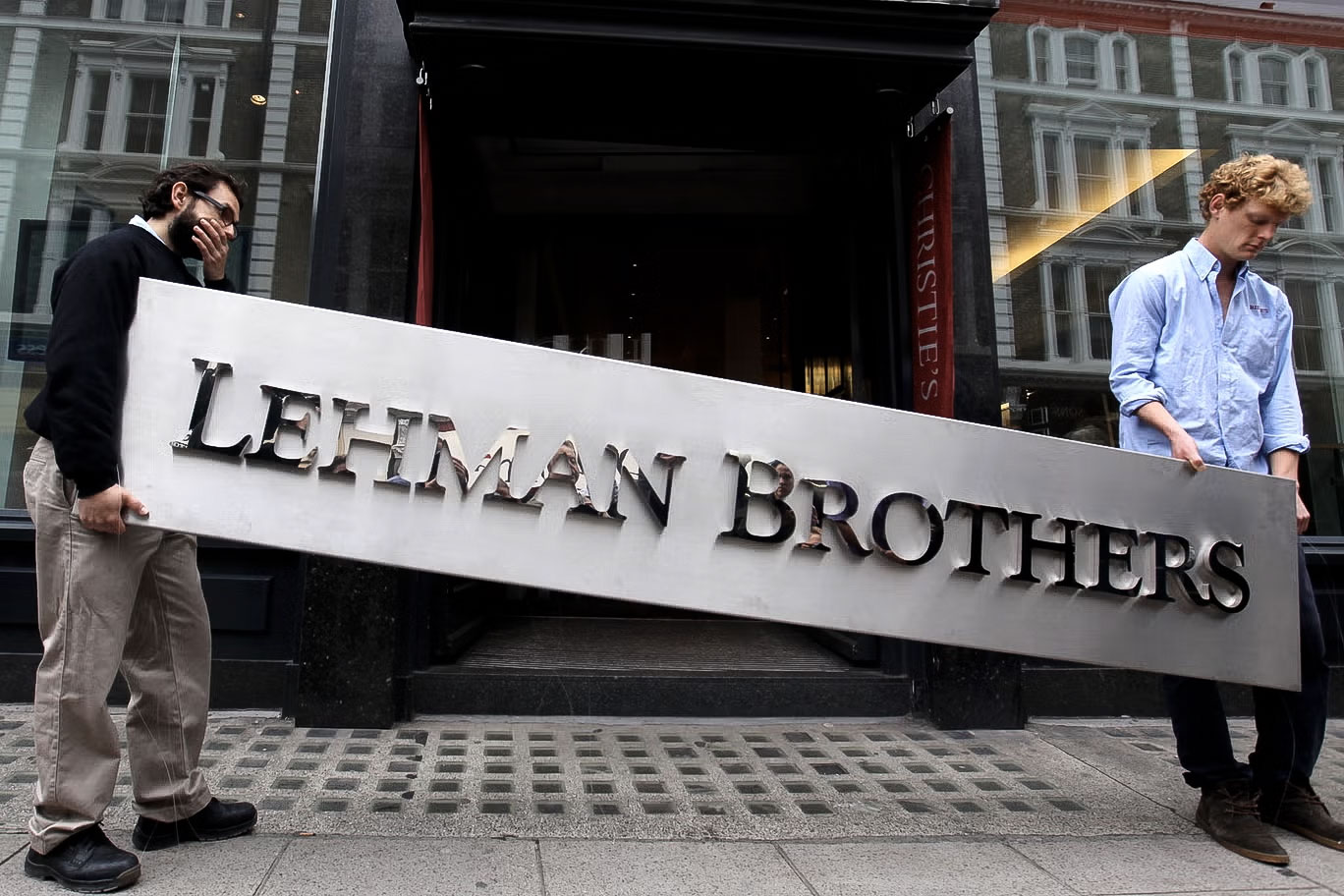
The climax of this whole epic came a year later, in the fall of 2008, when Lehman Brothers went bankrupt — a financial dinosaur founded in 1850 and the fourth-largest bank in the United States. And that’s when the AAA rating finally turned into AAAAAAAA!
The stock market didn’t just fall — it crashed, straight into a vat of garbage. In a few days, shares lost a third of their value. Interbank lending went into a tailspin: banks refused to lend to each other, even overnight, because by morning, the borrowing bank might not wake up. Scam funds went straight to hell, and investors started panic-selling anything that could still be sold, driving the market into an even steeper dive. In the end, the market collapsed to 53% below its 2007 peak.
America hasn’t seen a crisis like this since the Great Depression... Except there was no real crisis, more like what people like to call a crisis. Stock prices fell — that’s true. Thousands of people lost their jobs — that happened too. The question is this: were stock prices fair before they fell, or did they actually return to a fair level? And were people being fired from jobs created by real demand, or by artificial demand?
With all due respect to the Americans who lost their jobs, I find it hard to call a 20% drop in housing prices a “crisis” when food prices barely changed. It seems like in a real crisis, prices are supposed to go up. What actually happened in 2008 was more like the deflation of a bubble that had been pumped up for six years straight by handing out cheap loans to anyone who wanted one. The economy, therefore, didn’t so much collapse as it started to recover and move back toward market equilibrium.
The average consumer actually came out ahead from this so-called “crisis” because housing prices fell. Aside from those who lost their jobs, it wasn’t the average consumer who really suffered, but rather stockholders, real estate investors, and the banks that handed out unsecured loans. They’re the ones who lost insane amounts of money — and they’re the ones the U.S. government decided to rescue.
That’s when it appeared on the scene — quantitative easing. Along with “subprime mortgage,” it’s another term dreamed up by bank marketing people. You can’t very well say “printing press” in public. So they say: quantitative easing. Although there’s a grain of truth in the name — money isn’t literally printed, it’s credited to a bank’s account against its assets as collateral. But of course, details like that don’t change anything.
The money was printed in three rounds. The first round produced $1.7 trillion — an unthinkable amount, larger than Russia’s GDP. The second was a modest $600 billion, and the third was an unthinkable $1.6 trillion. In just 6 years, the Federal Reserve printed almost $4 trillion, increasing the monetary base by nearly 8 times. For comparison: all the money in circulation (M2) before the crisis was $7.5 trillion.
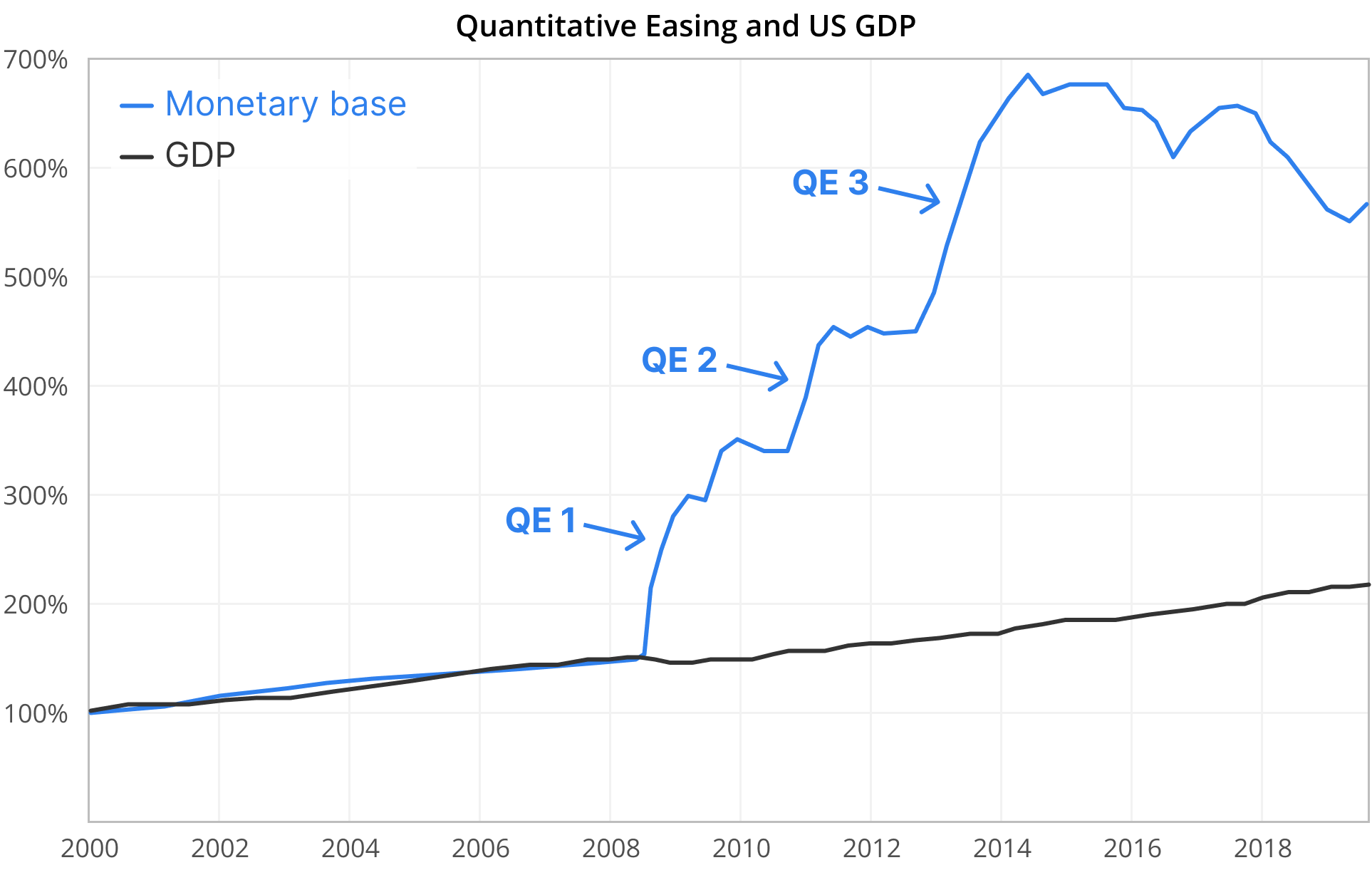
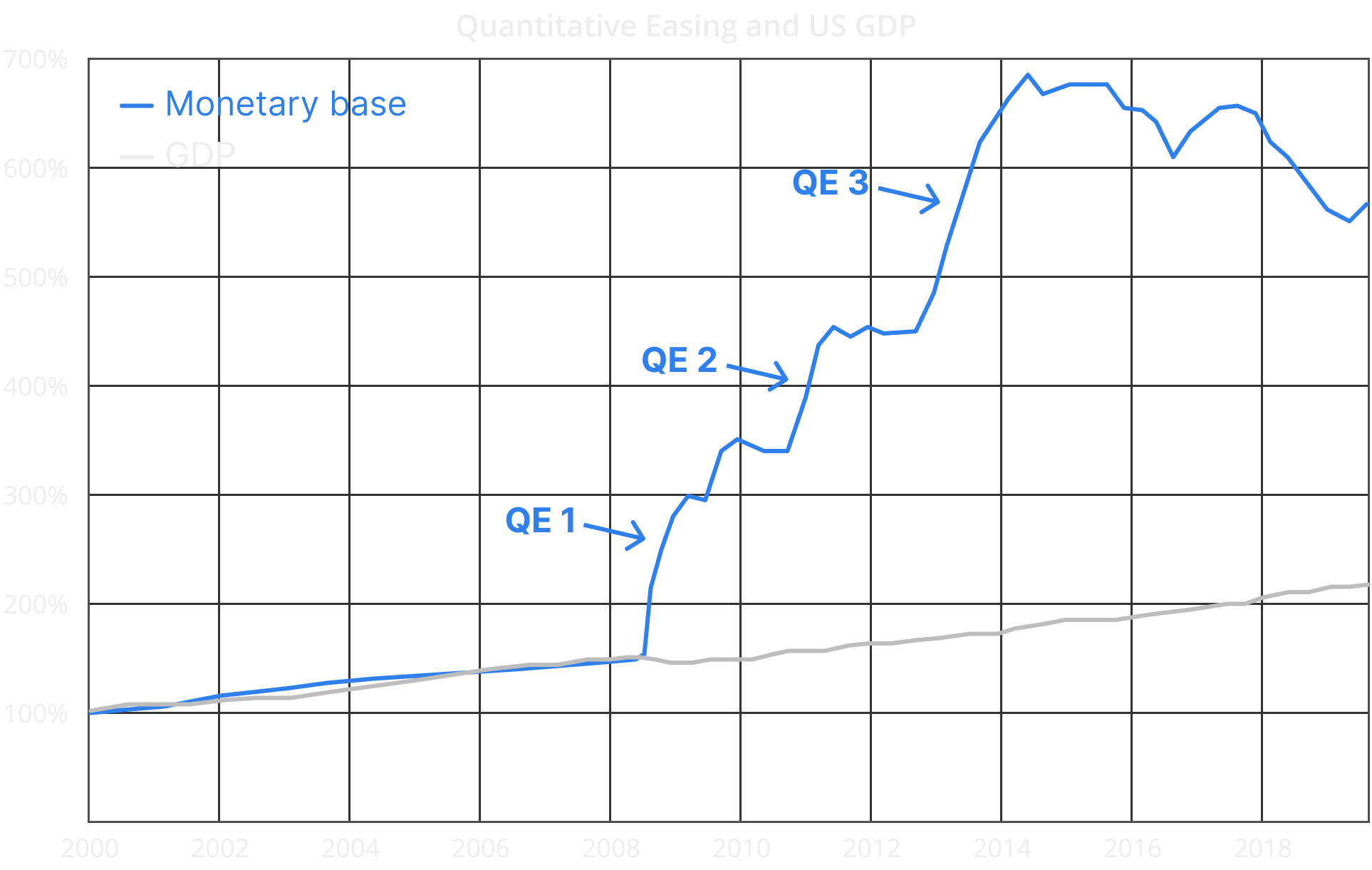
U.S. Money Supply Surge After 2008
That was a truly historic experiment America carried out. After the 1929 crash, the Federal Reserve was completely at a loss. The money supply didn’t grow; it shrank by a third. Only with Roosevelt’s arrival and the abandonment of the gold standard in 1933 did they start “pumping” money into the economy — but very slowly and very hesitantly.
That’s exactly why the Great Depression became “great.” In reality, it was just an ordinary crisis, the same as in 2008, stretched out over a decade by clueless policies and populism. If in 1929 they had flooded the economy with a trillion dollars and cut interest rates, the term “Great Depression” would never have been born. The reverse is also true: today America is living through the same kind of “Great Depression,” only masterfully covered up by printing trillions of dollars. Same thing!
There are three things one can watch forever: a fire burning, water flowing, and America collapsing.
Many economists, such as Peter Schiff and Ron Paul, lost their heads after the 2008 crisis. They were shouting themselves hoarse that injecting money would only postpone the collapse, which was sure to catch up with America in just a couple of years. When the crash didn’t happen after a couple of years, the timeline was pushed back to five years. When the crash still didn’t come after five and even ten years, the economists had to make excuses saying that they were wrong about the timing but not about the essence, and that sooner or later the collapse would inevitably arrive.
Funny thing is, while they were busy making excuses, the economy had already long since suffered a full‑blown crash. Nobody noticed it, though, because the crash didn’t look like a Hollywood‑style system collapse — with starving queues and people jumping out of skyscraper windows — but like something completely different.
It turned out that in developed countries, food demand is so well met that increases in the money supply hardly lead to goods inflation. No matter how much you might want to, you can’t eat more burgers or wear two pairs of cowboy boots at once, even if money is handed out directly in the form of checks. So all this mass of money flowed not onto store shelves but into the stock market and... into real estate, whose prices rose by 50% once again. Hot on the heels of apartment prices, the prices of gold, education, healthcare, and also bitcoin shot up — basically, everything that you don’t need to eat can’t be printed.
Finally, what really crushed the American economy was the pandemic — or, more precisely, the inadequate response to it. During the lockdown, the Federal Reserve went all out and printed, in addition to the previous 4 trillion, almost 10 trillion dollars more.
This fantastic figure consists of two equal parts. The first is a new round of quantitative easing of $4.8 trillion for the banks. The second part is $5 trillion in cash checks and subsidies to people in quarantine. And if easing is “money printing” in a figurative sense, then the checks are real printing, without quotation marks.
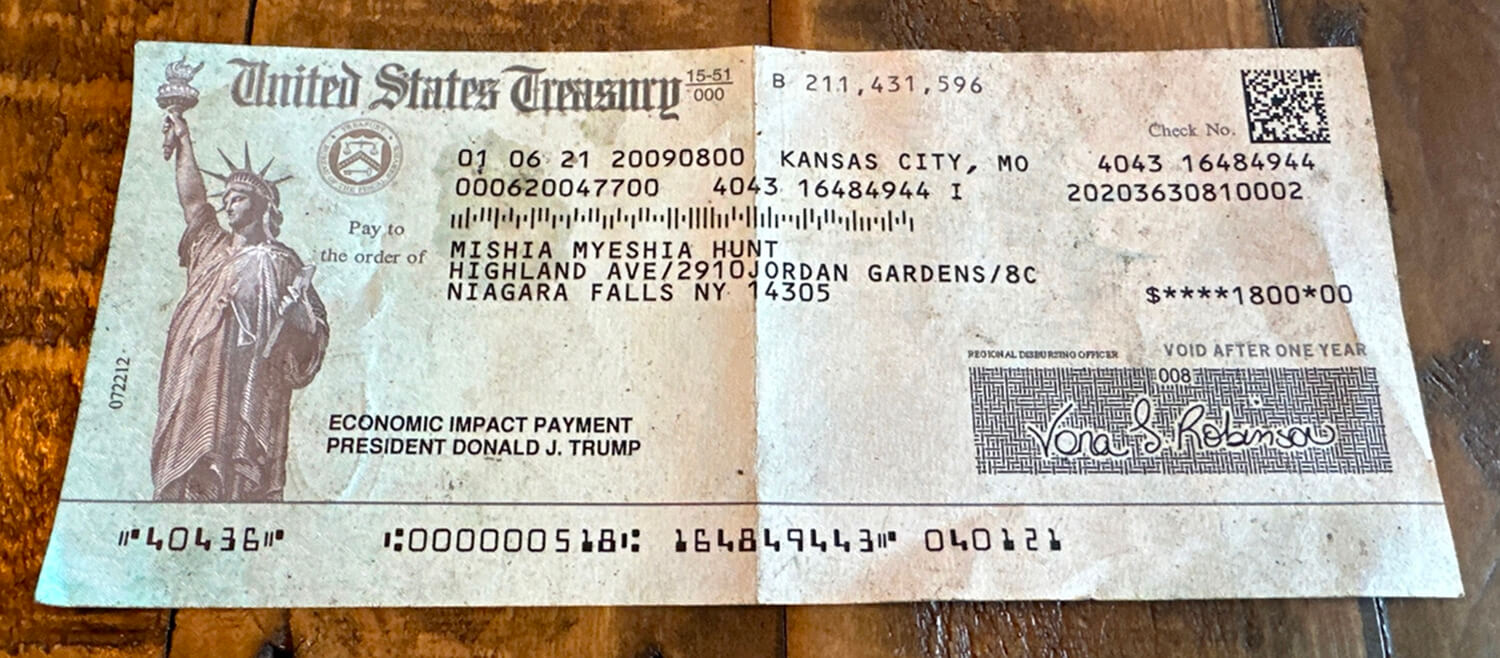
A $1,800 stimulus check given to Americans
As a result, housing prices shot so far into the stratosphere that the previous bubble, compared to the new one, started to look not like a bubble at all, but a small ripple on the water. In the ten years since 2012, apartment prices have increased 2.5 times!
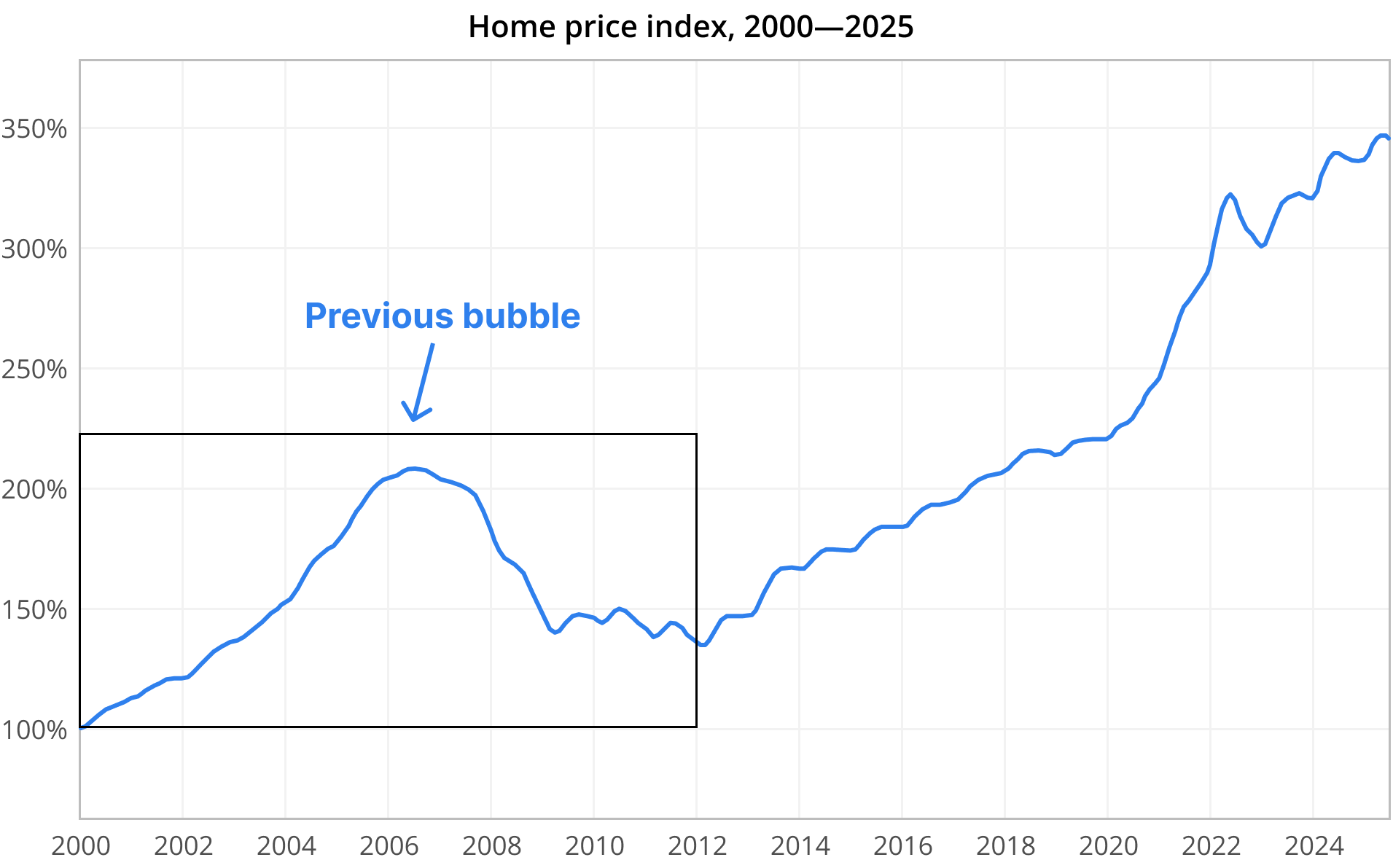
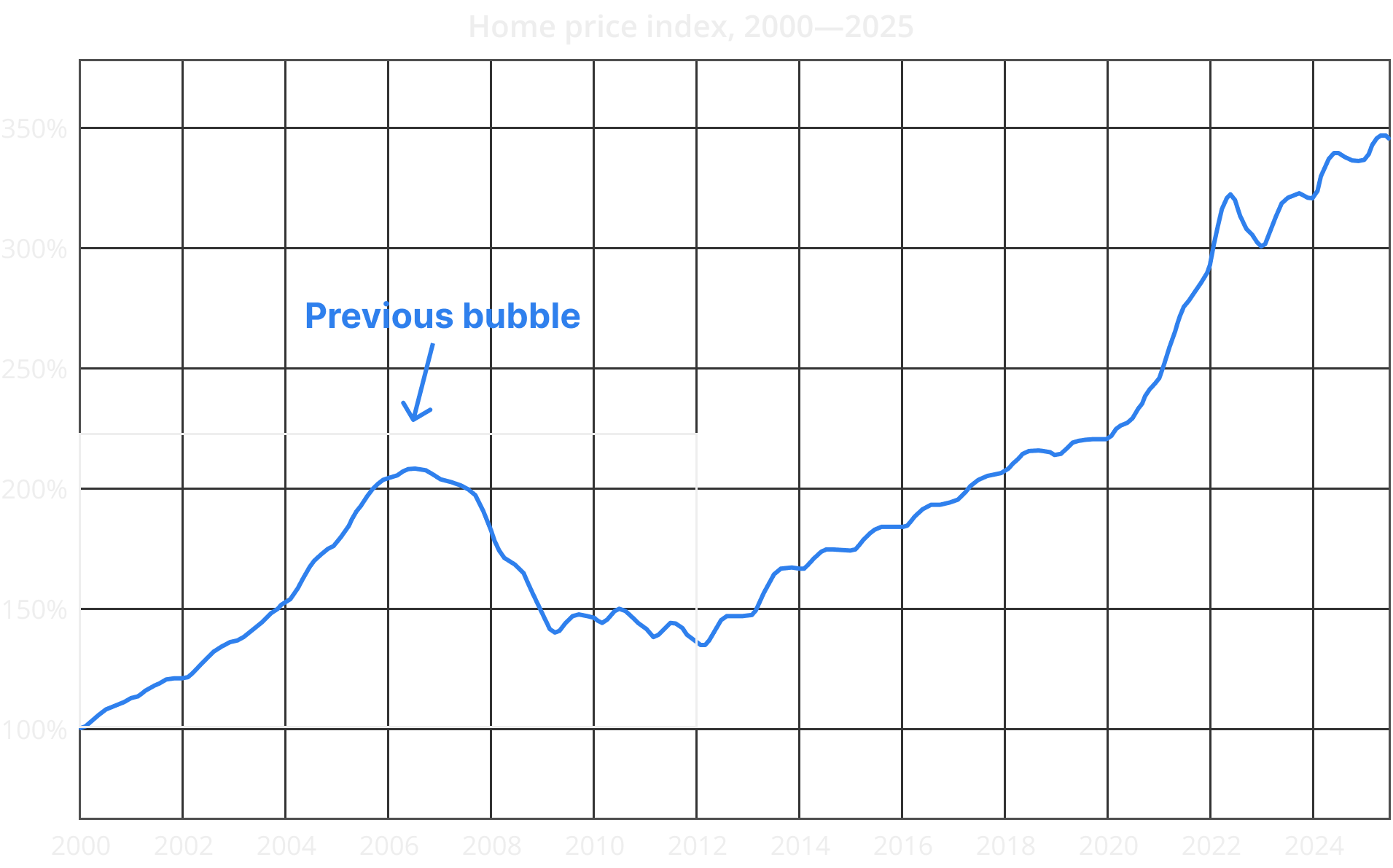
Today in America, buying a home in a major city seems impossible. The author rents a small two-room apartment for $2,500 a month. Its area is just under 50 m², and it’s about an hour by subway to Manhattan. In Manhattan itself, good apartments are rarely rented for less than $3,500, and they cost at least a million. A house in Texas costs four times less.
The rise in apartment prices wouldn’t be a problem if wages were growing at the same pace. But by the late 1980s, housing began to pull away from incomes. Whereas before the average home cost about three times the average annual salary, today it’s about six times that amount. Education costs have shot into the same stratosphere: Americans take on loans to study at a prestigious university and then spend many years paying them off out of each paycheck.
As for the national debt, these scare stories come from a misunderstanding of its nature. Only 20% of U.S. debt is owed to other countries. All the rest is domestic debt, which is easy to service and largely consists of technical obligations such as pensions.
America’s tomorrow is not a default on debt, but a sluggish depression where buying a home will be impossible for the next couple of decades.
Rich and Poor
Despite all its problems, America is an insanely rich country.
Helicopter taxis routinely shuttle back and forth over New York, taking passengers from the airport to downtown and back. Prices start at $200 per seat. That’s practically nothing even for a non-business traveler, since a regular car taxi can cost $150 for the same route during rush hour.

Central Park, which really ought to have been renamed Central Forest by now, is growing a tall fence of skyscrapers all around its perimeter. The towers peer alien-like through its thickets, in such unusual shapes and colors that even Dubai would be jealous.
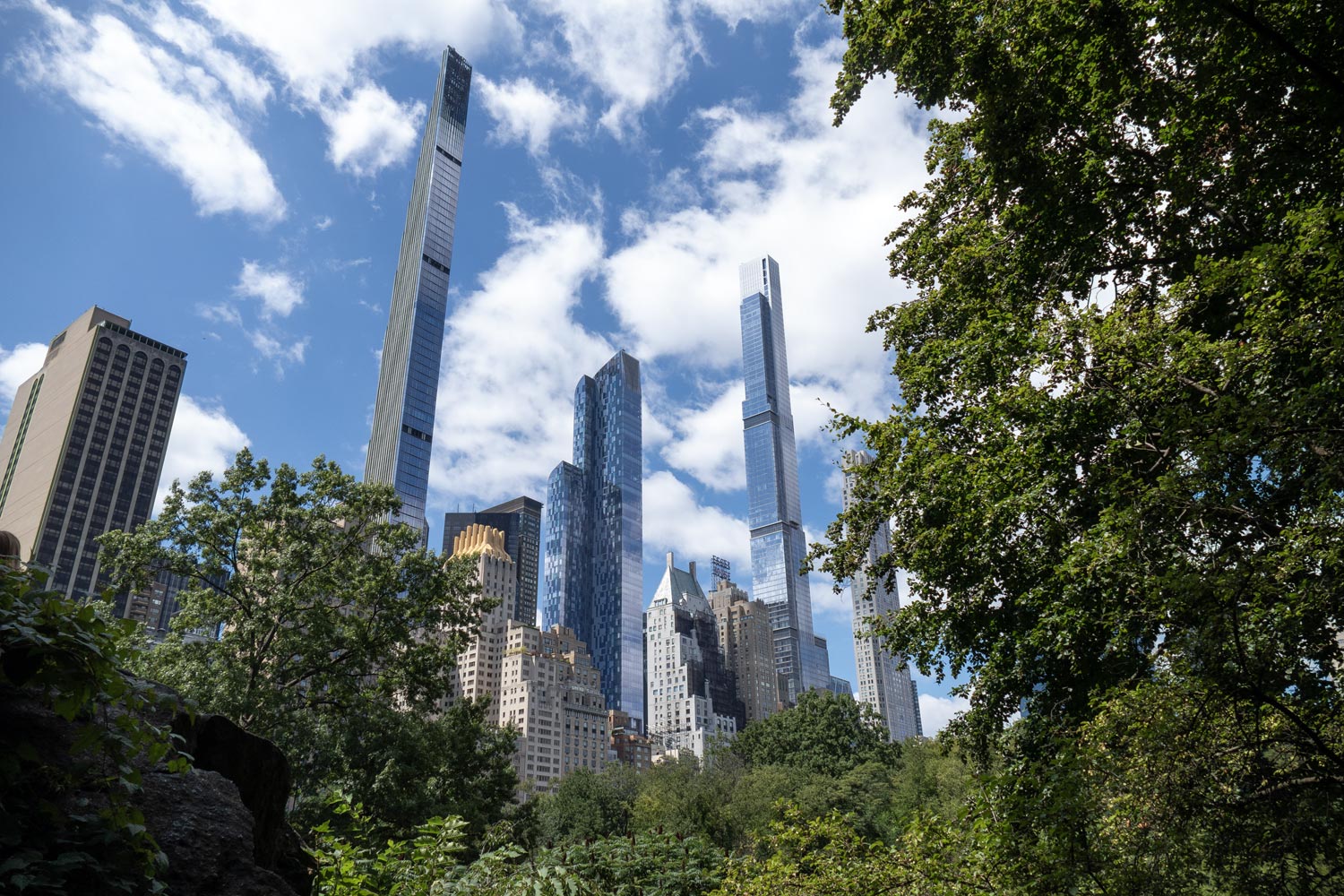
A penthouse in such a high-rise can cost a hundred million dollars — a price that sounds more like the GDP of a small African country than the cost of an apartment.

The streets of New York are packed with expensive boutiques. It’s a real paradise for shopaholics, who flock to the shiny trinkets like flies to jam. Major brands set their lures out on the city streets and compete in the extravagance of their ideas. Today, Louis Vuitton is in the lead, having come up with the idea of building a skyscraper in the shape of a suitcase.

At the other end of the city is the very wealthy Dyker Heights neighborhood. Every Christmas, it’s decorated so lavishly that the electricity alone costs $5,000–8,000 a month for a single house.

In the state of California, there’s the city of San Diego, and its Mission Hills neighborhood can bring tears to your eyes. The scenery here looks as if someone cranked up every slider in Photoshop.
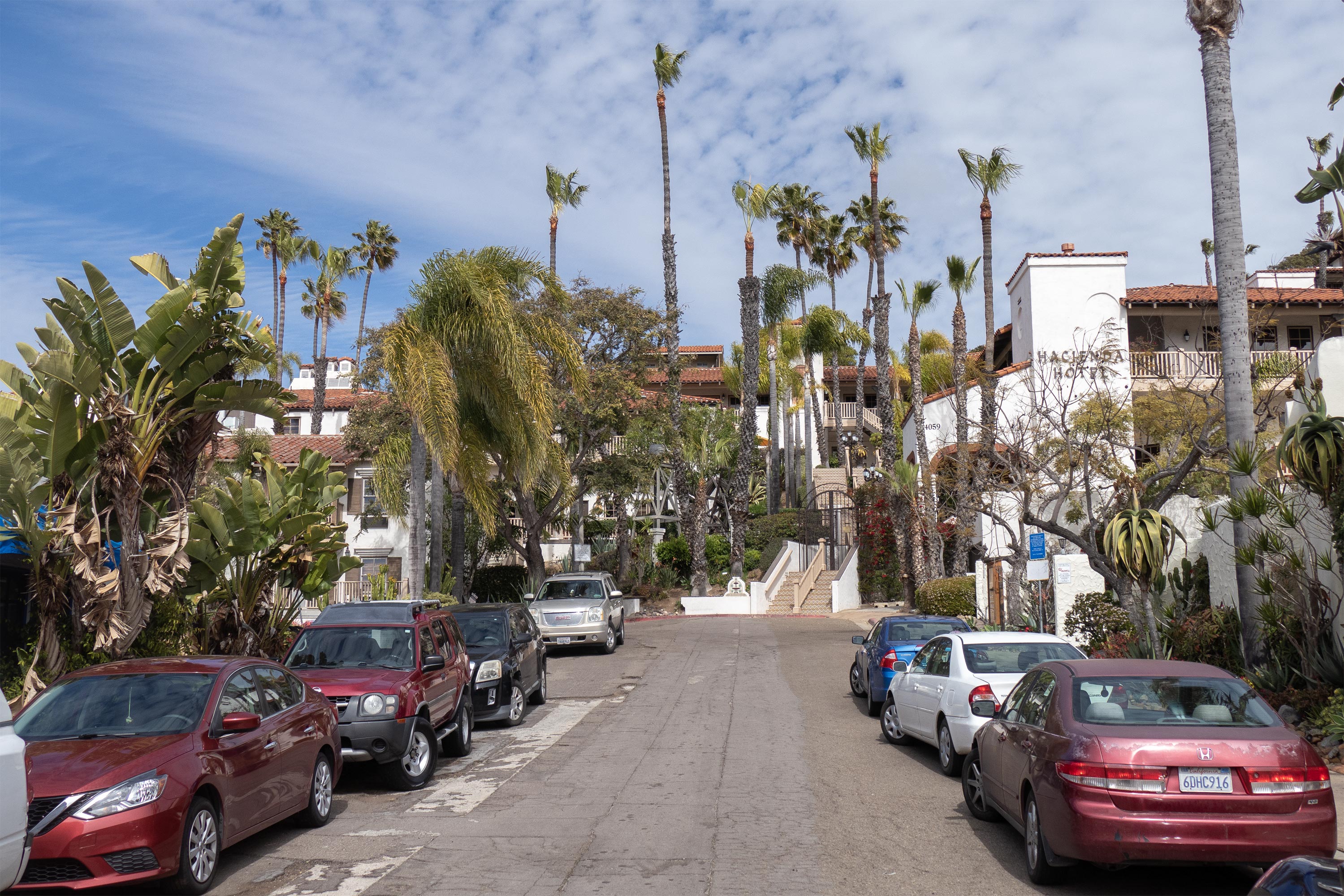
This is where the old money lives. Most of the houses in this neighborhood were bought back in the early 20th century. They belong to families of doctors, lawyers, and bankers and are passed down through generations. You can’t buy a house here for less than $2 million.

In another famous city — Miami — red Lamborghinis casually park by sunny cafés, while three-wheeled sports cars are rented out to tourists by the day as glittering junk.


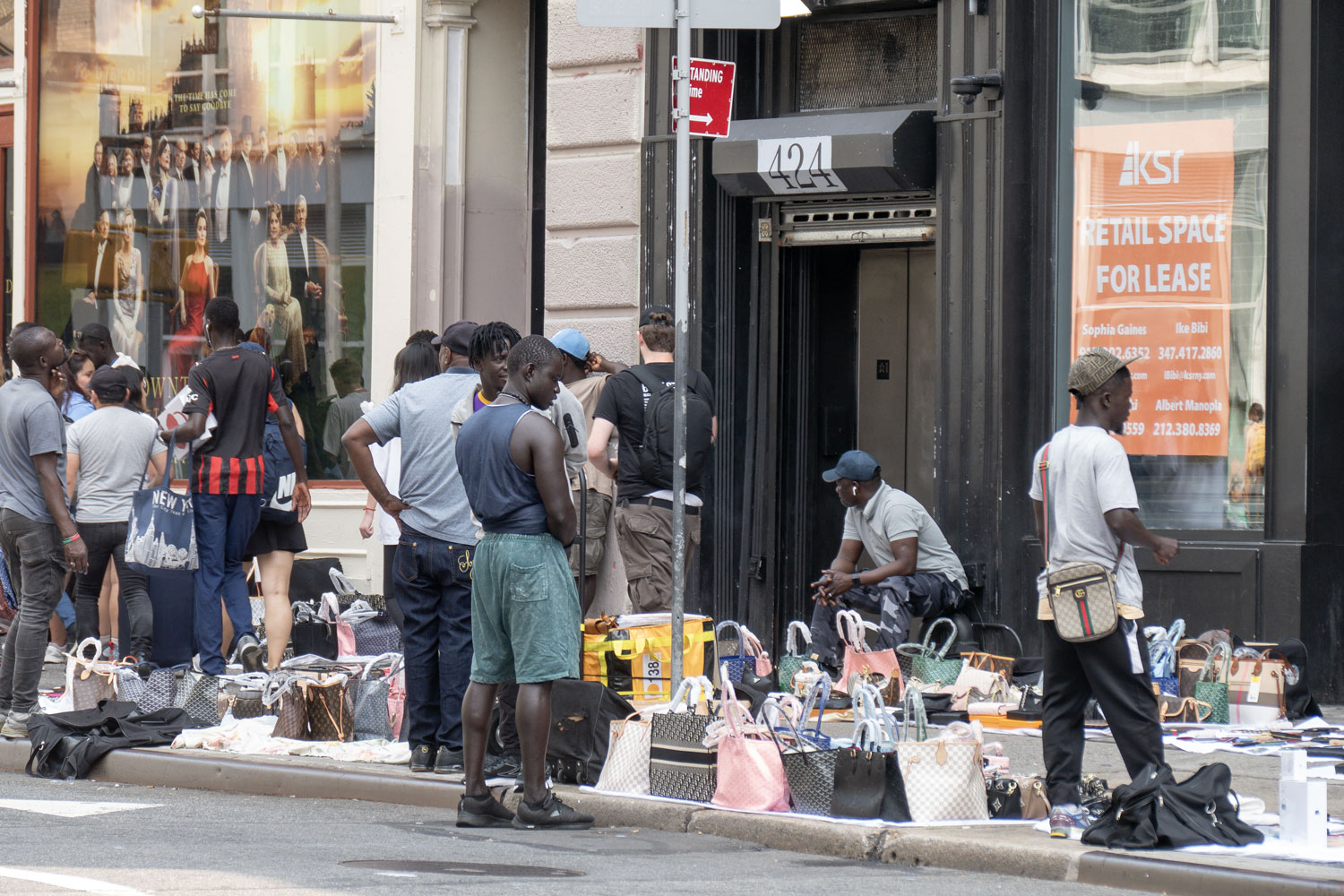
But for all its splendor, America can be frighteningly poor. In the wealthy city of New York, on Broadway, right across from a cluster of expensive boutiques, African refugees spread out counterfeit copies of bags, watches, and Apple headphones on the sidewalk to sell.
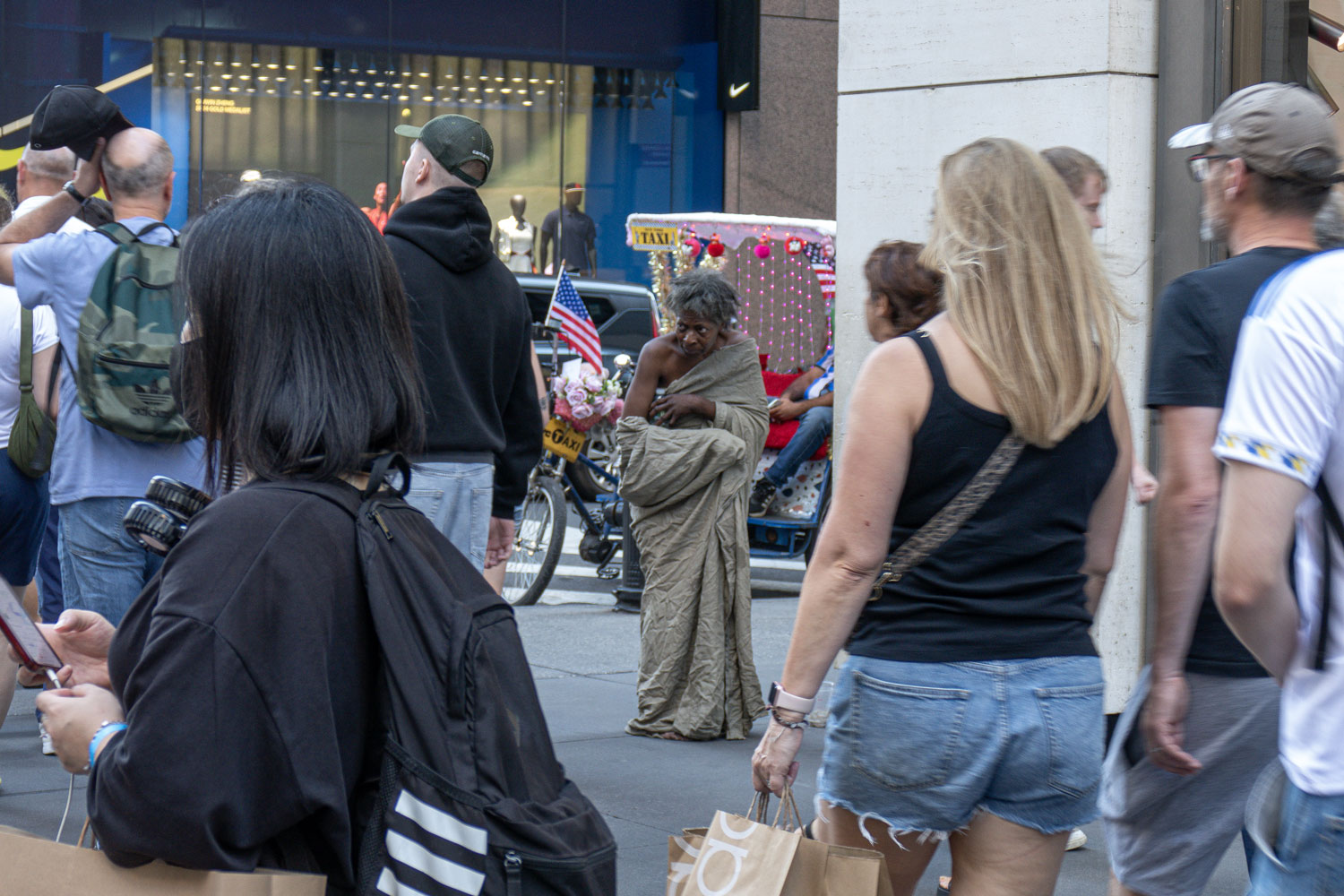
On another famous street — Fifth Avenue — some hundred steps from the suitcase-building, the eye picks out from the crowd of tourists and shopaholics the figure of a half-naked beggar woman wrapped in a bedsheet.
Across the country, zones of open drug addiction are multiplying. In Philadelphia, San Francisco, Los Angeles, Portland, Seattle, Denver, Baltimore, Boston, and dozens of other cities, entire streets and neighborhoods are occupied by drug users injecting fentanyl into their veins in full view of passersby. The authorities are unable either to arrest or to treat the millions of fallen people.

And many other places are just plain poor. In those lesser‑known states, you can find roads smashed to bits, filth, and never‑drying puddles that are no better than their older sisters back in Russia.
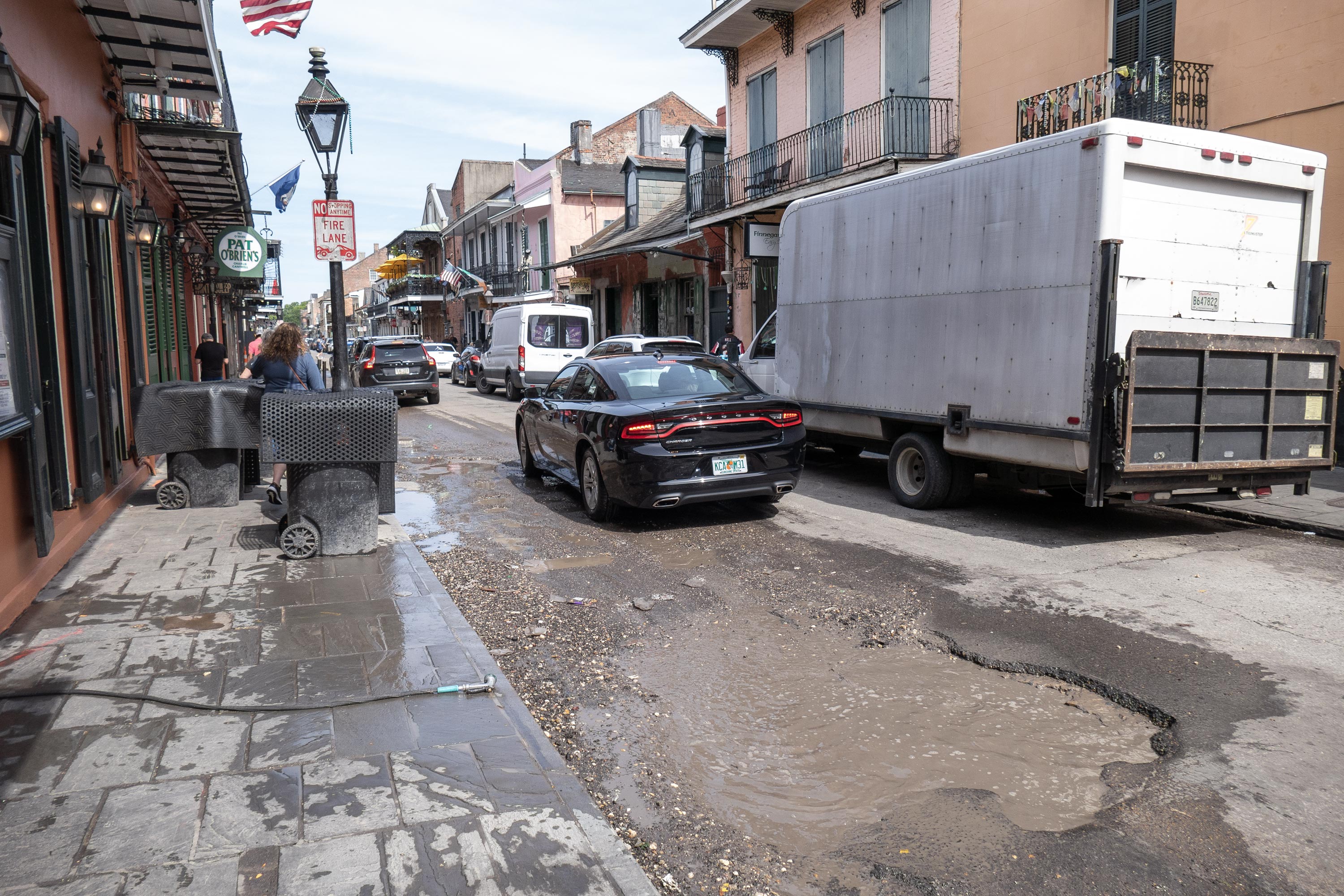
Social media alternately shows two countries: the America of the rich and the America of the poor. Everyone chooses for themselves which to believe, but of course, both sides are right. America is not Switzerland. It’s too big to be the same everywhere.
This is called social inequality. It is measured by the Gini index — a number from 0 to 100. The higher it is, the more wealth belongs to a narrow circle of people, and the lower it is, the smaller the gap between rich and poor. Of course, there are no extremes, and all countries lie somewhere in the middle of this scale. In the United States, this index is 40 points, which is much higher than Europe’s 30 points.
We all intuitively know that in Europe there is no such chasm between the rich and the poor as the one gaping in the United States today. But low inequality does not mean prosperity. For example, Pakistan’s Gini index is also 30 points, even though it is one of the poorest countries in the world. Naturally, if everyone in a country is equally poor, inequality will be very low!
Obviously, even a poor American lives better than a Pakistani with an average income. For example, back in 2010, 80% of poor households in the U.S. had air conditioning — a luxury unavailable to 5 billion people worldwide. And in terms of housing space, the gap is large even compared to Europe. A poor American has 41 m² per person, while an average German has 46 m², and an average Briton only 38 m².
It’s interesting to observe how American socialists manage to turn even such facts inside out. For example, one article states: “One in five poor families cannot afford air conditioning.” But one in five poor families without air conditioning means that 80% of poor families have air conditioning, just as mentioned above. Thus, even the record-level availability of what is, generally speaking, elite equipment is presented as a failure of capitalism.
Regarding salaries, comparing countries by income is completely pointless because expenses differ so much. It’s much smarter to compare what’s left at the end of the month. After all expenses, including insurance, rent, and food, the average American family puts $2,250 into savings. There’s no equivalent data for Europe, but according to the author’s estimates, the average German family saves about €1,000, even taking free healthcare into account.
And still, these numbers mean very little. How do you get an average balance of $2,250 at the end of the month? Very simple. You need 80% of Americans to be saving $3,000, while the rest go $1,000 into debt. Judging by surveys, that’s more or less what’s happening: half of Americans live paycheck to paycheck. It’s just not clear whether they’re spendthrifts or genuinely poor.
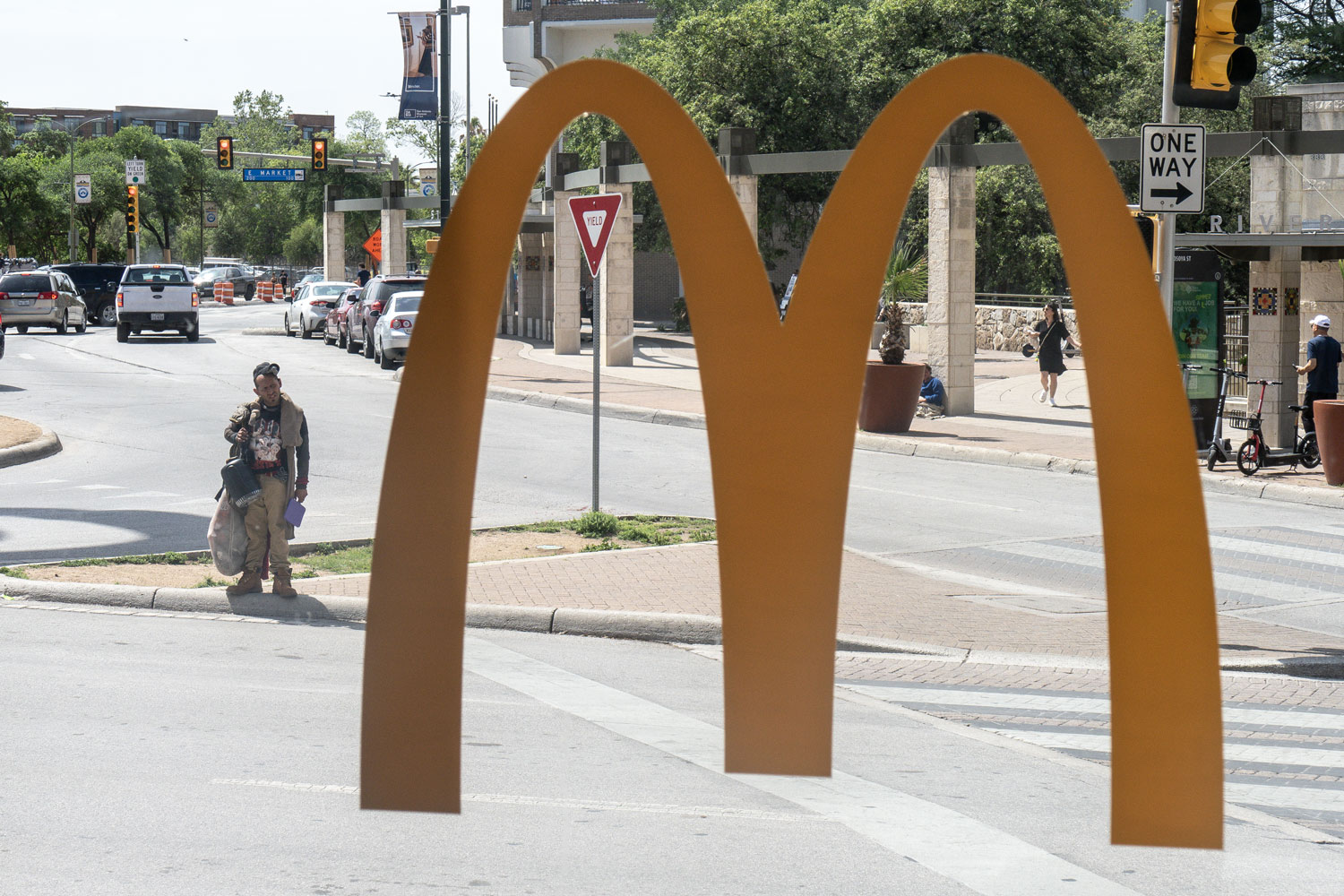
Who is to blame for such stratification? Without irony: capitalism — the brutal system of selection, similar to the conditions of the wild, only for humans. And American capitalism, although heavily diluted by Roosevelt’s legacy, still remains the purest one on this unfortunate planet.
Socialists make the correct diagnosis. Where they go wrong is in choosing the treatment. Modern leftists understand that, for example, there is no such thing as free healthcare. That’s why they propose to redistribute income and pay for it through huge taxes on the rich. Indeed, even if Bill Gates gave away 99% of his wealth, he would still remain a billionaire. It seems that having that much money while millions of people cannot afford insurance and housing is moral insanity.
Let’s leave aside the fact that Gates has given $60 billion of his own money to charity and plans to give it all away. Billionaires won’t be impoverished by high taxes. It’s much worse than that. The point is that the rich don’t earn salaries; they hold their wealth in the form of stocks. But stocks are not income, and you can’t tax them as such. To carry out this plan, you’d need a mechanism for expropriating property. And creating such a mechanism is a direct road to a totalitarian state of the kind seen in Stalin’s USSR or Hitler’s Germany.
Russia went through this lesson in the early years of the Soviet Union.
Starting with a struggle against wealthy landowners, Lenin’s reforms quickly went into a tailspin, turning into terror. After dealing with the rich, the Bolsheviks declared the kulaks — the rural middle class — to be enemies of the people. Then came prodrazverstka (literally, food apportionment) — the forcible seizure of grain, now from all peasants, for the benefit of the army. The result was mass famine and millions of deaths. The experiment led to such upheavals that Lenin himself rolled back socialism. As early as 1921, he announced the start of the NEP — the New Economic Policy based on the market — carefully describing his capitulation as a “temporary retreat.”
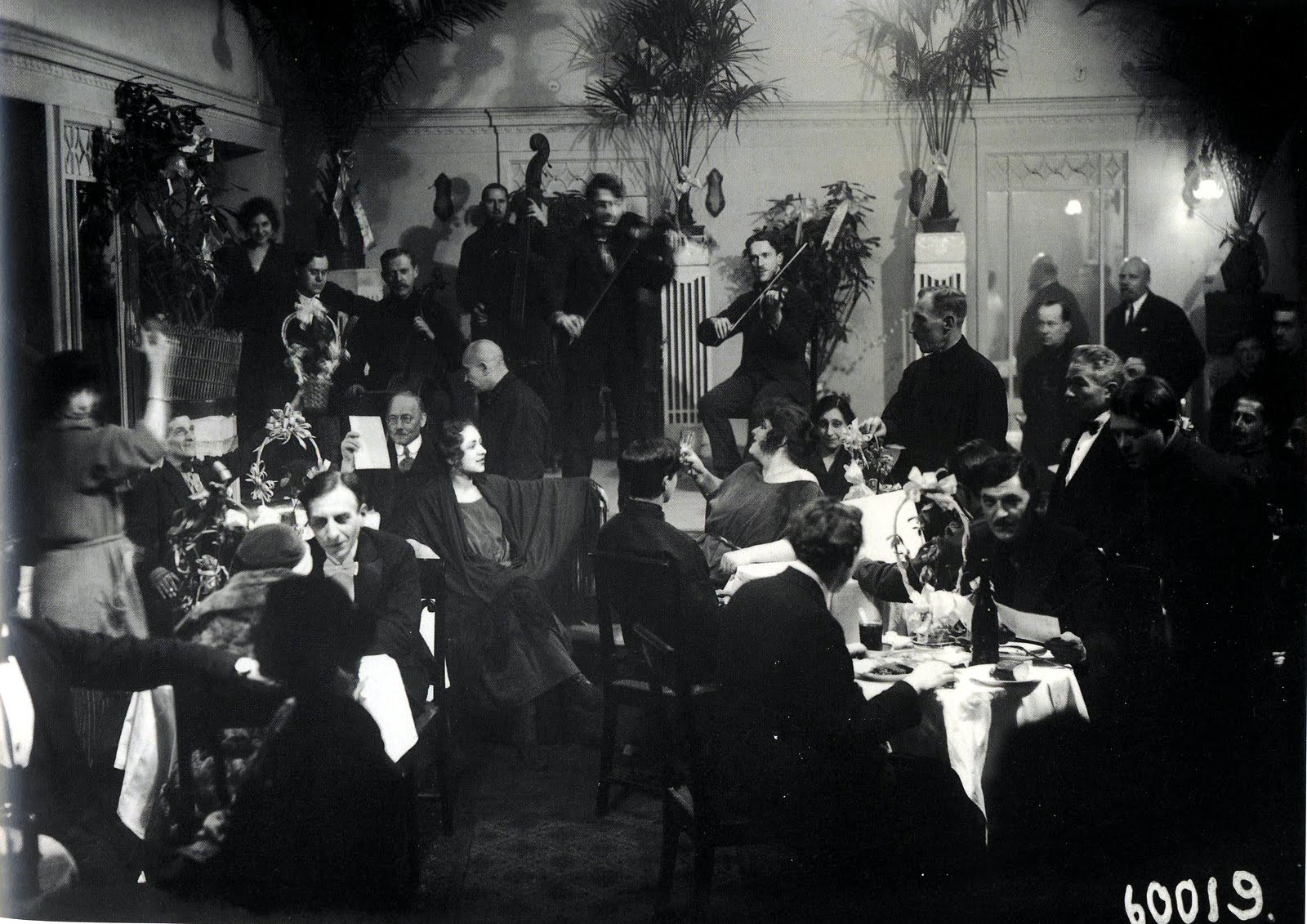
The Soviet NEP felt much like America’s Roaring Twenties. Main dining hall of the Hotel Evropeiskaya, 1924
Stalin launched a new offensive by beginning the dekulakization campaign. Once again, he declared the well-off peasants enemies. Once again, people had their grain taken away, and those who resisted were sent to labor camps. And once again, there was mass famine, which in 1932–1933 struck Ukraine, the Volga region, and Kazakhstan — the most fertile lands. After this experiment, which cost between 5 and 7 million lives, Stalin allowed peasants to have private farms.
Since then, no such experiments have been carried out in the USSR, and socialism has become a beautiful façade. On the upper floors of the Soviet system, the grand figures of the state planning committee thundered, factories stamped out products, collective farms broke milk-yield records, and red-and-yellow posters blazoned about the victories of socialism. This picture was what they sent abroad — to America and Europe.
But the lower floors that held up the façade were seen only by those on the inside. While those at the top talked about “provisioning,” the lower levels were ruled by a wild market. At the makeshift markets, elderly babushkas crowded together, selling potatoes from their gardens in metal buckets. You couldn’t buy a car, a television, or even a wardrobe in a store. They were hidden away in warehouses to be later traded through connections for a crate of tangerines, imported cigarettes, or expensive cognac.
While the top floors were drafting the state plan, workers on the lower floors were sneaking factory parts out and selling them on the black market. The directors had trucks running between plants under the cover of night. They weren’t hauling contraband, but missing components. One factory never received its ball bearings, another was short on metal, and a third had no wiring. So the directors of these “advanced socialist enterprises” would call each other and sort it out: “I’ll give you my surplus, you give me yours — otherwise we’ll both shut down.”
Capitalism solves these problems on the fly through market prices, but under socialism, prices are set by the state based on calculations far from reality. Space flights and free healthcare were merely a façade of socialism, behind which smoldered a grassroots capitalism, preventing the Soviet system from collapsing. When it finally burned out completely, and oil prices collapsed, the country even had food shortages. Failing to reach its 70th anniversary, socialism collapsed from exhaustion and never stood up.
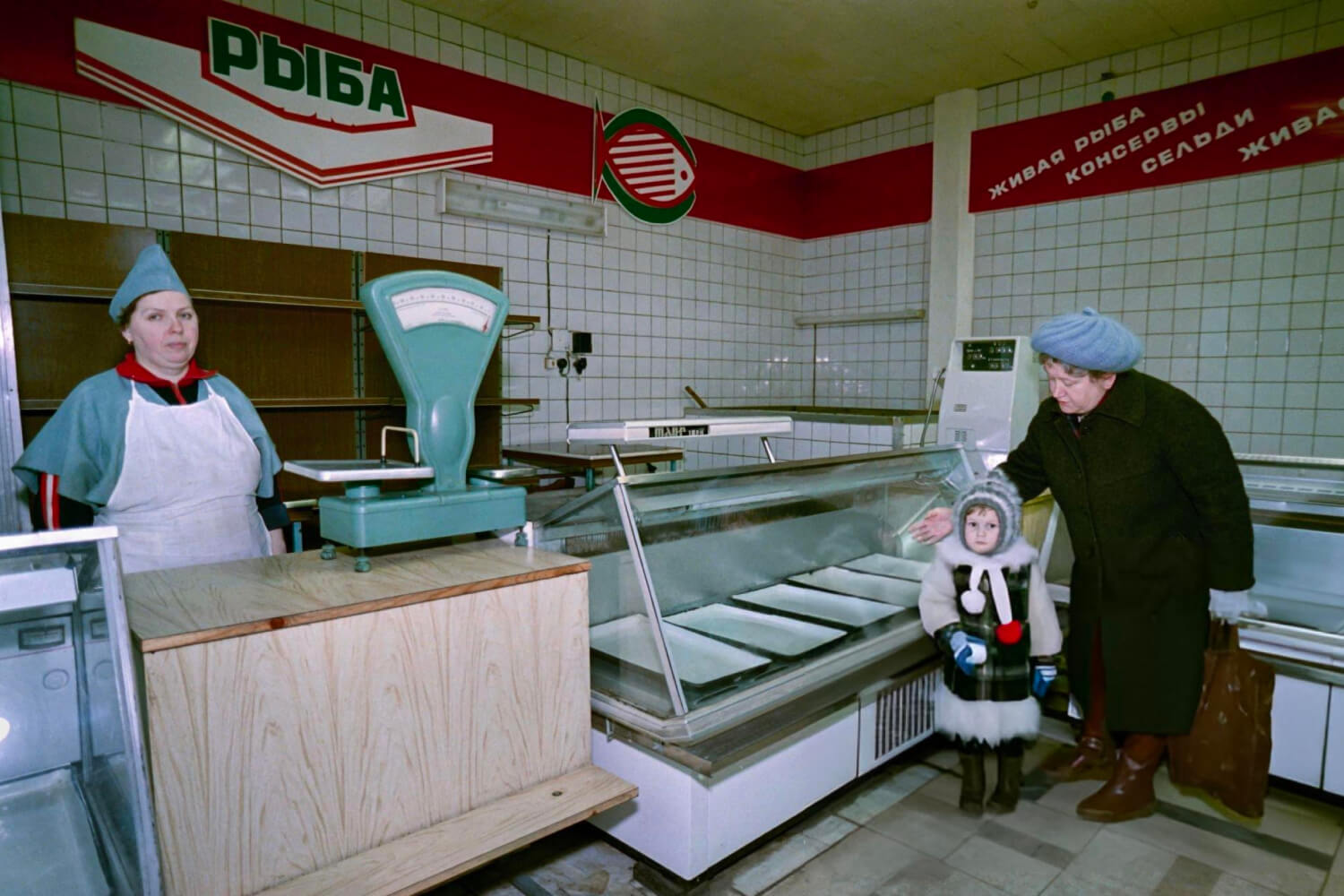
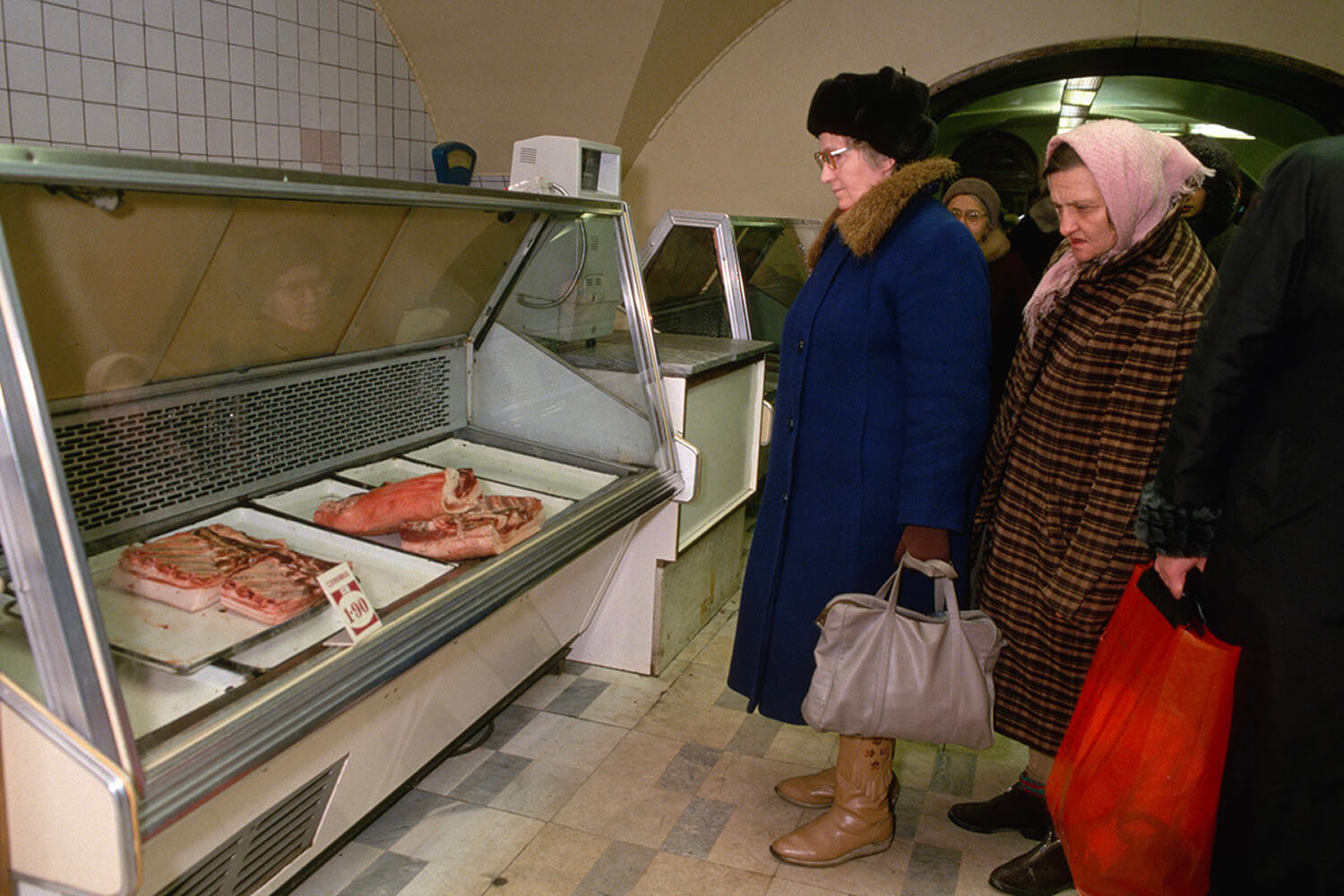


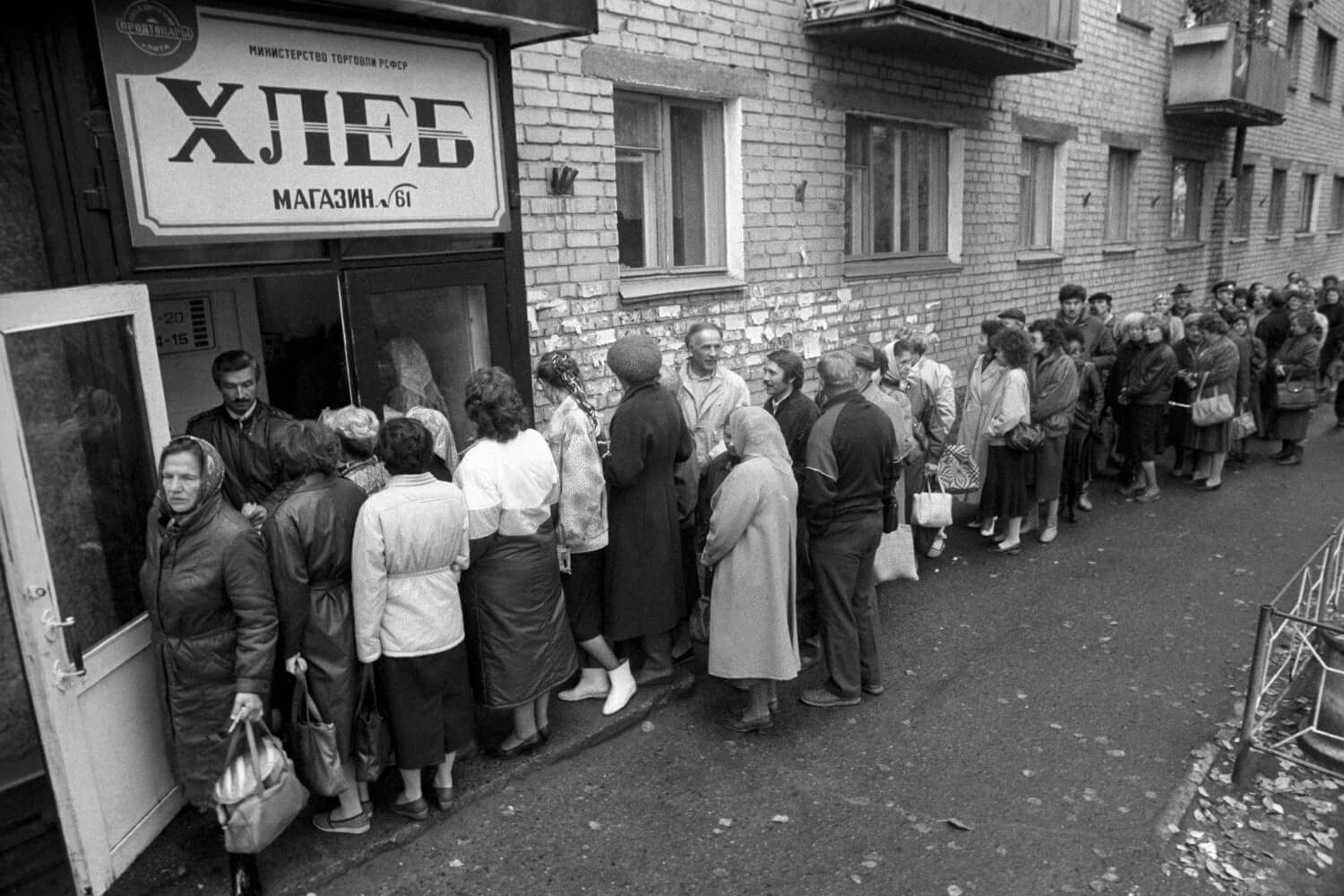
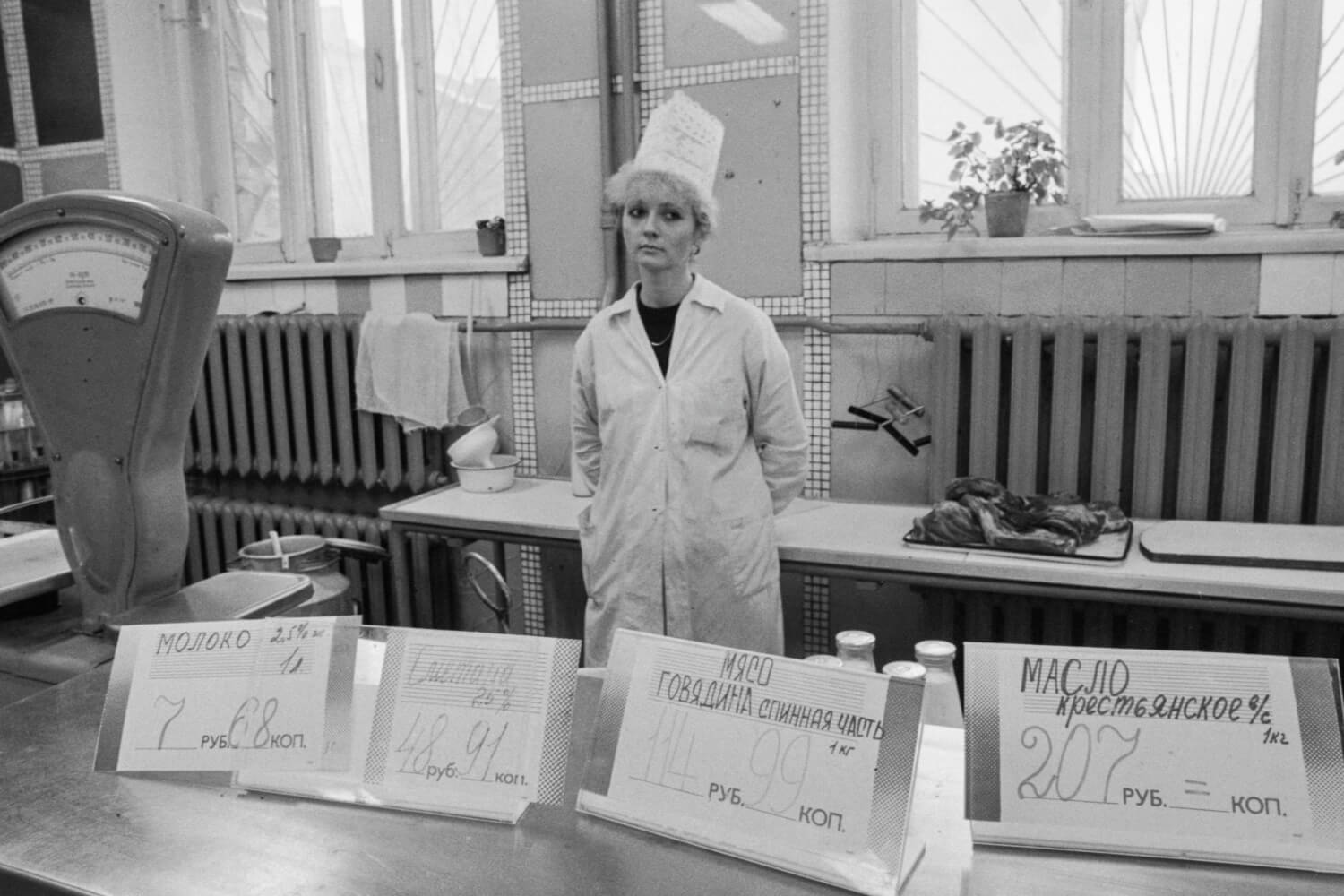
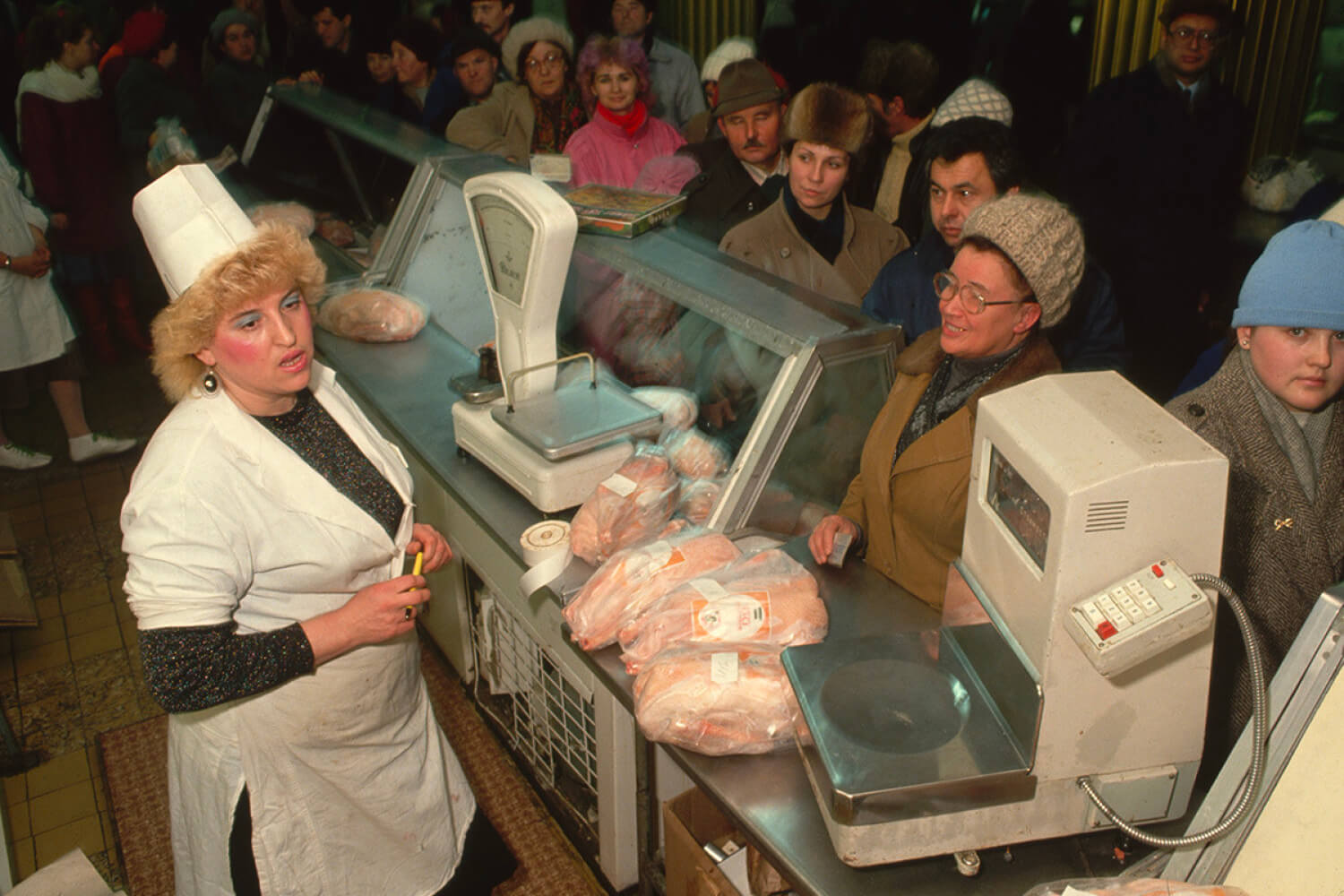
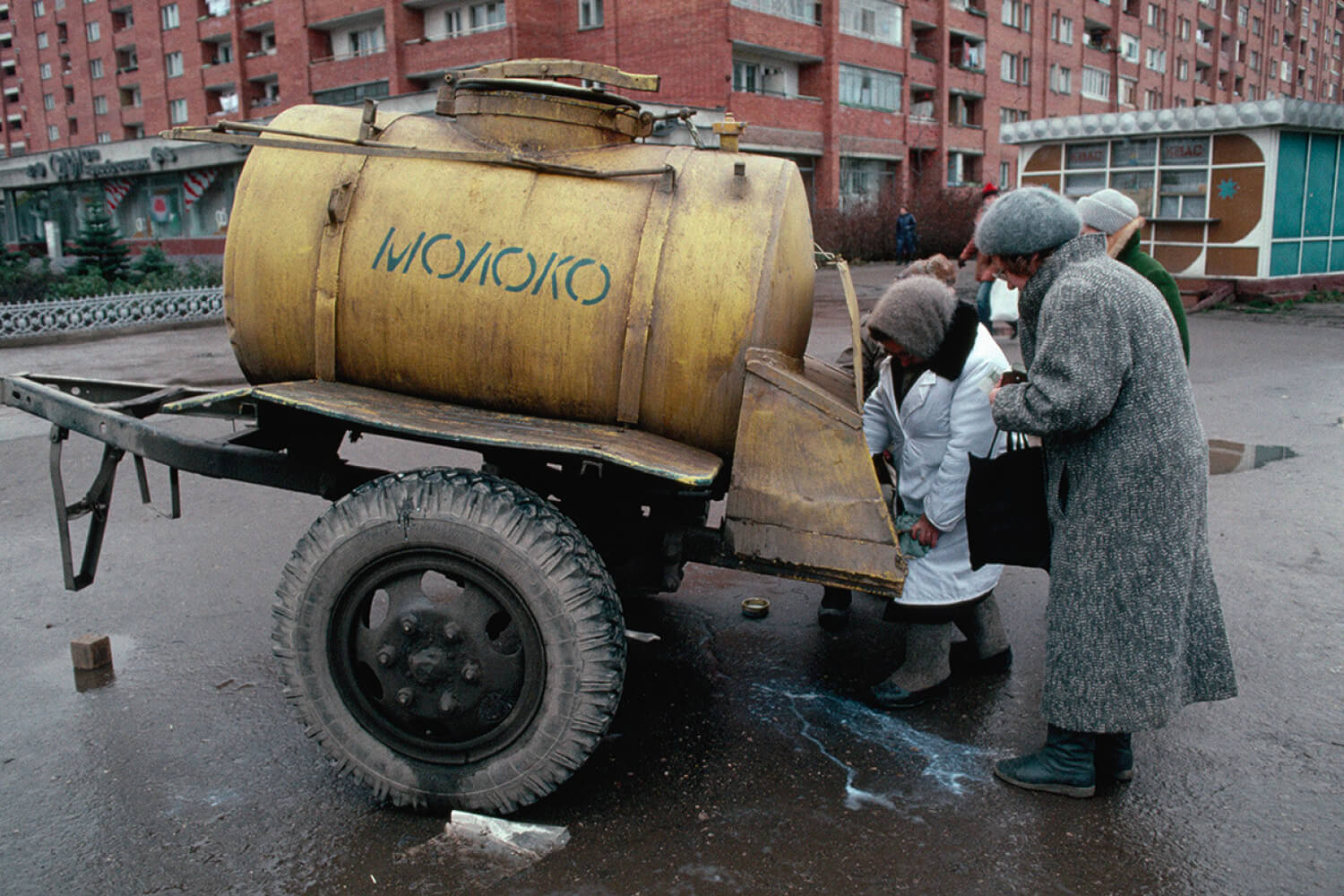
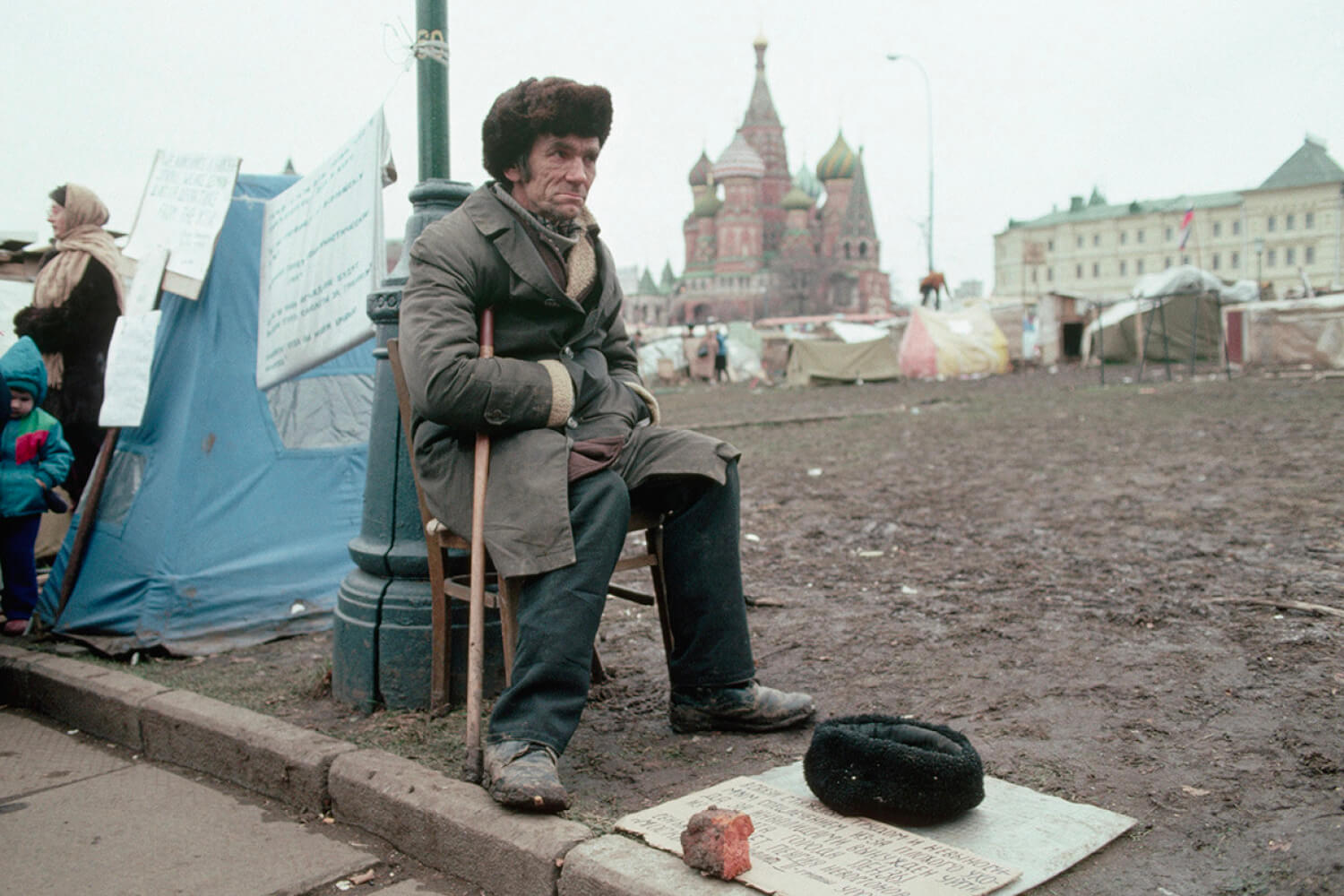
The author witnessed Russia’s transition to capitalism. In the regions, it dragged on for about ten years, so the dying out of socialism took place before my very eyes. My funniest memory is of the shops with numbers instead of names, each selling only one type of goods, and all keeping different opening hours.
Let’s say that if you wanted to buy bread, sausage, and an exercise book in one trip, you had to go to three different stores. Sausage was sold at Store No. 45, books at Store No. 66, and bread was sold at the store next to my house, whose number nobody knew, so it was just called “ours.” The tricky part was that Store No. 45 went on lunch break from one to two, Store No. 66 from two to three, and at ours, they only had fresh bread in the morning. It seems the three-body problem is easier to solve than the problem of three Soviet stores.
When this rotten system was killed off by capitalism with its supermarkets, it was a breath of fresh air. Today in Russia, there are no shortages, despite the war and sanctions. And although older people feel nostalgic for Soviet times, it’s harder to find a socialist in Russia than in Manhattan, where people know about socialism about as much as a virgin knows about sex.
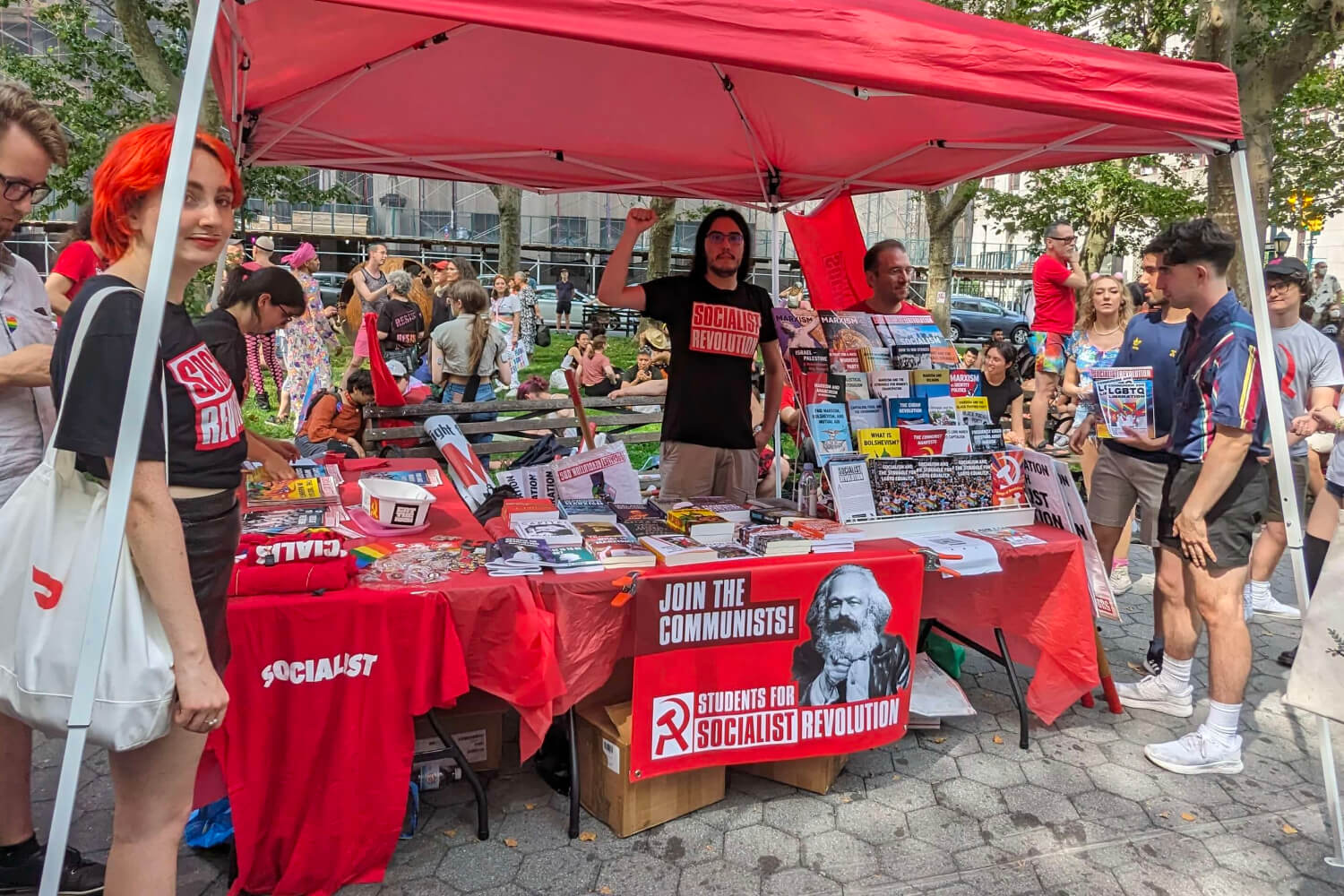
Today, there’s little left of socialism in Russia: the labor code, child benefits, half-dead free education, and healthcare.
But now it was Europe and Canada that turned social. You get free healthcare, education, unemployment benefits, and generous pensions. The homeless are entitled to housing and welfare, and you can’t fire anyone without a hefty payout, even if they’re blatantly slacking off.
Just like in an economics textbook, a high minimum wage led to a rise in unemployment. In December 2024, youth unemployment was 25% in Spain, 24% in Sweden, 21% in Greece, 20% in France and Portugal, and 19% in Italy and Finland. Nobody wants to hire young people for the kind of money the law says they have to be paid.
The pension system has also gone bankrupt. People are living longer, while the birth rate is falling. So fewer young people are paying taxes, and more and more elderly people are receiving pensions. But “the old investors live off the new ones” is the classic formula of a financial pyramid. Europe started bringing in migrants, counting on an expanded tax base, but many of them just went on welfare, which only made things worse.
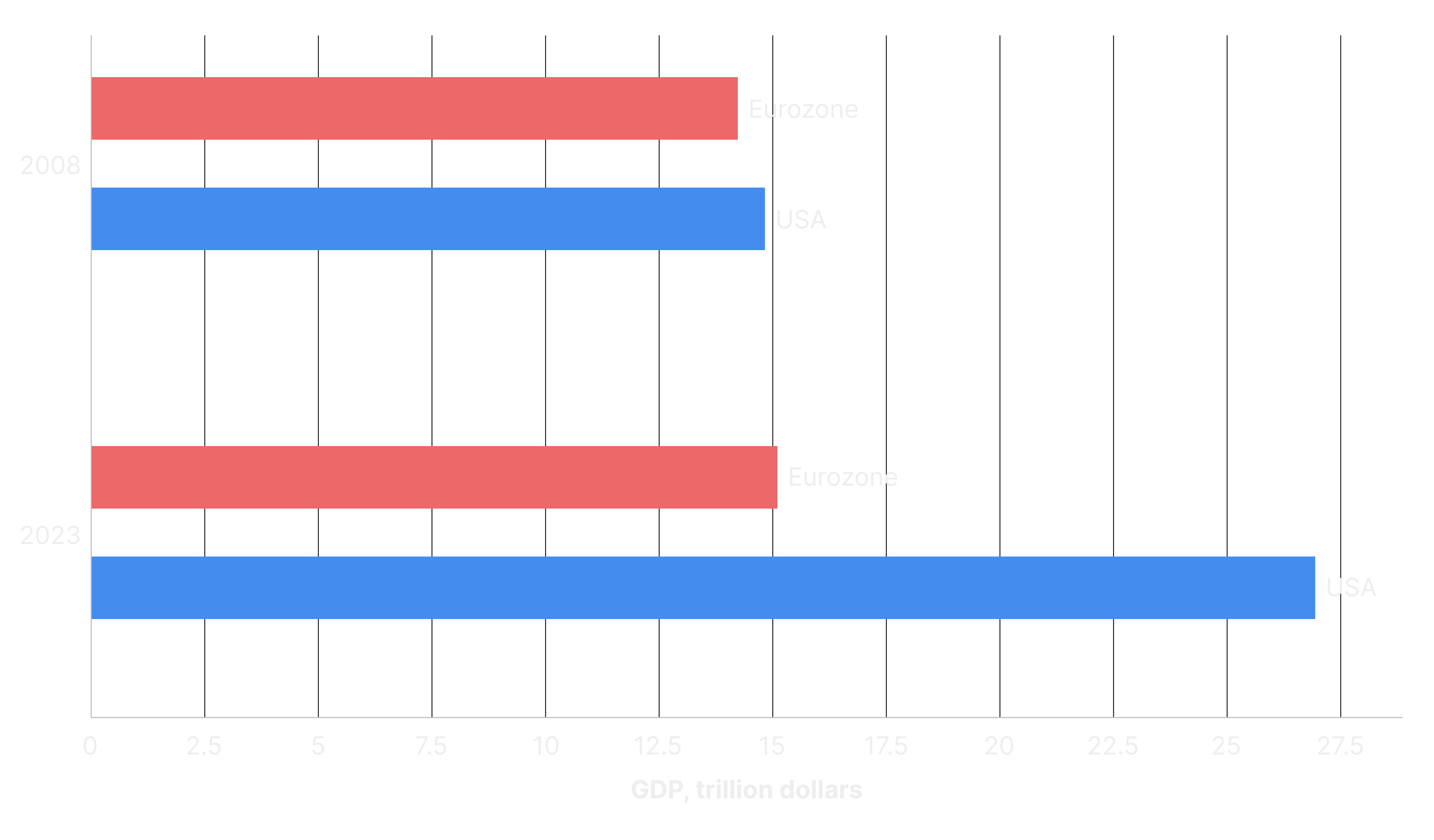
The result of the social experiment is once again depressing. If in 2008 Europe’s economy was on par with America’s, by 2023 it’s lagging behind by almost half.
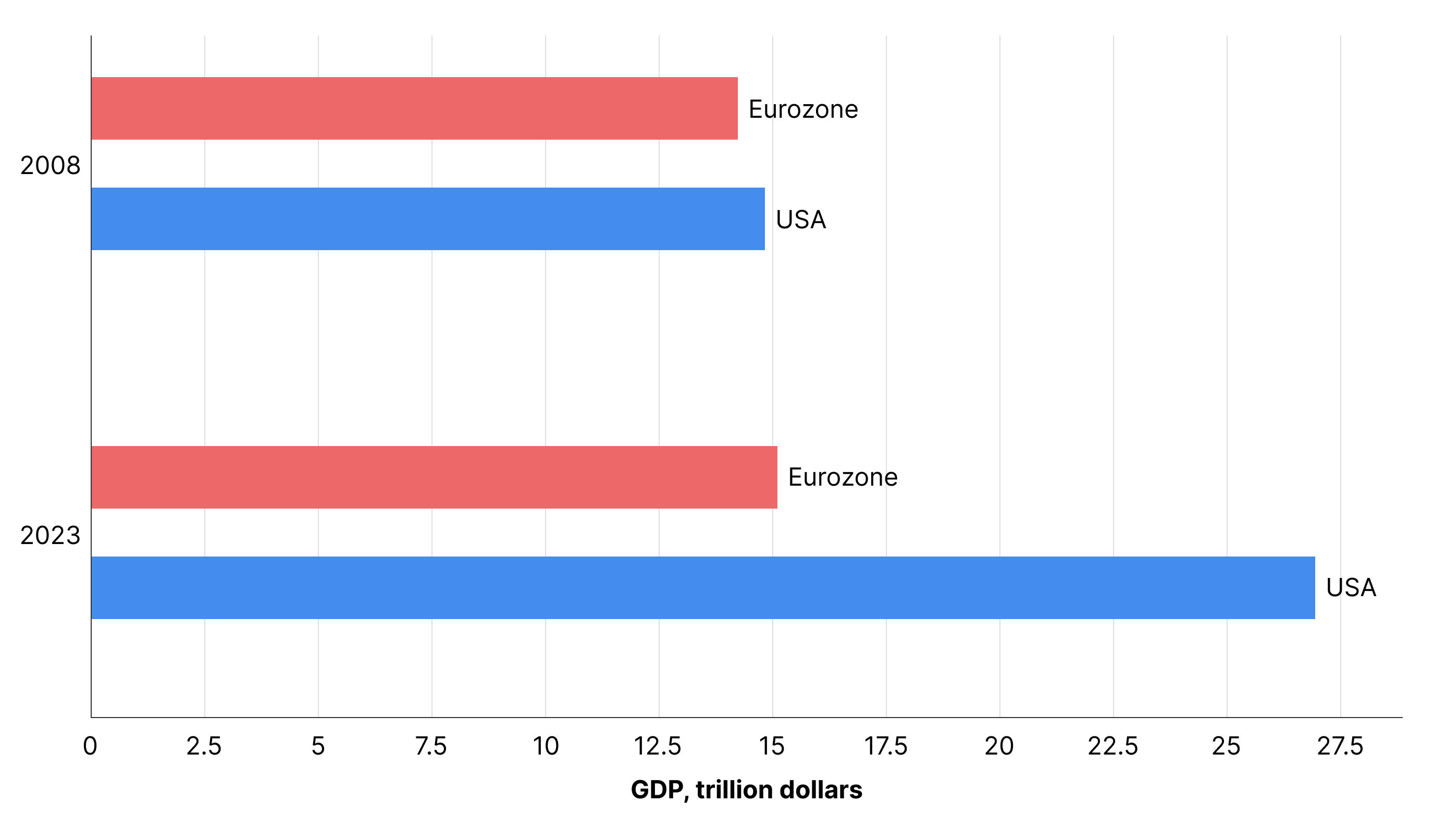
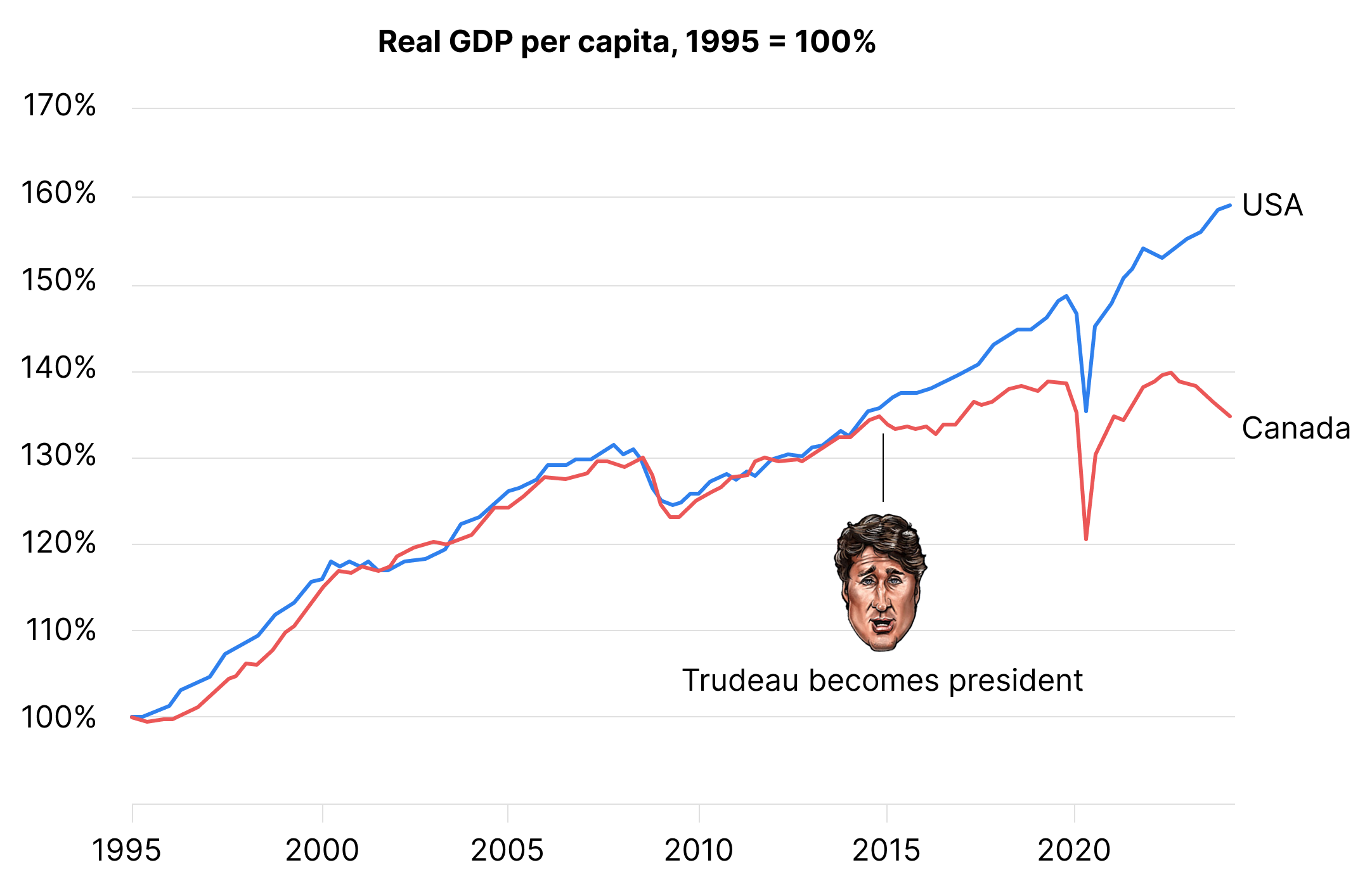
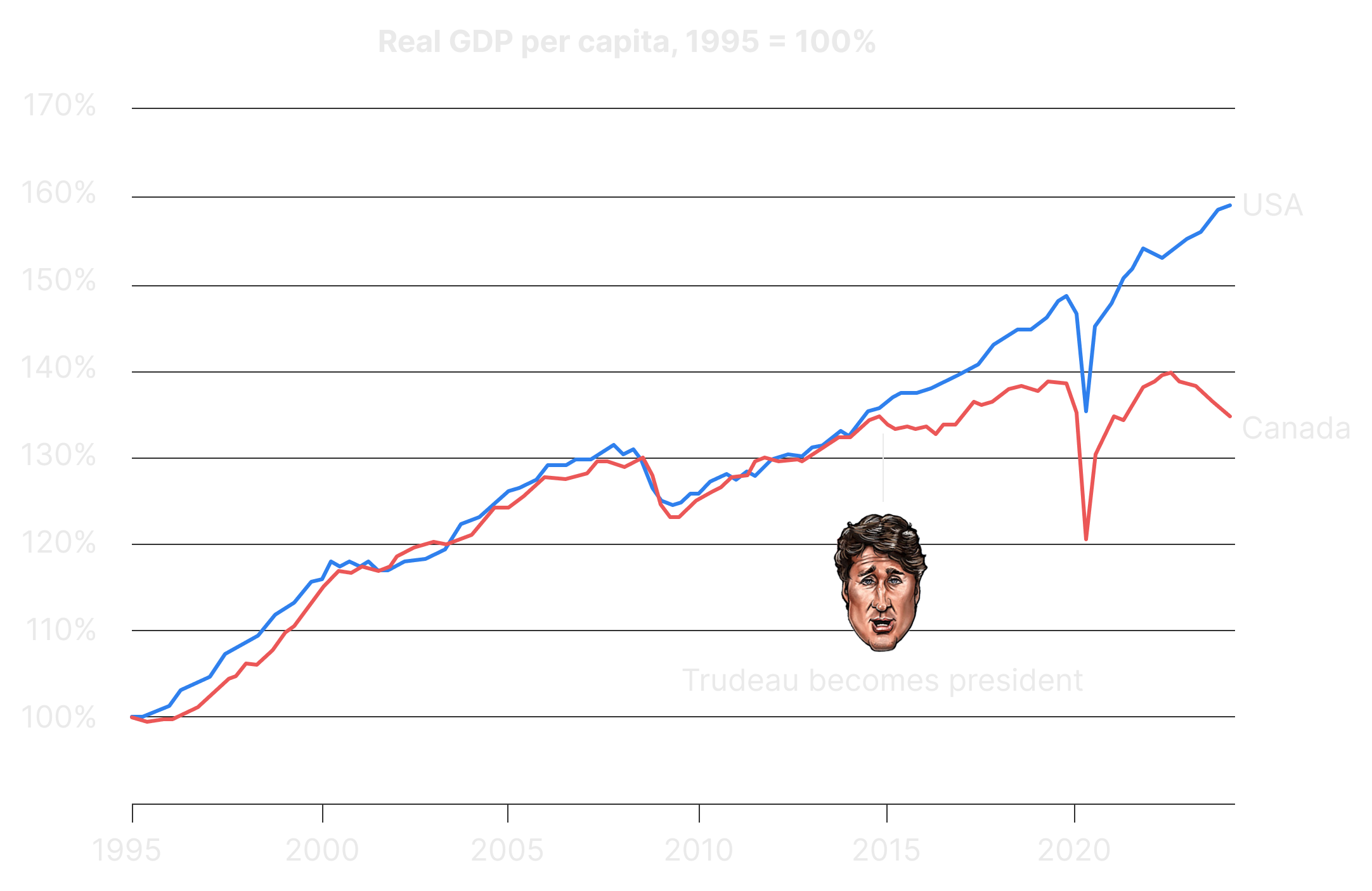
The same thing happened on another continent. Before the socialist Justin Trudeau came to power, the Canadian and American economies moved like synchronized swimmers, but eight years later, Canada is lagging 17% behind the U.S.
But why? After all, there really are plenty of intellectuals and scholars among socialists. Could they really have lost out to the caveman understanding of the market that flourishes among American hillbillies? I’m not in a position to answer that question. I’ll hand the floor over to Friedrich Hayek — Nobel Prize laureate in economics — who answered it half a century ago.
And the people who imagine, oh, it should be possible to design all this, to arrange this, accept the government to do this in a manner that the distribution is just. Now that is literally impossible!
However, ideas of equality are sometimes so attractive that people are willing to sacrifice prosperity and economic growth. Older Russians sometimes remember the USSR like this: “Sure, we lived modestly — but at least we were all equal!”
Socialists believe that their world — though less successful — is more just. But it seems that the idea of equality is based not on lofty humanism at all, but on primitive animal instincts.
Biologist Frans de Waal studied the social behavior of monkeys. He took two capuchins and put them in neighboring cages. The monkeys performed a simple task — handing the scientist a little stone — and got a treat. As long as both of them received a piece of cucumber, they happily ate it. But as soon as one of them was given a grape, the other one, despite being hungry, threw her piece of cucumber at the scientist and started pounding on the cage.
Even small doses of socialism undermine the economy. At the same time, it’s hard nowadays to imagine a society completely free of redistribution.
So the main question we should be asking isn’t “how else can we help the poor?” but “where is the line between care and self-destruction?” The answer will show what kind of America we’ll have tomorrow.
America’s Great Divide
The author is asked: How serious is the divide in American society? And I usually reply: so serious they made a movie called “Civil War.”
Today, America is coming apart at the seams. It’s not that this is the first time, but the last crack was in the 1960s, when the army had to be sent into the Southern states to escort Black children to school. Before that, it was the 1930s, when the country could barely get out of bed during the Great Depression. And before that, in 1861, when the Civil War began. Truly encouraging precedents.
Like earlier divisions, this one is completely new, something society has never dealt with before. It began to take shape sometime in the 1980s, when both parties began to drag into their agendas issues that had nothing to do with politics. Then social media massively deepened the divide, sealing people in information bubbles and dividing them into hostile camps.
To make it clearer, let’s write out the hottest “political” arguments from Twitter and label which area they belong to:
- Abortion — medicine
- The origins of COVID-19 — virology
- Global warming — climatology
- Gender transition — medicine
- Immigration — sociology and law
- Gun control — criminology and law
- The war in Ukraine and Palestine — politics
- Inflation and national debt — economics
- GMOs and food quality — biology
- Racism and minority rights — sociology and law
So, out of ten hot “political” issues, only one is purely political — the question of war and foreign policy. The rest barely touch politics! So why do Democrats and Republicans look for supporters based on their views on abortion and climate?
Because that’s how American propaganda works.

A political cartoon: As long as you tweet, we can’t fail!
The meaning of the word “propaganda” differs from country to country. For example, in Russia, people might say “propaganda of a healthy lifestyle,” because in Russian, this word just means spreading information in general. An American, however, wouldn’t get that phrase, because in English, propaganda means the spread of false information. These kinds of differences between languages really get in the way of us finding common ground, so let’s agree to call only false information propaganda.
Another difference is the source of propaganda. In dictatorships, it usually comes from just one place — the state itself. The few independent media outlets that manage to survive rarely resort to propaganda, since their very survival depends on their reputation and the truthfulness of the facts.
The content of propaganda is also different. In dictatorships, it’s sharply toxic and aggressive. For example, it calls for hatred against another nation or justifies war. At its core, it’s often not just a lie, but an outrageous lie. Under normal circumstances, it would be hard to believe, but constant repetition — hammering it in — works like hypnosis. Fortunately, because of its harshness and obvious dishonesty, this kind of propaganda only works inside the dictatorship, and from the outside it looks like a national psychosis.
In democracies, by contrast, there are several sources of propaganda. Probably about as many as there are parties in the country. The content of this propaganda is much less harmful and rarely aggressive. Often it’s passed off as a scientific view of the problem, based on skepticism or at least partially logical. Because of this, it’s not as dangerous as in dictatorships, but no less contagious.
Both parties in the U.S. use propaganda. Don’t have any illusions: for every lie on Fox News, there’s a matching lie on CNN. The only difference is the style of propaganda: Democrats hide behind morality and science, while Republicans hide behind skepticism and “common sense.” Their goal is the same, and that’s holding on to power.
Now that the source of the propaganda is clear, disarming it won’t be all that hard. Since the parties dragged other people’s issues into politics, we’ll put them back where they belong — in the realm of science. To do that, we’ll have to go against our own side: Plato is our friend, but truth is a better friend. Only by looking at each question dispassionately can we pull it out of the darkness of beliefs and see it in the light of reason.

Republicans
Global warming and humanity’s full responsibility for it are scientific facts, not hypotheses. If Republicans listened not to Tucker Carlson but to any climate scientist at NASA, the issue wouldn’t even come up. The cause of the warming is carbon dioxide with the carbon-12 isotope, which is released only when fuel is burned. That could’ve been the end of the discussion if fighting global warming hadn’t turned into a party slogan.
Coronavirus is not a lab creation but a natural product. If it had been made by humans, its genome would show insertions and stitching marks from parts of other genomes, but its structure is typical for viruses. The Congressional report can be ignored: the intelligence community’s opinion on virology is worthless.

Democrats
Systemic racism doesn’t exist. Critical race theory isn’t based on data, but on the word games of French philosophers. One look at income statistics for Indians and Chinese instantly blows the whole theory up, while all the “equity” programs have done serious damage to the Black community.
Social reforms slow down the economy and lead to a decline in the standard of living. First and foremost, they hit the poor and the middle class, and instead of corporations, a super-monopoly is born in the form of the state. Every experiment with socialism has failed, and Marx’s theory contains an arithmetic error that the economist Böhm-Bawerk pointed out back in 1896.
Republicans
Abortions had been legal in the U.S. since 1973, but in 2022, they were crossed off the list of constitutional rights. The Supreme Court gave the states the power to decide whether to allow abortions. And the states decided. Now, in 12 states, they’re completely banned, and in 3 more, they’re only allowed until the heartbeat starts (6 weeks).
What’s most horrifying is that many women support the abortion ban. I had the honor of speaking with one Republican woman in Los Angeles who was a big Trump supporter. Here’s what she told me:
“Andrew, I agree with this ban. It’s murder, you know?”
“Partly agree, but...”
“Listen, their heart already starts beating in the fifth or sixth week.”
“And they still don’t feel pain then, right?”
“There are so many ways now not to let it get to that point. If a girl sleeps with whoever, it’s her own fault. Let her take birth control, there’s a ton of stuff at the pharmacy now.”
“They’re pretty bad for your health, though, aren’t they?”
“That’s her problem. And besides, there are condoms.”
“I get it, Danny. Let me tell you something. We went through this in the USSR. Abortion was first legalized after the revolution, and then in the 1930s, Stalin banned it. And what did we end up with? A wave of illegal abortions. Infant mortality shot up, and women were maimed because they were getting abortions at home with dirty instruments.”
“That’s interesting...”
“You understand yourself that you can’t just take it and ban it. People will look for other ways. I don’t know for sure, of course. Different times, different country. I just want to warn you to be careful with this.”
Something flickered in Danny’s eyes. I, on the other hand, couldn’t wrap my head around it for a long time: a Russian immigrant in the 21st century explaining to an American woman that she has the right to an abortion. How did we end up here?
When the court legalized abortion in 1973, it didn’t do it directly, but through a crooked little loophole in the law — by deriving it from the right to privacy granted by the 14th Amendment. But that amendment actually says pretty much the opposite: no state shall deprive any person of life. People already saw the problem back then, but lawyers couldn’t come up with a better way to legalize abortion. So what’s really strange is that this decision managed to survive for 50 years at all.
Alas, the Supreme Court isn’t an ethics committee; it’s a dumb bureaucratic body. This isn’t its first fight with common sense: in 1896, it upheld racial segregation; in 1927, it allowed the sterilization of mentally disabled women; and in 1944, it approved the mass arrests of Japanese Americans.
The Supreme Court outdid itself this time too. For the first time in many years, 6 out of 9 justices turned out to be conservatives, so the Court easily struck down the nationwide right to abortion and handed the issue over to the states. Fortunately, more than half the states immediately wrote abortion rights into their own state constitutions. Now, women from Texas go to New Mexico for the procedure or order pills by mail. It’s not a catastrophe, but it’s nothing to be happy about either.
Abortion is often called murder. Let’s forget for a minute that an embryo is not a person yet and doesn’t feel pain. Republicans say that every person has a right to life. However, by their own principles, no one has the right to live at someone else’s expense, let alone inside someone else’s body. And the right to your own body is absolute and non-revocable — otherwise you could just sell yourself into slavery by signing the right piece of paper.
Today, there are referendums in states about the right to abortion. If each state enshrines this right in its own constitution, that’ll actually be even better than a federal right. Until that happens, it’s the reign of monsters.
Democrats
The abortion ban is an example of how Republicans turned medicine into politics. The Democrats responded in kind by politicizing gender transition.
The scientific consensus is clear: a person is born male or female, and changing sex is impossible. A man can dress like a woman, take hormones, fix his face, and cut off his Bigus Dickus, but his chromosomes will still remain male.
The rift over gender transition had been brewing slowly. At first, America watched with interest as trans people came out of the shadows. Well, the U.S. is a free country, and no one can forbid you from dressing and acting like a woman.
Facebook caused a lot of surprise in 2014 when it rolled out a list of 58 genders instead of two sexes. The list contained such nonsense that only someone with a PhD in gender studies could make sense of each item. For example, the famous “two-spirit” gender. What on earth is that supposed to be?
Turns out that in some Native American tribes, there are so‑called berdaches — people who behave like the opposite sex. For example, sometimes men in the Navajo tribe do weaving and cooking, while women go hunting. The tribe considers them people of a third gender — spiritually speaking, of course. That’s where the two-spirit gender came from. Apparently, just for Navajo shamans, in case any of them suddenly decide to make a Facebook account.



We’wha, a Zuni transgender, 1886
Facebook’s decision really got the ball rolling, and the next step was social networks introducing pronouns.
A logical question: how do you talk about a man who has “become a woman” — he or she? And if he feels “somewhere in between” — is he it or they? Social media offered three pronouns to choose from: he, she, or they. Naturally, that turned out to be not nearly enough for 58 genders, so the warriors of the transgender front went further and soon came up with neopronouns. Now, in addition to he/him and she/her, you can choose: ze/hir, xe/xem, fae/faer, ey/em, and so on.
For example, if a man goes to the shop, we say:
He goes to the shop.
If this man considers himself a woman, we say:
She goes to the shop.
But if this man doesn’t consider himself either a man or a woman, then we’re supposed to say:
Ze goes to the shop.
Orwell’s Newspeak is having a smoke on the sidelines. I don’t even know how to translate this into my native Russian. And it doesn’t really look like English either, more like Irish. Although, before the revolution there was a word in Russian, “онѣ” — the feminine version of “они” (“they”), and the Russian trans community suggests options like: сие, оня, онь, энэ, and the completely unthinkable тат and мур.
In short, America started having second thoughts. But it really started thinking hard when activists called for fines for misgendering — deliberately choosing the wrong pronouns for someone. And it completely lost it when all this junk started flowing into schools. That’s when society decided to ask a blunt question:
“You say that a man can change his sex and become a woman. Correct?”
“Absolutely correct.”
“Then could you please give a definition: what is a woman?”
“Uh... What do you mean? Well, a woman is... a woman.”
“No, no, a formal definition.”
“I don’t understand your question. Fine, let’s put it this way. A woman is a person who identifies as a woman.”
“Please clarify. Identifies as what?”
“Excuse me... I just said: as a woman.”
“Can you define ‘woman’ without using the word ‘woman’?”
“Why?”
“Because.”
A guy named Matt Walsh made an entire movie. He traveled across half the country with one question: “What is a woman?”, asking it to everyone — trans people, activists, psychologists, doctors, and even professors...
Oh, right! I forgot to mention that the joke about the gender studies PhD wasn’t actually a joke: gender studies is taught at universities. And while at Harvard, the course still looks like some weird mix of sexology and cultural studies, smaller colleges are busy doing pure, unfiltered brainwashing.
So, a spectacular video has gone viral across America, featuring a college professor who can’t answer the question, “What is a woman?”
The reader will object: but sex and gender are different things! After living in America, the author is no longer surprised that some people consider almond milk to be real milk, just, you know, from almonds.
The problem is precisely that far too many people really don’t distinguish between sex and gender. A nurse told me that men come to her in women’s clothing and complain about menstrual pain. She silently prescribes them Tylenol. What else is she supposed to do? After all, the propaganda is working hard to convince people that periods aren’t just for women.

Public awareness ad: “Periods are not just for women”
My Russian-speaking reader will probably heave a heavy sigh and say, “That’s where capitalism gets you— in the USSR they’d have put you in forced treatment for that.” I can only imagine his surprise when he finds out that transgender activists in America are calling for a socialist revolution.
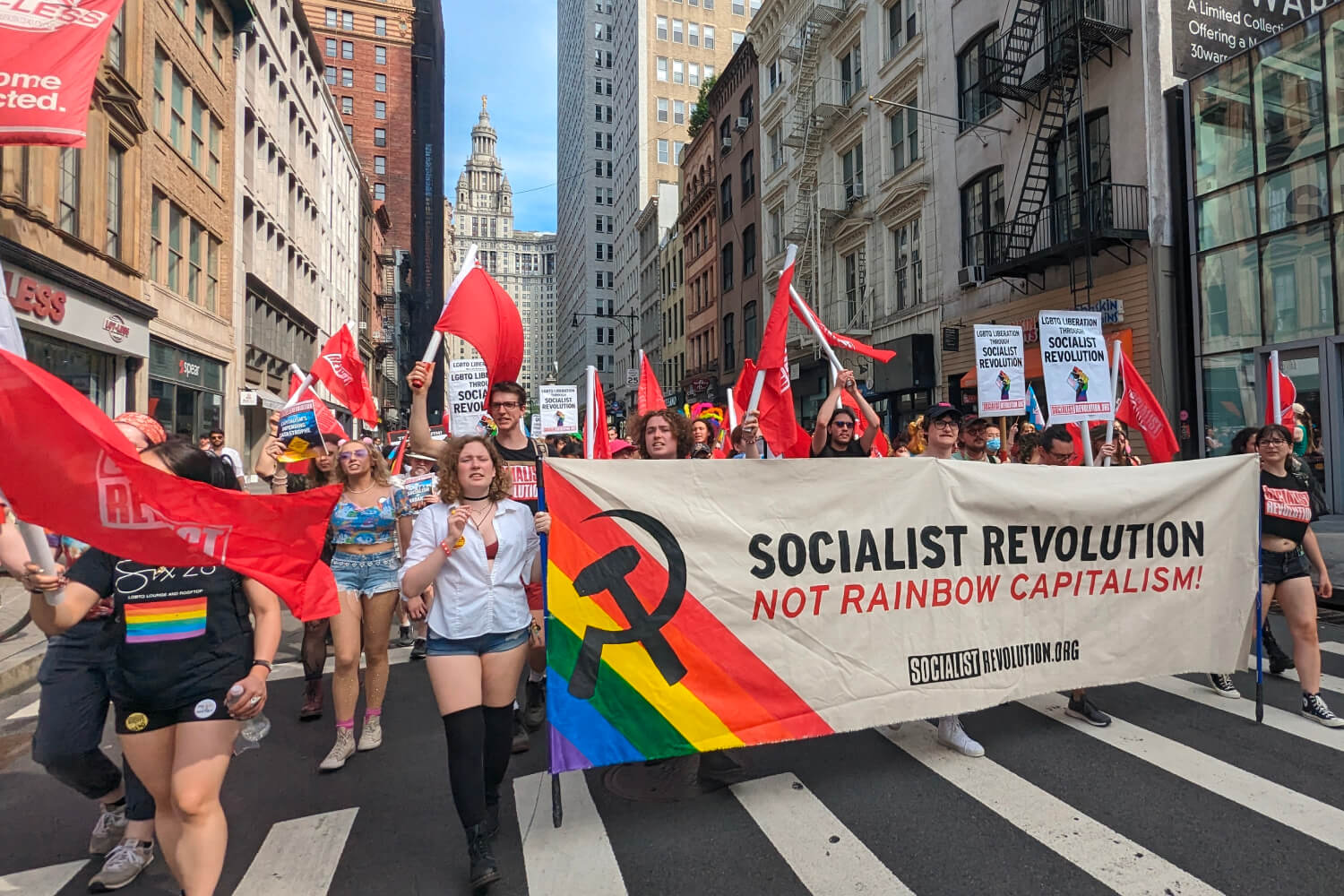
Marx’s theory of class struggle turned out to be the perfect crutch for American liberals. They took Marx’s concept of the “oppressed class” and, instead of workers, plugged minorities into it. In modern America, capitalists don’t oppress the proletariat, but rather black people, Muslims, the homeless, gays, lesbians, transgenders, and so on. Liberals call on all of them to unite and overthrow capitalism together.
At the same time, Marx contemptuously called such minorities the lumpenproletariat (German: lumpen — rags) and considered them “a product of the rotting of the lowest strata of society.” Lenin called for registering them and “sending them to clean the toilets,” and, in case of refusal, putting them in solitary confinement and “shooting every tenth one”.
That’s exactly what was done in the Soviet Union, where “social parasitism” was made a criminal offense. Even writers, musicians, and artists had to be employed by an official creative union and produce only what was deemed to be in the interests of the working people. One poet, for refusing to take a job, was sent to a labor camp in the far north. Seven years later, he was expelled from the USSR and stripped of his citizenship. Ten years after that, he received the Nobel Prize in Literature. That was Joseph Brodsky.
On the other hand, prostitutes, homeless people, gays, transgenders, and other marginals, along with thieves and murderers, were expelled beyond the so‑called “101st kilometer.” The area within a 100‑kilometer radius of major cities was considered a restricted zone. Only “reliable elements” were allowed to live there; everyone else was kicked out beyond its borders.
Socialists in America dye their hair pink or green — it’s become their trademark. There was a similar phenomenon in the USSR. The stilyagi subculture (literally, “stylish ones”) flourished in the 1950s and imitated American fashion. Stilyagi wore checkered jackets, wide trousers, and shiny dress shoes, and they styled their hair fashionably. Even such a barely provocative look was considered a spit in the face of socialism. They were detained, taken to the police station, and forcibly given haircuts.
In the USSR, stilyagi were considered enemies of socialism. They could be detained for their appearance and forcibly given a haircut
American socialists are in for the same fate. If the classic Marxist-Leninist form of socialism wins in the U.S., the working class will come to power and establish the dictatorship of the proletariat. The new authorities will explain to them that they’re not socialists at all, but enemies of the revolution and lumpenproletariat. To start with, they’ll be sent off for re-education, have their dyed hair shaved off, be forced to wear conservative clothes, and then be assigned a job.
The homeless will be kicked out of New York and San Francisco past the 101st kilometer, far upstate. Harvard graduates will start getting assigned to Alaska, to Indian reservations, and to all those lovely places that are short on labor. The unemployed, except for people with disabilities, will lose all benefits and be required to work, or they’ll go to prison. Trans people and queers will most likely get free healthcare, but they won’t be happy about it: they’ll be diagnosed with gender dysphoria and sent to a psychiatric facility.
I hope that never happens.

A member of the lumpenproletariat is calling for self-annihilation
Well, by now, the reader should have a general idea of the Great Divide in America. Taxes, foreign policy, and other routine stuff don’t excite anyone anymore. To get votes, parties juggle gender changes, global warming, virology, and other rage bait—content that makes supporters ecstatic and opponents furious. Politicians have dragged into their games people who previously didn’t even want to hear about politics. There are no indifferent people left. No neutrality either.
And lo, he appeared. Not a messiah and not an antichrist, but the apex of turmoil.
And the people were divided, and they cried out: “I’m a liberal!” — “I’m a conservative!”
And their strife had no end.
And there arose a man of ruddy hair, and thunderings went forth from his mouth.
Some proclaimed, “Behold, the savior!”
Others cried, “He is a false prophet!”
And there was no friendship or peace between them,
For every house divided against itself shall not stand.
Yet the man was only a sign: the divide had reached its fullness.
And they asked him: “Who art thou?”
And he answered: “I am the Divide, for my name is...”

Donald Trump
Reminder: the author doesn’t share the politics of either party
Democrats hate American elections. As the reader surely knows, the U.S. president isn’t chosen by a simple popular vote, but through electors who vote on behalf of each individual state. This system sometimes produces a paradox: the majority votes for one candidate, yet someone else ends up becoming president.
So, Democrats have been insanely unlucky in this lottery: the Electoral College has blocked their candidate from winning a whole five times, and it hasn’t worked against Republicans even once. That’s why Democrats curse the American election system and dream of a constitutional amendment that would introduce direct voting, like in Europe.
Why did the Founding Fathers come up with the Electoral College? There’s no clear answer. On the one hand, they constantly talked about their fear of direct democracy and kept inventing checks and balances. On the other hand, direct popular voting was proposed as early as 1787, but the Southern states rejected it, and the idea of electors was put forward right then. Today, Democrats see this system as a grotesque legacy of slavery, while Republicans view it as a safety valve against too much democracy. And both versions have their defenders among respected historians.
Well, the great plumbing valve of the 18th century is still working just fine to this day. It was the one that flushed Al Gore down the drain and made George Bush president in 2000. The next time didn’t take long: in the 2016 election, Hillary Clinton got 3 million more votes, and the winner was Trump. So suddenly that he didn’t expect it himself.
What was Trump’s first term remembered for? Oh, nothing but trifles. He never finished the promised wall with Mexico, but he did spend four years running the White House and randomly poking every button on the planet’s control panel. One button crashed the stock market by starting a tariff war with China. Another recognized Jerusalem as the capital of Israel, setting off the entire Middle East. A third blocked Stephen King on Twitter.
Twitter wars are the most spectacular thing old Donald has ever pulled off. The President of the United States trolling his followers on social media is some kind of surrealism, cyberpunk, and spirit of the times all rolled into one.
He was banning everyone. Left and right. He blocked dozens of journalists, actors, directors, and politicians — in short, anyone who dared to post an unpleasant comment. Banned and offended, the journalists took Trump to court, and in 2018, the court ruled that the President of the United States had no right to block Twitter users. Obeying the court order, the ever-cheerful Donald unblocked the journalists on Twitter and immediately started banning them in the real world by revoking their White House passes.
Twitter diplomacy reached its peak in 2018. The president of Iran (who also had a Twitter account), responding to U.S. sanctions, declared that a war with his country would be “the mother of all wars” and warned America “not to play with the lion’s tail.” Trump, in turn, fired off a tweet that went like this: “NEVER, EVER THREATEN THE UNITED STATES AGAIN OR YOU WILL SUFFER CONSEQUENCES.” In all caps, just like an enraged aunt texting on Nextdoor.
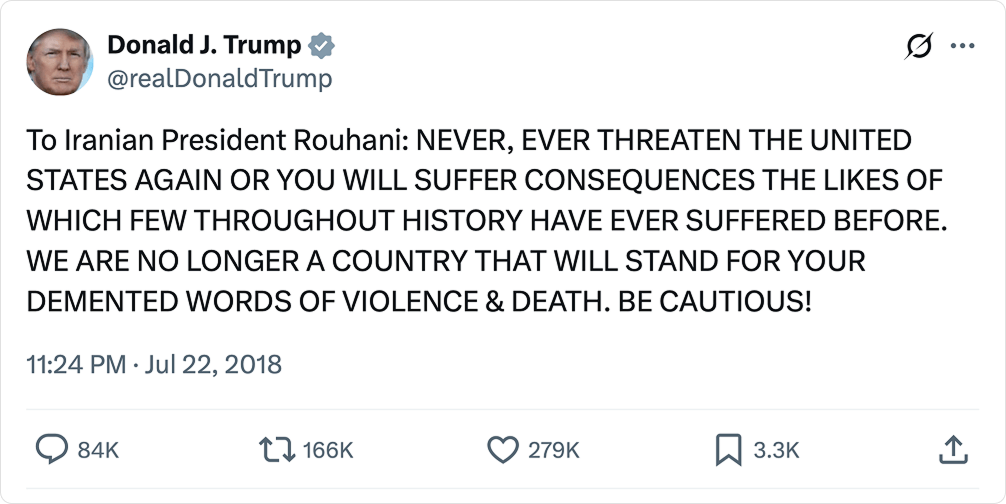
Hysteria in the U.S. was ramping up by the end of Trump’s first term. His management style drove a lot of people up the wall: technically legal, but through loopholes and in violation of every unwritten rule. Liberal newspapers were churning out dozens of articles along the lines of “Can Trump do this-and-this without the approval of that-and-that?”. From these, the author gathered that the American president is far from as harmless as a European prime minister. Turns out he can, without anyone’s approval, start a war with Mongolia, launch a nuclear missile at Equatorial Guinea, and even pardon a turkey on Thanksgiving Day.
Things really started to boil over in 2020. After four years of Trumpism, America’s nerves were already shot, and the country was anxiously waiting for the November elections. The coronavirus epidemic poured oil on the popcorn, sending millions of people into quarantine, and then came the Black Lives Matter protests, which turned into riots. That year, a lot of Americans reconsidered the name “White House,” because the White House had turned into a full-on madhouse.
Let’s not get into details like Trump’s suggestions to poison the coronavirus with intravenous injections of disinfectants and get straight to the point. Closer to summer, Trump’s brain activity started fermenting somehow. He was saying something about the elections — never quite finishing his thoughts, just sort of hinting at something...
Finally, the journalists got fed up and asked him straight: “Mr. President, are you even planning to leave if you lose the election?” To which Trump replied, “We’ll see.”
That Trumpian “we’ll see” finally shell-shocked an already crooked America. The Democrats started yelling, “What do you mean, ‘we’ll see’?!” Newspapers exploded with headlines like “Trump goes dictator!”, journalists frantically rushed to study American law and crank out pieces with titles like “There are no good scenarios,” and on Twitter, that painfully funny meme from the last election about the last U.S. president resurfaced yet again.

The November 3 elections began quietly, like a fresh summer sunrise on the banks of the quiet Don. Voter turnout broke every record; ballot boxes, catching the glint of the sun, steadily filled with pale ballots, and each vote dropped into the common piggy bank, continuing a centuries-old American tradition. That day, there were no assaults, no protests, no civil war — just lines, masks, and blissful silence.
At first, Trump was leading in the election. The vote chart showed two lines shooting upward — an overtaking red one (the Republicans) and a lagging blue one (the Democrats). It went on like that all the way through the night, and the counting continued after the clock struck midnight.
However, the next day, at around four in the morning, something strange started happening. On the charts for Wisconsin, Michigan, and a few other states, the blue line suddenly jerked sharply upward and jumped over the red one, where it stayed until the counting was finished.


Hell broke loose.
Republicans jumped up from their couches and whispered, “Stolen!” Weird charts were flying all over social media. Fox News and other channels showed them, accompanied by commentary about a rigged election. Trump pulled his main megaphone out of his pants — Twitter — where he posted a hysterical message: “STOP THE COUNT.” In the morning, he spoke at the White House and declared that he had won the election by a wide margin, but then, under the cover of darkness, the Democrats dumped in ballots and stole his victory.
Political satire kicked in. The bouncing chart was dubbed the Biden Curve, and someone put out a brutally funny meme where Trump and Biden are jumping over a bar, following the trajectory of their poll numbers.
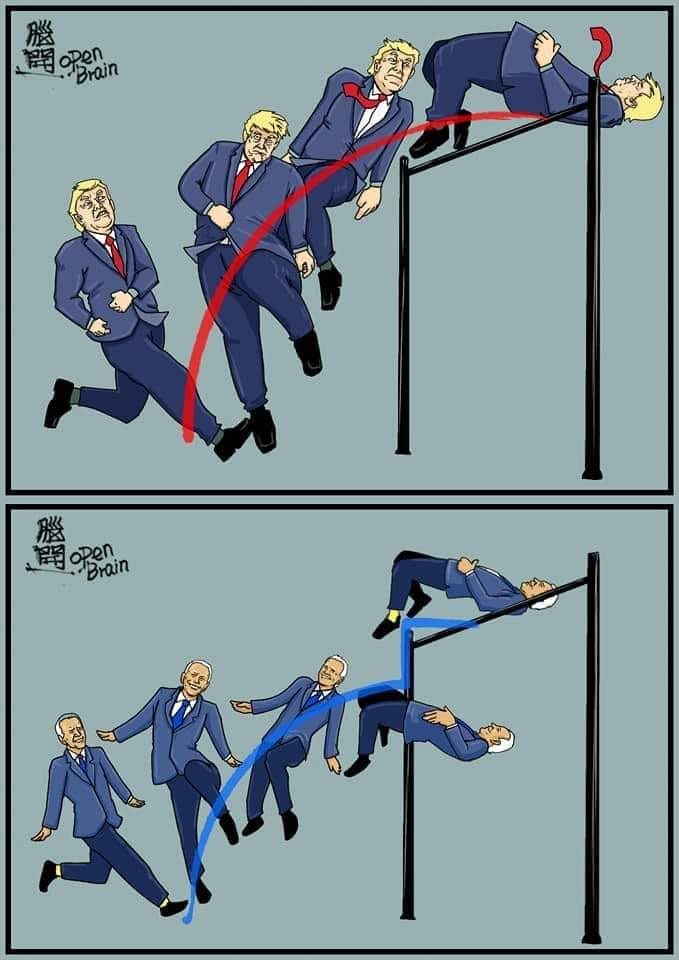
Hysteria, recounts, and threats not to recognize the election went on for more than a month, and things only calmed down by mid-December, when the electors certified Biden as president-elect. Trump never conceded, filed more than 60 lawsuits, and then quieted down.
As it turned out, not for long. Before the president’s inauguration, the election results have to be certified by Congress, which meets on January 6. Normally, it’s a purely technical procedure, like getting a stamp in your passport after a wedding — something so dull that even journalists barely pay attention. In 250 years of U.S. history, this event has never provoked anything but bored yawns. And it wouldn’t have this time either — if Trump hadn’t shown up.
Throughout December, Donald kept the crowd on edge with his promise to hold a rally on the day the election results were certified. On the morning of January 6, tens of thousands of his supporters began gathering in Washington. Along with peaceful protesters, radical groups were streaming into the capital, such as the “Proud Boys,” a motley crew of street thugs, Nazis, and woman-haters. Many of them were armed, wearing body armor and helmets. The Capitol security, meanwhile, was purely decorative, like on any normal day, and wasn’t preparing for anything serious.
Not far from the Capitol, in the backyard of the White House, the man of the hour was holding a “Save America Rally.” Trump’s speech lasted a little over an hour and, after devoting half of it to the “stolen” election, he ended with a phrase that would prove fatal:
“We will never give up, we will never concede! We fight like hell. And if you don't fight like hell, you're not going to have a country anymore! We are going to the Capitol!”

By one in the afternoon, the crowd of demonstrators at the White House had merged with the protest at the Capitol. To the Stars and Stripes and the “Trump 2020” banners were added libertarian flags — yellow, with a coiled snake and the inscription “Don’t tread on me.” In the middle of the crowd, a Confederate flag with a black AR-15 rifle and the words “Come and take it” would flash by from time to time — the scariest one of all.
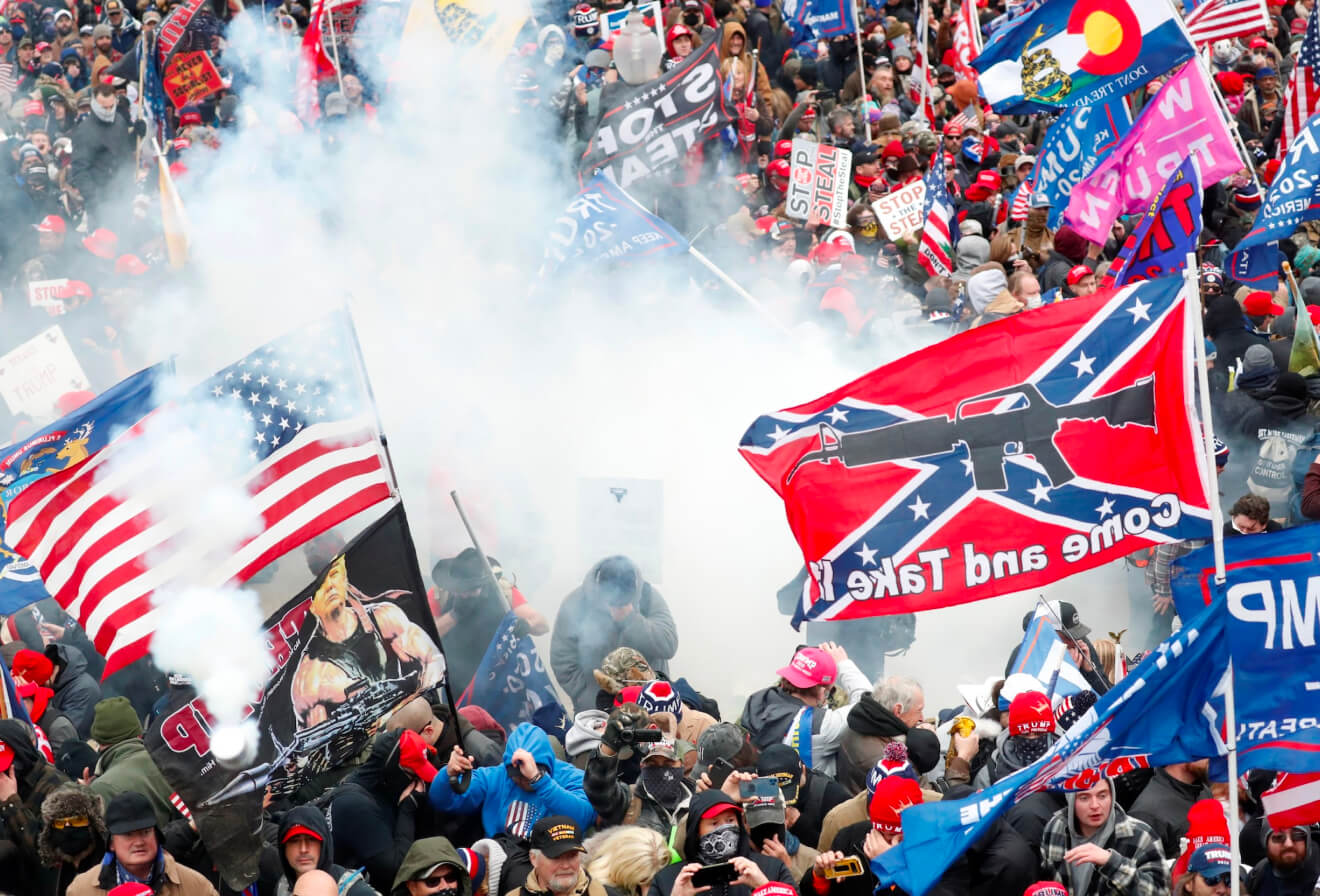
The air reeked of pepper spray. Signal flares lit up over our heads, smoke grenades went flying in all directions, and stun grenades boomed along the front line. The first rows of protesters leaned into the flimsy metal barriers and knocked them down.
The human tide that poured in after them instantly flooded the Capitol’s marble staircases. Just for the sport of it, some people even started climbing the walls, though there was absolutely no need: the toothless police couldn’t do a damn thing against the raging crowd.

Having reached the pedestal in front of the Capitol entrance, the protesters started forcing their way inside. A libertarian was pounding on the reinforced glass with the pole of a rolled-up flag. The “proud boys” grabbed an armored shield from the police and used it to smash the doors. An activist wrapped in an American flag, wearing a red Trump cap, broke into the building with an iron barricade. The crowd poured into the Capitol like through a breached dam, from eight sides at once, flooding and drowning the temple of American democracy.

Senators and members of Congress were urgently escorted out through side exits and underground passages. Protesters broke into the office of their hated Democratic leader, Nancy Pelosi, and plopped themselves down in her chair, feet up on the desk. Pelosi herself was whisked away by security, while her aides hid under tables in one of the rooms. The Republicans didn’t get off scot-free either: anti-Trump Mitt Romney almost ran straight into the arms of the crowd by mistake, but was hustled into a secret basement room just in time.

The most frightened of all was Mike Pence, a Republican and Donald Trump’s vice president. It’s the vice president who opens the envelopes with the Electoral College votes at the joint session of Congress. Even before the protests began, Trump hinted to Pence that he could “show courage” and reject the votes from some of the states. During his speech near the White House, he said, “I hope Mike is going to do the right thing. If he doesn’t, I’m going to be very disappointed.”
Mike Pence showed a different kind of courage and stated that he had no authority to interfere in the election. As soon as the crowd found out, they instantly branded him a traitor. Pence literally had to run out of the chamber, since the enraged rioters were already looking for him, shouting “Hang Pence,” and outside, a symbolic gallows had been prepared for him.
The events of January 6 were not only terrifying but also ridiculous. Once the crowd settled into the Capitol, it became clear: they’d come for a show, not a revolution.
One of the looters carried a wooden podium out of Nancy Pelosi’s office and walked around with it like it was something he’d just picked up at IKEA. Another took a selfie with the Lincoln statue, a third strolled through the halls with a Confederate flag, and a fourth plopped down in a senator’s chair to scroll through Twitter.


The poster boy of the bacchanalia was a guy named Jake Angeli, who had the brilliant idea to show up for the Capitol storming dressed as a Viking. He stuck a pair of fur-wrapped horns on his head, painted his face in the colors of the flag, and took off his T-shirt, revealing tattoos inspired by Norse myths.
Jake proclaimed himself a shaman, bearer of light and truth, sent down to help Trump save America. After breaking into the Senate chamber, he climbed up onto the rostrum, raised his hands to the dome, and offered a prayer for freedom.

The fun ended at four in the afternoon. Trump recorded an address: “We need peace, go home.” The National Guard entered the Capitol and put everyone face down on the floor. The city went under curfew, and by eight in the evening, the Senate session resumed. Some people were crying, some were still in shock. When all was said and done, one person was shot dead, three died of heart attacks, and 15 police officers ended up in the hospital with serious injuries.
As for Trump, he was impeached for incitement of insurrection. His second one, by the way. And, just like the first time, the Senate didn’t convict him. Trump was acquitted, since he never literally called on people to storm anything or use violence. The only punishment he got was being banned from Twitter, Facebook, and YouTube, which sent Donald into the shadows for the next couple of years.
So what, were the elections really stolen? There’s no evidence whatsoever.
The graph with the jumpy curve that looks like a fake refers to a phenomenon known as the “red mirage,” which is well-known in American politics. It’s called red because that’s the Republicans’ color, and a mirage because their early lead in the vote count tends to evaporate into thin air as the counting goes on.
The nature of the red mirage is that Republicans almost always vote in person at the polling place. Democrats, on the other hand, just love voting by mail. Their ballots are counted after the polls close, and the data isn’t entered for each ballot individually, but in batches. That’s when the curve suddenly shoots up — when a whole batch of mail-in ballots gets dumped into the system all at once.
Ballot stuffing in America is an extremely complicated business. In dictatorships, the votes are counted by a central body that answers directly to those in power, so rigging an election in that kind of system is child’s play. But in the U.S., there’s no single vote-counting center. Each state counts its own votes under the supervision of commissions from both parties. In this setup, Democrats and Republicans have equal opportunities to stuff ballots — and according to game theory, that makes the whole thing pointless.
So then, does that mean there was an attempted revolution on January 6? Also no.
The Capitol and the White House are just symbols of power. Storming them doesn’t lead to a revolution, because democracy doesn’t live in buildings; it’s embedded in public institutions like a software algorithm. Seizing symbolic buildings doesn’t bring down the system, unlike in dictatorships, where power is held together by the leader’s charisma.
But let’s say the rioters hadn’t read the coup-theory guru Edward Luttwak and were sincerely trying to seize power. In that case, it’s hard to call the events of January 6 even a failed coup. A coup needs support from the military and security services, as well as control of communication centers. None of that happened; what we had was just a riot — chaotic, pointless, and useless.
One way or another, for several months after the storming of the Capitol, the country lived like after a fire: the smoke seemed to have cleared, but the smell of burning hung in the air for a long time. Having lost the election, Trump faded into the background. The news and social media were filled with interrogations, arrests, and investigations. Half the country felt saved, the other half felt cheated. Overall, everyone relaxed a bit: “It can’t possibly get any worse now”... And only Biden objected: “Hold my beer.”
America has never seen a more awkward period than the Biden administration. For four years, the world’s hegemon was led by an obviously old man who mixed up his own kids’ names, fell over nothing, nodded off in meetings with other world leaders, uttered words unknown to linguists, and got lost indoors. “Sleepy Joe,” as the Republicans dubbed him, arguably even outshone Russian President Boris Yeltsin, who once got so drunk he tried to conduct an orchestra.
The disgrace wasn’t just about the president’s image. Under Biden, the U.S. was hit with the highest inflation in forty years, the withdrawal of troops from Afghanistan led to its takeover by Taliban terrorists, and an unprecedented wave of immigrants poured across the Mexican border — more than two million people in 2022 alone — who were then resettled at government expense, sparking a storm of outrage.
If, right after the storming of the Capitol, someone had said that Trump would become president again, people would’ve laughed in their face. Donald’s political career seemed finished. However, the Biden administration turned out to be so bad that, by comparison, Trump gradually stopped looking quite so insane. Four years later, Trump ran for president again. Amazingly, this time he didn’t just win — he won decisively, both in the Electoral College and by the popular vote. Over those four years, pretty much every state turned solid red, California included.
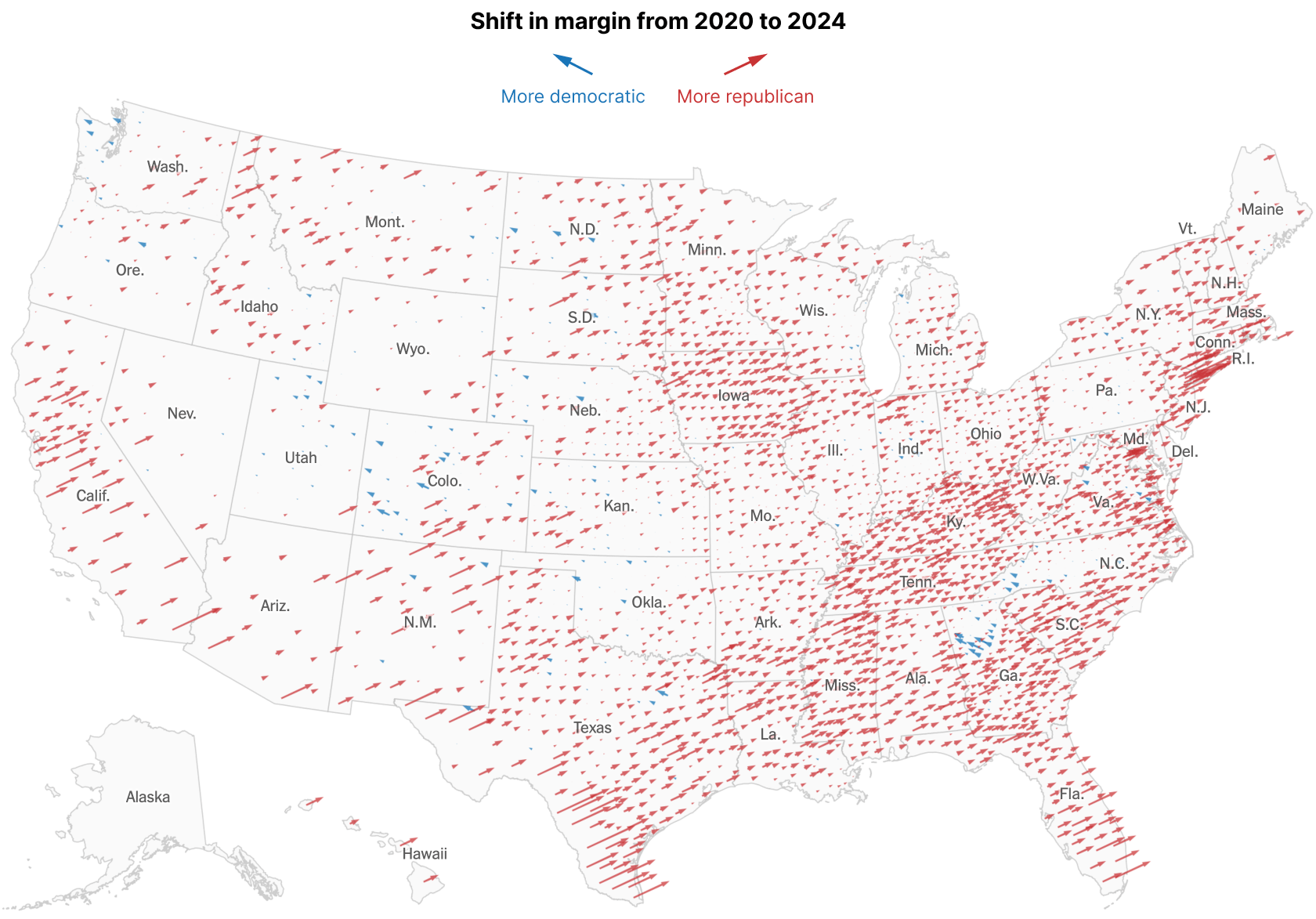

Biden’s disgraceful term has pushed America sharply to the right
Sensing the threat of Donald’s return a couple of years before the election, the Democrats decided to play it safe in advance and set him up with a criminal case. The reader has surely heard something about Trump’s supposed convictions. Major newspapers like The New York Times ran headlines such as: “Trump Charged With 34 Felony Counts.”
This is a textbook example of a smear campaign. In reality, Trump committed one crime, but they broke it up into 34 counts.
The newspaper headline reads: “34 felonies.” In everyday language, the word “felony” means a serious crime, and that’s exactly how a native speaker understands it. But in legal jargon, it can also mean a count in an indictment. So the newspapers were deliberately playing word games to get the desired effect — and they did.
“But even a single crime is still a crime,” the reader will say. Not quite. The essence of Trump’s case is the falsification of entries in financial records. Before the 2016 election, Trump paid porn actress Stormy Daniels to keep quiet about their sexual relationship — immoral, sure, but not a crime. However, the payments, broken into 34 entries, were recorded not as “hush money,” but as “legal fees.” And that is falsifying documents, which carries a fine.
But the fine is, of course, not serious. To really get in Trump’s way, they needed heavy artillery. And that’s where a unique New York State law came to the rescue: if a misdemeanor is committed in order to cover up another crime, it turns into a felony. To take advantage of this loophole, Trump was charged with hiding campaign expenses.
The catch is that a state court can issue rulings only based on that state’s laws. But interfering in elections is a federal crime! So the case isn’t just blatantly rigged: the New York court is flat-out violating the Constitution.
Besides this case, Trump had a whole three more. The most dangerous one was the Georgia case. Refusing to believe he lost the 2020 election, Trump called the secretary of the state and ordered him to find the missing votes he needed. At the same time, fake certificates signed by a group of sham electors were sent to Congress, declaring Trump the winner in Georgia. Unlike the previous case, this was straightforwardly criminal and could have landed the president in prison; however, it eventually reached a dead end and was closed.

Trump. Mugshot from the Georgia indictment. Turned into merchandise and a symbol of Republican resistance
But America wouldn’t be America if it didn’t have an ace up its sleeve even for a situation like this. Yes, unlike in Russia, a U.S. president can be prosecuted and sent to prison. But no force on earth, including a criminal case, can stop American democracy. Even if Trump were literally locked up before winning the election, he could still become president. In theory, a U.S. president can be elected and run the country even from behind bars!
Democrats accuse Republicans of destroying the system of checks and balances. In reality, it’s pretty much the opposite: it’s precisely thanks to the system of checks that the defendant Trump became president. A true republic is set up so that the elites can’t get rid of a rival even by throwing them in prison. That’s what sets it apart from a democracy, which, for example, allowed the French to knock Marine Le Pen out of the elections.
As for the reasons behind Trump’s victory, well... that’s the Democrats’ achievement.
The conservatives met the liberal policy with bayonets drawn. I suppose they were trying to send signals to the Democrats, but no one was listening. On the contrary, people on the left liked to whip out the U.S. party map and smugly jab their finger at it: “Look, red is only in the countryside, and blue is in the big cities.” The hint was that Trump voters are uncouth country bumpkins whose opinions can be safely ignored. Funny thing is, by the socialists’ own logic, a rural resident is an oppressed class whose interests should rank above those of the urban bourgeoisie.
Any political force comes to power not out of nowhere, but in response to public discontent. The Democrats were blamed for cancel culture, social media censorship, critical race theory, reckless immigration, meddling in people’s private lives and families, attempts to tie the hands of the police, calls to ban guns, and so on. They ignored the criticism, seeing themselves as the intellectual elite. We all paid the price for their deafness.
Hardly anyone actually wanted the right-wing populists to come to power. Honestly, Trump behaved so outrageously that he was basically a walking campaign for the Democrats. He did everything he could to not get elected. If he’d just kept his mouth shut, he probably would’ve gotten more votes. And still, America chose him anyway: anyone at all, even the devil himself, just not a Democrat.
The author believes that Trump is a bad president. Trump is just as bad as Biden, who kept dozing off in meetings; as bad as Obama, who deported three million immigrants; as bad as Bush, who invaded Iraq on a trumped-up pretext; as bad as Clinton, who cheated on his wife in the White House; as bad as Nixon, who was busy wiretapping; as bad as Johnson, who dragged the country into Vietnam; as bad as Truman, who dropped the bomb on Hiroshima; as bad as Roosevelt, who took Americans’ gold away.
There’s no reason to think Donald Trump is a fascist or a dictator. It’s much worse than that. He’s just another American president. Just like the dozens of other populists and maniacs who’ve spent the last 250 years at the wheel of the Leviathan.
No, American democracy won’t collapse under his attack. It’ll chew him up and spit him out, just like it has before in U.S. history. That’s the most clear-eyed view of Trump’s personality. And the most insulting one for him.
Conclusion
The United States of America is the oldest state in the world... not a country! A state!
Many European countries are proud of their thousand-year history, but usually they’re talking about the history of the country as a territory. The history of the state as a political system is a completely different story. For example, Russia as a state isn’t even 35 years old yet. At that age, they don’t even let you run for president.
The modern Czech Republic, Slovakia, and Belgium are the same age: the constitutions of these countries were adopted or seriously revised in 1993. Absolute babies are Hungary (2011), Serbia (2006), Finland (2000), and Poland (1997). Slightly older kids are Spain, Greece, Portugal, and Sweden, which have existed in their current form since 1974.
France (1958), Denmark (1953), Germany (1949), Italy (1948), and Austria (1945) are all in their difficult teenage years. Far ahead of them is elderly Norway, which became a parliamentary monarchy in 1884. Next come two retirees: Switzerland and the Netherlands, frozen in their 1848 version. These two are the oldest states in continental Europe, and one of them stubbornly refuses to join the European Union.
The American political system hasn’t changed since 1789, when the Constitution came into force. It’s a real long-liver among states: the only country older than America is Britain, which hasn’t been in a hurry to overhaul its system since the Glorious Revolution of 1688.
Over the course of its history, the United States has gone through dozens of upheavals, from the Civil War to FDR’s four terms. After all those blows, the system not only didn’t fall apart, it actually toughened up: the wounds on the Constitution healed over with amendments, and the muscles of checks and balances bulked up from constant strain.
After the deep bites of racism and socialism the country has lived through, Trump’s antics are like a mosquito trying to pierce a hippopotamus. He’s hardly even a disease. Trump is a symptom, a festering abscess of old, deep-seated inflammations in society.
Today, America needs healing therapy more than ever. Not reforms, not revolution, not salvation, but psychotherapy. It needs a quiet, caring, and confident doctor with a diploma and a couch who, sitting by the fireplace, will explain to the country how to go on living and which path to take. And please, dear Santa! This time, let him not be a socialist.
As for the author, if he could vote, he’d pick Kamala. But definitely not because Trump is some kind of dictator. When a country is torn to pieces, it’s important to stop seeing an enemy in your neighbor. The enemy isn’t your neighbor, and it isn’t the other party. The enemy is the state. The most rational move in dealing with it is to vote in a way that ties the state’s hands and feet, that keeps it from pulling itself together.
Today in America, there’s a serious tilt in favor of the Republicans. All branches of government have swung to the right. In this situation, a Democratic president, no matter how unpleasant he might be, could restore some balance to the system. The reverse is also true: sooner or later, there will be a backlash, and the pendulum will swing left again. When the country ends up in Democratic hands again, we’ll need to forget about party colors and choose a Republican. Not out of love — out of strategy.
To American society, torn in half by a cynical party game, I can wish only one thing. Benjamin Franklin. Join, or die.