To get back from the Bronx to downtown, you’ll have to take the subway. The ride will be about an hour. That’s far from the longest trip on the New York subway: some lines stretch out so far that it can take you two hours to get to central Manhattan.
Such a trip is a dubious pleasure. The reader has of course heard about the horrors of the New York subway, but no words are enough to describe just how disgusting it is. I would even say that the subway is America’s greatest disgrace.
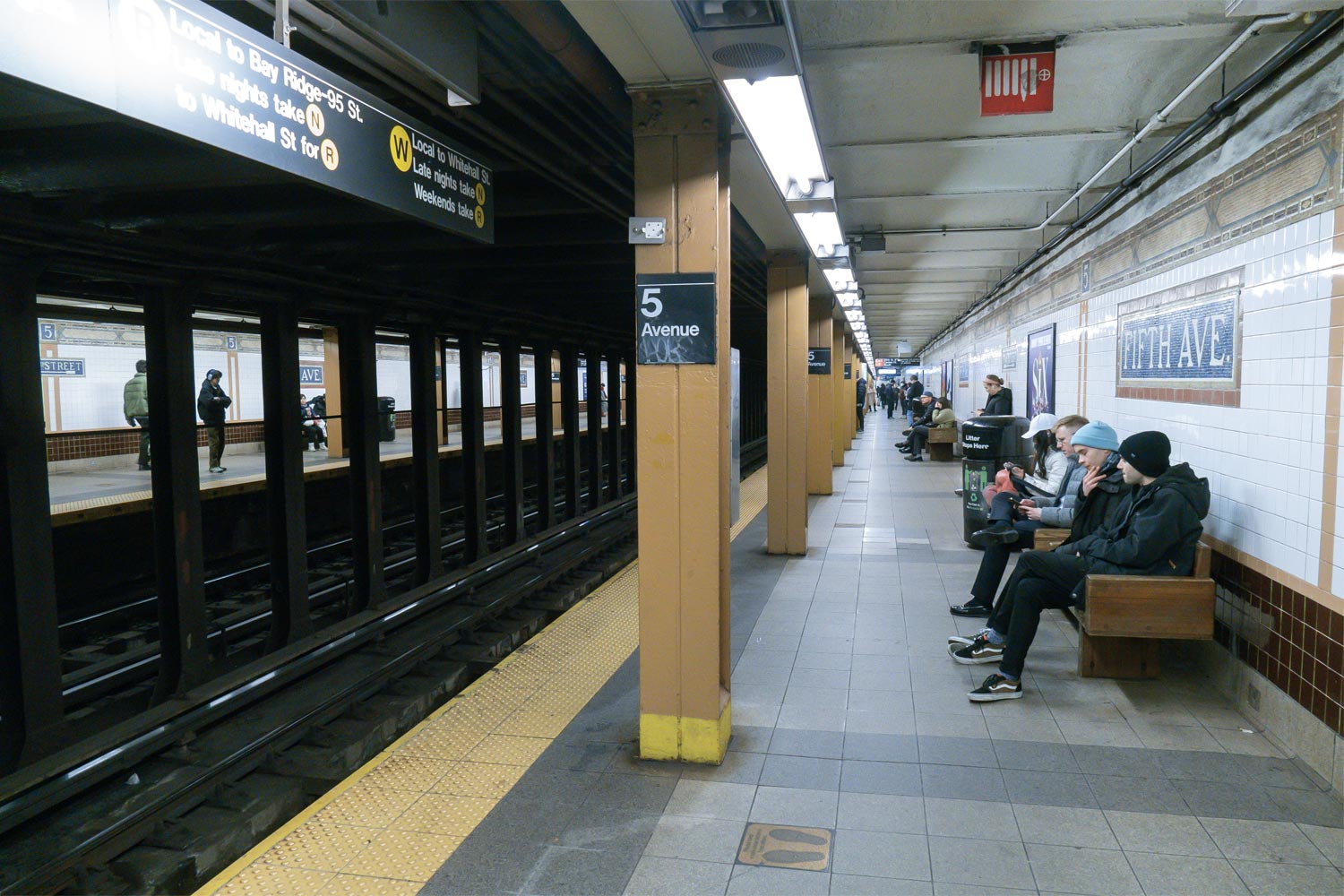
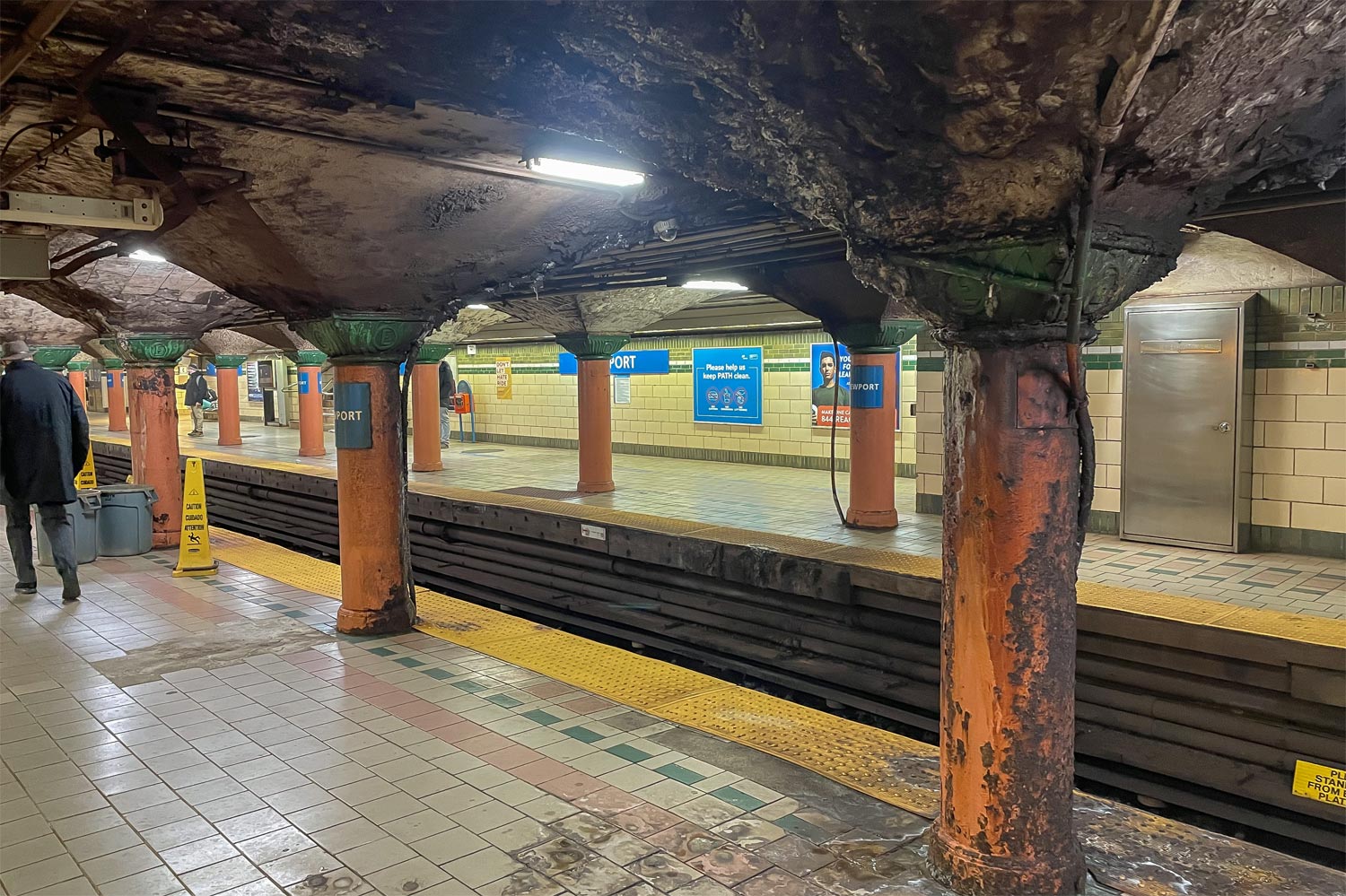
Rats, garbage, homeless people, a burst sewer line — all these little things aren’t even worth discussing. How about a ceiling covered with such a layer of mold and rust that it makes you want to throw up?
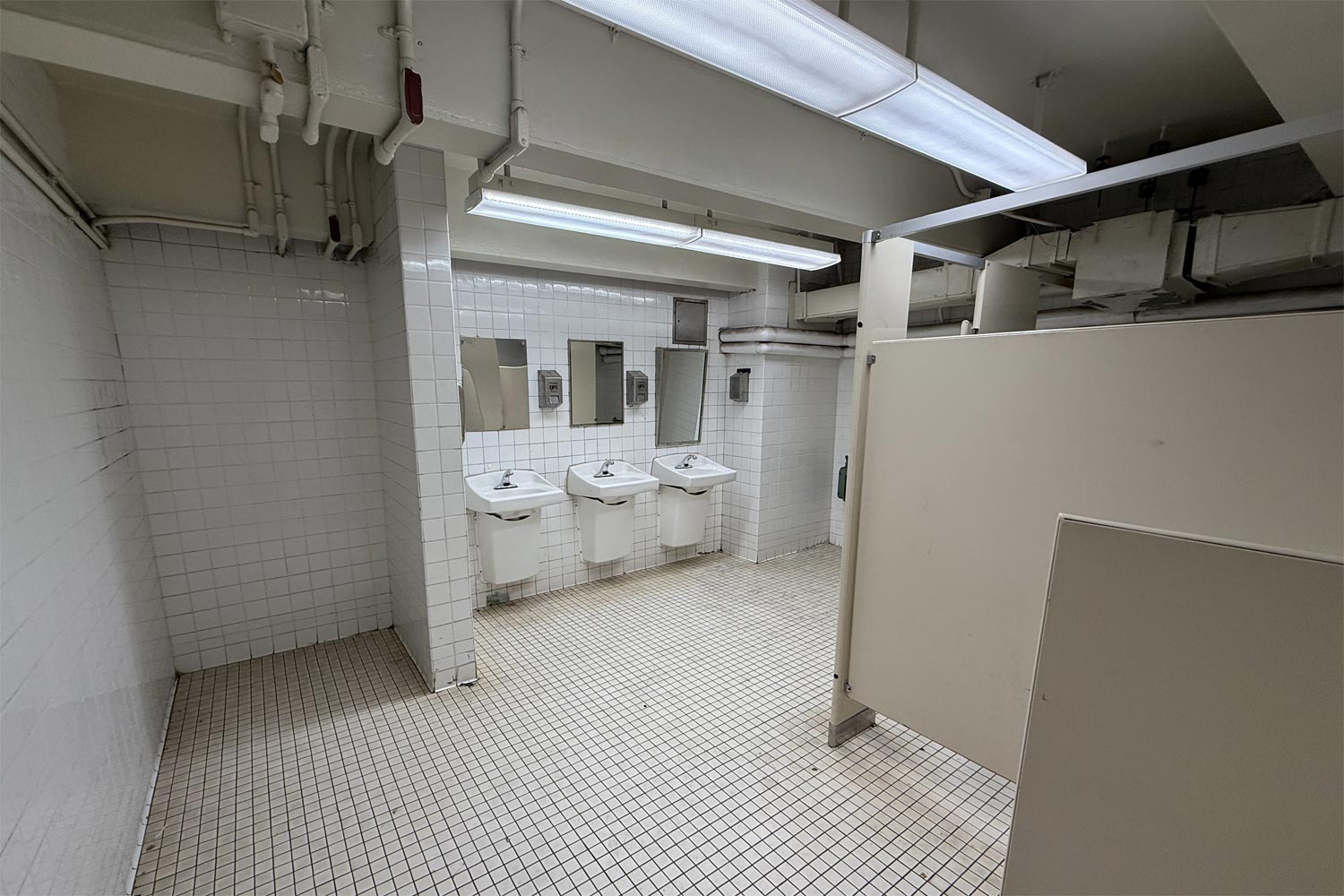
They say a big advantage of the American subway is that there are restrooms in the stations. Yes, but it’s scary to go into them: who knows what kind of psychopath might be hiding in there.
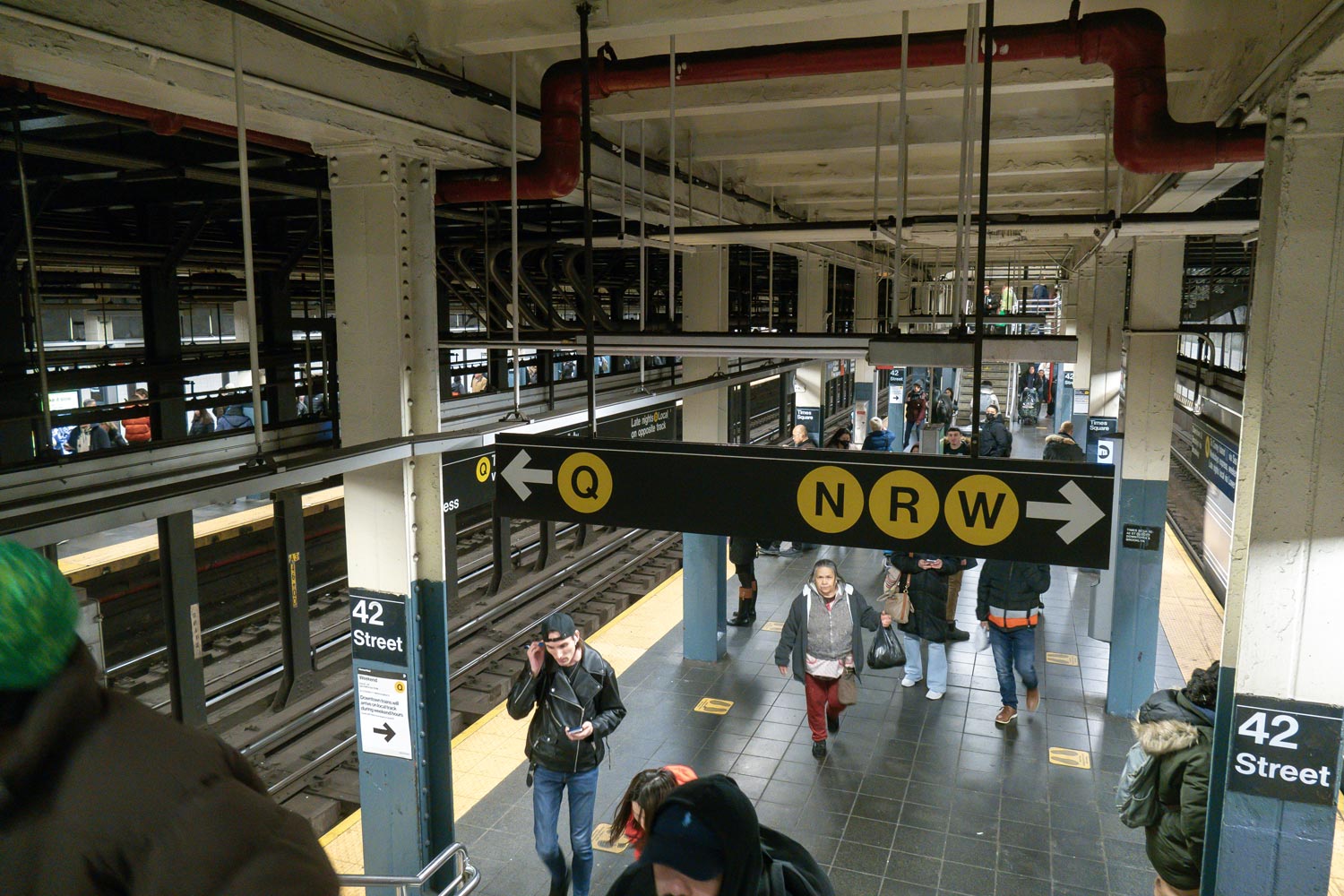
In summer it’s unbearable to be in the subway. The stations are hardly ventilated and heat up to nearly 40 °C. Fortunately, there’s air conditioning in the train cars themselves, but sometimes you have to wait up to 15 minutes for a train — one could just die.
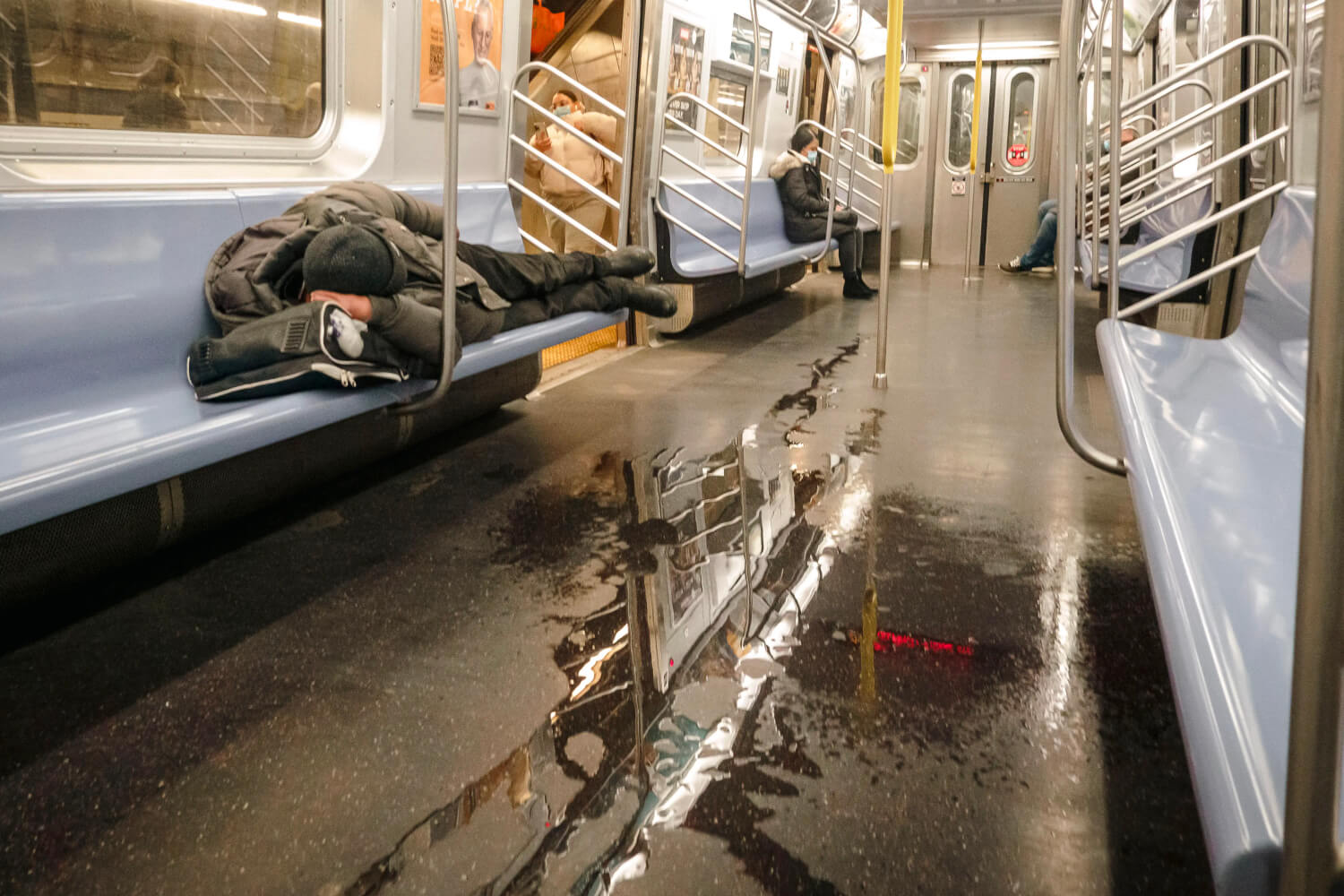
The trains are plain, but pretty decent. Reminiscent of Soviet ones. The problem is who rides them. New York’s subway attracts a level of human chaos that has to be seen to believe. You’ll see people peeing on the floor, camping out under blankets on the benches, or taking up half the car with bags of trash.
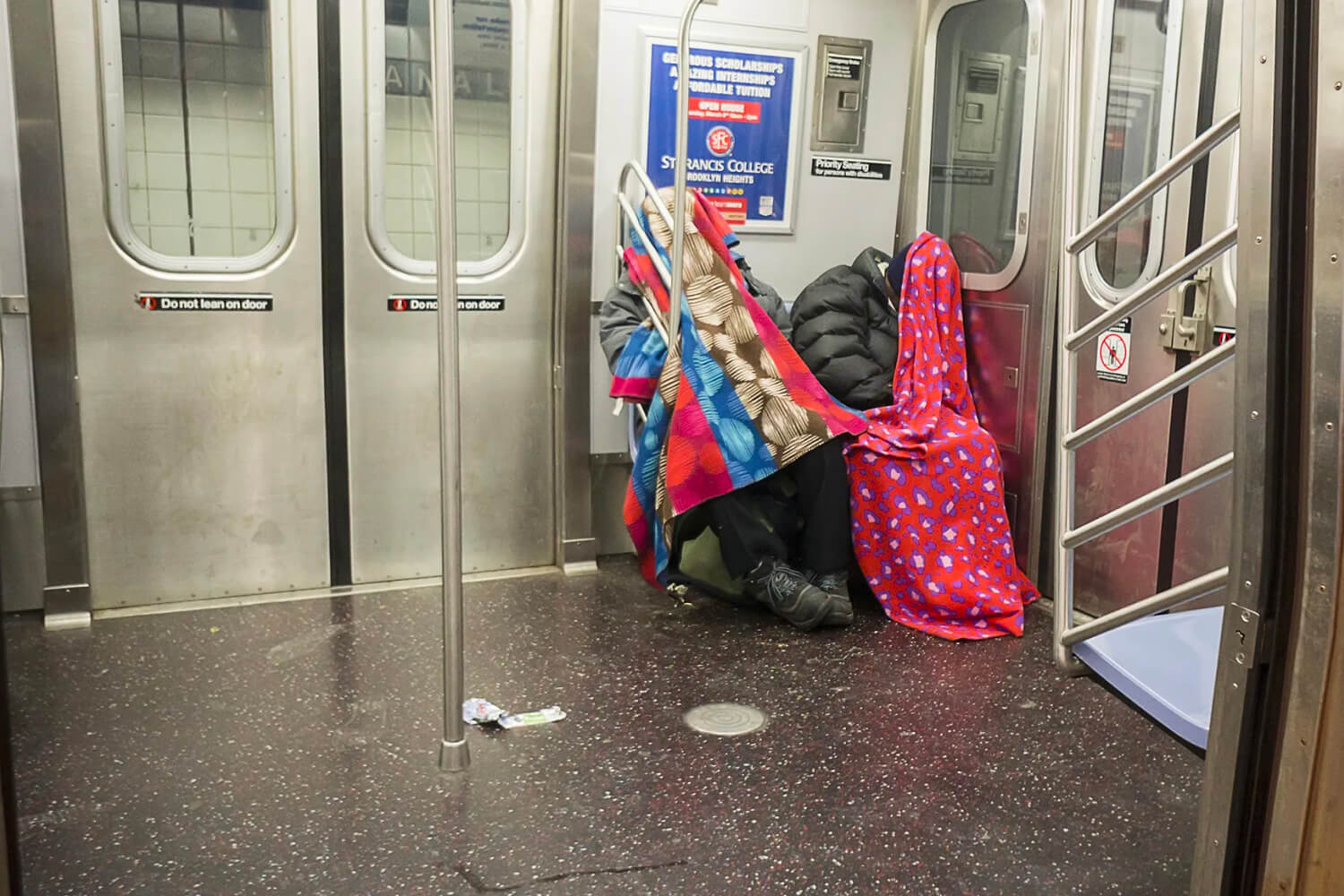
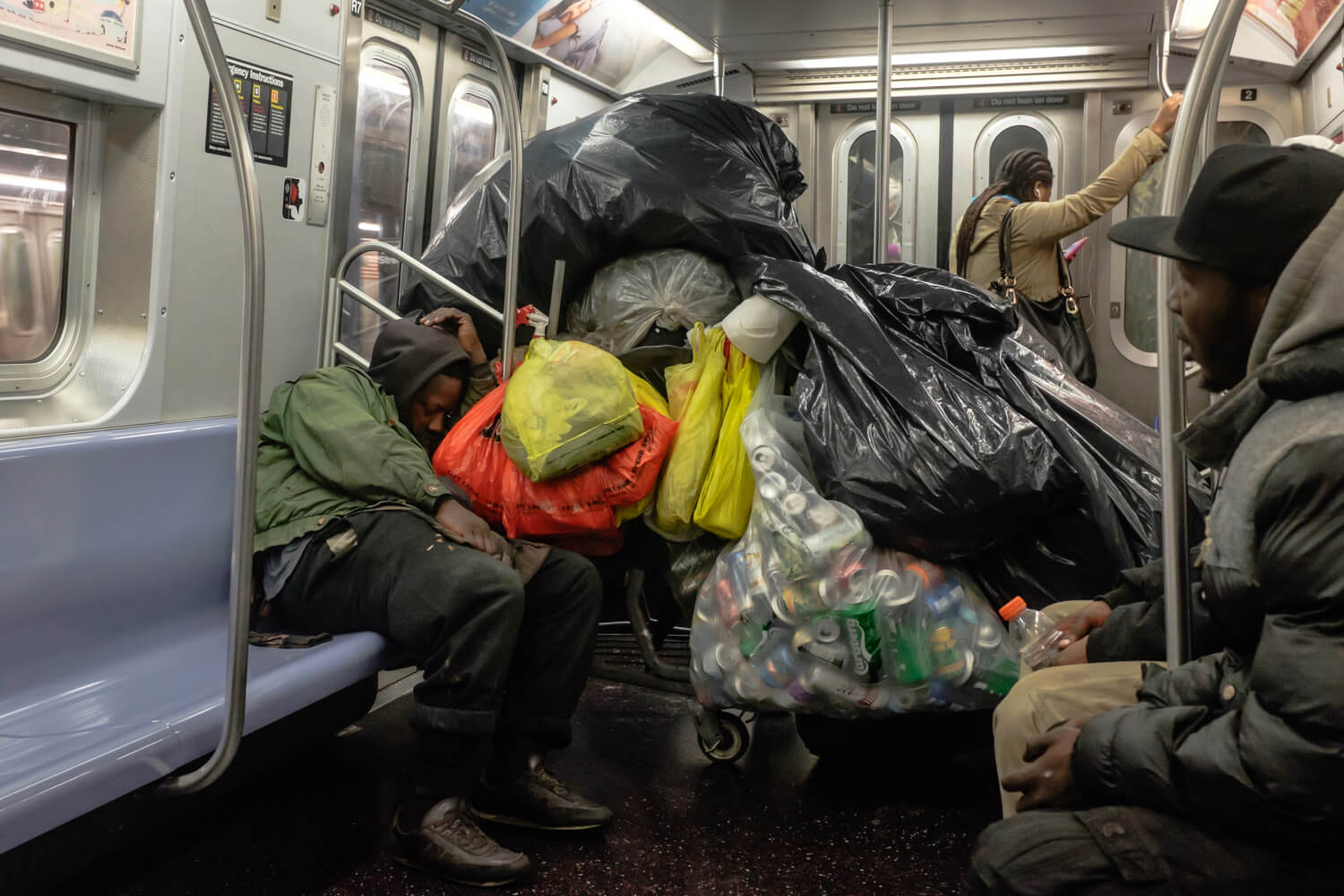
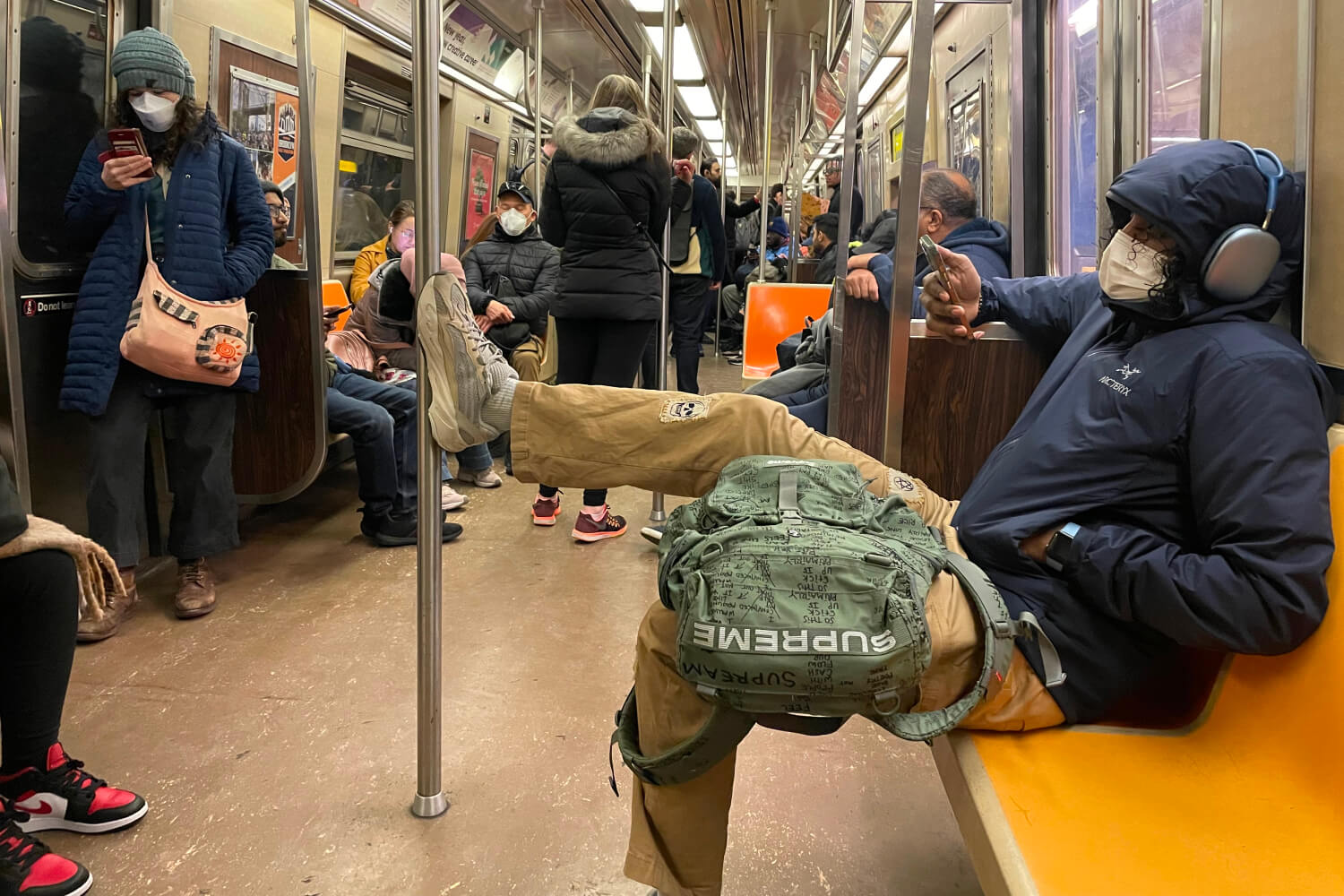
The subway is the most dangerous place in New York. People are regularly pushed under trains or just attacked. The most harmless pranks are spitting in some random passenger’s face for no reason or pissing on someone’s pant leg. For things like that, the much‑praised American police do show up quickly, but they can’t do anything and just throw up their hands.
Cell service works only on platforms. On the trains there’s not only no Wi‑Fi and no internet signal, there isn’t even mobile service. On the phone screen, the satellite icon for calling 911 glows all by itself — for a truly last-resort emergency.
One time the author got stuck in a tunnel for a whole hour because yet another unfortunate had been pushed onto the tracks right in front of my train. That day I was on my way to a job interview downtown and couldn’t even let them know I’d be late.
The saddest thing is that there’s no way to protect yourself from attacks like this. Anyone can be pushed under a train at the most unexpected moment, without any reason or prior conflict. A random psychopath just hears a voice in their head, takes a running start, and slams into a passerby, shoving them with all their might onto the tracks. This happens so often in New York that locals have it ingrained in their subconscious: stand as far from the edge as possible.
And don’t even get me started on what happens in the New York subway after a good downpour! Water literally floods the stations, pours out of the walls, seeps from the ceiling. It’s unclear how the trains even run in such a deluge: in theory, the third rail should short out and kill everyone. Maybe sooner or later that’s exactly what will happen.
What to do with all this — no one can figure out. Despite the steep ticket price of three dollars, the subway is running huge losses. Maybe it should just be added to the UNESCO World Heritage list. Then it would be officially forbidden to repair it, and it would become a monument to human civilization.
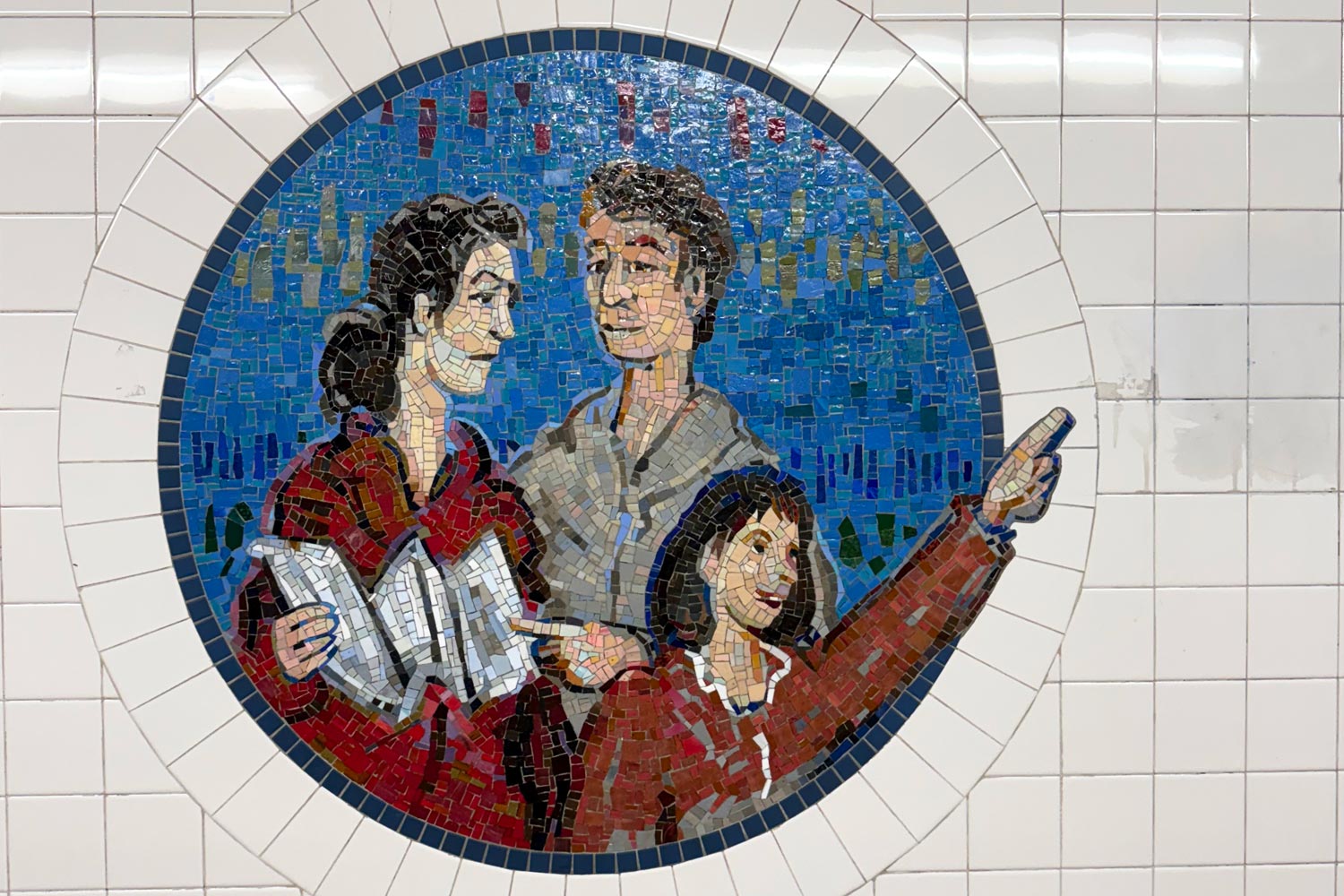
I’d tell you more about the metro, but it’s time for us to get off. We’ve arrived.
New York. Part Three. Brooklyn
New York consists of five districts called boroughs. We’ve already been to two of them: Manhattan and the Bronx. The other two, Staten Island and Queens, are of no interest. But Brooklyn is a completely different story. It’s a real force of nature, a world of its own, and an unquestionable continuation of “main New York.” You’re about to see it all for yourselves.
Two Bridges
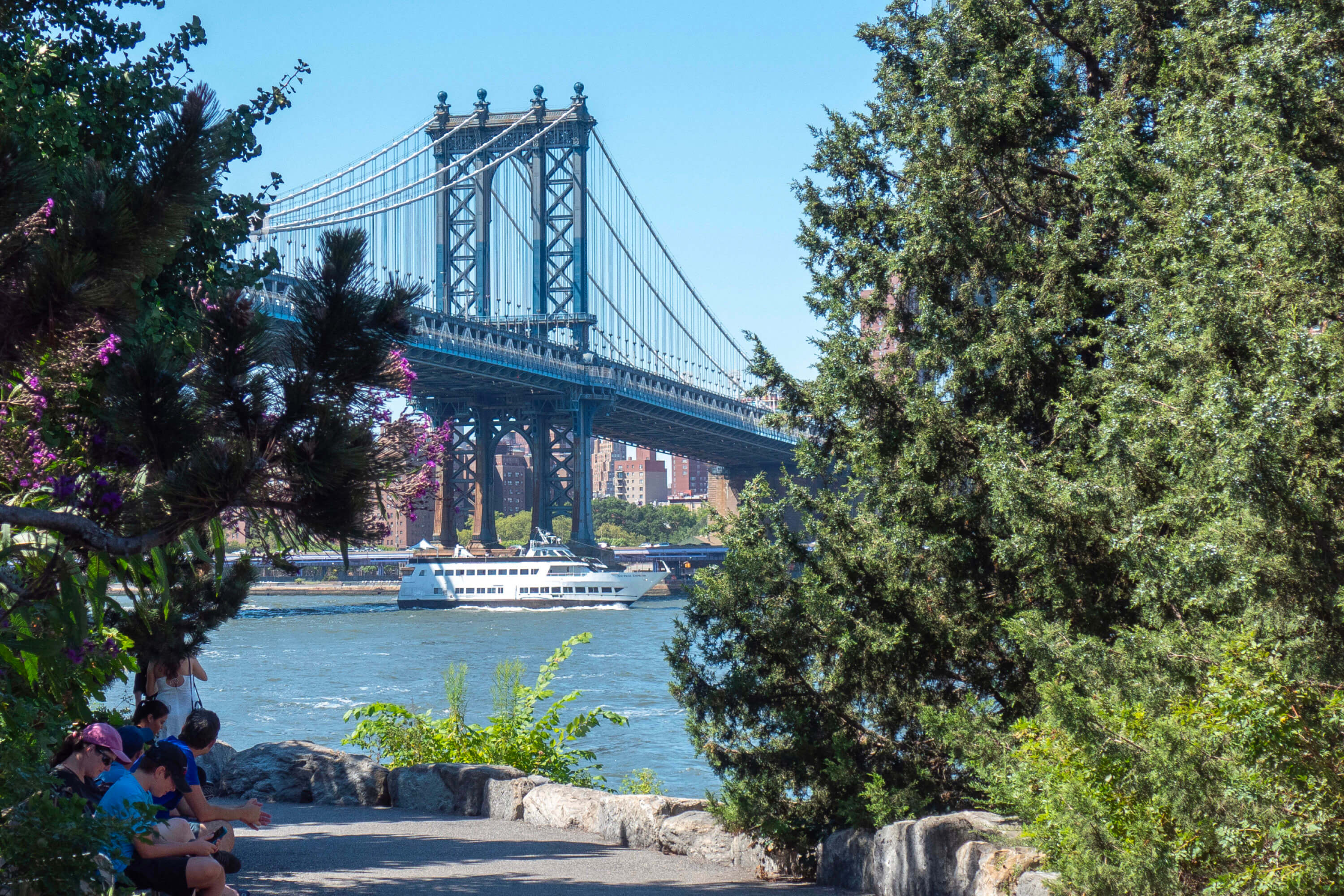
On the eastern edge of downtown there’s a small neighborhood that’s actually called Two Bridges. As you might guess, it’s squeezed between two bridges: the Brooklyn Bridge and the Manhattan Bridge.
Although this neighborhood is still in Manhattan, you can already feel the atmosphere of Brooklyn here. That’s because of the high-rise buildings constructed in the 1960s for low-income residents. They’re called “housing projects,” or simply “projects.” The projects in the Two Bridges area are very easy to see from the bridges themselves.
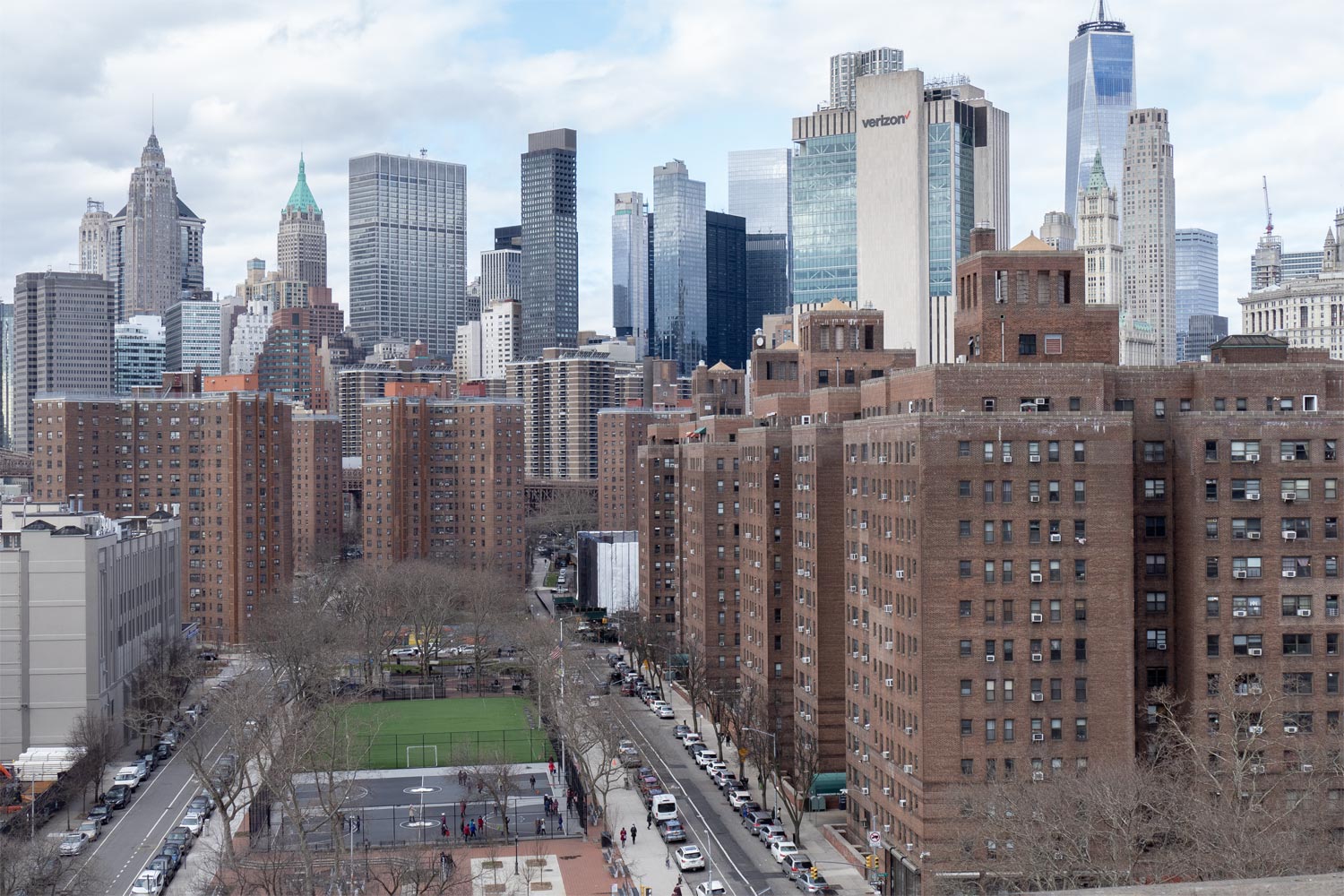
Projects are extremely dreary, dark brown buildings. The apartments in such buildings are cramped, the hallways are narrow and scary, and the windows are small.
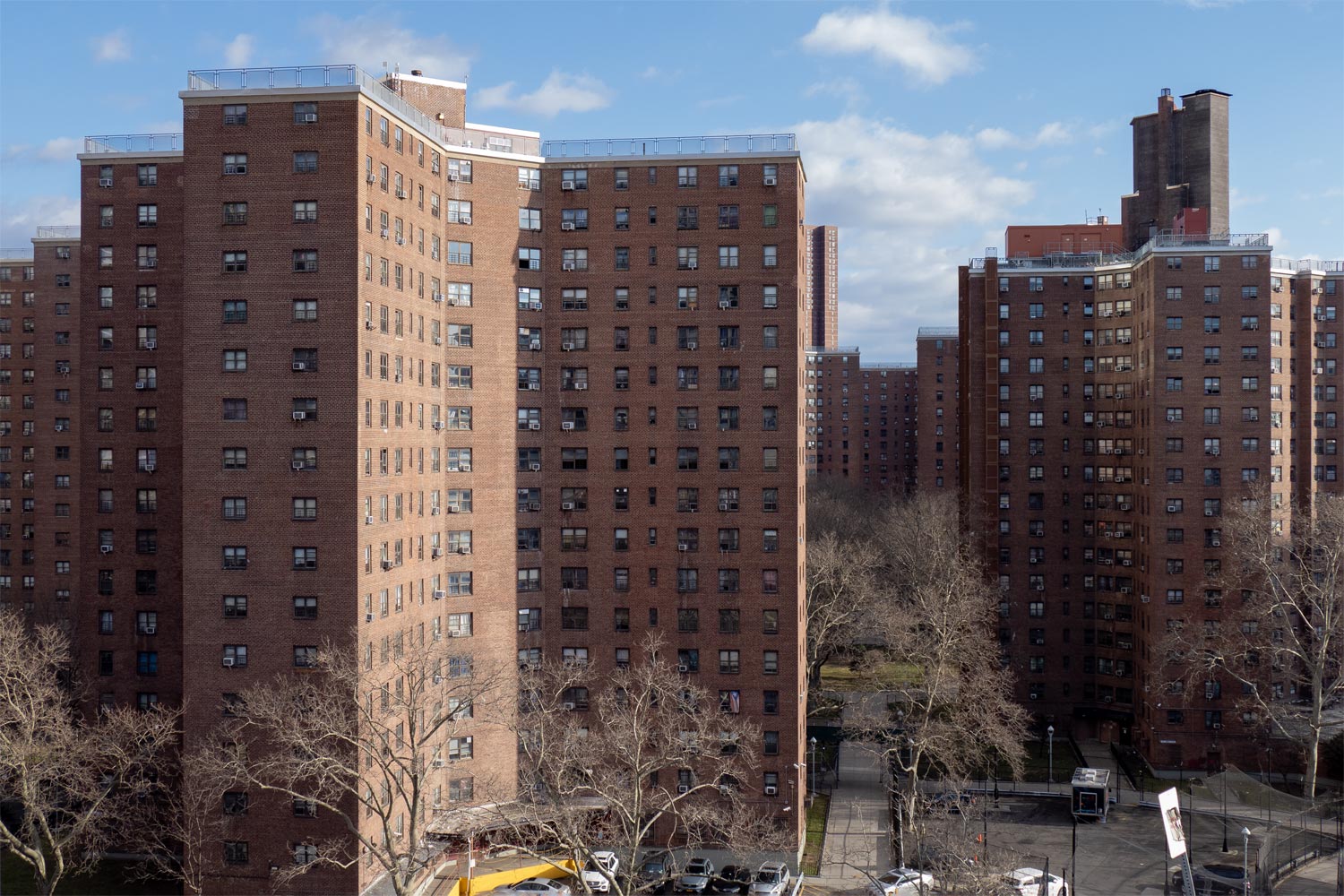
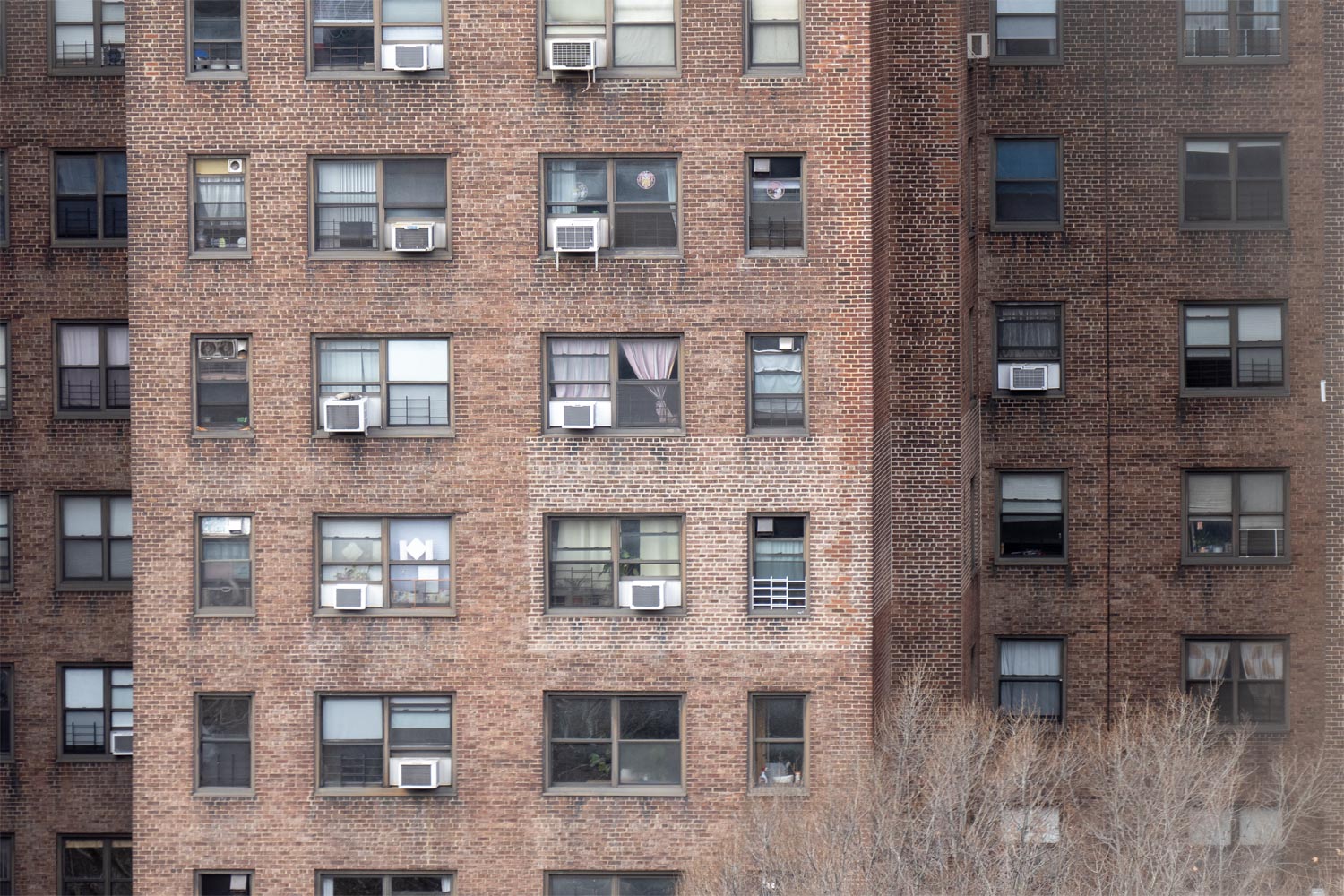
The total lack of balconies adds to the bleakness. The walls of the buildings are completely flat, which makes them twice as dreary. Who would have thought that a simple balcony might be almost a bourgeois luxury? Well, at least you can see the Empire State Building from the windows!
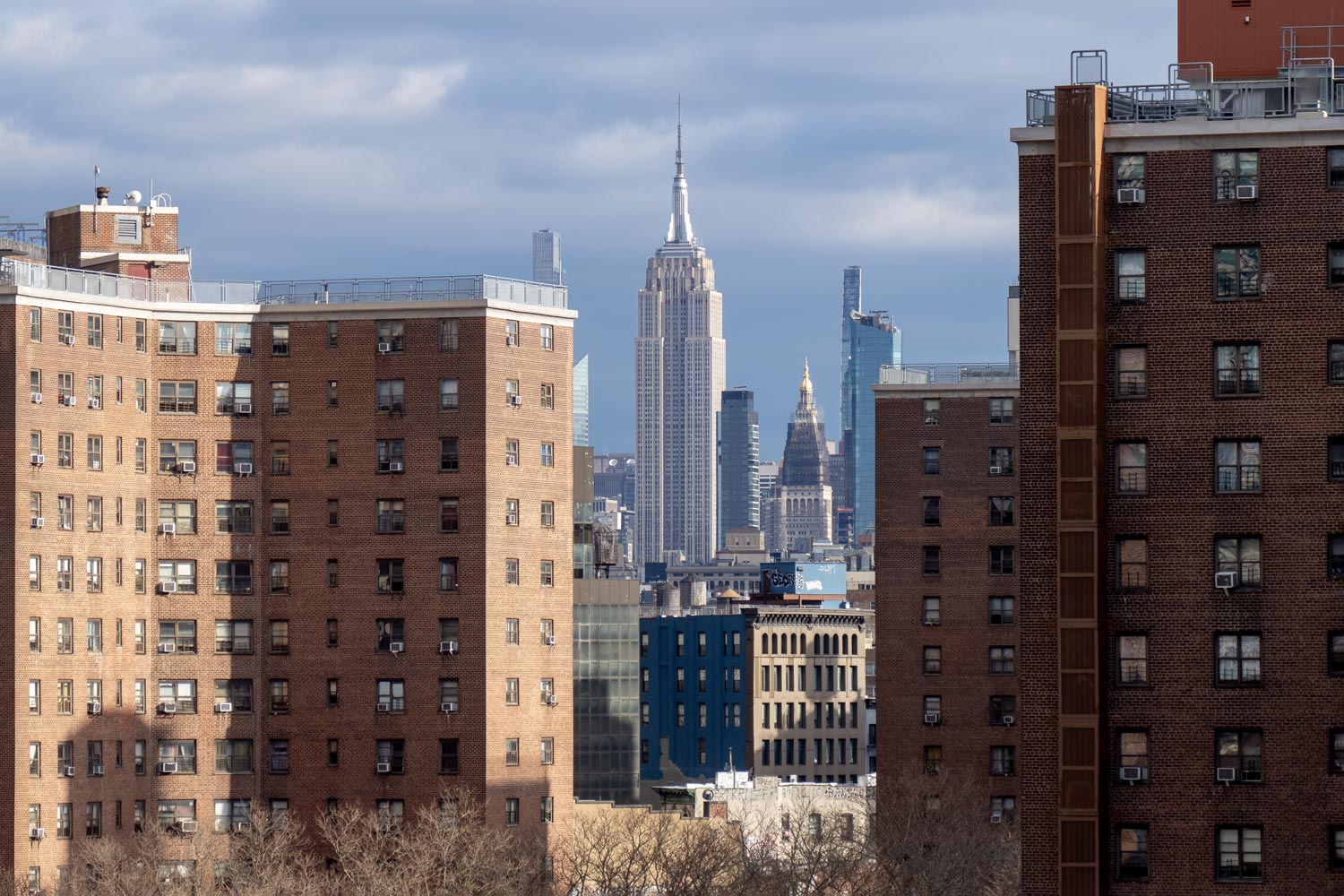
Still, these particular projects aren’t the worst place to live: after all, it’s the center of Manhattan. But the same kind of neighborhood in the Bronx is a real high‑rise ghetto, where outsiders are better off not going at all.
In the projects’ courtyard between the bridges, it’s actually quite clean and cozy. Trees are blooming by the entrance, and the entrance itself boasts glassed-in windows.
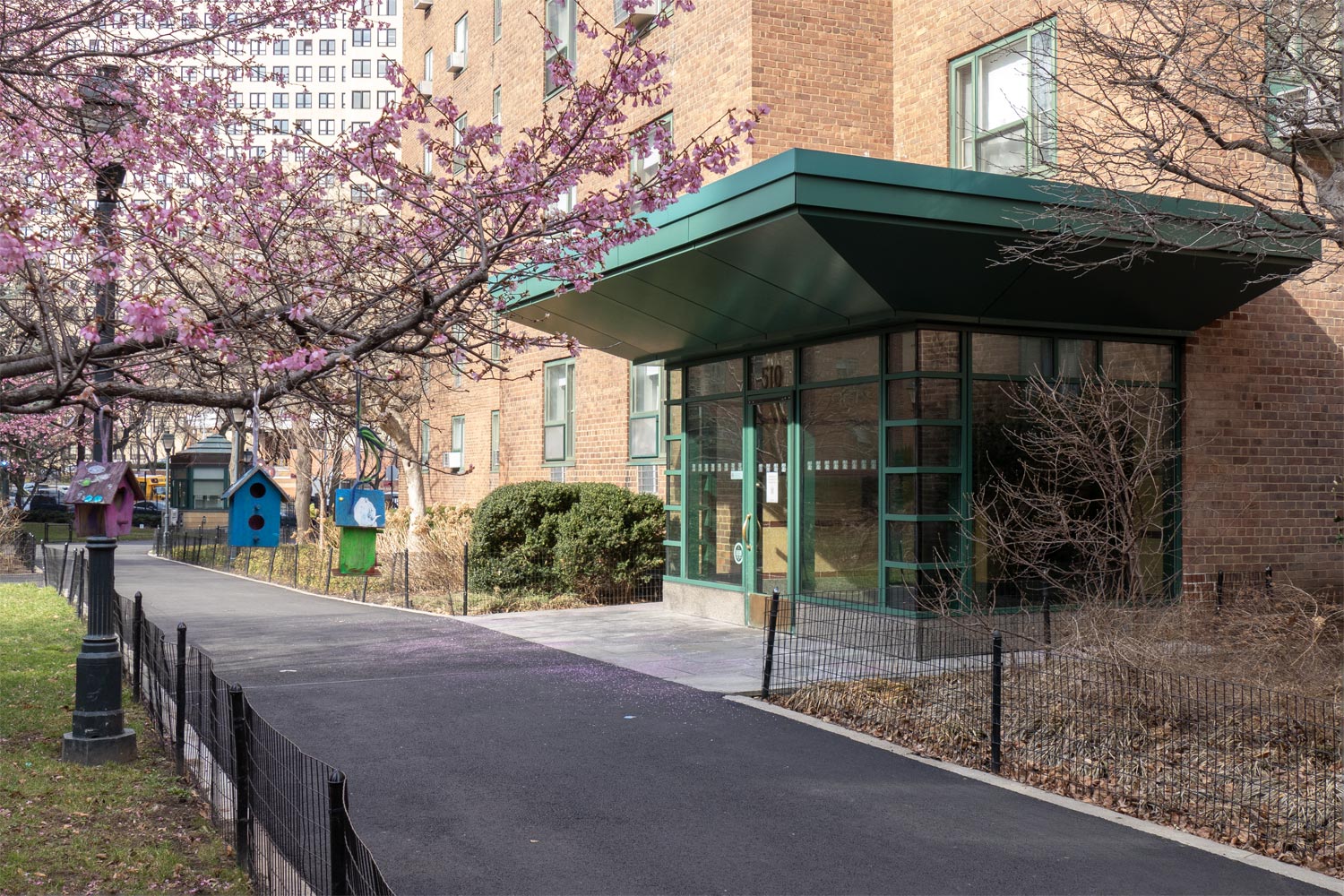
But still, the Two Bridges area is way too close to the overpasses. The windows of some projects look right out onto the roadway. And this is in the center of Manhattan, too!
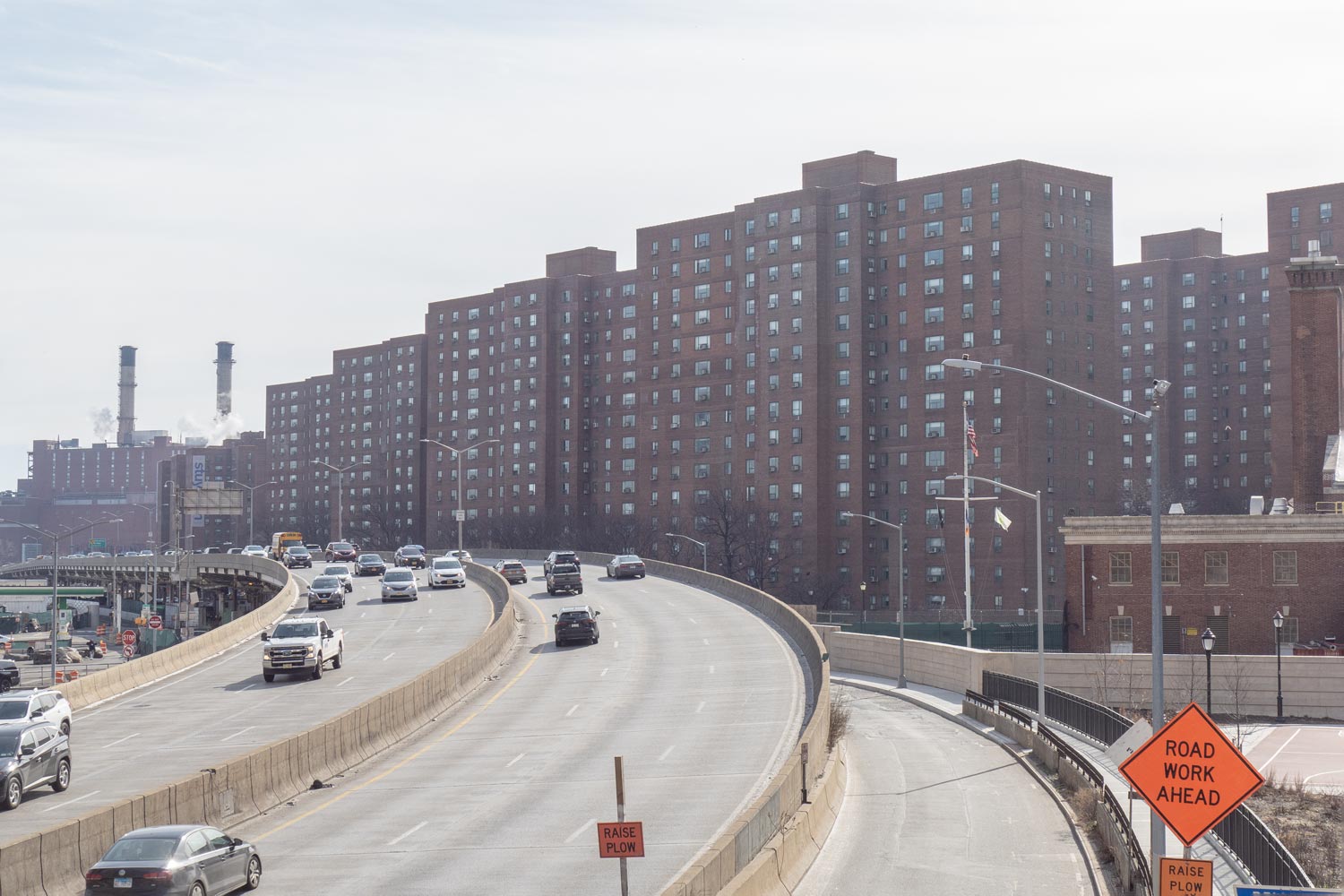
All these shots were taken at the Brooklyn Bridge. Closer to the Manhattan Bridge, the city looks ten times scarier. And these buildings aren’t projects at all, but regular New York housing, all messed up with graffiti.
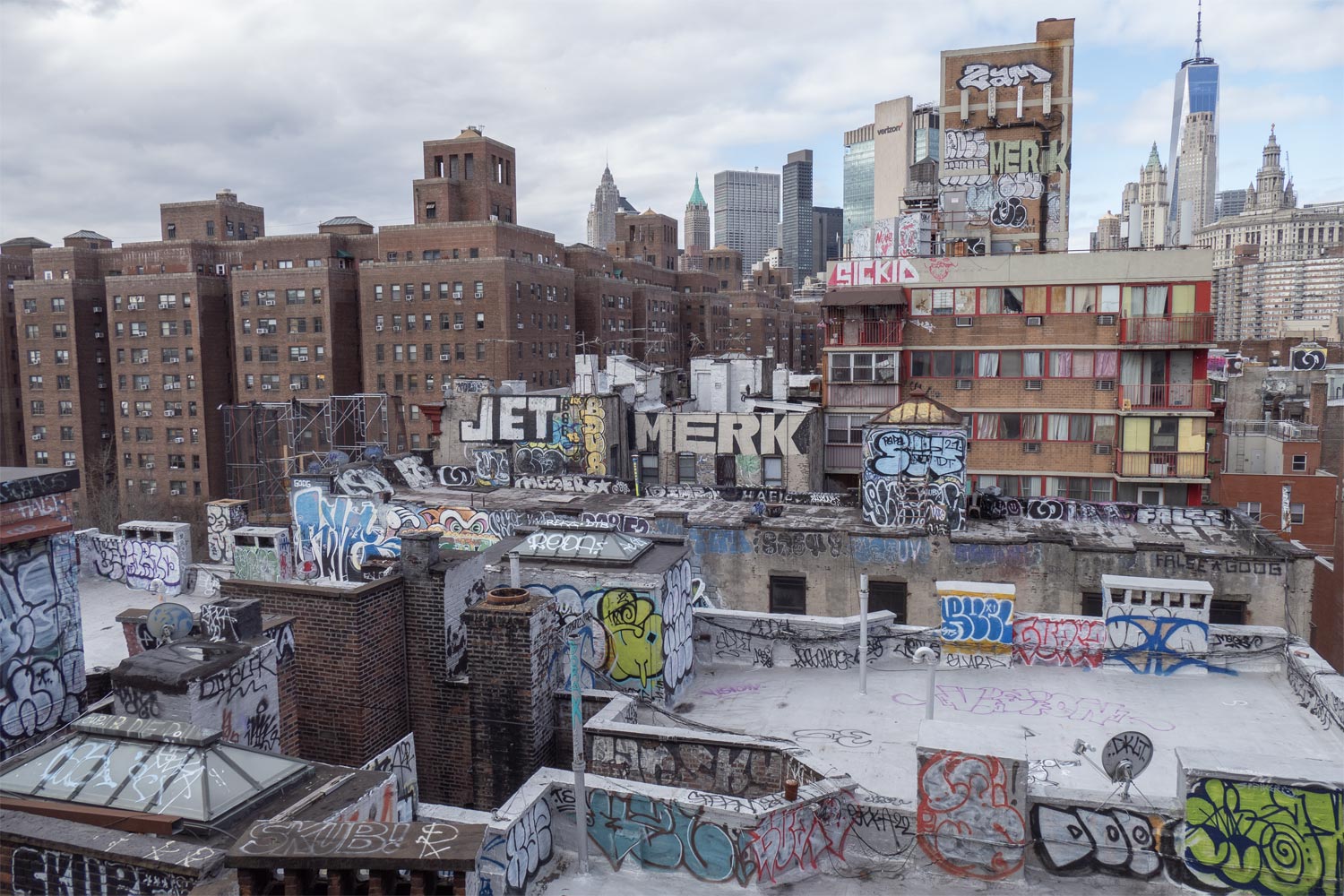
No wonder. Only a very particular kind of crowd can live in an apartment with windows facing a railway overpass.
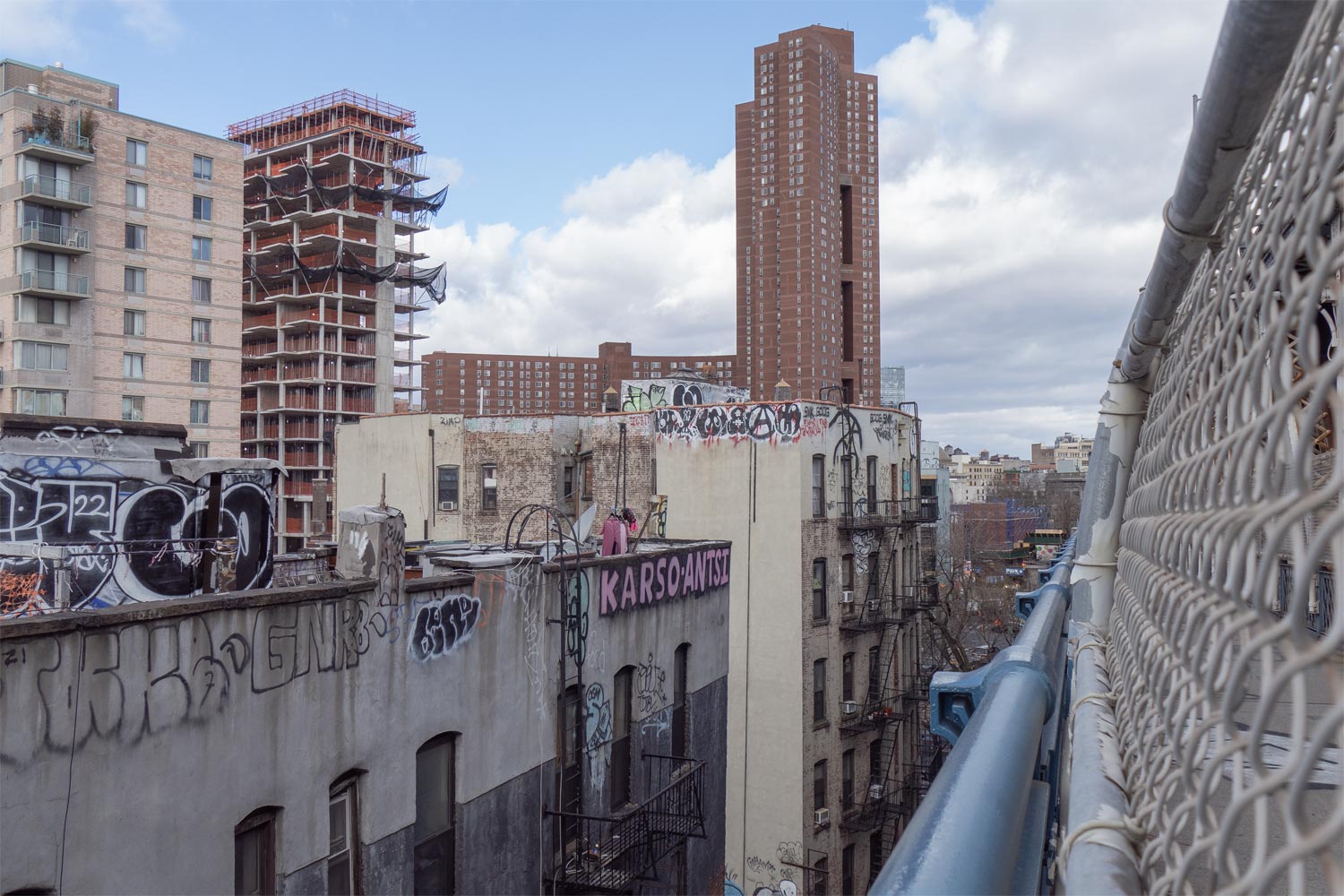
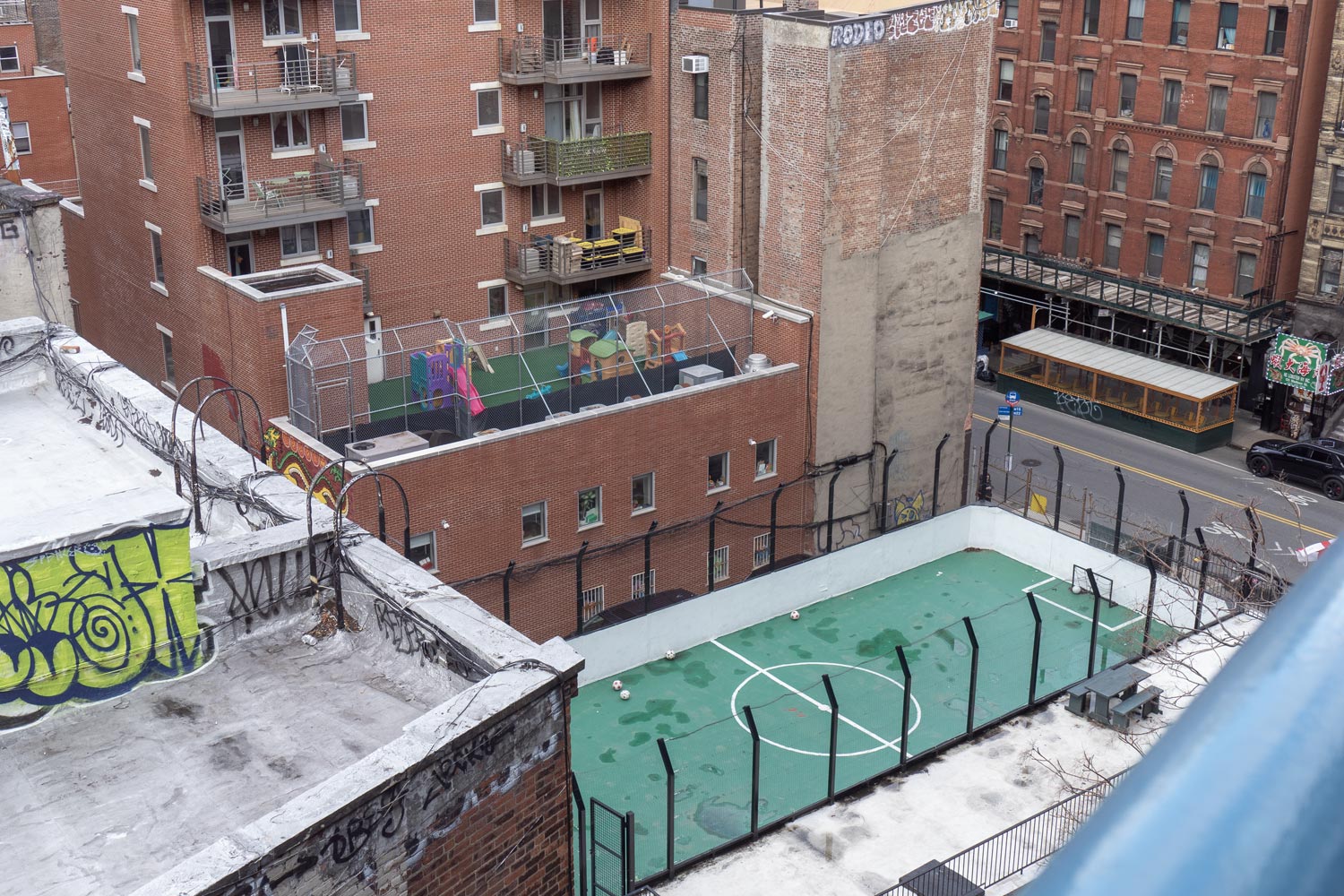
Finally, a soccer field appears squeezed between the buildings. It’s incredible that this is the center of New York. Looks more like Brazilian slums.
Brooklyn Bridge
Generally speaking, you can walk from Manhattan to Brooklyn either via the Brooklyn Bridge or the Manhattan Bridge, but most people only remember the first one.
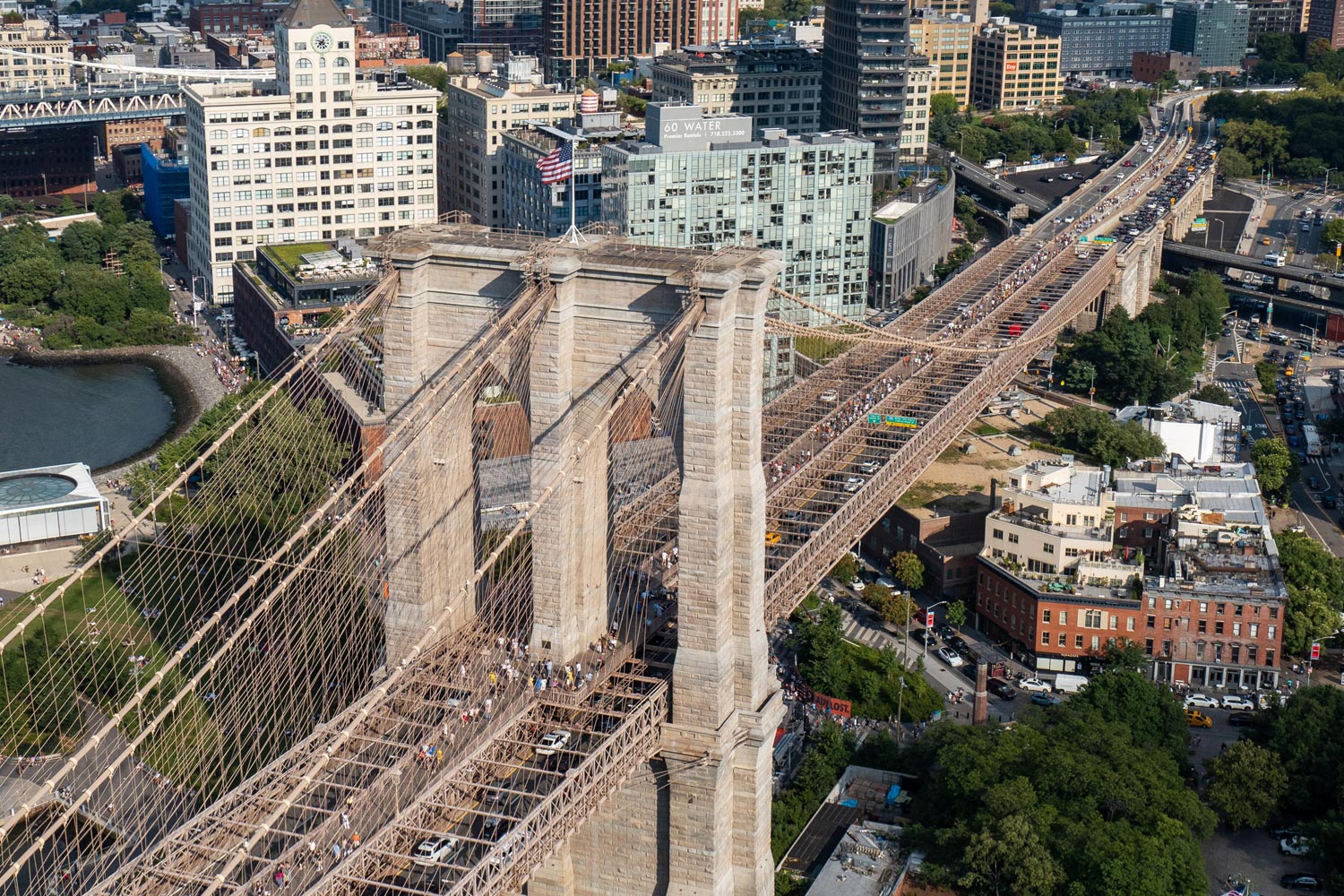
The Brooklyn Bridge opened in 1883. It was the world’s first steel suspension bridge — and the longest one, too. People had simply never seen anything like it before, so for the first few years they tended to avoid it.
To convince Americans of the bridge’s reliability, a local circus performer led 21 elephants and some number of camels across the Brooklyn Bridge — only then did people’s fears subside. Strangely, no one thought to take a photograph of the elephant procession, but newspapers document it.
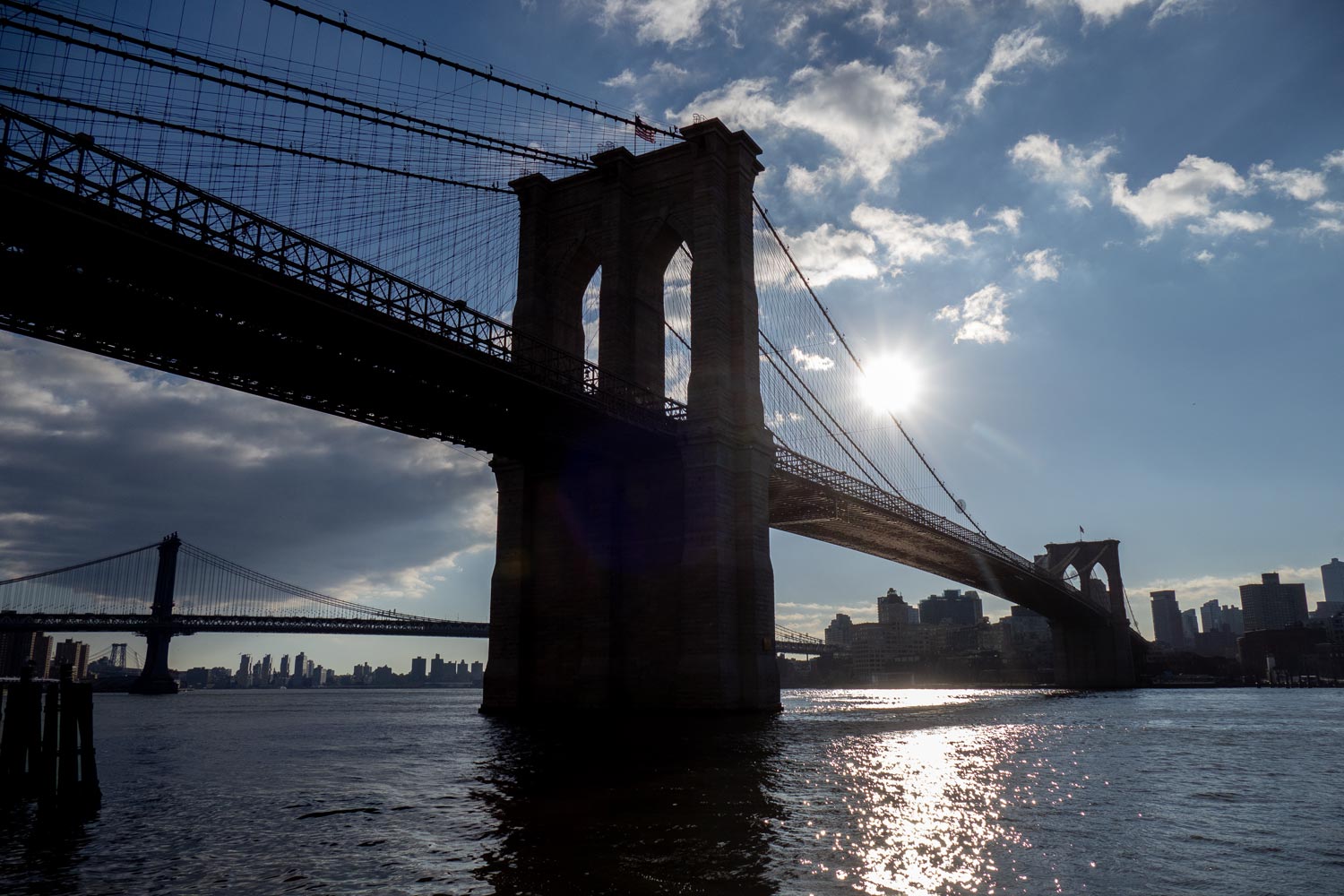
Nowadays, nobody has those kinds of phobias anymore, so people calmly walk across the bridge while cars drive along the level below at the same time.
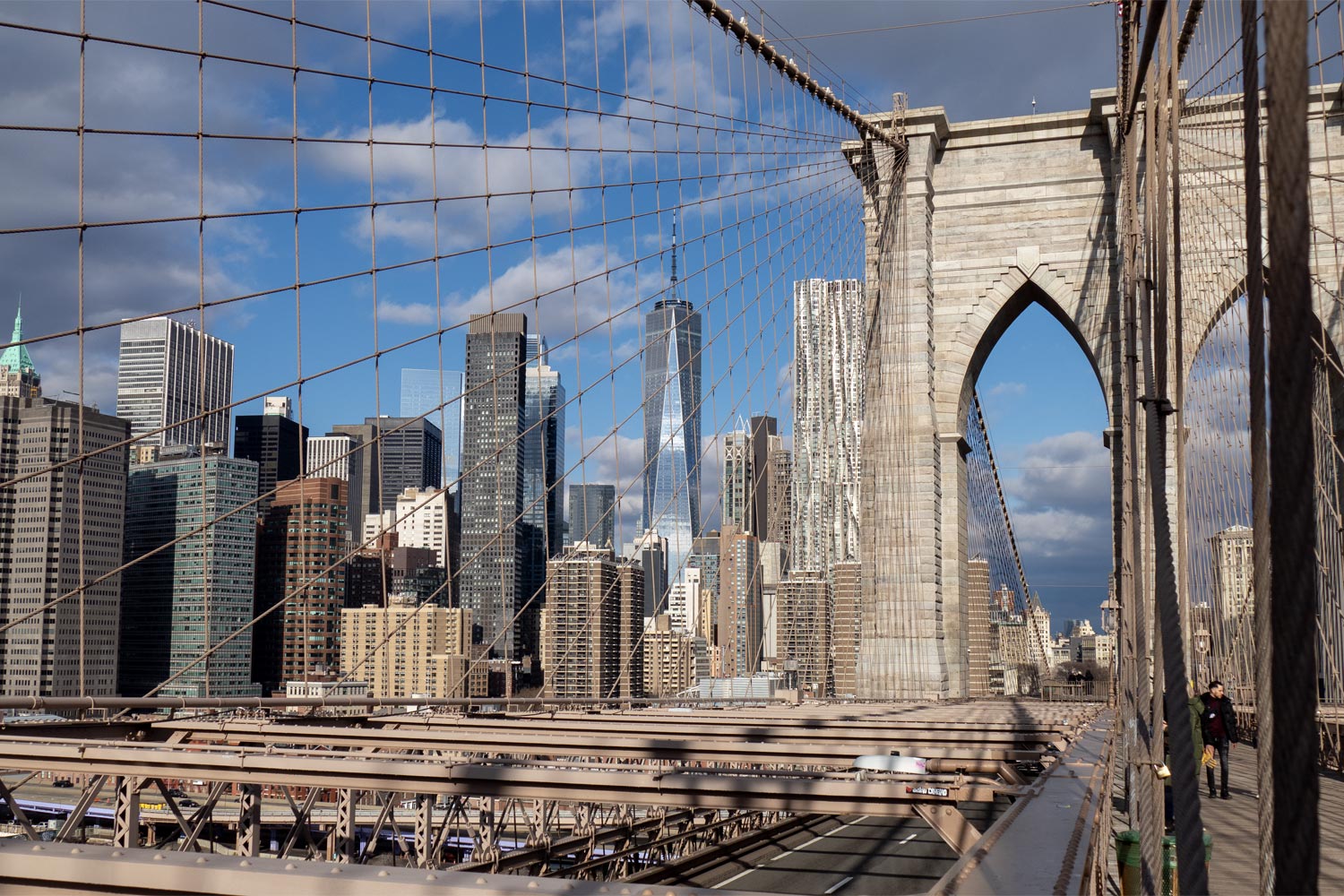
Only a crazy New Yorker would want to walk across the Brooklyn Bridge in summer: in good weather, the number of tourists is off the charts. In winter, only a crazy person will go out on the bridge too, but for a different reason: the icy wind over the East River chills you to the bone.
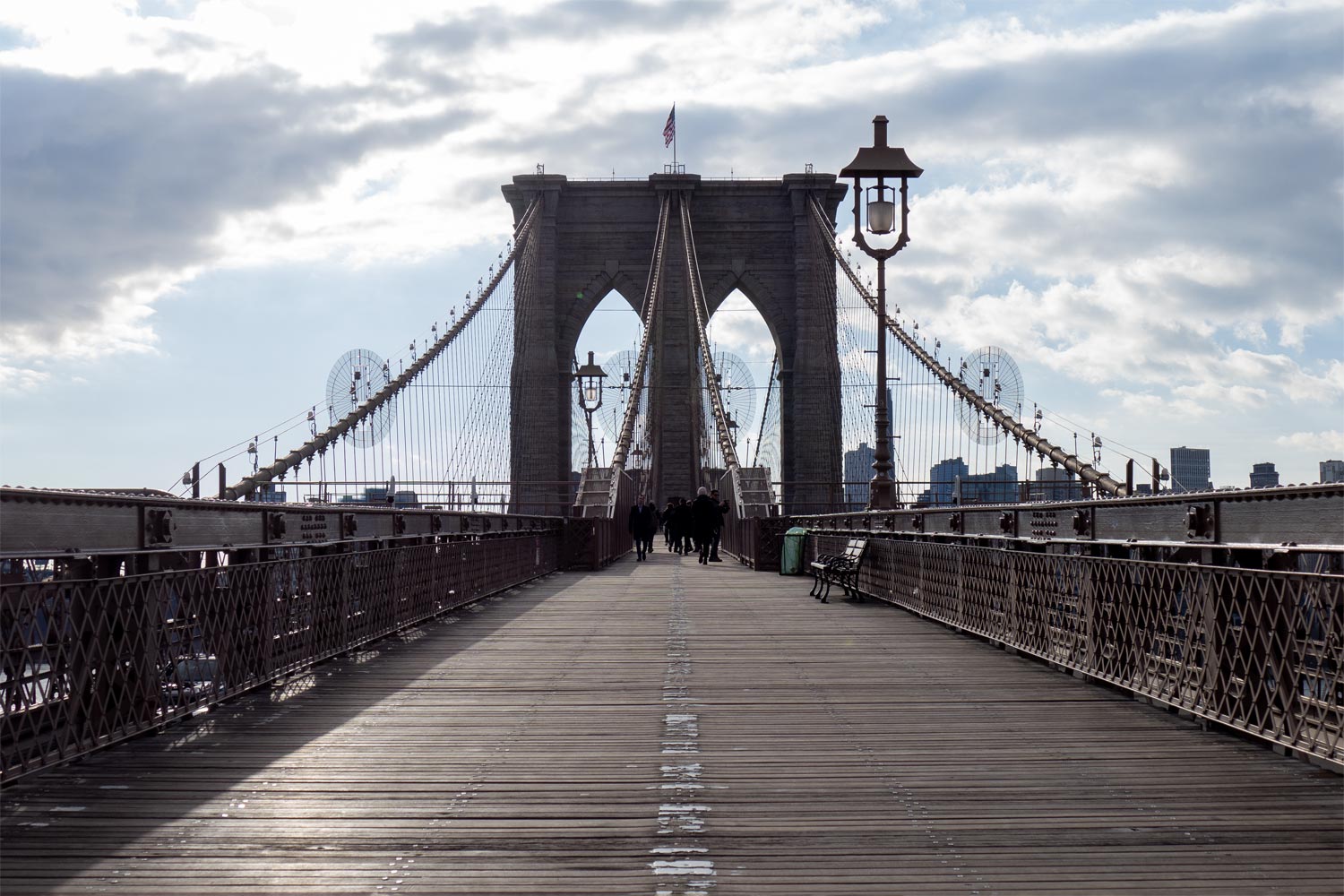
The Brooklyn Bridge is a monument to the Industrial Revolution. Hundreds of steel cables mercilessly slice through and chop the sky into pieces, along with the city and everything in it.
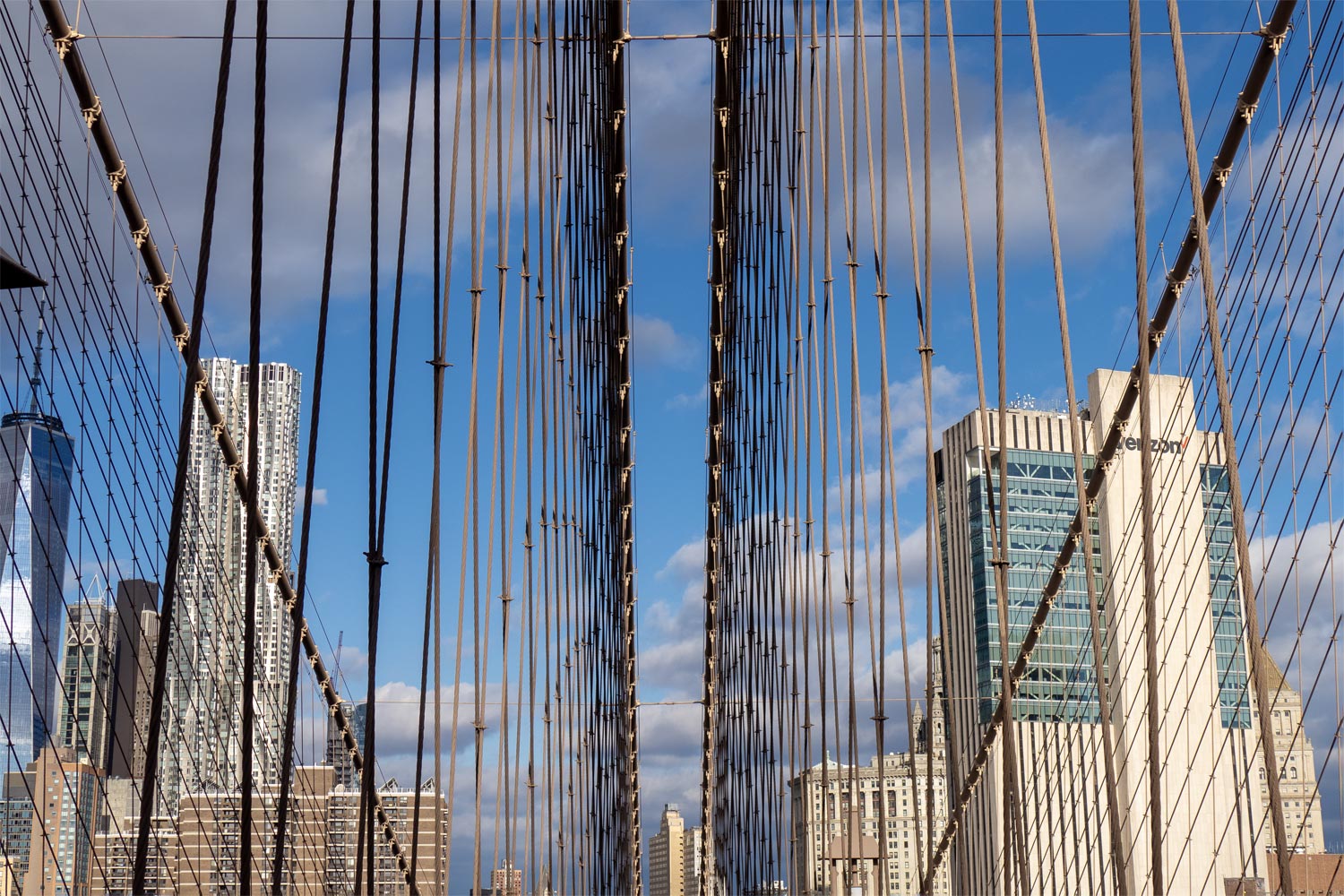
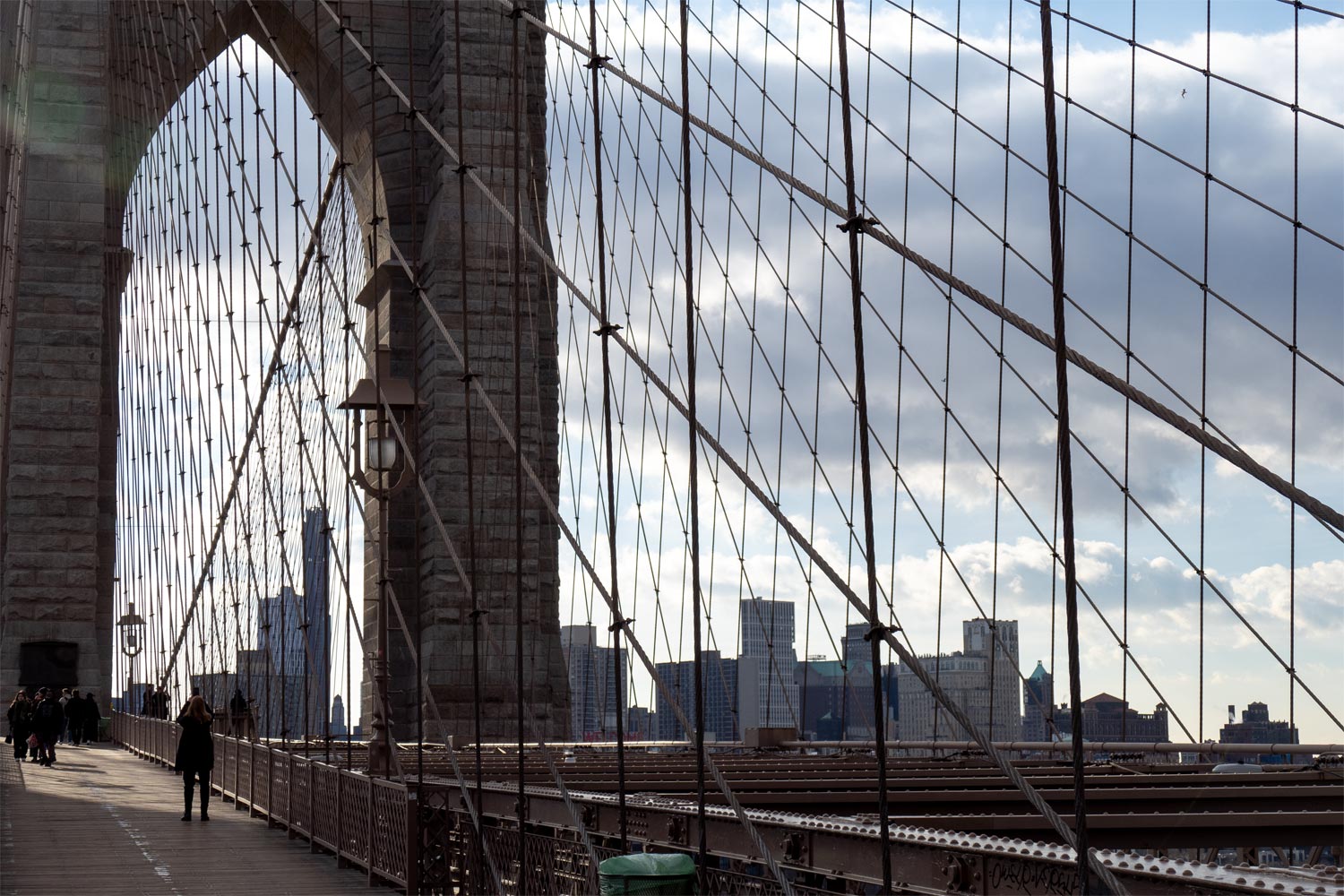
The bridge stands on two supports in the Neo-Gothic style. The vaults resemble the arches of a Catholic cathedral, except that instead of a cross, each support is crowned with an American flag.
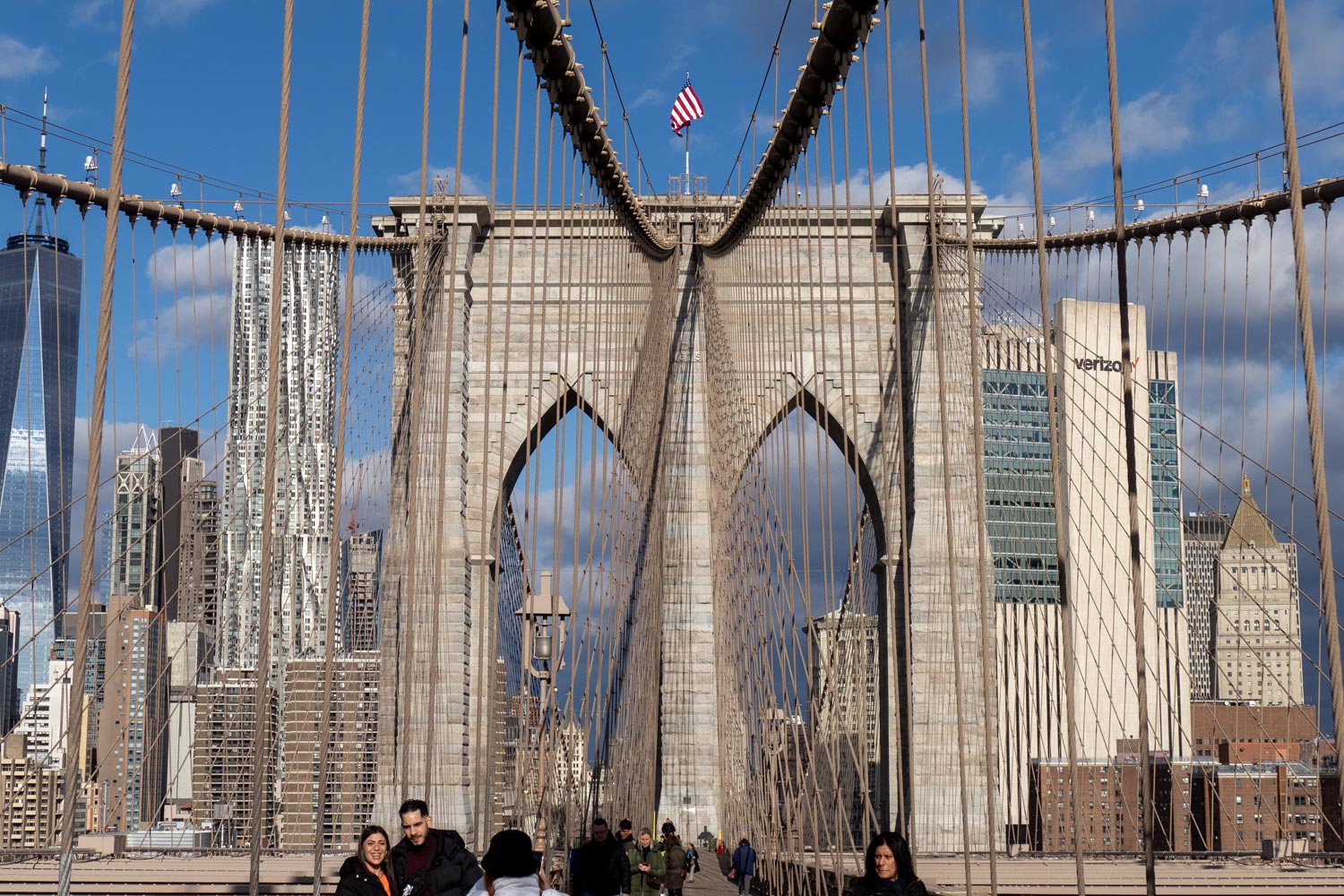
From the bridge, you get the best views of New York. The spirit of the city — with all its spicy grayness, playful Gothic touches, and the aftertaste of reinforced-concrete industrialization — is felt from here even more strongly than from a helicopter.
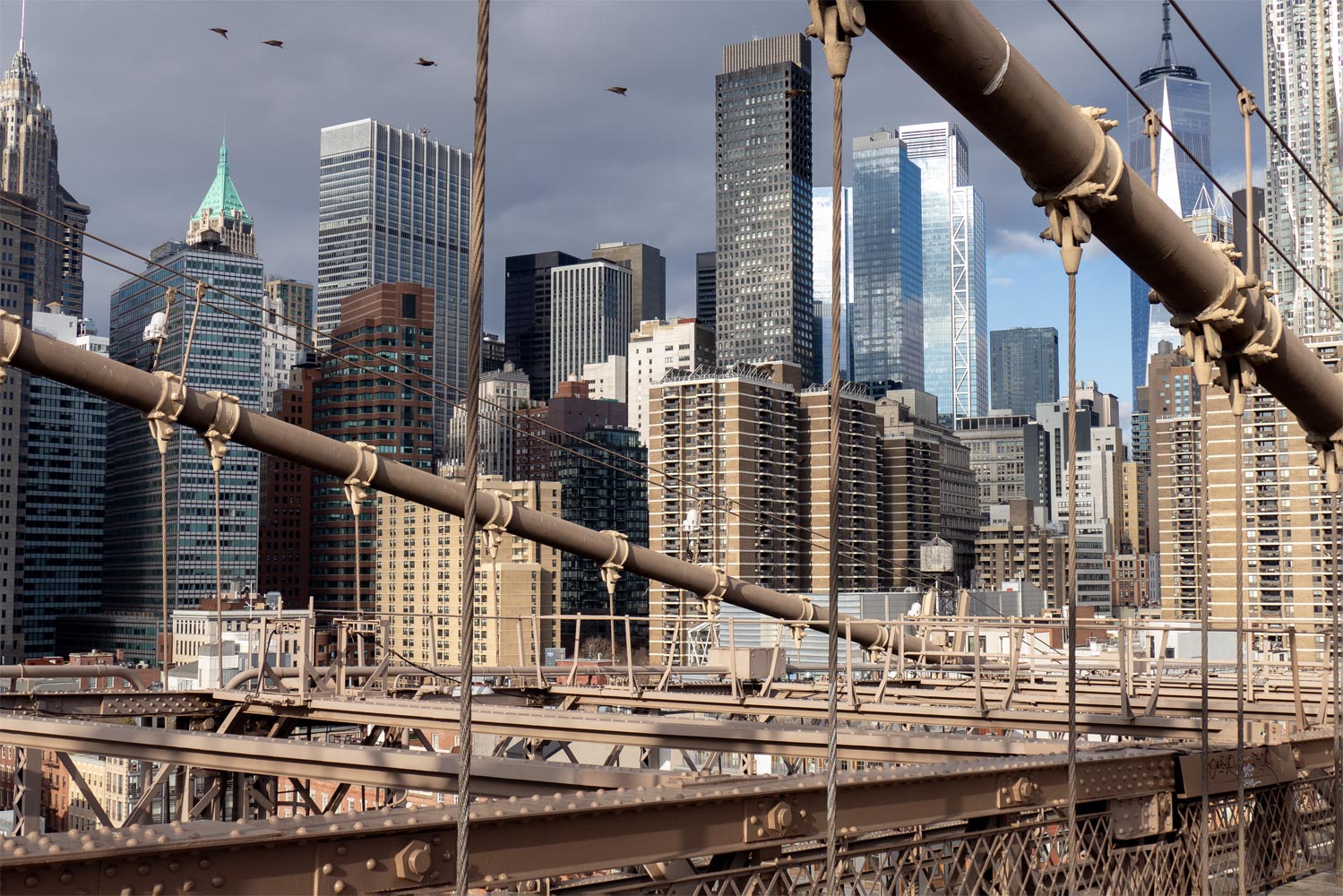
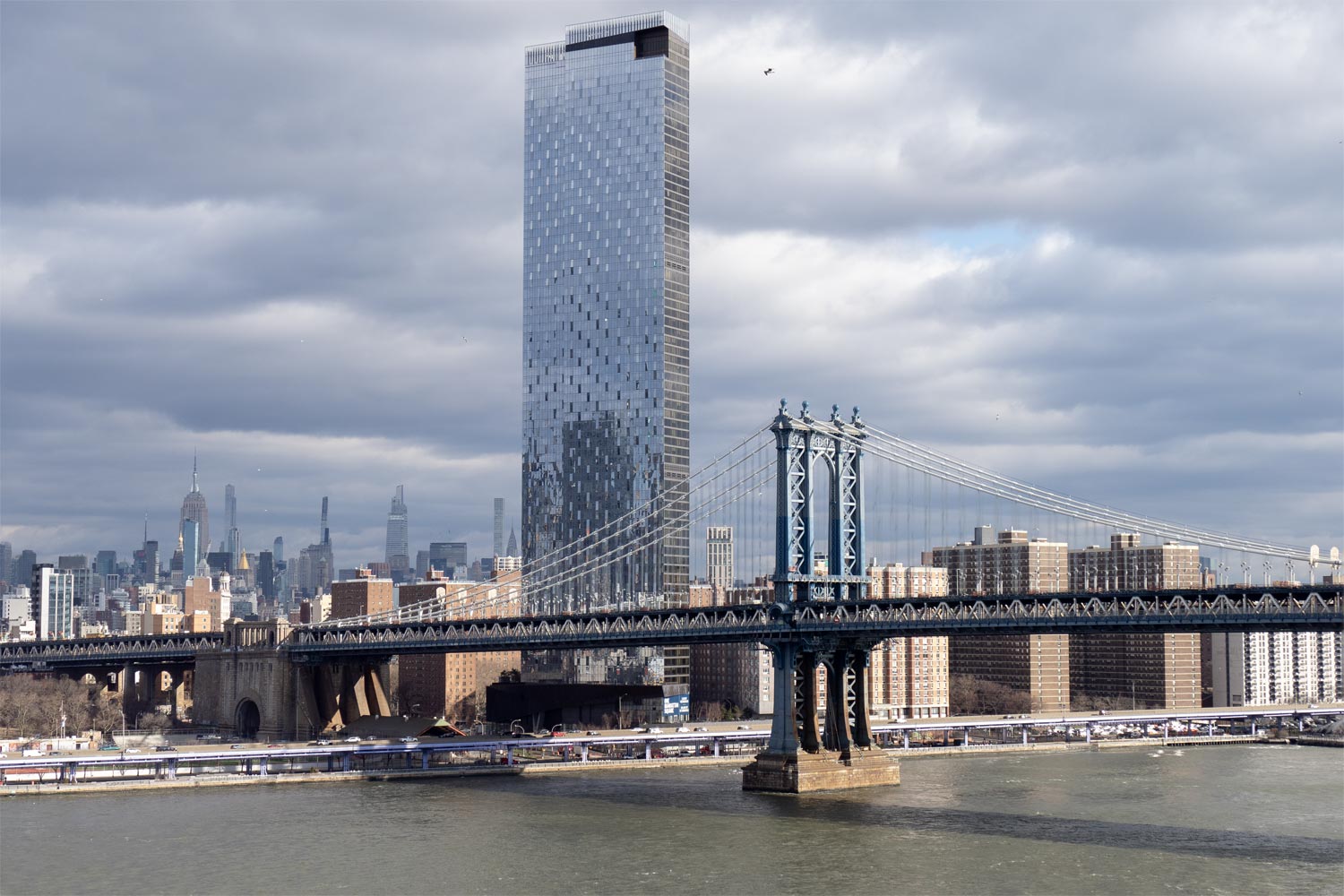
And more: from the Brooklyn Bridge you can see the Manhattan Bridge.
Dumbo
Over time, as New Yorkers stopped being afraid of the Brooklyn Bridge, the load on it increased so much that a second bridge had to be built. It was completed in 1909 and named the Manhattan Bridge.
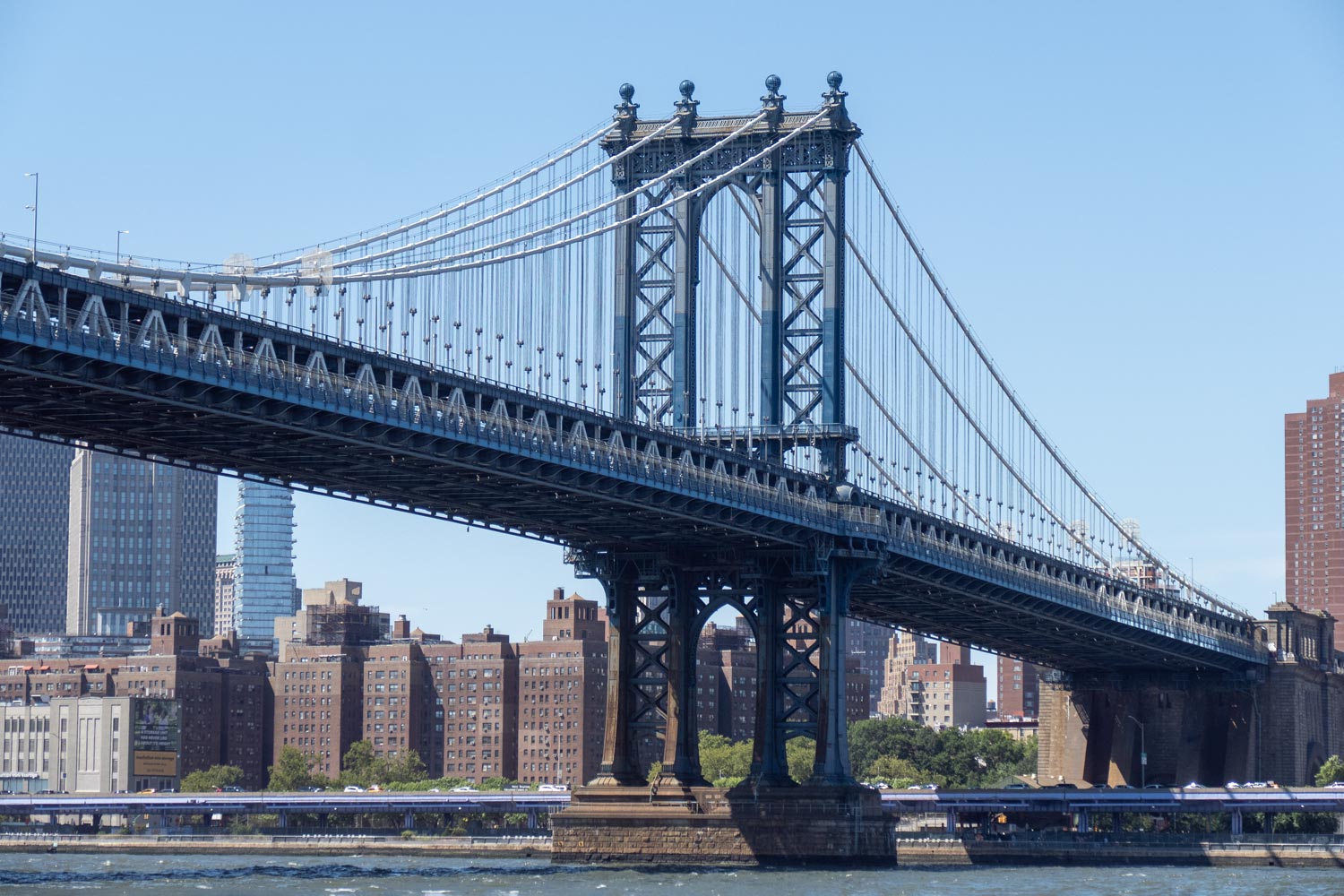
Two bridges look similar from a distance because they’re both suspension bridges. But while the Brooklyn Bridge is made of stone, the Manhattan Bridge is built from steel and concrete. And instead of a sandy color, it’s blue and rusty, so it’s easy to tell them apart.
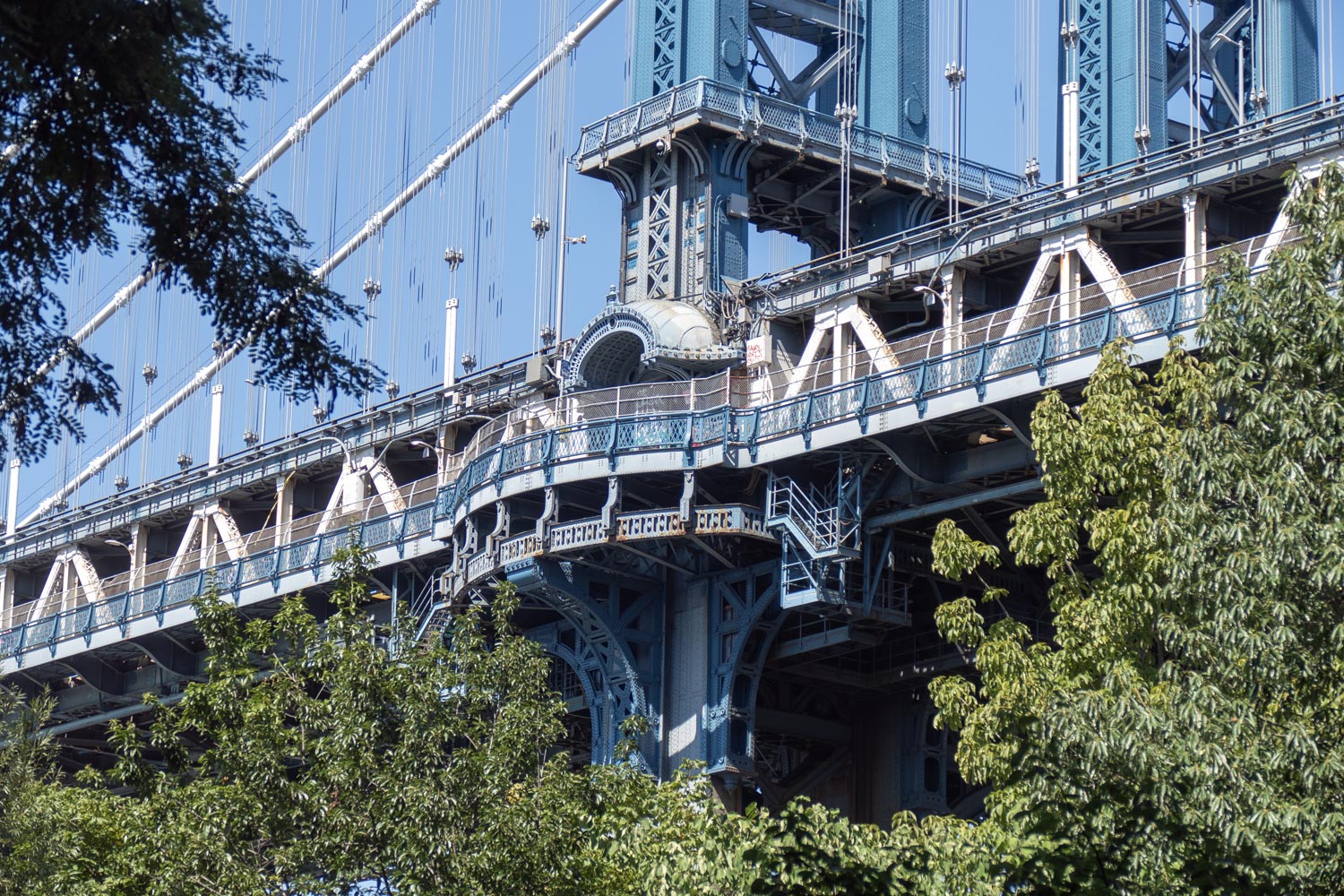
The Manhattan Bridge is more of a transport bridge than a pedestrian one. Of course, you can walk across it, but you’ll have to use a narrow path along the edge, while several lanes are reserved for cars. In addition, a subway line runs over the bridge, so it shakes quite a bit.
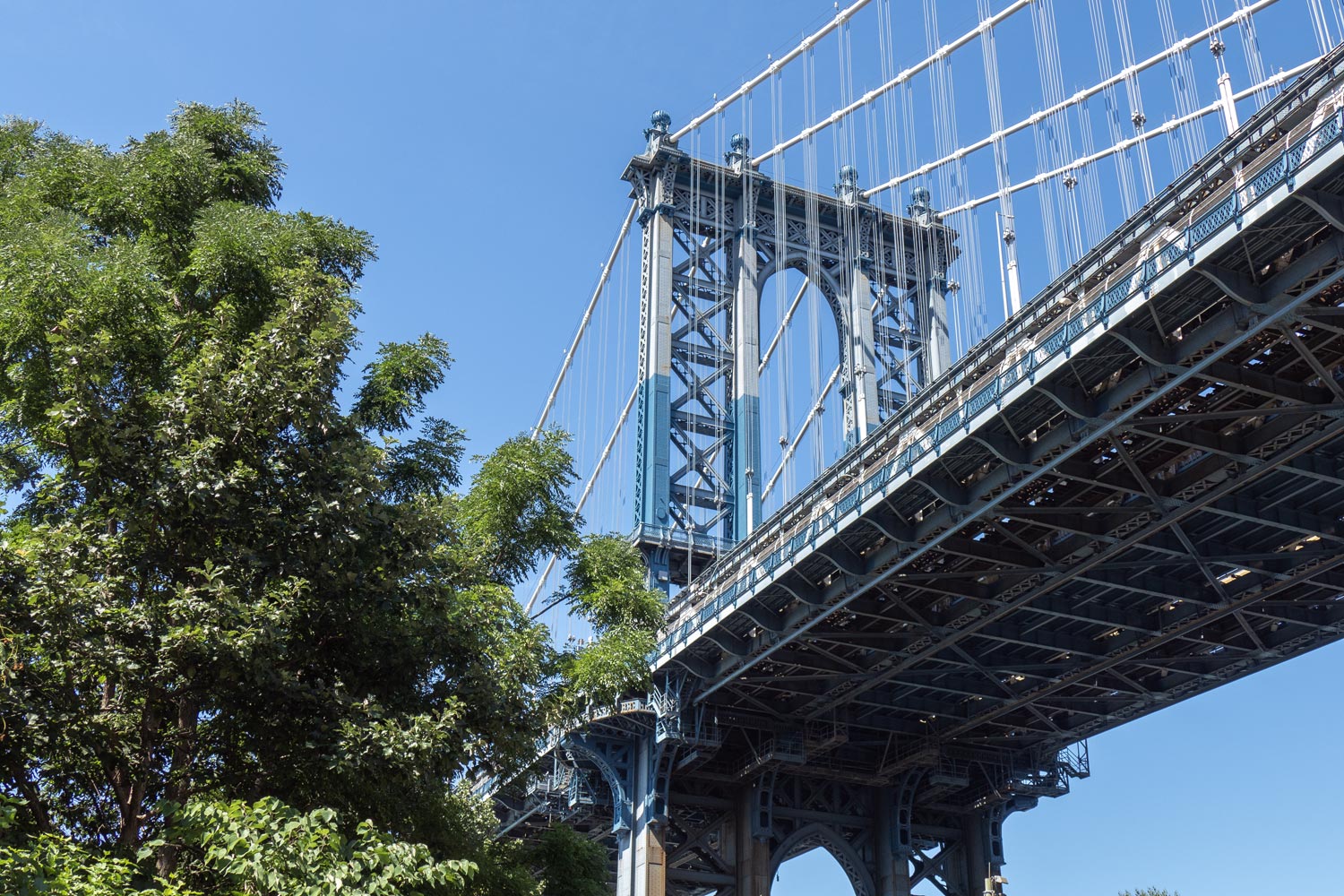
If you pick the shooting spot just right, you can squeeze the WTC skyscraper between the supports.
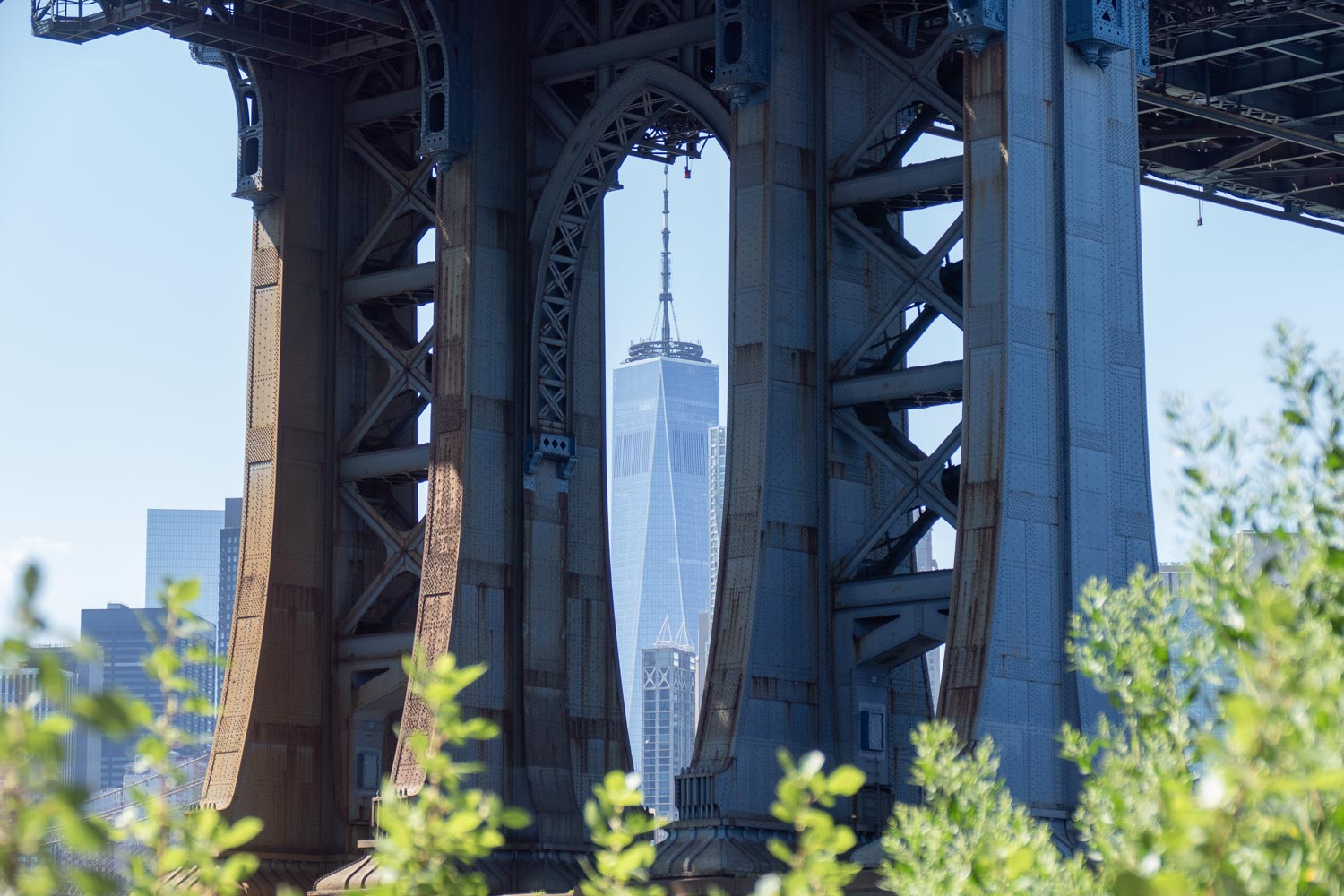
Photographers capture this fantastic view in a small area near the bridge called DUMBO. And that’s already Brooklyn.
The English name “Dumbo” is an acronym: Down Under the Manhattan Bridge Overpass. Typical New York humor.
Few readers have heard this name, but many have seen the iconic photo from Dumbo that became a symbol of America’s industrial age. This is where “Once Upon a Time in America” was filmed.
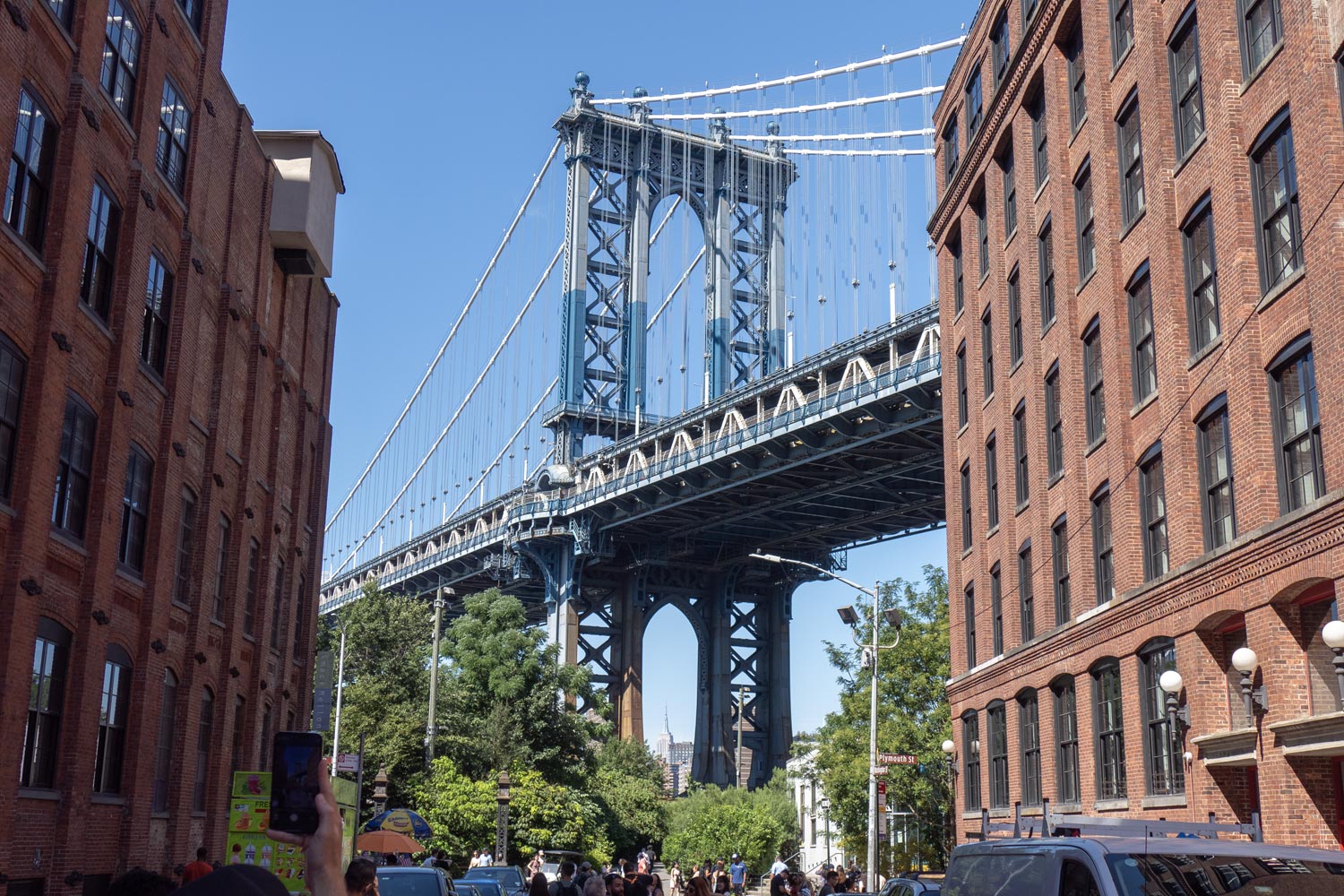
An even more atmospheric view appears in winter, when the landscape becomes gloomy, like in The Godfather or the game Mafia.
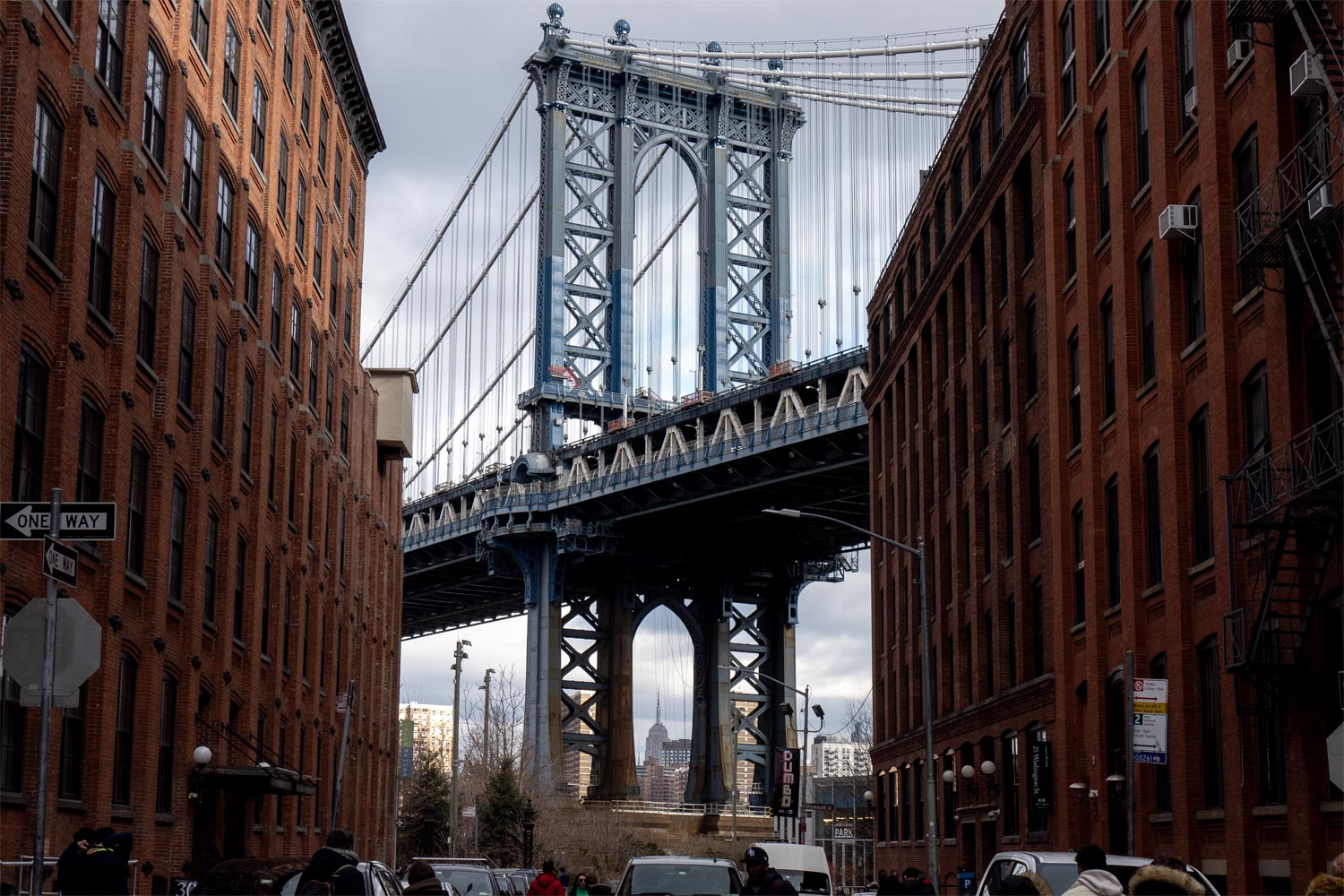
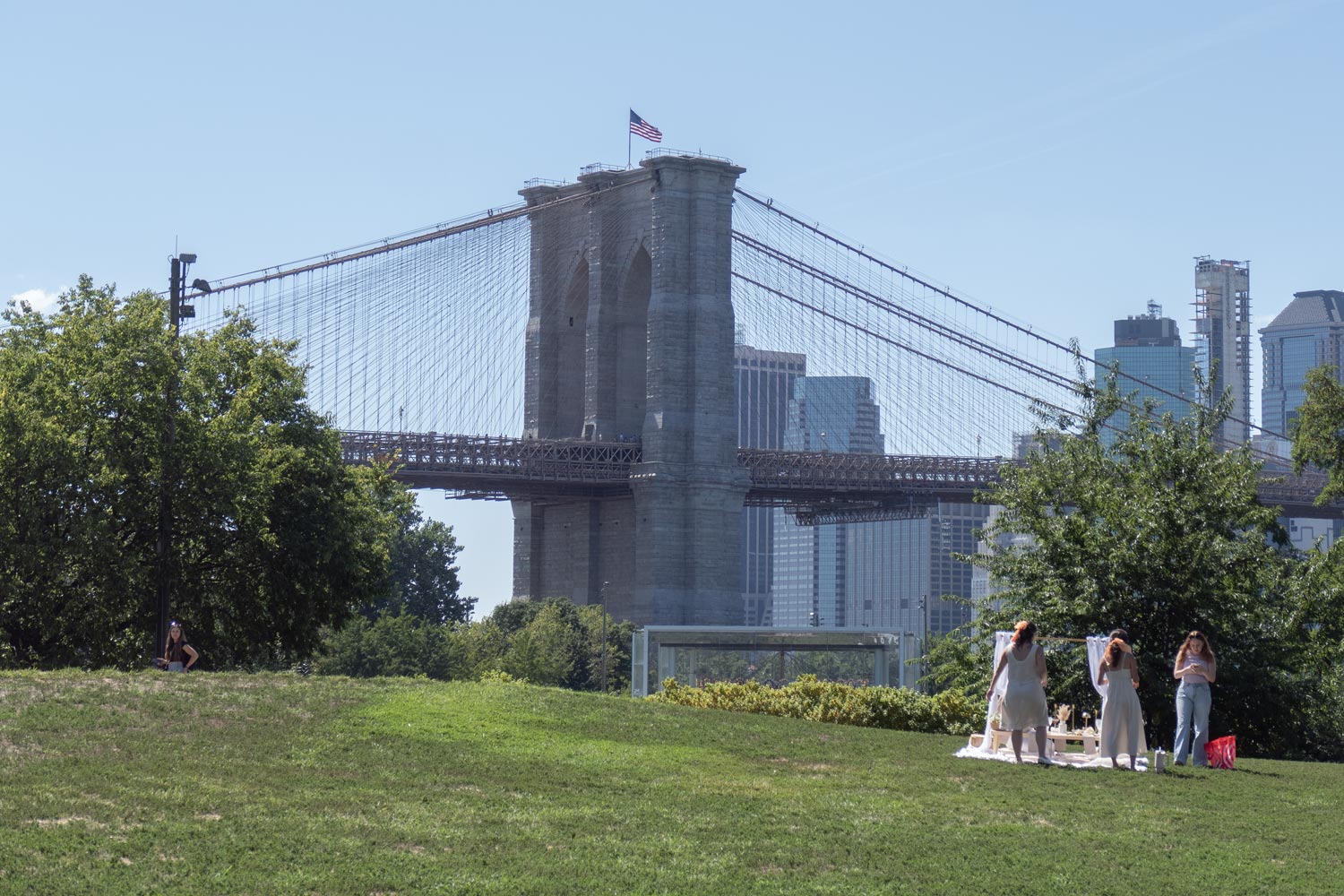
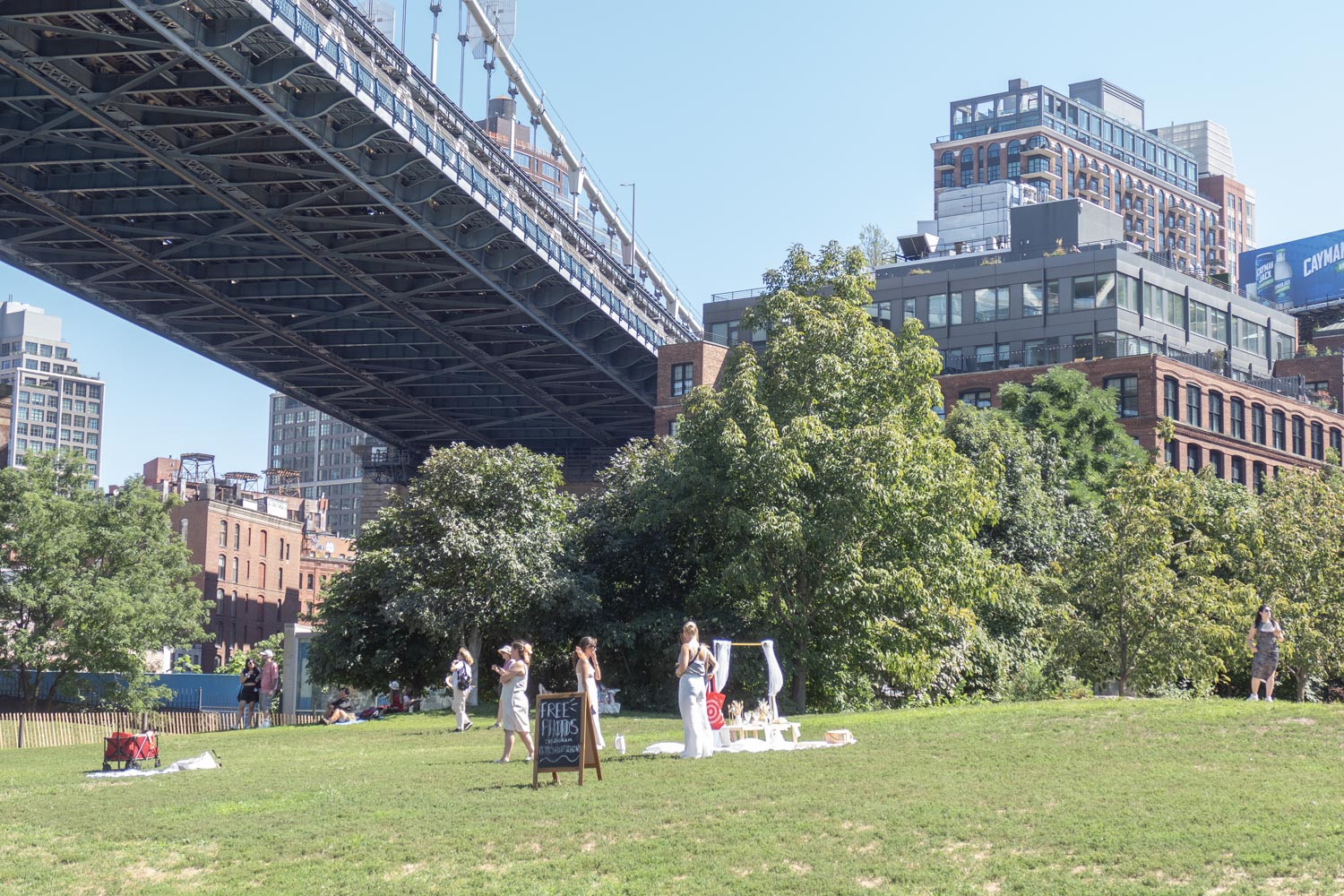
A couple of small lawns under the bridge spans are among the favorite spots for picnics and celebrations. There’s always someone proposing to someone or celebrating a birthday here.
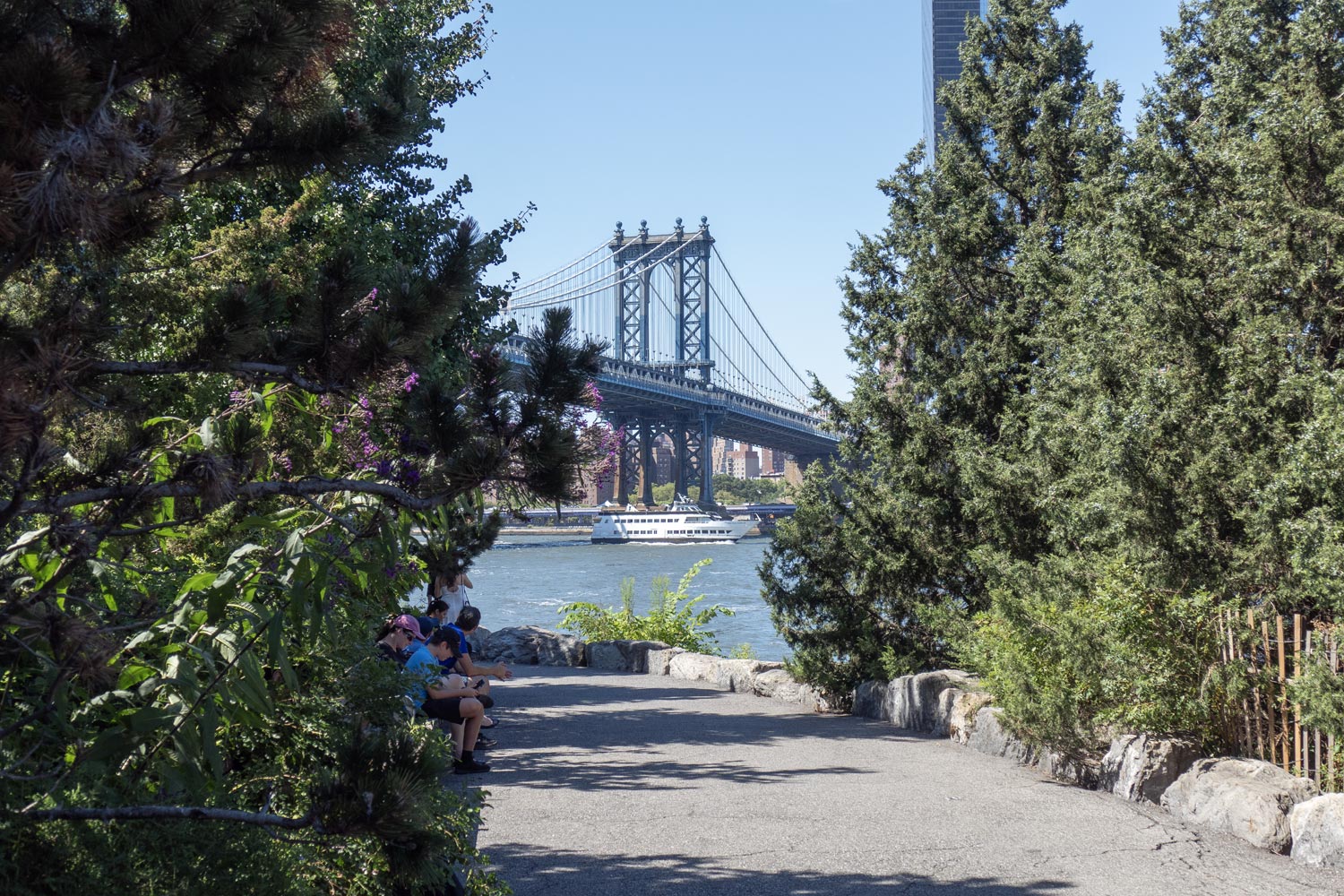
Around the bridge piers and along the riverbank runs a promenade. If you tried to capture every beautiful view of the bridges and the city here, you’d run out of film.
Jewish Quarter
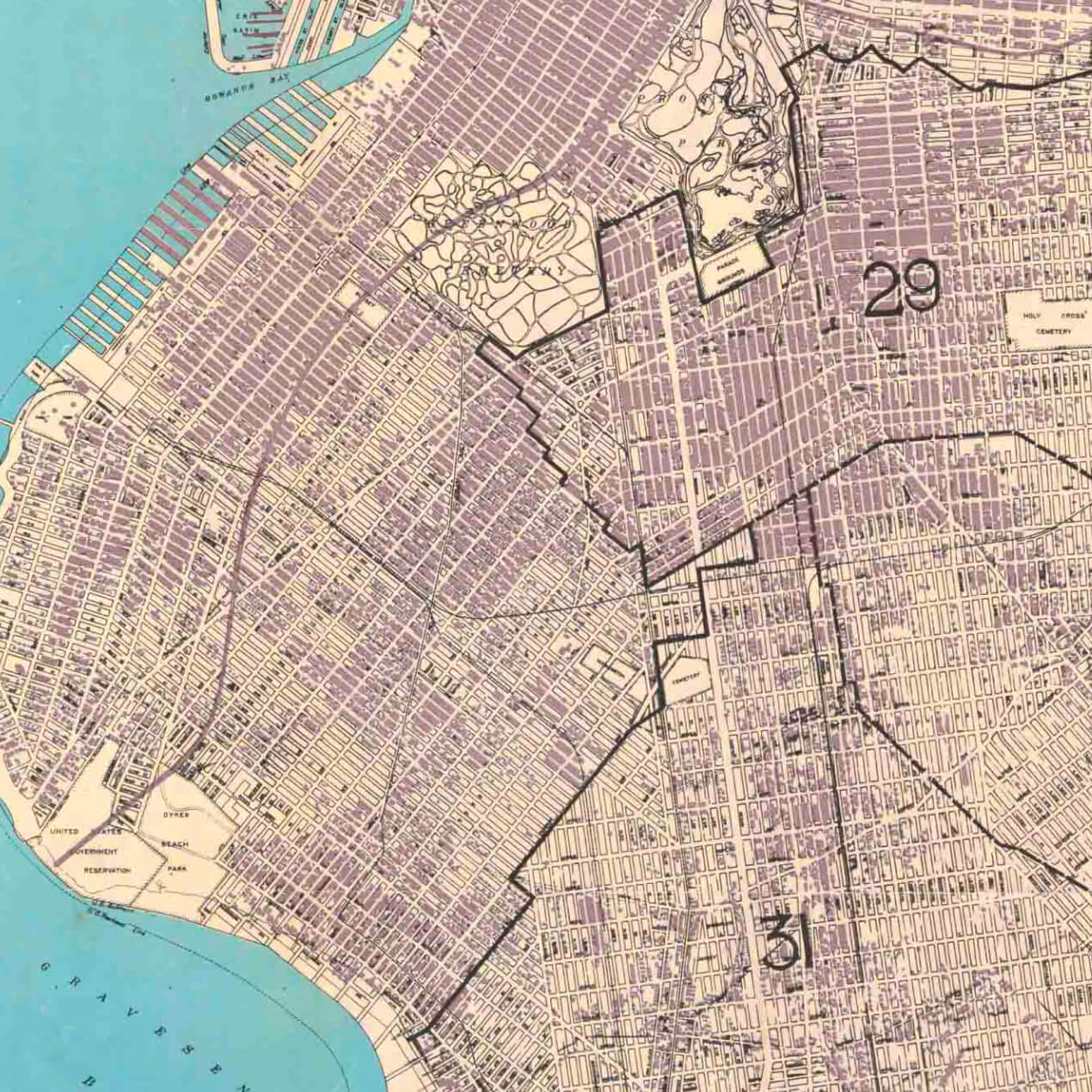
Right after DUMBO begins Downtown Brooklyn. It’s the blandest place in all of New York. A couple of nondescript skyscrapers, a mall, and some ridiculous new builds — that’s about it. Let’s skip it and dive straight into the real furnace — the Jewish quarter.
Throughout all of America, there are more Jews than in Israel. In New York City alone, more than two million Jews live there, and 700,000 of them live in Brooklyn.
Like any other ethnic group, Jews in the United States today can live wherever they want, not just in some closed-off “Jewish quarters.” Still, most of them live in large communities, clustering in several neighborhoods in Brooklyn. One of these neighborhoods is Borough Park — a name that is completely nondescript.
Jews began arriving in New York at the end of the 19th century, but at that time it was just a thin trickle of settlers. A powerful wave, of course, surged in the 1930s — when Hitler came to power in Germany — and continued after the Second World War.
As a result, today 200,000 Jews live in Borough Park. Most of them are Orthodox and Hasidic. What a paradise for a photographer!
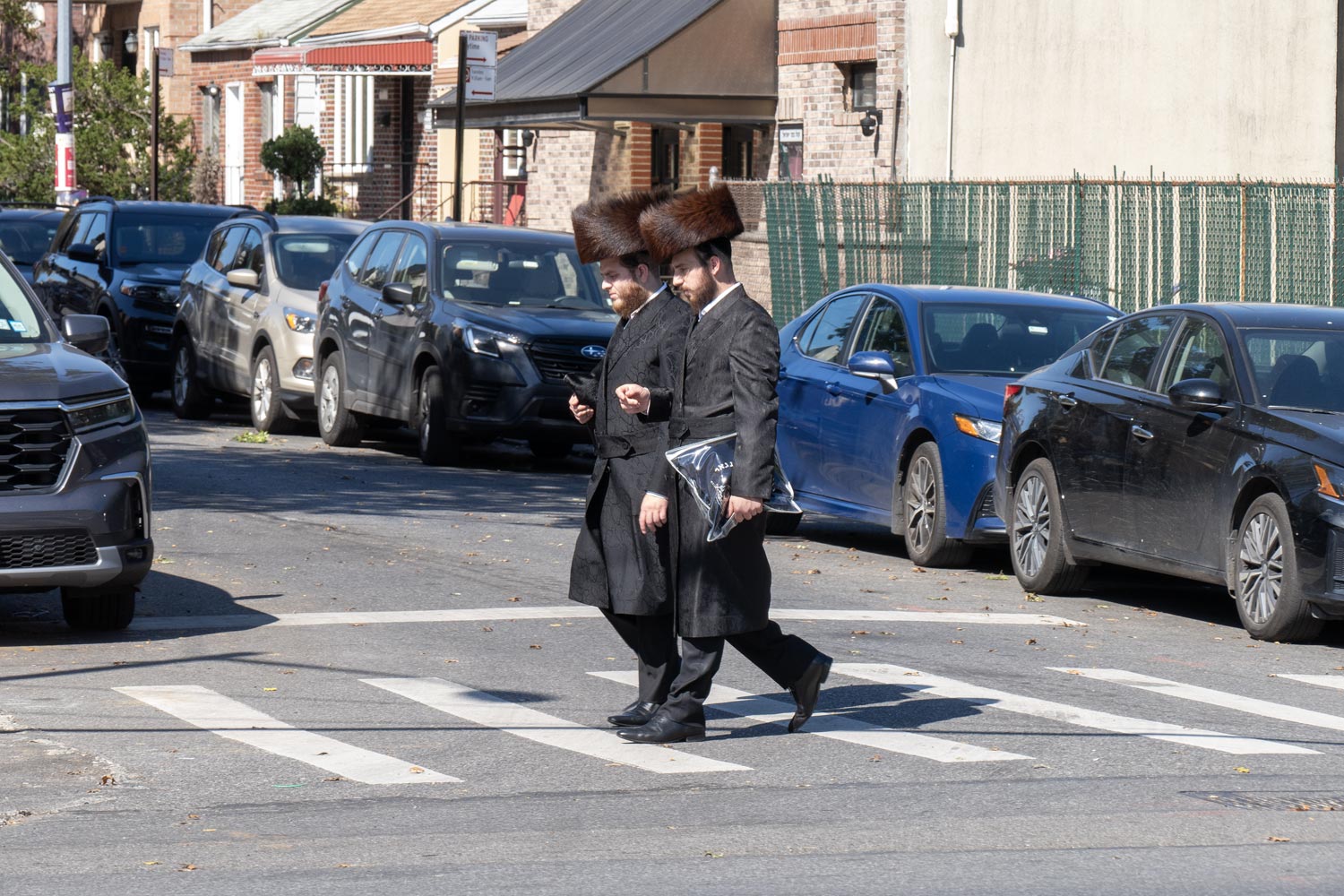
The funniest-looking part of an Orthodox Jew is the enormous fur hat called a shtreimel. Only Hasidim wear it — Jewish mystics. Hasidim are remarkable for the way they leap, jump, dance, and sing at holidays with total abandon, supposedly joining with god through that ecstatic joy.
A shtreimel is made from expensive fur, usually sable or marten. It isn’t worn every day, but on Saturdays and holidays. No wonder: one such hat can cost from three to ten thousand dollars. God forbid you get it dirty.
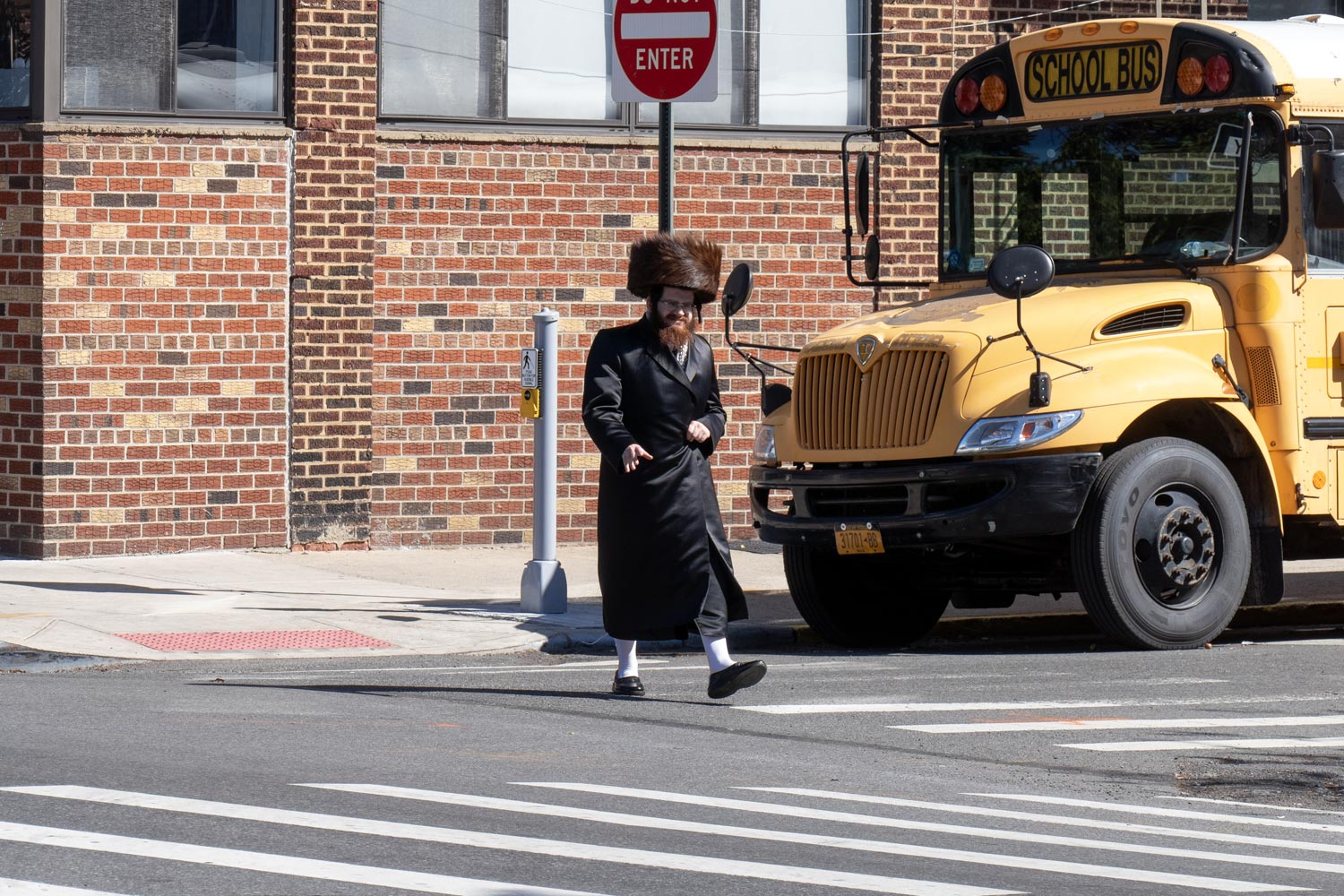
On Saturdays, Borough Park turns into a real show. Early in the morning, Hasidim come out of their homes and walk in crowds to the synagogue to pray. Since the neighborhood is completely Jewish, there are almost no cars driving here on Saturdays, so people walk right in the streets.
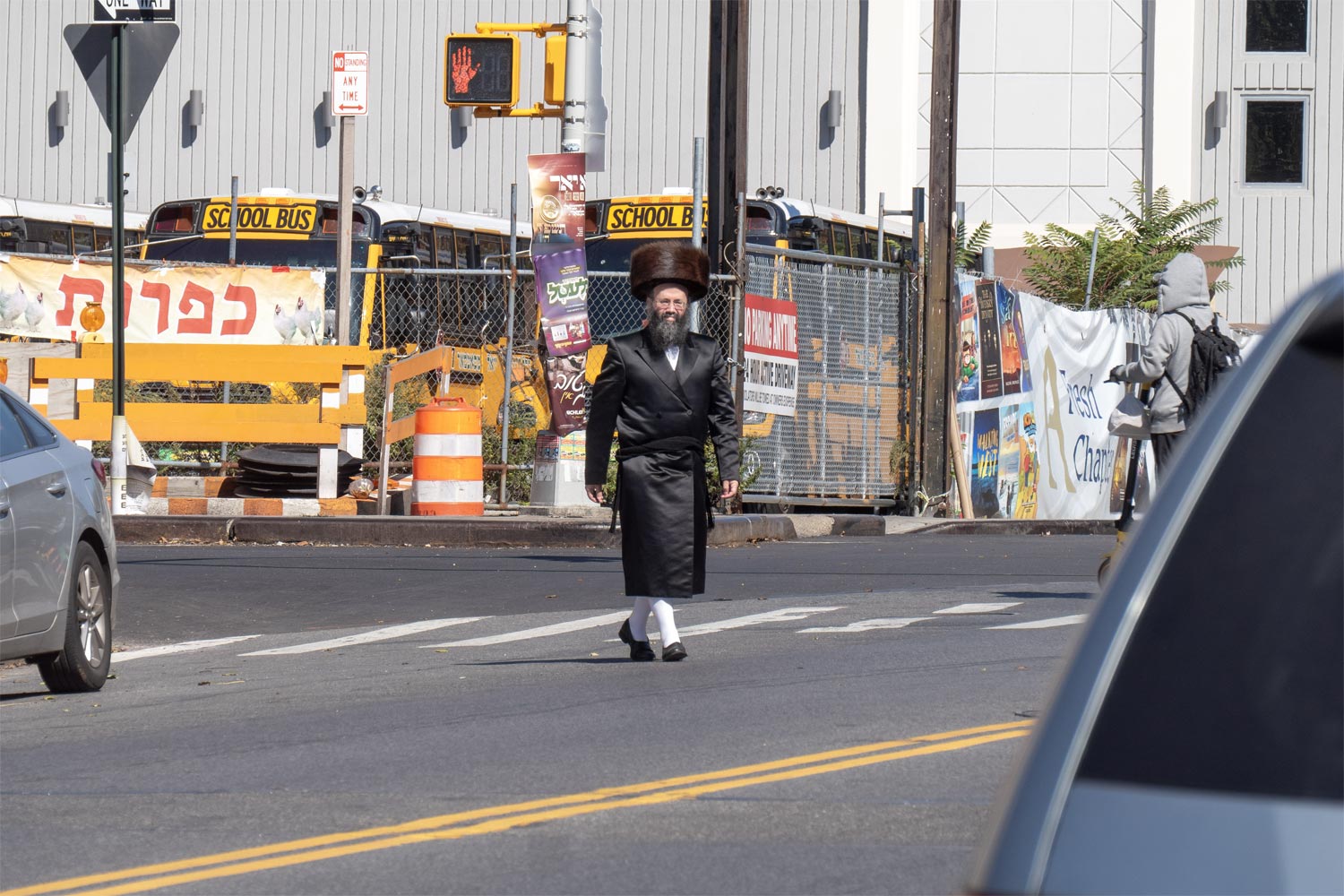
For an Orthodox Jew, the community is everything. Marriage, the birth of children, upbringing, rules of conduct — everything is decided through the community and with the community’s interests in mind. If a Hasid decides not to wear Jewish clothing or does not observe the holidays, he is expelled from the community very quickly. That’s why the whole family goes to the synagogue without fail, including children, the elderly, and people with disabilities.
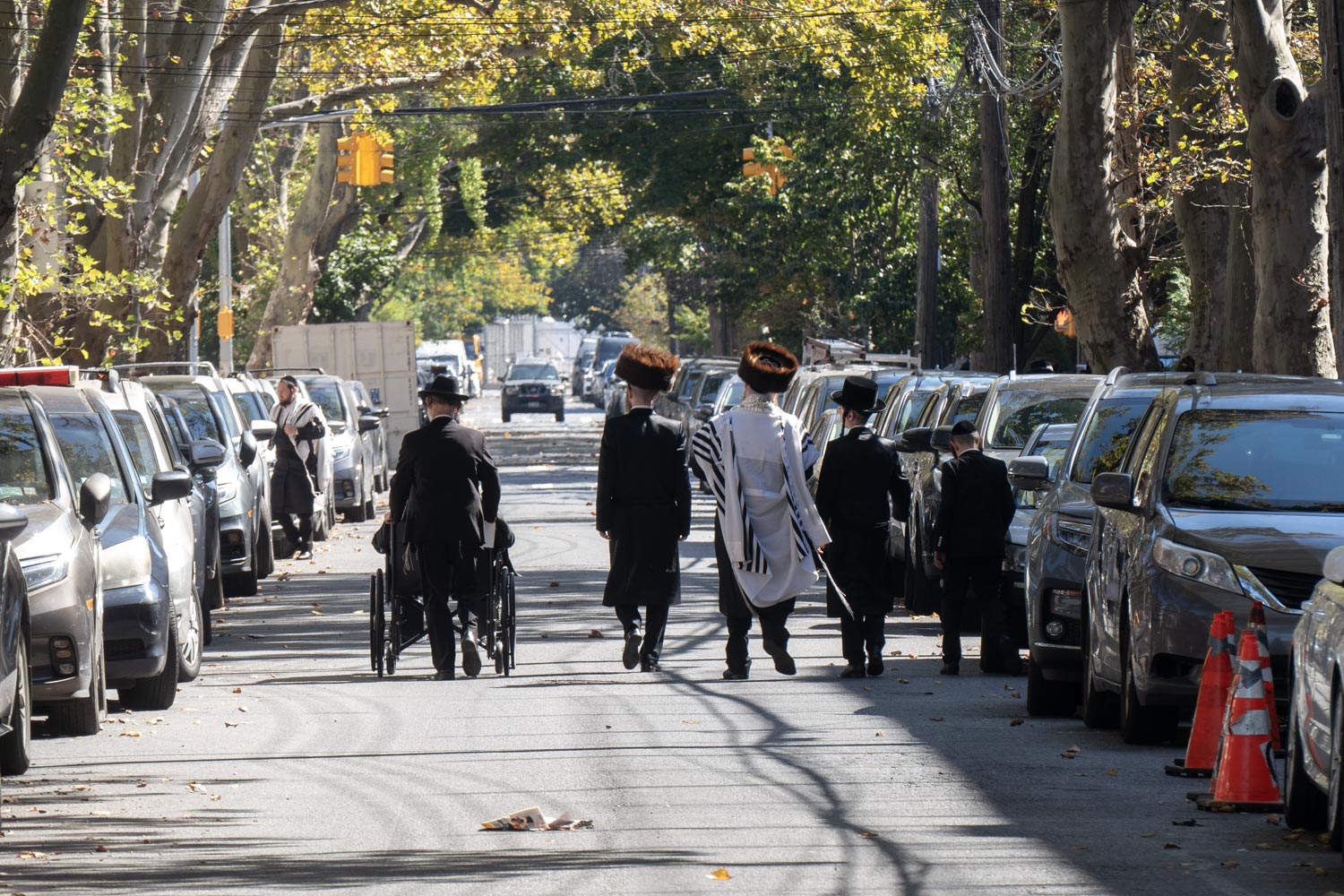
Not all Jews wear a shtreimel. Many wear a regular fedora-style hat or a bowler. The choice depends on the lineage as well as on the status.
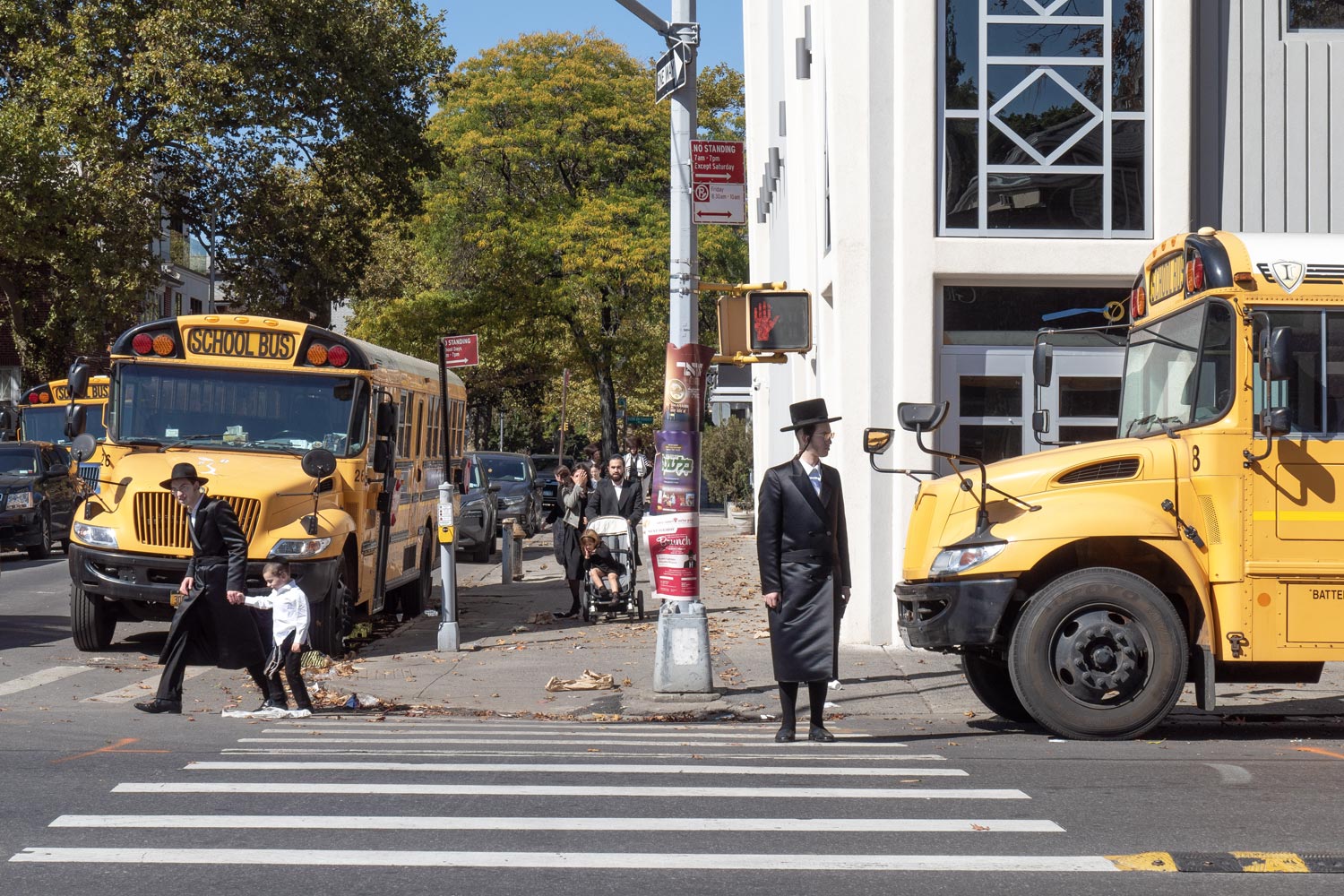
Another part of Jewish clothing is the tallit. It is a white shawl with black stripes that is worn for prayer. Some people go to the synagogue already wearing a tallit, while others put it on when they arrive.
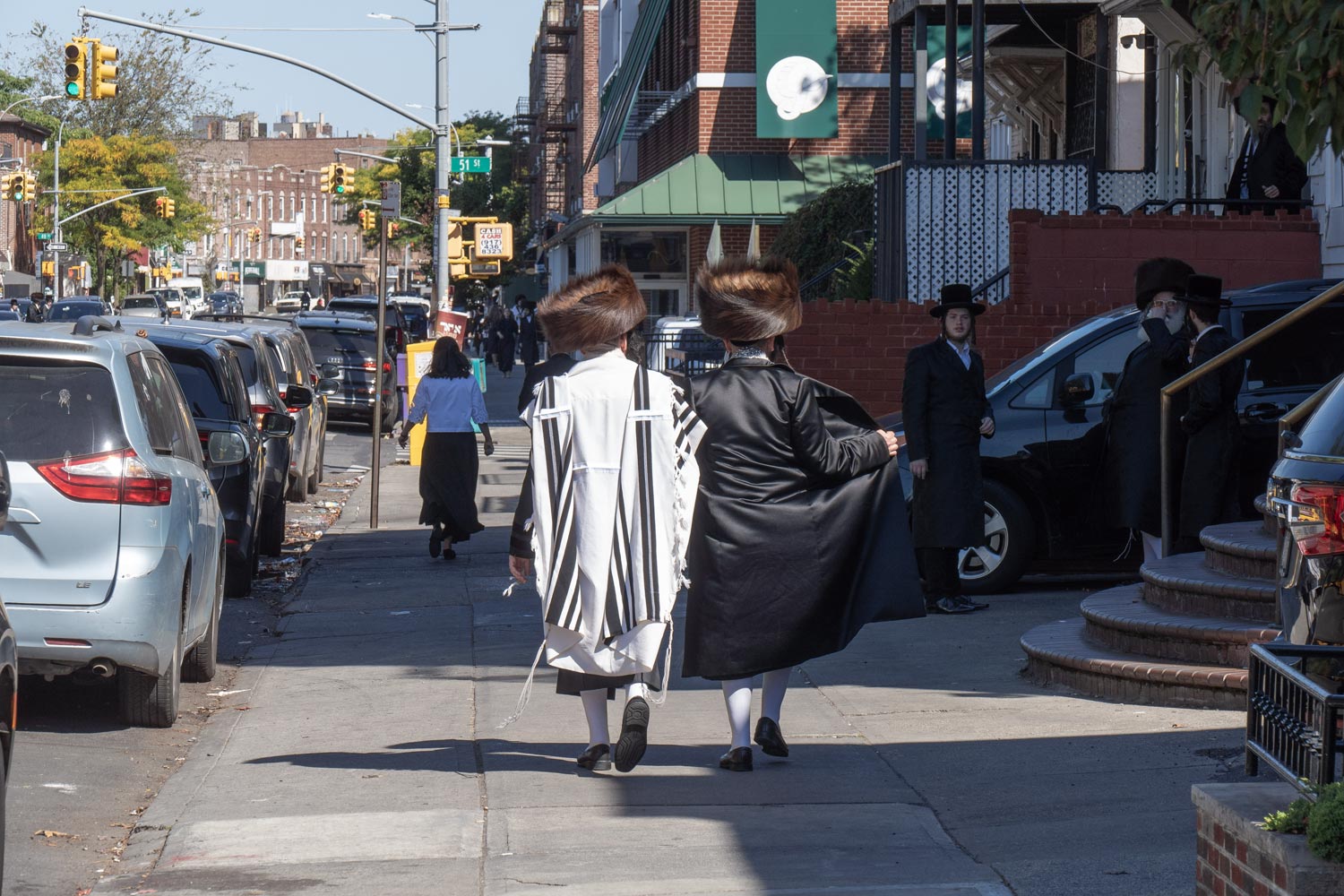
For women, the costumes are much simpler: a closed-top and a long skirt down to the floor, usually black.
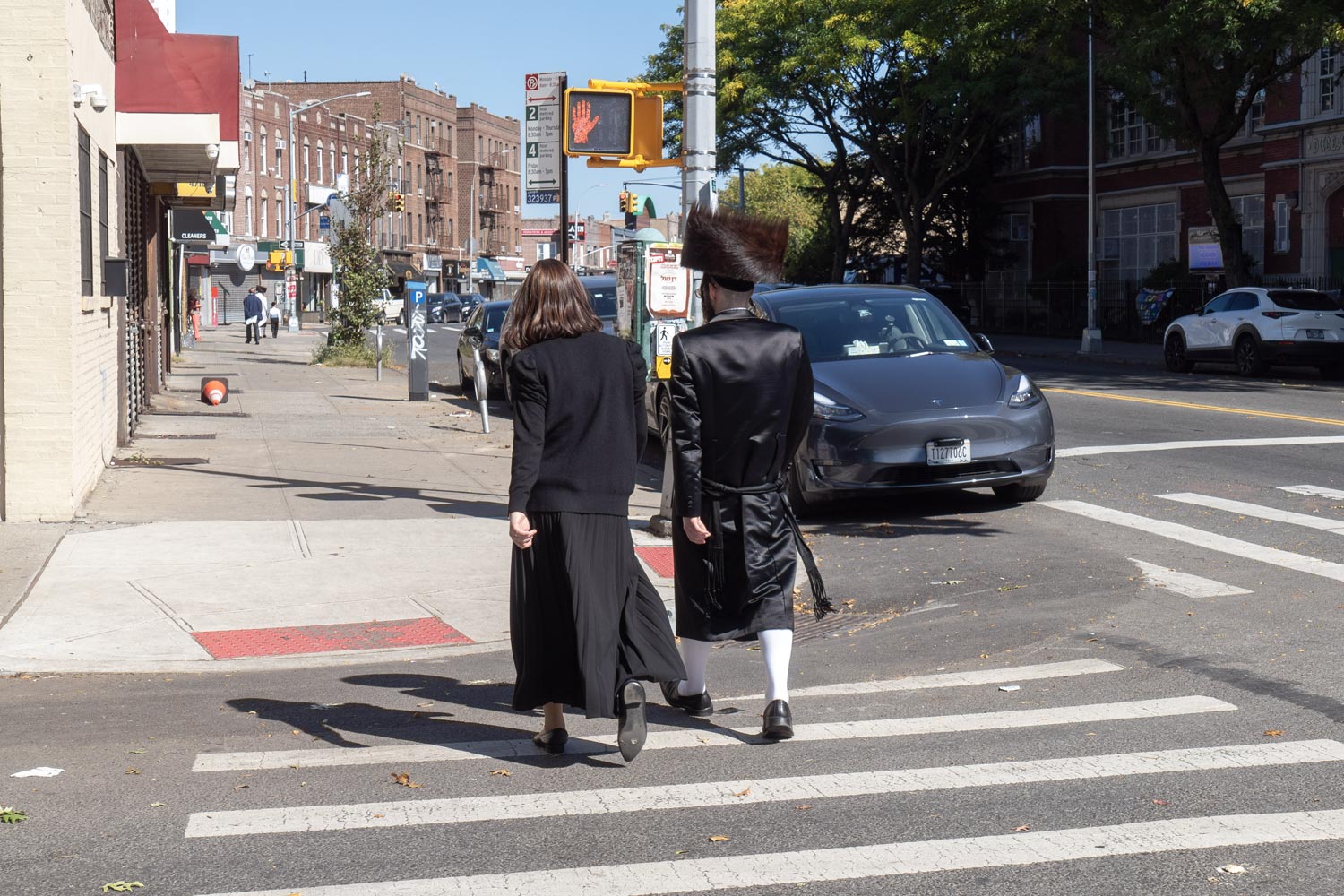
Jewish fashion show.
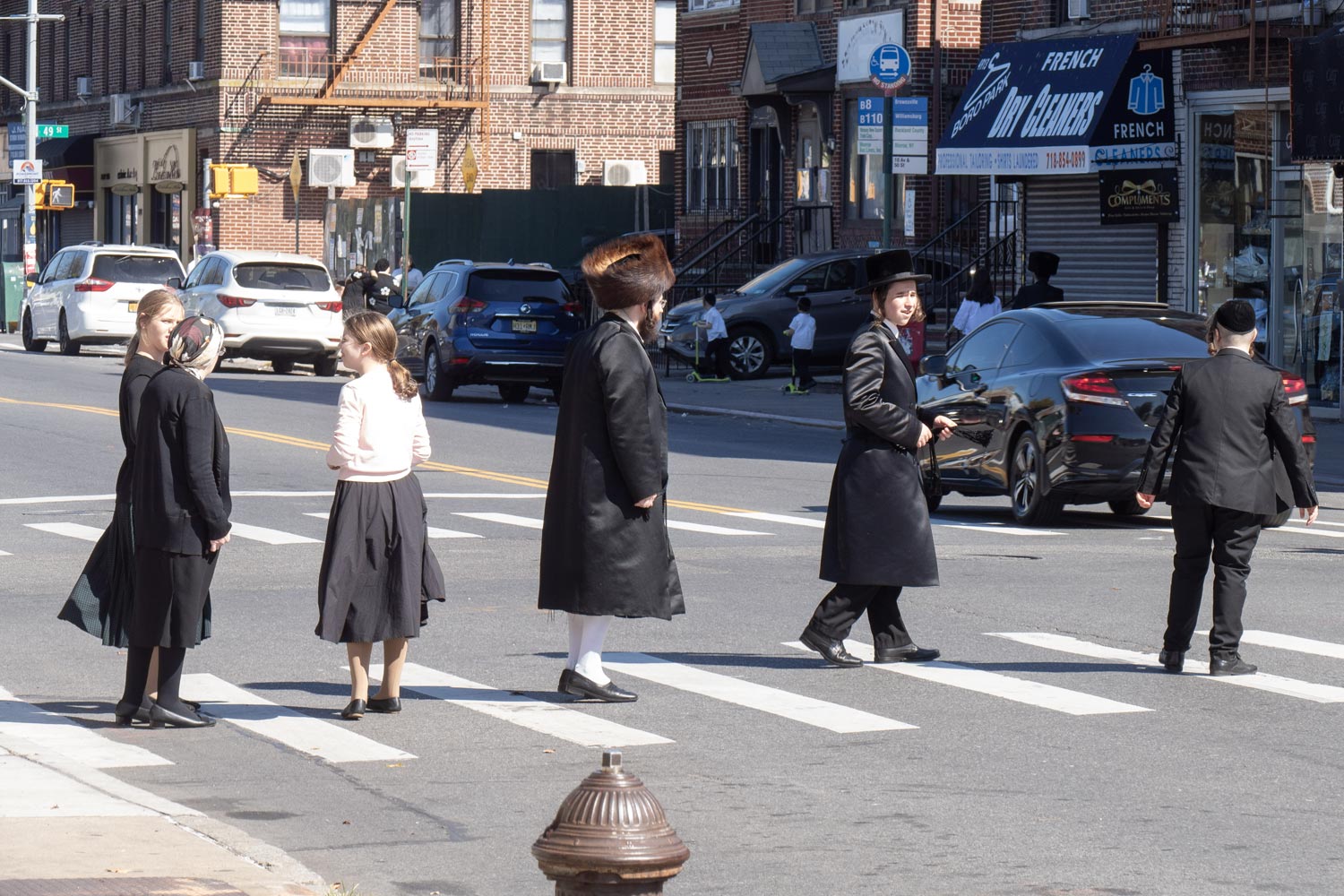
The Jews, of course, were not at all pleased to see me show up in their neighborhood on a Saturday, and with a big camera slung over my shoulder to boot. Couldn’t actually do anything, but showed very displeased faces.
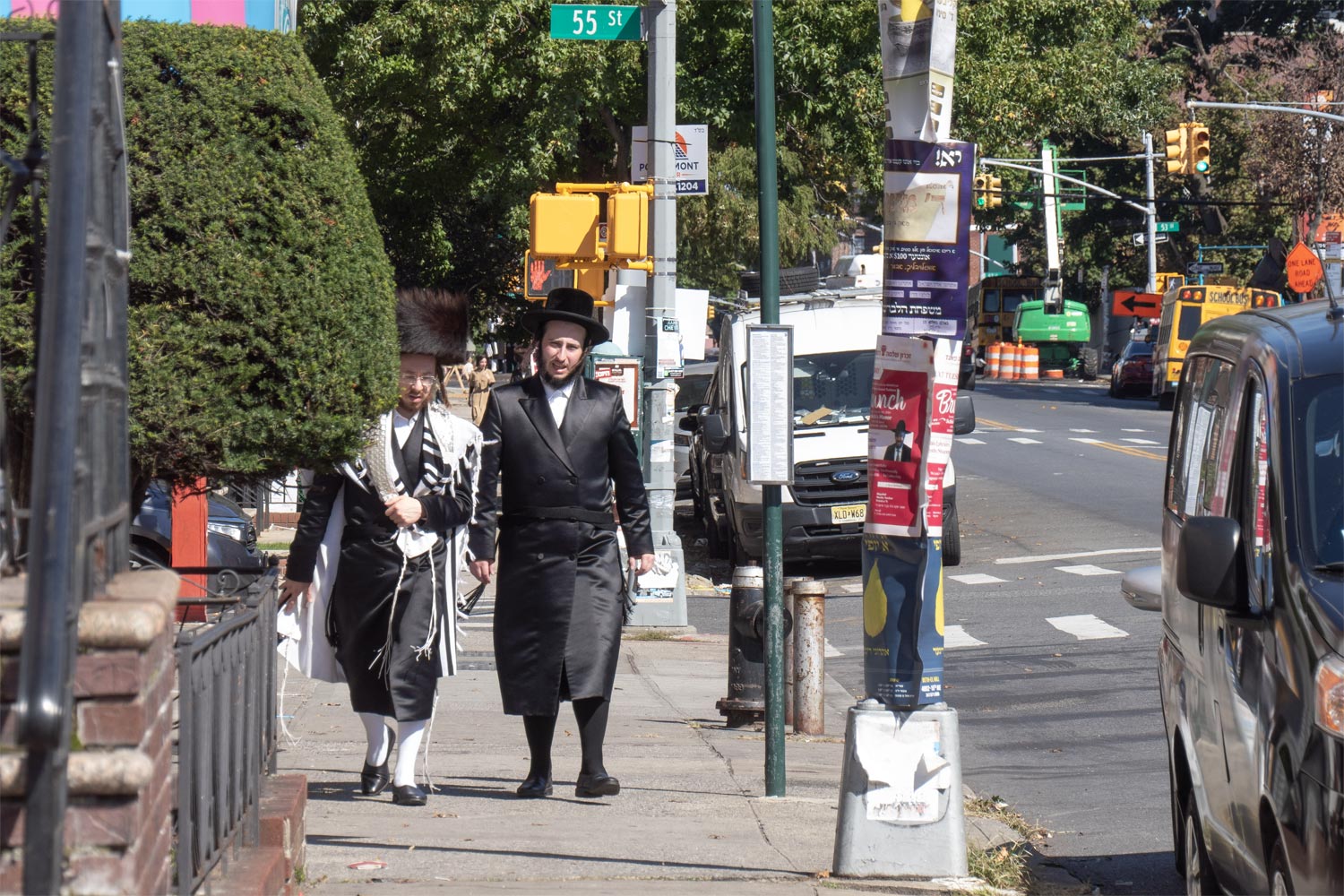
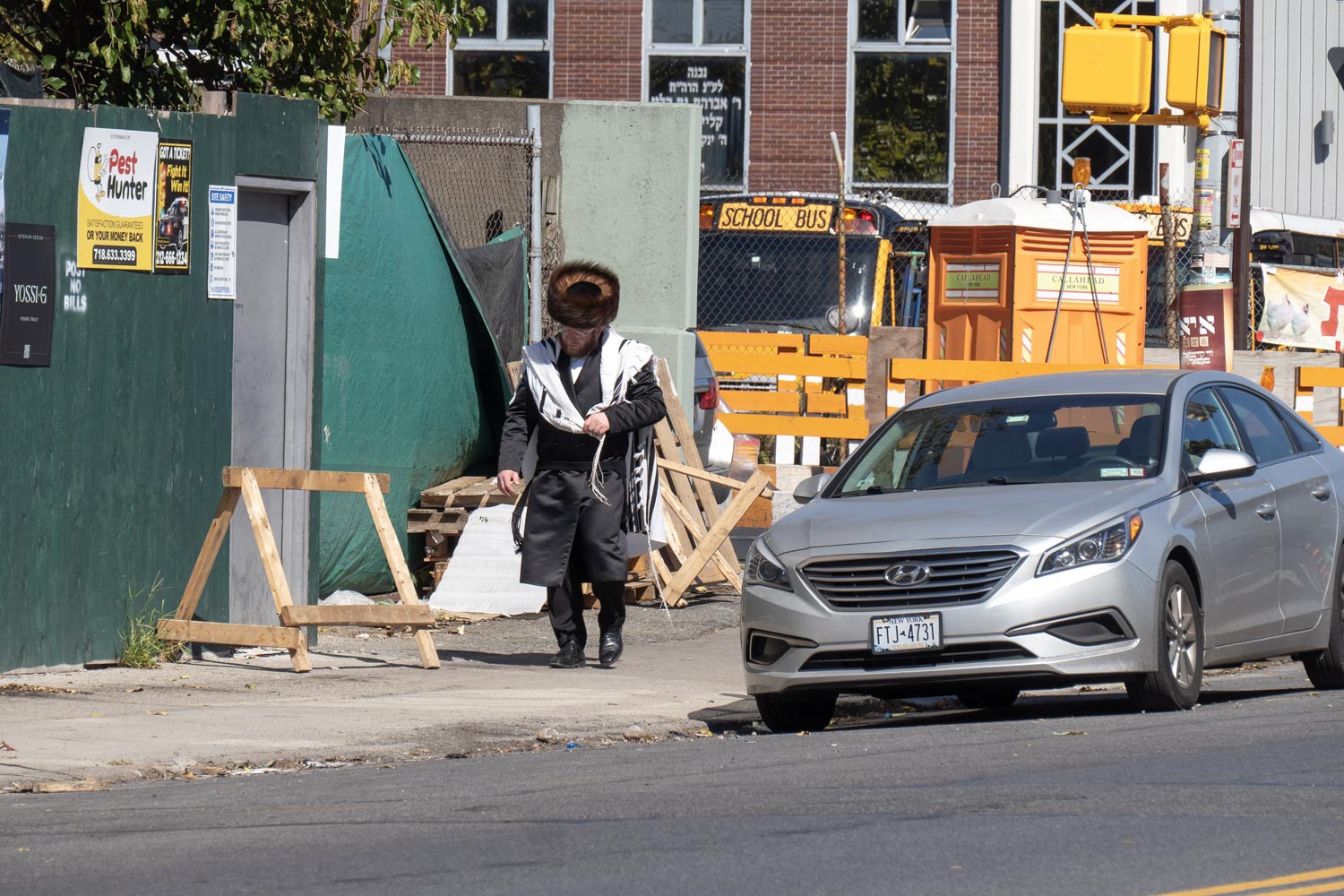
Overall, nobody really bothers Jews in New York, especially in their own neighborhoods. Wearing traditional clothing, a Jew can easily go to downtown Manhattan, where at most they’ll just attract some curiosity about their unusual outfit.
And yet in the United States, as in the rest of the world, there are occasional surges of antisemitism, which is why Borough Park and other Jewish neighborhoods have their own community security patrol.
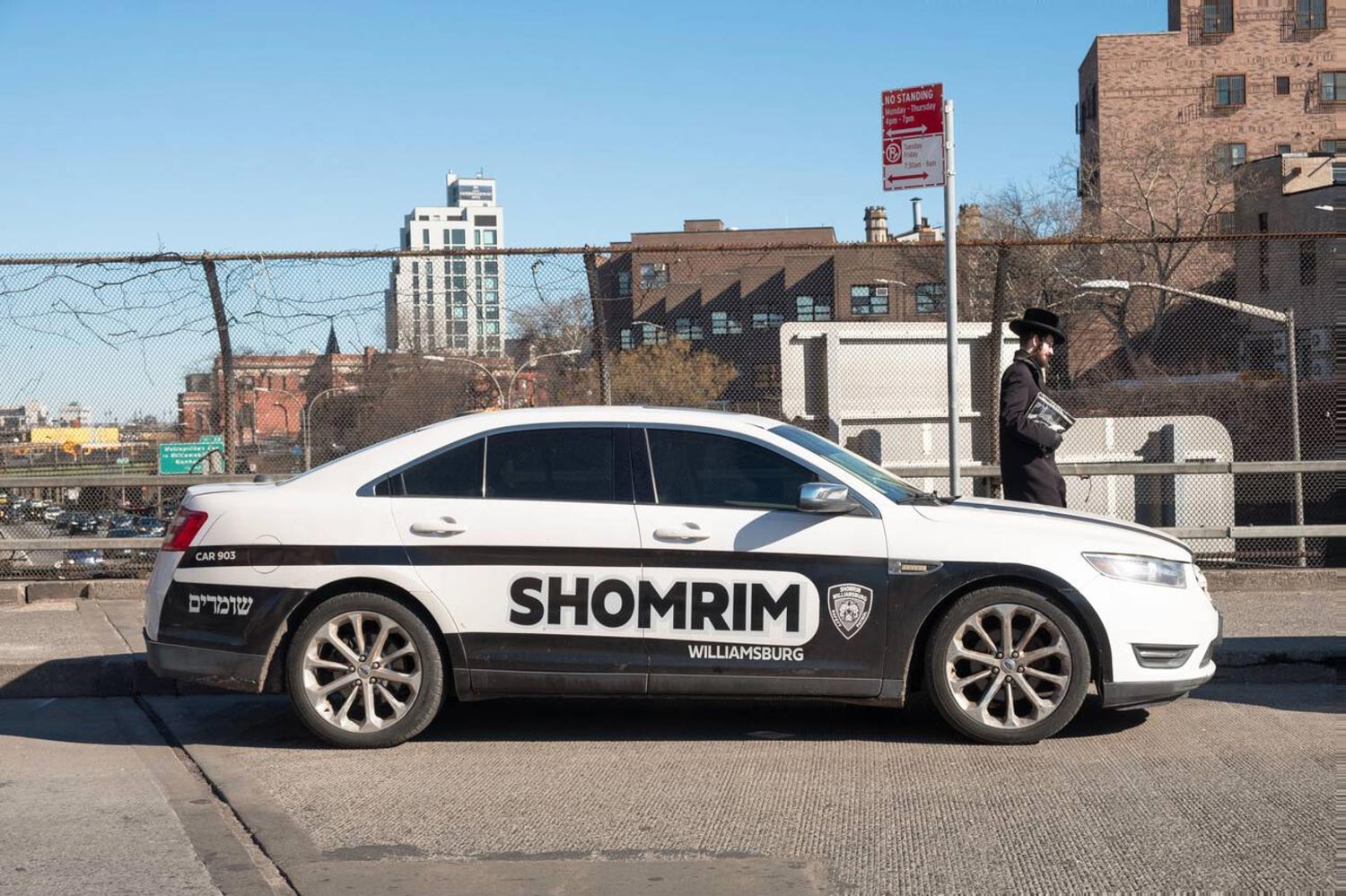
Synagogues, meanwhile, are scattered across New York in incredible numbers. Some are located in standalone buildings, while others are housed in converted residential homes.
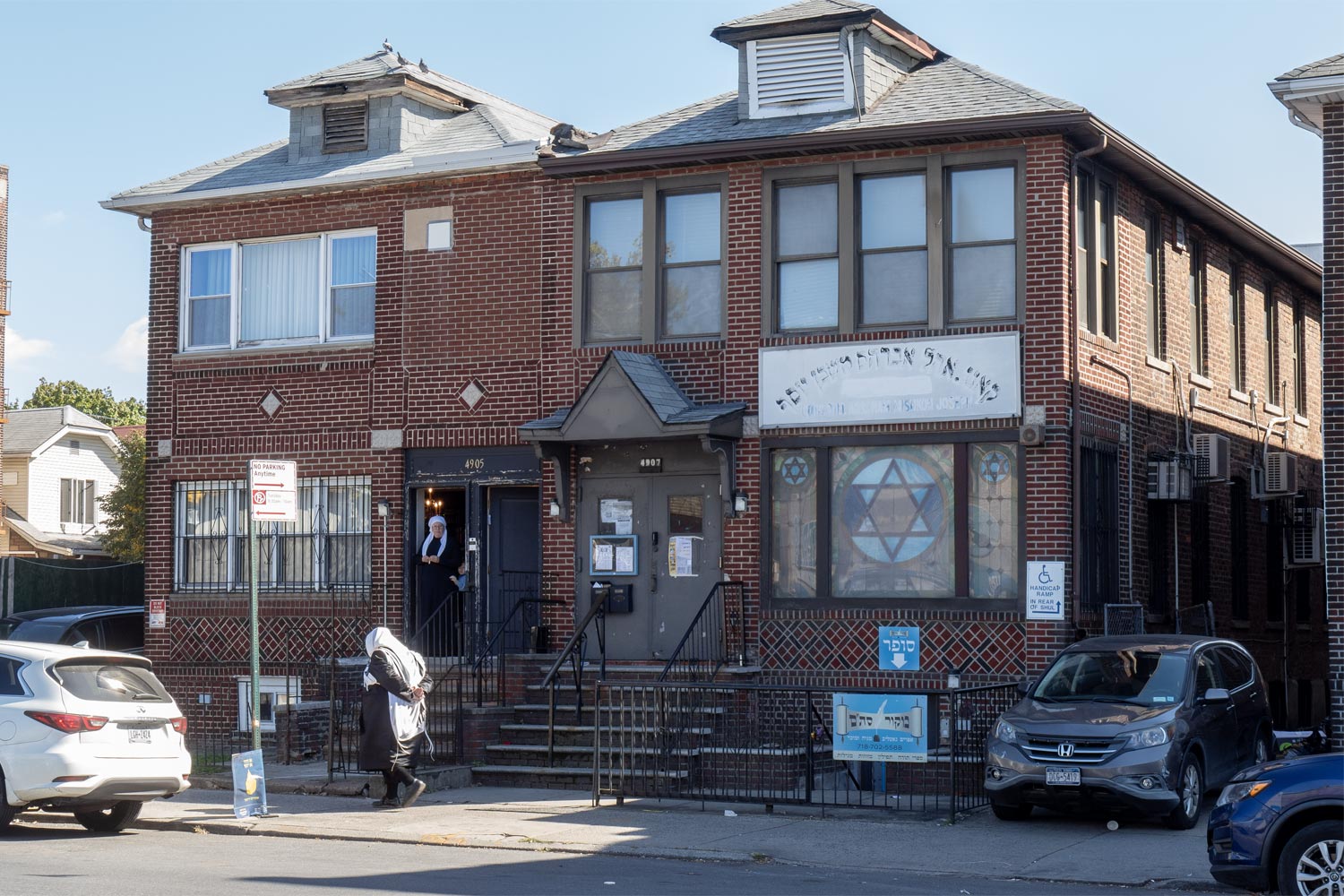
And still there aren’t enough prayer houses for everyone. The Jewish birth rate is really something! So one day, apparently in order to fit the entire community into a single synagogue, the Jews of one Brooklyn neighborhood decided to enlarge its prayer hall. History is silent on exactly how they tried to do this, but it is reliably known that the result of their efforts was a tunnel leading into the synagogue’s basement directly from the sidewalk.
At first, everything went according to the Jewish plan: during the quarantine, the worshippers made their way into the basement through a secret hatch in the street. But soon the residents of neighboring buildings began to complain about the noise, banging, and vibrations coming from somewhere underground. And what was worst of all: the noise and banging were sometimes accompanied by Jewish songs. One Reddit user even complained about what he thought were auditory hallucinations, because he couldn’t believe that someone could be singing underground in Hebrew.
It all ended with the arrival of the police, who decided to inspect the local synagogue, where they discovered an underground Hasidic disco. When they learned that the police had arrived, the Jews scattered in all directions, including through an underground tunnel they had dug.
When the police released the escape video, New York practically split its sides laughing. Supporters of the Jewish-conspiracy theory reminded everyone that they’d been warning about this all along and nobody believed them. That same Reddit user happily posted, “Hooray, I’m not crazy!” But the New York Post went the furthest, putting the Jew crawling out of the tunnel on the cover with the headline: “Sub-Vey!”
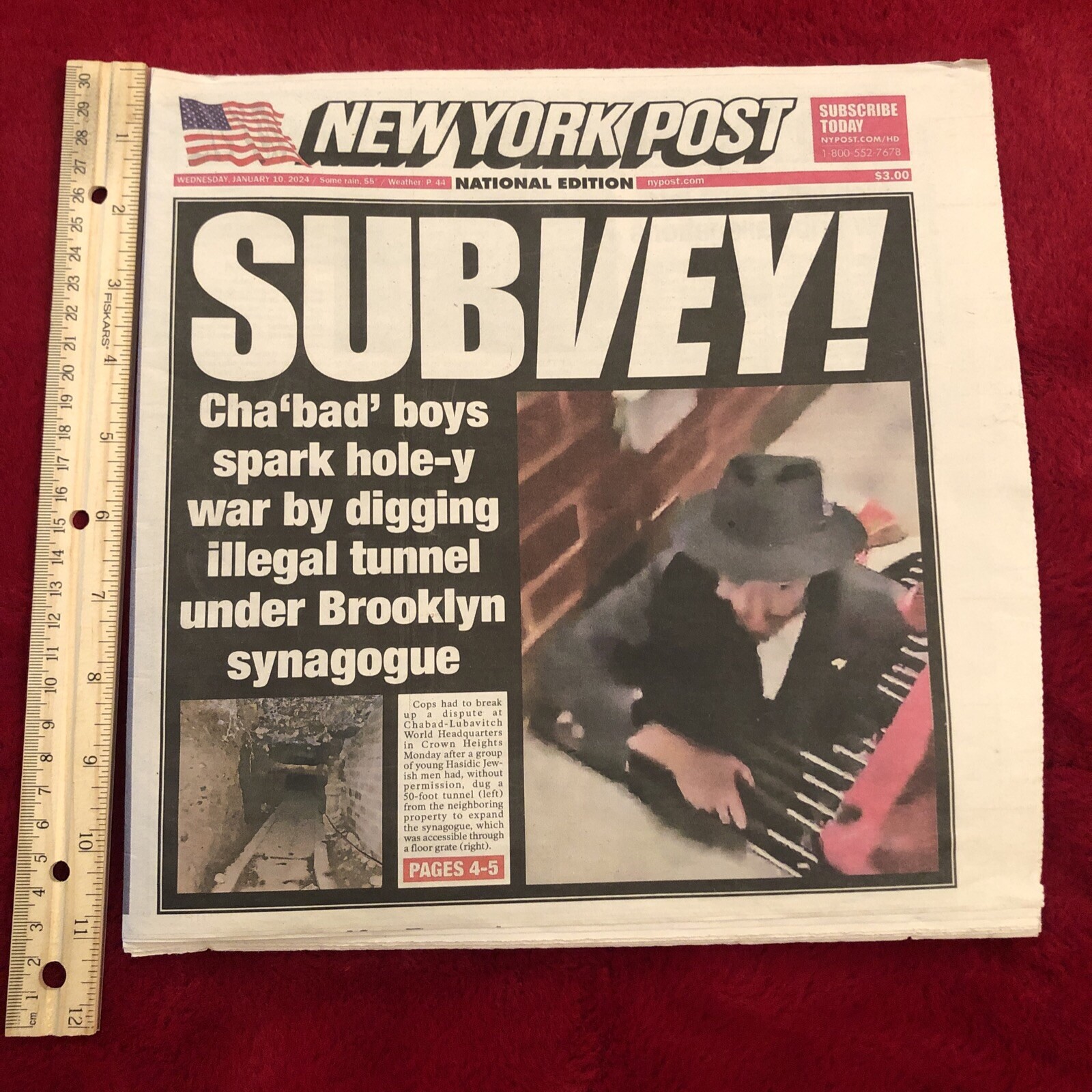
Brooklyn Jewry is yet another story about what any religion turns into when it’s taken to the point of absurdity.
Bay Ridge
If a New Yorker has a lot of money but can’t stand noisy Manhattan, they move to Bay Ridge. It’s one of the best neighborhoods in Brooklyn, and it’s super easy to get to downtown from there. Bay Ridge itself looks so much like Manhattan that there are even buildings in the Upper West Side style.
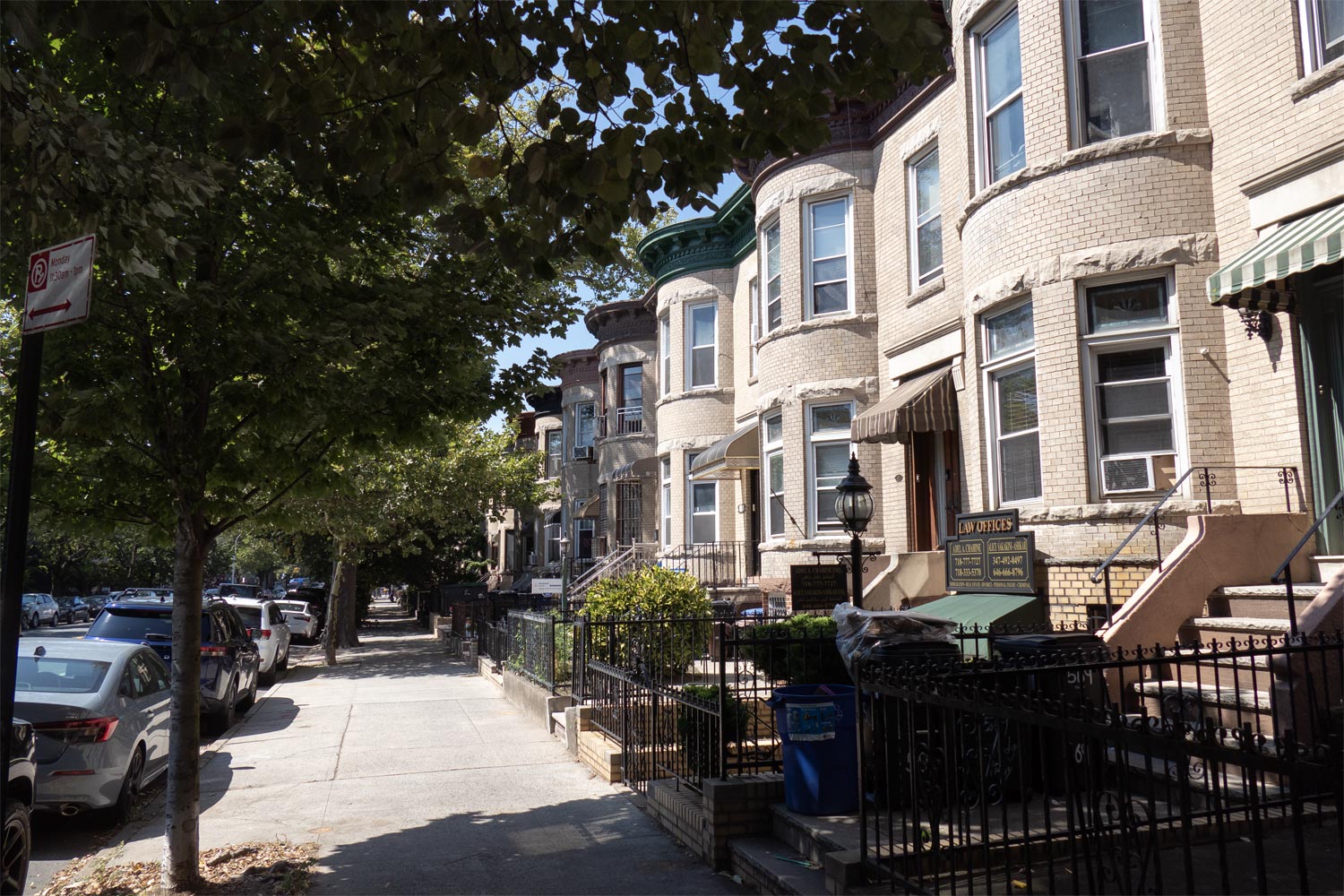
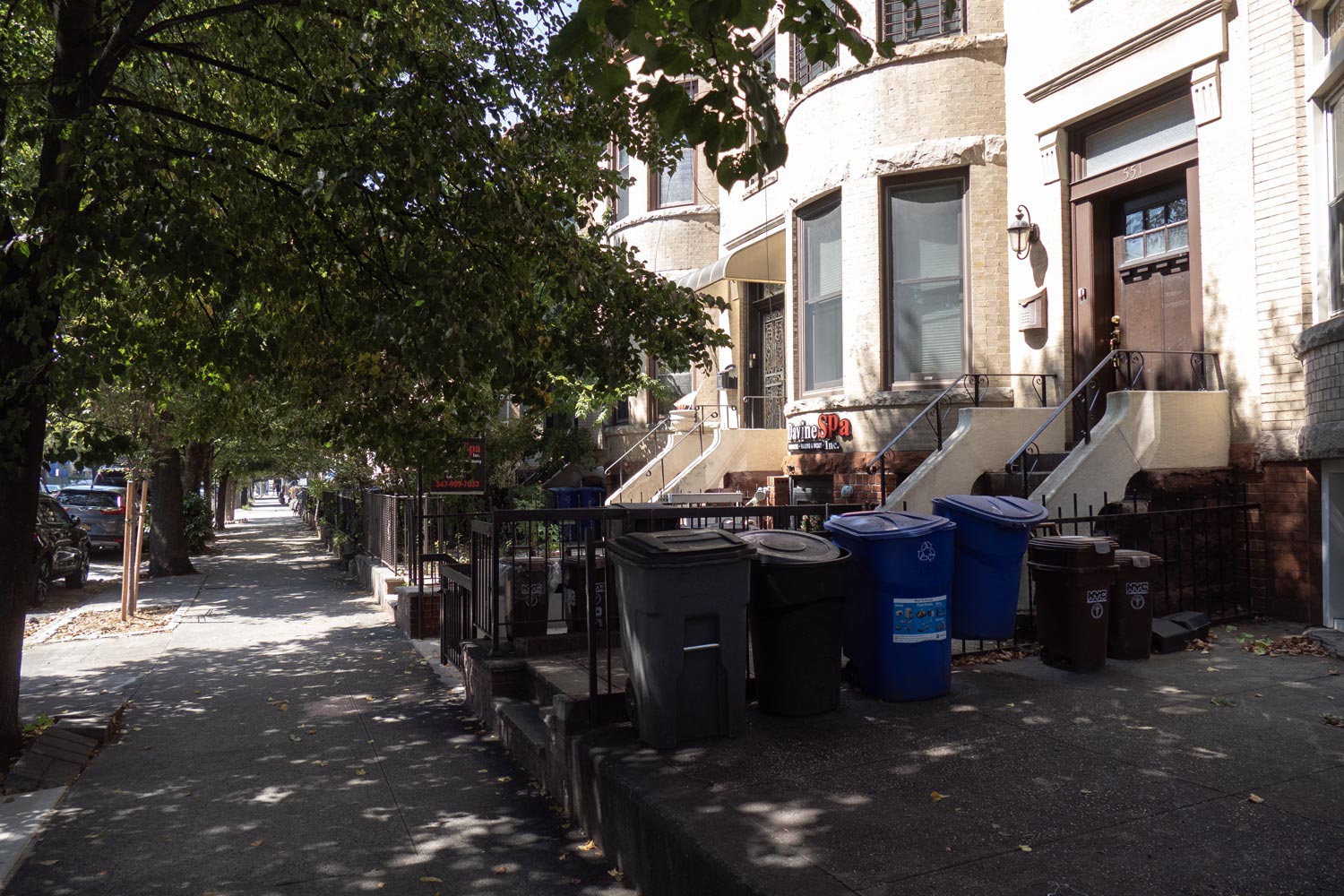
Luxurious doors and a magnificent semi-circular bay window room. And, as always, same cheap window ACs.
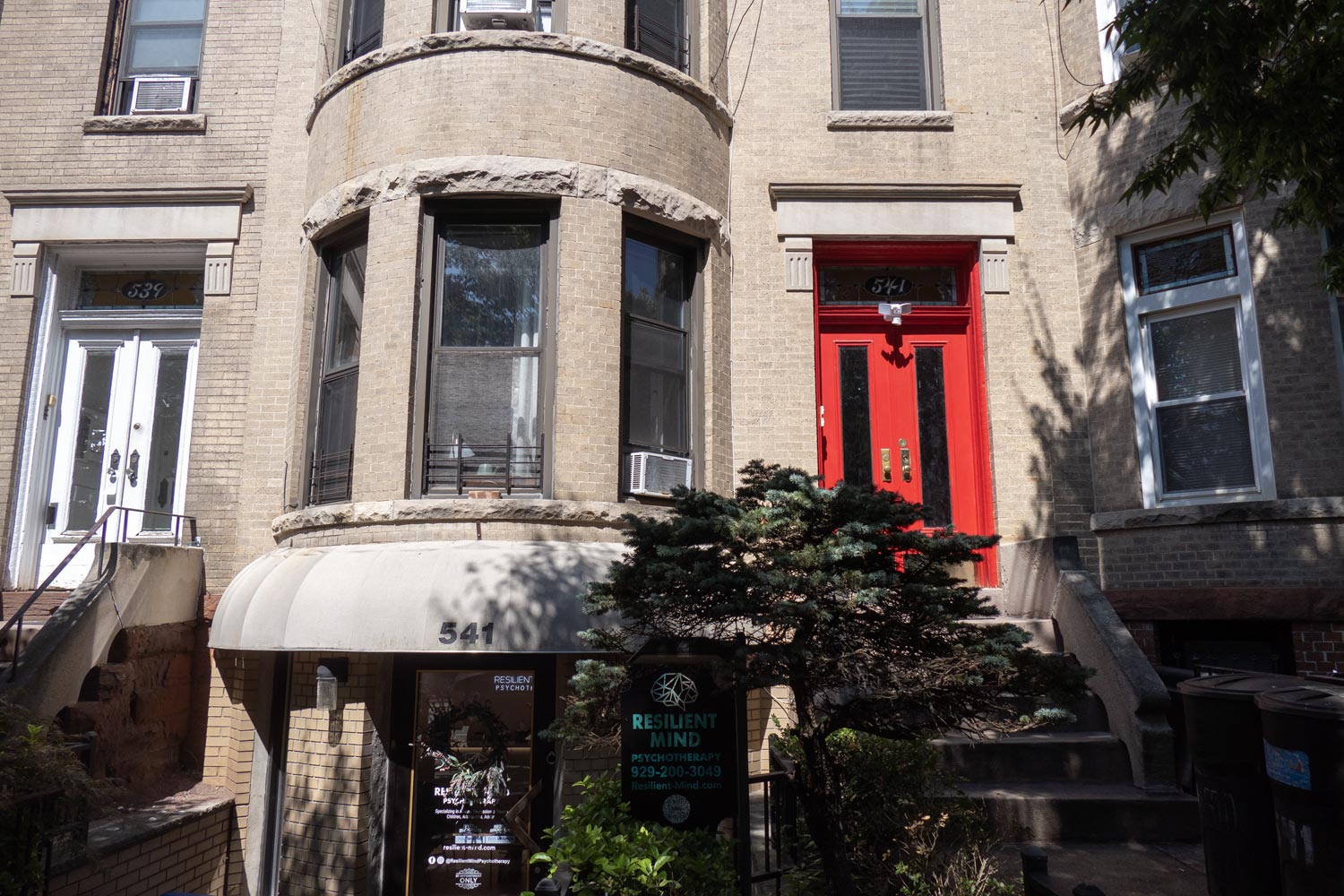
Every house has three trash cans. For now, waste sorting in America is only just getting off the ground. California and New York are the trailblazers here.
Like Manhattan, Bay Ridge is sliced up by several major avenues. Even the traffic jams here aren’t much smaller than in main New York.
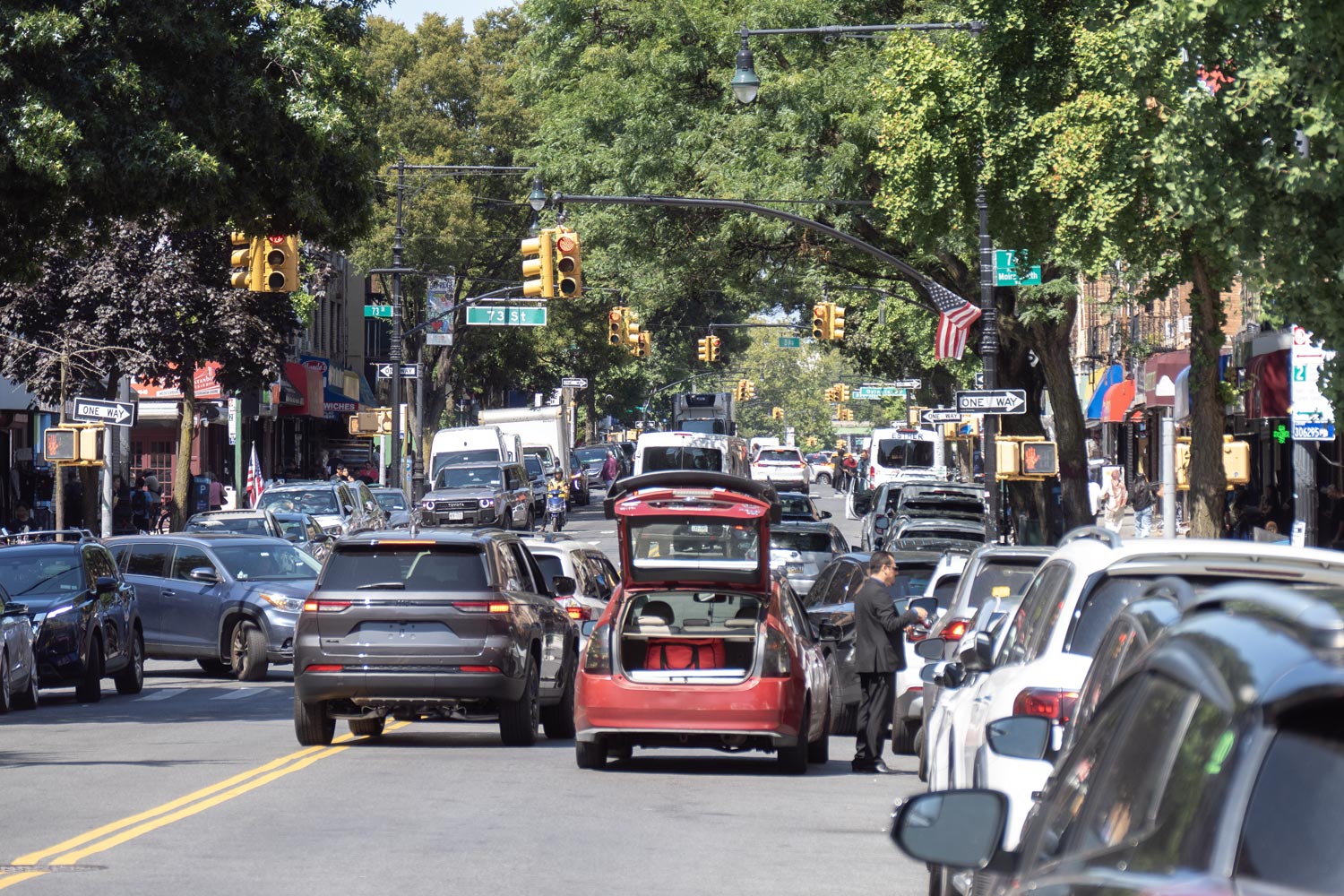
Along the avenue, a whole bunch of shops, restaurants, diners, and little stores are in full bloom. It’s the liveliest spot in the neighborhood. Lately, Bay Ridge has been taken over by well-off Arabs and other folks from the Middle East. Eastern restaurants are popping up everywhere, and there’s brisk trade in fruit, spices, and coffee.
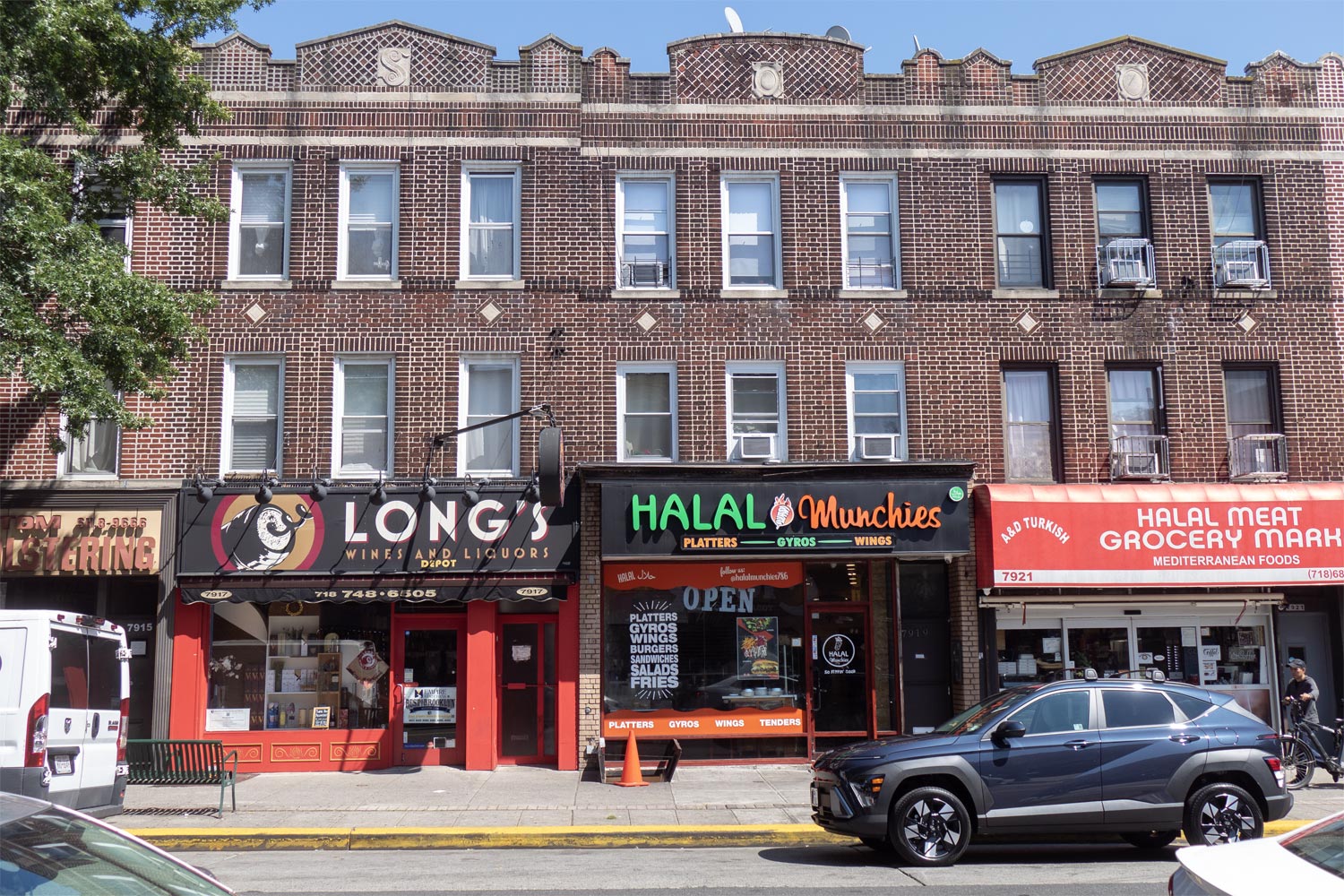
At the same time, Bay Ridge doesn’t look even the slightest bit like some “dirty immigrant neighborhood.” On the contrary, not everyone here can even afford to rent an apartment, and there’s certainly no shortage of restaurants.
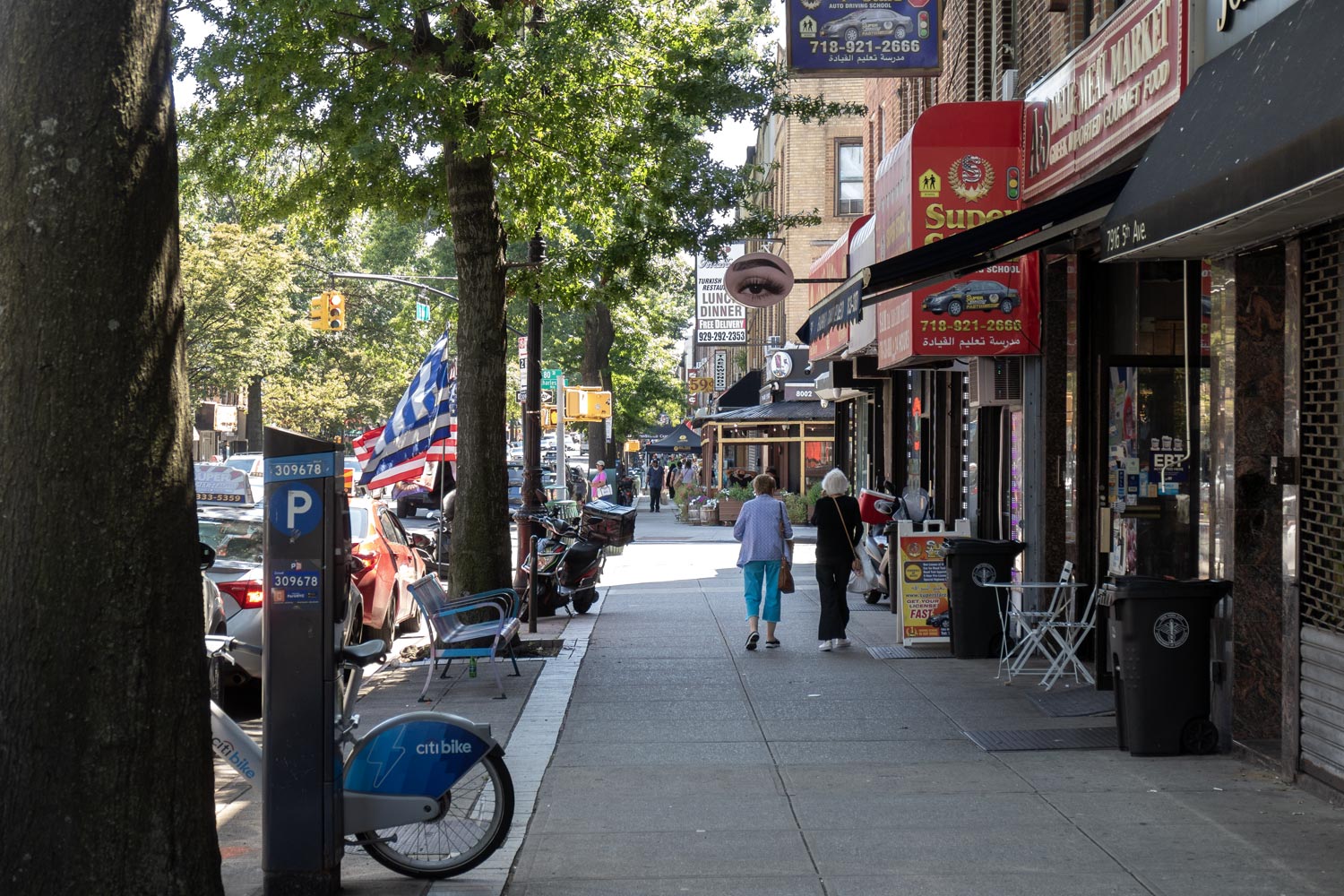
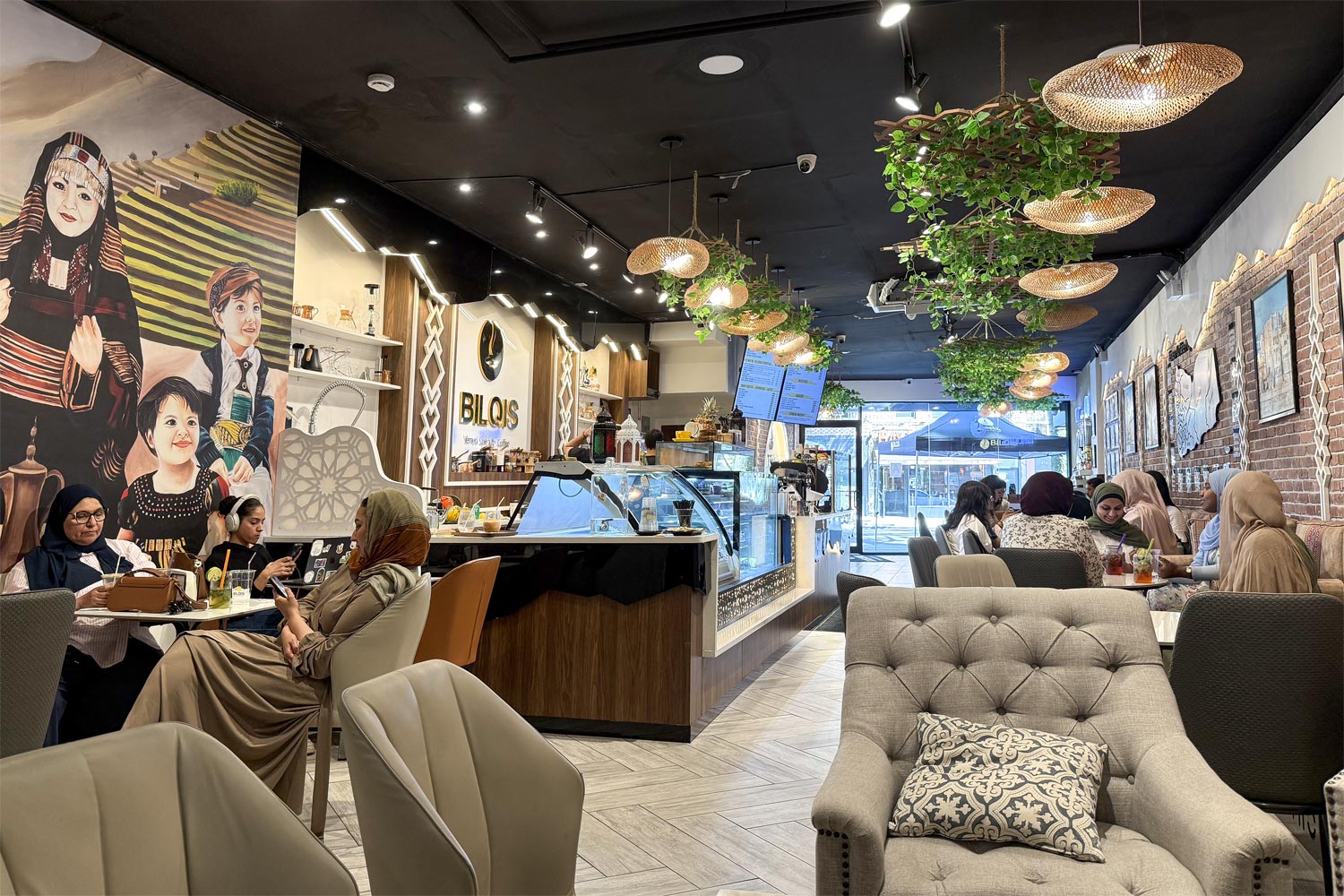
A Yemeni café was found in the neighborhood, whose menu had Turkish coffee mockingly listed under the “tea” section.
Actually, New York — and Brooklyn in particular — is the gastronomic center of the planet. Thanks to immigrants from all over the world, you can order Afghan food here at two in the morning, and it’ll be cooked by actual Afghans using their actual homemade Afghan recipes. Across America as a whole, the food really is terrible, but that doesn’t apply to New York.
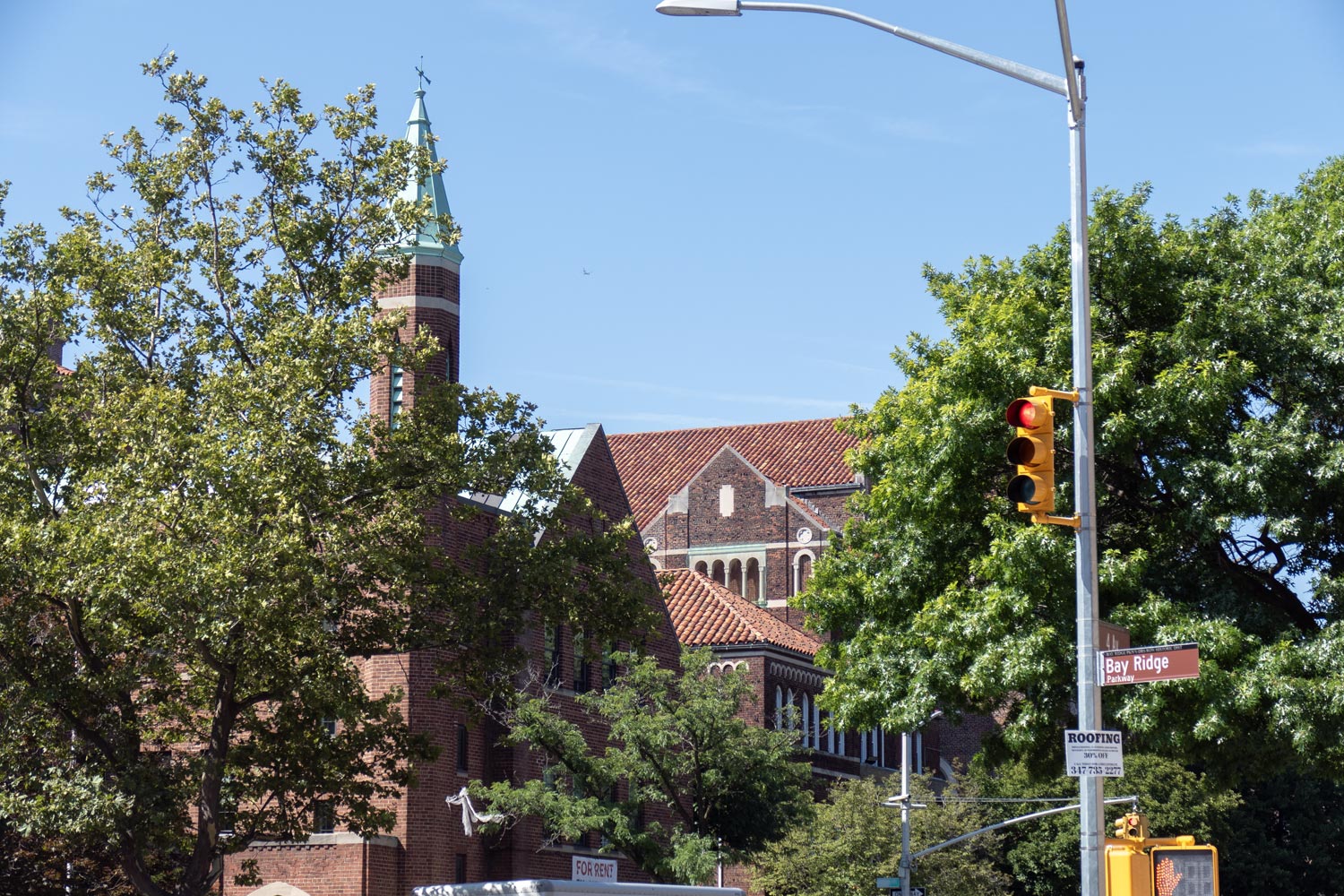
A little deeper in — and Bay Ridge gets even nicer. Here Brooklyn doesn’t feel like New York at all, but like some kind of American classic. An old brick church:
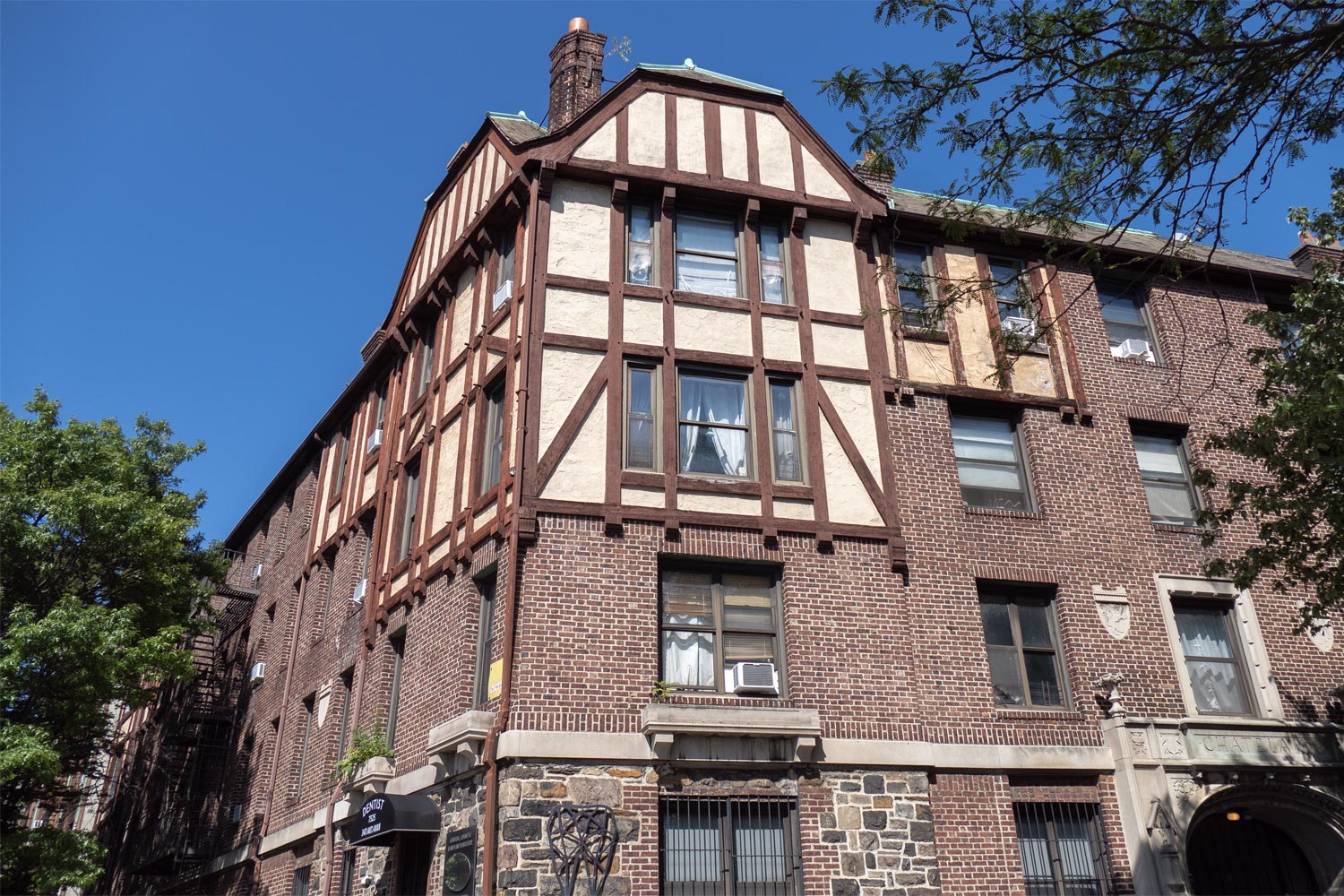
A lovely house with a half-timbered cap on top:
All over Brooklyn you often see multi-story brick buildings. Most of them were built before World War II, and plenty of them go all the way back to the early 20th century.
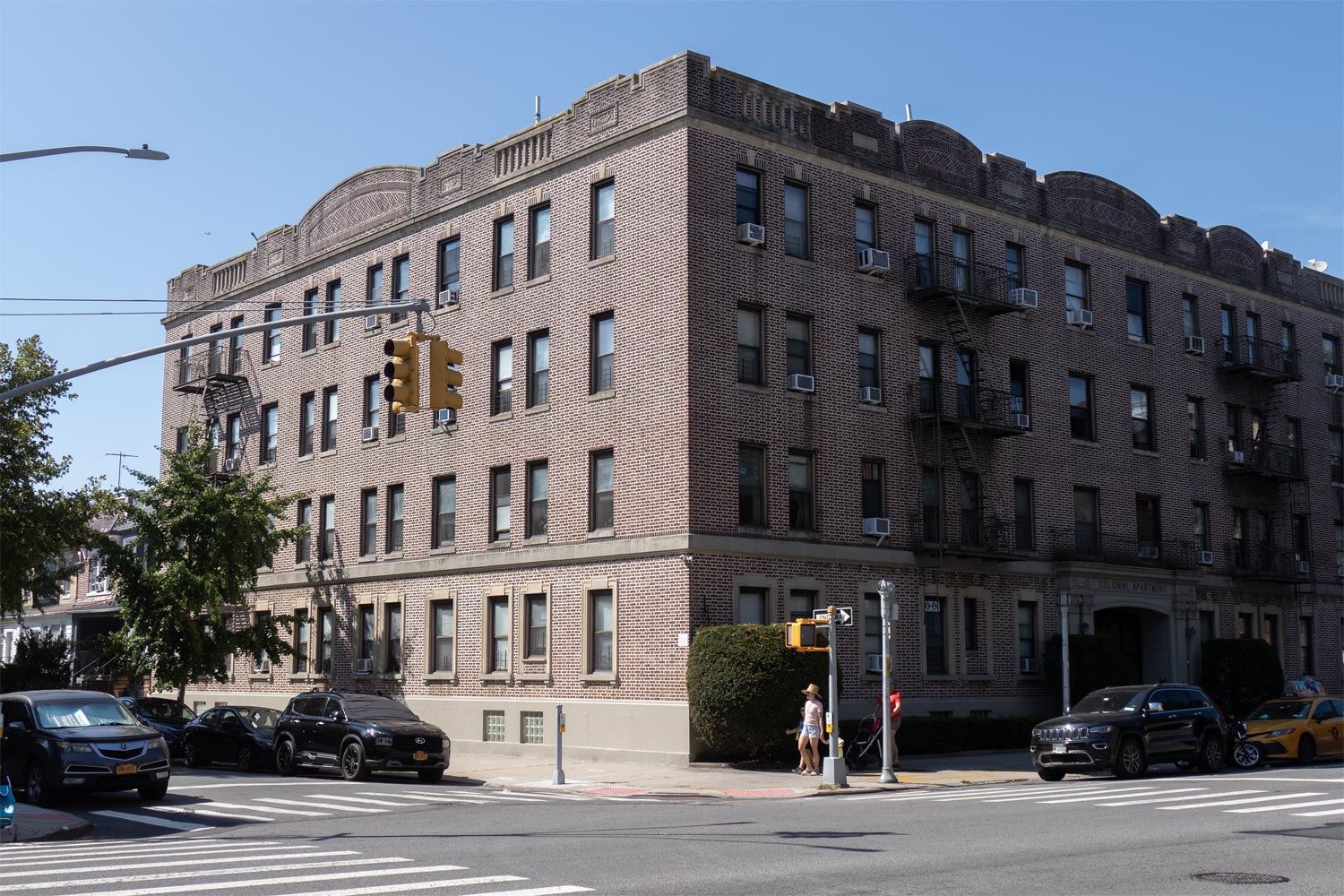
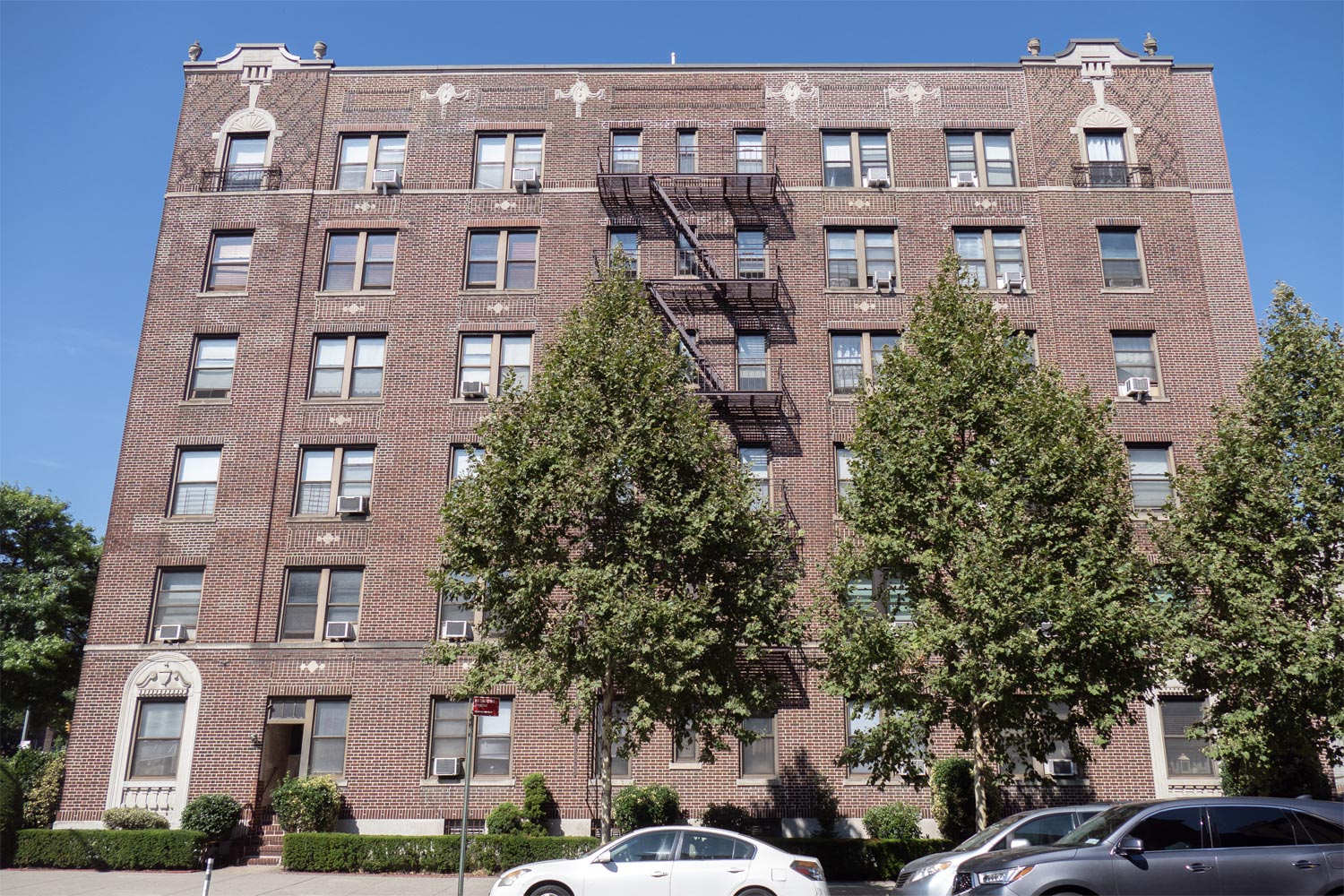
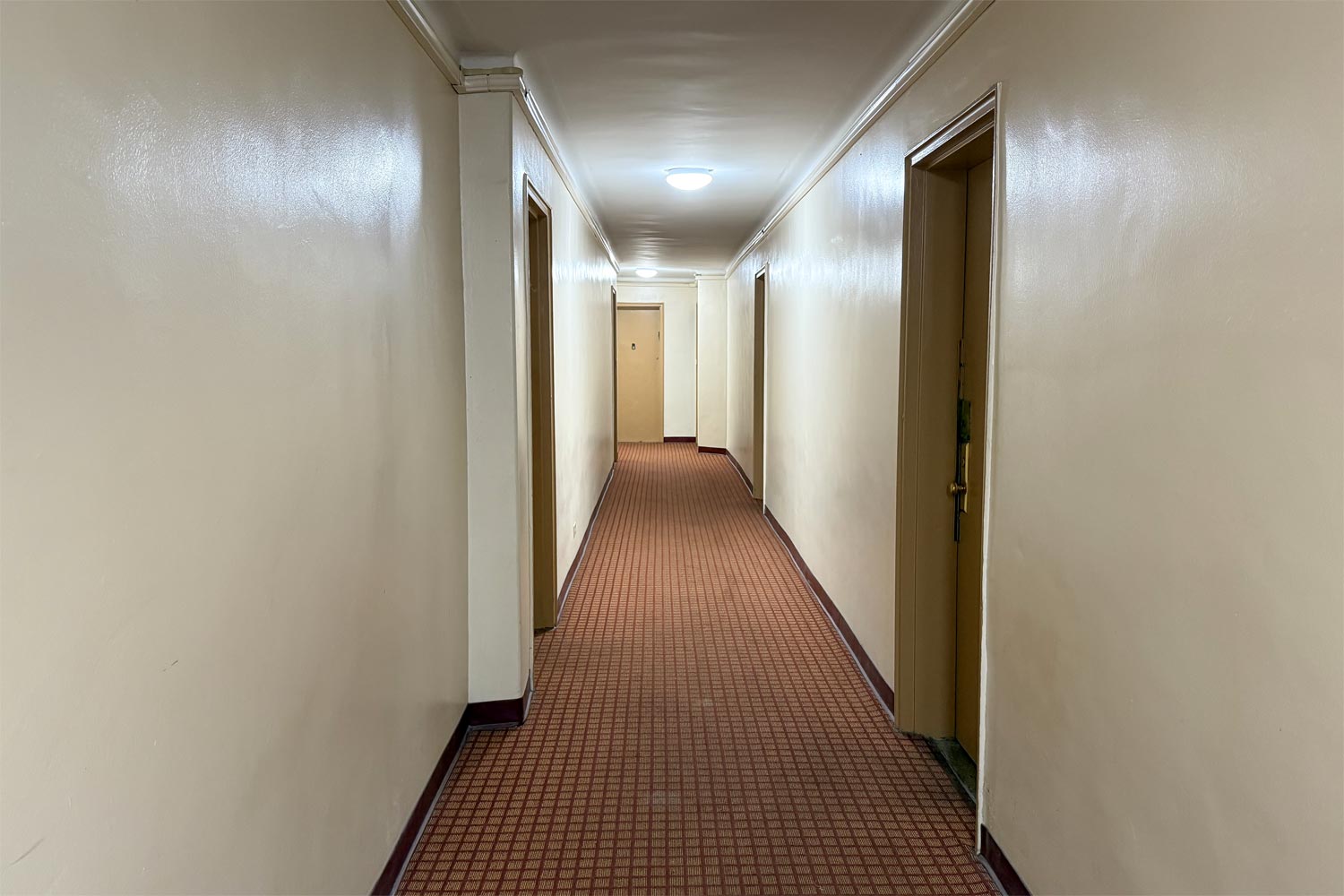
Inside these buildings, it’s always a mixed bag. If someone actually takes care of the place, it can be just as good as new. If not, then you might get, say, rats moving in, and the carpet in the hallway soaking up the lovely aroma of cigarette smoke.
Usually, inside a multi-story Brooklyn building you’ll find long hallways lined with front doors. Open the door and you’re immediately in the living room — no separate entryway. Kind of like a hotel. The apartments themselves, like anywhere else, can have one to three bedrooms, not counting the living room, which in America is apparently mandatory. The size ranges from about 35 to 120 square meters.
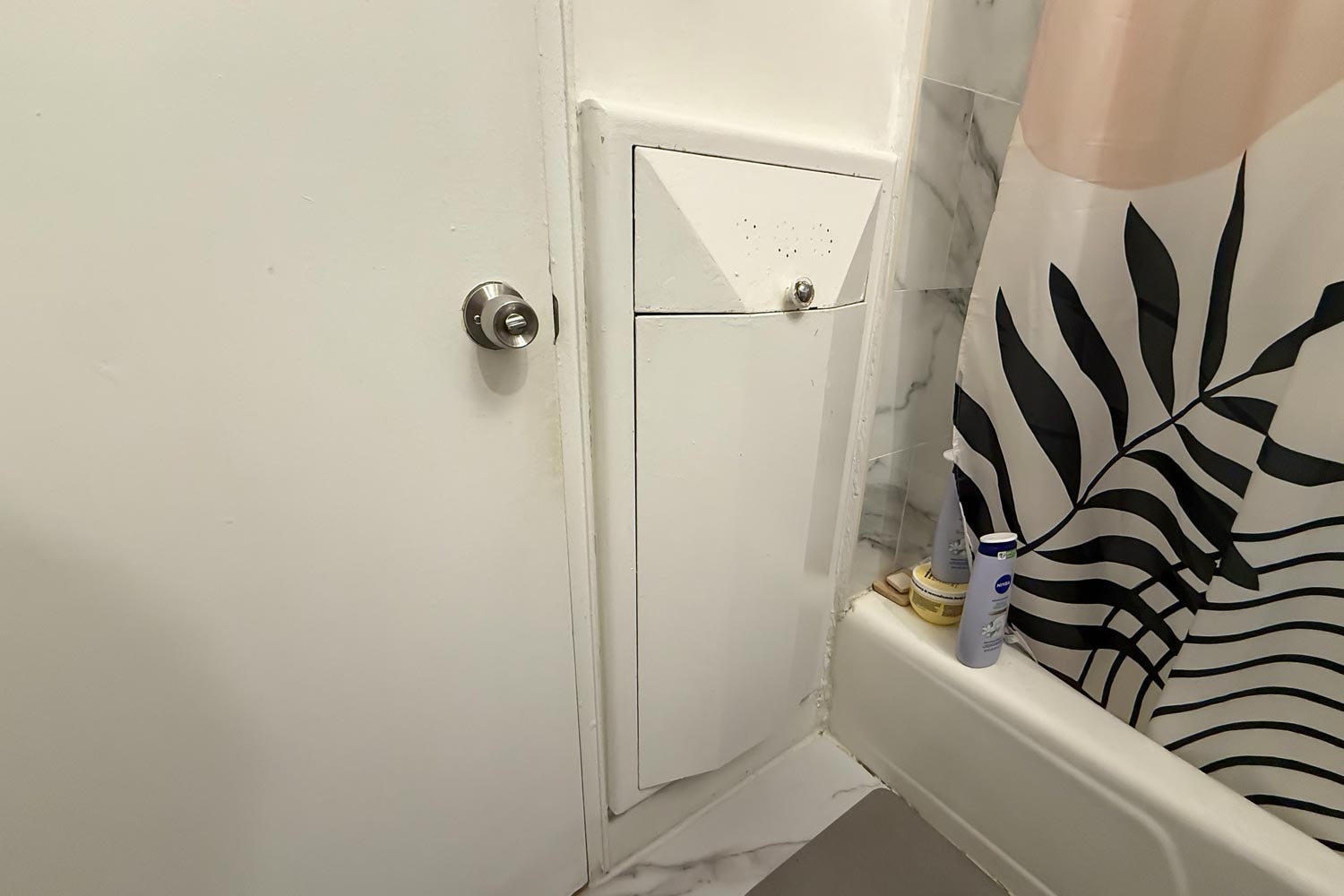
Since the houses are very old, they naturally come with their share of archaic American quirks. For example, the bathroom might have a built-in linen cabinet in the wall where you stash towels and sheets. You can also find huge wall intercoms straight out of the 1930s. In really bad cases, there’s a garbage chute right in the kitchen, but because of hygiene issues, buildings like that have pretty much disappeared, even in poor neighborhoods.
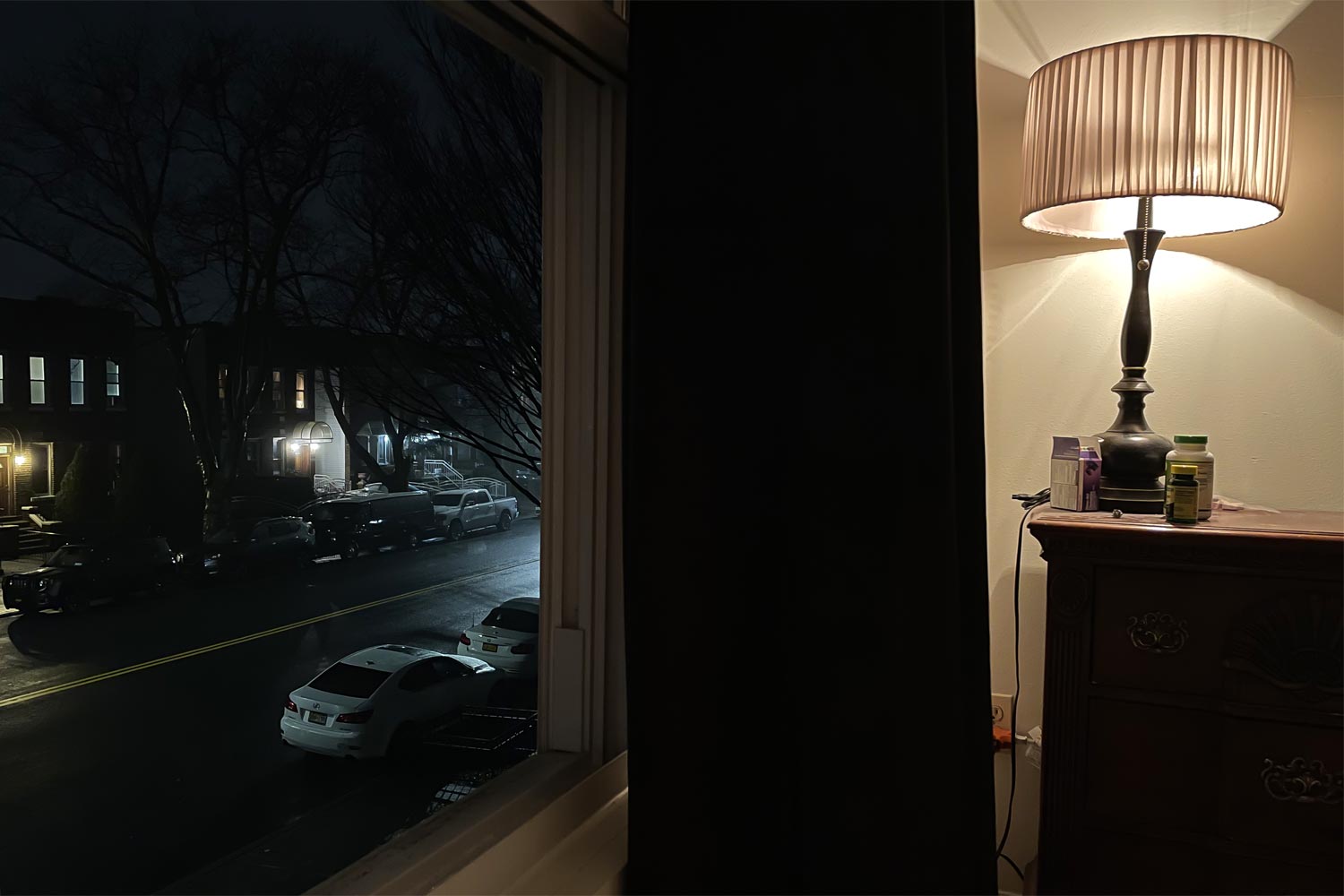
Brooklyn is almost always a mixed kind of development. Single-family homes are all jumbled together with apartment buildings. That’s probably why Brooklyn is so great: it’s no longer the endless sprawl of one-story America, but it hasn’t yet turned into some high-rise ghetto either. Our row of brick buildings ends pretty quickly, and right after it the village houses start up again. This time they’re even fancier and cozier.
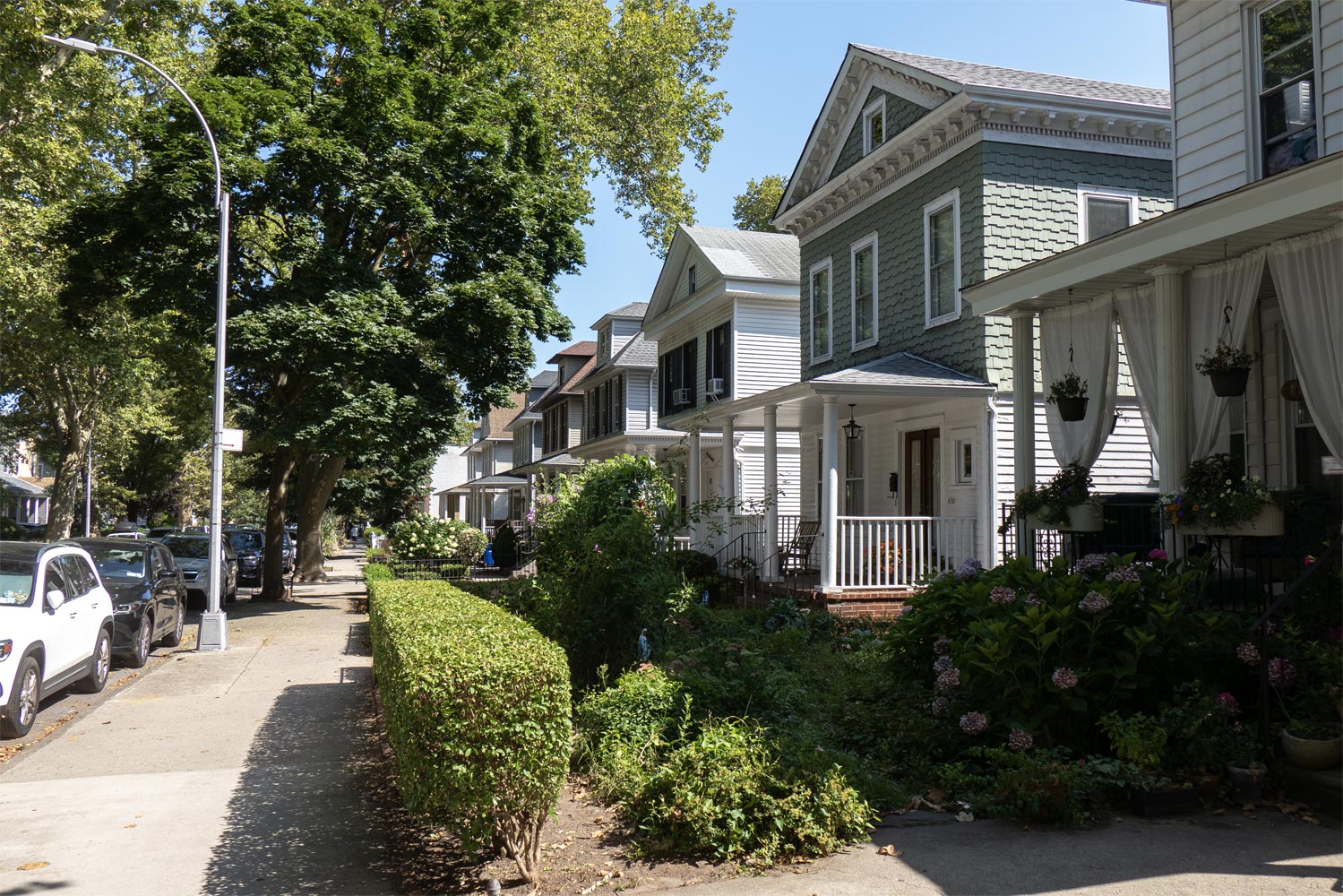
Closer to the ocean are the really expensive houses. This is where the rich Brooklynites live. You’ll even find actual palaces where millionaires reside.
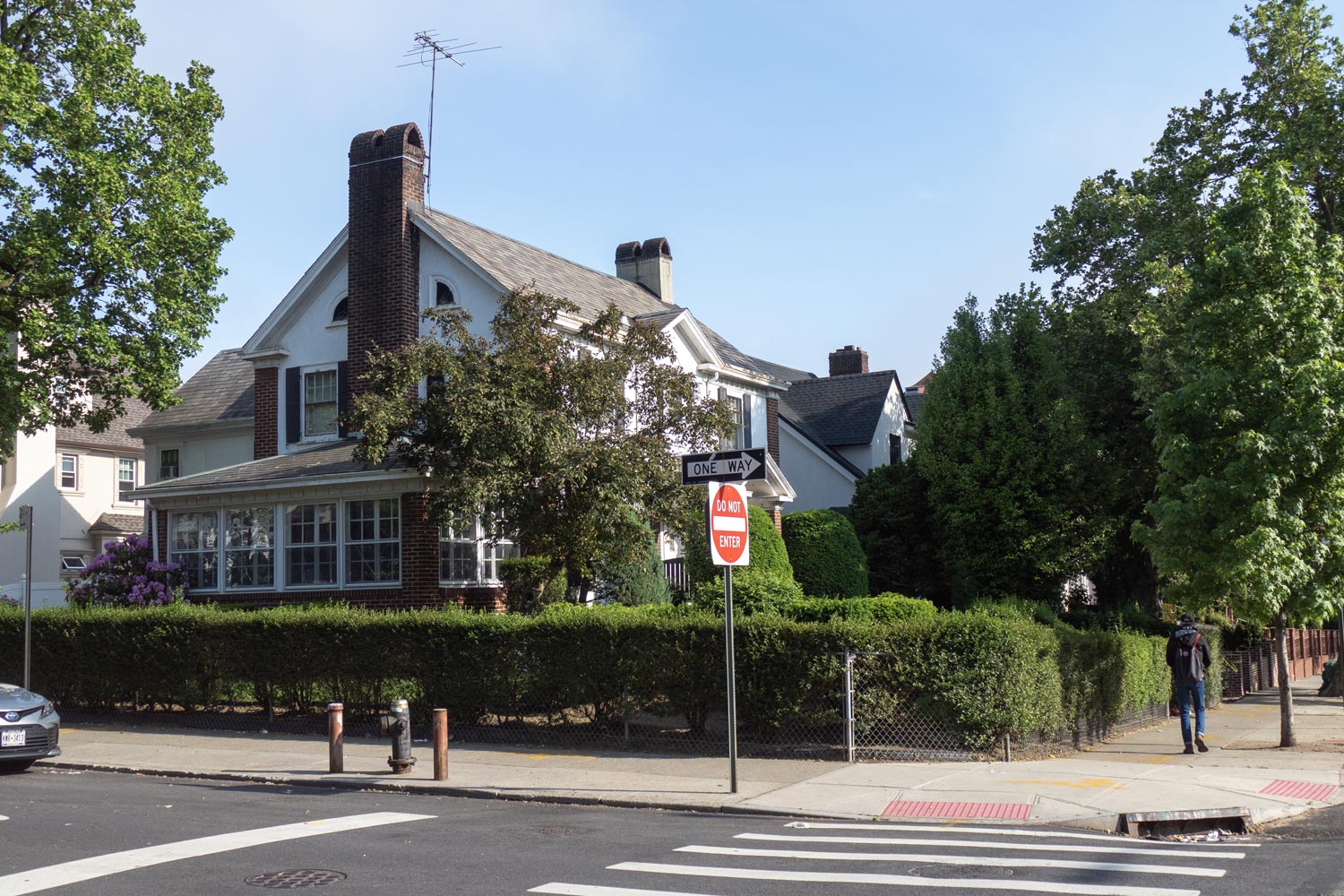
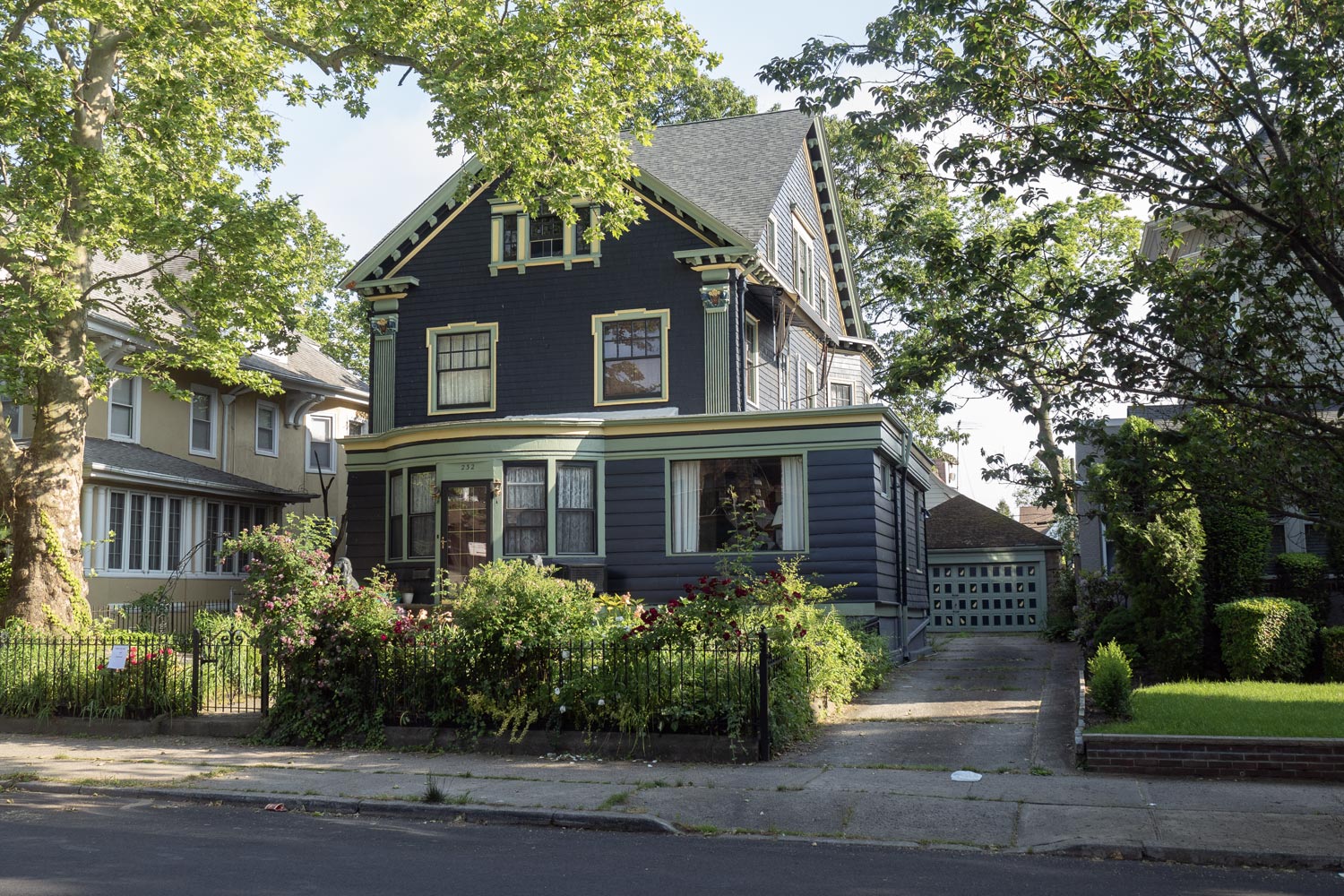
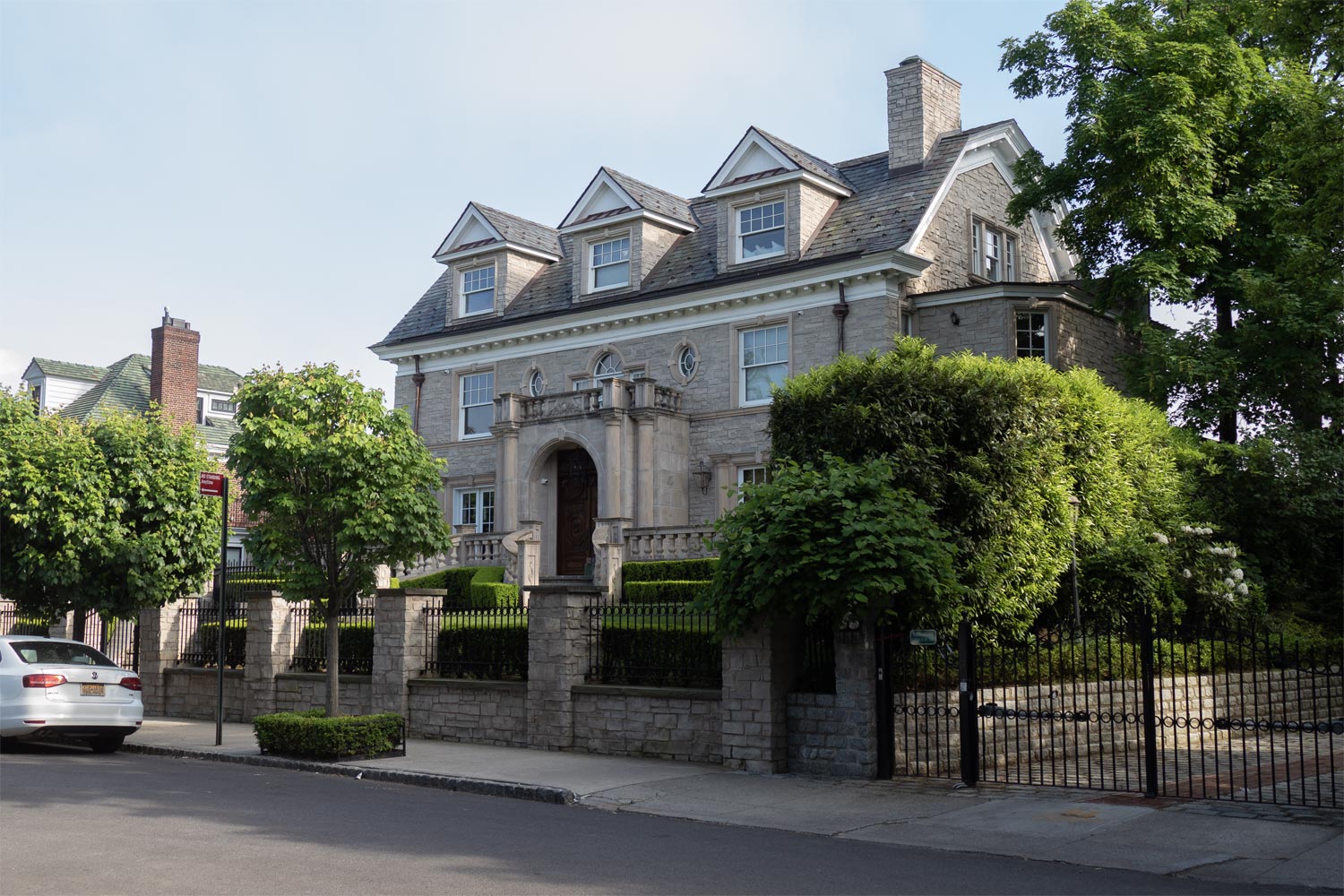
Bay Ridge is one of the best places to live in the United States. It’s a wealthy slice of American backwater just thirty minutes from Manhattan.
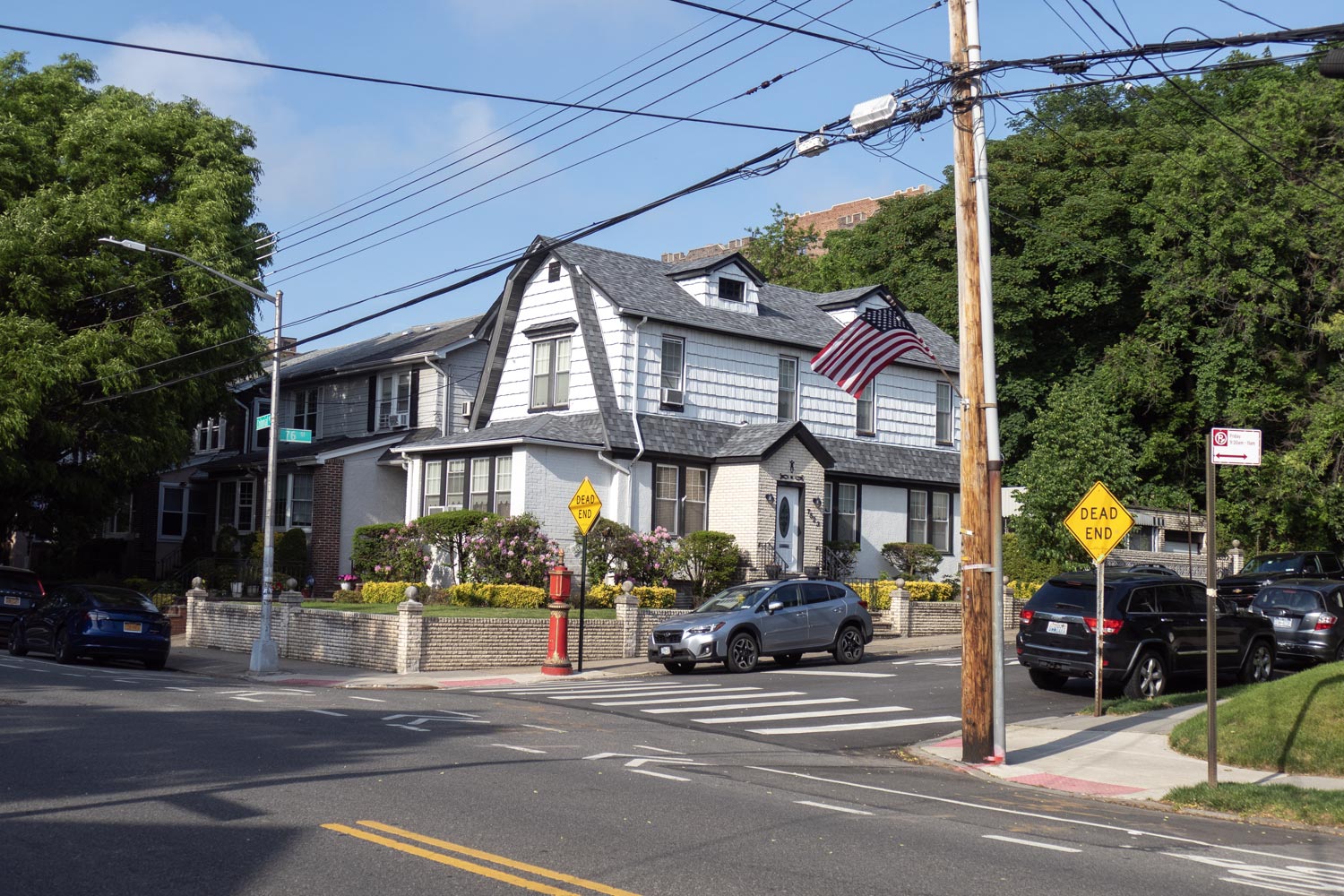
Bay Ridge doesn’t quite face the ocean; it’s on New York Harbor, which eventually flows into the Pacific Ocean. On its shore there’s a big green lawn where Brooklynites like to have picnics.
Dyker Heights
Another neighborhood borders Bay Ridge, one that’s supposedly even more prestigious. It’s called Dyker Heights, and this is where the millionaires live. You can come check out the area in the summer, but it’s much more interesting to do it in December.
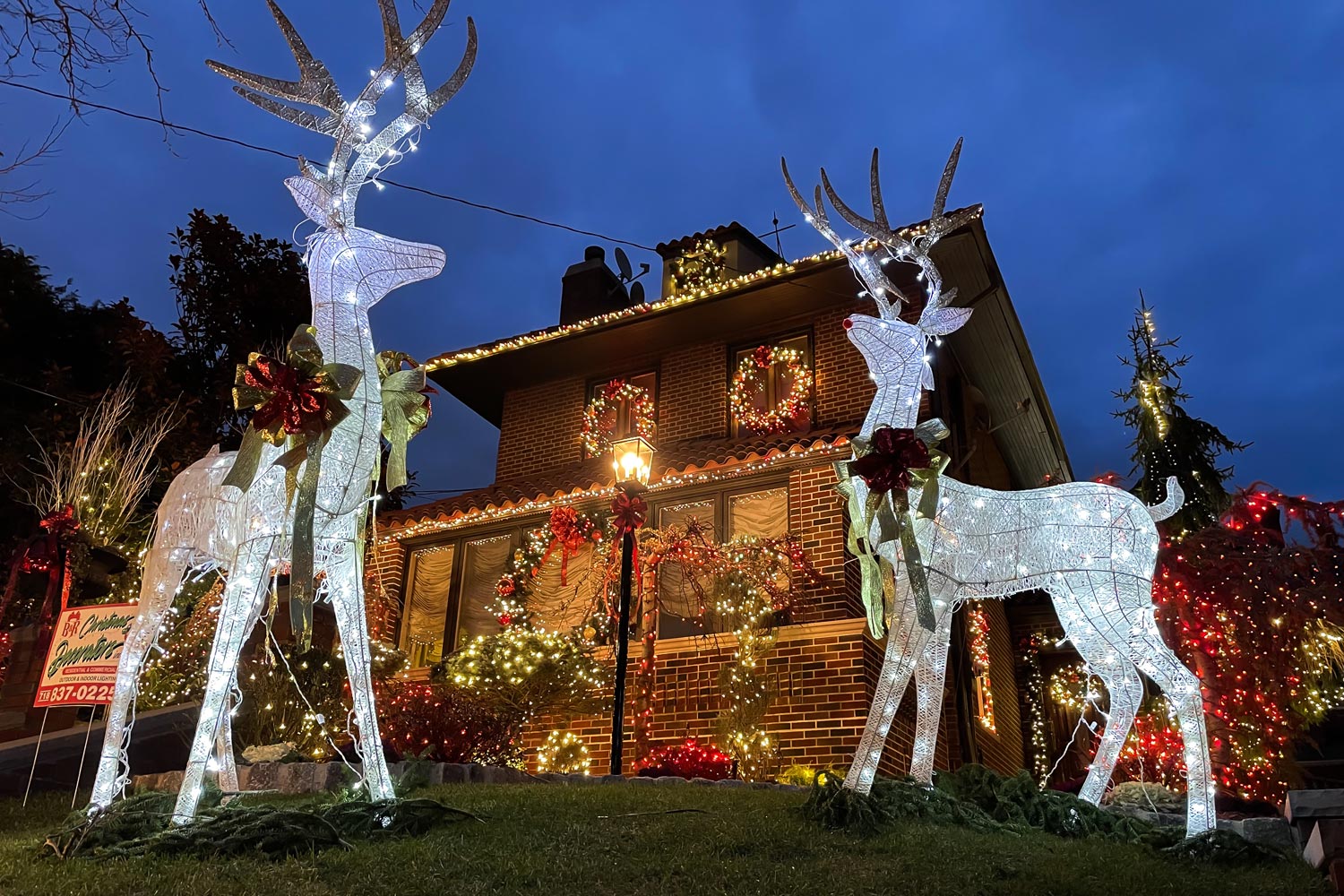
Every December, Dyker Heights turns into an exhibition of Christmas decorations so over-the-top that the neighborhood is literally marked on the map as “Dyker Heights Christmas Lights.” The houses here are decked out so lavishly that even the Kremlin’s Christmas tree looks modest.
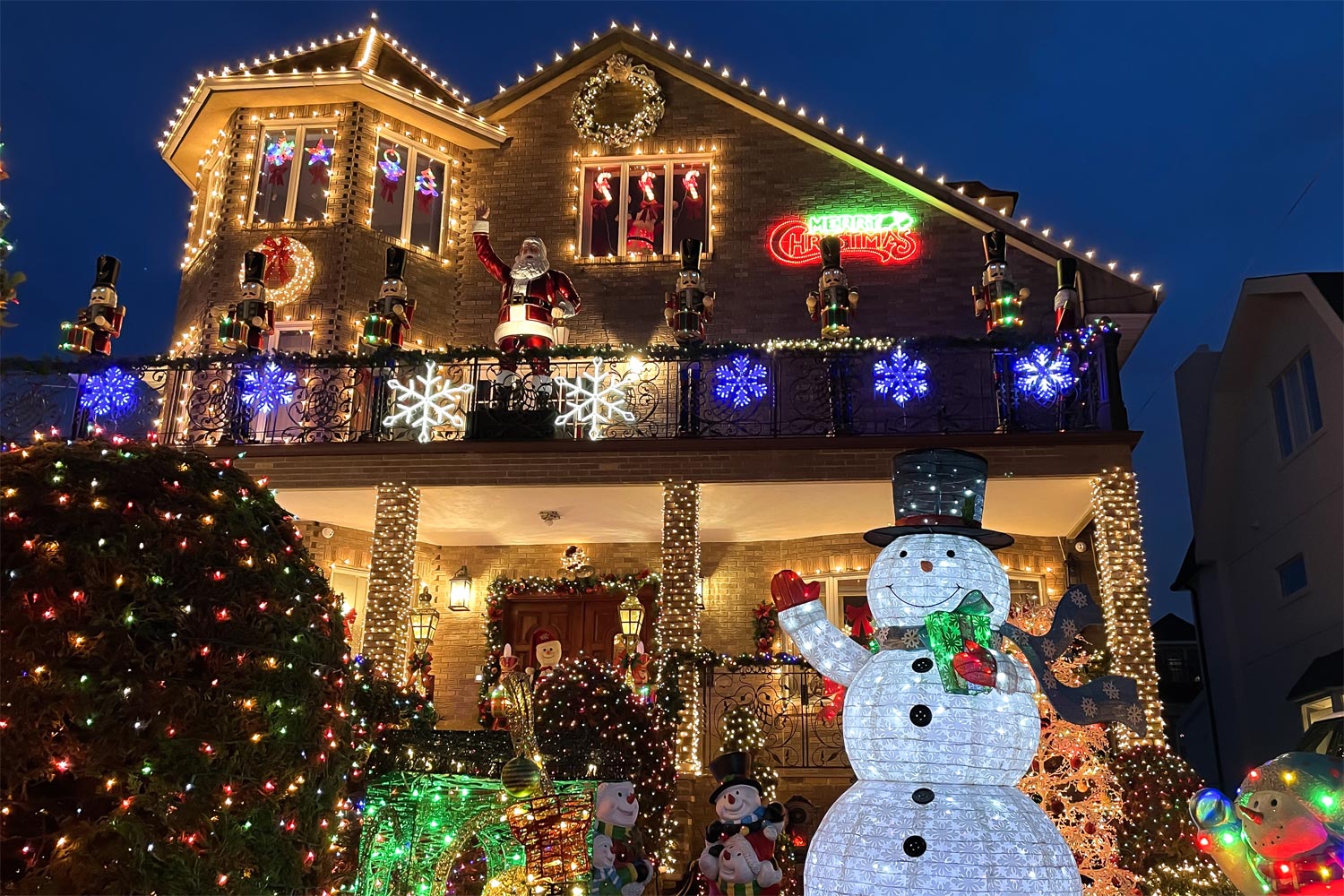
Americans start decorating their homes long before the holidays. If Halloween is coming up, the first pumpkins show up on the porch as early as late September. And Christmas wreaths start going up on doors at the end of November. They’re in no hurry to take the decorations down, either.
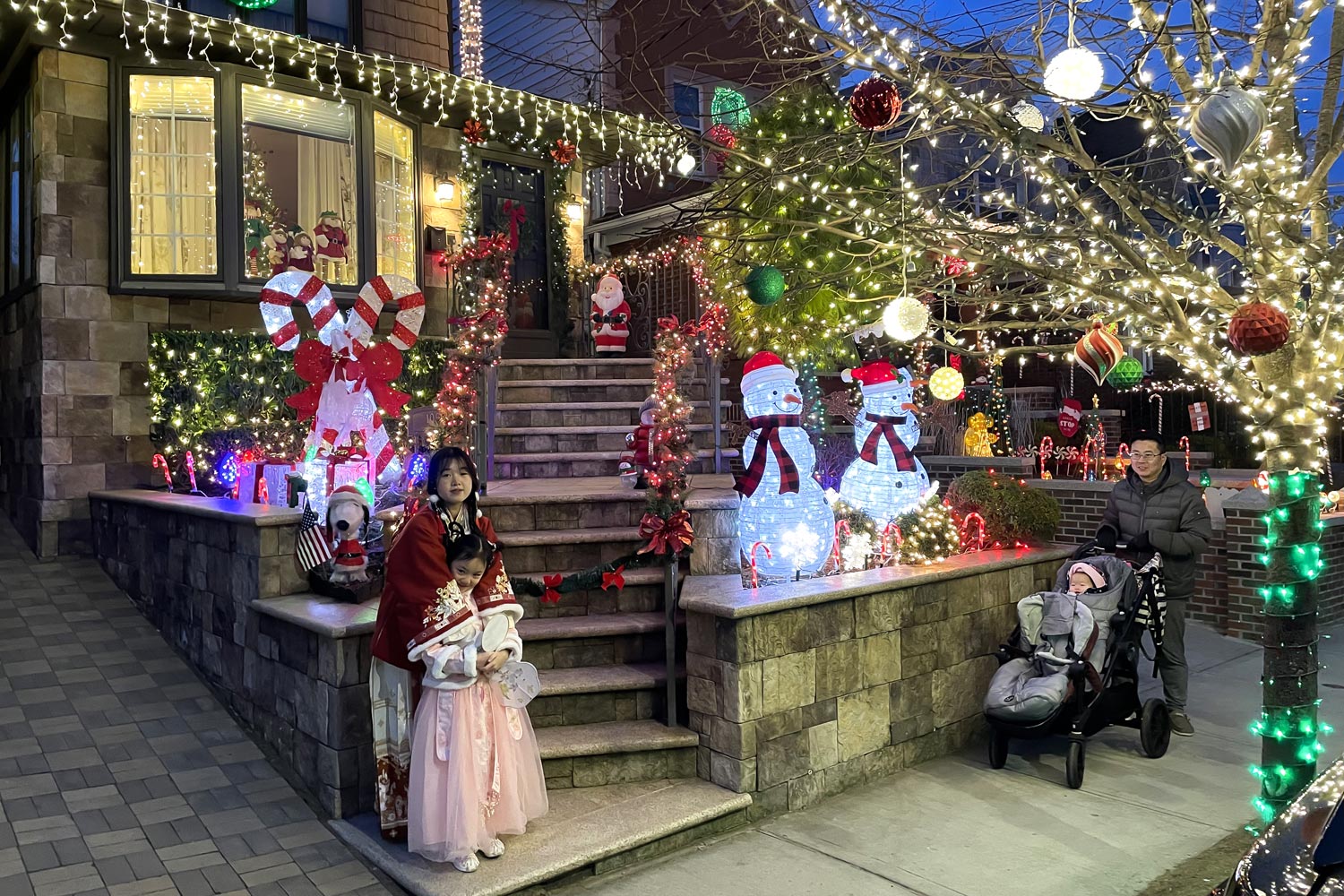
They say that to power all this illumination, some houses in Dyker Heights can spend five to eight thousand dollars a month! And electricity is only part of the expenses. You still have to buy all those snowmen, Santa Clauses, and wooden toy soldiers. But for the millionaires who live here, that’s pocket change.
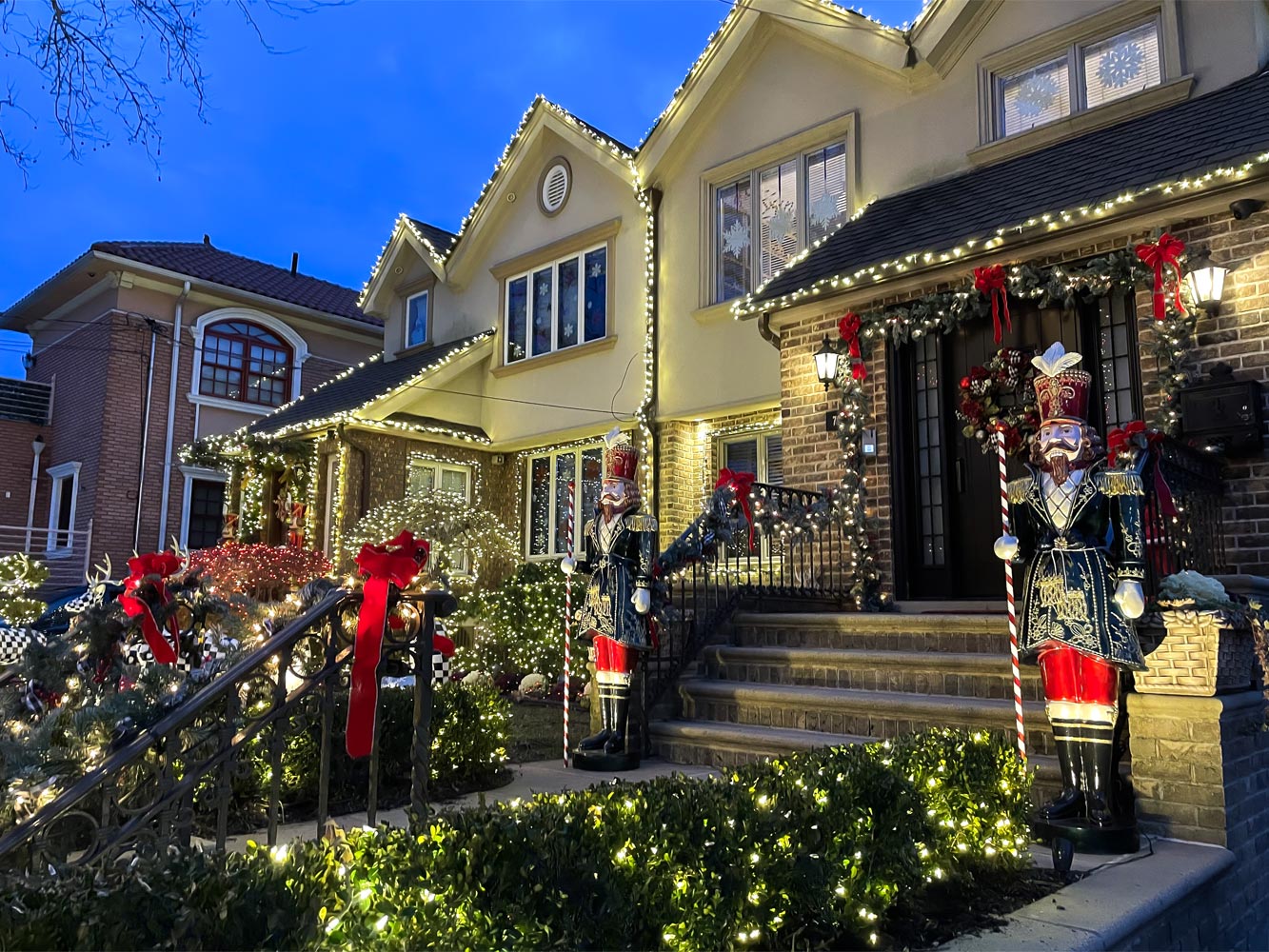
Dyker Heights goes a little less overboard for Halloween, which is celebrated on October 31. The holiday itself is dark, so there’s not much need to light it up. But covering everything with pumpkins? That’s absolutely mandatory.
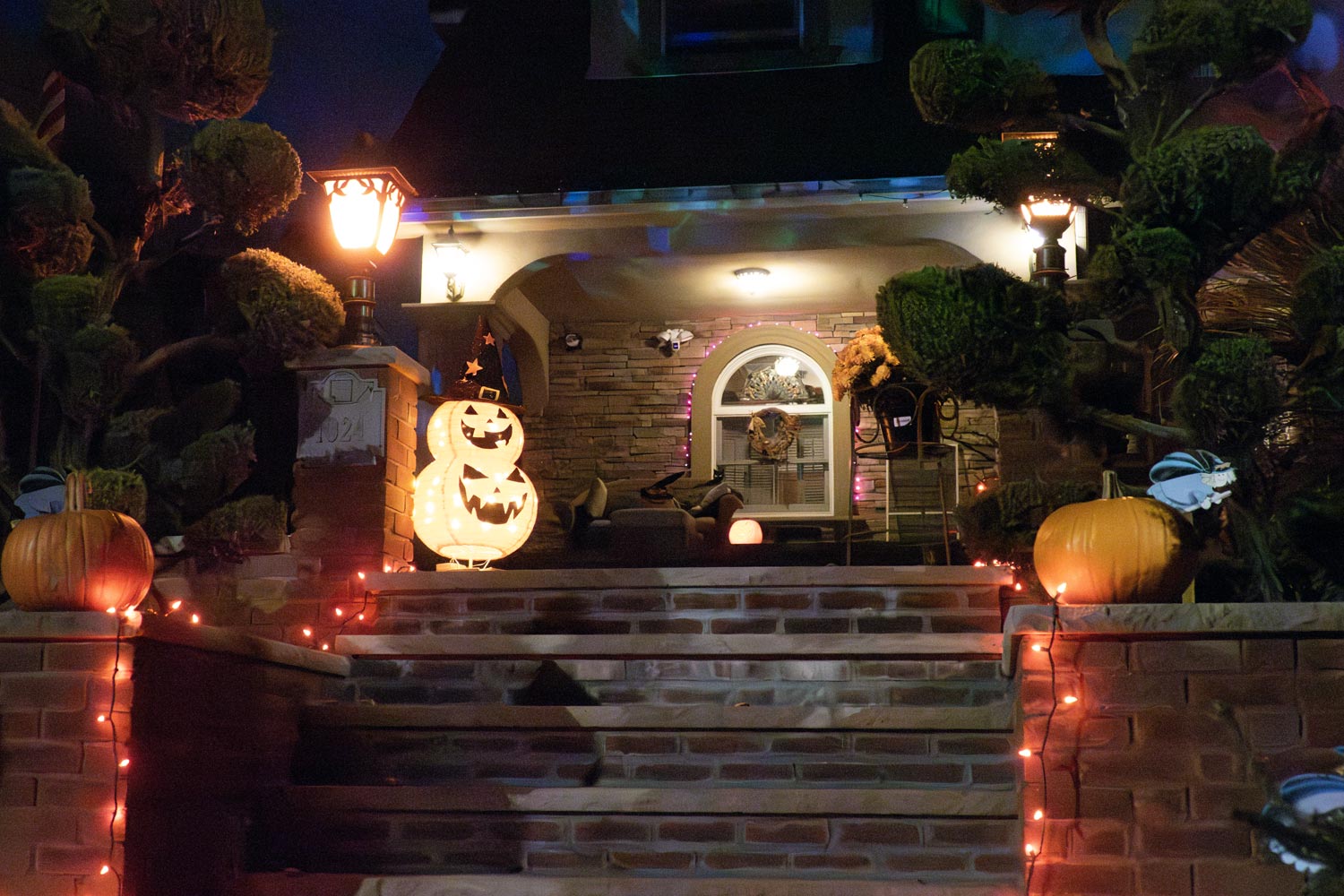
A lot of the decorations are genuinely creepy. For example, there might be some old lady dug up from a grave sitting by someone’s door. When the motion sensor goes off, she starts rocking and screaming something through a built‑in speaker.
Of course, most of the houses look more cozy than scary.
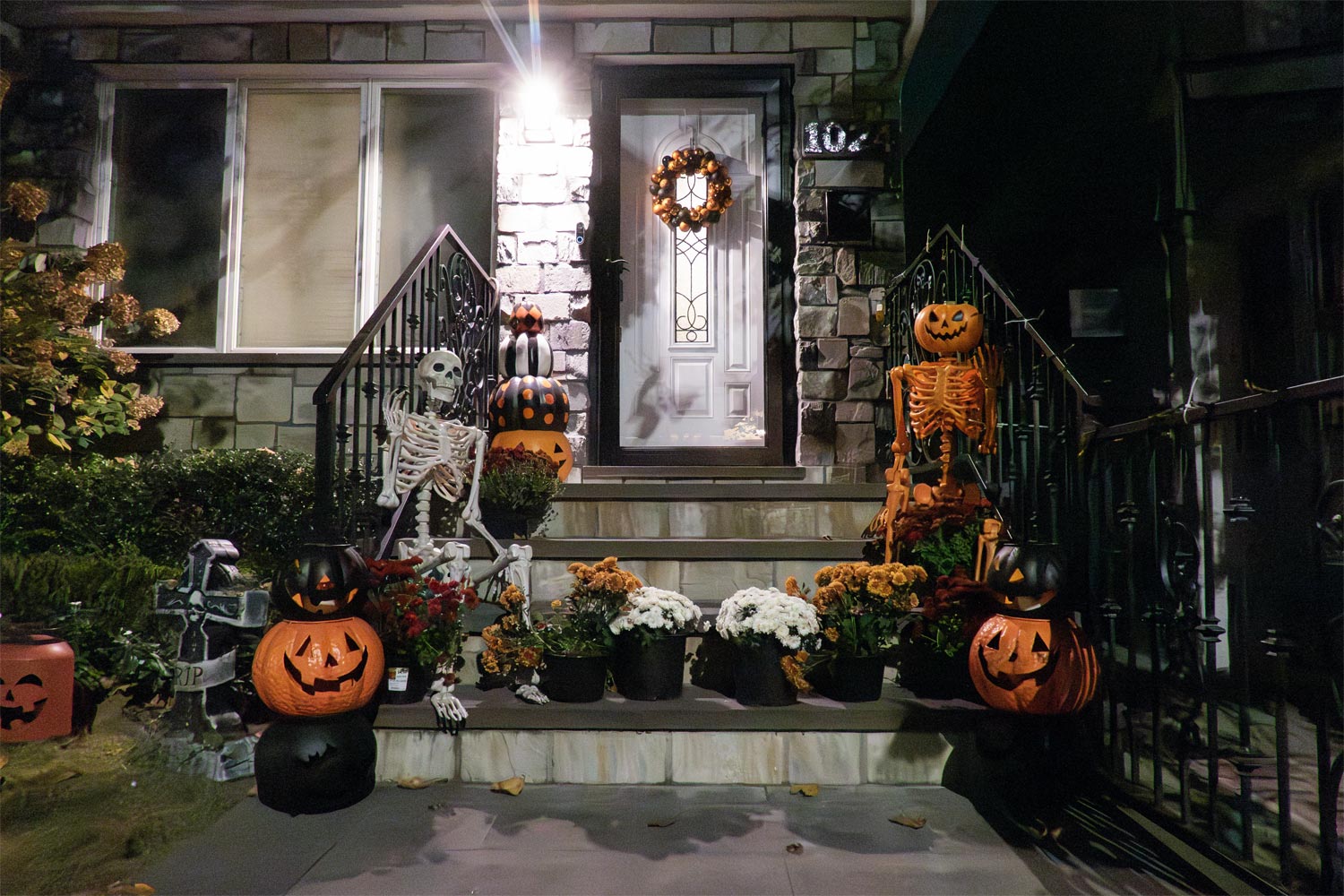
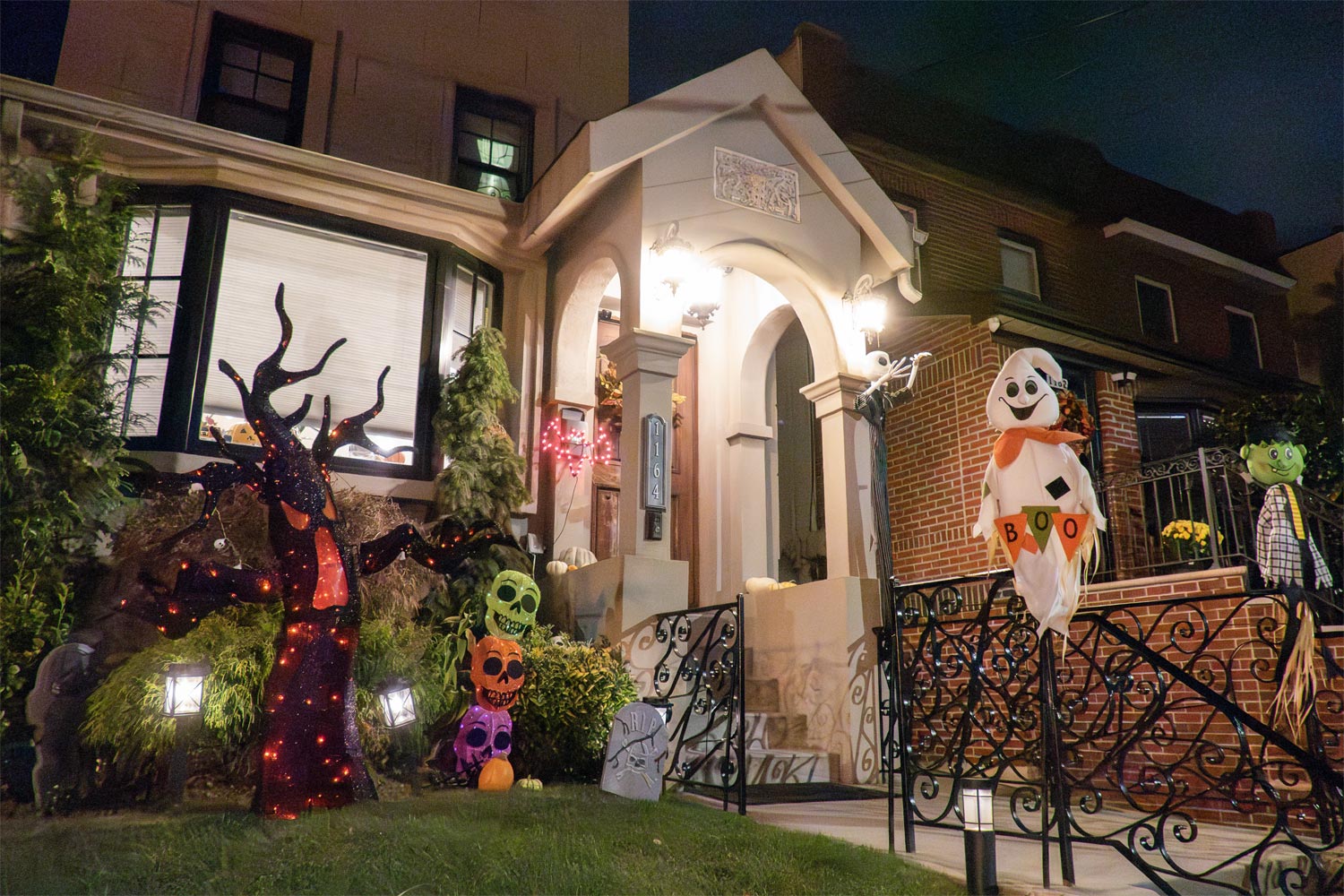
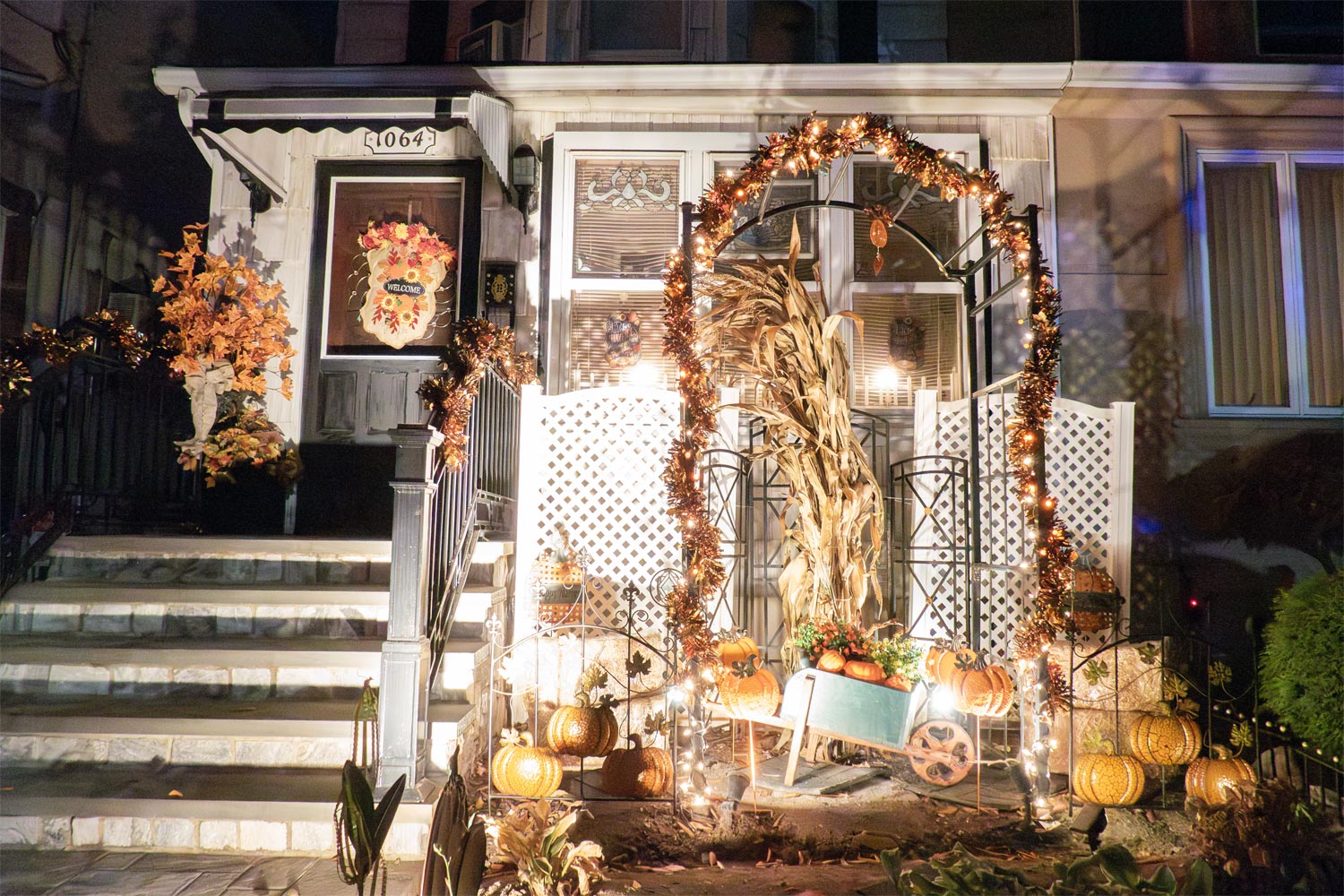
People don’t just decorate their houses, but also the trees next to them, fences, gates, and so on. The police station and the fire department building can easily end up covered in pumpkins too. Cash registers in stores, tables in cafés, restaurant windows — all of that is drowning in fake cobwebs.
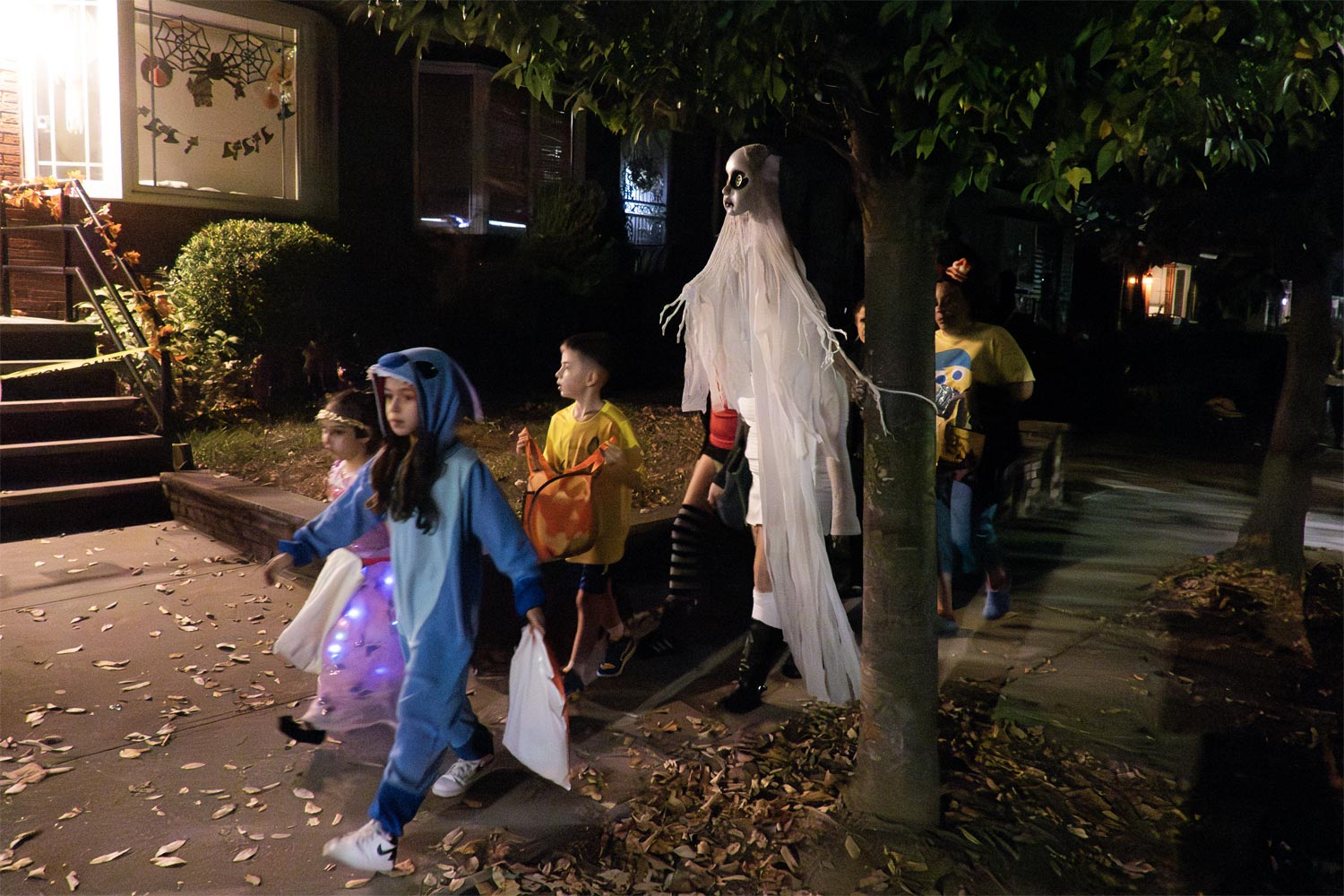
But the coolest thing about Halloween isn’t decorating houses, it’s the costumes that both adults and kids dress up in. For one night, all of America turns into a giant costume parade! Some people dress up as skeletons or dinosaurs, some put on cowboy, witch, or princess costumes, and some lurk around the corner pretending to be a corpse. The dumbest thing you can wear is one of those inflatable dinosaur costumes. Poor kid.
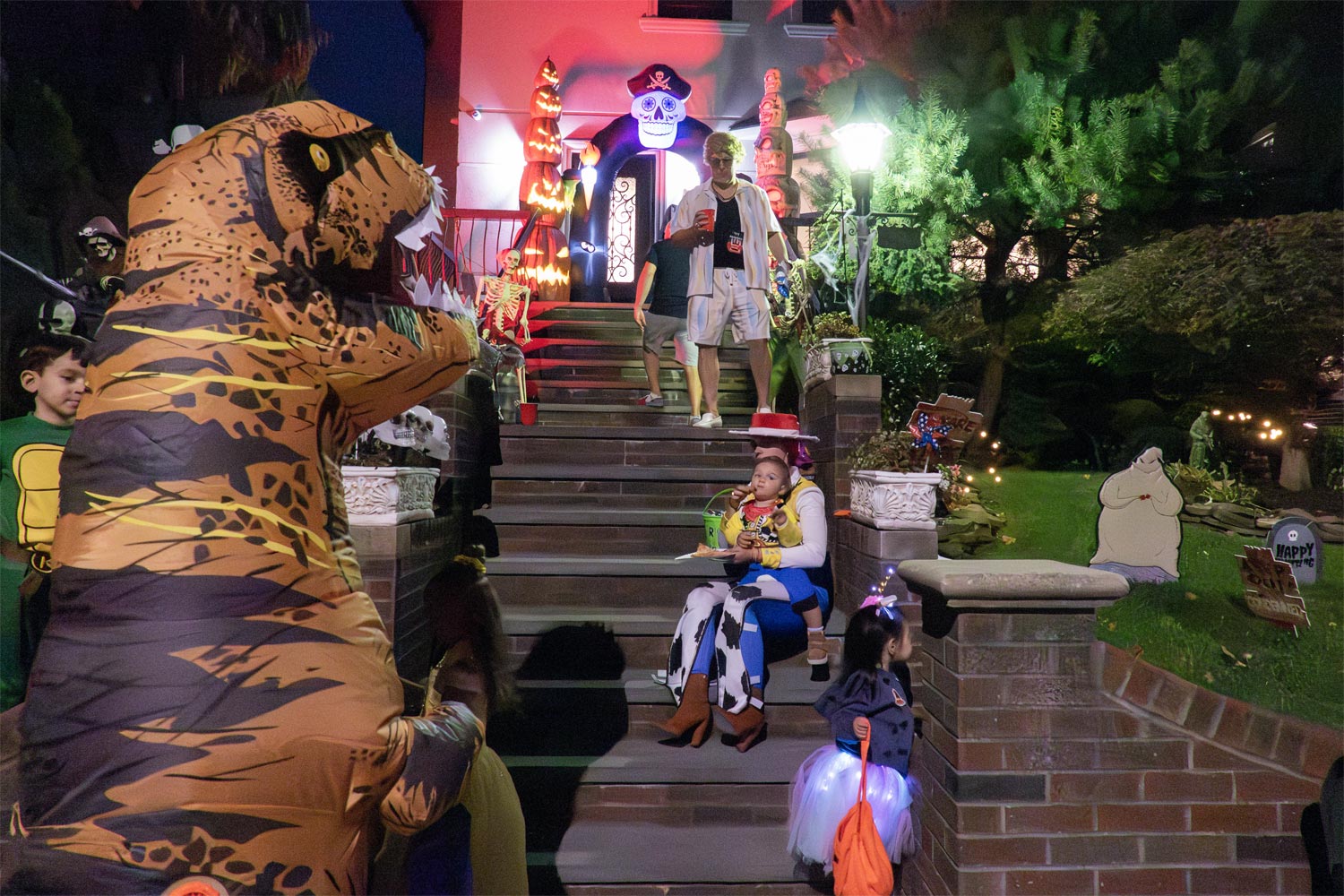
And of course, this whole festive bacchanalia boils down to one thing: kids (and adults) walk around the streets in costumes, knock on people’s doors, and ask for candy. When the homeowner opens the door, they usually say: “Trick or treat!” If the homeowner doesn’t hand over the treats, the kids are lawful to play a prank on them — for example, smear shaving cream all over the door.
They say you can go broke on treats. So some people just hang up a sign that says “Out of candy.” No questions for that guy.
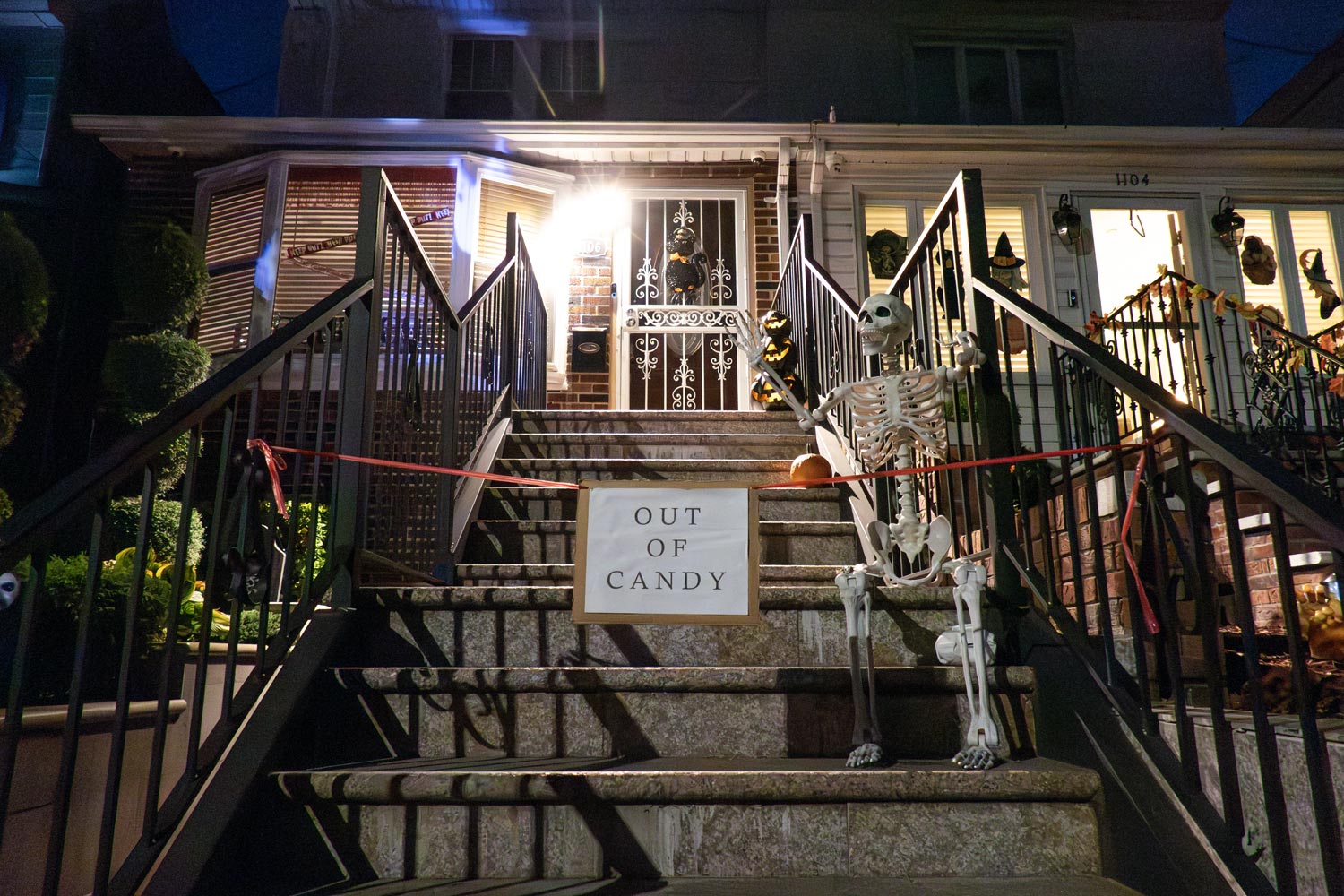
Did I say that Halloween was a dark holiday? Actually, no. It’s a cute national carnival that kids just absolutely adore.
Bensonhurst
The lives of regular people are way more interesting than the lives of millionaires. One of the most typical Brooklyn neighborhoods is Bensonhurst. Not the worst place, but it’s not exactly fancy either. What who lives here is a full slice of society: from the poor to the upper middle class. In short, it’s the most average Brooklyn neighborhood you could possibly find.
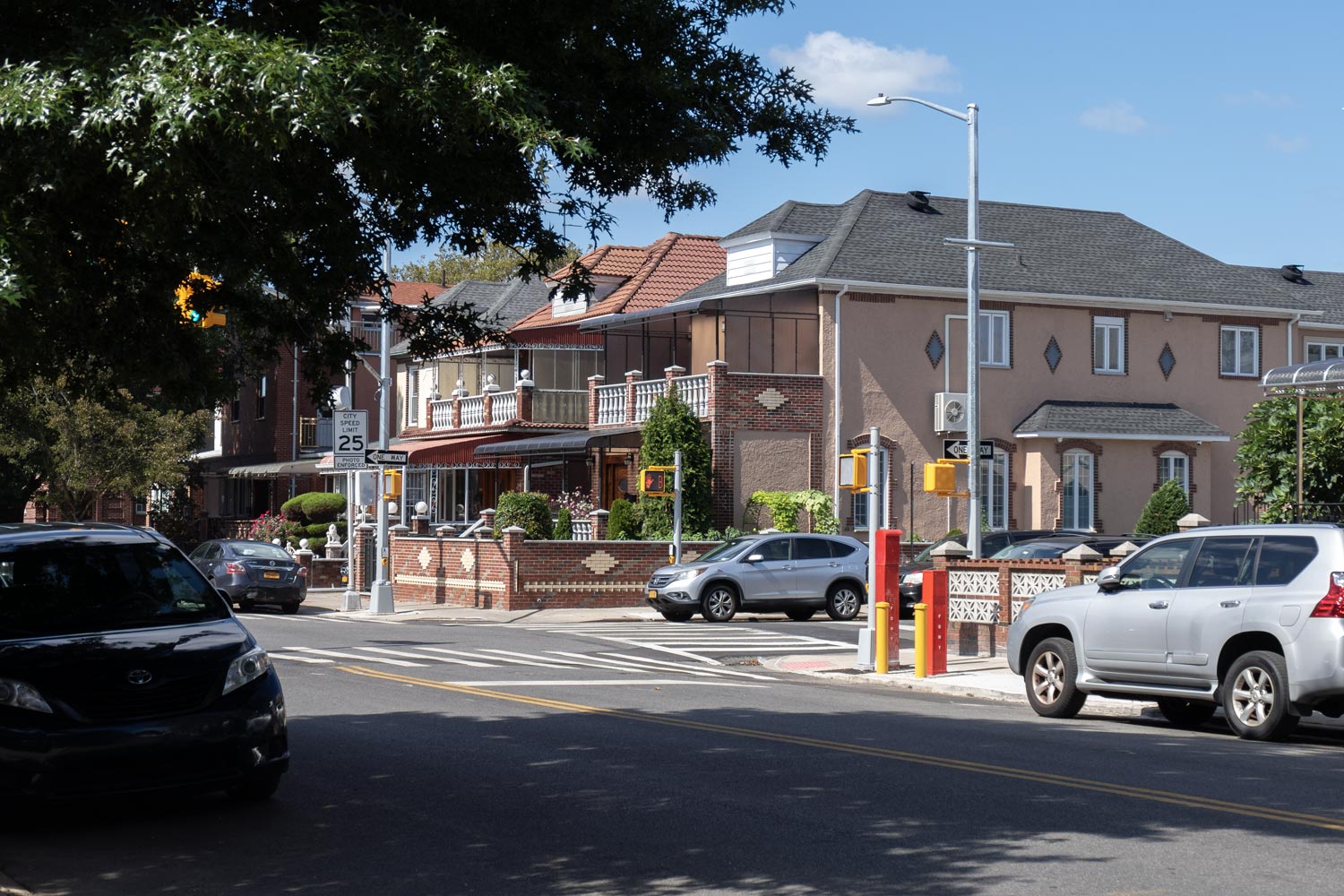
Originally, Italians settled in Bensonhurst, and the neighborhood was once considered a sort of “Little Italy.” Then Jews started moving in, then Chinese, and more recently Russians and Ukrainians. A melting pot in its purest form.
Bensonhurst is the best example of mixed development. Private two-story houses here are interrupted by low-rise brick buildings, and sometimes by something a bit taller. There’s housing for every taste, and everyone gets to decide for themselves where to live.
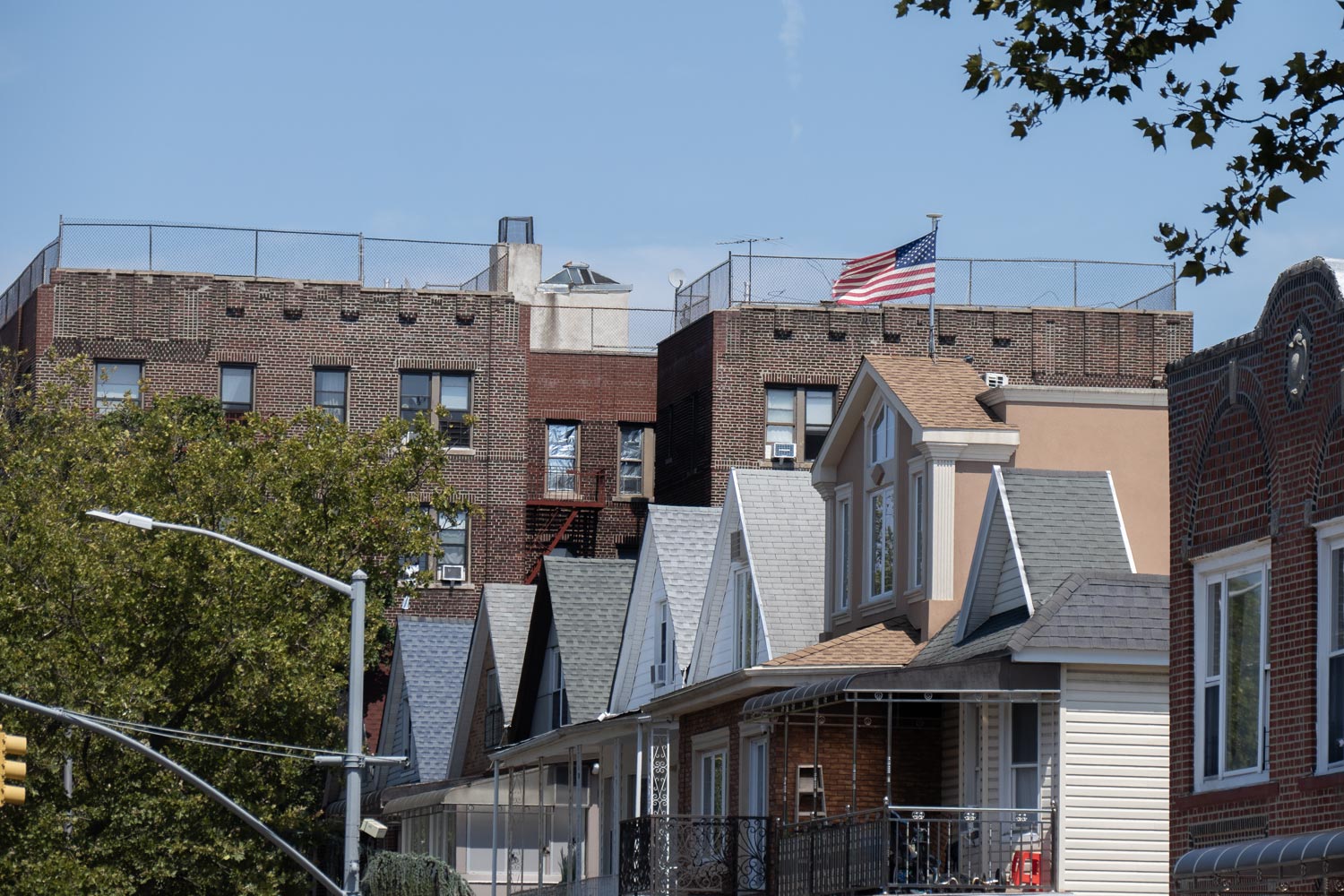
Private houses rarely belong to just one family. They’re usually split into two or four parts. So, in the left part of this house lives one family, while the right part is divided into two floors. The right-right door leads to the apartment on the first floor, and behind the left one there’s a staircase to the second floor.
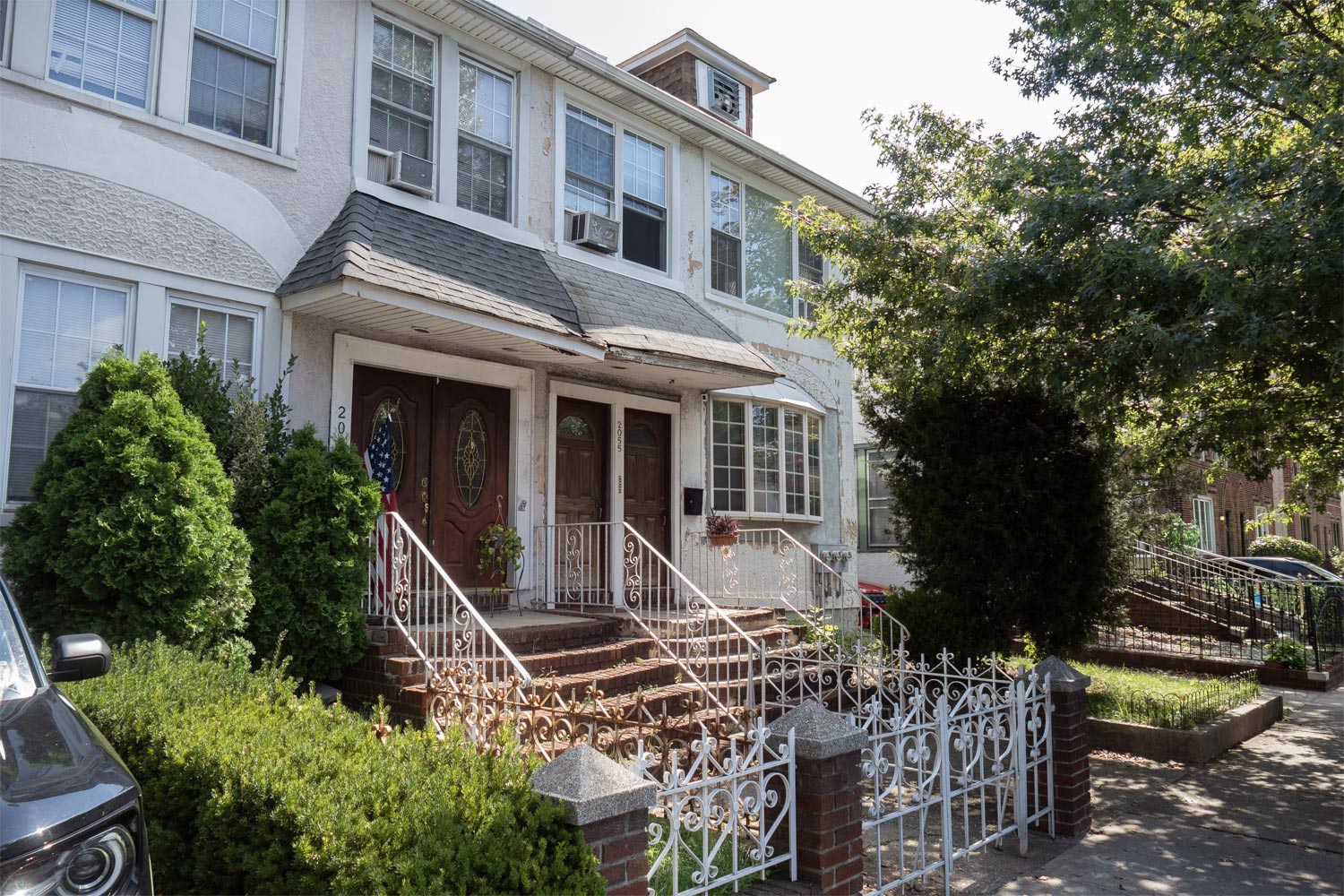
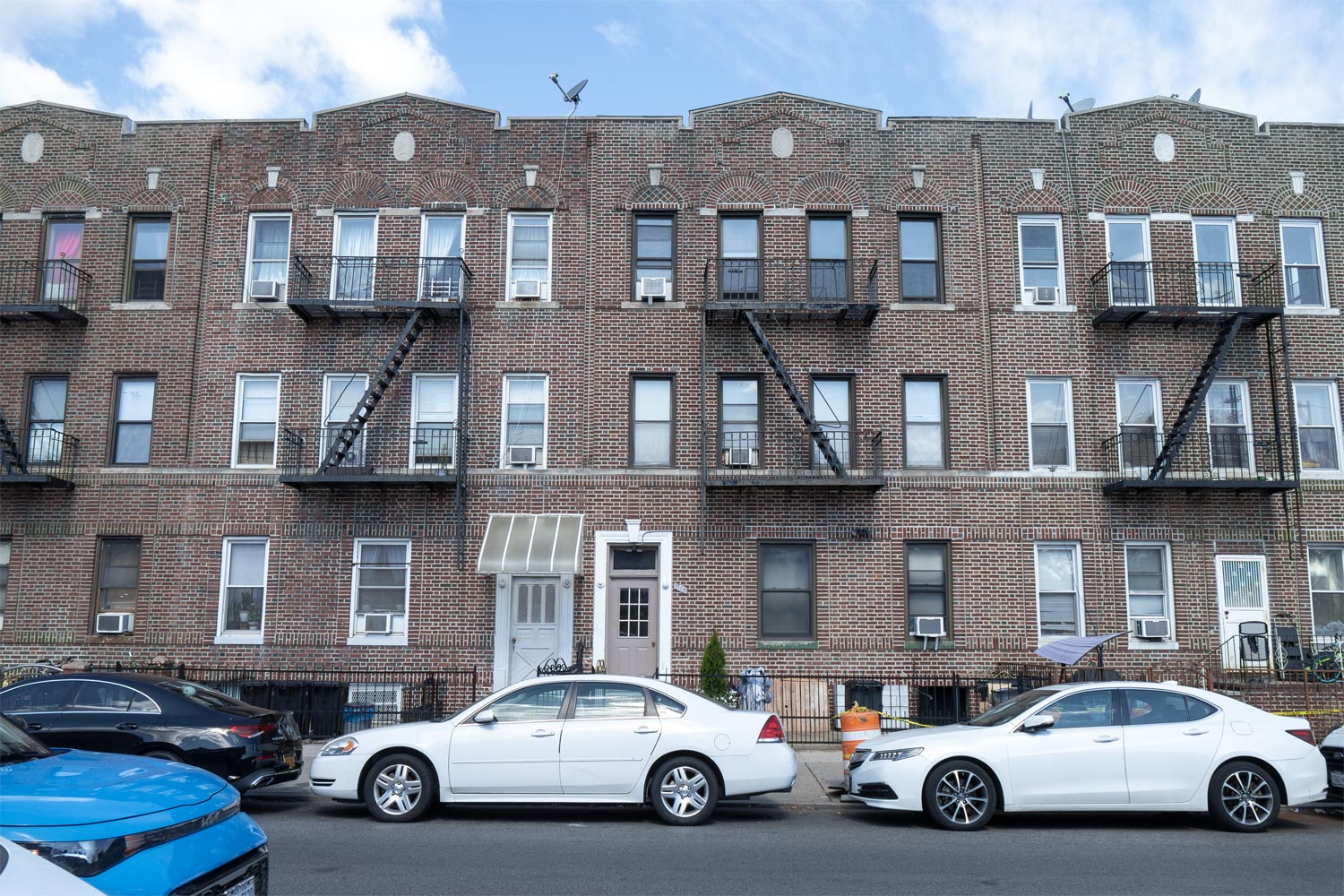
All the houses in these photos were built in the early 20th century, though you’d never really guess it by looking at them. The multi-story brick buildings from the 1920s were built the same way. They look far less cozy than the wooden ones.
In the backyards of private houses, you sometimes come across garages.
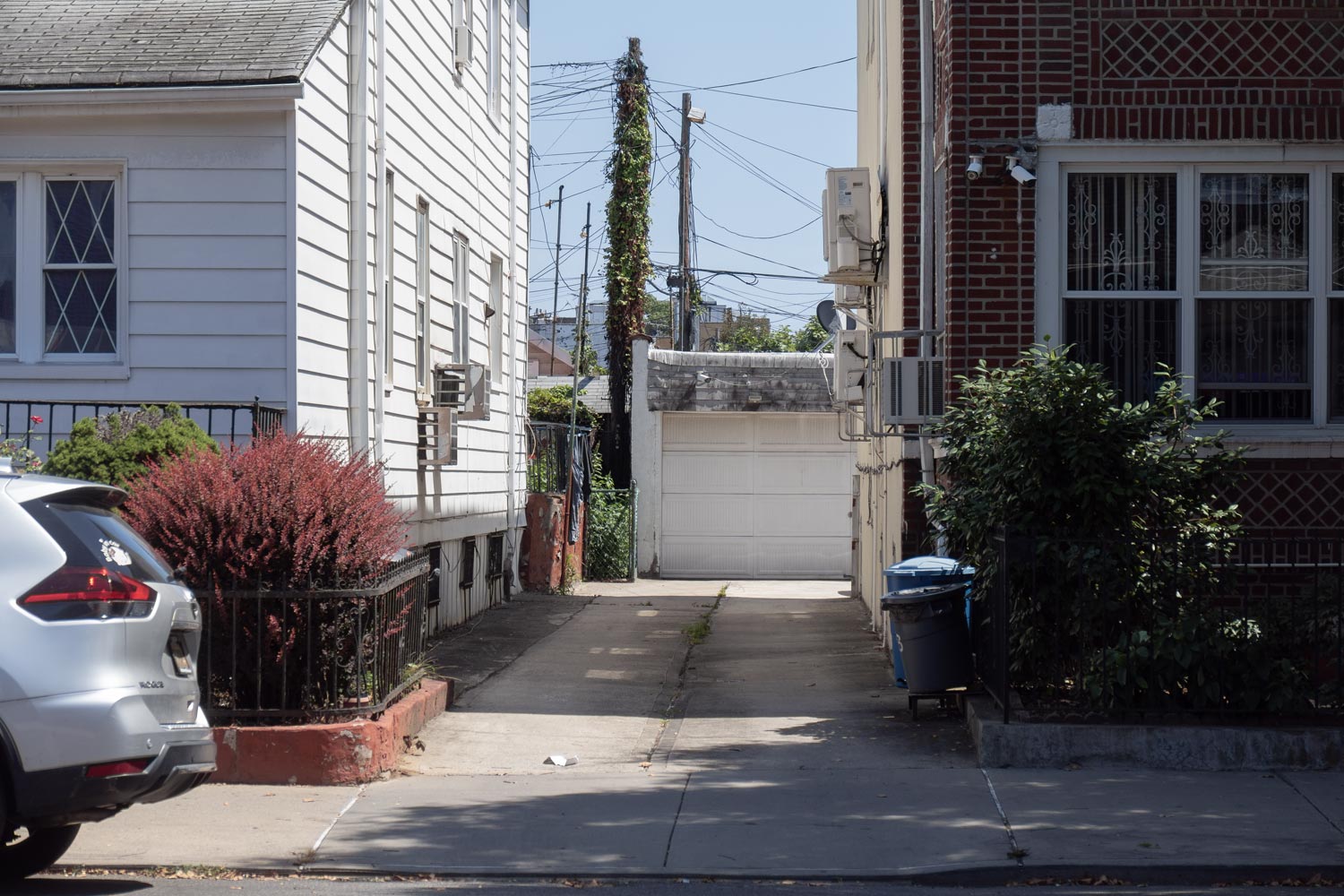
Brooklyn isn’t America. Space is tight, housing is expensive, and even the single-family homes are crammed together, so not everyone has a garage. Most people just park on the street.
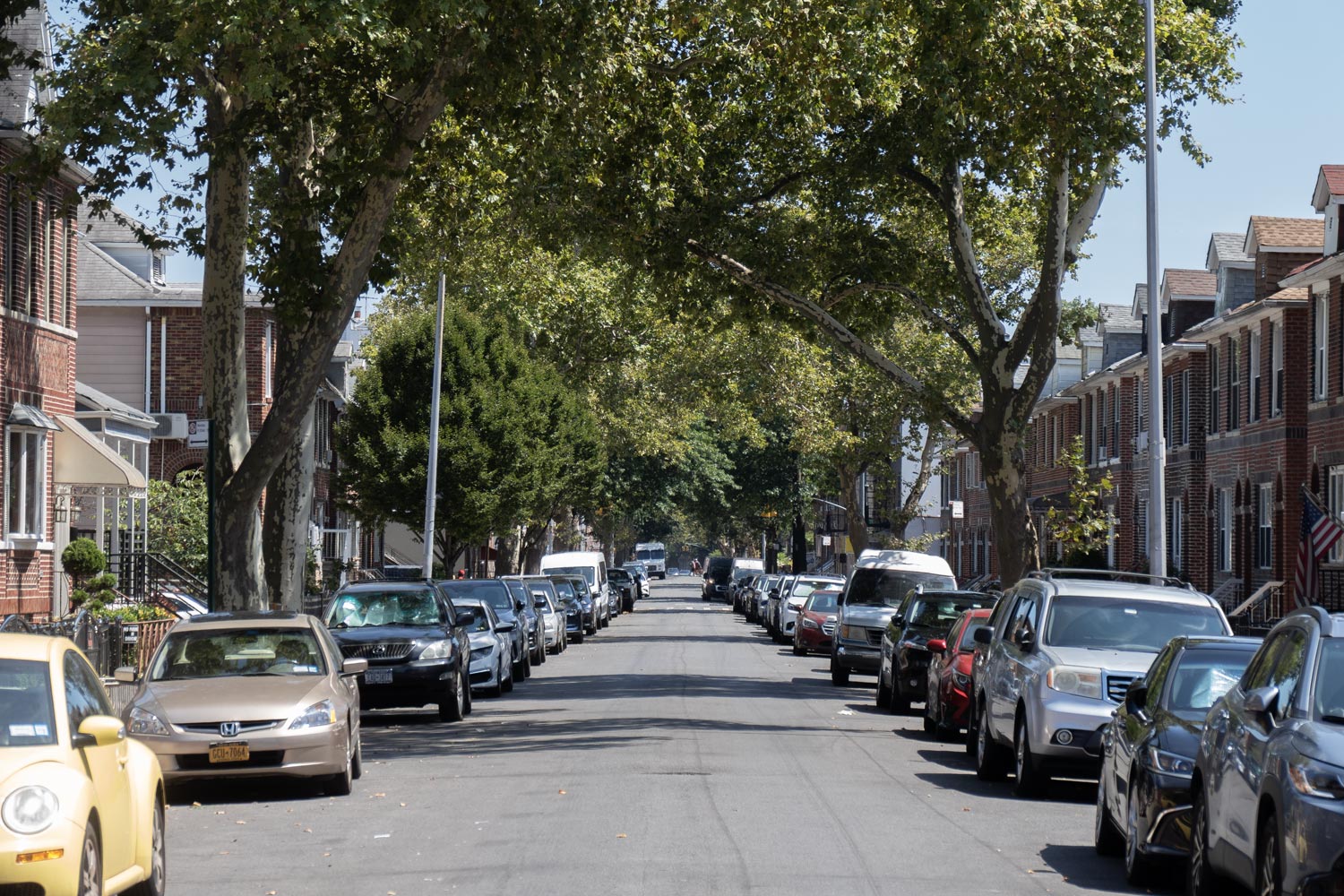
There are lots of cars, and you can’t always find a parking spot. However, they don’t really bother pedestrians: the sidewalks are quite wide, and almost all the streets are lined with trees on both sides.
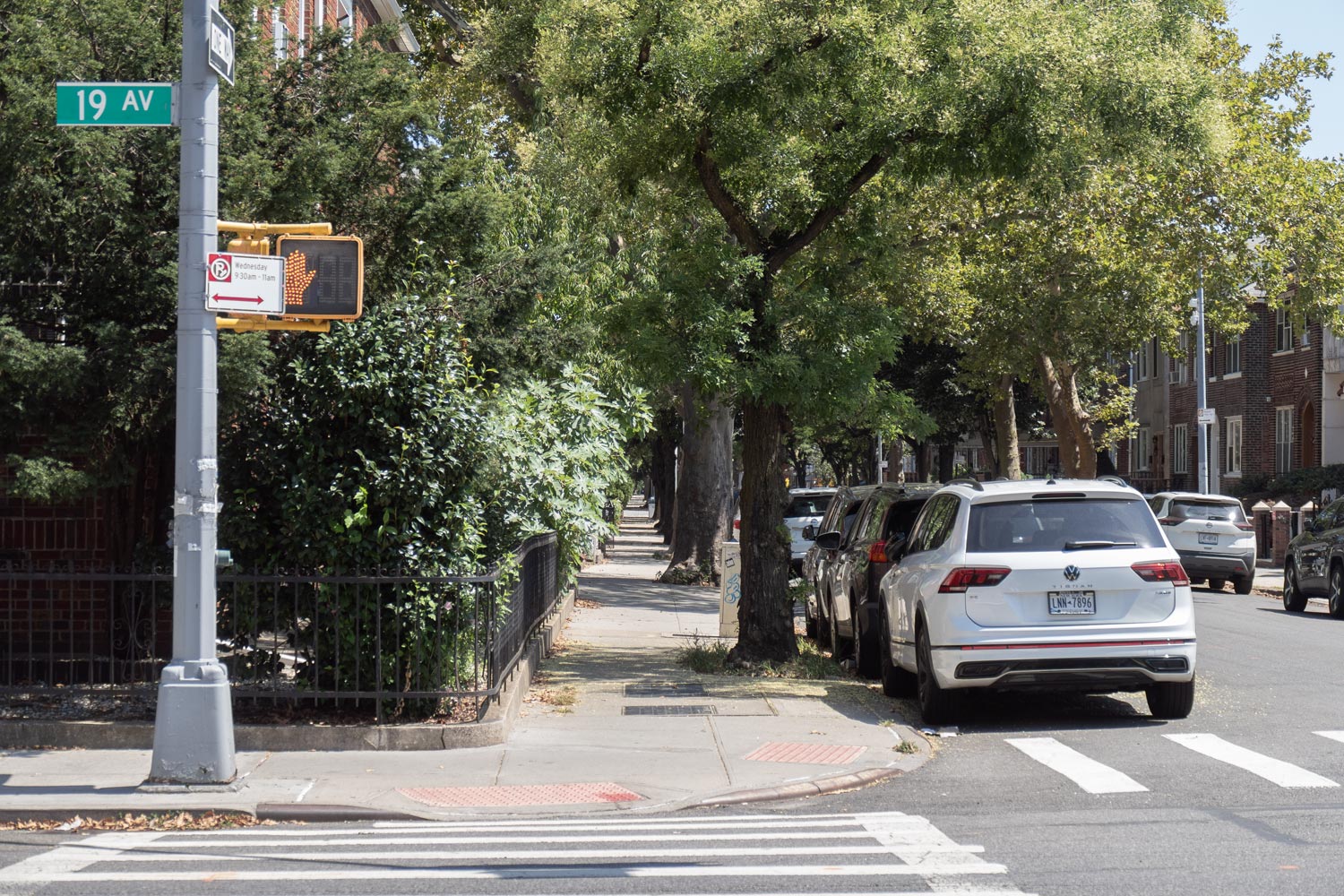
Residential buildings are broken up by wide avenues lined with a huge number of shops, coffee houses, pizzerias, vegetable stands, and fruit stalls. Once upon a time, the mafia operated on this street, holding court in Italian bars. Now they serve excellent cappuccino here.
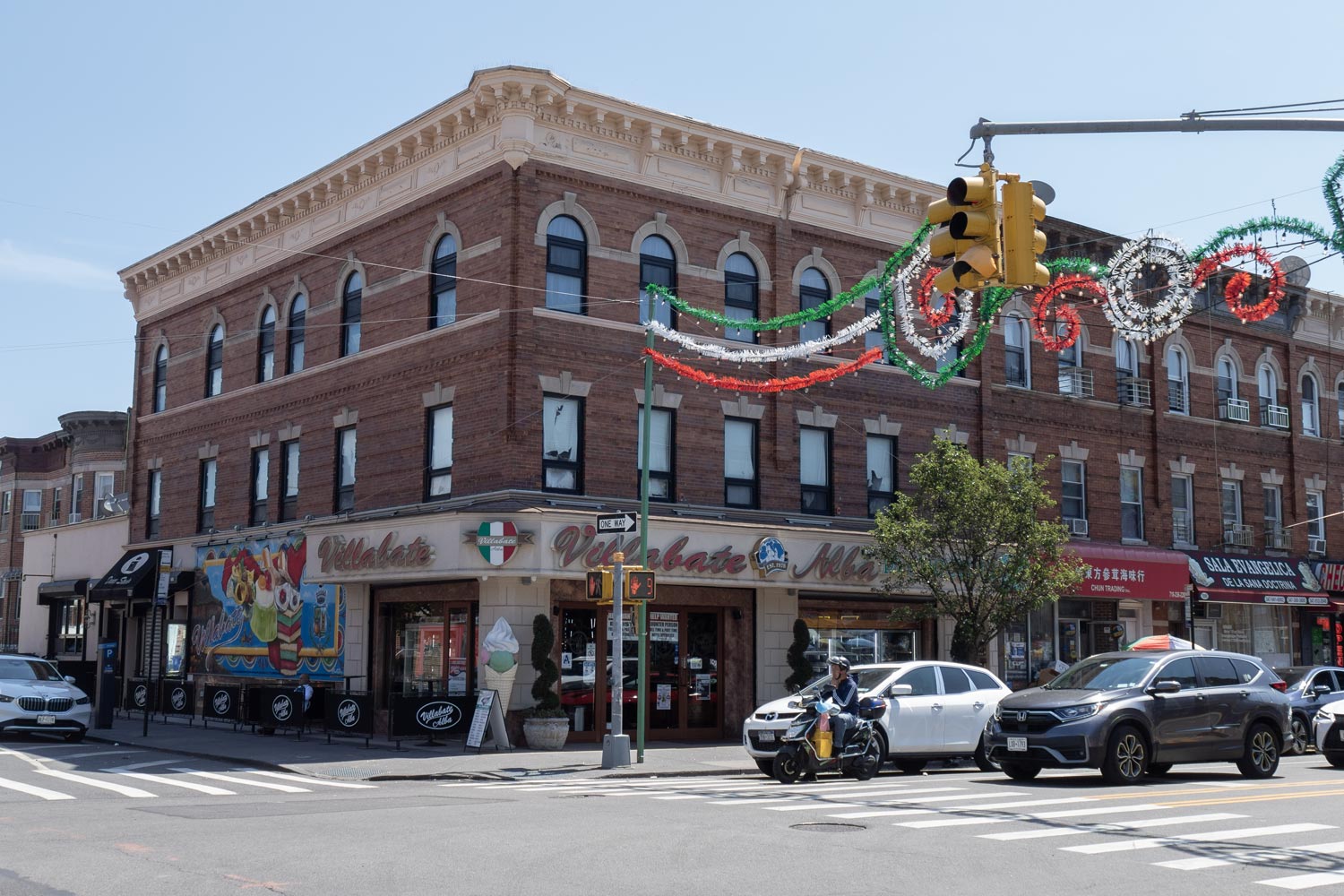
Along the avenue you can find restaurants, hole‑in‑the‑wall joints, pharmacies, banks, hardware stores, and even big-box supermarkets like Target. Unlike, say, Texas, Brooklyn is completely walkable and you can get pretty much anywhere in ten minutes on foot.
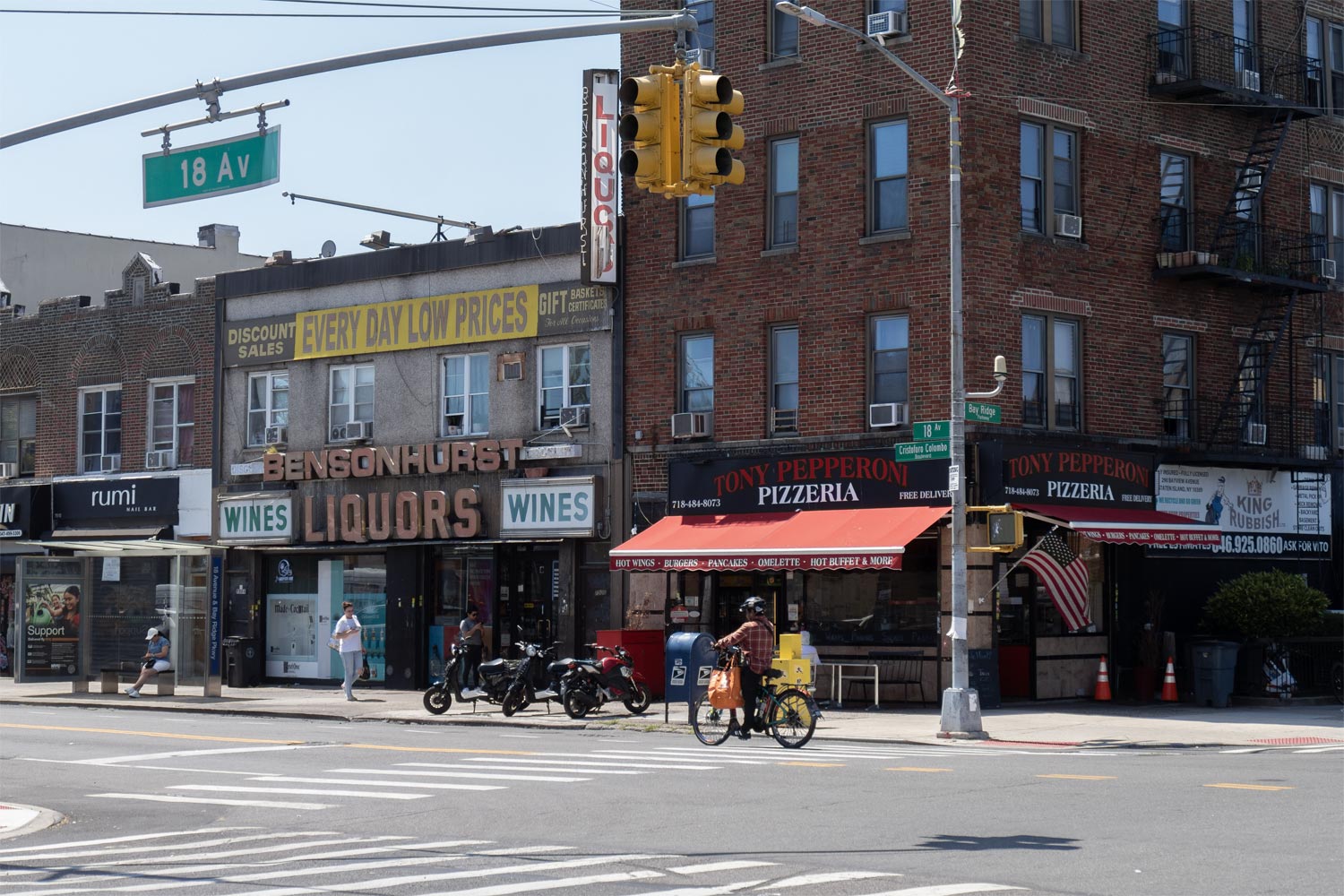
A cozy little neighborhood mini-mart with movie-style hours.
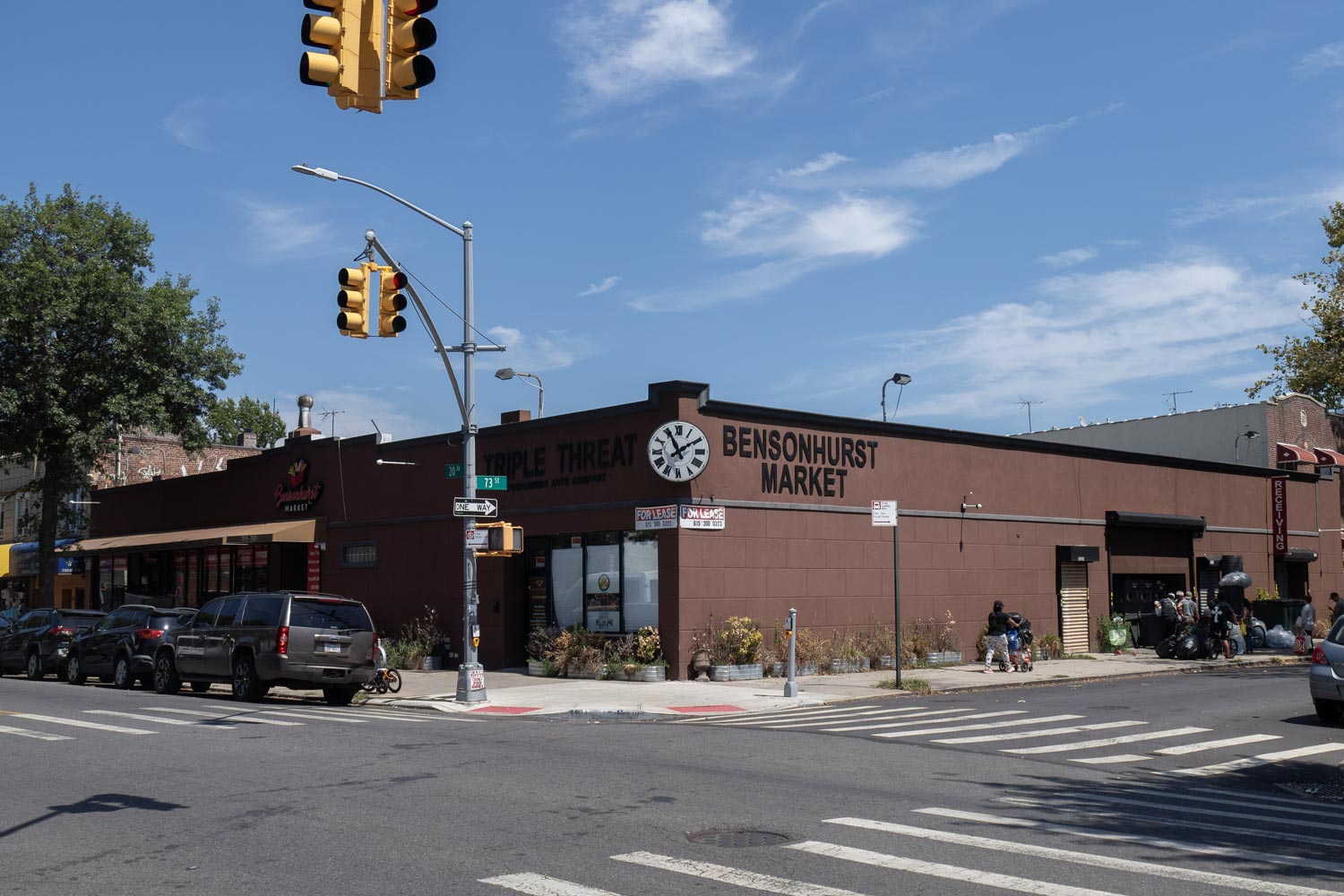
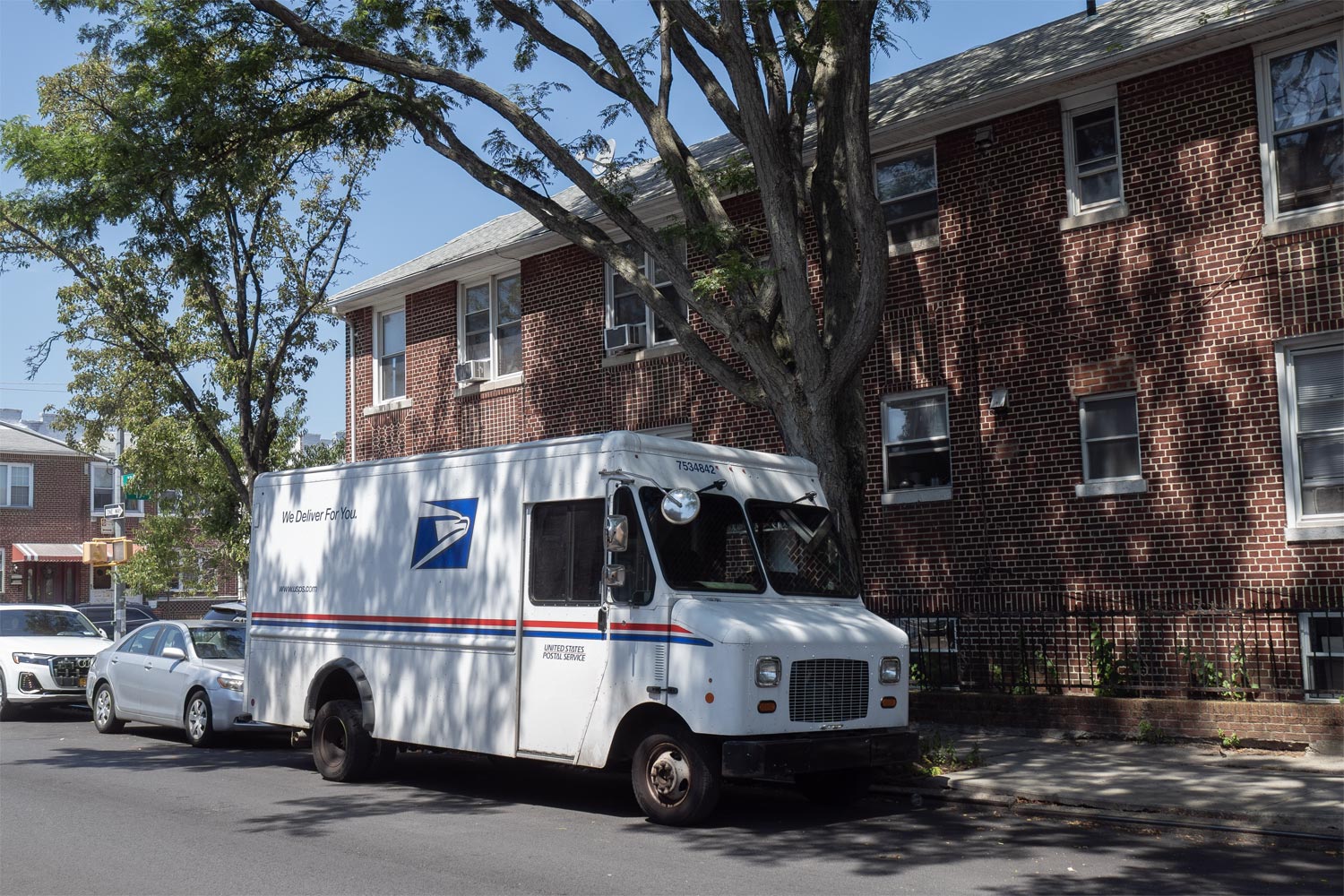
The mail van brought someone a package.
Just like in one-story America, an ice cream truck with a crazy jingle drives around Bensonhurst.
Russian grocery store “Squirrel.” They sell buckwheat, condensed milk, sunflower seeds, and even Ochakovo kvass here.
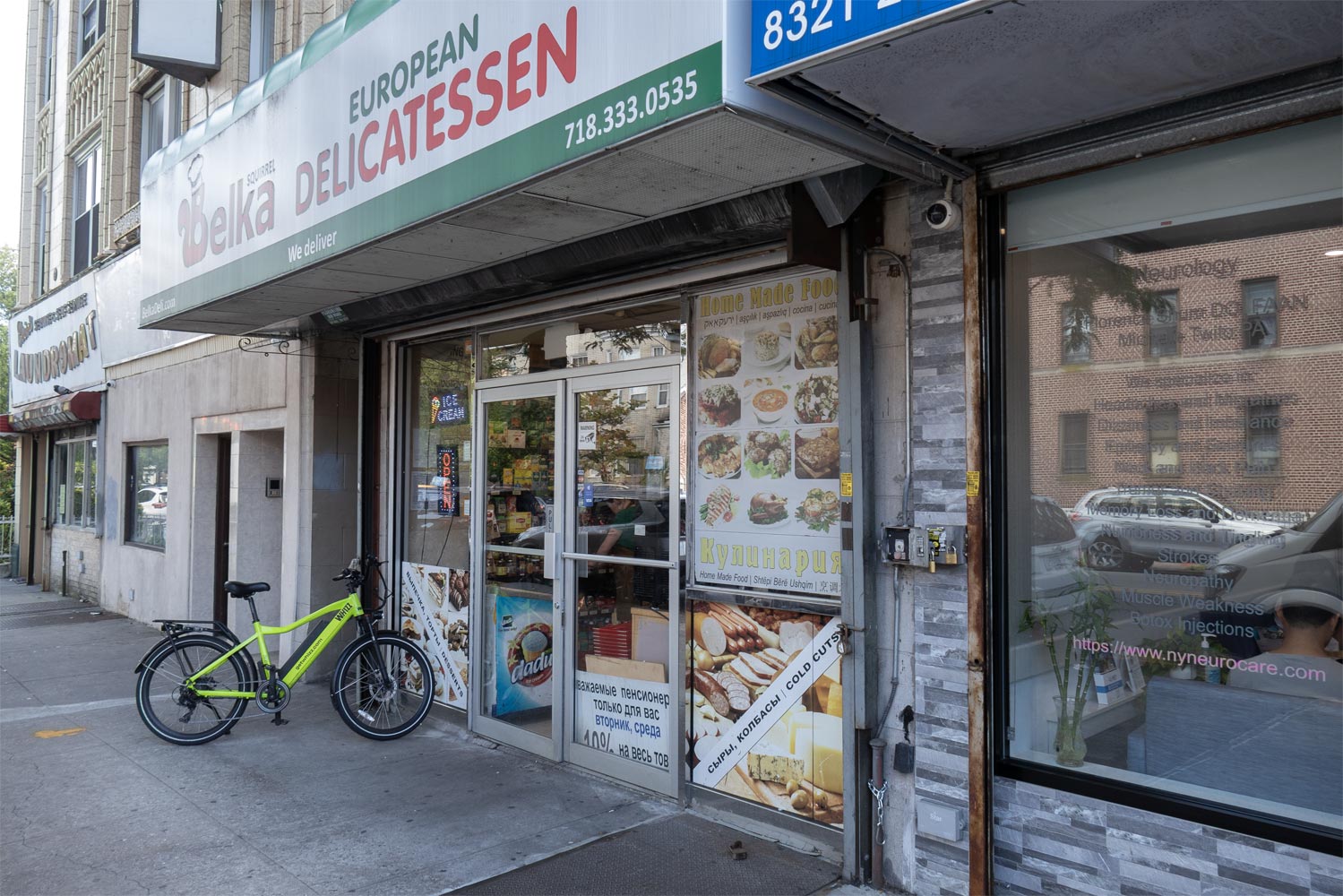
What else is there? Laundromats.
New York is a very old city. Even in Brooklyn, the buildings were put up a hundred years ago, back when washing machines didn’t even exist. Only a few people have a washing machine in their apartment, usually in newer buildings. In the older ones, the plumbing is so weak it can’t handle the pressurized drain. Plus, the machine shakes so much the whole building trembles.
So pretty much everyone in New York — from the poor to the middle class — goes to the laundromat to do their laundry. Luckily, there’s a laundromat on every corner. A wash runs you anywhere from three to seven bucks, and drying is a couple of dollars.
Closer to the subway, the neighborhood gets more chaotic. Somewhere between Bay Ridge and Bensonhurst, the subway comes up out of the ground and then runs on an elevated track above the street.
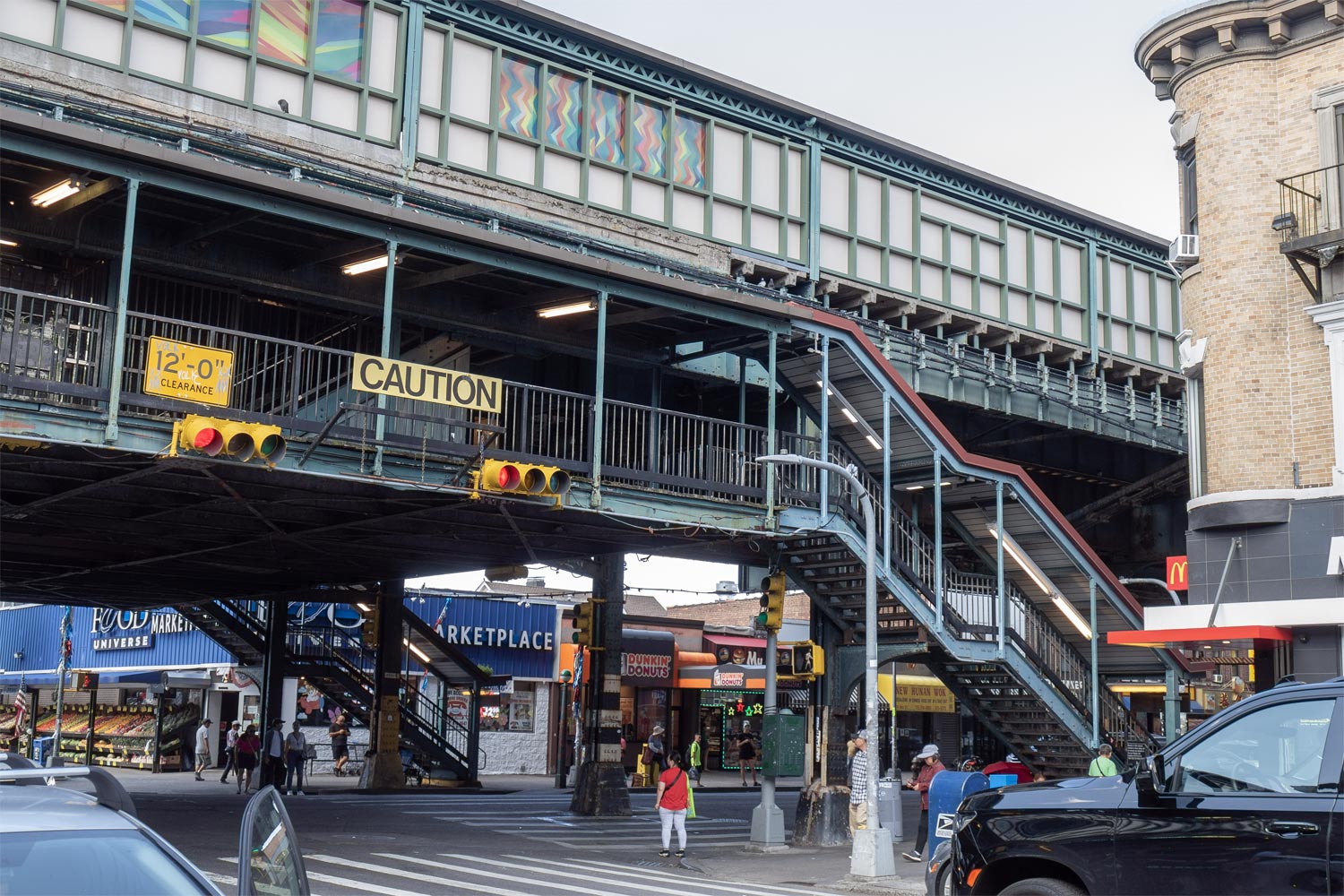
You don’t even feel like crossing the street under that overpass. Something is always dripping from it, especially after it rains. An absolutely disgusting, rotten, rusty, monstrous structure.
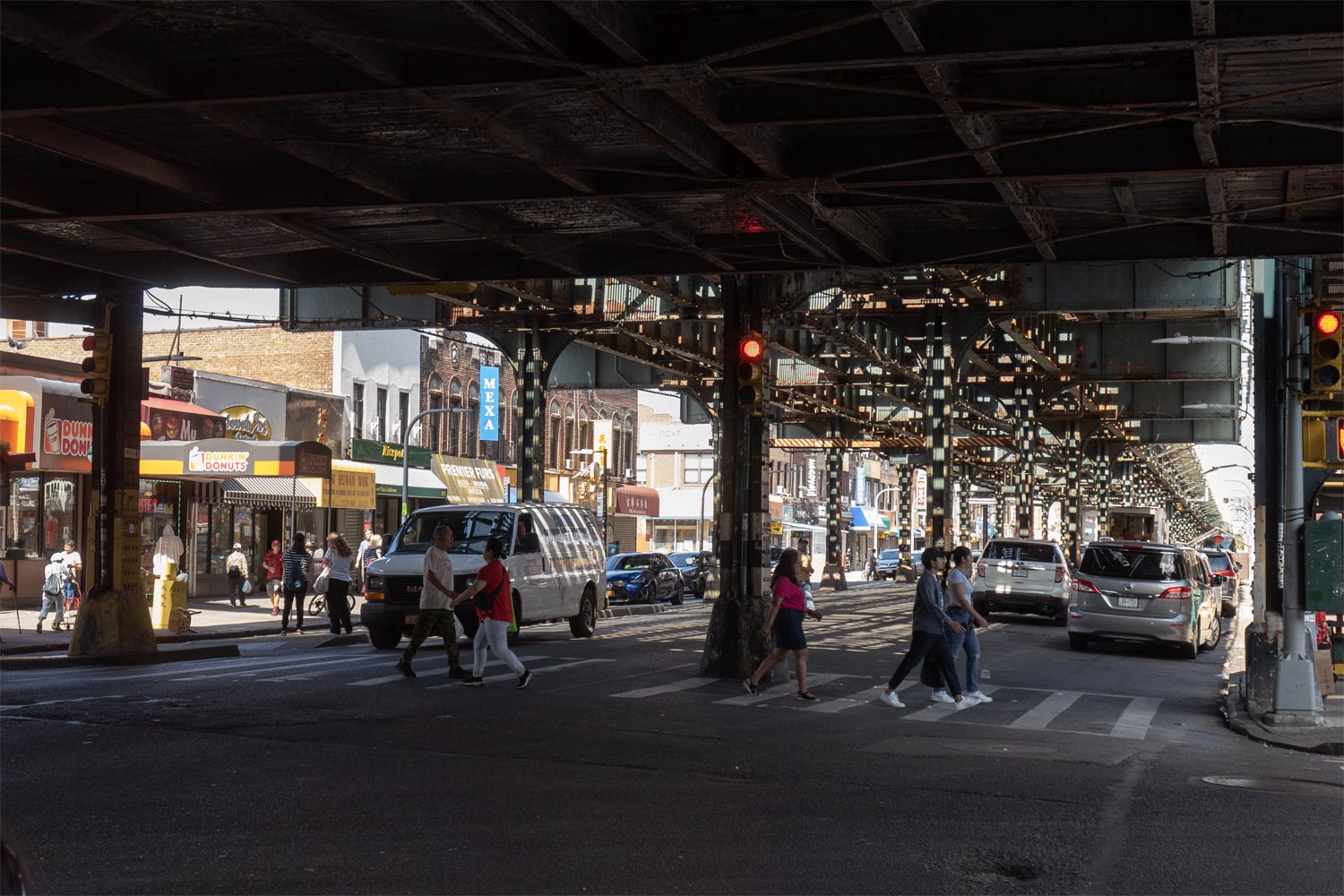
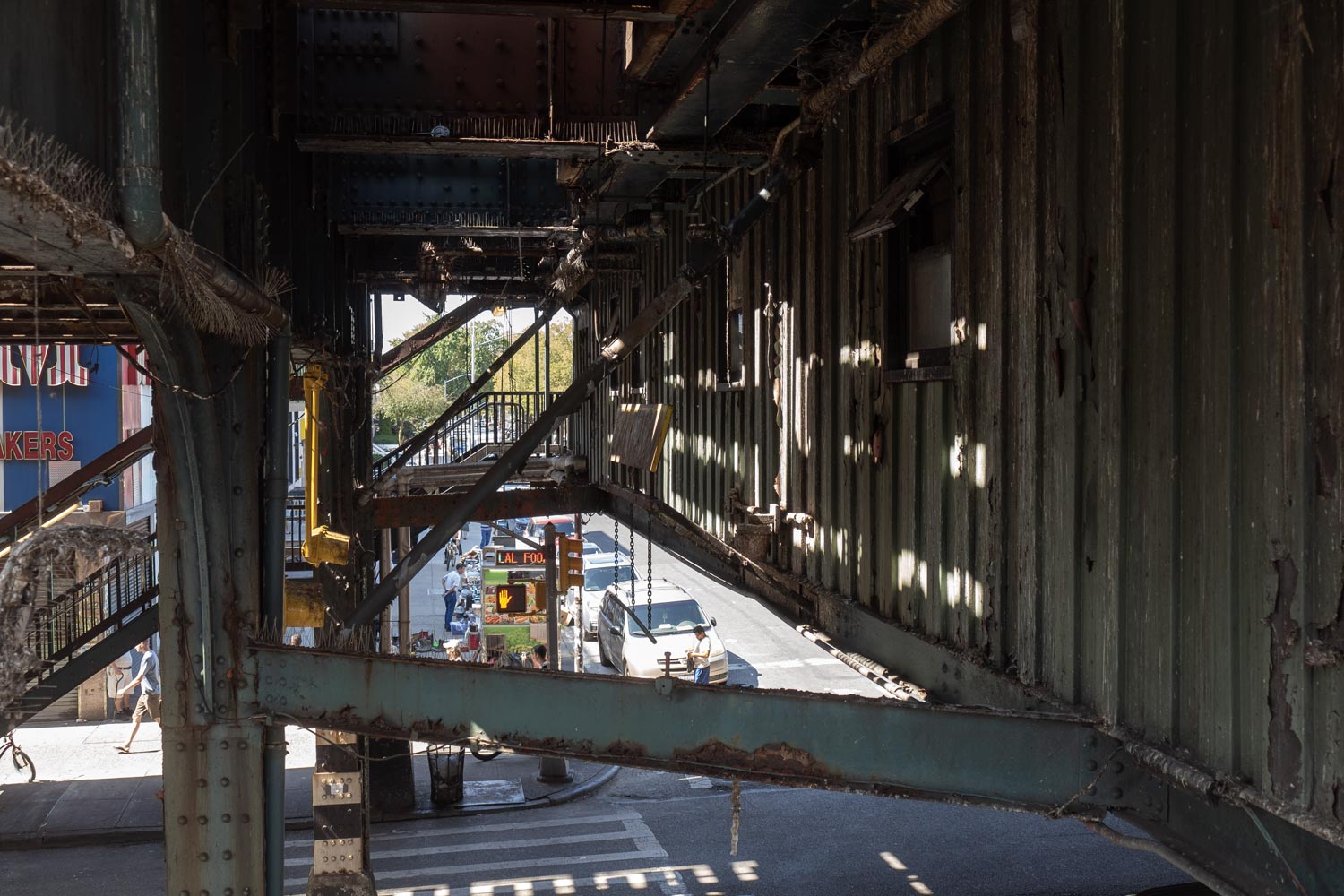
Along the highway under the overpass, it’s mostly shops and cafés. There aren’t many residential buildings here, but that doesn’t mean there aren’t any at all. The really poor immigrants live even here — with their windows looking right out onto this rusty, clattering hunk of metal.
Reminds you of Brighton Beach? Oh no, this isn’t even close to Brighton Beach.
Brighton Beach
Take the rusty overpasses of Bensonhurst and multiply their length by ten.
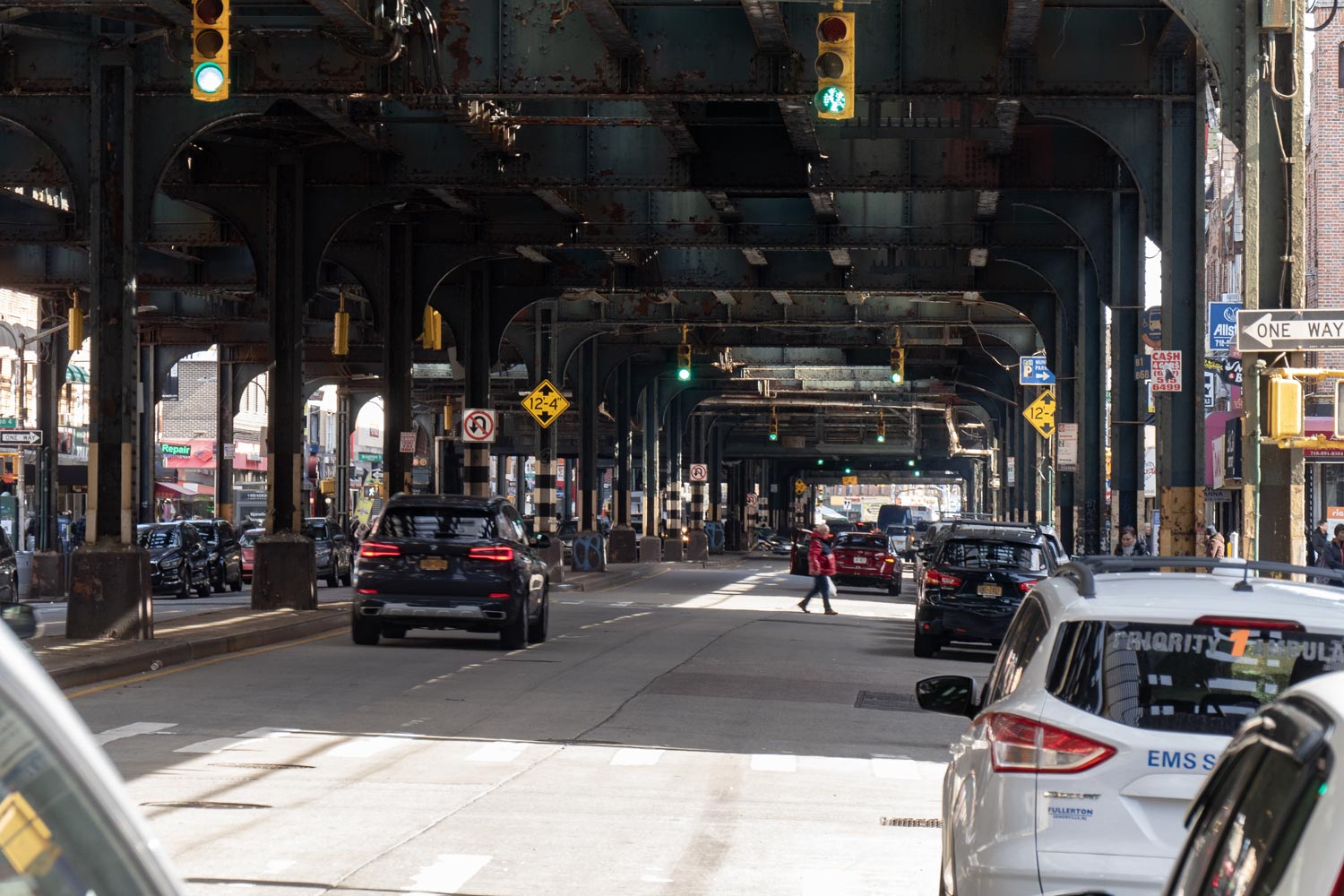
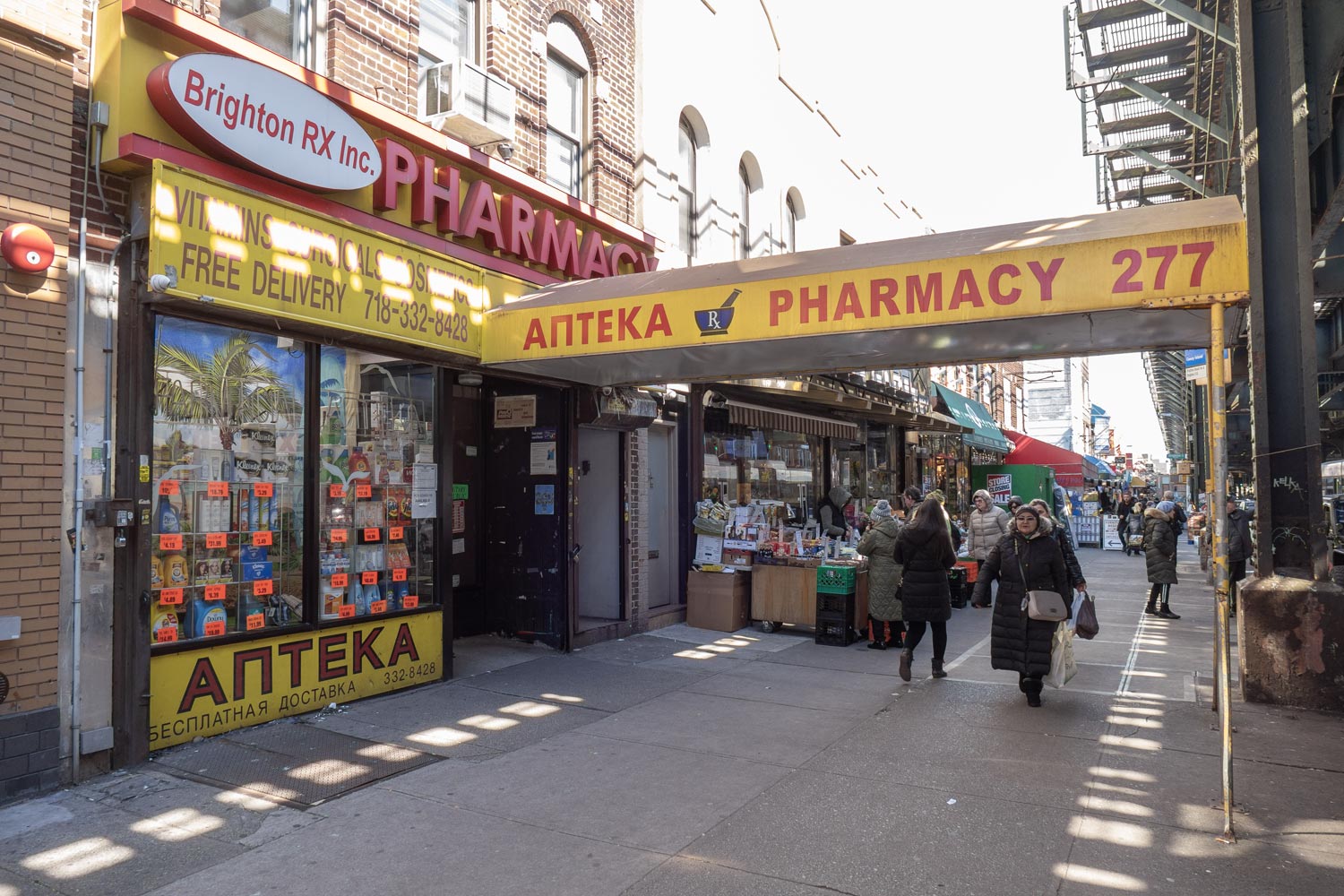
Get rid of the Chinese, Italian, Mexican, and other shops; leave only the Russian ones and maybe a couple of Georgians.
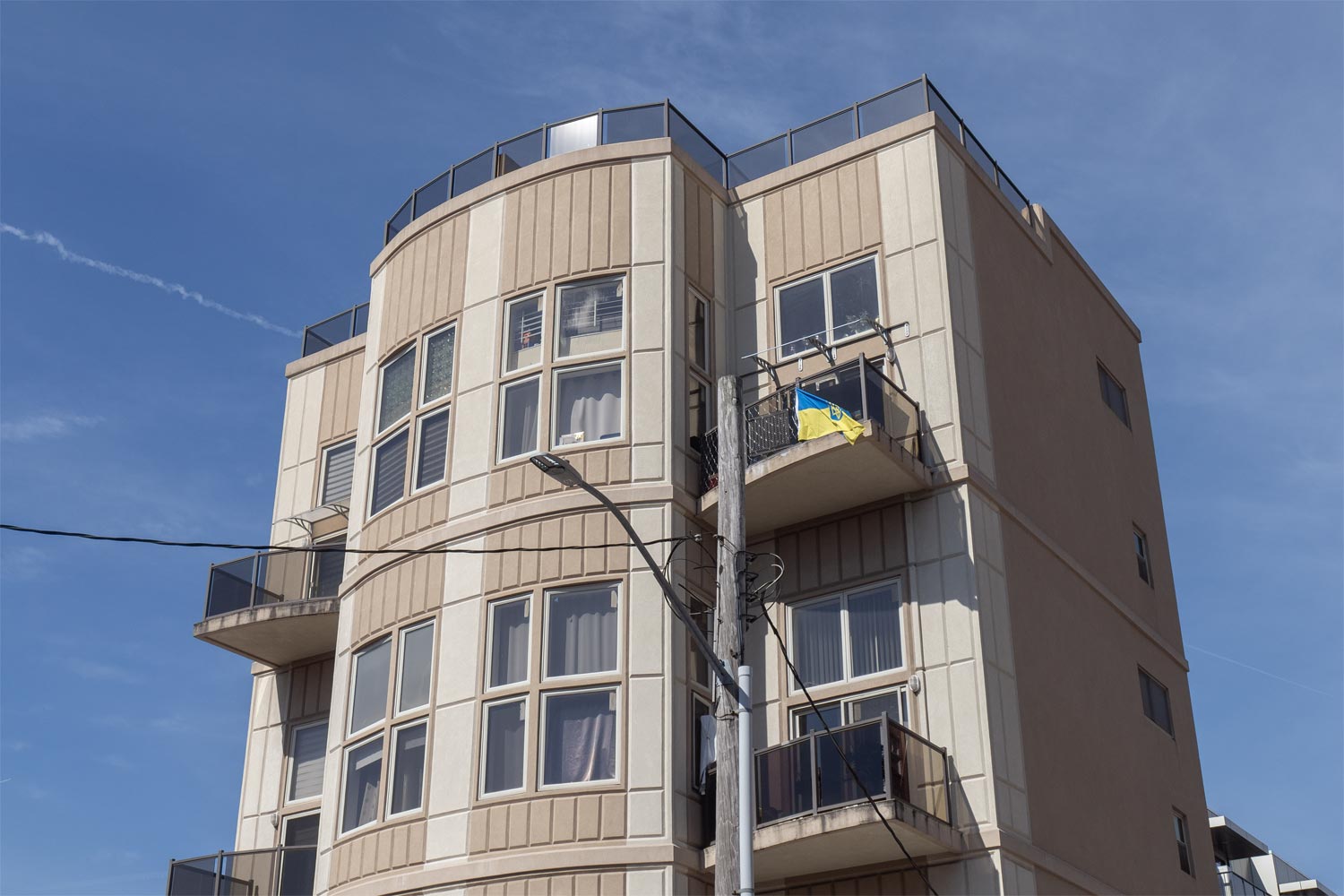
Add more high-rises and ugly prefab concrete blocks.
Set the time to the year 1995.
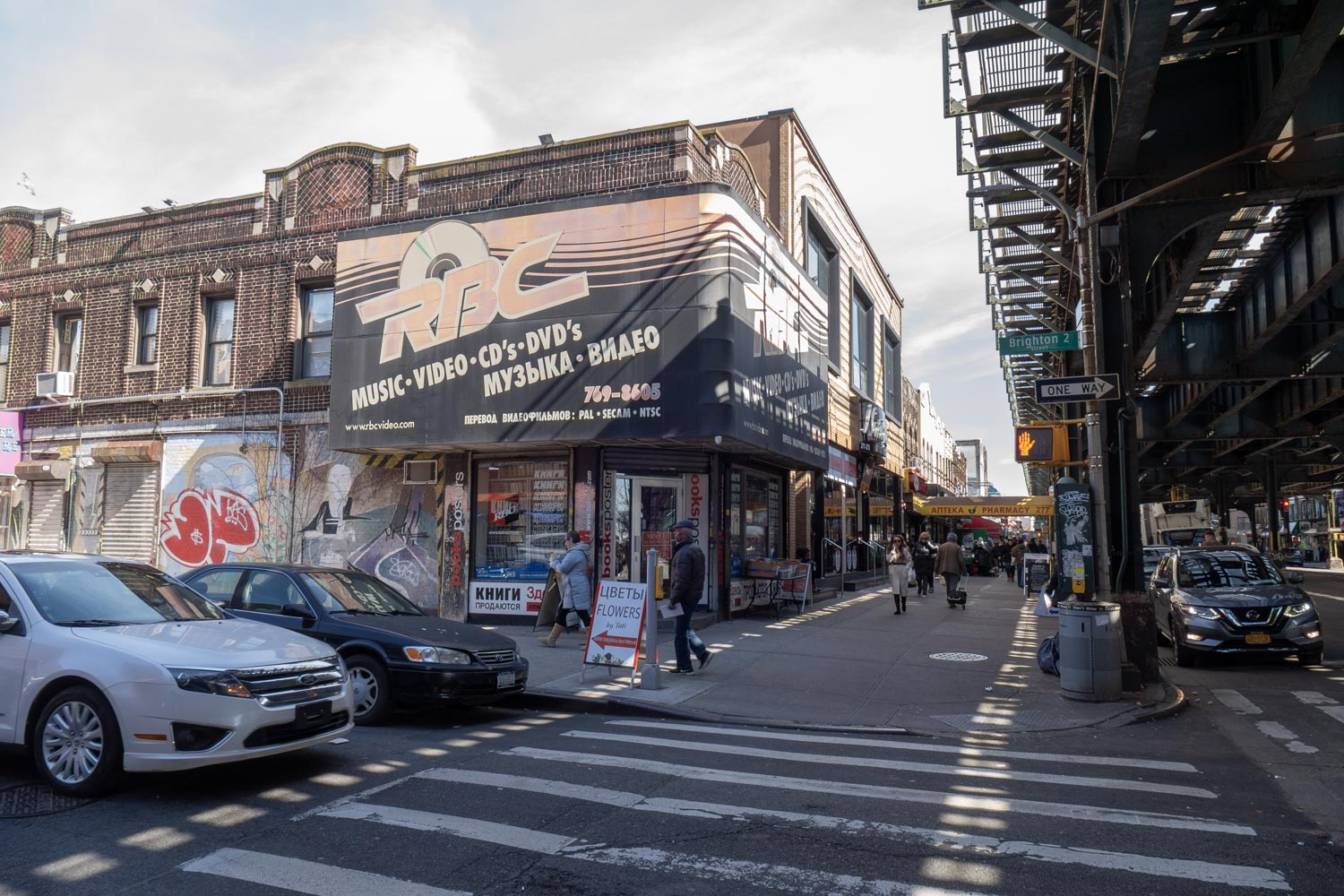
Voilà — you’re on Brighton Beach!
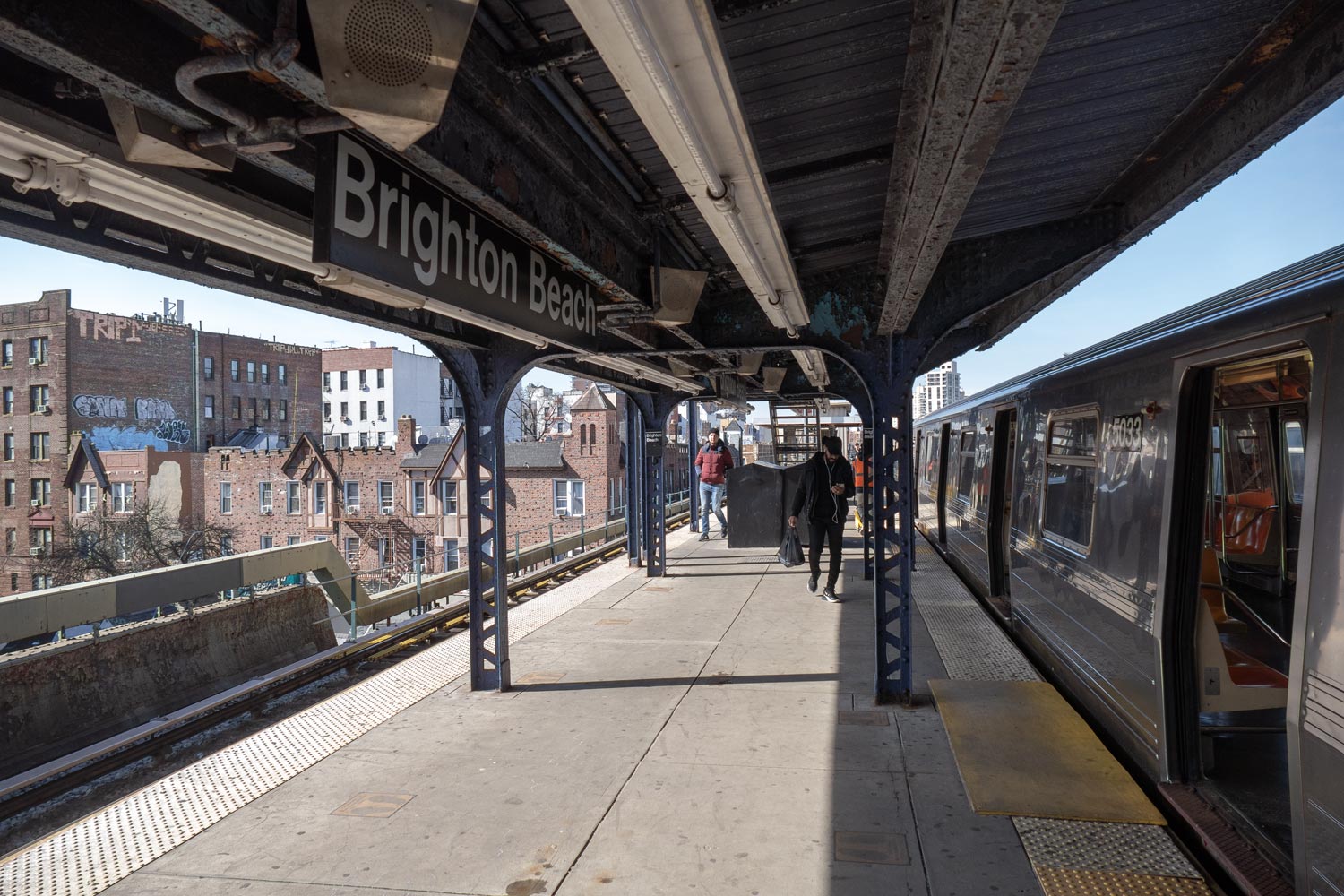
The author had, of course, heard a lot about Brighton, but had no idea just how bad that neighborhood really was. Honestly, it’s worse than some Black ghettos. Though, unlike the ghetto, Brighton is safe. Supposedly.
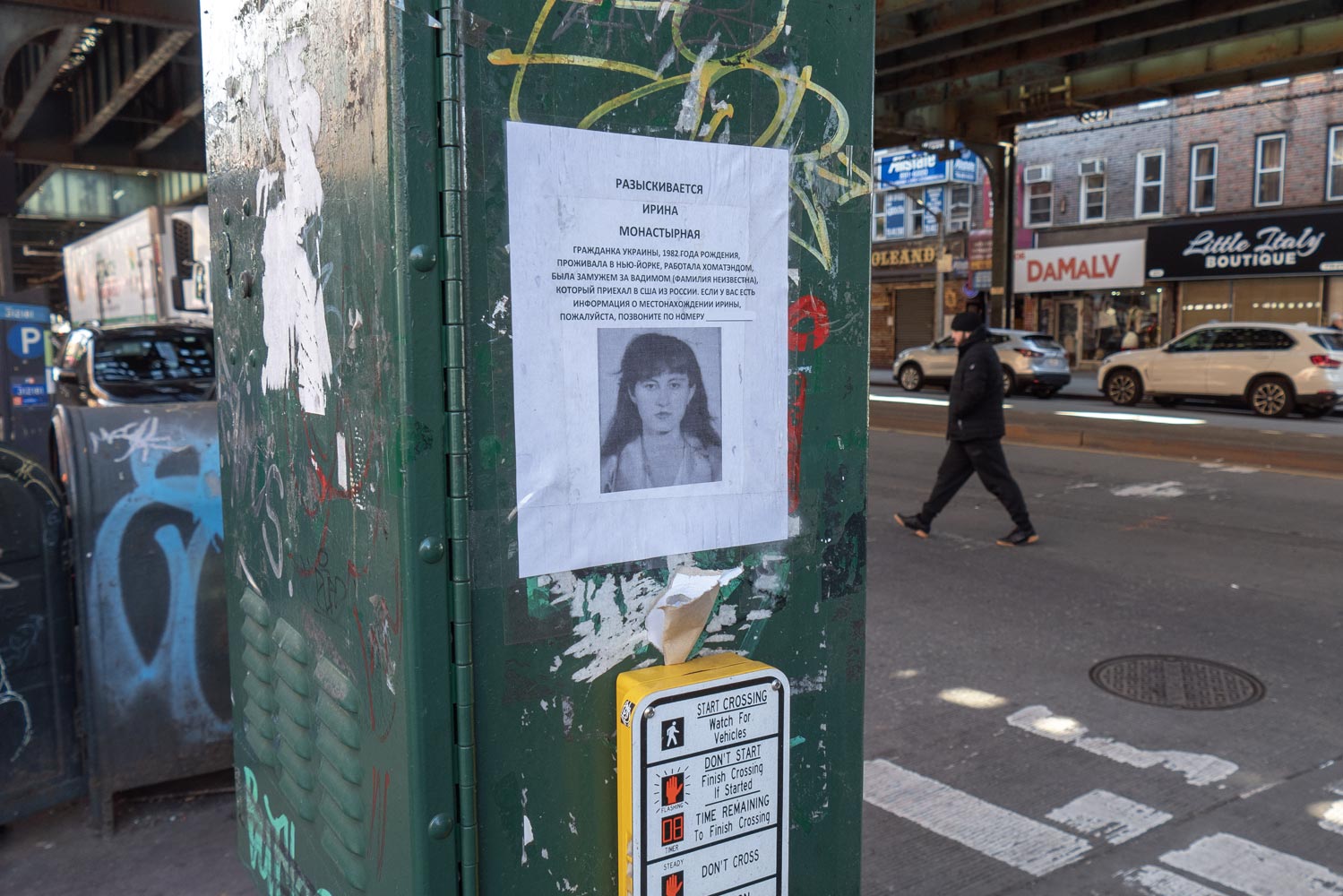
As for the living conditions... Well, the elevated subway line runs through most of Brooklyn. It’s just that it really does run through those neighborhoods, whereas Brighton is entirely clustered around that overpass. Unlike in Bensonhurst, apartments right up against the rusty bridge are nothing unusual.
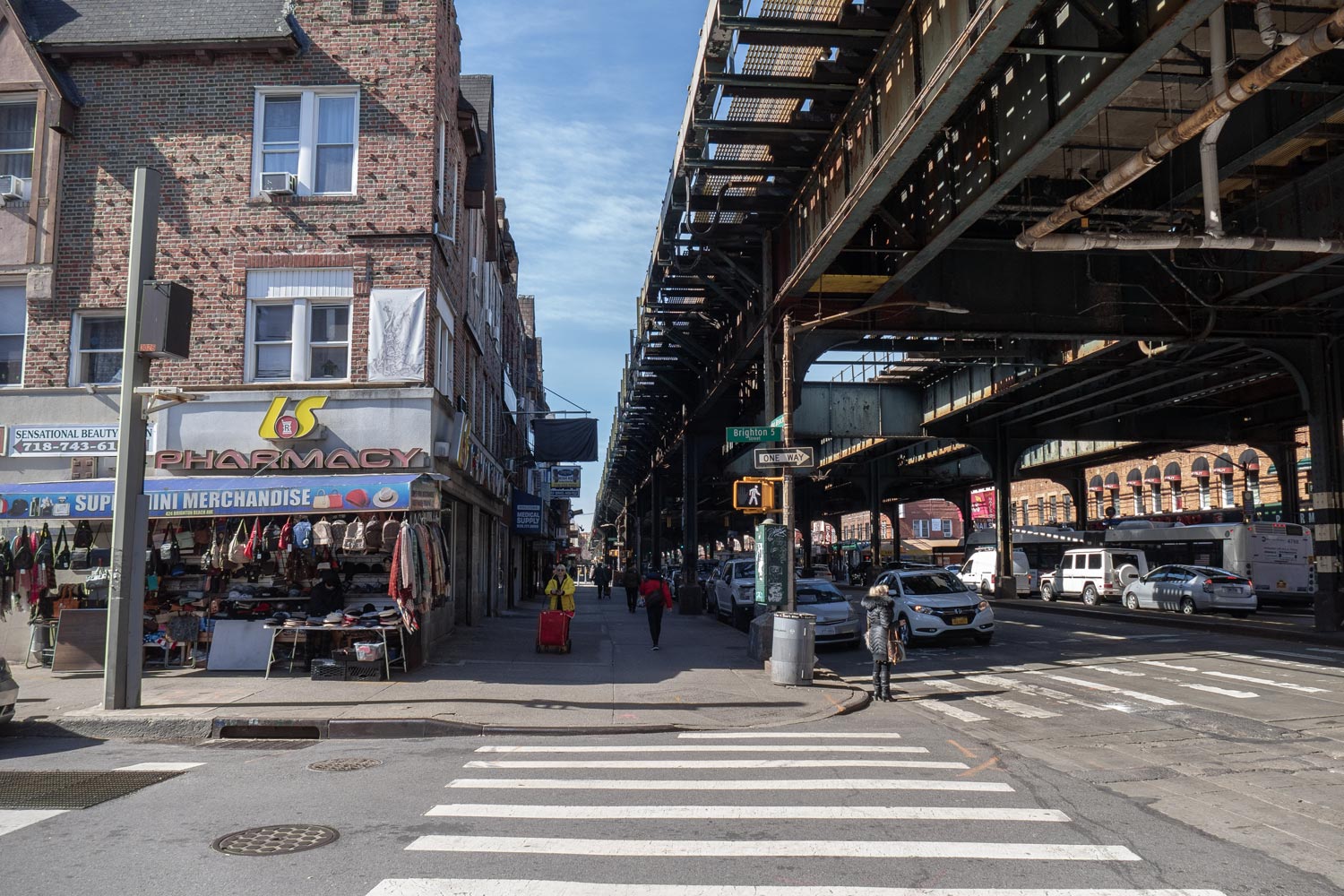
All of Brighton’s life revolves around this avenue. Under the bridge you’ve got shops, cafés, restaurants, pharmacies, banks, and every other kind of place. The fruit stands are under the overpass too. It’s scary to think how much rust and dust rains down on them. Want dinner or a quick bite? Back under the overpass. Even a “relaxing” massage is done about three feet from the railroad tracks.
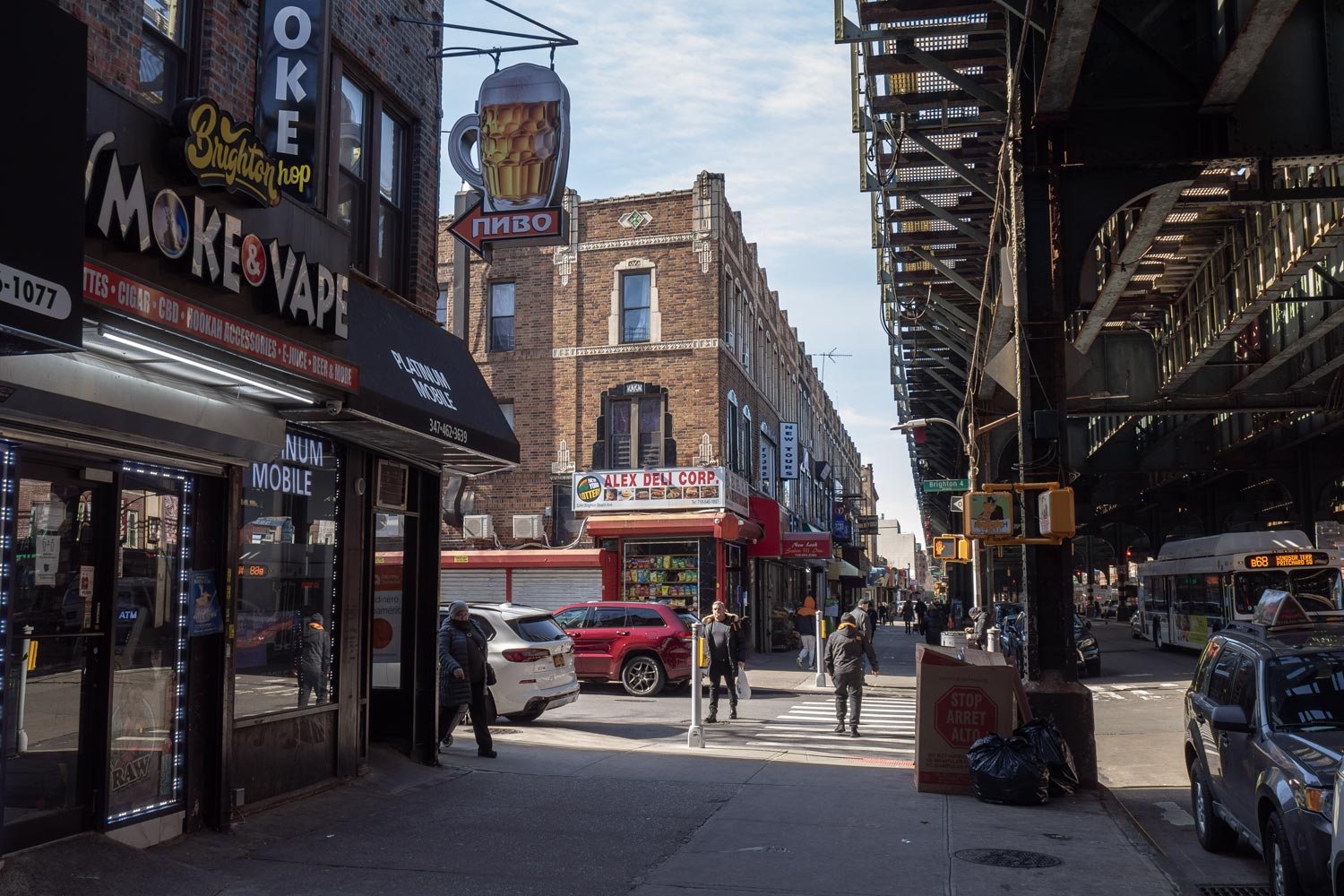
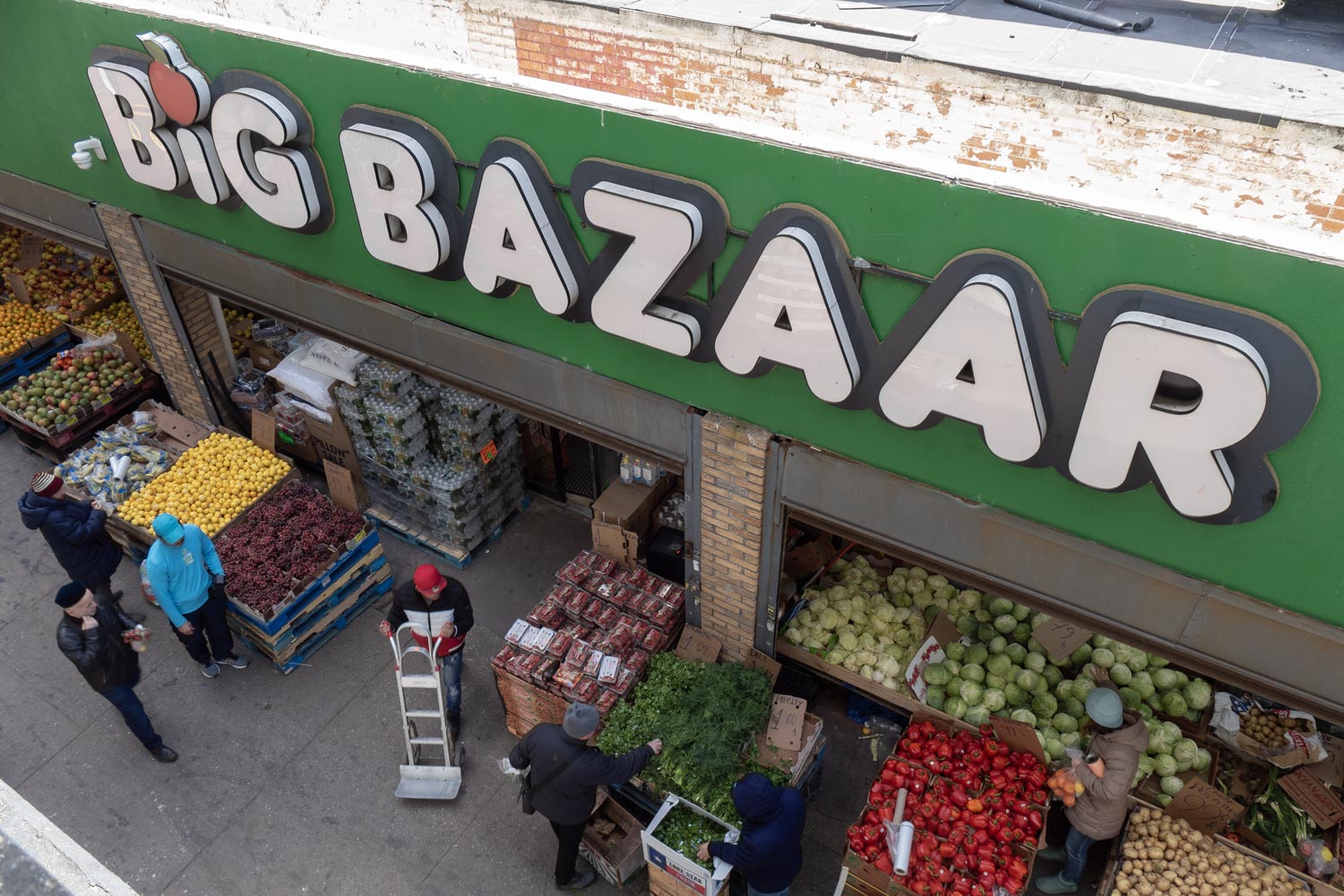
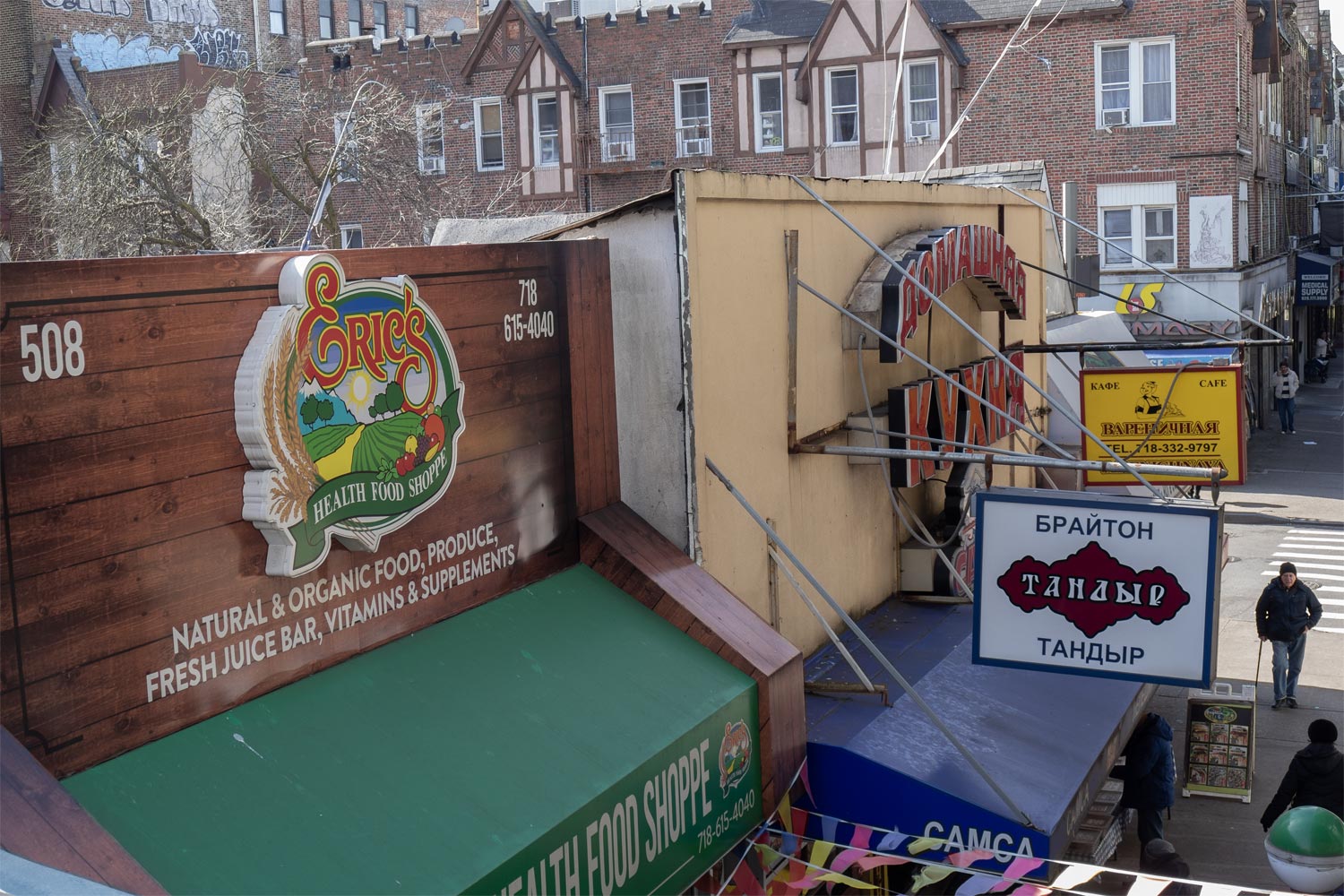
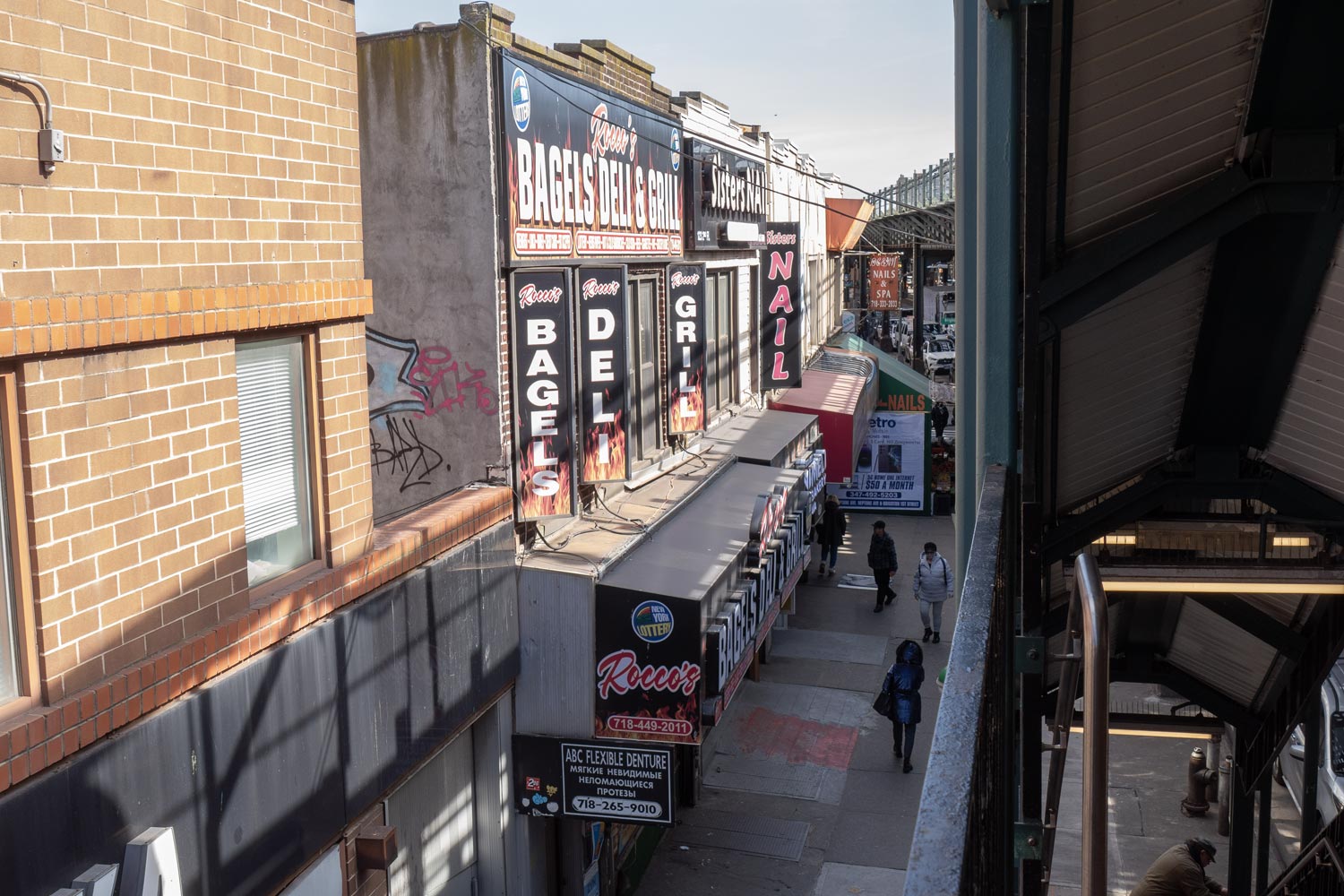
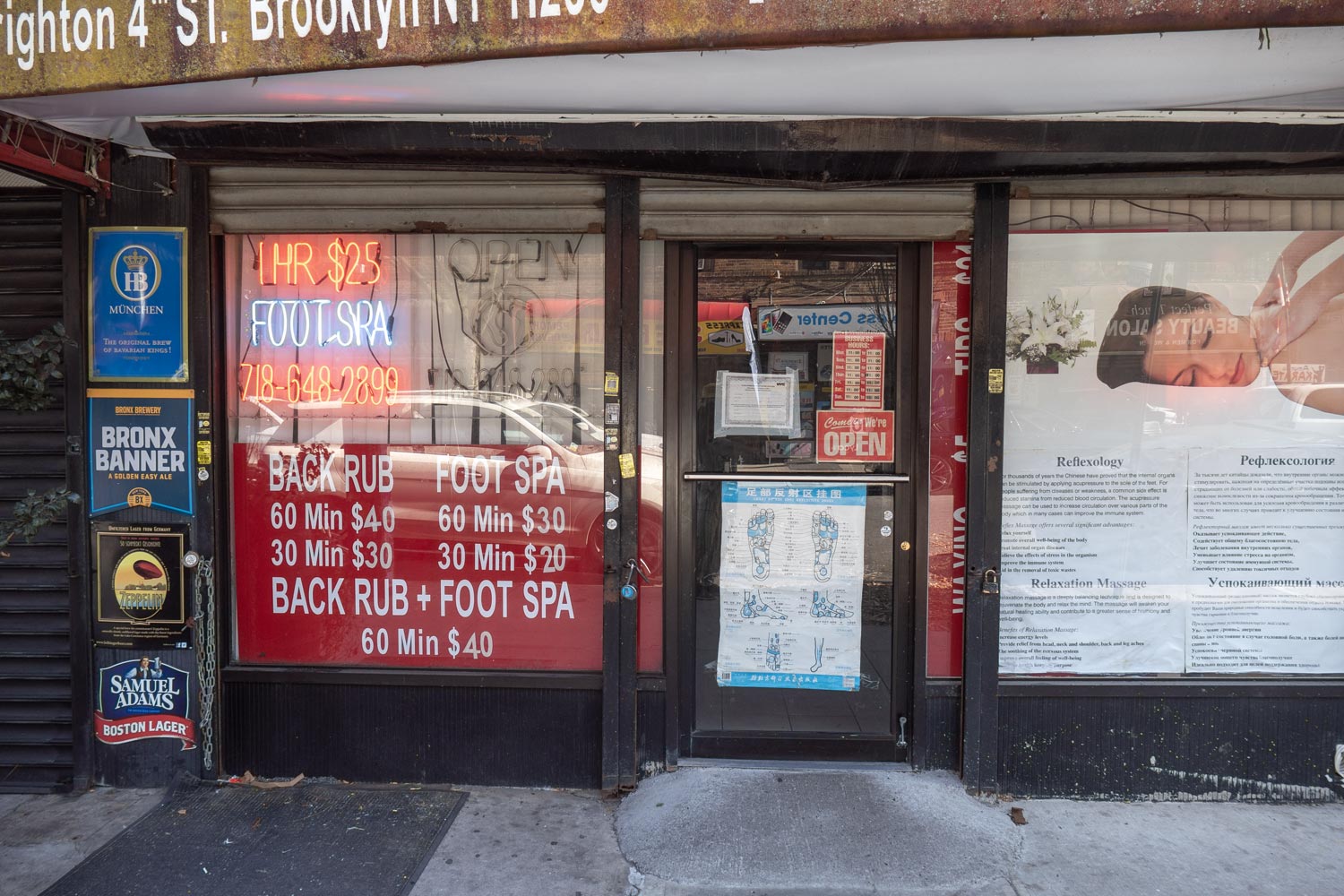
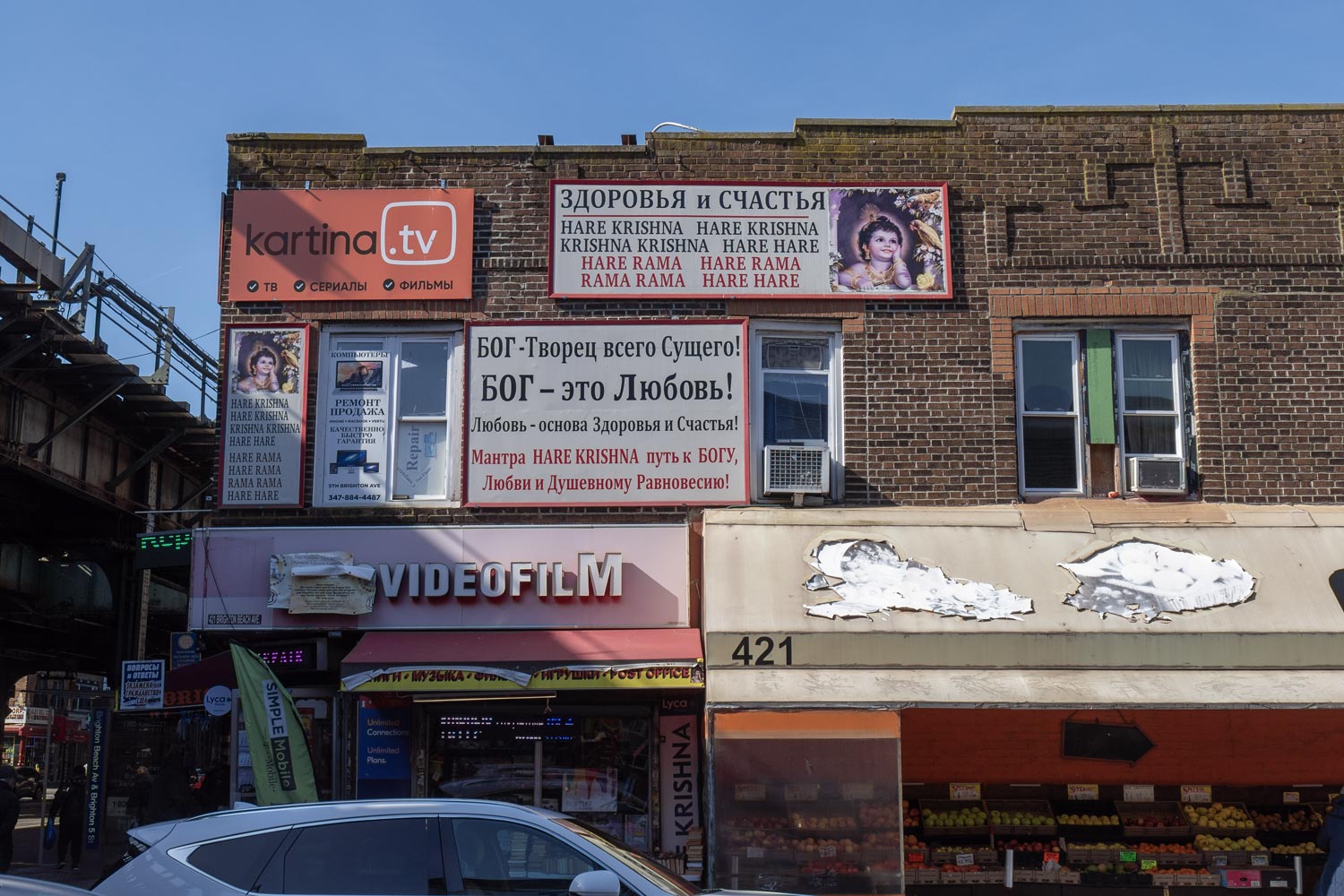
This whole construction rattles and shakes like crazy. Fortunately, the subway trains here only run every ten minutes. But besides the noise, rust, and dust, Brighton is completely overgrown with the most unbelievable advertising. Suddenly, right in the middle of the Russian neighborhood, hangs a sign: “Hare Krishna! God is love.”
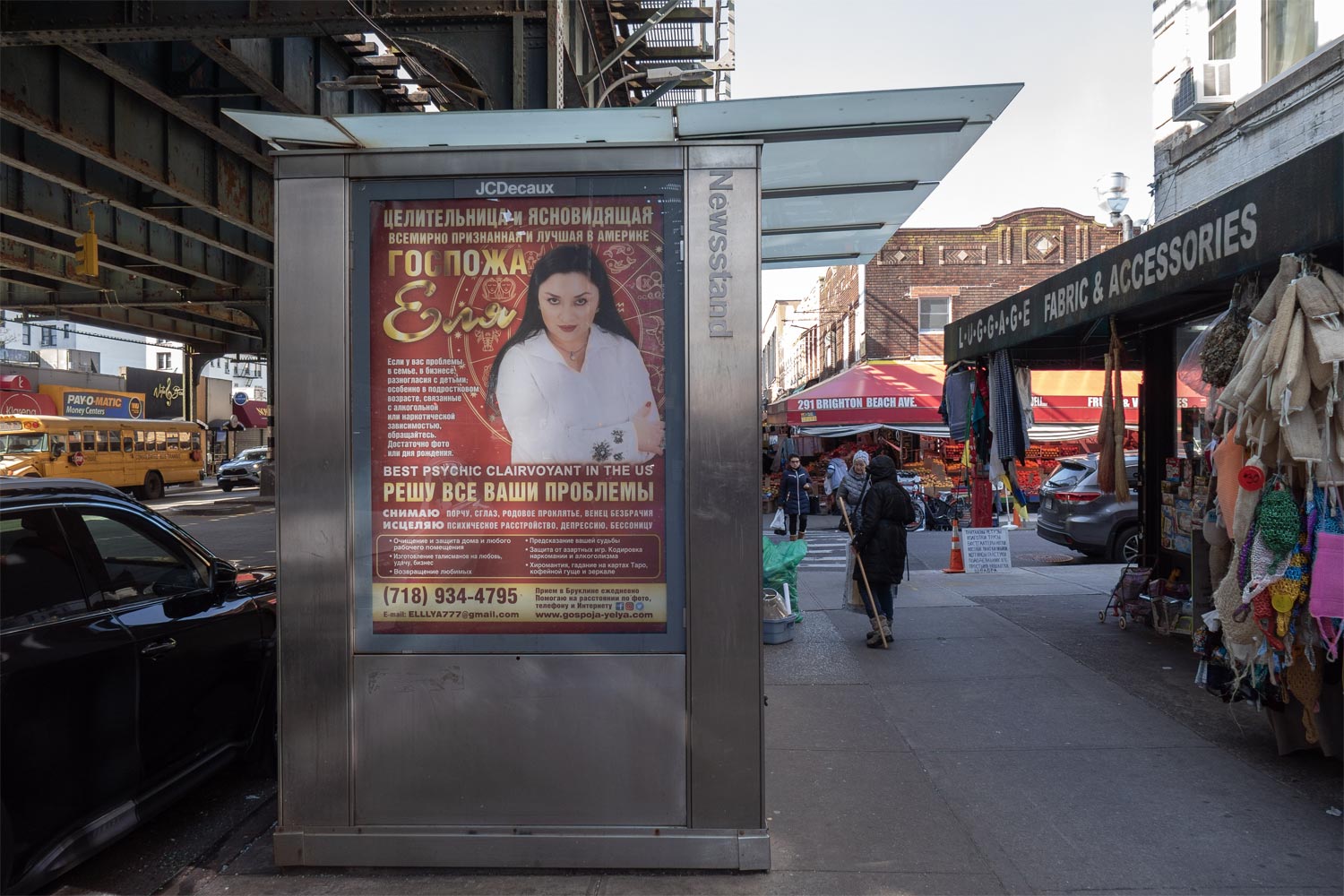
Right next door hangs a billboard for a Madam Ellie — the best psychic in America, who will solve all your problems.
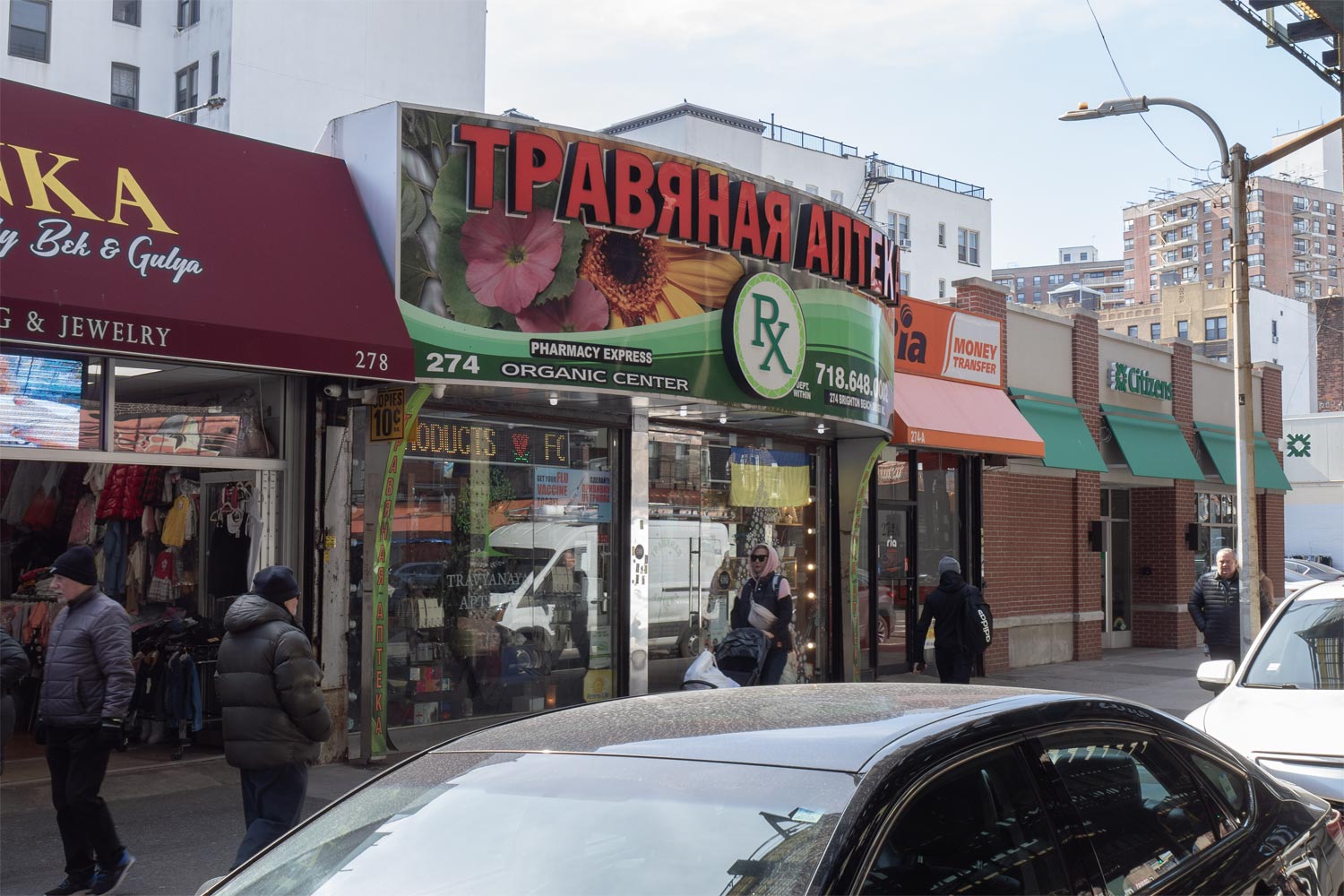
All over Brighton there are dozens of pharmacies, each one proudly displaying something about folk medicine, herbal treatments, natural remedies, and other such nonsense that hardly anyone even remembers back in Russia itself.
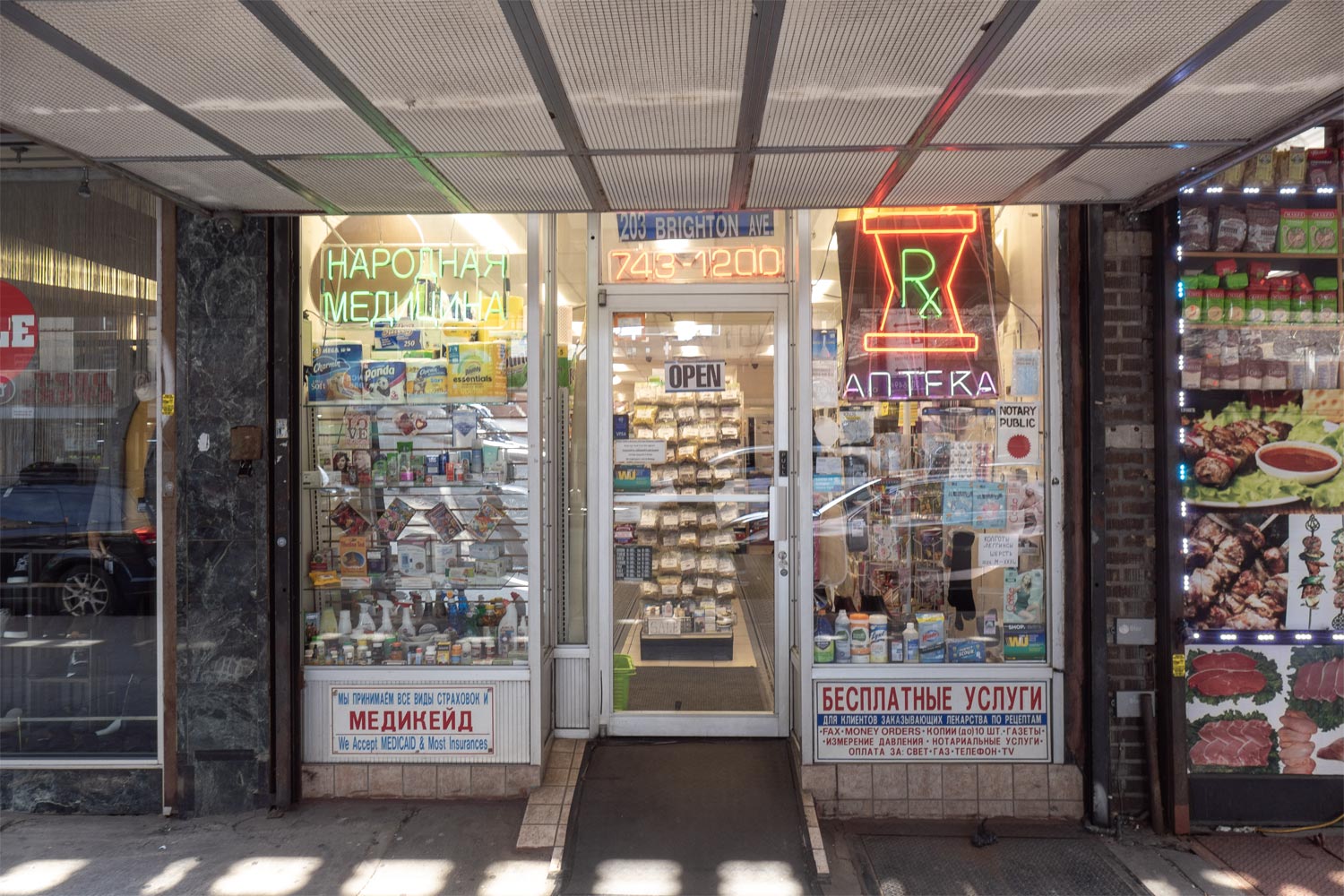
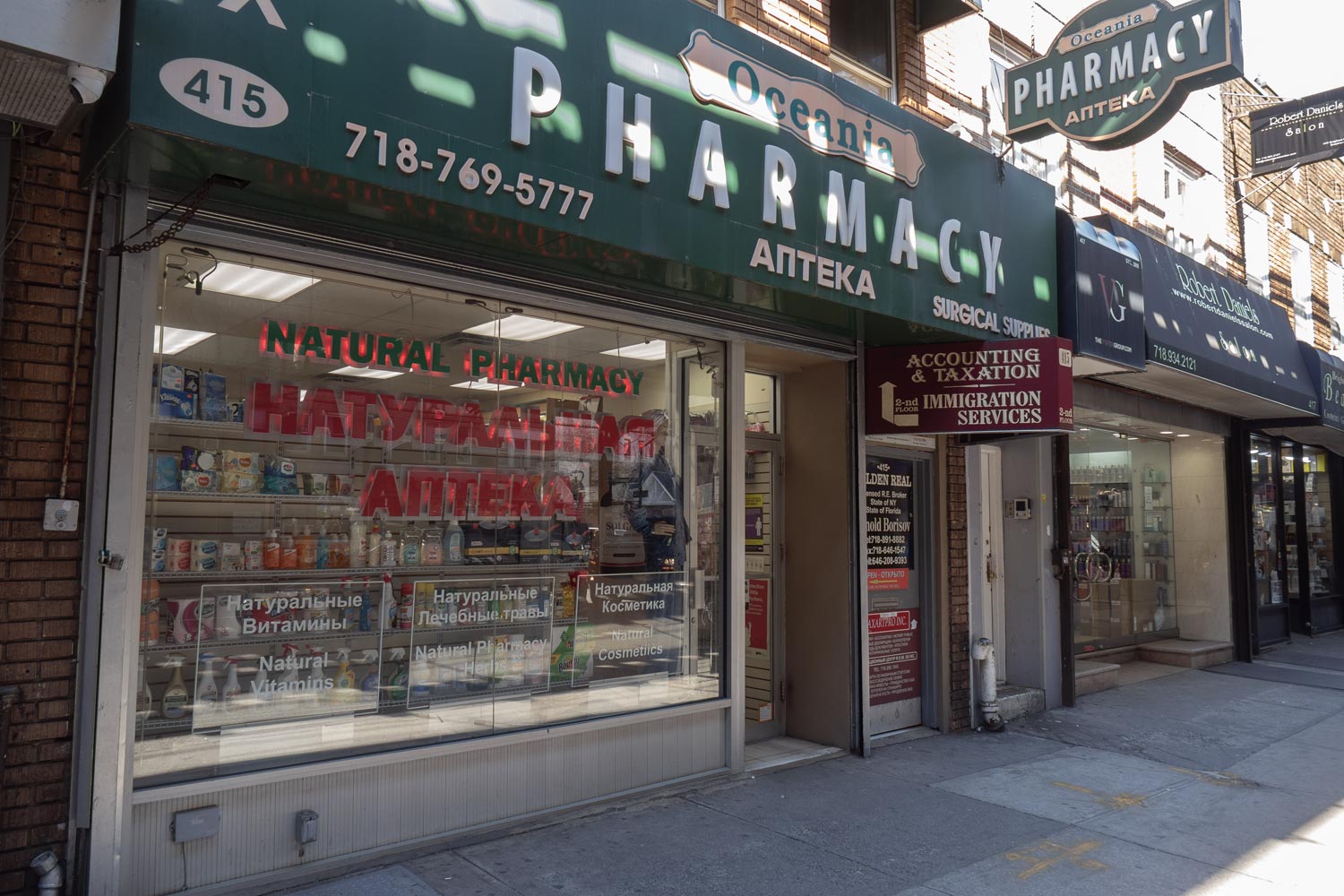
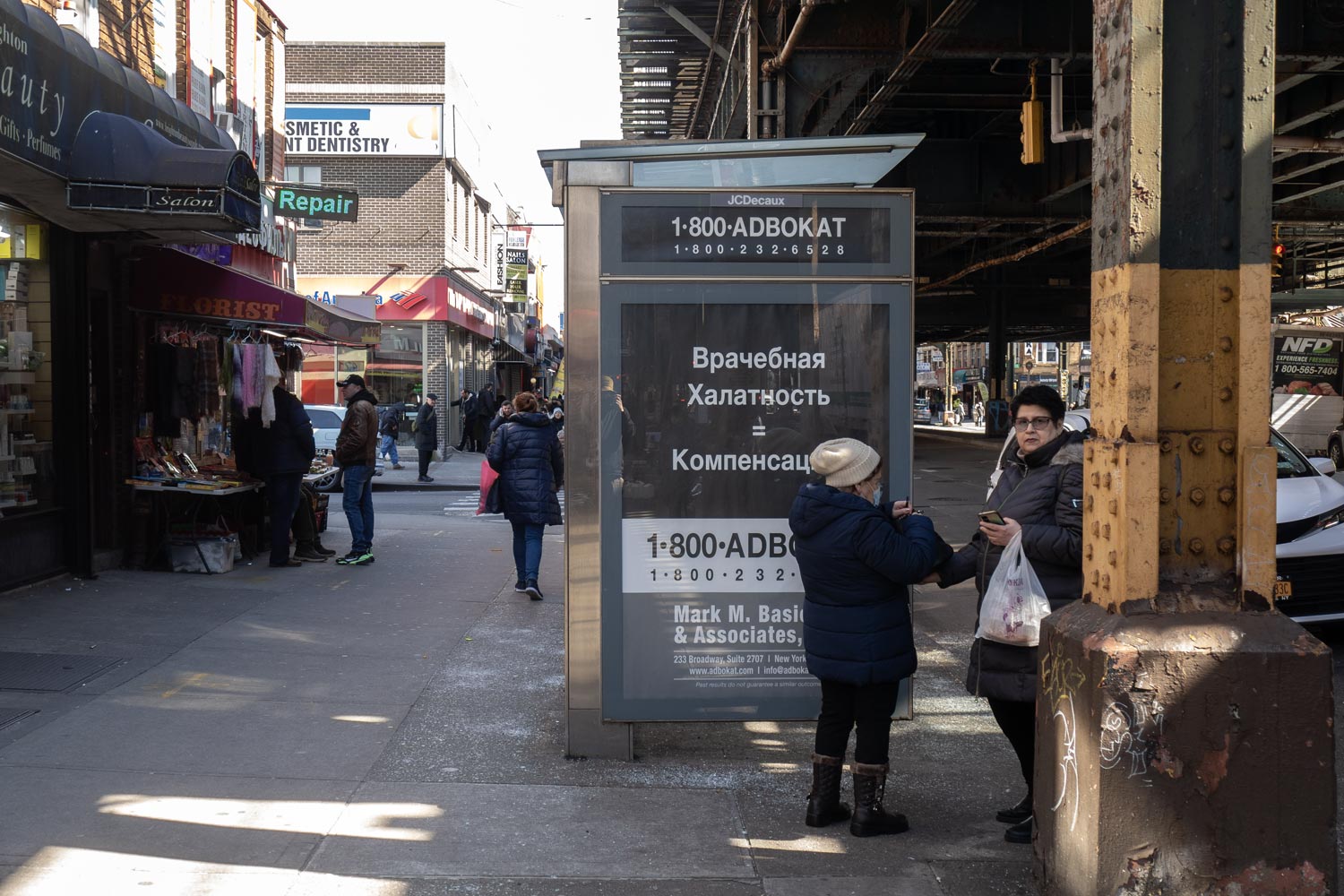
Directly across from one of these so‑called “pharmacies” hangs a poster about compensation for medical malpractice.
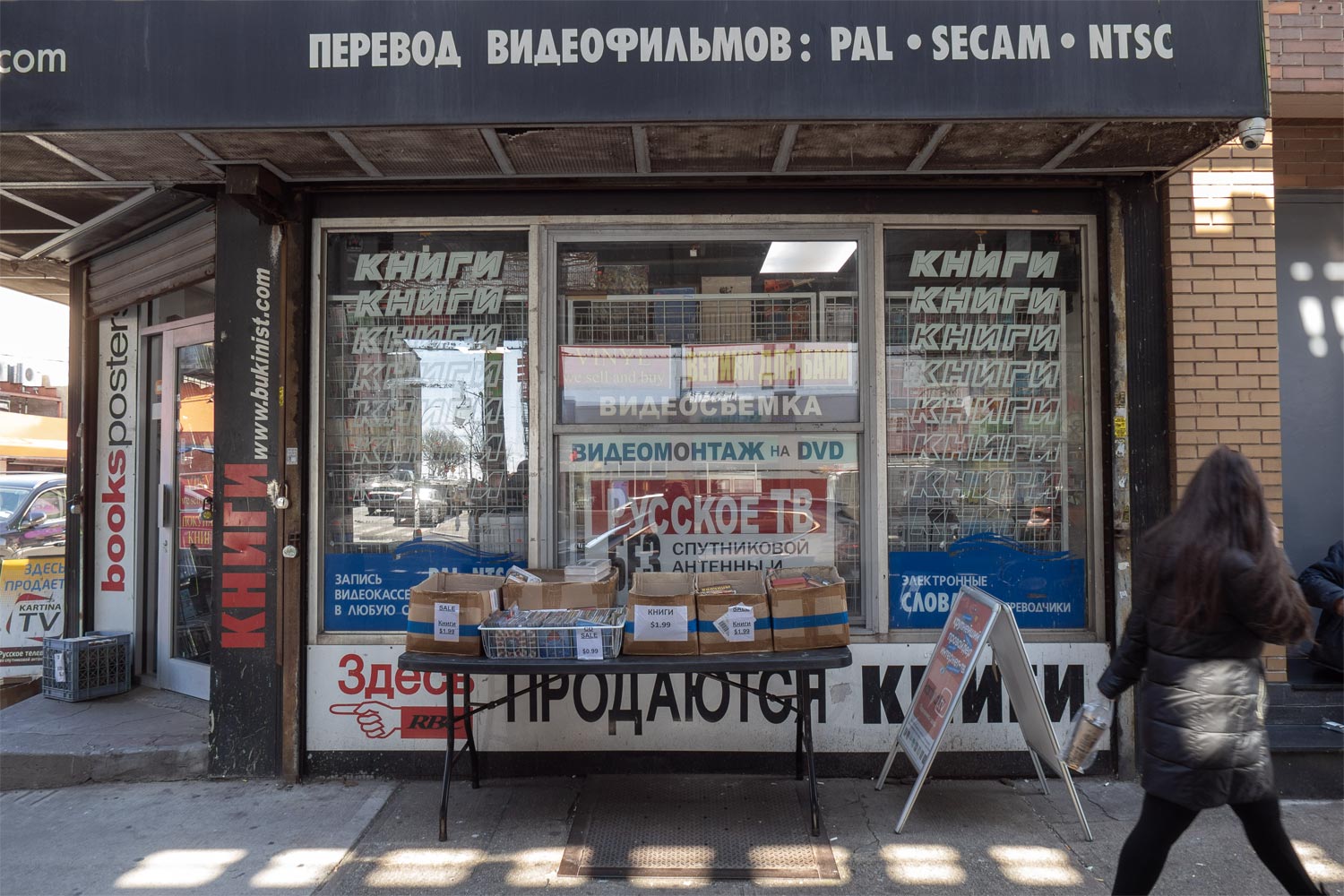
The author had heard a lot about how Brighton was “stuck in the nineties,” but never imagined it was this bad. They still sell movies on DVD here, offer something called “Russian TV without a satellite dish,” and even convert films from PAL to SECAM. Those are two videotape encoding formats: the European one and the Soviet one.
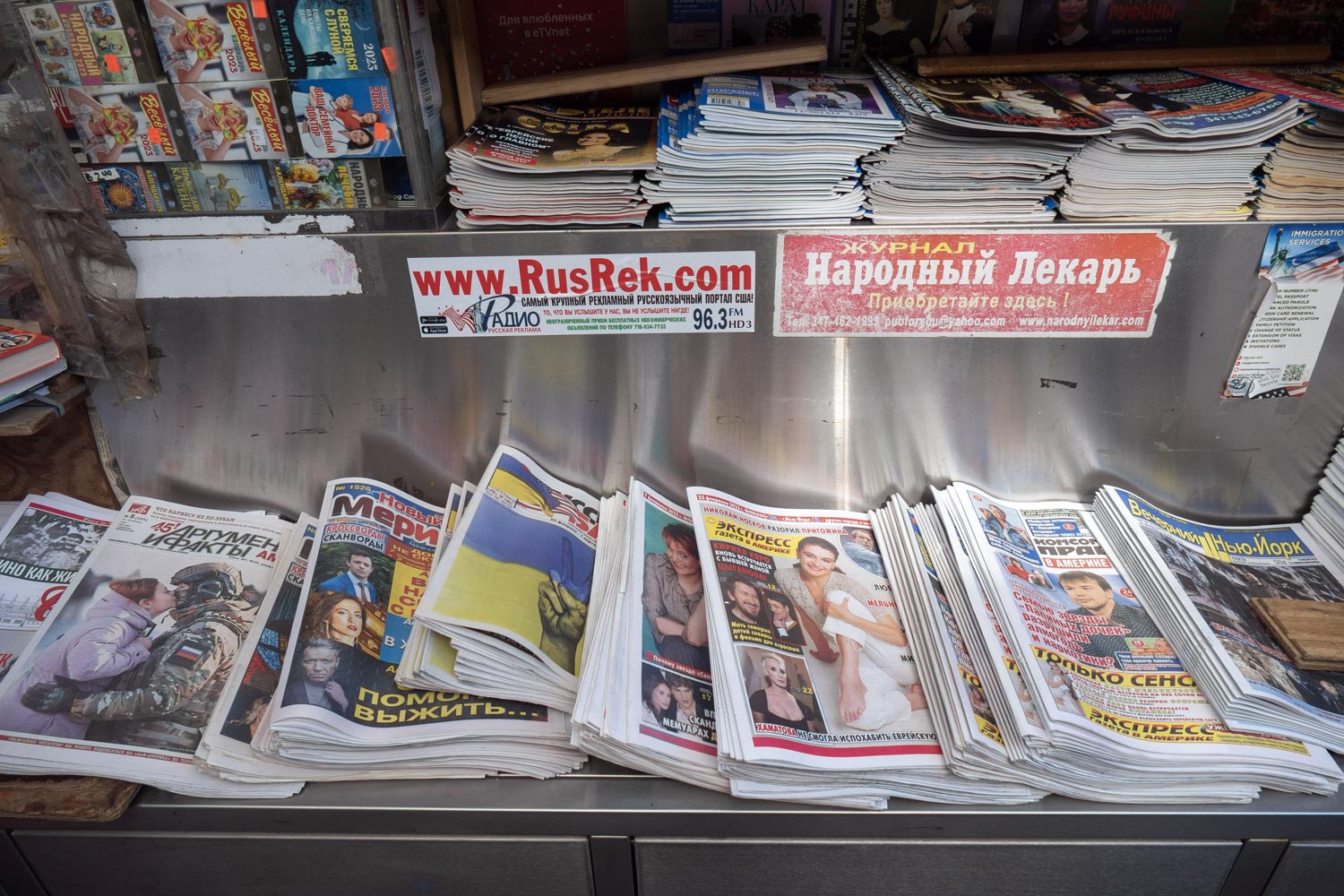
On the newsstand lie newspapers that in Russia are considered the gold standard of tabloid trash: “Arguments & Facts”, “Express”, and “Komsomol Truth”. A Ukrainian flag on one cover casually sits right next to a photo of a Russian soldier on another.
Grocery stores are bursting with Russian products. Just like in a village shop back in Russia, the shelves are crammed with little jars, bottles, boxes, and packets of all kinds of sauces, adjikas, seasonings, premium pasta in bizarre shapes and colors, and, of course, ten different kinds of buckwheat.
On the neighboring shelves, cans of sweetened condensed milk are proudly on display. Next to them, sprats in tomato sauce and canned tuna are huddled together. Dumplings languish in the freezers. Chocolate ice cream bars are waiting for their moment. All sorts of cheeses and sausages gaze intently at the customer. A Kyiv cake is dying to jump straight into the mouth of a Russian patriot.
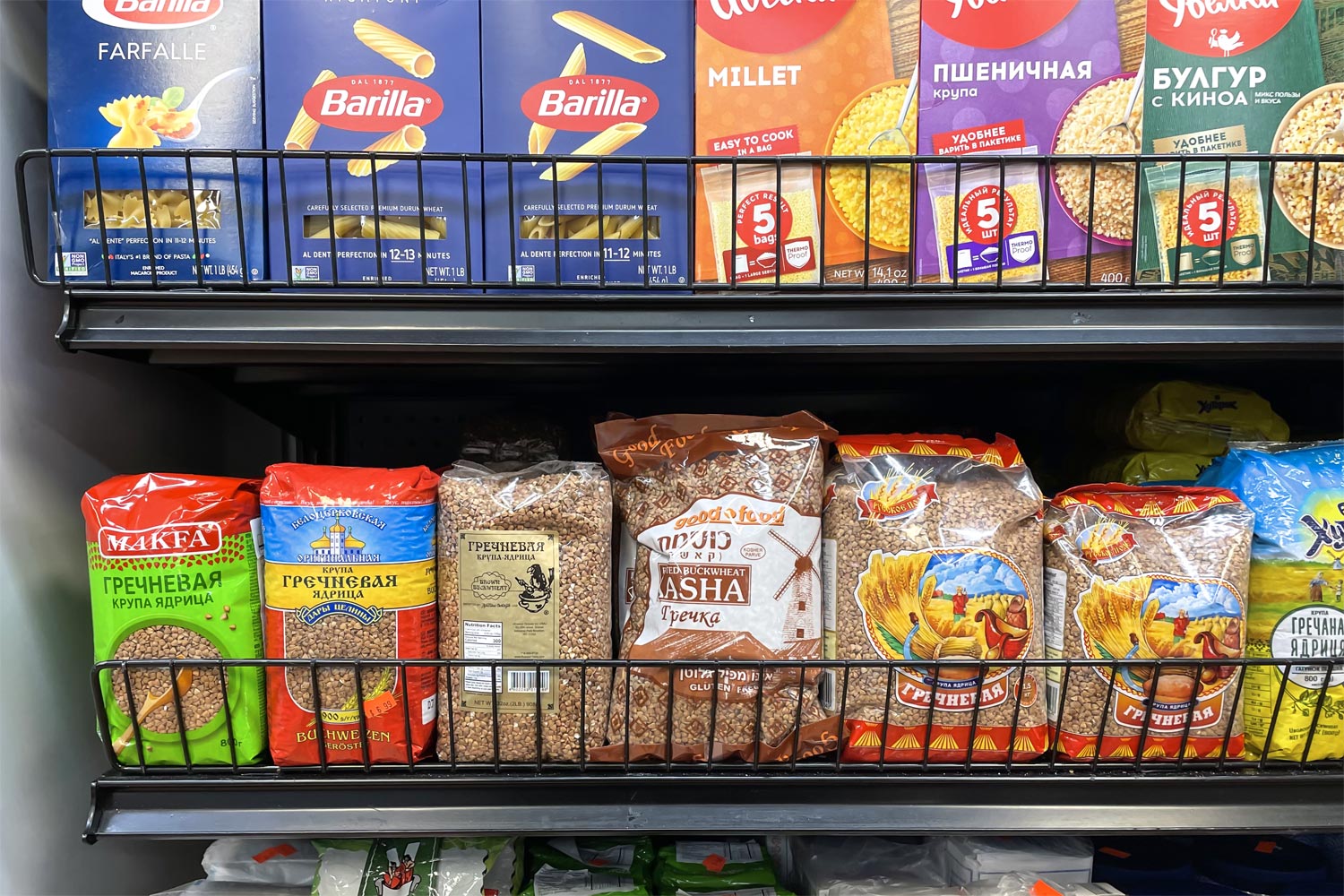
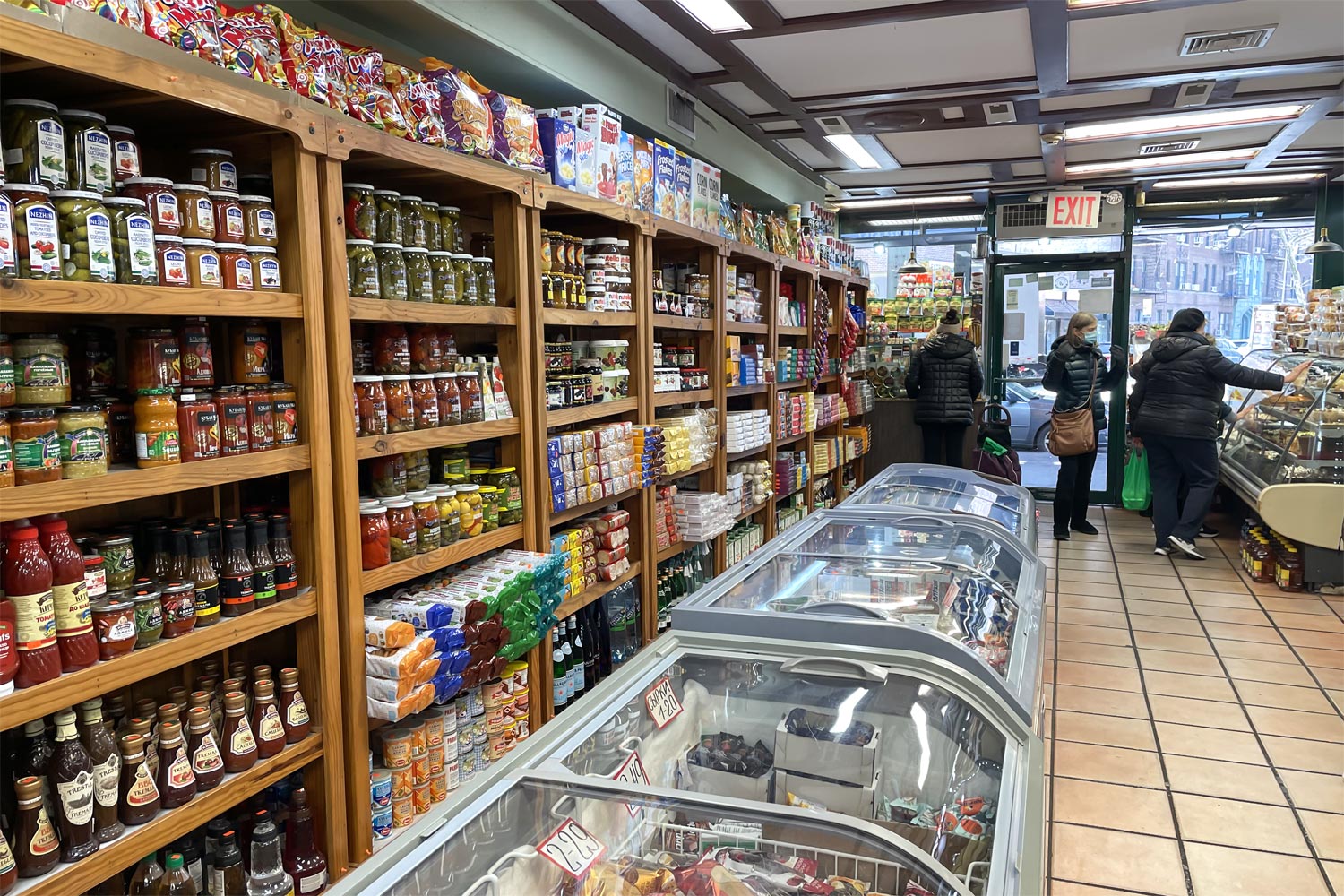
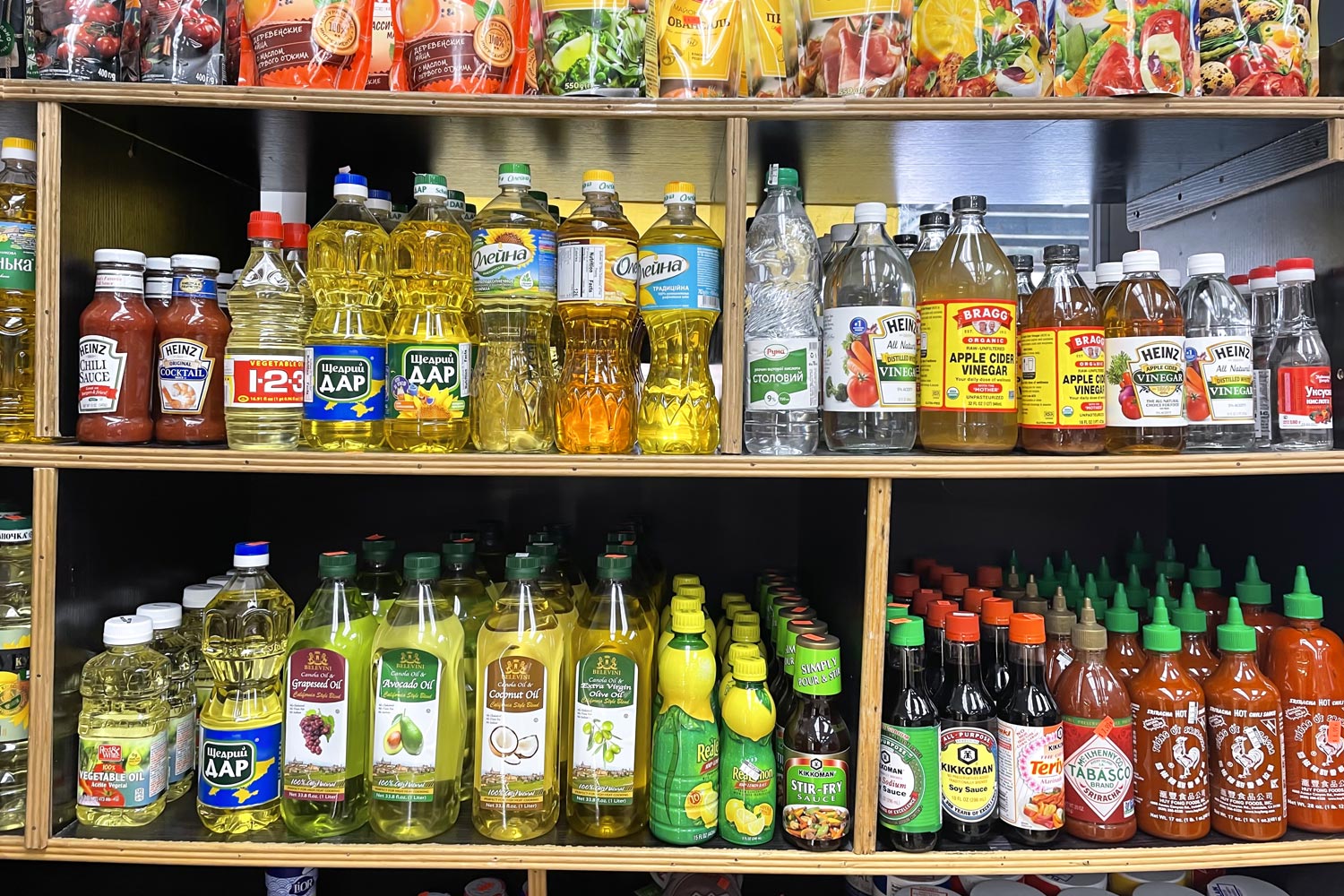
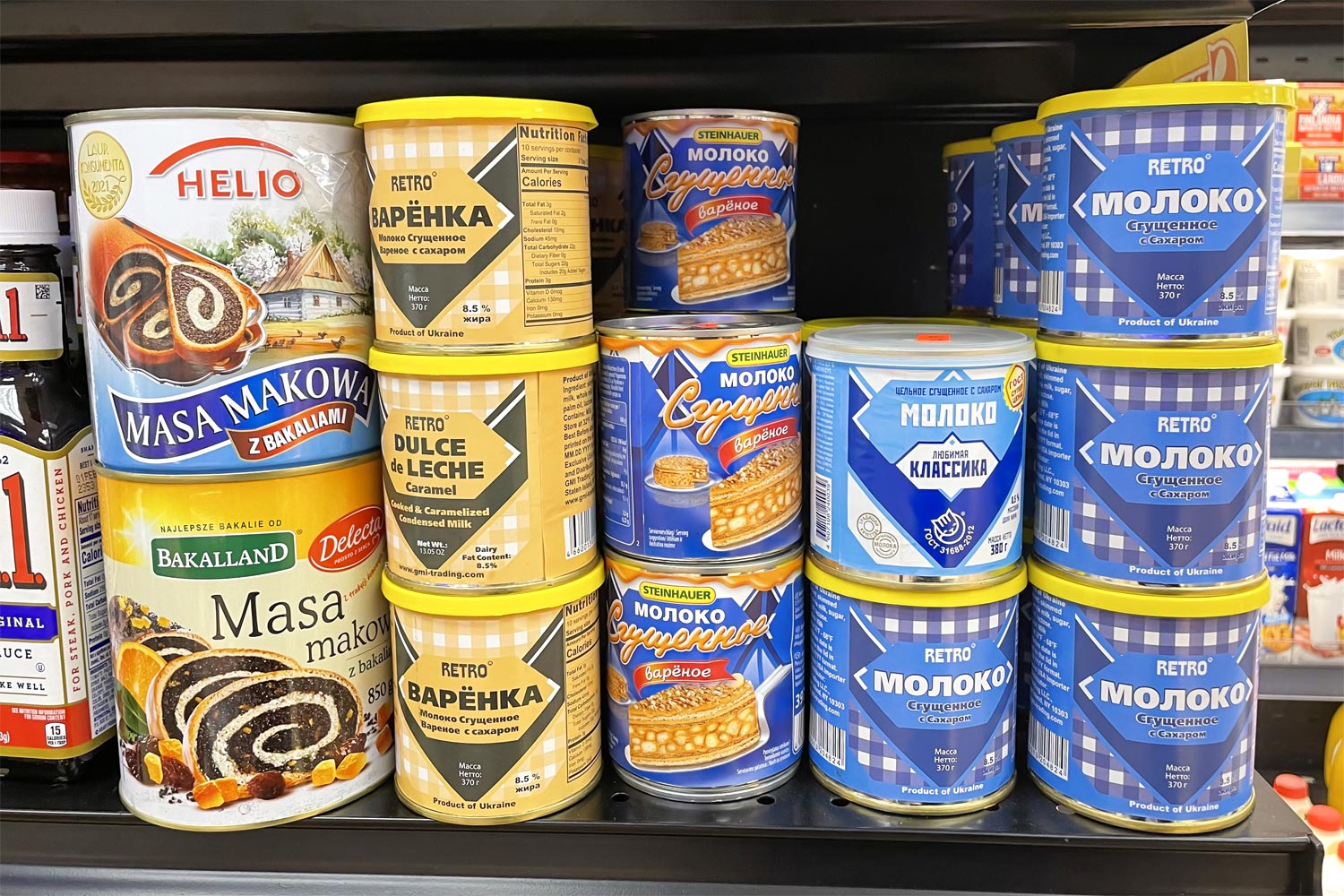
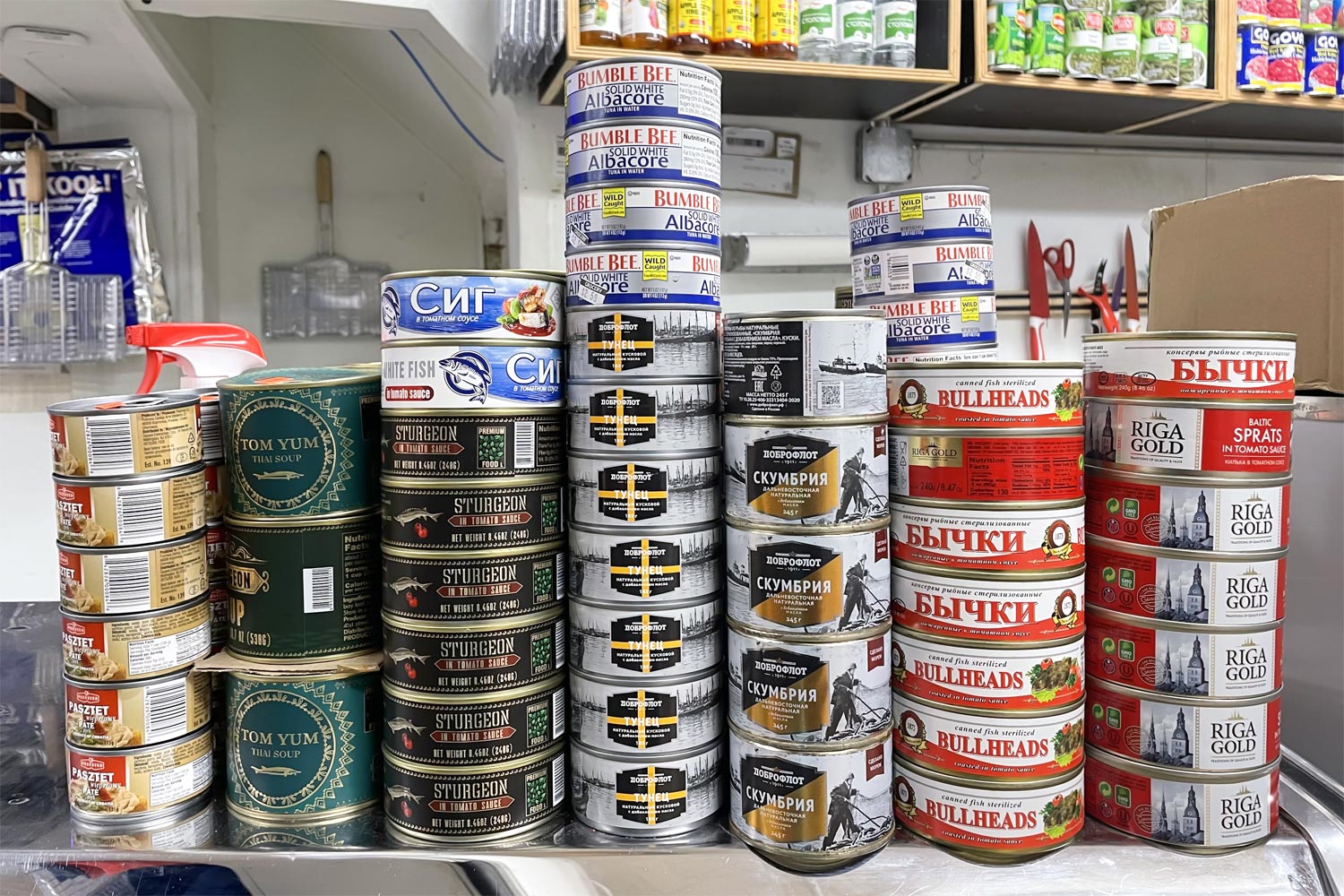
I’ve got to say, the food situation in Brighton is just fine. The cafés serve excellent borscht with sour cream and make really good shashlik. Georgian restaurants deliver dolma and lamb ribs all over Brooklyn.
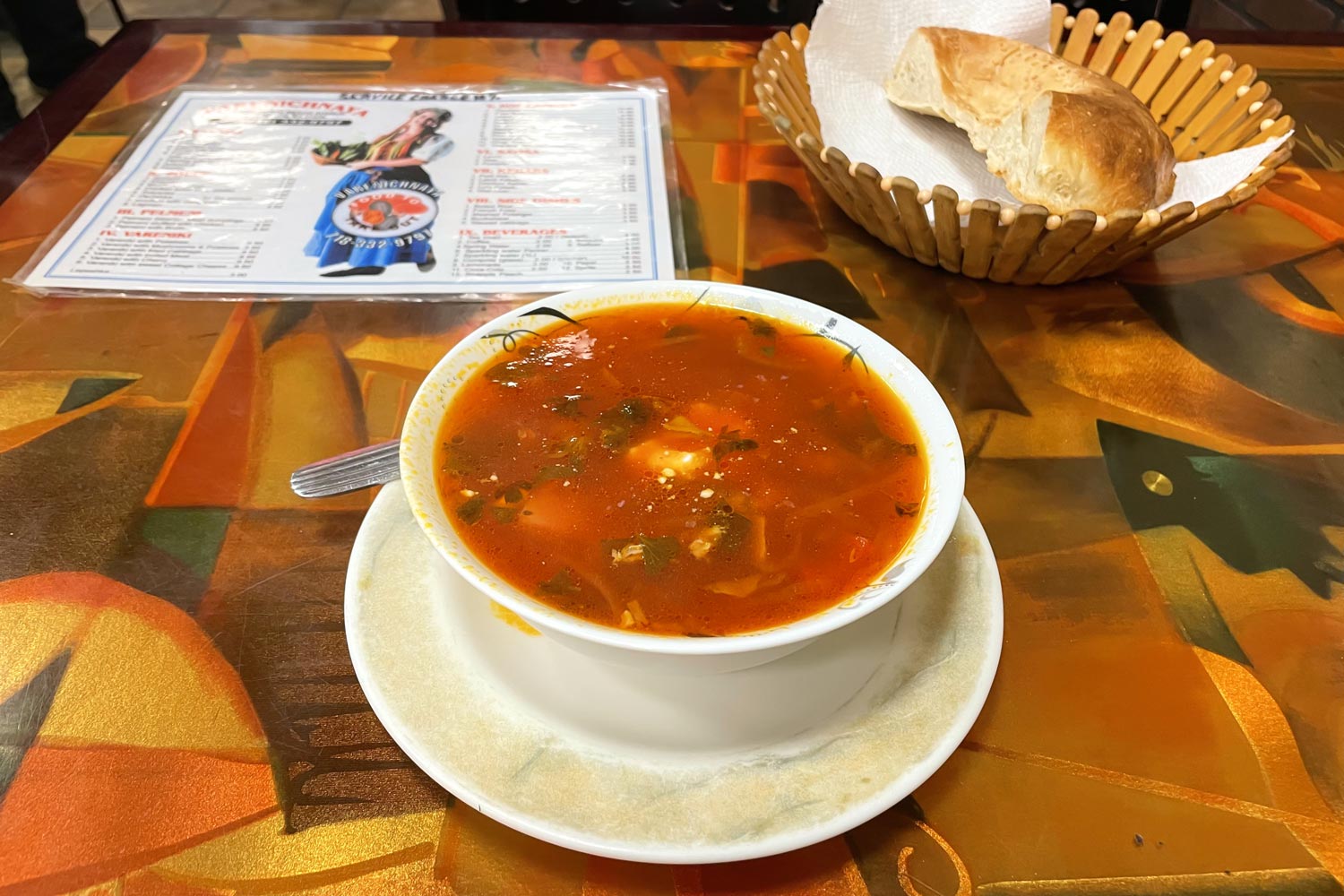
In Brighton you can live your whole life without knowing a damn thing in English. Most Russian immigrants who came here in the 1990s speak English spectacularly badly. While the author was having borscht for lunch at a Brighton “Varenichnaya,” he overheard the following conversation:
“So how about yourself?”
“How about myself? Health, you know... Lyda died, Misha too. Legs barely work anymore, I’m not the man I used to be.”
“What did she die of?”
“Cancer, damn it.”
“Yeah, nobody’s safe from that these days.”
“Tell me about it... Anyway, I’m off. How do they say it? Si ju soun”
“What, you speak English now?”
“Yeah, figured I would a little. Wrote down some phrases, learning them. Been here thirty years already, it’s high time. Well, I’m off.”
On both sides of the overpass, small residential streets branch off, lined with old wooden houses. Small, run-down ones. Unlike in Bensonhurst, there are very few trees here, and instead of a front lawn, there’s an awkward fence and a gate.
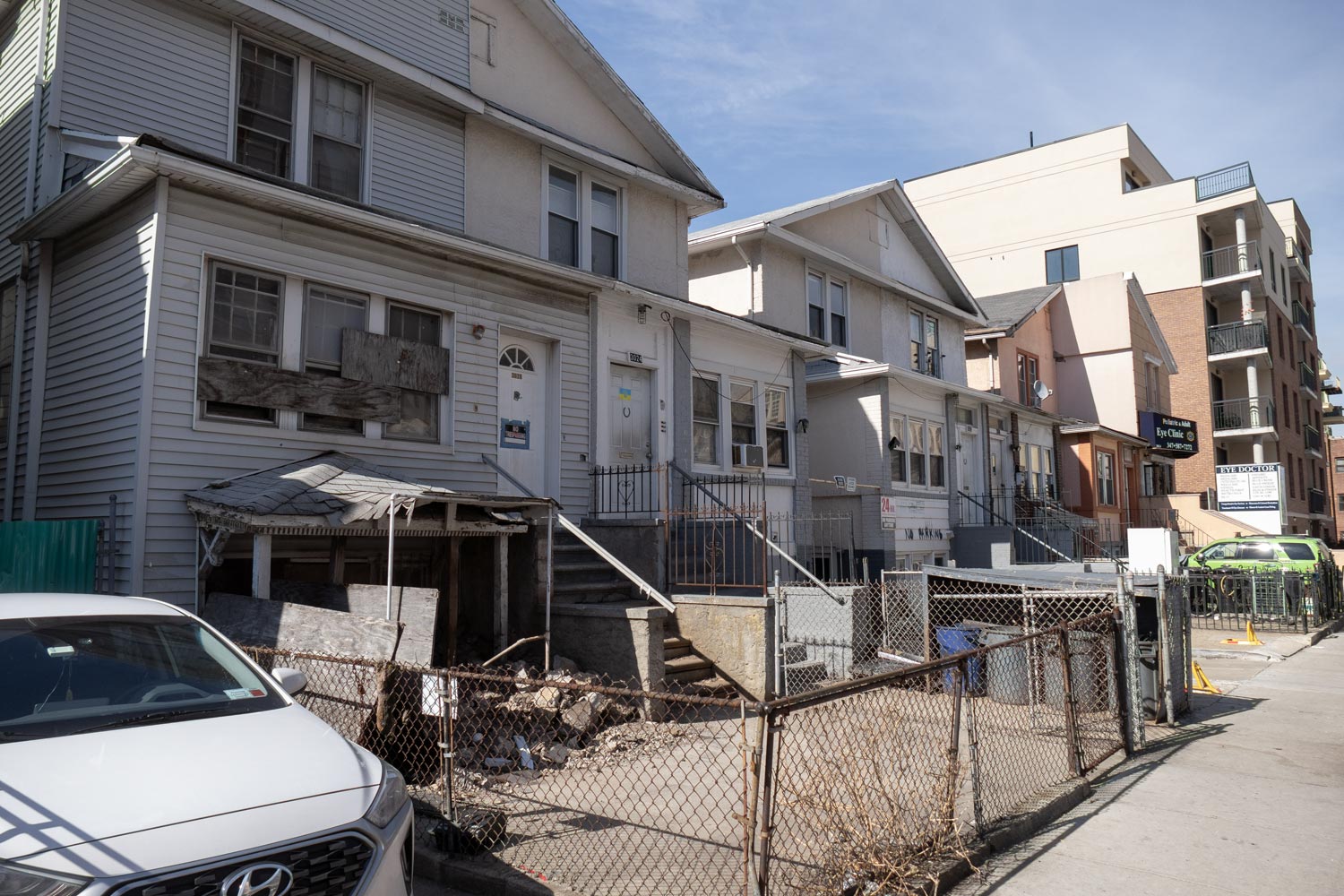
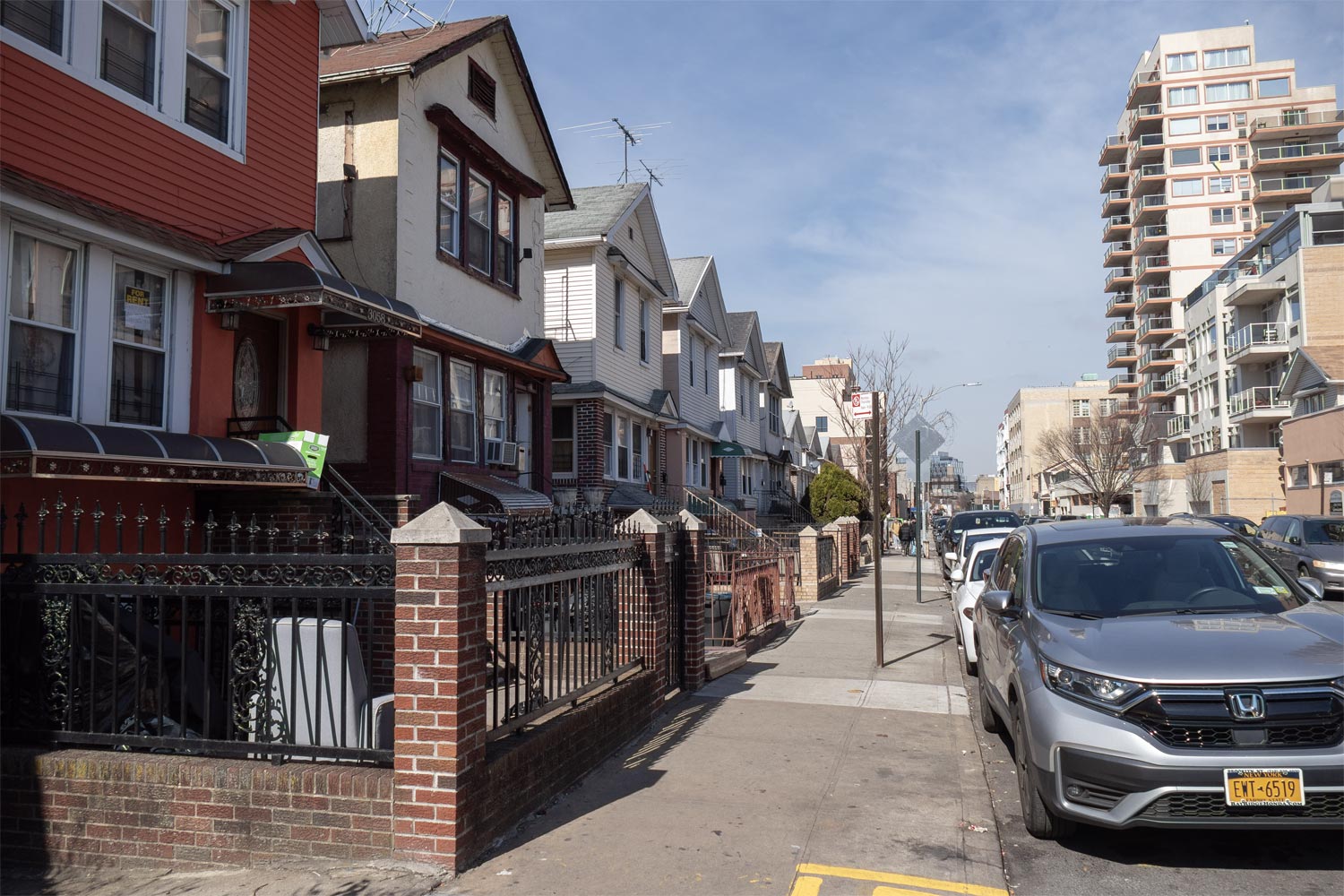
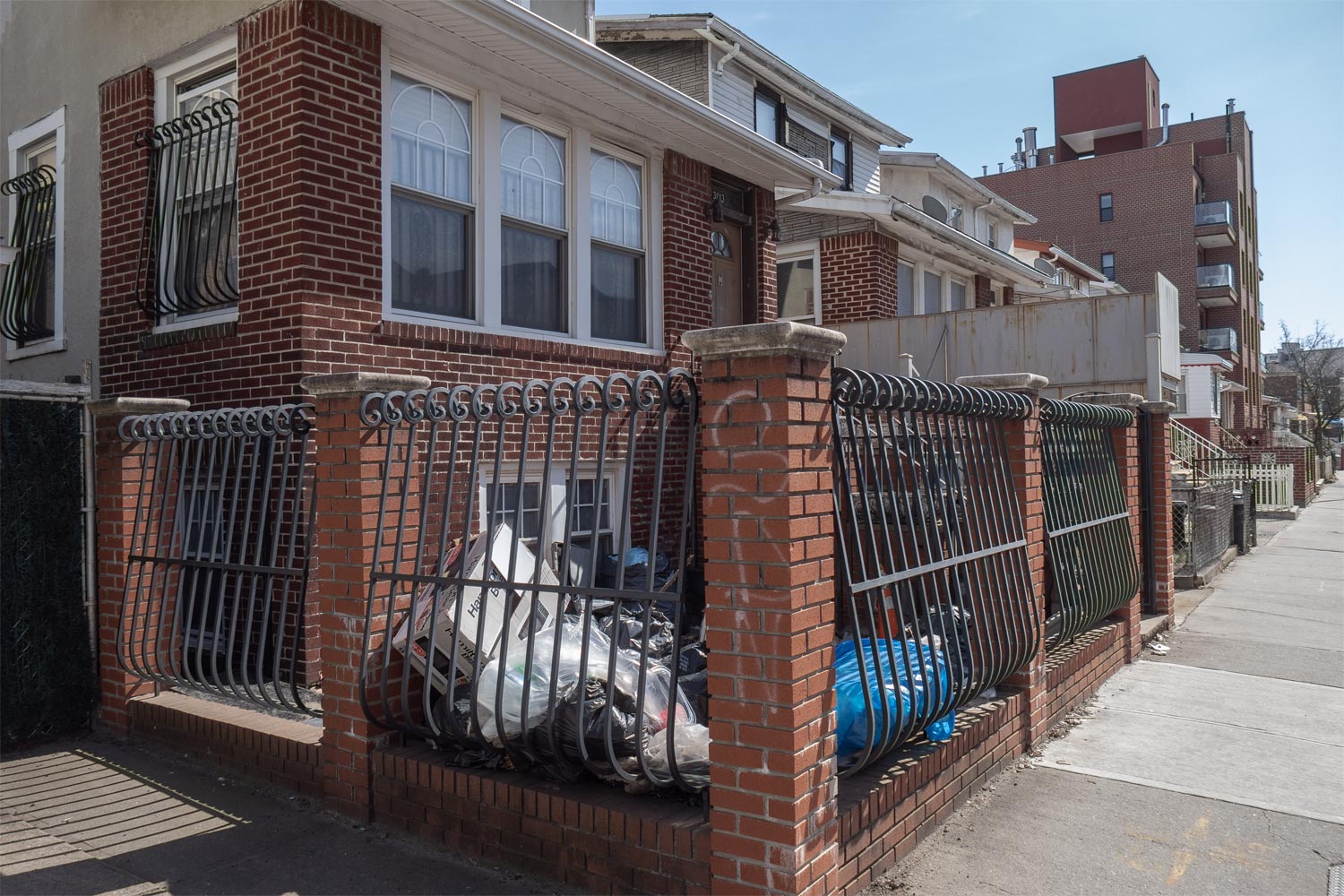
I came across a house whose front yard was piled up with some boxes and bags. Apparently, the resident can’t afford to pay for trash pickup.
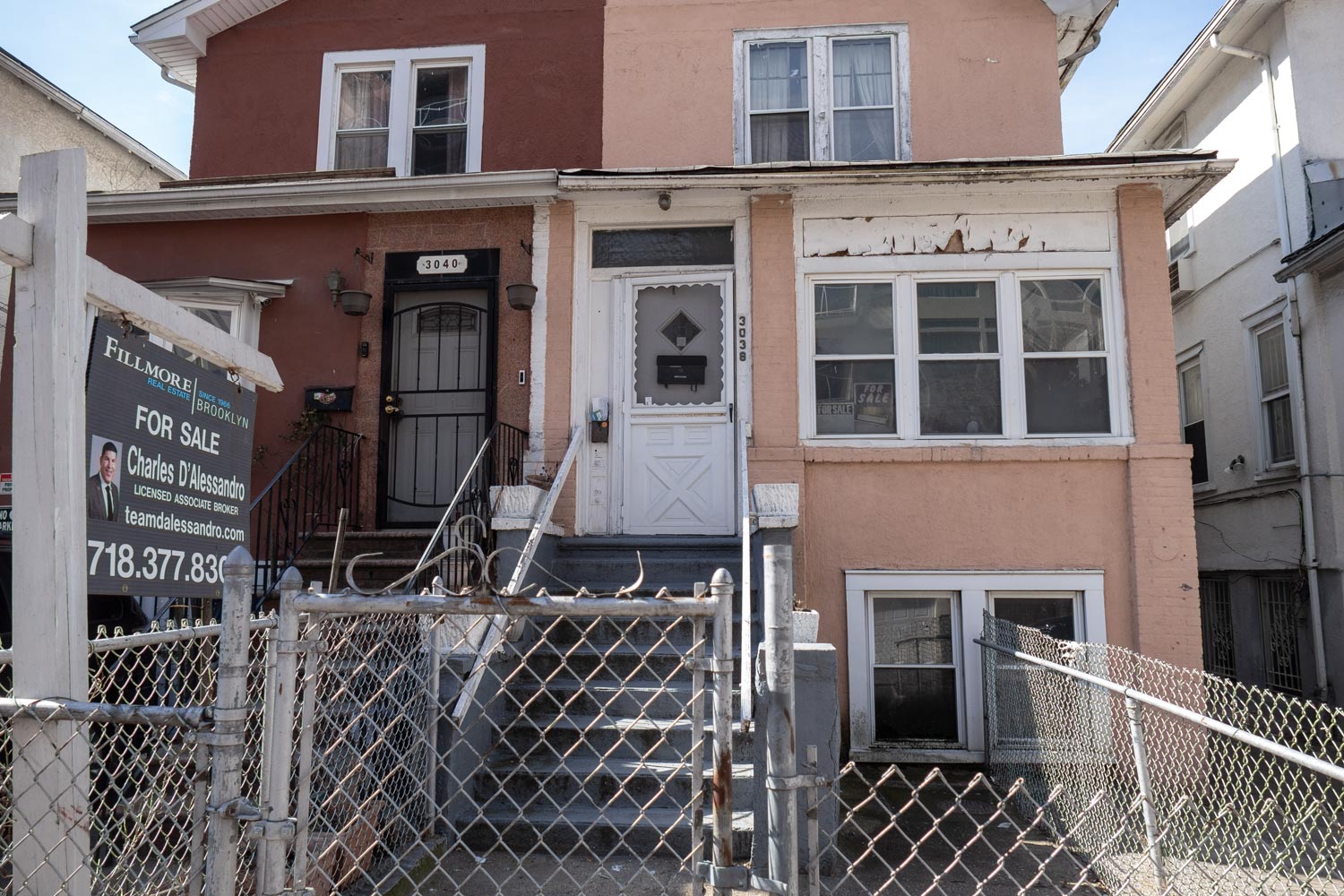
At the second house, I found a parked red Chevrolet Corvette C8 worth $65,000.
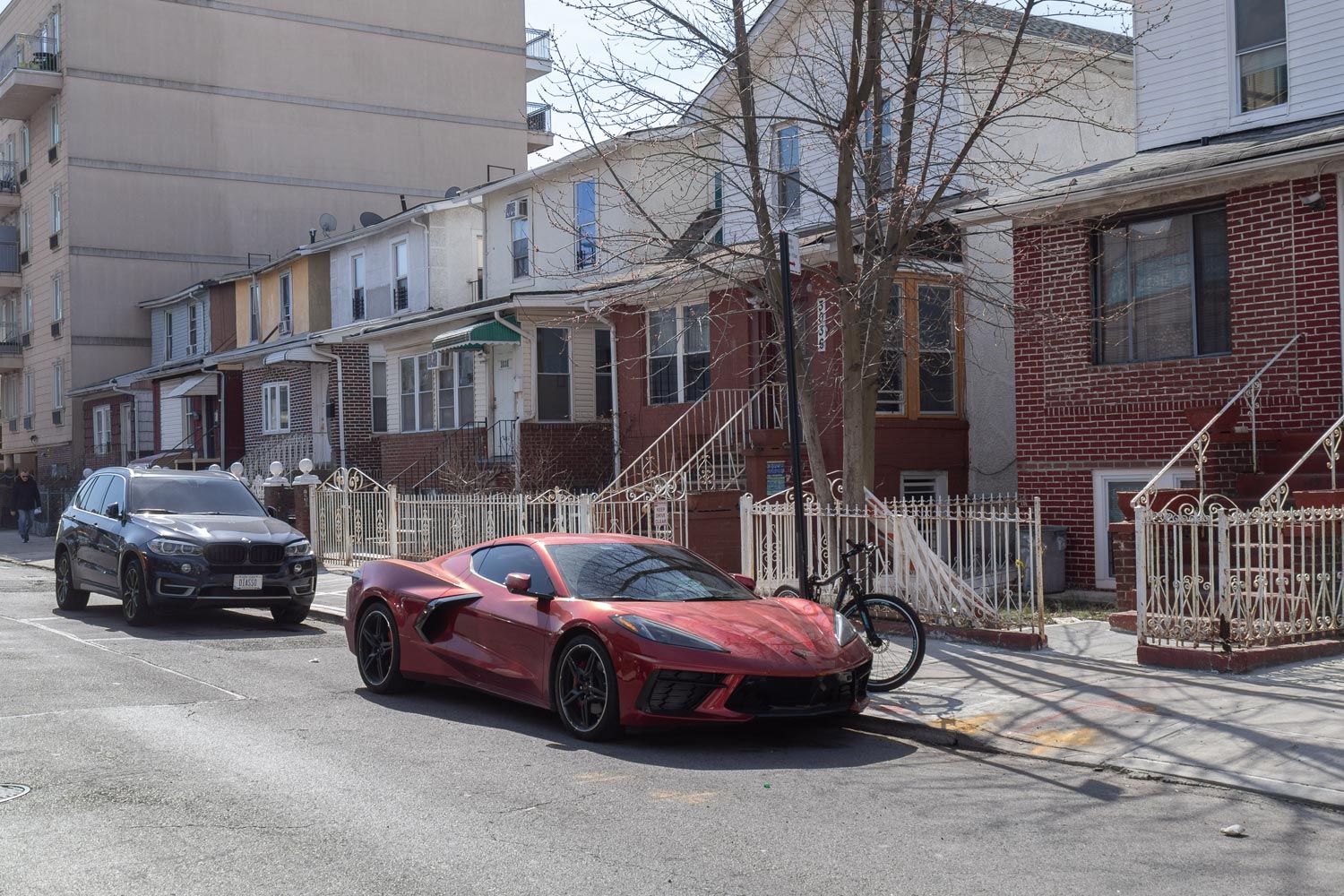
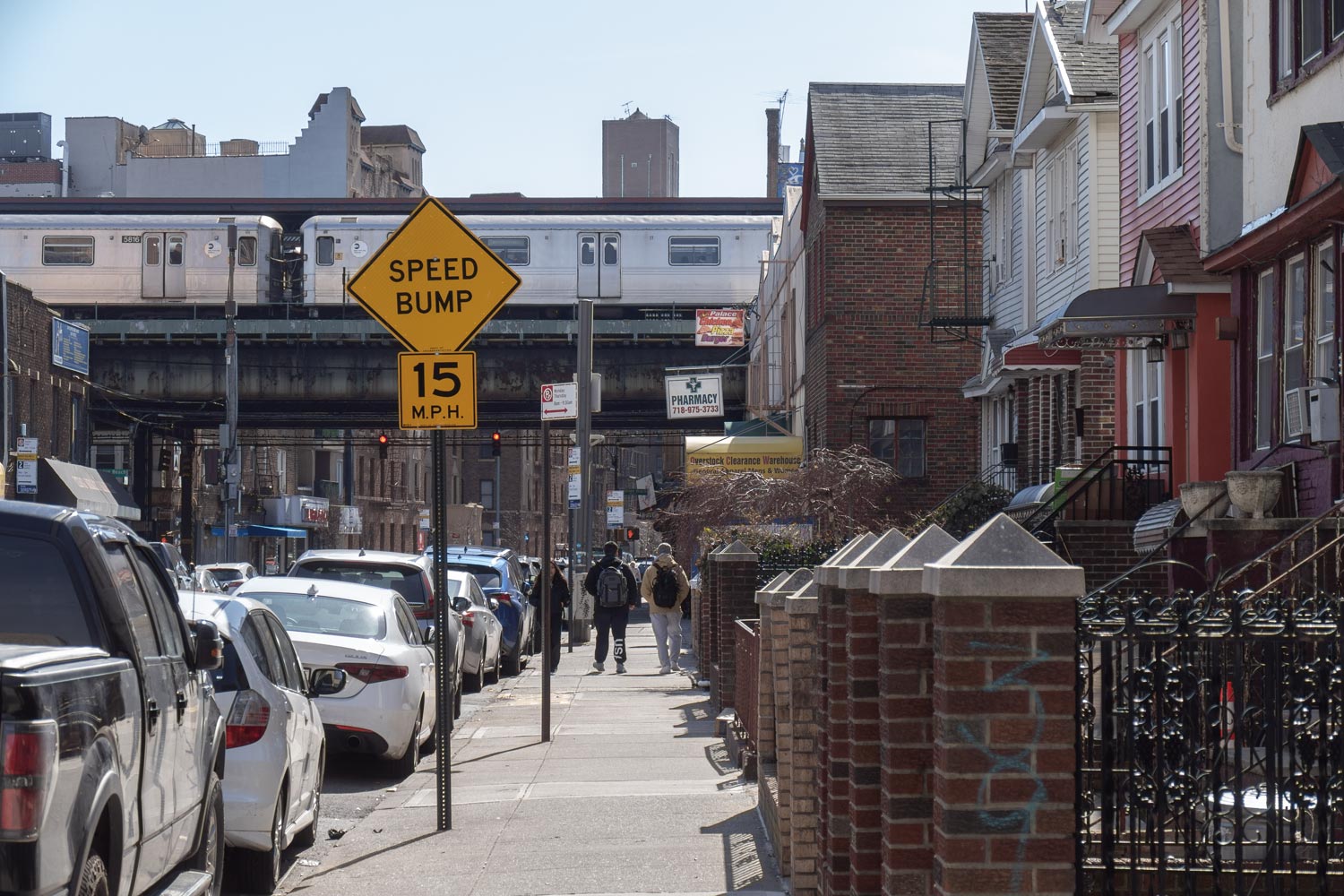
What do these people have in common? They both live just a few meters away from a roaring, rusty overpass.
The only nice place in all of Brighton is the beach. I mean, really, it’s hard to mess up sand and water.
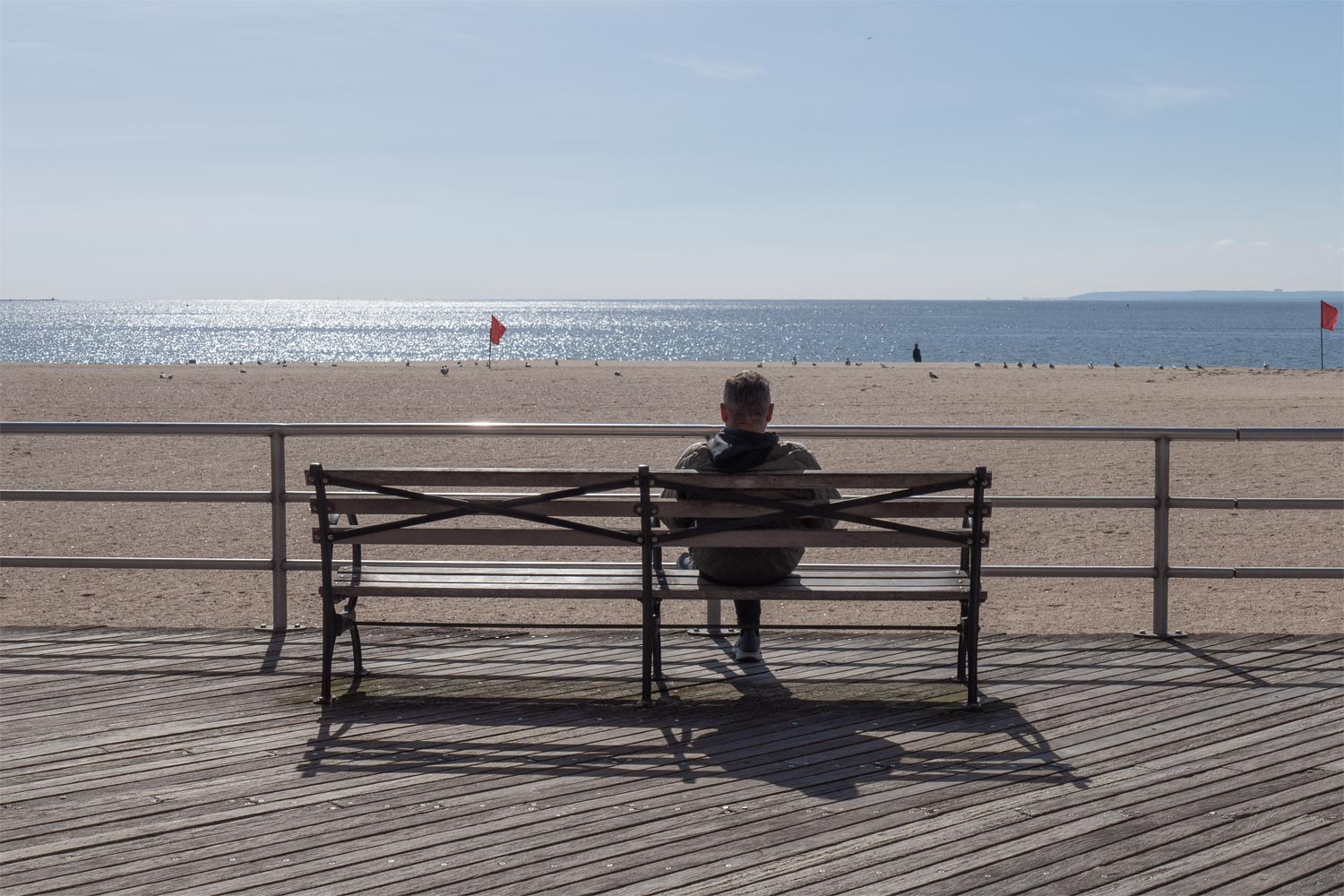
Running along the beach is the famous wooden boardwalk — the same kind of thing you’ve probably seen in video games or in some movie about New York, along with the overpass.
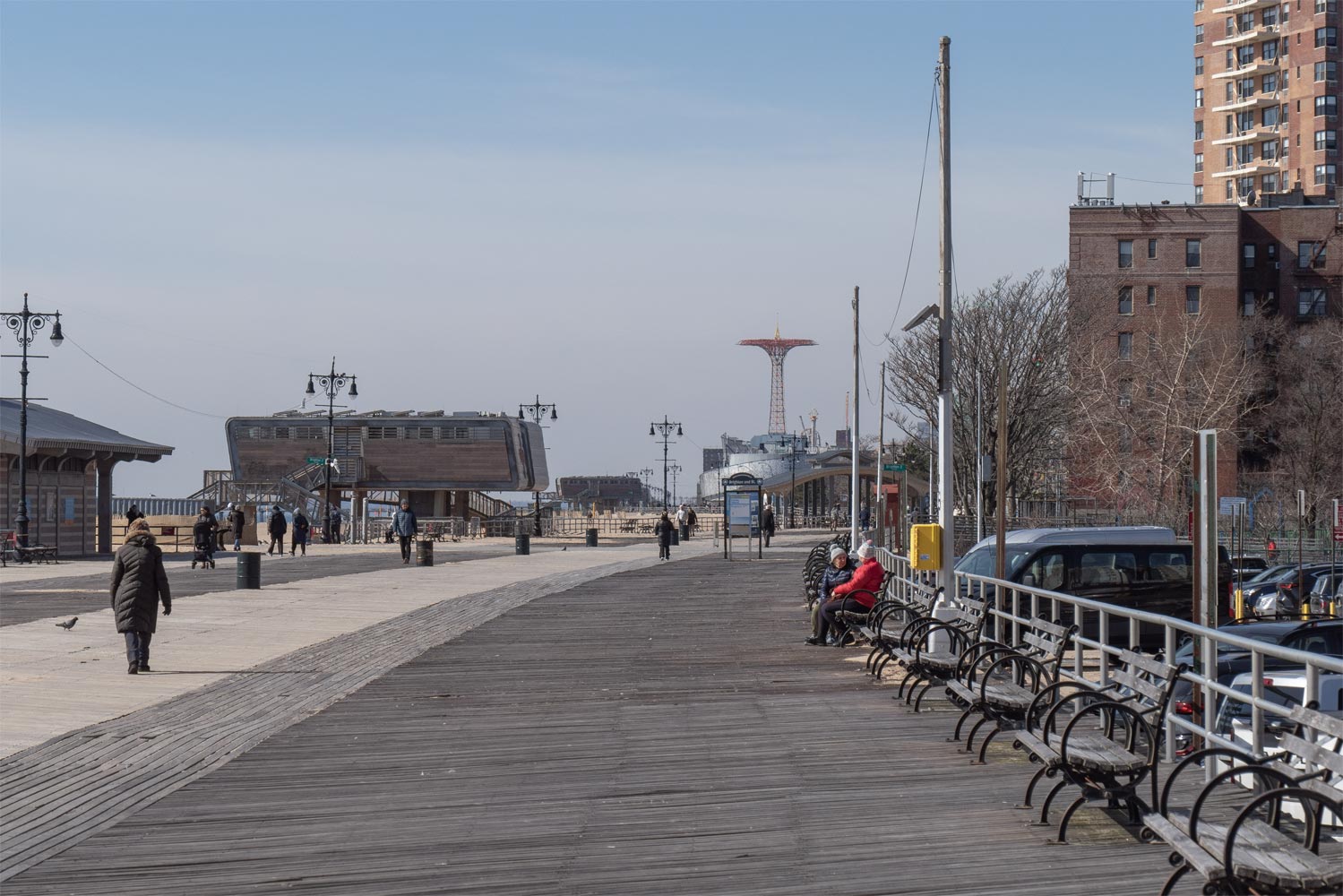
Brighton locals just love strolling along the beach. They also enjoy sitting on the benches so thoughtfully placed by the wooden boardwalk.
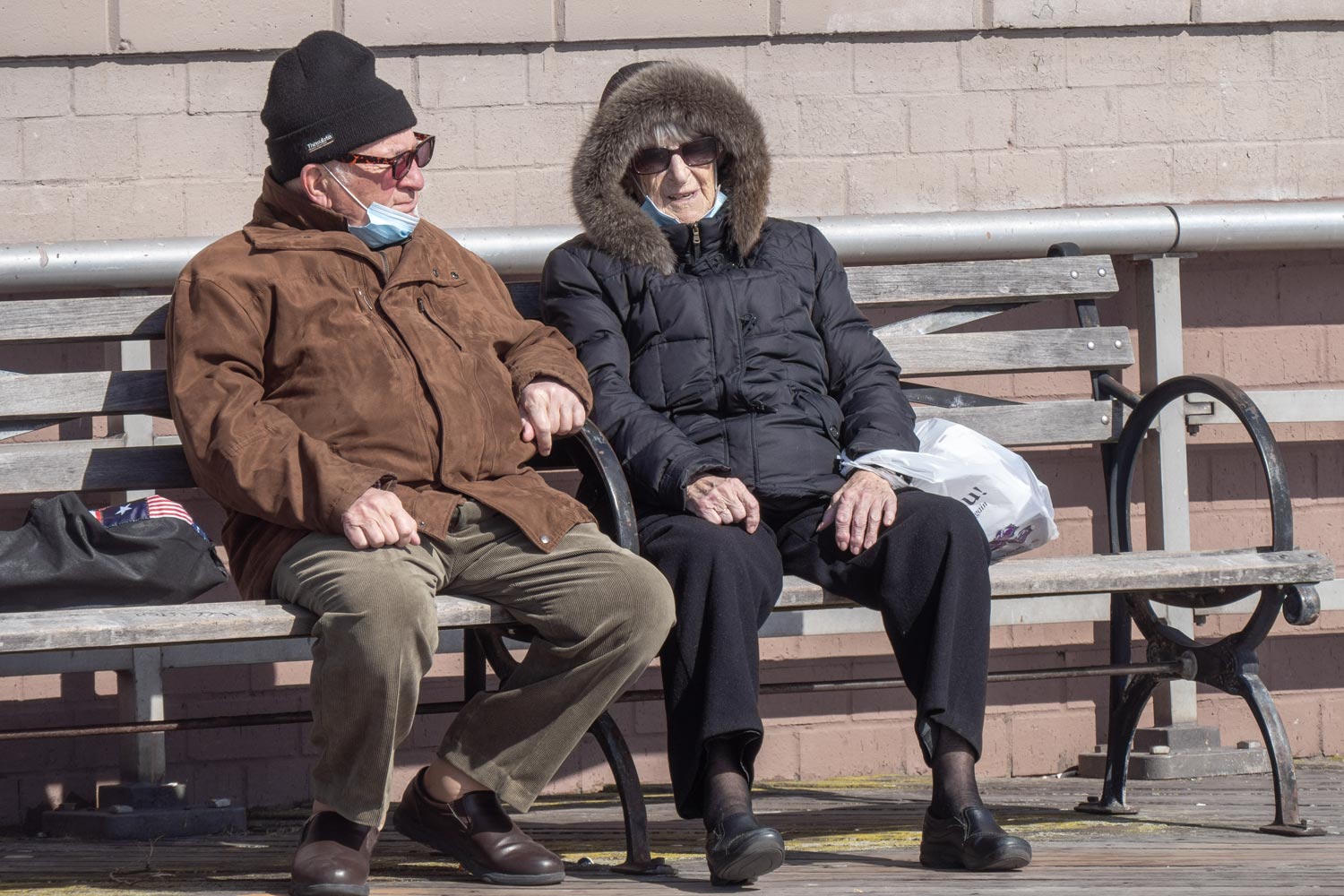
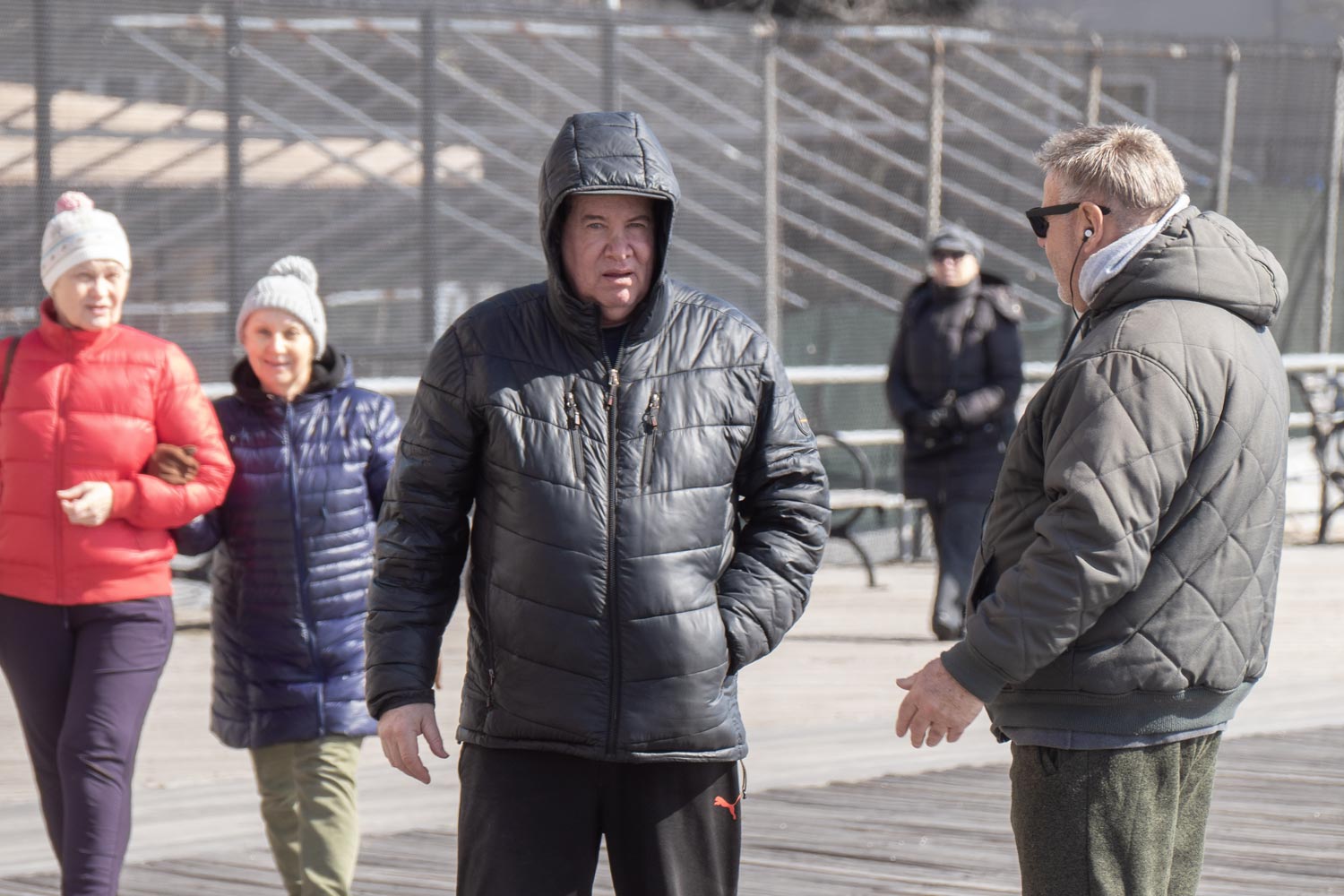
Brighton’s beach cafés deserve a special mention. The most famous of them are “Tatyana Grill” and “The Wave,” which passed away before its time thanks to the quarantine.
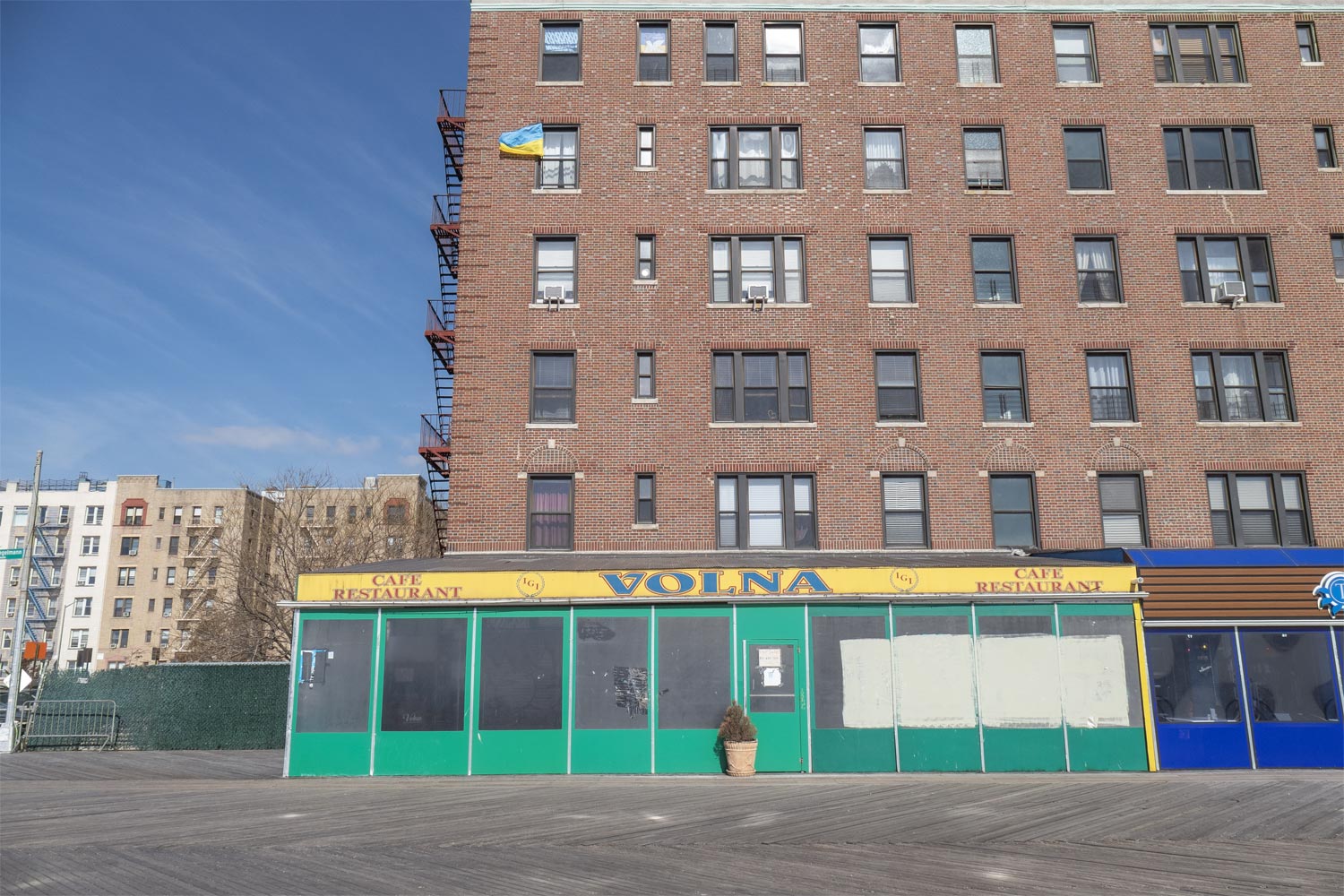
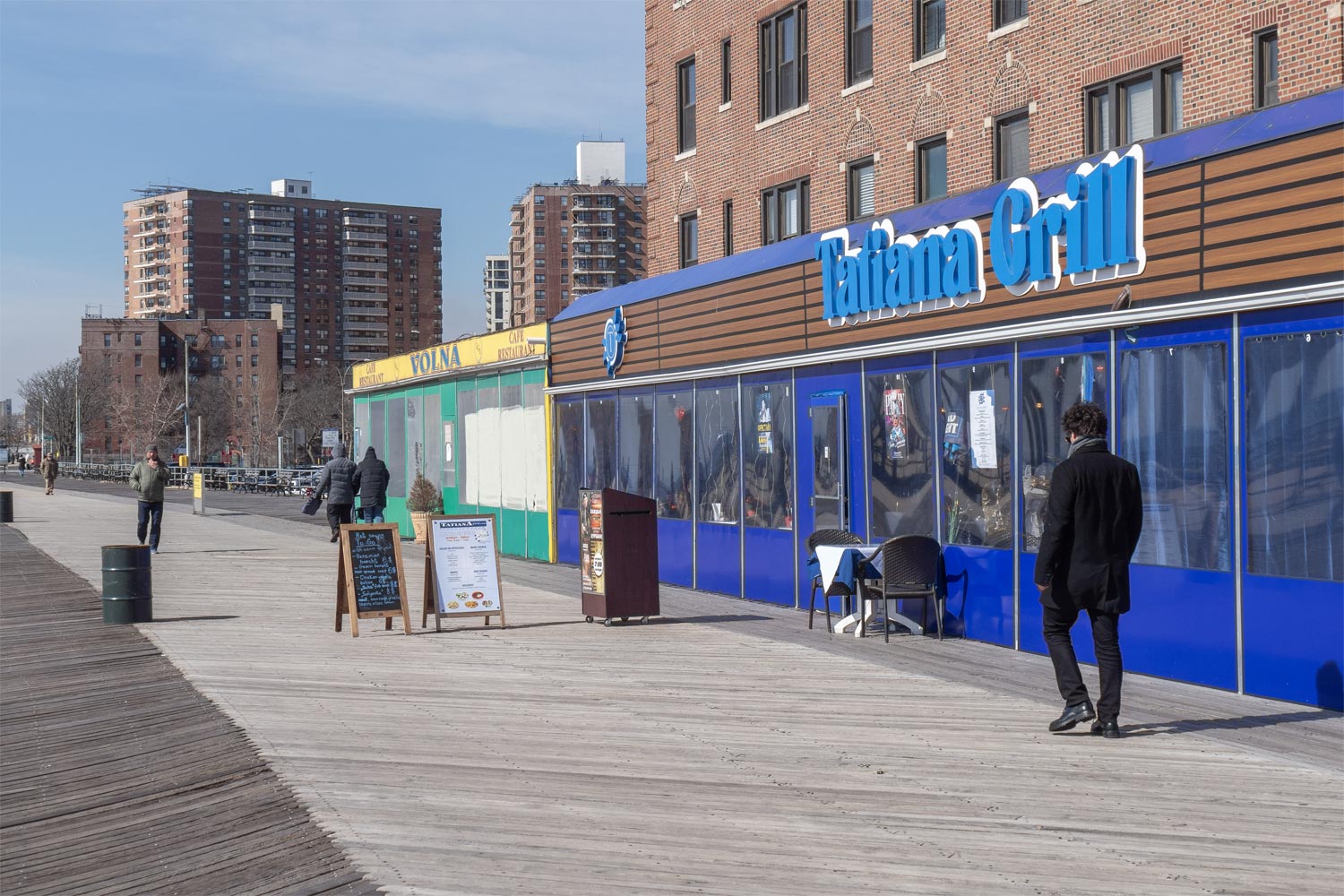
Oh, what rock gigs they used to have here! Not like now.
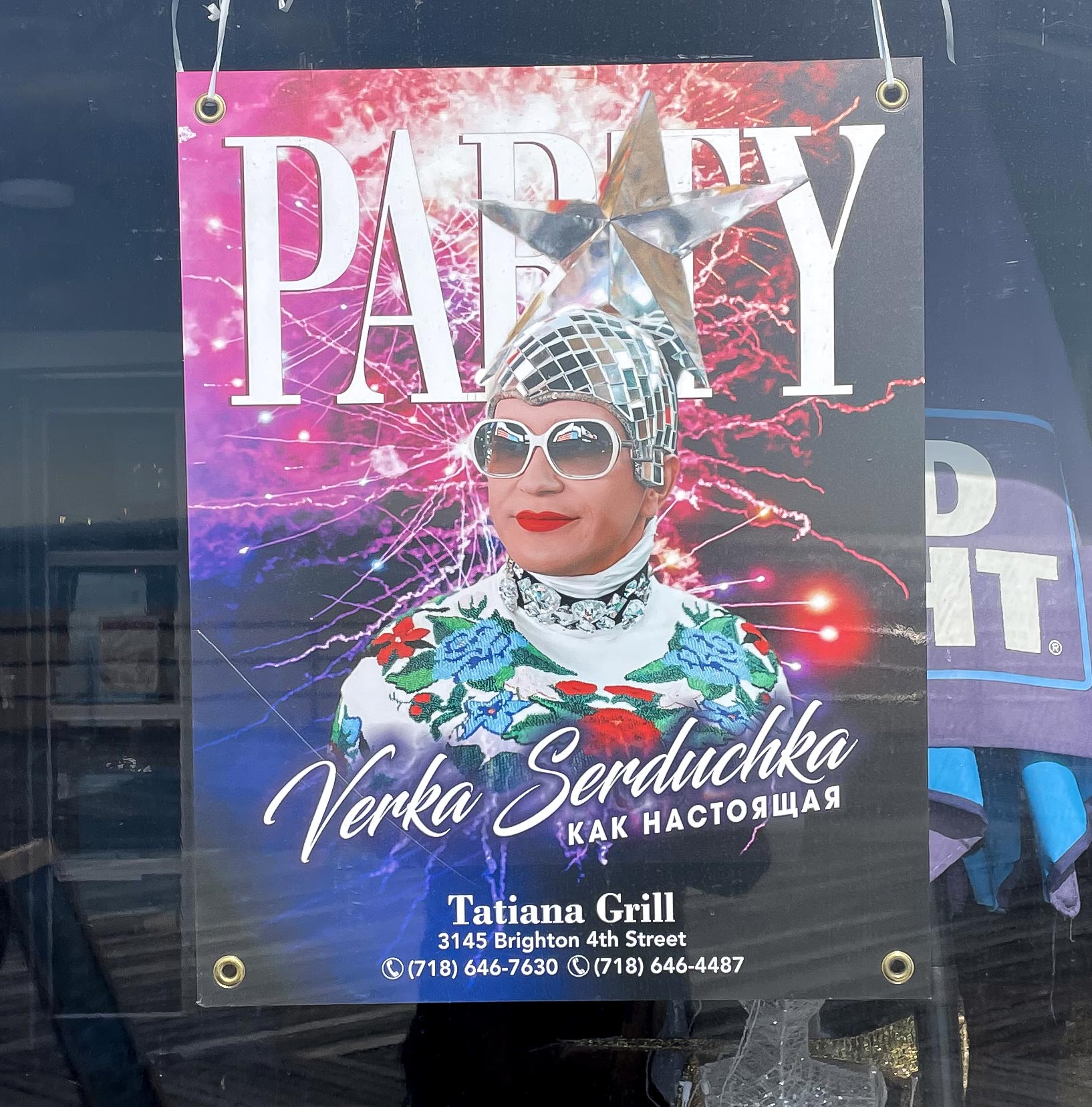
Brighton Beach is a vivid example of what mindless emigration can turn into. After the collapse of the USSR, unprepared Russians bolted from the crumbling country in whatever direction their eyes were looking. Some left for better sausage, some, as Zhvanetsky aptly put it, were fleeing stinginess, and some didn’t think at all about where they were going or why.
Almost no one from the first wave of emigration knew English. Almost no one knew the rules of life under capitalism. And although the fate of each immigrant who arrived in Brighton turned out differently, they were all united by one thing: they were looking for a better life.
Let’s not blame them for it. According to the U.S. Declaration of Independence, every person has three rights: to life, liberty, and the pursuit of happiness. Let’s just wish the new emigrants not to repeat the mistakes of the first wave. To their life be a success!
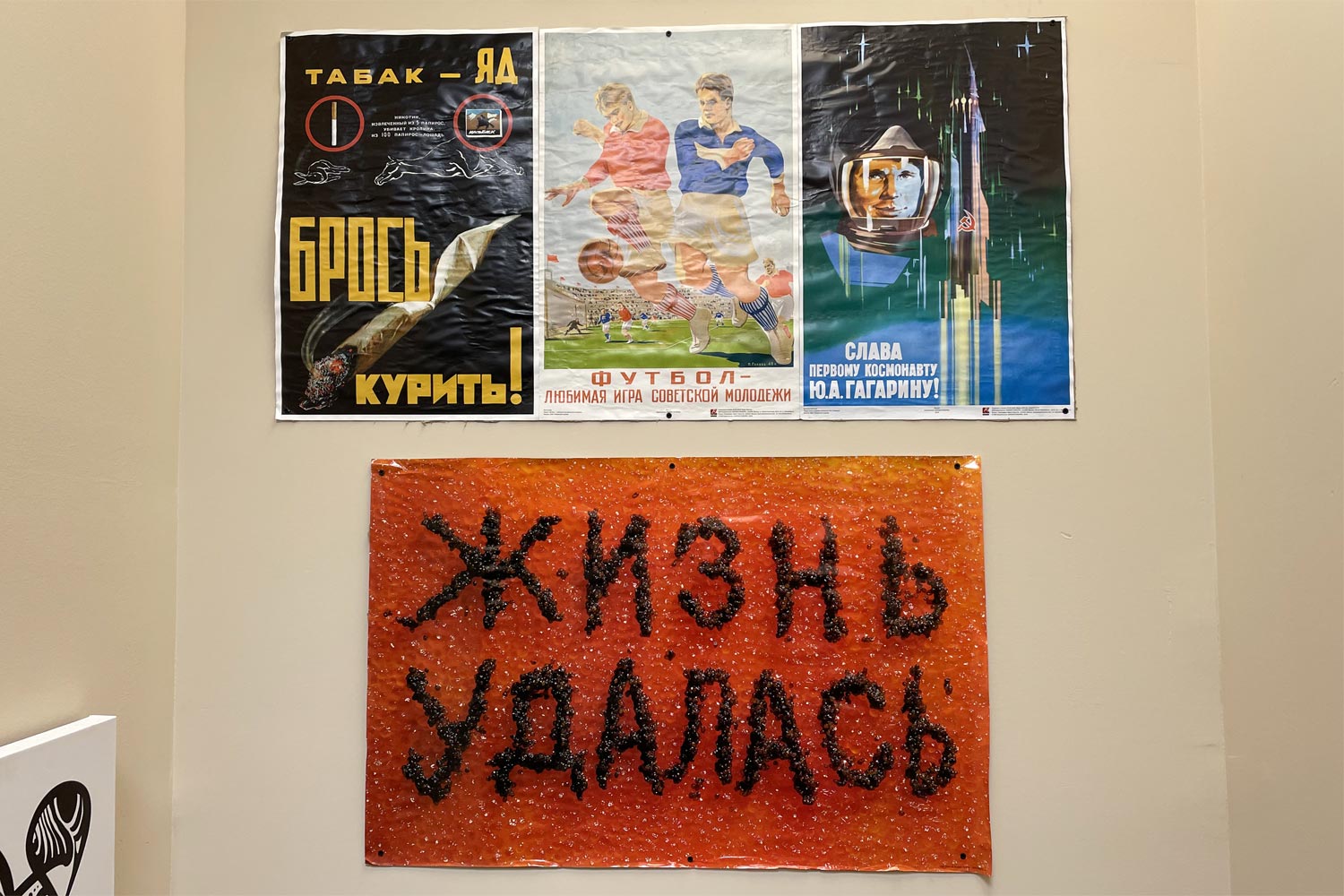
Russian: “Life is success”