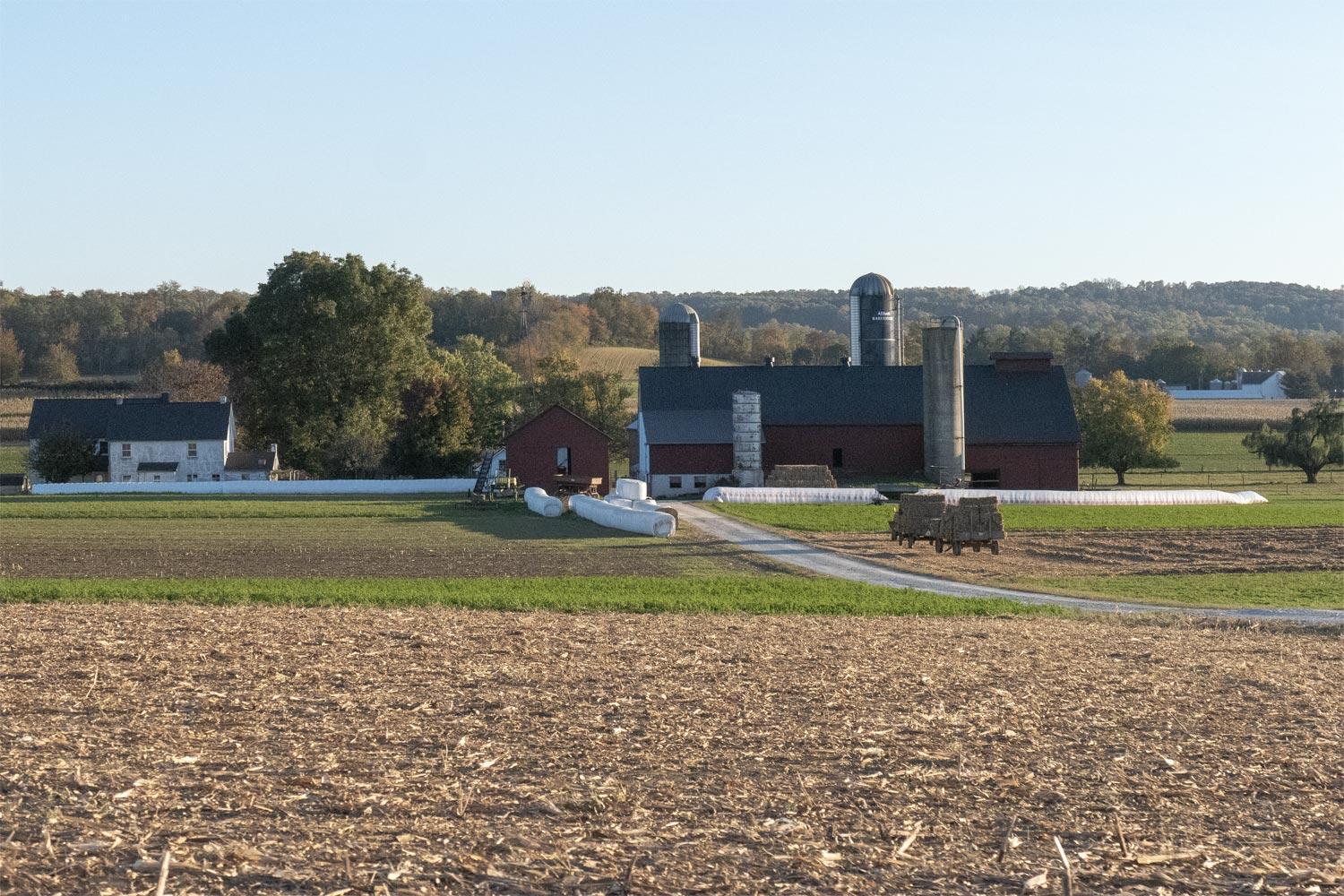

Lancaster. Amish
The state of Pennsylvania is known not only for its capital, Philadelphia, where American independence got its start. Deep in the state lies the small town of Lancaster, whose surrounding areas are home to the Amish — followers of a rare branch of Christianity.
The Amish, of course, don’t live only around Lancaster. You can find them in various parts of Pennsylvania, as well as in other states: Indiana, Ohio, Maryland, and others. Besides the United States, there is a small Amish community in Canada, in the vicinity of Ontario. In other countries Amish don’t live.
Lancaster itself is a small city. Only 60,000 people live there. It is not of any particular interest, but there is still one thing that can be said about it: Lancaster was the capital of the United States for a whole day! In 1777, when the British threatened to capture Philadelphia, the Continental Congress, which governed the country, evacuated to Lancaster, held one session there, and then immediately moved on to York.
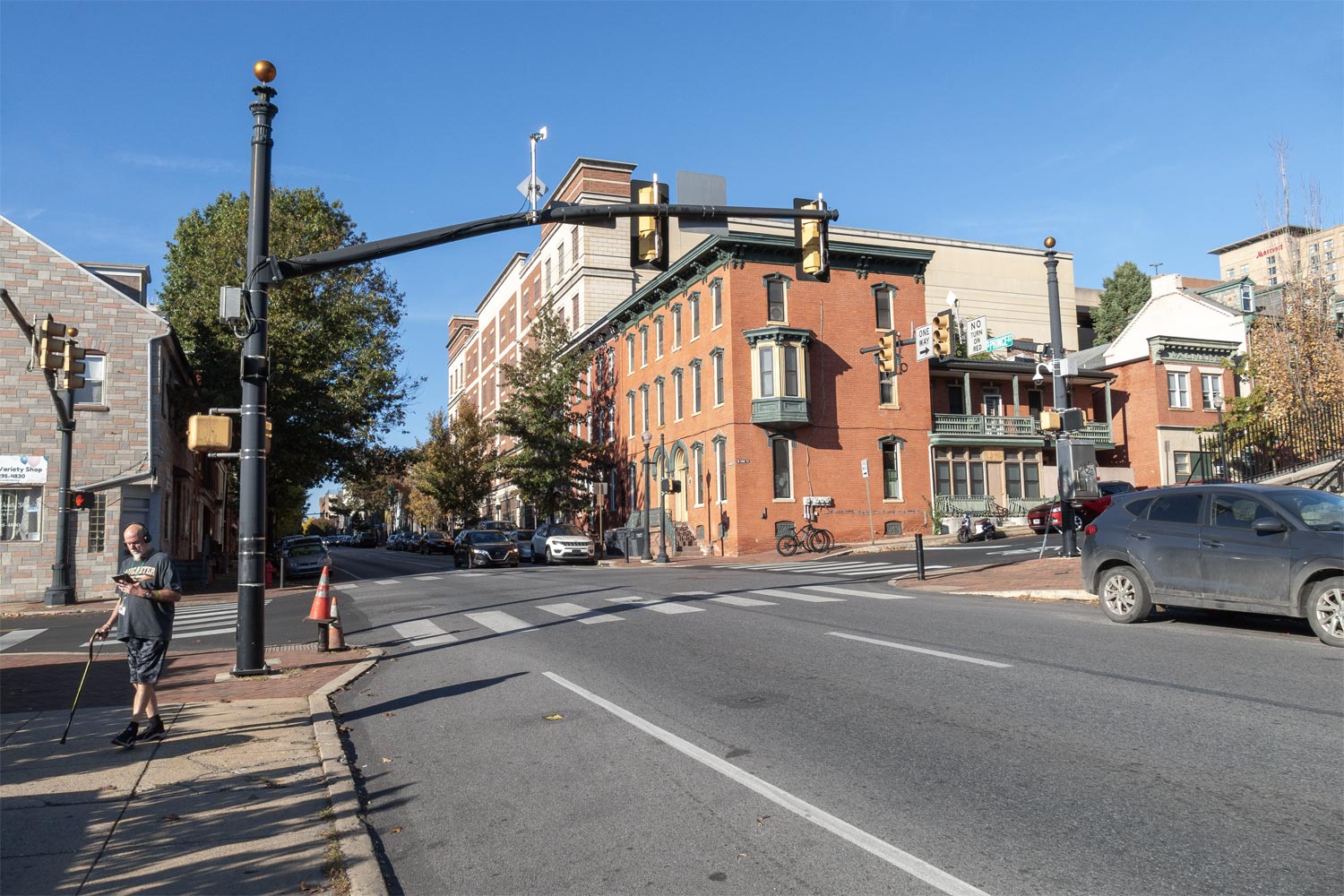
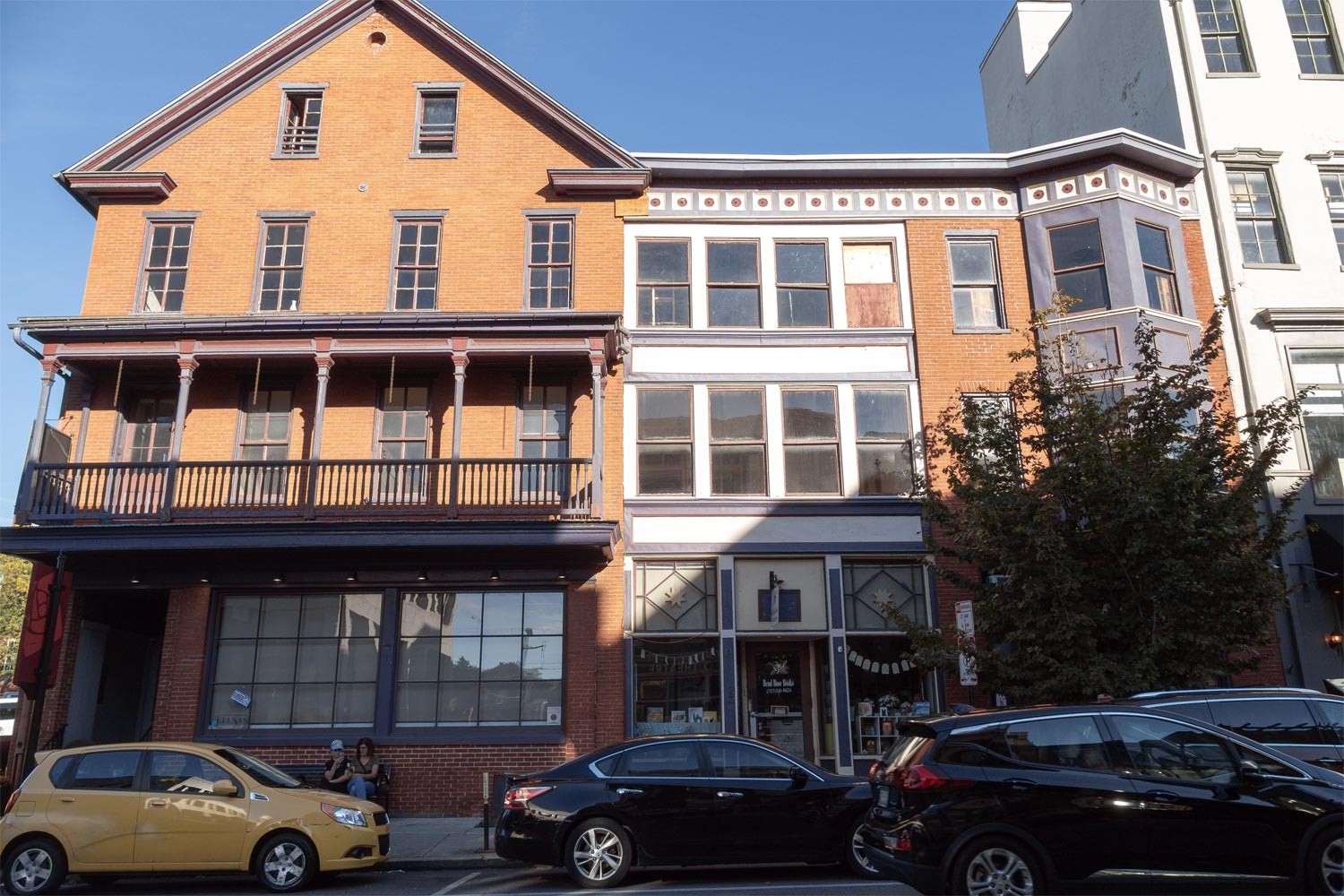
Most of Lancaster’s buildings are low-rise brick structures. The ground floors often house cafés, restaurants, and shops. Nothing special.
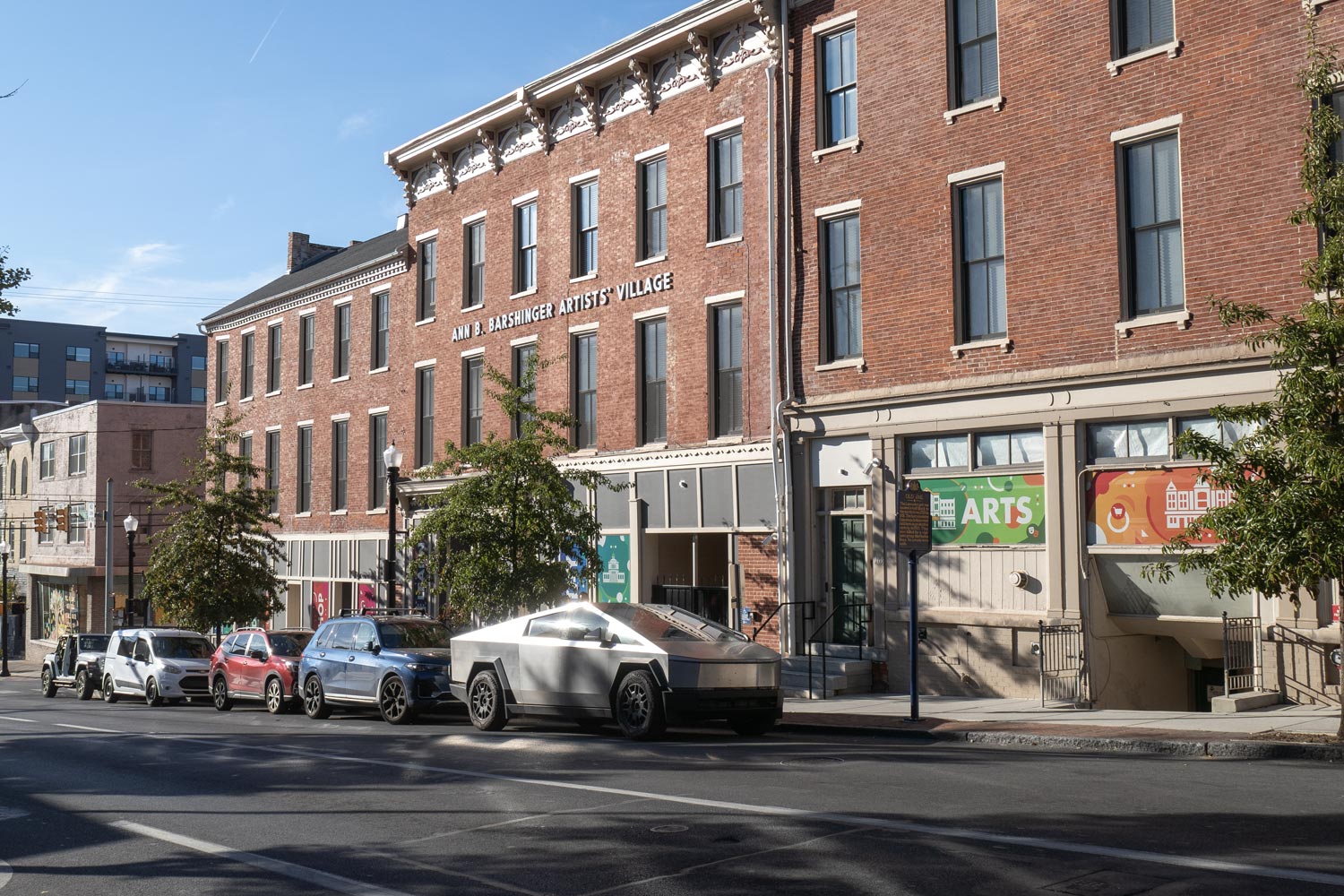
Sometimes you come across some nice architecture.
In the city center there is some kind of stele with mustached colonists on it.
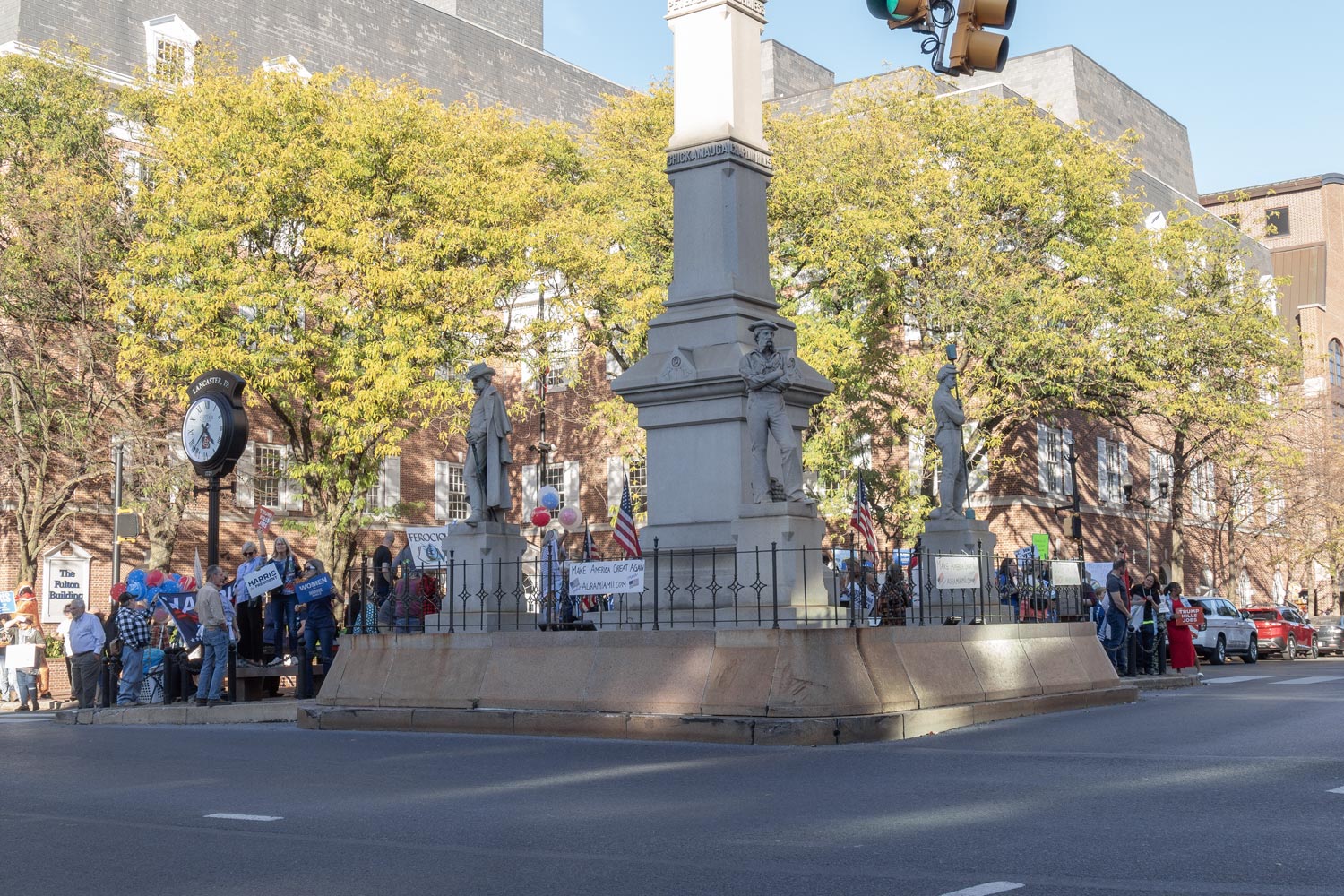
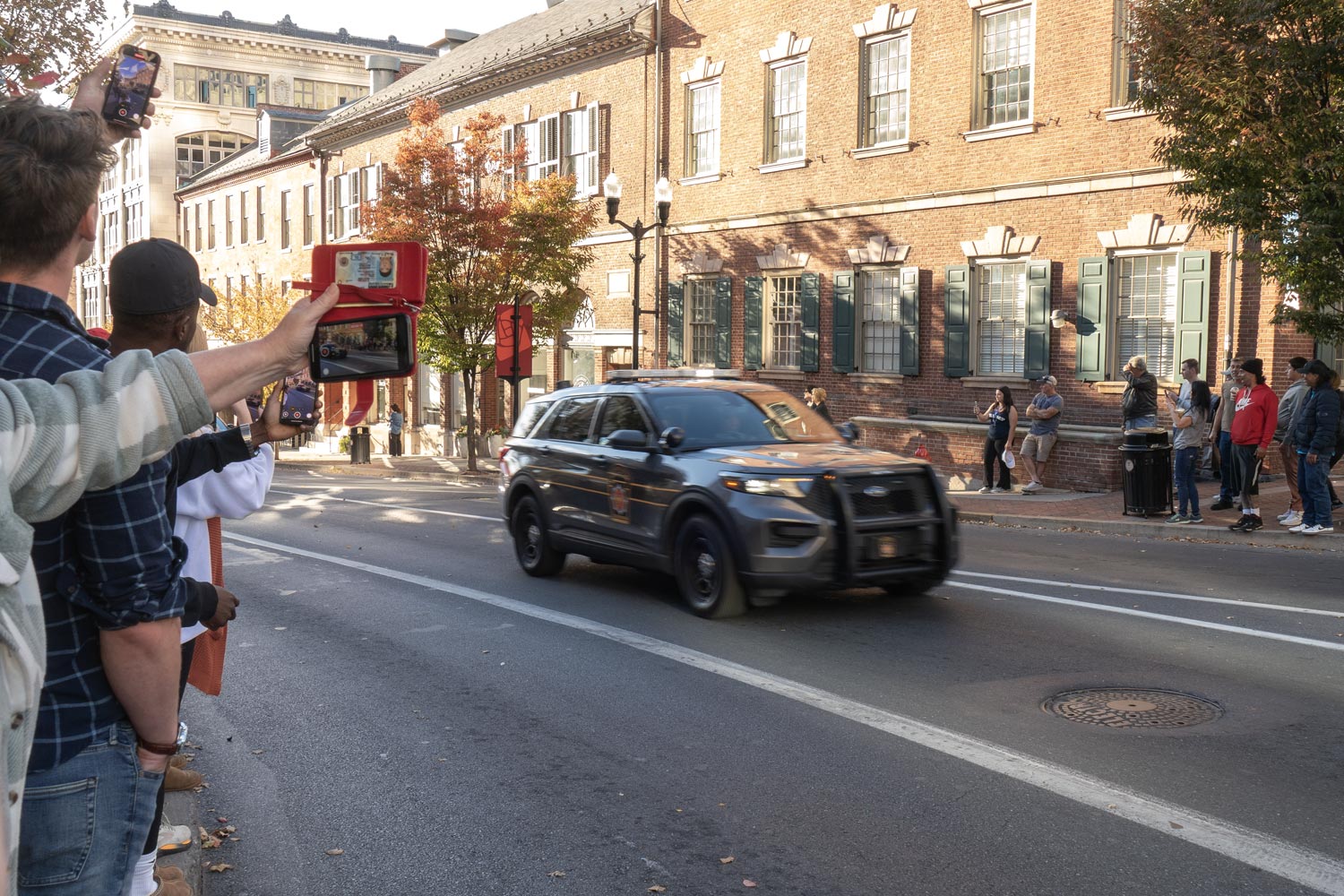
It suddenly turned out that on the day of my visit to Lancaster, Donald Trump was coming to town. A rally in his support was being held there, which also drew his opponents. Two crowds stood on opposite sides of the road, shouting slogans at each other.
Overall, it was clear that the exchange between them was more friendly than hostile. At the same time, it became obvious that political life is in full swing even in small American towns.

At that very rally, we ran into the first Amish. In the crowd on Trump’s side stood a woman dressed in a traditional white dress, with patterns like a grandmother’s bedsheet, reaching all the way to the ground.
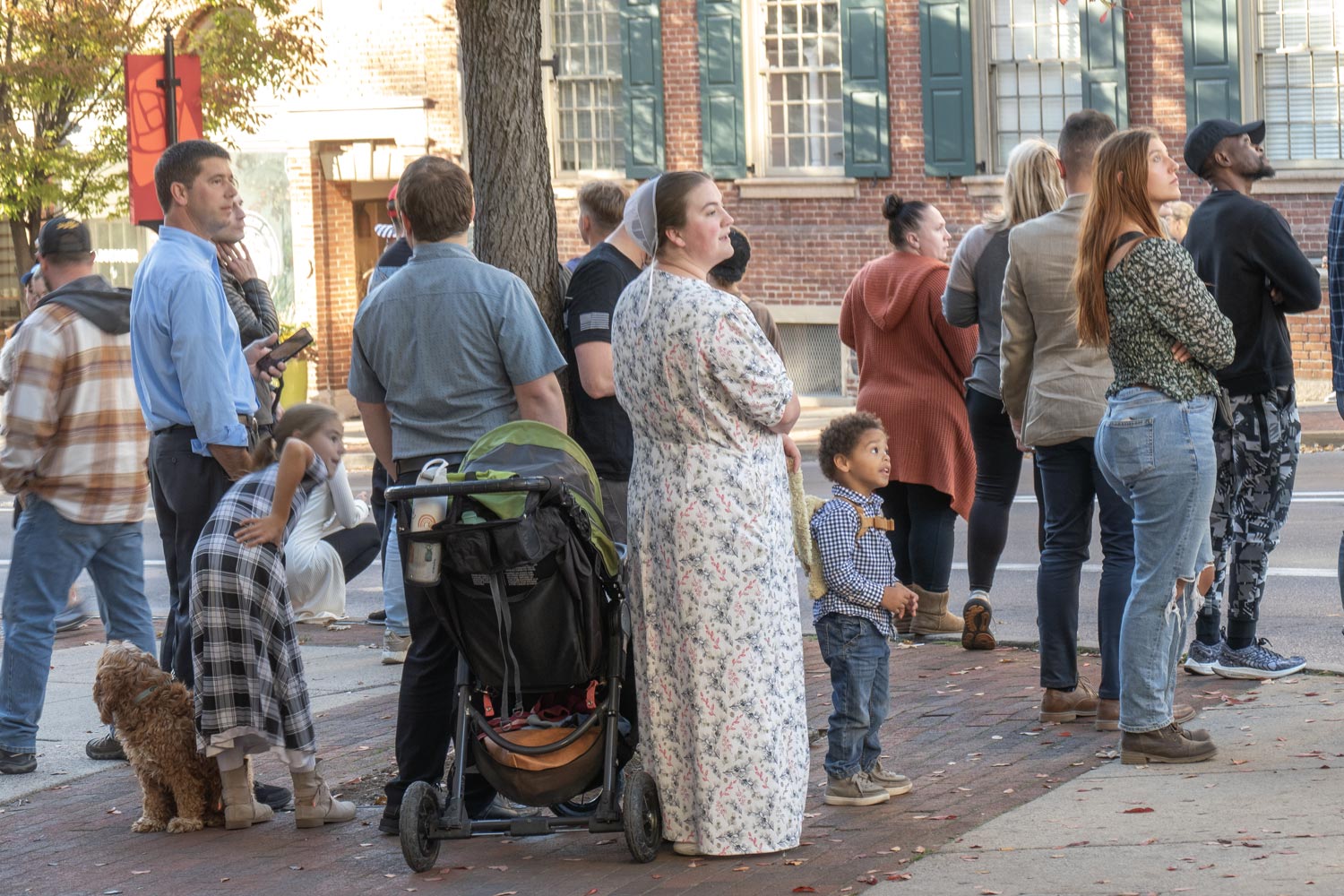
On the Amish woman’s head was a neatly tied little white bonnet, which was somehow fastened to the back of her head without any visible attachments. Her face — the most interesting part of her appearance — was incredibly pale, with a rustic roundness and a Slavic flush on her cheek.
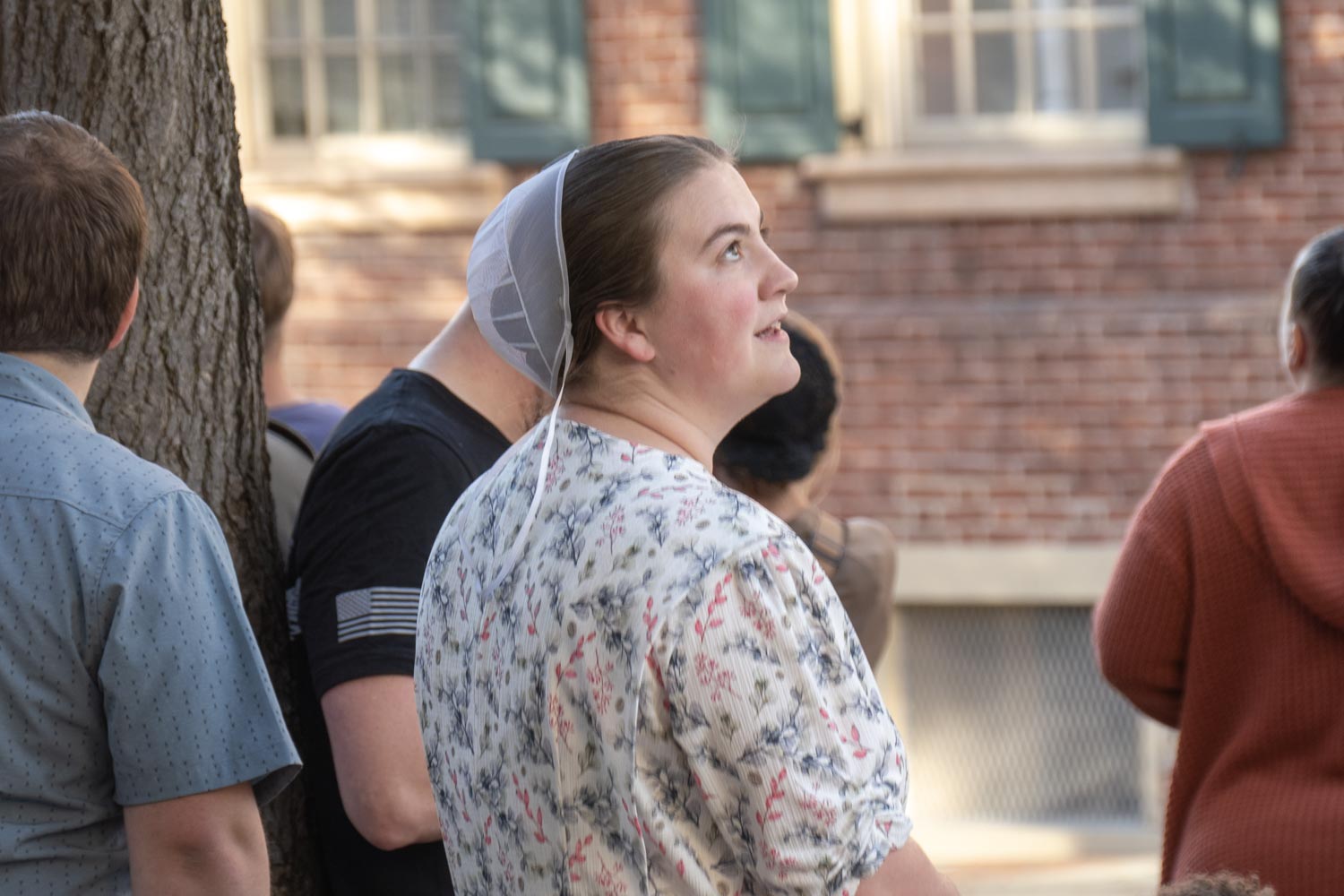
A reader might think that the Amish woman ended up at the rally by accident. That’s not the case. The Republican Party has long been trying to lure apolitical Amish people to the polls. There were even rumors that Trump’s victory in Pennsylvania was secured precisely by the Amish, whom conservatives had finally managed to bring over to their side. That’s not true: although the Amish did grow fond of Trump, they were extremely reluctant to go vote and did not help tip the balance against the Democrats.
The thing is, the Amish are an extremely self-sufficient community. They live separately from America and are similar to Native Americans, only without reservations.
Not voting is one thing; how about giving up all the benefits of technological progress? The Amish are famous for still traveling in horse-drawn carriages.
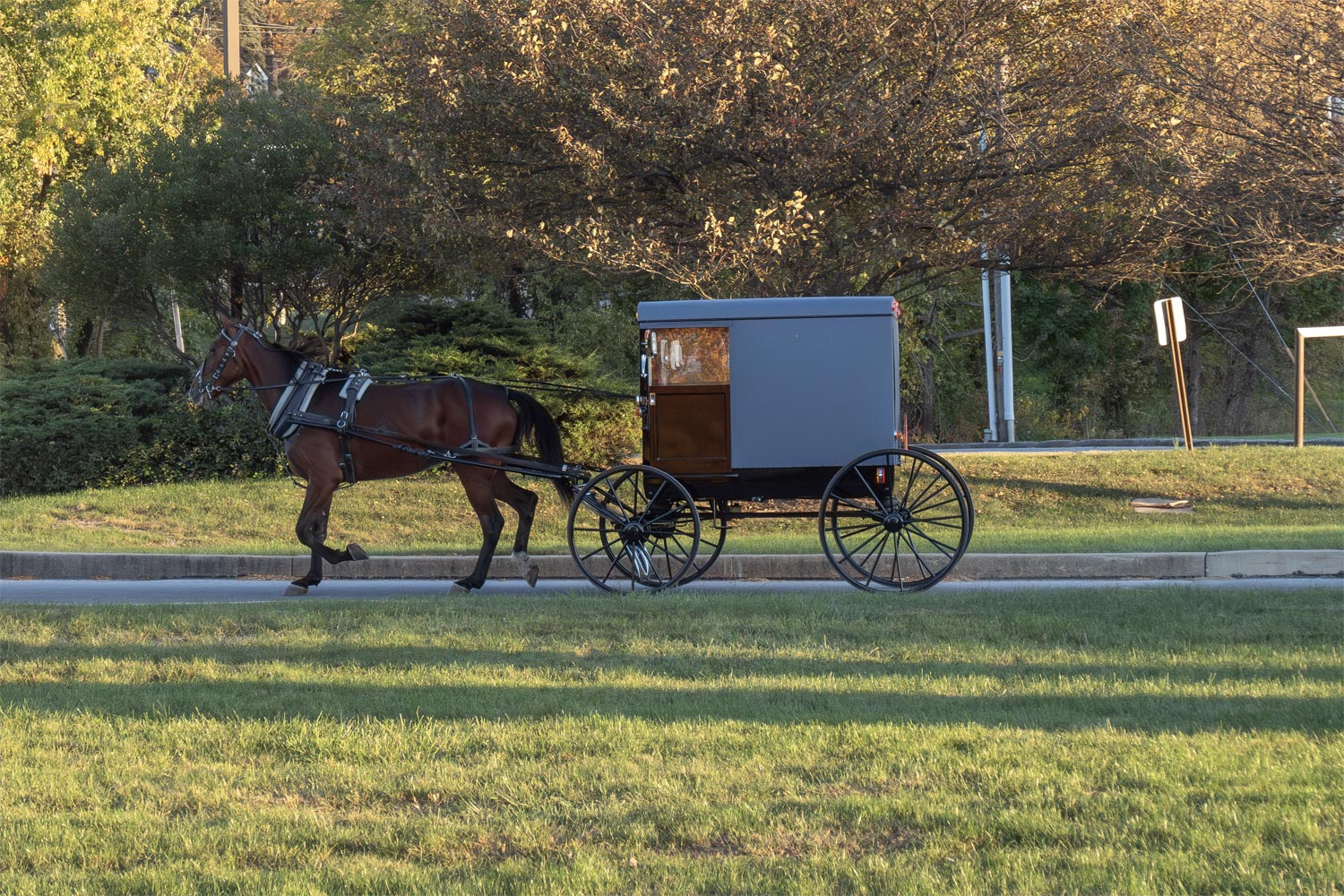
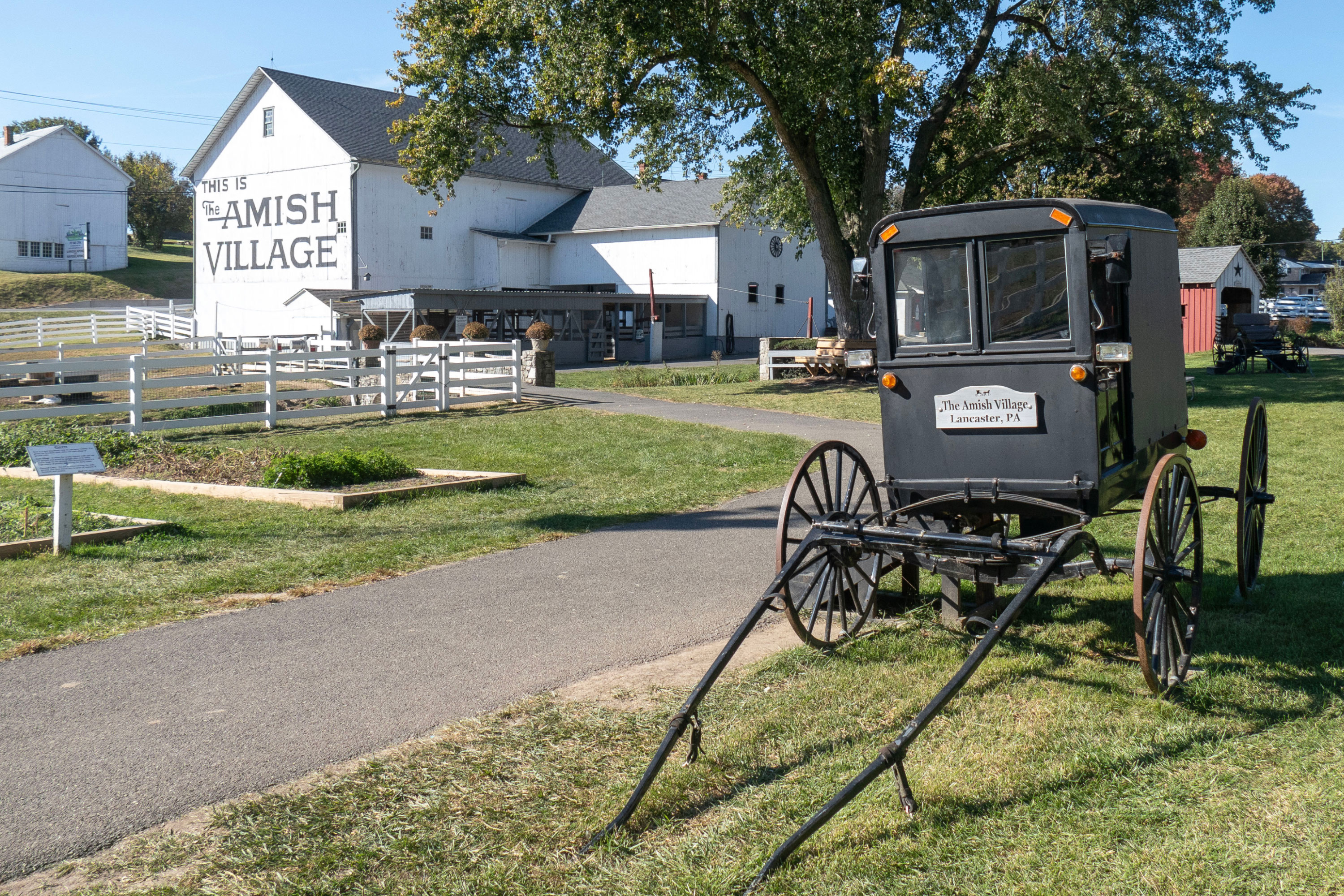
Amish carriages are called buggies. They’re not some unique invention of theirs at all, but the ordinary wagons that all rural America used in the 19th century. The Amish simply preserved them, having rejected automobiles as well as any kind of motor.
Perhaps the only modification to the buggy compared to the original design is the orange triangle on the rear panel of the carriage. This road sign is mandatory for all vehicles that travel slower than 40 kilometers per hour.
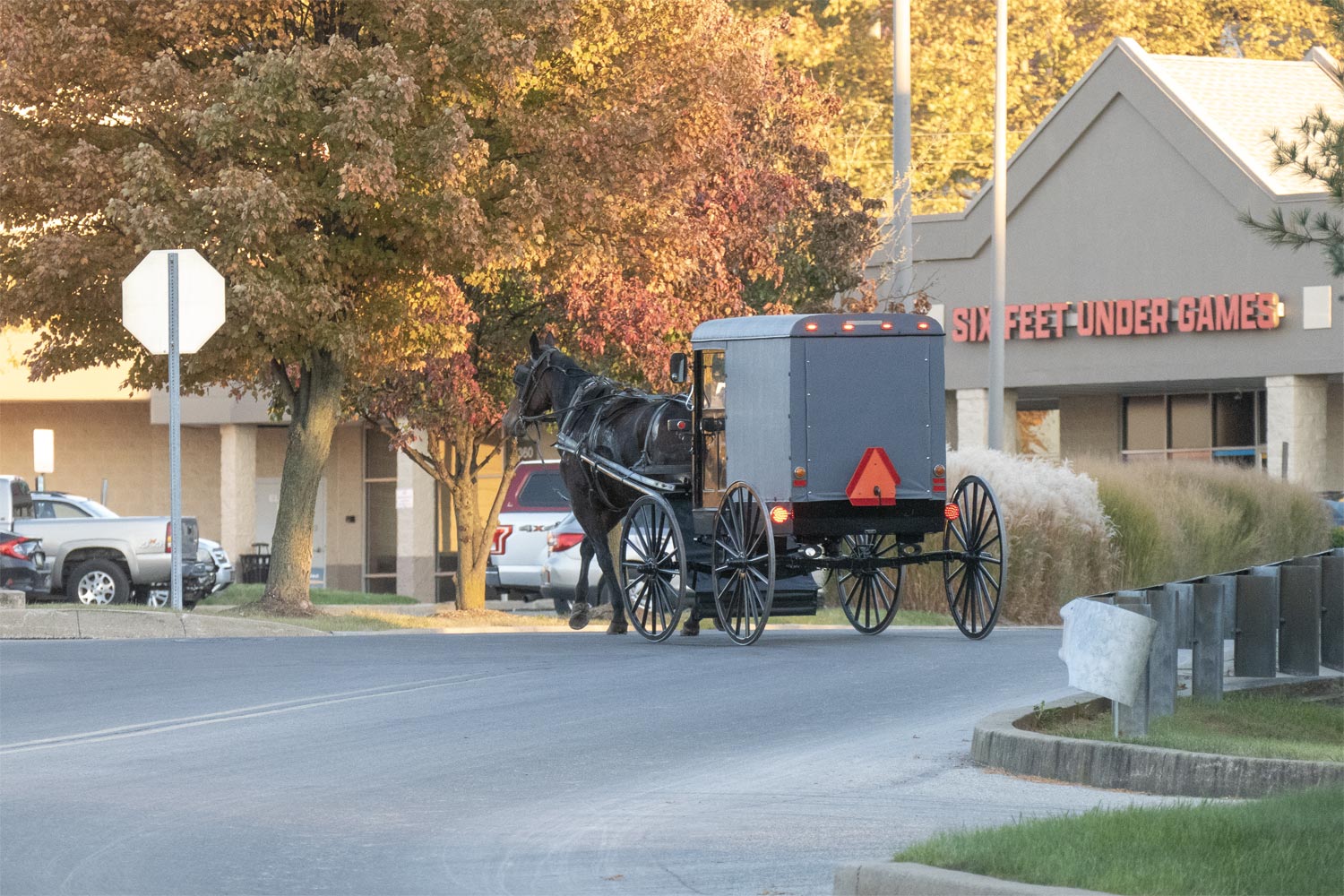
However, even this harmless sign was met with hostility by the Amish. First, this bright triangle went against their religious principle of not standing out. Second, its clever reflective structure was also a form of technological progress, which the Amish did not want to touch at all.
For a long time, the authorities turned a blind eye to the fact that the Amish were driving without a warning triangle. Unfortunately, it is extremely difficult to see a carriage without headlights or signal lights on the road at night, so buggies were constantly getting into accidents.
In the end, they finally took the Amish seriously and made a show of it by arresting a dozen people at once, broadcasting the arrest photo on every channel. That day, it seems, all of America collapsed in laughter at the sight of gray‑haired elders standing against a height chart.

After such a PR campaign, the Amish backed down, and now all their buggies shine in the night with the damned triangle.
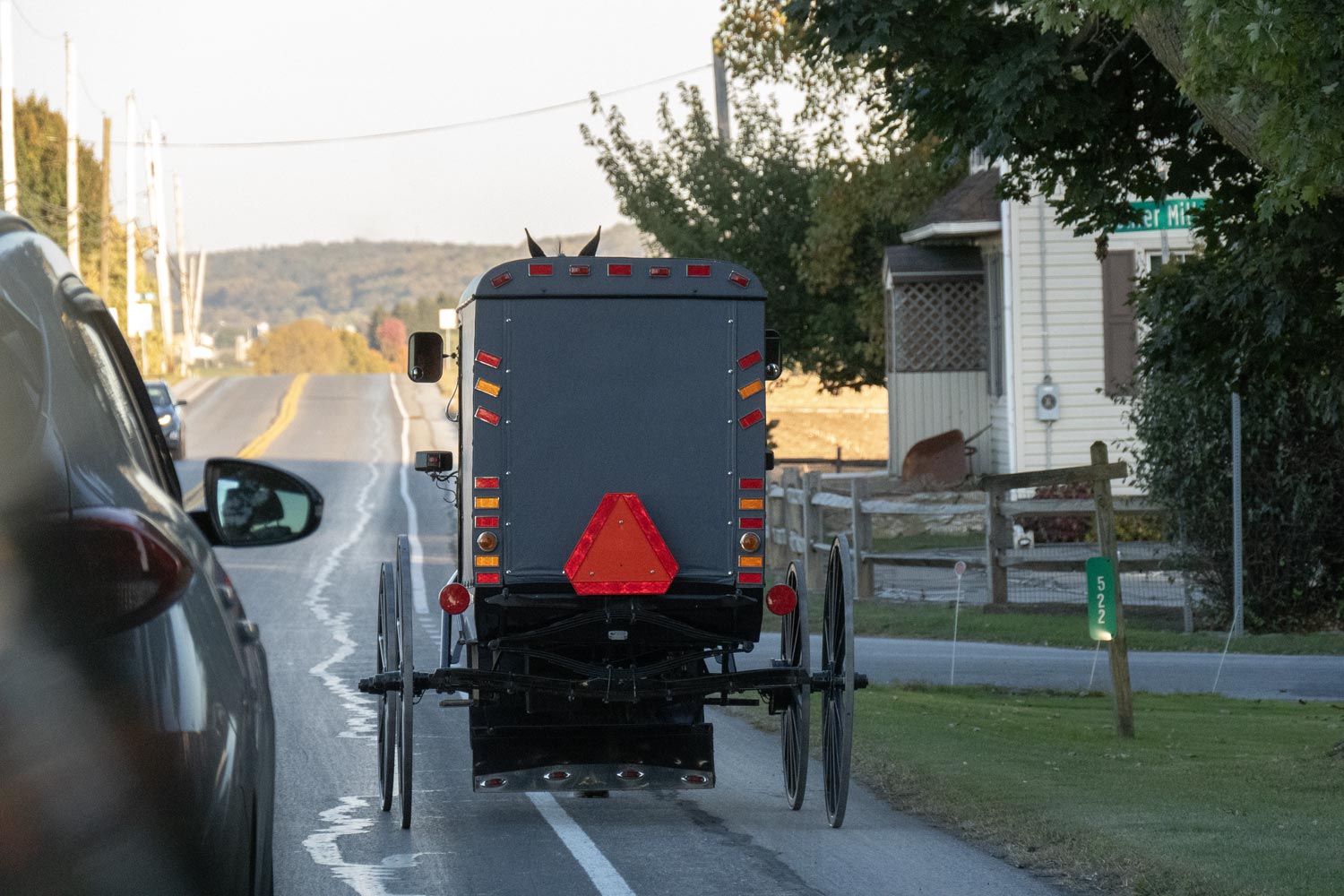
Overall, just the sight of this cart against the backdrop of modern cars and supermarkets is enough to send you into hysterics.
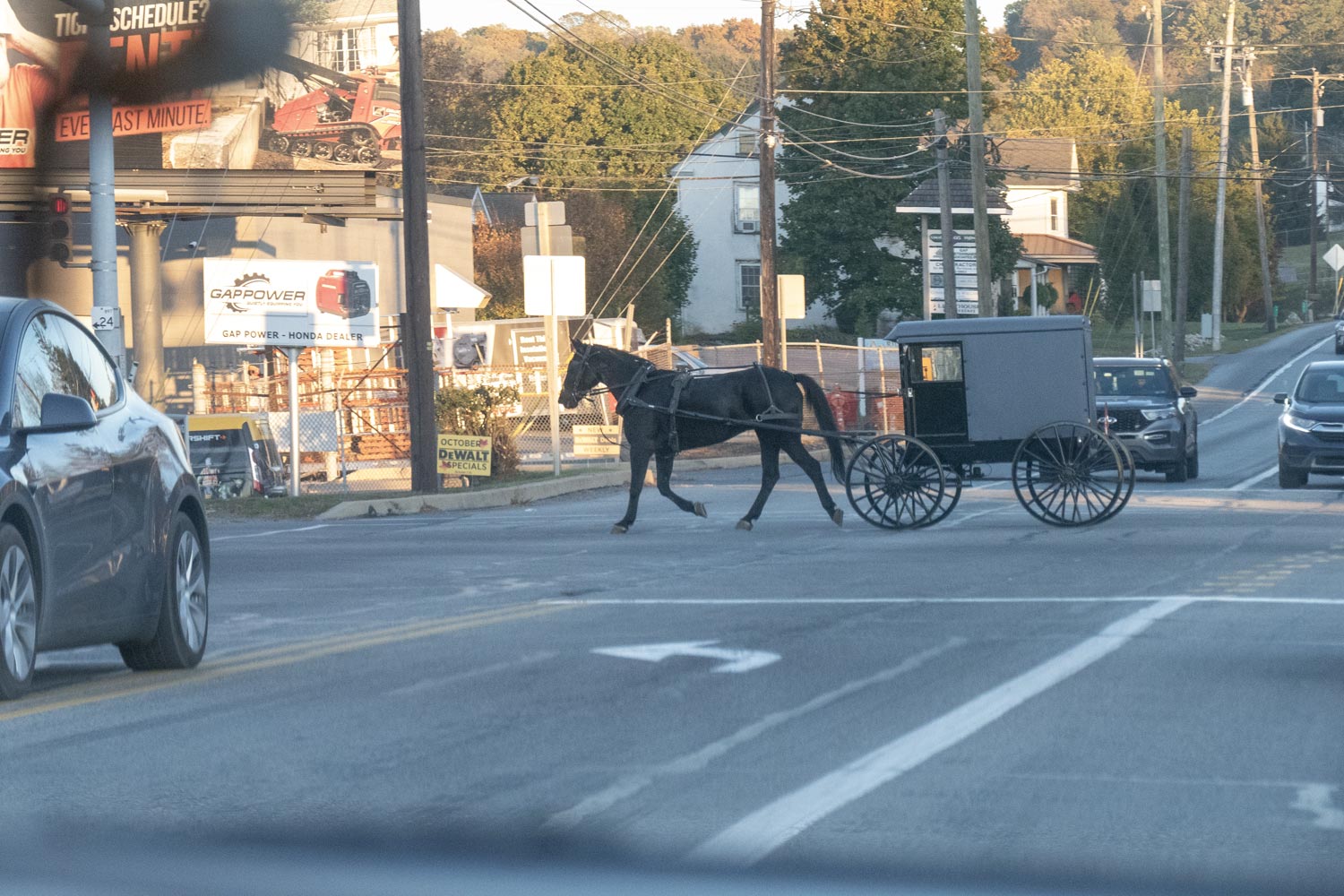
After all, the Amish don’t travel somewhere separately; they go right along the highway, among the cars.
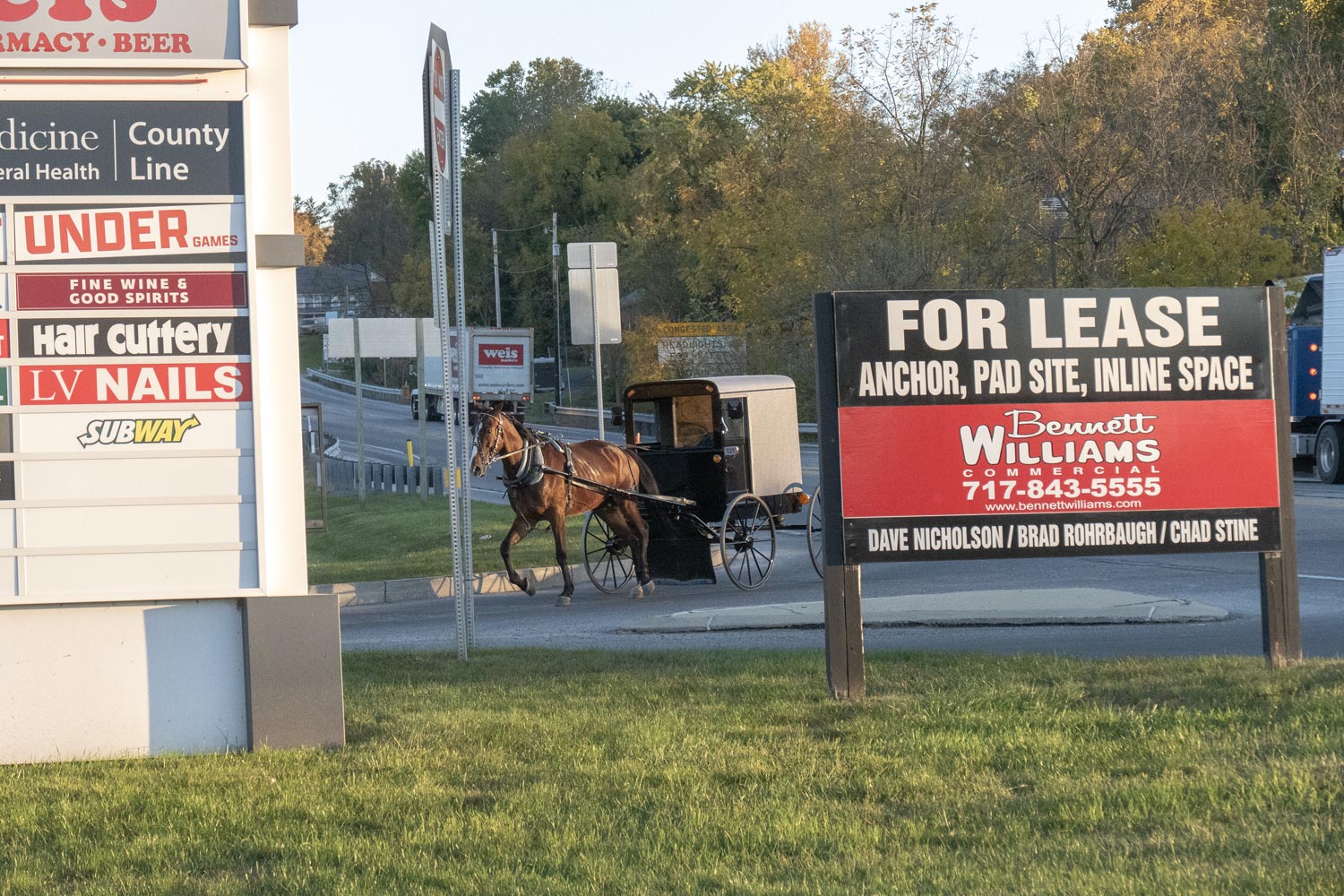
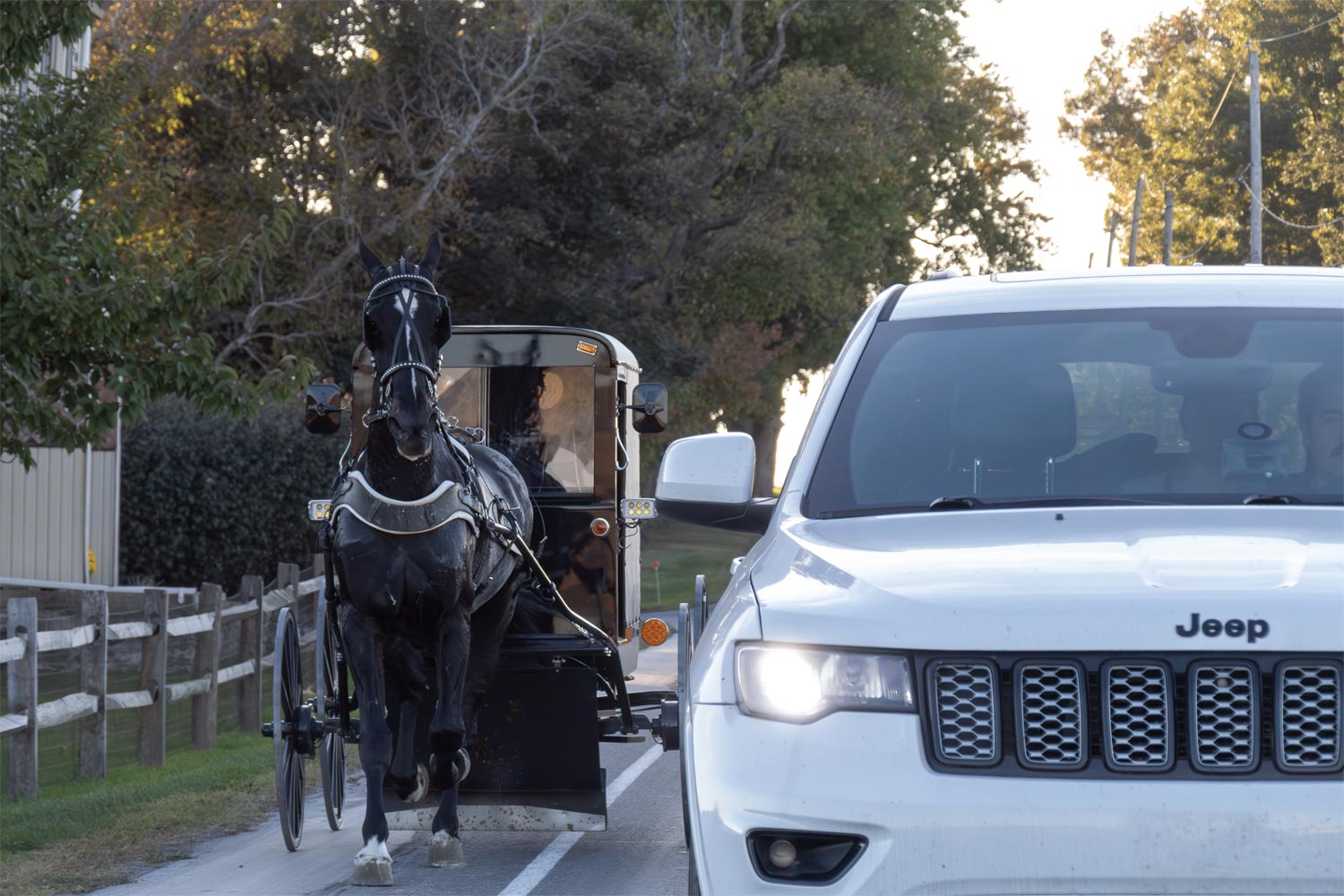
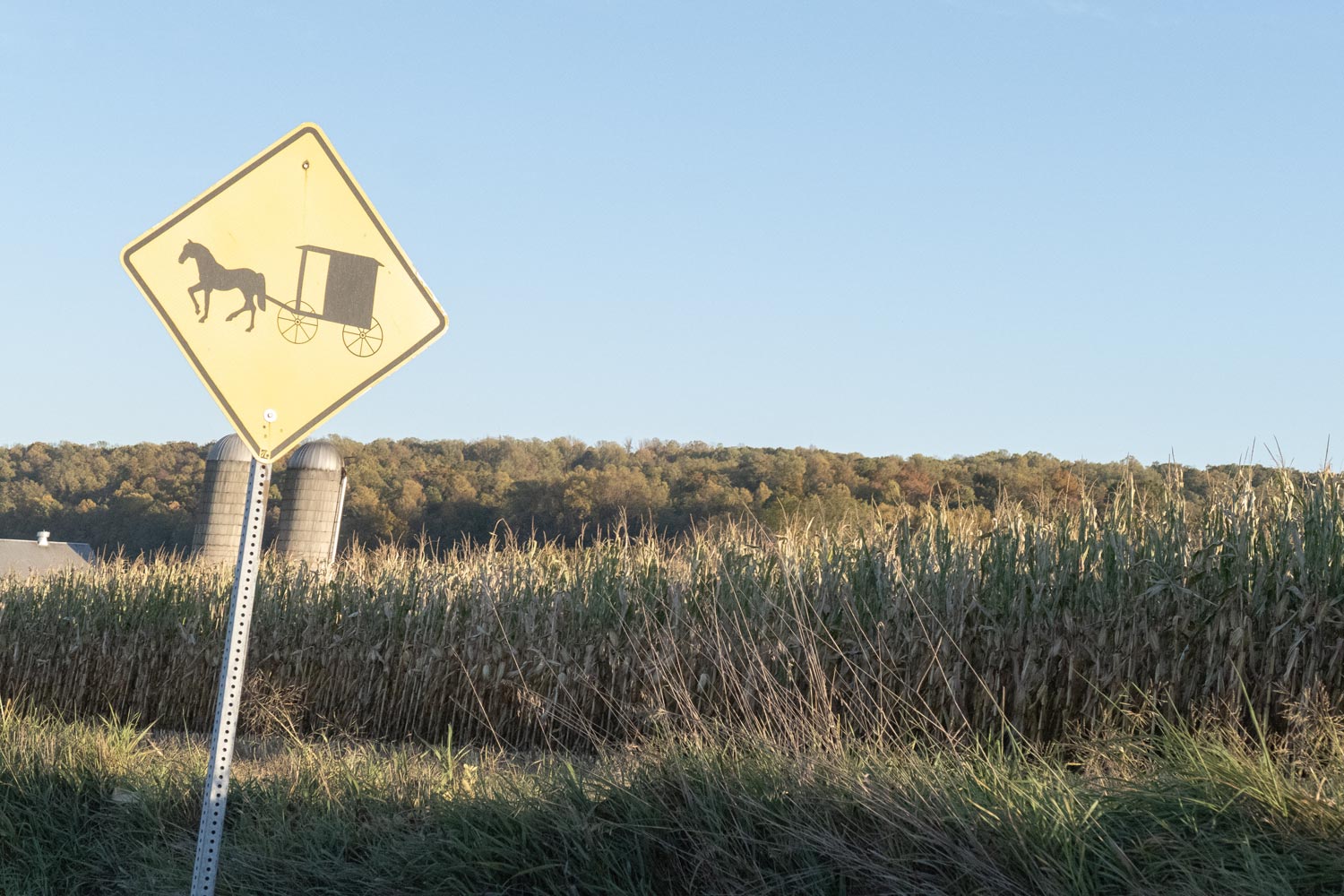
They even have their own special road sign: a horse-drawn carriage enclosed in a yellow diamond.
Catching a good shot with an Amish person isn’t that easy. Their carriage works like an ideal black body from physics class: it lets light in, but doesn’t give anything back!
And yet the contents of the cart can be made out if the light falls directly on it. Then, in the black hole, its contents will emerge in the form of a gray‑haired senior person.
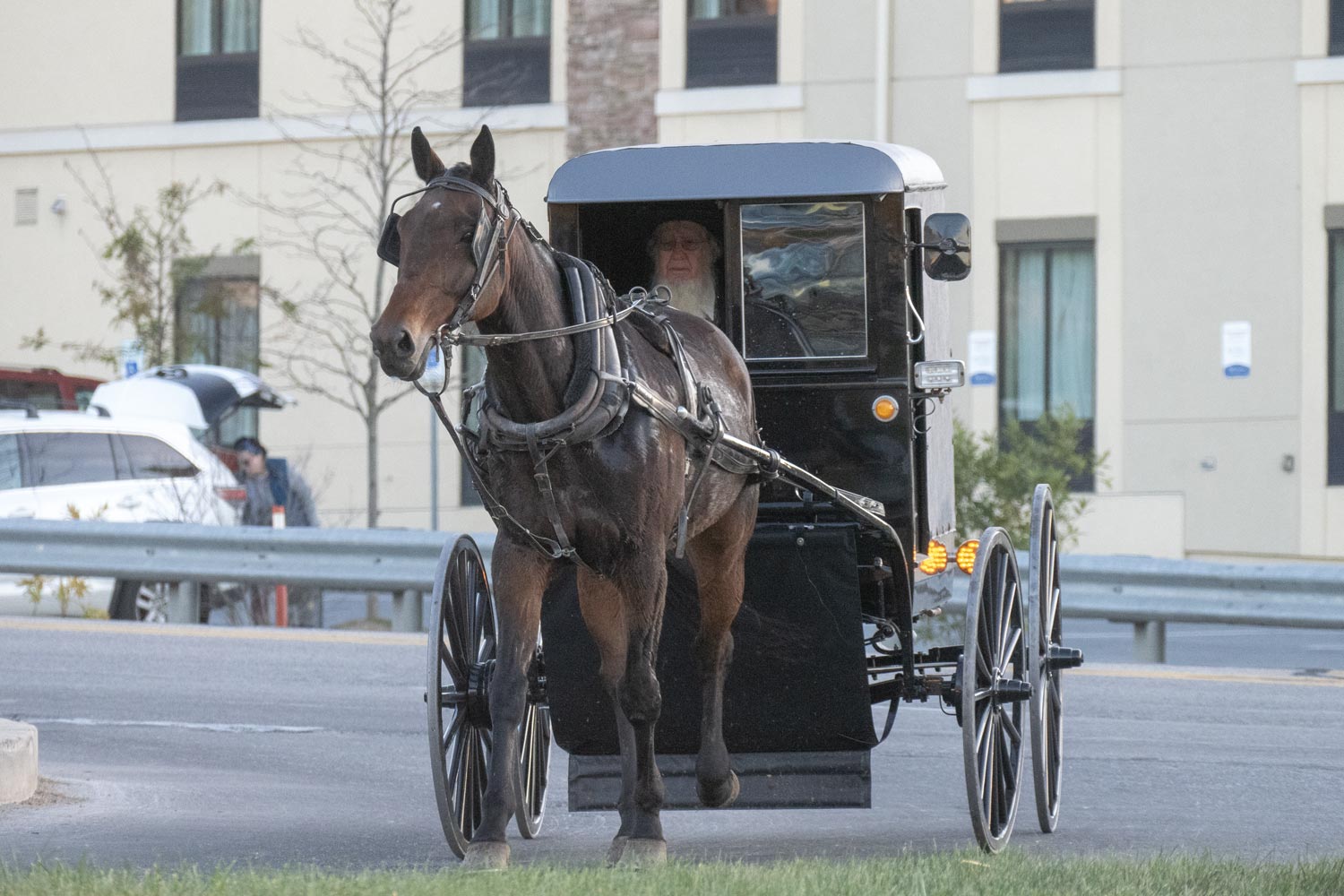
Not necessarily a senior. Young Amish men dressed in blue shirts, black vests, and classic felt hats look no less colorful.
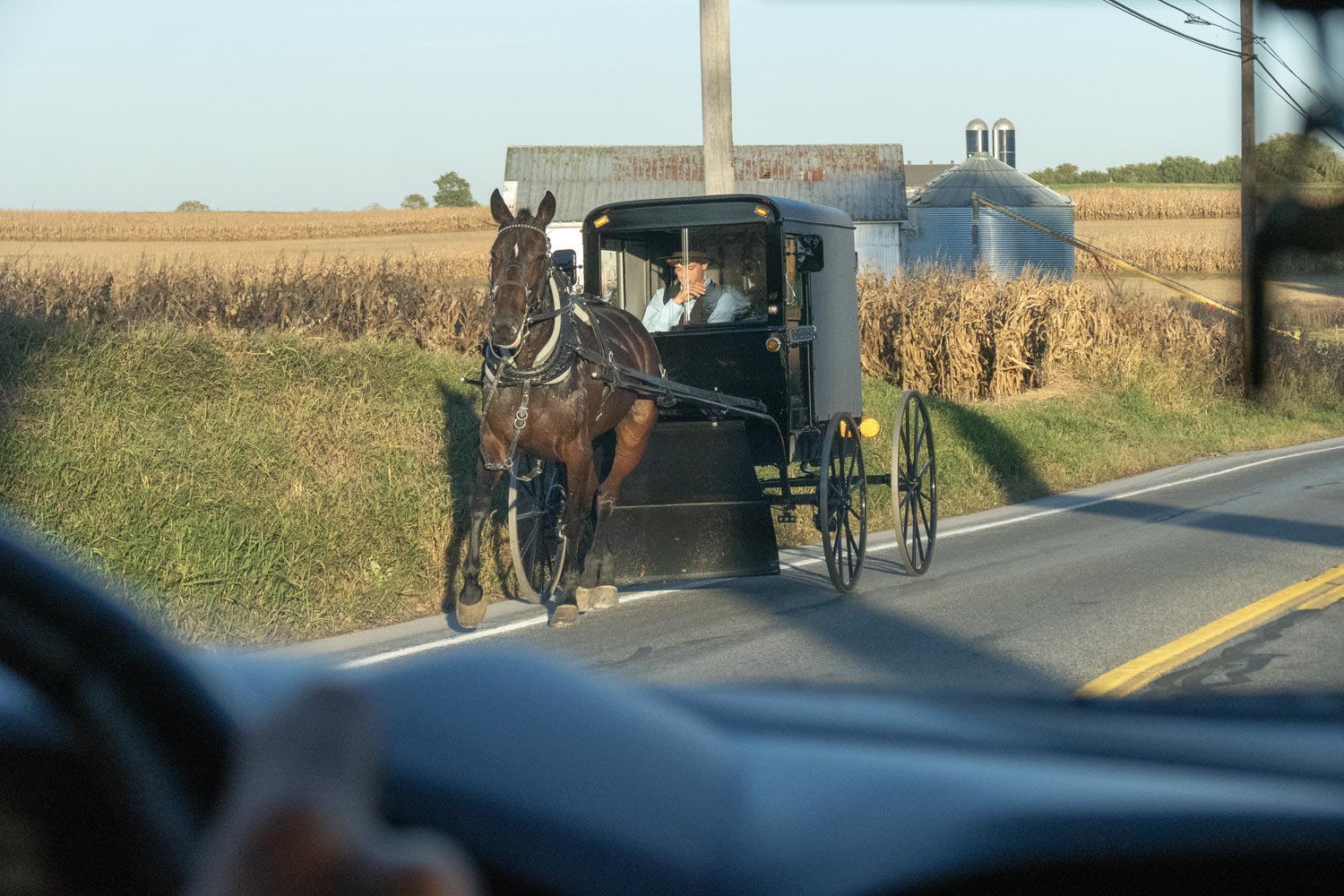
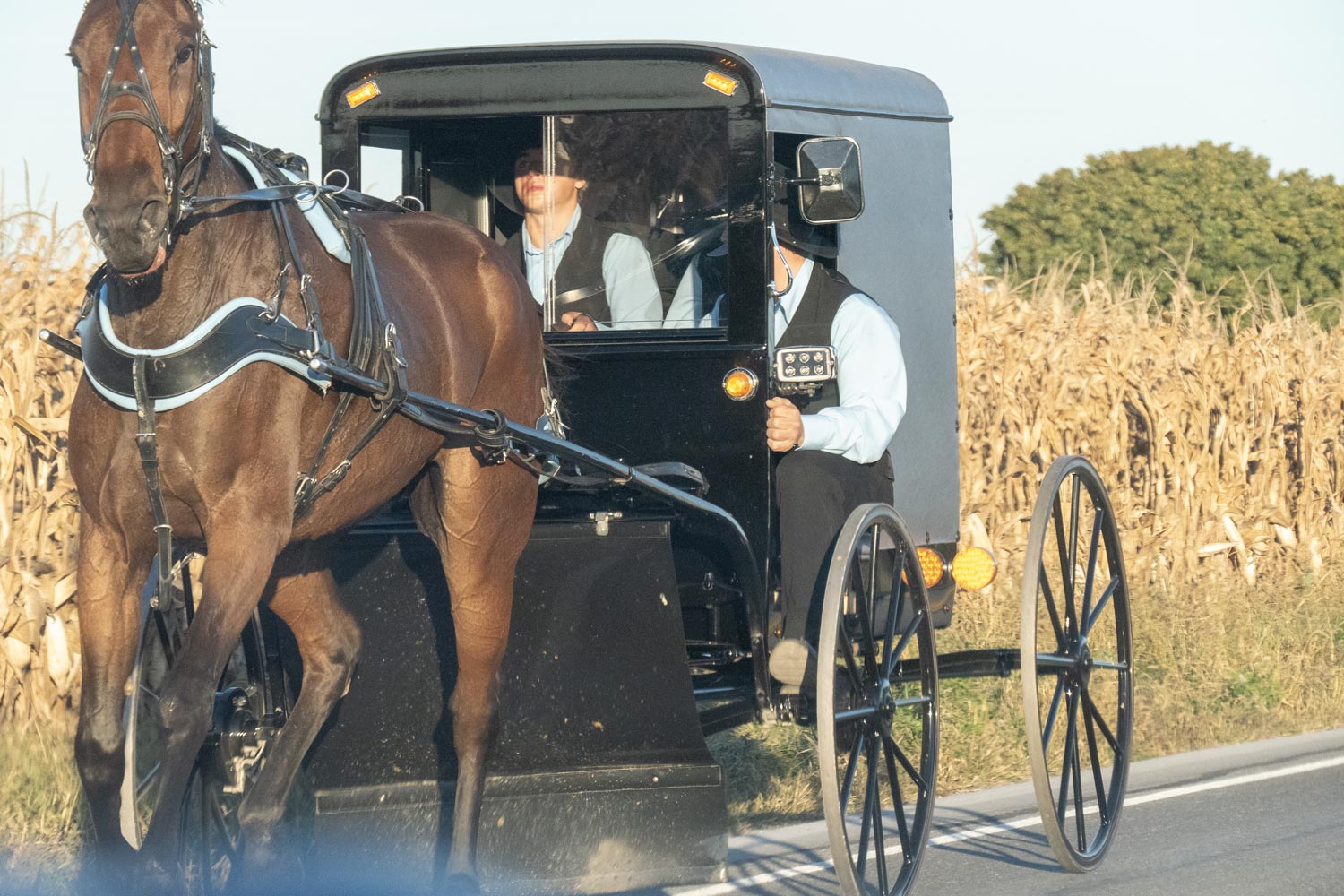
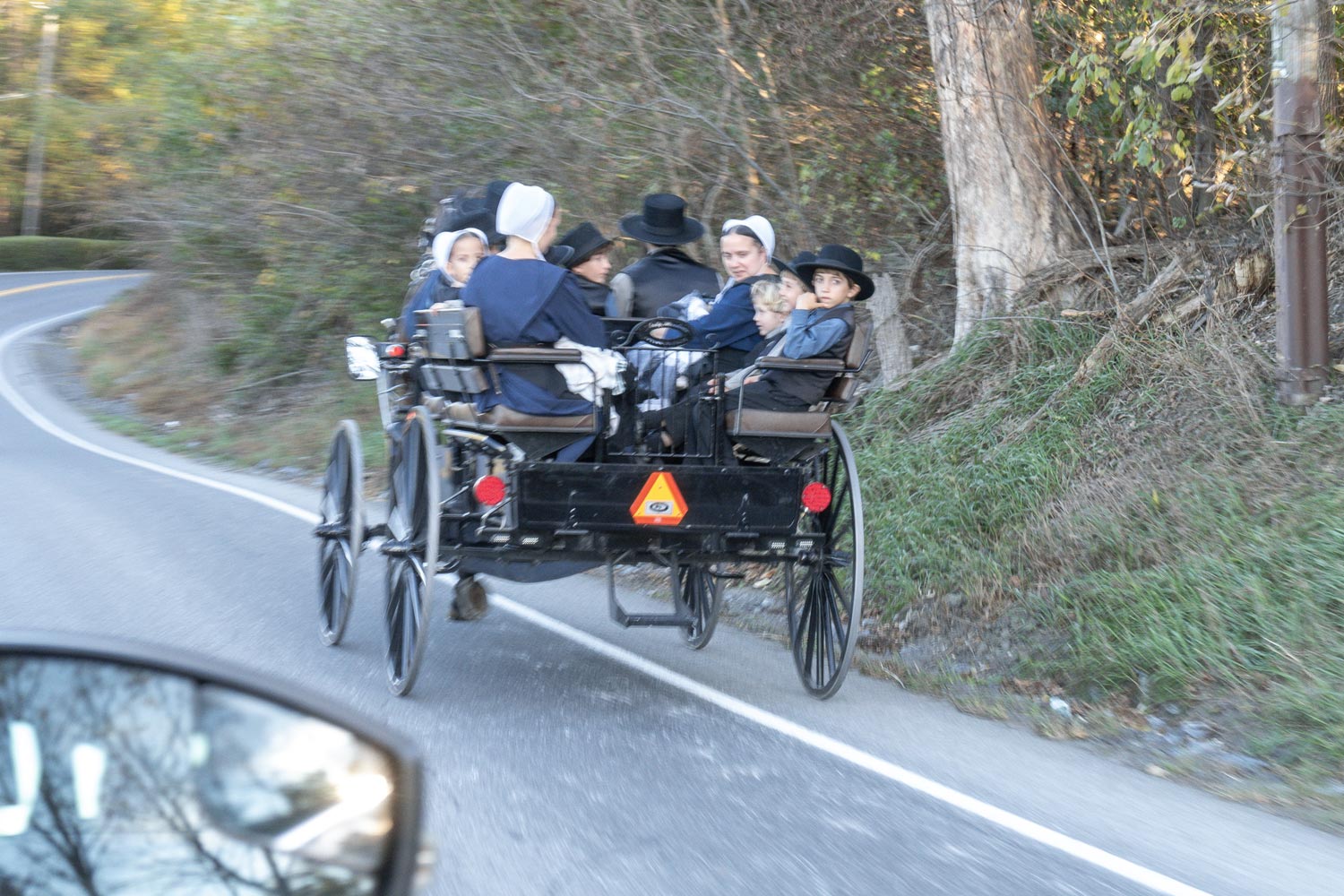
Sometimes you also see an entire Amish family riding in a large wagon that even has benches installed. The Amish really dislike being photographed, so you can spend many hours chasing such a shot and still end up with nothing but a blur.
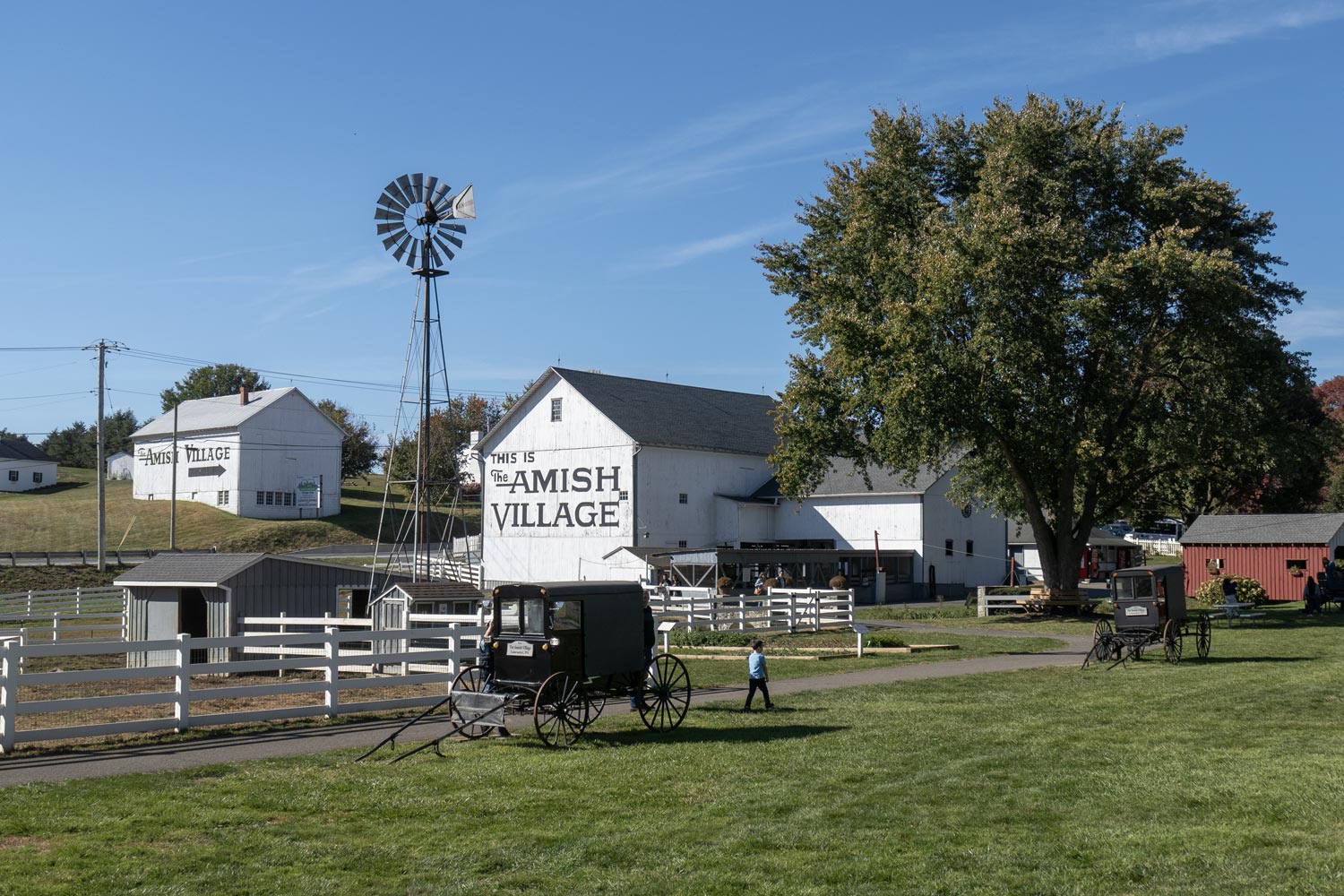
Getting inside an Amish community and filming a live report is almost impossible. But you can see their everyday life at one of the farms that has been turned into a museum.
Funny thing is, this farm is just a stone’s throw away from a Target hypermarket. Still, you can’t really call it completely artificial: the Amish do, after all, live right in the middle of the modern world.

The farm itself is in excellent condition. Everyday life there hasn’t changed since the 19th century.
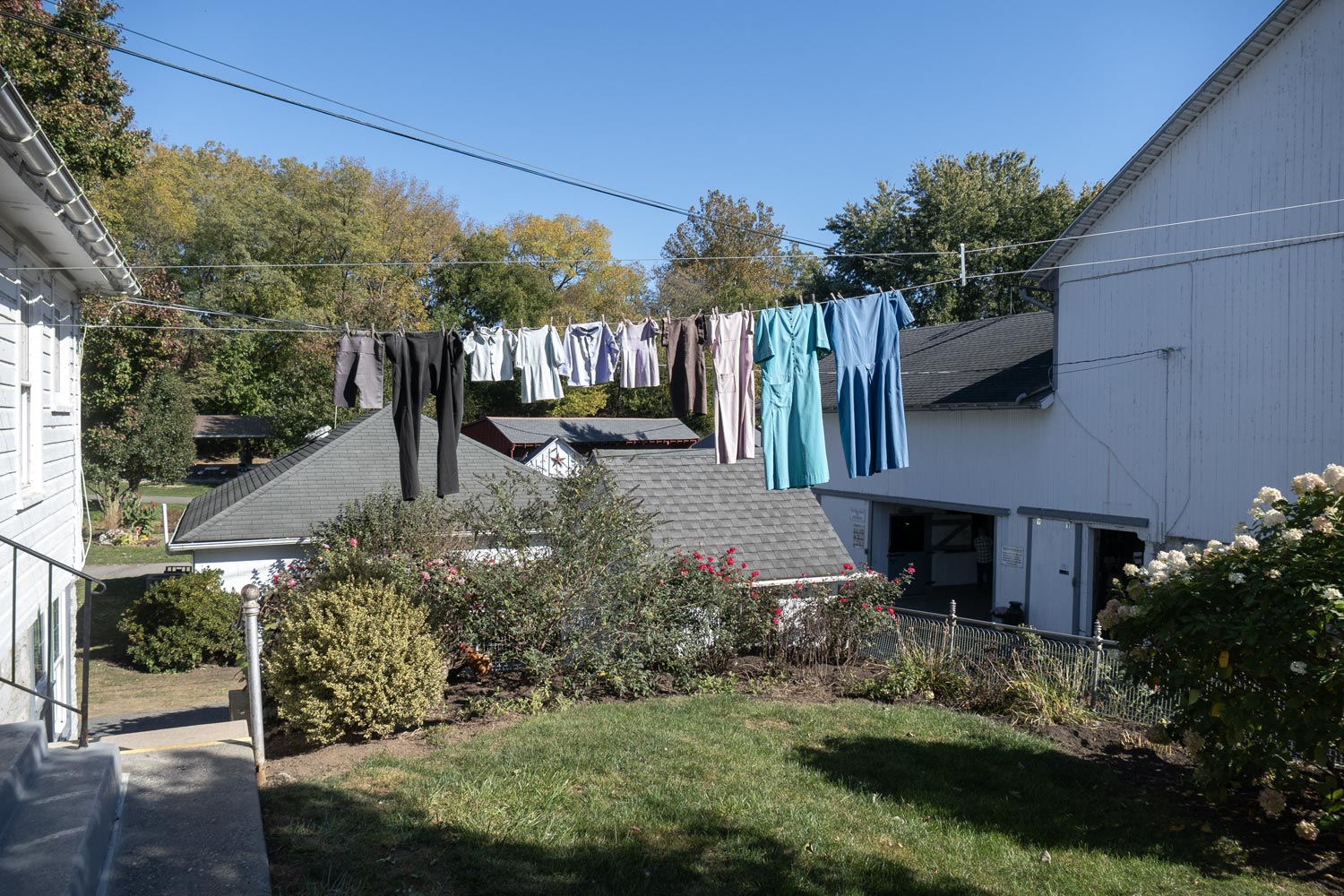
Even the laundry still hasn’t dried.
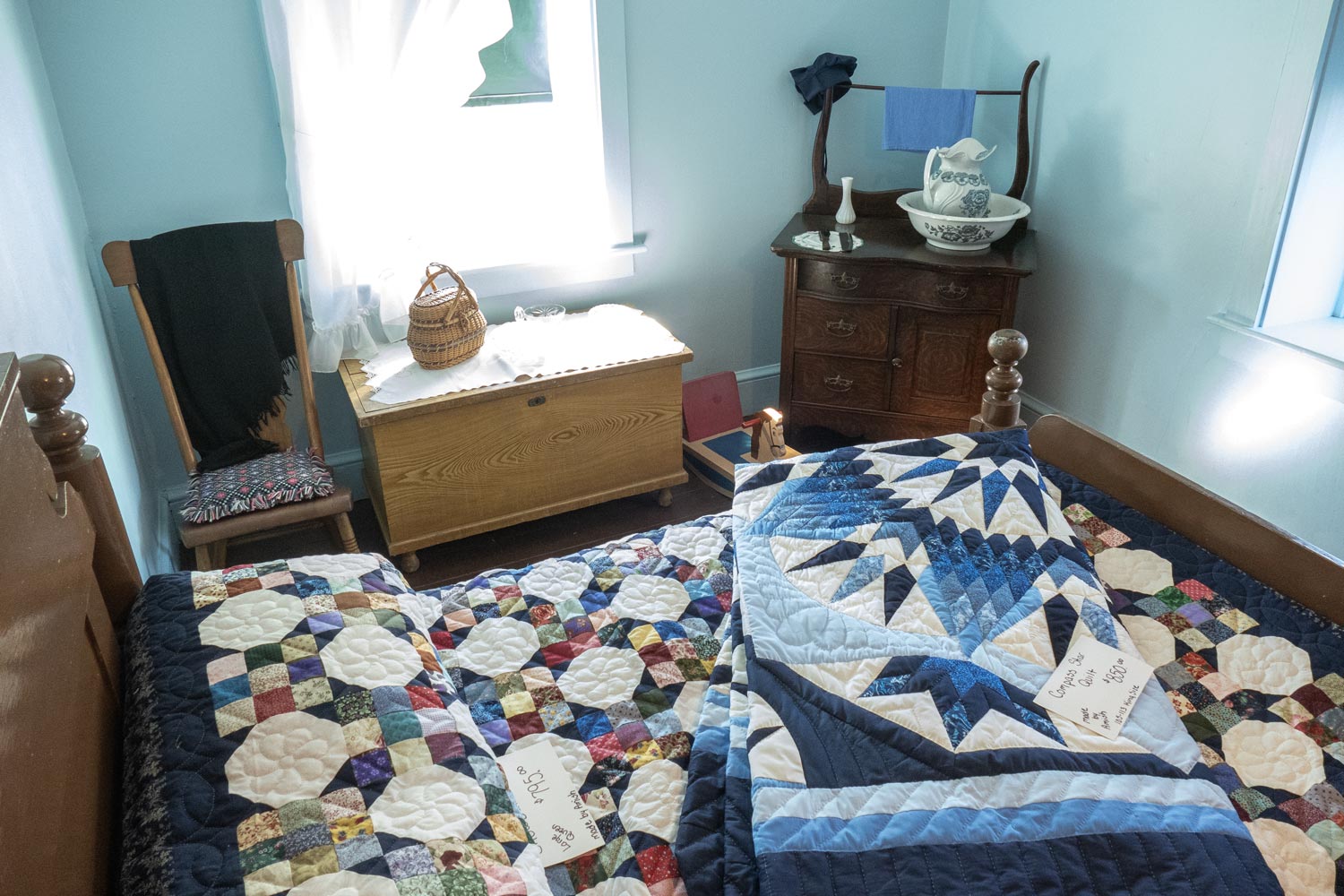
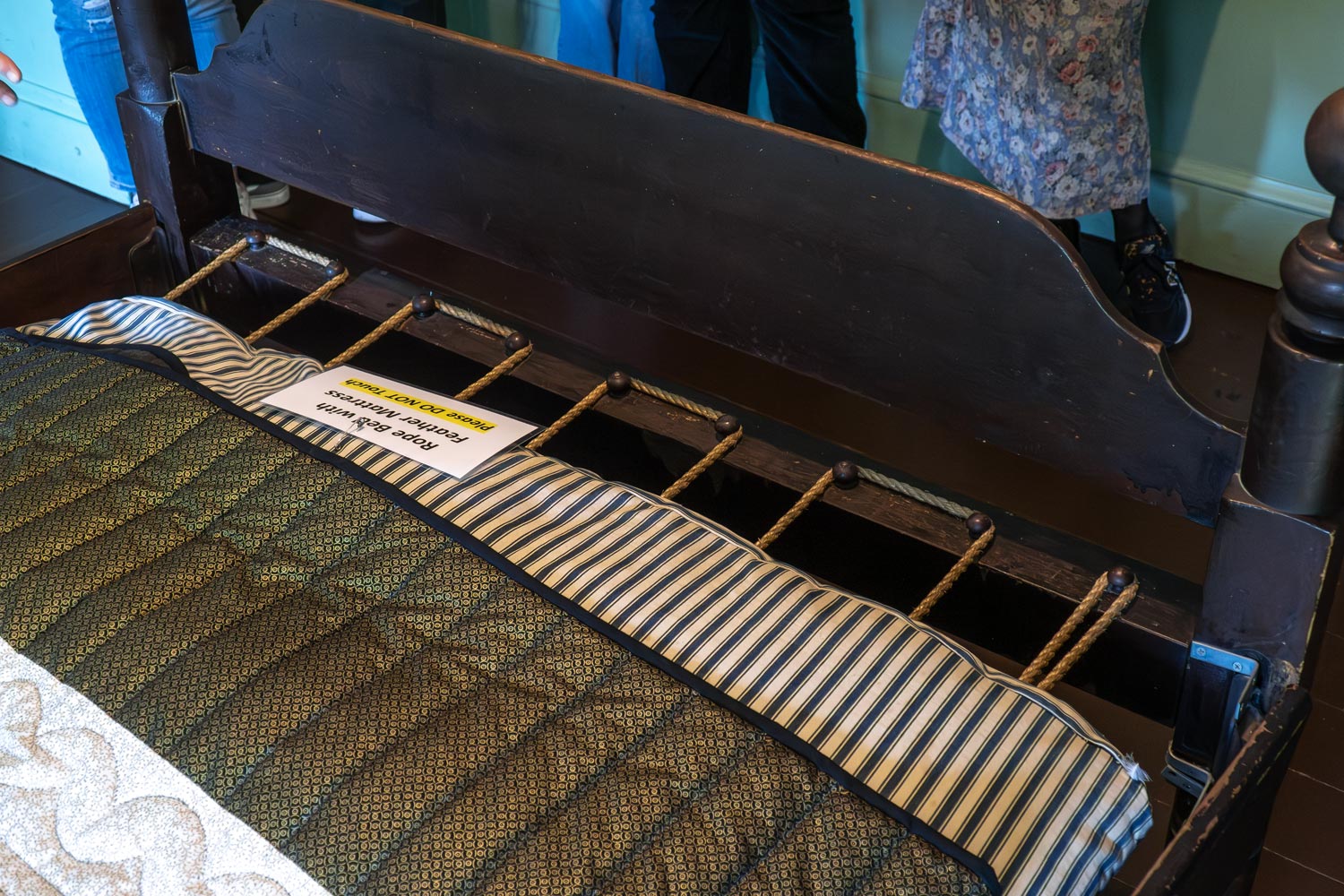
Inside, the house turns out to be rather austere. There’s an old bed whose base isn’t even springs but some kind of stretched ropes; a quilted antique blanket, and furniture that went out of fashion long ago.
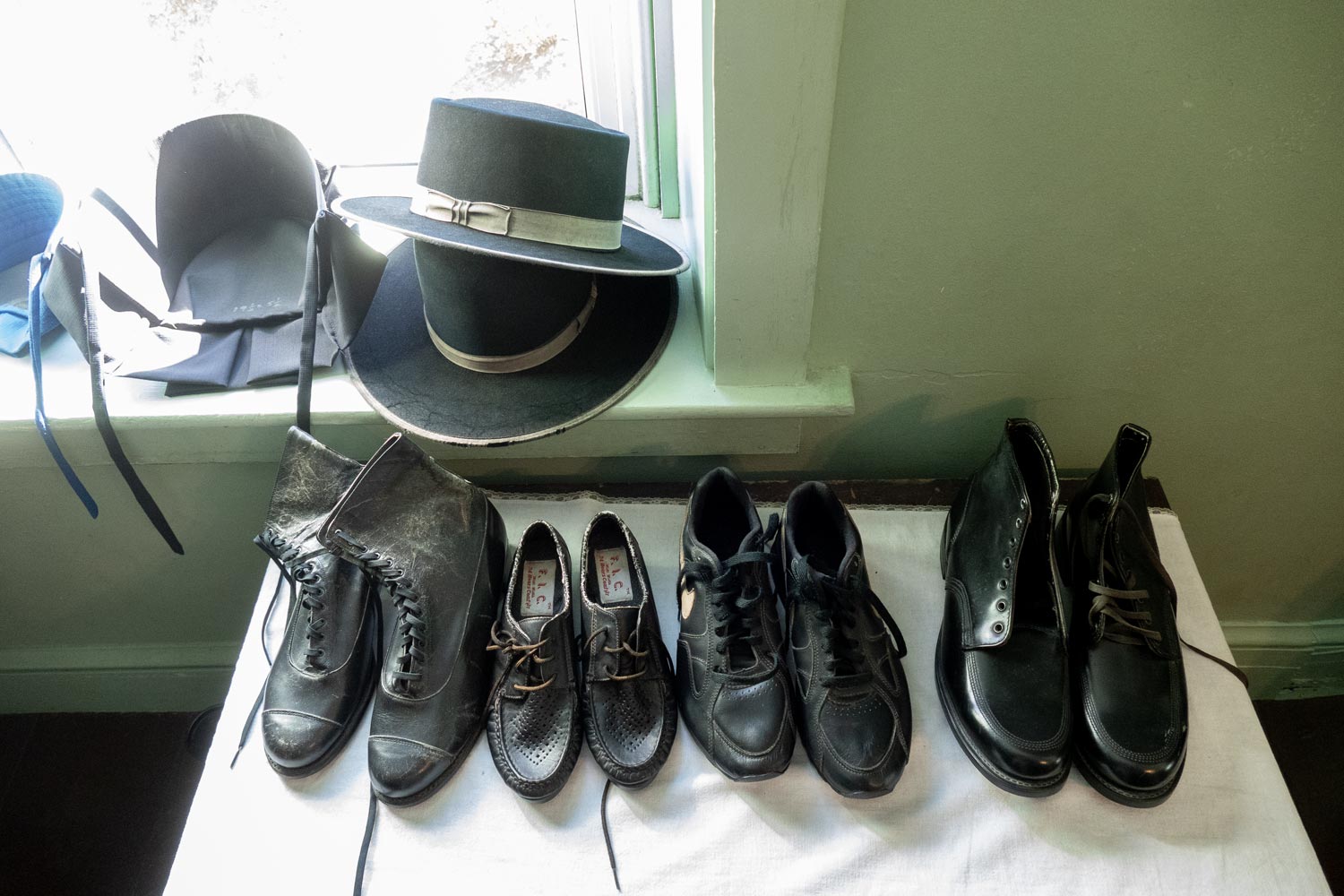
The Amish wear the most conservative clothing. It’s mostly black, white, and blue. The cut is as traditional as it gets. Still, among the leather boots and shoes, a pair of black Nike sneakers turned up.
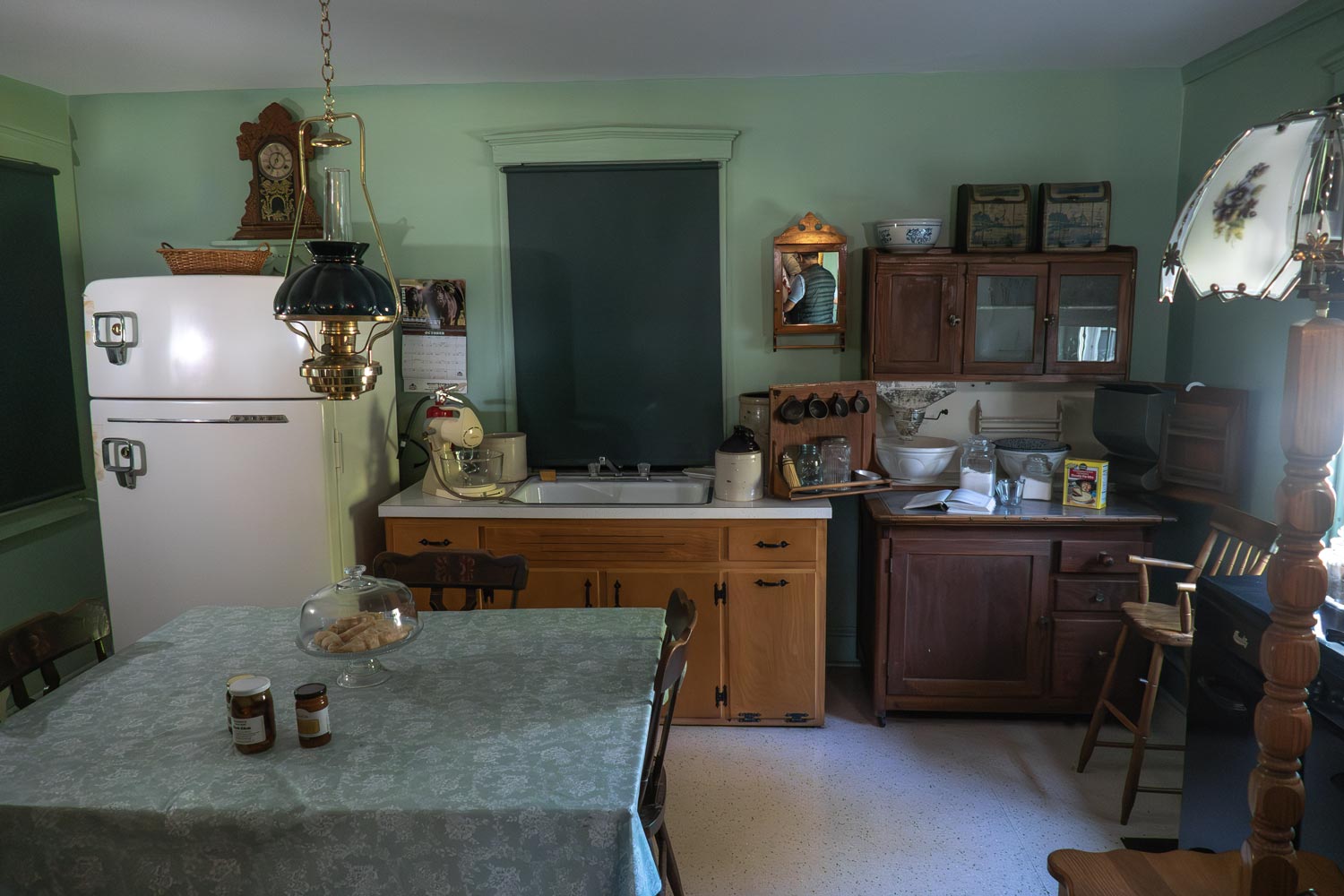
Fairly soon a refrigerator was found in the house, as well as a chandelier, a desk lamp, a cuckoo clock, and even a mixer.
Here it turned out that the Amish don’t reject all progress, only the kind that, in their view, harms the community. In short, hanging a triangle on a car is harmful, but whipping egg whites into meringue with a mixer is not.
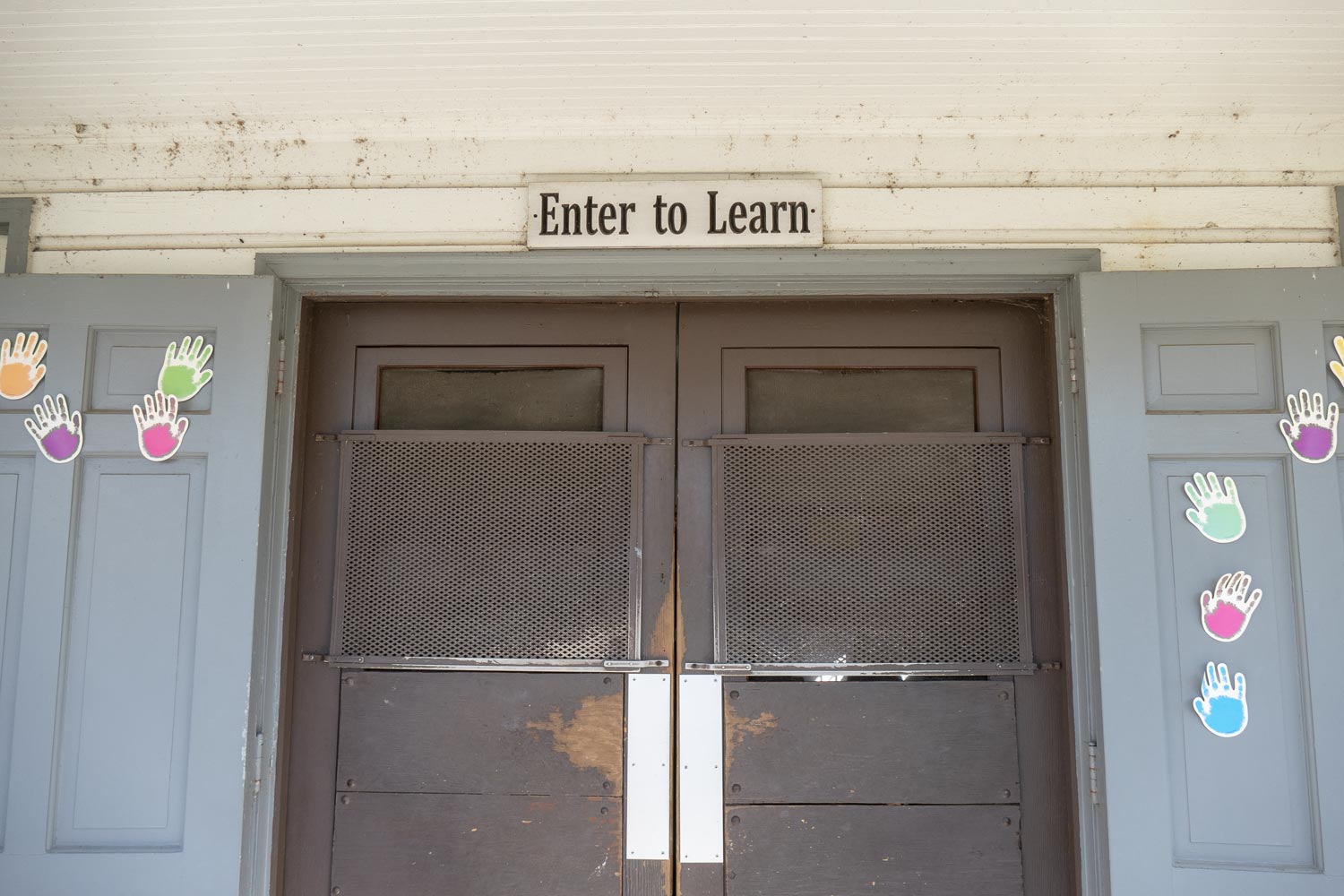
There turned out to be an elementary school next to the farm. At its entrance hung a sign: “Enter to learn.” At the exit there was another sign: “Exit to serve.” The idea is that any knowledge should be used for the benefit of and in service to the community.
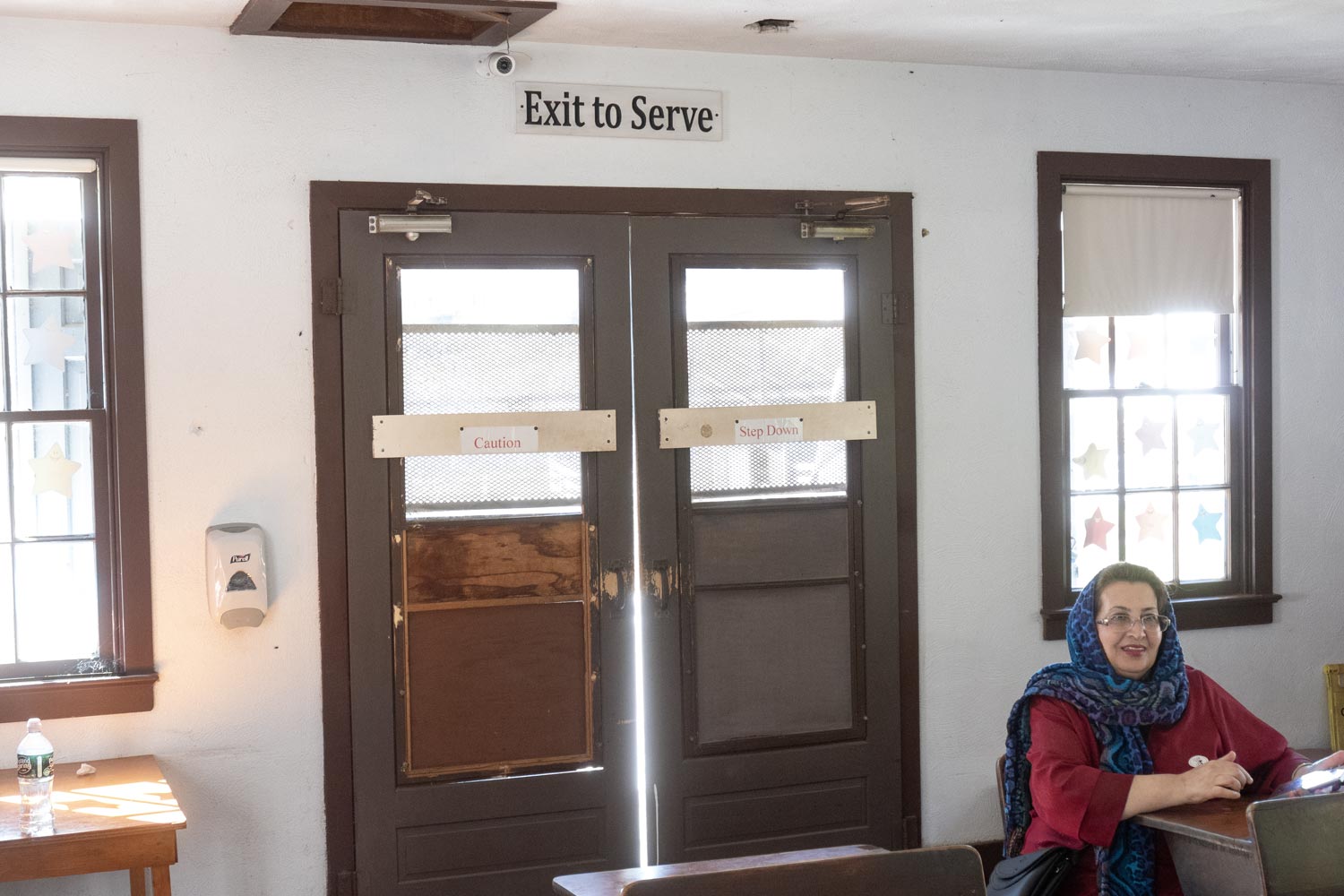
The interior of the school also hasn’t changed since the 19th century: wooden tables and desks that you can’t sit at for long.
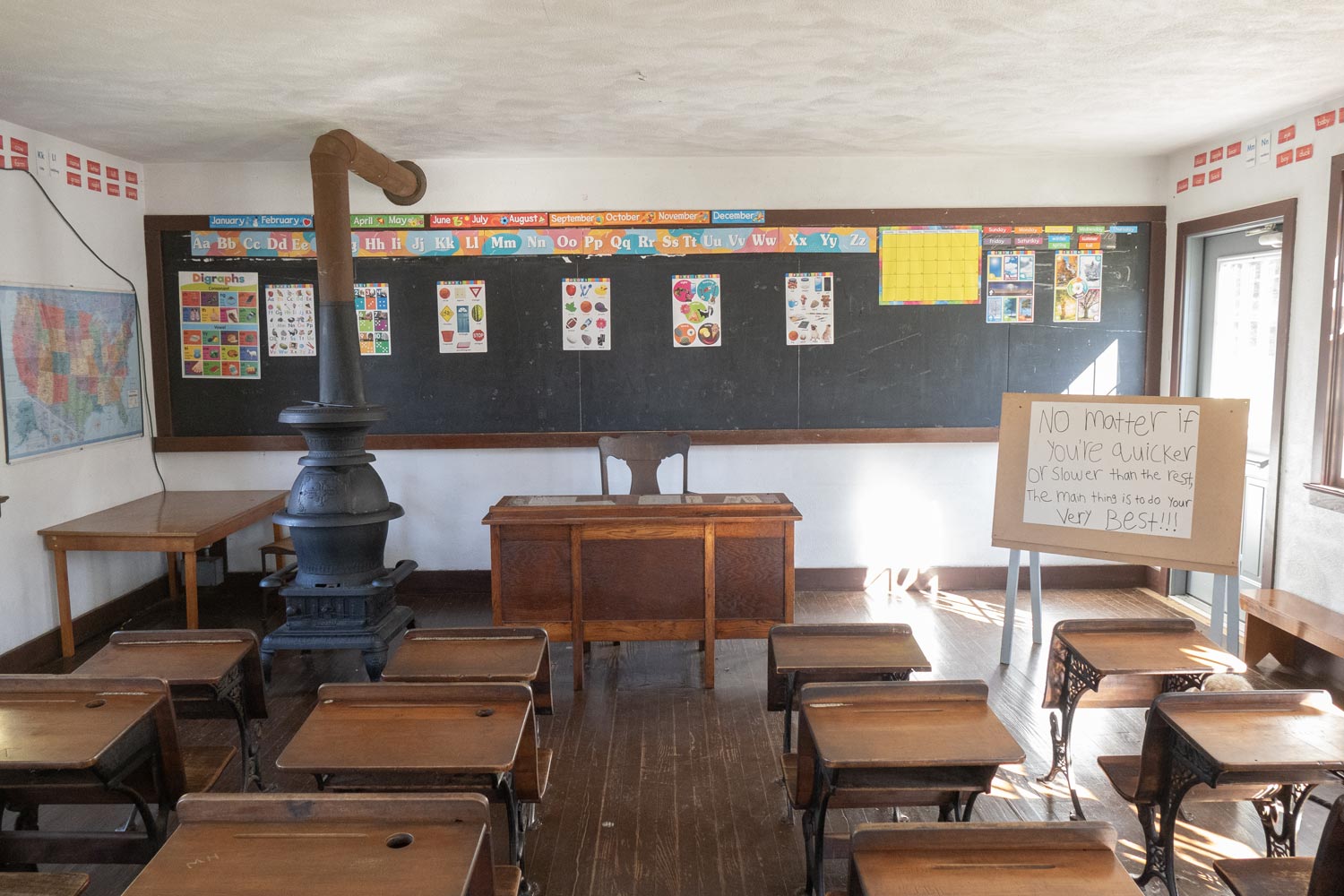
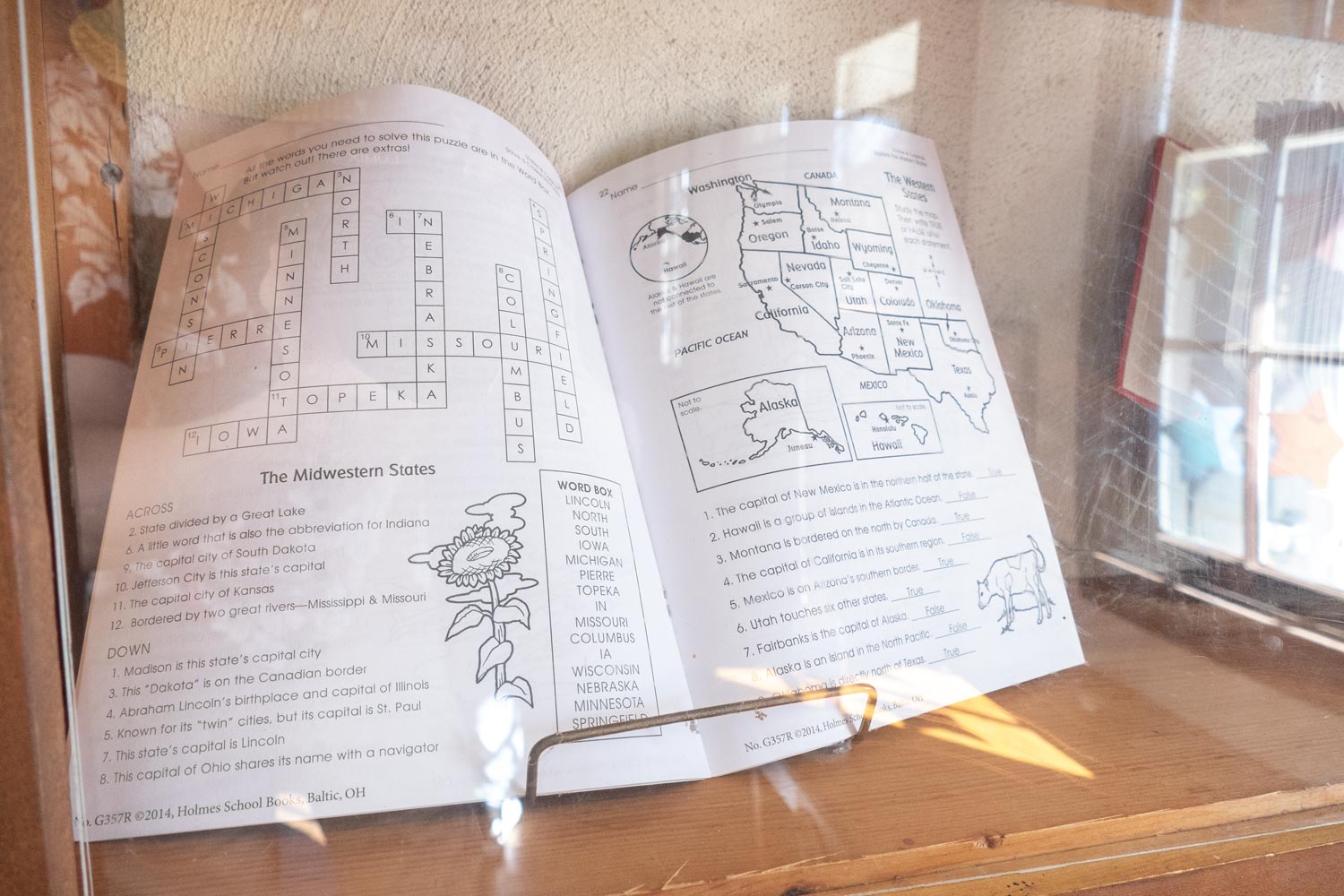
In the bookcases along the walls of the classroom there were fairly simple textbooks, devoted mainly to U.S. geography, vocabulary, and arithmetic. Of course, this is only elementary school, and the Amish know somewhat more than basic literacy.
Nevertheless, education among the Amish is in a bad state: the community has its own system, which does not go beyond the 8th grade. Although elementary education is compulsory in the United States, in 1972 the Supreme Court granted the Amish the right not to send their children to high school.
Of course, the community is not a totalitarian cult. Any Amish person can leave the community and live like a modern person. Many do so at 16–18 years old, but almost all of them come back: they can’t bear being separated from their family and friends.
Really, how could you not? Such grace all around.